



Strait of Hormuz and Crude Oil Risk Premium: Trading CL and BZ During Energy Geopolitical Crises
Overview #
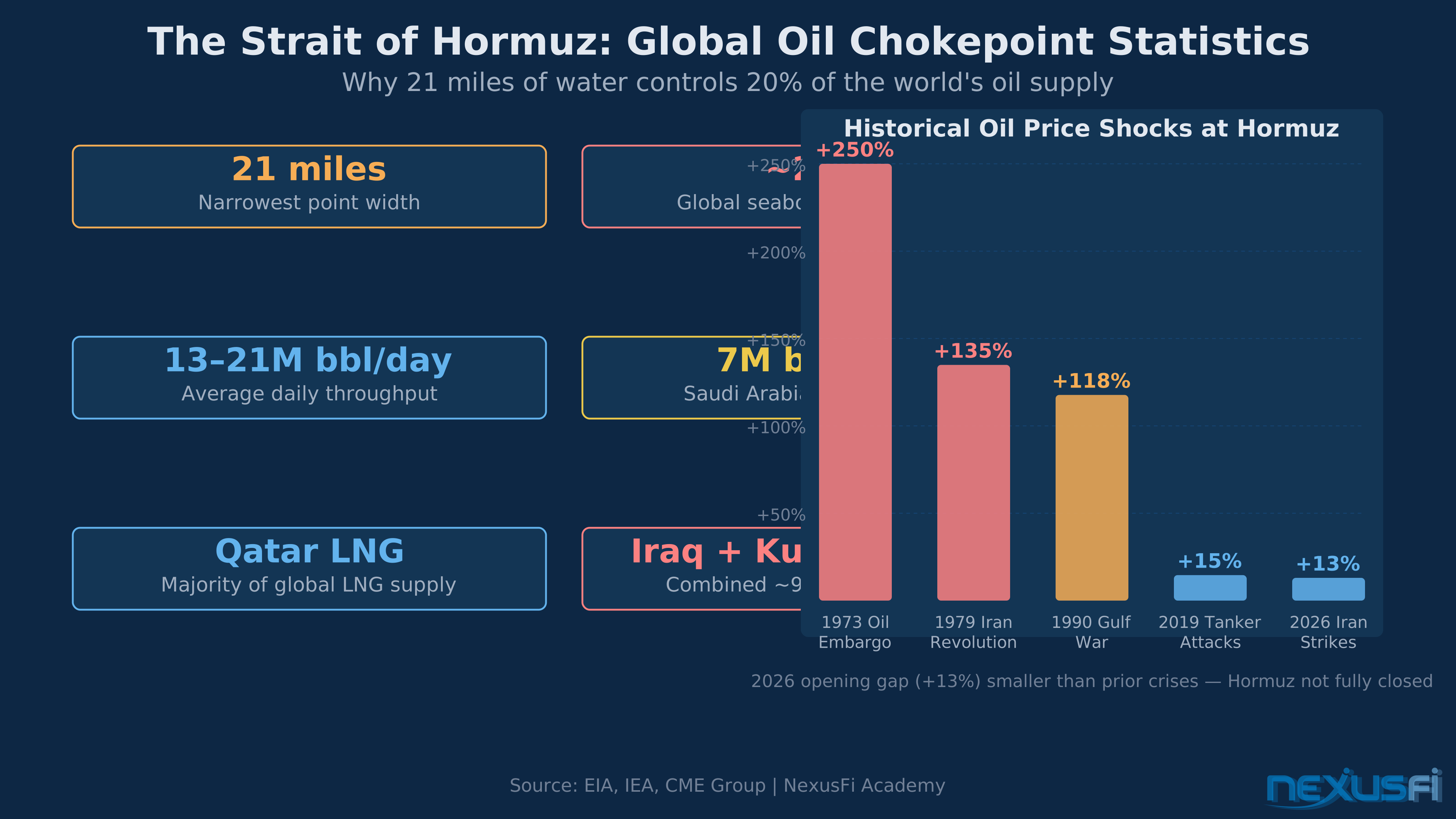
The Strait of Hormuz is 21 miles wide at its narrowest point. It connects the Persian Gulf to the Gulf of Oman — and controls roughly 20% of all global seaborne crude oil. When geopolitical risk spikes in the Middle East, whether from Iran's nuclear program, US-Israeli military operations, tanker seizures, or mining threats, the Strait becomes the single most important piece of real estate in global energy markets.
For crude futures traders — whether you trade WTI (CL) or Brent (BZ) — understanding how Hormuz risk transmits into price is the difference between getting paid on geopolitical moves and getting destroyed by them.
This article covers the full framework: how the risk premium develops, why Brent and WTI diverge, the predictable three-phase structure of these events, the specific trades that work in each phase, and the cross-asset signals that tell you whether you're seeing real disruption or a fade-within-48-hours headline spike.
The March 2026 Iran event — US-Israeli strikes that pushed Brent above $100, mined the Strait, and drove WTI-Brent spread to historic wides — is the most recent and detailed case study available. We'll break down exactly what happened and how traders who understood the structure navigated it.
The Chokepoint: Numbers That Move Markets #
Before trading the news, you need to understand exactly what the news is about. The Strait of Hormuz sits between Iran and Oman. At its narrowest, it's 21 miles wide, with shipping lanes only 2 miles wide in each direction. Every day, roughly 13-21 million barrels of crude oil and petroleum products transit the Strait — depending on the time period and enforcement environment.
That's not 20% of global oil production. It's 20% of seaborne crude flows — the portion that actually moves on tankers. Landlocked production from the US, Russia (overland), and some pipeline-connected Gulf producers doesn't depend on Hormuz. But if you're talking about Saudi Arabia's primary export route, the UAE's Abu Dhabi crude, Iraqi export terminals, Kuwaiti production, and Qatar's entire LNG supply — all of it goes through Hormuz.
The numbers that matter for traders:
- Saudi Arabia: ~7 million barrels per day exported through Hormuz
- Iraq: ~3.5 million bpd at risk (with some southern terminals)
- UAE and Kuwait: combined ~5-6 million bpd
- Qatar LNG: vast majority of global Qatari gas supply
The one partial workaround: Saudi Arabia maintains the East-West Pipeline (Petroline) that can handle ~5 million bpd to the Red Sea, bypassing Hormuz. UAE has the Abu Dhabi Crude Oil Pipeline to Fujairah on the Gulf of Oman coast. But these pipelines are at partial capacity and couldn't replace full Hormuz throughput — J.P. Morgan estimated that a complete closure could reduce global supply by 4.7 million bpd after workarounds.
Context from the NexusFi community during the March 2026 escalation: @Fi documented the immediate market impact when the Strait mining was reported: Brent gapped to $100+, WTI hit $72, and the spread blew out to nearly $28 intraday at the peak — far above the usual $3-5 range.
That spread is the key number. The divergence between Brent and WTI is your primary signal.
Brent vs WTI: Why They Diverge #
The most important thing to understand about Hormuz risk is that Brent and WTI are different instruments responding to different fundamentals. Treating them as interchangeable is the single biggest mistake crude oil traders make during Middle East events.
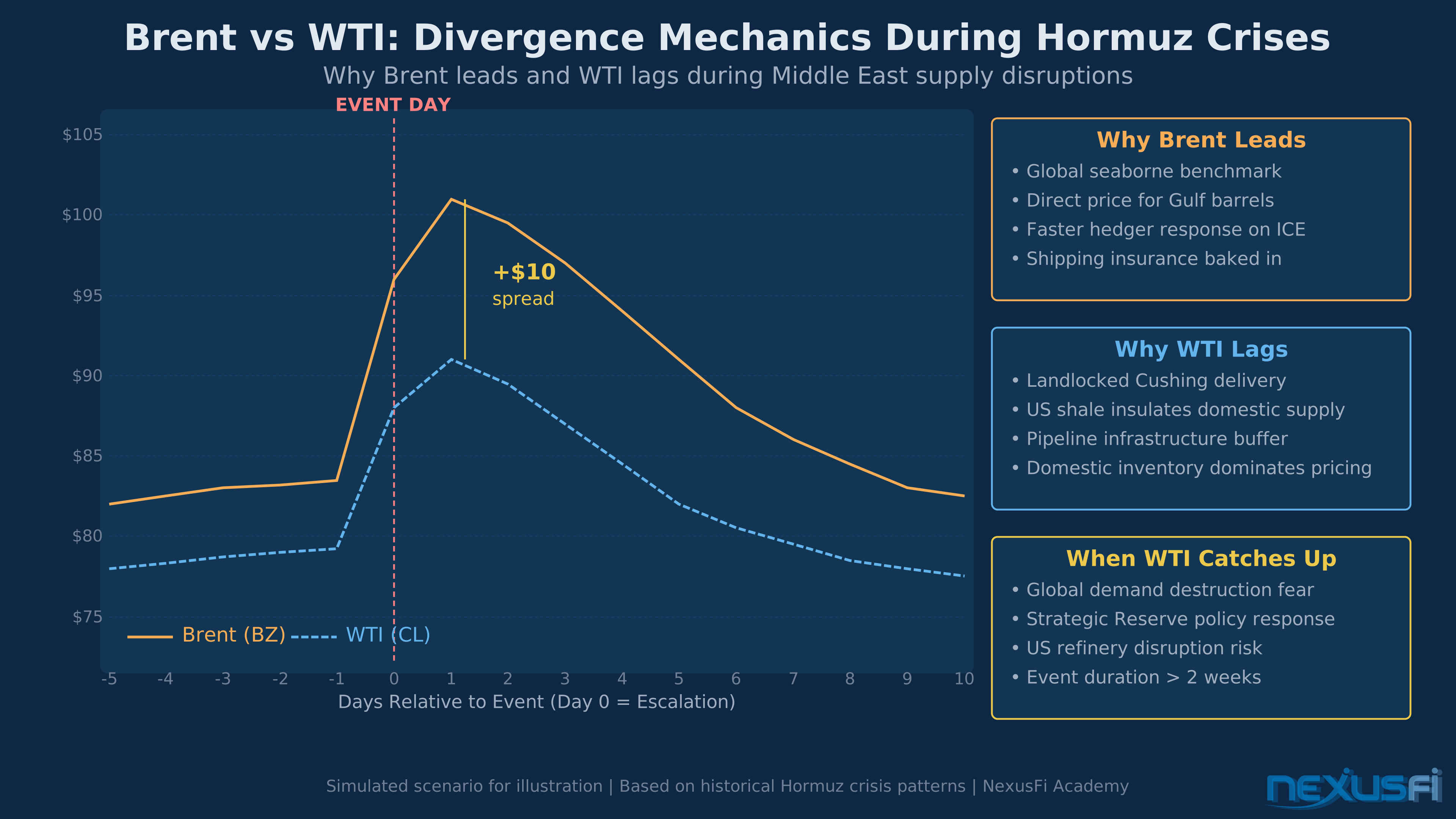
Brent (BZ) is the global waterborne crude benchmark. It prices barrels that move on ships — North Sea crude, West African grades, and critically, it's the pricing reference for most Middle Eastern export contracts. When Hormuz is threatened, Brent reprices the disruption directly because the barrels it represents are the ones at risk.
WTI (CL) is a landlocked US benchmark. Physical delivery is at Cushing, Oklahoma. The dominant pricing factors are US shale production, domestic inventory levels, pipeline capacity, and refinery demand in the US Gulf Coast. WTI is partially insulated from a Hormuz closure because US production doesn't transit the Strait.
The result: when Hormuz risk spikes, Brent leads and WTI lags. The Brent-WTI spread (Brent premium to WTI) widens from its baseline $3-5 range to $8-15+ during acute episodes, and can go even wider in extreme scenarios.
The typical divergence pattern during a Hormuz escalation:
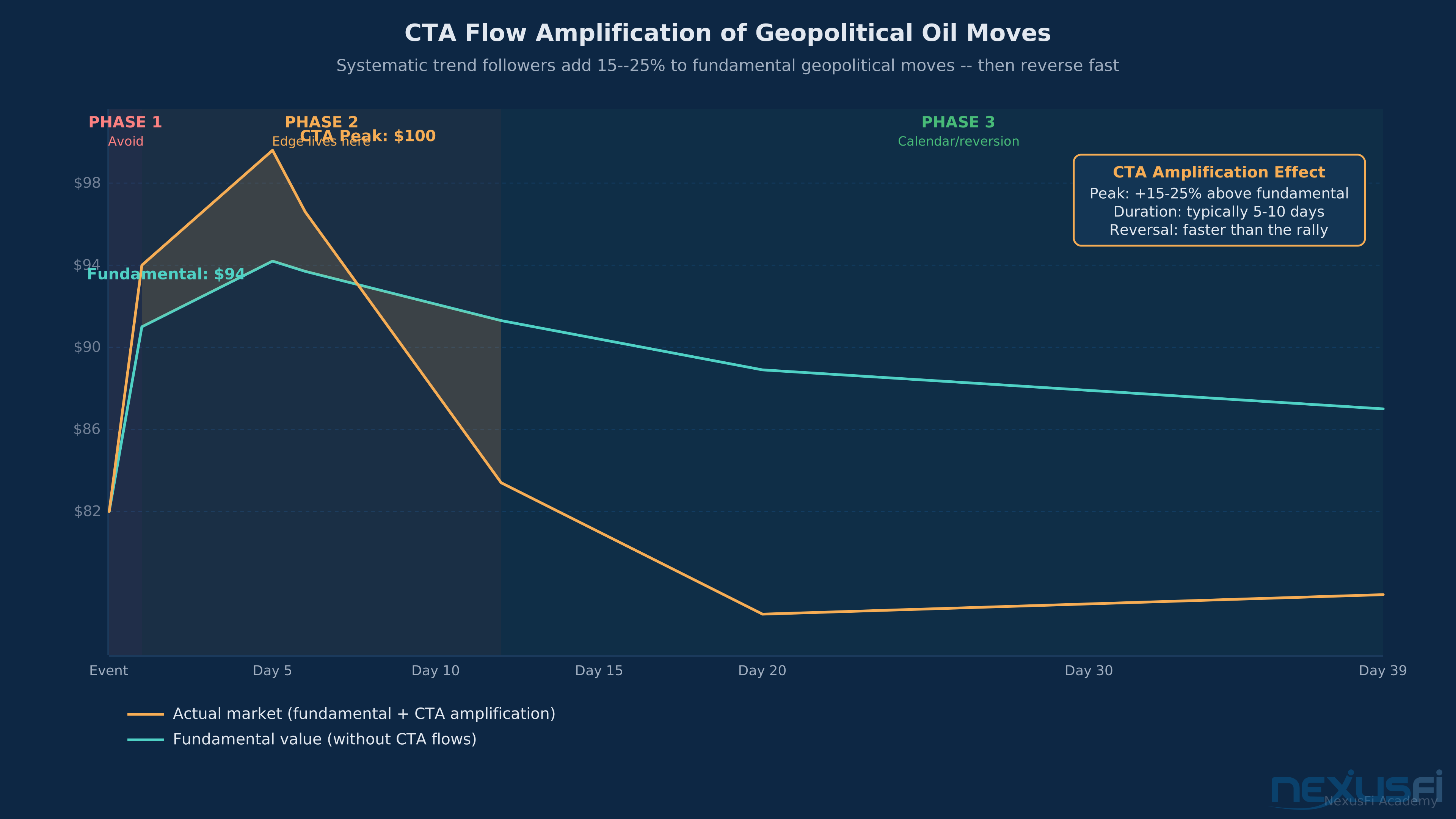
Day 0 (Event): Brent gaps up sharply on the open, WTI gaps up but less. Spread immediately widens. Days 1-3: Brent continues to outperform as physical market hedging concentrates on the seaborne benchmark. WTI catches some bid from broader risk-off positioning. Days 4-14: Market decides: was this a real disruption or a headline? If shipping data shows no actual flow reduction, Brent premium compresses quickly. If tanker insurance costs spike and routing changes, the spread can persist or widen further. Beyond 2 weeks: If disruption is real, WTI eventually catches up as global demand destruction fears and US refinery margin impacts become the dominant story. If not, the spread reverts to baseline.
@Symple and others in the NexusFi Traders Hideout tracked the March 2026 spread live. After the initial Brent spike to $100+ vs WTI at $72, the spread moderated as Saudi-UAE pipeline workarounds were activated and actual throughput data showed partial (not total) disruption. (@Symple, 2026, 2 thanks) This exactly matches the Phase 2 confirmation dynamic. (@Symple, 2026, 2 thanks)
The actionable implication: your primary Hormuz trade is not outright long crude. It's long Brent / short WTI. You're capturing the risk premium without taking directional crude beta.
The Three-Phase Price Model #
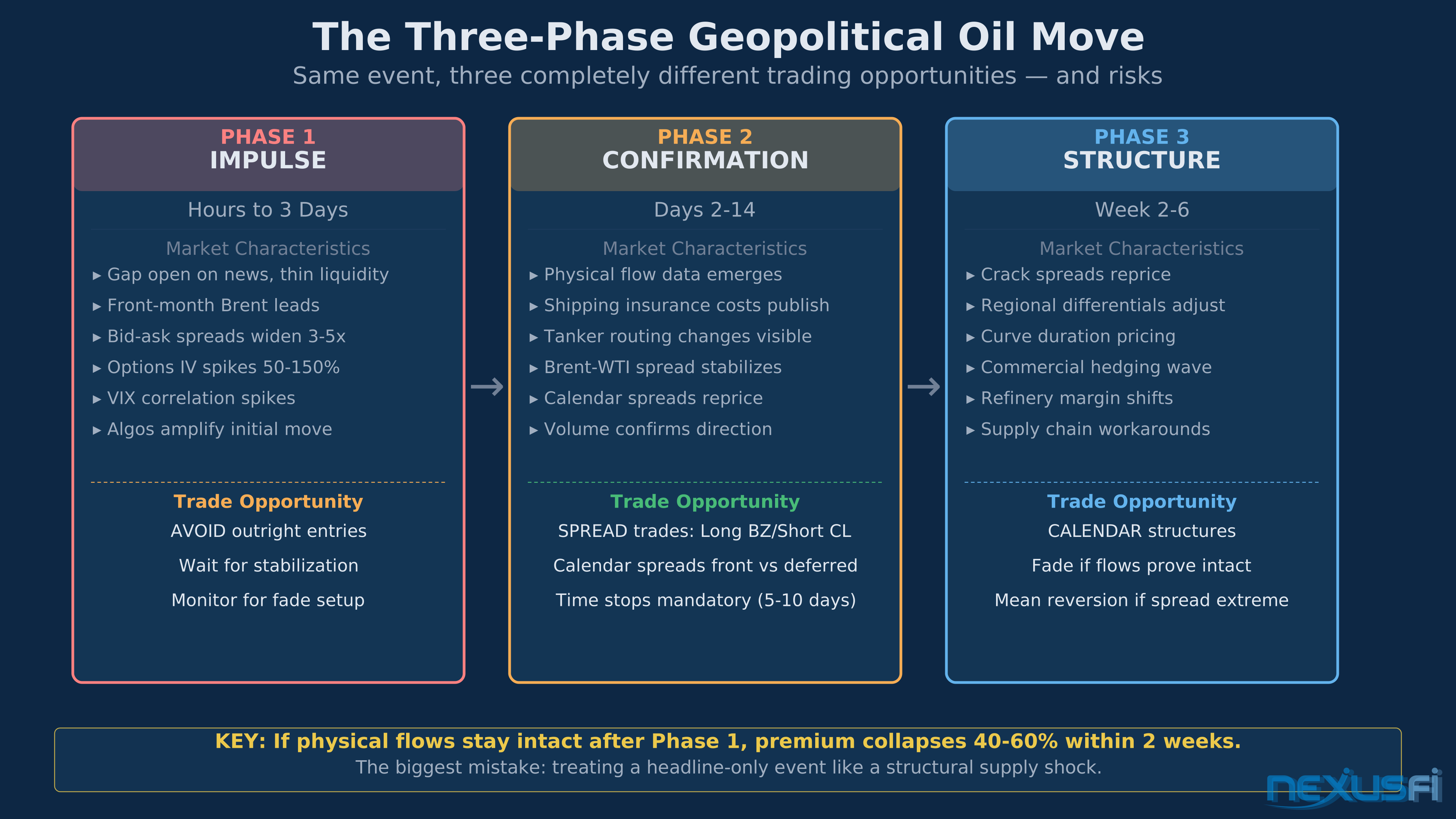
Geopolitical oil moves are not random volatility. They follow a predictable three-phase arc that determines which trades are available and which will destroy you.
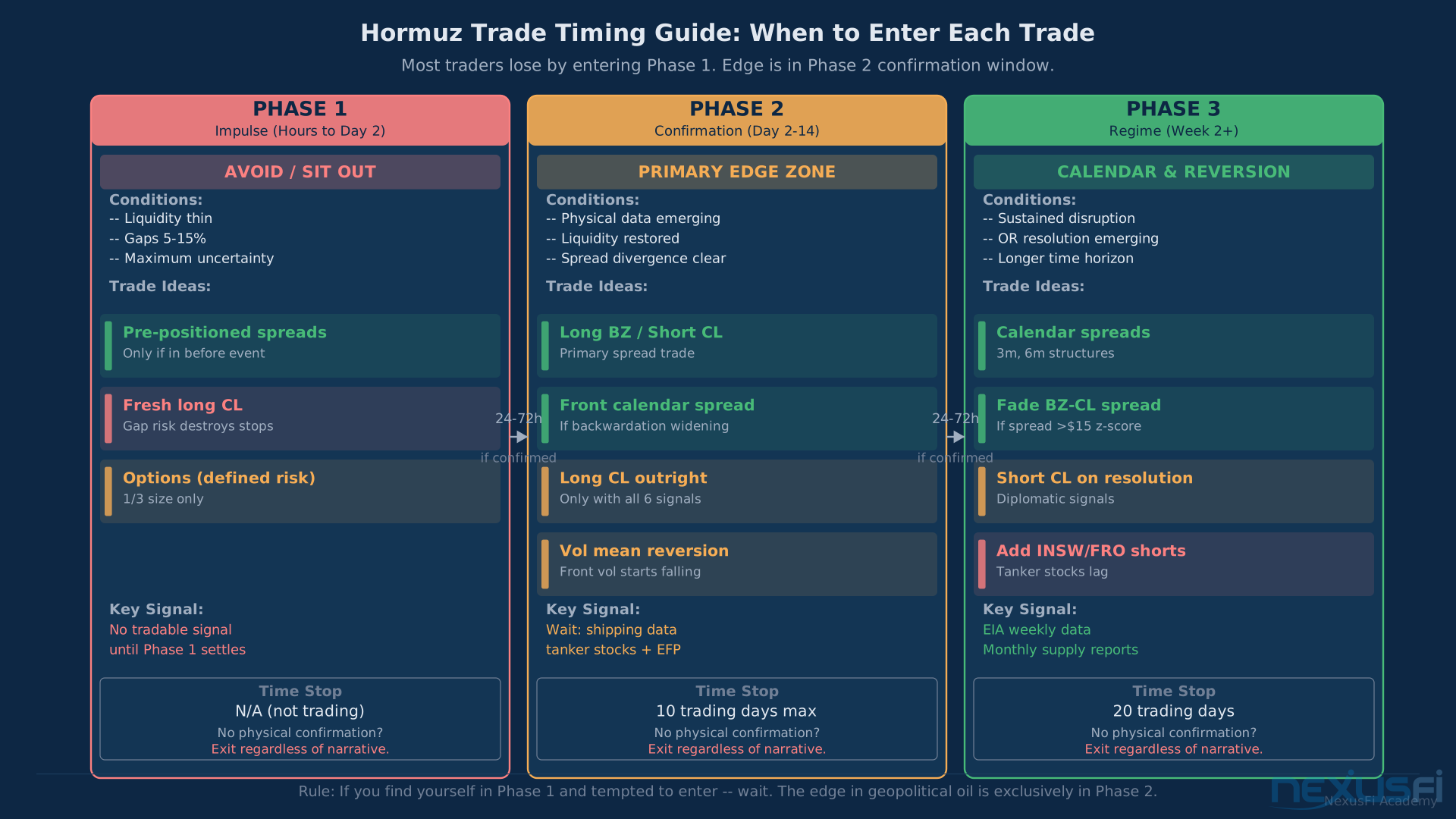
Phase 1: Impulse (Hours to Days 2-3) #
This is the gap/spike phase. The headline hits outside US market hours (usually), Brent gaps 5-15% on the ICE open, bid-ask spreads widen 3-5x, and options implied volatility spikes 50-150% in the front month. CTAs and algorithmic strategies add fuel to the initial move — systematic trend followers pile into the momentum.
This phase is dangerous for most traders. Liquidity is thin, gaps are unpredictable, and the market is pricing maximum uncertainty. @jlabtrades tracked the March 2026 open in real time: "oil futures surged roughly 11% at the open, gold climbed nearly 2%, and equity futures slipped." (@jlabtrades, 2026, 4 thanks). The VIX went from 14 to 26 in a single session.
What to do in Phase 1: Wait. Monitor. Do not chase the initial spike. If you're already long, manage existing risk. The traders who got hurt worst in Phase 1 of the March 2026 move were those who entered long CL at the gap open — they caught the 11% spike, then watched a 7-8% pullback when physical flow data came in ambiguous.
The exception: if you had pre-positioned before the event in a spread or options structure, Phase 1 is when those positions make their money. @Symple described managing weekend exposure during the escalation by hedging with OTM options — defining maximum loss on both sides while maintaining position through the chaos. (@Symple, 2026, 3 thanks) Selling into Phase 1 panic is valid for those who positioned ahead. For fresh entries, Phase 1 is a spectator event.
Phase 2: Confirmation (Days 2-14) #
This is where real edge lives. The market is asking: did the disruption actually happen, or was this a headline? The evidence that matters in this phase:
- Shipping insurance costs: Lloyd's, the Kluwer index, or market proxies for war risk premiums in the Gulf. If these spike and stay elevated, physical disruption is real.
- Tanker routing changes: AIS tracking data shows whether vessels are rerouting around the Strait or transiting normally. Rerouting = real disruption.
- EFP spreads (Exchange for Physical): The basis between physical crude and futures. Stress in the physical market shows up here before it's widely reported.
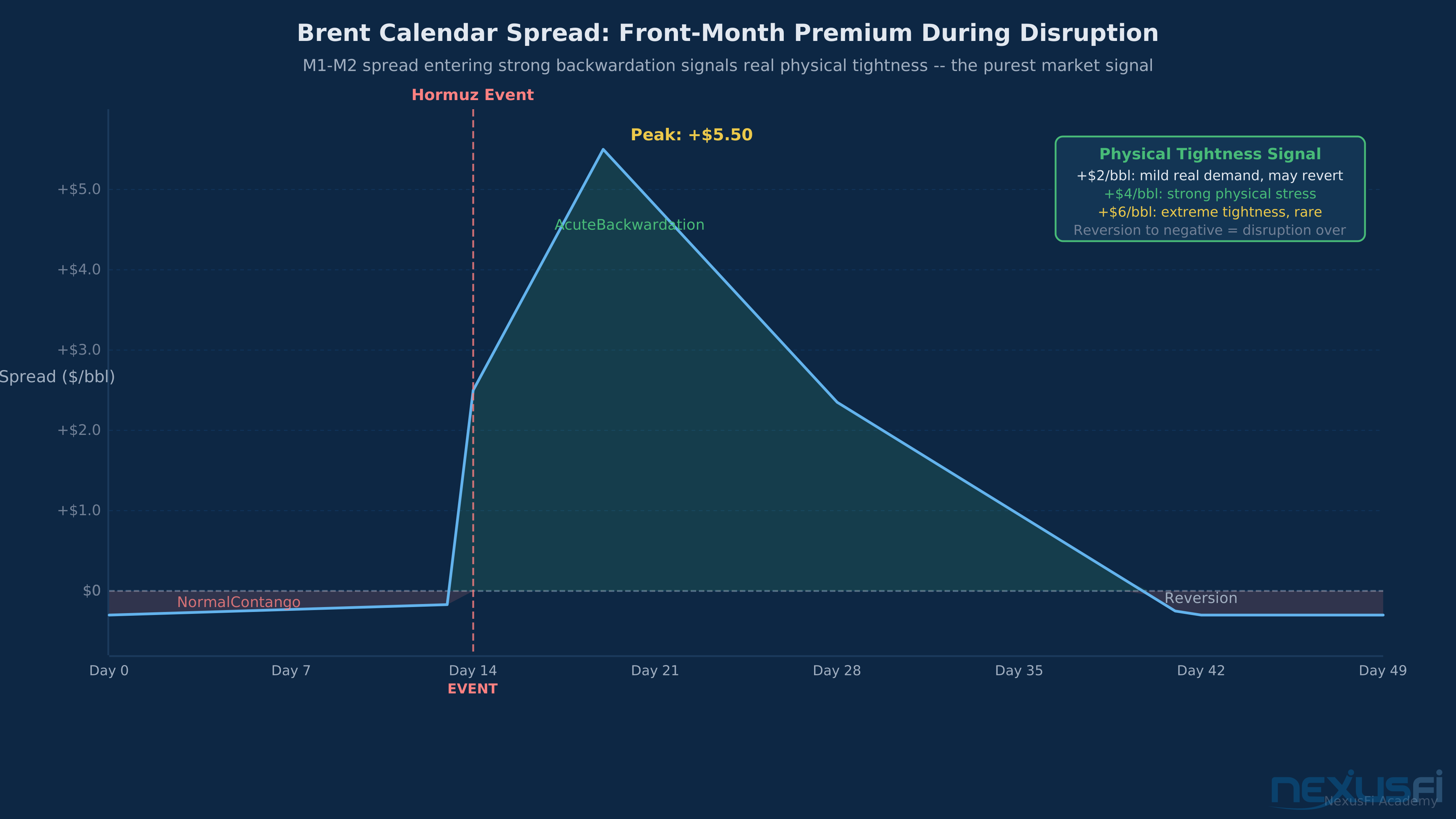
- Brent calendar spreads: If the front-deferred spread moves into strong backwardation (front month trading at significant premium to second month), physical tightness is real.
the NexusFi Traders Hideout thread during the March 2026 event documented J.P. Morgan's estimate of 4.7 million bpd potential supply loss alongside real-time tracking of whether Saudi-UAE pipeline capacity could actually offset Hormuz flows. (@jlabtrades, 2026, 4 thanks) This is exactly the Phase 2 analysis framework.
What to do in Phase 2: This is spread territory. Long Brent / Short WTI for the Hormuz premium. Long front-end Brent calendar spreads if you expect physical tightness to persist. Time stops are mandatory — if no physical confirmation within 5-10 trading days, the trade is invalid and should be exited regardless of P&L.
Phase 3: Structure Repricing (Week 2 Through Month 2) #
If Phase 2 confirms real disruption, Phase 3 begins. This is when the entire energy supply chain reprices:
- Crack spreads (refinery margins) adjust to reflect product supply constraints
- Regional differentials between Gulf grades, North Sea, West African, and US domestic crude all reprice
- Calendar curve structure shifts from contango or mild backwardation to strong backwardation across multiple months
- Commercial hedging waves from airlines, utilities, petrochemical companies, and refiners accelerate
This phase has more duration and is more tradeable with calendar structures. But it's also where mean reversion becomes attractive once you see signs of normalization — especially if diplomatic resolution or routing workarounds reduce the supply impact.
What to do in Phase 3: Calendar spreads dominate. Front vs. 3-month, front vs. 6-month structures that capture the curve's movement as tightness is priced for duration. Begin fading extremes in the Brent-WTI spread as it reaches historical z-score highs. Scale down outright positions.
Volatility and Options Structure #
Even if you don't trade crude oil options directly, understanding options behavior during Hormuz events is essential because it tells you what the market thinks about duration and severity.
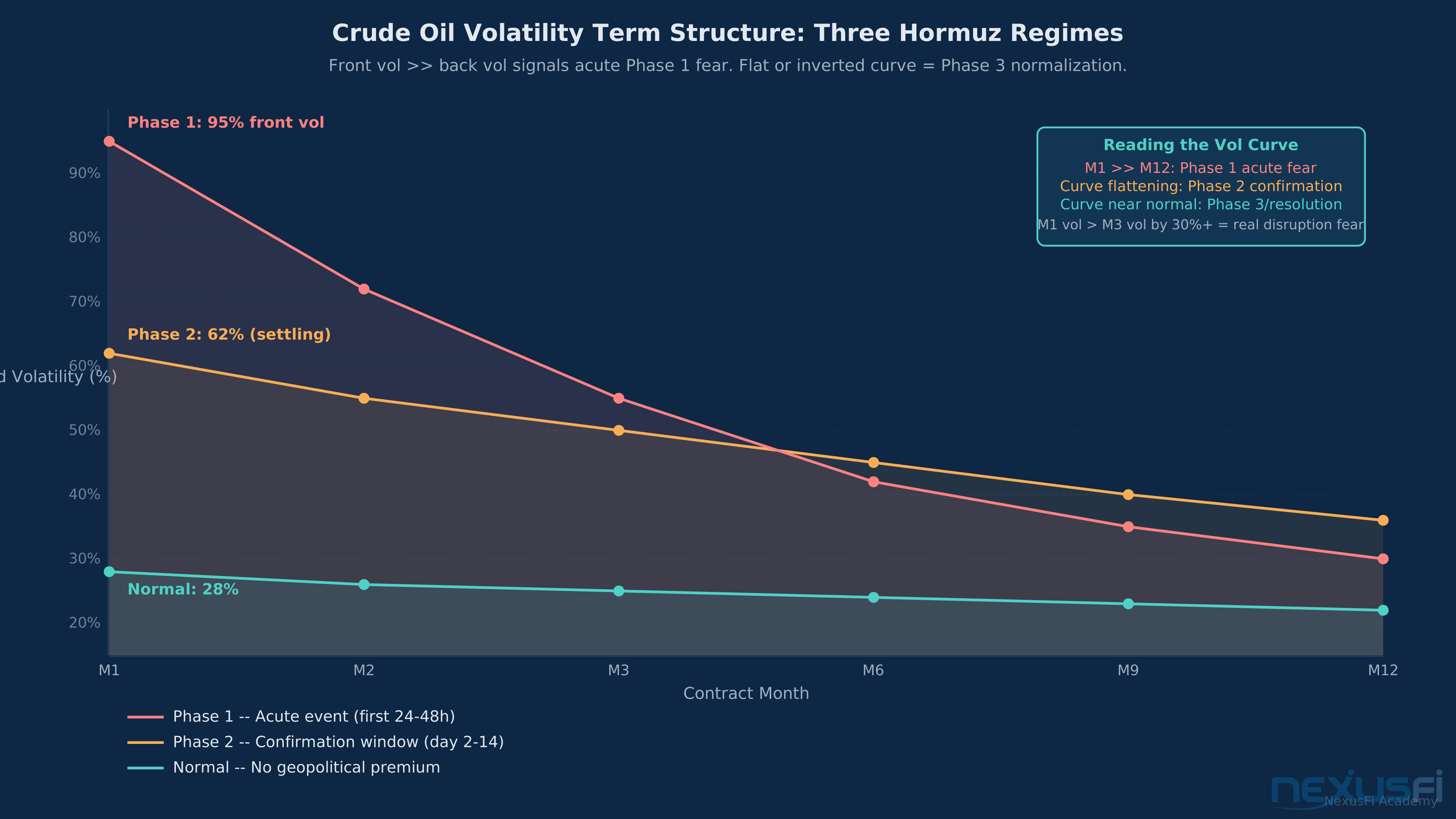
Implied volatility: In normal conditions, front-month Brent implied vol runs 20-35%. During a Hormuz escalation, it spikes to 60-100%+ within hours. This spike is informative: when front-month vol is dramatically higher than 3-month vol, the market is pricing the risk as acute and short-lived. When the entire volatility curve shifts up, the market is pricing a sustained disruption.
Call skew: Watch the 110-120 strike calls in Brent front-month. During genuine Hormuz events, these become bid as players buy upside tail protection. A steepening call skew (OTM calls getting more expensive relative to ATM) confirms the market is paying for discontinuous upside risk. This is your options confirmation signal for the continuation trade.
Put skew: Counter-intuitively, sharp Brent rallies also sometimes see put skew widen — this reflects the traders who are long Brent hedging against a diplomatic reversal. If put skew is also elevated (both sides getting bid), the options market is pricing genuine two-way volatility around an unresolved binary event.
Practical use for futures traders: Use the vol term structure as a regime indicator. Front vol >> back vol = Phase 1 or early Phase 2 (acute fear, short duration priced). Vol curve normalizing but still elevated = Phase 2 confirmation emerging. Vol term structure reverting toward normal = Phase 3 beginning or event resolving. Each regime suggests different positioning — continuation in Phase 1-2, calendar/mean-reversion in Phase 3.
The March 2026 event: VIX went from 14 to 26 (equity vol, not crude vol, but strongly correlated). That sustained move above 25 for multiple days confirmed this was not a quick-fade headline but a genuine market-structure event. Cross-asset confirmation.
The Spread Trade: Long Brent / Short WTI #
The Long Brent / Short WTI trade is the most reliable expression of Hormuz risk. Here's why it works and exactly how to execute it.
The logic: You're not taking a view on whether oil goes up or down. You're taking a view on the relative premium that global seaborne disruption adds to Brent vs. WTI. If Hormuz disruption is real, Brent should trade at a wider premium to WTI than normal. If you're wrong about the disruption, both legs move against you, but the spread position loses less than a pure directional trade.
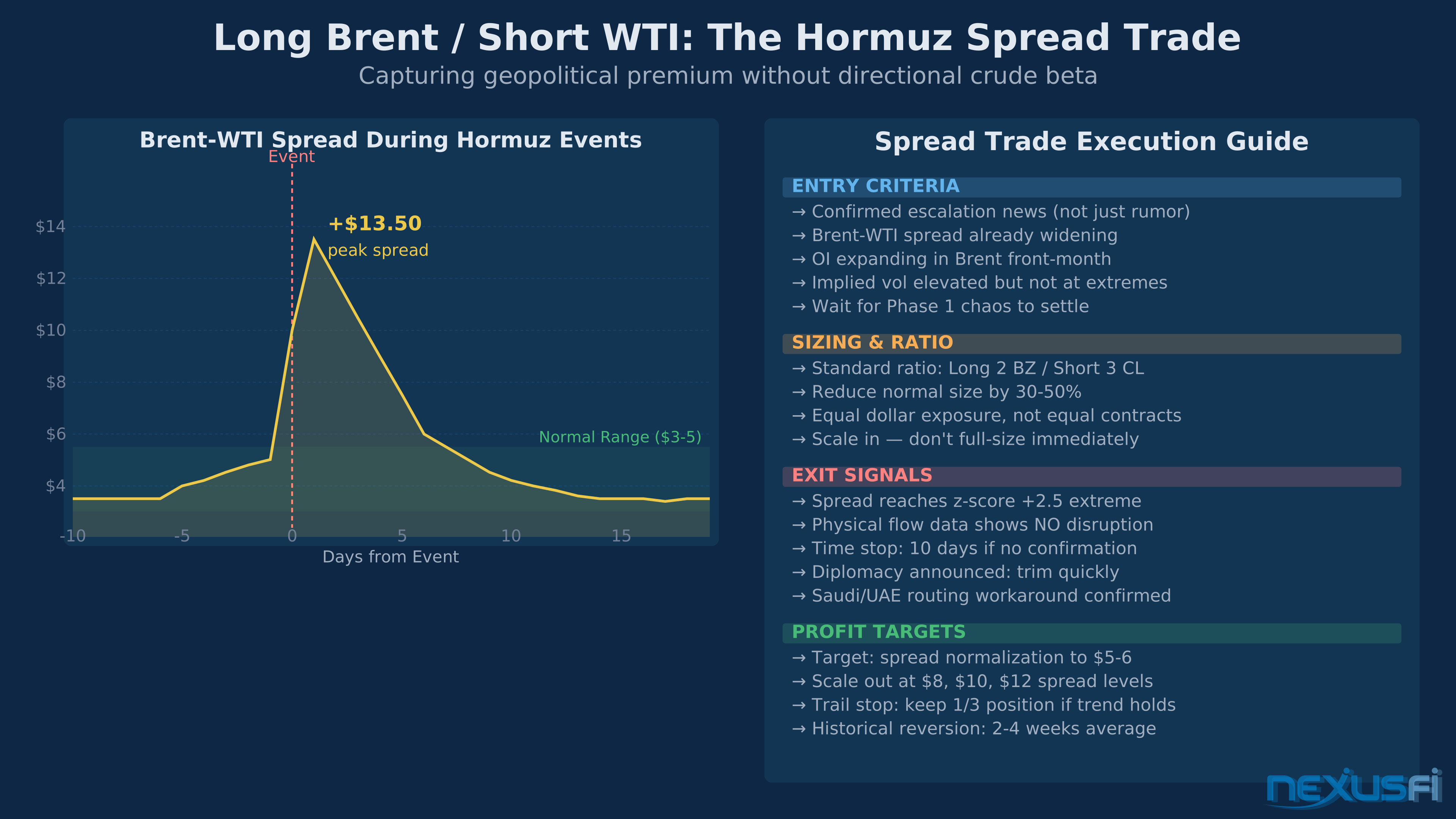
The ratio: A 2:3 ratio (2 Brent contracts / 3 WTI contracts) is a common starting point for roughly dollar-neutral exposure. Brent is priced slightly differently from WTI on a per-barrel basis, and the contract multipliers differ, so the exact hedge ratio depends on current prices and your target dollar exposure. Adjust to equalize dollar exposure, not contract count.
Entry timing: Never enter the spread on the initial gap open. Wait for Phase 1 to settle — typically 24-48 hours after the initial move. You want the spread to be widening on a confirmed signal, not just gap-trading momentum. Look for:
- Brent-WTI spread already at $8+ (elevated from normal $3-5 baseline)
- Physical market data beginning to emerge (tanker news, insurance stories)
- OI expanding in Brent front-month (new longs entering, not just shorts covering)
- Volatility elevated but no longer at the extreme intraday spike
The trade management: Time is your primary discipline tool. If the spread doesn't continue widening within 5-10 trading days after entry, and physical market data shows no disruption, exit the position regardless of how strong the news narrative is. The market's job is to price reality, not headlines. Headlines that don't translate to physical disruption fade, and the spread reverts.
Target: The spread historically reverts to $5-7 within 2-4 weeks when a Hormuz event proves to be non-disruptive. Scale out at $8, $10, and $12 if you entered when it was already elevated. If disruption proves real and the spread pushes to $15+, that's historical extreme territory — at minimum trail a stop, and be open to flipping the trade on resolution news.
@SMCJB in the NexusFi Commodities forum captured the fundamental point about Russia's 2022 oil disruption: "The real issue is Russia is the 3rd largest oil producer in the world behind the US and Saudi. Removing that much supply from the global supply chain is going to rock the supply chain." (@SMCJB, 2022, 3 thanks) The same framework applies to Hormuz — the price on a given day matters less than whether actual flows are disrupted.
Calendar Spreads and Curve Structure #
The calendar spread trade is less intuitive than the Brent-WTI spread but often more profitable during Hormuz events because it directly measures the market's fear about near-term physical tightness.
The basic structure: Long front-month Brent / Short second-month Brent (or longer-dated). When physical disruption risk is acute, traders bid up the front month because they need barrels NOW. Deferred months don't need immediate delivery, so they move less. The spread between front and deferred months (the "roll") widens into backwardation.
How to read it: In normal conditions, the Brent curve is in mild backwardation (front slightly above deferred) or modest contango. When Hormuz fear spikes, the front-back spread moves sharply. A move of $2-5 per barrel in the CL1-CL2 spread during a Hormuz event signals real physical market stress, not just paper-market speculation.
Entry: Calendar spreads work best once Phase 1 volatility has settled and the physical market is starting to react. The spread widening in calendar structure often lags the outright price move by 1-3 days, giving you a cleaner entry than chasing the outright.
The interaction with the Brent-WTI spread: These two trades are complementary. The Brent-WTI spread captures the international vs. domestic divergence. The calendar spread captures the near-term vs. long-term disruption pricing. During a major Hormuz event, running both (in reduced size) gives you diversified expression of the thesis with different mean-reversion characteristics.
@SMCJB in the CL Crude-analysis Thread (2015, 21 thanks) documents this dynamic during historical OPEC+ events and crisis moments — the interaction between calendar structure and spot-market pricing is one of the most reliable fundamental signals in crude.
Case Study: March 2026 Iran Strikes #
The March 2026 US-Israeli strikes on Iran provide the cleanest recent case study of the Hormuz framework in real-time action. Here's what happened and what it meant for each phase of the model.
The Setup (February 2026): The NexusFi community had been tracking the escalation for weeks. "Two Aircraft Carriers, a 10-Day Deadline, and Crude at 6-Month Highs — The Iran Risk" was posted when crude was already at 6-month highs and Trump had set a 10-15 day deadline. This is the pre-positioning window that serious traders use — building positions before the event, not chasing it.
During this pre-event period, the correct positioning was:
- Small long Brent / short WTI spread (anticipating premium expansion)
- Long Brent call options at $90-95 strikes for tail upside
- Reduced outright long size to manage gap risk
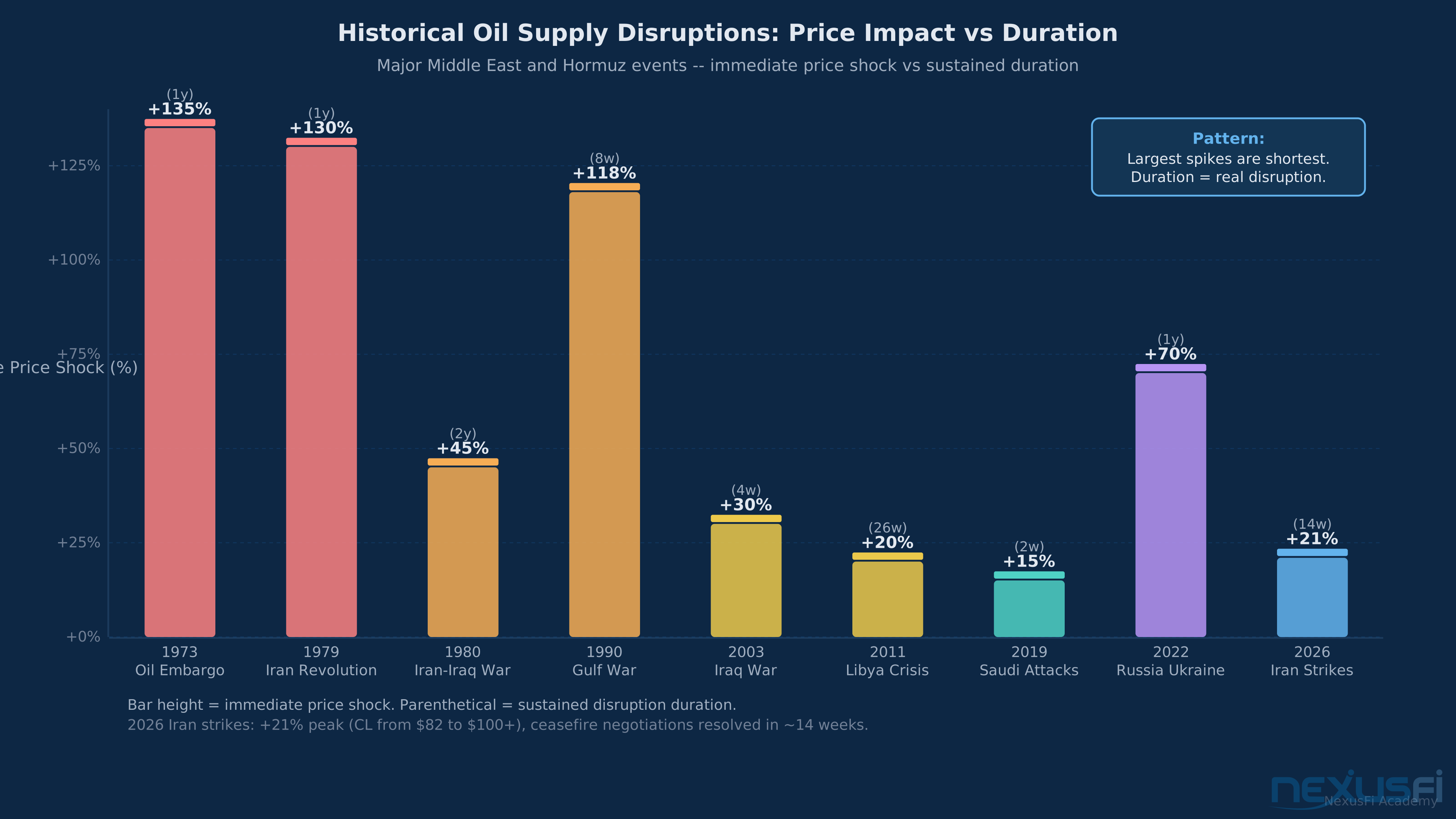
Phase 1 — March 2026 Opening Move: When US-Israeli strikes hit, Brent gapped above $100 (from ~$83), WTI hit $72. The VIX exploded from 14 to 26. Gold surged to $5,388 (+2.3%). S&P futures -1.6%, Nasdaq -2%, Dow -550 points. The opening move was +13% in Brent — historically modest compared to the 1979 Iran Revolution (+135%) and 1990 Gulf War (+118%), but context-dependent: previous crises didn't immediately close Hormuz.
The key question in Phase 1: was the Strait actually being mined? The initial reports were ambiguous. This ambiguity drove the extreme volatility and was the signal to NOT chase the opening gap.
Phase 2 — Confirmation Battle: The next 48-72 hours were a battle between the disruption narrative and the partial-mitigation narrative. Saudi Arabia announced it was activating full East-West Pipeline capacity (~5M bpd). UAE confirmed Fujairah port operations. But Iraqi exports were cut by 1.5M bpd from southern terminals, and J.P. Morgan estimated 4.7M bpd potential loss if Hormuz stayed closed.
For traders who waited for Phase 1 to settle, the entry window opened around Day 2-3. The Brent-WTI spread had partially narrowed from its $28 extreme to $15-18 but remained elevated well above baseline. The physical market data was ambiguous but not clearly non-disruptive.
Phase 3 — Resolution: Diplomatic back-channels opened and over the following 2-3 weeks, Brent pulled back from $100 to the $80s as the Strait remained technically open (though with elevated insurance costs). The spread reverted from the extreme wides toward $8-10 before eventually normalizing.
Traders who executed the framework correctly:
- Pre-positioned in the Long Brent / Short WTI spread before March 2026
- Held through Phase 1 chaos without adding
- Added in Phase 2 when spread partially narrowed but physical market remained stressed
- Scaled out as spread normalized in Phase 3
Traders who got hurt:
- Chased the outright long CL gap on the open (bought $88 WTI, saw it fall back to $75)
- Held pure long Brent without the hedge (caught the full $100→$82 reversal)
- Exited the spread too early at $10-12 before the full mean-reversion to $5

Cross-Asset Confirmation Framework #
The single most important discipline in Hormuz trading is knowing whether you're in a real disruption or a headline-only spike. The cross-asset framework separates these two scenarios reliably.
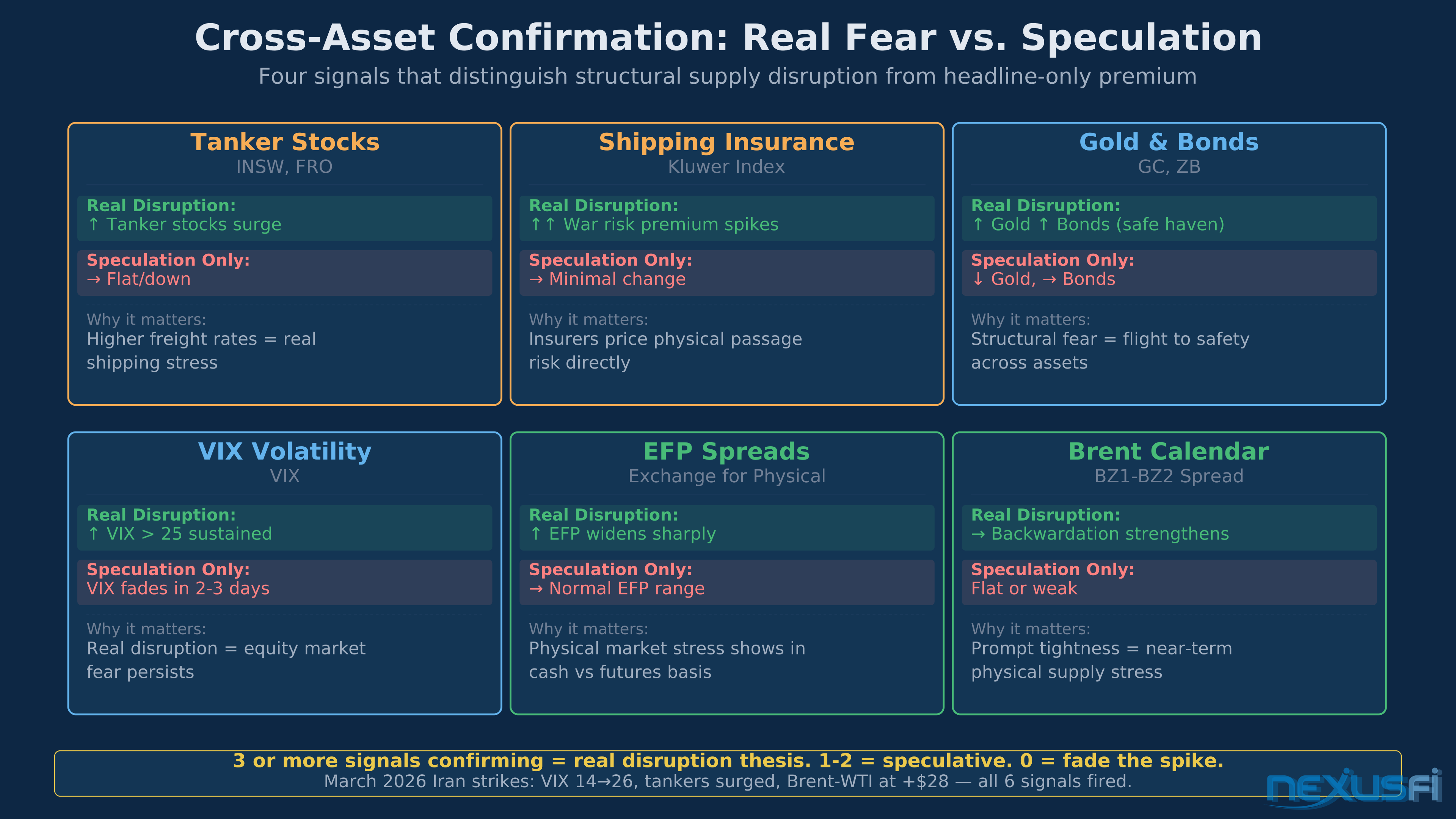
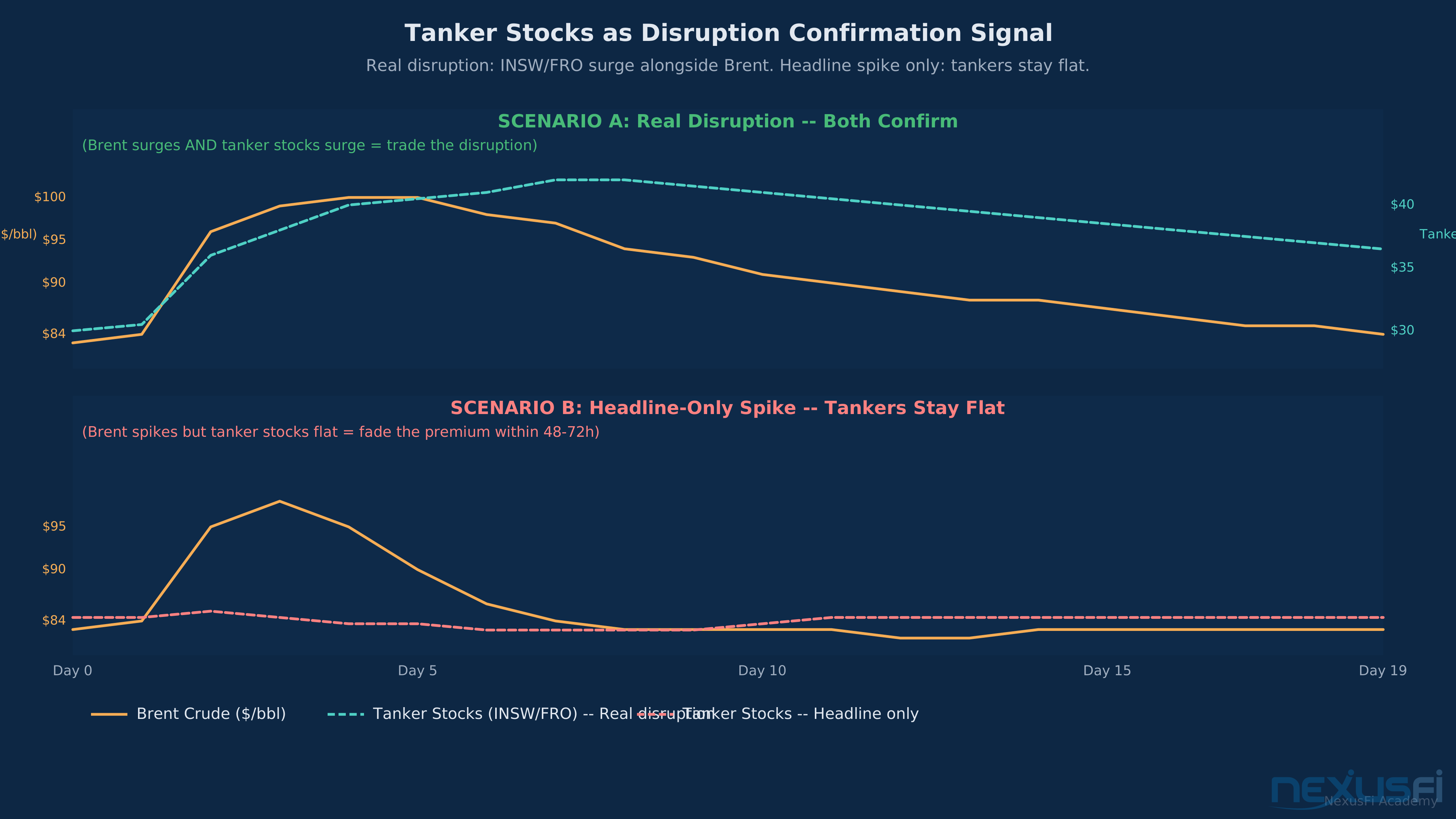
Signal 1: Tanker Stocks Companies like International Seaways (INSW) and Frontline (FRO) own crude tankers. If Hormuz fear is real, their earnings will improve because (a) rerouting around Africa adds 15+ days to tanker voyages, burning capacity, and (b) war risk premiums in the Gulf push up charter rates. Real disruption = tanker stocks surge. Headline-only speculation = tanker stocks flat or down.
Signal 2: Shipping Insurance (War Risk Premiums) The Kluwer Index and Lloyd's of London publicly report changes in war risk premiums for vessels transiting the Gulf. When this number moves materially — more than doubling from baseline — it signals that underwriters with actual exposure believe the risk is real. This is the strongest physical-market confirmation signal available.
Signal 3: Gold and Bonds Safe haven assets tell you whether the market is pricing genuine geopolitical fear or just an oil-specific event. @jlabtrades noted that the Hormuz threat was tied to a broader chokepoint strategy: "Its closely tied with Yemen/Houthis doing the same at the Hodeida port, allowing them to threaten the Bab-el-Mandeb Strait of the red sea." (@jlabtrades, 2026, 3 thanks) Multi-chokepoint threats amplify the gold and bond safe-haven signals dramatically. In the March 2026 event, gold surged to $5,388 (+2.3%) alongside Brent's spike. That cross-asset correlation is a structural fear signal. An oil spike with flat gold and rising equity markets is more likely speculation or a temporary supply interruption.
Signal 4: VIX and Equity Futures The March 2026 event drove VIX from 14 to 26 — a 12-point jump in a single session. That level of equity market fear confirms the event is being priced as a macro disruption, not just an energy-sector event. Sustained VIX above 25 for multiple days is a strong confirmation signal.
Signal 5: EFP Spreads (Exchange for Physical) EFP is the basis between physical crude and futures contracts. When physical buyers are desperate for near-term barrels — and willing to pay above futures prices — EFP spreads widen. This is the clearest possible signal that the physical market, not just paper-market speculators, is feeling the disruption. EFP data is less accessible to retail traders but industry sources report it quickly during major events.
Signal 6: Brent Calendar Spreads As described above, the prompt calendar spread (front month vs. second month) is the purest physical tightness signal available in the futures market itself. When front Brent is $3+ above second-month Brent (strong backwardation), physical traders are paying up for prompt delivery. This is self-reporting real supply pressure.
The confirmation rule: Three or more of these six signals confirming the disruption thesis = real disruption, trade so (spread, calendar, duration). One or two signals = ambiguous, smaller position, shorter time horizon. Zero signals confirming = fade the spike, the premium will compress.
In the March 2026 event, at least four of the six signals confirmed during Phase 2 — which is why the Brent-WTI spread remained elevated for weeks rather than reverting quickly.
Risk Management #
Hormuz trades have two specific risk management requirements that differ from normal crude futures trading: gap risk and time discipline.
Gap Risk #
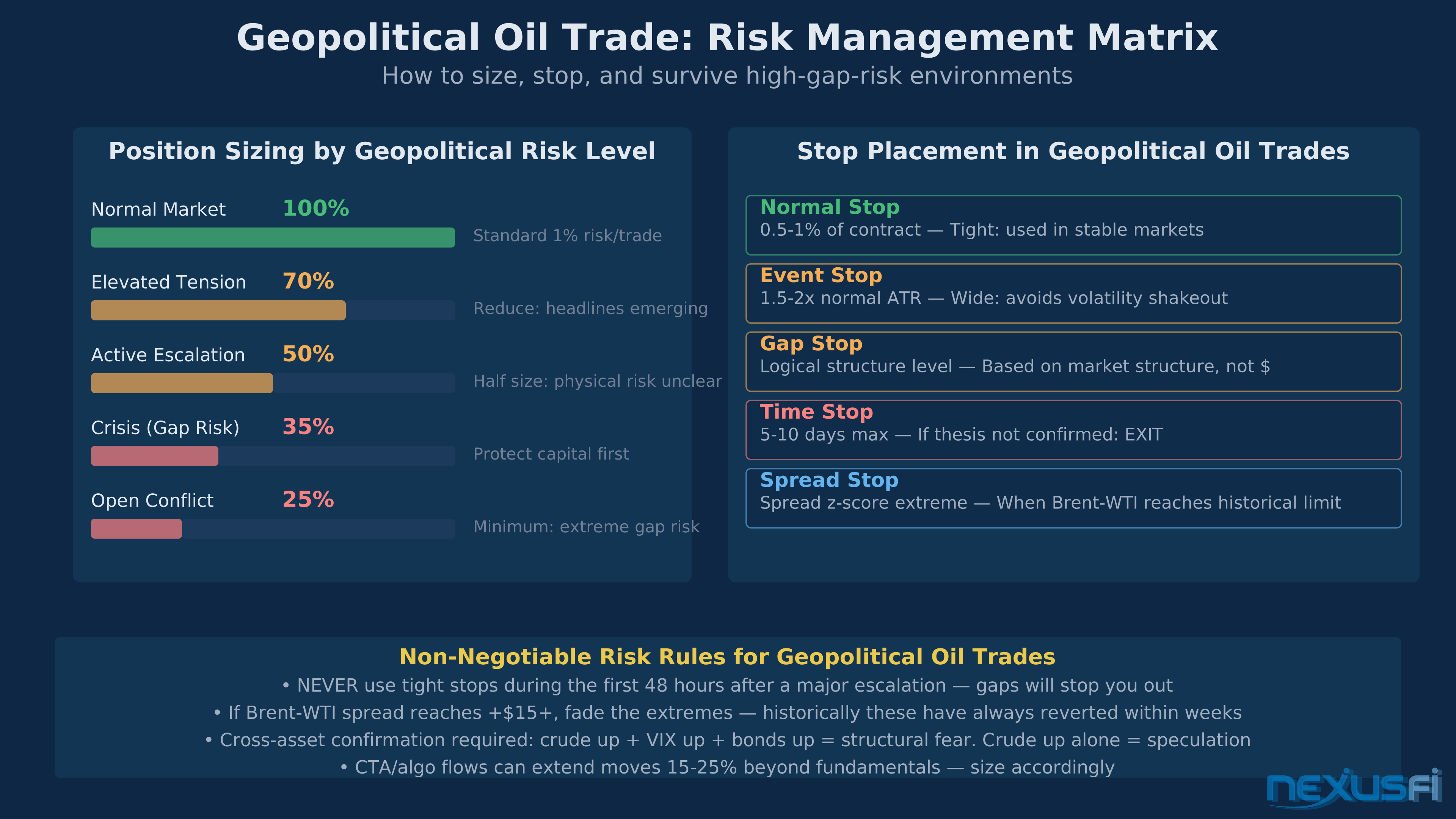
Gap risk kills normal position sizing. During Hormuz events, crude oil can gap 5-15% in a single session — blowing straight through conventional stop levels without a fill. The standard approach of "I'll put a stop 0.5% below my entry" becomes irrelevant when the market gaps 11% at the open. Adjust before the trade, not during it.
When the Strait of Hormuz is in the news, crude oil can gap 5-15% on an open — skipping straight through your stop loss level without filling. Normal crude trading stops of 0.5-1% of contract value become inadequate when a single session can move 11%. The only viable responses to gap risk are:
Reduce size by 30-50%: If your normal CL trade is 2 contracts, trade 1. This lets you use a wider logical stop (based on market structure, not a fixed dollar amount) while keeping total risk in line. The math is uncomfortable but necessary: a 50% size reduction with a 2x wider stop gives you the same dollar risk but survives the gap that would have stopped out your normal size.
Use spread trades rather than outrights: Long Brent / Short WTI has substantially less gap risk than outright long Brent. Both legs gap on the same news, partially offsetting. You're exposed to the spread moving against you, not to the full outright move.
Pre-position at smaller size before events: The March 2026 escalation had weeks of warning signals — the carrier deployments, the 10-day deadline, the diplomatic failures. Traders who read the NexusFi Traders Hideout thread on the Iran risk and built small spread positions before the strike had far better entries than anyone trading the gap.
Time Discipline #
Every Hormuz trade needs a time stop. Set it before entering: "If this spread doesn't confirm within 10 trading days, I'm out." This prevents the classic mistake of staying in a trade that's not working because the narrative is compelling.
News narratives can stay compelling long after the market has moved on. The physical market eventually determines price — and if physical flows are intact, the price premium will erode regardless of what commentators are saying. Time stops enforce discipline when conviction is high and markets are grinding sideways.
The Exit Checklist #
Before closing a Hormuz trade, confirm at least one of:
- Physical flow data confirms no sustained disruption (ships routing normally, insurance premiums stabilizing)
- Diplomatic resolution announced (ceasefire, nuclear deal, UN mediation)
- Brent-WTI spread reaches historical extreme z-score (> +2.5 standard deviations)
- Time stop triggered (10 trading days without physical confirmation)
- Calendar spread fully inverts to contango (front below deferred = tightness fear gone)
Symple's observation captures the risk every Hormuz trader faces: you're not just trading oil. You're trading geopolitical decisions made by people you cannot predict. The spread trade exists precisely because it limits your exposure to that unpredictability — you capture the premium without betting on the outcome.
Common Mistakes #
Mistake 1: Treating it as "oil goes up" The most common mistake is treating Hormuz news as a simple long crude trade. The reality is more specific: Brent goes up more than WTI (so pure long WTI is the wrong instrument), and both may only hold the premium if disruption is real (so time stops matter). The traders who made money in March 2026 were those who understood relative value, not just direction.
Mistake 2: Chasing the Phase 1 gap Buying after the initial spike is how traders get caught in the 40-60% reversion that occurs when physical flows prove intact. The gap open is the worst time to enter. The Phase 2 confirmation window — 24-72 hours after the initial move, when physical data is starting to emerge — is when the edge is.
Mistake 3: Ignoring volatility pricing When implied vol has already spiked 100%, buying options for upside exposure is expensive. You're paying for a move that may have already happened in the options market. If you're entering an options position after Phase 1, check whether vol term structure has already normalized — that signals the market is less concerned about further upside than you might think.
Mistake 4: No time stop Hormuz events that prove non-disruptive revert quickly. Staying in a geopolitical premium trade for weeks hoping for an escalation that never comes is how steady profits become losses. Discipline: if your thesis isn't confirmed by physical market data within 10 days, exit. The market will tell you if you're right.
Mistake 5: Not distinguishing CTA flows from fundamental repricing Systematic trend followers can amplify Hormuz moves by 15-25% beyond fundamentals. A $10 fundamental move can become a $12-13 move as CTAs pile in. This amplification is temporary — when CTAs reverse, the extra move comes out quickly. Treating the CTA-amplified price as the new fundamental value leads to entering at the wrong level and getting caught on the reversion.
Mistake 6: Focusing only on crude Hormuz events affect more than CL and BZ. Refined products (RBOB gasoline, heating oil) can move more violently. Natural gas (Qatar's LNG exports through Hormuz) may reprice. Currency pairs — USD/AED, USD/SAR — can move. Cross-asset positions can provide better risk/reward than a pure crude futures trade.

Putting It Together #
The Strait of Hormuz is the world's most important oil chokepoint, and geopolitical events in the Persian Gulf are recurring, pattern-driven, and tradeable with the right framework.
The core principles:
- Brent leads, WTI lags — Hormuz risk is always a Brent trade first
- The spread, not the outright — Long Brent / Short WTI captures the premium without the beta
- Three phases, three trades — Phase 1: avoid. Phase 2: spread entry. Phase 3: calendar and reversion
- Physical confirmation determines duration — headlines fade. Shipping insurance data, tanker routing, and EFP spreads tell the truth
- Time stops are mandatory — if the physical market doesn't confirm within 10 days, exit
- Reduce size by 30-50% — gap risk is real, and position sizing is your primary risk tool
The March 2026 Iran escalation showed all of this in real time. Traders with the framework ready — who had studied the structure, built pre-event positions, and knew exactly which signals to watch — navigated it. Traders who chased the gap open got punished.
The Strait will be threatened again. When it is, you'll know what to watch, what to trade, and how long to stay in it.
Knowledge Map
Go Deeper
Build on this knowledgeCitations
- — US-Israel Strikes on Iran -- Brent Above $100, Strait of Hormuz Mined [Updated] (2026) 👍 2“Saturday, February 28, 2026. 2:47 AM EST. The geopolitical order shifted -- and oil markets woke to a crisis that makes every previous Mideast flare-up look like a dress rehearsal. US and Israeli forces killed Iran's Supreme Leader Ali Khamenei in coordinated strikes. Brent crossed $100.”
- — Two Aircraft Carriers, a 10-Day Deadline, and Crude at 6-Month Highs -- The Iran Risk (2026) 👍 2“Beyond the daily crude throughput figures already mentioned, the Strait of Hormuz functions as a non-redundant export corridor for several Gulf producers. The disruption threshold in modern energy markets is therefore financial and logistical: Not purely military. Even limited exercises or signaling can alter insurance pricing models.”
- — US-Israel Strikes on Iran -- Brent Above $100, Strait of Hormuz Mined [Updated] (2026) 👍 4“oil futures surged roughly 11% at the open, gold climbed nearly 2%, and equity futures slipped. An Iranian state TV report suggested the younger Khamenei may have been wounded in that strike.”
- — US-Israel Strikes on Iran -- Brent Above $100, Strait of Hormuz Mined [Updated] (2026) 👍 3“If thinking about the national interest the countries have involved in this war: The circumstances in most markets at this specific times do heavily depend on what the war parties do as escalations or de escalations at given times.”
- — US-Israel Strikes on Iran -- Brent Above $100, Strait of Hormuz Mined [Updated] (2026) 👍 3“Iran escalated in a way nobody anticipated -- they've turned the Strait of Hormuz into a toll road. Its closely tied with Yemen/Houthis doing the same at the Hodeida port, allowing them to threaten the Bab-el-Mandeb Strait of the red sea.”
- — Two Aircraft Carriers, a 10-Day Deadline, and Crude at 6-Month Highs -- The Iran Risk (2026) 👍 2“While tariffs and Nvidia dominated headlines this week, crude oil quietly hit 6-month highs -- and the catalyst is a military standoff that could escalate fast. Two US aircraft carriers are now positioned near the Middle East, Trump set a "10 to 15 day" deadline for Iran.”
- — The CL Crude-analysis Thread (2015) 👍 21“I personally think that you shouldn't view trading CL spreads as trading a less leveraged outright. I think spreads should in many ways be treated as their own market. When you trade spreads you are trading the steepness of the curve.”
- — Are CL futures a good buy right now? (2022) 👍 3“The real issue is Russia is the 3rd largest oil producer in the world behind the US and Saudi. Removing that much supply from the global supply chain is going to rock the supply chain in a way that's difficult to imagine.”
- U.S. Energy Information Administration — The Strait of Hormuz: World's Most Important Oil Transit Chokepoint (2023)
- CME Group — WTI Crude Oil Futures Contract Specifications (2024)
- ICE — Brent Crude Oil Futures: Contract Specifications and Trading (2024)