



OPEC+ Production Decisions and Crude Oil Futures Trading: The Complete Playbook
Eight times a year, a group of 23 oil ministers gathers — sometimes in Vienna, sometimes via video — and sets the production quotas that determine how much crude oil flows into global markets. What they decide moves WTI crude (CL) and Brent (BZ) futures within seconds of the press release. The initial move is frequently wrong. The second move is where the real money is.
This is the complete playbook for trading around OPEC+ production decisions: how the mechanism actually works, why compliance matters more than announcements, how each benchmark responds differently, and the strategies that give you an edge when 23 countries sit down to manage the world's oil supply.
Overview #
OPEC+ meets eight times a year to set production quotas for 23 member countries. Every meeting moves WTI crude (CL) and Brent (BZ) futures within seconds of the press release. The initial move is frequently wrong. The second move — driven by physical market evidence rather than headline parsing — is where experienced traders find their edge.
This article covers the complete playbook: the OPEC+ decision mechanism, compliance monitoring via tanker tracking, key member incentive structures, WTI vs. Brent reaction differences, five historical episodes that define the modern trading approach, and trading strategies for announcement events.
The Crude Oil (CL) Futures instrument guide covers contract specs, fundamentals, and Cushing delivery mechanics. The Crude Oil CL Trading Strategies article covers EIA inventory setups and intraday execution. This article focuses specifically on the OPEC+ production decision cycle.
How OPEC+ Production Decisions Actually Work #
OPEC+ is not a centralized authority handing down edicts. It's a negotiated producer alliance, and understanding the negotiation mechanics tells you a lot about market reaction.
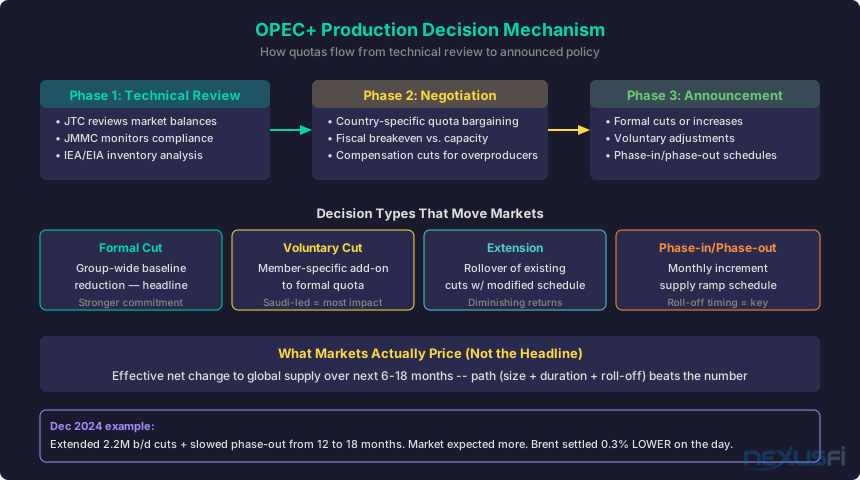
The decision process runs in layers:
The Joint Technical Committee (JTC) and Joint Ministerial Monitoring Committee (JMMC) review market balances, inventory trends, demand forecasts, spare capacity data, and compliance reports. These committees feed analysis into ministerial negotiations — where the real horse-trading happens.
Country quotas are shaped by spare capacity, fiscal breakeven prices, historical production baselines, geopolitical bargaining, and — crucially — "compensation cuts" for members who previously overproduced. When Iraq produces above quota for three consecutive months, the next agreement includes language about Iraq making up the excess. Markets watch whether those compensation pledges materialize.
The announcement itself takes several forms:
- Formal group-wide cuts or increases — the headline number
- Voluntary adjustments by individual members on top of formal quotas
- Extensions of existing cuts with or without modifications
- Phase-in/phase-out schedules with monthly increments
The flexibility mechanism is the real policy lever. Monthly adjustability lets OPEC+ respond to demand shocks without long-term commitments. When the December 2024 meeting extended cuts by three more months and slowed the phase-out timeline from 12 to 18 months, markets initially reacted positively — then digested that the surplus expected in 2025 was reduced but not eliminated, and Brent settled the day 0.3% lower. Markets were expecting something more aggressive. That gap between expectation and delivery is where traders make or lose money.
What the headline number doesn't tell you:
The math behind "2.2 million b/d voluntary cuts" sounds simple. It's not. Voluntary cuts sit on top of baseline constraints, which themselves reference baselines that were previously adjusted. By 2024, OPEC+ had layered three separate cut tranches:
- Group-wide cuts of ~2 million b/d through end of 2025
- Voluntary supply reductions of 1.66 million b/d from nine members (extended through 2025)
- Additional voluntary cuts of 2.2 million b/d (the one markets focused on most)
When a meeting "extends cuts," you need to know which tranche, by how long, and whether the roll-off schedule changed. The market cares about the effective net change to global supply over the next 6-18 months, not the headline. Traders who built positions on the headline "2.2 million b/d extended" without understanding the phase-out schedule got caught by the subsequent price fade.
Compliance Monitoring: Why the Market Tracks Tankers, Not Communiques #
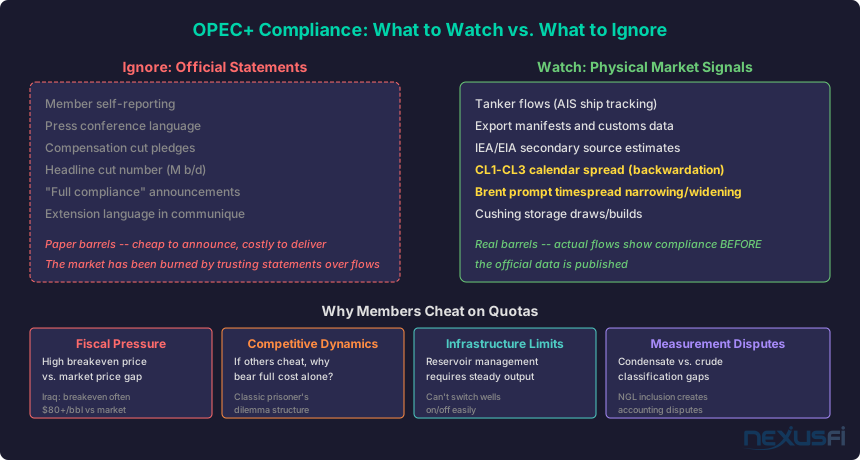
Official OPEC+ compliance monitoring uses secondary source estimates — IEA and EIA production data, tanker tracking services, export documentation, and satellite surveillance. This is important: member self-reporting is not the primary data source. There's a reason for that.
Why quota cheating happens:
Compliance is driven by incentives, not morality. When a member country needs $80/barrel to balance its budget and prices are at $72, the temptation to produce above quota is real. Iraq's fiscal breakeven has historically exceeded what OPEC+ pricing supports — their production behavior reflects that math, regardless of what their minister signs in Riyadh.
The mechanisms that drive overproduction:
- Fiscal pressure — the strongest driver; members with high breakeven prices produce what they need, not what they promised
- Infrastructure and spare capacity — sometimes members physically can't cut (existing contracts, reservoir management requirements)
- Competitive dynamics — if Russia suspects UAE is cheating, why bear the cost of discipline alone?
- Measurement gaps — different grades, condensates, NGL classification creates legitimate accounting disagreements
The NexusFi Commodities forum has tracked this dynamic in real time for years.
That instinct — trading the physical reality over the announcement — reflects what compliance-aware traders understand: the paper barrel is worth less than the real barrel.
What compliance failure looks like in the futures market:
When compliance is suspect, the curve shape tells you before the official data. If OPEC+ announces a bullish cut but physical markets don't tighten, backwardation narrows — or the market doesn't develop backwardation at all. Spreads like the 1-month vs 3-month (CL1-CL3) are better leading indicators of effective compliance than official statements.
— tracking the curve shape as a real-time compliance proxy.
The rule: watch tanker exports and prompt spreads. Official cuts that don't show up in physical tightness fade fast.
The spread between the prompt month and 3-month deferred (CL1-CL3) is the fastest real-time compliance proxy available. It updates continuously, reflects physical tightness before official data, and is actionable on a tick-by-tick basis — unlike tanker reports, which have a 1-2 week lag. If an OPEC+ cut is genuinely tightening supply, CL1-CL3 backwardation will widen within days of the implementation date. If it's not tightening supply, the spread stays flat or narrows.
The Four Key Members and What Their Behavior Means for Prices #
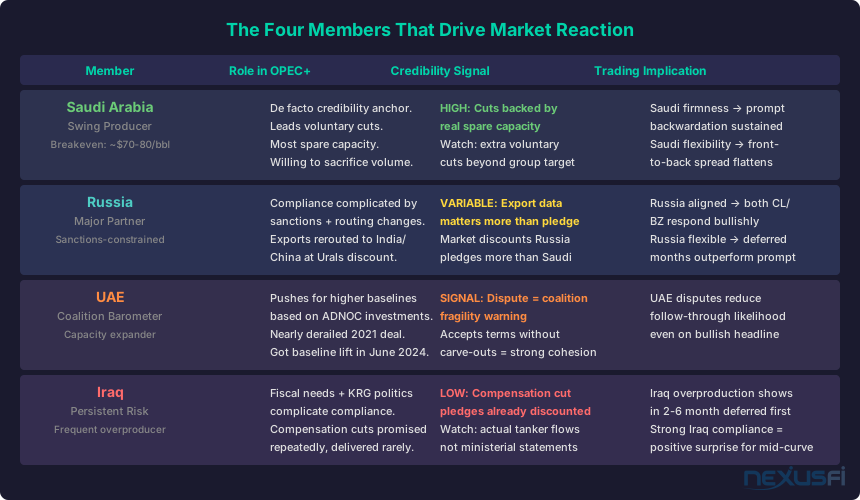
OPEC+ has 23 members, but four drive the market's reaction function. Understanding each member's incentives tells you how to assess announcement credibility before trading it.
Saudi Arabia: The Credibility Anchor #
Saudi Arabia is the de facto swing producer and the most market-moving force in OPEC+. When Saudi leads a cut — especially through voluntary mechanisms on top of formal quotas — the market treats it as credible because Saudi has both the spare capacity to deliver and the institutional commitment to actually cut.
Saudi Arabia's fiscal breakeven has historically been in the $70-80/barrel range, creating genuine incentive to defend prices. When Aramco is simultaneously executing a $12 billion secondary share offering, as it was at the June 2024 meeting, Saudi policy decisions carry additional institutional weight.
Trading implication: Saudi-led firmness reliably produces prompt backwardation. When Saudi signals additional voluntary cuts beyond the group consensus, front-month CL and BZ outperform deferred months. When Saudi shows flexibility about roll-off schedules, the front-to-back spread narrows — the market isn't pricing sustained tightness anymore.
Russia: The Compliance Wildcard #
Russia's production behavior is complicated by sanctions, logistics constraints, and the economics of selling discounted Urals crude in Asian markets. Russia's compliance track record within OPEC+ is mixed — the country has both genuine operational constraints and geopolitical incentives to maximize revenue.
Since 2022, Russian crude flows have been rerouted away from European buyers toward India and China, often at significant discounts to Brent. This changes the compliance calculus: Russia can be "compliant" on official output numbers while actual revenue flows look very different. The market has learned to discount Russian compliance pledges more than Saudi ones.
Trading implication: When Russia is explicitly aligned with deeper cuts — especially if Russian export data confirms the commitment — CL and BZ respond bullishly. When Russia pushes for relaxation or signals production flexibility, the market interprets this as coalition fragility, and deferred months can outperform prompt as traders expect eventual supply normalization.
UAE: The Coalition Barometer #
The UAE has consistently pushed for higher production baselines based on its genuine capacity investments. Since 2020, Abu Dhabi National Oil Company (ADNOC) has invested heavily in capacity expansion, giving the UAE legitimate grounds to argue for a higher quota ceiling than existing baselines allow.
The UAE's internal tension with OPEC+ creates a useful market signal: when the UAE accepts current baselines without negotiating carve-outs, coalition cohesion is strong. When UAE presses hard for baseline adjustments — as it did in 2021, nearly derailing the agreement — it signals that the alliance may be under strain.
At the June 2024 meeting, UAE's 2025 production target was lifted by 300,000 b/d to recognize capacity investments. The adjustment was conditional on future scheduling, reducing immediate supply concern while addressing UAE's legitimate grievance. Markets parsed this correctly as a concession to keep the coalition intact.
Trading implication: UAE baseline disputes increase headline-to-follow-through uncertainty. Even a bullish announcement can see limited sustained upside if the market perceives UAE's stance as weakening coalition discipline.
Iraq: The Persistent Overshoot Risk #
Iraq is the member whose compliance gap most reliably dilutes the market impact of announced cuts. Iraq's domestic fiscal needs, political pressures, and the Kurdistan Regional Government's semi-autonomous production complicate central government quota compliance.
The market prices this in. When Iraq announces it will make "compensation cuts" for prior overproduction, the discount is already embedded in consensus. The question traders ask isn't "did Iraq promise to cut?" but "what do the tanker flows show?"
Trading implication: Iraq compliance failure typically shows up in 2-6 month deferred prices first — traders reduce forward tightness expectations before official data confirms overproduction. If Iraq compliance is strong in a given period, the positive surprise can lift the middle of the curve.
WTI vs. Brent: Why the Same Announcement Moves Them Differently #
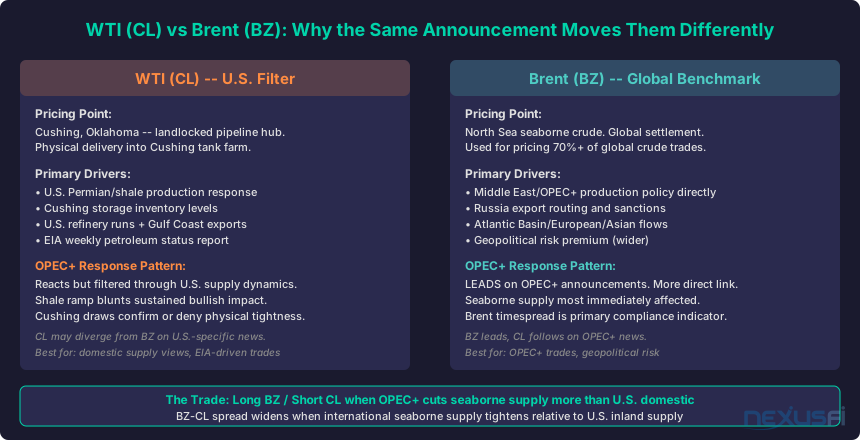
WTI (CL) and Brent (BZ) are both crude oil benchmarks, but they don't trade OPEC+ news identically. Understanding the structural differences between the two contracts tells you which spread to use to express a view on OPEC+ decisions.
Brent's direct OPEC+ linkage:
Brent is the global crude benchmark — used for pricing seaborne transactions across Europe, Africa, Asia, and the Middle East. When OPEC+ cuts production, the most immediate physical impact falls on seaborne cargoes, which are Brent-priced. Brent typically leads on OPEC+ announcements because the physical connection is more direct.
WTI's American filter:
WTI is priced at Cushing, Oklahoma — a landlocked pipeline hub in the middle of the United States. WTI reflects:
- U.S. domestic production levels (especially Permian Basin shale)
- Cushing storage inventory
- Pipeline connectivity between producing regions and Gulf Coast refiners
- U.S. shale production's response to price signals
An OPEC+ cut that's bullish for Brent may have less CL impact if: U.S. shale is ramping production in response to higher prices, Cushing storage is running high, or Gulf Coast export economics aren't supporting higher domestic prices.
The Brent-WTI spread as a OPEC+ trade:
The Brent-WTI spread (BZ1 - CL1) is one of the cleanest ways to express a view on OPEC+ impact. If you believe the cut will tighten seaborne supply more than U.S. domestic supply:
- Buy BZ (or BZ-CL spread) for the global rebalancing component
- The spread typically widens when international seaborne supply tightens relative to U.S. inland supply
As @Fat Tails explained in the "Do you look at backwardation/contango when daytrading CL?" thread: "In backwardation, you can buy oil at a cheaper price farther out in the future — this puts downward pressure on current prices."
That curve structure dynamic is what OPEC+ production decisions are designed to create and maintain. When cuts work as intended, prompt months tighten relative to deferred, backwardation develops, and storage economics shift from "fill the tank" to "sell now."
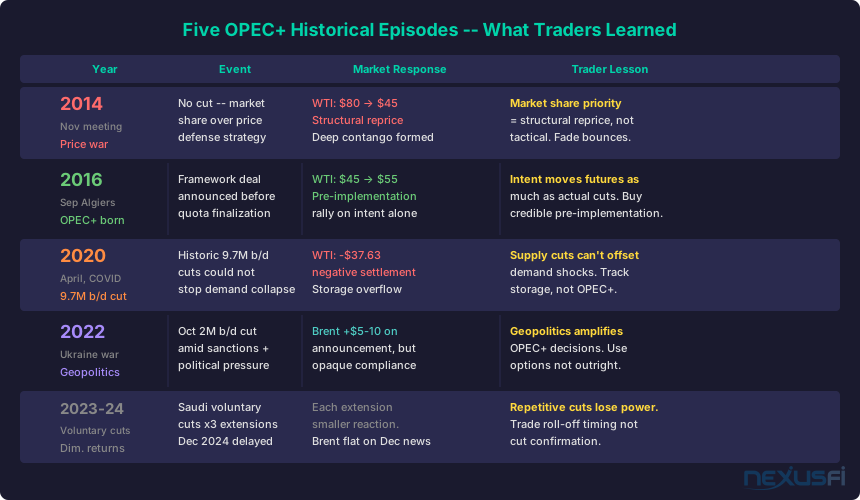
Five Historical Episodes That Define the OPEC+ Trading Playbook #
History doesn't repeat in crude oil markets, but it rhymes consistently enough to be useful.
2014: Market Share Over Price Defense — The Structural Reprice #
In November 2014, OPEC (before the + was added) voted to maintain production despite oil prices falling sharply. Saudi Arabia, concerned about losing market share to surging U.S. shale production, decided to let prices fall rather than cut output and effectively subsidize high-cost competitors.
WTI fell from above $80/barrel to below $50 between October 2014 and January 2015. The collapse wasn't a tactical move — it was a structural repricing. The market recognized that OPEC was no longer functioning as a price-supportive swing producer, and the entire forward curve repriced lower.
What traders learned: When a major OPEC member signals that market share matters more than price support, the market can reprice structurally across the entire curve — not just prompt months. Calendar spreads collapsed into deep contango as the market anticipated prolonged oversupply. Fade-the-bounce was the dominant strategy for months.
2016: The Algiers Deal — Intent Moves Futures #
The September 2016 Algiers agreement was the framework that eventually became OPEC+. OPEC announced a coordinated output target before specific national quotas were finalized. The credible intent — backed by Saudi willingness to cut — was enough to move prices.
WTI rallied from below $45 to above $55 between September and December 2016. The move happened before most barrels were actually withheld. The market was pricing in the expected future supply reduction, not the already-delivered physical tightness.
What traders learned: With OPEC announcements, intent can move futures as much as actual cuts — when the coalition leadership (Saudi Arabia) makes the intent credible. The July/Aug 2016 lows in crude were tradeable with the Algiers framework as the trigger. Buying the dip before official implementation, rather than waiting for confirmed physical tightness, is often the better trade.
2020: COVID Cuts — When Supply Can't Offset Demand Collapse #
April 2020 produced the most extreme crude oil event in history: WTI May futures settled at negative $37.63 per barrel. OPEC+ cut production by a historic 9.7 million b/d in response to COVID demand destruction. The cuts were real and extraordinary. They didn't matter.
When demand falls faster than supply can adjust, OPEC+ policy becomes irrelevant to the immediate term. Storage facilities filled to capacity. The negative settlement in WTI was a physical delivery problem — holders of May contracts couldn't take delivery at Cushing because storage was full — but it reflected the fundamental reality that no production cut could match the speed of demand collapse.
OPEC+'s cuts did matter for the recovery phase. As demand stabilized and rebounded in 2H 2020, the production discipline helped reconstruct market structure from deep contango back toward backwardation, supporting prices from $40 toward $60.
What traders learned: Supply cuts can't offset a demand shock of sufficient magnitude in the near term. During COVID, the macro/demand story dominated crude pricing until inventories began normalizing. In extreme demand-shock regimes, focus on storage levels, prompt spreads, and demand recovery trajectory — not OPEC+ announcement headlines.
2022: Geopolitics as Volatility Amplifier #
Russia's invasion of Ukraine in February 2022 complicated the OPEC+ framework in multiple ways simultaneously. Russian production faced sanctions, physical volumes were rerouted, and the political relationship between Saudi Arabia and Western governments became publicly strained.
OPEC+ October 2022 decision to cut production by 2 million b/d triggered significant political pressure from the Biden administration. Brent moved $5-10/barrel on the announcement. But follow-through was complicated: actual Russian compliance was hard to measure under sanctions, and the market couldn't easily separate OPEC+ policy effects from sanctions-driven supply shifts.
What traders learned: Geopolitical context amplifies OPEC+ decisions as volatility drivers. When sanctions or conflict make the physical market opaque, the market prices in more uncertainty — implied volatility rises, spreads can be erratic, and the "two-step" reaction (initial headline vs. evidence-based reassessment) is compressed. In these environments, using options structures rather than outright futures positions improves risk management.
2023-2024: Voluntary Cuts and Diminishing Returns #
Saudi Arabia led a series of voluntary additional cuts through 2023 and into 2024. Each announcement was initially bullish. Each subsequent extension produced a smaller and shorter-lived price response.
The December 2024 meeting — which extended cuts and slowed the phase-out from 12 to 18 months — resulted in Brent settling 0.3% lower on the day. The market had priced in the extension and was disappointed the move wasn't more aggressive.
— the market was parsing multiple data streams simultaneously, and "OPEC jawboning" had become a signal rather than a cause.
What traders learned: Repeated voluntary cut extensions show diminishing market impact. By 2024, the market had shifted from trading the cut announcement to trading the roll-off timing — when do these barrels actually come back? The ING Research analysis of the December 2024 meeting captured this correctly: "The market seemed somewhat disappointed... This suggests that the market was expecting a more aggressive move." The bar keeps rising.
Trading Strategies Around OPEC+ Meetings #
The structure of OPEC+ event risk creates specific, exploitable patterns. Here's how experienced crude futures traders approach these meetings.
Pre-Meeting Positioning: The Six-Factor Checklist #
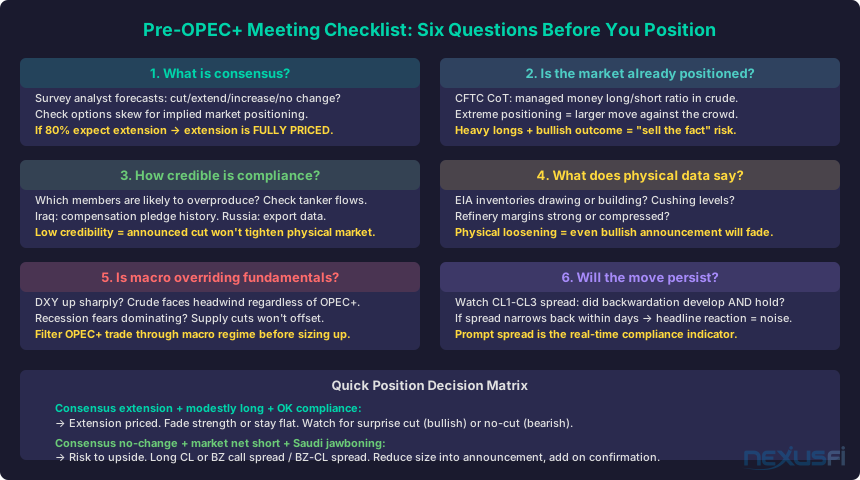
Before entering any position tied to an OPEC+ meeting, run through this checklist:
1. What is consensus?
Survey the expected decision. What are IEA, EIA, Goldman, and bank energy desks modeling? What does options positioning (skew, implied volatility) say about market expectations? If 80% of analysts expect an extension, the extension is fully priced. The surprise is the driver, not the consensus outcome.
2. Is the market already positioned?
CFTC Commitments of Traders data (published weekly) shows managed money positioning in crude futures. Options open interest and skew show how hedgers and speculators are positioned. If the managed money long/short ratio is historically extreme going into the meeting, the move against that positioning will be larger than a "fair value" analysis suggests.
3. How credible is compliance?
Which members are likely to overproduce? If Iraq is running 200,000 b/d above quota and promising compensation cuts, how much does the market believe that promise? If Russia's export data shows production near or at quota, compliance credibility is higher. Use tanker tracking data and independent agency estimates rather than official statements.
4. What does physical data say?
EIA inventory changes, floating storage levels, days of forward demand cover, and refinery margins tell you whether the physical market is already tightening or loosening. If Cushing inventories are drawing down, WTI spreads are already in backwardation, and refinery margins are strong — the physical market is telling you something cuts can confirm but not create. If inventories are building despite announced cuts, compliance is failing.
5. Is macro overriding oil fundamentals?
When the U.S. dollar strengthens sharply, crude prices face headwinds regardless of OPEC+ policy. When recession fears dominate — as in H2 2022 — oil can fall even with supply cuts. Assess whether the macro backdrop is amplifying or neutralizing OPEC+ effects before taking a position.
6. Will the move persist?
The best check on whether an initial OPEC+ reaction will sustain is prompt spread behavior. If the CL1-CL3 spread (1-month vs. 3-month) moves into backwardation and holds — the physical market is tightening, the move has real support. If the spread narrows back within hours or days, the headline reaction was noise.
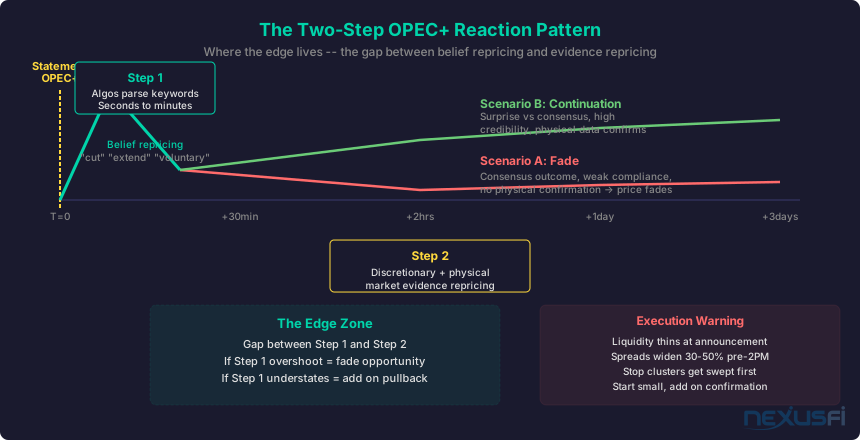
The Two-Step Reaction Pattern #
This is the most reliable pattern in OPEC+ trading:
Step 1 (seconds to minutes): Algorithmic systems parse the official statement the instant it releases. They respond to keywords: "cut", "extend", "increase", "voluntary", "additional". The initial price move happens before any human has read the document. This move represents belief repricing — the market immediately updating on the stated policy change.
Step 2 (hours to days): Discretionary traders, physical market participants, and research desks analyze the details. Is the "2.2 million b/d extension" actually a net change from prior policy or a rollover? What was the phase-out schedule change? Are key members making credible commitments? The second move represents evidence repricing — updating on what the announcement actually means for physical supply.
The gap between Step 1 and Step 2 is where edge lives. If the initial reaction is larger than the fundamental change warrants, the fade has positive expected value. If the initial reaction understates a genuine policy surprise, adding on the pullback after Step 1 is the trade.
The November 2014 OPEC vote to maintain production is the canonical two-step example. The initial reaction was modest. Within weeks, crude collapsed 40% as the structural regime shift registered. The two-step pattern applies to bullish surprises equally: wait for physical confirmation before committing full size.
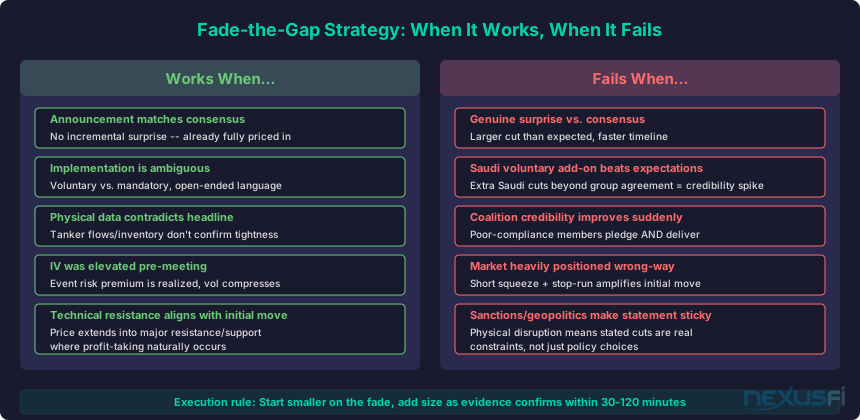
Fade-the-Gap: When It Works, When It Fails #
Fading the initial OPEC+ move is one of the most commonly discussed strategies in the crude oil community. It works frequently — but far from always. Understanding the conditions matters.
Fade works when:
- The announcement is substantially what consensus expected (no incremental surprise)
- Wording is ambiguous on implementation details (voluntary vs. mandatory, specific vs. open-ended)
- Physical data and tanker flows contradict the bullish announcement
- Implied volatility was elevated into the meeting (event risk premium is realized, vol compresses, supports fade)
- Technical resistance/support aligns with where the initial move takes price
Fade fails when:
- The announcement genuinely surprises consensus (larger or smaller than expected)
- Saudi Arabia adds unexpected voluntary cuts on top of the group agreement
- Coalition credibility improves relative to recent track record (members with poor compliance pledge to make compensation cuts and the market believes them)
- Market was heavily positioned against the announced direction (short squeeze / stop-run accelerates the initial move)
The microstructure warning: around OPEC+ announcements, liquidity thins. The initial move may gap through obvious levels, triggering stop clusters before reversing. If you're fading, consider starting with smaller size during the initial 15-30 minutes and adding as the reaction becomes clearer.
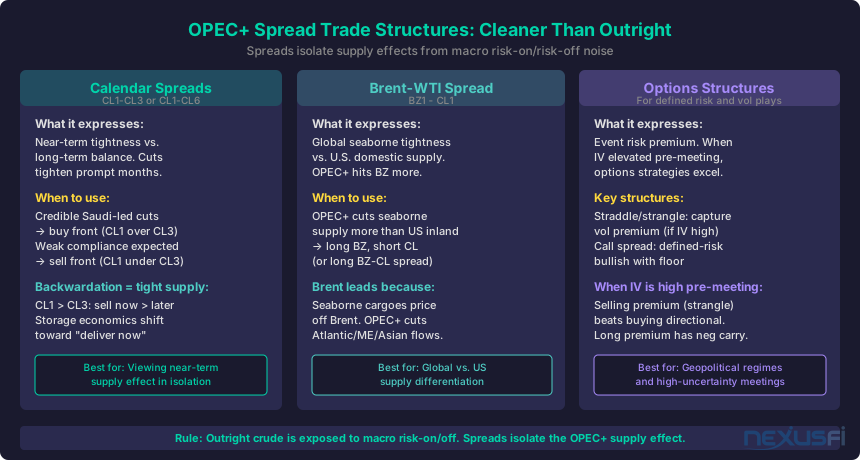
Spread Trades: The Cleaner Expression #
Outright crude positions around OPEC+ meetings are exposed to macro risk-on/risk-off flows that have nothing to do with the supply decision. Spreads isolate the supply effects more cleanly.
Calendar spreads (CL1-CL3 or CL1-CL6):
Credible OPEC+ cuts tighten near-term supply without necessarily changing long-term supply expectations. This shows up as prompt month outperformance — CL1 rises relative to CL3 or CL6, shifting the curve toward backwardation.
If you believe cuts are temporary (6-month extension likely followed by market-share discussions): buy the near-term backwardation expression but expect re-steepening later. The spread trade naturally captures the near-term tightness without the long-term structural bet.
If you believe cuts are structural (multi-year disciplined reduction): outright directional or longer-dated calendar spreads better express that view.
— the prompt-deferred relationship captures supply dynamics that get masked in outright price action.
Brent-WTI spreads (BZ1-CL1):
OPEC+ decisions primarily affect seaborne global supply, which prices off Brent. When a cut is expected to tighten international flows more than U.S. domestic supply:
- Long BZ / Short CL (or simply long the BZ-CL spread)
- This isolates the global rebalancing effect from U.S.-specific inventory/shale dynamics
The spread can also express the opposite view: if U.S. shale responds quickly to higher prices (flooding domestic supply), WTI could lag Brent on the upside or even lead on a fade.
Options structures for event risk:
When implied volatility is elevated into a meeting, selling premium through strangles or iron condors captures the event risk premium. If you have a directional view but want defined risk: call spreads (defined-risk bullish) or put spreads (defined-risk bearish) let you express the view without unlimited downside from a gap-move against you.
The key: if implied volatility in crude options is running much above historical volatility in the weeks before a major OPEC+ meeting, options strategies that are long premium (straddles) typically face negative carry. Selling premium and fading the gap is often more efficient.
Practical Pre-Meeting Decision Framework #
Put it together into a decision tree:
If consensus expects extension, market is modestly long, compliance has been reasonable:
- Extension likely priced in — fade strength or stay flat
- Surprise cut would be bullish, non-extension would be sharply bearish
- Calendar spread: hold existing backwardation plays going into meeting
If consensus expects no change, market is net short, Saudi has been jawboning about market stability:
- Risk is to the upside on a surprise cut
- Long CL or BZ with defined risk (call spread), or long BZ-CL spread
- Reduce size before announcement, add on confirmation
If compliance has been poor, physical market is loosening, macro is bearish:
- Bullish announcement likely to fade
- Wait for Step 1, then position for Step 2 fade
- Short CL1-CL3 calendar spread (prompt underperforms deferred if tightness doesn't materialize)
If geopolitical disruption is the dominant price driver:
- OPEC+ policy is secondary signal
- Options premium rises — consider selling vol rather than taking directional exposure
- BZ-CL spread can widen much on geopolitical risk premia
The Physical Market's Override Power #
One thing the trading strategies above assume: that the oil market is at the core supply-demand driven. Most of the time, it is. But crude oil is also a geopolitical asset, and that creates occasional environments where OPEC+ policy is overwhelmed by macro forces.
When recession fears are significant (GDP growth below 1%, leading indicators contracting), oil demand expectations fall faster than any supply cut can offset. The 2022 second half saw this clearly — despite meaningful OPEC+ production discipline, WTI fell from $120 to below $80 as recession fears overwhelmed bullish supply fundamentals.
When the U.S. dollar strengthens aggressively (DXY up 5%+ in a month), crude faces a mechanical headwind — oil is priced in dollars globally, and a stronger dollar means each barrel costs more in local currency, suppressing demand in import-dependent countries. OPEC+ cuts may support the underlying supply balance while price falls due to dollar dynamics.
The crude oil trader who successfully positions around OPEC+ meetings understands both layers: the supply mechanics and the macro overlay. Filter the OPEC+ trade through the macro lens before executing.
Connecting the Dots: A Complete OPEC+ Trade Setup #
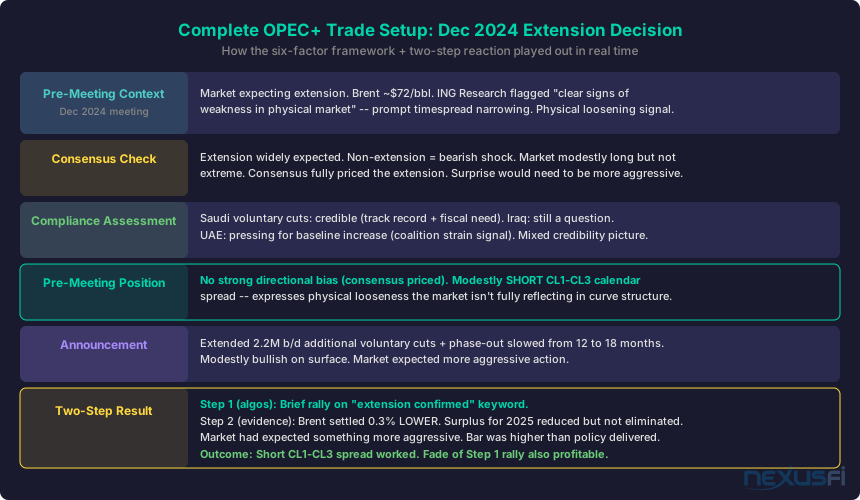
Here's what a complete OPEC+ trading setup looks like, applied to the December 2024 extension decision:
Pre-meeting context: Market expected an extension. Brent was around $72/barrel. ING Research noted "clear signs of weakness in the physical oil market" including narrowing prompt timespread — physical market was telling you the cuts weren't creating the tightness the price level implied.
Consensus check: Extension widely expected. Non-extension would be a bearish shock. Market was modestly long but not extreme.
Compliance assessment: Saudi's additional voluntary cuts were credible. Iraq remained a question mark. UAE was pressing for baseline increase, signaling internal negotiation.
Physical data: Prompt backwardation was narrowing — a warning sign that supply wasn't actually as tight as announced cuts implied.
Pre-meeting position: No strong directional bias given consensus pricing. Modestly short the prompt spread (CL1-CL3) to express the physical looseness the market wasn't fully reflecting.
Announcement: Extended cuts, slower phase-out timeline. Modestly bullish on the surface.
Initial reaction (Step 1): Brief rally on "extension confirmed."
What actually happened (Step 2): Brent settled 0.3% lower. The market had expected something more aggressive. The surplus for 2025 was reduced but not eliminated. The ING note captured it: "The action taken by OPEC+ eats quite heavily into the surplus... but is not enough to push the market into deficit."
Result: The prompt spread trade worked. Physical looseness was correctly identified as a leading indicator. The fade of the initial bullish reaction also worked for traders who waited for Step 1 before entering.
This is how the two-step reaction pattern plays out in real time. Not every meeting follows the script. But the framework — consensus assessment, physical market check, compliance credibility, then the two-step reaction entry — gives you a systematic edge.
Key Takeaways #
The OPEC+ playbook for crude oil futures traders:
Path matters more than headline. The size, duration, and phase-out schedule of cuts drive forward curve repricing more reliably than the initial headline number.
Compliance is tradable as a separate factor. Track tanker flows and independent production estimates. High compliance credibility = sustained backwardation. Low compliance = fading rally.
Spreads over outright. Calendar spreads and BZ-CL basis trades isolate OPEC+ supply effects from macro noise more cleanly than outright CL or BZ positions.
The two-step reaction is reliable. First move = algo/belief repricing. Second move = evidence-based reassessment. The gap between them is where most of the edge lives.
Saudi Arabia is the credibility anchor. Saudi-led voluntary cuts have stronger sustained market impact than group-wide formal quotas. When Saudi signals discipline, prompt backwardation follows. When Saudi shows flexibility, the curve flattens.
Macro context overrides fundamentals periodically. Recession fears and dollar strength can overwhelm even credible OPEC+ cuts. Know which regime you're in before sizing up.
Diminishing returns from repetitive cuts. By the third extension of the same voluntary cut, markets are trading the roll-off timeline, not the cut itself. The baseline assumption changes, and surprise comes from deviation, not confirmation.
The oil market moves on information — from Vienna press releases, from tanker trackers, from U.S. inventory reports, from refinery margins, from everything at once. OPEC+ meetings are the single highest-impact recurring calendar event in crude futures. Trading them well requires understanding both the mechanism and the market's reaction function to that mechanism. The playbook above gives you both.
Citations #
NexusFi community posts and external research that informed the analysis and trading strategies in this article, cited in order of appearance.
Knowledge Map
Prerequisites
Understand these firstGo Deeper
Build on this knowledgeReferences This Article
Articles that build on this topicCitations
- — The CL Crude-analysis Thread (2015) 👍 4
- — The CL Crude-analysis Thread (2015) 👍 4
- — Do you look at backwardation/contango when daytrading CL? (2011) 👍 3
- — The Scalper's Journey (2017) 👍 11
- — Diversified Option Selling Portfolio (2017) 👍 8
- — The CL Crude-analysis Thread (2015) 👍 22
- — The CL Crude-analysis Thread (2015) 👍 21
- ING Think — OPEC+ extends cuts - June 2024
- ING Think — OPEC+ kicking the can down the road - December 2024
- Oil & Gas Journal — OPEC+ postpones oil output hikes, prolongs cuts into 2026
- — The Scalper's Journey (2017) 👍 14