



Geopolitical Risk and Futures Trading: The Complete Playbook for Wars, Sanctions, and Supply Shocks
Overview #
Geopolitical Risk and Futures Trading: The Complete Playbook for Wars, Sanctions, and Supply Shocks
When the news broke that US and Israeli forces had struck Iran in early 2026, crude oil futures gapped higher by more than $15 in overnight trading. Within hours, the Strait of Hormuz was reported mined. Brent crossed $100 for the first time in years. VIX spiked. Treasury futures rallied sharply. ES futures tanked.
Traders who had a framework for these moments made money. Traders who didn't — and rushed in on pure instinct — often found themselves caught in the initial emotional spike, then whipsawed as the market repriced.
Geopolitical events are the purest test of a futures trader's preparation. They're not like earnings misses or Fed meetings where you have a schedule. They don't respect your sleep. They don't wait for your entry. And they move fast enough that if you don't have a framework in advance, you're going to trade them badly.
This article is that framework.
The Fundamental Problem with Geopolitical Trading #
Geopolitical shocks create what traders call regime shifts — moments when the normal rules of market behavior temporarily break down. During these events:
- Liquidity disappears. Bid-ask spreads widen dramatically. Market orders get filled at prices that bear no resemblance to the last trade.
- Correlations go to 1. Assets that normally move independently suddenly all go the same direction at the same time.
- Technical levels stop working. Support and resistance mean nothing when a missile is in the air. Volume profiles don't care about political assassinations.
- Gaps dominate. The price action you want to trade may have happened while you were asleep.
The traders who profit from geopolitical events aren't the ones who predict them. They're the ones who recognize the regime, understand which assets should be moving and why, and have the discipline to wait for confirmation rather than trading the emotional first wave.
As one long-time NexusFi member put it in his analysis of the Iran situation: "Mode 3 (Tail): if this triggers global recession panic, crude could collapse back to $60s as demand destruction fears overwhelm supply shock." (@jlabtrades, 2026)
That's the right way to think about it — not "is this bullish or bearish?" but "what are the possible regimes, and which one is the market pricing?"
The Three-Phase Model #
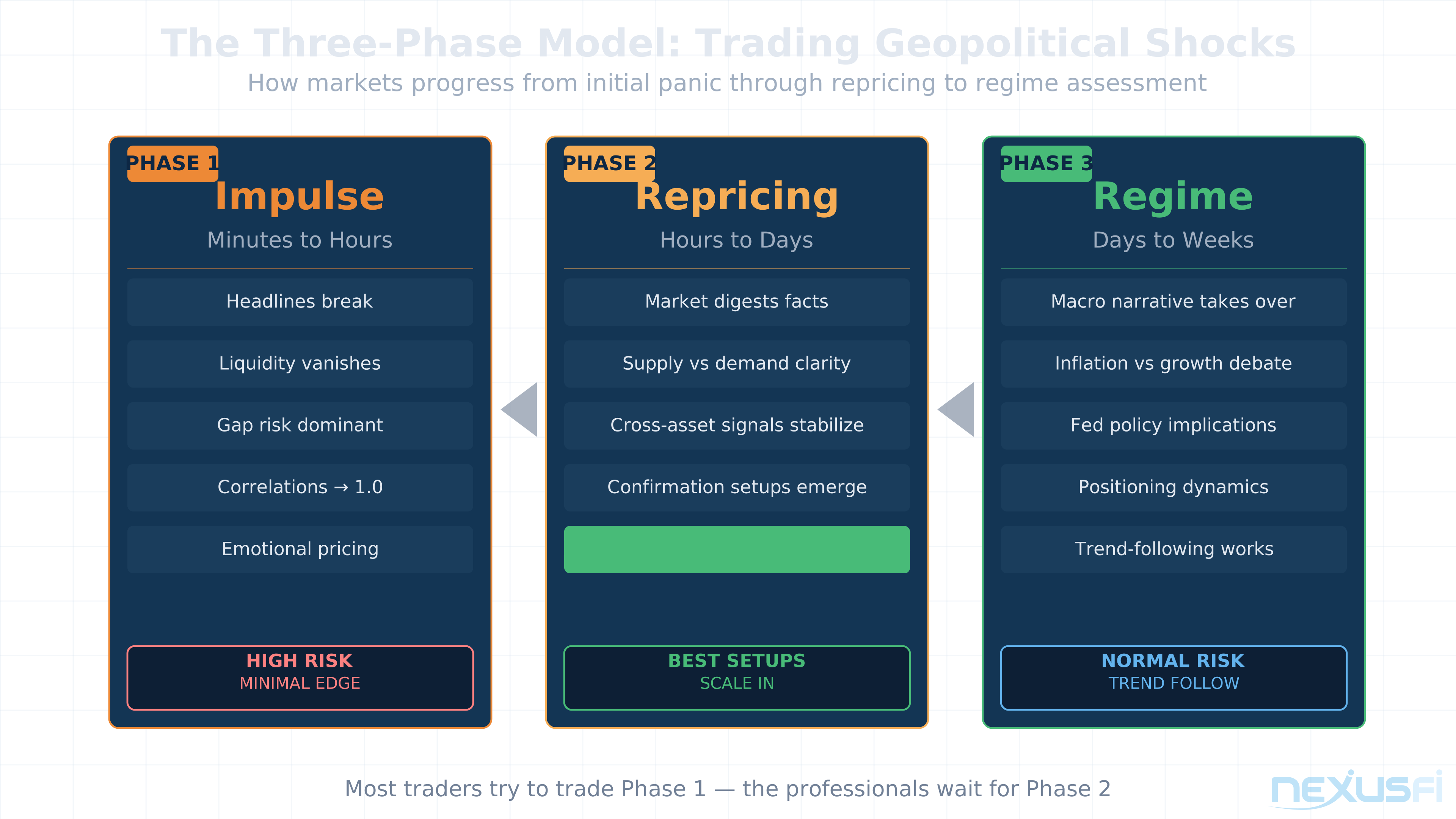
Every significant geopolitical shock follows a similar progression through three phases. Understanding which phase you're in is the foundation of everything else.
Phase 1 — The Impulse (Minutes to Hours)
This is the panic phase. Headlines break. Liquidity vanishes. ES gaps down. CL gaps up. VIX explodes. Every news alert confirms the worst. Spreads widen to 10x normal. Market orders get filled at prices that feel like robbery.
Here's the hard truth about Phase 1: the edge is lowest, the risk is highest, and most amateur traders make their biggest mistakes here. The initial spike in crude might be $8. It might also be $20 and then back to $8. You don't know. Nobody knows. The market is pricing maximum uncertainty.
The professional's approach to Phase 1: sit out or use defined-risk structures at 1/3 normal size. If you must trade, use options (not naked futures), set wider stops based on ATR rather than fixed ticks, and accept that you might miss the best part of the move. Protecting capital in Phase 1 is worth more than catching the top of the spike.
Phase 2 — The Repricing (Hours to Days)
This is where the edge lives. Phase 2 begins when the market starts asking practical questions: Is the supply actually disrupted? By how much? For how long? Can Saudi Arabia compensate? Are tanker routes affected or just threatened?
As the market processes these questions, prices stabilize enough to read. Technical levels start to matter again. Volume patterns become interpretable. And crucially, cross-asset signals start confirming or contradicting each other in ways you can use.
The best geopolitical trades — the ones where you're in with confirmed entry, reasonable stop, and clear target — happen in Phase 2. The Gulf War, Ukraine, and the Iran crisis all produced their most tradable setups 12-36 hours after the initial shock.
Phase 3 — The Regime Assessment (Days to Weeks)
By Phase 3, the immediate panic has subsided. Now the market is wrestling with bigger questions: what does this mean for growth? For inflation? For Fed policy? For corporate earnings?
Phase 3 is where short-term traders give way to swing traders and macro players. The Ukraine War of 2022 is the best example — markets transitioned from headline-to-headline trading to a sustained macro regime where energy inflation reshaped the entire rate path, which in turn affected every asset class for months.
In Phase 3, trend-following works. Normal position sizing resumes. The event has been absorbed into the macro narrative.
Risk-On / Risk-Off: Which Assets Move and Why #
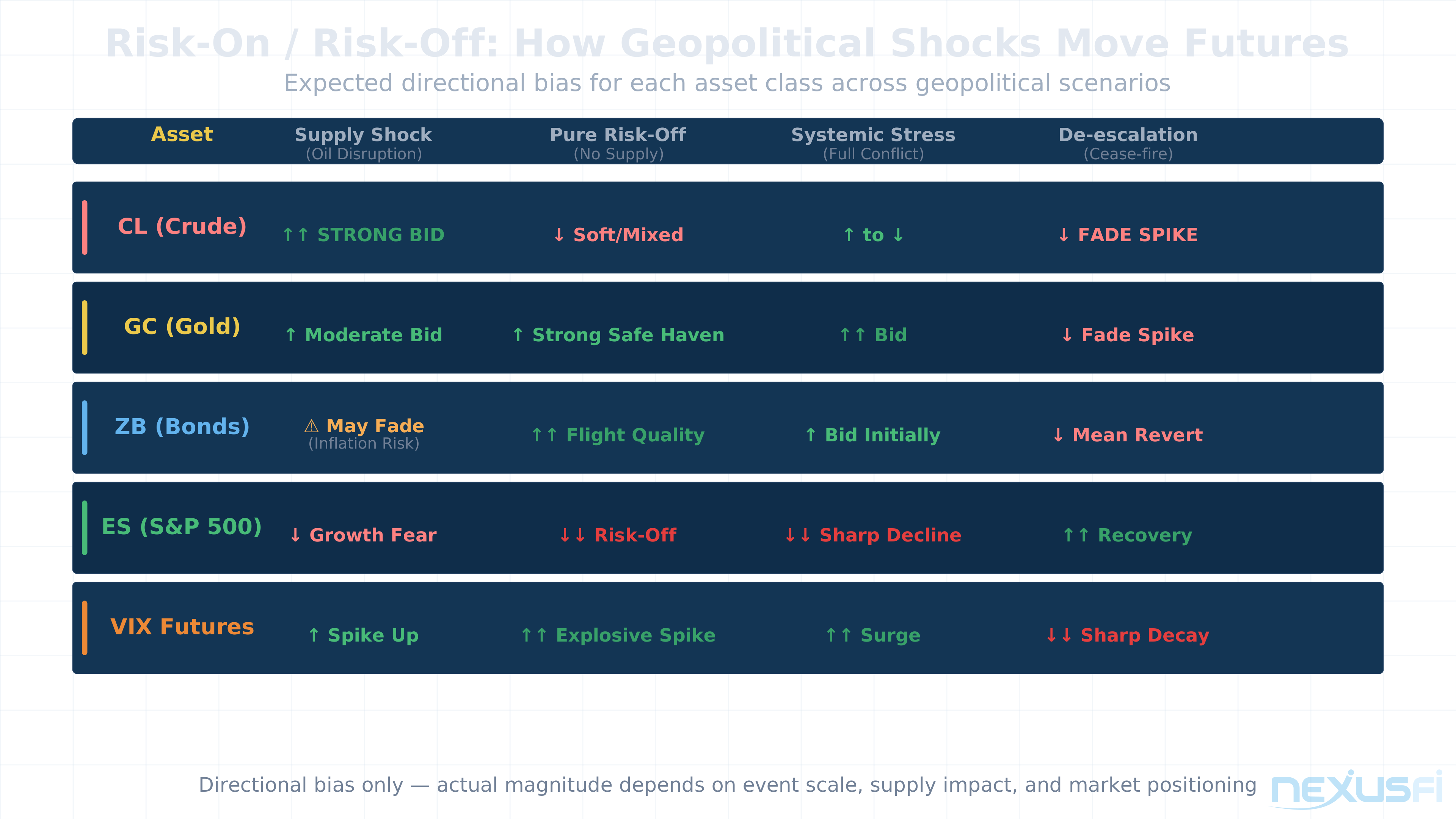
The term "risk-off" gets used loosely, but in geopolitical events there are actually four distinct scenarios, each with different asset implications.
Scenario 1: Pure Supply Shock (Oil Disruption)
When a conflict directly threatens energy supply — the Gulf War, Iranian sanctions, Strait of Hormuz threats — crude oil is the primary expression. CL gets the strongest bid. Gold gets a moderate safe-haven lift. ES falls on growth concerns. VIX spikes.
The critical nuance: Treasury futures may not rally. If the market is pricing an oil-driven inflation shock, bonds face competing forces — flight-to-safety pressure on one side, inflation-driven sell pressure on the other. The NexusFi community trader tigertrader documented this dynamic over years of cross-asset work: "Gold up could mean bearish for ES if it's a safe haven flow, but it could also just be dollar weakness." (@MacroNinja, 2015). The cross-asset read isn't always simple.
Scenario 2: Pure Risk-Off (No Supply Disruption)
9/11 is the template here. There was no energy supply threat — but the systemic uncertainty was enormous. In this regime, the classic safe-haven trade works cleanly: ZB and GC both bid strongly, ES falls hard, VIX explodes.
This is the scenario where you can trade ZB and GC confidently together as a pair, with each confirming the other's safe-haven signal. When tigertrader wrote in 2013 that "Treasuries and yen are both safe haven / flight to quality vehicles" (@tigertrader), he was describing a pure risk-off environment where these correlations hold cleanly.
Scenario 3: The Dual Shock (Ukraine Template)
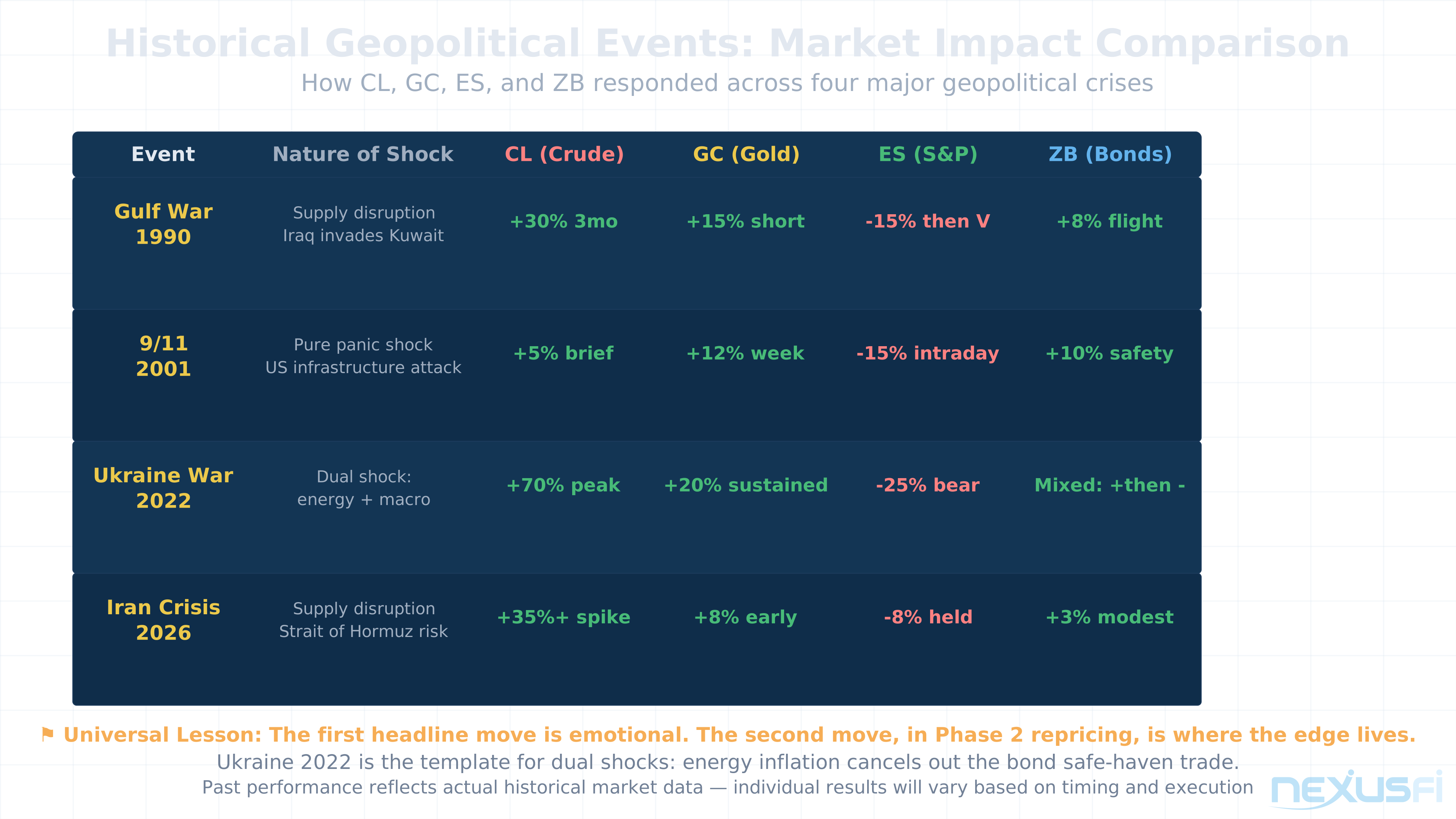
The Ukraine War of 2022 introduced a regime that broke many traders' mental models: an energy shock AND a growth/inflation shock simultaneously. CL rose 70% at peak. ES fell 25% in a bear market. But ZB, which "should" have rallied as a safe haven during an equity bear market, was capped and eventually fell — because the oil shock was driving inflation expectations high enough that markets priced aggressive Fed tightening.
This is the most dangerous scenario for traders who apply simple risk-off frameworks. The bond safe-haven trade fails. Gold works, but less reliably. CL is the primary expression, but the feedback loop into inflation and rates complicates everything else.
Scenario 4: De-escalation
When a geopolitical threat resolves or proves less severe than feared, the trade reverses. ES recovers sharply. VIX collapses. Safe-haven assets give back gains. The best setup is fading the extremes — waiting for the reversal confirmation rather than catching the exact top.
As one member analyzed the Iran options market: "The options market was pricing a significant probability of crude above $100 within weeks." (@Fi, 2026). When that scenario failed to materialize, the fade was violent.
Crude Oil (CL): The Geopolitical Leader #
When supply is threatened, crude oil is the first and clearest expression. No other futures contract responds more directly or forcefully to geopolitical shocks that involve energy infrastructure.
What makes CL move during geopolitical events:
- Physical supply disruption — damage to production facilities, pipelines, export terminals
- Shipping lane threats — Strait of Hormuz is the most important; ~20% of global oil passes through it
- Sanctions risk — removing Iranian, Russian, or Venezuelan production from global supply
- Inventory draw expectations — even a threatened disruption can front-load demand as buyers try to secure supply
As NexusFi member Symple noted during the 2026 Iran crisis: "Most crude discussions overlook LNG. A significant share of global LNG supply, especially Qatari exports, depends on Hormuz transit. Unlike crude oil, LNG markets are less liquid, less fungible, and harder to replace." (@Symple, 2026). The secondary effects of geopolitical events often matter as much as the primary ones.
The CL supply shock trade setup:
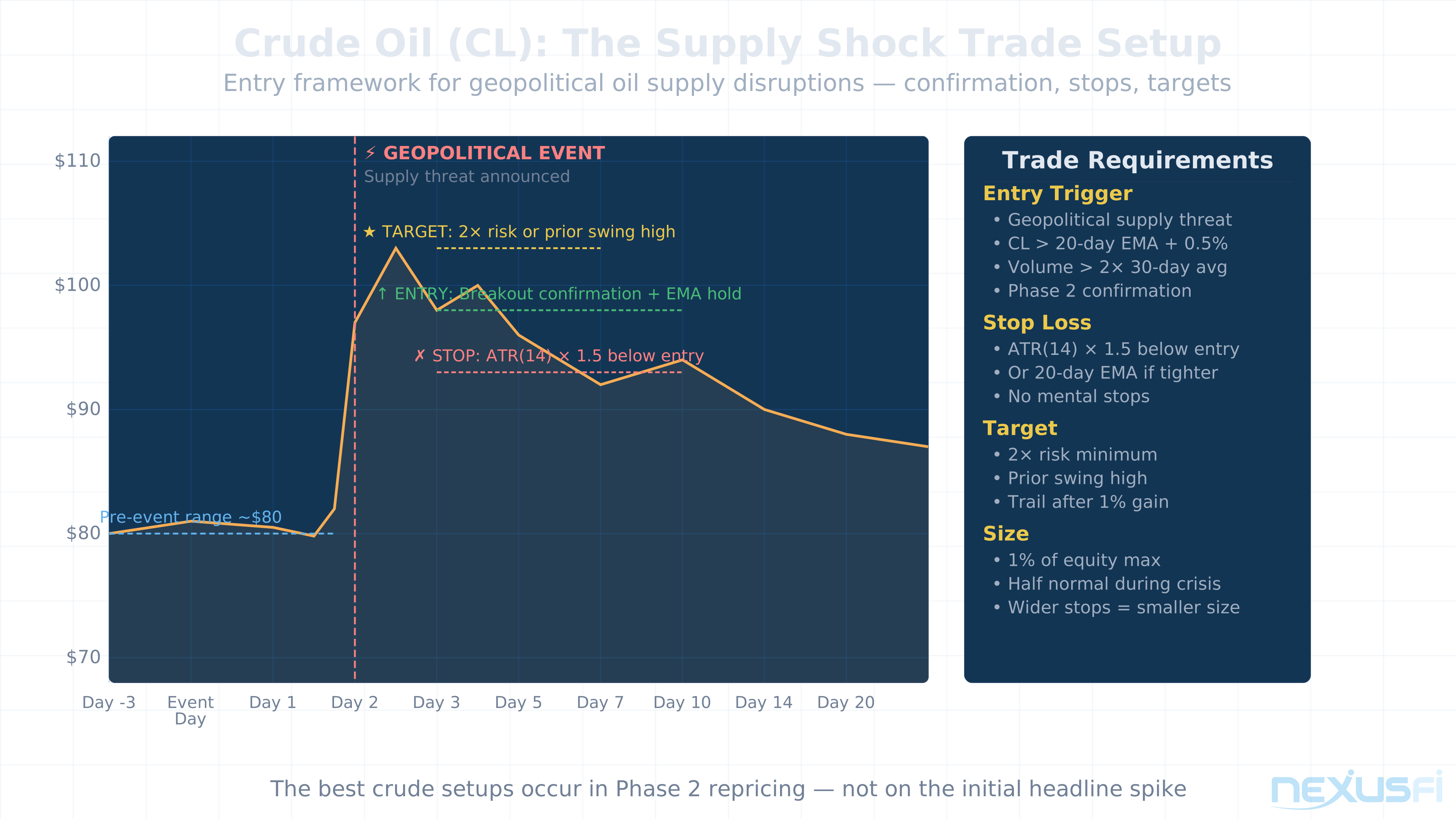
The critical rule is do not trade the initial spike. The Gulf War template is instructive — CL rose +30% in three months from the supply shock, but the first week's move was heavily influenced by panic and later partly reversed as the actual supply impact was assessed. The traders who made money were the ones who waited for Phase 2 confirmation: price holding above the 20-day EMA after the initial gap, with volume confirming institutional participation.
The setup:
- Entry trigger: Geopolitical supply threat confirmed + CL > 20-day EMA + 0.5% + volume > 2× 30-day average
- Confirmation: Prompt month strengthening vs. deferred (backwardation increasing)
- Stop: ATR(14) × 1.5 below entry, or 20-day EMA if tighter
- Target: 2× risk or prior swing high
BTR411's crude oil setups on NexusFi capture this elegantly: "A favorite bread and butter crude setup! Tapped and diverged LONG with stopping volume off the previous day's POC, confirming the level held." (@BTR411, 2013). The stopping volume confirmation is especially important during geopolitical events — you want to see the institutional buyers absorbing the emotional sellers before entering.
The key filter: Is there actual physical supply disruption, or just the threat of it? The market prices in the threat immediately. If the threat proves to be rhetoric, the fade is fast and violent. If it materializes into actual supply loss, the move sustains.
Gold (GC): The Real-Yield-Dependent Safe Haven #
Gold's response to geopolitical events is more subtle than crude oil's, and many traders get burned by treating gold as a simple "risk-off" buy.
Why gold sometimes disappoints as a geopolitical safe haven:
Gold's medium-term direction is dominated by real yields (nominal yields minus inflation expectations). When real yields are rising — even during a crisis — gold faces headwinds from the opportunity cost of holding a non-yielding asset.
This creates a counterintuitive situation: an oil supply shock drives energy inflation, which drives nominal yields higher, which competes with the safe-haven bid on gold. The Ukraine War was instructive — gold initially rose on the safe-haven bid, but the sustained inflationary impulse eventually capped the rally and limited gold's performance relative to what a simple "risk-off" framework would have predicted.
When gold works best in geopolitical events:
- Pure risk-off shock with no inflationary component (9/11 template)
- Crisis where real yields are falling (flight-to-quality more powerful than inflation fears)
- Prolonged uncertainty where portfolio managers need a hedge that carries no counterparty risk
The GC setup:
- Entry: Bullish flag breakout after initial safe-haven spike + DXY weakening + price > 20-day SMA
- Cross-confirm: ZB also rallying (validates safe-haven regime without inflation concerns)
- Stop: 5-day low or 0.5% below entry
- Target: 1.5-2× risk or next major resistance level
- Trail: 0.75× ATR once price is 1% above entry (gold can mean-revert sharply)
The most important rule with gold in geopolitical events: if gold spikes but Treasuries don't follow, treat the move with suspicion. The divergence suggests emotional rather than structural safe-haven demand.
Treasury Futures (ZB): The Conditional Safe Haven #
Treasury futures are theoretically the cleanest safe haven — the world's deepest, most liquid market, backed by the full faith and credit of the US government. In pure risk-off events (9/11, financial crises), ZB rallies reliably and powerfully.
The problem is that geopolitical events — especially supply shocks — create competing forces on Treasuries:
Flight-to-quality force: "This is scary, I want to own Treasuries"
Inflation force: "This oil shock is going to drive inflation higher, Treasuries will suffer"
Liquidity force: "I need to raise cash, selling Treasuries is the easiest way"
When the inflation force or liquidity force overwhelm the flight-to-quality force, you can have a scenario where equities fall AND bonds fall — the worst of both worlds for a trader who expected the classic risk-off trade.
The Ukraine War 2022 is the best modern example: ES fell 25% in a bear market, but ZB also declined much as energy-driven inflation made the Fed's tightening trajectory aggressive enough to overwhelm any safe-haven buying.
The ZB setup:
- Entry: VIX >30 + 10-year yield falling >15bps in 1 hour + ZB > 200-day MA
- Confirmation: GC also rallying (validates pure risk-off, not inflation scare)
- Stop: 30-day low or 0.75× ATR below entry
- Target: 2× risk or prior swing high
- Key filter: Watch CL behavior. If CL is surging alongside ZB, be cautious — the inflation force may limit or reverse the bond rally.
The core tell: ZB and GC both bid together = confirmed defensive regime. ZB bid but GC weak = unusual, investigate why. CL surging + ZB weak = inflation scare, not safe haven.
S&P 500 (ES): The Regime Indicator #
ES is perhaps the most important contract to read correctly in a geopolitical event, because its behavior tells you which scenario you're in.
The critical distinction:
- Contained shock: ES dips then recovers quickly. The market is saying "this is scary but doesn't change the growth narrative." Trade the panic reversal.
- Systemic shock: ES breaks down with no recovery. Multiple sessions of lower lows. Trade trend continuation.
Most geopolitical events are eventually classified as "contained" — crude oil rallies, gold lifts, and ES recovers within days to weeks. The exceptions are events that either change the inflation/growth path (Ukraine 2022) or create systemic financial risk (9/11, which disrupted the entire US financial system's plumbing).
ES setups during geopolitical events:
Risk-off breakdown (systemic concern):
- Short on confirmed break of overnight low after failed bounce
- ES fails to reclaim VWAP after two attempts
- Stop: 0.5× ATR above entry
- Target: 1.5× risk
Capitulation reversal (contained shock):
- Huge down candle, VIX spike, then price starts reclaiming intraday levels
- Enter long only on confirmed reclaim (not just attempted)
- Stop: below the capitulation low
- Target: VWAP or prior session value area high
De-escalation recovery:
- ES pulling back to 20-day EMA after crisis fear subsides
- VIX below 20 and declining
- Stop: 0.5× ATR below EMA
- Target: 1.5× risk or 2-hour high
The key filter for any ES geopolitical trade: check whether VIX is expanding or contracting. If you're going long on a "recovery" but VIX is still spiking, the market doesn't agree with your read.
VIX Futures: The Complexity Trade #
VIX futures deserve special attention because they're the most commonly misused instrument in geopolitical trading. Traders see VIX spiking and assume buying VIX futures is a straightforward crisis hedge. It's not.
The critical distinction: Spot VIX (the index) and VIX futures are different instruments. Spot VIX is calculated from SPX option prices. VIX futures are derivatives of spot VIX, with their own term structure dynamics, roll costs, and decay profile.
In a geopolitical event, spot VIX might spike from 18 to 35. But front-month VIX futures might only move from 19 to 28, because the futures already embedded some uncertainty premium. And as soon as the panic peaks, VIX futures can decay aggressively — even while spot VIX remains elevated — because the term structure normalizes.
The VIX mean-reversion trade:
After a geopolitical spike, once the initial panic peaks:
- Entry: VIX >35 (or >2 sigma above 30-day mean) + term structure steepening + break below 30-minute low after the spike
- Stop: 0.5× ATR above entry
- Target: 50% retracement of the spike
- Size limit: 5% of account maximum (VIX path dependency is severe)
Use VIX as a regime indicator rather than a primary directional trade. VIX >30 = confirmed stress. VIX >40 = extreme stress. The level tells you which phase you're in and what risk management posture is appropriate.
Cross-Asset Confirmation: The Most Important Filter #
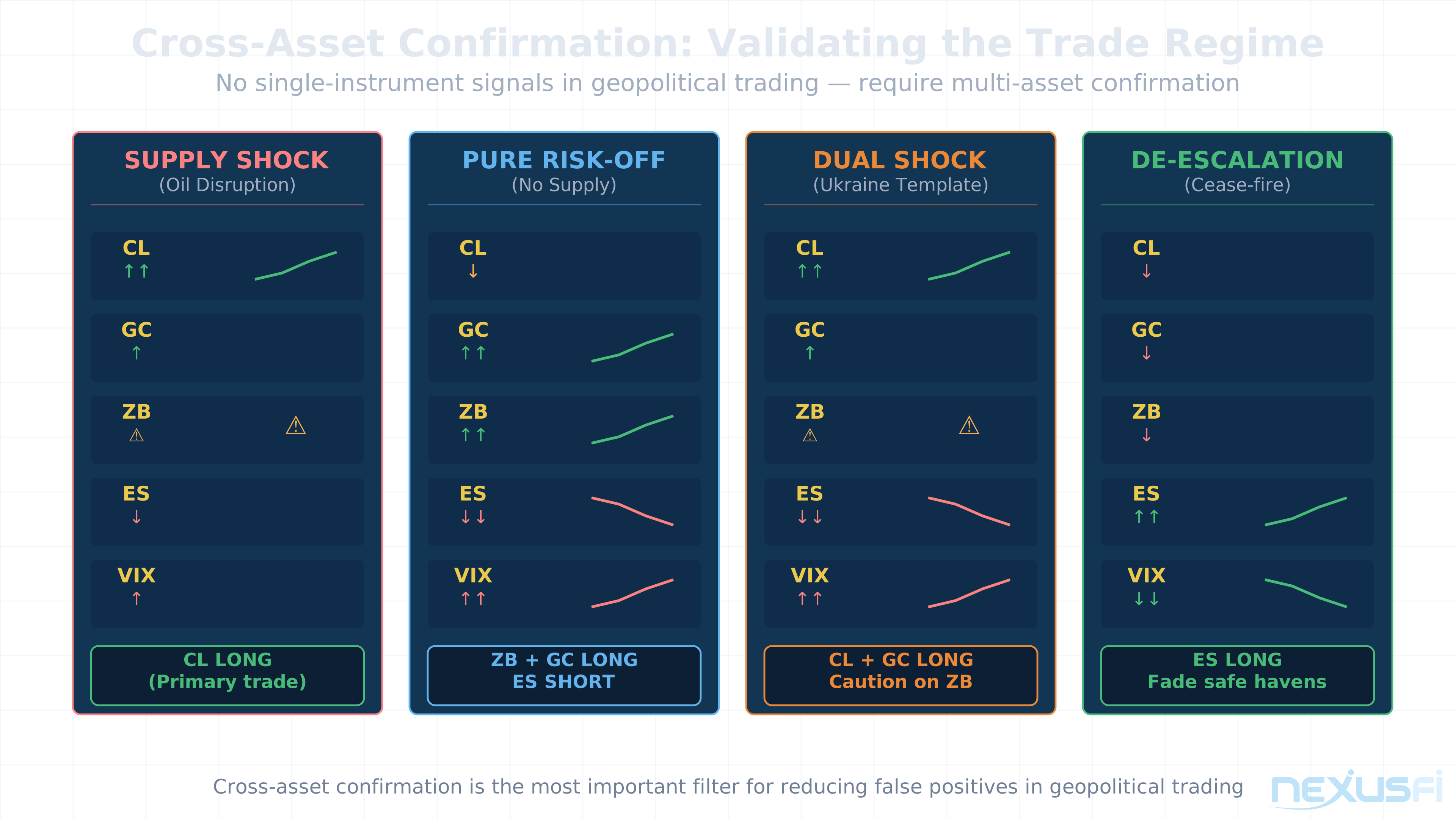
The single most important rule in geopolitical futures trading: no single-instrument signals.
Every trade should have cross-asset confirmation before entry. The reason is that geopolitical events create emotional, headline-driven moves that can be loud in one asset but don't represent a real regime shift. When multiple assets confirm the same narrative, the regime is real and the trade has edge. When assets diverge, something is wrong with your read.
The confirmation checklist:
Before any geopolitical trade, verify:
- ES direction — Risk-on or risk-off?
- ZB response — Is the bond market treating this as safe-haven or inflation risk?
- GC response — Is gold confirming a defensive regime?
- CL response — Is this a supply shock or not?
- VIX curve shape — Is term structure in backwardation (severe) or contango (moderate)?
The three most useful confirmation pairs:
- ZB + GC both bid = high-conviction defensive regime. Enter risk-off trades with confidence.
- CL surging + ZB failing = inflation scare. Avoid ZB longs. CL trade may work but with caution.
- ES down + VIX up + CL down = pure risk-off (not supply shock). Favor ZB and GC over CL.
If your assessment says "CL should be surging" but CL is actually flat, your supply-disruption thesis is wrong. If ZB is falling while ES is also falling, you're in a dual-shock environment and the simple playbook doesn't apply.
Historical Templates #
Understanding how these markets actually behaved during past geopolitical events provides the context for reading future ones correctly.
Gulf War (1990): The Supply Shock Template
Iraq invaded Kuwait in August 1990, immediately threatening ~4% of global oil supply and raising fears about Saudi Arabia's fields. Crude surged 30% over three months. Treasuries caught a modest safety bid. ES (or its predecessor) sold off on growth uncertainty.
The lesson everyone draws is "buy crude on supply threats." The lesson fewer people draw: crude initially overshot dramatically, and the reversal was sharp when it became clear Saudi production could partially compensate. The traders who held from the initial gap didn't necessarily make more money than those who waited for Phase 2 confirmation.
9/11 (2001): The Black Swan Template
This was the event that defined the limits of technical analysis. ES was halted. Liquidity vanished. When trading resumed, ES gapped down 15% intraday with no tradable structure — just chaos. VIX spiked to 45. Treasuries and gold caught enormous safe-haven bids.
The lesson: in true black swans (events that threaten systemic financial function, not just supply), risk management matters more than trade identification. The traders who survived 9/11 with capital intact made good money in the weeks that followed. The traders who fought the first wave got destroyed.
Ukraine War (2022): The Dual Shock Template
Russia's invasion in February 2022 introduced the scenario that most traders had never modeled: a conflict that simultaneously created massive energy supply disruption (pushing oil and gas prices dramatically higher) AND posed systemic risk to European financial stability AND triggered aggressive central bank tightening.
Result: CL +70% at peak. ES -25% in a sustained bear market. ZB... declined much. Gold rose initially but was constrained by rising real yields.
The lesson: the Ukraine template breaks the simple risk-off playbook. When an energy shock drives inflation high enough to make central bank tightening more aggressive, Treasuries stop being a safe haven even during equity bear markets. The dual shock requires a different framework — CL and GC as primary expressions, ZB treated with extreme caution.
Middle East 2023-2026: The Repeated Flare-Up Template
The repeated escalations and de-escalations in the Middle East through this period demonstrated how markets become increasingly "headline-numb" over time. Each new flare-up produced a smaller, shorter CL spike than the last. VIX spikes mean-reverted faster. ES held up better than the first time.
Until they didn't — when the situation escalated to the 2026 Iran crisis, the market briefly forgot the headline-numb pattern and repriced dramatically. The lesson: geopolitical risk premiums can compress for a long time and then reprice suddenly.
Risk Management Framework #
Risk management is the difference between traders who profit from geopolitical events and traders who survive them. The entry matters less than you think. The position size matters more than you think.
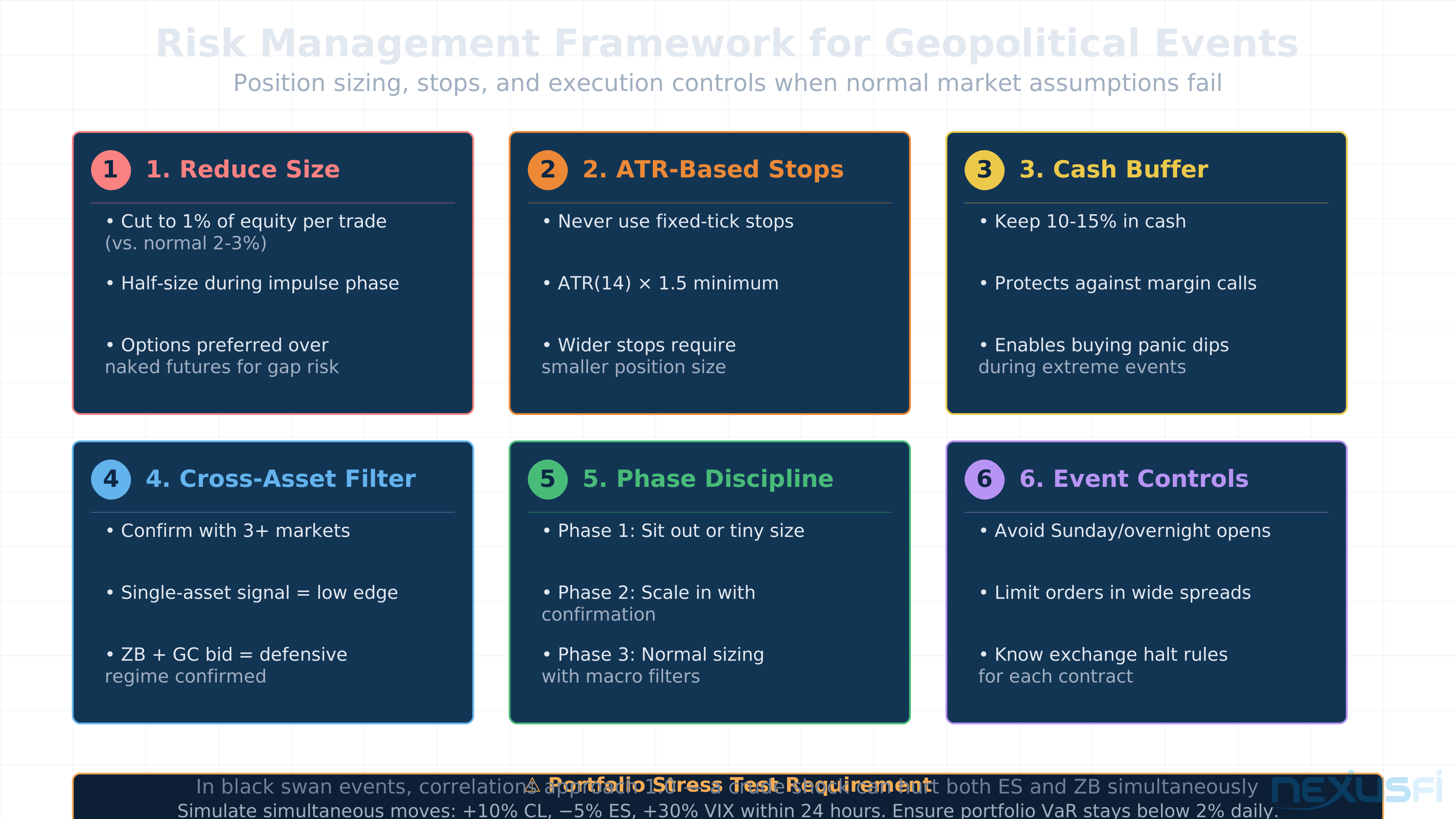
Rule 1: Reduce Position Size
During any geopolitical event, cut your normal position size to 1% of equity per trade (vs. your normal 2-3%). If you're in Phase 1, cut to 0.5%. The reason: slippage during geopolitical events can be 3-5× normal. Your stop distance needs to be wider. Both of those factors mean that the same dollar risk at normal size would require a stop so far away that you can't take it.
Rule 2: ATR-Based Stops
Forget fixed-tick stops in geopolitical events. A 4-tick stop in CL is meaningless when the spread has widened to 8 ticks and every news alert is moving the market 12 ticks. Use ATR(14) × 1.5 as your stop distance minimum. Accept that you will have wider stops, which means smaller positions — that's the correct adjustment.
Rule 3: Keep a Cash Buffer
Keep 10-15% of your trading capital in cash during geopolitical periods. This serves two functions: it allows you to meet margin calls without having to liquidate positions at the worst possible moment, and it gives you dry powder to enter Phase 2 setups when others are being forced out.
Rule 4: Cross-Asset Filter Before Entry
As discussed in the previous section — no single-instrument signals. If you can't get cross-asset confirmation, don't enter the trade. A rejected entry (you waited for confirmation that never came) costs you zero. A bad entry in a geopolitical event can cost you 3-5% of capital in a few minutes.
Rule 5: Phase Discipline
Resist trading Phase 1. If you catch yourself entering a trade in the first 30 minutes of a major geopolitical event, ask yourself: "Am I in Phase 1?" If the answer is yes, your size should be minimal (1/3 of normal) and your instrument preference should be defined-risk (options if available, not naked futures).
Rule 6: Know Your Contracts
Before a geopolitical event tests you, you should know: What are the daily price limits for CL? For GC? For ES? What happens if a contract hits limit-up? Can you exit? What are the margin changes that CME Group typically implements during crisis periods? Surprises in these areas are capital-destroying surprises.
The Portfolio Stress Test
At least once a month, simulate what would happen to your portfolio if tomorrow morning: CL opens +10%, ES opens -5%, and VIX opens +30%. Is your portfolio VaR still below 2% daily? If not, you have too much correlated risk.
The Seven Commandments of Geopolitical Futures Trading #
After reviewing every major geopolitical event of the last 35 years and synthesizing the accumulated wisdom of the NexusFi community, seven principles hold consistently:
1. The first move is often emotional; the second move is often more tradable. Don't trade Phase 1. Phase 2 confirmation entries have better risk/reward.
2. Trade the regime, not the headline. "Is this a supply shock? A pure risk-off? A dual shock?" — answering these questions is worth more than any technical setup.
3. CL leads when supply is threatened. When there's a real supply disruption risk, crude oil is the primary expression. Everything else is secondary.
4. Treasuries can fail when inflation dominates. ZB is a conditional safe haven. Ukraine 2022 proved that a supply shock large enough to reshape the inflation/rates path can make bonds sell off even during equity bear markets.
5. VIX is the fastest stress indicator but mean-reverts aggressively. Use VIX to read the regime, not as a primary directional trade. Respect the term structure and decay.
6. Risk management matters more than entry precision. In black swans, surviving with capital is more valuable than catching the perfect trade. Reduce size, use ATR stops, keep cash.
7. Cross-asset confirmation reduces false positives. When crude, gold, bonds, and VIX all agree on the regime, act. When they diverge, wait.
A Note on the Current Environment (April 2026) #
The Iran conflict that began in early 2026 represents the first true geopolitical supply shock since the Ukraine War. The Strait of Hormuz mining risk, the $100+ Brent prices, and the cascading effects on LNG markets all fit the supply-shock template discussed throughout this article.
What makes 2026 different from the Gulf War template: the market came into this event with already-elevated interest rates and inflation above target. That creates the potential for a dual-shock dynamic (like Ukraine 2022) rather than a pure supply-shock dynamic (like Gulf War 1990). The behavior of Treasury futures during this period — whether they rally as a safe haven or fail under inflation pressure — will be the key signal for which template applies.
Traders who understand this distinction are watching ZB alongside CL. Traders who don't are just buying crude and hoping.
That's the difference between a framework and a hunch.
Connecting the Pieces #
The articles in this Academy provide context for everything discussed here:
- Crude Oil (CL) Futures — Contract mechanics, seasonality, and OPEC dynamics
- VIX Futures — Term structure, roll costs, and volatility regime indicators
- Gold Futures (GC) — Real yield drivers, safe-haven mechanics
- Options Flow Analysis and Gamma Exposure — How derivatives positioning shapes equity futures
- Intermarket Analysis — The full cross-asset framework beyond geopolitical events
The current SpotGamma tools integrate options flow analysis with the kind of macro regime reading discussed here — their HIRO (High-Resolution Implied Options) data is especially useful for understanding dealer positioning during geopolitical volatility spikes.
Understanding how geopolitical events move markets isn't optional for serious futures traders. These events will happen again. The question isn't whether you'll face one — it's whether you'll be ready when you do.
Knowledge Map
References This Article
Articles that build on this topicCitations
- — US-Israeli Strikes Kill Iran's Supreme Leader -- Oil Surges (2026) 👍 3“Mode 3 (Tail): 'Black Swan Demand Destruction' -- if this triggers global recession panic or nuclear escalation threat, crude could collapse back to $60s as demand destruction fears overwhelm supply shock.”
- — Two Aircraft Carriers, a 10-Day Deadline, and Crude at 6-Month Highs -- The Iran Risk (2026) 👍 3“Most crude discussions overlook LNG. A significant share of global LNG supply, particularly Qatari exports, depends on Hormuz transit. Unlike crude oil, LNG markets are less liquid, less fungible, and harder to replace.”
- — US-Israel Strikes on Iran -- Brent Above $100, Strait of Hormuz Mined [Updated] (2026) 👍 1“The method: Breeden-Litzenberger -- second derivative of call prices with respect to strike gives you the risk-neutral PDF. In practice, price butterfly spreads at each strike. The options market was pricing a significant probability of crude above $100 within weeks.”
- — Spoo-nalysis ES e-mini futures S&P 500 (2014) 👍 8“Risk-on/off cross asset correlations during the QE/ZIRP regime: capital flows in/out to equities, commodities, euro, and emerging markets.”
- — Correlations and Inverse correlation ES (2015) 👍 11“VIX up is bearish for the ES, since put options are being purchased for safety and volatility is going up. Gold up could mean bearish for ES if it's a safe haven flow, but it could also just be dollar weakness.”
- — Trading Futures with Context (2013) 👍 20“A favorite bread and butter crude setup! Tapped and diverged LONG with stopping volume (added perk, but not necessary) off the previous day's POC, confirming the level held.”
- — The PandaWarrior Chronicles (2013) 👍 9“Yen and Treasuries are correlated because they are both safe haven / flight to quality / risk-on risk-off vehicles and are both sensitive to the central bank policies of their respective countries.”
- Federal Reserve Bank of San Francisco — What Happens to U.S. Financial Markets When There's a Geopolitical Shock? (2023)