



Trading Fed Chair Transitions: The Warsh Era Playbook
Overview #
Fed Chair transitions are regime-change events that reprice every major asset class at once. Unlike a CPI print that moves a number, a new Fed Chair changes the rules by which all future numbers get interpreted. The market isn't just adjusting to a different rate path — it's re-learning how to read the Fed itself.
Kevin Warsh took the helm in May 2026 when Jerome Powell's term ended. Warsh isn't a new face in the FOMC building — he served as Fed governor from 2006 to 2011, was the youngest ever appointed to that role (35 years old), and watched the 2008 financial crisis unfold from inside the institution. He resigned because he thought the Fed was too aggressive on QE. That history matters for your trading.
This article gives you a complete futures playbook for Chair transitions, with Warsh's specific framework as the current case study. You'll get six-instrument entry/exit logic, the historical patterns across four transitions, and a scenario matrix for the four most likely Warsh-era market regimes.
The core principle: rates reprice first, equities follow. In every hawkish transition since 1987, ZN (10-Year Note futures) moved before ES. Understanding that lead/lag is where the edge lives.
Why Chair Transitions Hit Different #
When the Fed changes rates, the market adjusts a point estimate. When the Fed changes chairs, the market adjusts the entire probability distribution of future outcomes. That's a at the core different and more volatile repricing event.
Think about what a new chair actually changes:
- The reaction function. How aggressively will the Fed respond to inflation overshoots? How much does the chair care about market stability vs. price stability? These shift the expected path of rates, not just the current level.
- Communication style. More transparent guidance compresses volatility. Less transparent guidance expands it. Morgan Stanley warned before the Warsh transition that his style could "reduce Fed communication transparency and increase policy surprises" -- which means bigger moves in rates markets around every FOMC and speech.
- Balance sheet policy. This matters almost as much as the policy rate. A chair who views QE as an emergency tool (Warsh) vs. a permanent macro stabilizer (Powell) creates radically different term premium environments for ZB (30-Year Bond) futures.
-- NexusFi Elite Circle | September 2014 | 18 thanks”
That observation is even more applicable now — Warsh's entire framework is about changing the distribution of the terminal rate and the speed of the path to get there.
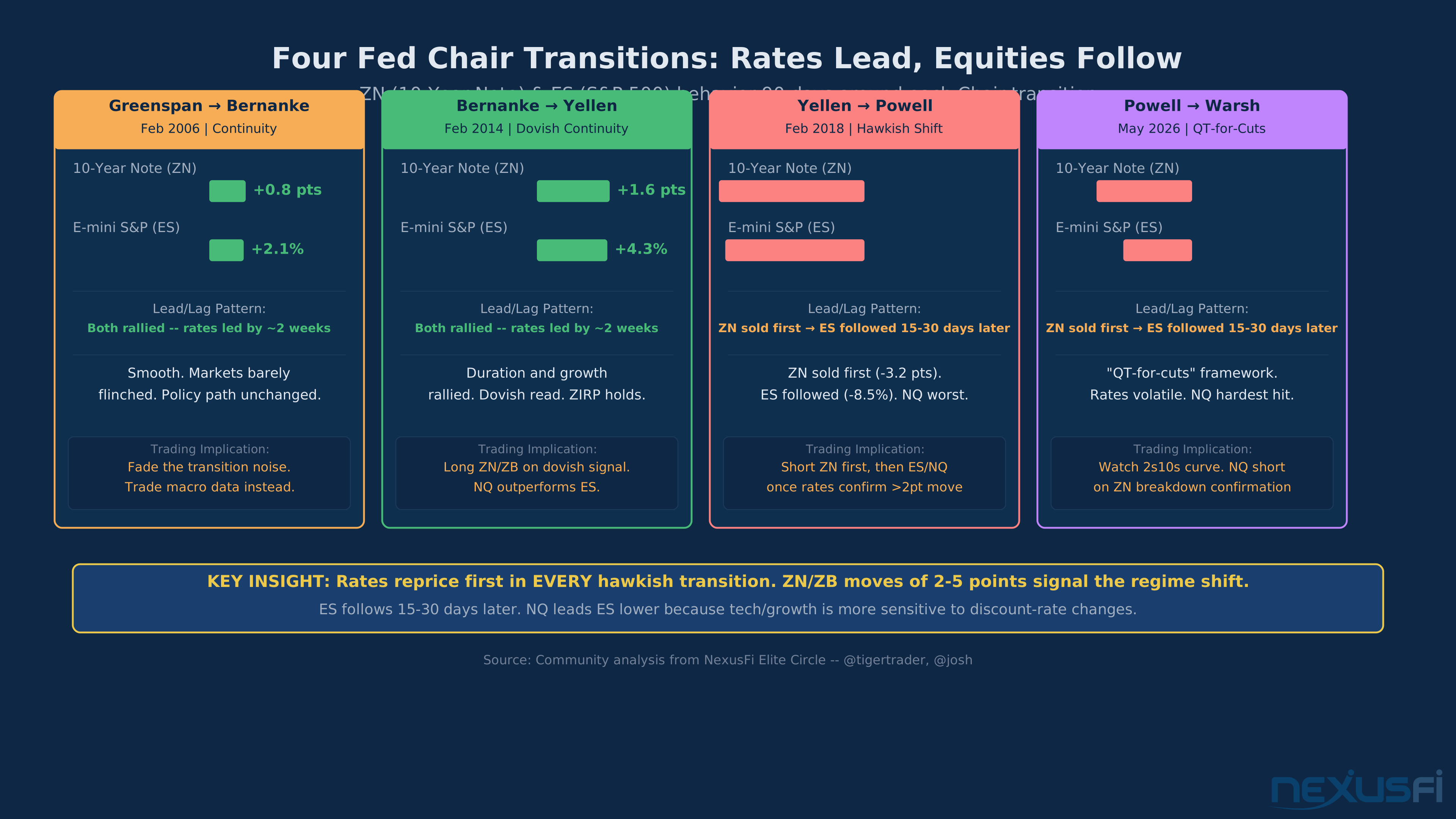
Four Historical Transitions: What Markets Actually Did #
Greenspan to Bernanke (February 2006) -- The Continuity Trade
Bernanke came in as Fed academic — more explicit, more transparent than Greenspan, but policy continuity was strong. Inflation was contained. Growth was solid. The transition itself wasn't a regime shock.
What happened: ZN barely moved. ES grinded higher. VIX stayed contained. The curve dynamics were driven by data, not the chair change.
Trading implication: In continuity transitions, you trade the data, not the chair narrative. Best tactic is to fade extremes. The news-driven move reverses quickly once the market realizes nothing fundamental changed.
Bernanke to Yellen (February 2014) -- The Dovish Continuity Rally
Yellen was read as more labor-market-focused and more tolerant of inflation overshoot. The transition reinforced the idea that accommodation would persist — the "taper tantrum" of 2013 was already behind the market, and Yellen was the continuation candidate.
What happened: ZN and ZB both rallied. NQ outperformed ES much because lower discount rates benefit long-duration growth stocks more than broad market. Dollar weakened. Duration trades worked.
Trading implication: In dovish-continuity transitions, own duration (ZN/ZB longs on dips) and favor NQ over ES. The rate-sensitive trade is straightforward because the market is simply extrapolating the existing trend.
Yellen to Powell (February 2018) -- The First Hawkish Shift
Powell was initially read as centrist, but markets increasingly viewed him as willing to keep tightening. This is the most instructive transition for Warsh, because the pattern was: rates move first, equities follow.
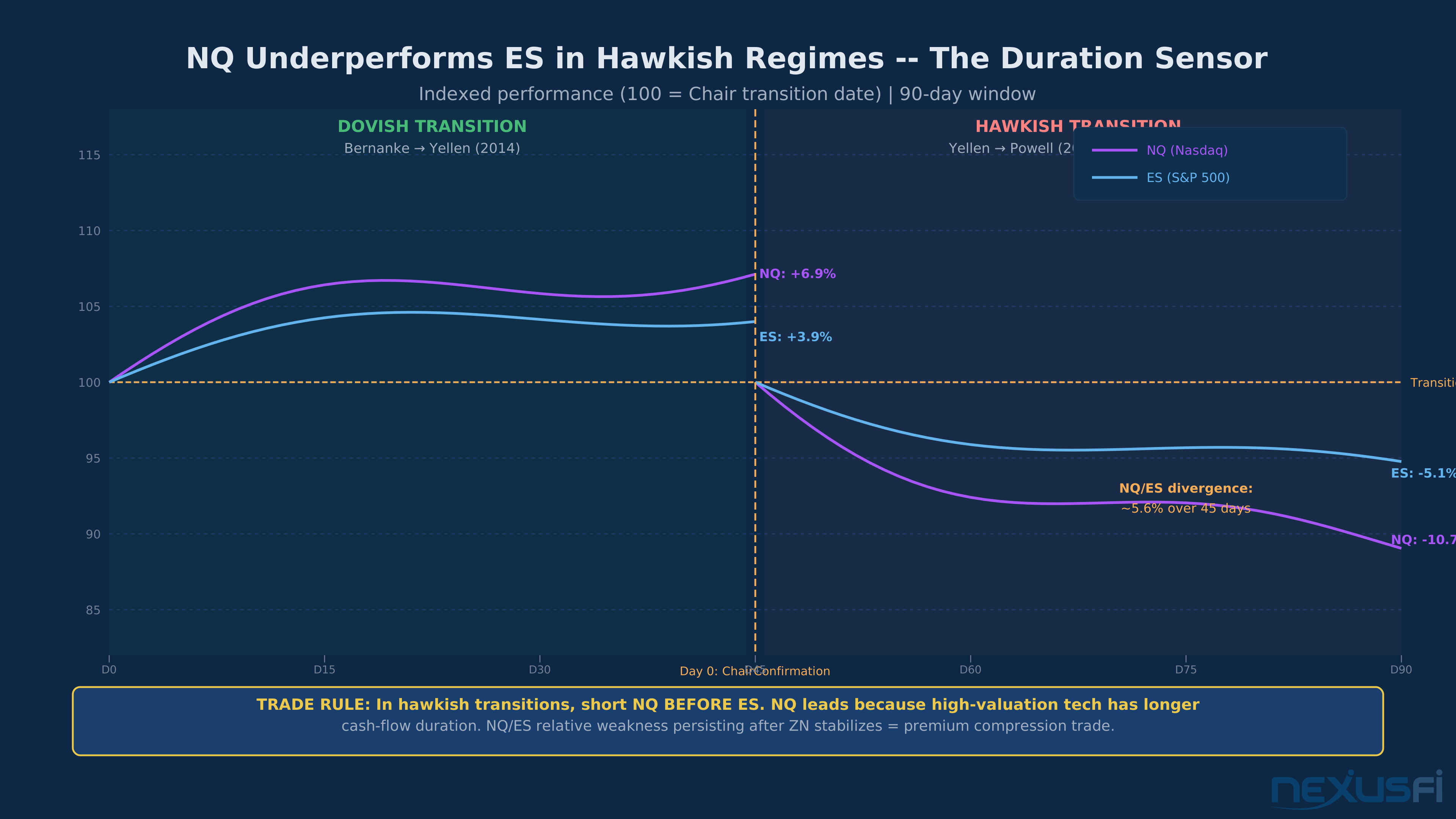
What happened: ZN began selling off in January 2018 before Powell even took over. 10-year yields climbed 40bps in 6 weeks. ES followed, dropping ~10% by early February. NQ fell harder than ES — the classic discount-rate compression signature.
-- NexusFi Elite Circle | November 2022 | 9 thanks”
The same principle applies in transition windows: the initial move can be violent and can whipsaw before continuing. Two-step confirmation prevents trading the noise.
Trading implication: Short ZN first on the hawkish repricing. Wait for confirmation (ZN fails to reclaim VWAP after the initial drop). Then short NQ when it breaks its own key level with bond yields still rising. ES is the last domino.
Powell to Warsh (May 2026) -- The QT-for-Cuts Framework
Warsh's approach is more complex than a simple "hawk." The framework that emerged from analyst coverage before the transition was "QT-for-cuts": front-loaded rate reductions combined with accelerated balance sheet reduction. The idea is to normalize both the policy rate AND the Fed's bloated balance sheet simultaneously, rather than using either tool in isolation.
That's not a classically hawkish signal — rate cuts are bullish for duration in isolation. The market volatility comes from the simultaneous balance sheet acceleration, which puts pressure on the long end of the curve even as front-end rates fall. The result is a volatile term structure, not a simple bear or bull market in bonds.
Current state going into the Warsh era: Fed funds at 3.50-3.75% after three consecutive 25bps cuts in H2 2025. Core PCE still running around 2.5% — well above the 2% target. Two FOMC governors dissented at the January 2026 meeting in favor of more cuts, while other officials were openly discussing whether hikes might be needed. That's not a policy committee with consensus — it's one that's ripe for communication surprises.
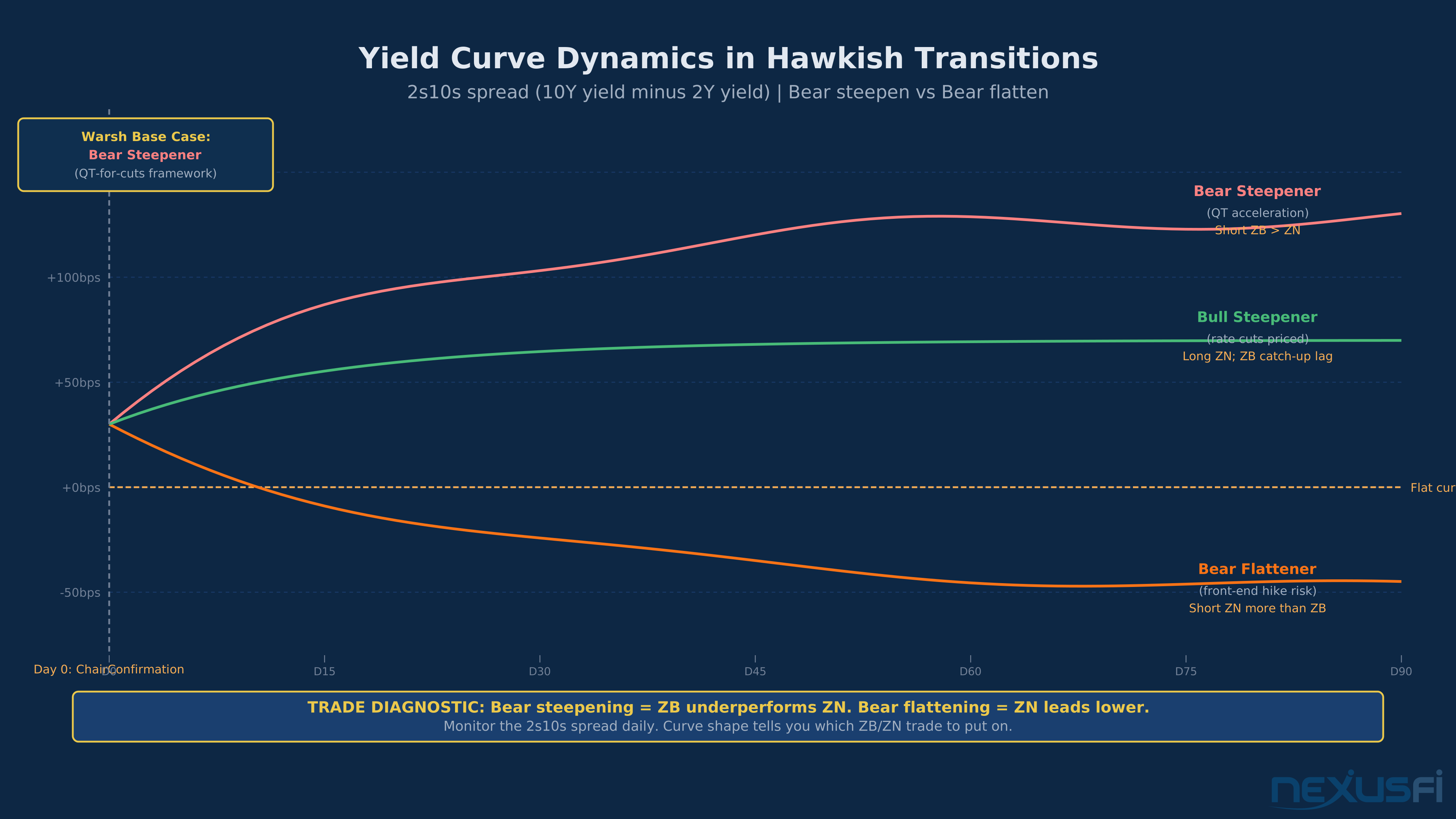
KEY INSIGHT The Warsh "QT-for-cuts" framework means rate cuts may NOT deliver the usual bond rally. When the Fed cuts rates while simultaneously accelerating balance sheet runoff, the long end stays under supply pressure. Watch the 2s10s spread: steepening confirms QT acceleration is the dominant force.
As @Fi noted in February 2026 analysis: "The 'QT-for-cuts' strategy: Front-loaded rate reductions combined with accelerated balance sheet reduction."
Warsh vs. Powell: The Policy Framework That Matters for Traders #
The differences between Warsh and Powell are real, but traders often get confused about which differences matter for position-taking.
The differences that DON'T directly drive immediate trade setups:
- Warsh's academic views from 2011 on QE's limitations
- His market-structure reform ideas
- His theoretical preferences on the neutral rate
The differences that DO drive trade setups:
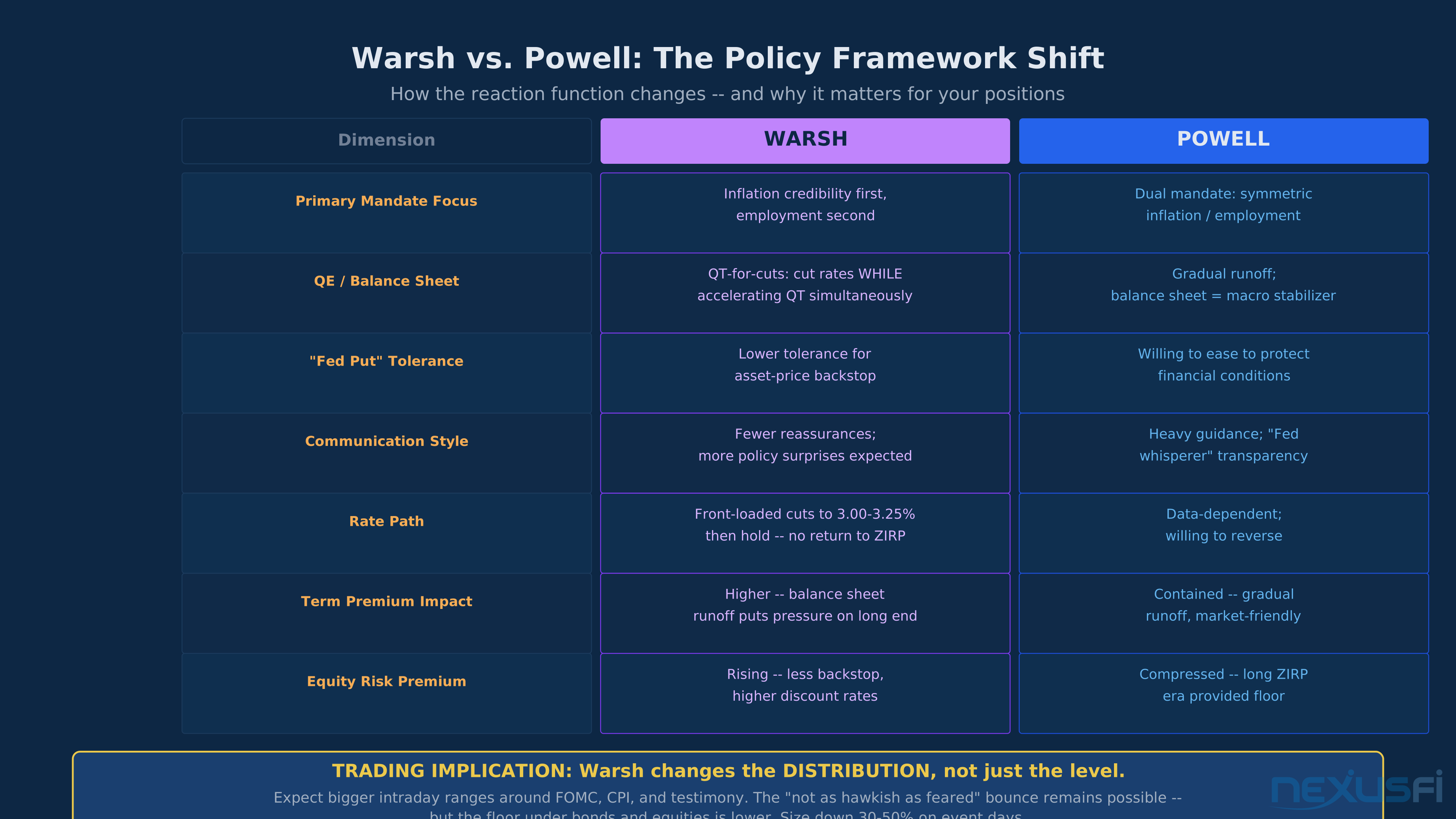
1. Balance sheet approach. Warsh views QE as an emergency tool that should be fully unwound. QT could accelerate even as rates are being cut — the "QT-for-cuts" framework. When QT accelerates, the market must absorb more Treasury supply without Fed reinvestment. That pushes term premium higher and hits ZB harder than ZN, because long-duration bonds are most sensitive to changes in the risk premium embedded in yields.
2. Communication style. Less pre-commitment to market stability. Powell ran a "Fed whisperer" model — when the market was surprised by a statement, reporters with Fed access would publish clarifying articles within hours. Warsh is less likely to use that channel as aggressively. Fewer market-calming interventions means wider intraday ranges around every FOMC, CPI print, and chair testimony.
3. Equity "put" tolerance. Powell tolerated some degree of financial conditions tightening, but there was a clear floor below which market stress would prompt a pivot. Warsh is likely to sit on his hands longer. That doesn't mean equities are doomed — it means the support level is lower and the volatility around reaching it is higher.
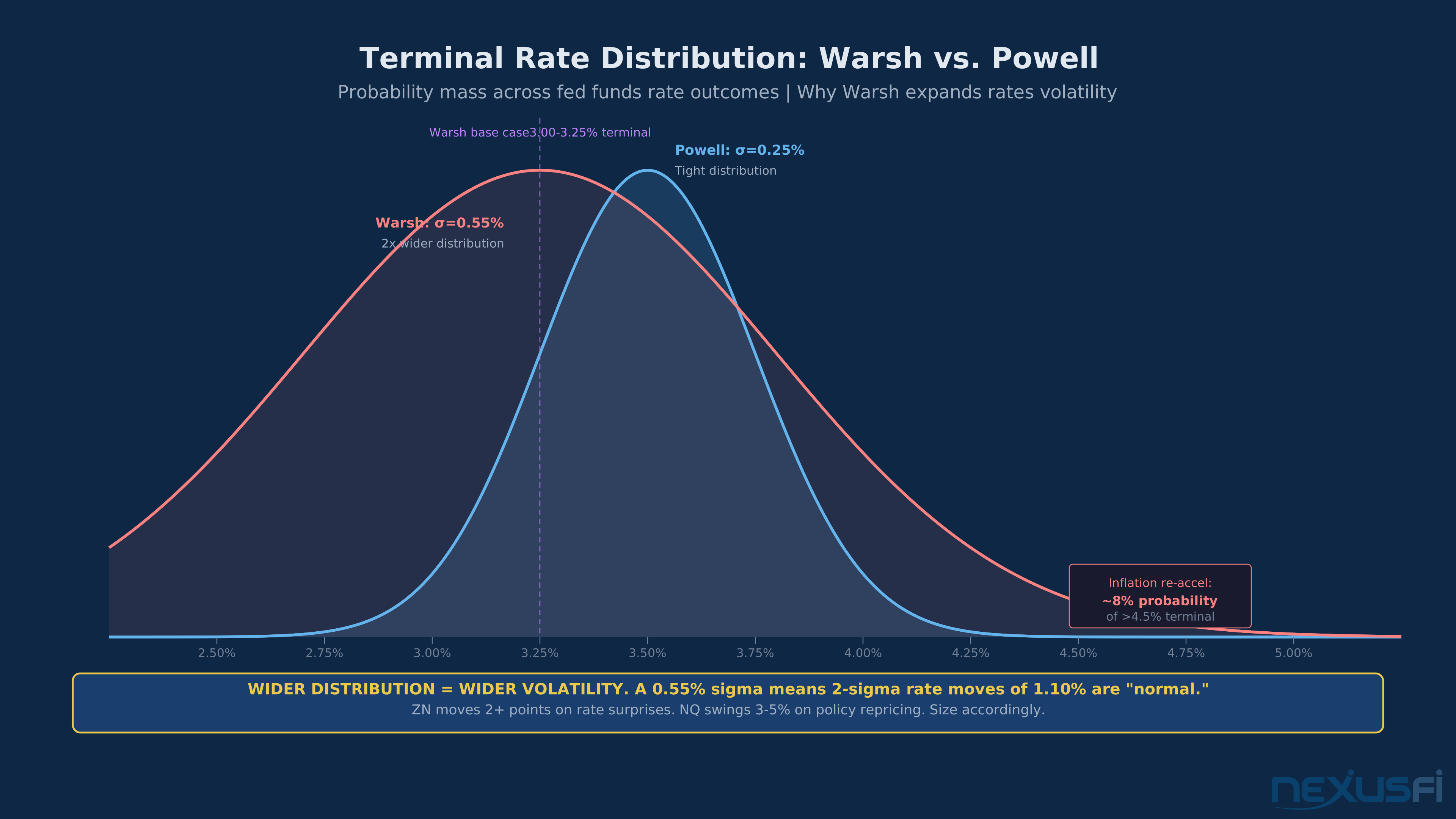
4. Terminal rate distribution. Markets priced a 3.00-3.25% terminal rate as the Warsh era opened. But the distribution around that point estimate is wider than under Powell. There's a real scenario where sticky inflation pushes the terminal rate back toward 4%, and there's a real scenario where QT-driven financial stress prompts a faster cut cycle. Wider distribution = larger price swings = bigger position sizing demands.
-- NexusFi Elite Circle | December 2022 | 13 thanks”
The Six-Instrument Playbook #
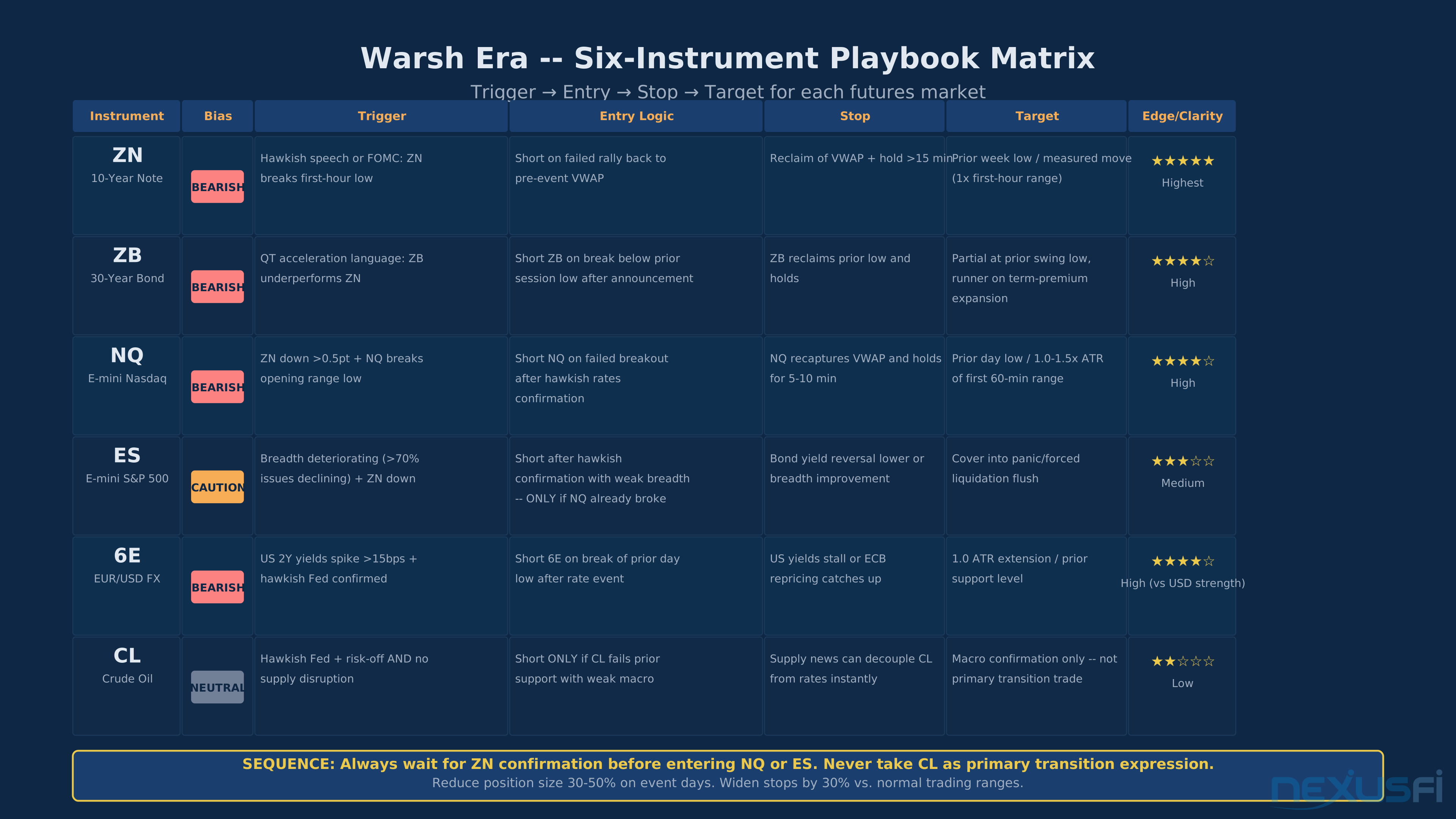
Here's the full entry/exit logic for each instrument. The sequencing matters as much as the individual setups.
ZN -- The Lead Indicator
ZN (10-Year Note futures) is the primary vehicle for Fed Chair transition trades. It reprices first because it's the most direct expression of policy path expectations and the cleanest liquid market for that trade.
Hawkish repricing setup (most applicable to Warsh era):
- Trigger: Warsh speech, FOMC statement, or minutes release emphasizes inflation persistence, "higher for longer," or faster QT pace
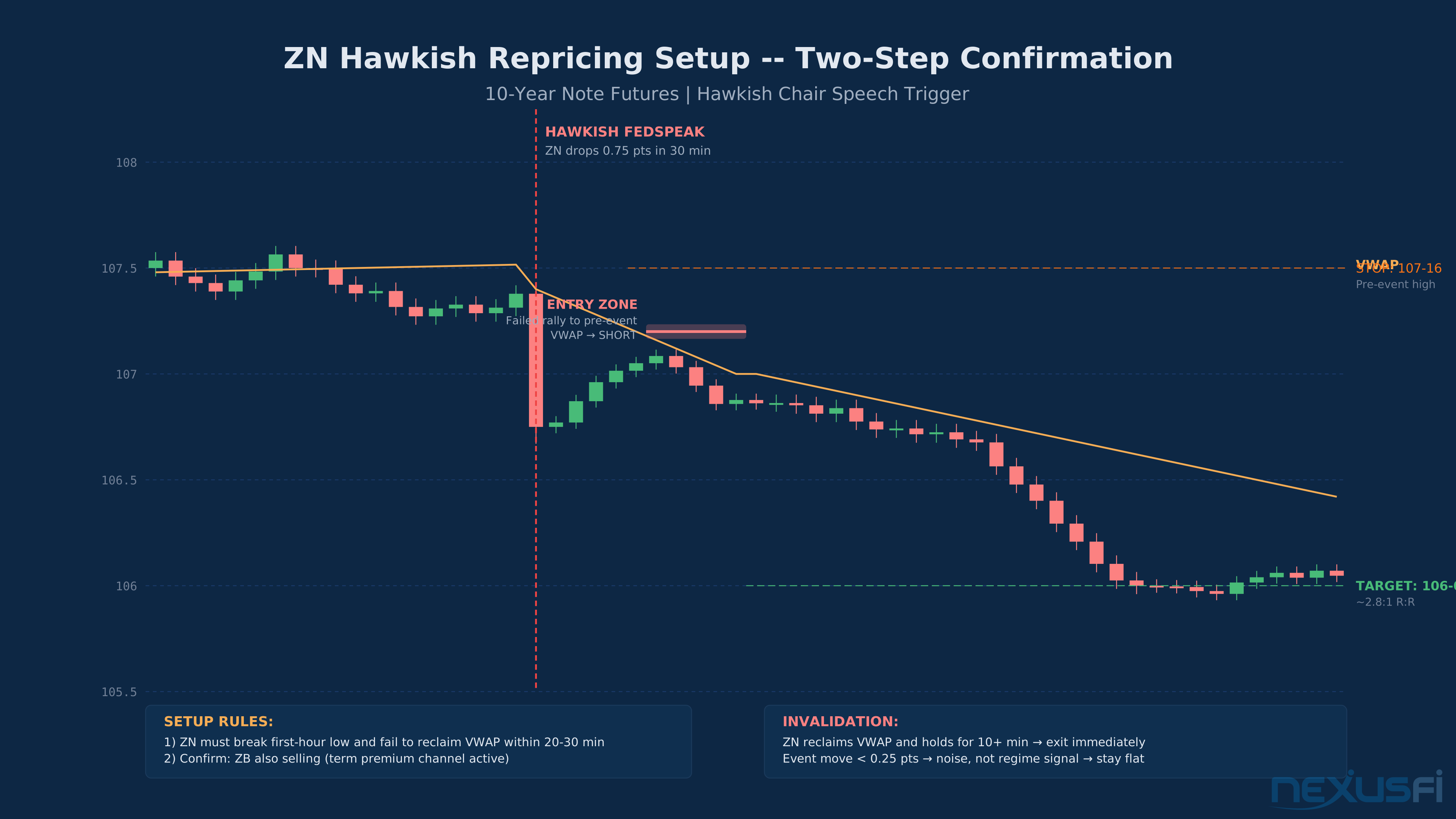
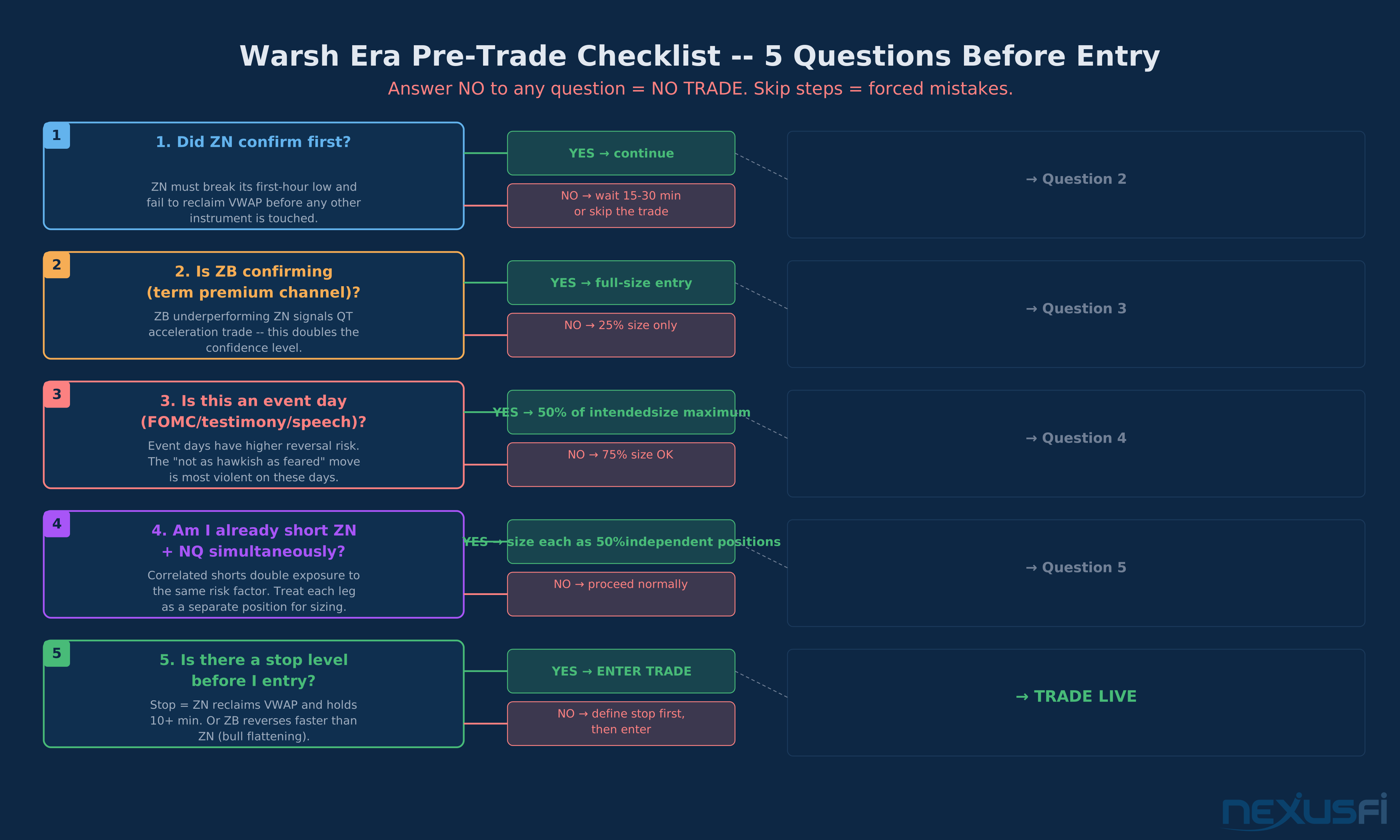
- Step 1 -- Rate confirmation: ZN breaks its first-hour range low and fails to reclaim it within 15-30 minutes. "Failed rally" = ZN bounces back toward the pre-event VWAP, stalls, then rolls over again. Short there, not at the first breakdown.
- Step 2 -- Confirmation: ZB also selling (term premium channel active). If ZN is down but ZB is flat, the trade is less clean -- it may be front-end only, not full regime repricing.
- Stop: ZN reclaims VWAP and holds for more than 10 minutes.
- Target: Prior week's low, or a measured move of 1x the first-hour range. Take partial profits at the first major support level.
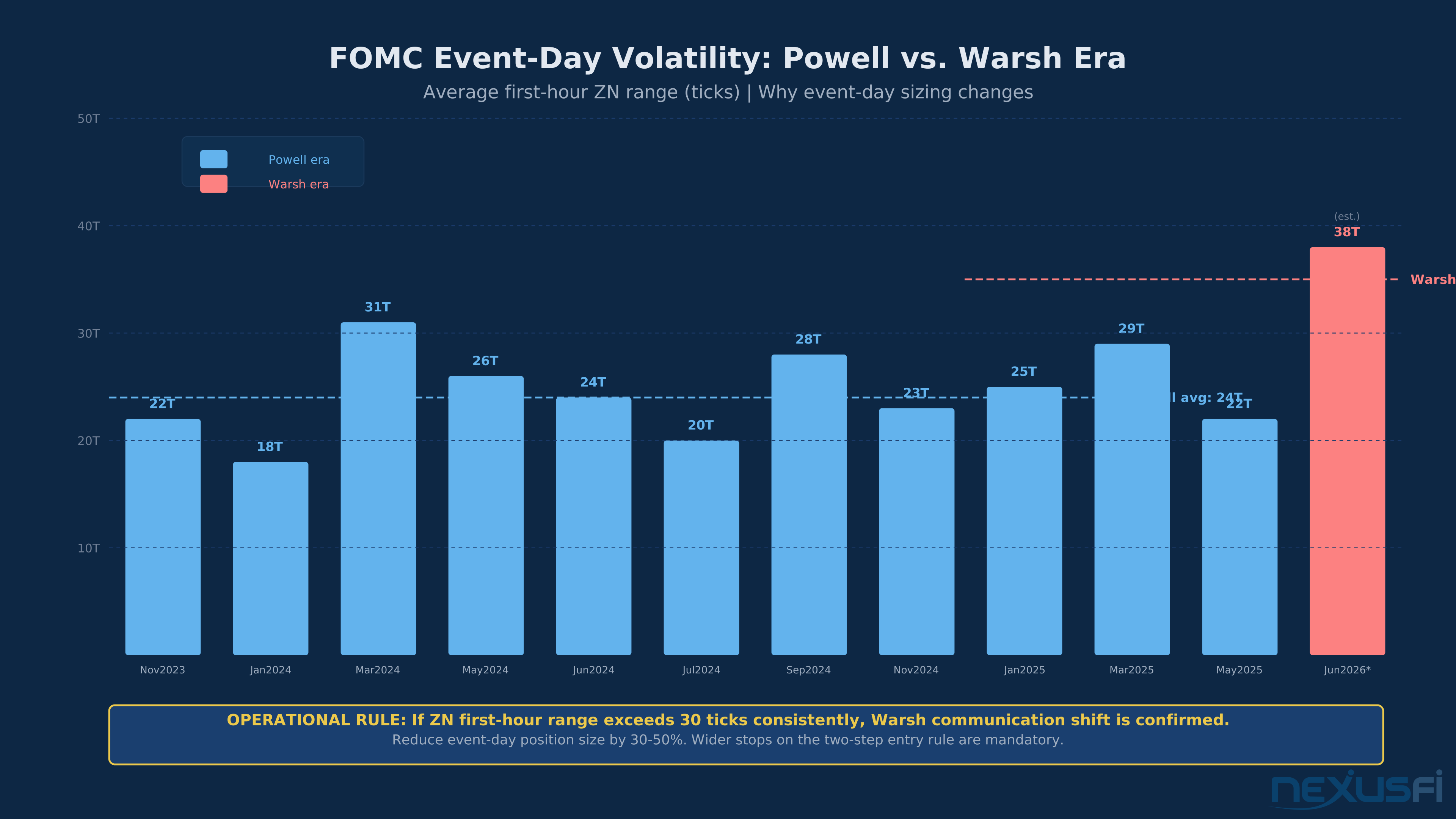
FAILURE MODE ZN is most dangerous to trade on the day of the event. The first 30-minute move can reverse violently on "not as hawkish as feared" relief. Size down 30-50% on event days. The two-step confirmation is not optional.
@tigertrader identified the opportunity window back in 2015: "the question remains whether the market is properly pricing in the fed's readiness to tighten policy. this is where the uncertainty lies, that presents the trading opportunities one must be able to recognize, and take advantage of."
ZB -- The Term Premium Sensor
ZB (30-Year Bond futures) is more volatile than ZN and specifically exposed to the term premium component of yields. When Warsh accelerates QT, the additional Treasury supply pressure hits the long end disproportionately. ZB moves more than ZN in that scenario.
QT acceleration setup:
- Trigger: Warsh explicitly references balance sheet runoff pace, reserve management, or reduced reinvestment in testimony or FOMC communications
- Entry: Short ZB on break below the prior session low after the announcement. Wait for the break to confirm, then enter on a retest.
- Relative trade: Short ZB / long ZN captures the curve steepening without full directional risk.
- Stop: ZB reclaims the prior session low and holds. If ZB reverses faster than ZN, the long end is being bought as a growth hedge -- the trade is wrong.
- Target: Take partial profits at prior week's low. Hold a runner if overnight auction data continues to show weak demand.
Failure modes: ZB can whipsaw on growth fear reversals. If the economy shows signs of slowing sharply, the long end can rally hard as flight-to-quality even while the front end is pricing hikes. This "bull flattening" scenario kills ZB shorts. Watch ISM manufacturing and jobless claims.
NQ -- The Equity Duration Sensor
NQ (E-mini Nasdaq-100) is the cleanest equity expression of hawkish rate regime changes. The Nasdaq is loaded with long-duration cash-flow companies — high-multiple tech, biotech, software — whose valuations are most sensitive to changes in the discount rate.
In the Yellen-to-Powell transition, NQ fell roughly 50% more than ES over the same 90-day window after peak hawkishness was confirmed. The NQ/ES performance gap is your signal that the move is discount-rate driven (Warsh/rates story) vs. earnings driven (macro story).
Discount rate compression setup:
- Trigger: ZN down >0.50pt AND NQ breaks its opening range low (first 60-minute range). Both must confirm.
- Entry: Short NQ on a failed breakout attempt after the rates move confirms. Don't short into the first hard down move -- wait for the bounce that stalls at or below pre-event levels.
- Stop: NQ recaptures VWAP and holds for 5-10 minutes.
- Target: Cover at 1.0-1.5x the first-hour range. Be more aggressive with exits on event days.
ES -- The Lagging Confirmation
ES is the last domino in the hawkish transition sequence. That makes it both the clearest confirmation signal and the most dangerous direct expression of the trade.
ES is dangerous to short early because:
- Sector rotation within ES can partially offset the rate pressure (energy, financials benefit from higher rates)
- Earnings surprise risk is always present and can lift ES even when rates are rising
- The large open interest in ES makes it prone to violent short-covering squeezes
Breadth confirmation setup:
- Trigger: ZN down >0.75pt + NQ already breaking down + breadth deteriorating (>70% of NYSE issues declining)
- Entry: Short ES only after NQ has already broken its key level and breadth confirms. Never short ES before NQ confirms.
- Stop: Bond yield reversal lower or breadth improvement above 50% advancing issues
- Target: Cover into the first panic/forced-liquidation flush.
The relative trade — short NQ vs. long ES — is actually more attractive than outright ES short in a hawkish transition. You capture the discount-rate compression without full directional risk. When NQ/ES ratio is falling persistently after ZN stabilizes, you're seeing pure premium compression independent of macro deterioration.
6E -- The Dollar Strength Expression
6E (EUR/USD futures) captures the FX expression of US rate differentials. A hawkish Fed that moves rates higher than the ECB, or that moves faster, drives USD strength and EUR weakness.
Rate differential setup:
- Trigger: US 2-year yields spike >15bps in a single session after hawkish Fed communication, with ECB not offsetting
- Entry: Short 6E on break of the prior day's low after the rate event.
- Stop: US yields stop rising, or ECB repricing catches up
- Target: 1.0 ATR extension from the entry point; or prior significant support/resistance level
Failure modes: Risk-off events can produce "USD safe haven" buying that briefly looks like rate-differential strength but reverses quickly. Confirm that ZN (rates) are driving the USD move, not equity volatility alone.
CL -- The Confirmation Asset, Not the Primary Trade
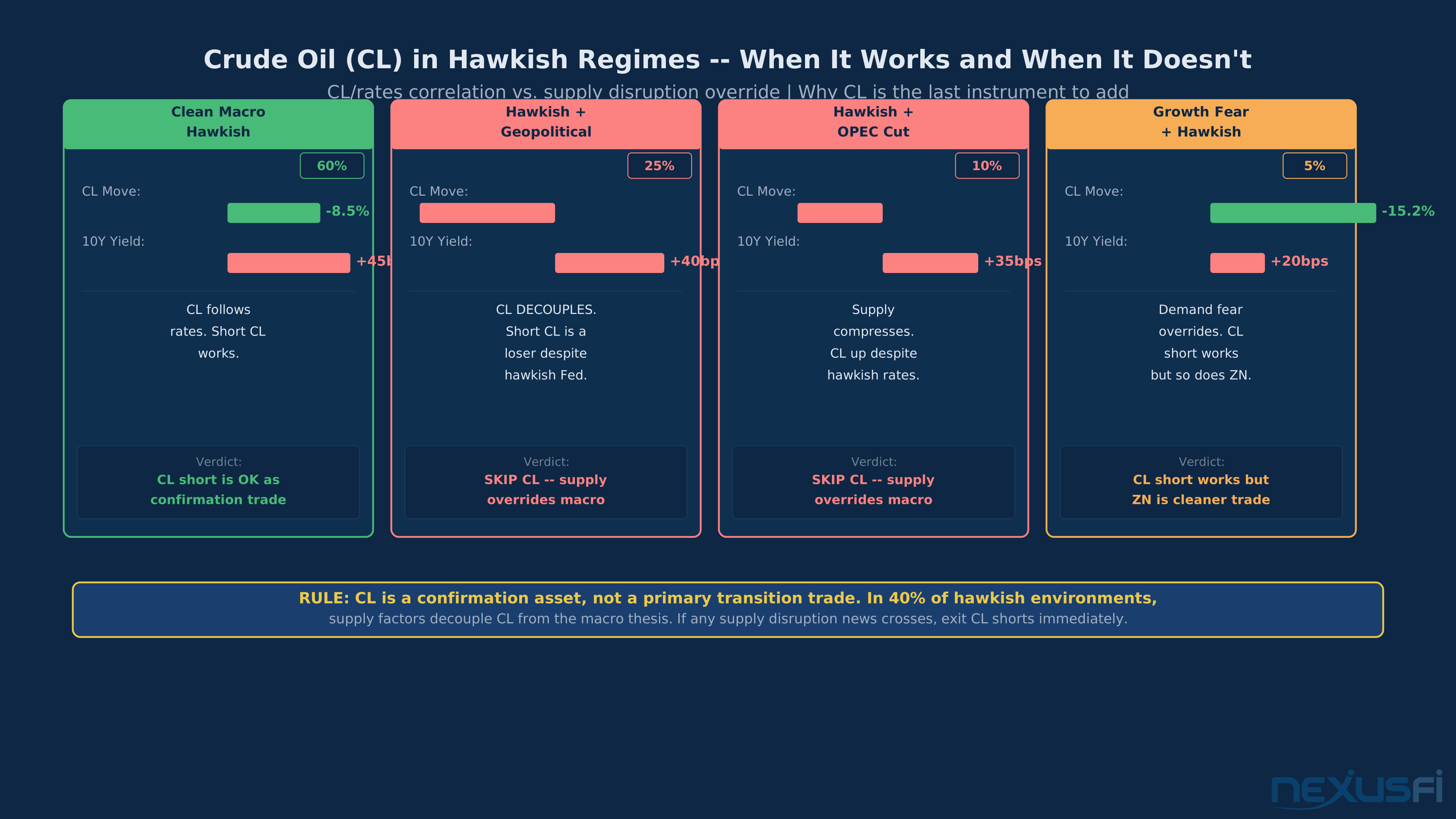
Crude oil (CL) has a weak and unreliable relationship with Fed Chair transitions. Oil has too many other drivers that can overwhelm the rates channel entirely.
In theory: hawkish Fed → stronger dollar → weaker commodity prices → lower CL. In practice: geopolitical disruptions, OPEC production decisions, refinery capacity constraints, and inventory data regularly overwhelm that channel. As demonstrated in 2022-2026, oil can trade at $70-90 with both tight and loose monetary policy.
Use CL as a macro confirmation, not a primary transition trade. If hawkishness is driven by inflation persistence AND oil supply is not disrupted, CL short after a break of prior support makes sense. Hard stop: if any supply disruption news crosses while you're short CL based on macro thesis, exit immediately.
FOMC Communication Under Warsh -- Trading the Style Shift #
The single biggest operational change for futures traders under Warsh is the communication style shift. Powell ran a "Fed whisperer" model — when the market was surprised by a statement, reporters with Fed access would publish clarifying articles within hours. Warsh is less likely to use that channel.
What this means operationally:
Don't trade the first 5 minutes after FOMC. Without the softening mechanism, the market's raw interpretation gets priced more violently. Wait for the press conference. The opening questions are when chair communication really begins.
Watch CPI days with extra attention. Warsh's reaction function weights inflation more heavily. A hotter-than-expected CPI under Powell would shift the dot plot; under Warsh, it could signal a genuine policy pivot to hikes. The market will learn to price in higher volatility for every CPI print.
Measuring the regime shift in real-time: track the average first-hour ZN range around FOMC days and speech days. Under Powell (2021-2025), that range averaged roughly 20-25 ticks. If the Warsh-era average exceeds 30+ ticks consistently, the communication regime shift is confirmed and you adjust your event-day sizing so.
Warsh Era Scenario Matrix #
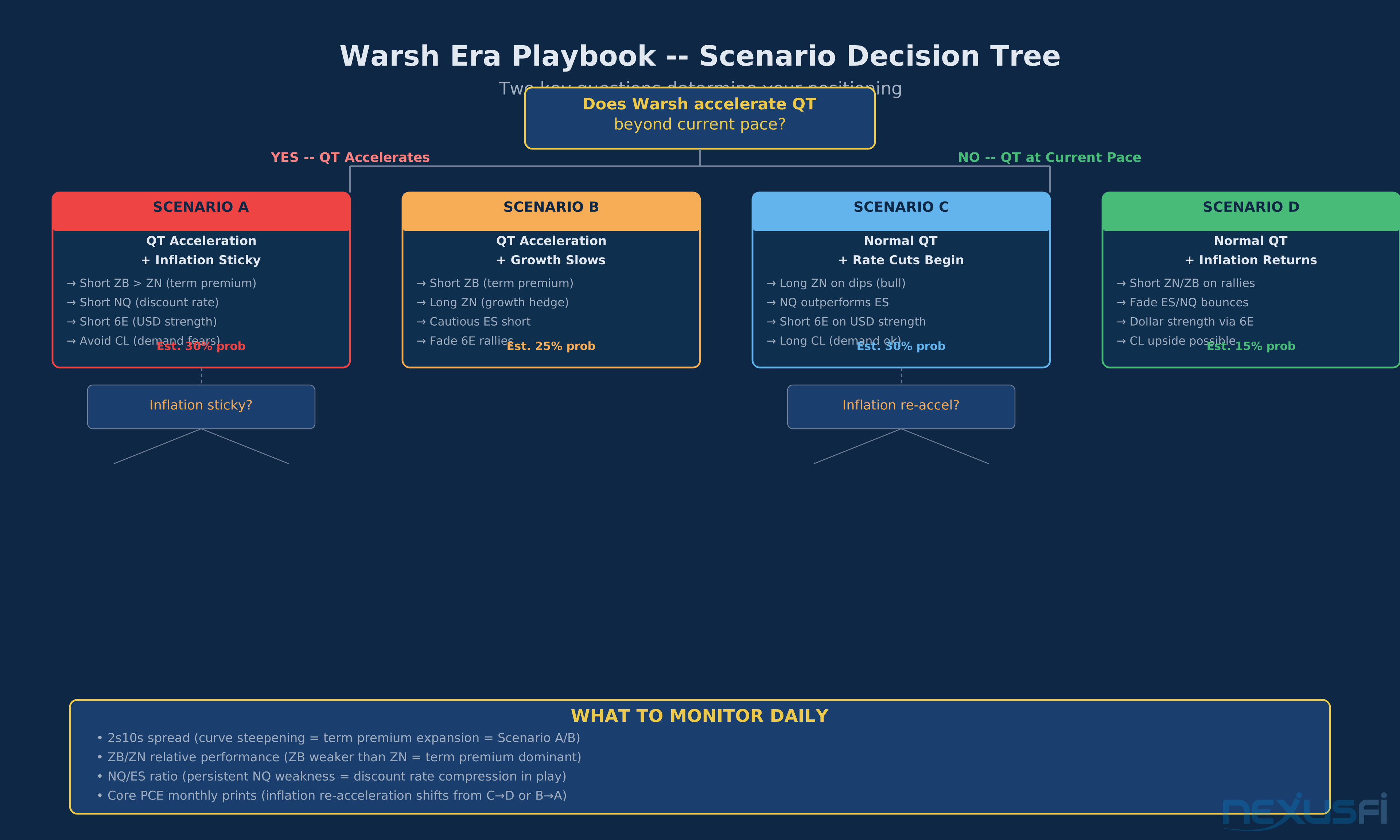
Fed Chair transitions don't have a single outcome — they have a probability distribution. Here are the four scenarios that cover roughly 85% of likely Warsh-era outcomes.
SCENARIO A — QT Acceleration + Sticky Inflation (~30% probability) Warsh accelerates balance sheet runoff while core PCE stays above 2.5%. ZB underperforms ZN. NQ drops more than ES. USD strengthens. The yield curve bear-steepens. Primary trades: Short ZB/long ZN spread, short NQ outright, short 6E. Avoid CL unless macro deterioration is crystal clear.
SCENARIO B — QT Acceleration + Growth Deterioration (~25% probability) Warsh accelerates QT but the economy slows. Bull flattening environment: front end rallies as cuts get priced, long end stays pressured by supply. ZN rallies (flight to quality), ZB lags. NQ caught in tug-of-war. Primary trades: Long ZN, relative value short ZB vs ZN, neutral on ES/NQ.
SCENARIO C — Normal QT + Cuts Begin (~30% probability) The market's base case: Warsh cuts to 3.00-3.25% while continuing existing QT pace without acceleration. ZN rallies modestly, ZB less so. NQ outperforms ES. Primary trades: Long ZN on dips, long NQ relative to ES, fade 6E rallies.
SCENARIO D — Normal QT + Inflation Re-acceleration (~15% probability) Inflation surprises to the upside, forcing the Fed to abandon the cutting cycle. The FOMC minutes from January 2026 already showed this scenario being discussed internally. ZN/ZB both sell hard. NQ leads ES lower. This is the highest-volatility scenario. Primary trades: Short ZN and ZB on every rally, short NQ on failed bounces, short 6E.
Position Sizing for Transition Windows #
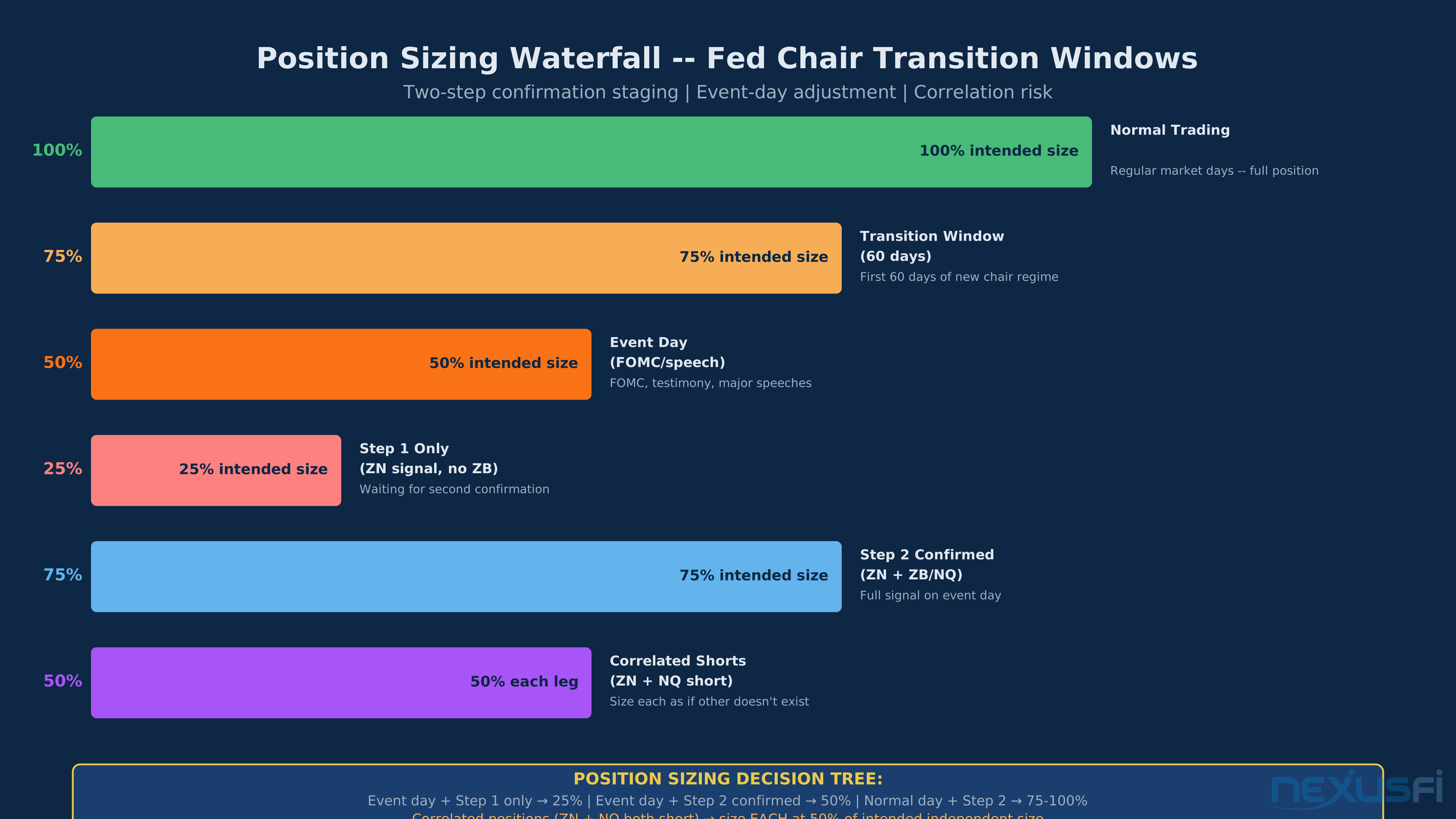
The standard position sizing rules don't apply during Fed Chair transition windows.
Event-day sizing: reduce by 30-50%. FOMC days, chair testimony days, and major speech days have larger first-candle moves but also higher reversal risk. Half-size lets you stay in the trade through whipsaw without getting stopped out on noise.
Two-step confirmation staging:
- Step 1 (initial signal only -- ZN breaks down, waiting for ZB/NQ confirmation): 25% of intended size
- Step 2 (ZN + ZB confirming, or ZN + NQ confirming): add to full intended size
- This structure prevents the "traded the first tick" error that has burned traders in prior transitions
Correlation risk during transition windows. In normal trading, ZN and ES have a negative correlation. During hawkish transitions, that correlation can temporarily go positive (both selling simultaneously). If you're short ZN AND short NQ, you're doubling up on the same risk factor. Size each position as if the other doesn't exist.
The patience premium. The best Warsh-era trades will be 30-60 days into the new regime, not the first FOMC day. The market takes time to recalibrate its models to a new reaction function. Once you see the new communication patterns consistently across 2-3 events, the setups become cleaner and higher-probability.
-- NexusFi Elite Circle | February 2012 | Expert Member”
The Warsh transition is the current version of that awakening — the misconceptions being unwound are about QE permanence, Fed communication transparency, and equity floor protection.
Knowledge Map
Prerequisites
Understand these firstCitations
- — Spoo-nalysis ES e-mini futures S&P 500 (2014) 👍 18“many traders have moved on from simply focusing on the timing of the first fed hike to considering the pace of the tightening and the terminal rate”
- — Spoo-nalysis ES e-mini futures S&P 500 (2022) 👍 13“A secular change has occurred, and we are now in a period of high inflation, a tightening Fed, more normal interest rates, rising risk aversion, and tight credit.”
- — Spoo-nalysis ES e-mini futures S&P 500 (2022) 👍 9“The logistics of the trade are very important. You can't just sell with no regard for positioning. After that first hard sell, ES rallied almost 50 points!”
- — Spoo-nalysis ES e-mini futures S&P 500 (2015) 👍 7“the question remains whether the market is properly pricing in the fed's readiness to tighten policy. this is where the uncertainty lies, that presents the trading opportunities one must be able to recognize, and take advantage of.”
- — The Warsh Fed Takes Shape -- What a New Chair Means for Rates, QT, and Your Trading in 2026 (2026) 👍 1“The 'QT-for-cuts' strategy: Front-loaded rate reductions combined with accelerated balance sheet reduction.”
- — FOMC Minutes Bombshell: Several Fed Officials Openly Discussed Rate HIKE Scenario (2026)“Morgan Stanley has warned that his leadership style could reduce Fed communication transparency and increase policy surprises -- exactly the kind of environment that creates bigger moves in rates markets.”
- — Spoo-nalysis ES e-mini futures S&P 500 (2012) 👍 1“Those believing the Fed is on hold for the next 3 years will be in for a rude awakening. Misconceptions still persist.”
- — Trump nominates Kevin Warsh for Federal Reserve Chair to succeed Jerome Powell (2026)
- — The Warsh Pivot: What Kevin Warsh's Fed Chair Nomination Means for Markets in 2026 (2026)