



Futures Order Types: Market, Limit, Stop, and Conditional Orders
Overview #
Every futures trade starts with an order — and the order type you choose determines whether you're optimizing for certainty of execution, price control, or conditional logic. Pick wrong, and you're either leaving money on the table or failing to get filled when it matters most.
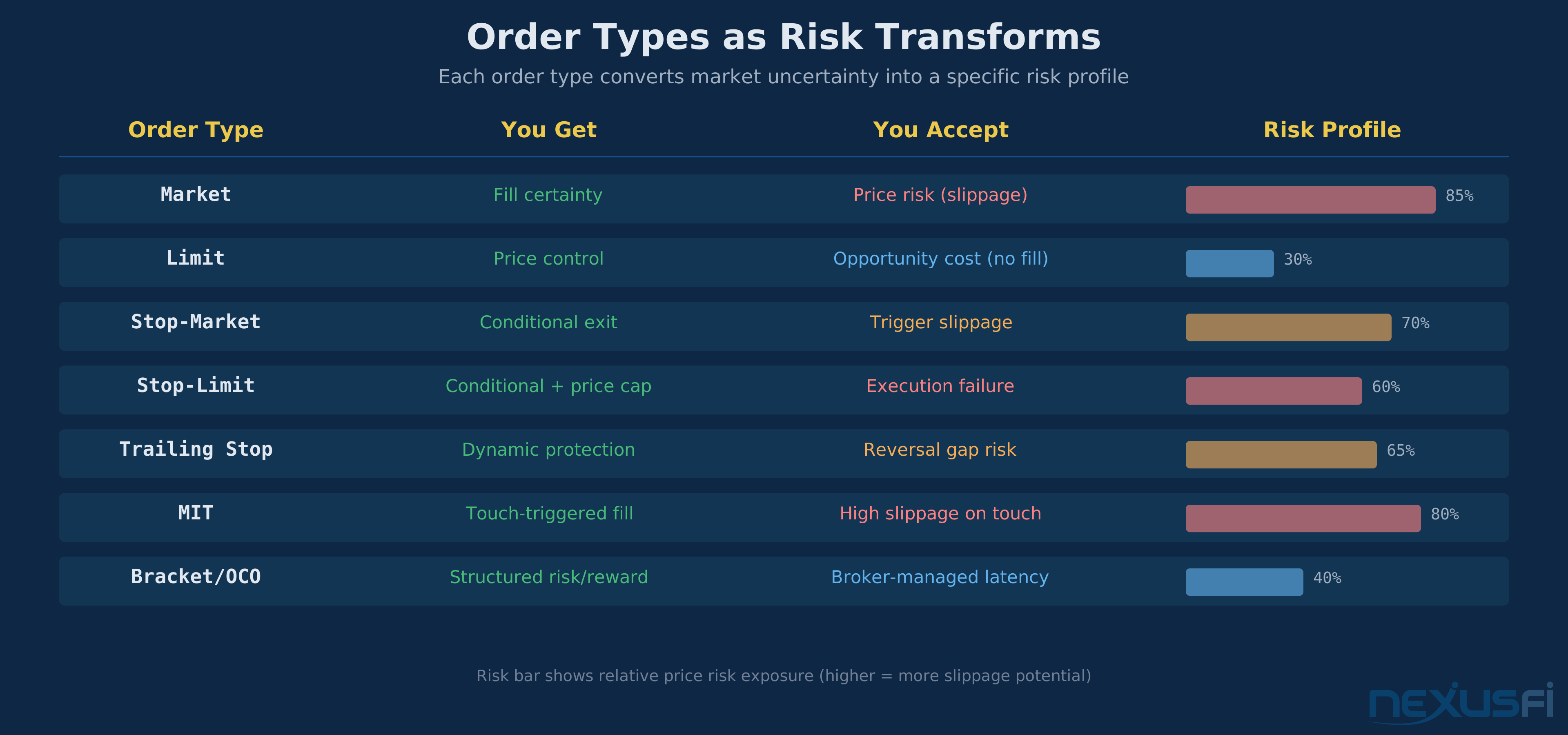
Order types aren't just mechanics. They're risk transforms. Each type converts market uncertainty into a specific kind of risk: price risk, execution failure risk, or opportunity cost. Understanding this framework changes how you think about every trade you place.
Key Concepts #
Price-Time Priority: Most futures exchanges (CME, ICE, Eurex) match orders using price-time priority — best price first, then earliest entry time at that price level. Your limit order at 4500.00 submitted at 9:30:01 fills before someone else's limit at 4500.00 submitted at 9:30:02. This matters because queue position directly affects fill probability.
Maker vs Taker: A maker order adds liquidity to the book (resting limit orders). A taker order removes liquidity (market orders, marketable limits). Your order type determines which role you play — and some exchanges offer rebates for making liquidity.
Slippage: The difference between where you expected to fill and where you actually filled. As @Fat Tails explains, "Slippage occurs with market orders only. If you use limit orders there will be positive slippage."([post] [1]) Slippage is driven by order size relative to book depth, micro-volatility between decision and execution, and the bid-ask spread itself.
Market Orders #
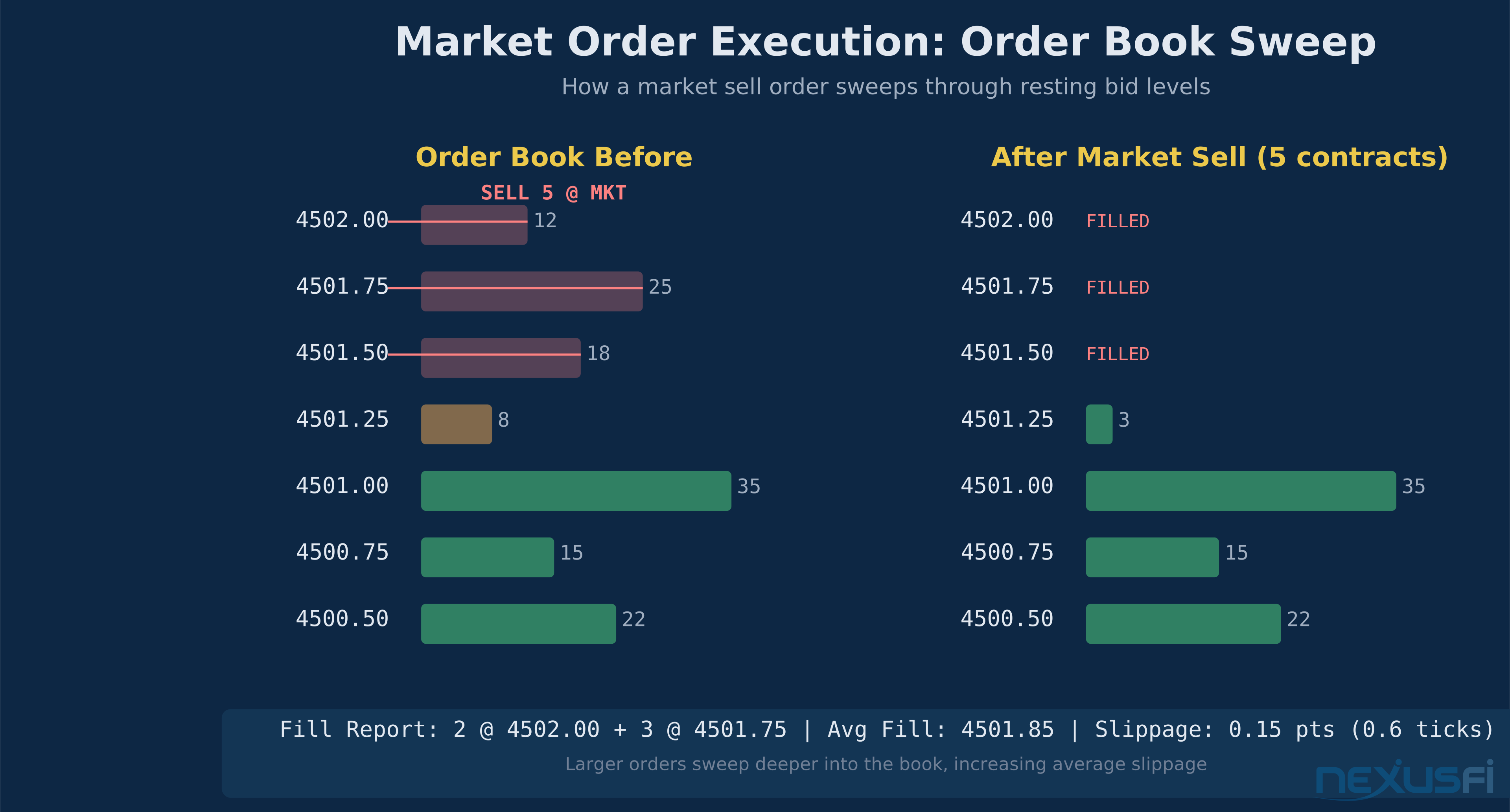
A market order says: fill me now, at whatever price is available. You're a taker — you sweep the order book starting from the best available price until your entire size is filled.
When to use: Urgent exits, risk reduction, must-fill scenarios where a tick or two of slippage doesn't matter compared to the cost of not getting filled.
The CME twist: Here's something many traders don't realize. As @Fat Tails points out, "For CME Globex, all market orders are limit orders, and all stop orders are stop limit orders."([post] [2]) CME implements "Market Orders with Protection" — your market order automatically becomes a limit order capped at 50% of the No Bust Range from the current best price. For ES with a 6-point No Bust Range, a market sell at 4500.00 becomes a limit sell at 4497.00. This prevents catastrophic fills during flash crashes, but it also means your "market order" could partially fill and leave a residual limit sitting on the book.
Slippage reality:
([post] [1]) In liquid ES during regular trading hours, slippage on 1-5 contracts is typically 0-1 tick. In CL or thinner contracts, expect 1-3 ticks regularly.
Limit Orders #
A limit order specifies your maximum buy price or minimum sell price. If the market can't meet your price, the order rests on the book until it can — or until you cancel it.
Buy limit: Fills at your limit price or lower. Sell limit: Fills at your limit price or higher.
When to use: Mean-reversion entries, profit targets, any situation where price control matters more than fill certainty. Limit orders are the workhorse of disciplined trading — you define the worst price you'll accept and let the market come to you.
The tradeoff: You cap your slippage but take on opportunity cost risk. Your limit at 4495.00 means nothing if ES bottoms at 4495.25 and rips 20 points without you. The market doesn't care about your order.
Partial fills: Large limit orders frequently fill in pieces. You post 10 contracts at 4500.00, and 3 fill immediately against takers. The remaining 7 sit in queue. This creates position management complexity — you're partially in, partially waiting.
Stop Orders (Stop-Market) #
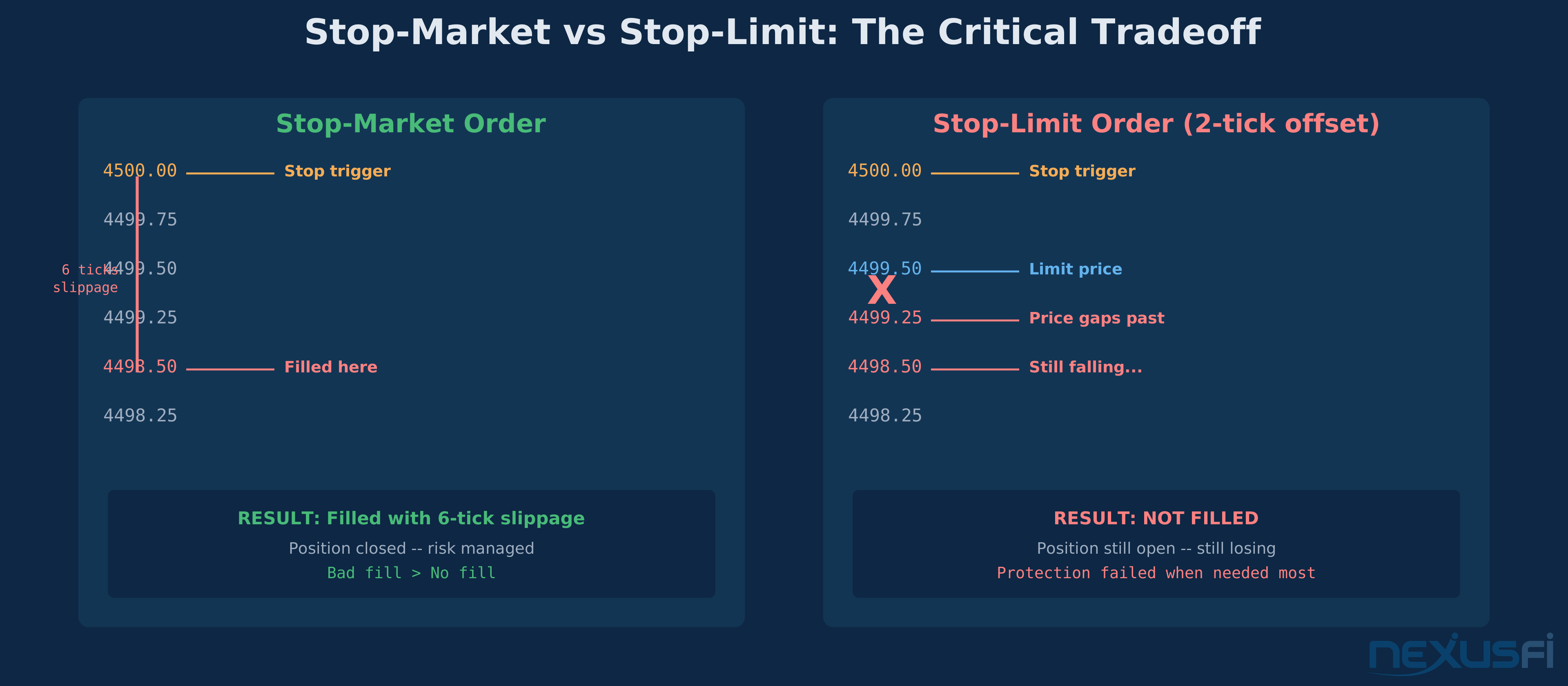
A stop order becomes active when price hits your trigger level. Buy stops sit above the market, sell stops sit below. Once triggered, the order converts to a market order and fills at whatever price is available.
When to use: Stop-losses for position protection and breakout entries where you need participation certainty once a level breaks.
CME implementation: On CME, your stop-market order actually converts to a stop-limit with protection.
([post] [3]) For ES, this means maximum slippage of 3 points (12 ticks) from your stop price. That's protection — but it also means in an extreme scenario, your stop might not fully execute if price gaps beyond the protection range.
Trigger mechanics: The trigger price reference matters enormously. CME stops trigger on last traded price. Some venues use bid/ask or mark price. This single variable determines when your conditional order activates, and it's the #1 source of execution surprises across exchanges.
Stop-Limit Orders #
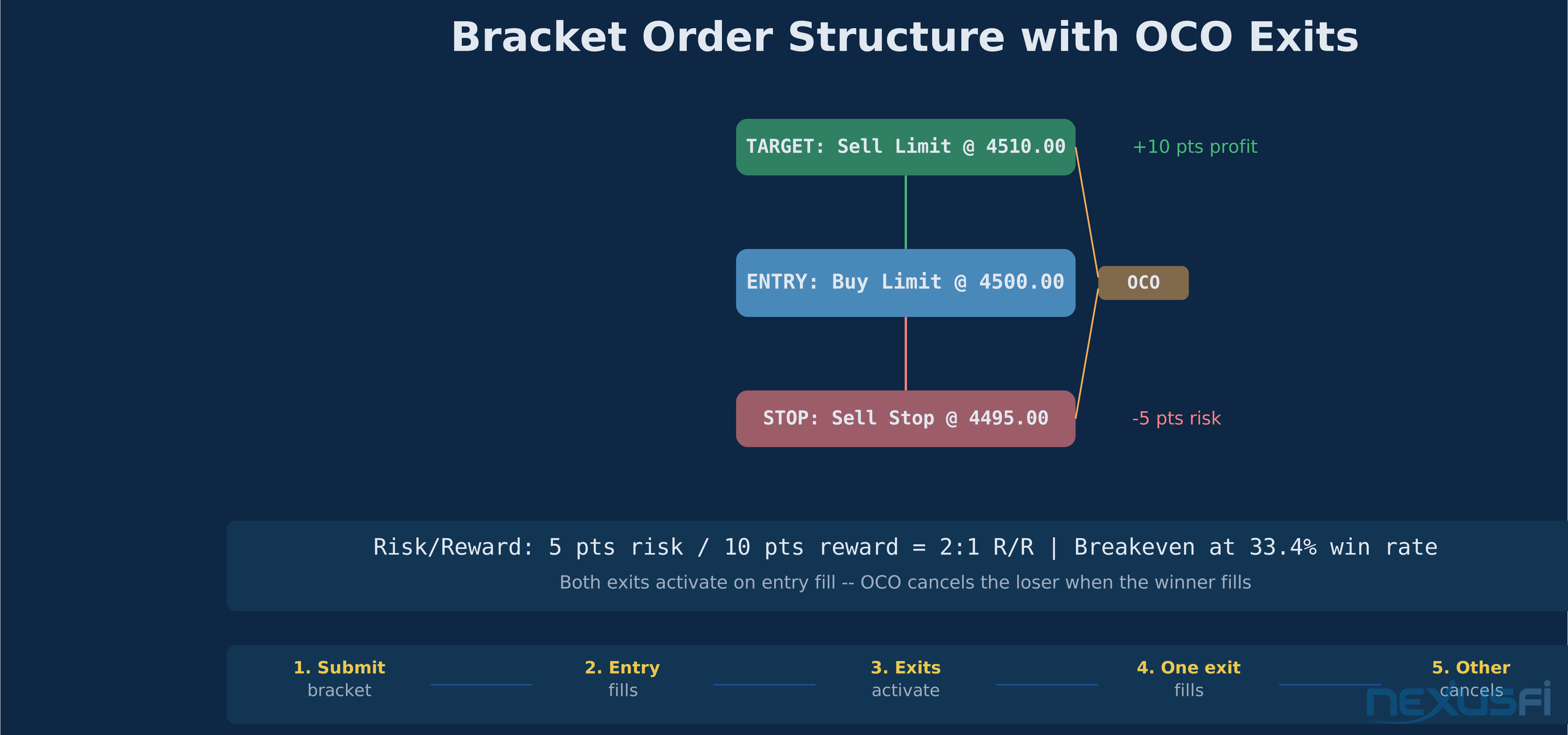
A stop-limit combines conditional activation with price control. When the stop price triggers, instead of becoming a market order, it becomes a limit order at your specified limit price (or with a defined offset from the stop).
When to use: When you want stop-like protection but can't tolerate unlimited slippage. Common in thinner markets like agricultural or energy futures where stop-market fills can be ugly.
([post] [4]) The reason is straightforward — if price gaps through your limit, you get no fill at all. Your "protection" order fails exactly when you need it most. A stop-market might fill 5 ticks worse than expected, but at least you're out.
Offset selection: If you do use stop-limits, the offset between stop and limit price is critical. Too tight (0-2 ticks) and you're likely to miss fills in volatile conditions.
([post] [4])
Trailing Stops #
A trailing stop dynamically adjusts your stop price as the market moves in your favor. Long position with a 10-tick trail: every time price makes a new high, your stop ratchets up 10 ticks below that high. Price reverses and hits the trail — you're out with profits locked.
When to use: Trend-following strategies where you want to capture extended moves without constantly repositioning manual stops. Especially valuable when you can't actively monitor positions.
Implementation matters: Trailing stops can be exchange-native (server-side) or broker/platform-managed (client-side). Server-side is more reliable — it executes regardless of your platform connection. Client-side trailing stops depend on your platform staying connected and responsive. If your trading platform crashes while a client-side trailing stop is active, that stop disappears with it.
Once triggered: A trailing stop converts to either a stop-market or stop-limit order depending on your configuration. All the same slippage considerations apply at the moment of trigger.
Market-If-Touched (MIT) #
An MIT order triggers when price reaches a specified level and immediately converts to a market order. It looks similar to a stop order, but the direction is reversed: a buy MIT sits below the current market (buy on a dip), while a buy stop sits above (buy on a breakout).
When to use: Entering positions at favorable levels without manually watching the screen. You want to buy ES if it pulls back to 4480 — place a buy MIT there. When price touches 4480, you get a market fill.
vs limit orders: An MIT guarantees execution once touched but accepts slippage. A limit at the same level guarantees price but might not fill. The tradeoff is fill certainty vs price certainty — the fundamental tension underlying all order type decisions.
Time-In-Force Instructions #
These aren't separate order types but instructions attached to any order:
Day: The default. Order expires at session close. Most futures traders use day orders to avoid overnight exposure surprises.
Good-Till-Cancelled (GTC): Stays active until filled or cancelled. Useful for longer-horizon limit orders targeting specific technical levels. Caution: GTC orders can fill during thin overnight sessions at unfavorable prices. Some exchanges impose maximum durations.
Fill-or-Kill (FOK): Execute the entire quantity immediately or cancel the whole thing. No partial fills. Used when you need exact size for hedging ratios or paired trades. The tradeoff: high rejection rate in exchange for no partial-fill complexity.
Immediate-or-Cancel (IOC): Fill whatever is immediately available, cancel the rest. Unlike FOK, IOC accepts partial fills. Useful when you want immediate liquidity but don't need the full size.
Bracket Orders #
A bracket packages three orders into a structured trade: entry + profit target + stop loss. Place a limit buy at 4500.00 with a 10-point profit target (sell limit at 4510.00) and a 5-point stop (sell stop at 4495.00). The exit orders link as OCO — whichever fills first cancels the other.
When to use: Systematic intraday trading where you define risk/reward at entry. Brackets enforce discipline — your stops and targets are live the moment you're filled, with no gap for hesitation or second-guessing.
Broker-managed reality: Bracket orders are almost always broker or platform features, not exchange-native order types. The bracket logic — activating exits after entry fill, linking them via OCO, canceling the remaining leg — runs on your broker's servers.
OCO (One-Cancels-Other) #
OCO links two orders so that when one fills, the other automatically cancels. The classic use case: profit target (limit) + stop loss (stop) on an open position. Price hits your target — the stop cancels. Price hits your stop — the target cancels.
([post] [5])
Exchange support: Here's the critical detail most traders miss.
([post] [5]) On CME and ICE, OCO functionality lives on your broker's servers or your trading platform. This creates a small but real window where both legs could theoretically fill if price whipsaws fast enough through both levels before cancellation propagates. In practice, this is rare in liquid markets but possible during extreme volatility.
Choosing the Right Order Type #
The decision framework maps to risk transforms:
Priority: Execution certainty — Market order. Accept price risk. Priority: Price control — Limit order. Accept opportunity cost. Priority: Conditional protection — Stop-market. Accept trigger slippage. Priority: Conditional + price control — Stop-limit. Accept non-fill risk. Priority: Structured risk/reward — Bracket with OCO exits.
For stop-loss orders: Use stop-market, not stop-limit, unless you have a specific reason to accept non-fill risk. A bad fill is better than no fill when you're wrong.
For profit targets: Use limit orders. You've defined your edge — let the market come to your price.
For breakout entries: Stop orders work, but account for trigger slippage. In fast-moving markets, your breakout entry might fill several ticks past your intended level.
For trend trades: Trailing stops lock in gains dynamically. Prefer server-side implementations over client-side when available.
CME vs ICE: What Matters #
The concepts are identical across exchanges. The implementation details create execution differences:
Trigger price references: CME stops trigger on last traded price. ICE may differ by product. Always confirm with your broker which price activates your conditional orders.
Market order protection: CME's "Market Order with Protection" caps slippage at 50% of the No Bust Range. Not all exchanges implement equivalent safeguards.
Native vs simulated order types: Some exchanges simulate certain order types at the broker level, adding latency between trigger and submission. @Fat Tails observes that "Some futures exchanges — such as CME — do not offer stop market orders. All stop market orders are converted into stop market orders with protection."([post] [4])
Session and auction behavior: How orders behave during opening/closing auctions, limit-up/limit-down conditions, and session transitions varies by exchange. Stops may deactivate or reject during halt conditions.
Before trading any conditional order type on a new contract or exchange, verify three things: the trigger price reference, the conversion behavior on trigger, and the maximum order lifetime. These three variables determine whether your orders behave the way you expect.
Knowledge Map
Go Deeper
Build on this knowledgeReferences This Article
Articles that build on this topicCitations
- — NexusFi Discussion (2010) 👍 8“Slippage occurs with market orders only”
- — NexusFi Discussion (2010) 👍 1“For CME Globex, all market orders are limit orders”
- — NexusFi Discussion (2010) 👍 3“CME limits slippage to 50% of the No Bust Range”
- — NexusFi Discussion (2010) 👍 10“Generally it is not recommended to use stop limit orders as stop loss orders”
- — NexusFi Discussion (2012) 👍 7“I do not think that CME or ICE support OCO orders”