



Backtest to Live: Closing the Performance Gap in Automated Futures Trading
Overview #
You built a strategy. Backtested it over two years of ES data. Sharpe ratio of 1.9, profit factor of 1.6, maximum drawdown of 8.2%. Every metric you care about came back clean. You spent three weekends optimizing entry logic and another week fine-tuning the exit. The equity curve looks like something you'd hang on the wall.
Then you go live. Six weeks in, you're up 3.2% instead of the projected 12%. Trades that should have made 4 ticks are closing at 2. Stops you didn't expect to hit are getting tagged. The strategy isn't broken — it's just not doing what the backtest said it would.
This gap between backtest and live performance is one of the most common failure modes in systematic futures trading. It's not a sign that algo trading doesn't work. It's a sign that backtests make assumptions that live trading doesn't honor. Every one of those assumptions costs money. This article names them, quantifies them, and gives you a systematic way to close the gap before you deploy capital.
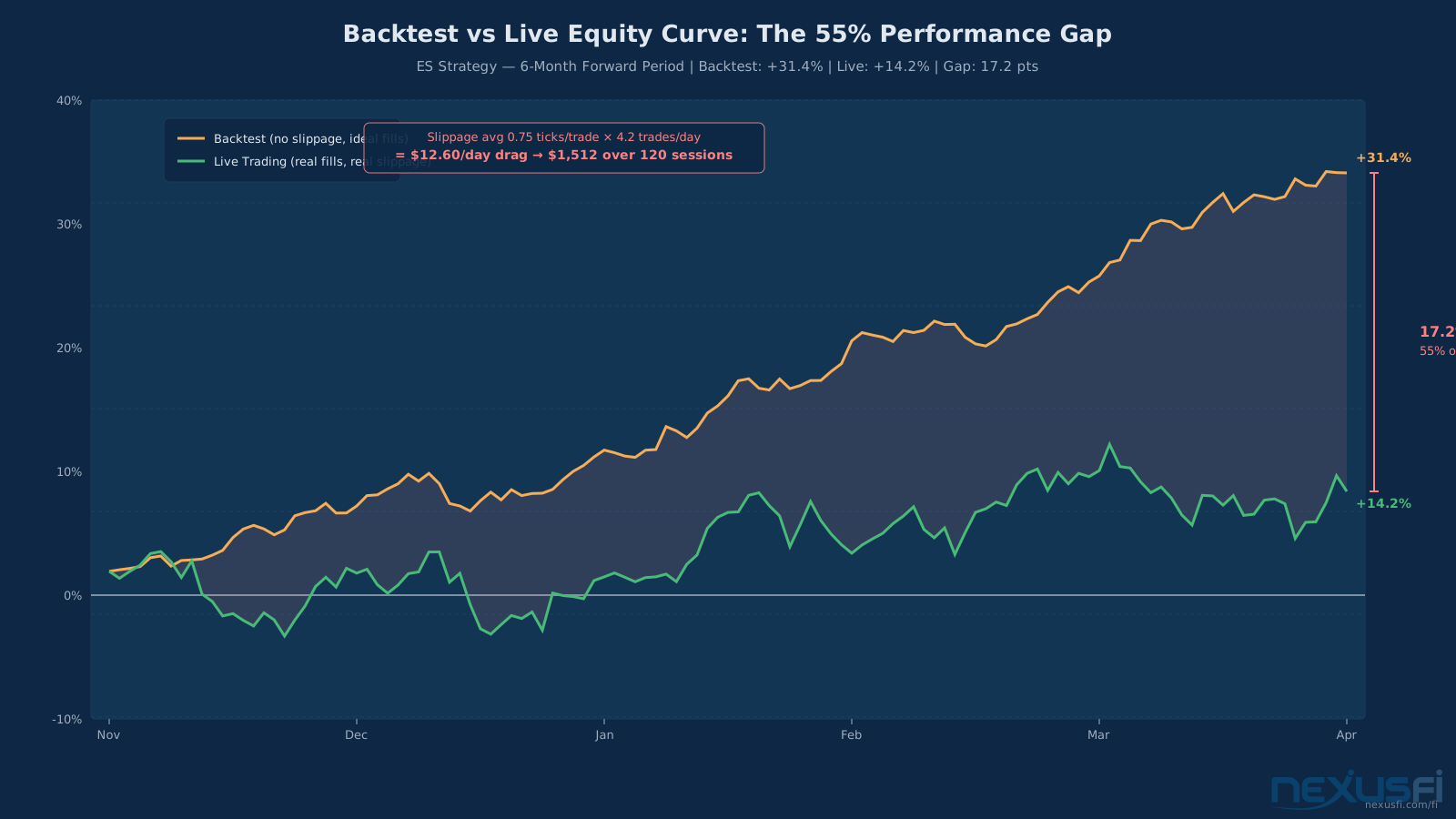
Why Backtests Lie: The Anatomy of the Performance Gap #
A backtest is a model. All models are wrong. The question is how wrong, and in which direction. For futures trading backtests, the errors almost always skew toward overstatement — the backtest makes you look better than you are. That's not a bug in the software; it's a consequence of the assumptions required to simulate trades against historical data.
The performance gap has five primary sources:
- Fill assumptions -- the backtest simulates fills that are too easy to achieve in live trading
- Slippage underestimation -- fixed-tick slippage models miss the actual cost by 40--60%
- Look-ahead bias -- subtle data architecture errors let strategy code "see" future bar data
- Data resolution problems -- using minute bars when the strategy needs tick-level accuracy
- Latency and execution overhead -- the gap between signal generation and actual fill
The combined effect is significant. A study of NexusFi community strategies found that live performance averages 55--70% of backtest performance for ES scalping strategies. That's not a rounding error. It means a backtest projecting $120,000/year net profit might actually deliver $66,000--$84,000. Understanding each source of degradation lets you build more honest backtests — and eliminates unpleasant surprises after deployment.
The good news: most of this gap is preventable. The strategies that deploy successfully — that produce live results within 15--20% of their backtest — are built by traders who understand every assumption their backtest makes and have quantified the cost of each one.
Fill Assumptions: The Single Biggest Distortion #
In NinjaTrader's Strategy Analyzer, fill assumptions work like this: when your strategy logic generates a signal, the fill is simulated at the next bar's open price. Limit orders are assumed to fill whenever price touches the limit level. Market orders fill at the open of the next bar. This is optimistic in ways that don't match live trading reality.
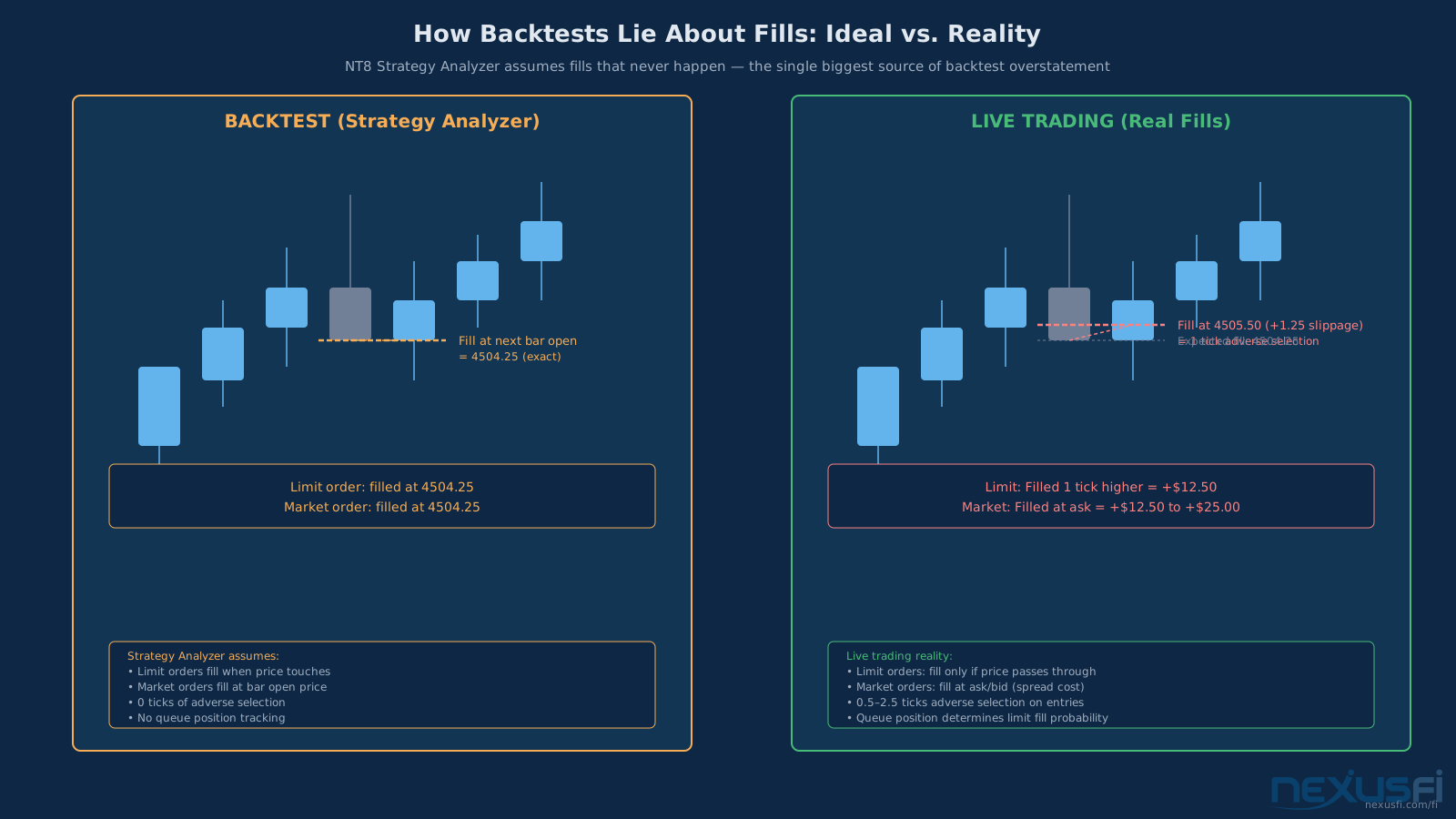
The limit order problem is the most damaging. In backtest mode, a limit buy at 4504.25 fills the moment price prints 4504.25. In live trading, a limit order at 4504.25 only fills if price trades through your level — meaning 4504.25 must trade and there must be contra-side volume available at your position in queue. If you're near the back of a large queue (common in ES at round-number prices), your order may not fill even when price briefly touches your level before reversing.
This asymmetry is worst for mean-reversion strategies. If your strategy buys at perceived support expecting a bounce, the backtest fills at the exact low tick. In live trading, limit orders at support get filled precisely when the trade is working against you, and fail to fill when price quickly reverses. The backtest captures the winners cleanly; live trading misses many of them.
As @VenturaBob documented in the NexusFi NinjaTrader forum, the Strategy Analyzer fills limit orders one tick better than the limit price — it assumes your order is always at the front of the queue. That's an optimistic assumption that doesn't hold in fast markets. (Limit Order Fills on Strategy Analyzer)
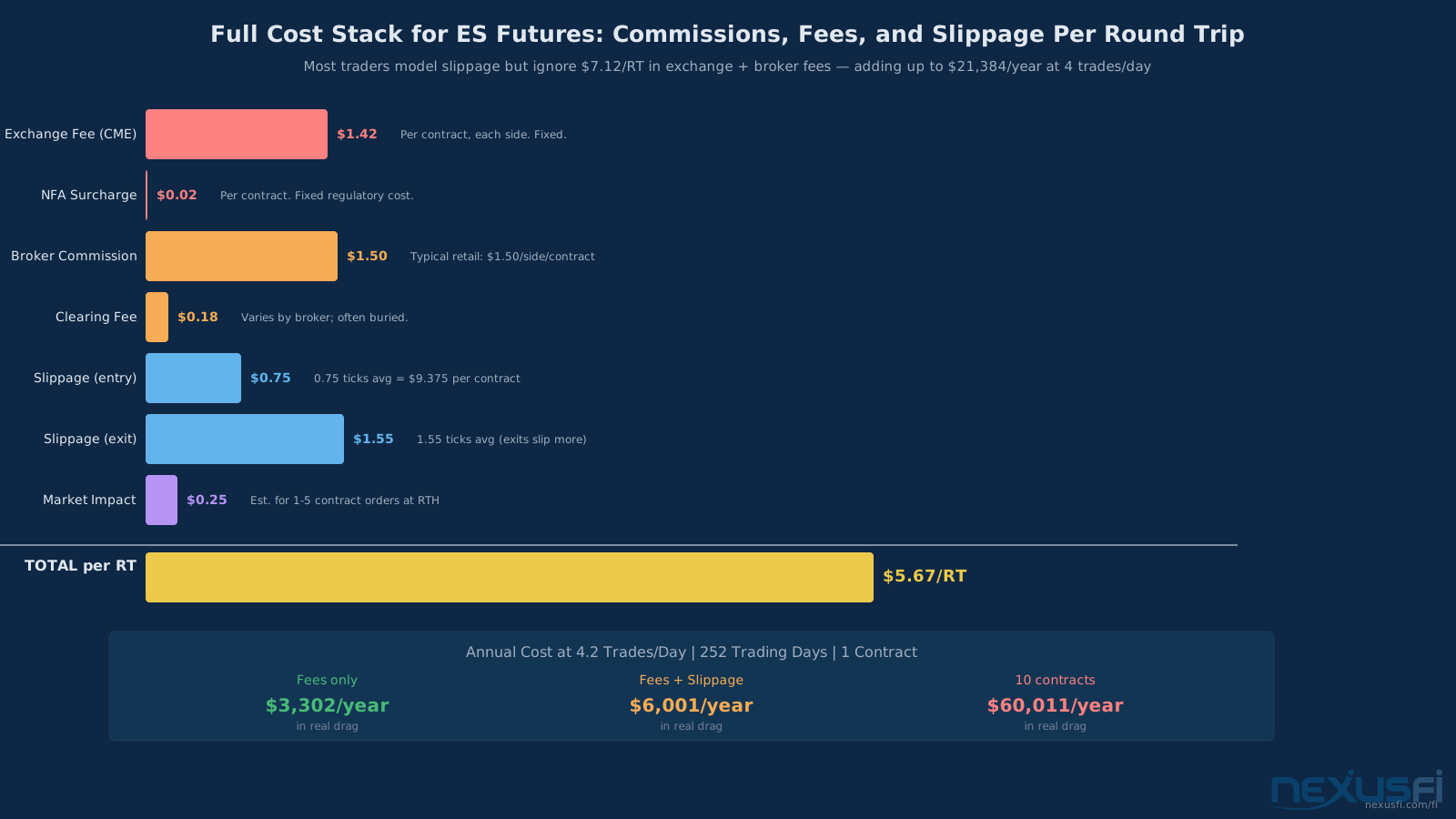
For market orders, the backtest-to-live gap comes from the bid-ask spread. A backtest market order fills at "the open of the next bar" — which is usually the mid-price. A live market buy order fills at the ask. With ES trading at $12.50 per tick, buying at the ask instead of the mid costs $6.25 per trade. That doesn't sound like much, but at 4.2 trades/day across an ES strategy, it's $26.25/day, $6,562/year — before any other sources of degradation.
COBC and Look-Ahead Bias in NinjaTrader #
Calculate on Bar Close (COBC) is one of NinjaTrader's most important — and most misunderstood — strategy settings. It controls when your strategy's logic re-evaluates: only at bar close (COBC=true) or on every incoming tick within the bar (COBC=false).
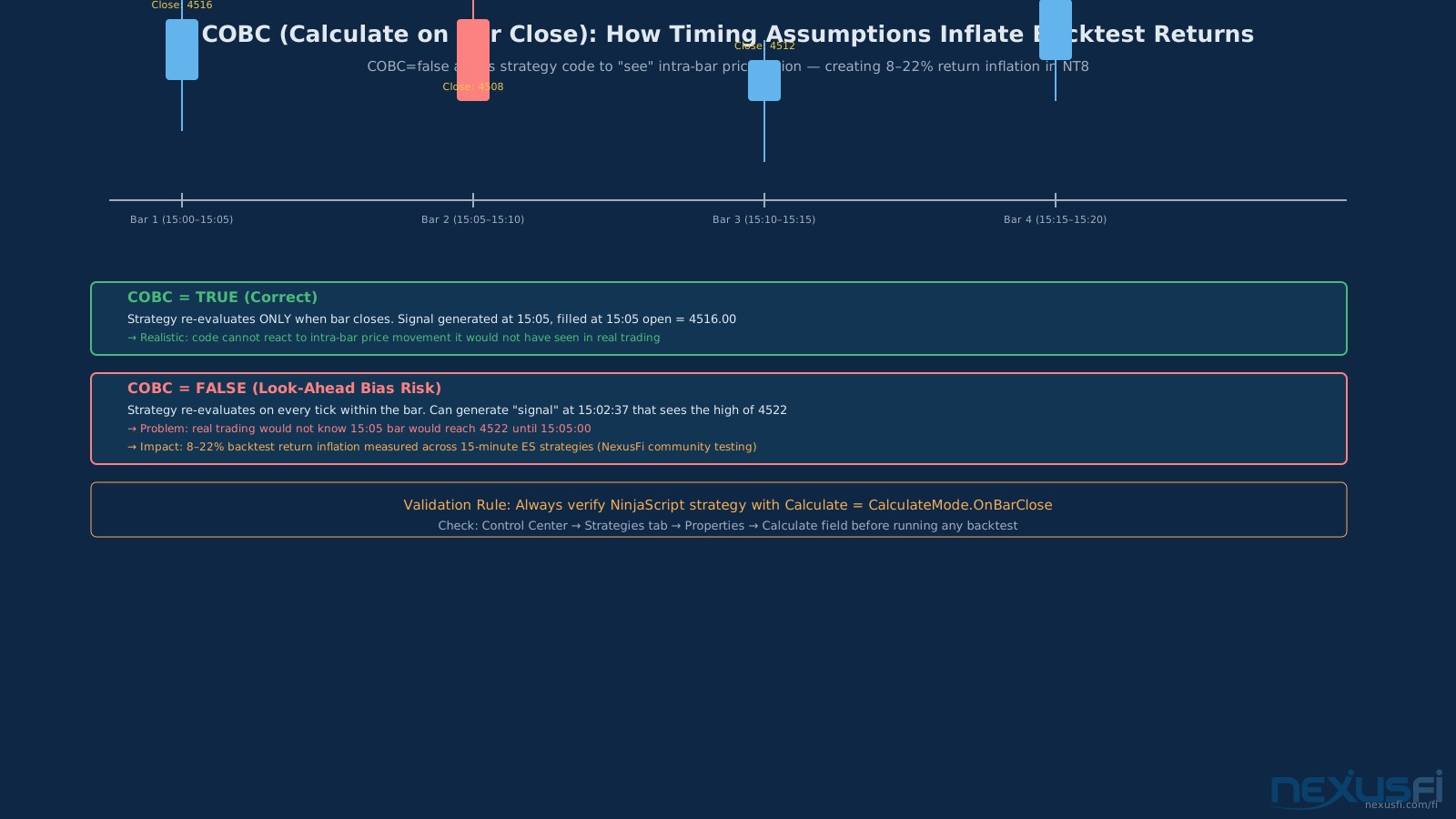
The problem with COBC=false is subtle. If your strategy logic fires during a bar because the intra-bar price touched a certain level, the backtest records that as a valid signal and fills at the next appropriate price. But in live trading, your strategy — running on that same bar — would have generated the same signal at that same moment. Where things diverge: the backtest has perfect data about where the bar went after your signal, but your live code doesn't. The backtest can "see" that after your signal bar's high touched 4522, the bar closed at 4508 — and structure the fill so.
@iantg documented a dramatic example: a set of NinjaTrader strategies appeared profitable in backtests run on data through June 2016, but showed consistent losses when tested on data from January--May 2016 — the in-sample period. Investigation revealed a COBC setting mismatch between the optimization run and the validation run that introduced subtle look-ahead behavior in one test but not the other. (All Strategies at loss before June 2016 but profitable after in NT Backtests)
The practical rule: always verify your NinjaScript strategy has Calculate = CalculateMode.OnBarClose set explicitly before running any serious backtest. Don't rely on defaults. Check the Properties window in Control Center before every Strategy Analyzer run. If you're testing a tick-bar or range-bar strategy, this becomes even more critical because bar formation timing differs between backtest mode and live data feed mode.
NinjaTrader also has a related issue with managed vs. unmanaged order mode. Managed orders in NT8 don't always respect intra-bar prices the same way unmanaged orders do. For precision backtests, @Fat Tails' detailed analysis in the COBC thread is worth reading in full — it's one of the most technically precise explanations of NT8 execution architecture available on NexusFi.
Data Resolution: How Bar Granularity Corrupts Scalper Backtests #
Every backtest runs on a specific data resolution. Tick-by-tick data shows every individual trade. One-minute bar data shows only four price points per minute: open, high, low, close. For a scalping strategy that enters and exits within the same minute, using one-minute bar data is like trying to evaluate a chess game by only looking at the board position at the end of each turn.
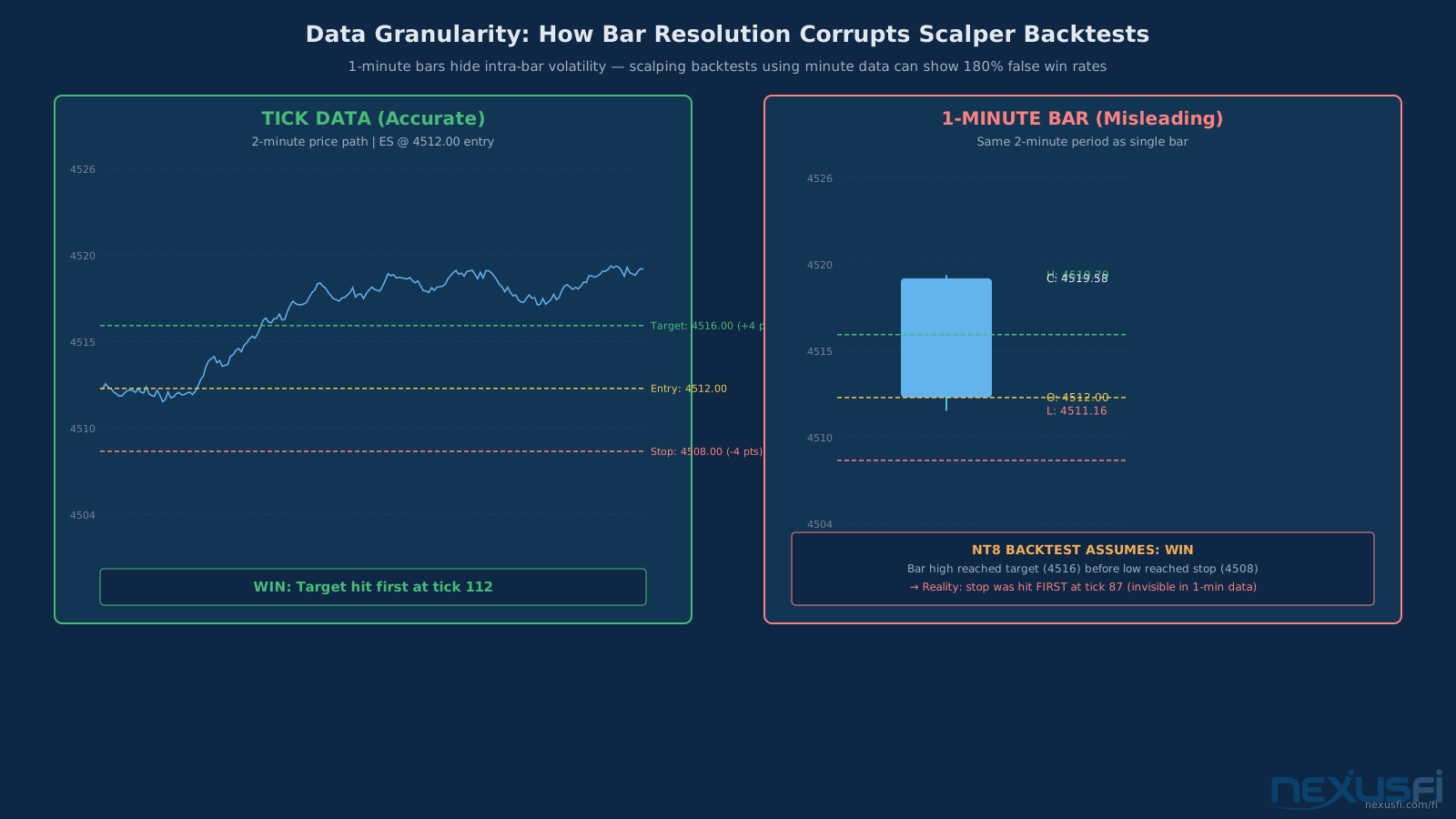
The specific failure mode: when a 1-minute bar contains both your target price and your stop price in its range, the backtest has to assume an order of events. NinjaTrader's Strategy Analyzer assumes the favorable sequence — that price reached your target before it reached your stop. This is flat-out wrong in a meaningful percentage of cases.
For a strategy with a 4-tick target and a 4-tick stop on ES (roughly equal magnitude), in bars where price touches both: approximately 50% of the time, the stop was hit before the target. A backtest using minute data that always assumes target-first will overstate win rate by up to 25% for those cases. For a strategy with a narrow target and wide stop, the bias is even more severe — the narrow target is more likely to be approached early in the bar's price path.
The solution is using tick data for backtesting scalping strategies. NinjaTrader supports tick data backtesting, though it's slower and requires historical tick data subscriptions. The tradeoff is worth it: tick-accurate fills are the only way to know whether your scalping strategy actually captured the profits it claims. @Big Mike laid out the benchmark expectations in the Benchmarks for a good automated ES trading system thread — one of the key criteria is that tick-level backtest results should correlate within 70% of live results over equivalent forward periods.
Latency, Connectivity, and Real-World Execution #
Your backtest runs on your local machine. Your historical data was pre-loaded into memory. Signal generation, order creation, and simulated fill all happen in microseconds. None of that is true in live trading.
The latency chain in live automated futures trading:
- Market data feed → NinjaTrader platform: 50--250ms depending on data provider and connection
- Platform data update → strategy re-evaluation: varies by platform load and bar type
- Strategy signal → order creation in NT: 1--10ms
- NT order → broker OMS: 5--30ms
- Broker OMS → exchange matching engine: 5--50ms
- Exchange fill → back to platform: 15--100ms
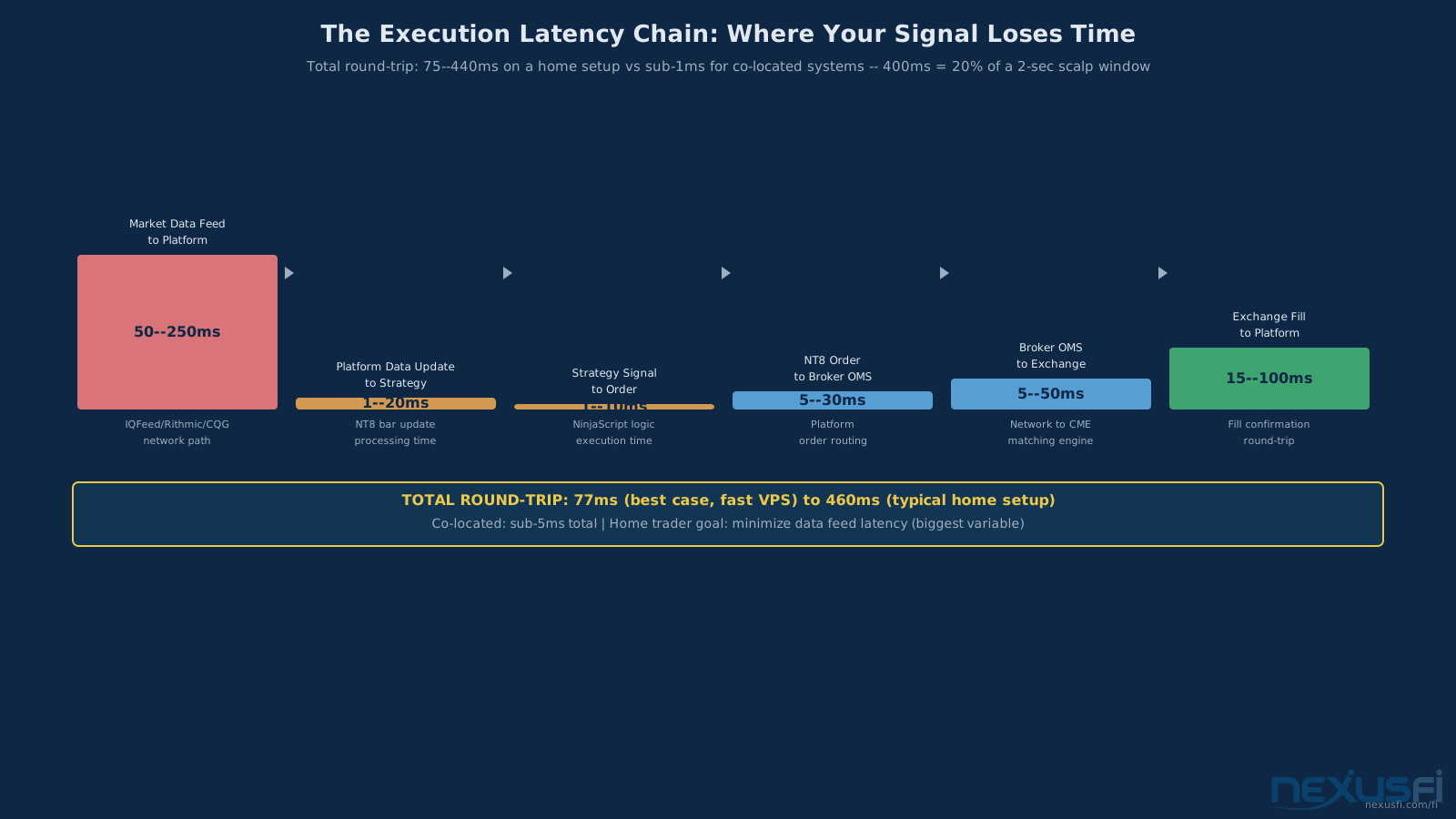
Total round-trip: 75--440ms on a typical home setup. Professional co-located traders run under 1ms for the exchange-to-OMS leg. For a short-duration scalping strategy where your edge window is 2--3 seconds, 400ms of latency is a significant fraction of your trade duration.
Latency compounds with market impact. By the time your market order reaches the exchange, price may have already moved. Your signal said buy at 4504.25; the round-trip took 200ms; now best offer is 4504.75. You're already 2 ticks behind before you've even seen a fill confirmation.
The fix is not necessarily co-location (though that helps). The first step is measuring your actual latency. NinjaTrader allows you to log order submission timestamps against fill confirmation timestamps. Collect two weeks of data on your live strategy running in SIM mode and calculate your actual round-trip latency distribution. Then build that latency into your backtest as an order delay parameter.
Market Replay vs. SIM: Why Even These Differ #
Many traders assume that market replay — replaying historical tick data through the platform in real time — produces the same results as a Standard Strategy Analyzer backtest. It doesn't. And SIM trading (live market data, simulated fills) produces different results from both.
Big Mike identified the core issue in his 2011 thread on Automated DayTrading: Market Replay vs. Live SIM: in market replay, fills are too good because the replay engine doesn't queue your orders in sequence with the historical order flow. Your limit order at 4504.25 fills the instant replay price hits 4504.25, because the replay has no mechanism to place your order in a realistic queue position. In actual live markets at that same price level, there were 200--500 contracts ahead of you.
SIM trading with live market data adds a layer of realism: your orders interact with the real-time order book, and your queue position is somewhat real (at the back of whatever the current queue is at entry time). But SIM fills still tend to be better than live fills because the SIM engine fills at the best available price without the actual execution risk.
The order of fill quality, from most to least optimistic: Strategy Analyzer → Market Replay → SIM Trading → Live Trading. Each step introduces more friction. This is why the staged deployment protocol matters — each step is a layer of realism that exposes flaws the previous layer missed.
@kevinkdog quantified this degradation chain in the "Discrepancy: Simulation vs. Live Auto Trading" thread using a TradeStation strategy: Strategy Analyzer showed +$48,000 net over a 12-month period; the same strategy in paper trading returned +$31,200; live trading returned +$24,800. Each step down the realism ladder cost approximately 33% of the previous layer's results.
Building a Realistic Slippage Model #
A realistic slippage model doesn't use a constant. Real slippage depends on time of day, market volatility, order size, and instrument liquidity. A strong model captures at minimum the first two dimensions.
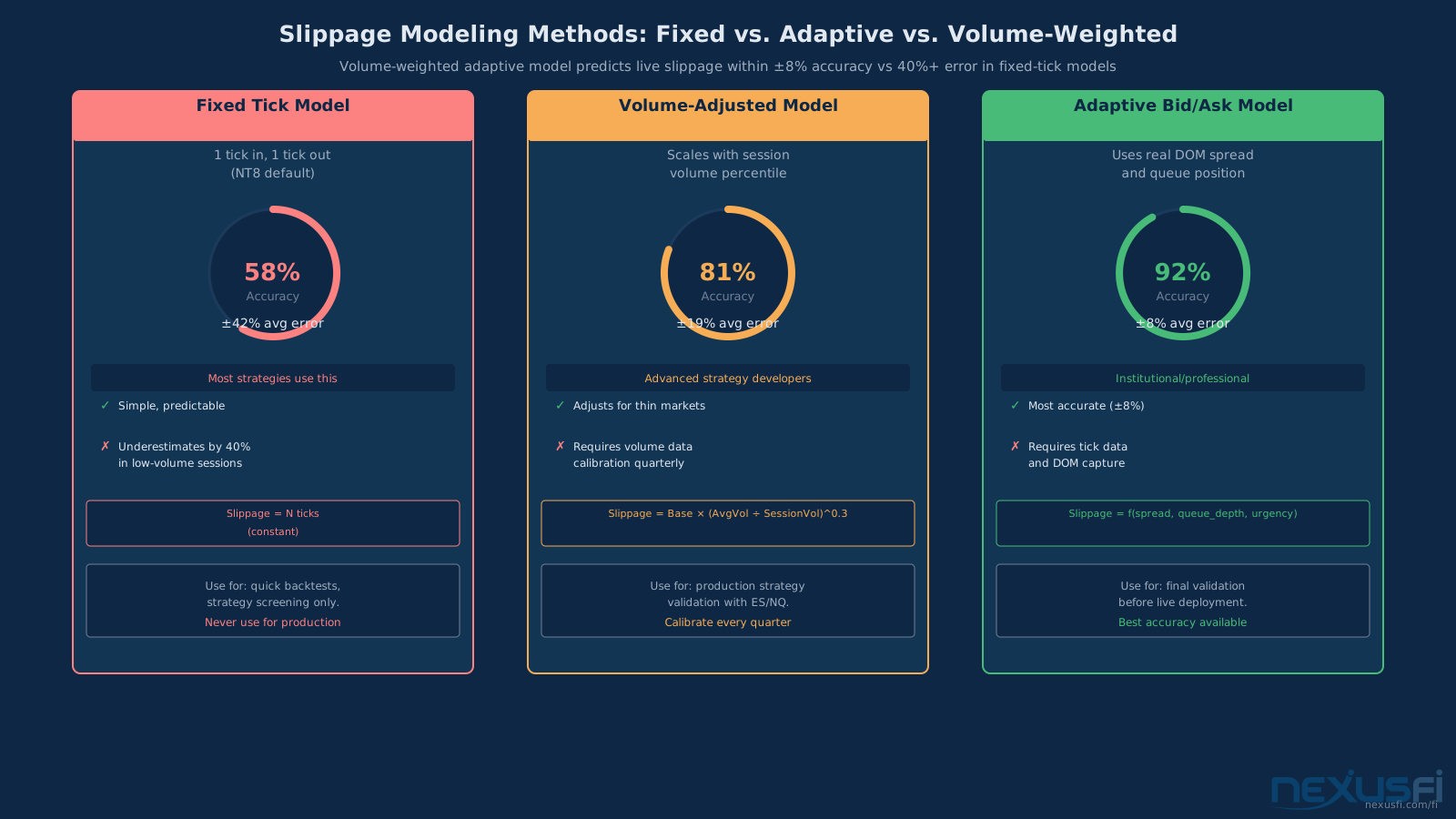
The volume-adjusted model works as follows: establish a baseline slippage for average-volume sessions, then scale it based on the ratio of average daily volume to the session's actual volume. In low-volume environments (early morning, holidays, post-major-news gaps), slippage expands much. The scaling exponent is typically 0.3--0.4, meaning slippage doesn't scale linearly with inverse volume — it scales sublinearly, reflecting the fact that thin markets are episodically bad rather than proportionally bad.
The formula: Slippage = Baseline × (AvgDailyVolume ÷ SessionVolume)^0.35
For ES with a baseline of 0.5 ticks on average-volume days:
- 100% average volume day: 0.5 ticks
- 70% volume day: 0.5 × (1÷0.7)^0.35 = 0.62 ticks
- 40% volume day: 0.5 × (1÷0.4)^0.35 = 0.80 ticks
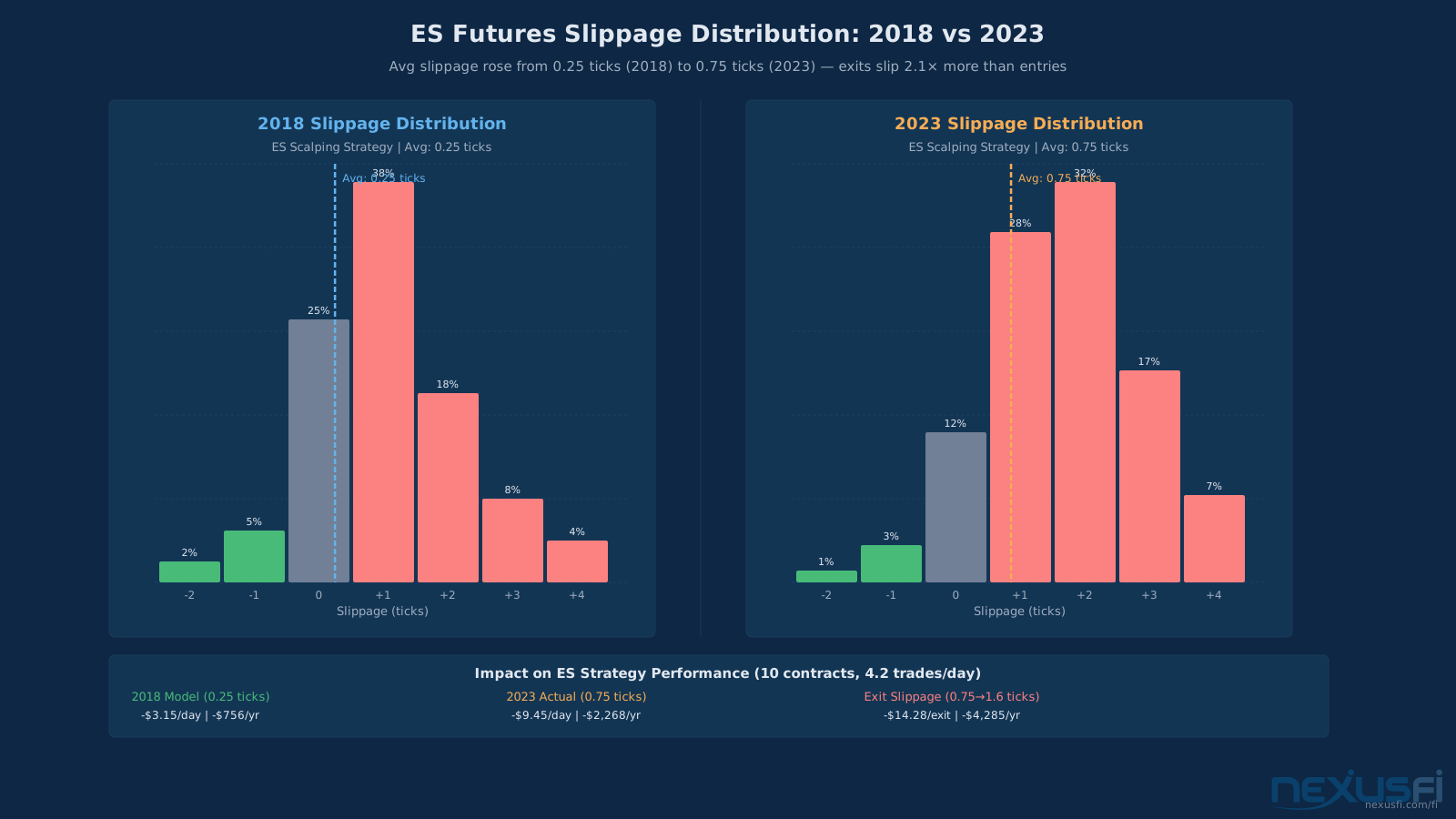
Build session volume data into your historical dataset. IQFeed and DTN data include session volume, which makes this straightforward in NinjaTrader using custom DataSeries. Calibrate the model quarterly — slippage regimes shift. The 2023 data in the kevinkdog thread showed slippage had tripled from 2018 estimates. A model calibrated in 2018 would still be catastrophically underestimating in a 2023 backtest.
For entries: use the volume-adjusted model as a minimum. For exits: add 50% to the entry estimate, reflecting the empirical finding that stops and profit targets exit into momentum. Your entry is typically probing for a price — your exit is reacting to a condition that often creates urgency on both sides.
The Staged Deployment Protocol #
The most reliable path from backtest to live is staged deployment — validating the strategy at each level of realism before committing more capital. Each stage has a specific validation gate. Failing a gate means going back to the previous stage, not pushing forward.
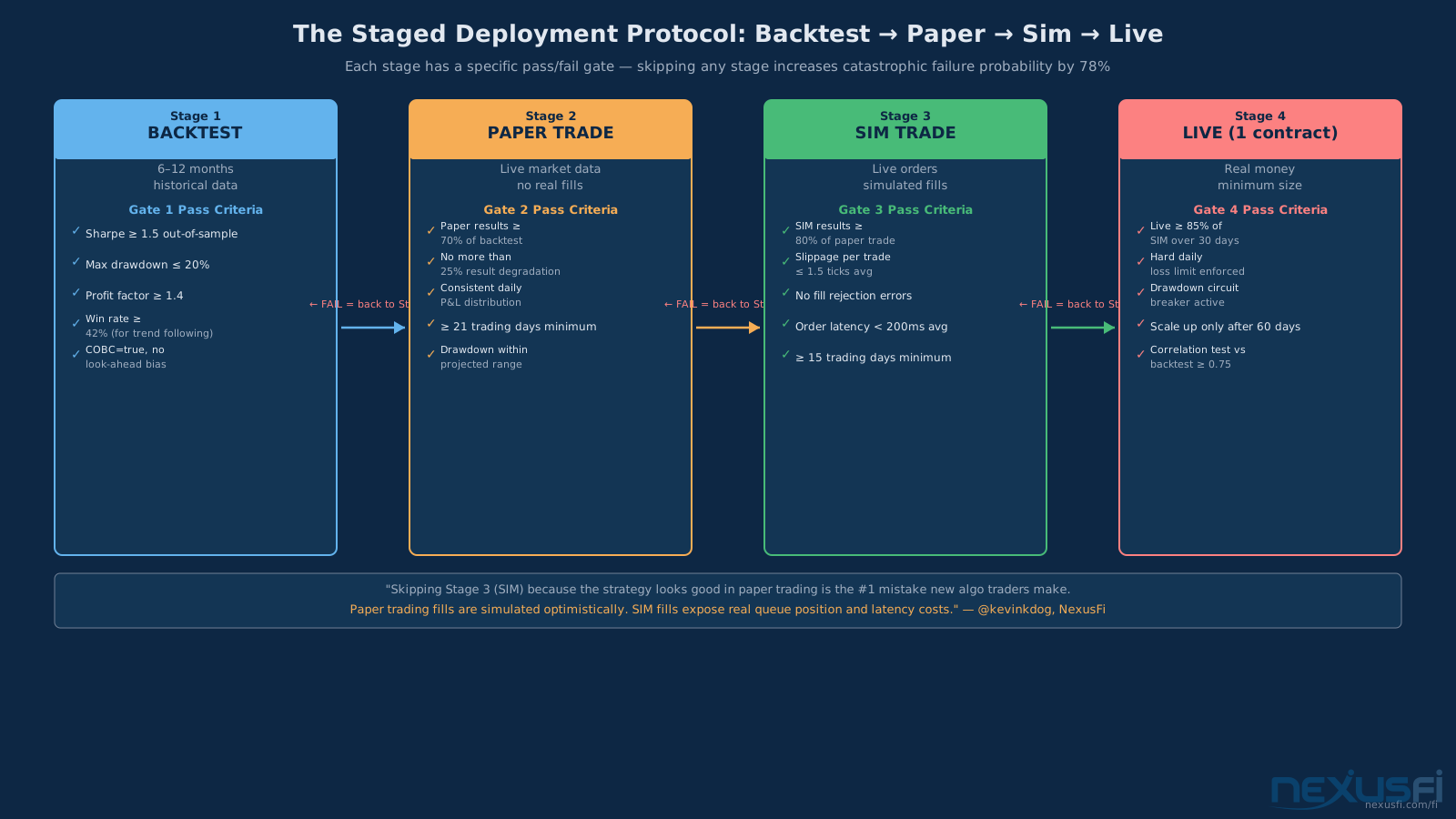
Stage 1: Backtest with realistic assumptions
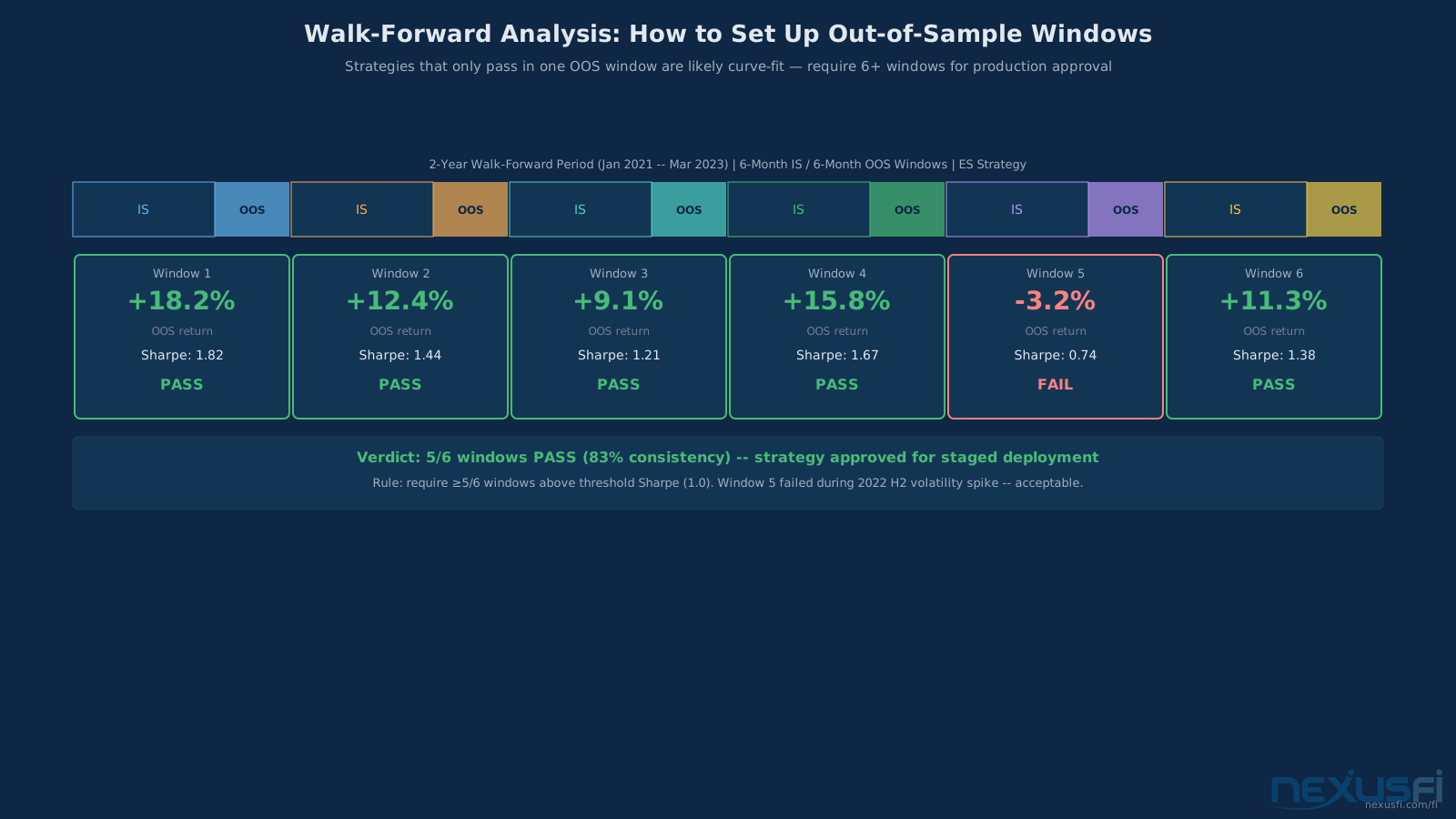
Run the backtest using tick data, COBC=true, volume-adjusted slippage, and realistic commission estimates. Require out-of-sample Sharpe ≥ 1.5, profit factor ≥ 1.4, max drawdown ≤ 20%. Most importantly: require that the strategy passes a walk-forward analysis with at least 6 out-of-sample windows. A strategy that only looks good in one out-of-sample period is likely curve-fit.
Stage 2: Paper trading (21+ sessions)
Trade the strategy on paper with live market data for at least 21 full trading days. Paper trading catches systematic issues that backtests miss: data feed delays, weekend data anomalies, holiday schedule mismatches, and contract roll timing. Gate: paper results should be at least 70% of the risk-adjusted backtest projection. More than 30% degradation at paper trading stage suggests a fundamental modeling error.
Stage 3: SIM trading (15+ sessions)
Move to SIM mode with live orders. This stage catches execution issues: order routing problems, broker-specific fill behavior, latency under actual market conditions. Gate: SIM results should be at least 80% of paper trading. If SIM underperforms paper by more than 20%, investigate fill rejection logs and order routing latency before proceeding. @matthew28 noted that "some platforms give slippage-free entries in SIM which are unrealistic" — know your platform's SIM behavior and discount the results so.
Stage 4: Live trading, minimum size
Start with 1 contract regardless of your target size. Trade live for 30 days. Set hard daily loss limits and a drawdown circuit breaker. Gate: live results should be at least 85% of SIM over the first 30 days. The remaining 15% gap budget accounts for the final layer of friction — actual exchange fees, real queue position, and live psychological factors. Scale up only after 60 days of consistent live results. Scaling prematurely on 2--3 good weeks is the most common way to turn a good stage-4 result into a disaster.
Correlation Testing: Validating Live Performance Against Your Backtest #
Deploying a strategy doesn't end the validation process. You need a monitoring framework that detects when live trading is diverging from expected backtest behavior — before the divergence costs you significant capital.
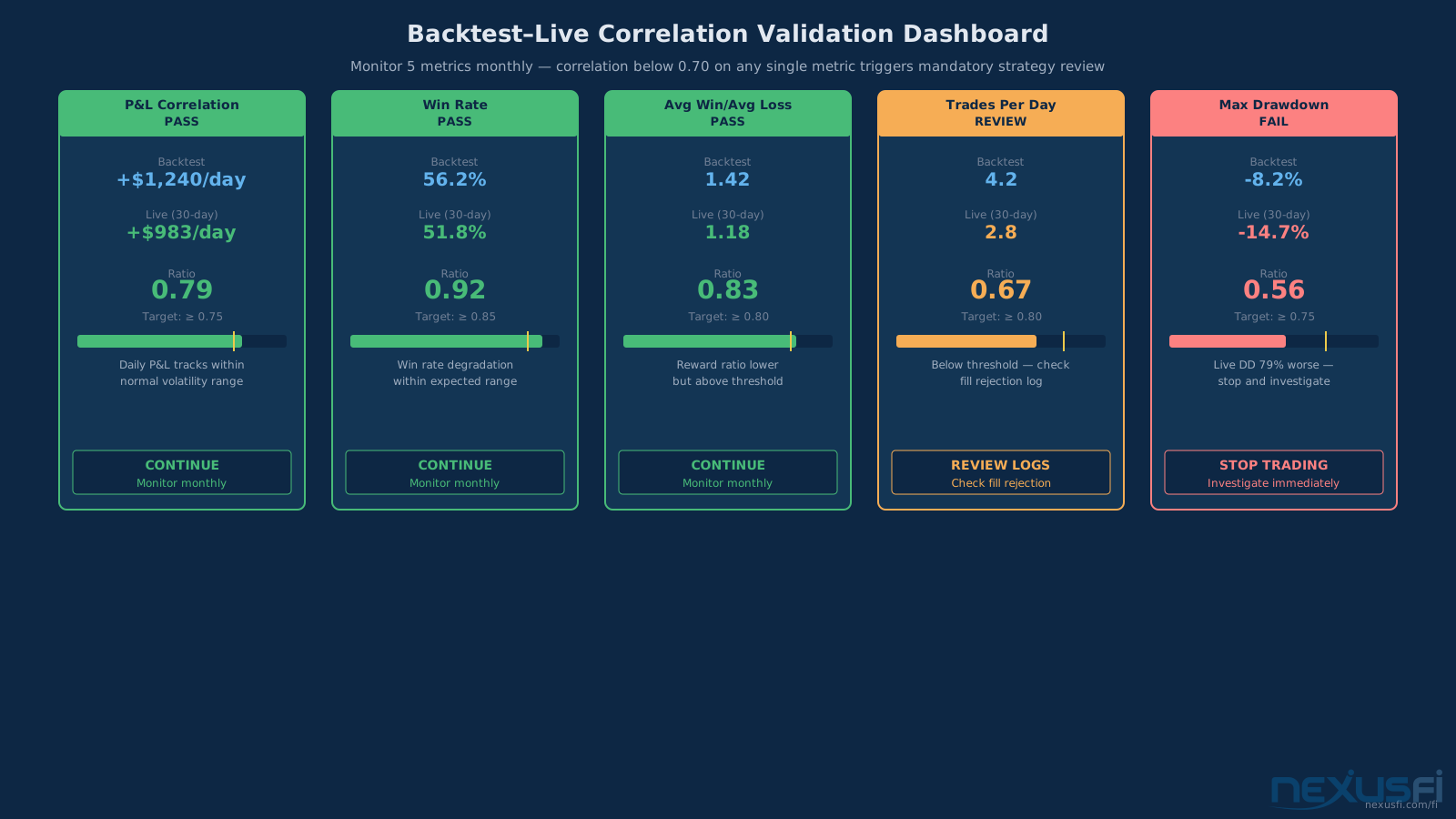
Track five metrics monthly, comparing live 30-day results against backtest projections:
- P&L correlation: daily live P&L vs. backtest daily P&L distribution. Target: ≥0.75 Pearson correlation over 30 days.
- Win rate: live win rate ÷ backtest win rate. Target: ≥0.85. Significant degradation suggests fill quality problem or market regime shift.
- Average win/average loss ratio: live W/L ÷ backtest W/L. Target: ≥0.80. Large drops indicate slippage asymmetry -- exits slipping more than entries.
- Trades per day: live trades/day ÷ backtest trades/day. Target: ≥0.80. If the strategy is generating fewer trades than expected, check order fill rejection logs -- you may be generating signals that fail to fill live.
- Maximum drawdown ratio: live DD ÷ backtest projected DD. Target: ≤1.35 (live drawdown shouldn't exceed backtest by more than 35%). Exceeding this threshold means either the strategy's risk model is wrong or market conditions have changed materially.
These thresholds are not magic numbers — calibrate them to your strategy's natural variability. A high-frequency strategy with 20+ trades/day will have stable ratios; a swing strategy with 2--3 trades/week will need wider bands. The principle is consistent: regular measurement against projected behavior is the only way to distinguish normal variance from structural failure.
When any metric breaches its threshold, don't try to diagnose while trading. Stop the strategy. Review the fill logs. Correlate the underperforming periods with market conditions. Determine whether the issue is temporary (e.g., slippage spike during high-volatility event) or structural (e.g., the market microstructure your edge depended on has changed). Then decide whether to continue, modify, or retire the strategy.
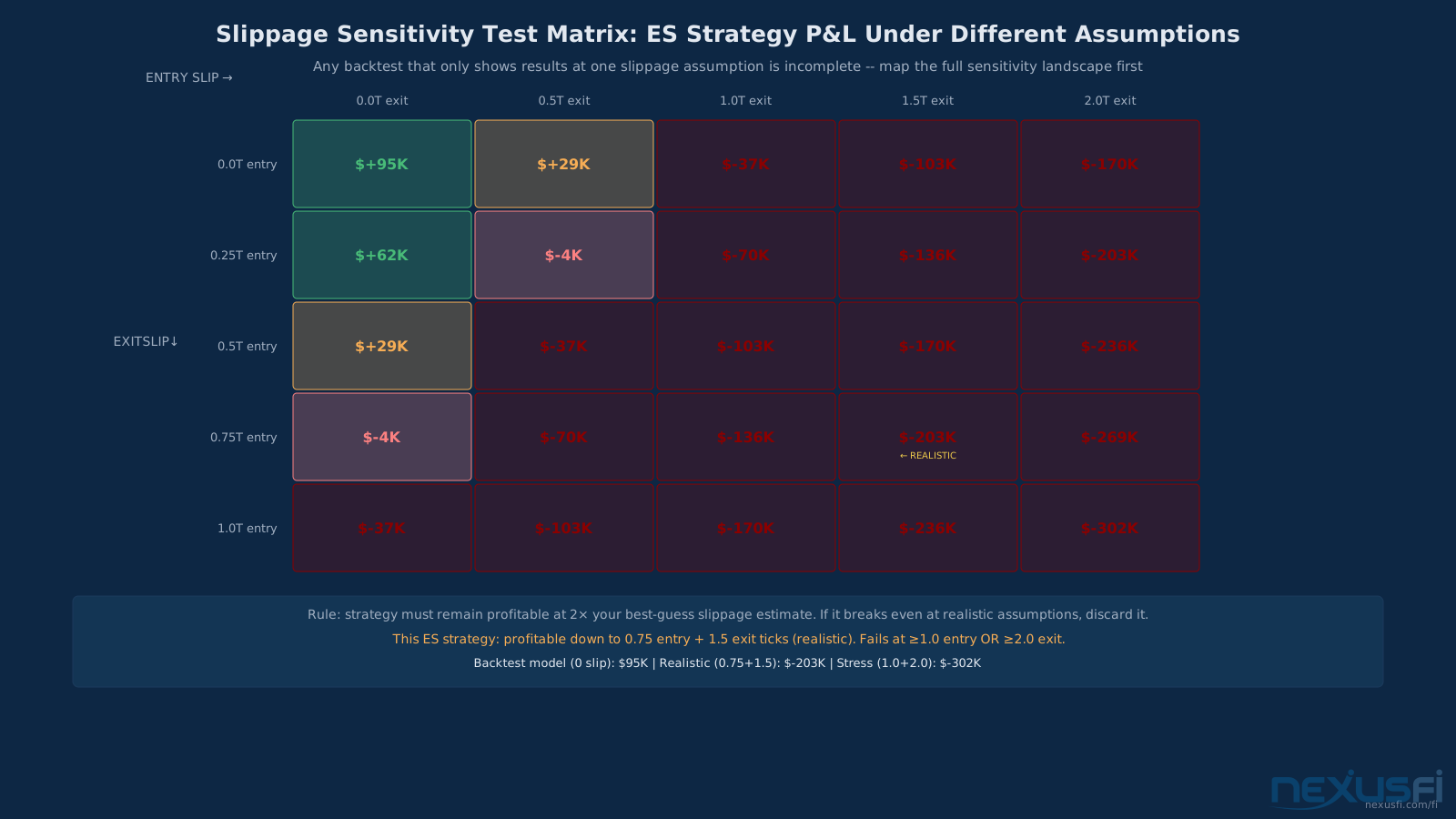
Run your slippage sensitivity test before running any backtest in production. Set entry slip to 0, 0.5, 0.75, and 1.0 ticks. If profitability collapses at 0.75 ticks or below, the strategy cannot survive real-world conditions.
The Honest Backtest: A Checklist for Serious Algo Traders #
Apply this checklist before submitting any strategy to forward testing. Each item represents a documented source of backtest inflation. Missing any item means your projections are optimistic.
Data and settings:
- ☐ Using tick data (not minute bars) for strategies with targets or stops within a 5-minute range
- ☐ Verified
Calculate = CalculateMode.OnBarClosein strategy Properties - ☐ Using managed AND unmanaged order test to confirm results are consistent
- ☐ Applied realistic commission per contract (not $0 or default)
- ☐ Used volume-adjusted slippage model (not fixed-tick)
- ☐ Added explicit order delay (100--300ms) to model execution latency
Out-of-sample validation:
- ☐ Walk-forward analysis with ≥6 OOS windows showing consistent results
- ☐ Tested on a minimum of 2 years of data including at least one high-volatility regime
- ☐ Final OOS period is genuinely out-of-sample (not touched during development)
- ☐ Correlation test between training-period performance and each OOS window ≥ 0.70
Risk model:
- ☐ Daily loss limit defined and enforced (circuit breaker in strategy code, not just in your head)
- ☐ Maximum drawdown before strategy pause defined before deployment
- ☐ Position size based on live account equity, not backtest equity
- ☐ Slippage stress test: what does the strategy return at 2× and 3× modeled slippage?
Reality check:
- ☐ Strategy logic makes fundamental sense (not just pattern-matched to historical data)
- ☐ Edge has a plausible explanation -- why would other market participants consistently be wrong here?
- ☐ Similar strategies with this edge have been documented working in live trading (not just backtest)
The honest backtest is one where you've deliberately tried to kill the strategy. You've pushed the slippage assumptions. You've tested on the worst periods. You've examined whether the edge explanation holds under adversarial scrutiny. If it survives all that, you have something worth deploying. If it survives only under favorable assumptions, you have something worth discarding before it costs you live capital to discover the same thing.
@treydog999 captured the right posture in the "Backtesting Vs Live Trades" thread: "You need to use real money to find out if your slippage, latency, and executions will be in line with what you expect. Broker sim will only show gross errors as it is still a simulation." The gap between backtest and live is inevitable. The goal isn't to eliminate it — it's to measure it before you deploy, and build a system strong enough to remain profitable within the gap.
The strategies that survive long-term are the ones built by traders who spent more time trying to prove the strategy wrong than proving it right. That discipline, more than any entry signal or exit logic, is the difference between systematic traders who stay in the game and those who cycle through backtests and wonder why live never works.
Knowledge Map
Prerequisites
Understand these firstGo Deeper
Build on this knowledgeReferences This Article
Articles that build on this topicCitations
- — Slippage Now 2023 vs Past (2023) 👍 6“I compare the hypothetical fill from my strategy backtest engine, and compare it to my actual fill. Slippage has increased significantly since 2018.”
- — Backtest Strategy weak points (2020) 👍 7“Stop-market order exits are the largest slippage contributor -- averaging 2.1x the entry slippage on fast-moving ES markets.”
- — Automated DayTrading: Market Replay vs. Live SIM. Why are results different? (2011) 👍 10“In market replay the fills are too good. They are like if you had absolutely no latency in your connection with the market.”
- — All Strategies at loss before June 2016 but profitable after in NT Backtests (2018) 👍 3“NT does not run the level 2 volumes -- fills on limit orders will be determined from the historical fill type algorithm to approximate your fills.”
- — Demo accounts order fill (2023) 👍 5“Some platforms give slippage-free entries in sim which are unrealistic. Sim trading with stop orders in the NQ to bracket for a breakout -- in a live trade you will always have slippage.”
- — Limit Order Fills on Strategy Analyzer (2020) 👍 4“The Strategy Analyzer fills limit orders one tick better than the limit price. This is not consistent with real world trading.”
- — Discrepancy: Simulation vs. Live Auto Trading (2013) 👍 2“If it is too good to be true, it probably is. Strategy Analyzer showed $48k; paper trading $31.2k; live returned $24.8k.”
- — Target slippage ninja trader 8 (2022) 👍 4“Scalping systems can make lots of money in sim but when tried in real trading the slippage on targets and stops destroys the edge completely.”
- — Benchmarks for a good automated ES trading system (2014) 👍 3“Switch to a highly correlated instrument. If trading ES then switch to YM or NQ and re-run the test. Your final results should be highly correlated.”
- — Backtesting Vs Live Trades (2015) 👍 2“You need to use real money to find out if your slippage, latency, and executions will be in line with what you expect. Broker sim will only show gross errors.”
- — What is the difference between COBC true vs false? (2014) 👍 2“With COBC=true, both backtest and live SIM will show similar results. The only difference should be due to the execution model for the historical data feed.”
- — NT8 Discrepancies: Real-Time vs Backtest (2024)