



Emergency Risk Management Protocols for Futures Traders: When to Stop, How to Exit, and How to Protect What You Have Left
Overview #
Every futures trader has a plan for when the market goes up and a plan for when it goes down. Very few have a plan for when something goes wrong — the internet dies, the platform crashes, the broker's servers go dark during FOMC, or their own judgment quietly disintegrates under the pressure of a bad streak.
Emergency risk management protocols fill that gap. Not the daily loss limits built into your trading plan (though those matter enormously) — the actual procedures you follow when the normal plan has broken down. What you do in the next 30 seconds when the trigger fires. Who you call when the software won't respond. How you get flat when the exchange is rejecting your market orders. What you do with your psychology when you notice you've already crossed the line into revenge trading without realizing it.
The goal here is a complete, rehearsed protocol that survives contact with an actual emergency — not a list of principles you'll try to remember while your account bleeds out.
What Emergency Actually Means in Futures Trading #
An emergency in futures trading is any condition where your normal decision-making framework has broken down or been bypassed. That can happen three ways.
Market emergencies are the ones traders think about most: a position going rapidly against you, a flash crash, extreme volatility that's moved the market beyond your tested parameters. These are visible, measurable, and usually triggerable by a loss threshold.
Operational emergencies are less visible but equally destructive: internet drops with an open ES position, trading platform crashes during a move, broker system failures during high-volume sessions, exchange circuit breakers trapping you in a position you can't exit. As @Fat Tails noted in a widely-cited thread on operational risk, "If there is a flash crash or any other disruption of the exchange operation, you will be stuck with your position. That position cannot be liquidated, until the operation of the exchange resumes." These aren't market risks — they're system risks, and they require entirely different protocols.
Behavioral emergencies are the most insidious because they feel like normal trading from the inside. You're adding to a losing position because "it has to turn." You've moved your stop three times. Your position size has quietly grown as you averaged down. You haven't articulated an exit plan since the third failed entry. From inside the behavioral emergency, it doesn't feel like an emergency — it feels like patience, conviction, or strategy. The protocol exists precisely to override that feeling.
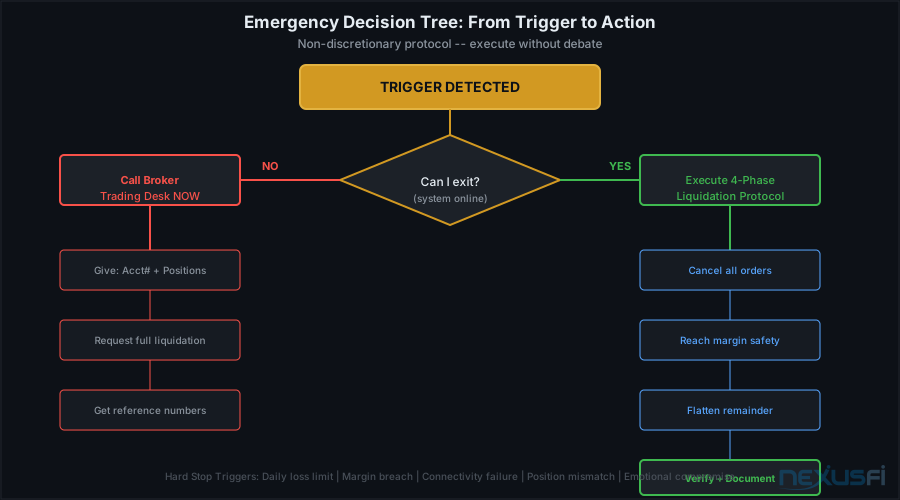
Hard Stop Triggers: Non-Discretionary Rules #
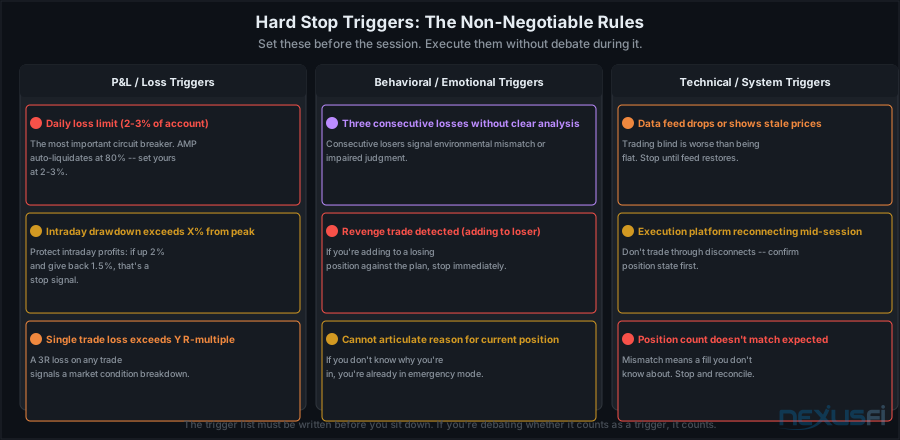
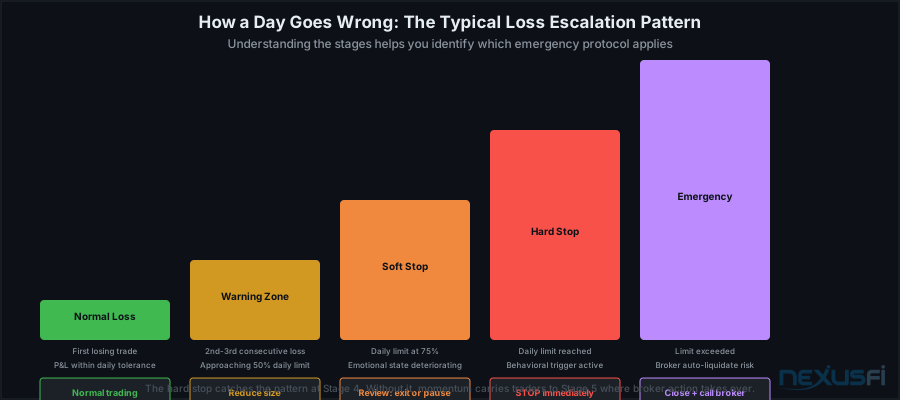
A hard stop trigger is a condition that requires you to stop trading immediately, without debate, regardless of how the market looks in that moment. The word "hard" matters: soft triggers ("I should probably think about stepping back") fail under pressure because they leave room for the compromised judgment that created the emergency in the first place.
Loss-Based Triggers
The daily loss limit is the foundational hard stop. Most risk management frameworks recommend 2-3% of account equity as the daily maximum. This means a $100,000 account stops trading at -$2,000 to -$3,000 for the day. The limit needs to be set before the session, ideally enforced by the platform itself.
The broker-side auto-liquidation level reveals an uncomfortable truth about this parameter.
A broker auto-liquidating at 80% means your $100,000 account gets forcibly closed at -$80,000. You want your own limit set and enforced at 2-3%, not at the broker's 80% floor. The broker fee for each liquidated contract makes the lesson even more expensive.
Beyond the daily limit, consider intraday peak-to-trough drawdown. If you're up 1.5% on the day and then give back 1.2%, that retracement may indicate something has changed in the market environment, even though you're still technically profitable. A secondary trigger of "X% from intraday high" catches this pattern.
Behavioral Triggers
Behavioral triggers require honest self-observation, which is why they need to be defined with observable indicators rather than feelings. "Feeling stressed" is not an observable trigger. "Added to a losing position for the second time without a new entry signal" is.
Three specific behaviors reliably signal a behavioral emergency:
Consecutive losses without clear analysis: Three consecutive losing trades where you cannot articulate a specific, non-emotional reason to remain engaged with the market indicates the strategy isn't working in the current environment — or your ability to execute it has degraded.
Moving stops against the plan: If you find yourself widening or removing stops on a live losing position, you're no longer executing a plan — you're hoping. This is an emergency regardless of what happens to the position afterward.
Position sizing drift: If your actual position size is larger than what your protocol specifies, something has gone wrong. This happens through averaging down, through adding to positions without a formal signal, or through progressive lot increases after a losing streak. The drift is the emergency signal, not the P&L.
Technical and System Triggers
Technical triggers protect against the invisible failures that operational risk creates. The most critical: position count mismatch. If your platform shows two open contracts but you believe you should have four (or zero), you have a position state you don't understand. Trading through this condition is riskier than being flat during a move.
Data feed quality deserves its own trigger. Stale prices, disconnected feeds, or quotes that don't match other reference sources indicate you're trading on information you can't trust. The standard response is to flatten any open positions and wait for the feed to confirm clean data before re-engaging.
@Breukelen (NexusFi, Elite Quantitative forum, 2022)
This real-world incident illustrates the gap between trigger execution and verified completion. The algo's kill switch fired correctly — and still failed because market orders are rejected during FOMC announcement windows. The protocol needs to account not just for triggering, but for confirmation that the trigger actually worked.
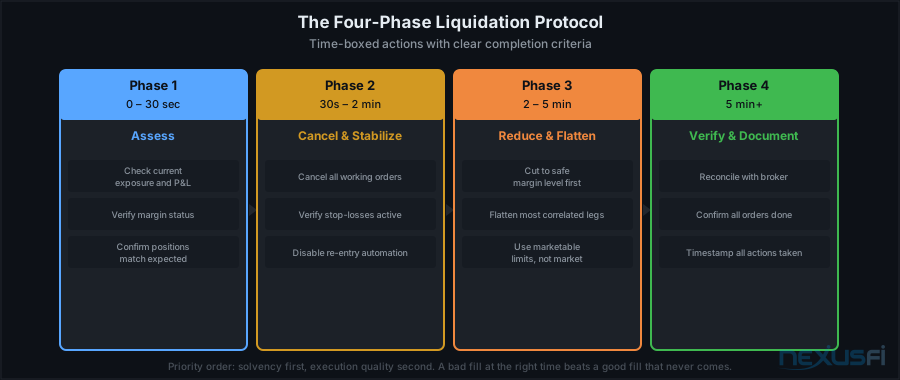
Rapid Position Liquidation: The Four-Phase Protocol #
The liquidation protocol needs to be fast enough to matter in fast-moving markets, structured enough to avoid panic errors, and flexible enough to handle the scenarios where the primary method fails.
Phase 1: Assess (0-30 seconds)
The first 30 seconds are assessment, not action. This seems counterintuitive when the impulse is to act immediately, but assessment prevents the most common emergency liquidation error: executing against the wrong position information. Confirm what you actually have open, what the current P&L is, and what your margin status shows. If any of these three don't match your expectations, you have an operational emergency that changes the liquidation approach.
Phase 2: Cancel and Stabilize (30 Seconds to 2 Minutes)
Cancel all working orders first, before reducing position. An open OCO order, a working limit entry, or a bracket's second leg can interfere with emergency liquidation in ways that compound the problem. Only after the order book is clean should you begin the actual position reduction.
This phase also includes disabling any automated re-entry mechanisms. If your system has a strategy that will immediately re-enter after a close, that strategy needs to be disabled before you flatten — otherwise you'll close a position and immediately reopen it.
Phase 3: Reduce and Flatten (2-5 Minutes)
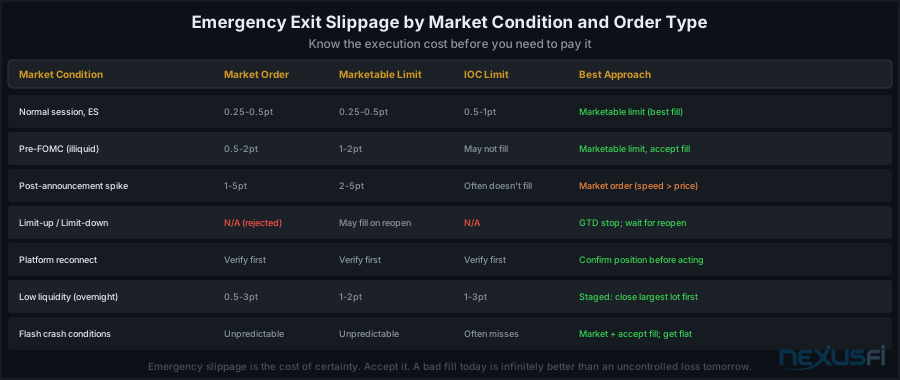
The order type debate during emergency liquidation is: market orders versus marketable limit orders. Pure market orders guarantee execution but can produce significant slippage during volatile conditions or low liquidity periods. Marketable limit orders — placed at the bid or slightly through it for a long position — give up some speed guarantee but protect against extreme slippage.
The framework: marketable limits with IOC (Immediate or Cancel) as primary, with market orders as fallback if limits aren't filling within 1-2 seconds. Slippage tolerance during an emergency is necessarily higher than during normal trading — solvency trumps execution quality.
For multi-instrument positions, close the most correlated or most vulnerable legs first. If you're long ES and long NQ, closing ES first reduces more notional risk in most market conditions. If one position is showing extreme adverse movement while the other is neutral, close the extreme one regardless of size.
Phase 4: Verify and Document (5 Minutes+)
Before declaring the emergency resolved, reconcile your platform's position display with the broker's actual record. This step is not optional. The Breukelen incident demonstrates exactly why: the kill switch "worked" from the algo's perspective but didn't actually close the position. Only a position-equals-zero verification catches this failure.
Documentation begins immediately after verification: timestamps of trigger detection, cancellation, initial close, full flat confirmation, and broker reconciliation. This documentation serves three purposes — post-crisis learning, broker dispute resolution if execution fails, and audit trail if regulatory questions ever arise.
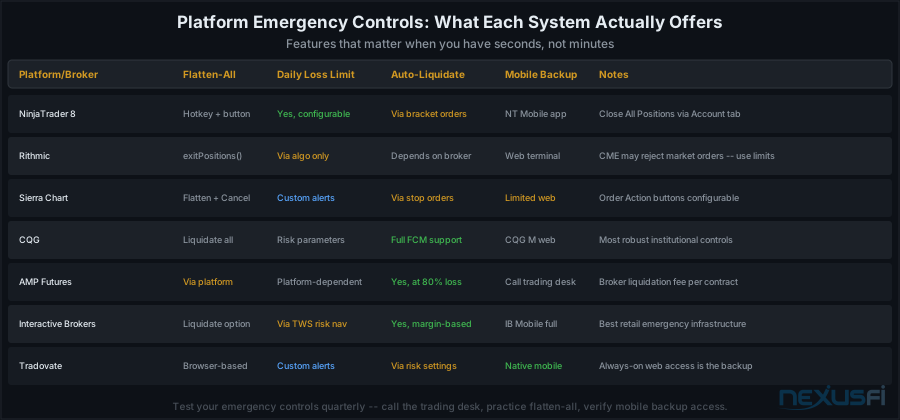
Broker Emergency Procedures #
The broker emergency protocol covers the scenario where electronic access fails entirely. Platform crashes, internet outages, or the specific scenario where market orders are being rejected all require the ability to close positions by phone.
What to Have Before You Need It
Every futures trader needs three things saved before the first live trade: the direct trading desk number (not the general customer service line), the account number memorized or in a wallet, and confirmation of the broker's verbal liquidation authorization process.
The trading desk number is different from the main number. It routes to people who can actually close positions, not people who will transfer you to risk management while your account bleeds out. Finding this number during an emergency is approximately impossible. Find it on a normal day, call it to confirm it works, save it in your phone.
@Fat Tails (NexusFi, Brokers forum, 2012)
The multi-broker point has become standard advice for a reason. A single-broker approach creates a single point of failure at the worst possible time. Brokers have system outages. Routing can fail. During peak volatility, the exact moment when liquidity is most critical, broker systems face the highest load. A second broker account — even one with minimal capital — provides a fallback liquidation path through their platform or phone.
@pstrusi (NexusFi, Traders Hideout, 2019)
This checklist from a trader's actual practice captures the infrastructure layer that makes emergency protocols possible. Without the UPS and cellular hotspot, the phone-call fallback may not be available either.
During the Broker Call
When calling the trading desk during an emergency, the conversation needs to be structured. Give the account number immediately. Specify the positions: "I am long 4 ES at a specific price, long 2 NQ, and I need them closed at market immediately." Request reference numbers for every order the broker places. Confirm verbally when all positions are closed. Get the broker's name.
Documentation of broker calls during emergencies is critical. If there is any dispute about execution — fills at prices you didn't expect, orders that weren't placed, positions that weren't closed — the documentation is your evidence. This is not paranoia; broker execution failures during high-volatility periods are a documented risk category.
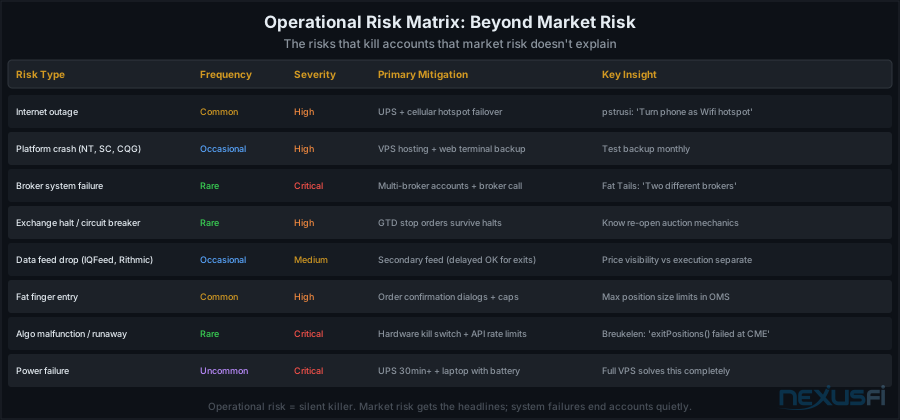
Operational Risk: The Failures Nobody Tells You About #
Market risk is well-understood. Operational risk — the category of failures that aren't about which direction the market went — is less understood and, in many cases, more insidious because the losses it creates aren't explained by your trading analysis.
Internet Outage During Live Position
An internet connection failure with an open position is the scenario that most traders consider when building emergency infrastructure but often don't fully solve. The partial solution is a cellular hotspot as backup. The complete solution is accepting that hotspot connectivity during peak volatility may be degraded as well — and having a VPS alternative where the platform continues running even when your local connection fails.
A VPS running your trading platform means the positions have their stop orders working regardless of your local connectivity. The emergency then becomes about monitoring and potential adjustment, not about getting flat with no way to send orders. This is why the infrastructure checklist includes "VPS running (if applicable)" as a pre-session verification item.
Exchange Halts and Limit Moves
Exchange circuit breakers create a specific type of operational trap: you have a position, you can see where prices are, but you cannot execute any trades. The market may be limit-up or limit-down, or halted entirely for an extraordinary event. In this scenario, electronic emergency protocols don't apply — your positions remain open until the exchange resumes trading.
The preparation for this scenario isn't about execution procedures. It's about not being in a position at risk of this outcome in the first place: maintaining buffer margin well above maintenance levels so that even an adverse gap opening after a halt doesn't trigger a margin call before you can act.
Platform Crashes With Open Trades
A platform crash with live positions requires the broker phone protocol regardless of platform recovery speed. The failure pattern: platform crashes, you restart it, positions look wrong during reconnect, you're uncertain whether existing orders are still working. The safest response is to verify with the broker directly rather than attempt to untangle platform state during reconnect.
Many experienced traders run a second platform monitoring positions in read-only mode during live sessions precisely to have a reference point when the primary platform fails. The secondary platform shows what the broker actually shows — independent of whatever state the primary platform is displaying during its reconnect process.
The Emotional Emergency: When You Are the Risk #
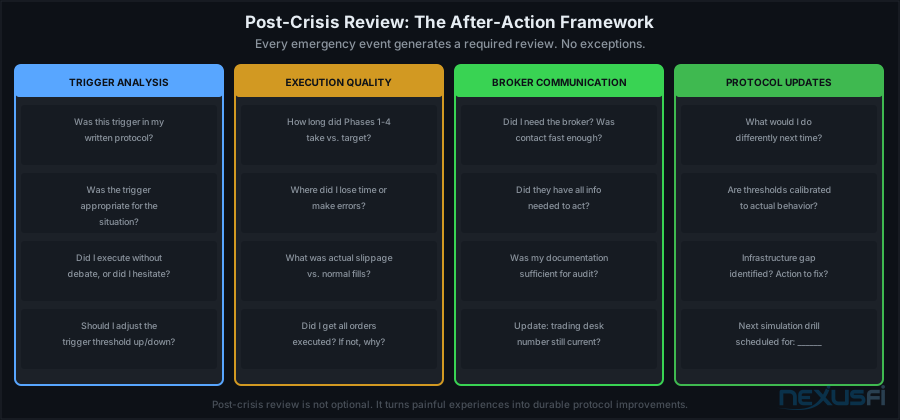
The behavioral emergency is distinct from market and operational emergencies in one critical way: you can't verify it from outside yourself. You have to recognize it while inside it — which is exactly when recognition is hardest.
The practical approach is observable behavioral indicators rather than subjective feelings. The feeling of "I should probably step back" is too vague to trigger a hard stop. The observation "I just moved my stop for the third time on this position" is specific, verifiable, and triggerable.
Four behavioral indicators that require immediate position closure and session termination:
Averaging down more than once: A single add to a losing position might be planned (scaling in). A second add to a losing position that's still losing is almost always rationalization, not strategy.
Active position with no articulable exit plan: If you're in a trade and cannot state clearly "I will exit when X happens, and if X doesn't happen by Y, I exit at Z," you're hoping, not trading.
Position size larger than protocol: If you're trading 6 contracts when your protocol says maximum 4, something created that overage. Find out what before the next trade, not after.
Time in position without a trigger: If you've been holding a position that isn't working for longer than your typical trade duration, and you can't name the specific event you're waiting for, the position has shifted from trade to hope.
@sstheo (NexusFi, Trading Journals, 2021)
The ideal isn't needing the emergency brake — it's trading in a way that avoids needing it. The emergency brake exists for the sessions when that standard fails. Having it in place means a bad session stops being a bad session; without it, a bad session can become an account-ending event.
Infrastructure Requirements for Emergency Response #
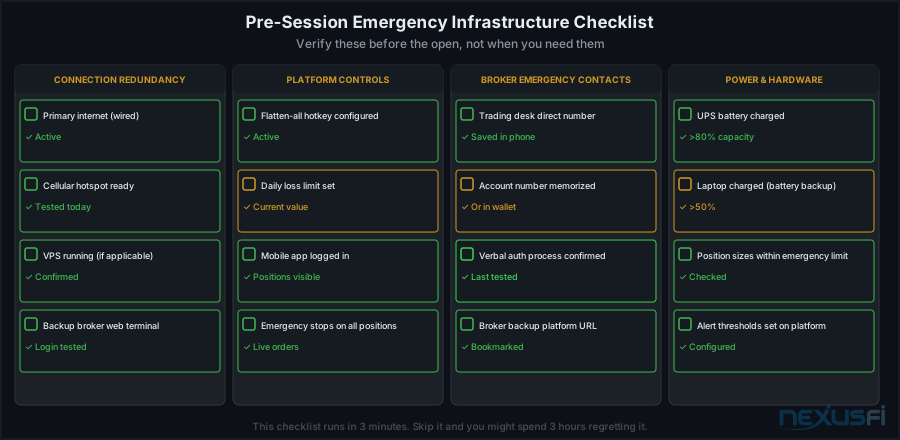
The emergency protocol is only as good as the infrastructure that supports it. A written procedure to "call the broker" fails if the number isn't saved. A plan to "switch to cellular hotspot" fails if the hotspot isn't set up and charged. The infrastructure requirements need to be verified before each session, not assembled during the emergency.
Power redundancy: A UPS (Uninterruptible Power Supply) rated for 30+ minutes of computer operation is not optional for live futures traders. Power failures at your home or office during trading hours are rare but not extraordinarily rare. The UPS provides time to execute an emergency close, not time to wait for power restoration.
Connectivity redundancy: Primary wired connection plus cellular hotspot backup. The hotspot needs to be active and tested regularly — not stored in a drawer. During internet outages, the router is often still providing WiFi from the hotspot's perspective, meaning the failure isn't immediately obvious. Know how to verify you're on the backup connection.
Platform redundancy: For discretionary traders, a second platform logged into the broker's web terminal provides emergency position management without requiring the primary platform. For automated traders, VPS hosting eliminates the local infrastructure failure scenario entirely.
Financial redundancy: Maintaining margin buffer well above the maintenance minimum is itself an emergency protocol. The buffer gives you time to react to adverse moves before the broker initiates forced liquidation. Trading at margin limits eliminates that buffer.
Running Emergency Drills #
Emergency protocols that have never been practiced fail in predictable ways during actual emergencies. The procedures that feel obvious on paper become uncertain under pressure if they've never been executed.
A monthly emergency drill for futures traders has three components:
First, test the flatten-all mechanism on your platform. Not in simulation — log into your live account during off-hours, open a very small position, and execute the emergency flatten procedure you would use during a crisis. Confirm the hotkey works. Confirm the mobile app shows the close. Confirm the broker shows zero position. This takes five minutes and eliminates significant uncertainty.
Second, call the trading desk. Call the number you have saved. Verify it's the right department. Ask what information they need to verbally authorize a liquidation. Confirm the process. Update the contact if anything has changed. This call takes two minutes and validates your emergency escalation path.
Third, test the cellular hotspot failover. Disconnect the primary internet connection and verify you can access the broker's web platform via cellular. This confirms the backup path works before you need to rely on it in 30 seconds.
The Post-Crisis Review: Mandatory After Every Emergency #
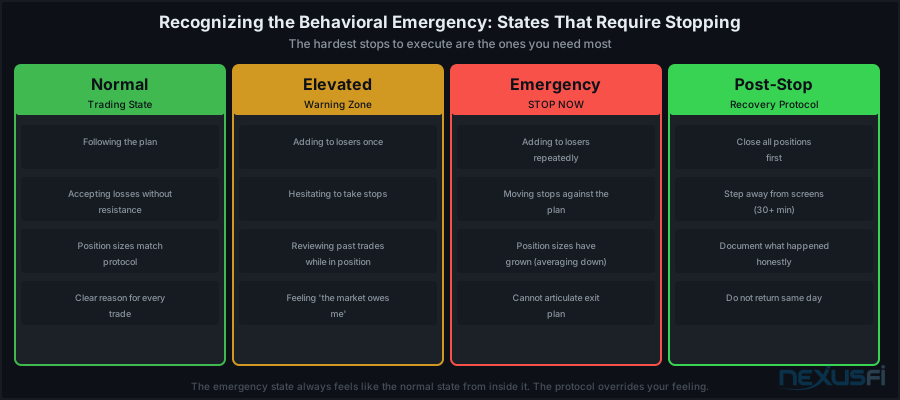
Every triggered emergency protocol generates a required post-crisis review. Not optional, not "when there's time" — immediately after the session, while the details are fresh.
The review answers four questions in sequence: Was this trigger appropriate? (Was it the right call to stop trading, or was the trigger too sensitive or too loose?) Did the execution work? (How long did liquidation take? Where did slippage occur? What failed?) Did the broker communication work? (Was the contact fast? Did they have everything they needed?) What changes to the protocol does this event recommend?
The documentation from the emergency itself — timestamps, order confirmations, broker reference numbers — feeds directly into this review. Without documentation created during the emergency, the review depends on imperfect memory of a high-stress event.
The output of the review is specific, actionable protocol updates. "The cellular hotspot was slow because I hadn't verified it was connected before the session" generates: "Add cellular hotspot verification to pre-session checklist." "The broker number I called was general customer service, not trading desk" generates: "Update saved number to trading desk direct line." Each emergency is a protocol improvement opportunity.
Building Your Personal Emergency Playbook #
The playbook is a written document, not a mental model. Mental models fail under pressure because the pressure that creates the emergency also degrades the recall of the mental model. Written documents don't degrade under pressure.
A functional emergency playbook has five sections:
Hard stop triggers: specific conditions that require immediate trading cessation, with thresholds (not "large loss" but "loss exceeds 2.5% of account").
Liquidation procedure: four phases with time targets, order types, and confirmation criteria.
Broker emergency contacts: name of broker, direct trading desk number, account number, verbal authorization process, and backup web platform URL.
Infrastructure backup procedure: step-by-step cellular hotspot failover, secondary platform access, and UPS runtime estimate.
Post-crisis protocol: when to resume trading (minimum: next session), review requirements, and who to notify (if applicable).
This document should be accessible from the trading station without logging in anywhere. Print it and keep it next to the keyboard. The scenario where you need it most urgently is exactly the scenario where your computer may be unavailable.
Knowledge Map
Prerequisites
Understand these firstGo Deeper
Build on this knowledgeCitations
- — My algo hit the kill switch, CME said no! Lady Luck Saved Me! (2022) 👍 6“CME rejected the order with message 'Order type not permitted while the market is reserved'. Rithmic only tries once...”
- — Flash crash and risk on capital (2012) 👍 13“Have at least 2 PCs, a fixed and a mobile internet connection, use two different brokers, have access to two different exchanges.”
- — Doomsday scenario (2019) 👍 4“Always have your position with an emergency stoploss order. Turn your phone as a Wifi hotspot using your data plan.”
- — Making a Living with the Micros (2021) 👍 2“I asked my AMP broker about the auto liquidate feature. YES, they have one. Guess where it is set? At 80% loss on the day! Better yet: stay far away from the need for this type of solution by taking all losses quickly.”
- — CME Group Performance Bond (Margin) Requirements
- — NFA Protect Yourself: Investor Resources
- — CFTC Customer Protection: FCM Basics
- — Risk trading internet outage liability LLC (2010) 👍 5“If your internet connection fails, why don't you just phone your broker and close the position?”