



Implied Volatility Data for Futures Trading: VIX, Term Structure, and the Vol Signals That Actually Matter
Overview #
Most futures traders treat implied volatility (IV) data as something for options traders — a box they'll open someday when they graduate from just trading the underlying. That's backwards. IV data is a direct window into what the smart money thinks is about to happen. The VIX isn't just a fear gauge — it's the collective bet of institutions, hedge funds, and traders with real capital at stake. When those bets shift, futures move.
The distinction that matters: realized volatility is what happened. Implied volatility is what the market is pricing will happen. These two numbers diverge constantly, and when they diverge sharply, that divergence is signal.
For ES traders, the VIX and the VX futures term structure are among the most reliable market context tools available. They don't tell you where price is going tick by tick, but they tell you the regime you're operating in — and whether the regime is about to change. Trading without knowing whether you're in a low-vol mean-reverting environment or a high-vol trending one is trading without a weather report.
This article covers the mechanics of IV data: what VIX actually is, how the VX futures term structure works, what contango and backwardation signal, and how to use this information to trade ES and other index futures better. It also covers the data sources — where to get this data, what it costs, and what the platforms show you.
Implied volatility data is available for free at sites like vixcentral.com and CBOE's data hub. The question isn't access — it's knowing what to do with it once you have it.
What Implied Volatility Actually Is #
Implied volatility is a number extracted from options prices. An options pricing model (Black-Scholes is the oldest, but others exist) takes the current option price as the input and backs out the volatility assumption that would explain that price. That implied number is IV.
The mechanics matter: IV is not a measurement of what's happening. It's a statement about what the options market thinks the magnitude of future moves will be. A stock trading at 100 with IV of 20% isn't saying it will move 20% — it's saying the options market is priced as if one-year moves of 20% are typical. The annualized number translates to a roughly 1.26% daily move expectation (20% / sqrt(252)).
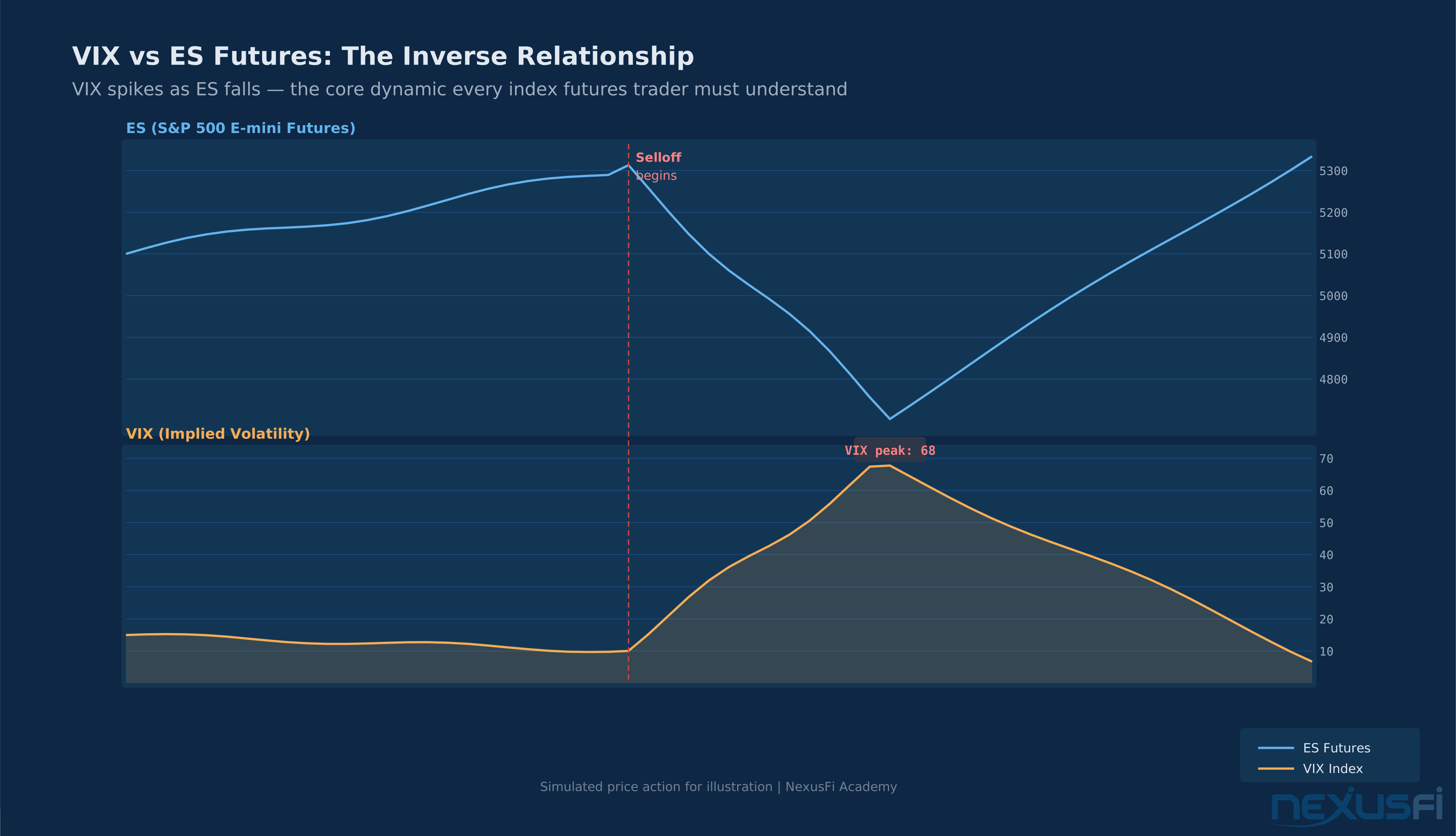
This directional neutrality is key. IV spikes when markets crash, but it also spikes when markets rocket upward unexpectedly. The VIX hit 80+ during the COVID crash of March 2020, and it spiked during post-election rallies too. It's a measure of expected movement magnitude, not direction. That said, in practice, spikes almost always accompany downward moves because the options skew — puts being more expensive than calls for the same distance from strike — means fear shows up more forcefully in IV than euphoria does.
The relationship between IV and realized vol (RV) is the foundation of all vol trading. When IV is well above recent RV, the market is pricing in more movement than has been occurring — that's high vol premium, and it's historically mean-reverting. When IV is well below recent RV, the market is pricing in less movement than has been occurring — a potentially dangerous underpricing of risk.
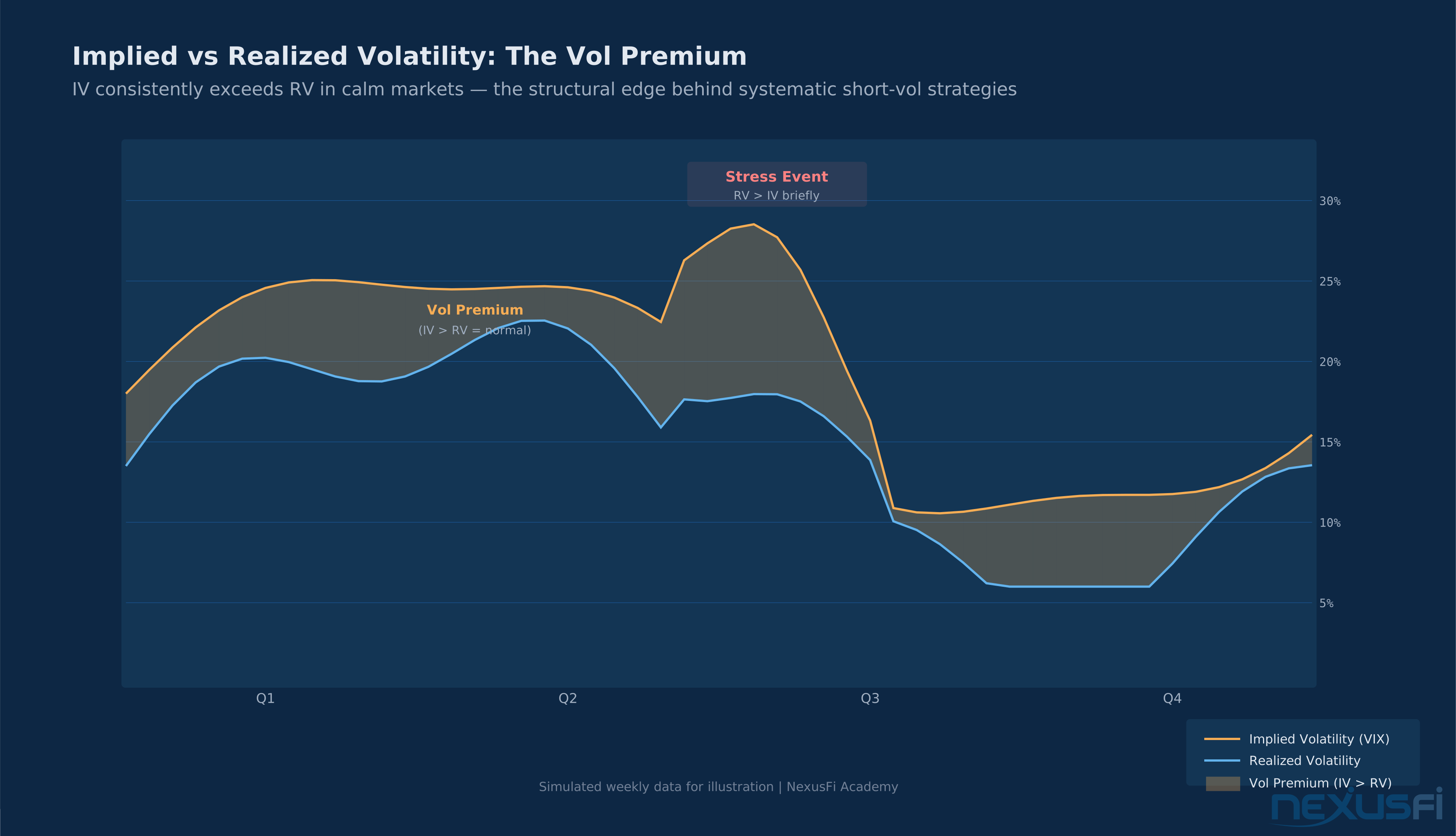
The vol premium — the tendency for implied volatility to exceed realized volatility over time — has averaged around 2-3 percentage points historically in equity markets. This is why systematic put-selling strategies have worked for decades, and why institutions sell covered calls as routine portfolio management. The premium is real, but it collapses during stress regimes, which is why selling vol at the wrong time has a body count.
The VIX: Construction and What It Actually Measures #
The VIX is the CBOE Volatility Index, measuring the 30-day implied volatility of the S&P 500. It's calculated from a wide strip of S&P 500 index options — not just at-the-money options, but options across all strikes, weighted to give a model-free measure of 30-day expected volatility.
The specific calculation: CBOE takes a strip of SPX options expiring roughly 23-37 days out (blending two expiration series to get to exactly 30 days), takes the mid prices across all available strikes, and backs out a variance estimate. The square root of that variance, annualized, is the VIX. As of 2014, CBOE expanded the calculation to use weekly SPX options, improving the precision of the 30-day interpolation.
What the VIX measures: the expected annualized 30-day volatility of the S&P 500, in percentage terms. A VIX of 20 means the options market is pricing roughly 20% annualized volatility — which translates to expected daily moves of approximately 1.26% (20 / sqrt(252) = 1.26%).
What the VIX doesn't measure — and this trips up a lot of traders:
It is not a prediction of direction. VIX rising does not mean the market will fall. It means the market is pricing higher uncertainty, which in practice correlates with downward moves because downside fear is more expensive to hedge.
It is not an immediate reversal signal. VIX can stay elevated for months during bear markets. A VIX of 40 in a bear market is not automatically a "buy the dip" signal. Context matters — specifically, what's the term structure doing?
It is not purely forward-looking in the 30-day sense. VIX is derived from options that expire in 30 days, but those options are pricing expected volatility for that entire period, and the market's anticipation of events beyond that window bleeds in through option skew.
CBOE also publishes complementary indices: VIX9D (9-day), VIX3M (3-month), VIX6M (6-month), and VIX1Y (1-year). These form the VIX term structure in spot index form, though the tradeable term structure runs through VX futures, not these spot indices.
VX Futures: The Tradeable Volatility Market #
The VIX index itself is not directly tradeable — you can't buy or sell the spot VIX. What IS tradeable are VX futures, listed on the CBOE Futures Exchange (CFE). Each VX contract represents 1,000 times the VIX level, so a VX contract at 18.50 has a notional value of $18,500. Contract months extend 8+ months out on the standard monthly series, with weekly contracts also available.
At expiration, VX futures settle to a Special Opening Quotation (SOQ) of the VIX, calculated from SPX option opening prints. If you hold a VX contract to expiration, you're settling to the VIX print at that expiration date.
The key insight for ES traders: VX futures prices are NOT the same as the current VIX level. They're the market's expectation of where VIX will be at some future date. This creates the VX term structure, and that term structure is where the signal lives.
Contango: The Normal State #
When markets are calm, VX futures trade in contango — each successive month trades at a higher price than the previous one. This makes intuitive sense: there's more uncertainty about what volatility will look like in six months than in one month, and that uncertainty carries a premium.
Contango is the baseline, normal state. Historically, VX futures are in contango roughly 75-80% of calendar days. The shape of the curve in contango is upward-sloping, with the front month near spot VIX and each subsequent month successively higher.
The steepness matters. Steep contango — a large spread between VX front month and M2 or M3 — means the market expects volatility to normalize. It's pricing in mean reversion toward lower future vol. This is the regime where mean-reversion strategies and short-vol approaches work best, and where ES tends to grind higher with tight intraday ranges.
Backwardation: The Warning Signal #
When markets stress, the curve inverts — VX futures go into backwardation, where the front month trades ABOVE later months. Near-term uncertainty spikes while longer-dated expectations remain more anchored.
Backwardation is the blinking red light. Every major equity market selloff in recent history has been accompanied by VX curve inversion — either the inversion preceded the selloff or it coincided with the early stages of the selloff.
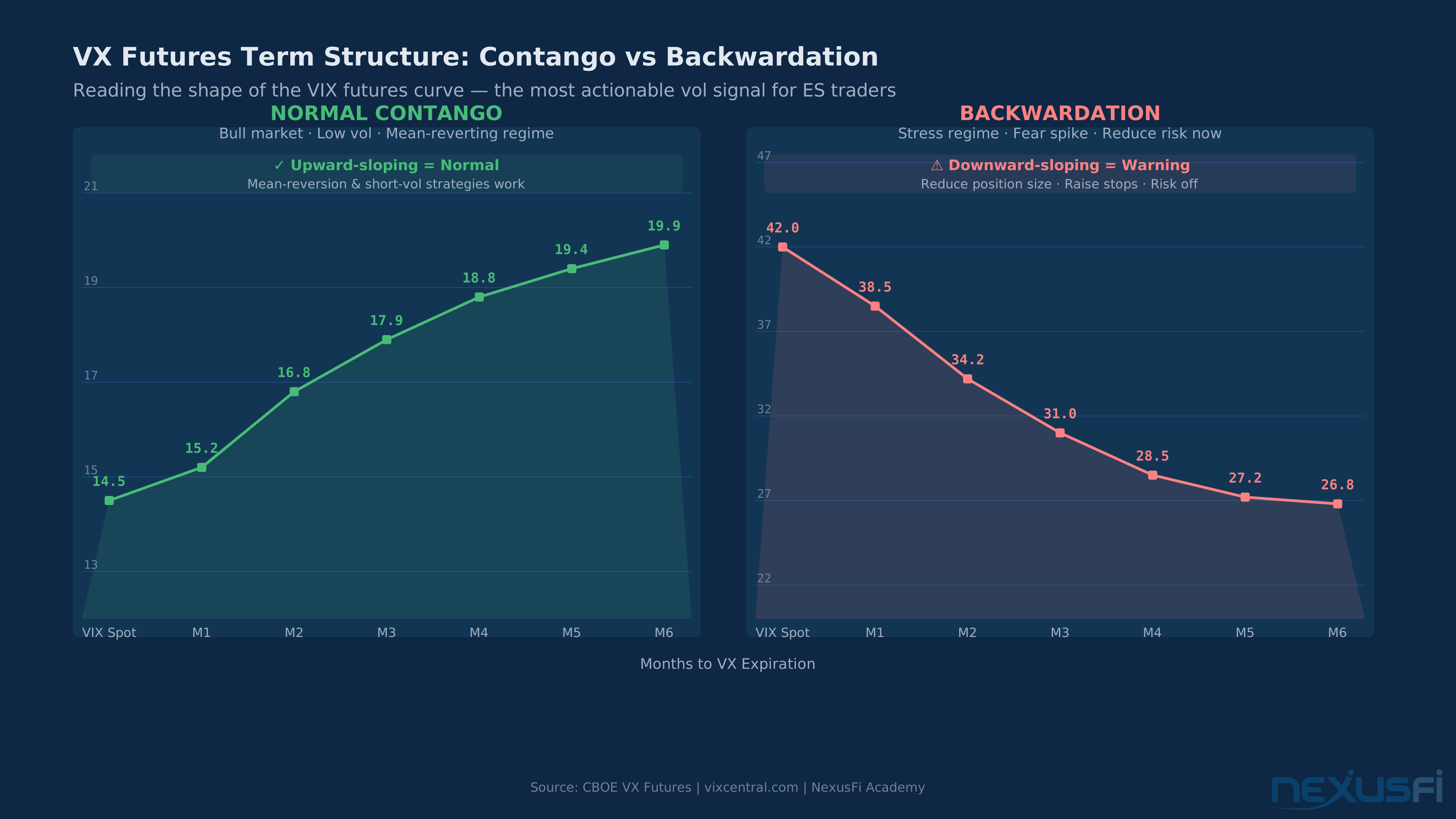
Backwardation is not a signal to sell ES immediately. It's a signal to reduce risk. The 2018 Volpocalypse event (February 2018) showed that waiting for "the move" after seeing backwardation can leave you catching the falling knife. The term structure going into backwardation means cheap protection is becoming expensive — the time to buy insurance is BEFORE the curve inverts, not after. By the time retail traders see the curve in backwardation on their screens, smart money is already hedged.
Reading the VX Term Structure in Practice #
The go-to free resource for the VX term structure is vixcentral.com. It plots each VX monthly contract as a point on a curve, shows you the current shape, and lets you compare to historical structure shapes. Daily ritual for anyone trading index futures seriously.
What to look for:
Shape: normal contango — upward sloping curve. Front month near or slightly below spot VIX, M2 through M6+ each higher. This is the green-light environment for mean-reverting ES strategies. Most of the year looks like this.
Shape: flat curve — front month and outer months at similar levels. The market is uncertain about direction. Not an alarm bell by itself, but warrants attention. Often transitions to backwardation or to steepening.
Shape: backwardation — front month above M2, M2 above M3. When this extends beyond just the very front end, it's a serious warning. Partial inversion (just the first two contracts) can be temporary. Full inversion across the whole curve is a major risk-off signal.
Absolute VIX level context — reading the curve without the absolute level is incomplete:
- VIX below 15, steep contango: Maximum complacency regime. Typical for slow-grind bull markets. Mean-reversion strategies thrive here. Short-vol approaches work. ES ranges are tight and the open usually fills.
- VIX 15-25, normal contango: Healthy uncertainty. Most normal markets. ES tends to trend with reasonable range days. Both mean reversion and directional setups work depending on session structure.
- VIX 25-40, flat or mild backwardation: Elevated stress. Larger intraday ranges, less reliable mean reversion, more gap risk. Reduce size, widen stops.
- VIX above 40, steep backwardation: Crisis regime. Ranges on ES expand by 30-50% or more compared to low-vol environments. The probability distribution of daily moves goes fat-tailed. Normal approaches break down.
Check vixcentral.com before every session as part of a 60-second premarket routine. The five minutes spent reading the curve shape and absolute level gives you the regime context that at the core changes how you manage risk that day. Skipping this check is trading in the dark on the single most important macro input for ES.
Short-Dated Vol: VIX9D and the Front-End Signal #
The 30-day VIX has a companion that's more useful for shorter-term ES traders: VIX9D, the 9-day implied volatility measure. The spread between VIX9D and VIX (30-day) gives you a tight read on near-term versus medium-term fear.
Normal state: VIX9D trades below VIX. The market expects less volatility in the next 9 days than the next 30. Near-term outlook is calm, medium-term has more uncertainty baked in. This is the regime where short-term mean-reverting ES trades have the best edge.
Inverted state: VIX9D above VIX. Near-term fear exceeds medium-term fear. Something specific is happening now or expected soon — a Fed meeting, CPI print, earnings event, geopolitical development — that the market is pricing in as near-term disruption.
This short-end inversion is a practical signal for day traders: when 9-day implied vol spikes relative to 30-day, expect higher intraday ranges, less reliable pullback entries, and more gap risk. The inversion often precedes the actual market dislocation by a day or two.
The complement of VIX9D: VIX3M (3-month). The VIX3M-VIX spread tells you whether medium-term risk expectations are elevated relative to near-term. When VIX3M trades at a large premium to VIX, the market is saying: we're okay for the next 30 days, but something further out has us worried. This often shows up ahead of known risk events on the calendar (elections, Fed policy shifts, seasonal patterns).
Three numbers to track every morning before the open: spot VIX level (regime), front-month VX contango percentage (term structure shape), and VIX9D relative to VIX (front-end signal). Together, they give you a complete read on vol regime and any near-term stress positioning by smart money. Five minutes. No excuses.
VVIX: Volatility of Volatility #
VVIX is the VIX of VIX — the CBOE Volatility of Volatility Index. It measures the implied volatility of VX options, which is volatility applied to volatility itself. If VIX is the fear gauge, VVIX is the fear-of-fear gauge.
VVIX has a typical range of 80-120 in normal markets. Above 140, the vol-of-vol regime is elevated — VIX itself could make large moves in either direction.
The practical use for ES traders: VVIX sometimes leads VIX. When VVIX spikes sharply while VIX is still complacent, smart money is buying VIX options as protection ahead of an expected vol event. This tail-risk positioning often shows up 1-3 sessions before a broader VIX spike reaches levels that make retail traders pay attention.
VVIX doesn't have futures of its own — it's a spot index only. But it's published by CBOE and available in most data feeds and charting platforms that carry CBOE indices.
VVIX above 120 when VIX is below 20 is the canary in the coal mine. Institutions are buying VIX calls aggressively (bidding up VX options implied vol) while the cash VIX remains suppressed. They're buying protection cheap, before the crowd wakes up to the risk. VVIX is the tell that this positioning is happening — you won't see it in the ES chart or the VIX headline number until it's too late.
Vol Regime Classification: The Four States #
The combination of VIX level and term structure shape defines four distinct trading regimes for ES. Each regime requires a different approach.
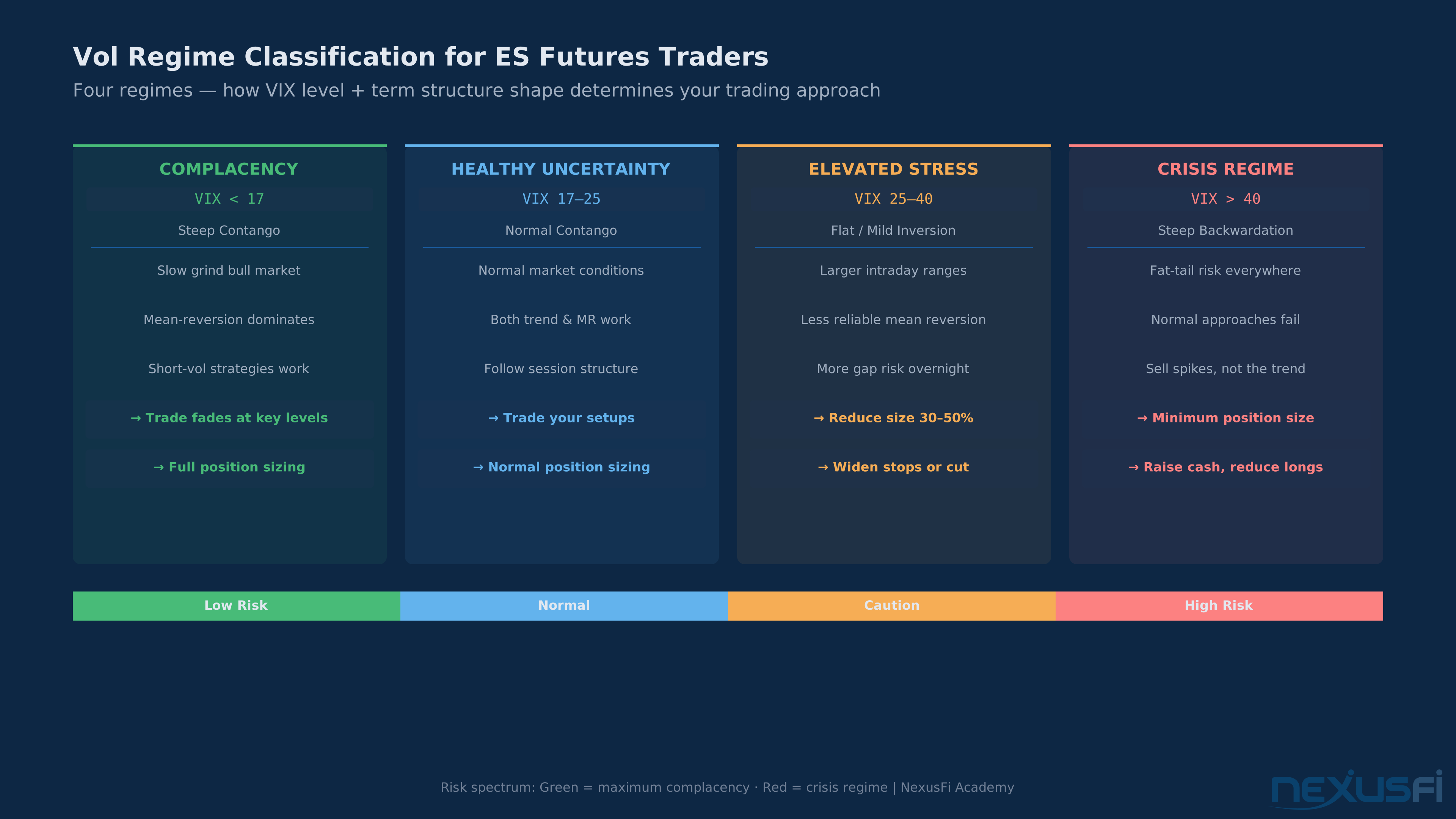
Regime 1: Complacency (VIX below 17, steep contango)
This is the standard bull market grind. VIX is suppressed, volatility term structure is in steep contango (M2 trades 5%+ above M1), and the ES is a mean-reverting machine. Pullbacks to key levels get bought quickly. Trend-following gets chopped. Position sizing at maximum. Short-vol strategies work consistently. The risk in this regime is that it can end suddenly when the term structure starts to flatten — and you won't see it coming from ES price action alone.
Regime 2: Healthy Uncertainty (VIX 17-25, normal contango)
Normal market conditions. Both mean-reversion and trend-following setups work, depending on session structure (balanced days favor fades, imbalanced days favor breakouts). Vol premium still exists but is smaller. This is where most of the trading year lives. Position sizing normal, approach driven by session structure rather than vol regime.
Regime 3: Elevated Stress (VIX 25-40, flat/mildly inverted)
The market has moved from uncertainty to fear. Intraday ranges expand by 20-40% compared to Regime 1. Mean-reversion fades at extremes get run over more frequently. Gap risk overnight increases substantially. Reduce position size 30-50%. Stop-loss placement needs to widen to accommodate the expanded range, or avoid holding overnight. Systematic mean-reversion strategies that worked in Regime 1 often underperform here.
Regime 4: Crisis (VIX above 40, steep backwardation)
Fat-tail risk everywhere. Normal setups fail. The ES can gap 3-5% overnight on news that would have been a 0.5% move in Regime 1. The only rule in Regime 4 is survival — minimum position size, maximum defensive posture, no leveraged longs. Trend-following (selling rallies, not buying dips) works better in this regime because fear-driven selloffs tend to follow through.
Practical Applications for ES Traders #
Application 1: Premarket Regime Check #
Before the open, pull up vixcentral.com and check the current term structure. Takes 60 seconds. Classify your regime using the framework above. This classification determines whether you're running full size or reduced size, whether you fade moves or follow them, whether you hold overnight positions or close intraday, and how wide your stops need to be for the session.
Application 2: The VIX Stretch Strategy #
One of the oldest and most documented systematic applications of IV data for ES timing, the VIX Stretch strategy has clean rules:
- ES must be above its 200-day SMA (bullish regime filter)
- VIX must be 5% or more above its own 10-day moving average for 3 or more consecutive days
- Enter ES long at the next close
- Exit when the 2-period RSI on ES crosses above 65
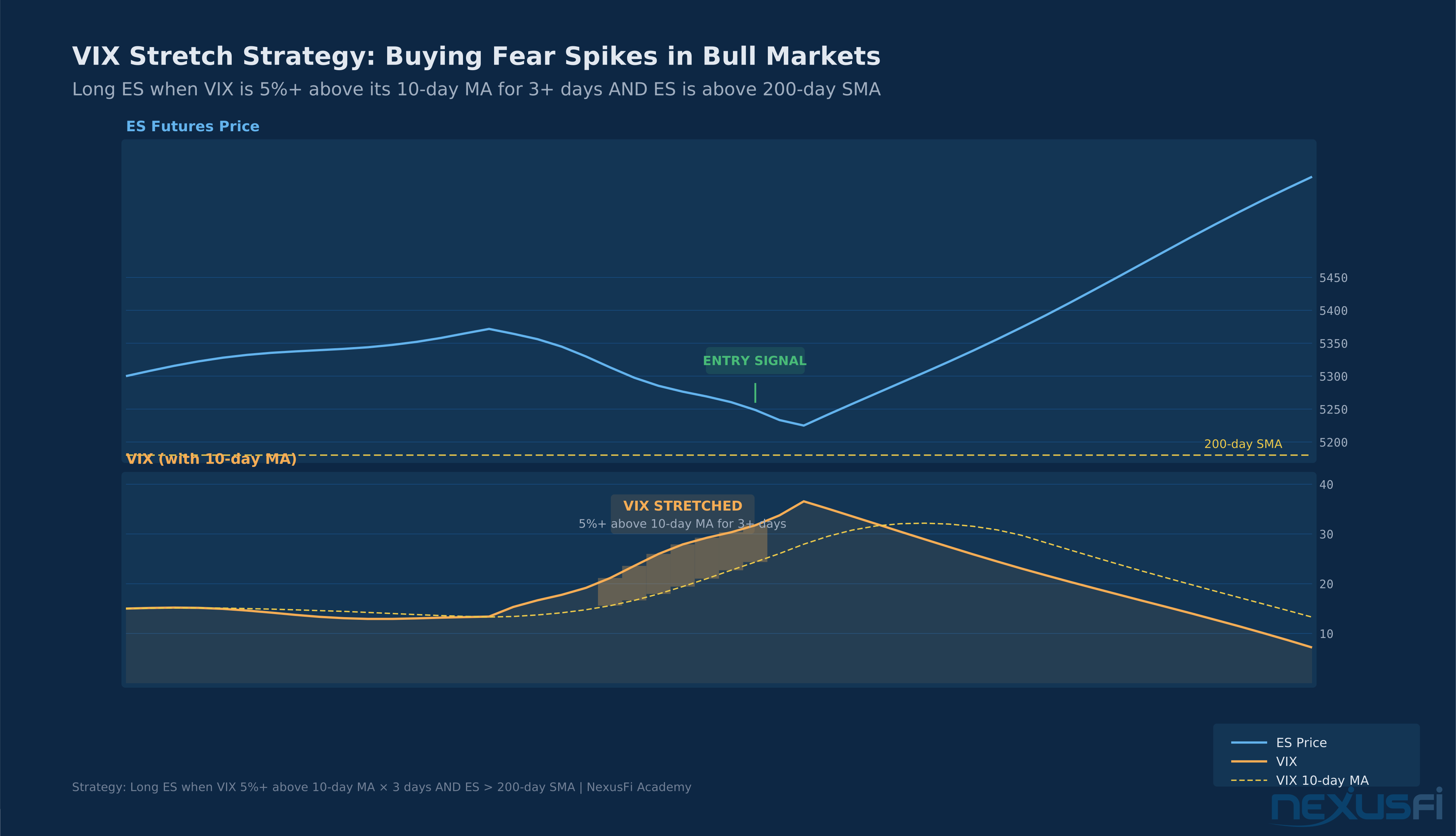
The strategy works because VIX can't sustain 5%+ above its 10-day MA in a healthy bull market for long — structural buyers step in when options prices get too expensive for the prevailing calm. The 200-day SMA filter is critical — applying this in a bear market where elevated VIX can stay elevated for months produces the wrong signal entirely.
Application 3: Term Structure as a Risk Management Toggle #
This is the most practical use of vol data that doesn't require any system development: use the term structure shape as a binary risk-on/risk-off switch.
- VX curve in contango, VIX below 20: Full risk. Normal position sizing.
- VX curve flattening, VIX 20-30: Reduce position size 30-50%. Add stops on existing positions.
- VX curve inverted (backwardation), VIX above 25: Minimum risk. Close leveraged longs. If short, tighten stops to protect gains.
This isn't a trading system — it's a risk management overlay. The setup might look good from price-action perspective, but the vol market is saying something changed. When the two disagree, respect the vol signal.
Application 4: VIX-SPX Divergence #
Normal behavior: SPX up, VIX down. SPX down, VIX up. When both move in the same direction on a given day, it's anomalous and often precedes a reversal.
SPX makes a new high while VIX fails to make a corresponding new low: bullish divergence in fear terms, meaning the rally isn't fully bought by the smart money. SPX sells off while VIX barely moves: a healthy, low-conviction selloff that often snaps back.
Data Sources and Access #
Free Sources
- vixcentral.com: The best free resource for VIX term structure. Plots M1 through M8 VX futures, shows contango/backwardation percentage for each contract, historical comparison. Daily premarket reading.
- CBOE Data Hub (cboe.com): Historical VIX data going back to 1990. CSV downloads. Free.
- VIX9D, VIX3M, VIX6M, VIX1Y at CBOE: The full spot term structure in index form. Updated continuously during market hours.
- Barchart.com: Free delayed VX futures quotes, term structure visualization.
Platform Integration
- NinjaTrader: Imports VX futures as tradeable instruments (CFE exchange). You can chart the spread between front month and second month directly.
- ThinkorSwim: The /VX-VIX instrument plots contango/backwardation of front-month VX vs spot VIX directly. Set as a histogram — red means backwardation, green means contango.
- Sierra Chart: Full VX futures feed via CQG or Rithmic. Custom spread charts for M1/M2 contango monitoring.
- TradeStation: Native VX futures support. EasyLanguage scripts can incorporate VIX regime logic directly into strategy entries.
Paid Data
- CBOE DataShop: Historical VX futures tick data, SPX options end-of-day data. Pricing starts around $200-400 per year.
- Quandl/Nasdaq Data Link: VX futures historical data. Individual trader pricing $30-100 for specific datasets.
- OptionMetrics: Full implied volatility surface data back to 1996. Used by hedge funds. $500+/month.
- SpotGamma / Guts N Gamma: Dealer gamma exposure (GEX) and net options positioning. $100-200/month. Extends vol analysis to market microstructure.
Start with vixcentral.com and CBOE's free historical data. For using IV data as a market context tool for ES trading, free sources are entirely adequate. The VX term structure shape is what matters — you don't need tick data to see whether you're in contango or backwardation.
The Post-2012 Structural Shift: What Changed #
The relationship between VIX and ES isn't static. Post-2012, a structural change in how institutions manage vol exposure created a feedback mechanism that every ES trader should understand.
Large institutions shifted from buying tail hedges (VIX calls, OTM SPX puts) to selling covered calls and cash-secured puts as yield-enhancement strategies. This made them systematically short volatility. To hedge their short-vol exposure, dealers on the other side became long volatility, and had to continuously rebalance by buying ES on dips and selling ES on rallies.
This created the "buy every dip" feedback loop that characterized the 2012-2019 bull market. Dealers' long gamma positions mechanically put a floor under every small ES pullback. It also compressed ranges and kept VIX perpetually low.
The mechanism breaks when the market moves far enough fast enough. A 1-2% decline per day over several days stays orderly because dealers can hedge continuously. A sudden 4-5% gap-down overwhelms the hedging capacity — convexity changes, gamma exposure drops, and the mechanical support floor disappears. This is why seemingly minor catalysts can produce outsized ES moves: the vol market is pricing in the risk that dealer rebalancing flows switch from supporting to accelerating.
Dealer gamma exposure (GEX) data from services like SpotGamma extends this framework by calculating the aggregate options positioning of dealers and estimating where ES has implicit support (positive GEX zones, where dealers buy dips) versus where moves can accelerate (negative GEX zones, where dealers sell into declines). GEX is derived from options open interest — it's the next level beyond simple VIX reading for ES traders who want the full vol-market picture.
Limitations and Where This Data Fails #
VIX Is Not a Timing Tool for Individual Sessions #
VIX gives you regime context — the weather report. It doesn't tell you what happens in the next hour. A VIX of 30 on a Monday doesn't mean ES will gap down Tuesday. Vol data operates on multi-session timeframes. Using it as a session-by-session directional signal produces false positives constantly.
The Vol Premium Can Stay Compressed or Elevated for Months #
IV tends to mean-revert, but the timescale isn't predictable. During the 2020 COVID crash, VIX stayed above 25 for over 90 calendar days. Systematic short-vol strategies that assumed quick mean-reversion after initial spikes got destroyed. VIX being "high" doesn't mean it's immediately going lower — a trend can persist as long as the underlying fear driver persists.
Backwardation Can Be Technical Near Expiration #
Near quarterly expirations, the front-month VX contract can trade at an unusual premium relative to spot VIX purely due to roll mechanics and institutional hedging. This creates apparent backwardation that reverses quickly and isn't a true fear signal.
In the last week before VX expiration, the front-month contract converges aggressively toward the spot VIX SOQ regardless of market conditions. The M1/M2 spread during this period can be misleading. Compare M2/M3 contango percentage during expiration week for a cleaner read on actual market fear. Misreading expiration-week roll mechanics as a fear signal has burned traders who acted on the apparent inversion.
VIX Is SPX-Specific #
VIX measures S&P 500 options implied vol. For CL (crude oil), ZB (30-year bonds), or GC (gold), VIX is not your relevant IV gauge. The OVX measures CL volatility expectations. GVZ measures gold. The MOVE Index measures rates volatility. The correlation between these indices exists during major risk-off events, but commodity and rates markets have their own vol dynamics that VIX doesn't capture.
Options Market Pinning Near Expiration #
On major SPX options expiration days, dealers manage their gamma exposure aggressively. The market pinning effect — ES gravitating toward high-open-interest strikes on expiration day — is driven by mechanical hedging flows, not genuine price discovery. These sessions can behave completely opposite to what vol data would predict.
Implied volatility data is market context, not a signal. VIX tells you the weather — what regime you're in and what risk you're taking. The VX term structure (contango vs backwardation) is the most actionable piece: normal contango favors mean reversion, backwardation signals elevated risk. Check vixcentral.com daily. The five minutes it takes to classify your regime changes how you manage risk for the entire session.
Knowledge Map
Go Deeper
Build on this knowledgeReferences This Article
Articles that build on this topicCitations
- — VIX and Volatility General Discussion (2020) 👍 12“Your stock charts and your realized vol are statistics. Options prices and VIX are probability, sentiment that looks to the future.”
- — Spoo-nalysis ES e-mini futures S&P 500 (2020) 👍 18“VIX rebalancing is accomplished by ETNs by selling the front month futures to buy the second month.”
- — Spoo-nalysis ES e-mini futures S&P 500 (2020) 👍 13“Back-to-back days where VIX and SPX were both lower -- primarily opex related, high put deltas wiped off the board.”
- — Spoo-nalysis ES e-mini futures S&P 500 (2020) 👍 8“When term structure suddenly flipped into backwardation -- blinking red hazard light.”
- — Spoo-nalysis ES e-mini futures S&P 500 (2021) 👍 7“A big decline almost always coincides with a narrowing of the spread between short and longer term vol.”
- — Using VIX To Time The Markets (2012) 👍 8“VIX Stretch Strategy: 75% correct since 1997. VIX stretched 5% above its 10-day moving average for 3+ days.”
- — Lady Vol's Primer: Trading Volatility Journal (2016) 👍 3“When VIX index is below front-month VX futures, be long SVXY -- using the VX-VIX spread as a contango signal.”
- CBOE — VIX Index Methodology (2024)
- — InletCap's Random Collections (2019) 👍 46“It's my intention is to one day have a post here about each of the 10 elements I believe are all one needs to understand to be a successful Day Trader. I've knocked a couple off the list already and I'll try to get to the rest soon then add a link to the posts on the first page of this journal for”
- — Spoo-nalysis ES e-mini futures S&P 500 (2019) 👍 36“let's keep it simple this week, and dispense with all the charts and market internals, and get to the heart of what drives price. because it's not trendlines, it's not fibs, and it's not put/call ratios; nor is it the vix, nor any indicator that is a derivative of price. and, while we all look for a”
- — Volatility Based Trading (2019) 👍 29“The purpose of this thread is to develop and compare volatility based trading concepts. Volatility is the base of options trading, but it is also an essential ingredient in directional trading concepts that primarily rely on momentum indicators or cycle indcators. [B]Some of the better known vo”