



Futures Settlement Data: Daily Mark-to-Market, Final Settlement, and How Your P&L Is Actually Calculated
The number on your statement at 4 PM isn't what you think it is. Understanding settlement prices — the engine behind every daily P&L calculation — is the difference between knowing why your account balance changed overnight and just hoping for the best.
Overview #
Every open futures position is repriced every single trading day. Not at the last traded price. Not at some arbitrary close. At the official settlement price — a formally calculated number that the exchange publishes after trading ends. That settlement price is what your broker uses to calculate whether you made money today, whether you owe margin, and what your tax basis is.
Most traders discover this the hard way: they enter a trade, the market moves in their favor through the session, and when they check their account the next morning, the P&L doesn't match what they expected. Settlement price is why.
This article explains what settlement prices are, how they're calculated for major futures products, how daily mark-to-market works mechanically, what the difference between daily settlement and final settlement means for how you manage positions, and where the edge cases trap traders who haven't paid attention to the mechanics.
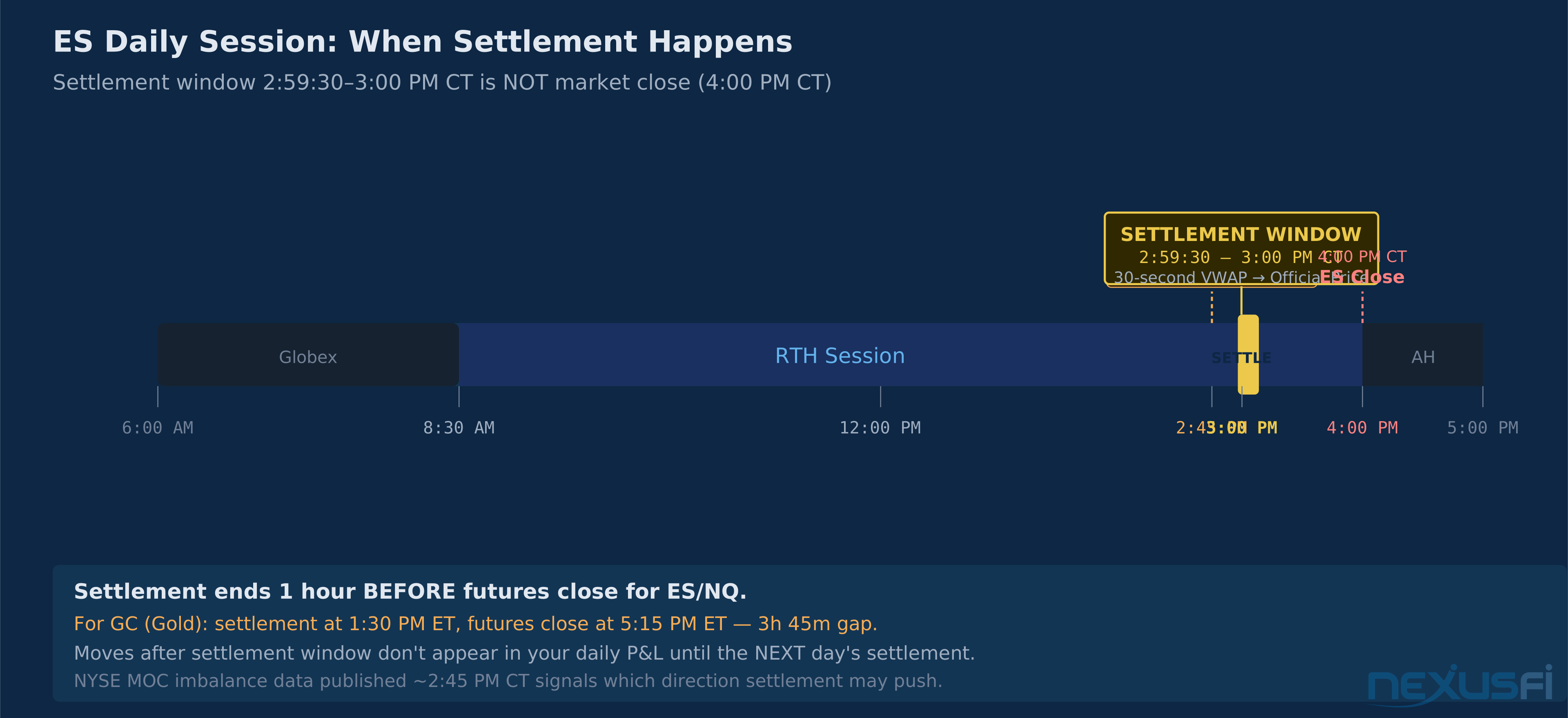
The bottom line up front: settlement price is not the last traded price. For ES, it's a 30-second volume-weighted average calculated between 2:59:30 and 3:00 PM Central Time. For gold (GC), it settles at 1:30 PM Eastern — nearly four hours before the futures market closes at 5:15 PM. If you're building floor pivots, backtesting, or managing overnight risk without knowing this, you're working with the wrong data.
Settlement prices exist because futures contracts need a single authoritative number to calculate margin and P&L every day. Without this daily repricing mechanism, futures markets couldn't function — the clearing house couldn't know how much capital each participant owes or is owed.
Key Specifications: Settlement Timing by Product #
Settlement procedures vary dramatically by product. The single most important thing: settlement time has no relationship to market close time. Gold settles mid-afternoon. Crude oil settles nearly two hours before the pit-era close. ES settles at 3:00 PM Central while the futures session continues until 4:00 PM.
| Product | Exchange | Settlement Window | Method | Market Close |
|---|---|---|---|---|
| ES (E-mini S&P 500) | CME | 2:59:30 — 3:00:00 PM CT | VWAP (30-second) | 4:00 PM CT |
| NQ (E-mini Nasdaq-100) | CME | 2:59:30 — 3:00:00 PM CT | VWAP (30-second) | 4:00 PM CT |
| GC (Gold) | COMEX/CME | 1:29:00 — 1:30:00 PM ET | VWAP (60-second) | 5:15 PM ET |
| CL (Crude Oil WTI) | NYMEX/CME | 2:28:00 — 2:30:00 PM ET | VWAP (2-minute) | 5:15 PM ET |
| ZB (30-Year T-Bond) | CME | 2:59:00 — 3:00:00 PM CT | VWAP | 4:00 PM CT |
| ZN (10-Year T-Note) | CME | 2:59:00 — 3:00:00 PM CT | VWAP | 4:00 PM CT |
| 6E (Euro FX) | CME | 2:59:00 — 3:00:00 PM CT | VWAP | 4:00 PM CT |
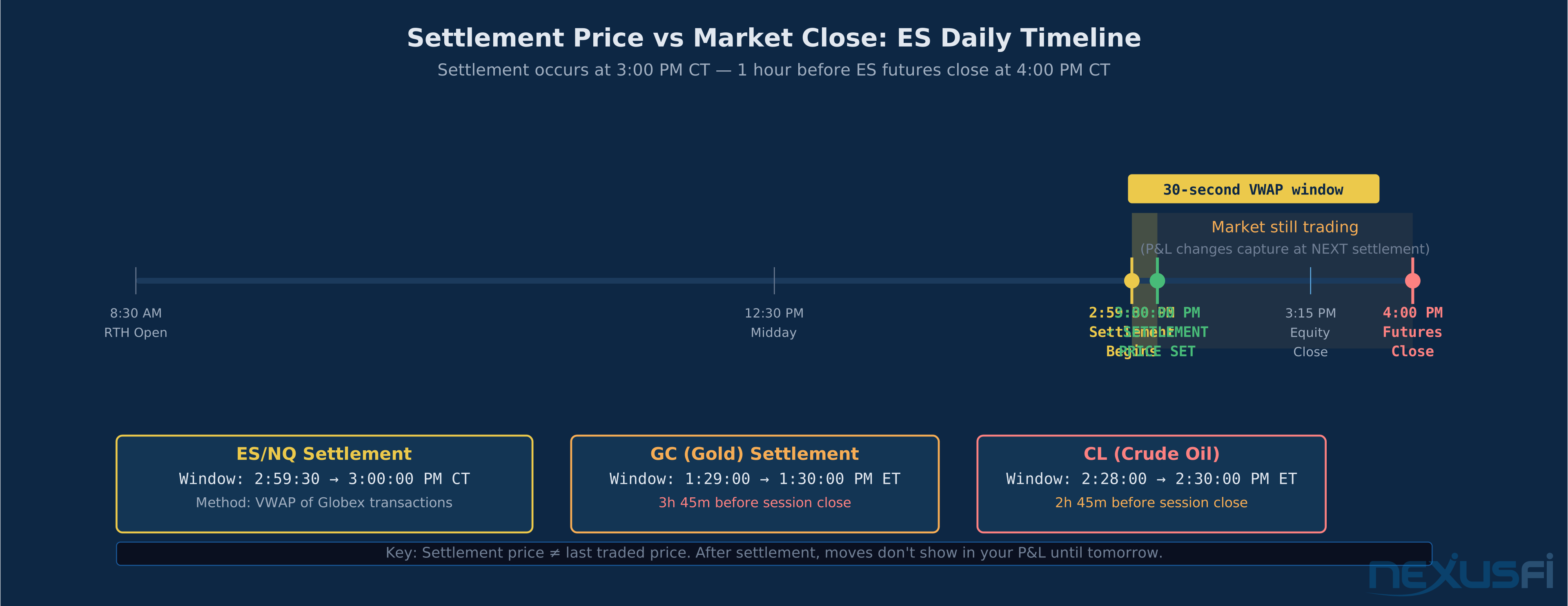
CME Group publishes detailed settlement procedures for each product, including tiered fallback methodologies when no trades occur during the designated settlement window.
These times shift on early-close holidays. On U.S. half-days (Memorial Day, Labor Day, Thanksgiving, etc.), there is no settlement period — the entire session counts as trade date for the following day, and positions are marked the next regular trading day.
The difference between settlement time and market close time creates real P&L surprises. A GC position held overnight carries mark-to-market exposure from 1:30 PM ET settlement while gold continues trading for nearly four more hours. Significant moves in the 1:30 — 5:15 PM ET window don't show in your account P&L until the NEXT day's settlement.
One product-specific nuance worth flagging immediately: ES and NQ do not always settle via the simple 30-second VWAP. On the last business day of each calendar month, the settlement price is calculated using a fair value procedure derived from the cash index at 3:00 PM, not from futures transactions. The implications of this are covered below.
How Daily Mark-to-Market Works #
This is the mechanical core that trips up every trader who comes from equities or options. In futures, you don't realize P&L only when you close a trade. You realize it every single day at settlement, whether you want to or not.
Here's the sequence for a position held over multiple days:
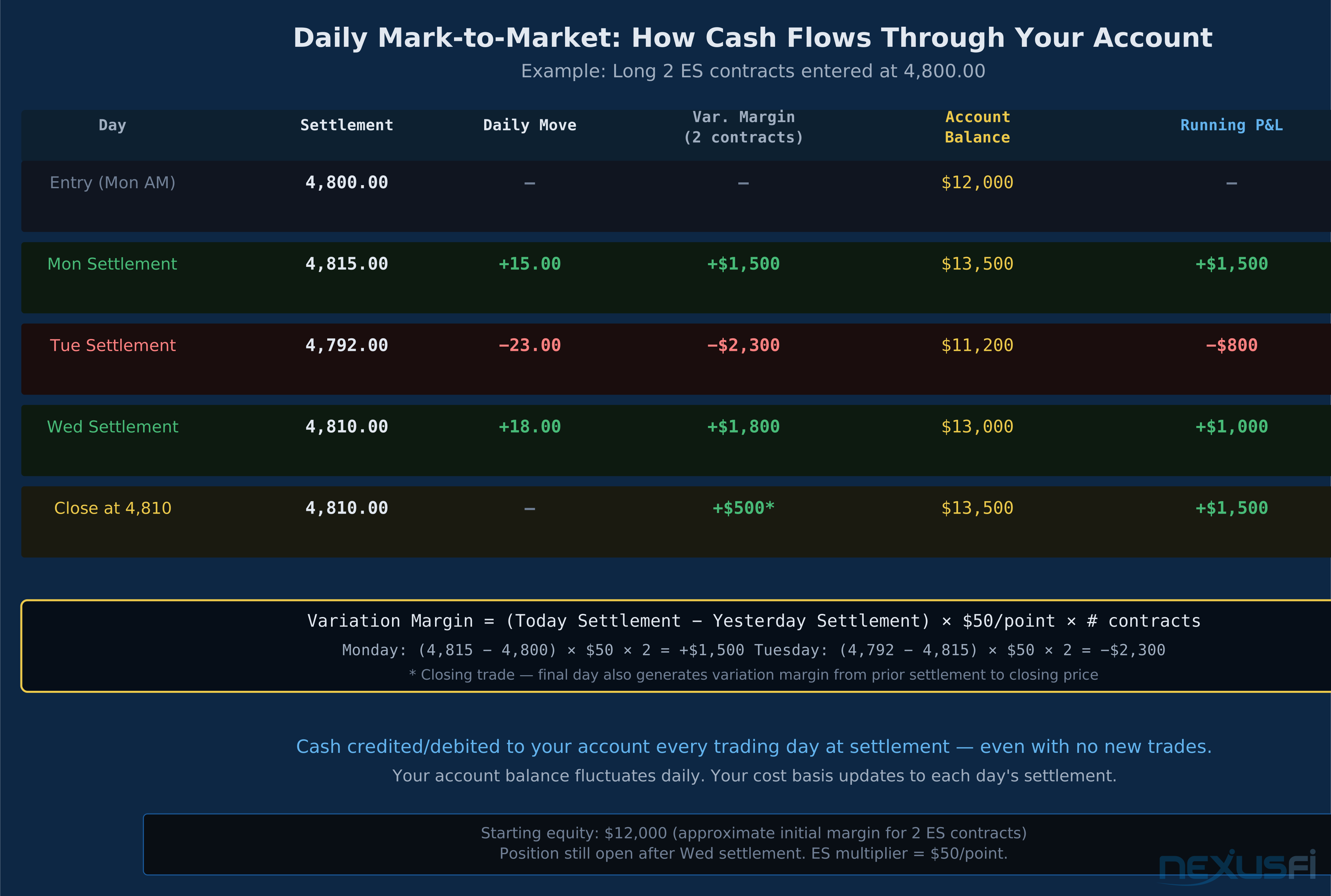
- You buy 2 ES contracts at 4,800.00 on Monday morning.
- Monday settlement price: 4,815.00.
- Daily gain: (4,815.00 — 4,800.00) × $50 × 2 contracts = $1,500 credited to your account
- Tuesday settlement price: 4,792.00.
- Daily gain: (4,792.00 — 4,815.00) × $50 × 2 contracts = -$2,300 debited from your account
- Wednesday settlement price: 4,810.00.
- Daily gain: (4,810.00 — 4,792.00) × $50 × 2 contracts = $1,800 credited to your account
At this point your position is still open. Your entry was 4,800.00, and the current mark is 4,810.00. Your total accrued P&L is $1,000. But notice: $1,500 was credited Monday, $2,300 was debited Tuesday, $1,800 was credited Wednesday. The cash in your account has been moving every night even though you haven't placed a single additional trade.
Your running cost basis updates to each day's settlement price.
If you're thinking about your P&L as entry price vs. current price, you're looking at the right number. But your account balance reflects daily settlement P&L, not a single running unrealized gain.
This cash movement is called variation margin — the daily transfer of funds between winners and losers in the futures market. It flows through your FCM (futures commission merchant) and ultimately through the clearing house (CME Clearing for CME Group products). The clearing house is the counterparty to every trade, so it needs this daily settlement mechanism to manage credit risk across millions of contracts.
The math is straightforward:
Daily Variation Margin = (Today's Settlement Price — Yesterday's Settlement Price) × Contract Multiplier × Number of Contracts
Cumulative P&L = Sum of all daily variation margins since entry
For ES: multiplier = $50/point. For MES (Micro ES): multiplier = $5/point. For NQ: multiplier = $20/point. For GC: multiplier = $100/troy ounce. For CL: multiplier = $1,000/barrel ($10/tick, 0.01 tick size).
The margin call mechanism is straightforward: if your account equity drops below the maintenance margin level after the daily settlement calculation, your broker issues a margin call for the difference between your current equity and the initial margin requirement. This typically processes overnight, with calls due before market open the next morning.
Cash Settlement vs Physical Delivery #
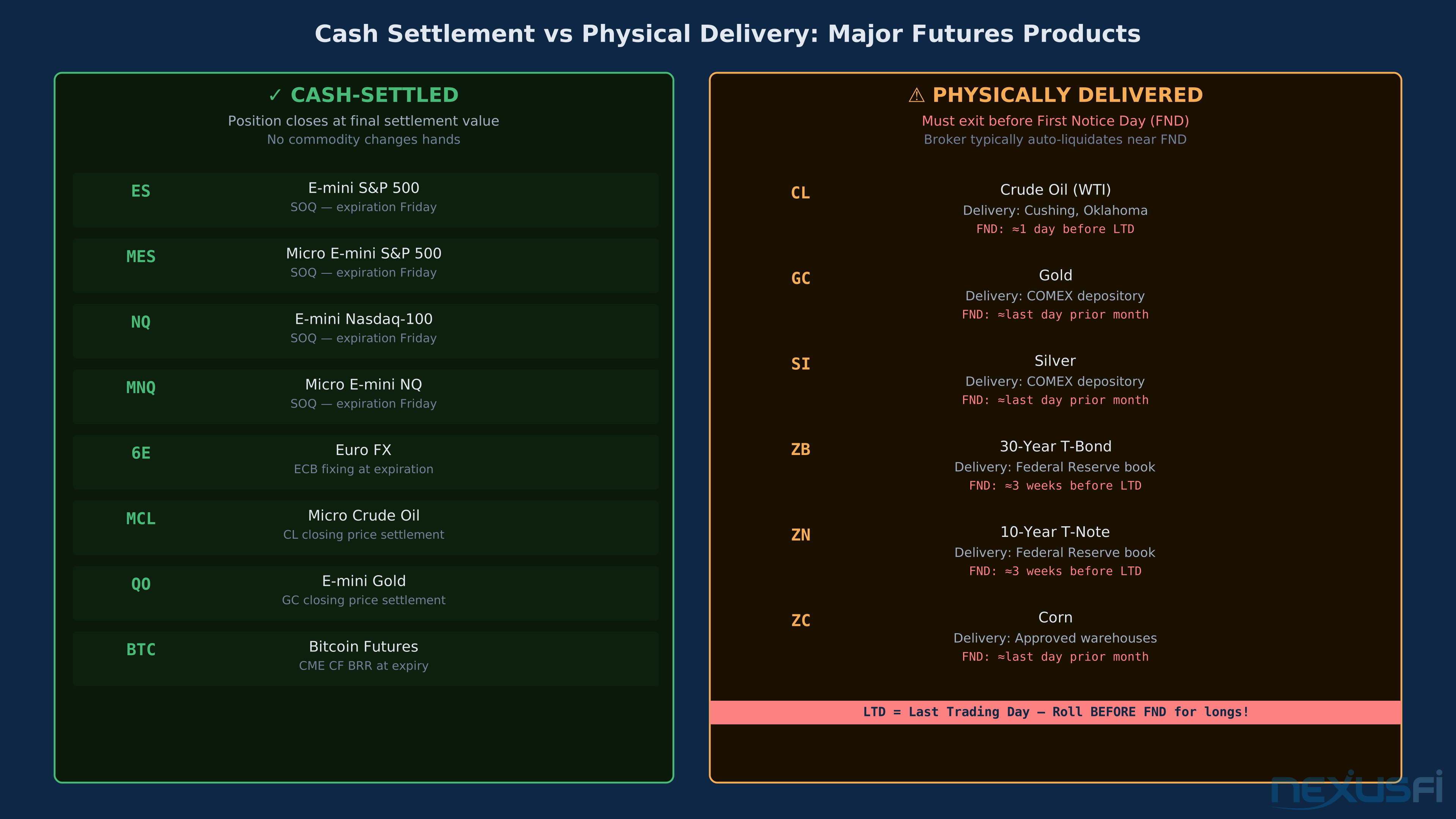
This is the second fork in the road that new futures traders routinely get wrong. Not all futures contracts settle the same way at expiration.
Cash-Settled Contracts #
Index futures — ES, MES, NQ, MNQ, YM, RTY — are cash-settled. At contract expiration, the final settlement price is calculated from the actual cash index, and the difference between your entry price and that final settlement price is credited or debited to your account. You never hold stock. Nothing physical changes hands.
For ES and NQ, this final settlement uses a process called the Special Opening Quotation (SOQ). On expiration Friday (the third Friday of the contract month), the SOQ is calculated using the opening prices of each S&P 500 component stock — not from the ES futures price. The calculation begins at the open of NYSE/NASDAQ trading and continues until every index component has printed an opening trade. On volatile expiration days, this can take 30 minutes or more.
The SOQ frequently diverges from the prevailing ES futures price at market open by 3-5 points or more. This is not a malfunction — it's an artifact of the calculation methodology. The arb between ES futures and the SPY or basket of stocks will drive them to convergence by settlement, but the SOQ itself is based on individual stock opening auctions, not the index futures price.
Currency futures (6E, 6B, etc.) are also cash-settled. At expiration, the settlement value is derived from the spot FX rate, and the position is closed at that cash equivalent.
Physically Delivered Contracts #
CL (crude oil), GC (gold), SI (silver), ZB/ZN (Treasury bonds and notes), and most agricultural contracts require physical delivery if held into expiration. This means exactly what it sounds like: the holder of a long position must be prepared to accept delivery of the underlying commodity, and the holder of a short must be prepared to supply it.
For CL, delivery means receiving actual barrels of West Texas Intermediate crude oil at the storage facility in Cushing, Oklahoma. For GC, it means receiving physical gold bars at an approved COMEX depository. This is not theoretical — CL contracts gone to physical delivery have resulted in retail traders receiving delivery notices.
For physically delivered contracts, the danger date isn't the last trading day — it's the First Notice Day. Long position holders who remain in the contract past First Notice Day can be assigned delivery obligations. For crude oil, the first notice date historically comes the day after the last trading day. For metals and many financial contracts, first notice day arrives weeks before the last trading day. If you're long ZN or ZB, you need to roll before first notice day, not last trading day.
For most retail traders, your broker will auto-liquidate your position before first notice day rather than let you accidentally receive a railroad tanker of crude.
The practical workaround for traders who want commodity exposure without delivery risk: use the cash-settled micro contracts. MCL (Micro Crude Oil) settles financially. QO (e-mini Gold) settles financially.
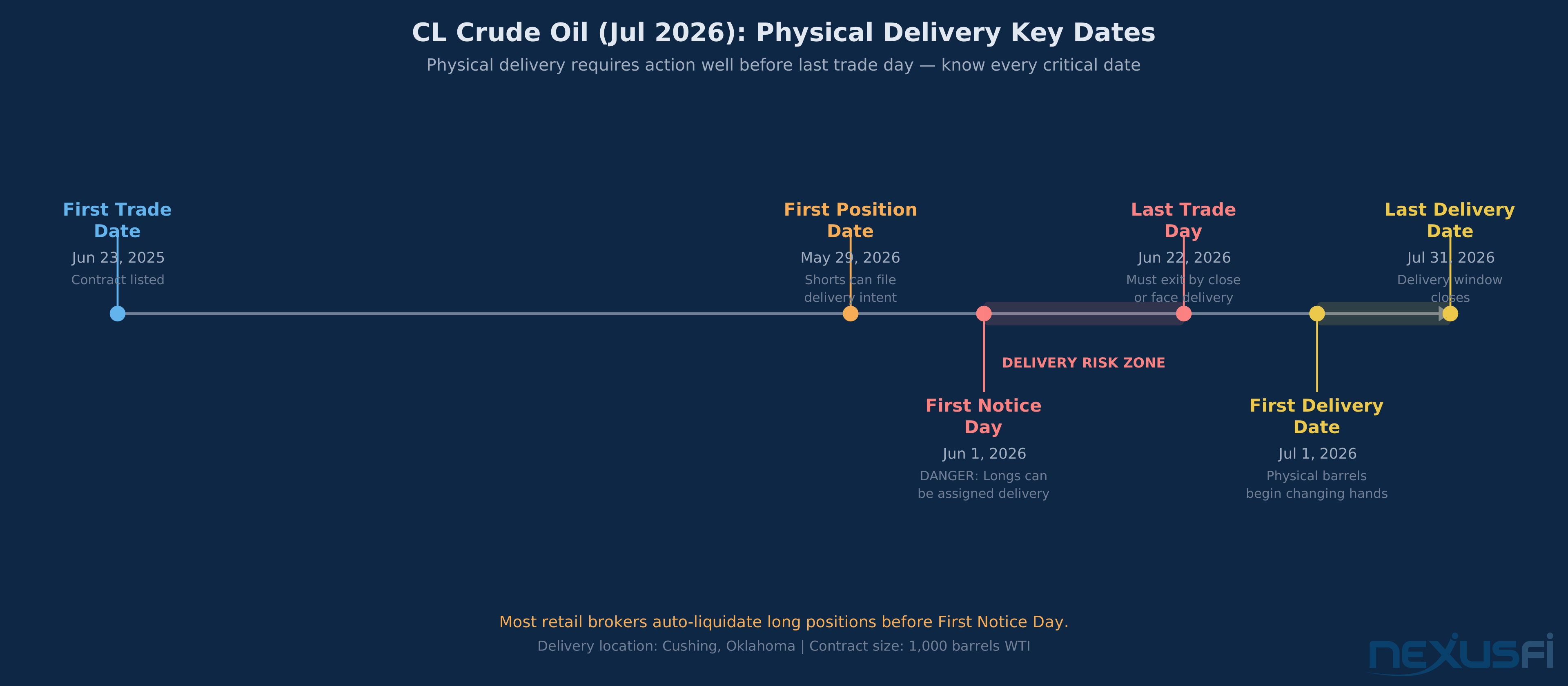
Key Dates for Physical Contracts #
- First Trade Date: When the contract starts trading.
- Last Trade Date: Final day of active trading. Must be out by this date to avoid delivery for most contracts.
- First Notice Date: First day the clearing house can assign delivery notices. For many contracts (bonds, metals, agricultural), this comes BEFORE the last trade date.
- First Position Date: When CME Clearing begins accepting delivery intents from short holders.
- First Delivery Date / Last Delivery Date: Window during which physical delivery actually completes.
For equity index and currency futures: no first notice date, no delivery. The contract just expires and cash-settles at the SOQ or equivalent.
Final Settlement: The Last Day #
Final settlement is different from daily settlement in both mechanics and magnitude.
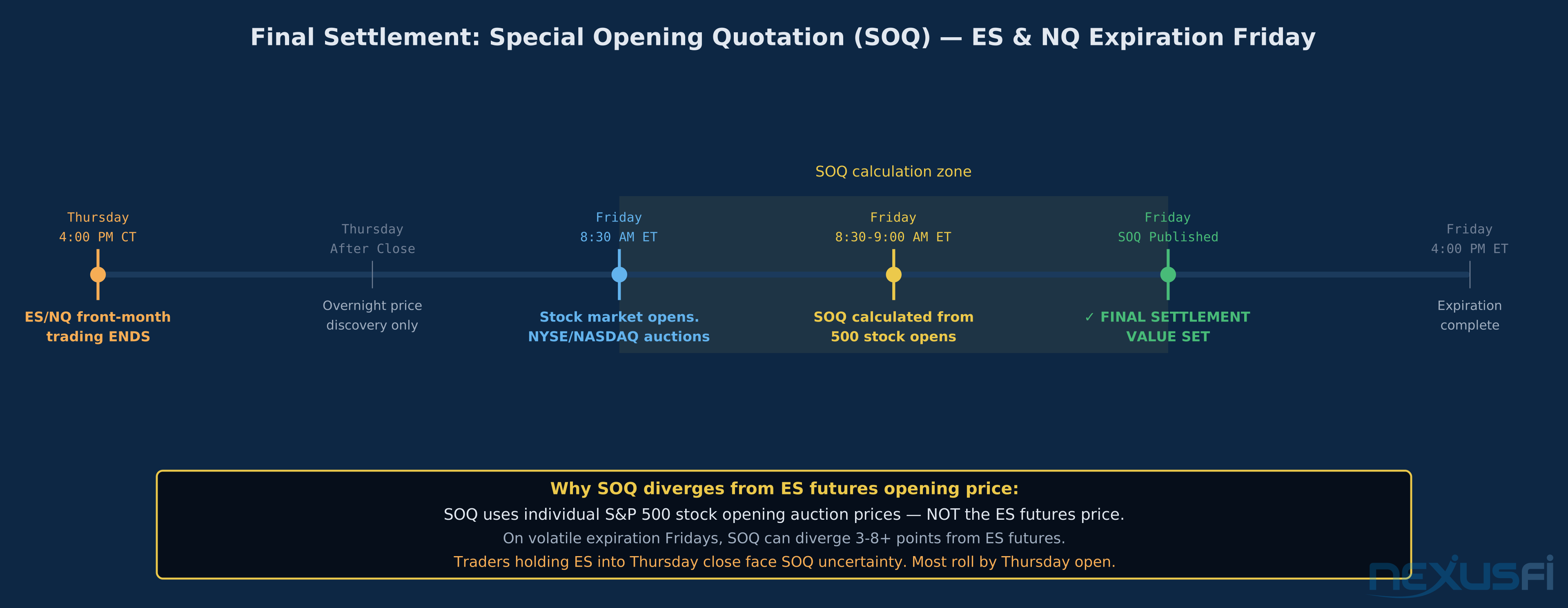
For cash-settled index futures (ES, NQ, etc.):
- Occurs on the third Friday of the contract month (expiration Friday)
- Final settlement value = SOQ, based on opening prices of index components
- Futures trading for the front month ends Thursday close (the day before)
- The SOQ calculation begins Friday at the open and takes however long it takes for every component to print an opening trade
- Traders who don't want SOQ exposure need to be out by Thursday's close or roll to the next contract
For physically delivered contracts (CL, GC):
- The contract's final day is its last trading day
- Long holders who remain past first notice day face delivery assignment
- Short holders who remain must be prepared to supply the physical good
- Most retail traders are forced out long before this point by their broker
The convergence between futures and cash markets in the final days before expiration creates trading conditions that are different from normal — more volatile, more susceptible to imbalanced order flow as hedgers roll positions and commercial participants manage their physical delivery commitments.
The two weeks before a quarterly expiration (especially for equity index futures) are where the futures/cash basis relationship tightens to near zero. Spreads between ES and the fair value can swing more than usual as large institutional players roll massive positions. Volume in the front-month contract often exceeds normal daily volume during peak roll periods.
What Moves Settlement Prices: Sources of Divergence #
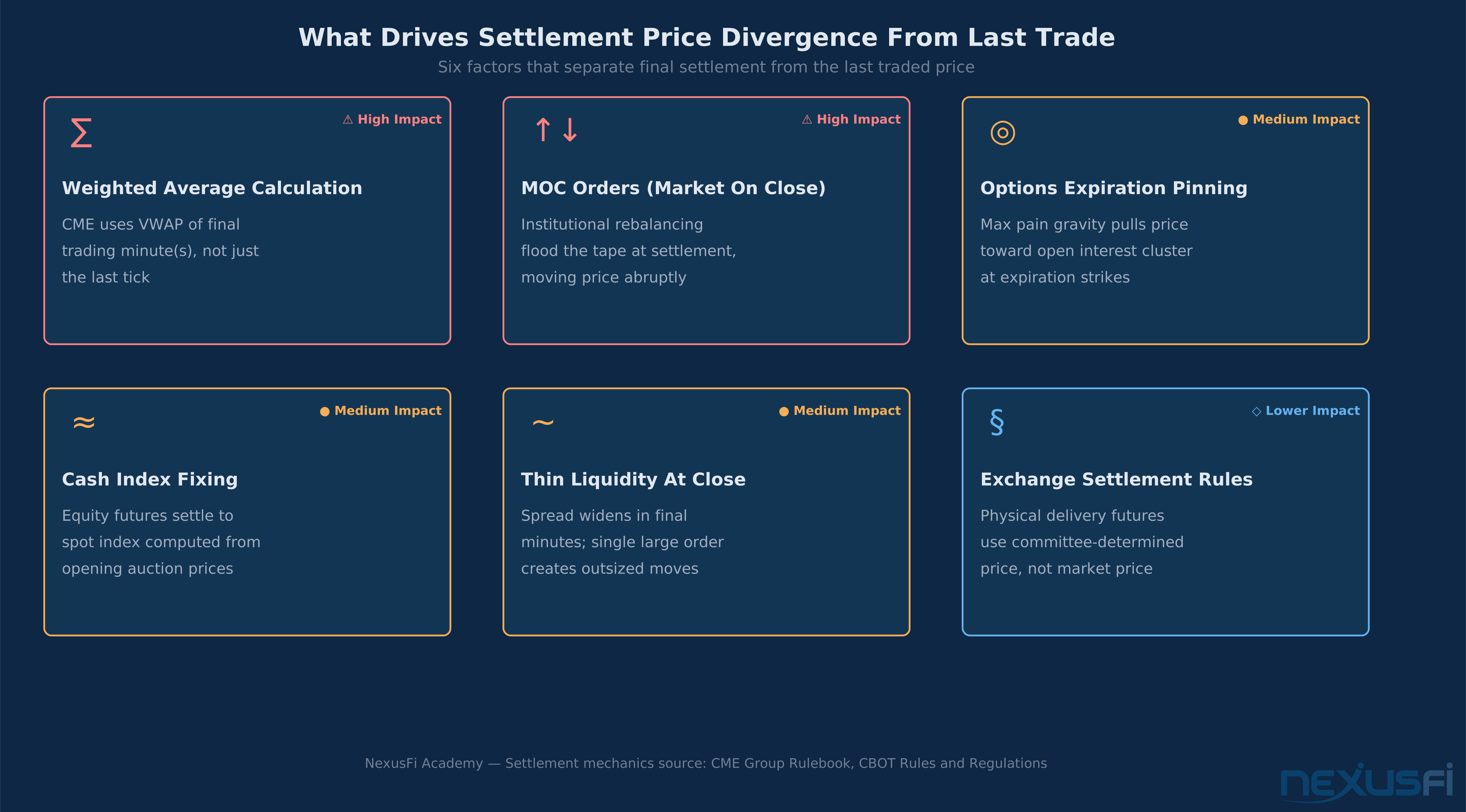
The settlement window is tiny — typically 30 to 120 seconds. A large enough order flow during that window can push the settlement price away from the prevailing market price. This creates several important phenomena.
The MOC Effect #
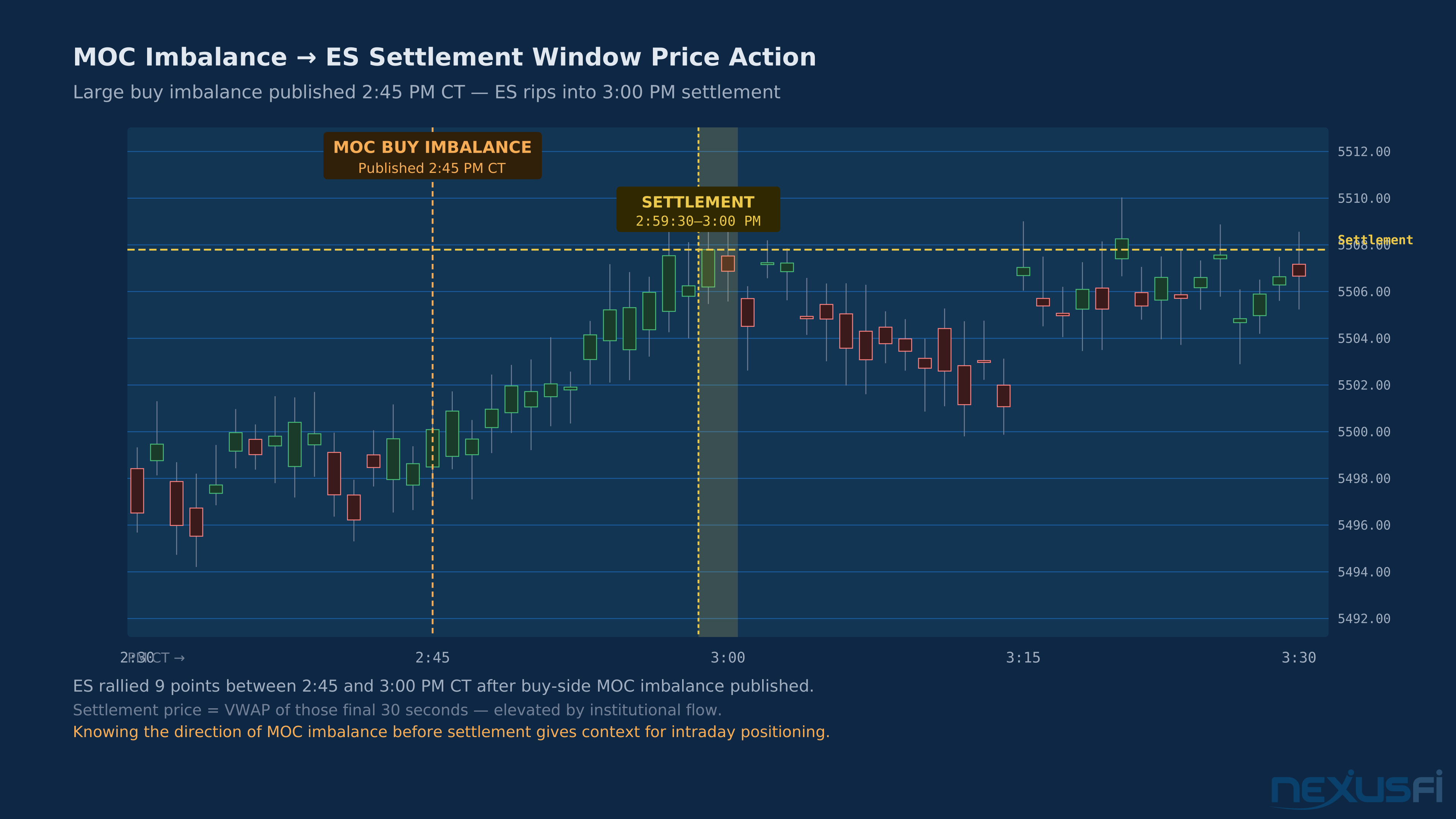
Market-on-close orders (MOC) accumulate through the day for execution at or near the settlement window. Index funds, pension funds, and institutional managers who need to trade at the settlement price for benchmark tracking purposes submit these orders. Large imbalances of MOC orders create directional pressure during the settlement window.
For ES, the 30-second window from 2:59:30 to 3:00:00 PM CT sees disproportionate volume on days with significant MOC imbalances. NYSE publishes its MOC imbalance data at approximately 3:45 PM Eastern (2:45 PM Central) — roughly 15 minutes before the ES settlement window. This imbalance data tells you which direction the institutional end-of-day order flow will push prices.
Month-End Settlement Anomaly #
The single biggest settlement price edge case in equity index futures is the month-end fair value settlement. On the last business day of each calendar month, the settlement price for ES, NQ, YM, and similar equity index futures is NOT calculated from the 30-second VWAP of futures transactions. Instead, it's derived from the cash index value at 3:00 PM Central, adjusted by fair value (financing costs minus expected dividends until expiration).
The practical consequence: the settlement price on the last business day of every month can be outside the day's high-low range for the futures contract. This is not an error. It's the exchange's fair value calculation producing a number that the futures market itself never actually traded through.
This breaks data providers.
NinjaTrader handled this by showing no daily bar at all, because it couldn't process a close below the day's low.
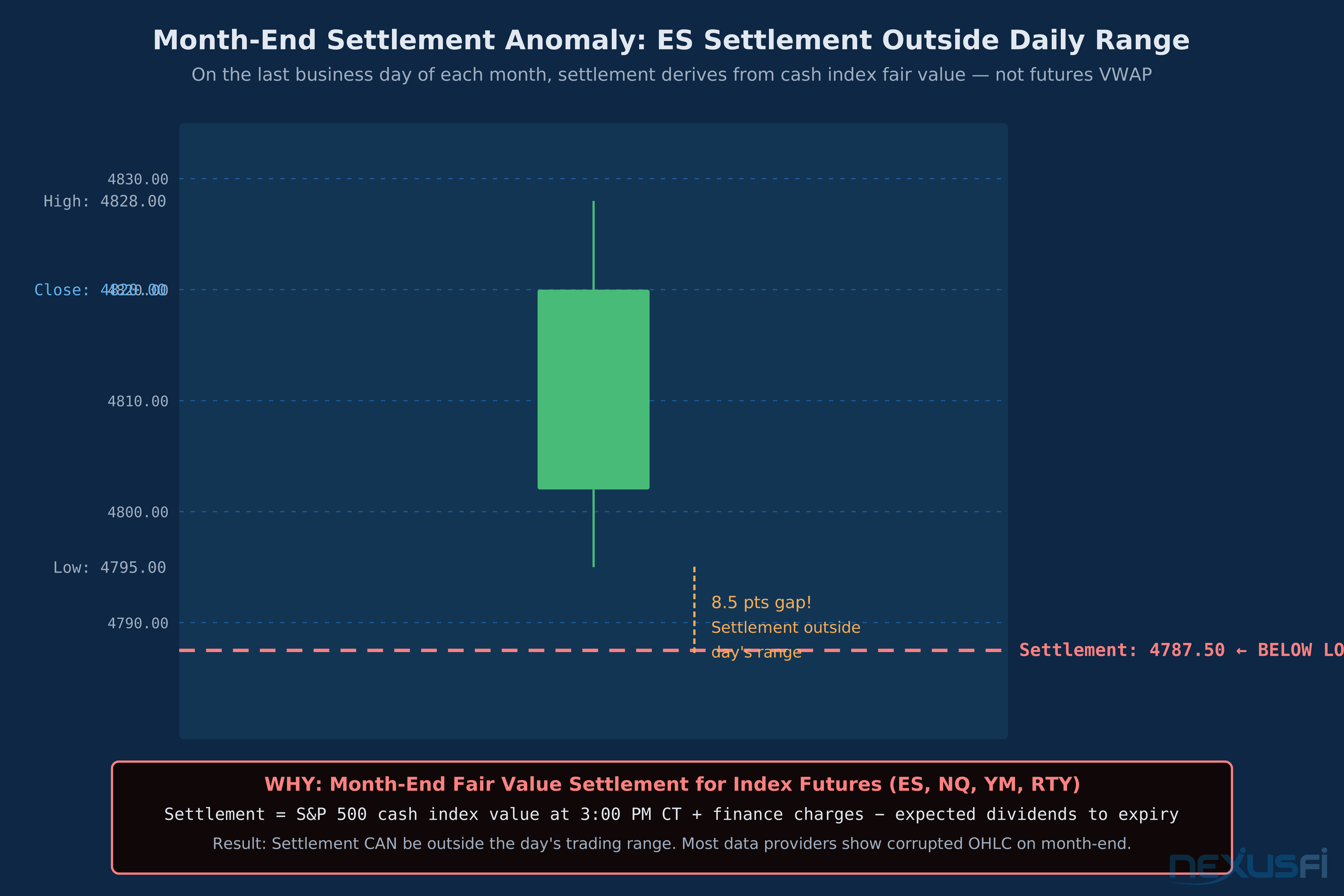
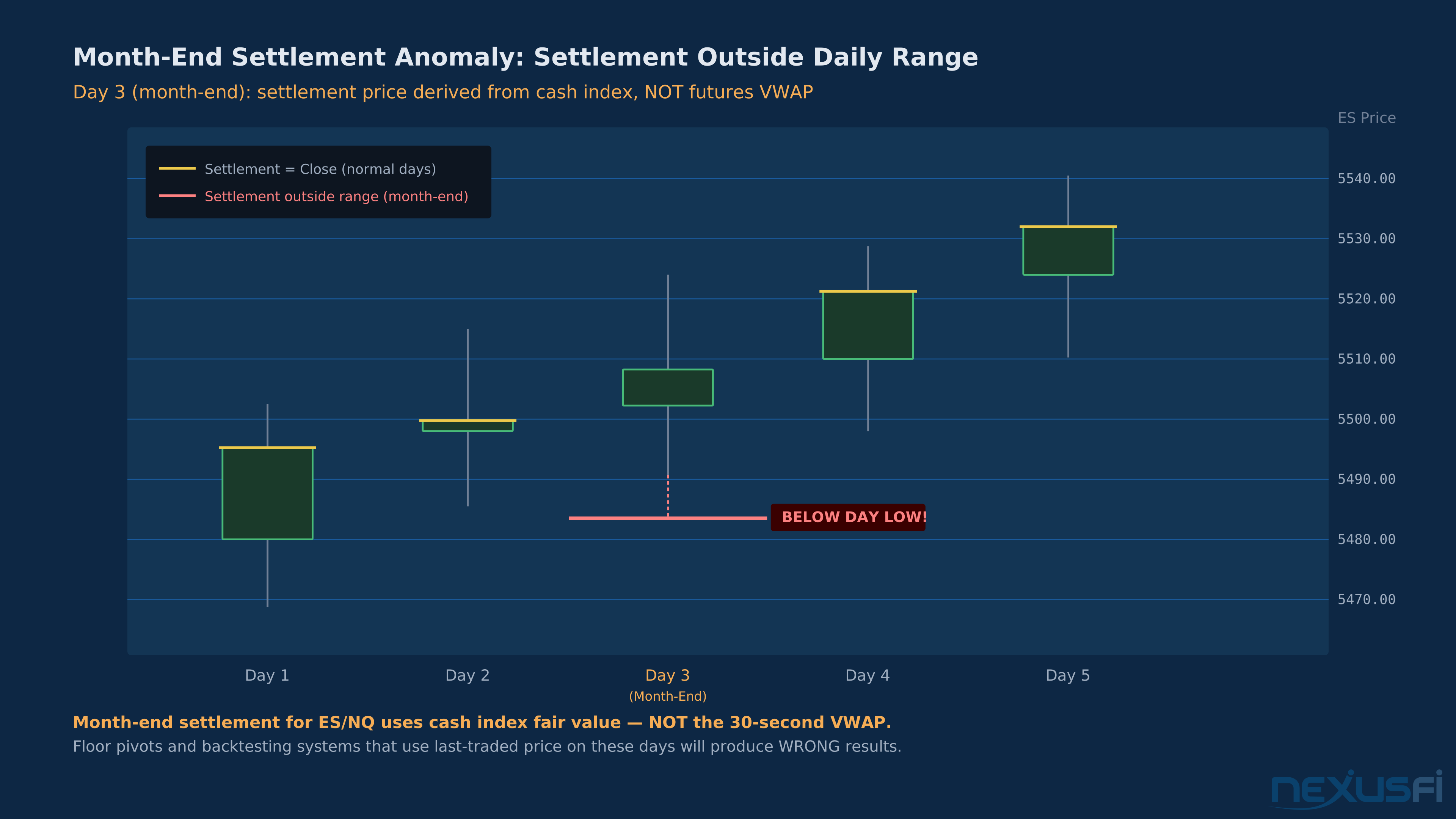
If your backtesting system uses settlement prices as daily closes, you will encounter these month-end anomalies. The settlement can diverge from the last traded price by 2-4 points on a normal month-end, and more during volatile periods.
Floor pivots, Camarilla pivots, and most range-based calculations should use settlement prices, NOT last traded prices. But be aware that month-end settlement prices for index futures may be outside the daily trading range, which can produce pivot calculations that no one would have been able to trade against in real time. Some traders exclude month-end sessions from pivot calculations for this reason.
Holiday Settlement Exceptions #
On CME half-day holidays (Martin Luther King Day, Presidents Day, Memorial Day, Juneteenth, Independence Day, Labor Day, Thanksgiving), there is no settlement price for that day. Contractually, trades during the half-day session count as trade date for the following full business day. Open positions are not marked to market until the next regular settlement.
The result: your account shows no change on a holiday half-day, even if the market moved much. The next day's settlement absorbs the full two-day price move, which can create unusually large margin adjustments.
Settlement Data in Practice: What It Means for Your Trading #
Floor Pivots and Settlement #
Settlement price is the correct input for floor pivots, Camarilla pivots, and any range-based support/resistance calculations. Using the last traded price instead of the settlement price introduces errors. The exchange publishes settlement prices on the CME website for all products, and most professional data providers deliver settlement as the daily close.
For most data providers, this means the "daily close" in your charting platform IS the settlement price, not the 4:00 PM last trade. But this depends on your data provider. Cheaper feed aggregators that build daily bars from intraday data may use the last traded price. This is one source of backtesting data discrepancies — two traders running the same strategy on different data providers get different results because their "close" is calculated differently.
Continuous Contracts and Back-Adjusted Data #
When you look at a continuous front-month chart in your platform, the daily bars are built from settlement prices. This matters for continuous contract construction: back-adjustment algorithms typically apply the price difference at each roll forward, using settlement prices as the reference. If your data vendor uses last traded prices instead of settlements, the back-adjustment will introduce small errors that accumulate over years of data.
Roll Timing and Settlement #
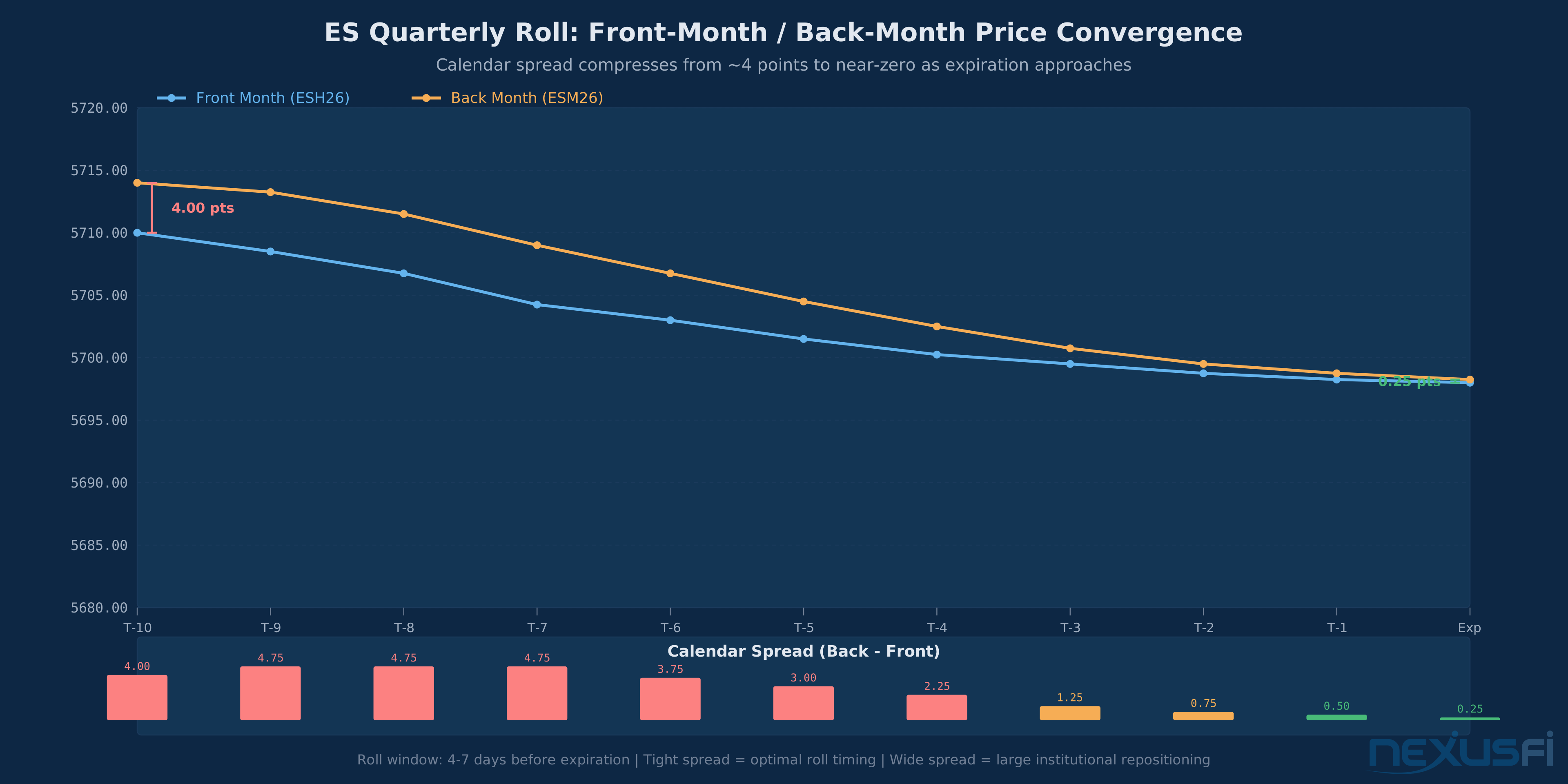
For physically delivered contracts, roll timing is driven by first notice day, not last trading day. For cash-settled index futures, most traders roll 4-7 days before expiration, when the front-month and back-month contracts are both actively traded and the bid-ask spread on the calendar spread is tight.
The settlement price plays a role here: calendar spreads in the roll window are priced relative to fair value, and the front-month settlement in the days approaching expiration will begin converging more tightly to the cash index fair value. Unusual basis (futures price vs fair value) during the roll window often indicates large institutional repositioning.
Tax Reporting and Section 1256 #
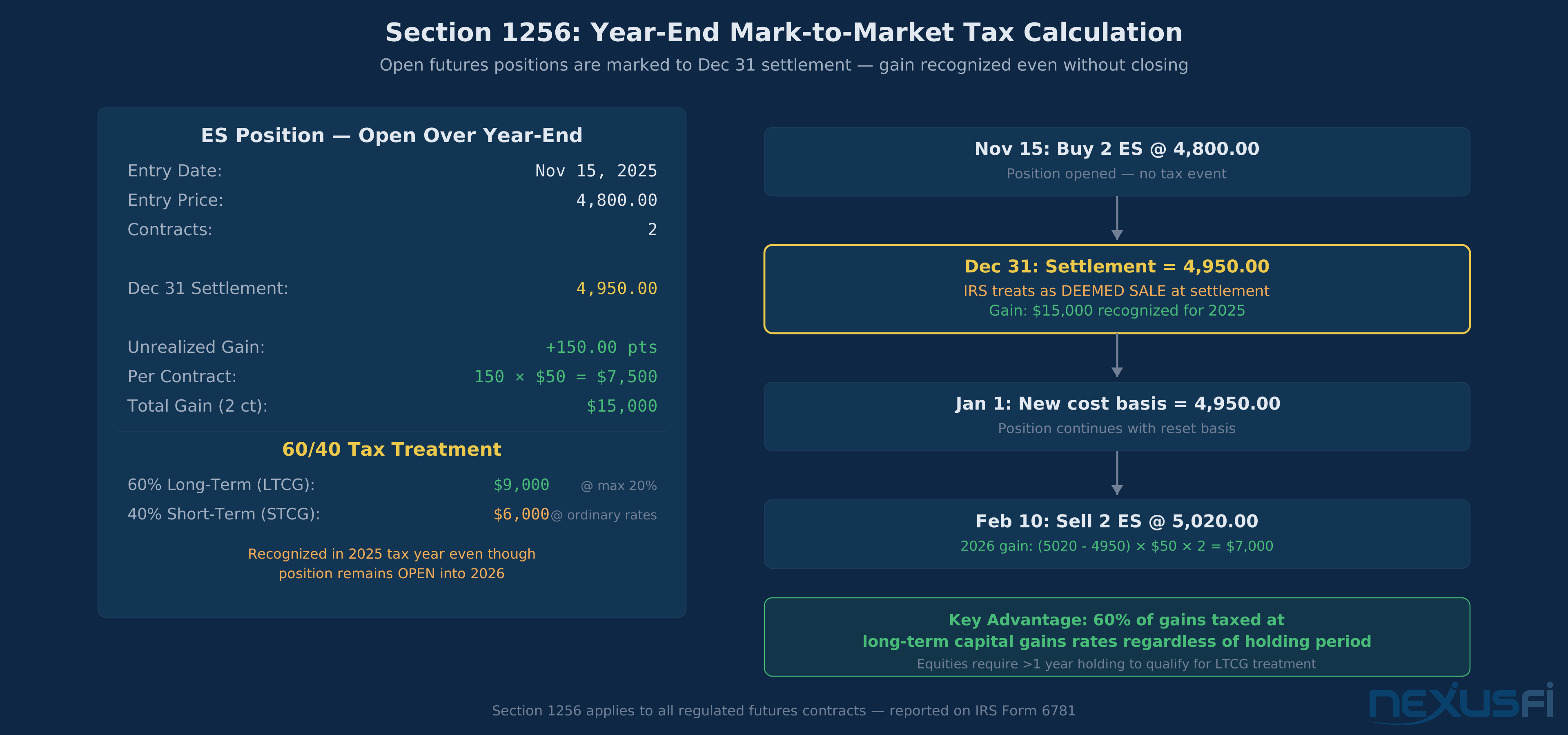
Futures contracts are Section 1256 contracts under U.S. tax law, as codified in 26 USC § 1256. This has a direct relationship to settlement prices: under Section 1256, all open positions are marked to market at year-end settlement prices for tax purposes, and any resulting gain or loss is recognized in that tax year — even if you don't close the position.
The IRS treats the December 31st settlement price as a deemed sale and repurchase at that price. Your total capital gains from futures for the year = all closed P&L + (year-end settlement of open positions - your cost basis). The beneficial 60/40 long-term/short-term split under Section 1256 applies to both realized and mark-to-market gains.
This is why your broker sends you a 1099-B with mark-to-market values even for positions you still hold. The settlement prices on December 31st are the reference point.
Settlement Price Gaps and Overnight Risk #
Because GC settles at 1:30 PM ET while the gold futures market continues trading until 5:15 PM ET, there's a 3 hour 45 minute window where gold can move much and those moves won't show in your daily P&L until the NEXT day's settlement. A $15 move in gold after 1:30 PM represents $1,500 per contract in unrealized P&L that doesn't hit your account until tomorrow.
This is especially relevant for traders who hold positions overnight in products with early settlement windows. Your account statement reflects settlement P&L, not real-time mark. An account that looks adequately margined at the settlement snapshot can become undermargined if the market moves much before the next settlement.
Data Sources for Settlement Prices #
The authoritative source for settlement prices is the exchange itself. CME Group publishes daily settlement prices for all CME, CBOT, NYMEX, and COMEX products at:
- CME Group: cmegroup.com/market-data/settlements
These are the reference prices used by clearing firms and regulators. For backtesting and historical research, the CME's data reflects actual settlement prices, not reconstructed last-traded prices.
Most professional data providers (CQG, Rithmic, Bloomberg, Refinitiv) deliver settlement prices as the daily close for all futures products. Consumer-grade data feeds and free data providers may not distinguish between the settlement and the last traded price. If this distinction matters for your work — and for pivot calculations, backtesting, and tax reporting it does — verify with your provider how they define the daily close.
Kinetick, NinjaTrader's data feed, updates the daily close to the official settlement price when it receives the settlement confirmation from the exchange — which typically arrives 15-30 minutes after the settlement window. The last traded price shows first, then updates to settlement. If you capture your daily close in the minutes immediately after the settlement window, you may capture the last traded price rather than the official settlement.
Settlement price = the authoritative daily reference price used for margin, P&L, pivots, and tax reporting. It is calculated via VWAP of a specific settlement window (product-dependent), not from the last trade. For index futures, there's an additional monthly anomaly where the settlement is derived from the cash index via fair value, not from futures transactions. Know your settlement window, use settlement prices for all reference calculations, and understand the month-end exception.
Knowledge Map
Prerequisites
Understand these firstGo Deeper
Build on this knowledgeReferences This Article
Articles that build on this topicCitations
- — Daily Pivot Point Calculation (2012) 👍 8“The settlement price is the volume weighted average price of the settlement period. The settlement price is used to calculate your daily profit and loss for an open futures position.”
- — Last Traded Price vs Settlement Price (2012) 👍 7“The settlement price is used to calculate the daily P&L of your futures position. It is also used to calculate your maintenance margin. Professional traders use the settlement price for calculating Floor Pivots.”
- — Where can I find CME holidays scheduler? (2022) 👍 6“The settlement price is the volume weighted average price of all transactions taking place between 2:59:30 PM and 3:00:00 PM CT.”
- — CME settlement price calculation (2010) 👍 5“E-mini S&P settles to the value derived from the Big S&P, not the VWAP of all trades. The settlement is established as the midpoint of the range of the big S&P.”
- — Futures Expirations Question (2013) 👍 7“For crude oil: If you hold your position until the last trading date, you will either have to deliver or take physical delivery of oil in Cushing, Oklahoma.”
- — Kinetick -- A new Market Data Feed Service for NinjaTrader (2011) 👍 2“For index futures there is an exception for the last trading day of a month. The settlement price is calculated from the cash index at 3:00 PM Central Time by adding finance charges and expected dividends until expiry.”
- — Physical or Cash Settlement for day trades (2023) 👍 2“The main NYMEX Crude Oil contract (CL) is a physically delivered contract. If you go to final settlement you will be expected to deliver/receive physical crude oil.”
- — Physical or Cash Settlement for day trades (2023) 👍 4“Physical settlement of a physical commodity like WTI or gold is not likely something that you will ever do. Most futures contracts will be closed out rather than settled.”
- — Emini -- Cash Settlement Question (2018) 👍 2“The mark takes or makes and you trade that cost basis the next session. If you are positioning or swinging with futures you might benefit from minding the position P/L based on your initial entry.”
- — Margin: initial vs maintenance vs day trading (2017) 👍 7“Futures are a highly leveraged trading product. Margins are good faith deposits that a trader must maintain in order to trade a particular product. Initial Margin is set by the exchange.”
- CME Group — CME Group Settlement Procedures (2024)
- U.S. Government Publishing Office — 26 USC § 1256: Section 1256 Contracts Marked to Market (2024)
- CME Group — E-Mini S&P 500 Futures Daily Settlement Procedure (2025)