



Real-Time vs Delayed Market Data: What You're Actually Paying For and When It Matters
Overview #
Real-Time vs Delayed Market Data: What You're Actually Paying For and When It Matters
Every futures trader hits this decision early: pay for real-time data or use the delayed feed that comes free with most platforms. The answer isn't "always get real-time" — it depends entirely on how you trade, what you're watching, and whether the delay actually costs you money. This article breaks down the practical differences, the real costs, and the decision framework so you can match your data tier to your strategy without overpaying or underperforming.
Key Concepts #
Real-time data delivers market information — prices, quotes, trades, order book updates — as it happens, with latency measured in milliseconds. When ES ticks from 5600.25 to 5600.50, your screen shows that move within fractions of a second.
Delayed data delivers the same information after a fixed lag, most commonly 10-20 minutes. That ES tick to 5600.50 shows up on your screen 10 minutes after it happened. The prices are accurate — they're just stale.
Snapshot data provides a point-in-time picture of the market at regular intervals. Think of it as taking a photo of the order book every few seconds rather than watching a live video stream.
Streaming data delivers continuous tick-by-tick updates with sequence IDs, giving you every single market event in order. This is the live video — every bid change, every trade, every cancel.
Consolidated feeds aggregate data from multiple exchanges into a single stream. Instead of maintaining separate connections to CME, ICE, and Eurex, you get one pipe with everything in it.
Market depth (Level 2) shows the full order book beyond best bid and ask — the orders stacked at each price level. This is always a separate entitlement from basic quotes, and it's where costs escalate fast.
[IMG:realtime-delayed-latency-62004606.svg|Real-time vs delayed data latency comparison timeline]
How Real-Time and Delayed Data Actually Differ #
The Latency Gap #
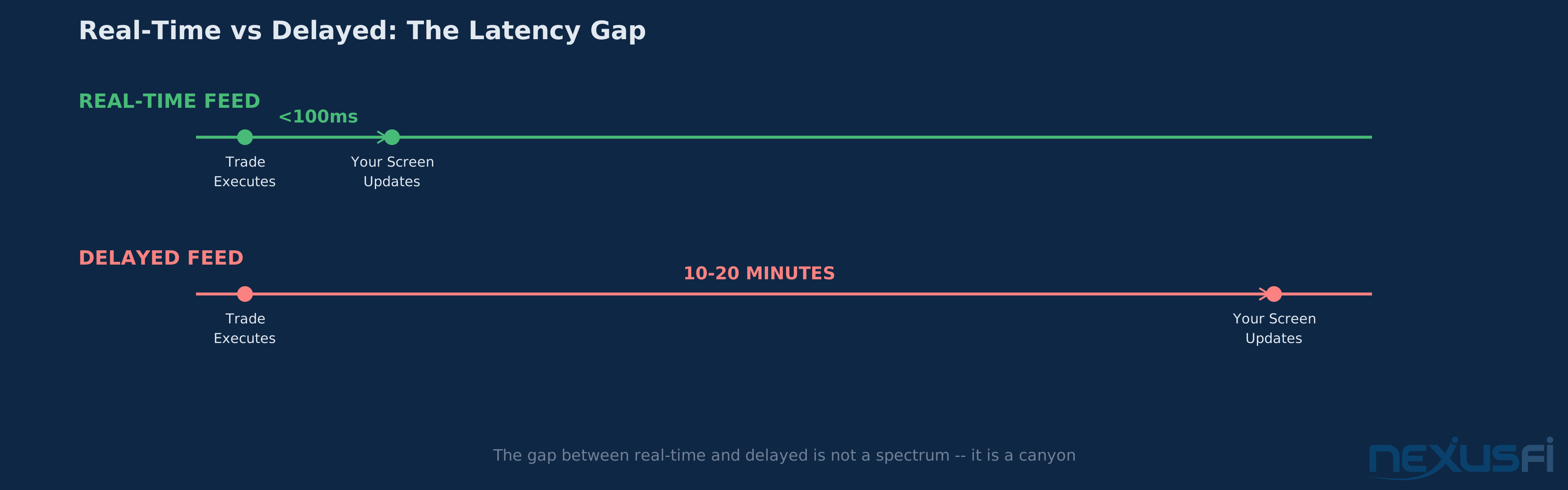
Real-time feeds from major futures exchanges deliver updates with end-to-end latency under 100 milliseconds for most retail setups. That number includes exchange matching time, network transmission from the data center, your data vendor's processing, and your platform rendering the update.
Delayed feeds lag by 10-20 minutes. That's not 10-20 milliseconds — that's 10-20 minutes. The gap between these two isn't a spectrum. It's a canyon. There's no "5-minute delay" option you can buy to save money. You either get the live feed or you get last week's newspaper.
What matters isn't the absolute latency number — it's whether the delay exceeds your decision-making window. If you trade off daily charts and hold positions for days, a 15-minute delay changes nothing about your analysis. If you're scalping ES and need to see the DOM update in real-time, delayed data is useless.
What Changes With the Delay #
With delayed data, you lose:
Order flow visibility. You can't watch aggressive buyers and sellers hit the bid and ask in real-time. Tape reading becomes impossible. The cumulative delta that updated 10 minutes ago tells you nothing about what's happening now.
DOM accuracy. The order book you see is 10-20 minutes old. Liquidity that was sitting at 5600.00 may have been pulled. New orders may have stacked at different levels. Trading the DOM on delayed data is like driving by looking in the rearview mirror.
Event reaction. When the Fed releases a statement, FOMC minutes drop, or NFP comes in hot, ES can move 20+ points in seconds. On a delayed feed, you won't see the move until long after the initial spike has happened and the market has already repriced.
Execution alignment. Here's the subtle danger that catches people: your broker executes at real-time prices, but your charts show delayed prices. You think you're buying at 5600, but the market is at 5612. Your limit order either fills immediately (bad sign — it means the market blew through your price) or doesn't fill at all because the price on your screen is fiction.
With delayed data, you keep:
Chart patterns and structure. A head-and-shoulders pattern looks the same whether you're seeing it in real-time or 15 minutes late. Support and resistance levels don't change. Trend lines, moving averages, and most technical indicators work fine on delayed data because the historical bars are accurate — it's only the current bar that's stale.
Daily and weekly analysis. If you're looking at yesterday's candle to plan today's trade, delayed data gives you exactly the same candle. End-of-day data is end-of-day data regardless of how it was delivered during the session.
Research and screening. Scanning for setups across multiple markets, backtesting strategies, and building watchlists all work perfectly with delayed data.
The Cost Structure -- What You're Actually Paying #
[IMG:data-cost-layers-e6d846e5.svg|Three layers of market data cost breakdown]
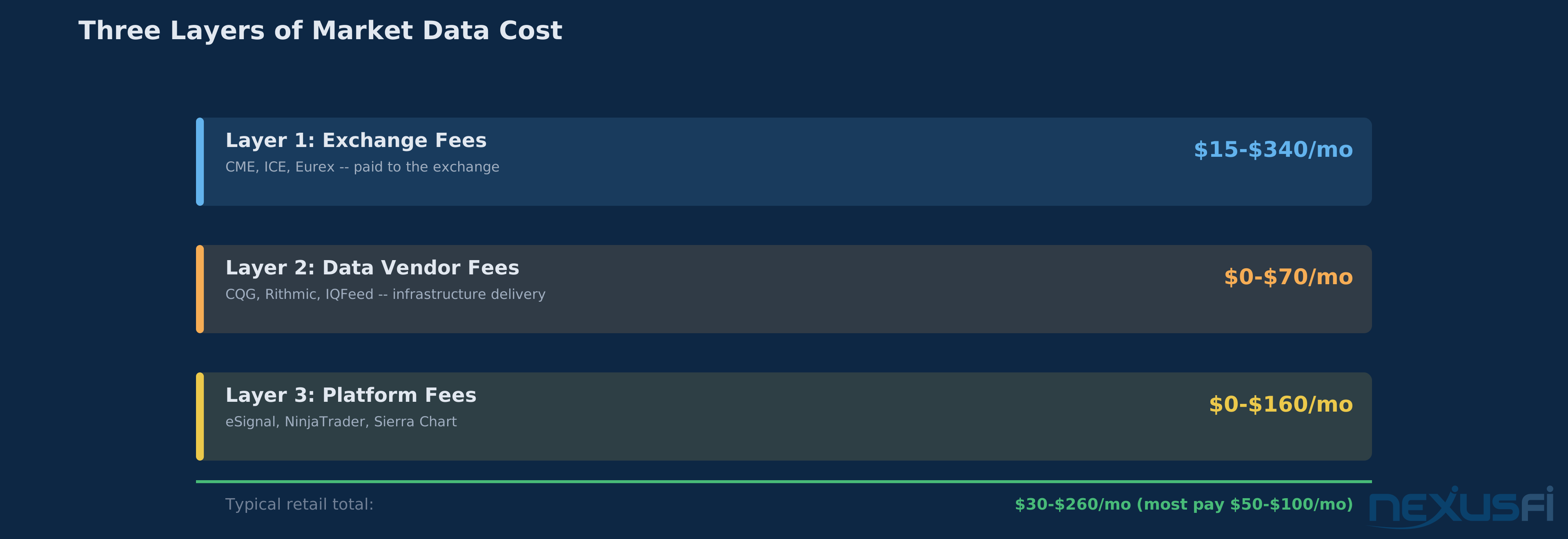
Market data costs in futures trading come from three layers, and most traders only think about one of them.
Layer 1: Exchange Fees #
Every major exchange charges separately for real-time data access. These fees go directly to the exchange — your broker just passes them through.
CME Group (covers CME, CBOT, NYMEX, COMEX — the four exchanges most US futures traders use):
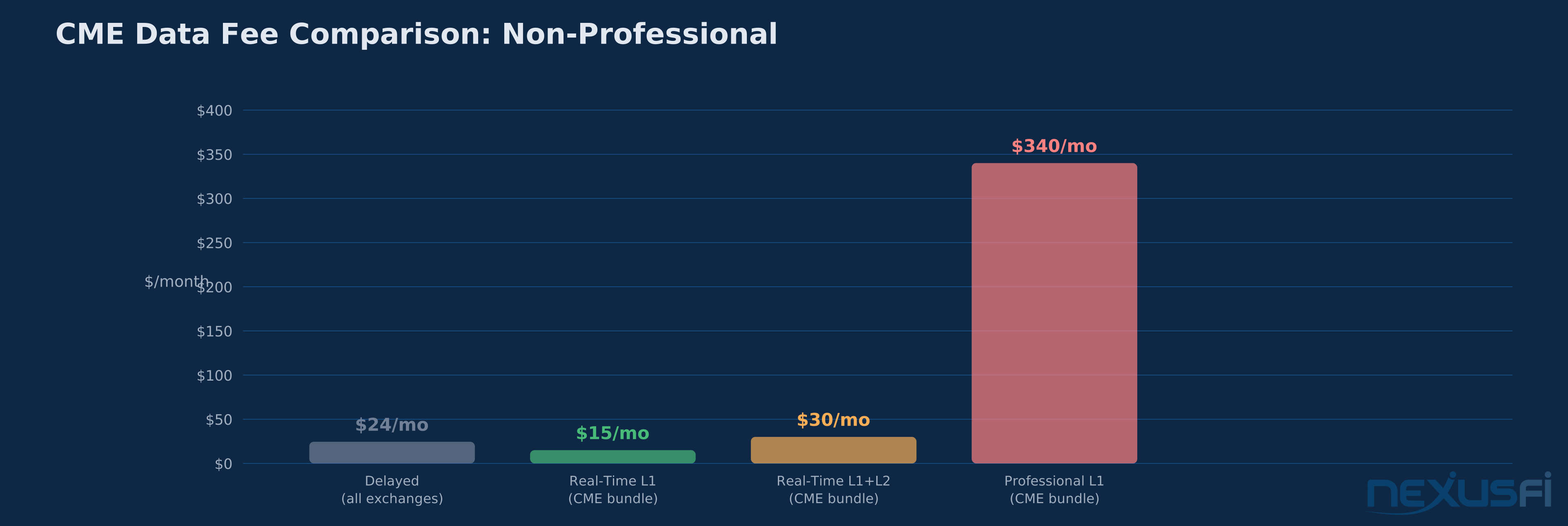
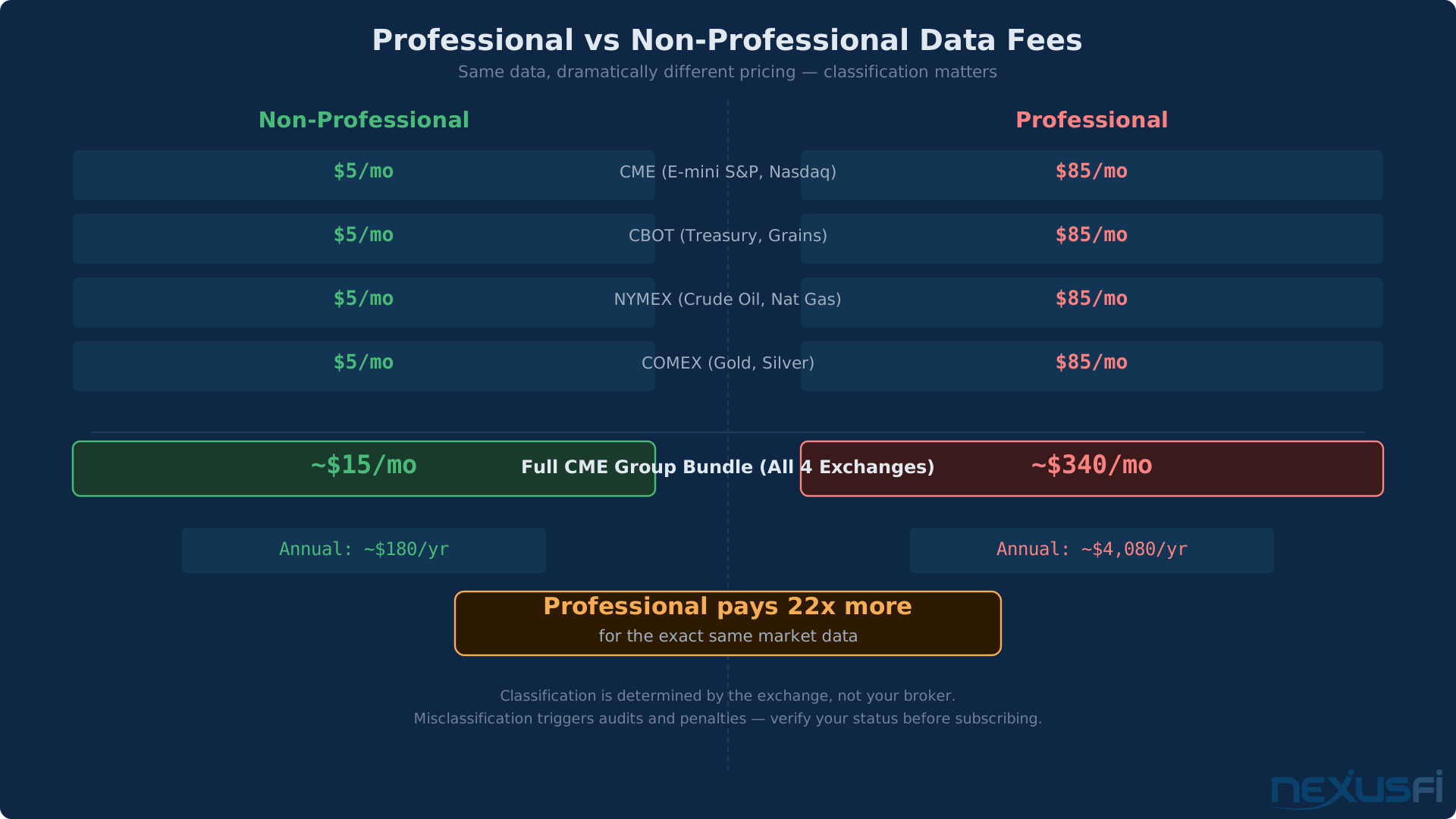
For non-professional traders, the CME bundle for all four exchanges runs about $15/month for real-time Level 1 (top-of-book: best bid, best ask, last trade). Level 2 (market depth) costs more — typically $5/exchange or $15 for the bundle. Add them together and you're looking at roughly $30/month for full real-time data from all CME Group exchanges. The exact fee breakdowns are published in the CME Group Market Data Fee List[10], updated annually — rates tend to shift with global inflation indices.
Professional traders pay dramatically more. Professional non-display use can run $85+ per exchange, or $340+ for the bundle. The "professional" designation isn't optional — exchanges audit this. If you're trading for a firm, managing other people's money, or using data for commercial purposes, you're professional whether you want to be or not.
As community member @Fat Tails [noted in a memorable thread][1] about CME's $15 monthly fee: the exchanges aren't charitable trusts — if you want to trade on an exchange, you pay for the data.
Delayed data from CME runs roughly $294/year — about $24.50/month. Cheap, but remember: it's delayed by the exchange-mandated period (typically 10 minutes for CME futures).
ICE (Intercontinental Exchange) follows a similar model with tiered pricing for quotes vs. trades vs. depth, and separate real-time vs. delayed entitlements. If you trade Brent crude, natural gas, or sugar futures, you'll need ICE data separately from your CME feed.
[IMG:cme-fee-comparison-712cdea2.svg|CME data fee comparison chart for non-professional traders]
Eurex charges separately for European derivatives. Community member @NinjaTrader confirmed in a thread that Eurex data fees run about $23/month for the exchange fee alone, on top of whatever your data vendor charges.
Layer 2: Data Vendor Fees #
Your data vendor (CQG, Rithmic, DTN IQFeed, Trading Technologies, etc.) charges its own fee for the infrastructure that delivers exchange data to your platform.
DTN IQFeed, one of NexusFi's sponsors, publishes transparent pricing: $70/month for the core service (which includes real-time equities but delayed futures), plus a $20/month surcharge for real-time US futures, plus exchange fees on top. As IQFeed's Robert Carrillo [detailed in their AMA thread][2], the vendor fee and exchange fee are separate line items.
CQG and Rithmic deliver data through your broker, so the vendor fee is often bundled into your brokerage relationship. Some brokers absorb part of this cost — NinjaTrader Brokerage includes Rithmic or CQG data with funded accounts, though exchange fees still apply.
Layer 3: Platform Fees #
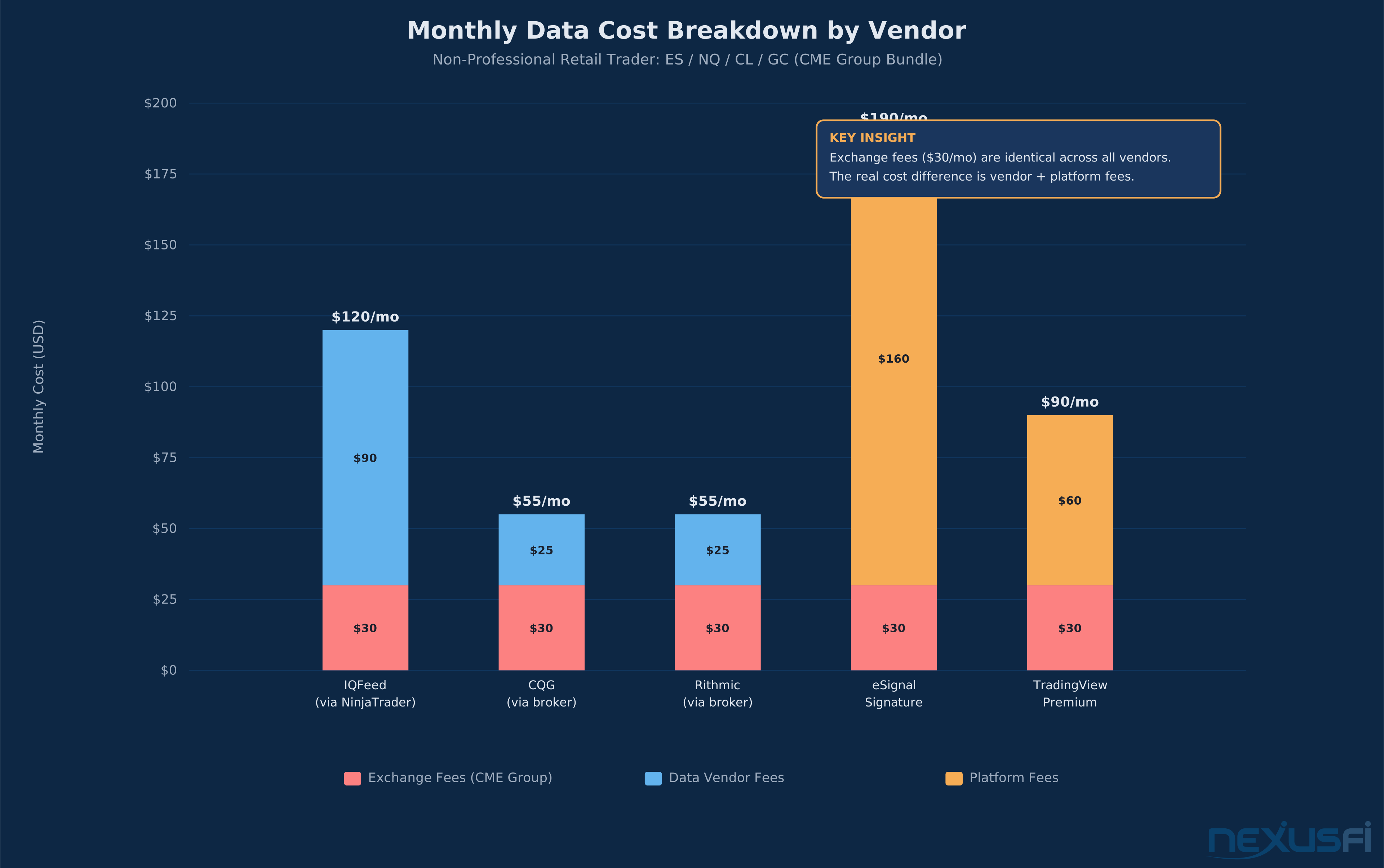
Some platforms charge additional fees for premium data features. eSignal's Signature plan runs $160/month before exchange fees. Other platforms include data handling in their subscription or license cost.
[IMG:66f9f3ff-cb80-4c91-802c-d937fe70ed2c.svg|Monthly data cost breakdown by vendor for non-professional traders]
The Total Picture #
A typical retail futures trader in the US who trades ES, NQ, CL, and GC and wants real-time Level 2 data pays roughly:
- CME Group bundle (L1 + L2): ~$30/month
- Data vendor fee: $0-$70/month depending on broker/vendor arrangement
- Platform fee: $0-$160/month depending on platform
Total range: $30/month (broker bundles vendor cost) to $260/month (separate vendor + premium platform). Most active retail traders land in the $50-$100/month range for complete real-time data.
The delayed alternative? Often free or under $25/month through most brokers.
For the NexusFi community, @bobwest helpfully pointed out that many brokers provide data feeds either free or for small fees — the CME exchange data fees are the unavoidable baseline, but everything above that is negotiable based on your broker relationship and trading volume.
Snapshot vs. Streaming -- The Distinction That Matters More Than You Think #
[IMG:snapshot-vs-streaming-e166b118.svg|Snapshot vs streaming data delivery comparison]
Most traders focus on "real-time vs. delayed" and miss a more important technical distinction: snapshot vs. streaming delivery.
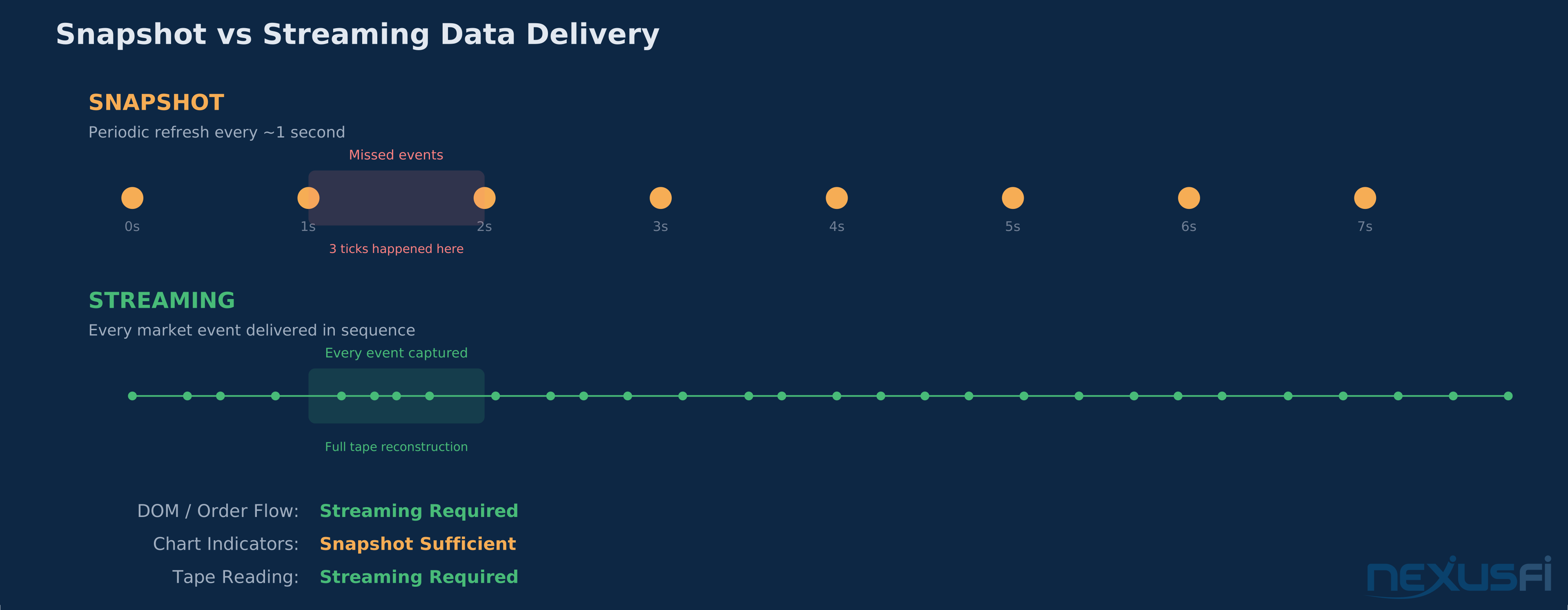
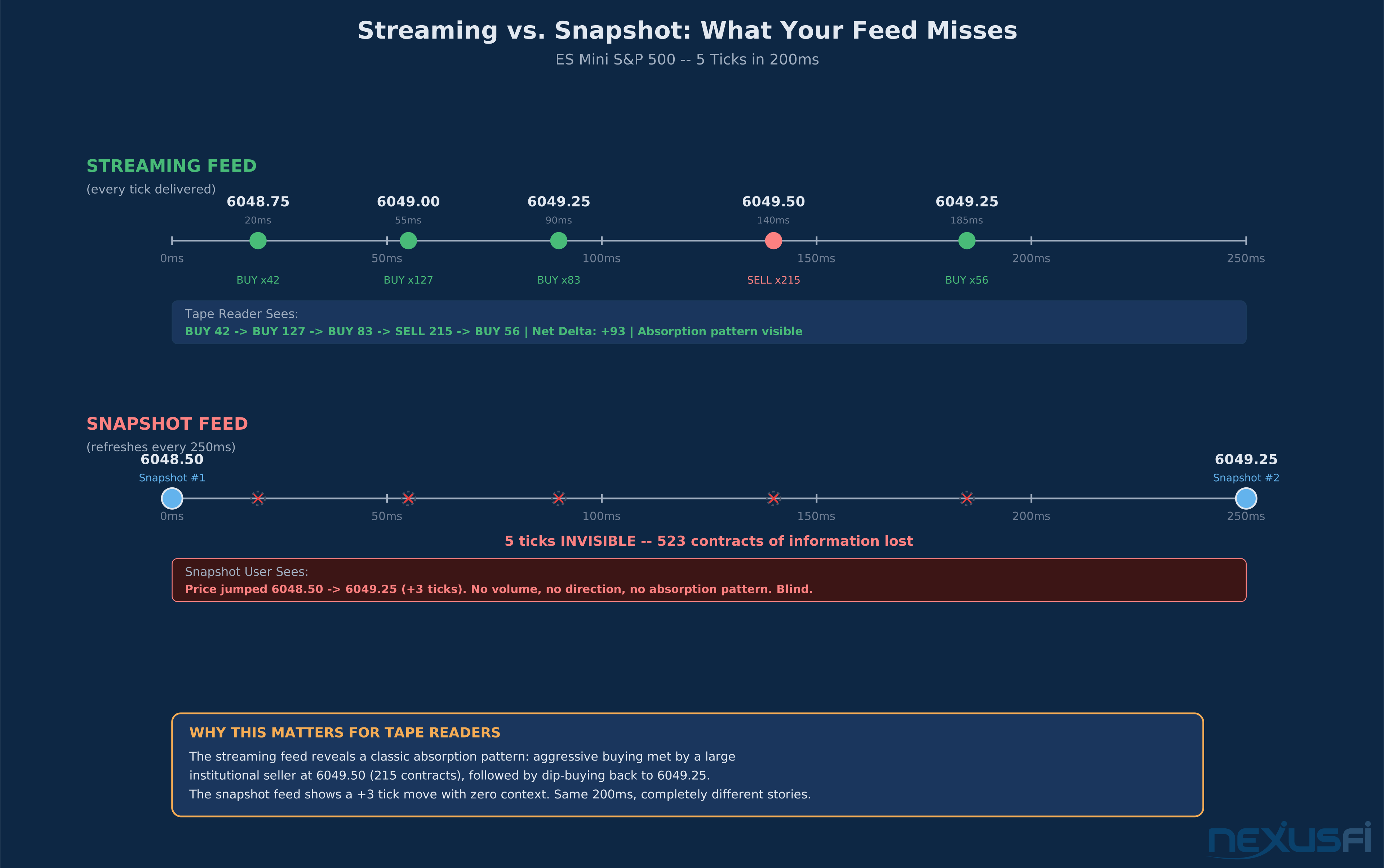
Snapshot delivery refreshes your quote data at fixed intervals — maybe every 250 milliseconds or every second. Between updates, you see nothing. If the market ticks three times in 200ms, a 250ms snapshot might show you one tick or two, but you can't reconstruct what happened between snapshots.
Streaming delivery sends you every single market event as it occurs: every trade, every bid change, every offer modification. You get sequence numbers so your platform can reconstruct the exact order of events. This is what order flow traders need — the complete tape, not a periodic summary.
[IMG:c12073ee-03a5-4137-9702-07d8249aec06.svg|Streaming vs snapshot feed tick-level comparison showing missed trades]
The practical impact: if you trade off 1-minute or 5-minute charts with standard indicators (moving averages, RSI, MACD), snapshot data refreshing every second is more than adequate. Your indicators only update on bar close anyway.
But if you're reading the tape, watching cumulative delta, tracking iceberg orders, or trading the DOM, you need streaming data. Snapshots will show you a market that looks calm between updates and then suddenly jumps — you won't see the aggressive buying that drove the move, the stop run that triggered the reversal, or the iceberg order absorbing everything thrown at it.
This matters for data feed selection too. The difference between CQG and Rithmic that NexusFi traders frequently debate isn't just about latency — it's about how each feed handles the data stream. As community member @DavidHP [observed][7], connecting to Rithmic produced consistent, smooth streaming data, while CQG (in their particular setup) showed pausing and spurts. Others report the opposite experience. The Rithmic vs. CQG feed comparison comes down to single-digit milliseconds of latency difference in most retail setups, but the streaming consistency matters more than raw speed for most traders.
Rithmic provides Market-by-Order (MBO) data — individual order-level visibility — while CQG typically delivers Market-by-Price (MBP) aggregated data. For DOM traders and order flow analysts, MBO gives finer granularity: you can see individual orders being placed and pulled at each price level rather than just the aggregate size.
The industry takes data feed quality seriously at an institutional level. The FIA's 2024 Best Practices for Automated Trading Risk Controls[11] identifies market data management as a core component of trading system safety — recommending that all firms implement monitoring for feed disruptions and data integrity validation. The takeaway for retail traders: if institutional firms treat data feed quality as critical infrastructure worth dedicated monitoring, your choice of data tier and vendor matters more than most people think.
Consolidated Feeds -- When One Pipe Is Better Than Three #
[IMG:consolidated-vs-separate-feeds-1174f043.svg|Consolidated feed vs separate exchange feed architecture comparison]
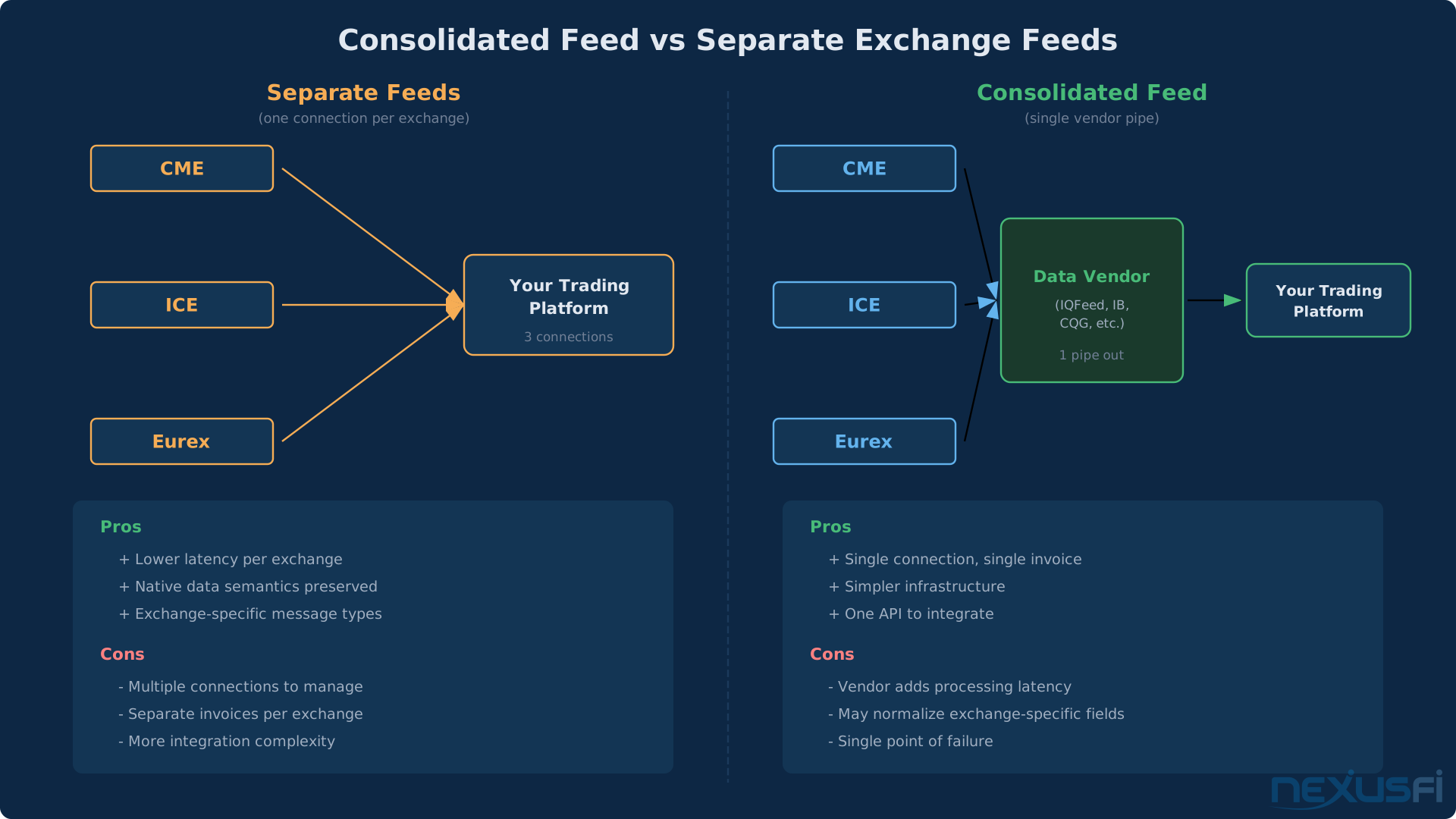
If you trade ES on CME, Brent on ICE, and DAX futures on Eurex, you have two options:
Separate feeds per exchange. You maintain individual data connections and pay separate vendor/platform fees for each exchange's native feed. Cleaner data semantics, potentially lower latency, but more integration complexity.
Consolidated feed from a single vendor. One connection delivers data from multiple exchanges. Simpler infrastructure, one invoice, one API to integrate. But the vendor adds a processing layer for timestamp normalization and format translation, which can introduce small additional latency.
For retail traders, consolidated feeds through brokers like Interactive Brokers or data vendors like DTN IQFeed are the practical choice. The engineering simplicity outweighs any theoretical latency disadvantage. You're not competing with co-located HFT firms on fill speed — you're trying to see accurate prices and make informed decisions.
For professional traders running execution algorithms or market-making strategies, exchange-native feeds preserve the data semantics (message types, sequence numbers, exchange-specific fields) that consolidated feeds may normalize away.
The Decision Framework -- Matching Data Tier to Strategy #
[IMG:strategy-data-mapping-763f3fdd.svg|Strategy to data tier mapping chart]
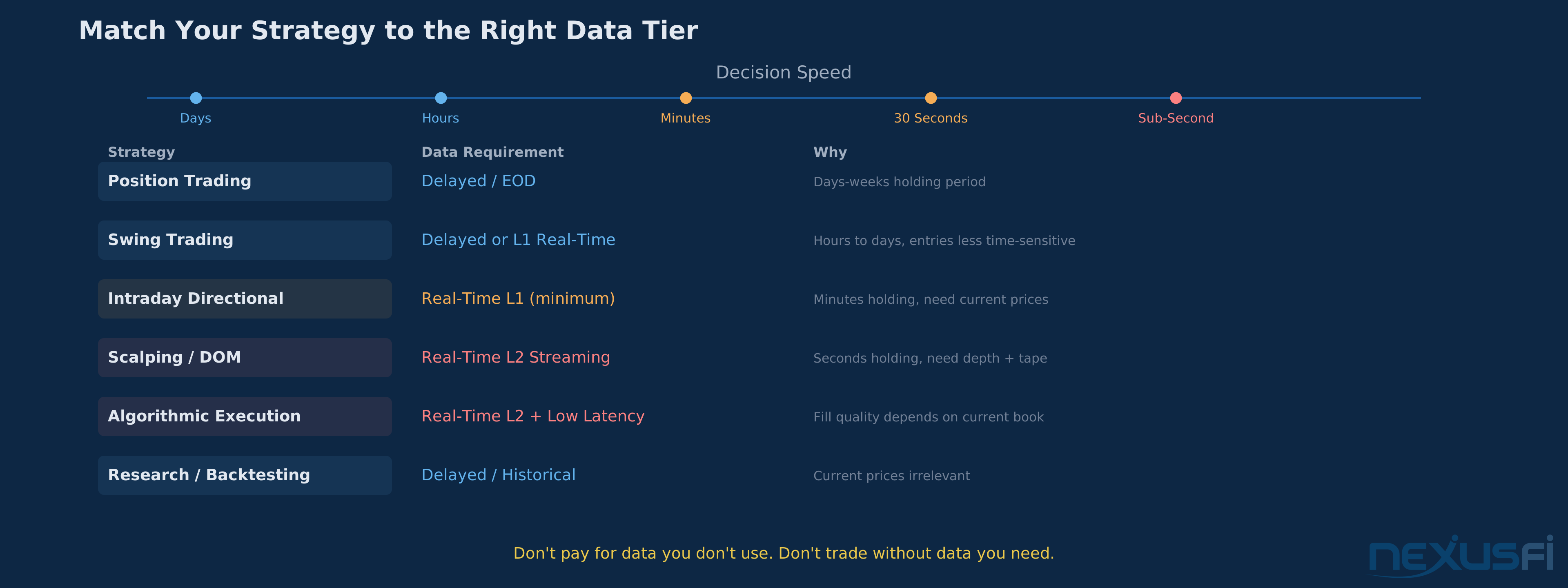
Don't pay for data you don't need. Don't cheap out on data your strategy requires.
Decision Loop Timing #
The single most important question: how fast do you need to react to new information?
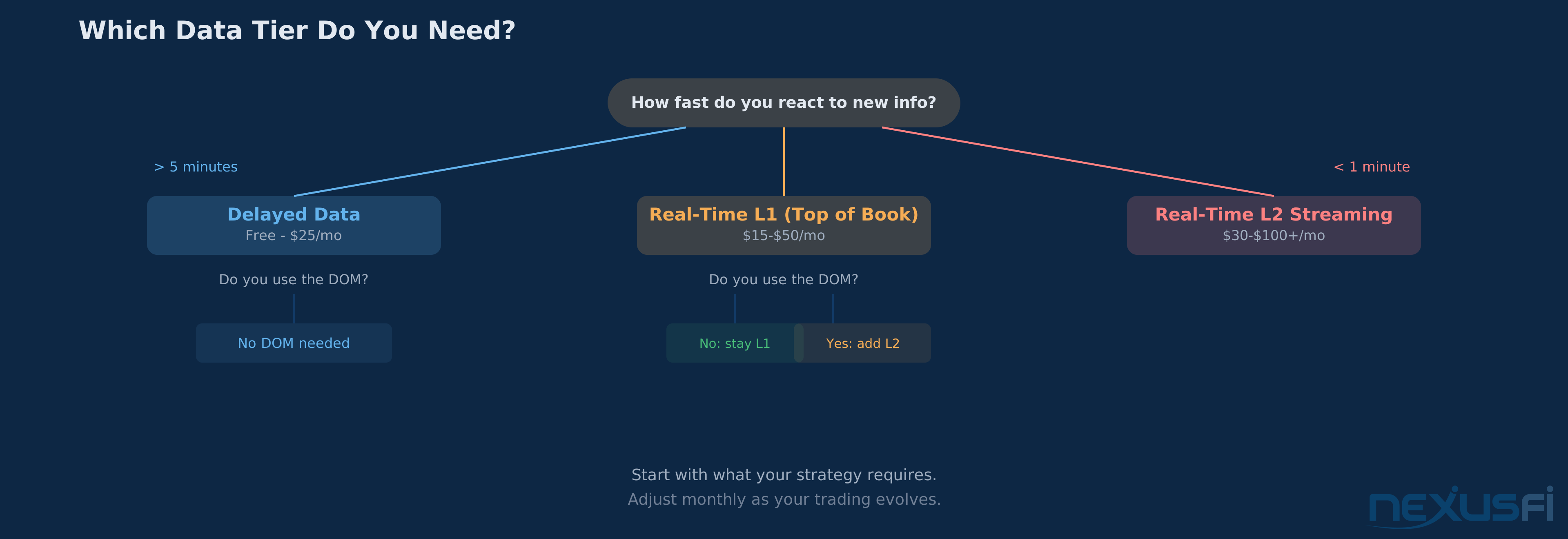
If your average decision takes more than 5 minutes from signal to execution — you hold overnight, you trade daily bars, you run swing setups — delayed data works. You'll save $30-$100/month and lose nothing that matters to your strategy.
If you're making decisions in the 1-5 minute range — trading 5-minute charts, entering at specific levels, watching for chart pattern completions — you want real-time quotes at minimum. Top-of-book (Level 1) real-time data gives you accurate current prices for entry and exit decisions.
If you're making decisions in seconds — scalping, reading tape, trading the DOM, reacting to news events — you need real-time streaming with market depth. This is non-negotiable. Trying to scalp on delayed data is like boxing with a blindfold.
[IMG:data-tier-decision-e2c4f927.svg|Data tier decision flowchart]
The Paper Trading Exception #
One scenario where delayed data works even for short-term strategies: paper trading. As @bobwest [pointed out][8] in a NexusFi discussion, trading on delayed quotes during sim practice is perfectly consistent — your simulated trades execute against the delayed data you're seeing, so your analysis and practice remain valid. The key is that your data and your execution match. It's only when real-money execution happens at real-time prices while your analysis uses delayed prices that you get into trouble.
Professional vs. Non-Professional Classification #
This isn't optional and it much impacts cost. Exchanges define "professional" broadly:
- You're professional if: you're registered with the SEC, CFTC, or equivalent regulator; you trade for a firm or manage assets for others; you use data for business purposes beyond personal trading
- You're non-professional if: you trade only your own personal money, you're not registered, and you don't use data commercially
The cost difference is massive. CME non-professional bundle: ~$15/month. CME professional bundle: ~$340/month. Same data. Different price because the exchange knows professional firms extract more value from it.
[IMG:pro-nonpro-fee-comparison-76fc09ed.svg|Professional vs non-professional CME data fee comparison]
Don't misclassify yourself — exchanges audit, and the penalties are severe. But also don't assume you're professional just because you take trading seriously. Most individual retail traders qualify as non-professional.
Common Mistakes With Data Subscriptions #
[IMG:common-data-mistakes-d28f7921.svg|Common data subscription mistakes that waste money or create hidden risk]
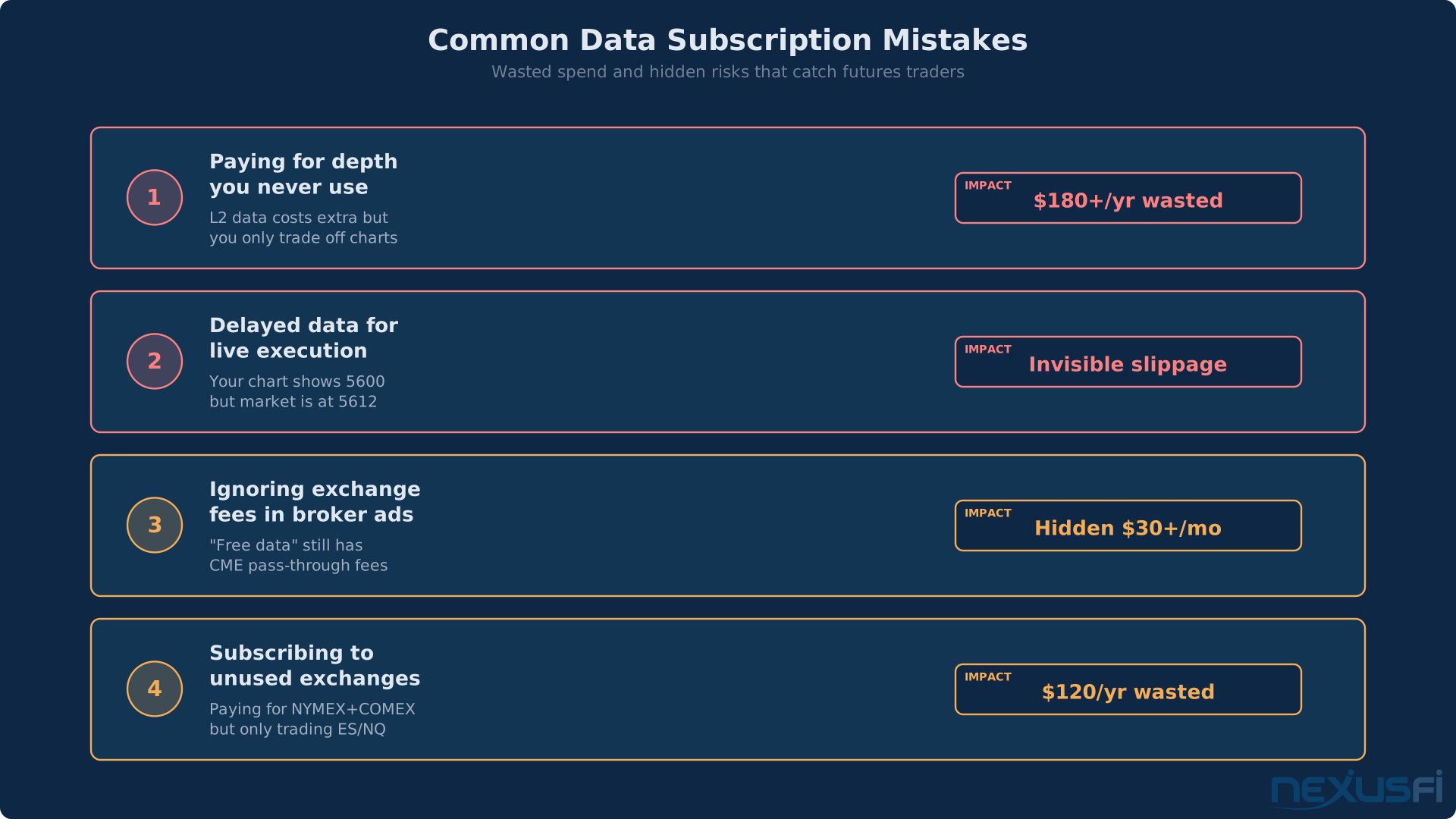
Paying for depth you don't use. If you never open the DOM or run order flow indicators, Level 2 data is wasted money. Many traders subscribe to full depth "because serious traders use it" and then trade exclusively off candlestick charts. Match your subscription to your actual workflow.
Ignoring exchange fees when comparing brokers. Broker A might advertise "free data" while Broker B charges $20/month for their data feed. But both pass through the same CME exchange fees. The difference might be that Broker A absorbs the vendor fee but charges higher commissions. Compare total cost, not just the data line item.
Using delayed data for live execution decisions. This is the dangerous one. Your chart shows ES at 5600 on a delayed feed. You place a market buy. The actual market price is 5612. You're filled at 5612, and your chart doesn't show that price for another 10 minutes. Now your trade looks instantly profitable on screen but you're actually underwater. As one NexusFi member seeking "free intraday data" [discovered][9], platforms like NinjaTrader Web do offer free delayed futures feeds — but using them for active trading requires understanding exactly what "delayed" means for your order fills.
Subscribing to exchanges you don't trade. If you only trade ES and NQ, you don't need NYMEX data. CME and CBOT cover the equity index futures. Drop the other exchanges and save.
When to Upgrade (and When to Downgrade) #
Upgrade to real-time when: You start trading intraday with specific entry points rather than "somewhere around this level." When your holding period shrinks below 30 minutes. When you add DOM or order flow tools to your analysis. When you realize you're placing orders based on prices that don't match your fills.
Downgrade to delayed when: You shift to swing or position trading. When you find yourself paying for Level 2 data but only looking at candlestick charts. When your P&L would be identical whether you entered at the exact price or within a range of several ticks.
Stay on delayed if: You're learning, paper trading, or doing research. Delayed data is accurate historical data with a lag on the current bar — perfectly adequate for studying chart patterns, testing indicator setups, and building a trading plan before committing real capital.
The data tier decision isn't permanent. Most brokers let you change your data subscriptions monthly. Start with what your current strategy requires, and adjust as your trading evolves.
The Bottom Line #
Real-time data costs roughly $30-$100/month more than delayed for most retail futures traders. That's the price of seeing what's happening right now instead of what happened 10-20 minutes ago. Whether that cost is essential or wasteful depends entirely on one thing: does your strategy's edge exist within that 10-20 minute window?
If your edge comes from reading order flow, scalping momentum, or timing entries to the tick — real-time data isn't an expense, it's infrastructure. Trying to save $50/month by using delayed data in that context will cost you far more in missed fills, bad entries, and invisible market dynamics.
If your edge comes from daily chart patterns, weekly trend analysis, or fundamental positioning — real-time data is a luxury. The $600-$1,200/year you save by using delayed data changes nothing about your performance and goes straight to your bottom line.
Match the tool to the job. Pay for what you need. Skip what you don't.
Knowledge Map
Prerequisites
Understand these firstGo Deeper
Build on this knowledgeReferences This Article
Articles that build on this topicCitations
- — I am being charged $15 fee from the CME every month? (2015) 👍 4“Normally, you have to pay exchange fees to receive real-time data. The reason is that the exchanges are not set up as charitable trusts. Therefore you have to pay fees, if you wish to trade on an exchange.”
- — DTN IQFeed's Dave Forss (Business Development Manager) - Ask Me Anything (AMA) (2013) 👍 1“Hi paps, Pricing is $70/mo for IQFeed Core Service (provides real-time tick/breadth for NYSE/S&P/Dow and delayed futures), $20/mo surcharge for real-time US futures plus exchange fees.”
- — 2022 CME Group Market Data Fees Increase (2021) 👍 7“Not as bad as I feared when I opened the email... Notification: CME Group Market Data Fee Adjustment Effective: January 1, 2022 Starting in January 2022, data fees for most licenses and subscriptions will increase in line with the Organization for Ec...”
- — Eurex realtime futures data feed for NT (2018) 👍 3“To subscribe to a market data service you will pay a monthly fee for the service (Kinetick $60 per month, eSignal Signature $160 per month for example) plus any optional fees ($30 per month for INTL exchanges through Kinetick) to enable specific feat...”
- — NT 8 Futures Micro Contracts and Data feeds (2019) 👍 2“Do you perhaps not have a brokerage account? CME charges $105 (the same as the "professional" fee) for their data per exchange for people without a trading account, which is not worth it.”
- — CME market data Top of Book subscription is available (2015) 👍 7“CME market data subscriptions are now available at a 'Top of Book' level from Optimus Futures, Discount Futures and Commodity*Brokerage. E-Mini S&P Brokerage and AMP Trading.”
- — Rithmic vs. CQG Question (2014) 👍 6“I disagree. I can see the difference in the two feeds. Especially on days like today (Fed Meeting release days) All day the market has been slow. Just before a Fed decision I always reboot my machine and restart NT.”
- — Paper trading question (2019) 👍 4“I would go ahead and trade the delayed quotes. What's the downside? If your chart shows only delayed quotes, then your simulated trades will always be consistent with the data you have -- you're not looking outside your chart, so a profitable trade w...”
- — Free intraday market Data for NT8 (delayed ok) (2025) 👍 2“Ninjatrader Web does offer free 10/20 minutes delayed futures data feed. I don't know if they do the same for stocks but if you haven't checked already it might be worth a try.”
- — CME Fee changes 2014, significant impact (2014) 👍 6“CME Market Data Fee Changes Effective March 1, 2014 The CME Group has announced significant changes to its existing Market Data Policy and Fees.”