



Exchange Data Fees and Market Data Costs: What Futures Traders Actually Pay Beyond Commissions
Overview #
Commissions get all the attention. Every broker comparison article leads with per-contract costs, and traders shop basis points like their life depends on it. Fair enough — commissions are visible, predictable, and easy to compare.
Data fees are none of those things.
The monthly cost of receiving real-time market data from futures exchanges is one of the most misunderstood line items in a trader's budget. A retail day trader watching E-mini S&P 500 futures might pay $5 per month in exchange data fees. A professional running multi-exchange strategies can easily spend $1,500 or more — and that's before the platform or vendor adds their markup. The difference between "professional" and "non-professional" classification alone creates a 10x cost gap on identical data.
The broader market data ecosystem is complex enough on its own — this article focuses on the one piece most traders underestimate: the fees. What the exchanges charge, what vendors add on top, where the hidden traps are, and how to build a data subscription that covers what you need without bleeding money on what you don't.
Key Concepts #
Exchange data fee — The base cost charged by a futures exchange (CME, ICE, Eurex) for the right to receive their market data in real time. This is non-negotiable and applies to every trader, regardless of broker or platform.
Vendor markup — The additional cost charged by your data provider (CQG, Rithmic, IQFeed) or broker/platform for delivering exchange data to your screen. This varies wildly across providers.
Professional vs non-professional — An exchange-defined classification that determines which fee schedule applies. Non-professional fees are dramatically lower — often 10x cheaper. Getting this wrong can result in retroactive billing.
Level 1 data (Top of Book) — Best bid, best ask, last trade price, and volume. The minimum viable data for most trading decisions.
Level 2 data (Depth of Market) — The full order book showing multiple price levels of resting orders. Required for DOM-based trading, order flow analysis, and scalping. The cost gap between Level 1 and Level 2 is significant — the complete breakdown of what each tier delivers helps determine whether you're paying for depth you actually use.
The Fee Layer Cake -- Where Your Money Actually Goes #
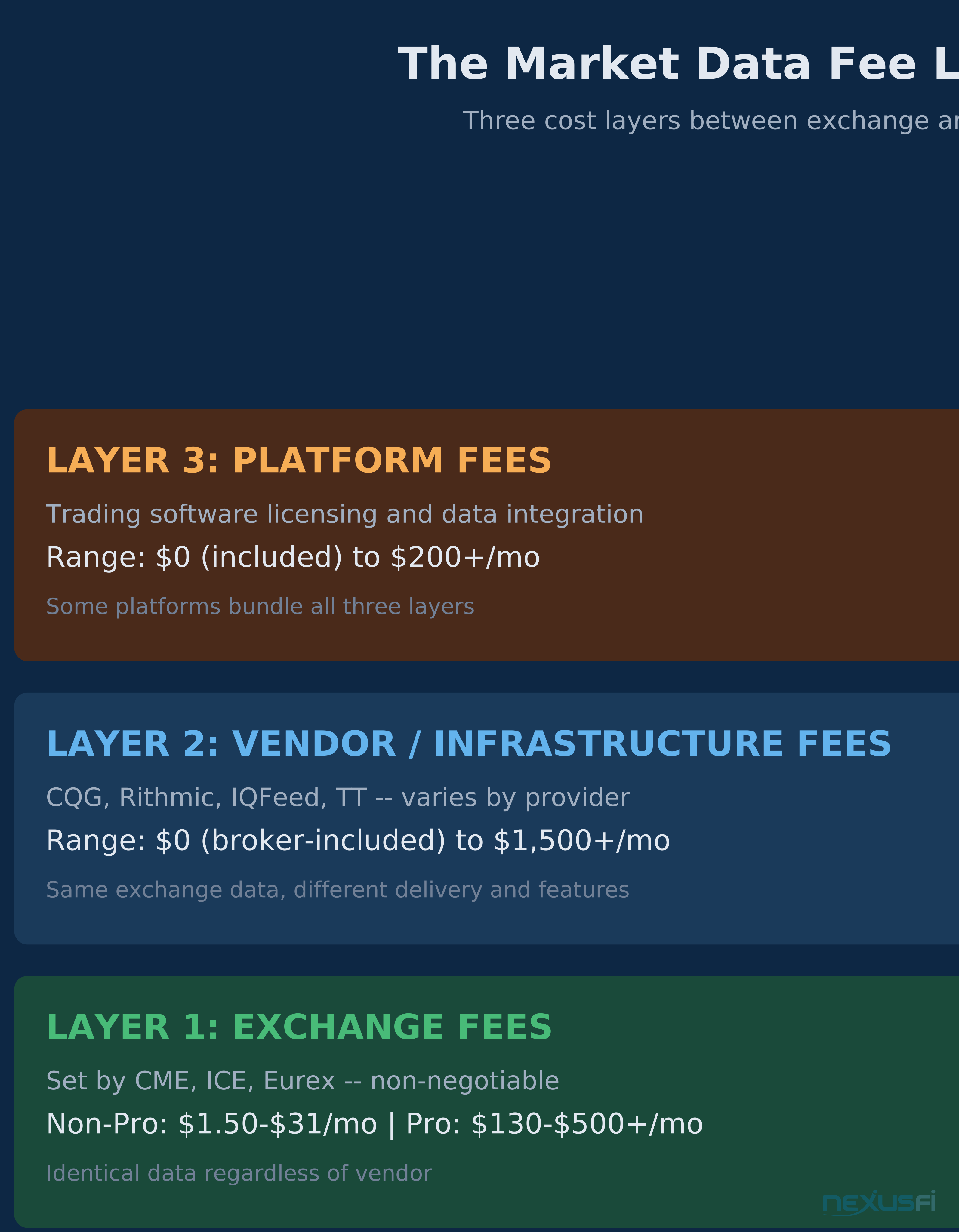
Every dollar you spend on market data passes through a stack. Understanding this stack is the difference between optimizing your costs and overpaying by hundreds per month.
Layer 1: Exchange Fees — Set by the exchange. Non-negotiable. CME, ICE, and Eurex each publish fee schedules that your broker or vendor passes through to you. These are the floor — nobody gets data cheaper than the exchange rate. As @bobwest explained on the NexusFi community, "all futures data is supplied by CME, the futures exchange, no matter how it gets to you" — the CME-required fee applies regardless of which data service or broker delivers the feed.
Layer 2: Vendor/Infrastructure Fees — Your data vendor (CQG, Rithmic, TT, IQFeed) charges for the infrastructure that normalizes, delivers, and supports the data feed. The underlying technology each vendor uses — from CQG's hosted infrastructure to Rithmic's ultra-low-latency architecture — directly explains why their pricing varies so much. Some vendors bundle exchange fees into an all-in price. Others itemize them separately on your invoice.
Layer 3: Platform Fees — Your trading platform may add its own data-related charges. Some platforms (NinjaTrader, Sierra Chart) charge separately for platform licensing and data. Others include data access in their subscription. As @Fat Tails explained on the NexusFi community, the key categories are "exchange, clearing, regulatory fees and commissions are typically paid per contract. Data fees are paid for the data that you receive."
The practical impact: two traders watching the same ES contract on different platforms can pay dramatically different total amounts. One might pay $5 per month (exchange fee only, with a broker that absorbs vendor costs). Another might pay $50+ (exchange fee + vendor fee + platform fee). Same data, different stacks.
Professional vs Non-Professional -- The Biggest Cost Lever You Control #
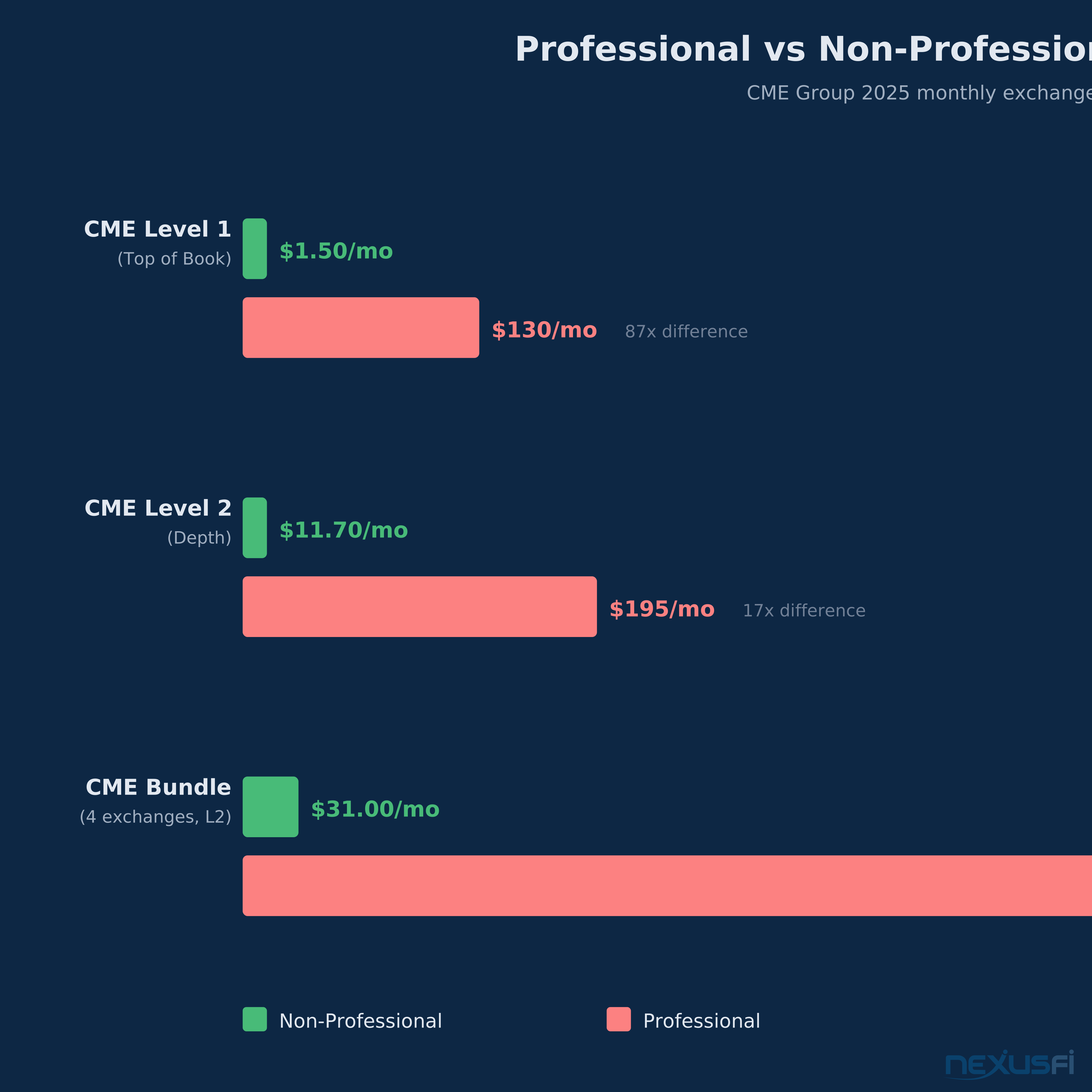
This classification is the single largest variable in your data bill. The CME Group's 2026 published fee schedule shows the gap clearly: professional data runs $134.50 per month per exchange per device, while non-professional top-of-book costs $1.55 per month per exchange. That's not a rounding error — it's an 87x difference.
Who Qualifies as Non-Professional? #
The exchanges define non-professional status through a self-certification form. At CME Group, you qualify as non-professional if you are a natural person who:
- Is NOT registered with the SEC, CFTC, any state securities agency, or any securities exchange or association, or any commodities or futures contract market or association
- Is NOT acting in a capacity as an investment adviser (whether registered or exempt)
- Does NOT use data for managing assets for a business or other entity
- Is NOT employed by a bank, insurance company, or other financial institution to perform functions related to securities or commodity futures activities
- Uses data solely for personal, non-business purposes
The official CME Group non-professional subscriber documentation details the full criteria and their practical application. As @SMCJB noted, "A Non-professional Subscriber is any natural person whom a market data Distributor has determined qualifies." The key word is "natural person" — the moment you're trading through an entity that manages others' money or you hold certain registrations, you're professional.
@Big Mike flagged an important nuance: "trading out of a Corp/LLC" can affect your classification. If your LLC exists purely for personal trading with your own capital, you may still qualify as non-professional. But the moment that entity serves a business function related to financial services, the classification flips.
The Retroactive Billing Risk #
Get this wrong and the consequences are real. Exchanges audit data vendor subscriber lists, and if you've been receiving non-professional rates while qualifying as professional, you can face retroactive billing for the difference — sometimes going back months or years. As @bobwest detailed, "each Distributor qualifies their Subscribers as Professional or Non-Professional based on the rest of the criteria." Different vendors may evaluate your status differently, which means you could be non-professional at one vendor and professional at another.
Don't guess on this form. Read it carefully, answer honestly, and update your status if your circumstances change. The savings aren't worth the audit risk.
CME Group Fee Structure -- The Big Four #
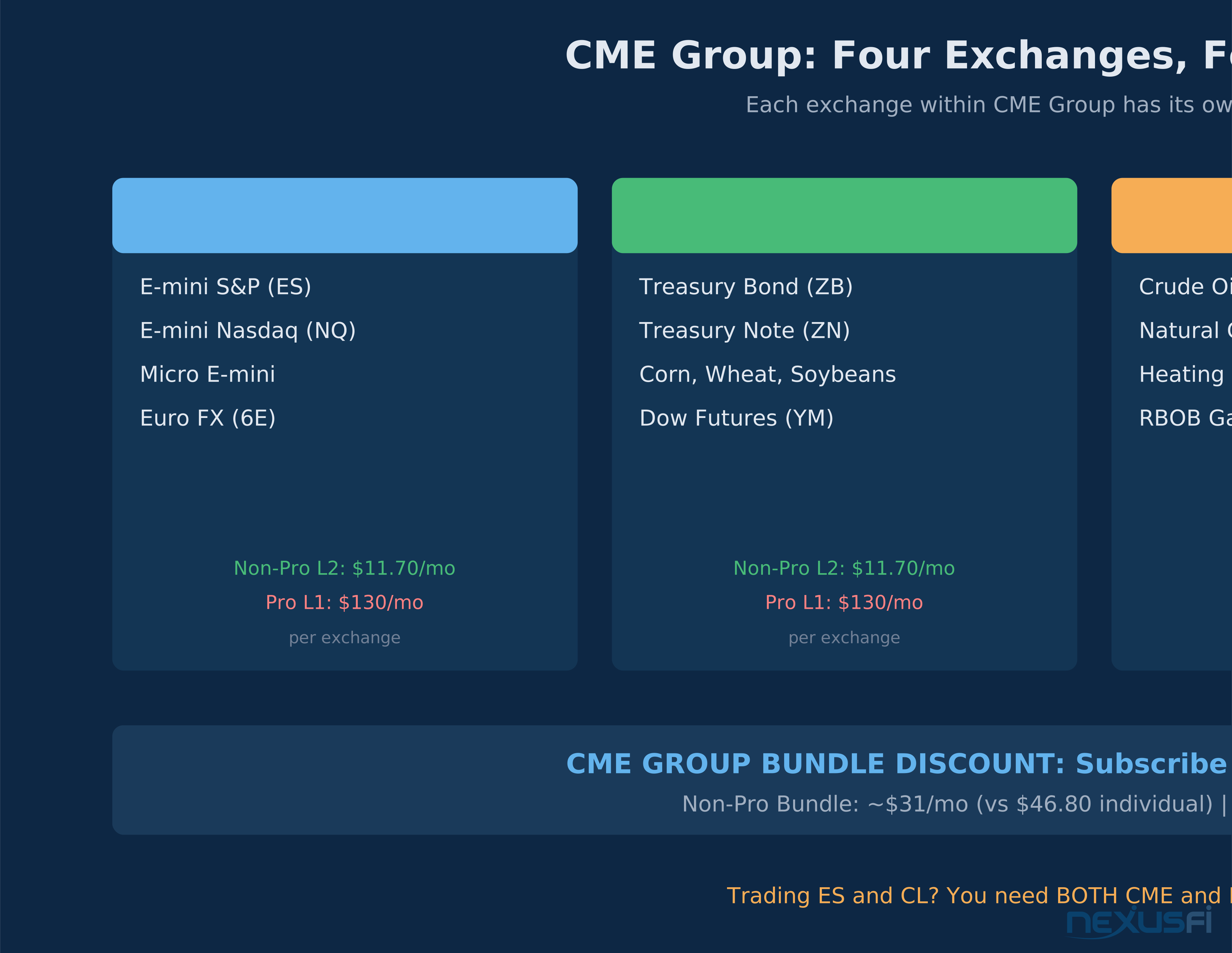
CME Group operates four exchanges under one umbrella: CME, CBOT, NYMEX, and COMEX. Each has its own data entitlement and fee. This catches new traders off guard — you don't pay once for "CME Group data." You pay per exchange.
As @bobwest explained, "CME merged with other exchanges over the years, but kept them as separate exchanges within the CME Group, and they all have separate data fees. For instance, ES is CME and so is NQ — that's one fee for a combined feed. But if you also want to trade CL, that's NYMEX, a separate fee."
Non-Professional Rates (CME Group, 2026) #
| Data Level | Per Exchange | 4-Exchange Bundle |
|---|---|---|
| Top of Book (Level 1) | $1.55/month | $4.65/month |
| Depth of Market (Level 2) | $12.10/month | $36.50/month |
The bundle pricing is where CME offers real value for multi-asset traders. If you trade ES (CME), ZB (CBOT), CL (NYMEX), and GC (COMEX), the bundle saves roughly 35% versus buying each exchange separately.
For traders who don't need DOM data — swing traders, trend followers working from charts — Top of Book is sufficient and dramatically cheaper.
Professional Rates (CME Group, 2026) #
Professional fees jump to $134.50 per exchange per month for Level 1 data and additional charges for depth. A professional needing all four CME Group exchanges with depth can easily spend $500+ per month in exchange fees alone — before any vendor markup.
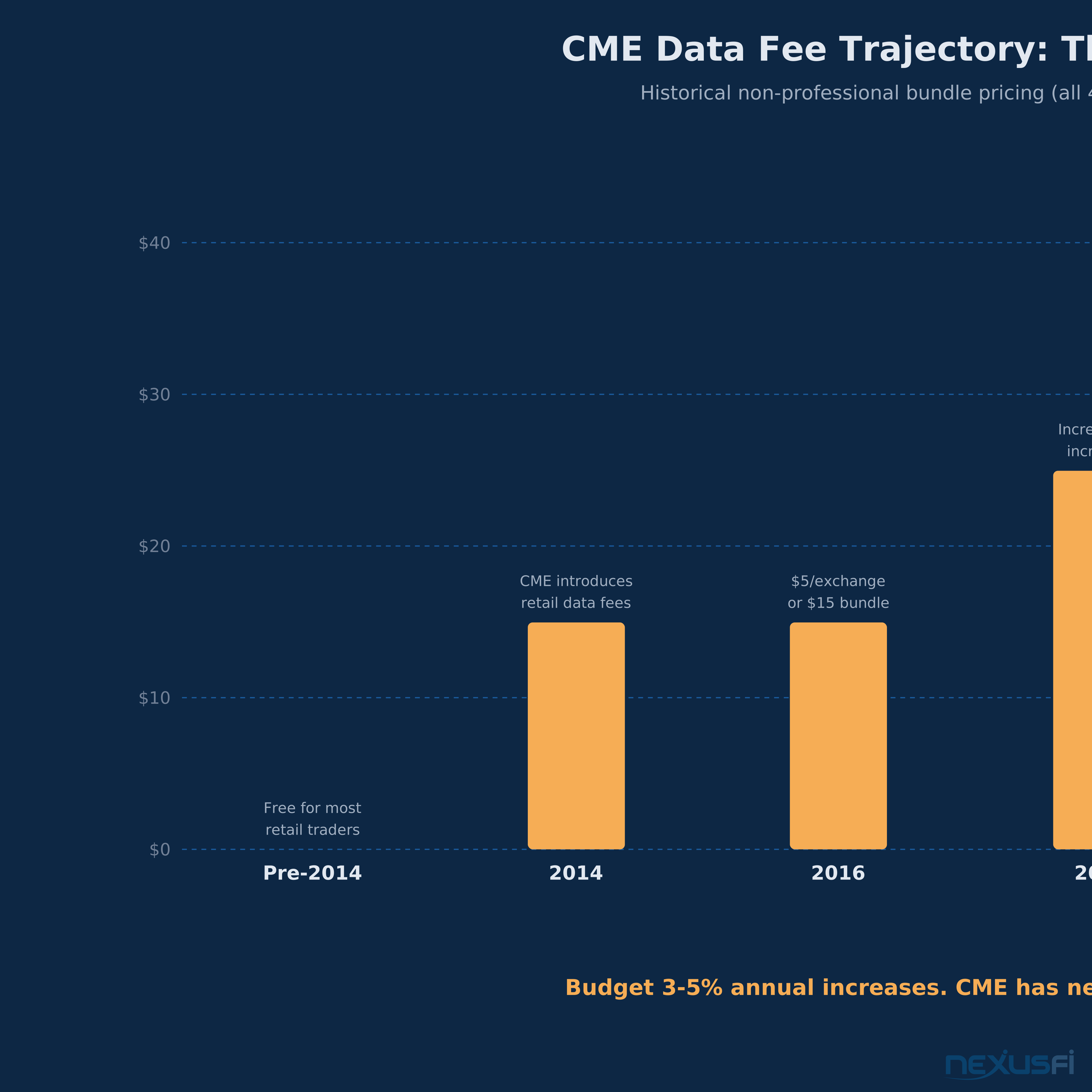
@SMCJB tracked the fee increases over time: the CME non-professional bundle went from $30 to $31.25 in 2022, and professional per-exchange fees increased from $110 to $114.60. These fees only go up. CME has never reduced data fees.
CME Direct Access Program #
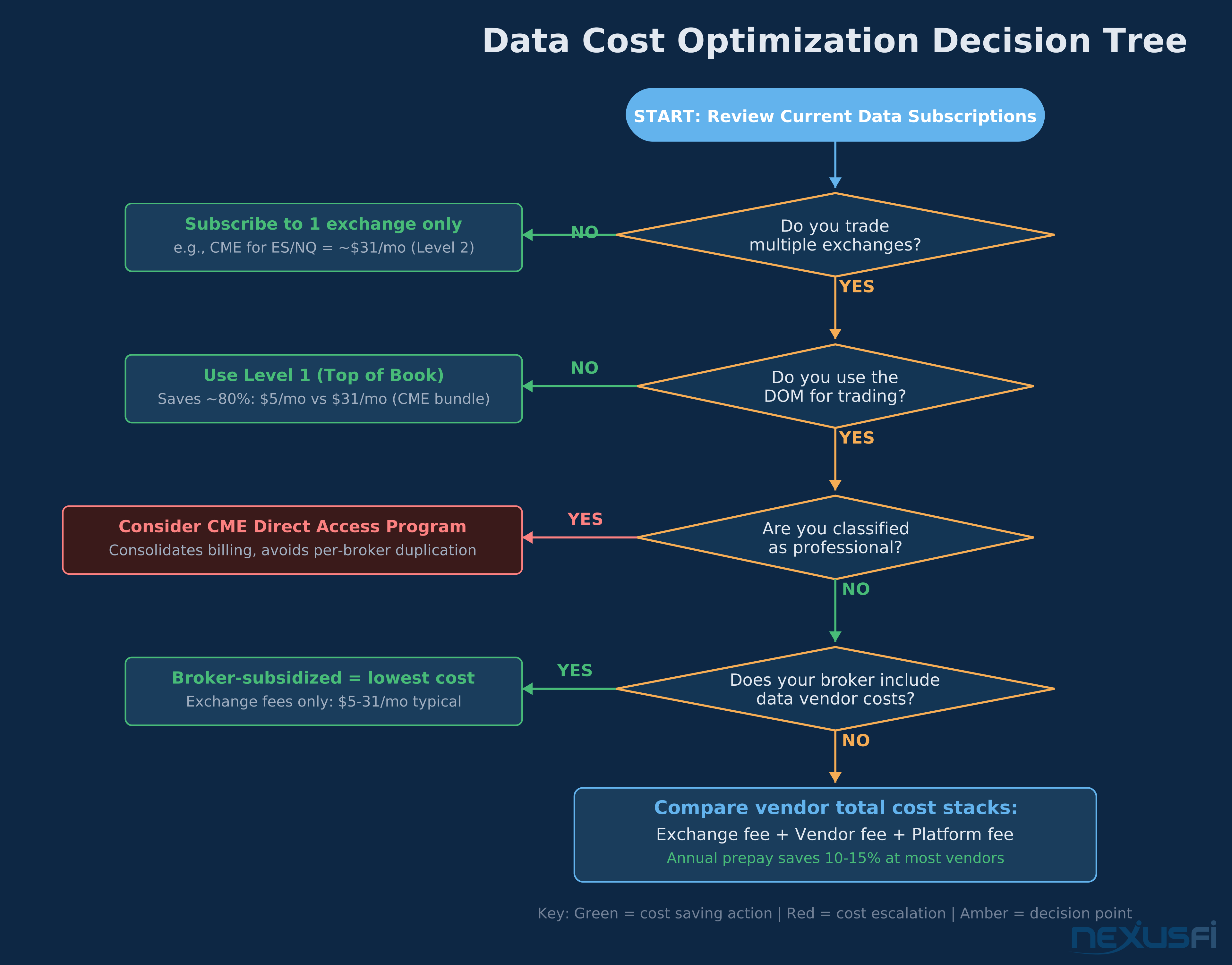
For professionals running multiple platforms or devices, CME offers a Direct Access Program. As @SMCJB explained, "if you sign up for CME's Direct Access program you will then be billed directly by the CME, and will not have to pay any data fees at the broker level no matter how many brokers, or devices/platforms you have." This consolidates billing and can eliminate duplicate charges when you use multiple data vendors simultaneously.
ICE Fee Structure -- Per-Exchange, Per-User, No Exceptions #
ICE (Intercontinental Exchange) operates multiple exchanges under one umbrella, each with separate data subscriptions. ICE Futures US and ICE Futures Europe are the two that matter most for futures traders — and they're billed independently. If you trade Brent crude (ICE Europe) and US Dollar Index or agricultural futures (ICE US), those are two separate monthly charges.
Unlike CME, ICE doesn't distinguish between professional and non-professional subscribers in the same way. ICE charges a flat per-user, per-exchange monthly fee. As @mattz from Optimus Futures explained on NexusFi, ICE charges data fees for "the ability or permission to receive their live market data, whether or not an end user actually does receive it." That means if your broker enables ICE data on your account, you pay — even if you never look at a single ICE contract.
ICE 2026 Published Fee Schedule #
| Exchange Group | Monthly Fee Per User | Key Products |
|---|---|---|
| ICE Futures US Ags & Financials | $132 | Sugar, Coffee, Cotton, Cocoa, OJ, Dollar Index, MSCI Index |
| ICE Futures US Canadian Grains | $41 | Canadian Oilseeds |
| ICE Futures Europe Energy & Commodities | $144 | Brent Crude, Gas Oil, UK Natural Gas, Coal, Heating Oil |
| ICE Futures Europe Financials | $123 | Equity Index Futures, STIR Futures, Bond Derivatives |
| ICE Futures Europe Equity Minis | $5 | Mini FTSE, Mini Fang, Mini US/UK/EU Index Futures |
| ICE Futures Abu Dhabi | $20 | Murban Crude |
| ICE Futures Singapore | $0 | Micro MSCI Index |
Source: ICE Exchange Access and Data Fees schedule, effective January 2026.
These are flat fees — no tiered pricing, no volume discounts for individual subscribers. The fee applies per user ID per month. If a single user ID is assigned to multiple company accounts, charges apply separately for each account.
Historical Fee Trajectory #
ICE data fees have climbed steadily. As @bobwest documented on NexusFi, the ICE Futures US fee was $110 as of April 2016. By 2025, that same entitlement had risen to $126, and the 2026 schedule lists $132 — a 20% increase in a decade. @Fat Tails tracked the earlier shifts when ICE/NYBOT data fees jumped from $75 to $85, noting that rebates that once offset the cost were "cancelled."
The Brent-WTI Spread Trader Problem #
Here's where ICE costs bite hardest. A trader running Brent-WTI crude oil spreads needs data from both exchanges:
- NYMEX (CME Group) for WTI: Included in CME bundle (~$36.50/month non-professional Level 2)
- ICE Futures Europe for Brent: $144/month flat fee
That's $180/month minimum in exchange fees alone just to see both sides of one spread. Add a data vendor, and the total crosses $270/month. For a single spread strategy, that's a meaningful fixed cost that needs to be earned back before any profit counts.
For traders focused solely on CME-listed energy products (WTI crude, natural gas via NYMEX), ICE data fees are irrelevant. But the moment you need Brent, European gas, or any ICE-listed soft commodity, you're adding $132-144 per month to your data bill.
Vendor Markup -- Where Costs Diverge #
The exchange fee is just the floor. Your data vendor's markup determines the total cost, and this is where comparison shopping matters most.
The Vendor Spectrum #
Broker-subsidized feeds — Some brokers absorb data vendor costs for active accounts. NinjaTrader Brokerage, for example, charges a market data fee that includes both the CME exchange fee and their infrastructure costs in a single line item. As @NT Brokerage clarified, "The $12 Market Data fee is for access to the CME bundle subscription. Market data fees originate from the exchange itself and are charged to every trader enabled for data."
Dedicated data vendors — Services like IQFeed (DTN), CQG, and Rithmic charge separately for their infrastructure layer. IQFeed provides reliable tick data at competitive rates for non-professional traders. CQG and Rithmic serve the professional and institutional segment with ultra-low-latency feeds but at higher price points.
All-in platforms — Professional platforms like Trading Technologies (TT) bundle platform access, data feeds, and exchange connectivity into complete packages running $750-1,500+ per month. These make sense for professional traders where the platform's execution capabilities justify the cost. For retail traders, they're overkill.
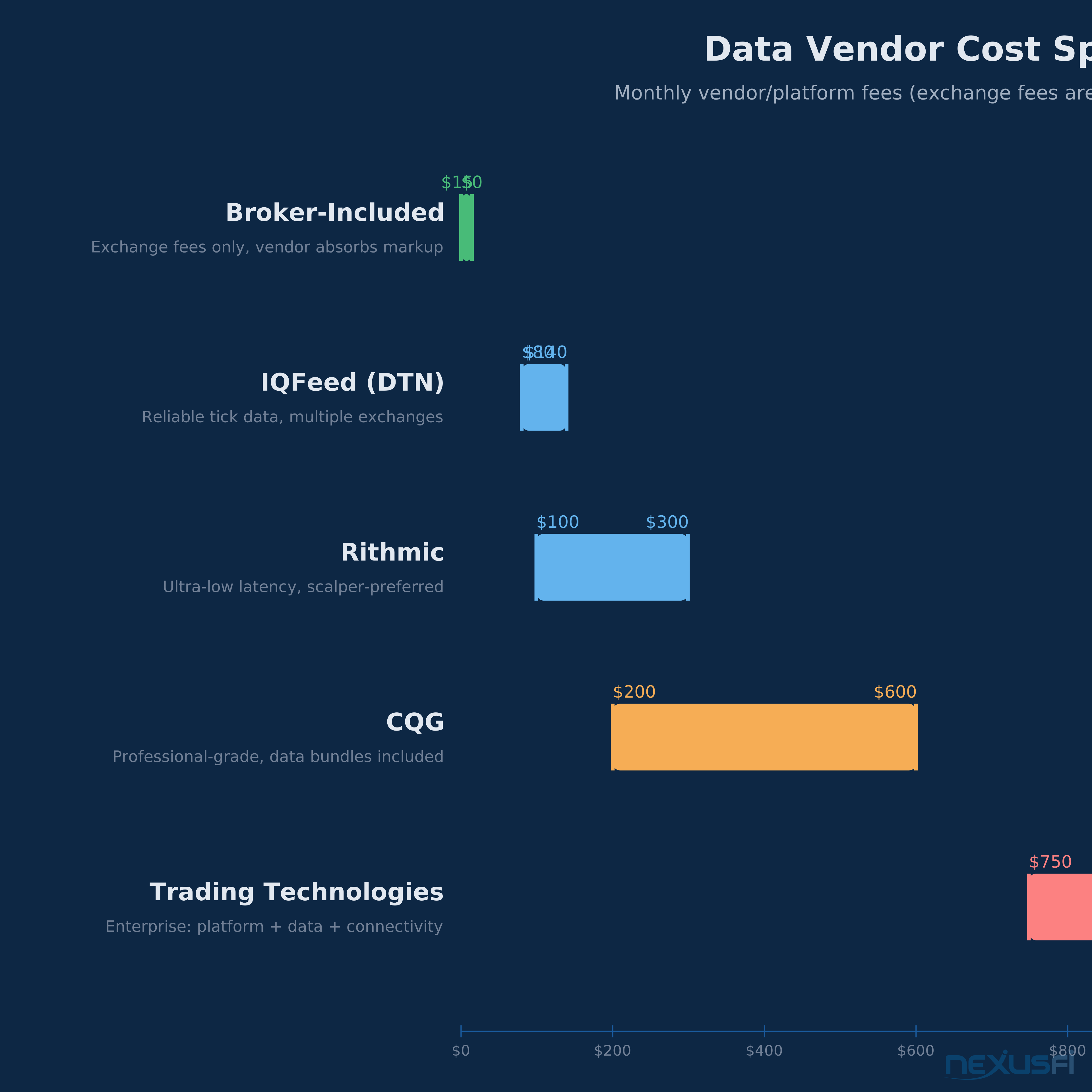
Vendor Cost Comparison (Approximate Ranges) #
| Provider Type | Monthly Cost Range | What's Included |
|---|---|---|
| Broker-included feed | $0-15/month above exchange fees | Basic data delivery, usually Level 1 |
| IQFeed (DTN) | $80-140/month + exchange fees | Reliable tick data, multiple exchanges, clean historical |
| CQG | $200-600/month including data bundles | Professional-grade, low latency, execution integration |
| Rithmic | $100-300/month + exchange fees | Ultra-low latency, popular with scalpers |
| Trading Technologies | $750-1,500+/month all-in | Enterprise platform + data + exchange connectivity |
The spread here is enormous. A non-professional ES day trader using a broker-subsidized feed might pay under $20 per month total. The same trader using CQG pays 10-30x more. The data arriving on both screens is identical — it originates from CME regardless. You're paying for delivery speed, reliability, additional features, and historical data access. Add in per-contract commissions and regulatory fees and data costs become the second largest recurring line item in most traders' budgets.
Cost Scaling -- When Multi-Exchange Gets Expensive #
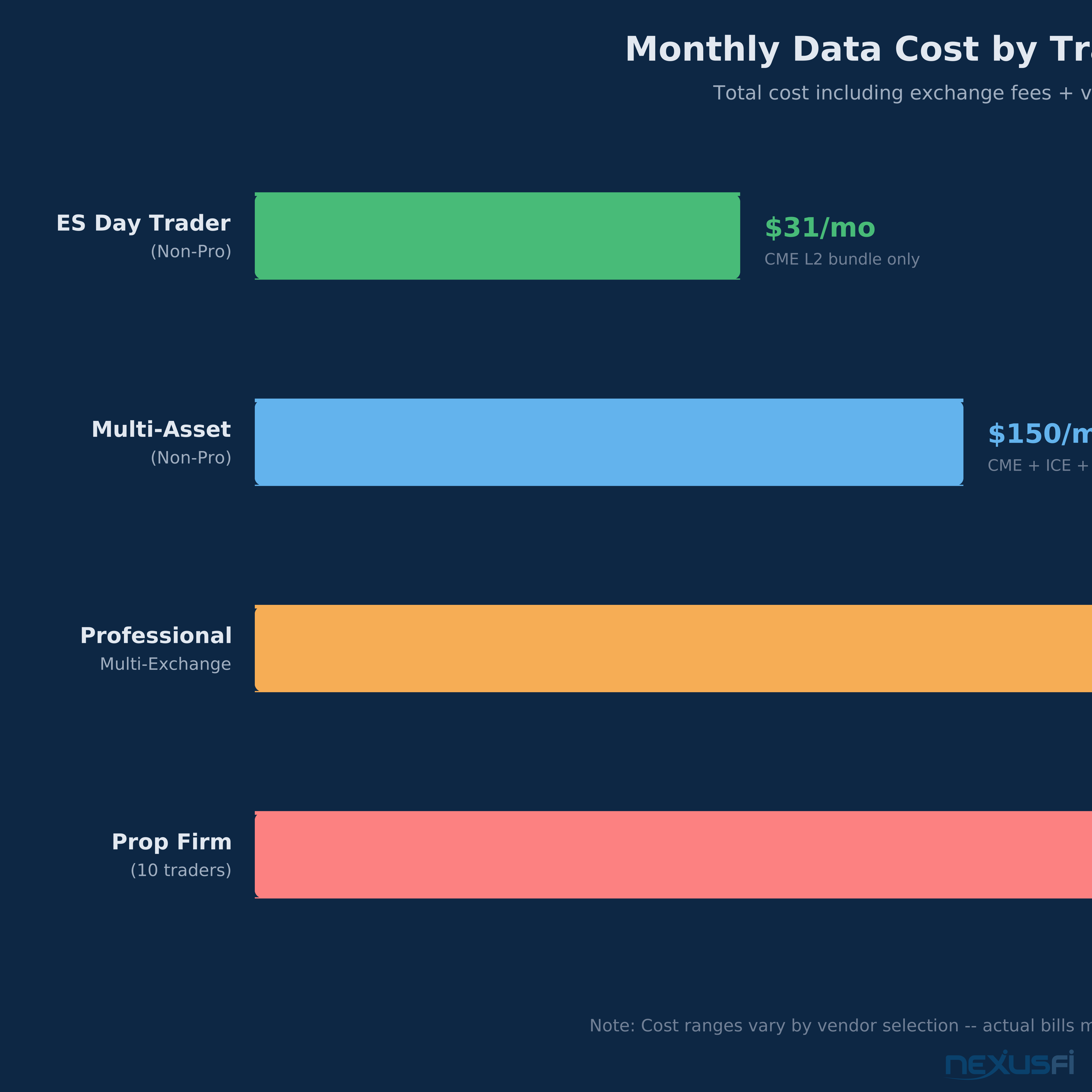
The practical reality of market data costs becomes clear when you map out scenarios for different trader profiles.
Scenario 1: ES Day Trader (Non-Professional) #
- CME exchange data (Level 2 bundle): ~$36.50/month
- Broker-included feed: $0 additional
- Total: ~$36.50/month
Scenario 2: Multi-Asset Trader (Non-Professional) #
- CME Group bundle Level 2: ~$36.50/month
- ICE Futures US Ags & Financials: $132/month
- Eurex via US broker: ~$23/month
- Data vendor (IQFeed): ~$90/month
- Total: ~$281/month
Scenario 3: Professional Multi-Exchange #
- CME Group all divisions Level 2: ~$500+/month
- ICE Futures US + ICE Europe Energy: $132 + $144 = $276/month
- Eurex Core Professional (2 product groups): ~EUR 160/month (~$175)
- Professional platform (CQG): ~$350/month
- Total: ~$1,300-1,500/month
Scenario 4: Proprietary Trading Firm (10 Traders) #
- Enterprise CME licensing: $2,000-5,000/month
- Multi-exchange enterprise: $3,000-8,000/month
- Redistribution licensing: Variable
- Infrastructure: $2,000-5,000/month
- Total: $7,000-18,000+/month
The jump from Scenario 1 to Scenario 3 is 40-50x. That's the combined effect of professional classification and multi-exchange coverage.
Optimizing Your Data Costs #
Start With What You Actually Need #
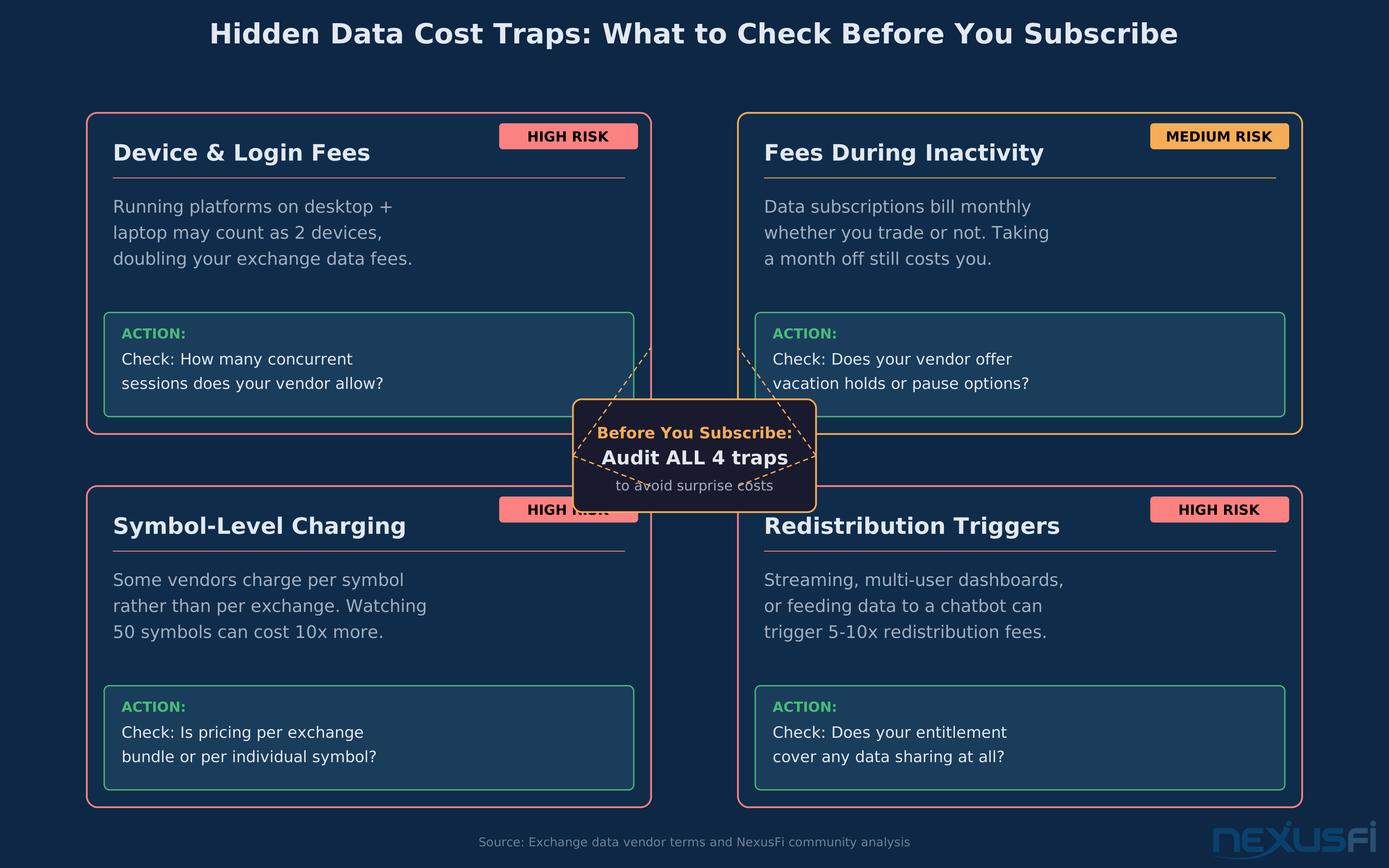
Most traders subscribe to more data than they use. If you trade ES and NQ exclusively, you need CME exchange data only — don't pay for NYMEX, COMEX, ICE, or Eurex. If you trade from charts without using the DOM, Level 1 (Top of Book) is sufficient and costs a fraction of Level 2.
Use Delayed Data for Research #
Real-time data matters for execution. It doesn't matter for overnight research, strategy development, or reviewing historical patterns. Use delayed data (free from most vendors) or end-of-day data for non-execution tasks. Save real-time subscriptions for the screens where milliseconds matter.
Negotiate Annual Commitments #
Many vendors offer 10-15% discounts for annual prepayment versus month-to-month billing. If you know you'll need data for the full year, the upfront commitment saves one to two months of fees.
Verify Non-Professional Status Annually #
Your professional classification isn't set once and forgotten. Life changes — new job, new registration, new business entity — can flip your status. Review the self-certification form annually to confirm you still qualify. The non-professional discount is too large to lose by accident.
Audit Your Invoice #
The most overlooked optimization: actually read your data bill. Many traders pay for exchange data they subscribed to months ago for a trade they no longer run. Vendor invoices aren't always transparent about which exchange entitlements are active. Review quarterly at minimum and cancel anything you're not actively using.
What Data Fees Mean for Your Trading P&L #
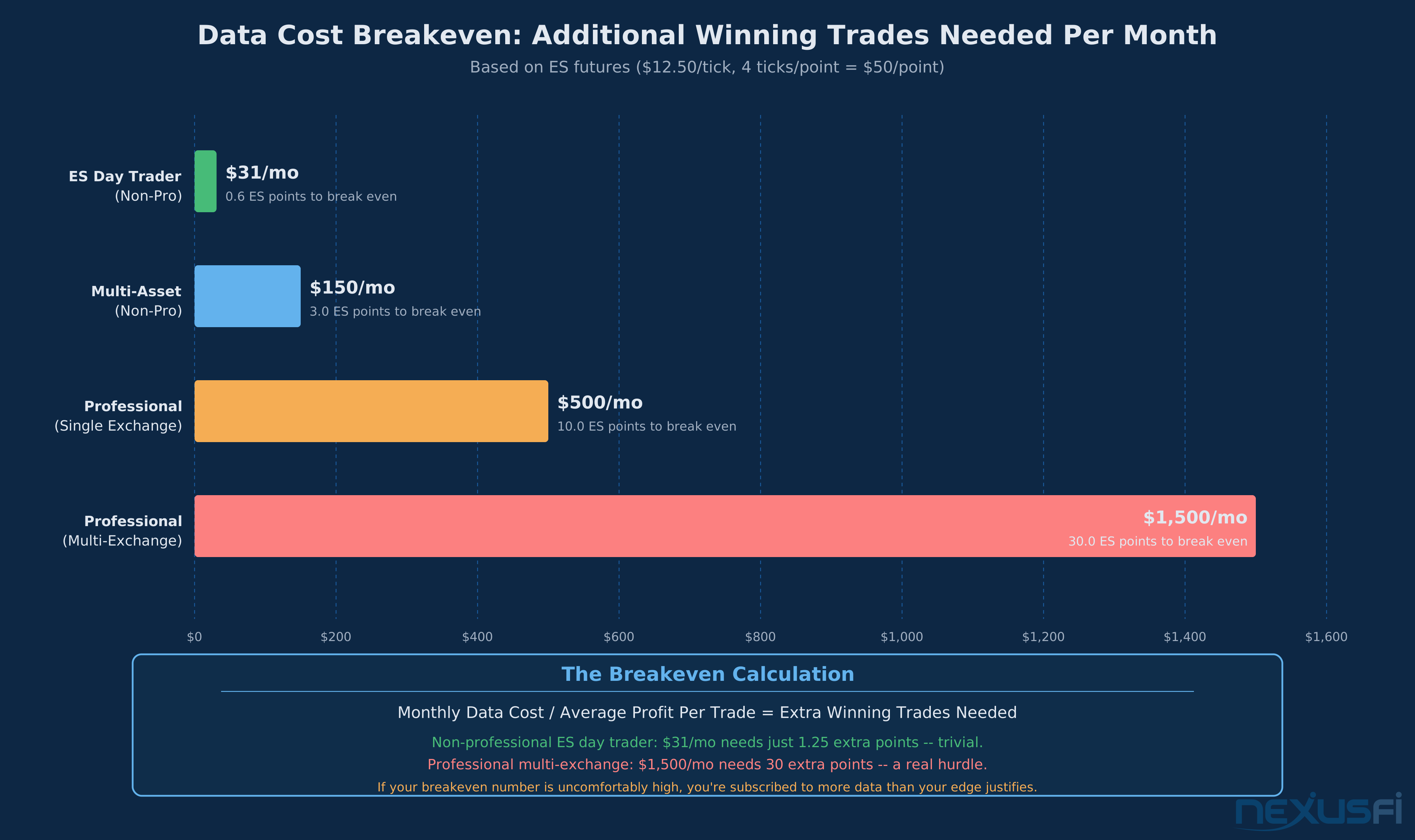
Data costs are a fixed overhead that directly impacts your breakeven point. A non-professional ES day trader paying $36.50 per month in data fees needs roughly 1.5 ES points per month (at $12.50 per tick, 4 ticks per point) just to cover data costs. That's trivial.
A professional multi-exchange trader paying $1,500 per month needs 30 ES points per month — or equivalent edge across their instruments — just to break even on data. That's not trivial. It's a meaningful hurdle that should inform position sizing, strategy selection, and the decision of which markets to trade actively versus monitor passively.
The calculation: divide your monthly data costs by your average profit per trade. That's the number of additional winning trades you need each month just to pay for the privilege of seeing the data. If that number is uncomfortably high, you're subscribed to more data than your edge justifies.
The Future of Data Fee Structures #
Exchange data fees have moved in one direction for decades: up. CME Group's fee schedule has never decreased — only increased. As @SMCJB documented, the 2022 increases moved non-professional bundles from $30 to $31.25 and professional per-exchange fees from $110 to $114.60. This trend continues.
The industry is also seeing consolidation. Exchange mergers create data monopolies where a single entity controls pricing for related products. CME Group's acquisition of CBOT, NYMEX, and COMEX means one organization sets fees for equity index, Treasury, energy, and metals futures data. Competition on data pricing is limited — you can't get ES data from anyone other than CME.
For traders, this means data costs should be treated as a gradually increasing fixed cost in your business plan. Budget for 3-5% annual increases and improve your subscriptions proactively rather than letting them accumulate unchecked.
Practical Application #
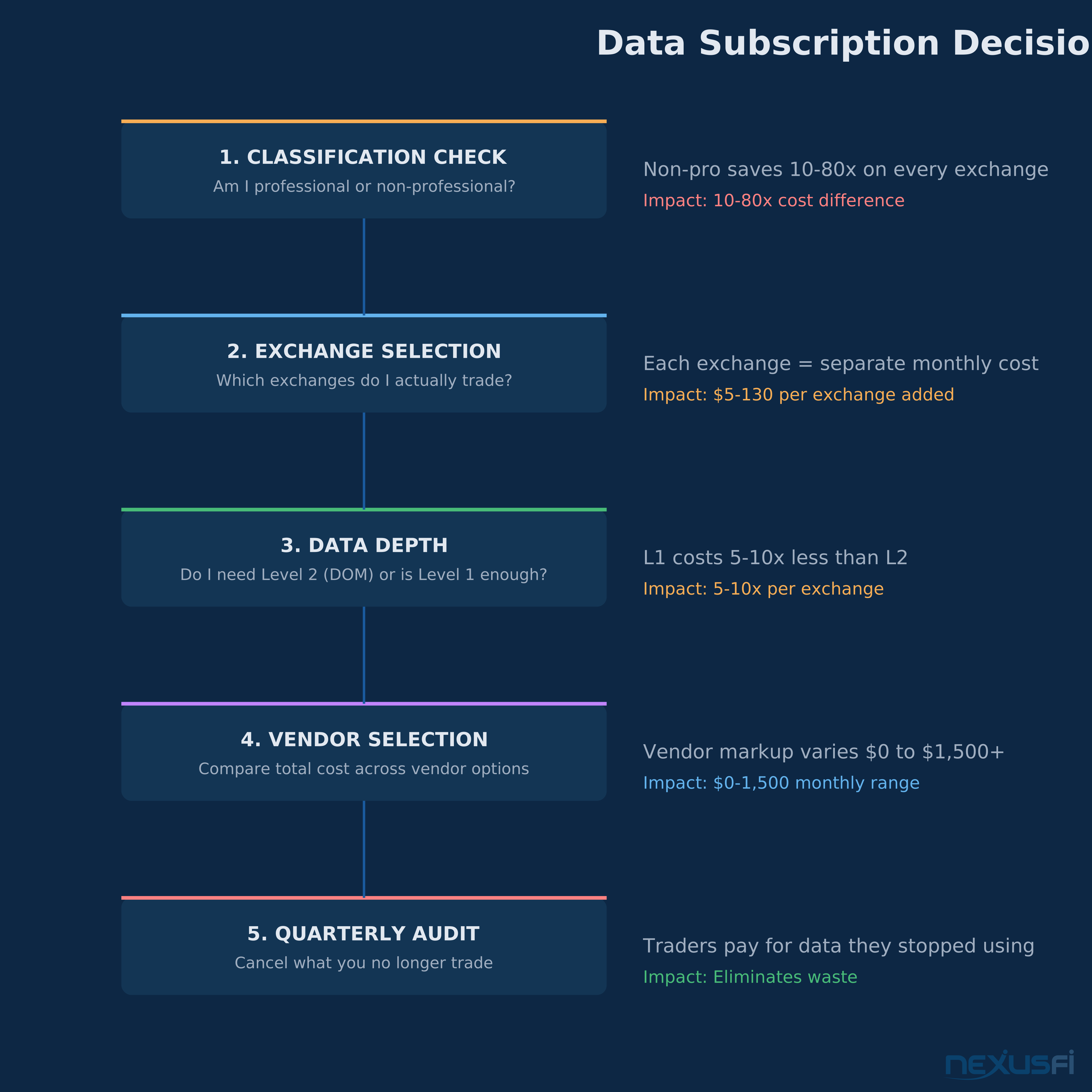
The actionable framework for managing data costs comes down to three decisions:
1. Classification — Confirm and maintain your professional/non-professional status correctly. This single factor determines whether you're in the $36.50/month tier or the $500+/month tier.
2. Scope — Subscribe only to the exchanges and data levels you actively trade. Every additional exchange is a separate monthly cost. Every upgrade from Level 1 to Level 2 multiplies the fee. Match subscriptions to actual usage.
3. Vendor — Choose your data vendor based on the full cost stack, not just the vendor fee. A vendor that bundles exchange fees into an all-in price may be cheaper or more expensive than one that itemizes them — you won't know until you map the total.
Review these three decisions quarterly. Markets change, strategies evolve, and the data you needed six months ago may not be the data you need today.
Knowledge Map
Prerequisites
Understand these firstGo Deeper
Build on this knowledgeReferences This Article
Articles that build on this topicCitations
- — I am being charged $15 fee from the CME every month? (2015) 👍 4“Normally, you have to pay exchange fees to receive real-time data. The reason is that the exchanges are not set up as charitable trusts. Therefore you have to pay fees, if you wish to trade on an exchange.”
- — 2022 CME Group Market Data Fees Increase (2021) 👍 7“Not as bad as I feared when I opened the email... Notification: CME Group Market Data Fee Adjustment Effective: January 1, 2022 Starting in January 2022, data fees for most licenses and subscriptions will increase in line with the Organization for Ec...”
- — Data Feed CME (2022) 👍 1“Somewhere on the CME web site there is an explanation of the current policy, including the definition of who is a professional and who is not.”
- — Which broker for (Sierra + Sierra datafeed)? (2019) 👍 2“Right, I had forgotten that. This does really change the cost picture. CME merged with other exchanges over the years, but kept them as separate "exchanges" within the CME Group, and they all have separate data fees.”
- — CME market data Top of Book subscription is available (2015) 👍 7“CME market data subscriptions are now available at a 'Top of Book' level from Optimus Futures, Discount Futures and Commodity*Brokerage. E-Mini S&P Brokerage and AMP Trading.”
- — CME Fee changes 2014, significant impact (2014) 👍 8“I talked to CME Market Data Services today, they were very friendly and helpful, and confirmed what has already been said and dissected here. I would like to reemphasize the member netting program they have.”
- — Ask Me Anything (AMA) with NinjaTrader Client Services (2022) 👍 2“Hello, Appreciate you raising this, please allow us to clarify. The $12 Market Data fee is for access to the CME bundle subscription. Market data fees originate from the exchange itself and are charged to every trader enabled for data.”
- — CME with full dept of market data fee(6E, 6B,...) with discount as non-professional? (2021) 👍 1“The currencies are all on one exchange, the CME, so around $11 a month for full depth as a non-professional. You can't sign up directly with the CME.”
- — PROFESSIONAL or NON-PROFESSIONAL (2014) 👍 2“Definition of professional and non-pro is different market to market but normally depends upon exchange membership. CME though recently changed their data fees and their definition of pro/non-pro as follows.”
- — CME Fee changes 2014, significant impact (2013) 👍 2“See post 6 and 10. My understanding is the classification has been expanded to anyone trading out of a Corp/LLC. I am waiting to get more details on this.”
- — Can I go back to non-professional data after paying pro data fees? (2022) 👍 5“So what does this mean, anyway? I suggest reading these two pdf's in their entirety. You may find yourself mumbling something like "What the --- ?" a few times, though.”
- — CME emini data (2019) 👍 5“All futures data is supplied by CME, the futures exchange, no matter how it gets to you. CME places the requirement that non-professional traders with funded broker accounts must pay CME $5 per month per exchange. The CME-required fee is going to be paid no matter what data service you use.”