



Futures Market Participants and the COT Report: Understanding Who's in the Market and Why It Changes Everything
Overview #
Every time you hit buy or sell, someone takes the other side. Not some abstract "market" — a real entity with a specific economic motivation that determines how they'll behave when price moves against them. That entity might be a grain elevator in Kansas hedging its corn inventory. It might be a Goldman Sachs swap desk hedging an OTC derivative it sold to a pension fund. It might be a systematic CTA running a trend-following model on crude oil. Or it might be another retail trader who thinks the opposite of what you think.
The Commitments of Traders (COT) report is the CFTC's weekly disclosure of large-trader positions by category. It's the closest thing to an X-ray of futures market positioning that exists in finance. Equities traders don't have this. Crypto traders don't have this. Futures traders have it, and most of them barely use it.
This article covers what the COT report actually measures, who the four participant categories are and why their economic motivations drive different behaviors, how to normalize raw positioning data into signals that actually mean something, and — critically — where COT analysis works versus where it breaks down entirely.
The COT Report: Structure and Mechanics #
The CFTC has required large traders to report their futures positions since 1962. The Commitments of Traders report is the public summary of that data, published every Friday at 3:30 PM EST, covering positions as of the previous Tuesday's close. That 3-day lag is real and matters in volatile markets — the snapshot you see Friday is where participants stood on Tuesday.
The reporting mechanism behind the COT is the Large Trader Reporting System (LTRS). Any entity holding a position at or above a contract-specific reporting threshold must file daily position reports with the CFTC. These thresholds are set in contracts, not dollar values, and vary by market:
- ES futures: 1,000 contracts net
- Crude oil (CL): 350 contracts net
- Gold (GC): 200 contracts net
- Treasury bonds: 750 contracts net
- Soybeans: 150 contracts net
Entities below the threshold are aggregated into the "Non-Reportable" bucket. The CFTC collects, validates, and aggregates all reportable data into category totals, then publishes two primary report formats:
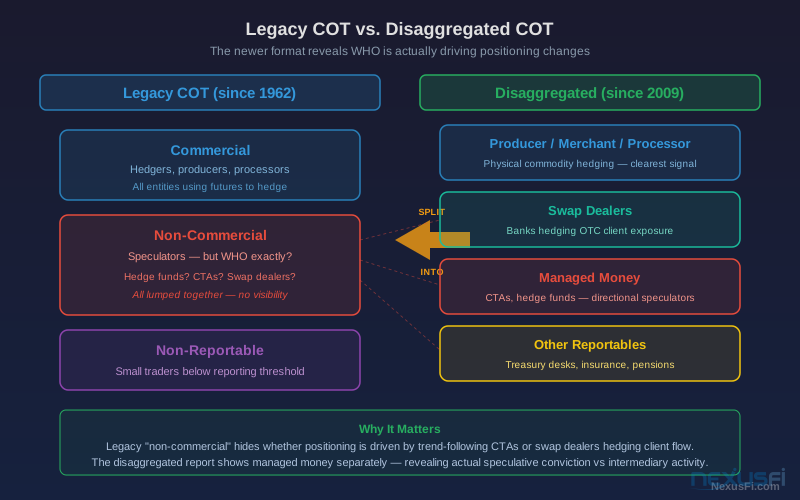
Legacy COT: Three buckets — Commercials, Non-Commercials, and Non-Reportable. Published since 1986. Still widely referenced but analytically blunt because it lumped swap dealers (financial intermediaries) in with physical hedgers under "Commercials."
Disaggregated COT: Five buckets — Producers/Merchants/Processors/Users, Swap Dealers, Managed Money, Other Reportables, and Non-Reportables. Introduced in 2009. This is the format serious traders use. The CFTC introduced it specifically because the growth of commodity index funds — which traded via swap dealers classified as commercials — was distorting the legacy data.
[4] The disaggregated format corrected this distortion by separating index-fund proxy positioning from genuine physical hedging.
The CFTC also publishes the Traders in Financial Futures (TFF) report specifically for financial contracts — currencies, interest rates, and equity indexes. For ES, Treasury bonds, and FX work, the TFF report uses slightly modified categories and is the preferred data source.
The COT report was designed as a regulatory oversight tool, not a trading signal. The CFTC needs to know who holds large positions for market surveillance purposes. The analytical value traders extract is a secondary benefit of mandated disclosure. This context matters when evaluating data limitations.
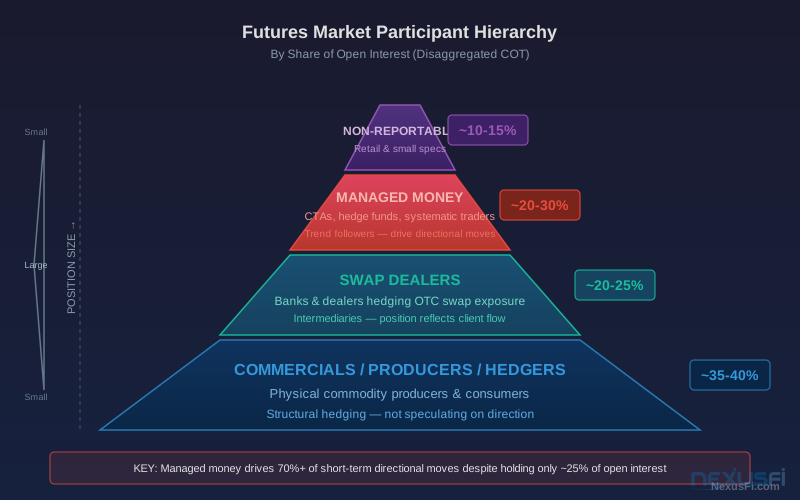
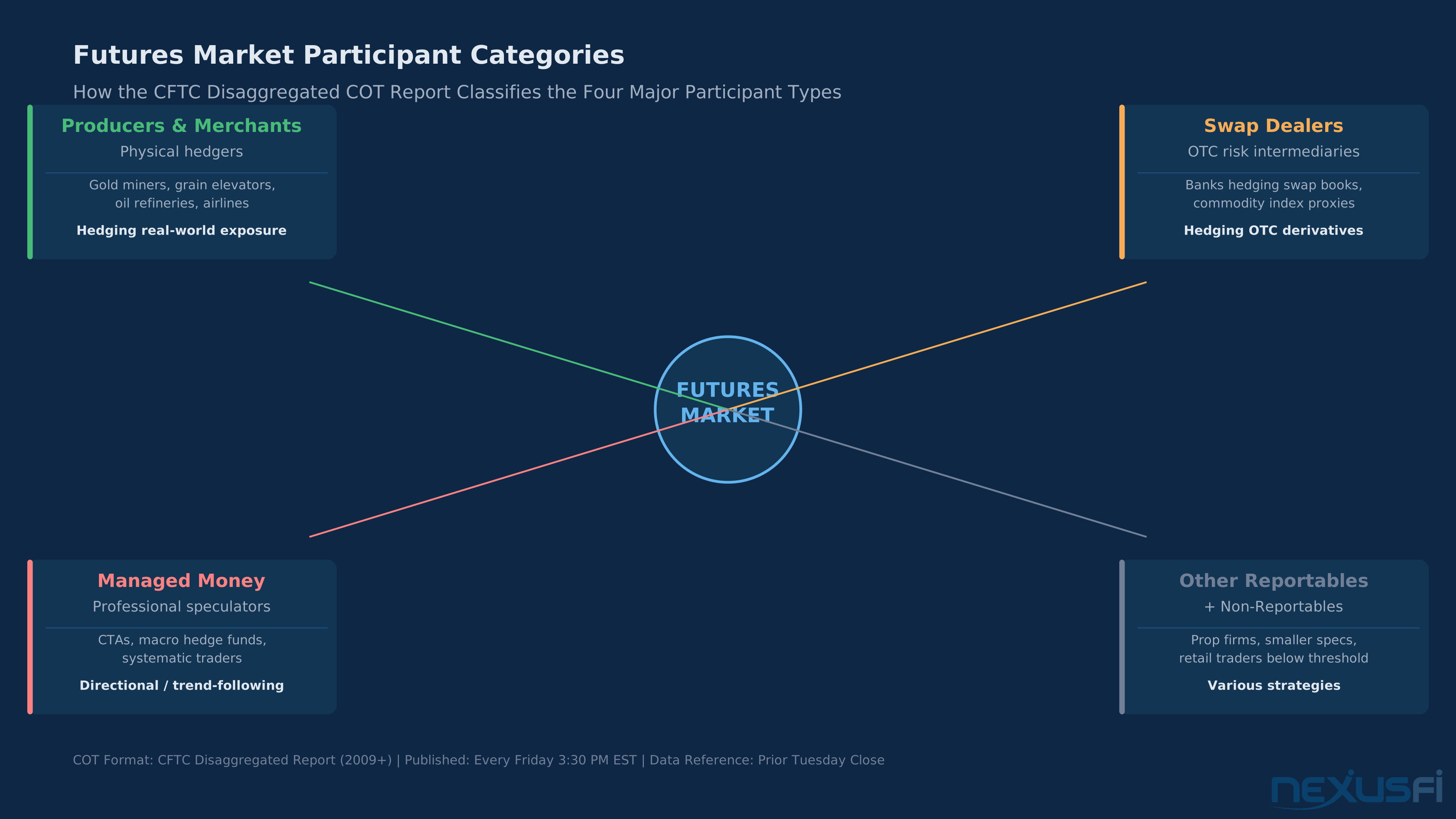
The Four Participant Categories #
Category 1: Producers, Merchants, Processors, and Users #
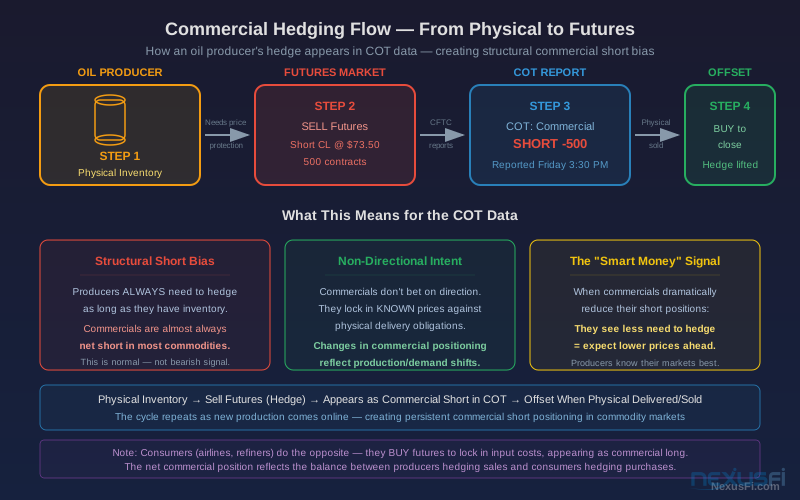
These are the physical-commodity participants. Gold miners hedging future production. Grain elevators locking in prices on stored inventory. Airlines buying crude oil futures to cap jet fuel costs. Agricultural co-ops selling corn forward. Their futures positions are hedges against real-world exposure they already hold in the physical market.
A gold miner with 100,000 ounces of future production sells gold futures to lock in current prices, protecting against price decline. They're short futures but long physical gold in the ground. An oil refinery buying crude futures to hedge input costs is long futures but short the physical risk of rising prices. The futures position offsets cash-market exposure — that's the economic purpose.
Because producers and merchants are hedging real economic positions, their behavior is at the core different from speculators. They don't get stopped out. They don't have drawdown limits that force them to cover. When price moves against their hedge, the offsetting gain in their physical position cushions them. This structural staying power is why extreme producer net-short positions in commodities can persist for extended periods without reversing on their own.
What producer positioning tells you: when producers are deeply short futures — heavily hedging forward production — they've locked in current prices because they're worried prices will fall or want certainty in their business planning. When they've pulled back hedging coverage (less net short than historical norms), it often signals bullish physical market conditions or price levels they're unwilling to sell at.
The scope boundary: This category is meaningful primarily for physical commodity markets. Crude oil, natural gas, gold, silver, agricultural products. It largely doesn't apply to financial futures like ES or Treasury bonds, where there is no physical inventory to hedge.
Category 2: Swap Dealers #
This is the most misunderstood category — and where most COT misreads originate.
Swap dealers are financial intermediaries, primarily large banks and broker-dealers, that run OTC derivatives books. A bank sells an oil price swap to an airline (fixing the airline's fuel cost for the next two years). The bank is now short oil risk. To hedge, the bank buys crude oil futures. The futures position is bullish — but the bank has zero directional view on crude. It's pure bookkeeping.
In commodity markets, swap dealer positioning can sometimes reflect directional flow when their clients are making directional bets (commodity index funds that buy swaps on commodity baskets, for example). But even here, the swap dealer's futures position is the hedge against client flows, not an independent view.
In financial futures, the problem is more acute. A bank that sells equity index swaps to pension funds, provides leveraged beta exposure via total return swaps, or intermediates various structured products will appear in ES futures with positions that reflect their hedging book — not any view on stocks. The same bank might show up as net short ES because it has a net long equity exposure from swap sales that it's hedging with short futures. Bearish signal? No. It's balance-sheet management.
The practical implication: swap dealer positioning in commodities has some analytical value when separating it from physical hedger behavior. In financial futures, it's largely noise from a directional analysis standpoint.
Category 3: Managed Money #
Managed money is the most directional category and the most useful for contrarian signal construction. It covers CTAs (commodity trading advisors), macro hedge funds, registered investment advisors, and other professionally managed speculative accounts.
The majority of CTA money is systematic and trend-following. When crude oil trends up for 8 weeks, CTA models generate buy signals and build long positions. When it trends down, they sell. Their positioning lags price — they add to winners, not anticipate future moves. This makes managed money positioning a lagging indicator of the trend, not a leading indicator of price.
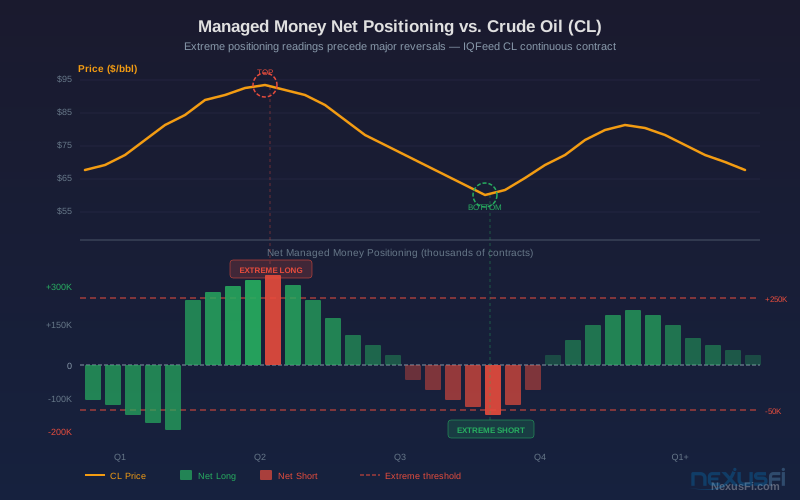
The contrarian signal comes from extremes. When managed money reaches a historically extreme net long position — say, 2 standard deviations above the 5-year mean — it means trend-followers are maximally committed to the current trend. The marginal trend-following buyer is gone. Continuation requires new buyers from other categories. In the absence of fresh fundamental catalysts, the trade has run out of the fuel that drove it.
@Lemmy Caution described the approach of Jason Shapiro — profiled in Unknown Market Wizards as "The Contrarian" and now running a CTA based on COT analysis: "He's looking for 'crowded' trades where there are many speculative bets in the same direction so that a forced unwind in the opposite direction could be pronounced." The key operational detail: "He doesn't simply jump into — against trend no less — any 'crowded' trade with eyes closed hoping for the best. He looks for news failures and signs of a breakdown/breakup." [8]
The mechanism behind a forced unwind is straightforward: managed money positions have risk parameters. When a trade moves against a CTA portfolio, the position gets cut. If 10 CTAs are all long crude at record levels and price breaks a key technical support level, every CTA system generates a sell signal simultaneously. That's not sequential selling — it's correlated liquidation. The COT doesn't predict when this happens, but it tells you the conditions are ripe.
Category 4: Other Reportables and Non-Reportables #
Other Reportables captures large traders above the reporting threshold who don't fit the three primary categories. This includes proprietary trading desks, certain hedge funds, and other institutional participants that don't primarily hedge physical commodity exposure or manage client money in a traditional fund structure. The composition varies by market. It's the analytically weakest category — useful as a residual check rather than a primary signal source.
Non-Reportables are all traders below the reporting threshold. Their aggregate position is derived: total open interest minus the sum of all reportable positions. In most markets, they represent 10-20% of total open interest. As @Schnook noted, the original COT categories going back to 1924 covered "commercials, non-commercials, and non-reportables (the small retail traders)." [5] The small trader collective is occasionally worth watching when it reaches historically extreme levels — retail tends to be wrong at major turning points — but it's a secondary signal.

From Raw Numbers to Trading Signals #
Raw COT data is just contract counts: "Managed money is net long 87,432 crude oil contracts." That number means nothing without context. Is 87,432 historically extreme or historically average? You can't know without normalizing.
Net Position is the simplest form: Long contracts minus short contracts for a given category. Positive means net long (more buyers than sellers in that category), negative means net short. The direction is informative, but the magnitude requires context.
Percent of Open Interest normalizes across different market sizes and time periods:
COT % of Open Interest
Net Position % = (Category Longs − Category Shorts) ÷ Total Open Interest × 100
A reading of +30% means the category is net long an amount equal to 30% of all outstanding contracts.
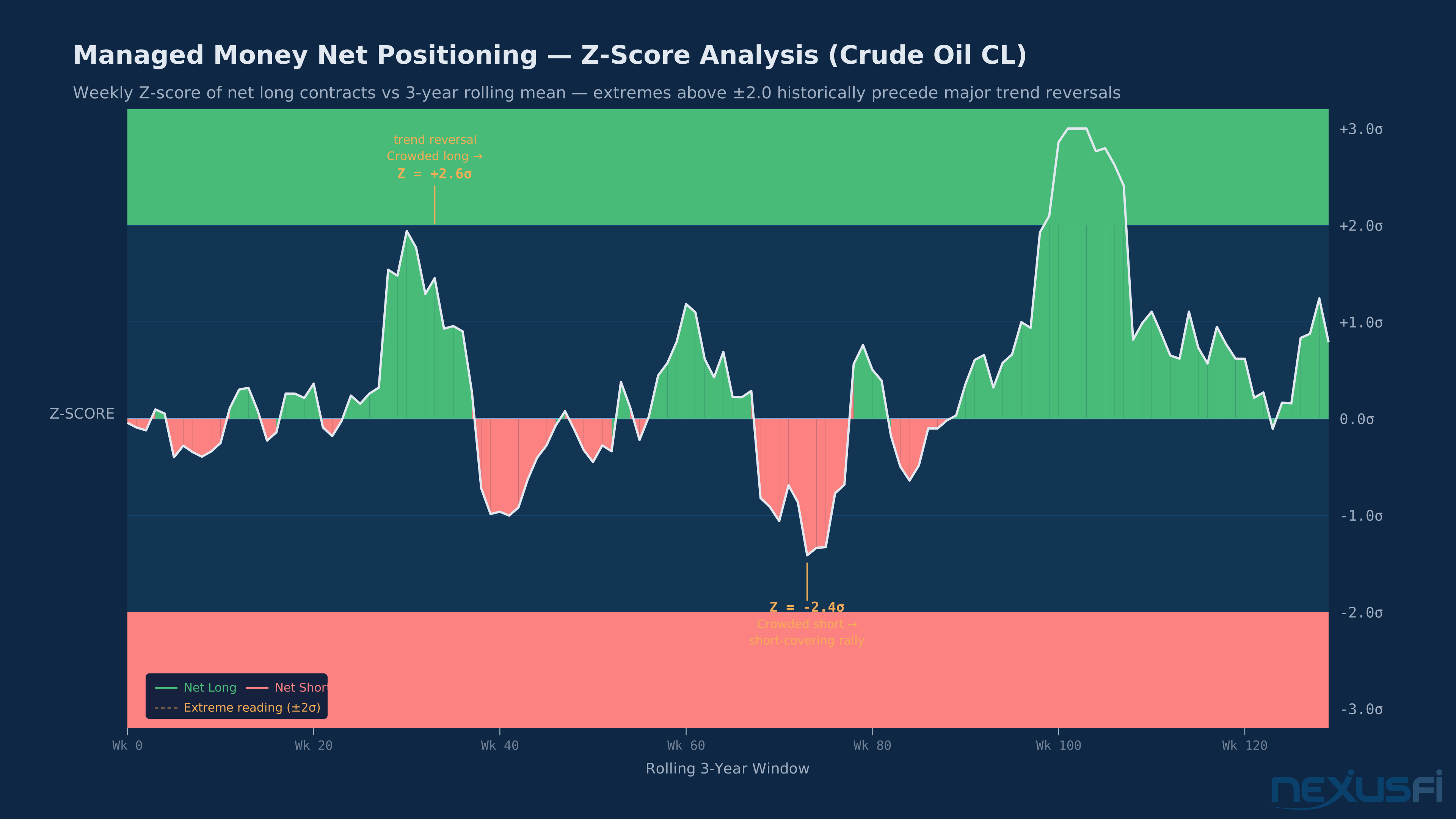
Z-Score (The Correct Approach) normalizes the current reading against historical distribution:
COT Z-Score
Z = (Current Net % − Mean Net % over lookback) ÷ Standard Deviation of Net % over lookback
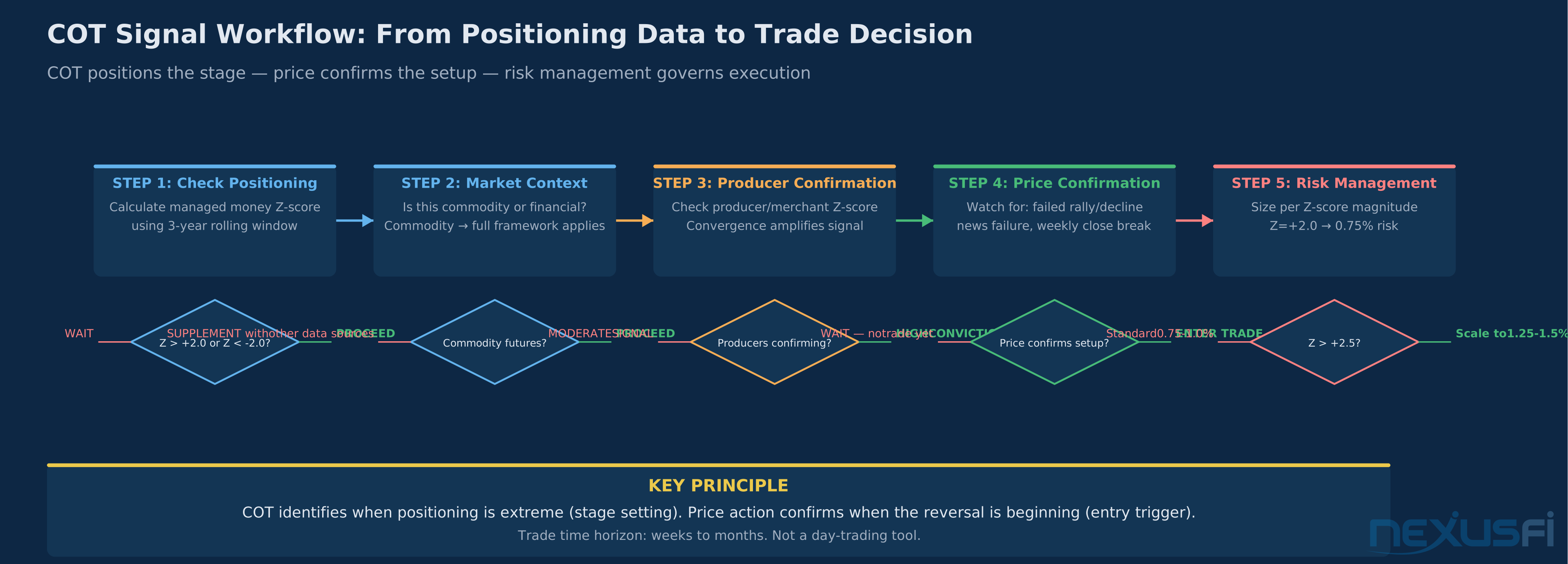
A 3-to-5-year rolling window is standard. Z > +2.0 or Z < -2.0 flags statistically extreme positioning.
Interpretation is probabilistic. A managed money Z-score of +2.3 means positioning is at a level that has historically occurred roughly 1-2% of the time. It doesn't guarantee a reversal — extremes can persist and extend, especially during strong trending conditions. What it tells you is that the risk-reward profile for fresh trend-following positions has deteriorated, and the setup conditions for a reversal exist.
The useful operational framing: use Z-scores to set the stage, use price action to time the trade. A managed money extreme without price confirmation is background information. A managed money extreme followed by a failed rally, a weekly close below key support, or a major news trigger that fails to produce a new high — that's the entry signal.
Use at least 3 years of disaggregated COT data for your rolling window — 5 years is better. Shorter windows create false "extremes" because they don't capture the full positioning cycle. And don't mix pre-2009 legacy data with post-2009 disaggregated data in the same historical series — the category definitions changed materially.
Commodity vs Financial Futures: Why the Same Categories Behave Differently #
This distinction determines whether COT analysis is highly useful or largely misleading for a given market.
Commodities: COT Works #
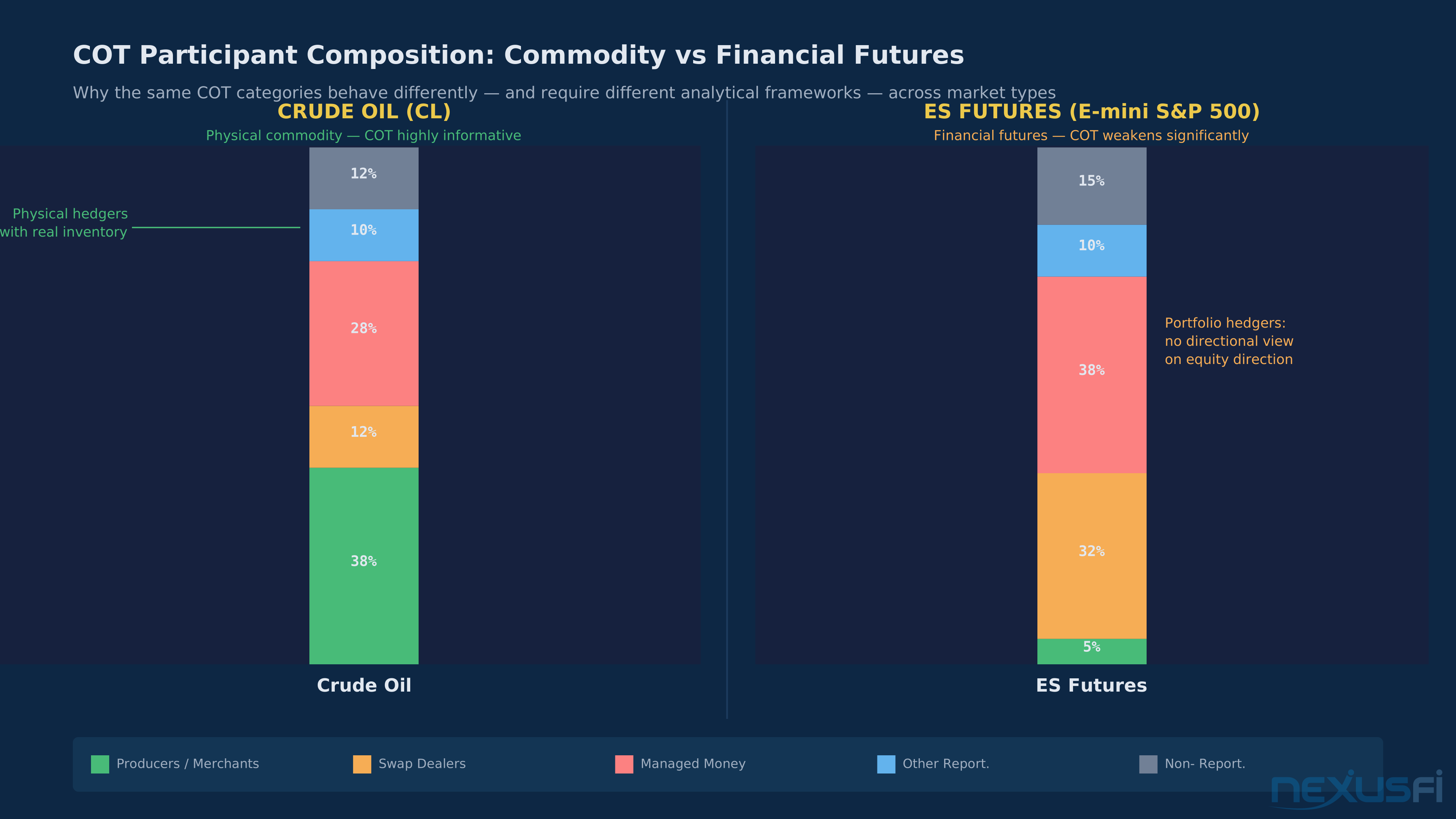
In physical commodity markets — crude oil, natural gas, gold, soybeans, corn, cotton — the producer/merchant category represents entities with genuine physical exposure. A corn elevator sitting on inventory, a gold miner with future production to sell, an airline exposed to jet fuel costs. Their positioning reflects actual supply-demand conditions in the underlying physical market.
When producers push their net short position to historically extreme levels, they've locked in prices on a large portion of their forward production because they're worried about price declines or want revenue certainty. That reflects something real about physical market conditions. When producers are lightly hedged, they're either expecting prices to rise or facing constraints. Either way, it's signal because the behavior ties directly to the physical commodity's economics.
The practical signal architecture for commodities:
- Track managed money net Z-score. Above +1.8 to +2.0, the speculative trade is crowded
- Track producer/merchant net Z-score. Extreme negative readings (heavy producer short) show they're hedged against downside
- Look for divergence and convergence: extreme managed money long + extreme producer short = positioning stretched for a mean-reversion setup
- Wait for price confirmation before entering: failed rally, weekly close below support, news failure. As @Salao documented in a gold analysis: "The COT information sort of advertised the fact that some huge positions were going to get un-wound one way or another." [6] The timing required watching how price responded to news flow
- Time horizon: weeks to months, not days
Financial Futures: COT Weakens #
The analysis changes materially in ES, Treasury bonds, and currency futures. The "commercial" equivalents in these markets are at the core different animals from the grain elevators and oil refineries in commodity markets.
In ES futures, "commercials" are primarily institutional investors — pension funds, asset managers, insurance companies — that hold equity portfolios and use futures to hedge. A pension fund that owns $2 billion in S&P 500 stocks and is selling ES futures to reduce equity exposure isn't making a bearish call on stocks. It's adjusting its equity beta. When the fund later buys those futures back, it's not a bullish signal — it's portfolio rebalancing.
@artemiso, drawing on experience at professional trading firms, described this directly: "ES is driven massively by hedgers. There's multiple folks who are holding billions in notional exposure overnight. These include pensions, large asset managers and mutual funds. These are the ones who are willing to pay 20 ticks in instantaneous slippage in a single trade or don't really care about the execution prices of their individual trades so long as they meet other portfolio objectives." [2]
Meanwhile, much of the actual directional exposure in financial futures sits in OTC markets, not listed contracts. A macro hedge fund running a massive interest rate view might hold the majority of that exposure in OTC swaps, with the listed Treasury futures position representing only the liquid hedging layer visible to the COT. The full positioning picture is opaque.
The practical conclusion: for financial futures, COT provides useful background on aggregate speculative positioning (managed money), but the commercial and swap dealer categories don't carry the same analytical weight they do in physical commodity markets. Supplement with:
- Fund manager surveys (BofA fund manager survey, AAII sentiment)
- Futures-implied positioning from options markets (skew, put/call ratios)
- Basis and term structure signals
- Cross-market positioning across multiple index or rate contracts simultaneously
The "commercials are smart money" thesis breaks down entirely in financial futures. In ES and Treasury markets, commercial hedgers are mechanically hedging equity and bond portfolios with no directional view whatsoever. Applying commodity COT logic to index futures is one of the most common and costly errors in COT analysis.
Practical Trading Applications #
@tigertrader, one of the most cited traders on NexusFi, identified the foundational reality about market structure: "Retail orders from mere mortals like us have very little to do with market structure, and have very little impact on price. Even a profound understanding of fundamentals and value combined with an extensive technical background may not be an effective answer. That is because in the short-term, flow trumps fundamentals for longer than the average leveraged speculator can tolerate." [1]
Understanding participant flows — and reading their positioning through the COT — is how you stop being surprised by that dynamic and start anticipating it. Here are the practical frameworks.
The Crowded Trade Setup (Commodity Markets) #
What you're looking for: Managed money Z-score above +2.0 or below -2.0. This is the entry condition check, not the trade trigger.
What happens at extremes: The speculative community is maximally committed. No marginal buyers remain on the long side. The only directional pressure available now comes from unwinding. New bullish news will be met with selling as longs take profits. Negative news will be met with acceleration as longs hit the exits simultaneously.
The trade trigger: Price and news confirmation. A bullish trigger (OPEC production cut, supply disruption) that fails to produce a new high. A weekly close below a prior week's low in the context of extreme longs. These "news failures" — when the market refuses to respond to information that should push it further in the crowded direction — are the empirical confirmation that the positioning dynamic is playing out.
Risk management: COT-based setups have a wide stop requirement because the positioning extreme can persist and extend before resolving. Position size so. A 1-2% account risk per setup is appropriate; this is not a scalping framework. The payoff is asymmetric when it works — the forced unwind can be violent — but it requires patience and proper sizing.
Historical context: In metals, agricultural, energy, and soft commodity futures, managed money extremes have historically preceded major trend reversals approximately 65-70% of the time when confirmed by price/news failure signals, based on systematic analysis of post-2009 disaggregated data. Without price confirmation, the base rate drops much.
The Week-Over-Week Change Signal #
Rather than waiting for extreme Z-scores, some traders track the rate of change in positioning week-over-week. A sustained multi-week decline in managed money net longs — even from a non-extreme level — can signal that trend-following models are reducing exposure. When CTAs are reducing a directional bet, price momentum typically softens.
This is a leading indicator of trend change rather than a contrarian extreme signal. It's especially useful for intermediate-term swing traders who want to identify when a trend is losing speculative support before the reversal becomes obvious on price charts.
Position Sizing with COT Signals #
The Z-score magnitude can inform position sizing. A managed money Z-score of +1.8 with a confirmed price failure might warrant a 0.75% account risk. A Z-score of +2.5 with the same confirmation — historically rarer and associated with more violent reversals when they occur — might warrant 1.5%. Scaling risk to the magnitude of the positioning extreme acknowledges that more extreme conditions create more asymmetric setups.
Cross-Market COT for Financial Futures #
When applying COT to index futures, view all major index contracts together — ES, NQ, YM, RTY (Russell 2000) — rather than any single contract in isolation. A genuine speculative positioning extreme shows up across multiple index futures simultaneously. A positioning extreme in only one index while others are neutral suggests contract-specific hedging rather than a broad speculative crowding event.
Supplement with the BofA Global Fund Manager Survey (monthly, shows institutional equity allocation levels) and the AAII Investor Sentiment Survey (weekly, shows retail sentiment). When the COT managed money extreme, the FMS equity overweight, and AAII bullish reading all converge, you have genuine crowding across multiple positioning datasets.
COT data answers "who is crowded?" — not "when does it reverse?" Use positioning extremes to identify asymmetric risk-reward setups. Use price action, news failures, and technical levels to time the entry. COT without price confirmation is background information. COT with price confirmation is a trade.
When COT Fails #
No tool works unconditionally. COT analysis breaks down in specific scenarios that experienced traders must recognize.
The snapshot timing problem: The data covers positions as of Tuesday. Published Friday. By the time you're reading it, 3 trading days have elapsed. During high-volatility periods — a Fed decision, a major geopolitical shock, a surprise inflation print — the Tuesday snapshot can be dramatically stale. A macro event on Wednesday can force large position liquidations that never appear in the Friday report. The next week's report captures the aftermath.
Structural regime changes: COT signals require stable participant behavior to remain reliable. When the CFTC changes reporting classification rules (as happened in 2009), when major new participant classes enter a market (the commodity index fund boom post-2004 severely distorted legacy COT), or when regulatory changes alter hedging behavior (Dodd-Frank post-2010), historical Z-scores may no longer calibrate against current readings. Treat the pre-2009 legacy data separately from post-2009 disaggregated data.
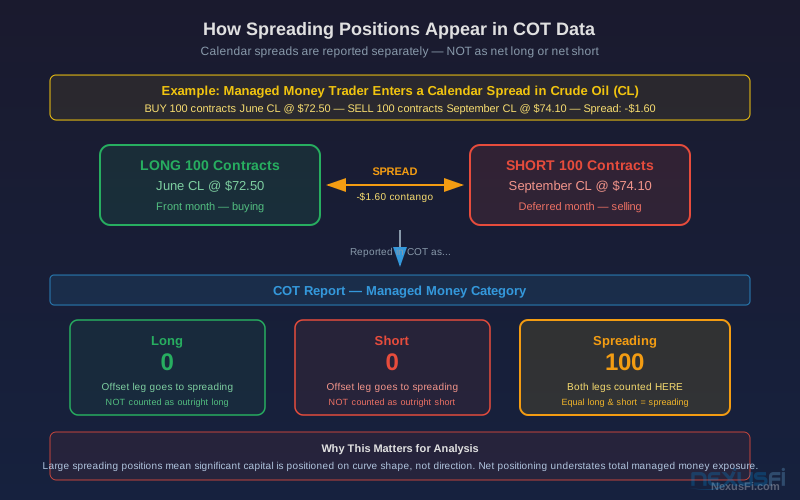
Roll date distortions: COT positions are reported in listed contracts, and positions shift from front to next month during roll periods. This creates temporary spikes and drops in category readings that look like positioning changes but are roll mechanics. Working with continuous-contract position series requires adjustment for roll effects.
The financial futures limitation — repeated because it's that important: Applying commodity COT logic to ES, Treasury bonds, or FX futures produces unreliable signals because the economic function of the commercial hedger category is at the core different. As @Schnook noted, COT in financials "has only limited value, as the underlying cash markets typically capture far more of the overall volume." [7]
The data's inherent incompleteness: The COT captures only positions above reporting thresholds. Positions in OTC derivatives that aren't hedged in listed futures don't appear. Options positions (unless specifically captured in combined futures+options COT formats) aren't fully reflected. The report is a useful window into listed futures positioning, not a complete map of market risk.
The COT report was designed for regulatory oversight, not trading signals. Its analytical value exists, but it's a secondary benefit of a mandated disclosure system. The data quality reflects that — it's good but imperfect, and working with its limitations is part of using it correctly.
Key Specifications: COT Publication and Access #
| Item | Detail |
|---|---|
| Publisher | CFTC (Commodity Futures Trading Commission) |
| Publication frequency | Weekly |
| Publication day/time | Every Friday at 3:30 PM EST |
| Data reference date | Prior Tuesday's close |
| Data lag | ~3 trading days |
| Report formats | Legacy (3 categories), Disaggregated (5 categories), TFF (financial futures) |
| Reporting threshold (ES) | 1,000 contracts net |
| Reporting threshold (CL crude) | 350 contracts net |
| Historical coverage | Legacy: 1986+, Disaggregated: 2009+ |
| Access | Free at cftc.gov/MarketReports/CommitmentsofTraders |
Third-party platforms including finviz.com, cotbase.com, and barchart.com aggregate and visualize COT data with historical charts and category breakdowns. Most futures-focused trading platforms also integrate COT overlays.
Knowledge Map
Prerequisites
Understand these firstGo Deeper
Build on this knowledgeReferences This Article
Articles that build on this topicCitations
- — Spoo-nalysis ES e-mini futures S&P 500 (2015) 👍 34“Retail orders from mere mortals like us have very little to do with market structure, and have very little impact on price.”
- — Who is the final bill payer of stock index futures in this zero sum game? (2019) 👍 10“ES is driven massively by hedgers.”
- — why are large speculators a mirror image of commercials? (2019) 👍 4“Commercials and specs will always be mirror images. It's what the futures market is all about.”
- — Commitment of traders (2010) 👍 5“Extreme readings of the COT figure can be used as a sentiment indicator for countertrades.”
- — The Scalper's Journey (2017) 👍 3“The producer/merchant class of trader is what we would refer to as the commercials.”
- — COT Report? (2022) 👍 3“The COT information sort of advertised the fact that some huge positions were going to get un-wound one way or another.”
- — COT Report? (2022) 👍 2“In metals, ags, softs and energy the COT data tells a big part of the positioning story. In financials, the COT data has only limited value.”
- — how do make use of COT to its best ability? (2025) 👍 4“He's looking for crowded trades where there are many speculative bets in the same direction.”
- — Spoo-nalysis ES e-mini futures S&P 500 (2021) 👍 8“For equity indexes I find it useful to view the COT data in all of the index futures and supplement with additional sentiment data.”
- — Futures Margin Leniency (2023) 👍 3“Discussion of broker margin policies and how SPAN minimums vary across FCMs -- shop around for the right margin treatment.”
- — PC-SPAN (2014) 👍 3“Practical walkthrough of SPAN margin calculations and how overall margin requirements drive potential margin calls.”