



Open Interest in Futures: How Exchanges and Clearinghouses Track, Report, and Enforce Position Commitment Data
Overview #
Open interest is one of the most widely cited numbers in futures markets — but most traders interact with only the output, never the machinery that produces it. Open interest is not a market sentiment indicator derived from surveys, order flow, or price movements. It is an accounting figure: the total count of outstanding futures contracts that have not yet been offset, delivered, or settled. Every number your platform displays as "OI" flows from a specific operational pipeline involving matching engines, clearing houses, compliance systems, and regulatory reporting infrastructure.
Understanding this pipeline changes how you read OI data. The figure updating on your screen reflects cleared position data — not raw trade counts — processed through netting rules, lifecycle events, and settlement cycles before publication. The exchange is the publisher; the clearinghouse is the author.
This article covers how futures exchanges and clearinghouses produce, maintain, and publish open interest data — and how regulators and surveillance teams use that data to monitor market integrity. Understanding the mechanics behind the number gives futures traders a more accurate foundation for interpreting OI changes and avoiding common misreadings driven by structural effects rather than genuine shifts in market participation.
For the trader-facing interpretation of open interest — the price-volume-OI matrix, breakout confirmation, and the COT report — see Open Interest Data for Futures Trading. This article covers the institutional infrastructure those readings depend on.
The Clearinghouse: The Authoritative Source of Every OI Figure #
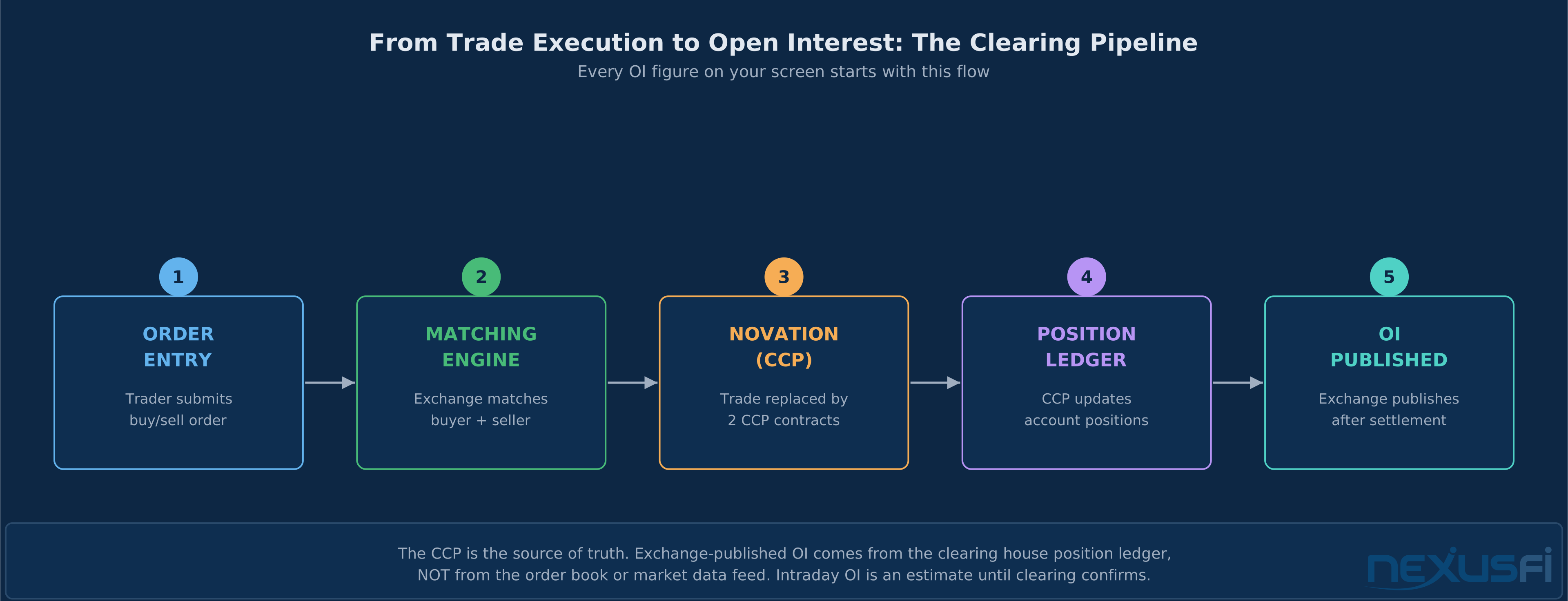
When a futures trade executes on an exchange's matching engine, it immediately enters a second pipeline: clearing. Every executed trade is submitted to the central clearing counterparty (CCP) — the institution that stands between buyer and seller, becoming the counterparty to both sides through a process called novation.
The CCP's position ledger is the authoritative source of open interest. Not the exchange matching engine. Not the market data feed. The CCP.
This distinction matters because the exchange and the CCP are operationally distinct entities, even when they are part of the same corporate structure. CME Group, for example, operates both the CME exchange and CME Clearing. The exchange matches trades; the clearing house novates them, posts them to position ledgers, applies netting rules, collects margin, and manages risk. The OI figure the exchange publishes every day is derived directly from the clearing house's end-of-day position aggregation.
How Novation Works #
When a buyer and seller are matched:
- The original trade between the two parties is replaced by two new contracts — one between the buyer and the CCP, one between the CCP and the seller.
- Neither party now has a direct exposure to the other; both face the clearing house.
- The clearing house maintains separate position records for every clearing member, tracking long and short quantities by product and contract month.
- From the CCP's perspective, the sum of all long positions equals the sum of all short positions for any given contract — because every long position was created by novation with a matching short.
OI is simply the count of outstanding contracts on one side of this ledger. Since longs equal shorts by construction (through novation), reporting one side reports the other simultaneously.
Why Clearing Members Matter #
Retail traders access futures markets through futures commission merchants (FCMs) and clearing members — firms registered with and accepted by the clearing house. Individual trader positions are aggregated at the clearing member level before flowing into the CCP's ledger. The clearing house typically sees:
- House positions: the clearing member's own proprietary trading accounts
- Customer positions: aggregate customer exposure held by the FCM on behalf of retail and institutional clients
- Omnibus vs. disclosed accounts: in some structures, the clearing house sees only the FCM's aggregate; in others, individual beneficial owners are disclosed
This architecture means that for most retail traders, individual account OI flows into the clearing house aggregated under their FCM — not as a separate line item. The clearing house knows the FCM holds X long contracts across its clients; it does not necessarily know that you specifically hold five of them.
How Open Interest Is Calculated #
The OI mechanics are precise and flow directly from the CCP's position accounting.
The Three Trade Types #
Every futures trade falls into one of three categories from an OI perspective:
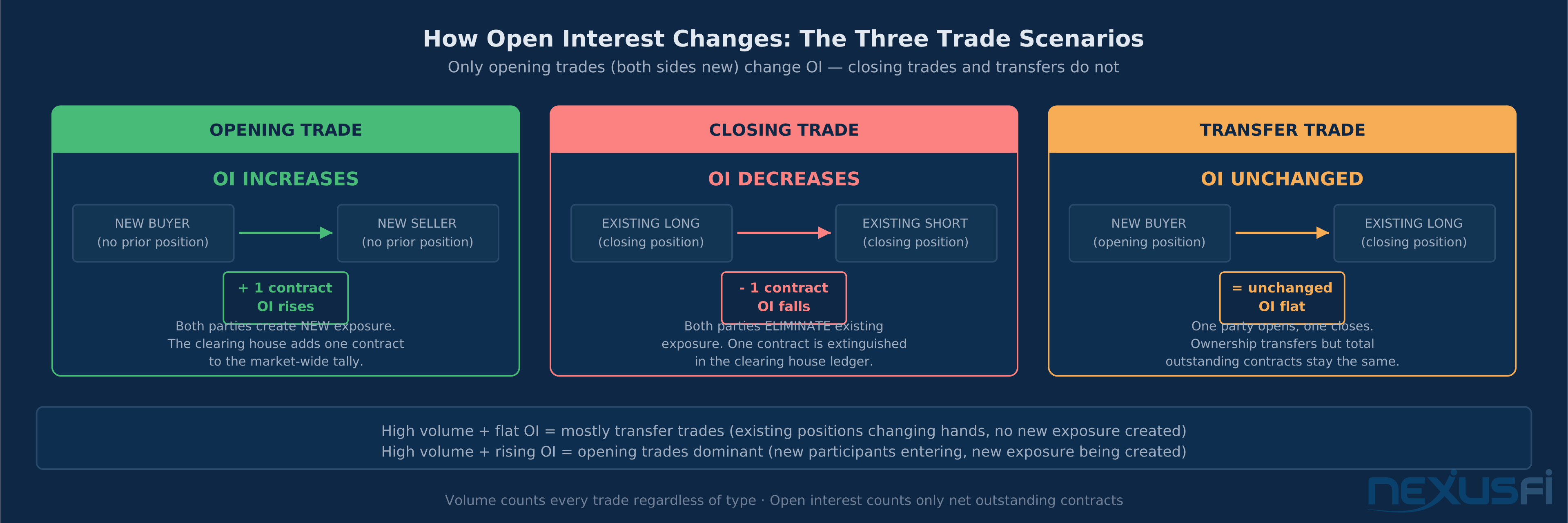
Opening trade: Both the buyer and the seller are establishing new positions — the buyer is creating a new long, the seller is creating a new short. Neither party had a prior position in this contract month. Result: OI increases by the number of contracts traded.
Closing trade: Both parties are eliminating existing positions — the buyer is covering a short position, the seller is closing a long position. Both parties reduce their exposure to zero (or net reduce by the quantity traded). Result: OI decreases by the number of contracts traded.
Transfer trade: One party is opening a position while the other is closing one. A new buyer purchases contracts from a seller who is closing a long. The total number of outstanding contracts is unchanged — one owner replaces another. Result: OI is unchanged.
The critical practical point: volume counts every transaction regardless of type; OI counts only the net outstanding contracts. It is entirely possible to see extremely high volume on a price move with zero OI change — if the move consists entirely of existing long holders selling to new buyers (transfers), with no new positions created and no old positions closed.
Clearing-Side Classification #
The clearing house classifies each side of every trade as "opening" or "closing" based on the existing position state of the relevant account. This classification uses netting rules specified in the clearing house's rulebook:
- If an account has no existing position in the contract and executes a buy, the buy is classified as an opening trade
- If an account holds a long position and executes a sell of the same contract, the sell is classified as a closing trade (up to the quantity of the existing long)
- If the sell exceeds the existing long, the excess is classified as an opening short position
This classification happens at the clearing member/account level, ensuring that OI changes accurately reflect the creation and destruction of exposure in the market — not just the movement of positions between participants.
Intraday vs. End-of-Day OI #
Most exchange-published OI is an end-of-day figure released after the settlement cycle completes. Intraday OI updates exist on some platforms and data feeds, but they are typically estimates based on trade-by-trade tracking rather than the final clearing-confirmed numbers.
The CME publishes a preliminary OI figure during the trading day and a final confirmed figure in the daily bulletin after clearing is complete. These numbers may differ if large block trades, exercise/assignment events, or intraday corrections affect the position ledger between the preliminary and final calculations.
Platform OI during the session is an estimate. Verify against the CME Daily Bulletin when OI interpretation matters for a trade decision — the bulletin is the clearing-confirmed, authoritative figure.
Contract Lifecycle Events That Change OI #
OI is not just a function of trading activity. Several contract lifecycle events affect OI outside the normal buy-sell flow.
Calendar Rolls #
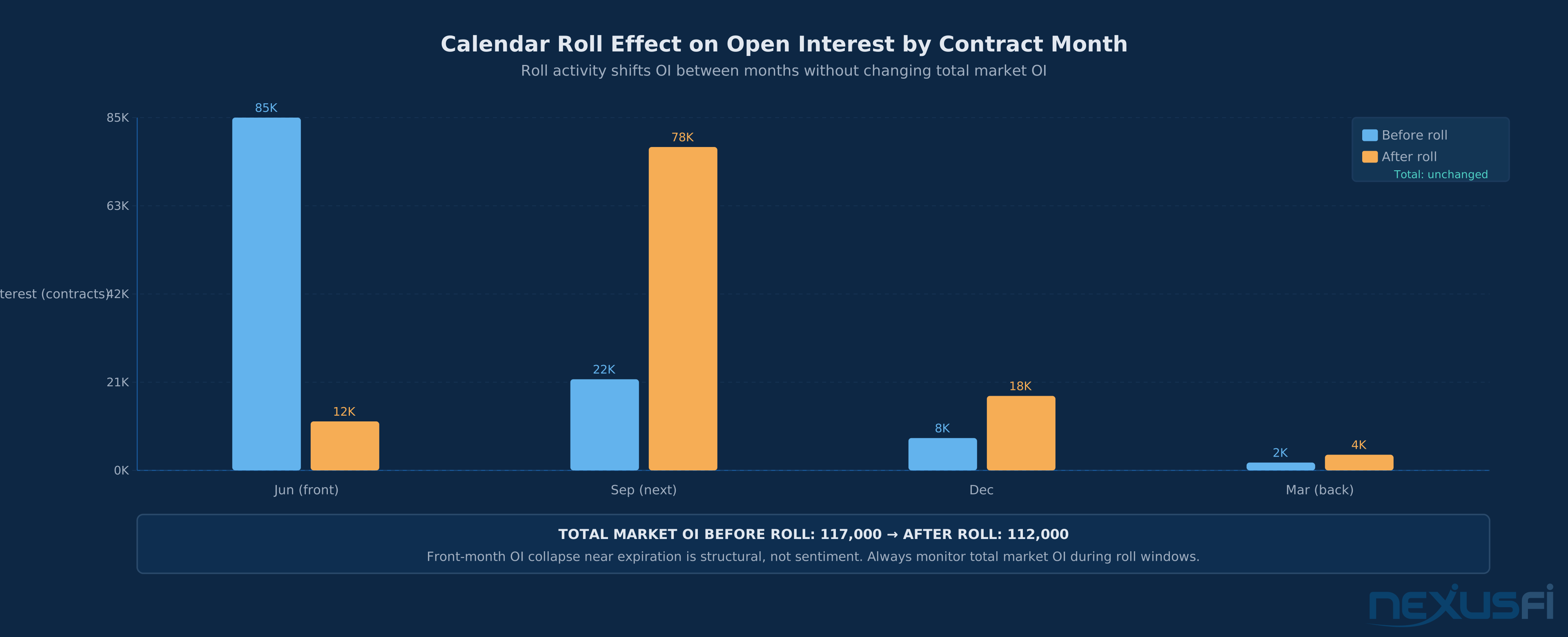
A calendar roll involves closing a position in one contract month and opening an equivalent position in a later month. From an OI perspective:
- The expiring contract's OI decreases by the rolled quantity
- The deferred contract's OI increases by the same amount
- Total market OI (summed across all months) is unchanged
This creates the characteristic OI collapse in front-month contracts in the weeks before expiration. This OI decline carries no sentiment information — it is structural, reflecting the mechanical migration of positions from the expiring contract to the next.
Platforms that display only front-month OI create a false impression of market disengagement near expiration. Total market OI, or combined OI across all months, is the correct baseline for sentiment analysis in these windows. The clearing house tracks OI by contract month separately precisely to allow this aggregation.
Roll window OI collapse is structural, not bearish. Reference total market OI — not front-month OI — during the 2 weeks before expiration. A 30% front-month OI decline during the roll window carries zero sentiment information.
Expiration and Final Settlement #
At contract expiration (or first notice day for physically delivered contracts), positions that have not been offset are settled:
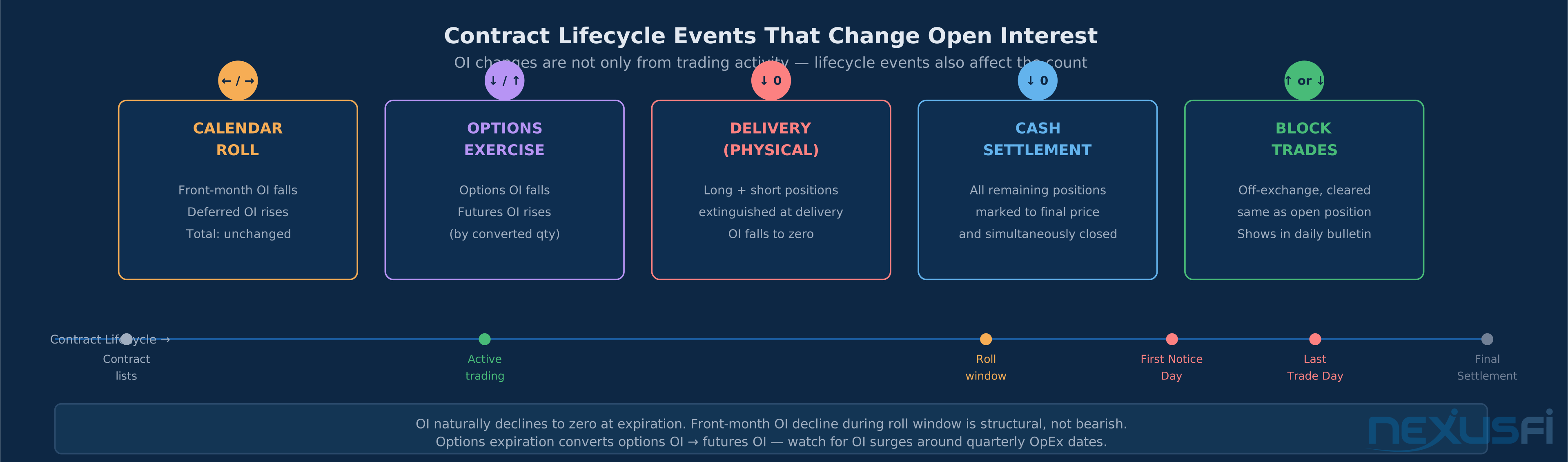
- Physically delivered contracts: Remaining longs are matched to remaining shorts for delivery of the underlying commodity or financial instrument. Both the long and short positions are extinguished through the delivery process. OI falls to zero in the expiring contract as delivery is completed.
- Cash-settled contracts: The final settlement price is published by the exchange, and all remaining positions are marked to that price and cash-settled. Positions are simultaneously extinguished, reducing OI to zero.
In either case, OI in the expiring contract reaches zero by the completion of the settlement cycle. This OI elimination is mechanical, not a trading signal.
Options on Futures: Exercise and Assignment #
When an option on a futures contract is exercised:
- The option contract is extinguished (options OI falls by the exercised quantity)
- A futures position is created — long futures for a call exercise, short futures for a put exercise (from the exercising party's perspective)
- The futures OI increases by the quantity of contracts created through exercise
This is a direct OI transfer from the options market to the futures market. Large options expirations — especially quarterly OEX events — can produce significant futures OI changes that have nothing to do with directional sentiment. Exchange surveillance teams account for these events when evaluating OI changes around expiration windows.
EFPs and Block Trades #
Exchange for physicals (EFPs) and block trades are executed off-exchange and reported to the clearing house for clearing. When these transactions are processed:
- The OI impact is identical to an exchange-executed trade (opening trades increase OI, closing trades decrease it)
- The OI change appears in the same daily bulletin as exchange-executed trades
- Large block trades can produce significant single-session OI changes that are not visible in the exchange's public order book
For detailed mechanics of off-exchange transactions, see Block Trades, EFPs, and Off-Exchange Transactions in Futures Markets.
Large Trader Reporting: Who Holds the OI? #
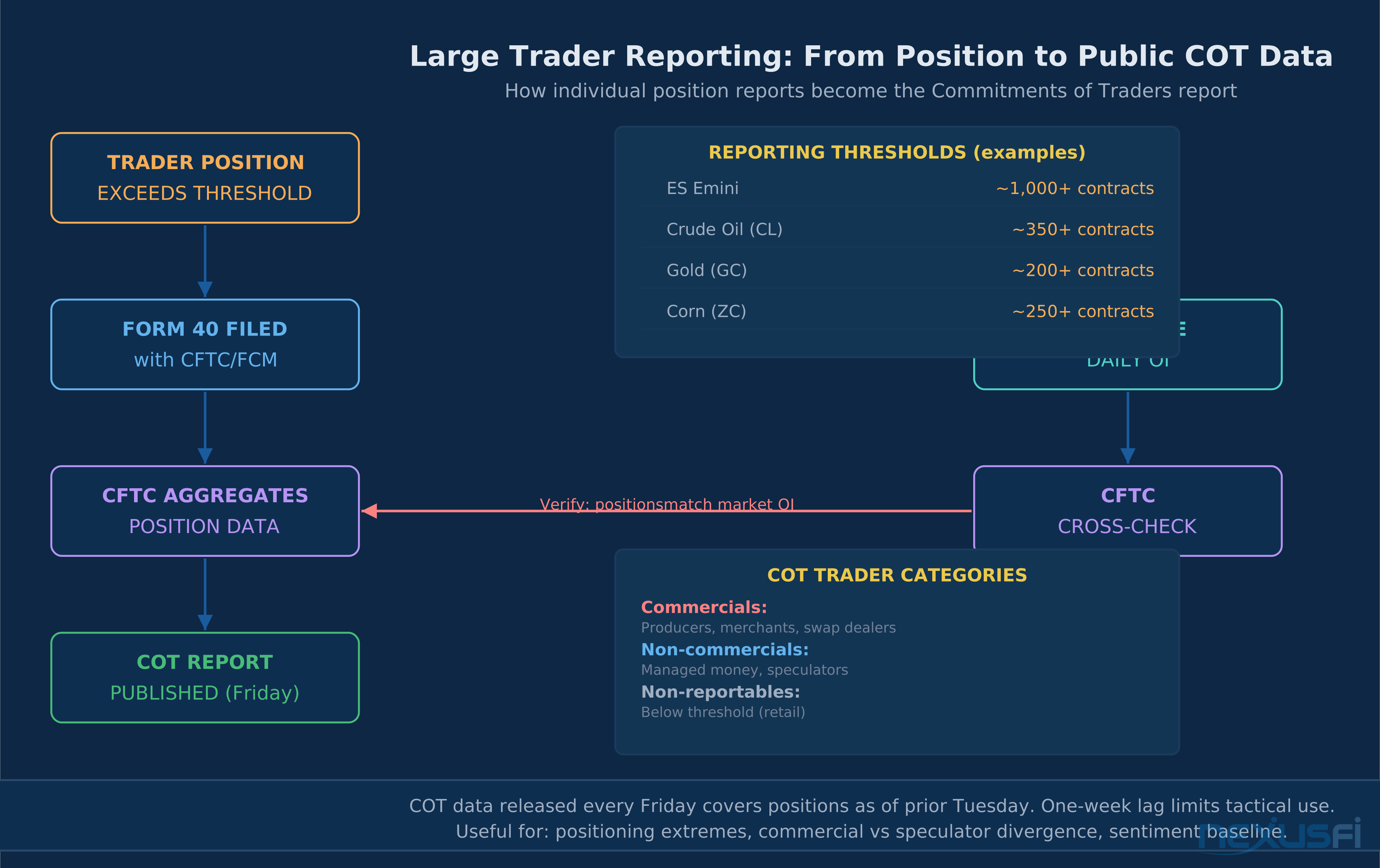
Aggregate OI tells you how much exposure exists in a futures market. Large trader reporting tells you who holds it — and this disaggregation is critical for both regulatory oversight and the COT report that traders use for positioning analysis.
The Reporting Threshold System #
In the United States, the CFTC requires all futures market participants holding positions above specific thresholds to file daily position reports. These thresholds are defined by contract and published in the CFTC's Commitments of Traders framework:
- Thresholds vary by product — an ES emini position exceeding approximately 1,000 contracts triggers reporting requirements in most accounts; crude oil thresholds differ
- Once a trader's position crosses a threshold, they must file Form 40 (Statement of Reporting Trader) with the CFTC or their designated reporting agent
- The filing obligation is not optional — "A reportable trader must file a Form 40 on call by the Commission or its designee" per CFTC regulations
NexusFi member Schnook, who encountered these requirements directly, described the experience in a 2020 discussion (post 795501): "Since you now hold a large futures position you don't have a choice in the matter. You 'must' report. If I were in your position I would call your broker or clearing firm and speak to their compliance department."
What the Reports Contain #
Each large trader position report includes:
- Long and short quantities by contract month
- Account classification: commercial hedger (producers, processors, merchants, swap dealers) versus non-commercial speculator (managed money, other reportables)
- Beneficial ownership information: who ultimately controls the position, not just which FCM holds it on the ledger
- Cross-market relationships: if the same beneficial owner holds positions in multiple related contracts, this is disclosed for consolidated exposure assessment
The CFTC aggregates these individual reports and cross-references them against exchange-published OI to verify that all reportable positions have been disclosed. The math must balance: the sum of all reported large trader positions plus the estimated non-reportable positions should equal total market OI.
The Commitments of Traders Report #
The COT report — published weekly by the CFTC, typically on Fridays for data through the prior Tuesday — is the public face of the large trader reporting system. It disaggregates total OI into:
- Commercial hedgers (producers, merchants, processors, swap dealers)
- Non-commercial traders (managed money / speculators, other reportables)
- Non-reportable traders (everyone below the reporting threshold)
NexusFi member Fat Tails provided an authoritative overview of the COT framework (post 62417): "Commitment of Trader is extremely useful, as it shows the market positions of different groups of traders. You want to know what the others are doing. Extreme readings of the COT figure can be used as a sentiment indicator for countertrades."
For practical application of COT data in futures trading, see Commitment of Traders (COT) Report.
Position Limits: OI as the Enforcement Context #
Position limits — the maximum number of contracts a single trader or beneficial owner group can hold — are enforced against individual account positions, not against aggregate OI. But OI provides the essential context for why limits exist and how they are calibrated.
How Limits Are Set and Enforced #
The CFTC sets federal speculative position limits for physical commodity futures under the Dodd-Frank Act. Individual exchanges set their own limits for financial futures and for contract months not subject to federal limits. Limits typically specify:
- Spot-month limits: Maximum positions during the delivery period (most restrictive)
- All-months-combined limits: Maximum aggregate long or short positions across all contract months
- Single-month limits: Maximum position in any individual deferred contract month
Enforcement is real-time: the clearing house monitors individual account positions against applicable limits and can issue margin calls, force position reductions, or restrict new orders if limits are breached.
The Connection to OI #
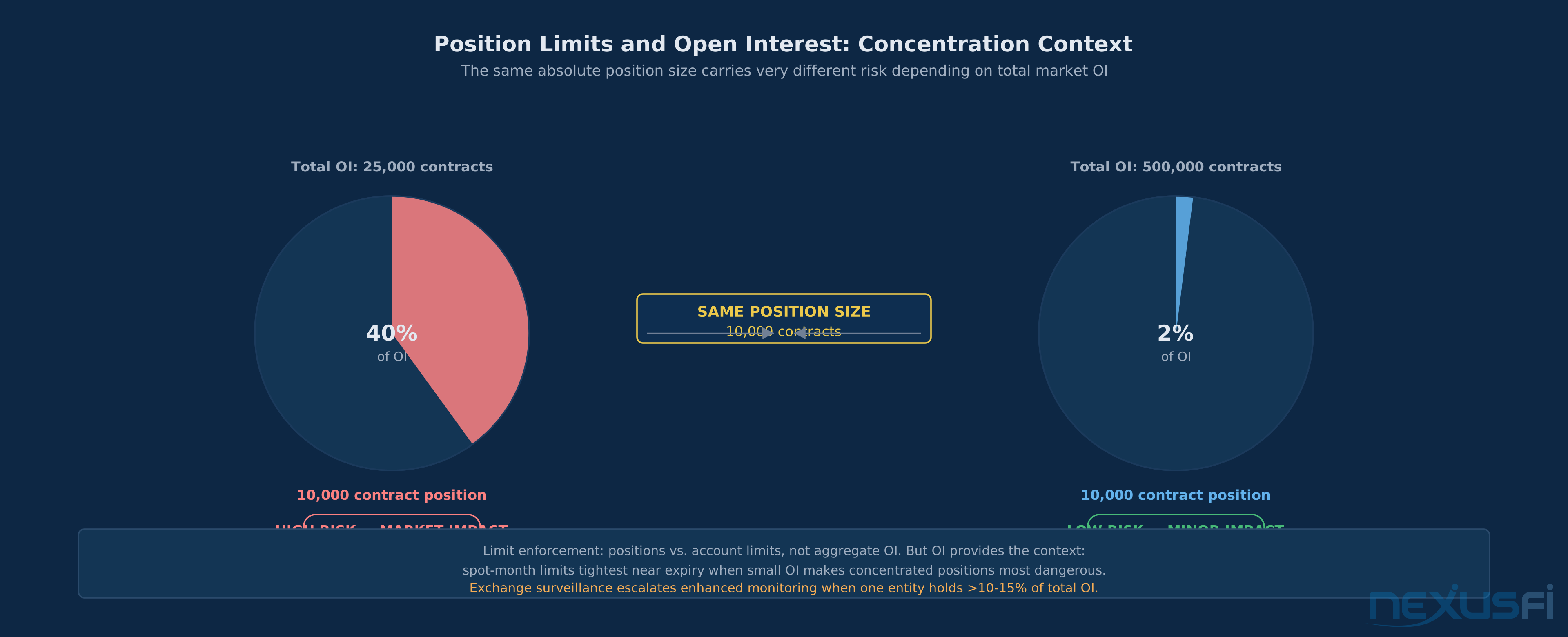
While limits are enforced per-account, OI makes limit breaches meaningful in context. A 10,000-contract position is vastly different in a market with 500,000 contracts of OI (2% concentration) versus one with 25,000 contracts of OI (40% concentration). The higher the concentration, the more a single participant's trading activity can move prices — creating the cornering or squeezing dynamics that limits are designed to prevent.
Exchange risk managers and surveillance teams monitor the ratio of reportable positions to total OI as a concentration indicator. When a small number of entities hold an unusually large percentage of total OI in a specific contract month, this triggers enhanced monitoring even if no individual limit has been formally breached.
Sudden OI spikes in near-term contract months — especially when combined with unusual price behavior and high concentration — can trigger temporary limit tightening or enhanced reporting requirements as a preventive measure.
Market Surveillance: How Exchanges Use OI to Detect Problems #
Market surveillance is one of the most consequential uses of OI data at the exchange level. Surveillance teams at CME Group, ICE, Cboe, and other exchanges run automated and manual monitoring programs that combine OI data with price, volume, order flow, and large trader position information to detect potential market manipulation, squeeze dynamics, and systemic risk buildup.
The OI-Price-Volume Surveillance Framework #
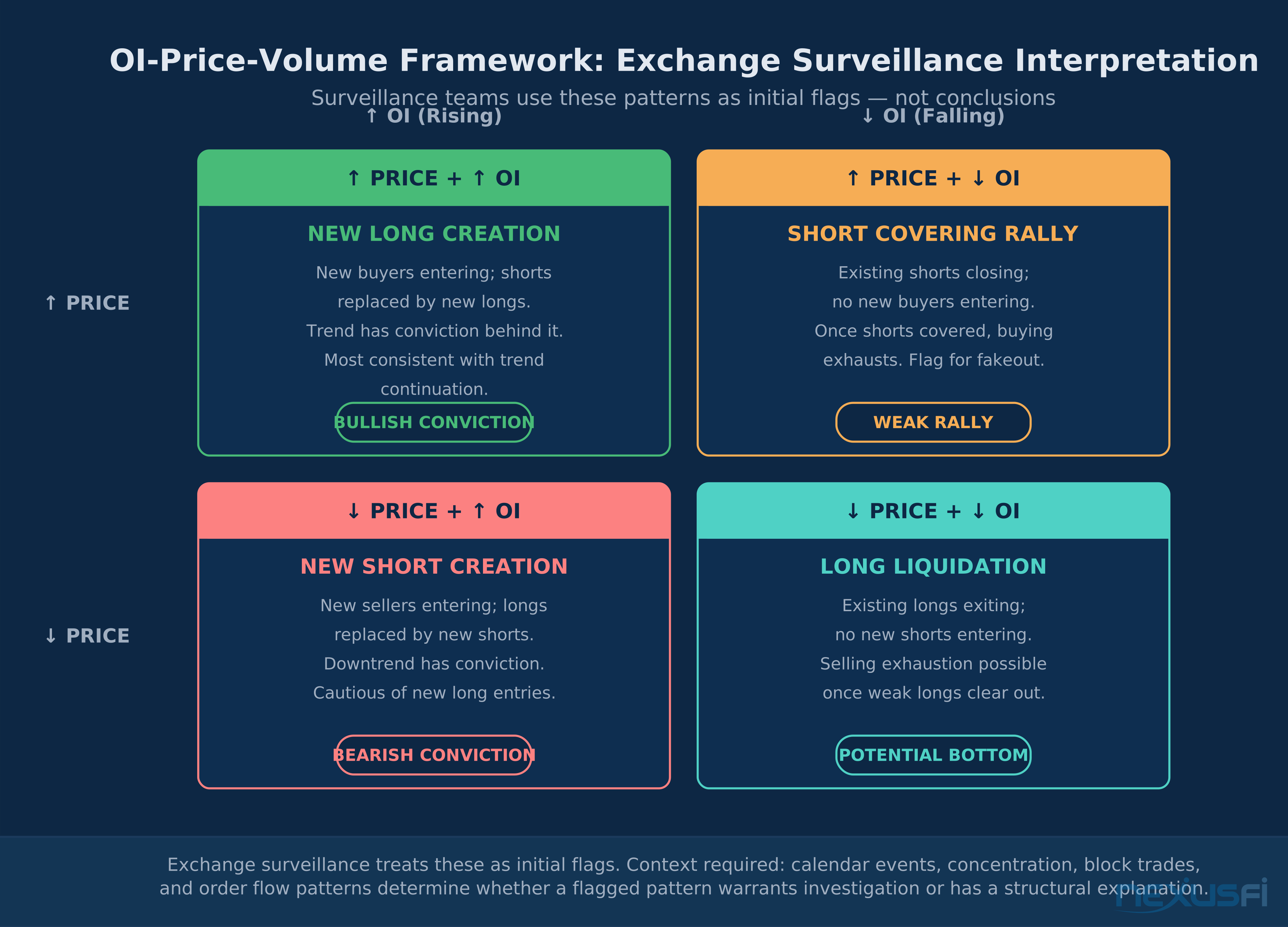
The classic analytical framework used in surveillance combines three variables:
| OI Change | Price Change | Surveillance Interpretation |
|---|---|---|
| Rising | Rising | New long creation (typical trend confirmation) |
| Rising | Falling | New short creation (typical bear trend) |
| Falling | Rising | Short covering (longs not entering) |
| Falling | Falling | Long liquidation (shorts not entering) |
Surveillance teams use these patterns as initial flags, not conclusions. The same price-up/OI-up pattern that looks like a healthy trend can also precede a manipulative accumulation phase. Context — including the concentration of OI across accounts, the presence of block trades, and the relationship to upcoming delivery dates — determines whether the pattern warrants investigation.
The OI-price matrix is a screening tool, not a conclusion. The same rising-OI/rising-price pattern that confirms a healthy trend can also precede manipulative accumulation. Always check concentration data and calendar context before acting on OI-price signals.
Abnormal OI Change Detection #
Surveillance systems flag OI changes that deviate much from expected patterns. "Expected" is calibrated based on:
- Historical OI patterns for the same contract at the same point in its lifecycle
- Calendar context: whether a roll window, expiration, or major economic event explains the change
- Concentration data: whether the OI change is distributed across many accounts or concentrated in a small number
A 20% single-session OI increase in a thinly traded agricultural contract outside a roll window is more likely to trigger investigation than a 20% OI increase in ES during a major index rebalancing period. Surveillance teams maintain product-specific baselines that define what "normal" looks like.
Squeeze and Corner Detection #
Open interest data is a key input into squeeze and corner detection models. A classic front-month corner attempt involves:
- Building a concentrated long position in the front-month contract (rising OI, rising price)
- Allowing positions to approach the delivery period without rolling
- Creating a situation where shorts must either deliver physical commodity (difficult or expensive) or offset at elevated prices
Surveillance indicators for this pattern include:
- Unusually large front-month OI relative to historical patterns at the same point before first notice day
- High concentration: one or a few accounts holding a large percentage of front-month OI
- Rising spot-month basis (front-month premium to cash/physical market)
- Limited inventory or delivery receipts available to shorts
The exchange can intervene directly — requiring early delivery, imposing emergency position limits, or adjusting deliverable grades — but early detection through OI monitoring is the preferred tool.
NexusFi member SMCJB, explaining position data resources to a newer member (post 592651), noted: "The Open Interest Data is available almost anywhere. That will show you how many current open contracts there are. The US Commodity Futures Trading Commission (CFTC) also publish weekly Commitment of Traders (COT) Reports that show what the long and short position of commercials vs non-commercial vs small-traders."
Term Structure Surveillance #
Surveillance extends beyond single contracts to OI patterns across the term structure. Unusual OI buildups in deferred contract months — especially in commodity futures — can signal anticipated physical market tightness, planned deliveries, or positioning for corporate events. Exchanges track:
- Total OI by contract month to identify concentration in specific expirations
- OI migration patterns during roll windows to confirm that rollovers are proceeding at expected pace
- Deferred month OI relative to front month as an indicator of the speculative vs. hedging mix in the market
Exchange Data Products: How OI Reaches the Market #
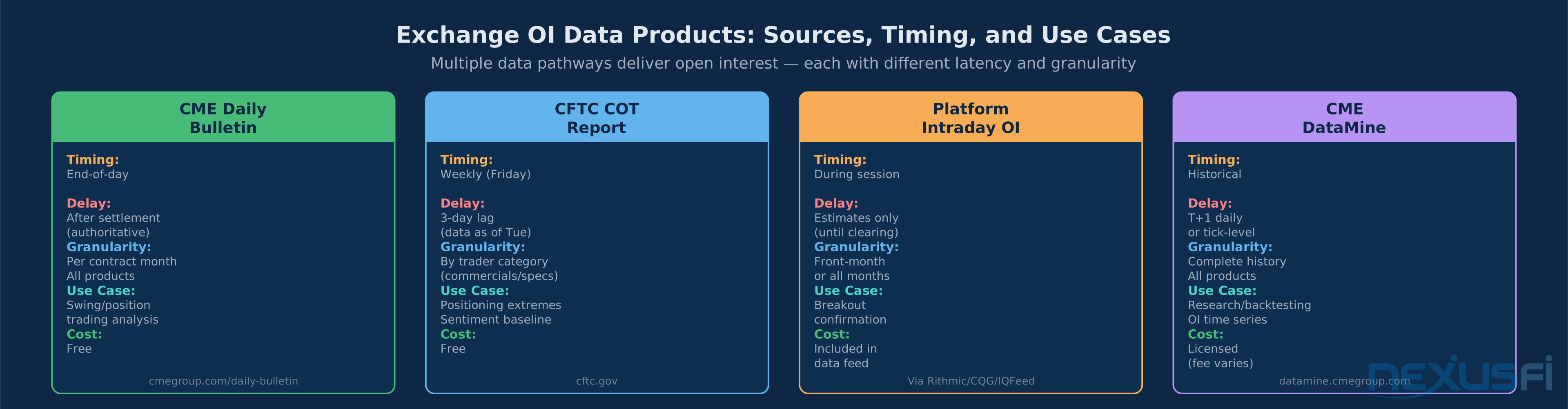
The cleared position data that produces OI flows outward through multiple exchange data products at different levels of granularity and timeliness.
Daily Settlement Bulletins #
The primary public OI data source for major exchanges is the daily settlement bulletin, published after the close of each session once clearing has finalized positions. The CME Daily Bulletin, available free at cmegroup.com/daily-bulletin, contains:
- Final OI by contract month for every listed product
- Settlement prices (used for mark-to-market)
- Volume data (preliminary and final where applicable)
- Changes from the prior day
This is the authoritative end-of-day OI number. Discrepancies between your platform's displayed OI and the exchange's bulletin should always be resolved by referencing the bulletin.
Real-Time and Intraday OI #
Some data feeds and exchanges offer intraday OI updates. These are typically:
- Derived estimates computed by tracking trade-by-trade opening/closing classifications during the session
- Updated at intervals (every 5 minutes, every trade, or at specific session checkpoints)
- Subject to revision when the clearing-confirmed end-of-day figure is published
Platforms with access to premium data feeds (Rithmic, CQG, DTN IQFeed) may provide more frequent intraday OI updates. These are operationally useful for confirming whether a breakout during the session is drawing new participation, but should be treated as estimates until the final clearing figure confirms them.
CFTC's Commitments of Traders Data #
The CFTC publishes the COT report every Friday, covering positions as of the prior Tuesday. This data:
- Is derived from the same large trader position reports submitted to the CFTC
- Is made available free at cftc.gov in machine-readable format
- Covers all U.S. futures markets with reportable activity
- Provides disaggregated OI by trader classification, not just total market OI
For programmatic access, the CFTC also provides APIs and historical data files dating back decades. This is the standard dataset for quantitative research on positioning extremes and commercial hedger behavior.
Exchange APIs and Data Licensing #
Exchanges offer licensed data products for institutional access:
- CME DataMine: Historical tick data, OI time series, and daily settlement data via API and bulk download
- Real-time market data feeds: Institutions can license direct market data feeds that include OI updates as part of the standard feed
- Academic data programs: Some exchanges offer reduced-cost or free historical data access for academic research purposes
Spread Trading and Options: OI Complexity Across Instruments #
Two instrument types complicate straightforward OI interpretation at the exchange level.
Spread OI #
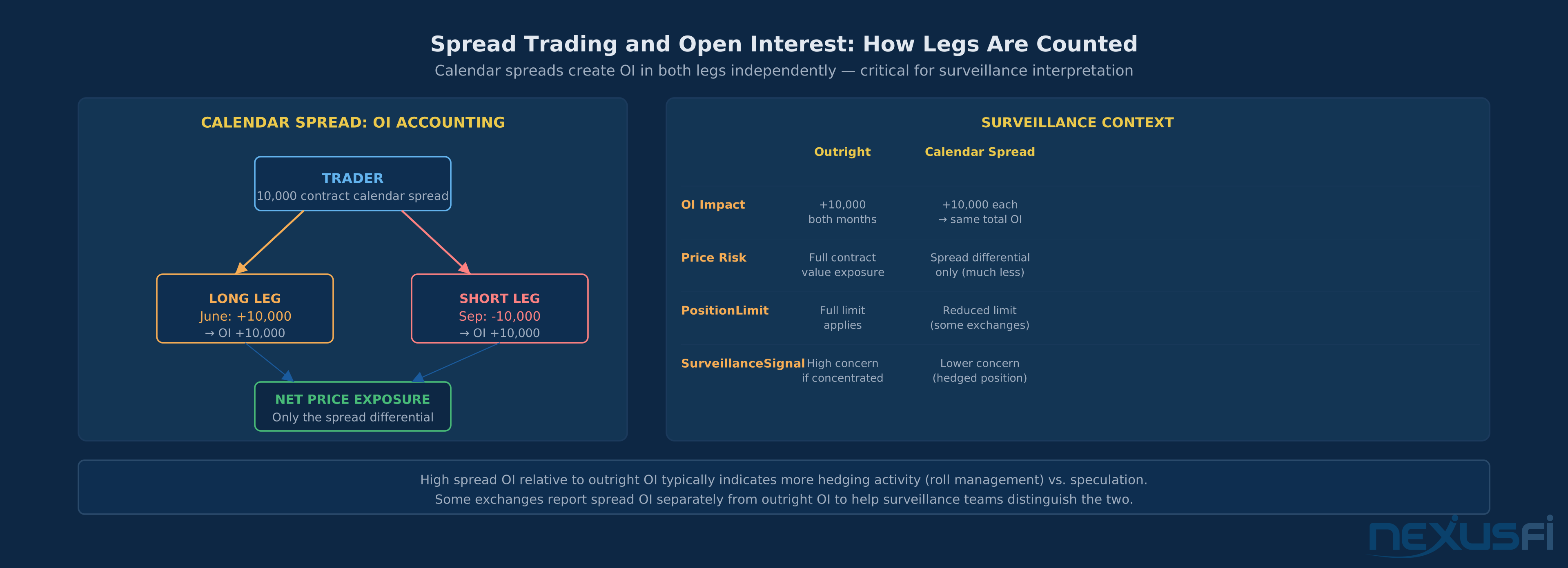
Calendar spreads — simultaneous positions in two different contract months — create OI in each leg independently. A trader who buys the June contract and sells the September contract holds:
- A long position in June (adding to June OI)
- A short position in September (adding to September OI)
Some exchange data products report "spread OI" — the portion of total OI attributable to positions held as matched spread positions — separately from outright OI. This distinction matters for:
- Surveillance: A large front-month OI position that is matched with a deferred short (calendar spread) represents much lower risk than an equivalent outright long, since the net price exposure is limited to the spread relationship
- Position limits: Some exchanges apply different position limit treatments to outright positions versus positions held as part of verified calendar spreads
- Market health assessment: Markets with high spread OI relative to outright OI tend to have more commercial hedging activity (which often uses spreads for cost-efficient roll management)
Options OI #
Exchange-listed options on futures generate their own OI, tracked separately from futures OI. Key points:
- Options OI represents outstanding option contracts, not futures-equivalent exposure
- Delta-equivalent OI — converting options OI to futures-equivalent exposure based on the option's delta — is an analytical tool, not an exchange-reported figure
- Options expiration creates futures OI through exercise/assignment, as described above
- Large options positions held by a few accounts can create significant futures OI changes at expiration even if no futures trades are executed
Practical Implications for Futures Traders #
Understanding the exchange and clearing infrastructure behind OI data changes how you interpret it in several specific ways.
Why Platform OI May Differ From Exchange Bulletins #
Many trading platforms update OI figures with a delay, may display preliminary rather than final figures, or may show only front-month OI rather than total market OI. When OI interpretation matters for a trade decision:
- Cross-reference your platform's OI display against the exchange's daily bulletin
- Check whether the figure is front-month only or total market — especially during roll windows
- Distinguish between intraday estimates and settlement-confirmed figures
Reading Roll Window OI Changes Accurately #
In the 2-3 weeks before contract expiration, front-month OI declines mechanically as traders roll to deferred contracts. This is not a change in market participation — it is a structural migration that the clearing house tracks as separate events (front-month OI reduction, deferred-month OI increase). Total market OI during a roll window is the correct reference for assessing whether market participation is growing or shrinking.
Large OI Changes on Low Price Movement #
When OI increases sharply on minimal price movement, the most common explanations are:
- Commercial hedging: A large hedger is adding futures exposure to offset physical market risk, creating OI without directional intent
- Position rolling: Positions moving from a nearly expired contract to a deferred month, possibly with the two legs clearing in separate sessions
- Block trades: Large off-exchange transactions reported to clearing that create OI without visible order book activity
None of these explanations indicate directional sentiment. Context from the daily bulletin (settlement price changes, volume data) and COT data (timing relative to the weekly report) helps distinguish structural OI changes from sentiment-driven ones.
Key Takeaways #
- The CCP is the authoritative OI source — not your platform, not the exchange matching engine. The clearing house's end-of-day position ledger produces every OI number you see.
- Volume and OI measure different things — volume counts every transaction; OI counts only net outstanding contracts. High volume with flat OI means positions are transferring between participants, not being created or destroyed.
- Roll window OI declines are structural — front-month OI collapses before expiration as positions migrate to deferred months. Total market OI (all months combined) is the correct baseline during roll periods.
- The COT report disaggregates OI by trader type — commercial hedgers, managed money, and non-reportable traders. Extreme positioning readings in the COT are among the most useful sentiment signals available to futures traders.
- Platform OI is an estimate until the daily bulletin confirms it — when OI interpretation drives a trade decision, cross-reference against the exchange's official settlement bulletin.
- Large OI changes on low price movement usually indicate hedging or rolling — not directional intent. Context from the daily bulletin and COT report separates structural OI changes from genuine shifts in market participation.
- Concentration matters more than direction — the ratio of a single entity's position to total OI is what triggers surveillance and enforcement, not the aggregate OI number itself.
Knowledge Map
Prerequisites
Understand these firstGo Deeper
Build on this knowledgeReferences This Article
Articles that build on this topicCitations
- — Is there a finite number of contracts per a futures instrument? (2012) 👍 11“Case (1): Both parties enter a new position. Open interest increases by 1. Case (4): Both parties cover an existing position. Open interest decreases by 1.”
- — Spoo-nalysis ES e-mini futures S&P 500 (2016) 👍 11“OI reports the number of ES contracts that are open per close -- all intraday dabblers are netted out. On standard days volume is below OI. Volume above OI normally signals a lot of weak hands.”
- — CFTC / Large Trader (2020) 👍 10“Since you now hold a large futures position you don't have a choice in the matter. You must report. The information you supply will be used by the CFTC in both monitoring and reporting activities, such as the COT reports.”
- — Gold and the DCOT Report (2011) 👍 6“Most of the reason for the large Gold price increase was probably due to large institutions bailing on short positions rather than traders adding longs. OI for Gold futures decreased by 19,200 in this time period.”
- — Commitment of traders (2010) 👍 5“Commitment of Trader is extremely useful, as it shows the market positions of different groups of traders. Extreme readings of the COT figure can be used as a sentiment indicator for countertrades.”
- — COT Report? (2022) 👍 3“The COT information sort of advertised the fact that some huge positions were going to get un-wound one way or another. The order flow seemed to have become somewhat mechanical because of the shear size of the positions that were held at the time.”
- — Where can I find information on current short and long positions? (2016) 👍 2“The Open Interest Data is available almost anywhere. That will show you how many current open contracts there are. The CFTC also publish weekly COT Reports that show the long and short position of commercials vs non-commercial vs small-traders.”
- — How do you make use of COT to its best ability? (2025) 👍 4“He's looking for crowded trades where there are many speculative bets in the same direction so that a forced unwind in the opposite direction could be pronounced.”
- — Fitter, Better and Calmer Trading ES (2016) 👍 3“OI is a decent thermometre of market confidence and could work well with other similar tools like VIX, relative volume and average tick size. If someone has the guts to hold an overnight position, that means something.”
- — Commitments of Traders Reports (2026)
- — CME Group Daily Settlements and Daily Bulletin (2026)