



Speculative Position Limits and Large Trader Reporting in Futures Markets: The Scaling Milestone Every Serious Trader Must Understand
Overview #
Position limits and large trader reporting thresholds vary by contract and change periodically. Always verify current limits directly with your FCM or through CME Group's website before assuming you know the numbers — stale data creates real compliance risk.
There is a moment in every successful futures trader's career when the rules change. Not because the market changes, but because you've grown. You've scaled your position size to the point where you're no longer an anonymous participant — you're a recognized presence in the market structure itself. The exchange knows you're there. The CFTC knows you're there. And if you don't know the rules governing large positions, you'll discover them the hard way: through a Form 40 arriving in your inbox, a call from your FCM's compliance desk, or a forced liquidation during a roll.
Speculative position limits and large trader reporting aren't abstract regulatory concepts. They're the operational reality of trading at institutional scale — or, increasingly, at sophisticated retail scale in smaller contracts. Understanding these systems doesn't just keep you compliant. It changes how you design your position management, how you roll contracts, how you structure your entities, and how you think about risk across accounts.
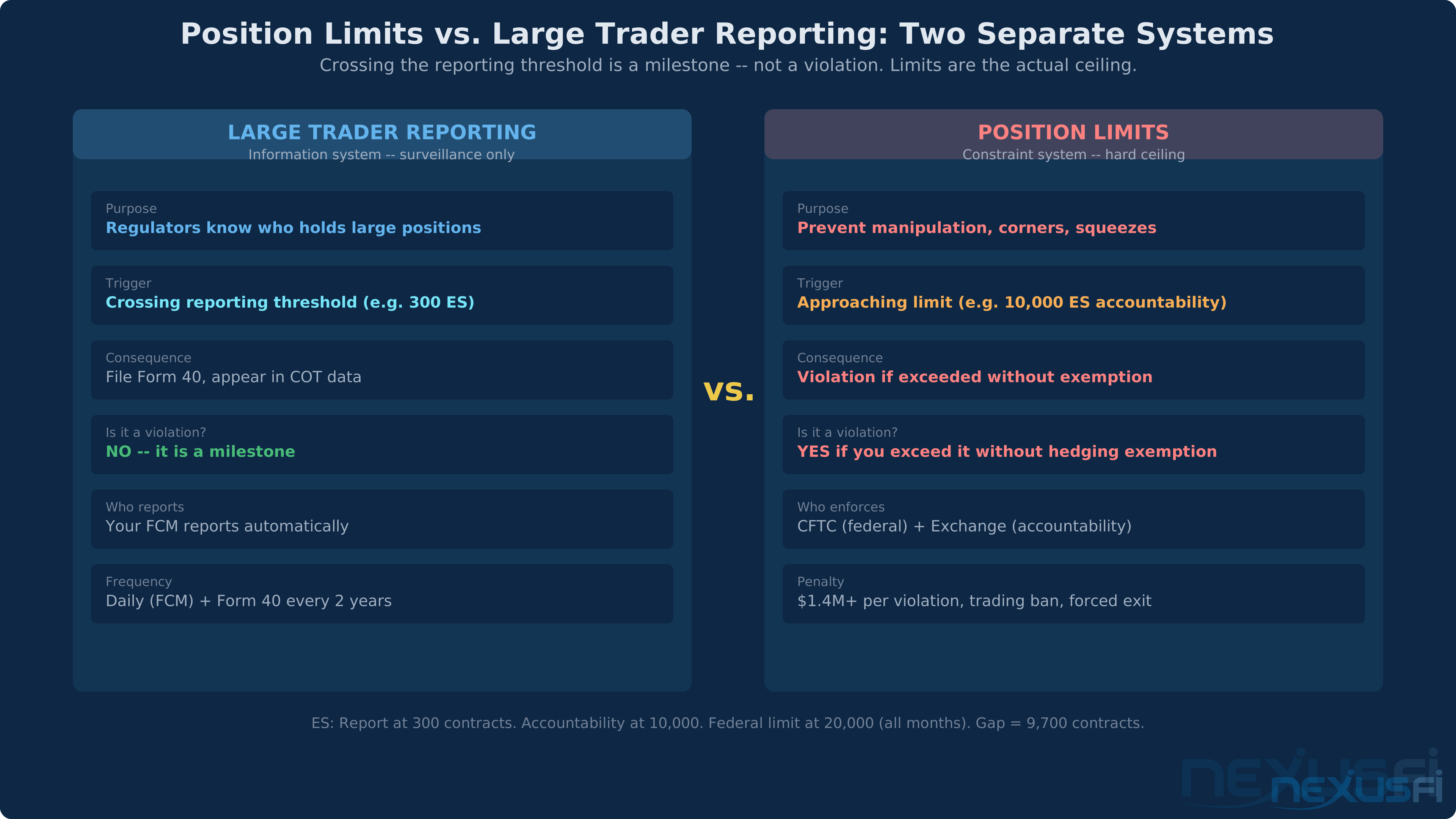
One clarification before we start: position limits and large trader reporting are two distinct systems that often operate simultaneously but serve different purposes. Position limits are constraints — ceilings you cannot legally exceed as a speculator. Large trader reporting is an information system — it tells regulators who you are and what you're doing. Crossing a reporting threshold is not a violation. It's a milestone. The confusion between these two concepts is the most common misunderstanding in this regulatory space, and it's worth resolving completely before going further.
The Regulatory Hierarchy: Who Sets the Rules #
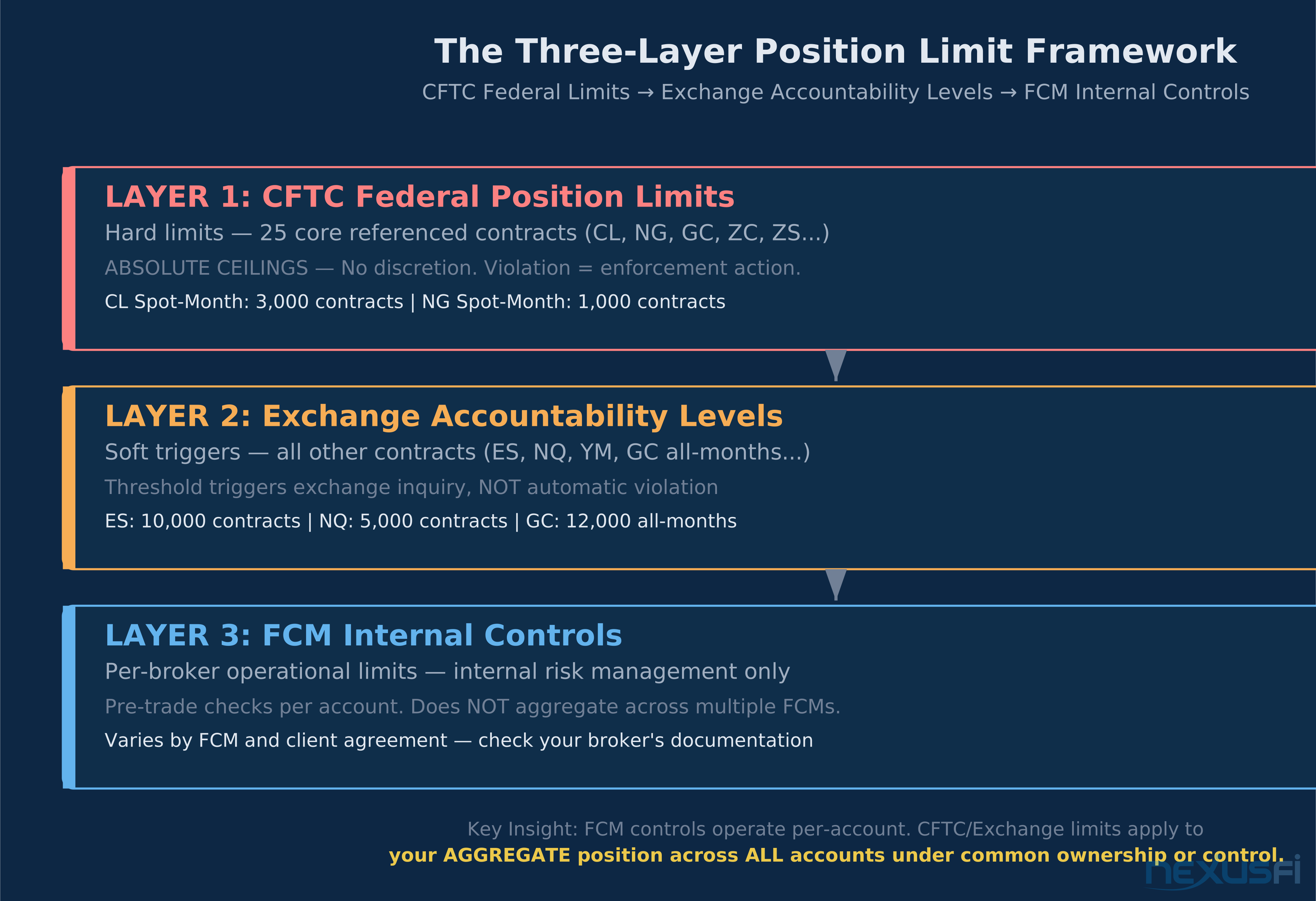
The framework governing futures position limits operates through three distinct layers, each with different authority, different instruments in scope, and different consequences for violations.
Layer 1: The CFTC — Federal Position Limits #
The Commodity Futures Trading Commission (CFTC) sets hard federal position limits on 25 "core referenced futures contracts." These are predominantly physical commodity contracts where concentration risk during the spot month could result in market manipulation, corners, or squeezes. The list includes NYMEX Crude Oil (CL), NYMEX Natural Gas (NG), CBOT Corn (ZC), CBOT Soybeans (ZS), CBOT Wheat (ZW), COMEX Gold (GC), and COMEX Silver (SI).
Federal limits are non-discretionary. They are absolute ceilings. If your net speculative position exceeds the federal limit, you are in violation — there is no grace period, no inquiry process, no "explain yourself" window. The only legitimate path to holding positions above federal limits is a bona fide hedging exemption, which requires pre-approval and documentation.
Federal limits are structured in two tiers: spot-month limits (applying to the delivery month) and all-months-combined limits (applying to the aggregate across all contract months). Spot-month limits are much tighter because delivery mechanics make large concentrated positions most dangerous as expiration approaches.
Layer 2: Exchange Accountability Levels — Soft Thresholds #
For contracts not subject to CFTC federal limits — including the major financial futures that most active traders trade — exchanges like CME, CBOT, NYMEX, and COMEX set "accountability levels" rather than hard limits.
Accountability levels are not hard limits. They are thresholds that trigger exchange engagement. When your net position exceeds an accountability level, the exchange's market regulation department contacts your FCM and requests a position justification. You explain your trading rationale, risk management process, and whether your position is speculative or hedged. If your explanation is satisfactory and your position is orderly, you may continue holding it.
CME Rule 562 governs how the exchange uses this authority. Even for positions technically within accountability levels, the exchange retains the right to order position reductions if it determines that a position threatens orderly delivery or market integrity. Limits are not rights — they are upper bounds set by market infrastructure, subject to override in extraordinary circumstances.
For reference, current CME Group accountability levels include:
- E-mini S&P 500 (ES): 10,000 net contracts single-month; 15,000 all months combined
- E-mini Nasdaq-100 (NQ): 5,000 net contracts single-month
- COMEX Gold (GC): 6,000 spot-month (CFTC limit); 12,000 all-months accountability
- NYMEX Crude Oil (CL): 3,000 CFTC spot-month limit; 10,000 single-month accountability; 20,000 all-months accountability
- NYMEX Natural Gas (NG): 1,000 CFTC spot-month limit; 12,000 all-months accountability
These numbers change periodically. The authoritative source is always the exchange's current Position Limits and Accountability Levels document, published on CME Group's website. Never rely on memorized figures for compliance purposes — always verify against the current table before trading at significant size.
Layer 3: FCM Internal Controls — The Operational Layer #
Futures Commission Merchants (FCMs) implement their own pre-trade risk controls — closely tied to margin requirements — that typically operate below exchange limits and accountability levels. A large institutional FCM may provide clients with pre-trade position limit checks alerting the desk when a prospective trade would push net exposure above internal thresholds — before the order reaches the exchange.
The critical operational point: FCM controls and exchange limits are separate systems. A trade that passes your FCM's pre-trade check may still put you above an exchange accountability level if you're holding positions through multiple FCMs. FCMs monitor their own client positions, not your aggregate exposure across all your accounts at all brokers. Aggregating that view is your responsibility.
Large Trader Reporting: The Information Regime #
Large trader reporting exists to give regulators visibility into who holds the largest positions in each market. The CFTC uses this data for surveillance, concentration risk monitoring, and the weekly Commitments of Traders (COT) report that many traders follow as a sentiment indicator.
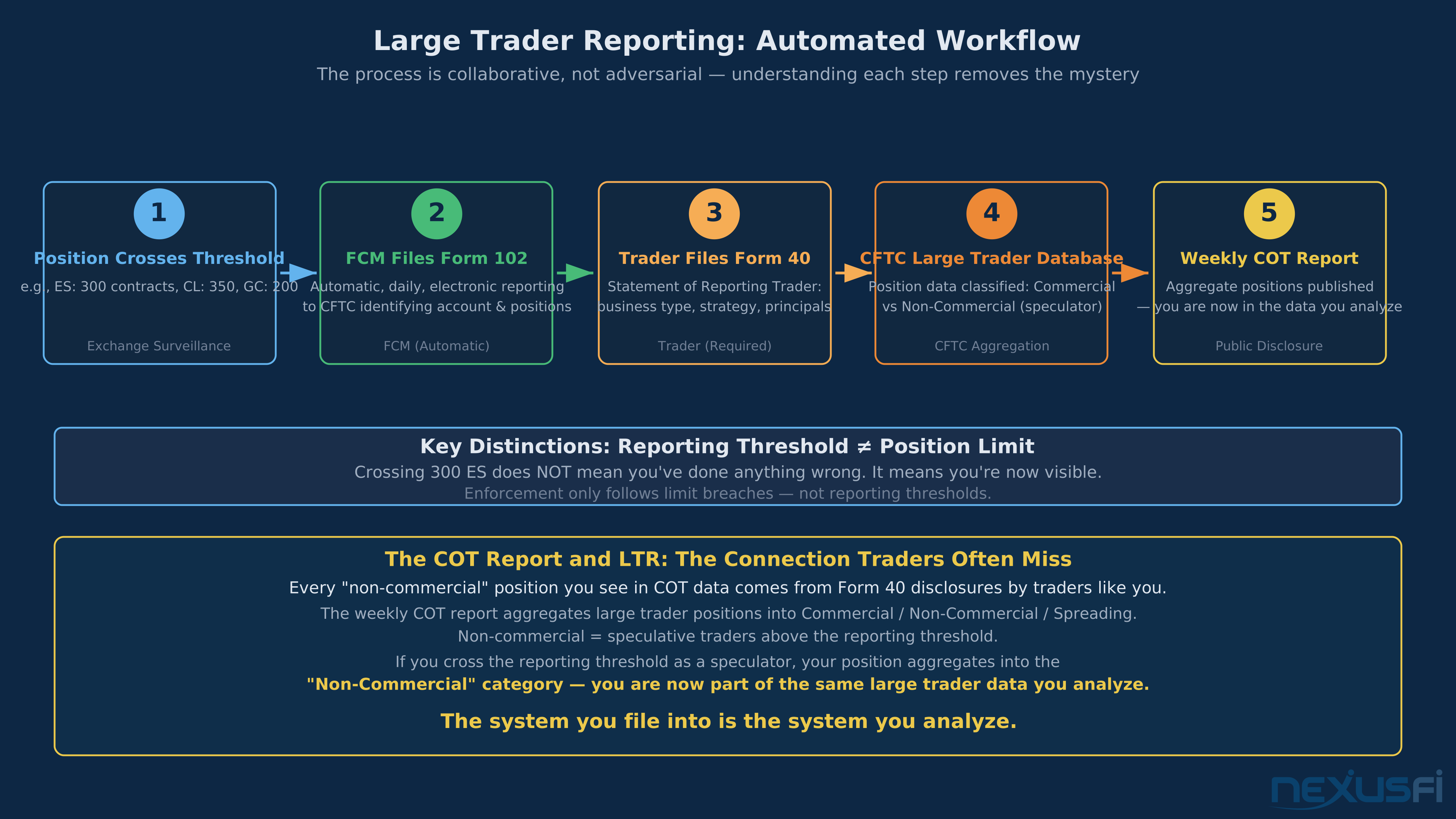
When you cross a reporting threshold, your FCM automatically reports your position to the CFTC. You may then receive a request to file Form 40 — the Statement of Reporting Trader — which asks for your name, business type, trading strategies, and names of principals. Institutional traders keep Form 40 on file and update it proactively. For retail traders encountering this for the first time, it can feel alarming, but it is simply an administrative process, not an enforcement action.
NexusFi community member SMCJB, a spread trader whose positions exceed reporting thresholds, described the practical experience directly: "All I have to do is file a form with the CFTC every two years. They even email me when the form is due. It's a pretty simple form as well. All the actual reporting is done automatically by the broker to the CFTC. I'm sure every broker has systems in place to do this."
FuturesTrader71 offered the regulatory framing: "The goal of this is for this federal regulator to understand what you are doing with the position, whether it is hedged or speculative and so on. Their mandate is to make sure that the markets remain orderly and we don't see another LTCM-type of blow-up or cornering of the market. By filing Form 40, you are not 'registering' in the classical sense."
And Schnook noted the significance: "You're on the CFTC's radar... I would call your broker or clearing firm and speak to their compliance department. I'm sure they would have resources to help you with your reporting requirements."
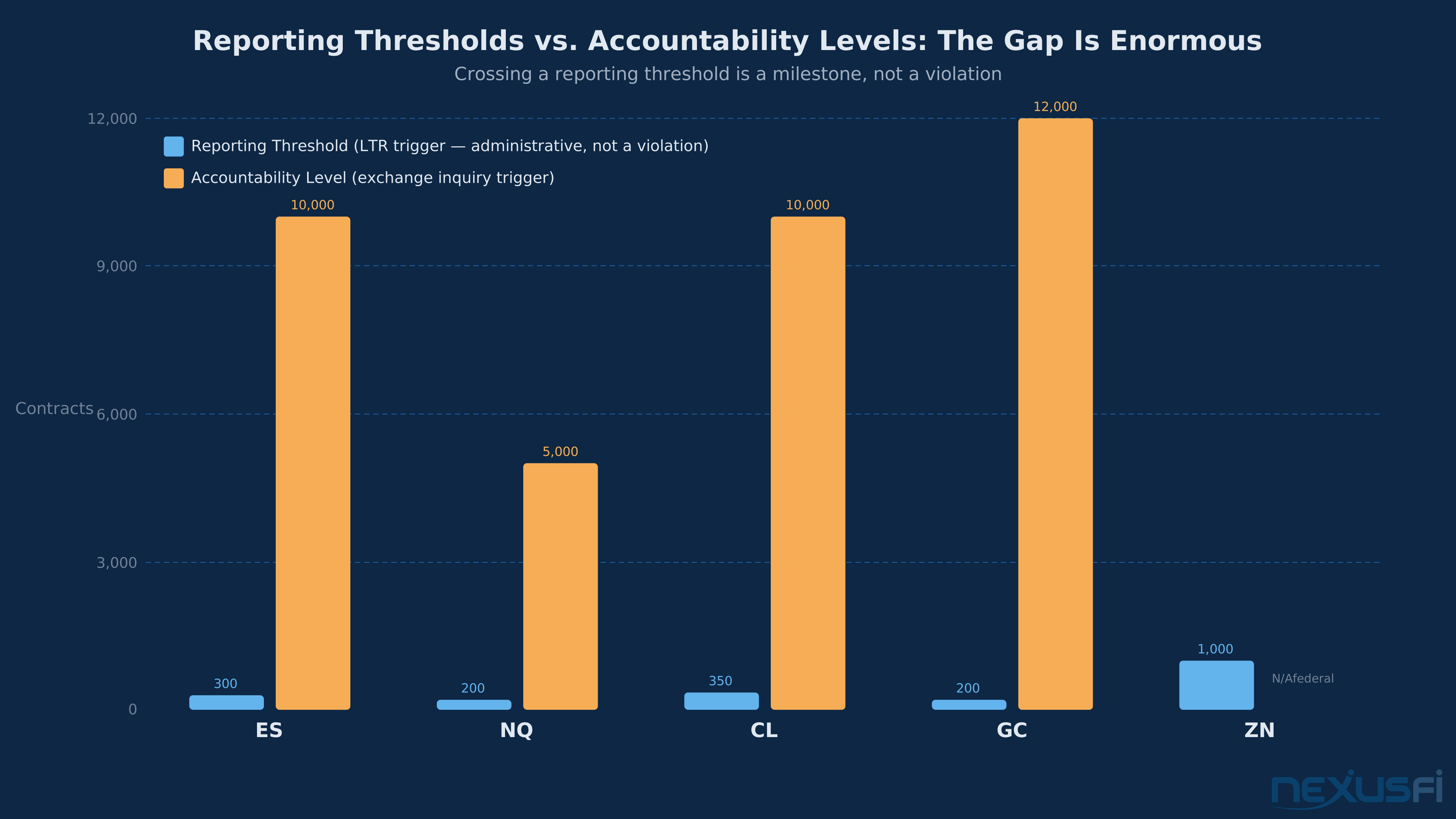
Reporting thresholds by major contract:
- E-mini S&P 500 (ES): 300 contracts
- E-mini Nasdaq-100 (NQ): 200 contracts
- NYMEX Crude Oil (CL): 350 contracts
- COMEX Gold (GC): 200 contracts
- NYMEX Natural Gas (NG): 200 contracts
- 10-Year Treasury Note (ZN): 1,000 contracts
- 30-Year Treasury Bond (ZB): 1,000 contracts
Note that reporting thresholds are materially lower than accountability levels. For ES, you're a large trader at 300 contracts — but the accountability level isn't reached until 10,000 contracts. The vast majority of traders who cross reporting thresholds are nowhere near the compliance risk of approaching accountability levels.
What Gets Reported #
When your position exceeds a reporting threshold:
- Your FCM files a Form 102 — identifying the account holder, positions held, and key account metadata. This happens automatically, on a daily basis, through the FCM's electronic reporting system.
- The CFTC may request a Form 40 from you — the Statement of Reporting Trader. This is a background form: who you are, your business type, trading purposes, and names of principals. Once filed, it typically only needs updating every two years or when there are material changes.
- Your data enters the CFTC's large trader database — aggregated (not individually identified) data feeds the COT report. As a non-commercial speculator, your position appears in the "non-commercial" classification.
If you use COT data in your analysis, you're reading the aggregate output of the same system that now covers you. The large traders whose positions you track are the same category you've joined.
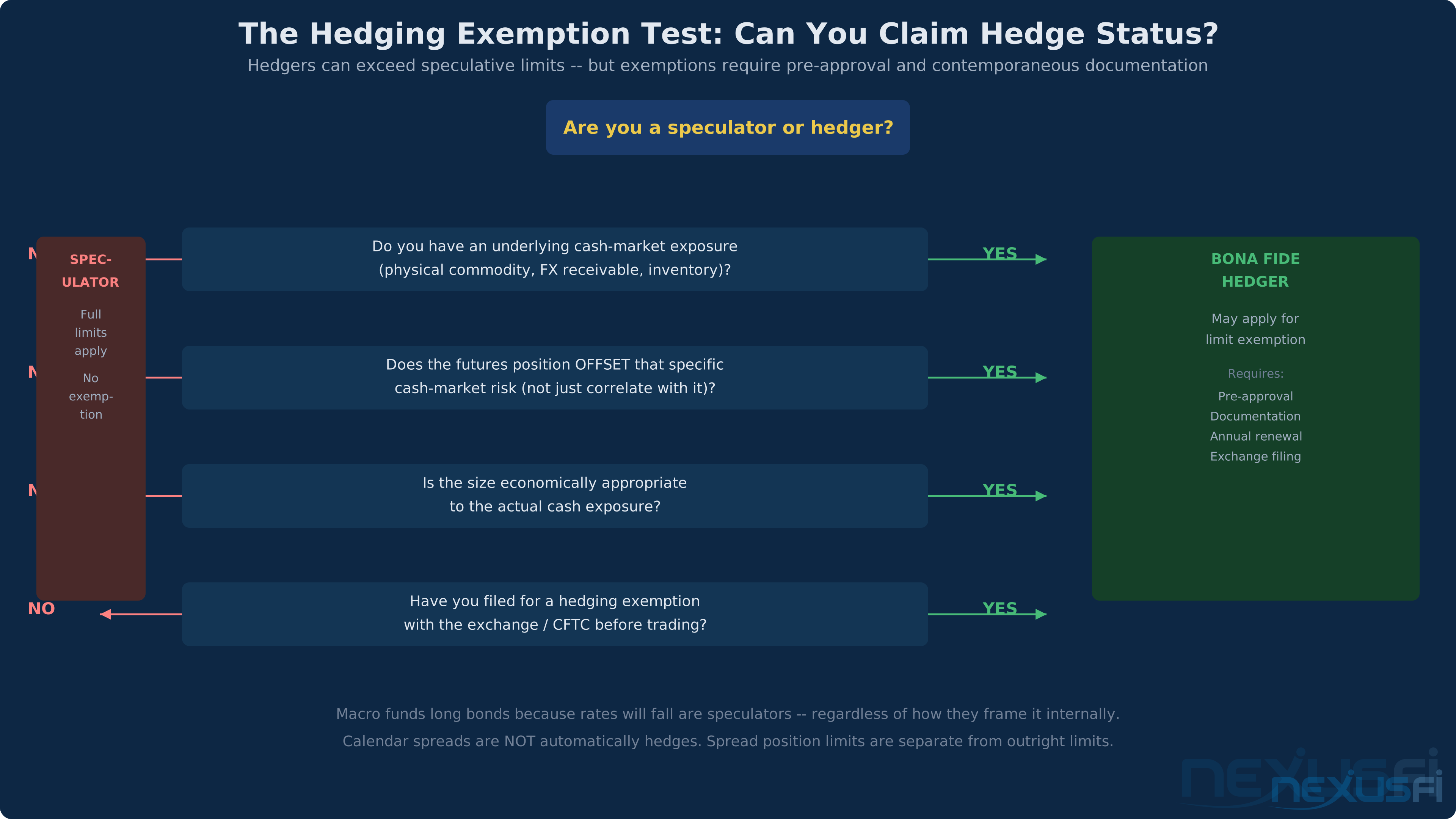
Speculation vs. Bona Fide Hedging #
The distinction between speculative and hedging positions determines which limits apply. It's a regulatory classification with real consequences for your maximum allowable position size.
A bona fide hedger has an underlying cash-market risk that the futures position offsets. A grain elevator long physical corn uses short ZC futures to lock in sale prices. An airline with jet fuel exposure uses short CL futures to manage fuel cost risk. In each case, the futures position is economically linked to a real commercial risk — the core mechanics of hedging with futures. Bona fide hedgers can apply for exemptions from speculative position limits — requiring documentation demonstrating the "economically appropriate" relationship between the futures position and the cash exposure.
A speculator takes on price risk for profit, without an offsetting cash-market exposure. For speculators, the full position limit regime applies without exemption.
The practical test is simple: if you cannot document a specific cash-market risk that your futures position is designed to offset, you are a speculator. Macro funds long bonds because they believe rates will fall are speculating, regardless of internal framing.
Spreads are not automatically hedges. A calendar spread — long one contract month, short another — is still two speculative positions unless there is a demonstrable cash-market basis for treating it as a hedge. Many spread strategies have separate, higher position limits (the exchange often treats inter-month spreads differently than outright positions), but they remain subject to the limit framework. SMCJB noted from experience as a spread trader that "my positions definitely exceed the level required for reporting" — illustrating that even spread-oriented books at significant scale still trigger the reporting system.
Position Counting: How Exposure Is Actually Measured #
Netting Conventions #
Position limits apply to net positions — long minus short. If you are long 500 ES and short 200 ES in the same account, your net position is 300 ES long. Netting happens within the same contract and contract month. For all-months-combined limits, positions across different expiries are summed after netting within each month.
Options-on-Futures: Futures-Equivalent Counting #
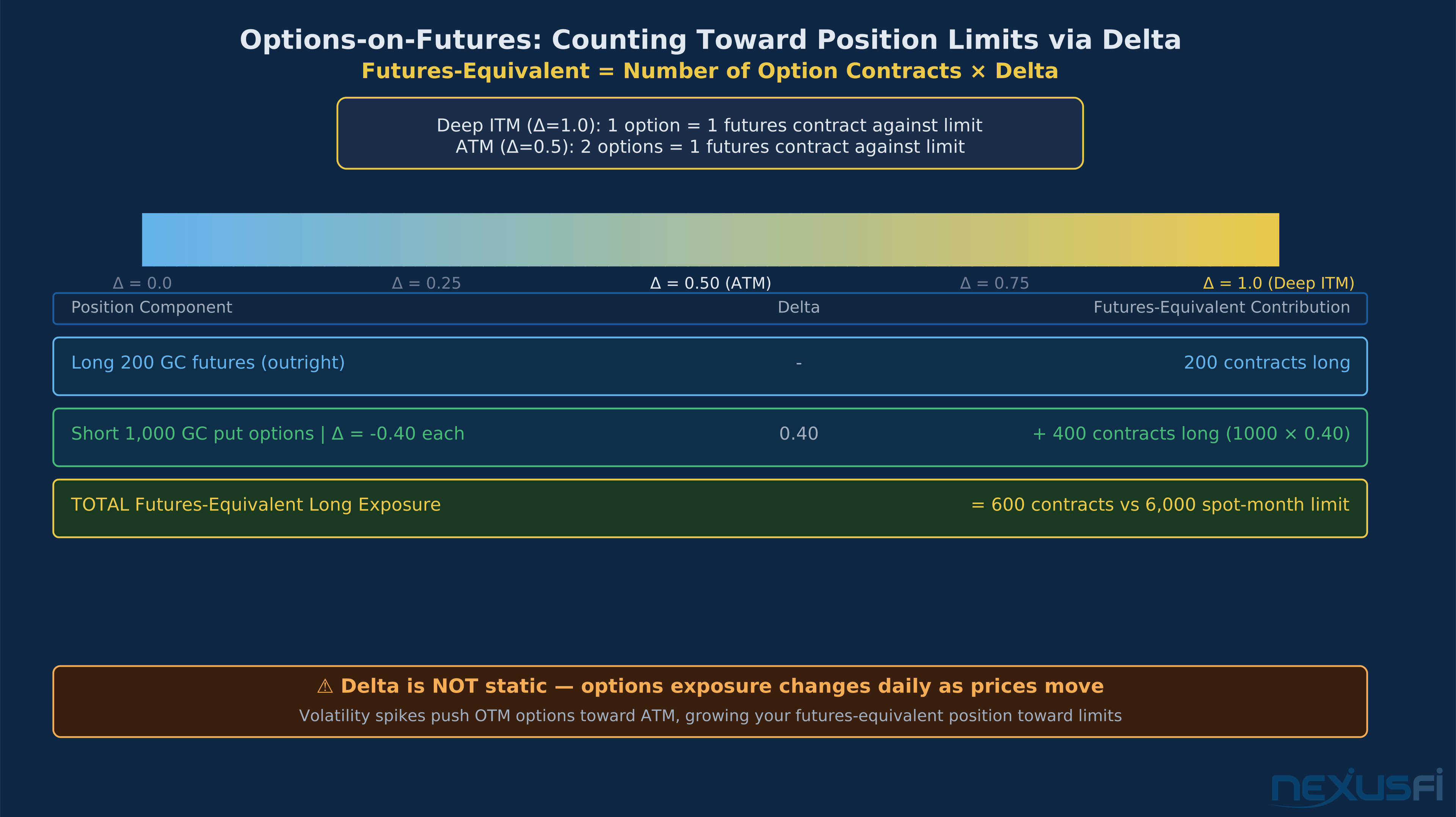
Options on futures are counted toward position limits and reporting thresholds using a futures-equivalent conversion based on the option's delta.
Futures-equivalent = Number of option contracts × Delta
A long call with a delta of 0.50 counts as 0.50 futures contracts long. A short put with a delta of -0.50 counts as 0.50 futures contracts long (because it creates equivalent long futures exposure). Deep in-the-money options with deltas near 1.0 count nearly one-for-one against the limit.
Delta is not static. As market conditions change, option deltas shift — especially around at-the-money strikes. A position that looked within limits can approach limits as volatility rises. Options sellers in particular need to monitor delta-adjusted exposure daily, not just at inception.
Example: A trader holds 200 long GC (Gold) futures and has sold 1,000 short put options on GC with an average delta of -0.40 each. The short puts create an equivalent of 400 long futures (1,000 × 0.40). Total futures-equivalent long exposure: 600 contracts. If volatility spikes and puts move toward at-the-money, average delta could rise to -0.70, pushing futures-equivalent to 900 contracts. The monitoring obligation is ongoing.
Roll-Period Position Spikes #
The roll period creates a specific compliance risk. When transitioning a large position from one contract month to the next — a process covered in detail in Futures Contract Rollover — there is a window where both the expiring position and the new-month position simultaneously exist.
For a trader holding 2,000 CL crude oil contracts in the front month, rolling to the next month involves buying 2,000 next-month contracts while selling 2,000 current-month contracts. If rolled gradually over several days, periods will occur where the spot-month net remains near 2,000 while the next-month position builds — creating temporary combined exposure that may approach limits across both months.
In contracts with CFTC federal spot-month limits, the rules tighten further as the delivery window approaches. For CL, the spot-month limit is 3,000 contracts generally, but may tighten in the final trading days. A trader cannot hold their full position into the final week and roll cleanly — they must begin reducing front-month exposure in advance of the spot-month limit transition.
The Aggregation Rule: The #1 Compliance Trap #
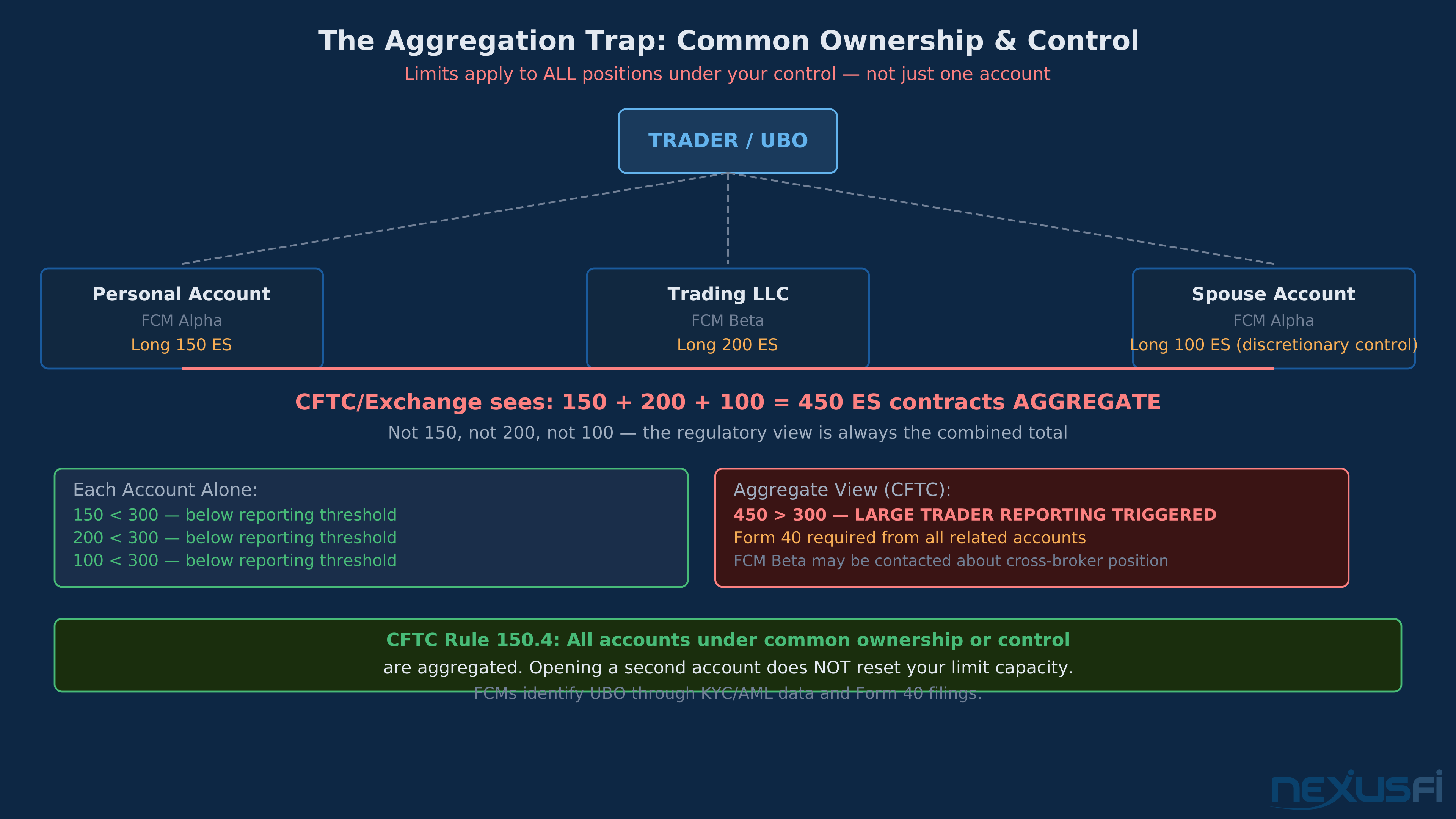
Position limits and reporting thresholds apply not to individual accounts in isolation, but to all positions under common ownership or control, aggregated. This is governed by CFTC Rule 150.4 and exchange rulebooks.
"Common ownership or control" is interpreted broadly:
- Personal trading account and LLC trading account under same discretionary control
- Multiple entities under the same beneficial owner
- A fund manager's personal account and managed client accounts
- Two separately incorporated funds under the same parent entity sharing controlling personnel
The practical trap: A trader opens a second account at a different broker believing it gives fresh limit capacity. FCM compliance systems cross-check beneficial ownership data (collected through KYC/AML processes and Form 40 filings). Both accounts are automatically aggregated under the trader's UBO (Ultimate Beneficial Owner) identification. Combined positions across both accounts determine whether limits and thresholds are breached — not individual account positions.
This aggregation trap is how traders with two "compliant" individual accounts find themselves with one "non-compliant" aggregate position. As SMCJB observed: "Have you considered the total position summed across all accounts? That's what the CFTC looks at."
Family accounts and managed accounts: If a trader manages futures positions for family members with discretionary authority, those accounts may need aggregation with the trader's own account. The "control" test is about decision-making authority, not legal ownership. Traders who manage money for others — even informally — should seek compliance guidance on aggregation obligations.
Spot-Month Mechanics: The Delivery Window Discipline #
The spot month is the futures contract month nearest to delivery or expiration. As contracts approach this point, their position limit structure tightens in ways that directly affect strategy and execution.
Why Spot-Month Limits Exist #
Physical commodity futures converge to the cash market as delivery approaches. Large concentrated speculative positions in the delivery month can exert pricing pressure that distorts this convergence — creating conditions for corners or squeezes. Spot-month limits prevent this distortion by ensuring no single speculator can hold a position large enough to influence delivery-month prices.
Financial futures (ES, NQ, ZN) don't involve physical delivery, but they still have cash-settlement mechanics that can be affected by concentrated positions during the settlement period.
Practical Roll-Period Discipline #
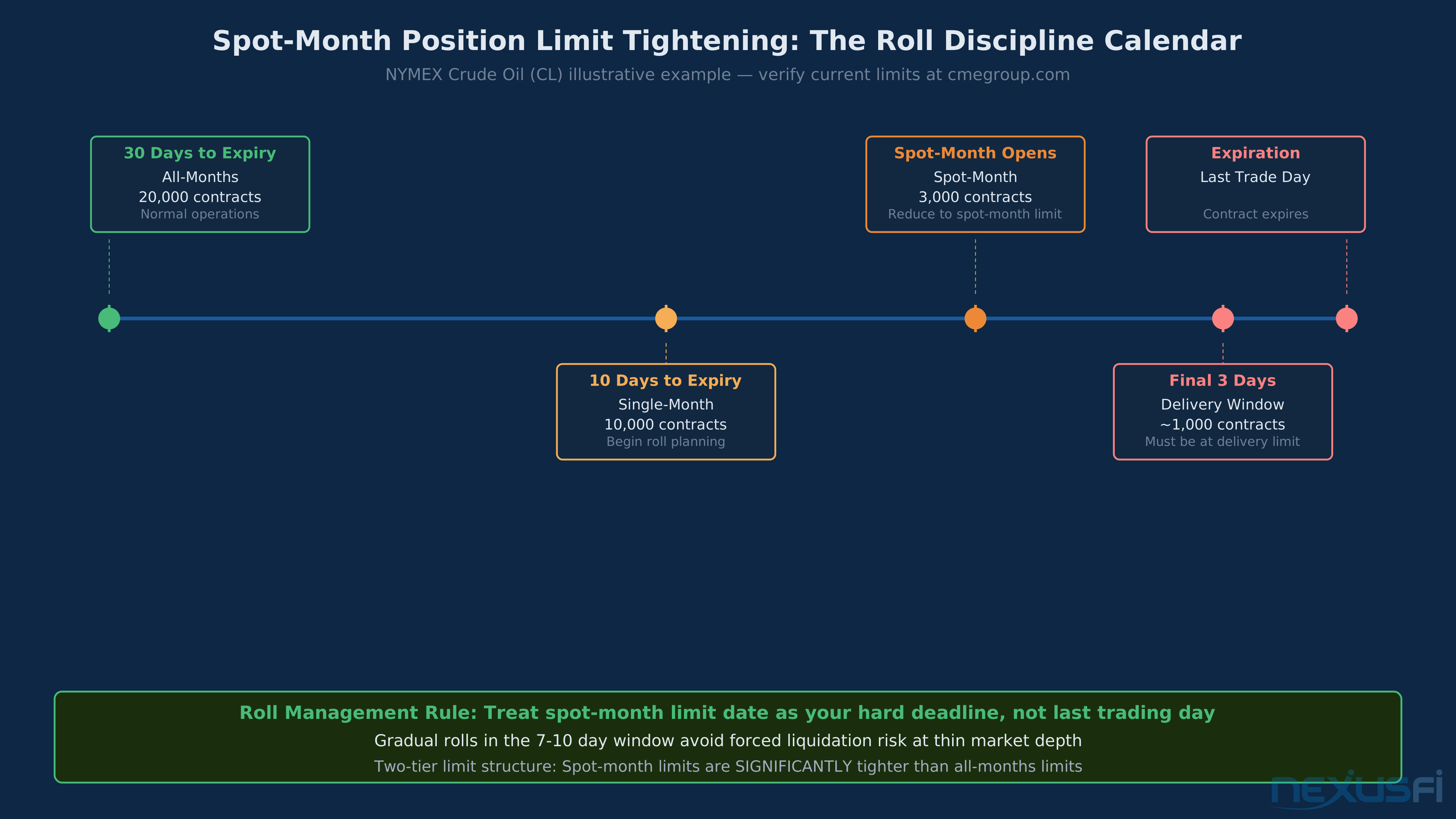
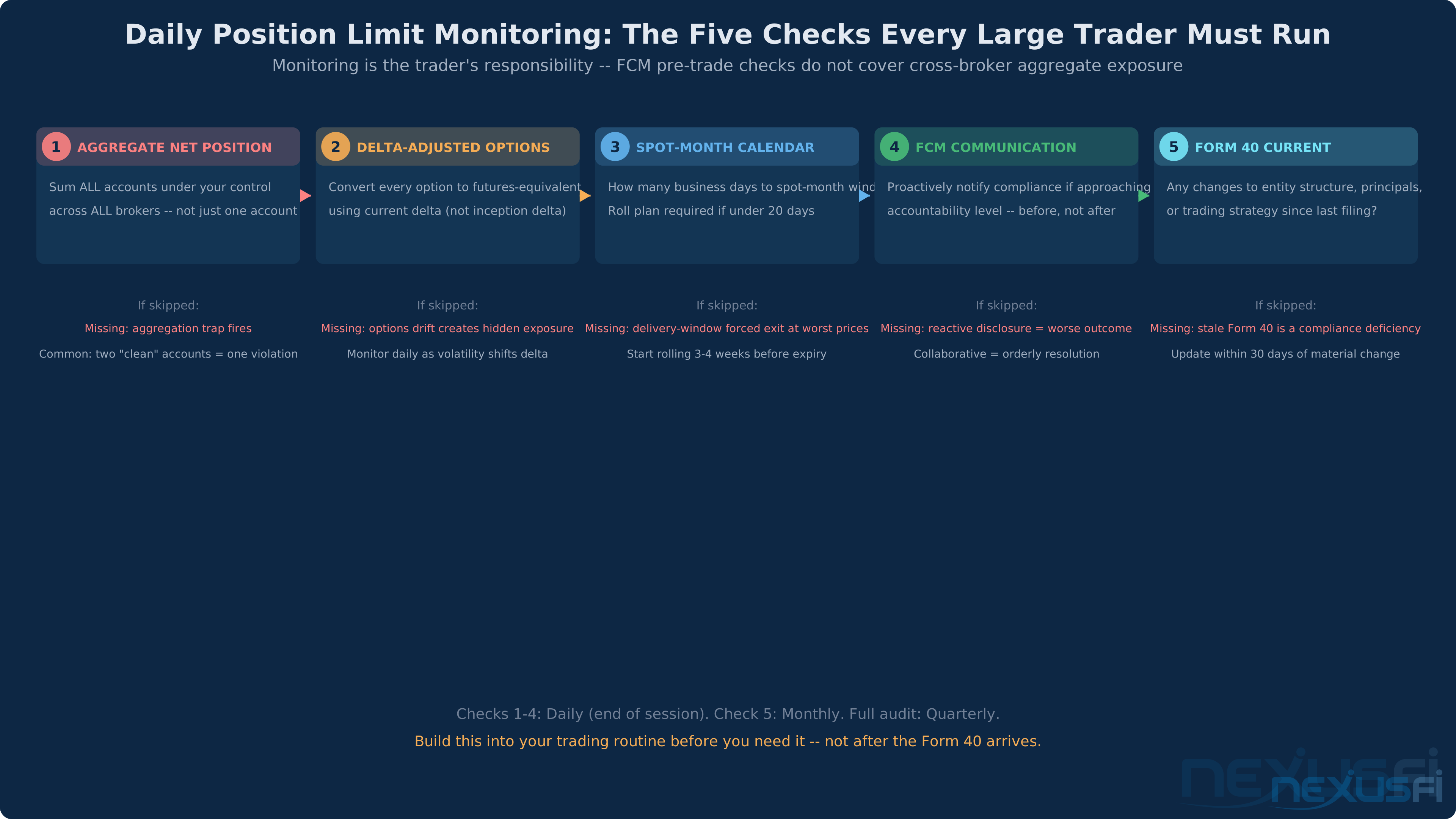
Professional commodity traders build their position management calendar around spot-month limit dates, not the last trading day. The typical sequence:
Three to four weeks before expiration: Begin monitoring net exposure in the expiring month. If the position is within 30-40% of spot-month limits, establish a roll plan.
Two weeks before expiration: Begin executing gradual roll — reducing the expiring month position and building the new front month simultaneously. This is the most liquid roll window for most contracts.
Final 10 trading days: Many exchanges define specific rules for this window. Traders who haven't reduced to compliance by this point face execution risk — selling into a thinning order book during mandatory position reduction.
The discipline is straightforward when codified: treat the spot-month limit date as your hard deadline, not the last trading day.
Monitoring: Who Does What #
Trader Responsibility #
Ultimate liability rests with the trader. Regulatory obligations — knowing the applicable limits, staying within them, filing Form 40 when requested, and managing aggregate positions across all accounts — belong to the trader, not the FCM. The FCM is a compliance partner, not a compliance guarantor.
The trader must:
- Know current position limits and reporting thresholds for every contract traded
- Track aggregate positions across all accounts under their control
- Convert options to delta-adjusted futures-equivalents daily
- Monitor the roll calendar and adjust positions proactively around spot-month windows
- Maintain accurate Form 40 information (updating within 30 days of material changes)
- Contact the FCM compliance desk proactively when approaching limits — before, not after
FCM Responsibility #
FCMs are required to report large trader positions to the CFTC via Form 102 when client positions exceed reporting thresholds. This reporting is automatic, daily, and electronic. FCMs also typically implement pre-trade risk controls alerting clients when prospective positions would exceed internal soft limits.
However, FCM controls typically operate on a per-account basis. They don't see your position at a competing FCM. The FCM's pre-trade checks are a safety net, not a complete compliance system.
Exchange Market Regulation #
Exchanges monitor large trader positions through daily reporting data and real-time surveillance systems. CME's market regulation department contacts FCMs when positions approach accountability levels and requests position justification. For hard limits, exchange surveillance can trigger emergency position reduction orders under CME Rule 562.
Enforcement: Consequences and Protection #
Approaching Accountability Levels #
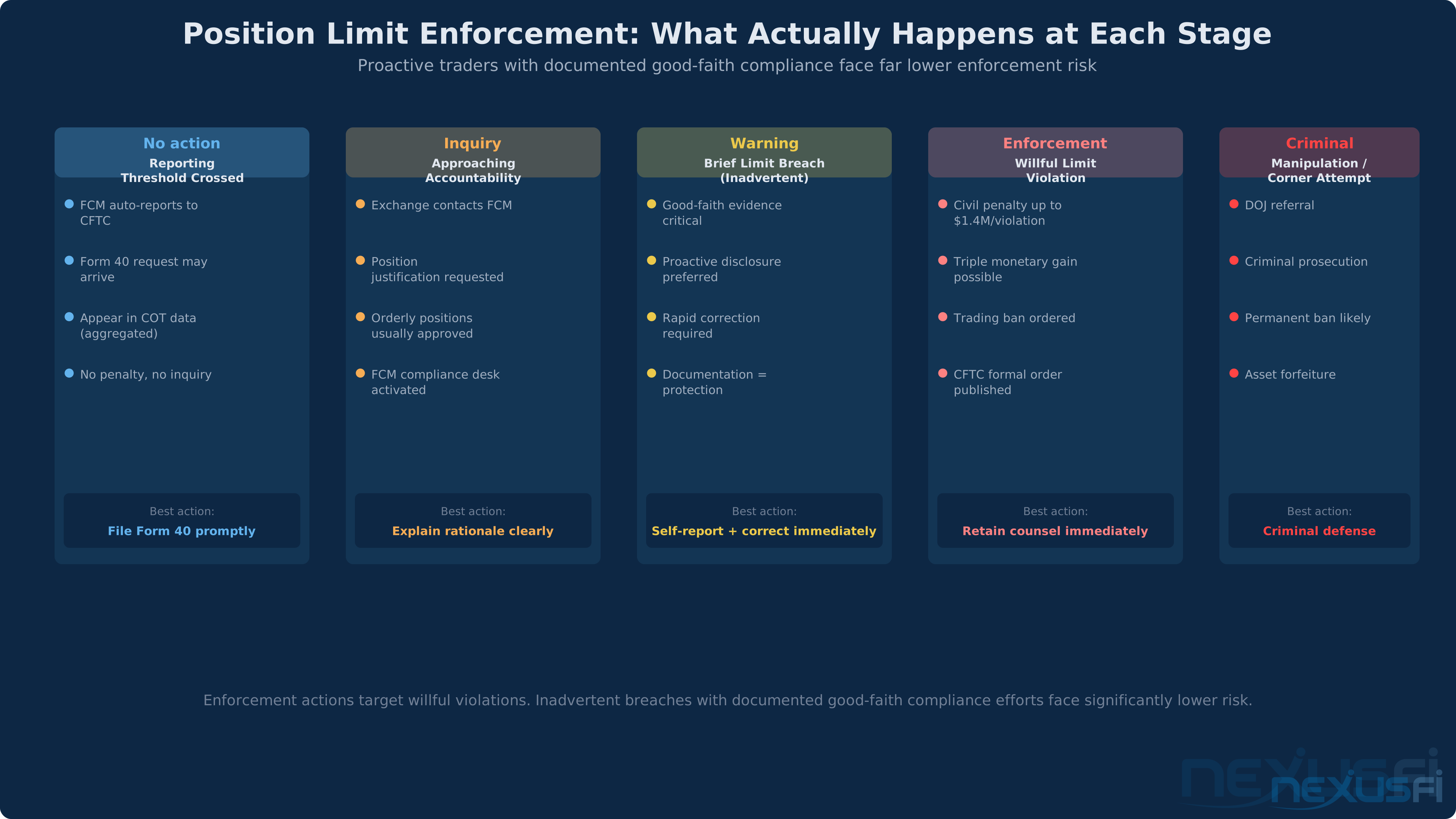
When a position approaches an exchange accountability level, the exchange contacts the FCM, who contacts the trader requesting an explanation. Traders should be prepared to describe their trading rationale, risk management process, and whether hedging documentation supports the position. For orderly positions with legitimate rationales, the process is collaborative, not adversarial.
Breaching Federal Limits #
Exceeding CFTC federal position limits without a bona fide hedging exemption is a regulatory violation. Consequences can include:
- Civil monetary penalties (up to $1.4 million per violation or triple the monetary gain)
- Forced position reduction ordered by the exchange
- Trading bans and CFTC enforcement referral
Enforcement actions target willful violations and systemic compliance failures, not inadvertent brief breaches. Traders who proactively identify and correct limit breaches, with documented evidence of good-faith compliance efforts, face much lower enforcement risk.
Documentation as Protection #
The most effective enforcement protection is contemporaneous documentation: records showing that you monitored positions, knew the applicable limits, and managed exposure proactively. Keep records of:
- Daily position records by account and contract month
- Options delta-adjusted exposure calculations
- Roll management decisions and execution logs
- FCM compliance communications
- Form 40 submissions and update history
Practical Toolkit: Finding Limits and Implementing Monitoring #
Where to Find Current Limit Tables #
CME Group Position Limits and Accountability Levels: The definitive source for CME, CBOT, NYMEX, and COMEX contracts. The downloadable spreadsheet lists every listed contract with its CFTC spot-month limit (if federally regulated), single-month accountability level, all-months accountability level, and reportable level (LTR threshold).
For ICE contracts (cocoa, coffee, cotton, sugar, orange juice): ICE Futures U.S. publishes position limits separately on its website. For CFTC core referenced contracts: the CFTC publishes federal position limits in 17 CFR Part 150.
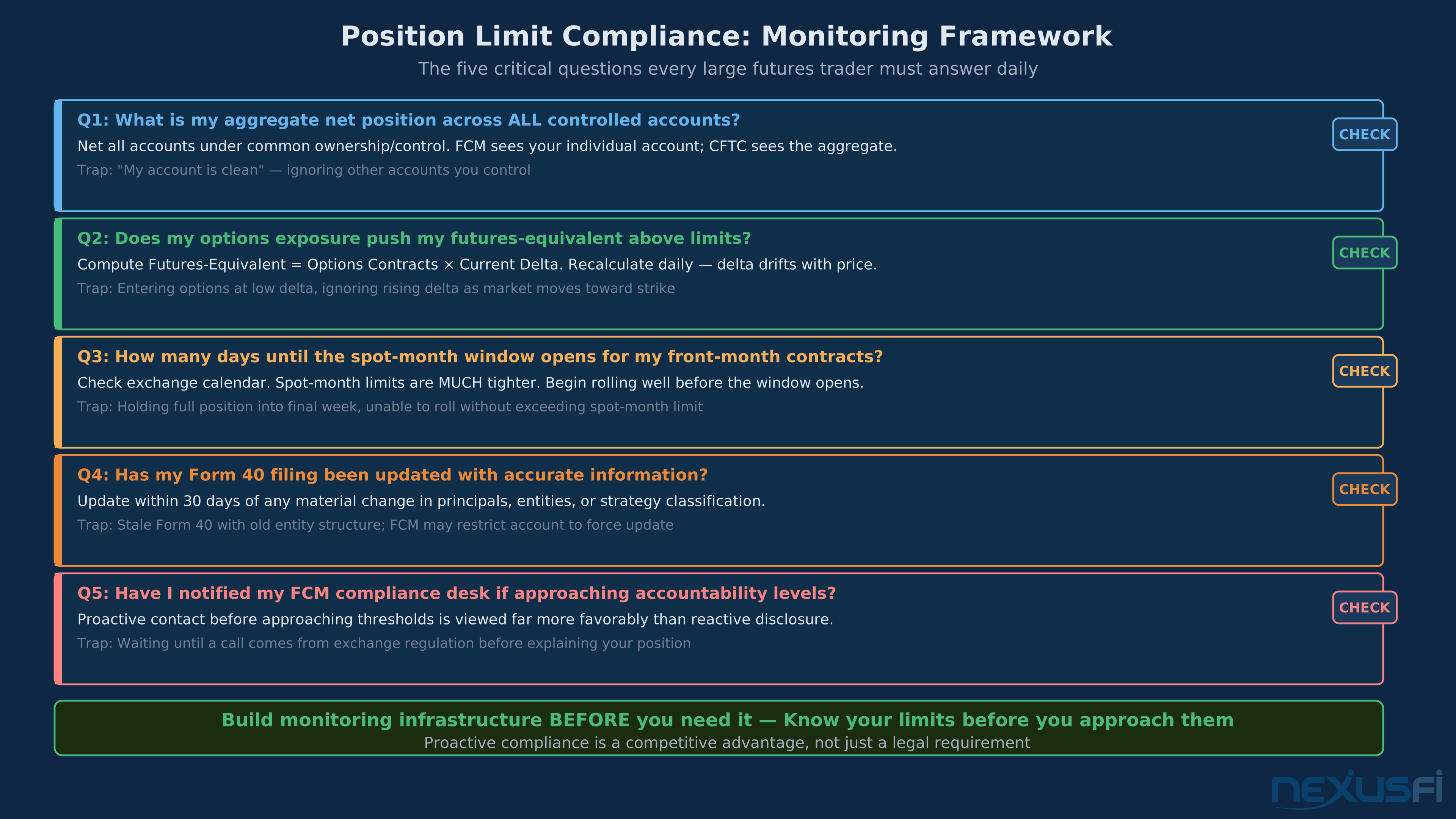
Monitoring Checklist #
Daily:
- Record net position by account and contract month at end of day
- Calculate delta-adjusted futures-equivalent for all options positions
- Sum aggregate positions across all accounts under your control
- Compare aggregate exposure against applicable limits and thresholds
- Check remaining business days until spot-month window opens for held contracts
Weekly:
- Review roll calendar for all held contracts; identify contracts entering 30-day pre-expiry window
- Verify FCM Form 40 data is current (any changes to principals or entity structure)
- Review controlled account inventory — are all discretionary accounts included in your aggregate tracking?
Periodically:
- Pull current CME Group accountability level table and verify no limit changes
- Audit options portfolio for delta drift against initial position sizing
- Review entity structure for aggregation risks (new accounts, partnerships, managed relationships)
Common Failure Modes #
"My account is clean" thinking: The most dangerous assumption. Without aggregating all controlled accounts, an individual account being within limits tells you nothing about your aggregate compliance position.
Ignoring the roll calendar: At significant size, rolling a position is itself a compliance event with timing requirements, not just an execution routine.
Static options thinking: Entering an options position at a given delta and never monitoring delta drift. Options exposure changes continuously as markets move.
Assuming FCM controls are complete: Pre-trade checks from your FCM don't see your positions at other brokers. They are a partner, not the compliance function itself.
Waiting to be told: Proactive communication with the FCM compliance desk — before approaching thresholds — produces better outcomes than reactive disclosure after a breach.
Strategic Implications: How Position Limits Shape Market Behavior #
Roll Timing Patterns #
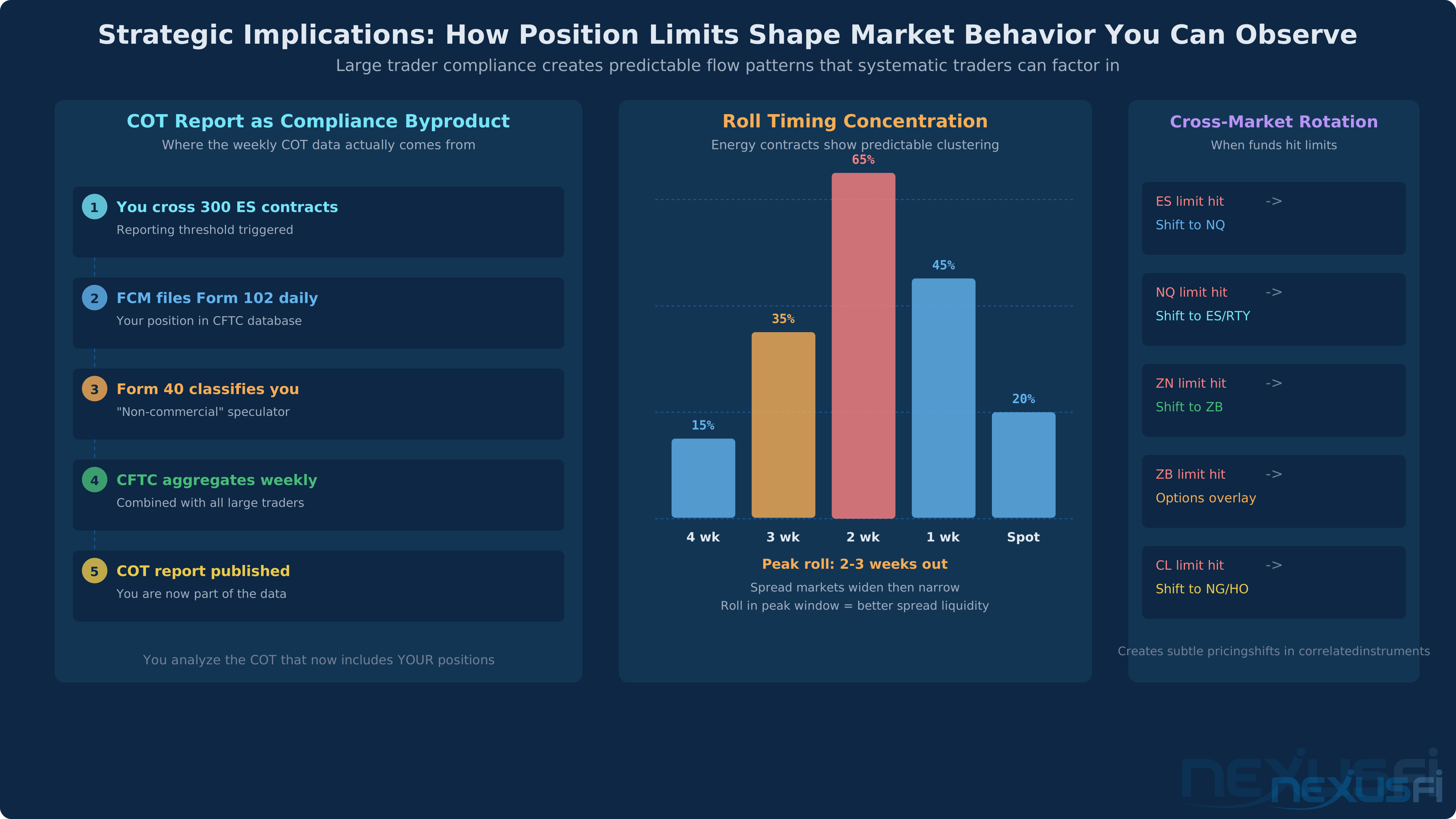
In major commodity contracts, reporting-level traders must begin rolling positions before spot-month limits tighten. This creates predictable clustering of roll activity in the 7-10 business day window before contract expiration. Energy futures (CL, NG) show especially concentrated roll volume in this window — spread markets often widen and then narrow as large positions rotate, a pattern visible in spread price data and open interest reports.
Traders who understand this dynamic can factor it into their own roll timing. Rolling in the heart of the large-trader roll window means operating in a more liquid spread market.
COT Report As A Compliance Byproduct #
The Commitments of Traders report is the public output of the large trader reporting system, built on the same open interest data that exchanges and clearinghouses track daily. The "non-commercial" and "commercial" classifications come directly from Form 40 reporting — traders classify themselves, and the CFTC aggregates those classifications into weekly COT data. A trader who crosses the reporting threshold becomes part of the data that other COT analysts are reading. The same system you file into is the system you analyze.
Accountability Levels and Cross-Market Positioning #
Large systematic funds approaching accountability levels in one instrument may reduce position size or shift exposure to correlated instruments — from ES to NQ, from ZN to ZB, or into options overlays — to stay below any single threshold. This can create subtle shifts in relative liquidity and pricing across correlated instruments, a pattern visible in cross-market flow analysis. Understanding why these flows occur is part of understanding market structure at scale.
Prerequisites and Further Reading #
Readers should be familiar with Futures Contract Rollover and Expiration, Futures Margin Requirements, and Open Interest in Futures before fully applying the frameworks in this article. The position limit structure connects directly to Futures Exchange Contract Design — why contracts are specified the way they are, with limits as core components of market integrity architecture.
Conclusion #
Position limits and large trader reporting are, at their core, success milestones in a trading career. You hit the reporting threshold when you've scaled to a meaningful market presence. You approach accountability levels when you're operating at institutional size.
The practical reality, as described by NexusFi community members who have lived it: the Form 40 arrives, the FCM's compliance team reaches out, and the process is manageable. The traders who struggle are those who encounter these systems without preparation — inadvertently aggregating controlled accounts, misunderstanding spot-month roll discipline, or failing to track delta-adjusted options exposure.
Build the monitoring infrastructure before you need it. Know your limits before you approach them. Keep your FCM compliance desk informed proactively. The rules are clear, the documentation requirements are specific, and the consequences of violations are serious but avoidable with proper attention.
As FuturesTrader71 put it: "Their mandate is to make sure that the markets remain orderly and we don't see another LTCM-type of blow-up or cornering of the market." For traders operating within these frameworks in good faith, the system functions exactly as designed: a monitoring mechanism, not an enforcement trap.
Knowledge Map
Go Deeper
Build on this knowledgeReferences This Article
Articles that build on this topicCitations
- — CFTC / Large Trader (2020) 👍 7“Their mandate is to make sure that the markets remain orderly and we don't see another LTCM-type of blow-up or cornering of the market.”
- — CFTC / Large Trader (2020) 👍 10“You're on the CFTC's radar. I would call your broker or clearing firm and speak to their compliance department.”
- — CFTC / Large Trader (2020) 👍 8“All I have to do is file a form with the CFTC every two years. They even email me when the form is due. All the actual reporting is done automatically by the broker to the CFTC.”
- — CFTC / Large Trader (2021) 👍 1“Have you considered the total position summed across all accounts? That's what the CFTC looks at.”
- — Optimus Futures trading broker review (2016) 👍 4“Futures Exchange Rules prohibit the holding of offsetting open futures positions in accounts under the same ownership -- positions across accounts with common ownership must be netted for limit purposes.”
- — Commitment of traders (2010) 👍 5“Commitment of Trader shows the market positions of different groups: commercials (producers, banks), large traders (speculators, hedge funds), and non-reportable small traders.”
- — The Scalper's Journey (2017) 👍 4“COT can reveal large positioning imbalances among weaker-handed non-commercial traders which have a strong tendency to correct themselves over time.”
- — Historical Rollover Dates (2022) 👍 2“ES and NQ volume shift to the new contract on Sunday after calendar roll date, so roll EOD on Friday PM. CL rolls on calendar roll date or the day after.”
- — Rollover Days - some Quick Facts about (2009) 👍 22“Rollover is 8 days before expiration. Volume shifts to the new contract at market open on Rollover day. New positions opened on rollover day should use the new contract month.”
- — Position Limits for Derivatives (2021)
- — Position Limits and Accountability Levels (2026)