



DOM Trading and Tape Reading as an Integrated Strategy: The Decision Framework for Reading Live Order Flow in ES, NQ, and CL
Overview #
Most traders learn DOM and tape reading as separate disciplines. They study the order book over here and the time-and-sales feed over there, then try to combine the signals in real time without a clear system for when the two tools agree or disagree. The result is a common failure mode: overweighting DOM walls that cancel on approach, misreading absorption as weakness, or chasing sweeps that immediately reverse.
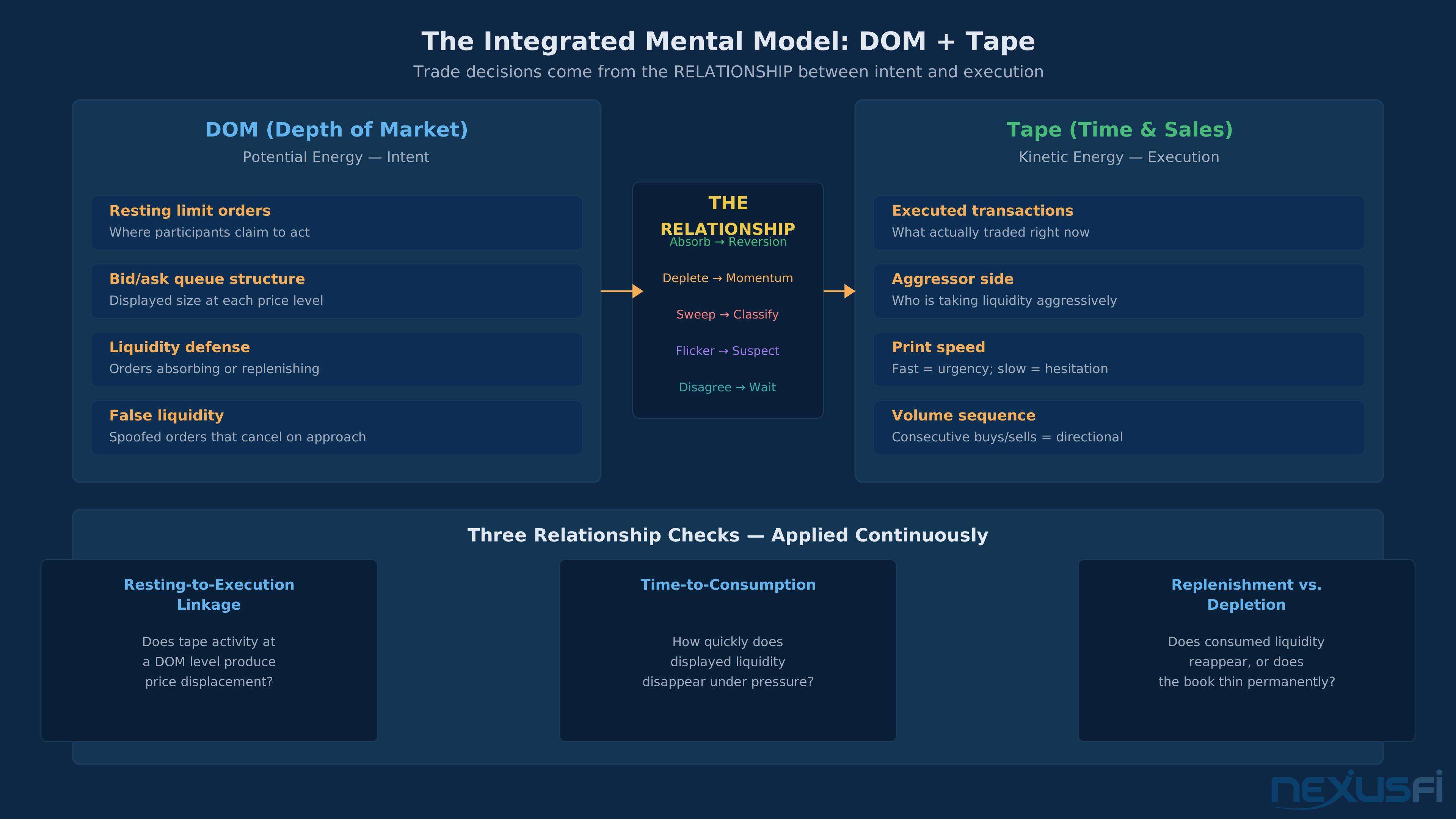
This article solves that problem. DOM and tape are not two separate tools--they are one decision system. The DOM shows potential energy: where liquidity sits, what participants claim they're prepared to do. The tape shows kinetic energy: what actually executes, who is taking liquidity aggressively, and whether price is being accepted or rejected at each level. The edge comes entirely from the relationship between these two streams--not from either one alone.
By the end of this article, you'll have a repeatable six-step decision framework for turning DOM and tape observations into disciplined trade entries, exits, and invalidations across ES, NQ, and CL. The methodology works on any futures product with adequate liquidity; the product-specific thresholds in Section 8 give you the calibration numbers for each contract.
The Three Relationship Checks You Apply Continuously #
Every decision in this methodology comes from three relationship checks applied over and over throughout your session:
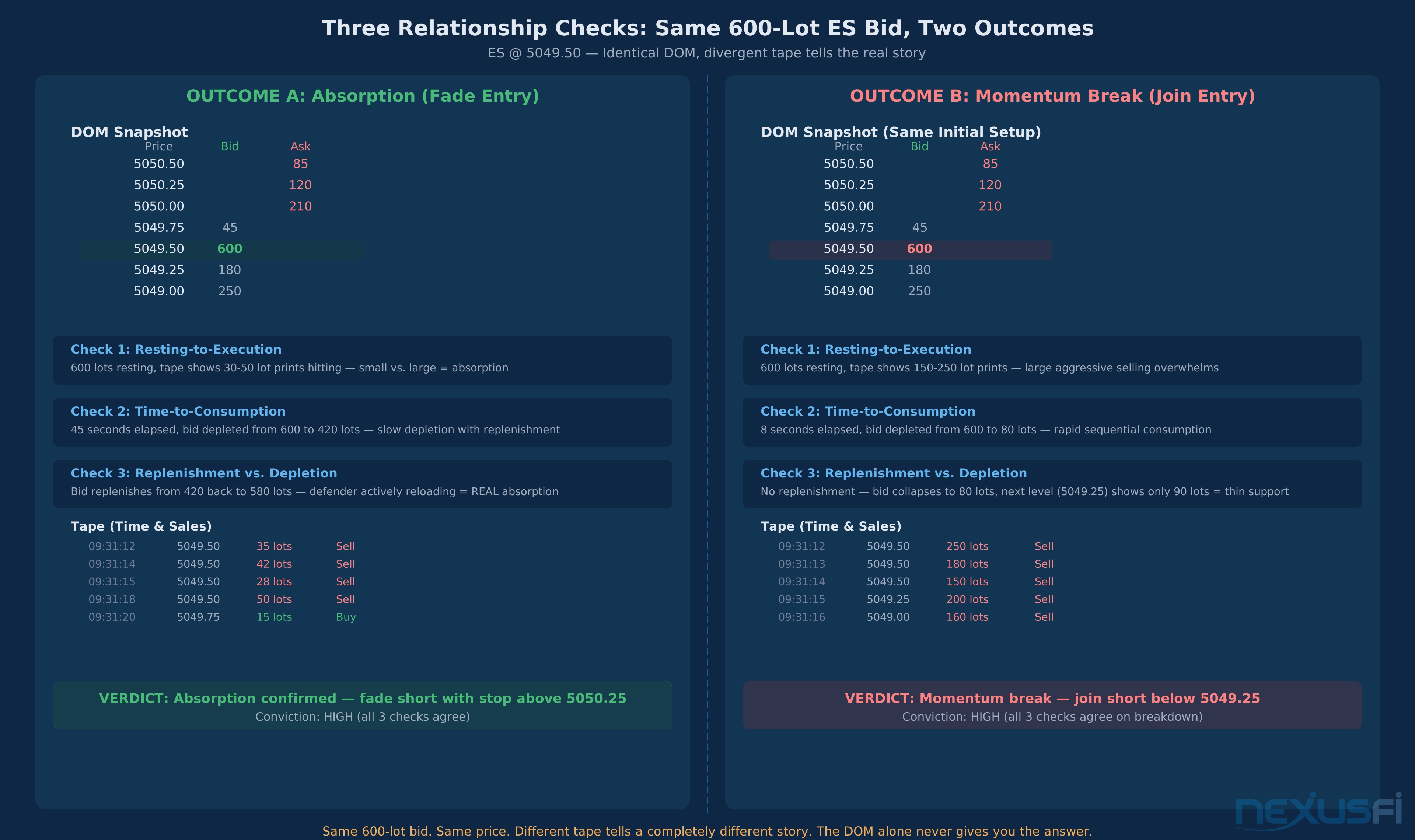
Check 1: Resting-to-Execution Linkage. Does tape activity at a DOM level produce price displacement, or does the level hold? Aggressive tape that fails to move price is absorption. Aggressive tape that does move price is momentum. The same DOM snapshot means opposite things depending on this check.
Check 2: Time-to-Consumption. How quickly does displayed liquidity diminish under pressure? Slow, gradual consumption with replenishment is absorption. Fast, sequential consumption without replenishment is a sweep or momentum move.
Check 3: Replenishment vs. Depletion. Does consumed liquidity reappear at or near the cleared price? If yes--and the level holds--that's genuine defense. If no--and the book thins permanently--that's depletion leading toward continuation.
By the end of this article, you'll have a repeatable six-step decision framework for turning DOM and tape observations into disciplined trade entries, exits, and invalidations across ES, NQ, and CL.
Think of it this way: a 500-lot bid on the ES DOM is support if tape hits it repeatedly and price holds. That exact same 500-lot bid is a trap if 50 aggressive contracts trigger full cancellation. The size tells you nothing by itself. The relationship between that size and what the tape does to it is everything.

Section 1: Absorption Patterns -- Identifying Real Defense vs. Noise #
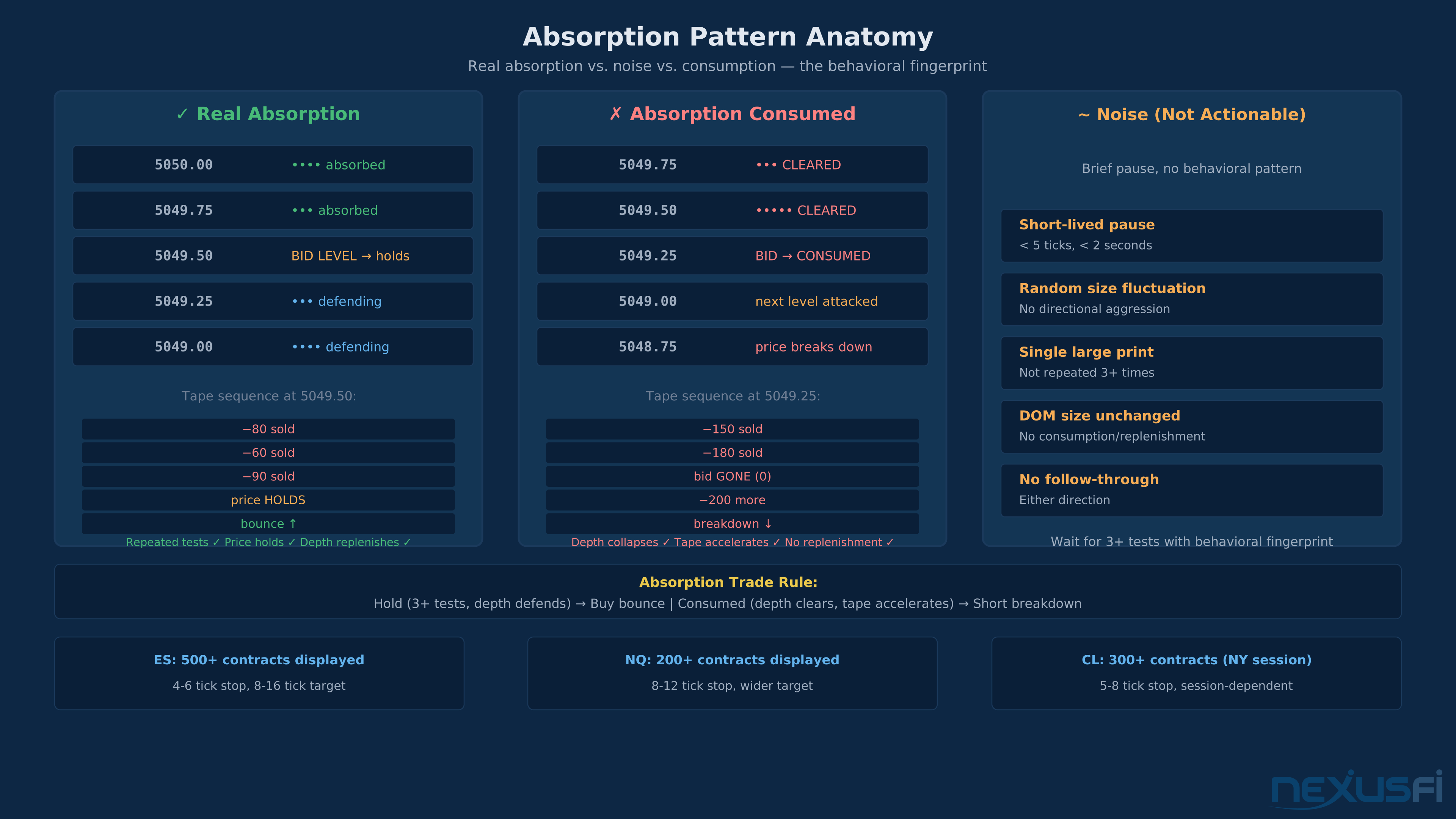
Absorption is the foundational pattern of this methodology. When aggressive orders (tape) are met by equal or greater counter-side resting liquidity (DOM), price stalls. The absorption either holds (leading to a reversal) or gets consumed (leading to a breakout). Distinguishing between the two, in real time, is the central skill.
The Real Absorption Fingerprint #
Real absorption has a recognizable behavioral pattern that persists across all three products:
- Repeated tests — the same price level is hit aggressively 3 or more times
- Limited displacement — price oscillates within 1-2 ticks despite repeated aggression
- DOM depth non-collapse — displayed size decreases proportionally but doesn't vanish or refresh instantly to a dramatically higher number
- Duration — the regime lasts long enough to act: 10-30 seconds in ES, shorter in NQ, variable in CL
Here's how it looks in practice on ES. Price is at 5050.25 and a 600-lot bid sits at 5049.50. Tape prints 80 contracts sold, then 60, then 90. The bid drops to 370 contracts but doesn't vanish. Price bounces to 5049.75. That's absorption holding. Three confirmations, limited displacement, depth non-collapse. The trade is to buy the bounce, stop 1 tick below 5049.50.
Jigsaw Trading put it precisely in the 2012 Order Flow Journal thread: "When you see a thick level, it is merely a 'heads-up'. You cannot trade off it alone. There is no guarantee that price will [hold there]." The level creates the setup; the tape's interaction with it confirms whether it's real.
Order Flow Journal (@Jigsaw Trading)
Absorption Consumed (The Breakdown) #
When absorption fails, the pattern reverses sharply. Depth collapses--not gradual thinning, but outright depletion. Tape aggression accelerates rather than slowing. No replenishment appears.
ES example: The 600-lot bid at 5049.50 takes three hits--150 contracts, then 180, then the remaining 270 all at once. The bid goes to zero. Tape immediately prints 200 more aggressive sells below the cleared level. That's absorption consumed. The trade flips: short the breakdown below 5049.50, stop at 5050.00.
Calibrating by Product #
The thresholds that define "significant absorption" vary by product:
- ES: 500+ contracts displayed at the absorption level. The ES has deeper liquidity than NQ, so a smaller wall doesn't create a reliable absorption signal.
- NQ: 200+ contracts. The NQ book is thinner--200 contracts here represents similar structural significance to 500 on the ES.
- CL: 300+ contracts during NY session; 200+ during Asian session. CL liquidity drops sharply outside primary trading hours. Always adjust threshold to session.
Noise vs. Real Absorption #
The one failure mode that traps beginners is treating any brief pause as absorption. Real absorption requires all three elements: repeated tests (not a single hit), limited price displacement (not a 4-tick correction), and observable DOM behavior (not random size fluctuations). A single large print, one test of a level, or a quick stall without DOM confirmation is noise. Wait for the full fingerprint before acting.
Real absorption requires three simultaneous elements: repeated tests at the same level, limited price displacement (1-2 ticks), and DOM non-collapse. A single large print, one test, or a quick stall without DOM confirmation is noise — wait for the complete fingerprint before acting.
Section 2: Sweep Detection and Post-Sweep Regime Classification #
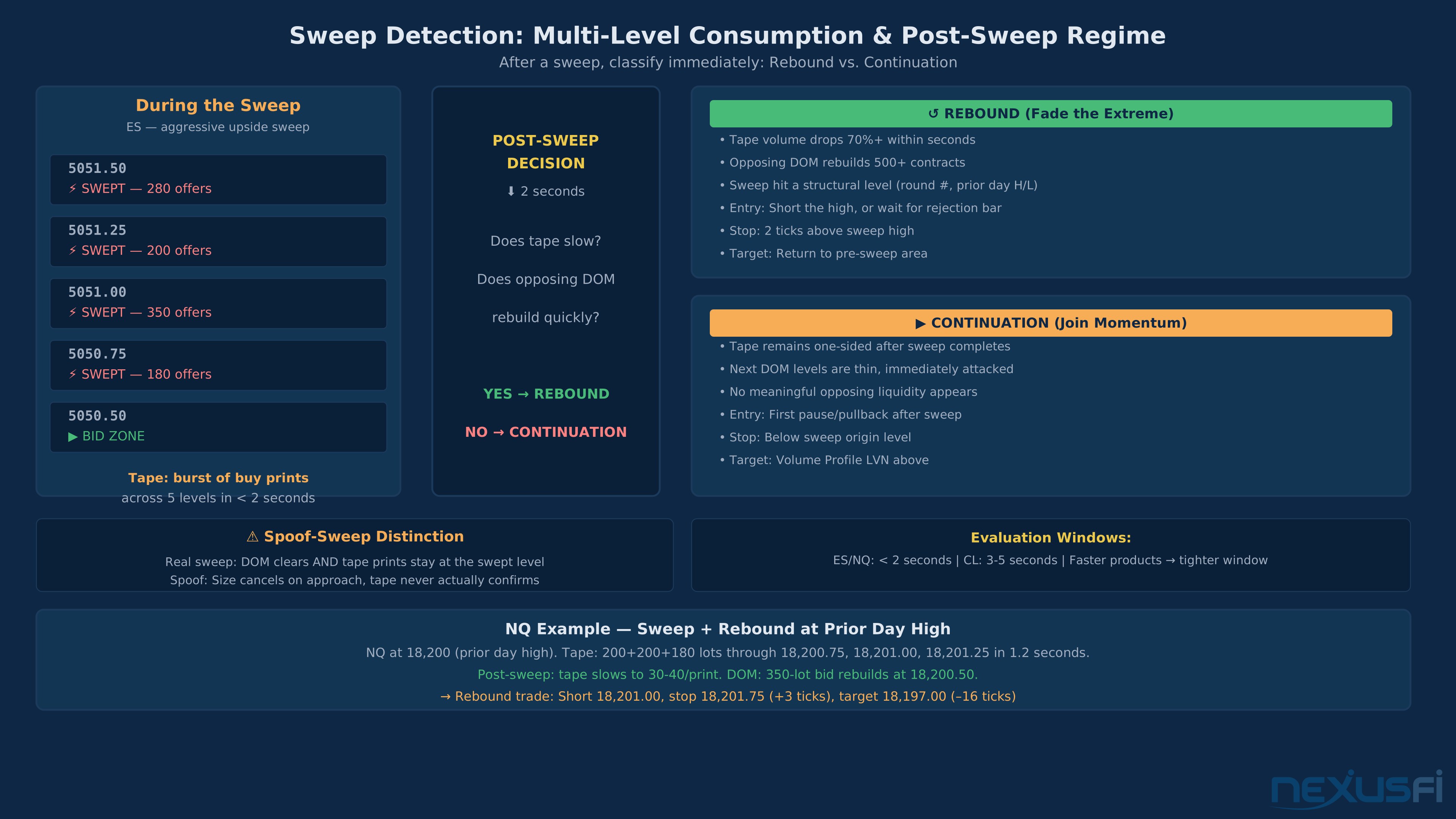
A sweep is rapid, sequential consumption of multiple adjacent DOM price levels, driven by aggressive market orders that take liquidity across several ticks in milliseconds. Sweeps signal urgency--someone is willing to take poor prices to get filled immediately. The critical trading decision isn't during the sweep; it's the regime classification that follows.
Identifying a Sweep #
Three observable elements confirm a sweep:
- Multiple levels cleared in sequence — 3 or more adjacent DOM levels consumed, not just one
- Compressed time window — typically under 2 seconds for ES/NQ, 3-5 seconds for CL
- Large tape prints — significant volume in rapid sequence, not scattered small prints
In NQ, a sweep looks like this: Price at 18,200. Tape prints 200 lots at 18,200.25, then 200 at 18,200.50, then 180 at 18,200.75--all within 1.2 seconds. Three offer levels cleared, prior day high tested. The sweep has occurred. Now classify.
Post-Sweep Regime: Rebound vs. Continuation #
This classification happens in the 2 seconds after the sweep completes:
Rebound conditions (fade the extreme):
- Tape volume drops 70%+ within seconds of the sweep completing
- Opposing-side DOM rebuilds quickly (new large orders appear on the other side)
- Sweep exhausted at a structural level: round number, prior day high/low, opening range extreme
Continuation conditions (join momentum):
- Tape remains one-sided after the sweep
- Next DOM levels are thin and immediately attacked
- No meaningful opposing-side liquidity appears post-sweep
In the NQ example above: post-sweep, tape prints slow to 30-40 contracts per print and a 350-lot bid rebuilds at 18,200.50. That's a rebound signal. Trade: short 18,201.00, stop 18,201.75 (+3 ticks), target 18,197.00 (−16 ticks). The sweep cleared liquidity; now the market snaps back to rebalance.
If instead, after the sweep, tape continues printing 150+ aggressive buys at the next offer level (18,201.00) and that level's DOM is thin, that's continuation. Don't fade it--join it after the first pullback.
The Spoof-Sweep Distinction #
A spoofed sweep is a trap that catches traders who react too quickly. In a real sweep, DOM levels clear AND tape prints stay at the swept prices. In a spoof-triggered move, large orders cancel as price approaches, the tape shows only modest prints, and the "sweep" is manufactured by disappearing fake liquidity rather than genuine aggressive buying/selling. Always require tape confirmation--DOM cancellation alone doesn't make a sweep.
The key decision in a sweep is the regime classification in the 2 seconds after it completes: tape deceleration (70%+ print volume drop) plus opposing DOM rebuilding = rebound fade. Tape continuation plus thin DOM ahead = momentum continuation. Getting this classification right is the entire edge.
Section 3: Spoofing and Layering -- Reading Suspect DOM Liquidity #
Spoofing--placing large orders with intent to cancel before execution--is illegal under U.S. commodity law. The CFTC actively pursues spoofing enforcement actions under the Dodd-Frank Act, and CME Group's own Rulebook Rule 575 explicitly prohibits disruptive trading practices — including any order placed with intent to cancel before execution.
CFTC Spoofing Enforcement Actions
CME Group Rule 575 — Disruptive Practices Prohibited
It's also common enough in futures markets that you need a reliable detection framework. The critical rule: never trade a DOM wall based on the wall alone. Always require tape corroboration.
Behavioral Heuristics for Suspect Liquidity #
These observable patterns flag liquidity worth discounting:
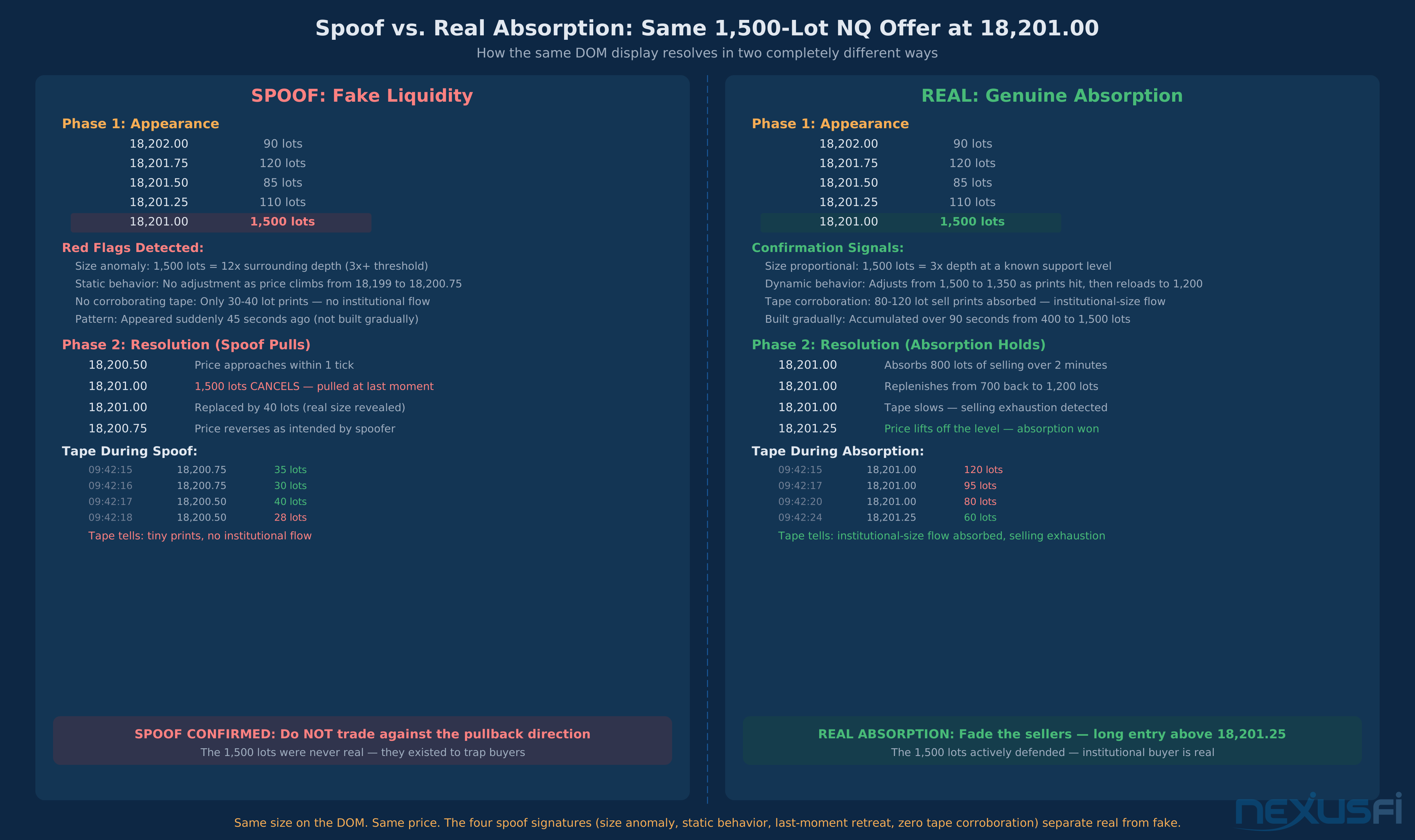
Size anomaly. A wall that appears suddenly at 3x+ normal level depth for that product. Real liquidity usually builds gradually; a 1,500-lot offer that materializes in one refresh is suspicious.
Static behavior. A large order that doesn't adjust as price approaches. Real defensive orders often get partially filled or repositioned. A wall that stays exactly the same size while price grinds toward it deserves scrutiny.
Last-moment retreat. The order cancels precisely when price is within 1 tick of triggering. This is the signature tell--real liquidity providers want fills; spoofers don't.
Zero tape corroboration. A 1,000-lot offer sits 3 ticks away, but the tape shows only small-lot selling with no aggressive lifting of bids. If the "sell pressure" supposedly indicated by the wall isn't appearing in the tape, the wall is suspect.
These same behavioral clues apply when evaluating iceberg orders and hidden liquidity — large orders that exist in the market but never appear in the visible DOM. Real institutional activity often hides behind iceberg orders, so understanding the full liquidity picture requires knowing when something is present but not displayed.

Jigsaw Trading articulated this community insight clearly: "A lot of spoofing goes on and generally that involves stacking the order book on one side to fool people into trading in the other direction."
Why does the market move towards the heavier side of the order book? (@Jigsaw Trading)
The Tape Corroboration Rule #
Suspect DOM liquidity becomes actionable only when tape confirms the deception:
Approach → the wall gets hit → large size cancels quickly → price continues through without replenishment. That sequence confirms the wall was false. The "support" level that failed to hold is now potential resistance for a continuation trade.
Conversely: the wall is hit and absorbs with replenishment. That's not spoofing--that's real defensive liquidity. The tape behavior distinguishes between them.
What to Do With Spoof-Like Signals #
When you identify suspect liquidity, do three things:
- Discount that level as support or resistance in your analysis
- Wait for the tape to confirm through (price trades through the suspected spoof level with tape prints at that price)
- Consider that the opposite of the intended impression may be true--a wall of fake bids may actually signal distribution (institutional selling into the bid-buying herd)
The community has wrestled with this for years. From NexusFi's "Is Spoofing Alive and Well?" thread, a trader noted: "Frequency traders may also have strategies that are based on their position in the book. They may not be spoofing to fool other traders but they pull their orders when the resting depth below them drops below a certain threshold." This is an important nuance--not every order cancellation is malicious. Require the full behavioral sequence before labeling something a spoof.
Is Spoofing alive and well? (@tpredictor)
Section 4: Momentum Confirmation -- When DOM and Tape Agree on Continuation #
True momentum in this framework requires dual evidence--sustained tape aggression aligned with DOM depletion. Neither signal alone is sufficient. Tape aggression without DOM depletion could be absorption (a large defensive position absorbing aggressive orders). DOM depletion without tape aggression could be passive order removal (repositioning, not momentum).
This dual-confirmation logic mirrors the broader order flow analysis framework — which treats the interaction between displayed liquidity and aggressive execution as a single unified signal rather than two separate data streams.
The Momentum Checklist #
Tape requirements:
- 8-15+ consecutive directional prints within 1-2 seconds
- 70%+ same-side aggression over the window
- Volume accelerating (each successive 5-second window shows increasing contract count)
- Minimal counter-trade follow-through
DOM requirements:
- Opposing-side liquidity depleting without replenishment
- Near levels (1-3 ticks ahead of price) thinning progressively
- New liquidity appearing farther away, not at cleared levels
- The book is being "pulled through," not defended
Divergence warnings (momentum is false or at risk of reversing):
- Tape aggressive but DOM quickly rebuilds → trapped traders getting out, not genuine momentum
- DOM thin but tape prints scattered/small → low conviction; wait for a cleaner signal
- High volume but choppy price action → distribution or institutional positioning, not directional momentum
Reading Tape Speed as a Momentum Signal #
The NexusFi community has developed precise intuition about tape speed. From the "i want to be a master at tape reading" thread: "You have to feel the speed of the prints more than anything else--fast prints at a level means there's a lot of urgency." This is empirically correct. When prints slow at a level, the aggression is exhausting. When prints accelerate, conviction is growing.
i want to be a master at tape reading (@traderadam)
In practice: an ES momentum long looks like this. Price bounces off VWAP at 5,010.25. Tape shows 450 aggressive buys in 1 second (85% buy side). DOM offers at 5,010.50 thin from 280 to 180 to 80 as each print lifts them. New offers appear 3+ ticks above. The DOM isn't defending against you; it's yielding. Enter long with a 4-6 tick stop, targeting the prior session high.

Section 5: The Agree vs. Disagree Playbook #
The most actionable concept in this methodology is what happens when DOM and tape signals conflict. When they agree, entry is straightforward. When they disagree, the disagreement itself is often the most important signal in the market--and the source of the best-risk trades.
When DOM and Tape Agree (Higher Conviction) #
Bullish agreement: Bids building and offers thinning on DOM; tape showing 70%+ aggressive buys. Enter long with standard size, tighter-than-normal stops.
Bearish agreement: Offers building and bids thinning; tape showing 70%+ aggressive sells. Enter short with standard size, tighter-than-normal stops.
In agreement states, the market is telling a consistent story. Both the intent (DOM structure) and the execution (tape prints) are aligned. Trade with conviction.
When DOM and Tape Disagree (Proceed with Caution) #
DOM bullish, tape bearish: Large bids visible, but tape shows aggressive selling continuing to hit them. This is the absorption-or-trap setup. Wait for the tape to do one of two things: (1) slow down as the level holds (absorption confirmed → buy the bounce), or (2) accelerate through the bid as depth collapses (consumption confirmed → short the breakdown). Choosing a direction before this resolution is guessing.
DOM bearish, tape bullish: Large offers visible, but tape shows aggressive buying continuing to lift them. Same logic: wait for resolution. Don't fade a move just because a wall exists. Walls cancel; momentum doesn't.
Reduced conviction protocol: In any disagreement state, reduce position size to 50% standard. Widen your invalidation by 2-3 ticks. Wait for the tape to resolve the ambiguity before adding to any position.
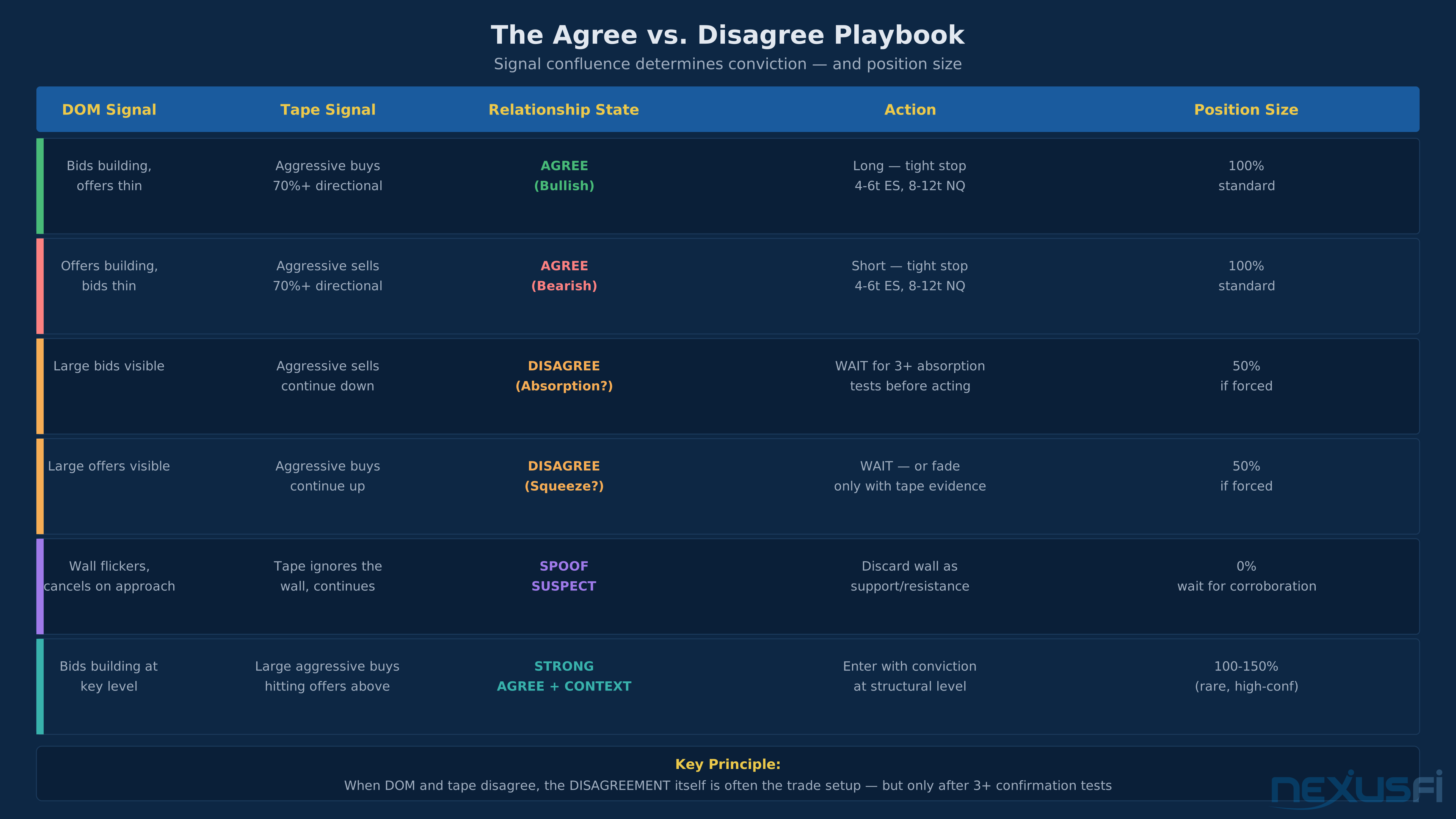
In any DOM/tape disagreement state: cut size to 50%, widen invalidation by 2-3 ticks, and wait for the tape to resolve the ambiguity. The disagreement is itself a signal — it means the market is undecided, and your conviction should match the market's.
The Most Valuable Disagreement Trade #
When a DOM wall that looked like support gets hit by tape aggression but the bid vanishes rather than absorbing, that's not a failed trade setup. It's a signal flip. The fake "support" becomes evidence of distribution. If tape continues aggressively through the cleared level, that's a continuation short--often sharper than normal because trapped longs who bought the DOM wall are now being forced out simultaneously.
A 2020 discussion on ES chat rooms surfaced this from @n7ekg: "Order flow takes knowledge of what absorption and exhaustion looks like on the DOM, too. You have to be able to interpret what you're seeing on the DOM, both in terms of resting orders and filled orders, what absorption looks like, what exhaustion looks like."
Orderflow ES chat rooms (@n7ekg)
Section 6: The Trigger Framework -- Six Steps from Observation to Execution #
The trigger framework converts DOM/tape observation into disciplined execution. Without it, traders fall into the most common failure mode: waiting so long for certainty that they miss the trade, or acting so fast on incomplete signals that they're consistently wrong-sided.
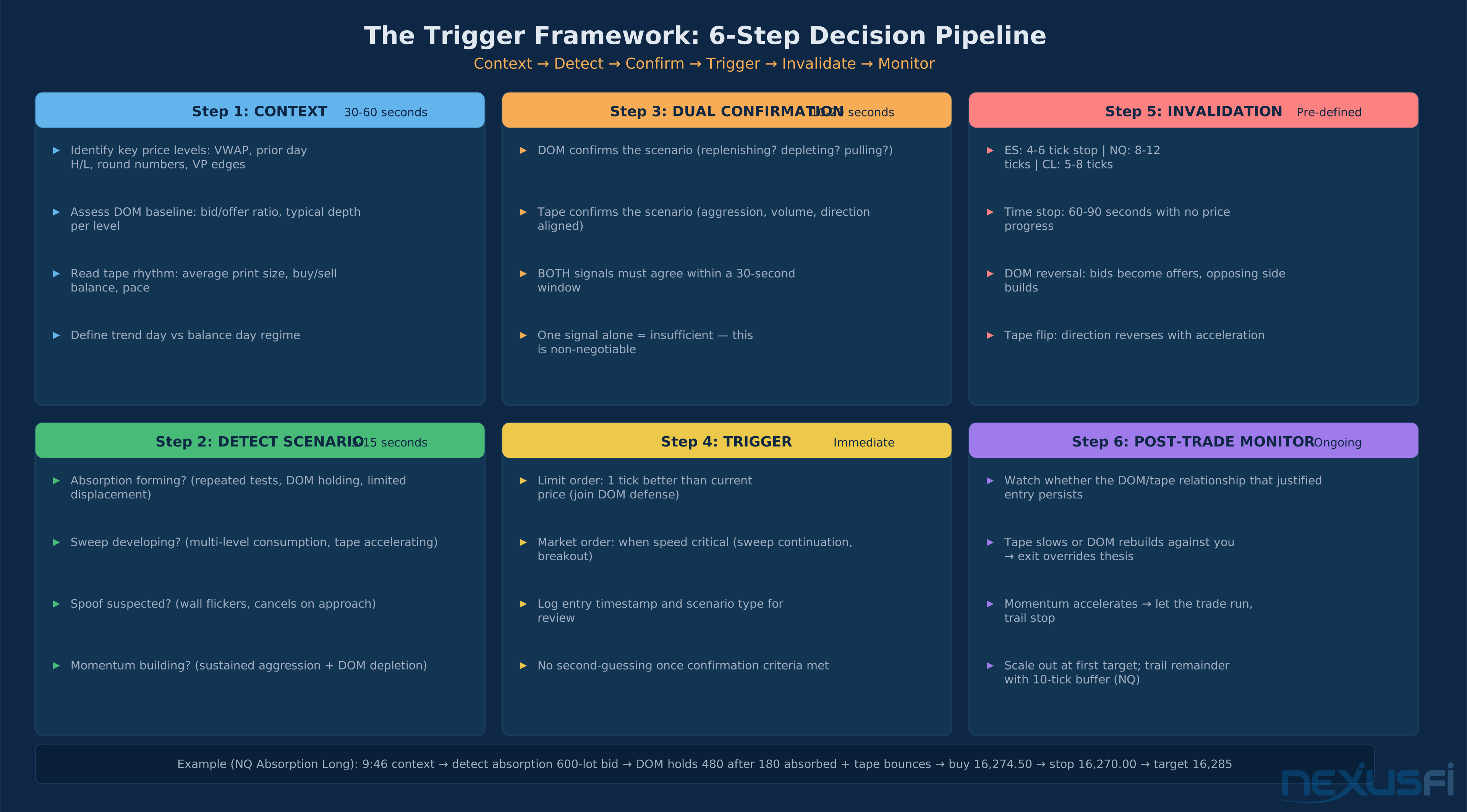
Step 1: Context (30-60 Seconds) #
Before you can read DOM and tape properly, you need to know where you are. Identify:
- Key price levels: Volume Profile POC and value area edges, VWAP, prior day high/low, opening range boundaries, round numbers
- DOM baseline: What's the typical depth per level for this time of day? What's the bid/offer ratio trending?
- Tape rhythm: What's the average print size right now? What's the directional split? Is the pace accelerating or decelerating?
- Regime: Trend day or balance day? This changes everything about how you use DOM and tape signals.
On trend days, absorption signals that would normally trigger reversals often fail--the dominant side keeps pushing after brief pauses. On balance days, absorption signals near value area extremes are highly reliable. Always calibrate to regime.
Step 2: Detect Scenario (5-15 Seconds) #
Which of the four primary scenarios is forming at your key level?
- Absorption: Repeated tests, limited displacement, DOM holding. Potential fade/reversal setup.
- Sweep: Multi-level consumption, tape accelerating. Classify rebound vs. continuation.
- Suspected spoof: Wall flickers, cancels on approach, zero tape corroboration. Discount this level, wait.
- Momentum: Sustained aggression, DOM depletion, no replenishment. Trade with trend.
Step 3: Dual Confirmation (10-20 Seconds) #
This is the non-negotiable gate. Both DOM behavior AND tape behavior must confirm the scenario within a 30-second window. One signal alone does not clear this gate.
The confirmation criteria are fully detailed in the relevant sections: absorption (DOM non-collapse + tape aggression at the level), momentum (sustained directional tape + opposing-side DOM depletion), and spoof (suspect wall behavior + tape non-corroboration).
Step 4: Trigger (Immediate) #
Once dual confirmation is achieved, execute without hesitation:
- Limit order: Join the DOM defense 1 tick better than current price. Lower adverse selection; requires tape confirmation already achieved.
- Market order: When speed is critical--sweep continuation, momentum breakout. Accept the price to ensure participation.
Log entry timestamp and scenario type. This builds the review data that improves your execution over time.
Step 5: Invalidation (Pre-Defined, Non-Negotiable) #
Set your stop immediately upon entry. Stops in this methodology are:
- ES: 4-6 ticks ($50-$75 per contract)
- NQ: 8-12 ticks ($40-$60 per contract)
- CL: 5-8 ticks ($50-$80 per contract)
Include a time stop: if the trade produces no meaningful price progress within 60-90 seconds, exit. This prevents "dead money" positions that tie up capital while opportunity passes.
Tape-based invalidation: if the tape direction reverses with acceleration (70%+ flip to the other side), exit even if price hasn't hit your stop. The confirmation that justified entry no longer exists. DOM-based invalidation: if opposing-side liquidity builds aggressively while you're in the trade (the market is organizing against you), tighten or exit.
Step 6: Post-Trade Monitoring (Ongoing) #
The relationship that justified your entry must persist for the trade to work. Watch for tape slowing: if aggressive prints decrease to 30-40% of entry-level volume, the momentum is exhausting. Take partial profit or tighten the stop. Also monitor DOM rebuilding against your position and trigger your time stop if 60-90 seconds pass without meaningful progress in your direction.
For winning trades: scale out at the first target (typically +8 ticks for ES, +16 for NQ, +10 for CL). Trail the remainder with a 10-tick buffer or until tape reversal signals exhaustion.
Section 7: ES, NQ, and CL -- Product-Specific Adaptation #
The methodology is identical across products. The calibration differs much.
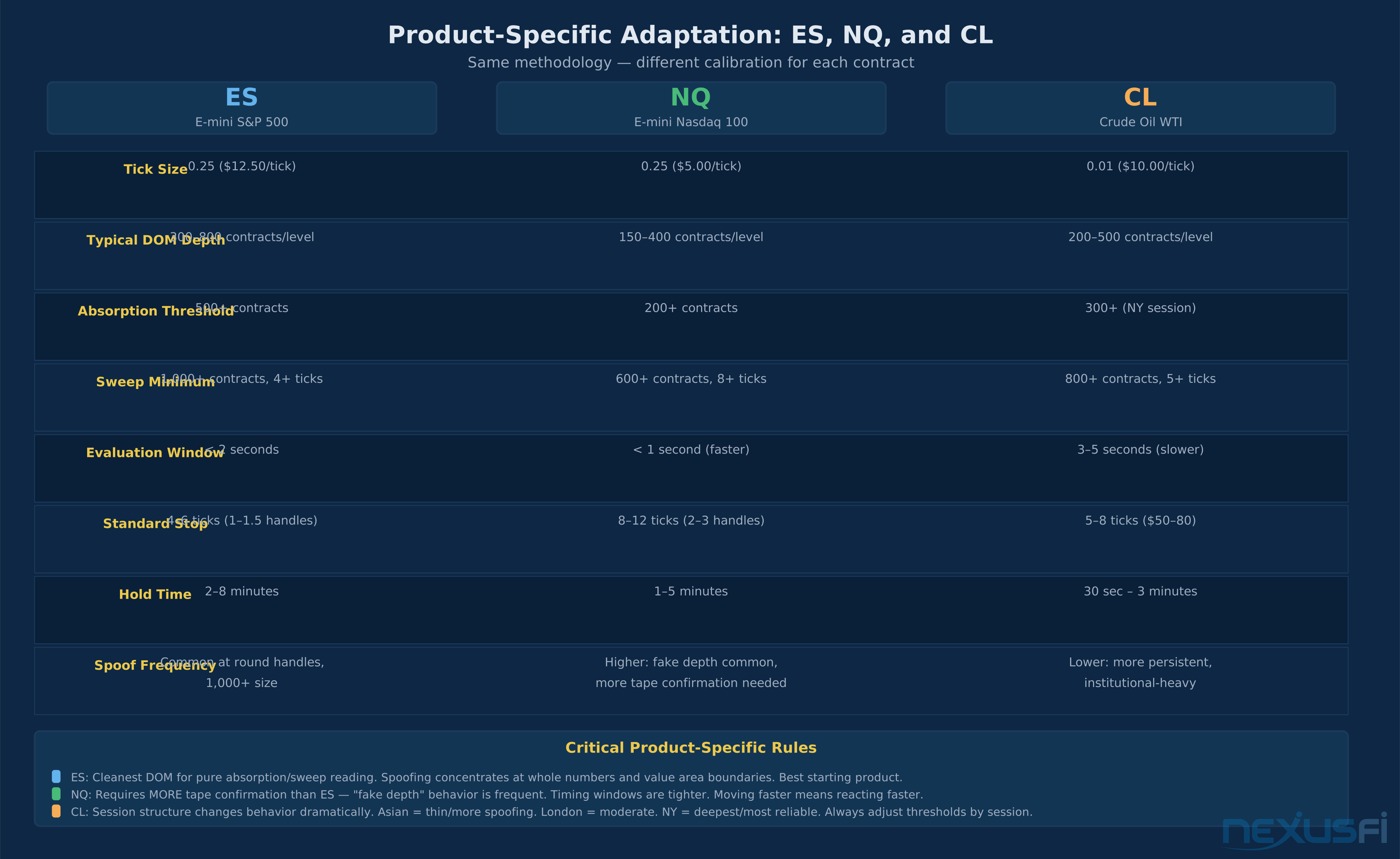
ES (E-mini S&P 500) — The Benchmark #
ES is the cleanest product for learning this methodology. Deeper liquidity, more predictable DOM behavior, and spoofing that concentrates at identifiable locations (round handles like 5000, 5050, 5100; value area boundaries; prior day extremes).
- Tick size: 0.25 points = $12.50 per tick
- Typical DOM depth: 300-800 contracts per level during RTH
- Absorption threshold: 500+ contracts for a significant signal
- Sweep minimum: 1,000+ contracts across 4+ ticks to qualify as a clean sweep
- Evaluation window: Under 2 seconds post-sweep
- Standard stops: 4-6 ticks
ES rewards patience more than NQ. The DOM updates fast but patterns persist longer. A 30-second absorption setup on ES is normal; the same setup on NQ often resolves in 10 seconds.
NQ (E-mini Nasdaq 100) — More Tape-Dependent #
NQ moves faster and the DOM is thinner. Fake depth is common--sizes that look significant relative to the book change quickly. NQ traders must require more tape confirmation than ES traders because DOM signals alone generate more false positives.
- Tick size: 0.25 points = $5.00 per tick (lower dollar value per tick than ES)
- Typical DOM depth: 150-400 contracts per level
- Absorption threshold: 200+ contracts (structural significance at lower absolute size)
- Sweep minimum: 600+ contracts across 8+ ticks
- Evaluation window: Under 1 second (faster resolution than ES)
- Standard stops: 8-12 ticks (wider in tick count, lower in dollars)
The NQ principle: tape is king. When NQ tape gives a clear directional signal, the DOM often catches up. In ES, you can sometimes lean on a DOM wall and wait for the tape to follow. In NQ, the tape leads and the DOM reacts.
CL (Crude Oil WTI) — Session-Aware Adaptation #
CL's microstructure changes dramatically by session. What works in NY session fails in Asian session. Always calibrate to session before applying thresholds.
- Tick size: $0.01 per barrel = $10.00 per tick (largest dollar value per tick)
- Typical DOM depth: 200-500 contracts (NY); 100-200 (Asian)
- Absorption threshold: 300+ contracts (NY); 200+ (London); 150+ (Asian)
- Evaluation window: 3-5 seconds (slower price formation than ES/NQ)
- Standard stops: 5-8 ticks ($50-$80)
CL key levels concentrate at dollar increments ($80.00, $81.00) and half-dollar increments ($80.50). Absorption near these levels is higher probability than between them. CL also features more institutional-sized orders--when absorption occurs at $0.01 tick size, the footprint is cleaner and easier to read than NQ's faster environment.
In CL, never apply NY session thresholds to Asian session trading. A 300-lot bid at 2 AM Eastern is a massive signal; the same 300-lot bid at 10 AM Eastern is borderline significant. Context-aware calibration is non-negotiable.
Section 8: When to Stand Down #
This methodology is powerful in specific conditions and unreliable in others. Knowing when not to trade DOM and tape is as important as knowing how.

Stand down entirely during:
- Major economic releases (CPI, NFP, GDP, FOMC decisions): The order book structure that preceded the announcement is meaningless once the number prints. Absorption signals fail because the "absorber" is as surprised as everyone else. Wait 3-5 minutes for order flow to normalize before re-engaging.
- Opening and closing volatility spikes: The first 5 minutes of RTH open and the last 5 minutes of close often feature DOM manipulation, thin books, and tape that doesn't represent genuine market sentiment. Fade signals are especially unreliable.
- Contract roll periods: DOM depth artificially thins in front-month contracts approaching expiration. Absorption thresholds drop meaningfully; treat all signals as lower confidence.
- News-driven gap opens: If price gaps much from the prior session close, DOM levels established overnight may have no relationship to where actual liquidity now sits. Re-establish context before acting.
Mandatory stand-down windows are non-negotiable: first and last 5 minutes of RTH, 3-5 minutes post-major-economic-release, and contract roll periods. These are not missed opportunities — they are the times when DOM and tape signals are structurally unreliable. Preserving capital by sitting out beats getting chopped up in a broken microstructure.
Reduce confidence (not stand down, but trade smaller):
- Midday balance zones (11am-1pm ET for ES/NQ): Lower volume, more spoofing, fewer clean absorption setups
- Pre-open Globex session (outside primary trading hours): Thinner books, faster spoof cancellation, less reliable absorption signals
- Trending markets where absorption repeatedly fails: If you've seen 2-3 absorption signals fail in the same direction within a session, the trend is overriding the methodology. Trade with trend only.
Section 9: Building the Decision System -- A Practical Framework #
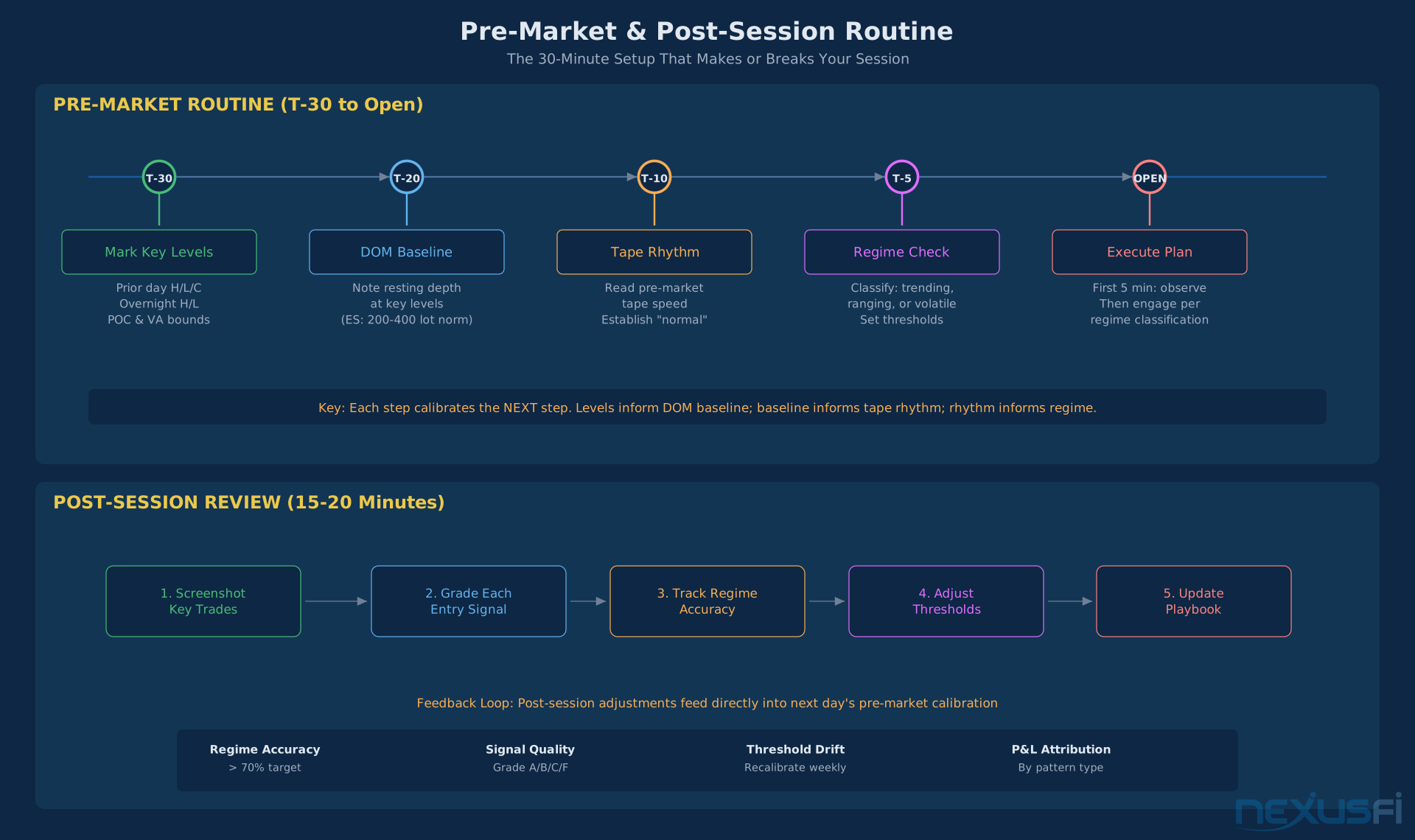
The concepts in this article are only valuable if they translate into a repeatable real-time process. Here's how to structure your preparation and review:
Pre-market (30 minutes before open):
- Mark key levels: prior day high/low, overnight high/low, Volume Profile POC, VWAP, opening range estimate
- Review DOM for the product you're trading--what's the typical depth per level right now?
- Check economic calendar for scheduled releases in your session
Post-session review (15 minutes):
- Review 3-5 key interactions from the session. For each: what scenario did you classify, and did the outcome match the pattern?
- Track: absorption success rate by product, sweep regime classification accuracy, spoof detection false positives
This review cycle is how DOM and tape reading improves over time. The patterns become pattern-recognition rather than active analysis.
Quick-Reference Decision Matrix #
At each key level, run this classification:
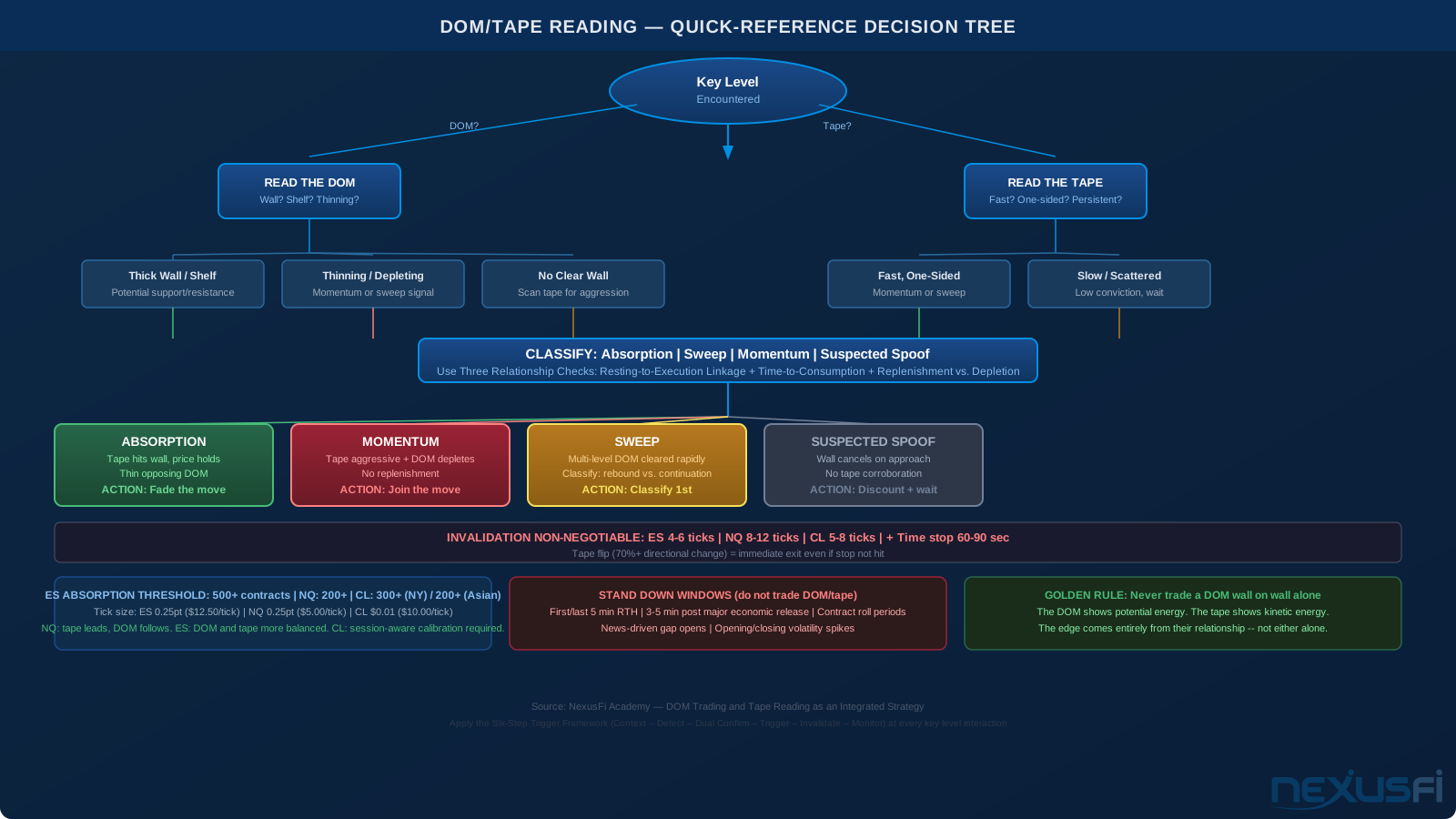
1. Read the DOM — Wall? Shelf? Thickening? Thinning?
2. Read the tape — One-sided and persistent? Scattered and weak? Fast or slow?
3. Classify:
| DOM + Tape | Pattern | Action |
|---|---|---|
| Aggressive tape + DOM holds/replenishes | Absorption | Fade — buy/bear the reversion |
| Aggressive tape + DOM depletes, no refill | Momentum | Join — trade the continuation |
| Multi-level DOM cleared rapidly | Sweep | Classify rebound vs. continuation |
| Wall cancels on approach, tape not supporting | Suspected Spoof | Wait for corroboration |
For entry execution and invalidation, apply the Six-Step Trigger Framework (Section 6, Steps 4-6).
Knowledge Map
Prerequisites
Understand these firstGo Deeper
Build on this knowledgeReferences This Article
Articles that build on this topicCitations
- — Order Flow Journal (2012) 👍 3“I trade off the DOM... When you see a thick level, it is merely a 'heads-up'. You cannot trade off it alone. There is no guarantee that price will hold there.”
- — For DOM based traders. (ES/NQ) (2025) 👍 6“Your curiosity about DOM trading and reading market rhythm is spot on--it's a totally different language compared to chart-based analysis, and traders can use DOM to read the speed and direction of execution.”
- — Why does the market move towards the heavier side of the order book? (2011) 👍 11“A lot of spoofing goes on and generally that involves stacking the order book on one side to fool people into trading in the other direction. Sometimes it's real, sometimes it isn't.”
- — i want to be a master at tape reading (2015) 👍 6“After 4 years of developing in this area I would not trade without the order flow! I am a position day trader but use order flow for reasons to enter, find places to add and manage scales.”
- — Orderflow ES chat rooms (2020) 👍 3“Order flow takes knowledge of what absorption and exhaustion looks like on the DOM, too. You have to be able to interpret what you're seeing on the DOM, both in terms of resting orders and filled orders.”
- — Is Spoofing alive and well? (2017) 👍 5“Frequency traders may not be spoofing to fool other traders but they pull their orders when the resting depth below them drops below a certain threshold.”
- — Tape is my shape (tape reading, time and sales) (2011) 👍 5“The place you should look for pulled orders is 2-3 levels out. This is where spoofing occurs. Spoofers do not want to be filled.”
- — My Thesis on Tape Reading (2013) 👍 26“Price has fallen a few ticks off the high and the tape shows little buying and strong selling comes into the market in the form of large orders. That is how reversals usually happen.”
- — Learning to trade Order Flow using DOM (2014) 👍 5“Jigsaw helps you see most of what you are looking for -- absorption, orders being pulled, spoofing, flush, lack of interest. The keyword is sticking to it -- we move on without giving it a chance to succeed.”
- U.S. Commodity Futures Trading Commission — Cftc.gov (2022)
- CME Group Market Regulation — Cmegroup.com (2023)