



Prop Firm Evaluation Strategy: A Systematic Approach to Passing Challenges Without Distorting Your Trading
Overview #
Most traders treat prop firm evaluations like a performance test — hit the profit target, avoid the drawdown, done. That framing is wrong and it's why the majority of evaluation attempts fail.
A prop firm evaluation is not a test of whether you can make money. It's a test of whether you can manage risk consistently under a specific set of constraints over a defined time period. The firms that are still paying traders two years from now figured this out. They're not looking for one-month wonders — they're screening for traders who won't blow up funded accounts.
Understanding that distinction changes everything about how you approach an evaluation. It means your job isn't to maximize profit during the evaluation period. It's to demonstrate that your risk management is systematic, your position sizing is appropriate, and your losses are controlled. A trader who nets 9% profit with three losing days under 2% each looks far better to a prop firm than one who nets 12% with one $5,000 loss day early on.
This guide covers the mechanics of how evaluations work, how to calibrate your risk appropriately, what trade selection looks like under evaluation conditions, and the psychological traps that take out otherwise-capable traders.
Evaluation Mechanics: What the Rules Actually Measure #
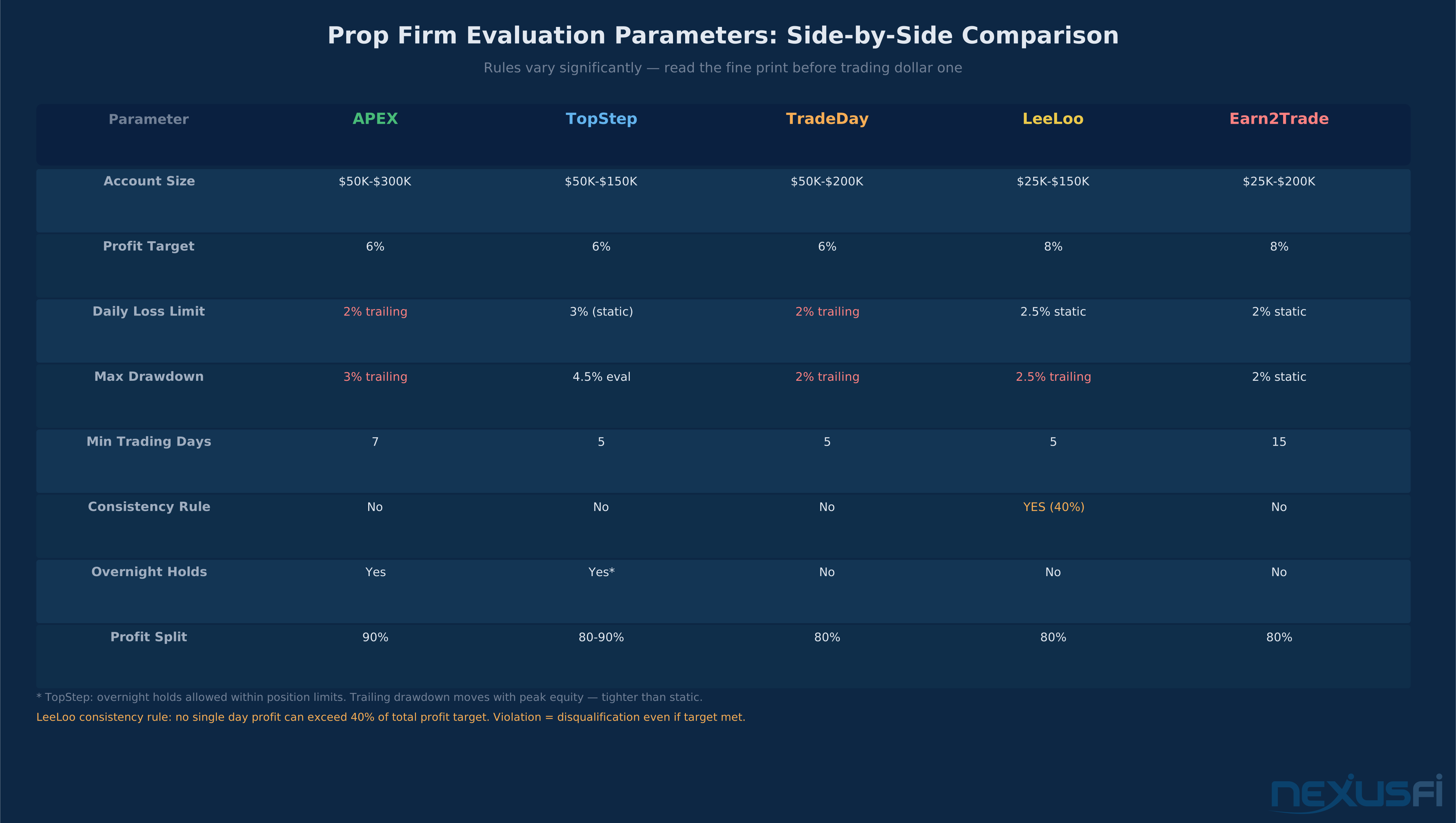
Every prop firm evaluation has the same basic structure, but the parameters vary enough that you need to read your specific firm's rules carefully before trading dollar one.
Profit Target
Most evaluations require 8-10% profit on the account balance. On a $100,000 account, that's $8,000-$10,000. On a $150,000 account with APEX, the target is $9,000 (6%). On a TopStep $150,000 evaluation, the target is $9,000 (also 6%). These targets sound aggressive but they're achievable over 15-30 trading days at 0.3-0.5% per day.
Drawdown Limits
This is where most traders fail. Two types:
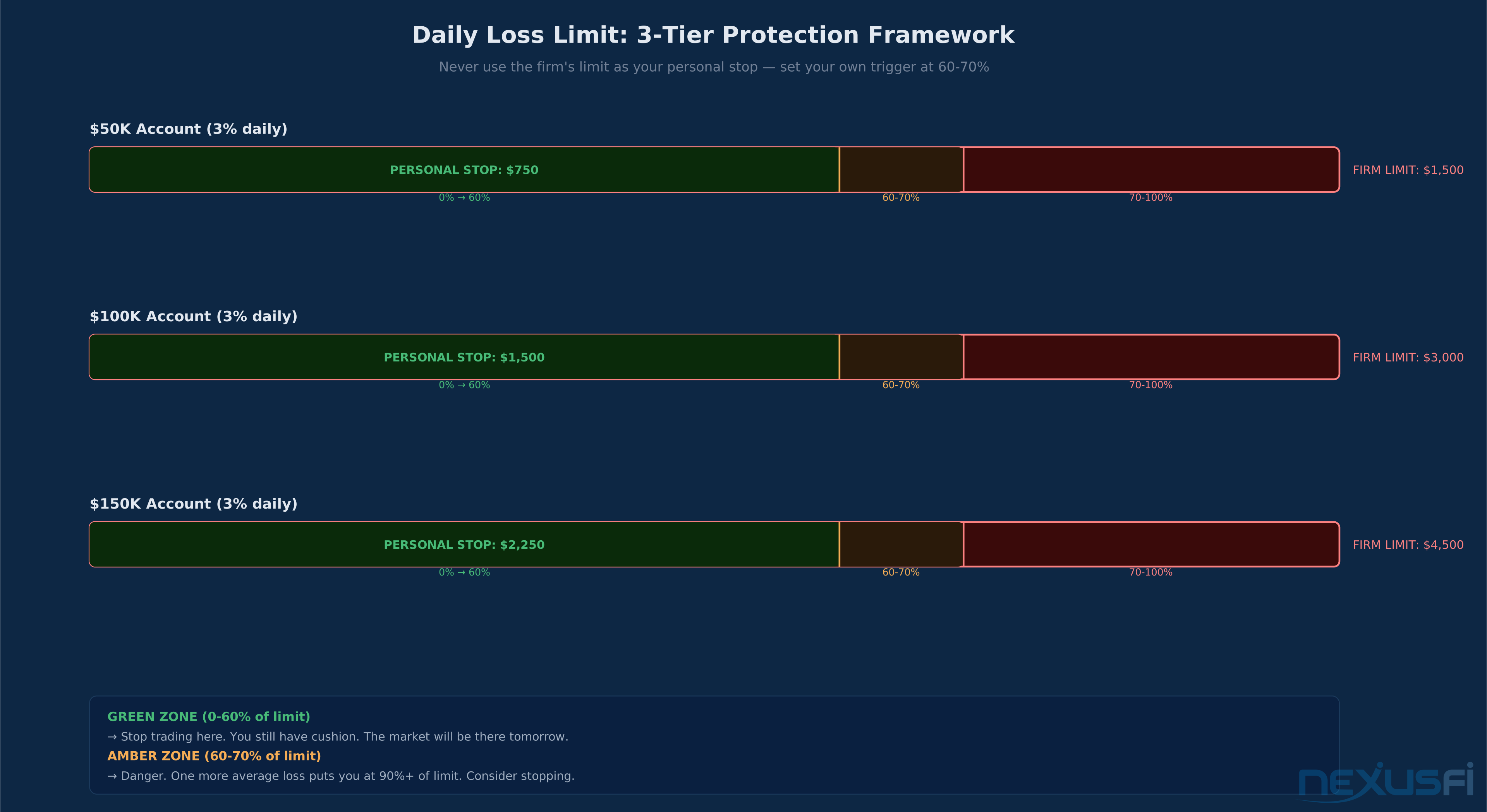
- Daily loss limit: Typically 2-5% of account balance. On a $100,000 account with a 3% daily limit, you must stop trading after losing $3,000 in a single day -- regardless of how many trades you've taken or how good your next setup looks.
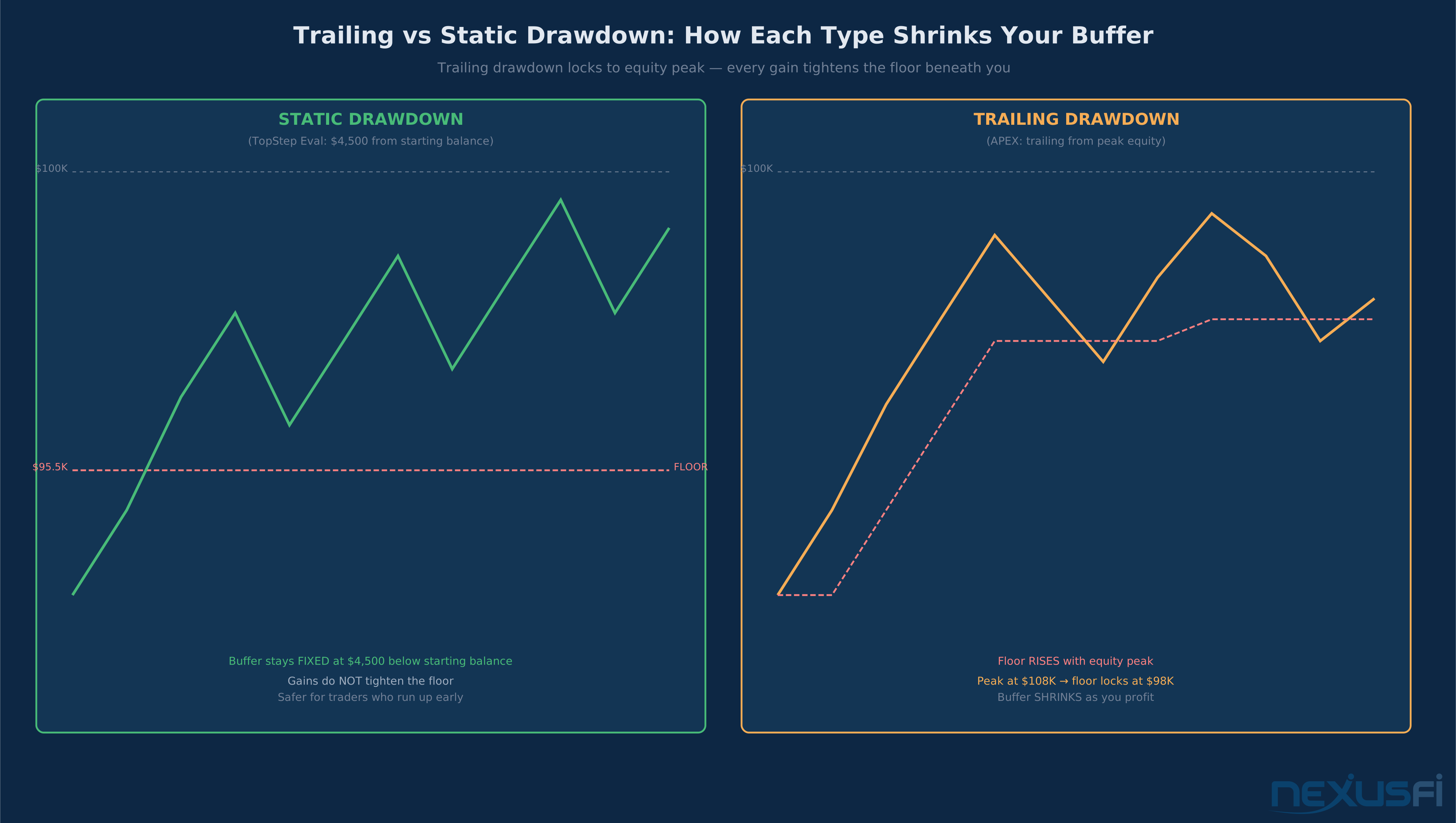
- Maximum drawdown: Either static (from starting balance) or trailing (from peak balance). Trailing drawdown is harder. If you run a $100,000 account to $108,000, your trailing max drawdown limit locks to $98,000 -- you now have only $10,000 of cushion from peak, not $12,000 from start. APEX uses trailing. TopStep uses static for the evaluation phase.
Minimum Trading Days
Most firms require 5-15 minimum trading days. You cannot sprint to the target in 3 days and call it done. This forces temporal consistency — the evaluation must span enough sessions to be statistically meaningful.
Consistency Rules
Some firms (notably LeeLoo) enforce a specific consistency rule: no single trading day's profit can exceed 30-40% of your total required profit target. If your target is $8,000 and you make $4,000 on day one, you've exceeded the consistency threshold and may be disqualified even if you hit the overall target. Not every firm uses this — read the fine print.
Instrument and Hours Restrictions
Most evaluations allow trading in major CME futures (ES, NQ, MES, MNQ, CL, GC, ZB). Some firms restrict news event trading or overnight holds. Know what's allowed before you start.
Risk Calibration for Evaluations #
The single most important decision you'll make is how much to risk per trade. Get this wrong and the evaluation ends early, regardless of how good your setups are.
The 1-2% Per Trade Rule
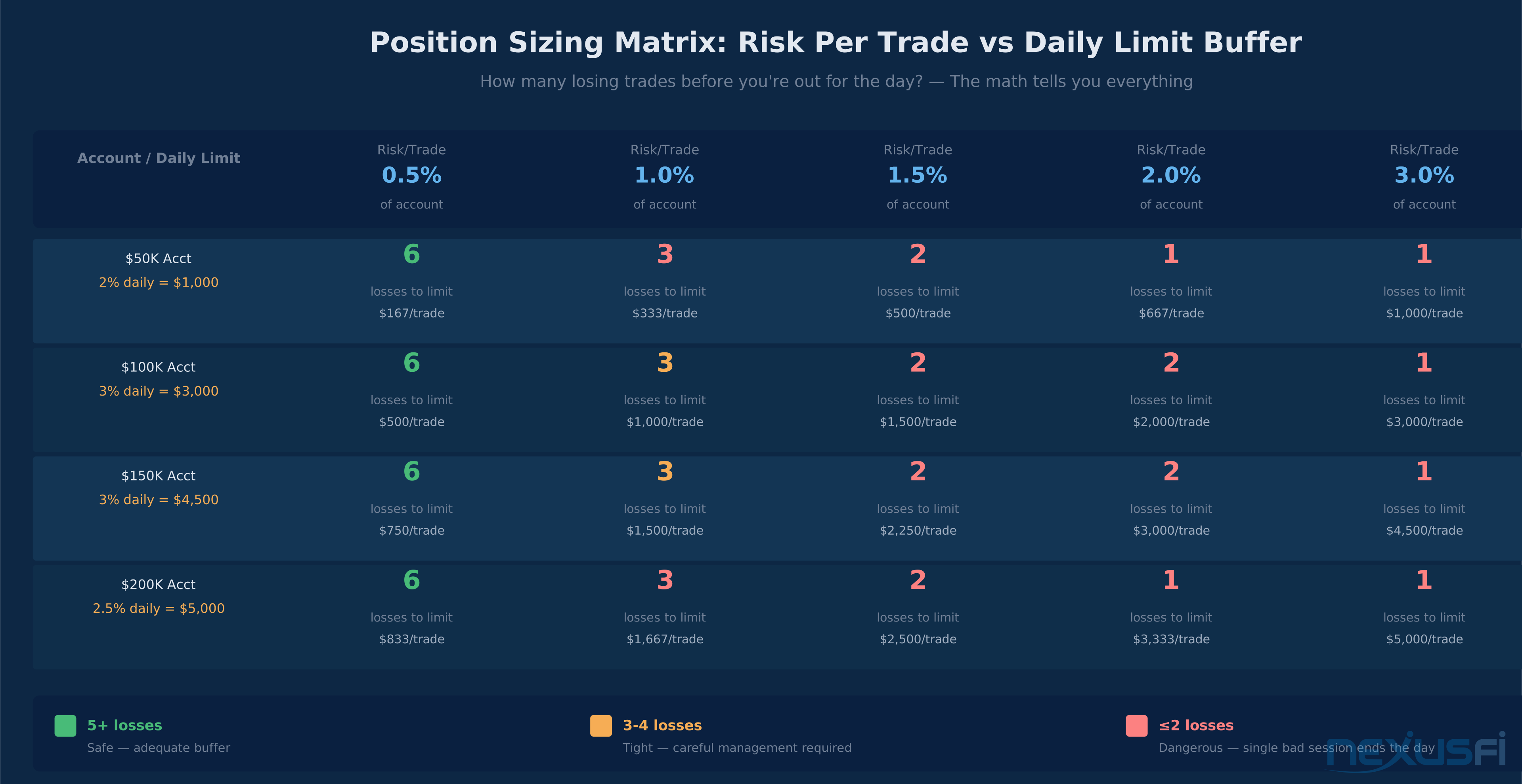
Risk no more than 1-2% of account balance per trade. On a $100,000 evaluation account:
- 1% risk = $1,000 max loss per trade
- 2% risk = $2,000 max loss per trade
With a 3% daily loss limit, you have room for exactly 1-3 losing trades before you must stop. That's not generous. If your strategy has a 50% win rate and you're risking 2%, a 3-loss day (6% drawdown) would blow through your daily limit and a significant chunk of your buffer. This math matters.
Stay Well Inside Drawdown Limits
Don't treat the daily loss limit as a floor — treat it as a danger zone. The goal is to never come close to it. If your daily limit is $3,000 and you're down $2,000 by 10 AM, the correct move is to stop trading for the day. The market will be there tomorrow. Your evaluation account won't be if you keep pushing.
A practical rule: set a personal daily stop at 60-70% of the firm's limit. If the firm allows $3,000/day, stop at $1,800-$2,100. This leaves buffer for your mental accounting errors (it's easy to miscalculate commissions) and keeps you well clear of the automatic violation threshold.
Sizing for Target Achievement
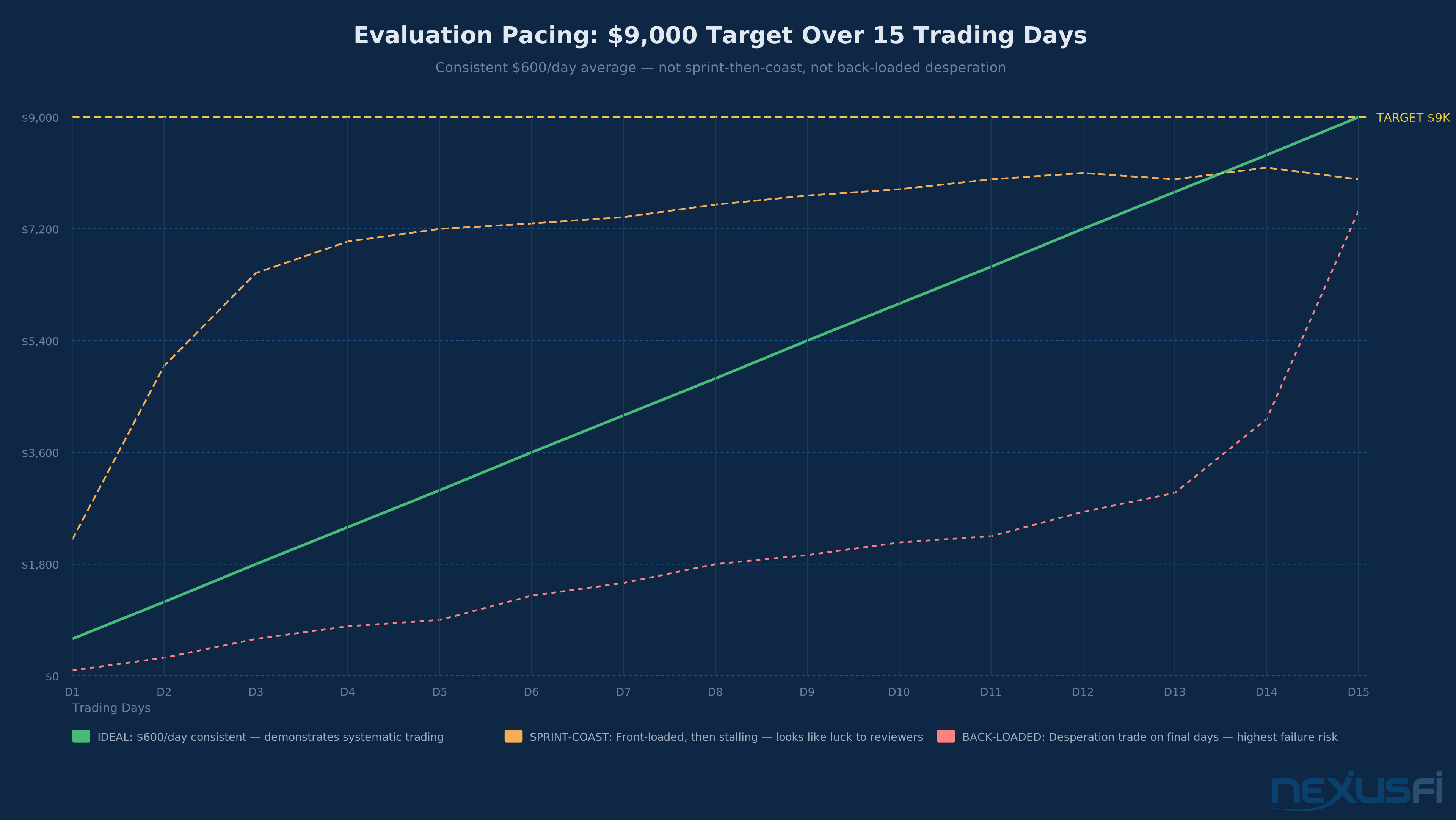
Work the math backward from the target. If you need $9,000 in 15 trading days, that's $600/day average. At 1% risk ($1,000 per trade) with a 2:1 reward-to-risk ratio, you need to net 3 profitable trades per day, or fewer with larger winners. This tells you whether your strategy's historical output can realistically generate the required returns in the evaluation window.
From NexusFi traders on evaluation math: "The mistake I see constantly is people treat the daily limit as a stop sign they're trying to avoid. The real strategy is treating it as a nuclear option you should never reach — your personal stopping rule should be at 60% of whatever the firm allows." The discipline to stop early, when you still have cushion, is the defining difference between traders who stay funded and those who keep retrying evaluations.
Avoiding the Trailing Drawdown Trap
When using accounts with trailing drawdown, resist the temptation to "bank" early profits by trading conservatively once you're up. The trailing drawdown moves with your equity — a big early day means a tighter cushion from that point forward. The firms designed trailing drawdown specifically to discourage one-day-hero trading followed by conservative coasting. Trade your normal strategy, every day.
Trade Selection During Evaluation #
Evaluation conditions change what setups deserve your capital. Not every trade you'd normally take belongs in an evaluation account.
A+ Setups Only
In your regular trading, you might take B-grade setups when the market is slow or you're looking for action. During an evaluation, this costs you doubly: the loss itself, and the psychological drag of taking a bad trade in a high-stakes environment. Set a higher bar. Only the setups where every factor lines up — trend, structure, entry trigger, volume confirmation — deserve a trade.
Time-of-Day Discipline
The first hour after the open (9:30-10:30 AM ET for equity index futures) has the highest volume and clearest directional moves. It's also where the most experienced institutional flow occurs. For most strategies, this window produces the cleanest setups. The mid-session doldrums (11:30 AM-1:00 PM) are where overtrading happens — thin conditions, choppy price action, and boredom driving poor decisions. If your daily progress is already positive by noon, consider stopping.
News Event Management
CPI, FOMC decisions, NFP, and earnings surprises create unpredictable volatility that can violate a daily loss limit in a single trade. Many evaluation rules explicitly prohibit holding through scheduled news events. Even when they don't, the risk profile of a 5-minute spike through your stop on CPI isn't worth it during an evaluation. Mark your calendar, flatten before the release, and re-enter after the move clarifies.
No Revenge Trading
After a losing trade, the worst decision is to immediately re-enter with a larger position to "get it back." This is the fastest path to a daily loss violation. Build a mandatory cooling-off period into your evaluation process: after a loss that's 50% of your daily limit, wait 30 minutes before your next trade. After a loss at 75% of your limit, stop for the day. These rules protect the account when your judgment is most compromised.
Consistency Requirements and Pacing #
Even without an explicit consistency rule, demonstrating consistent performance is what gets you funded and kept funded. Prop firms look at drawdown patterns, losing streaks, and day-over-day volatility when reviewing accounts for continuation or scaling.
Pacing the Profit Target
Divide your profit target by the number of minimum required trading days. If the target is $9,000 over 15 days, that's $600/day average. Some days you'll exceed this, some days you won't trade, some days you'll be slightly negative. That's fine — the average is what matters, not hitting the number exactly every day.
What creates problems is front-loading: making $5,000 in the first two days and then going conservative. This looks like luck to reviewers, not skill. More importantly, if you're on a trailing drawdown account, your buffer has shrunk and you're now playing scared. Consistent, methodical progress across the evaluation period is what the firm wants to see.
The 30% Daily Profit Cap
For firms with explicit consistency rules (LeeLoo, and increasingly others), no single day's profit can exceed 30% of the target. On a $9,000 target, that caps single-day gains at $2,700. If you're in a monster day and approaching this limit, stop trading. The cap is not negotiable — a firm that uses this rule will disqualify you even if you've hit the overall target.
Know your firm's specific rule. Read the FAQ. Search NexusFi for trader experiences with your specific firm — the forum threads on APEX, TopStep, TradeDay, and LeeLoo contain extremely practical firsthand information on how the rules are actually enforced.
Rest Days
Most evaluations have minimum trading day requirements, not maximum. You're not required to trade every session. Using rest days strategically — when the market structure is unclear, when you're emotionally off, or when your week is already positive — is good risk management, not laziness. A rest day costs you nothing if you've already hit your daily target for the week.
Common Failure Patterns and How to Avoid Them #
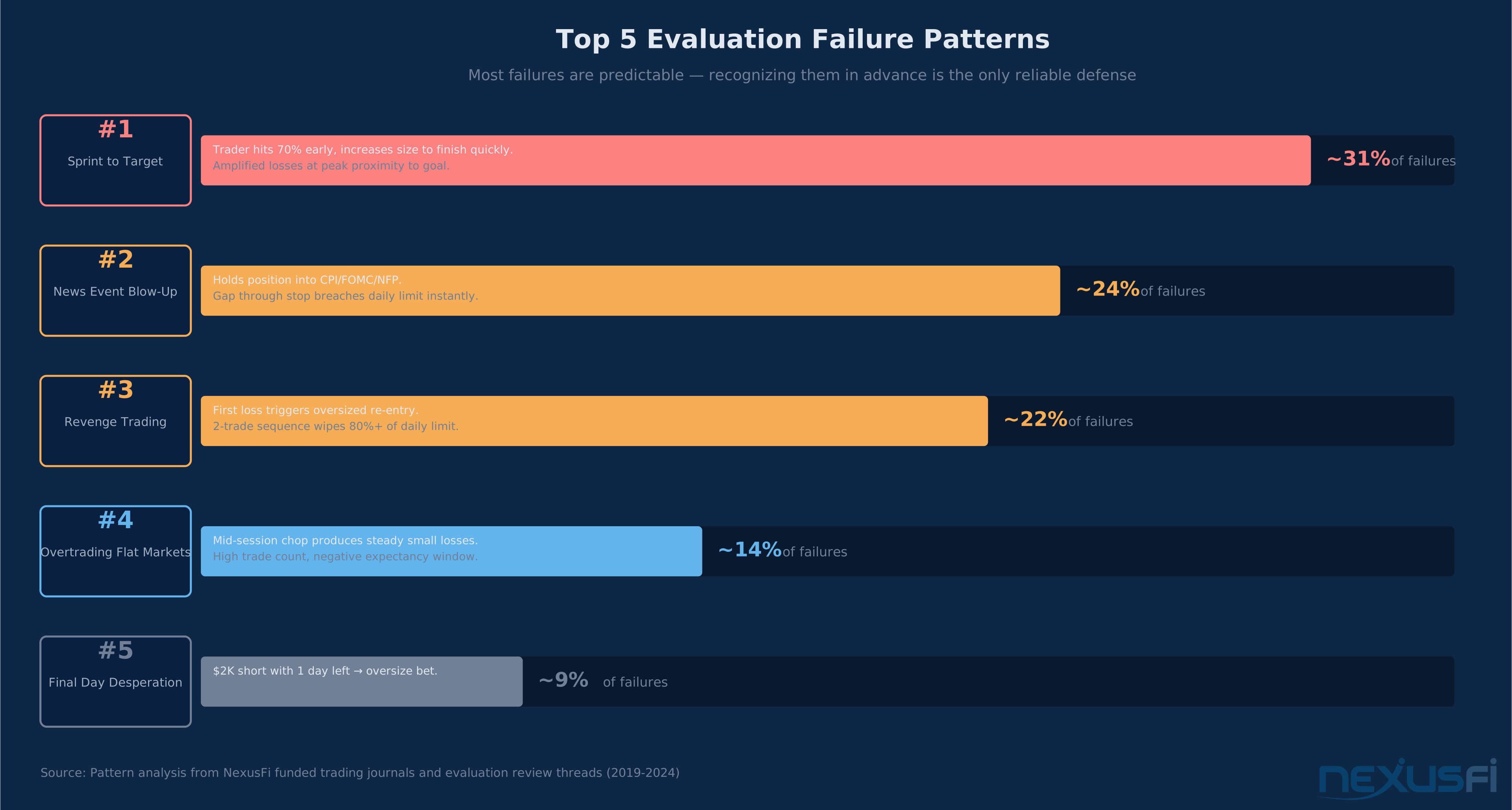
Most evaluation failures follow predictable patterns. Recognizing them before they happen is the difference between funded and reset.
Pattern 1: The Sprint to the Target
A trader has a great first week, reaches 70% of the profit target in 5 days, and then starts increasing position size to "finish it off." This almost always ends in a significant drawdown. The increased size amplifies losses exactly when the trader's judgment is most distorted by proximity to the goal. The correct move when you're 70% of the way there is to trade even more conservatively — protect what you have, and let small wins carry you to the finish line.
Pattern 2: The News Event Blow-Up
A trader holds a position into CPI or FOMC, the number comes in much different from expectations, price gaps 30 ticks against the trade, and the daily loss limit is breached in one trade. This is entirely avoidable. Every major news release is on the economic calendar. Flat before the release, every time.
Pattern 3: Revenge Trading After a Loss
The first significant loss in an evaluation triggers an emotional response. The trader increases size on the next trade to "get it back quickly." That trade also loses. Now 60% of the daily limit is gone in two trades, and the judgment required to make good decisions for the rest of the session is compromised. Mandatory cooling-off periods after losses are the only reliable protection against this pattern.
Pattern 4: Overtrading in Flat Markets
Mid-session trading when price is chopping in a narrow range produces a steady stream of small losses that add up. The market gives clear directional moves at the open and close. Between those windows, many strategies produce negative expectancy. Knowing when not to trade — and having the discipline to honor that — is as important as knowing when to enter.
Pattern 5: The Second-to-Last-Day Desperation Trade
With one trading day left and $2,000 short of the target, the temptation is to take a large position to get it done. This almost always results in a violation. If you're close but not there with one day remaining, take your normal setups at normal size. You'll either hit the target or you won't — but you won't blow up the evaluation with one desperate trade.
Evaluation vs. Funded Mindset #
The psychological experience of evaluation trading is distinct from funded trading in ways most traders don't anticipate.
The Evaluation Distortion
During evaluation, you have a specific profit target to hit and a drawdown you must avoid. This creates a different objective function than normal trading, where you're simply trying to be profitable over time. The time pressure, the target, and the fact that a reset costs real money (evaluation fees) all alter your decision-making in subtle ways.
The most effective counter to this distortion is to treat the evaluation as if it were already a funded account. Your job is not to pass the evaluation — your job is to trade correctly, and passing the evaluation is the result of trading correctly. This sounds semantic, but it at the core changes how you approach each trade.
The Evaluation-to-Funded Transition
Many traders who pass evaluations fail in funded accounts, and the reason is that they traded differently during the evaluation than they trade normally. If you used extra discipline during the evaluation, you might relax that discipline once funded. If the funded rules are slightly different (smaller daily limit, different instruments), you might not catch that in time.
Treat funded trading as a continuation of evaluation trading with the same rules, the same process, the same checklists. The only thing that changes is who's watching — and you should be trading the same way regardless of who's watching.
Multiple Evaluation Resets
Some traders treat evaluation resets as a normal cost of business and reset 5-10 times before passing. There's nothing wrong with this if you're learning from each reset — but track your reasons for failure carefully. If you're failing for the same reason repeatedly (news event violations, revenge trading), the reset isn't fixing the underlying problem. Fix the process, then retry.
Platform and Instrument Setup #
Most prop firms work with specific brokers and platforms. Getting this right before you start avoids technical disqualifications.
Supported Platforms
APEX works with Rithmic-connected platforms: NinjaTrader, Tradovate, Sierra Chart, and ATAS. TopStep uses Rithmic and supports NinjaTrader, Sierra Chart, and TSTrader. Most firms publish their supported platform list — use that list, not a platform you prefer but that isn't explicitly cleared.
Instrument Selection
CME micro contracts (MES, MNQ, M2K, MGC, MCL) are increasingly supported and are useful for scaling in. The major contracts (ES, NQ, CL, GC, ZB) are typically supported by all firms. Forex and crypto instruments are usually not supported or require specific firm programs. Stick to the instruments you trade best — this isn't the time to learn a new market.
Commission Impact on Drawdown
Commissions count against your drawdown in most evaluation programs. On a $100,000 account with a 3% daily limit ($3,000), a day with 50 ES round-turn trades at $4/RT = $200 in commissions — that's 6.7% of your daily limit consumed by transaction costs. High-frequency strategies that are marginally profitable get squeezed hard by evaluation drawdown mechanics. Know your effective commission rate before starting.
Overnight Holds
Many firms prohibit overnight positions. Even those that allow it require a larger margin buffer than the daily session. If you hold overnight and the market gaps against you at the open, you may breach your daily limit before you can exit. Know the rule, and if overnight holding is permitted, understand the gap risk for your specific position size.
After Passing: Transition to Funded #
Passing the evaluation is a milestone, not the finish line. The funded account is where real money changes hands.
Funded Account Rules
Funded accounts typically have tighter drawdown limits than evaluations. A TopStep $100,000 evaluation allows a $4,500 daily loss limit; the funded account drops to $3,000. A firm that gives you a $10,000 trailing drawdown in the evaluation may reduce it to $6,000 once funded. Read the funded account rules the day you pass — they're not the same document as the evaluation rules.
Profit Splits
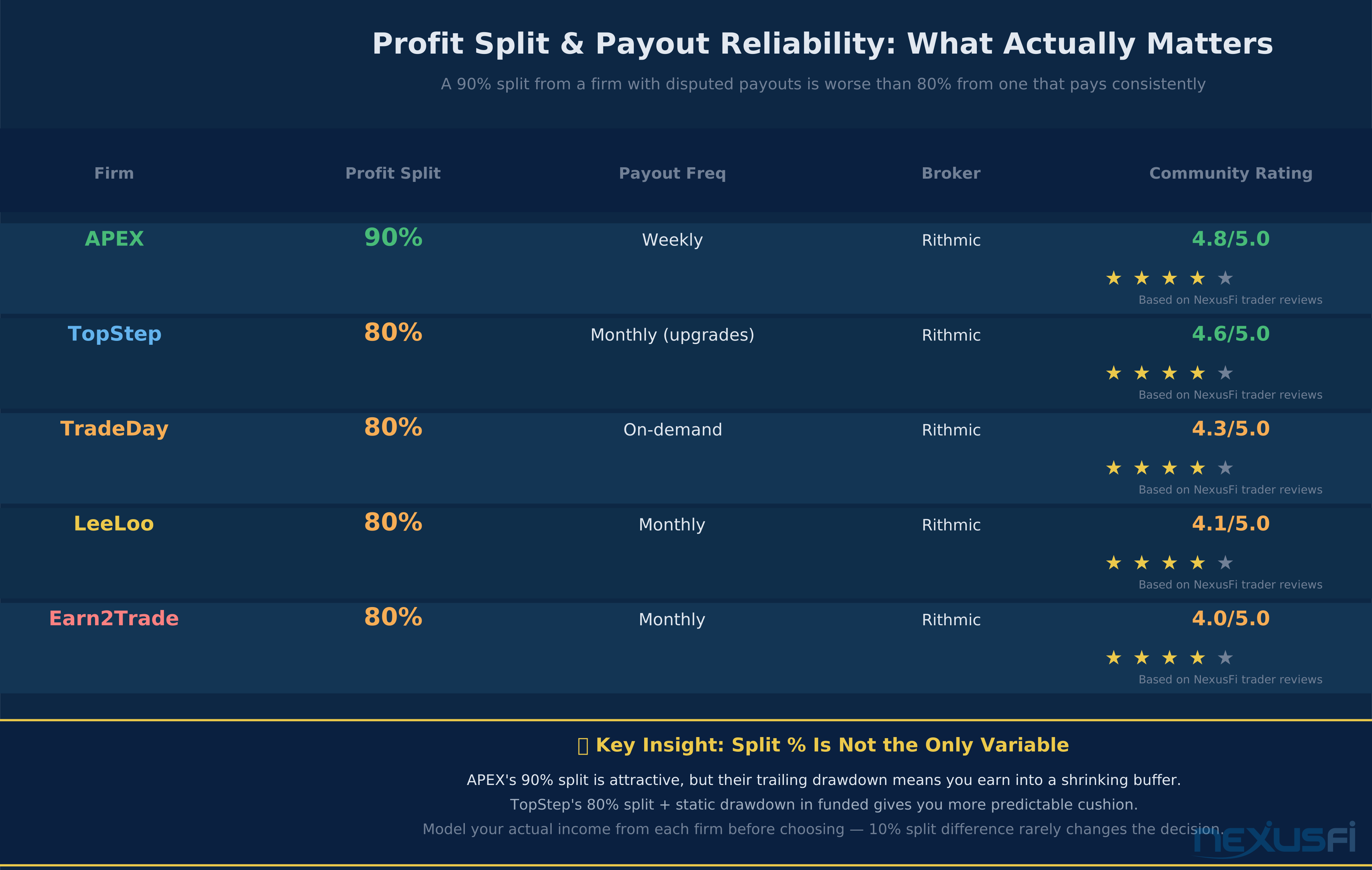
Standard profit splits are 80-90% to the trader. APEX offers 90%. TopStep starts at 80% with upgrade paths. The split percentage matters less than payout reliability — a firm that actually pays on time at 80% is better than one promising 90% that disputes payouts.
Scaling Plans
Most firms offer scaling plans that increase your account size as you demonstrate consistent profitability. APEX's scaling plan increases account size by $25,000 for each 3-month period of consistency. The requirements are typically: hit a profit threshold, maintain drawdown discipline, and request the increase. This is the path to meaningful income from prop trading — not one large funded account, but multiple accounts scaling up over time.
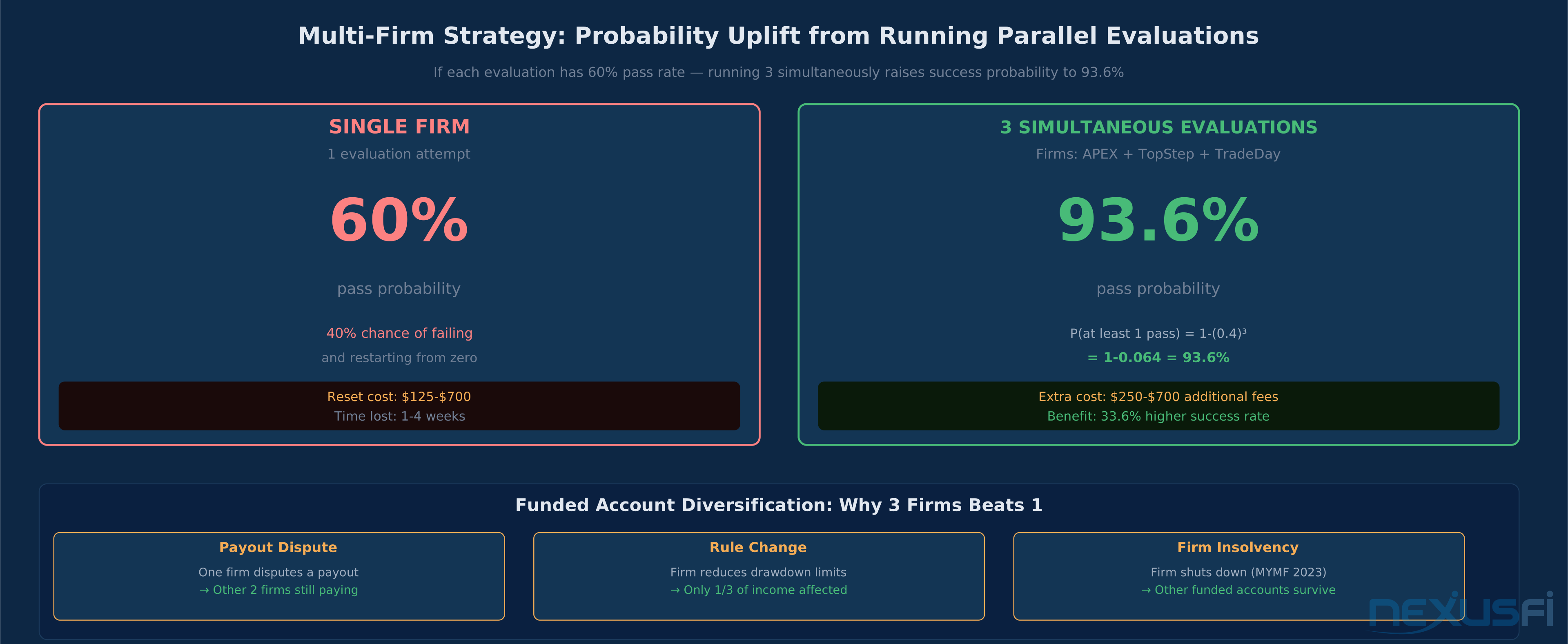
The First 30 Days Funded
The first month of a funded account is the highest-risk period. You're adjusting to the funded rules, possibly different drawdown mechanics, and the psychological reality that payouts are real. Trade below your normal size for the first week. Use that week to confirm your platform setup is correct, your commissions are calculating as expected, and your P&L tracking matches the firm's dashboard. A small technical error in week one is easier to fix than one discovered after a large month.
Multi-Firm Strategy #
Running evaluations and funded accounts at multiple firms simultaneously is standard practice among experienced prop traders. The income smoothing effect is significant.
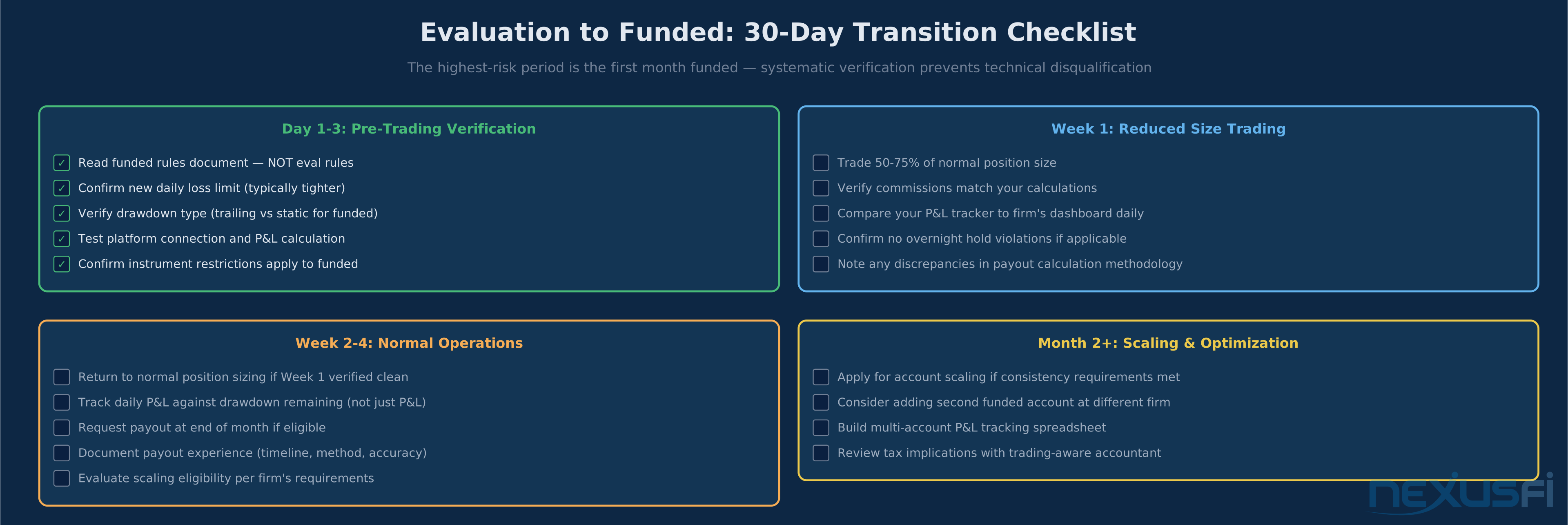
Diversifying Across Firms
Running funded accounts at three firms instead of one reduces single-firm risk: payout disputes, rule changes, firm insolvency. The prop firm industry has seen multiple collapses — FTMO restrictions, MyForexFunds shutdown, various smaller firms exiting unexpectedly. Concentration in any single firm is a business risk that diversification eliminates.
Running Multiple Evaluations
Many traders run 2-3 evaluations simultaneously during the evaluation phase. The fee cost is real, but so is the probability uplift: if each evaluation has a 60% pass rate, running three increases the probability of at least one passing to 93.6%. This is only worthwhile if the evaluations are independent — failing one due to a bad news day isn't correlated with failing another at a different firm.
Account Management Complexity
Multiple accounts increase operational complexity. You need separate dashboards, possibly separate broker connections, and clear tracking of which drawdown limit belongs to which account. A spreadsheet tracking daily P&L, drawdown remaining, and progress-to-target for each account is essential. Confusing your APEX drawdown with your TopStep drawdown during a volatile session is a real risk.
Tax Considerations
Profit splits from funded trading accounts have specific tax treatment depending on your jurisdiction and how the firm structures payouts. Some pay via 1099-NEC (independent contractor income), some via direct transfer with no 1099 at lower amounts. Track every payout meticulously. Consult a tax professional familiar with trading income before your first funded month — the tax structure is different from a typical W-2 and different from trading your own capital.
Knowledge Map
Go Deeper
Build on this knowledgeReferences This Article
Articles that build on this topicCitations
- — My MES Live Account Journal (OneUp) (2019) 👍 21“Here are the funded rules I now have to follow on top of the evaluation rules regarding instrument selection and trading times and max daily loss ($1,250). The transition from eval to funded catches a lot of traders off guard -- the funded rules are meaningfully tighter.”
- — ApexTraderFunding.com experience and review (2022) 👍 4“People can make it by luck because of a lack of a real consistency rule. The only rule that more or less requires some kind of consistency is the trailing drawdown. So therefore you have to trade for a longer time to prove you can do it.”
- — TST/OneUp/LeeLoo/Earn2Trade (2022) 👍 5“The one thing to run away from is something called the 'Consistency Rule'. By all means do not join any prop with this rule. This means even if you meet your target they might disqualify you if they feel you broke this rule. The market doesn't care about their consistency rules.”
- — TradeDay - anyone using them? (2022) 👍 3“All of the prop firms have rules to prevent gaming the evaluation, either upfront with tougher evaluation criteria or on the back end by restricting payouts until consistency is shown. The firms that are still paying traders have figured out how to screen for real traders vs eval gamers.”
- — My Leeloo 150K Funded Account Journal (2020) 👍 9“I found out that I treat my private brokerage account way more carefully than my funded account. The psychological impact of trading 'someone else's money' is very different -- and keeping a funded account alive requires a completely different mindset than passing the evaluation.”
- — List of FIO traders who have passed the TST combine or funded (2015) 👍 18“Missing trades will push me to become undercontrolled and having large profits on the day can mean I lose focus. The psychological triggers during evaluation are very specific -- losing a setup, being near the daily target, being far from the weekly target -- and they each require different management strategies.”
- — Any long term success stories from funded traders? (2021) 👍 5“You actually end up trading real money when you're funded. So there does not seem to be any conflict of interest. You have less of a cushion in terms of daily drawdown, so if you do have a bad day you really feel it. The stakes change when it's real payouts.”
- — ApexTraderFunding.com experience and review (2024) 👍 3“If you see an opportunity and make $30k on your first day, then you have just earned the firm $3k and yourself $27k. Contrast this to structured payout plans that reset each period. The business model matters for understanding how your trading income is actually structured.”
- — Evaluation Rules and Parameters (2024)
- — Combine Rules and Funded Account Rules (2024)