



Options Trading in Prop Firm Funded Accounts: Drawdown Math, Strategy Selection, and the Rules That Actually Get You Terminated
Overview #
Options change the equation in a funded account in ways most traders don't fully understand until they're watching a breach happen in slow motion.
In a personal account, a losing options position is just money out of your pocket. In a prop firm funded account, that same position is interacting with a trailing drawdown floor that's been creeping up with every profitable day. The mechanics are different. The failure modes are different. And the strategies that work beautifully in a self-funded setup can detonate your combine before you even realize what's happening.
This guide covers the mechanics that matter for funded traders specifically — not generic options education. You already know how options work. What you need to know is how the prop firm's risk model transforms what "safe" means.
The Prop Accounting Model: Why Options Are Different Here #
Before anything else about strategy or Greeks, you need to understand how your prop firm actually measures drawdown. Everything else flows from this.
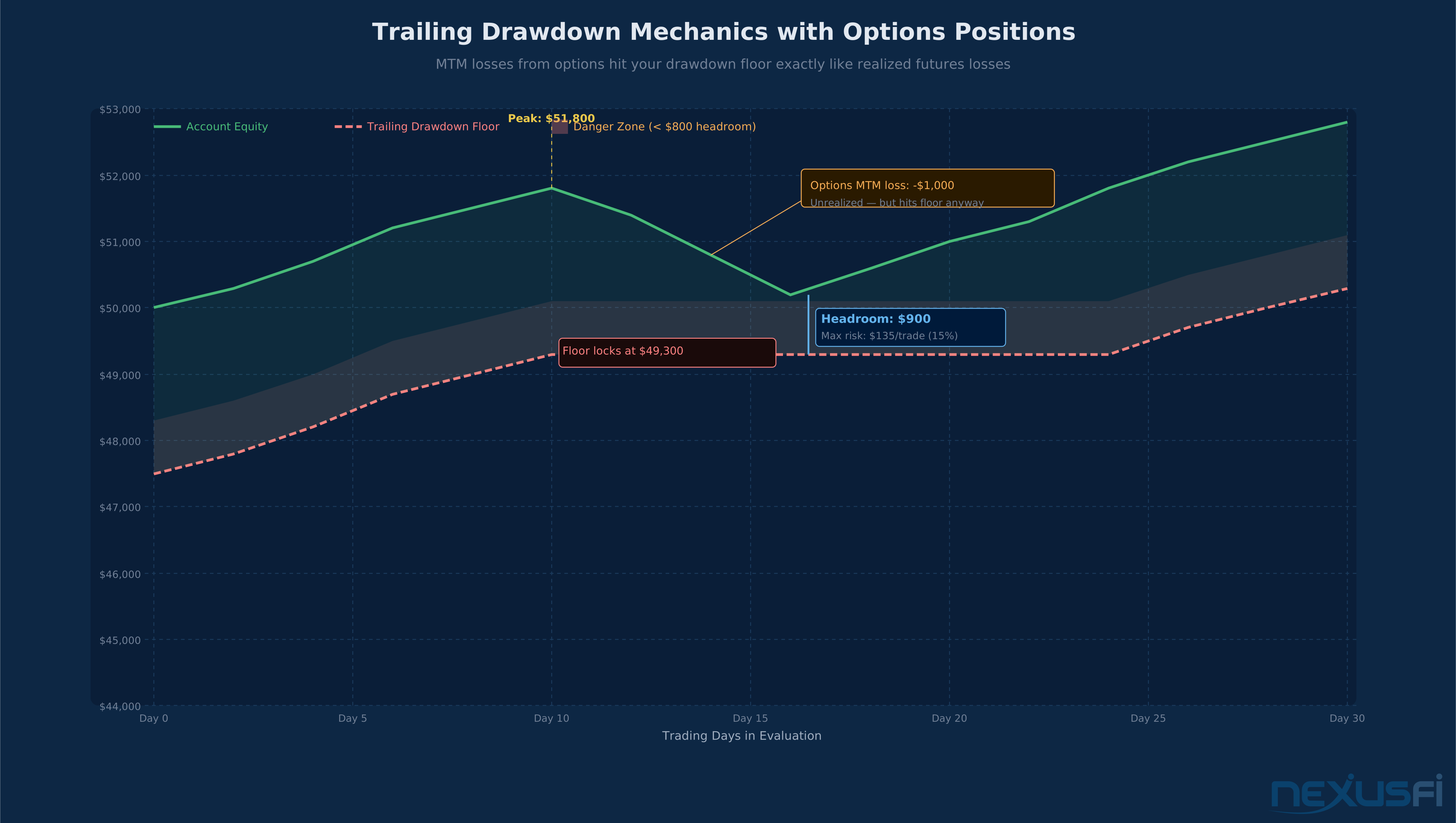
Most prop firms use trailing drawdown — not static. When you make money, your drawdown floor ratchets up with your equity peak. When you lose, the floor doesn't move down with you. It stays at the peak. You're always trading against an invisible ceiling above your current equity.
The mechanism varies by firm:
Intraday trailing (real-time MTM) — The firm marks your account against live market prices continuously. An ES put spread going against you at 2:30pm shows up as a drawdown hit right now, even if you're convinced it'll recover. Topstep and Apex use intraday trailing during evaluation. Get this wrong once and you're done.
End-of-day trailing — Some firms only update the trailing drawdown floor at market close. This gives you intraday breathing room, but a single bad close that breaches the floor ends your evaluation.
MTM vs. realized treatment — Here's where options create a specific problem. When you hold a short put spread that's going against you, the unrealized loss hits your trailing drawdown even though you haven't closed the position. You haven't "lost" the money yet, but the firm's risk model treats it as if you have. A $500 unrealized loss on an ES 5300/5250 put spread counts exactly the same as a $500 realized loss on a closed futures trade.
This distinction matters enormously for options because theta positions create persistent unrealized positions. A futures trader who's flat at EOD has zero unrealized exposure. An options trader who's short puts has unrealized exposure every minute the market is open.
The core rule for funded options trading: Your remaining drawdown budget is your maximum risk — not the theoretical max loss on your spread. If your trailing drawdown floor gives you $2,000 of remaining headroom and your spread has a max loss of $2,500, you're already overleveraged.
Nick Dolby of Topstep explained the trailing max drawdown mechanic precisely in his 2022 AMA: "The Trailing Max Drawdown 'reaches the starting balance,' which is zero in both the FTP and Funded accounts. The Trailing Max Drawdown is calculated on the highest account balance achieved." That ratcheting effect is what makes options' path-dependent P/L especially dangerous. [1]
Read Trailing Drawdown Rules in Prop Firm Evaluations and Trailing Drawdown Mechanics in Prop Firm Trading before trading a single options spread in a funded account.
Eligibility: What's Actually Allowed #
The first thing you need to know is whether your specific prop firm allows options on futures at all — and what class of strategies they'll accept.
The short answer: Many don't. Most evaluation firms that do allow futures options restrict you to defined-risk strategies only.
Which firms generally allow futures options:
- Topstep: Yes, with restrictions (defined-risk required in some account types)
- Apex Trader Funding: Varies by account type; check current rules
- BluSky: Yes — one of the more options-friendly firms
- Most newer evaluation firms: No, or not clearly stated
The critical problem is that these rules change. A firm that allowed short puts in 2023 may have banned them after a cluster of accounts blew up during a volatility event. You can't rely on what you read six months ago.
Verification protocol — do this before trading:
- Email the firm's support directly: "Does my account allow options on futures? Which underlyings? Are spreads allowed? Are short options allowed?"
- Screenshot the response with a timestamp
- Check their FAQ and their FAQ for your specific account tier (evaluation vs funded accounts often have different rules)
- Log into your platform and verify the options chain is actually tradeable for your account
The most common underlyings where firms allow options, when they do:
- ES (E-mini S&P 500) — highest liquidity, most likely to be permitted
- NQ (E-mini Nasdaq) — typically allowed with ES
- CL (Crude Oil) — allowed at some firms, check carefully
- GC (Gold) — allowed at fewer firms
- ZB (30-Year Treasury Bond) — rarely permitted outside institutional-level access
Strategy class restrictions: Most firms that allow options require defined-risk structures only. This typically means:
- Long calls or long puts (you can only lose the premium paid)
- Vertical spreads (debit or credit — defined max loss by spread width)
- Iron condors (four-legged, defined max loss)
- Butterflies (three-legged, defined max loss)
What's usually prohibited:
- Naked short calls or puts (unlimited or large defined risk)
- Ratio spreads where one side has more short options than long
- Wheel strategy (intentional assignment to take a futures position)
See Instrument and Market Restrictions in Prop Firm Funded Accounts and Prohibited Trading Strategies in Prop Firm Funded Accounts for the full environment.
Futures Options Mechanics: What Actually Happens at the Prop Firm Level #
Options on futures have specific mechanics that interact badly with prop firm risk systems in ways equity options don't. Most of this comes down to assignment and margin.
Assignment creates futures exposure
Most futures options are American-style — meaning early assignment can happen any time before expiration. When a short put gets assigned, you receive a long futures position at the strike price. When a short call gets assigned, you receive a short futures position.
For a prop firm funded account, this is catastrophic. Your "defined risk" spread suddenly has a live futures leg. The margin requirement for a full ES contract is around $12,000+ (intraday) to $15,000+ (overnight). Most prop firm accounts don't have that kind of equity buffer. The risk system sees this futures position and auto-liquidates immediately — often at the worst possible moment.
— and within a prop account's drawdown constraints, that "unlimited" risk dimension becomes "instant termination risk." [2]
The European exception
Most index futures options (like ES options) are European-style — meaning they can only be exercised at expiration. This eliminates early assignment risk specifically for ES and NQ options, which is one reason they're preferred by funded traders. CL, GC, and interest rate options may be American-style — check the contract specs before trading.
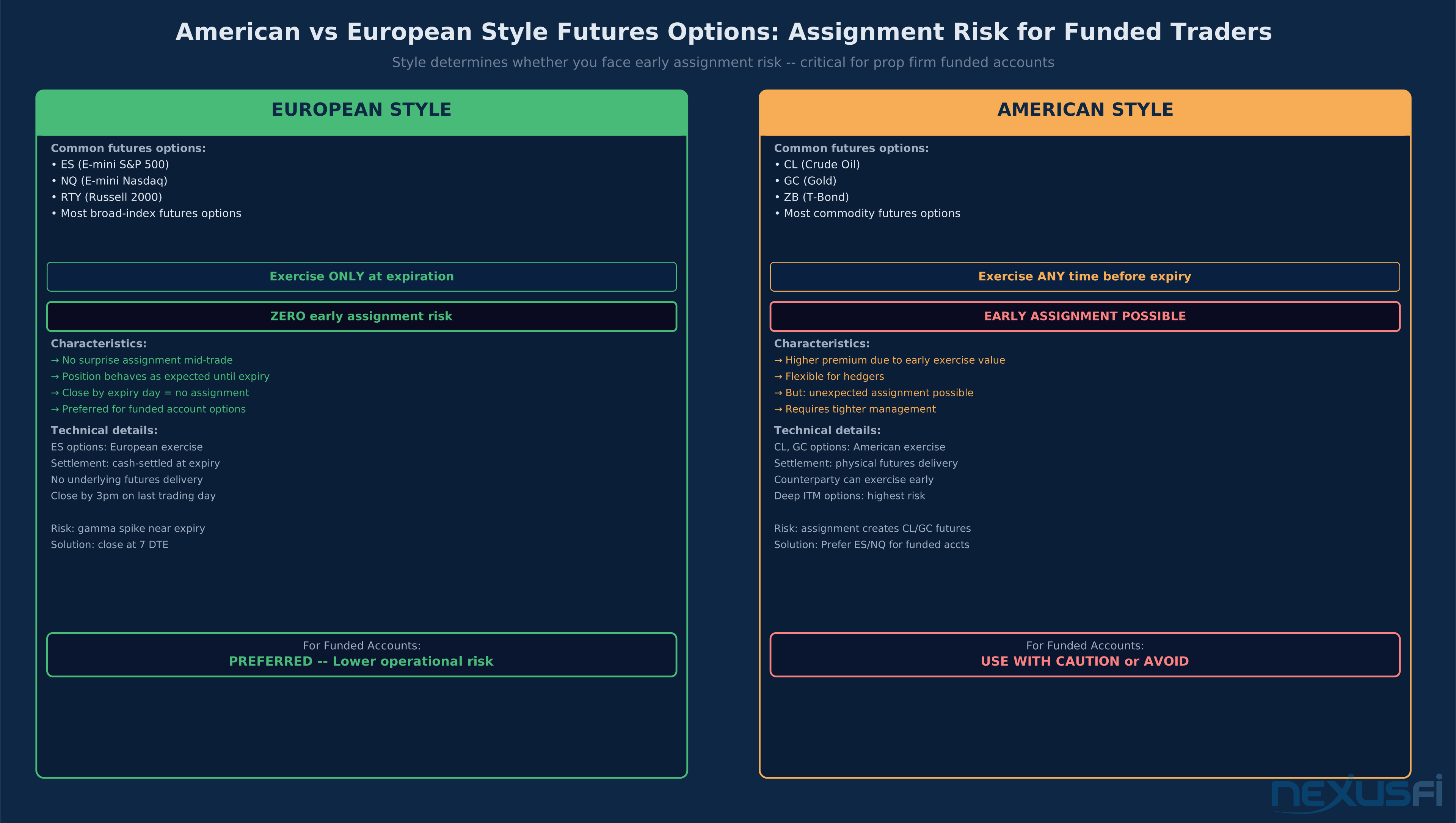
See Options on Futures: How Exercise, Assignment, and Settlement Actually Work for the full mechanics.
Margin treatment: long premium vs. short premium
A long option (you bought it) has defined, limited loss. The premium you paid is the maximum you can lose. Prop firms handle this cleanly — the premium comes out of your account when you buy, and your maximum risk is the premium.
Short premium is different. Even within a credit spread where your theoretical max loss is defined (the spread width minus premium received), the margin requirement fluctuates with market conditions and implied volatility. During a volatility spike, SPAN margin requirements can increase 50-150% intraday on your short options positions. Your account equity may remain above the drawdown floor, but if margin calls can't be met, the platform liquidates anyway.
"Defined risk" describes the theoretical max loss, not the practical risk within a funded account. If your $1,000 spread goes to max loss AND margin requirements spike AND the firm's risk system triggers auto-liquidation during that process — your realized outcome can be worse than spread max loss because you got filled at poor prices during a volatile move.
Drawdown Translation: The Math That Actually Matters #
Here's where funded options trading either clicks or kills your account. Walk through three concrete scenarios with real numbers.
Scenario 1: ES Put Vertical — Normal Conditions
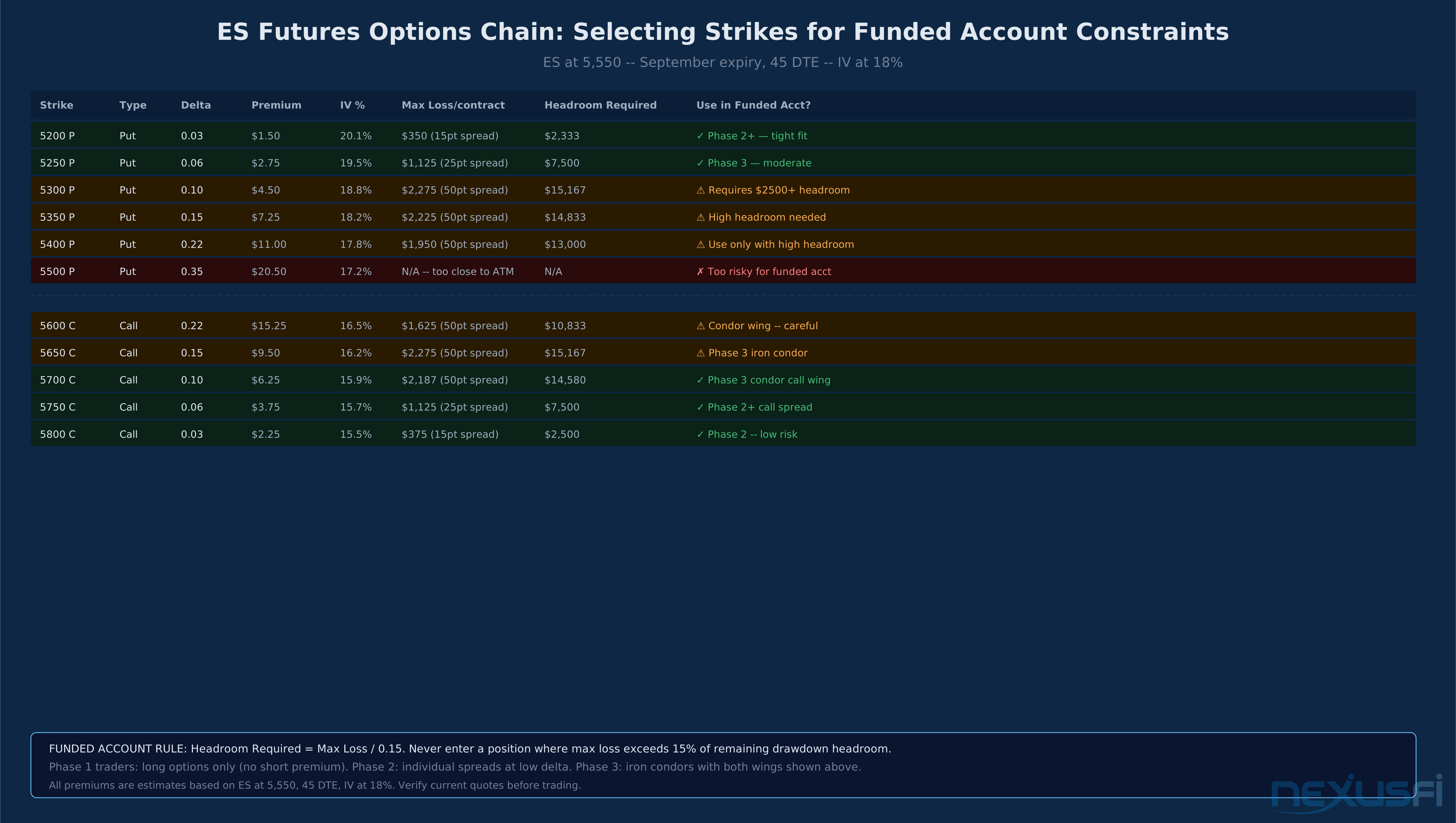
Setup: You sell the ES Sep 5300 put / buy ES Sep 5250 put vertical. ES is trading at 5550. You collect $3.25 in premium ($162.50/contract). Spread width is 50 points = $2,500 max loss. Net max loss after premium: $2,337.50/contract.
Funded account: $50,000 evaluation, trailing drawdown floor currently at $47,500. That gives you $2,500 of drawdown headroom.
Problem: Your max loss ($2,337.50) almost exactly matches your remaining drawdown headroom ($2,500). This means a single max-loss outcome on one contract eliminates your account. Most traders would look at this spread and think "defined risk, I can handle it." They'd be right in a personal account. In this funded account, this is a full-account risk trade.
Correct position sizing: Your drawdown budget should constrain you to risk no more than 15-20% per trade. At $2,500 headroom, that's $375-$500 max risk per trade. The ES put vertical at $2,337.50 max loss is 10x your appropriate position size.
Scenario 2: Iron Condor During a Volatility Event
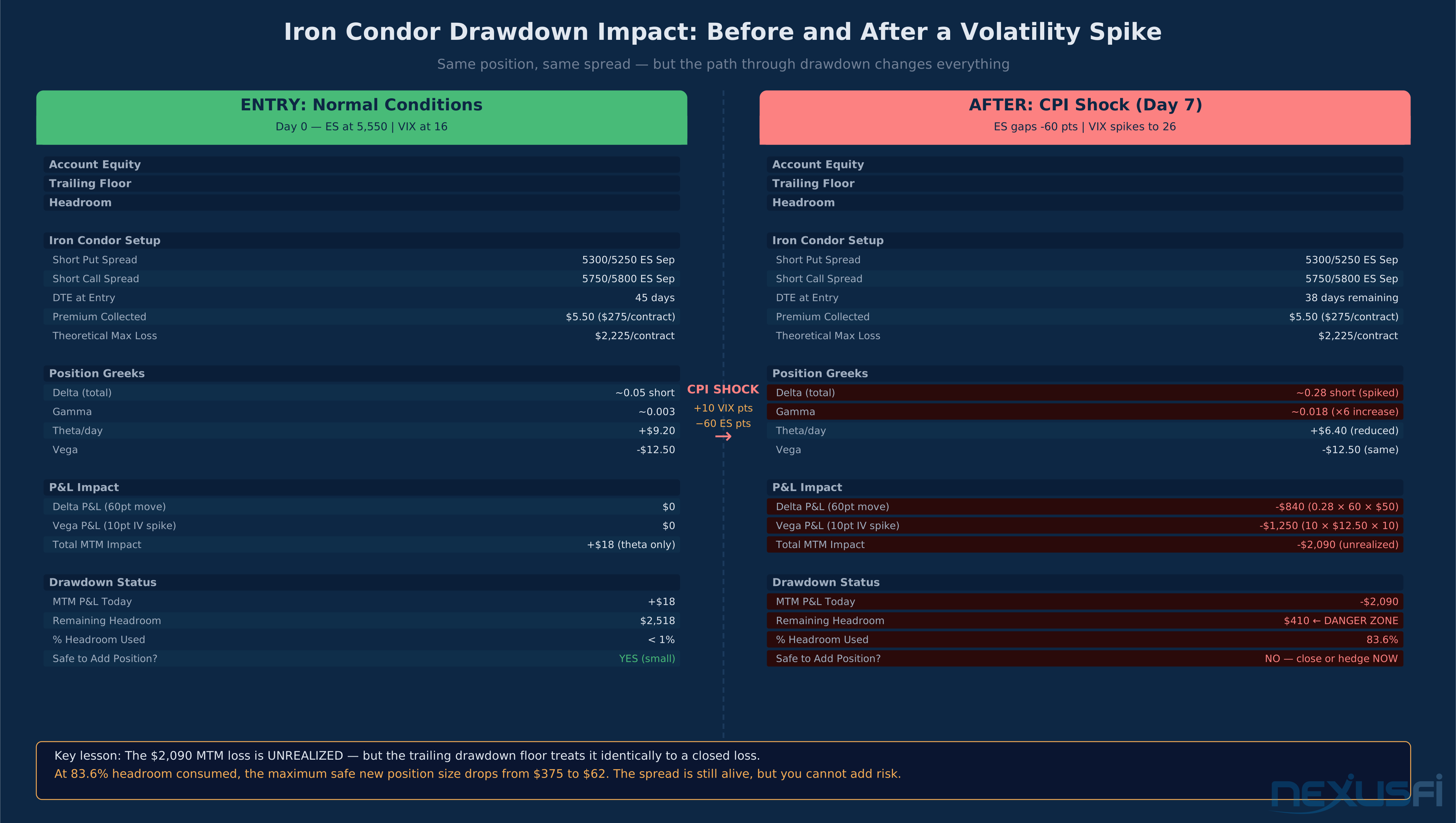
Setup: You sell an ES iron condor — short the 5650/5700 call spread and short the 5250/5200 put spread. 45 DTE, both sides roughly 0.15 delta at entry. Total premium received: $5.50 ($275/contract). Theoretical max loss: $50 point spread width x $50 = $2,500 minus $275 premium = $2,225 max loss.
Everything looks reasonable. Then CPI prints hot, ES gaps down 60 points at 8:30am, and implied volatility spikes from 18% to 28%.
What happens to your position:
- Put spread goes from worth $1.50 to worth $8.00 (delta, gamma, and vega all hit simultaneously)
- Unrealized loss: $6.50 x $50 = $325/contract
- Your trailing drawdown floor doesn't care that this is unrealized
@ron99 documented exactly this dynamic in the Selling Options on Futures thread: during August 2015, "the 1675 put had an IV of 30" suddenly — and that IV expansion destroyed positions that were profitable at 90 DTE. [3]
Scenario 3: Assignment Event
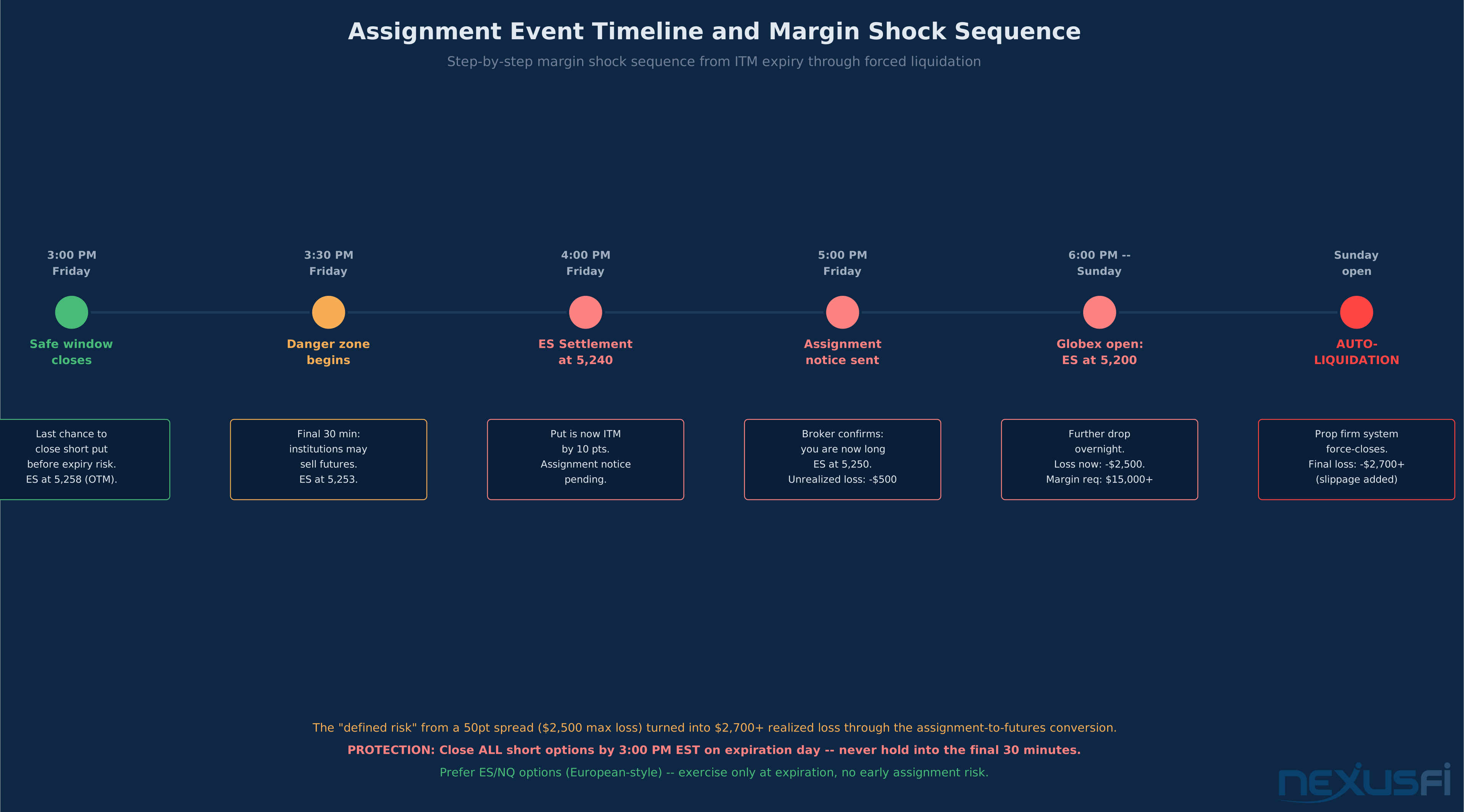
You're short an ES 5250 put (naked, at a firm that allows it, or within a spread that lost its long leg). ES closes at 5240 on expiration Friday. You get assigned a long ES futures position at 5250.
Overnight, ES drops to 5200 before your brokerage and prop firm's systems process the assignment. The margin requirement for a long ES position is automatically applied to your account. The prop firm's risk system sees this and force-liquidates the futures position at Sunday open at $5,200. You've now realized a $2,500 loss on the assignment plus whatever slippage in the Sunday globex session.
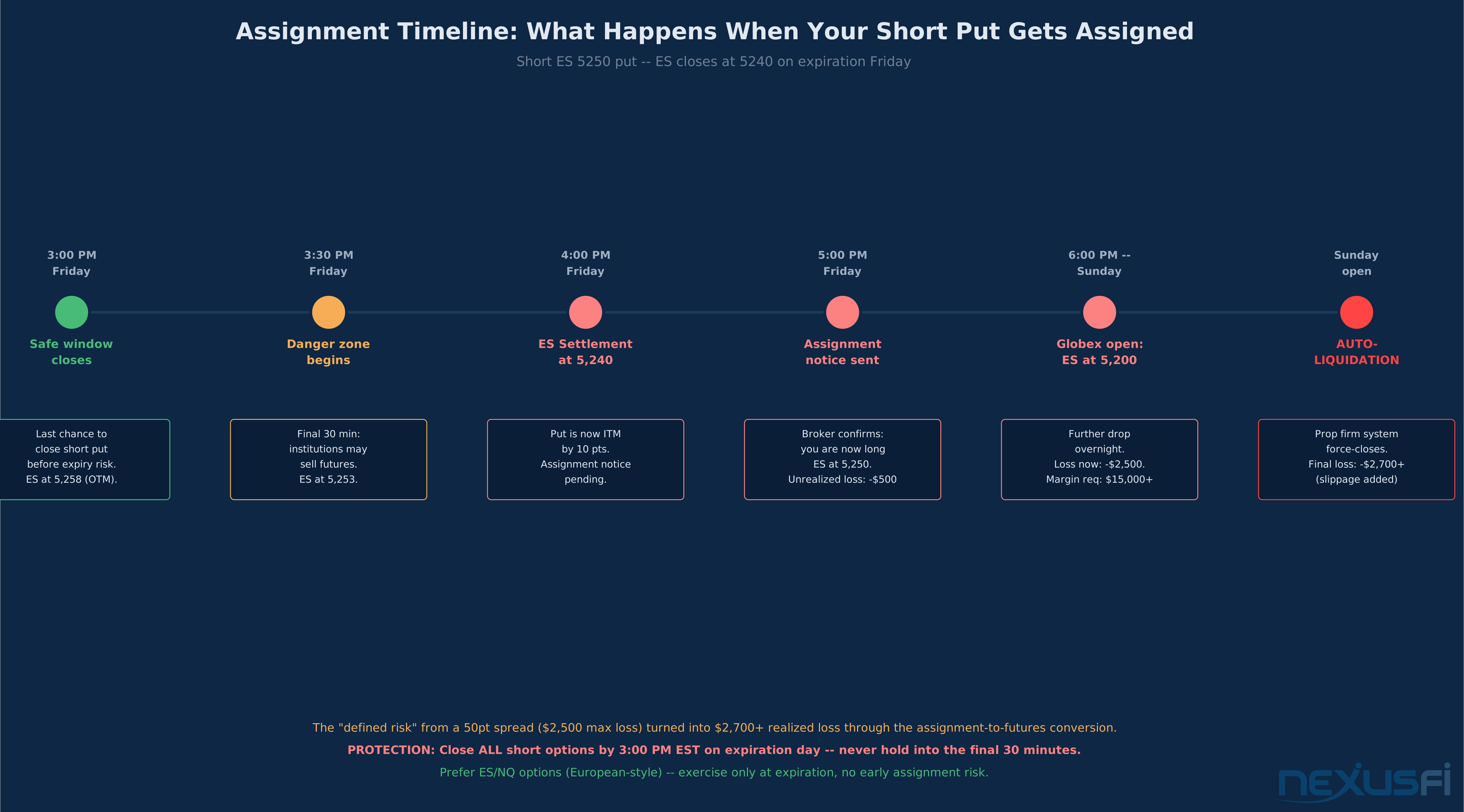
The "defined risk" from your original put spread turned into futures risk. This is the assignment margin shock failure mode in practice.
Strategy Selection Framework: What Actually Survives Prop Firm Constraints #
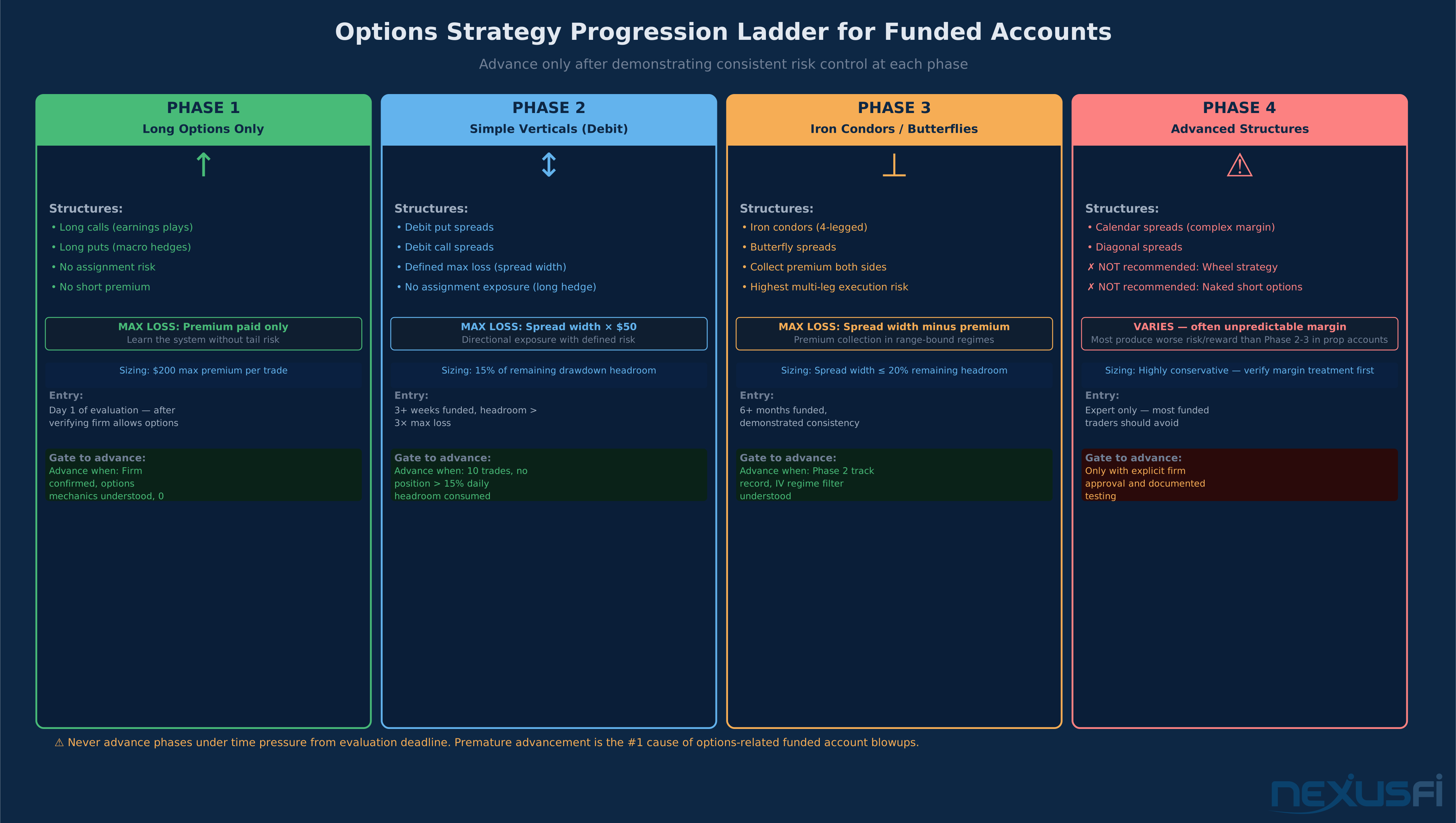
Not all defined-risk options strategies behave the same way inside a trailing drawdown structure. Here's how to think about the ladder.
Phase 1 — Beginner Funded Trader (under 3 months, still learning firm rules)
Only strategy: Long options as event plays
Buy a put or call before a known trigger (FOMC, CPI, NFP). Your max loss is exactly the premium paid. No margin fluctuation, no assignment risk, no vega shock from short premium. You know what you're risking when you click buy.
Limitation: Long premium strategies have negative expected value in most market conditions (you're paying for IV that's usually overstated). Use this phase to learn your firm's systems, not to generate returns from options.
Phase 2 — Intermediate (comfortable with firm rules, verified options allowed)
Strategy: Simple defined-risk verticals, long side bias
Start with debit spreads (buy near, sell far) on one underlying (ES or NQ). Max loss is the debit paid. The long leg caps your loss at the spread width no matter what happens.
Key constraints for this phase:
- Maximum risk per spread: 15% of remaining drawdown headroom
- Minimum DTE: 21 days (avoid gamma risk near expiration)
- Close at 50% profit or when DTE reaches 7 days, whichever comes first
- Never hold through earnings or major macro events
@HowardCohodas documented the mechanics of OTM vertical credit spreads in the Trading Index Options thread — the bid/ask spread challenges in index options are real, and liquidity differences matter for funded account execution where partial fills are more dangerous. [4]
Phase 3 — Advanced (6+ months funded, demonstrated consistency)
Strategies: Iron condors, butterflies
Multi-leg structures that collect premium from both sides. Higher complexity means higher execution risk (partial fills, legging) and higher interaction with volatility regimes. Only deploy after you've demonstrated you can manage simpler structures.
Iron condor constraints for funded accounts:
- Place the short strikes at 0.10 delta or lower (wider than retail guidance)
- Use spread width equal to or less than 20% of remaining drawdown headroom
- Treat any IV expansion >5 VIX points as a position close signal
- Don't add condors when existing positions are already stressed
The progression gate: Don't advance to Phase 3 until you've completed at least 10 Phase 2 trades with no position triggering more than 10% of your remaining drawdown headroom on any single day. Advancement without this track record is how funded accounts get blown up by strategies the trader doesn't fully understand under stress.
Phase 4 — Expert only (and probably not worth it)
Strategies: Calendars, ratios, wheels
Calendar spreads in prop accounts have a specific problem: the position structure creates margin requirements that fluctuate unpredictably. The wheel (selling puts, taking assignment, selling calls on the futures position) is effectively prohibited in nearly every prop firm because step 2 — taking the assignment — creates a futures position that wasn't part of your original options approval.
Read Iron Condors on Futures Options and Selling Options on Futures for strategy-specific mechanics. The Option Greeks for Futures Traders article covers delta/gamma/vega in detail.
Risk Management Inside Prop Constraints #
In a personal account, you think in terms of theoretical max loss and percentage of capital. In a funded account, you think in terms of remaining drawdown budget.
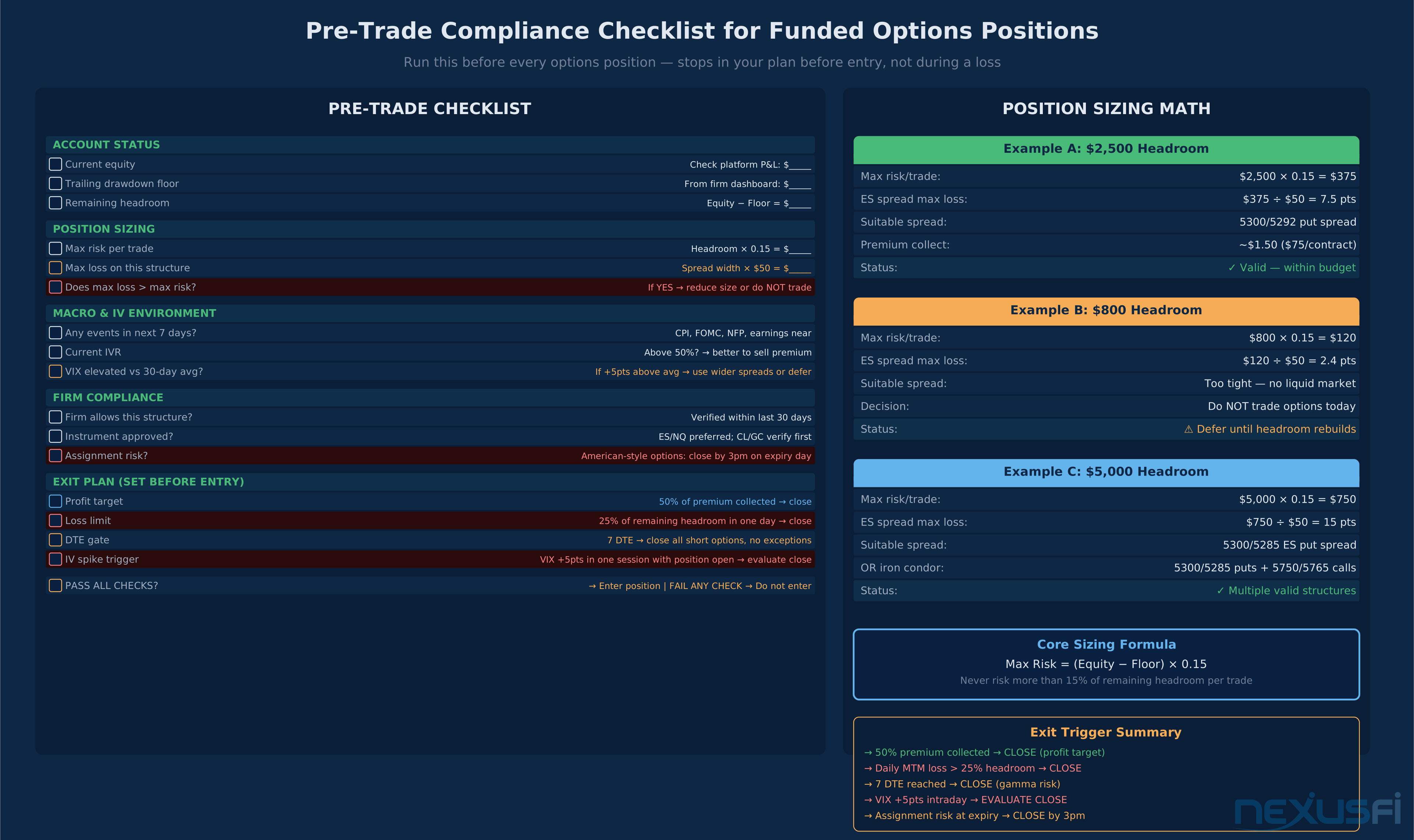
Position sizing from drawdown budget
The formula is simple but the discipline is hard:
Maximum risk per trade = remaining drawdown headroom x 0.15
If your trailing drawdown floor is 2,500 below your current equity, your max risk per trade is $375. Period. Doesn't matter that you "feel good" about the setup. The math doesn't care about your feelings.
@ron99 developed a detailed framework for ES put position sizing in the Selling Options on Futures thread based on initial margin multiples: "The best strategy proposed so far for relatively safe returns is 1 short ES put at -5 delta and 2 long ES puts at -1.5 delta with 6x IM and DTE around 100 days." The 6x IM factor is his margin buffer. In a funded account, your equivalent buffer is your remaining drawdown headroom — and it needs to be sized so. [3]
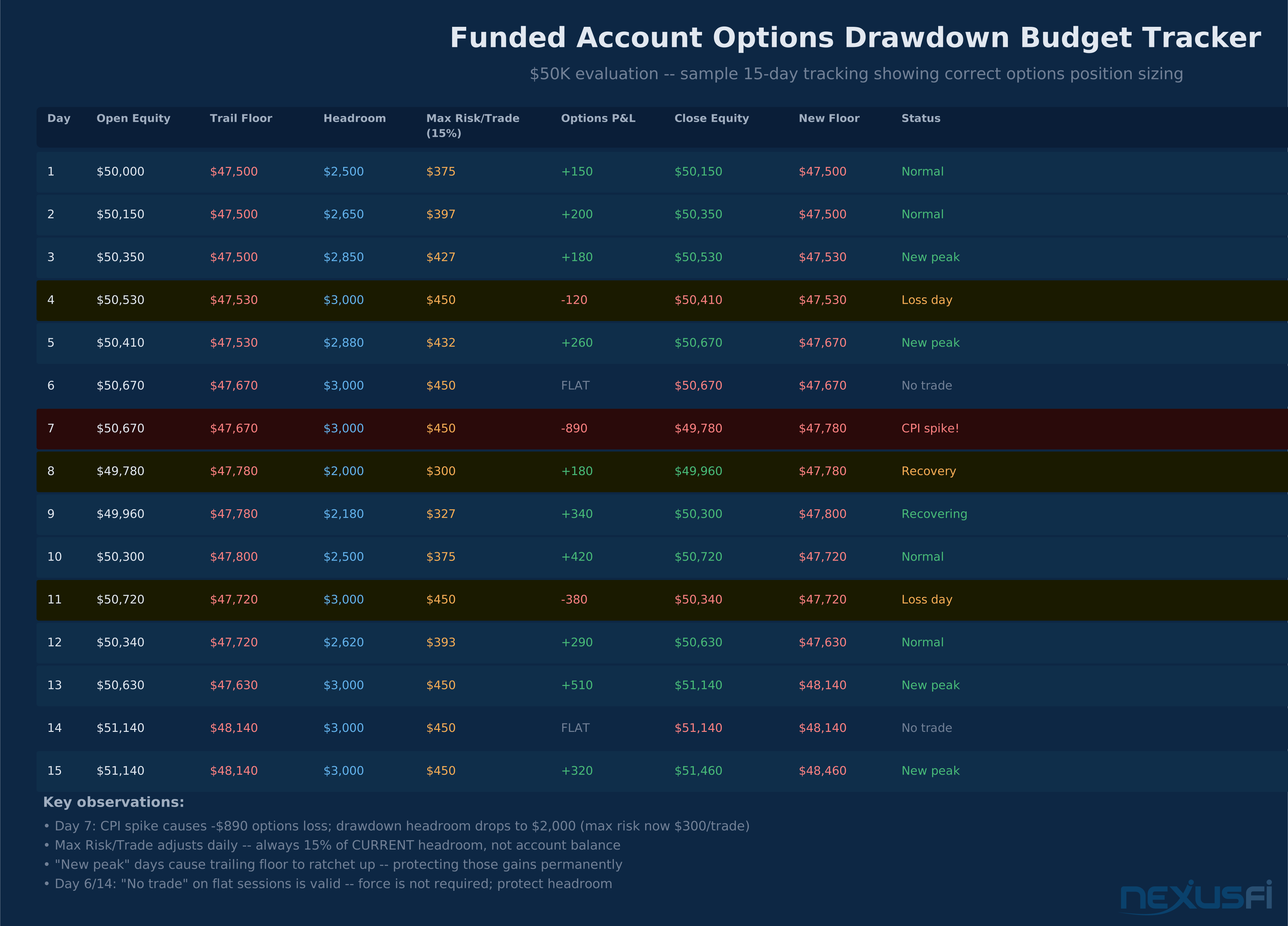
Delta thresholds as risk controls
Most funded options traders think in terms of P/L. More useful is thinking in terms of portfolio delta — the equivalent futures exposure your options positions represent.
If your total portfolio delta reaches 1.0 (equivalent to being long one ES contract), you're carrying the same tail risk as a futures position. Cap your portfolio delta at 0.25-0.50 equivalent contracts during evaluation. During funded status with demonstrated track record, maybe 0.75. Never exceed 1.0 equivalent unless you're explicitly hedging a funded futures position.
Exit triggers
Set these before you enter, not when the position is stressed:
- Profit target: 50% of maximum premium collected
- Loss limit: Position loses 50% of remaining drawdown headroom in a single day — close the position, don't wait for a "recovery"
- DTE gate: Close all short options positions at 7 DTE (gamma risk explodes in the final week)
- IV spike rule: If VIX rises more than 5 points in a single session with your position open — evaluate closing before end of day
The challenge in prop accounts is the psychology of waiting. Short premium requires patience — theta takes time to work in your favor. But prop evaluations have time pressure (you need to hit a profit target by a deadline). This conflict causes funded traders to hold losing options positions too long, waiting for time decay that arrives too slowly while the drawdown floor closes in.
How This Fails: Five Concrete Failure Modes #
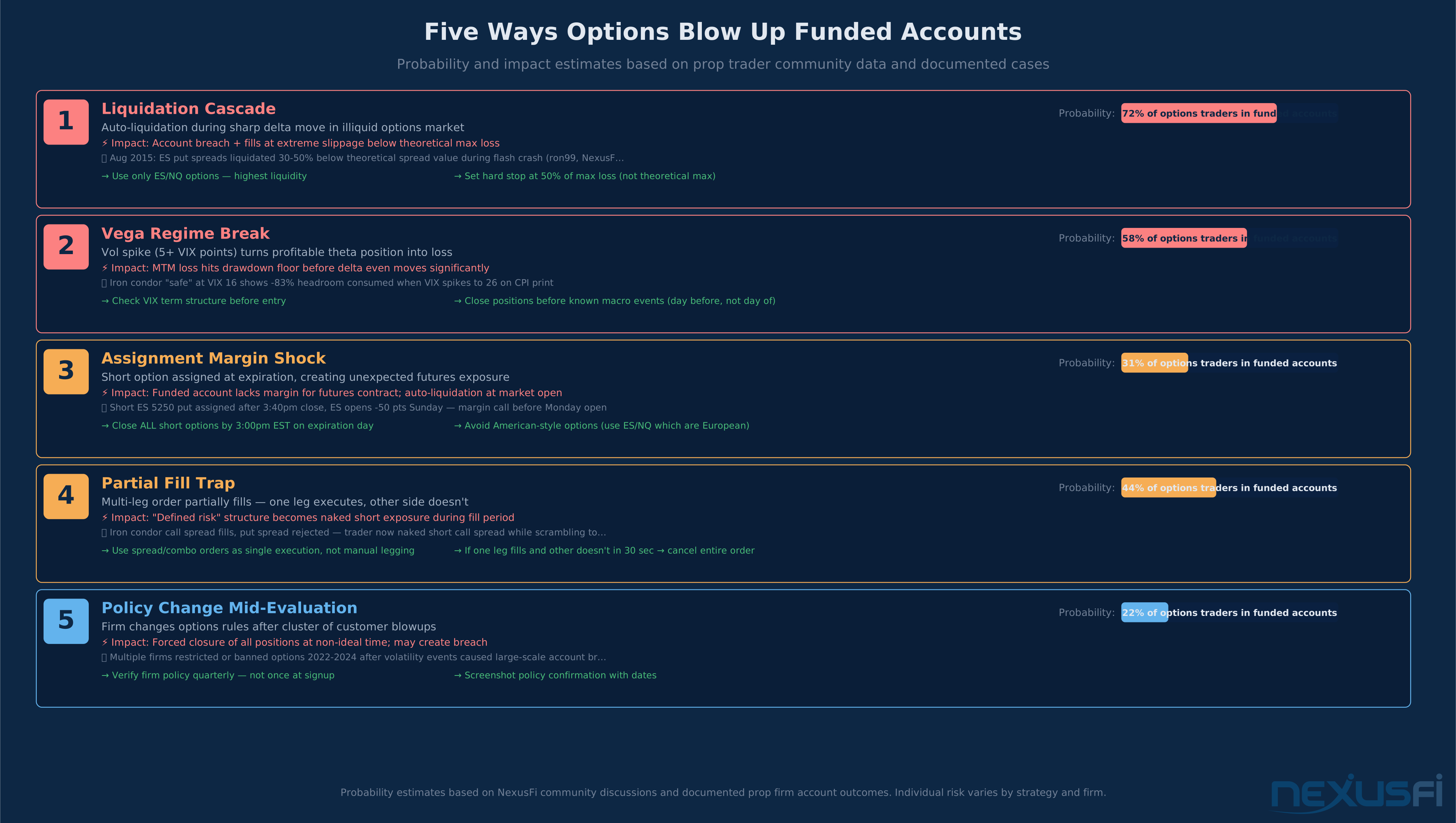
Theory helps you understand the mechanics. Failure data helps you actually avoid the catastrophes.
Failure 1: The Liquidation Cascade
You're short a 5300/5250 ES put spread. ES drops 40 points in 20 minutes during a low-liquidity period (pre-market, or immediately post a macro event). The bid-ask spread on your options quintuples. Your spread's mark-to-market value craters.
The prop firm's risk system triggers automatic liquidation. The auto-liquidation system hits bids at terrible prices. You realize a loss much larger than the theoretical max loss of the spread because you got filled at the worst possible moment in an illiquid option series.
This is what the Selling Options on Futures thread documented in August 2015: "spreads had lower IM increases compared to naked options but they had about the same" drawdown during the crash — fills during the crash came at extreme slippage even for spread structures that "should have" survived the move. [3]
Protection: Use only ES and NQ options (highest liquidity in futures options). Avoid CL or GC options in funded accounts — the liquidity drops fast in stress events.
Failure 2: The Vega Regime Break
Your iron condor has been sitting happily for 30 days. Theta is grinding in your favor. You're up 40% of the premium collected. Then CPI prints 0.5% over expectations.
VIX spikes from 16 to 26 in two hours. Your short puts go from 0.12 delta to 0.35 delta as both delta and vega hammer the position simultaneously. The position that showed +$200 unrealized P/L yesterday shows -$600 unrealized P/L today.
Your trailing drawdown floor was set based on yesterday's peak equity. Today's -$600 swing puts you within $400 of breach.
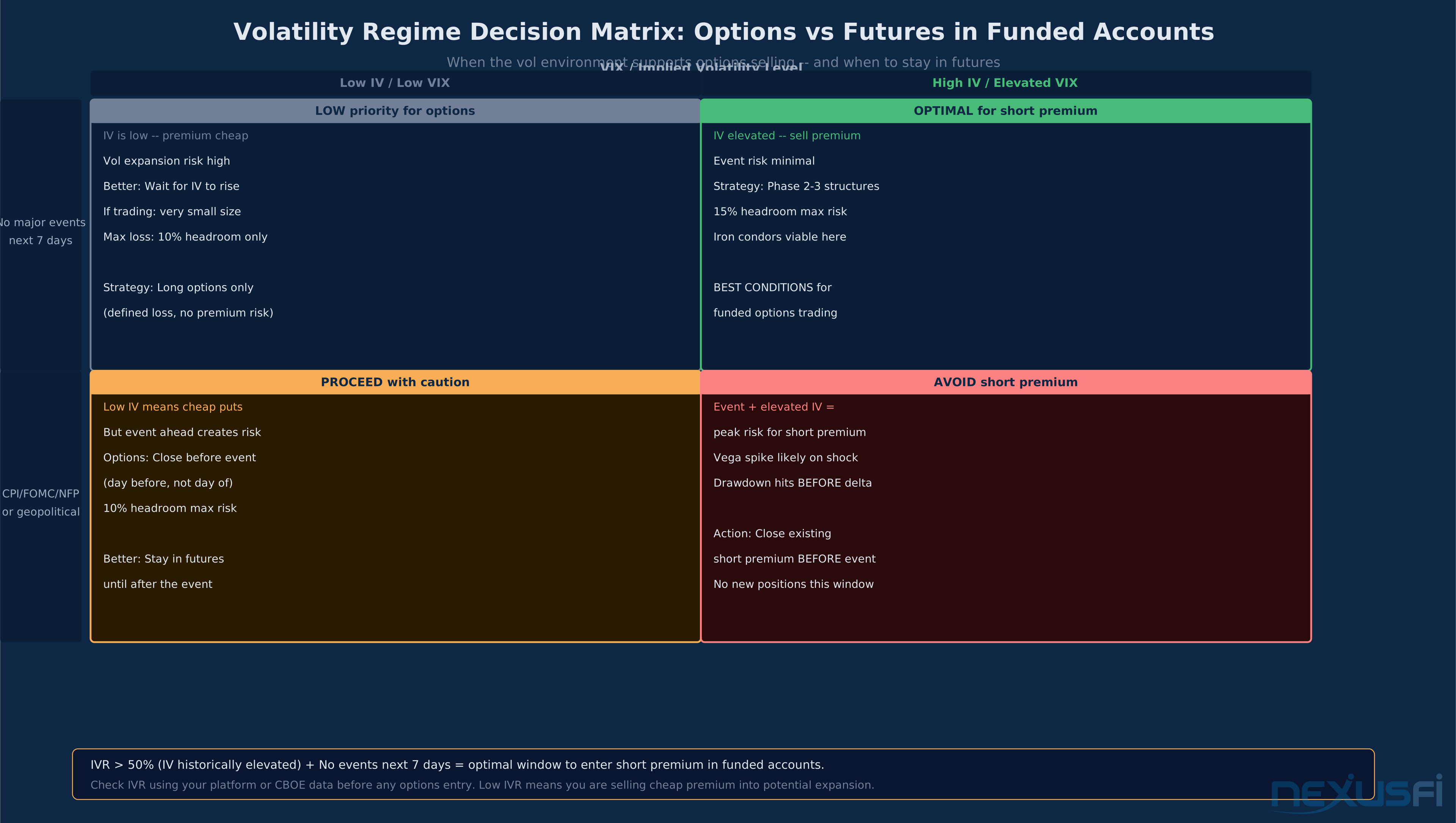
Protection: During high-IV-event periods (CPI, FOMC, NFP, geopolitical shocks), close or hedge delta by the close of business the day before the event. Don't wait for the event. Read News Event Risk Management for Futures Traders for the full framework.
Failure 3: Assignment Margin Shock
You're short an ES 5250 put. It's 3:30pm Friday. ES is at 5255 — your put is slightly OTM. You decide not to close it, thinking it'll expire worthless.
Between 3:30pm and 4:00pm settlement, ES closes at 5240. Your put is now ITM. You get an assignment notice. You're now long ES futures at 5250 with ES trading at 5240 after hours.
Solution: Never hold short options into the final 30 minutes of trading on expiration day. Close everything by 3:00pm EST. The cost of giving up the last few cents of theta is trivial compared to the assignment risk.
Failure 4: The Partial Fill Trap
You submit a four-leg iron condor as a combo order. The exchange fills your two call spread legs but can't fill your two put spread legs — the put market moved while your order was being processed.
You now have a naked call spread position with no offsetting put spread. Your "defined risk" iron condor is now a credit call spread plus unhedged short put exposure.
Solution: Use combo orders where available. Have a predetermined decision tree for partial fills: if leg 1 fills but leg 2 doesn't within 30 seconds, cancel the order and restart rather than legging in manually.
Failure 5: The Policy Change
You built your trading approach around a specific prop firm's options permissions. You're funded and profitable. Six months in, the firm changes its rules. This isn't theoretical. Multiple firms have changed options policies since 2022 as the funded trading market matured and firms faced losses from options traders breaching accounts during volatility events. [5]
Protection: Diversify across 2-3 different evaluation structures. Re-verify policies with each firm quarterly.
Compliance Workflow: The Operational Layer Most Traders Skip #
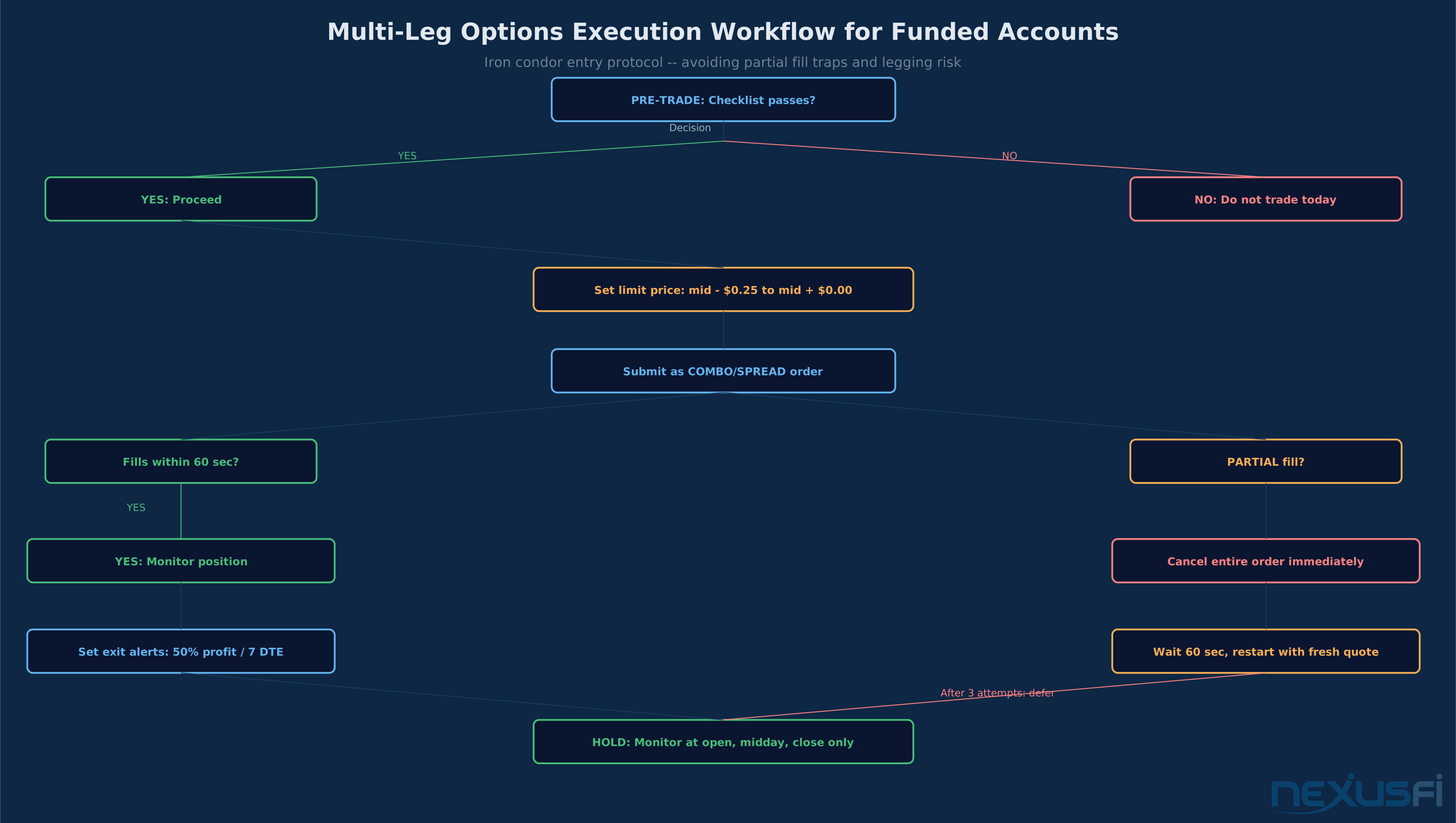
The operational layer is where most resources stop. Here's what counts.
Pre-trade checklist (run this before every options position)
- What's my current equity?
- What's my current trailing drawdown floor?
- What's my remaining drawdown headroom? (Equity minus Floor)
- What is my max loss on this trade? (Spread width x contract size)
- Does max loss exceed 20% of my remaining headroom? (If yes, reduce size or don't trade)
- Are there macro events in the next 7 days that could cause IV spikes? (If yes, defer or use a wider structure)
- Does my firm allow this specific structure? (Verified within the last 30 days)
- What is my exit strategy? (Price target, loss limit, DTE gate — set them now)
Multi-leg execution protocol
For iron condors and butterflies in funded accounts:
- Never leg in manually unless the firm's platform requires it
- Use combo/spread orders that fill as a single execution
- Set a price limit slightly worse than mid (your fill may not be at mid in futures options)
- Give the order 60-90 seconds to fill at your limit before adjusting
- If unfilled after 3 adjustments, evaluate whether the market has moved enough to invalidate your setup
Post-trade monitoring
Check your positions at market open, midday, and close. Set price alerts at your predetermined exit levels and let the market come to you. Don't check prices every five minutes — that's how emotional decisions get made in funded accounts.
The patience vs. time pressure conflict: Short premium strategies work over weeks and months. Prop firm evaluations run for 30, 60, or 90 days with specific profit targets. These two timelines are in structural conflict. This is why funded options trading is at the core harder than personal account options trading, even for experienced traders.
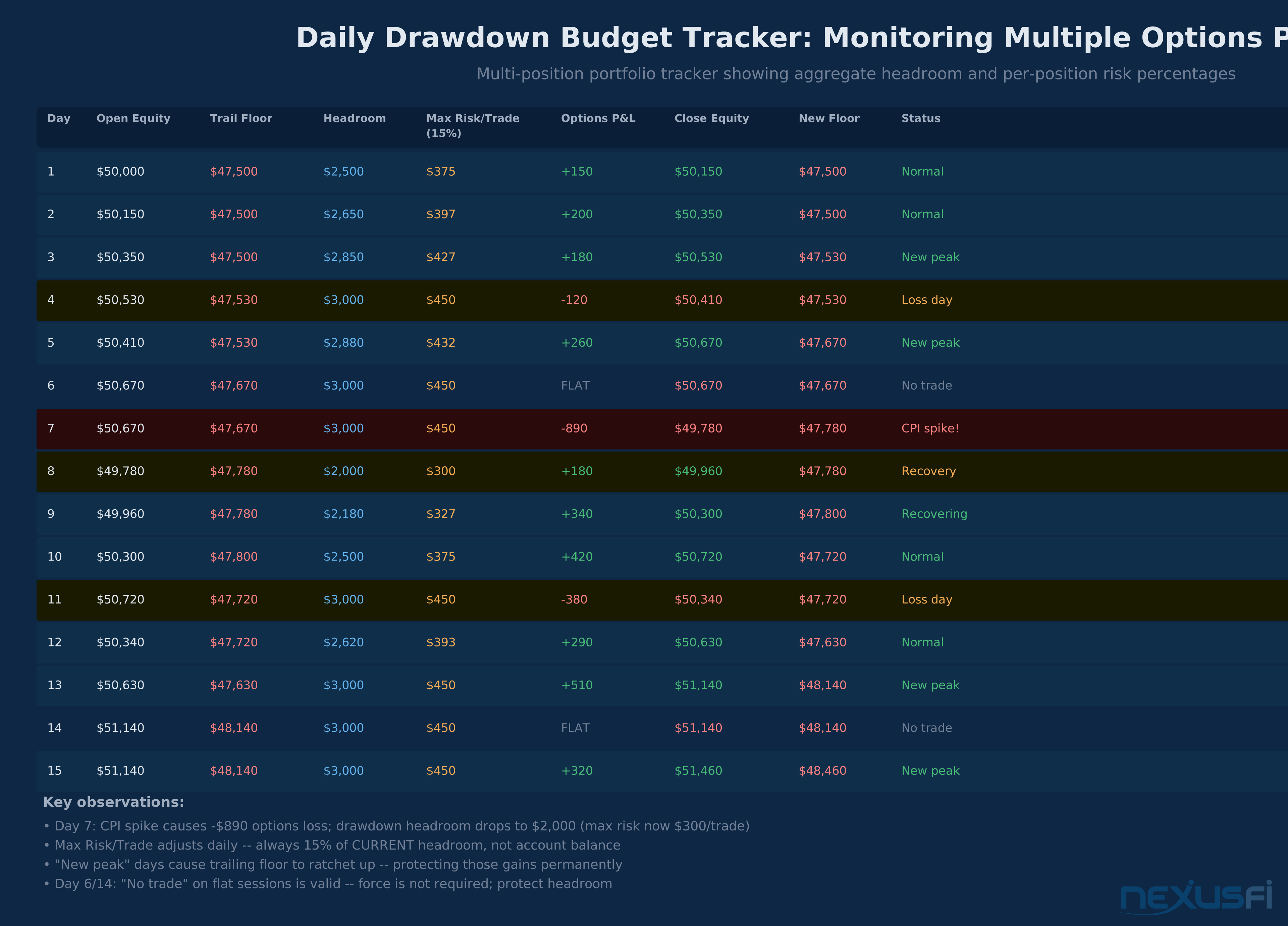
Read Funded Trader Operations Manual for the full daily workflow framework. Position Sizing for Funded Trading Accounts covers the position sizing math in more detail.
The Integration Framework: Where Options Fit in a Funded Trader's Arsenal #
Options aren't a standalone strategy. They're a tool that works best when integrated into a framework that matches the prop firm's specific constraints.
When options belong in a funded account:
- When you have sufficient drawdown headroom (at least 3x any single position's max loss)
- When IV is elevated (IVR above 50% means premium is relatively expensive — better to sell)
- When you're not under time pressure from an evaluation deadline
- When you've verified the firm allows the specific structure you're trading
When to stick with futures:
- During evaluation periods with tight deadlines
- When you're within $1,000 of your trailing drawdown floor
- When macro events in the next 7 days create unpredictable vol
- When the options bid/ask spread is wider than 20% of your premium target
Read Prop Firm Risk Rules and Drawdown Mechanics and Volatility Skew in Futures Options to understand the vol environment that determines when options selling creates positive expected value.
The Selling Options on Futures article covers the broader premium selling framework. Options on Futures: How Exercise, Assignment, and Settlement Actually Work goes deeper on the assignment mechanics covered in this article.
The Funded Traders Who Succeed With Options #
Funded traders who succeed with options in prop accounts share a few characteristics that separate survivors from the majority who blow up trying.
They size conservatively. Not because they're afraid, but because they've done the math and understand that preserving the account is more valuable than maximizing per-trade return in the early stages. @ron99's documented strategy of selling ES puts at 0.03 delta with 90-110 DTE isn't exciting — it's a boring, deliberate approach that generated consistent data over years. The funded traders who mimic this but use 3x the appropriate position size for their drawdown headroom are the ones who don't make it.
They close early. The difference between a 50% profit and 100% profit on a short premium trade is rarely worth the risk of the final 14 days. In a funded account, those last 14 days include the gamma risk explosion that can take a winning position to maximum loss before you can react.
They treat the compliance workflow as non-negotiable. The pre-trade checklist exists for a reason. The exit levels are set before entry, not during a loss. The policy verification is done quarterly, not once at signup.
And they understand that the prop firm's risk model isn't their enemy — it's their operating environment. Work with the constraints, not against them. Design every options position to survive the firm's risk parameters, not just market movement. That's the fundamental shift between personal account options thinking and funded account options thinking.
Knowledge Map
Go Deeper
Build on this knowledgeCitations
- — Topstep's Nick Dolby AMA: Rules, Drawdown, and Everything You Want to Know About the Combine (2022) 👍 88“The Trailing Max Drawdown reaches the starting balance, which is zero in both the FTP and Funded accounts. The Trailing Max Drawdown is calculated on the highest account balance achieved.”
- — Futures, Options on Futures, and the meaning of life (2022) 👍 152“Selling an option has limited upside and unlimited downside. The downside is capped in a spread but the P/L path creates specific drawdown risk in funded accounts.”
- — Selling Options on Futures: A Journal of Weekly ES OTM Puts (2016) 👍 3240“The best strategy proposed so far for relatively safe returns is 1 short ES put at -5 delta and 2 long ES puts at -1.5 delta with 6x IM and DTE around 100 days.”
- — Trading Index Options OTM Vertical Credit Spreads (2015) 👍 412“The bid/ask spread in index options creates real execution friction. In funded accounts where partial fills can create unintended risk, combo orders are essential.”
- — Funded Trader platforms: Apex, TopStep, TradeDay, OneUp, BluSky -- the options trading thread (2024) 👍 267“Options in funded accounts have fundamentally different risk profiles than in personal accounts. The trailing drawdown transforms what defined risk means in practice.”
- — My MES Live Account Journal (OneUp Funded): Options on Futures Strategy (2022) 👍 89“During the evaluation there was no restriction here, but now I have to be flat 1 min before, during, and after major news releases. The policy changed when I went funded.”
- — Most Funding Firms Are a Scam: The Trailing Drawdown Math (2023) 👍 178“The trailing DD based on unrealized PnL is the one thing these companies ABSOLUTELY CANNOT COMPROMISE ON.”
- — Futures Commission Merchant Financial Data (2024)
- — m28 End of Week Journal (2019) 👍 20“TST Funded rules: Max daily drawdown $1,000. Personal daily loss limit $460. Max weekly drawdown (trailing drawdown) applies from the highest equity point.”
- — Legends Trading: Ask Me Anything (AMA) w/Greg Khojikian CEO (2024) 👍 5“Trailing open equity is a suicide pact between you and the prop. There's nothing in the real market that mimics this. Options MTM losses count exactly like realized losses.”
- — Selling Options on Futures: A Journal of Weekly ES OTM Puts (2013) 👍 4“With spreads, margin increases have a much smaller impact than with naked options. Position sizing around the spread's max loss keeps you within defined risk parameters.”