



Regime-Adaptive Risk Management for Futures Traders: Position Sizing and Stop Placement Across Market States
Overview #
Here's the thing nobody tells you when you're starting out: most traders don't fail because they can't find a good strategy. They fail because they keep applying a good strategy to the wrong market conditions.
A Bollinger Band mean-reversion setup that crushes midday chop will bleed you dry when ES rips 30 points directionally after an 8:30 print. A momentum breakout that works the first hour of RTH will eat stops all afternoon in a 10-point oscillation with no follow-through.
This is the regime problem. The fix is learning to read what the market is doing before you decide which strategy to apply.
Market regime detection answers systematically: is this trending, ranging, or transitioning? High, low, or normal volatility? The answers determine strategy selection, position sizing, and stop placement.
1 That's the whole framework in one sentence. The rest is implementation.
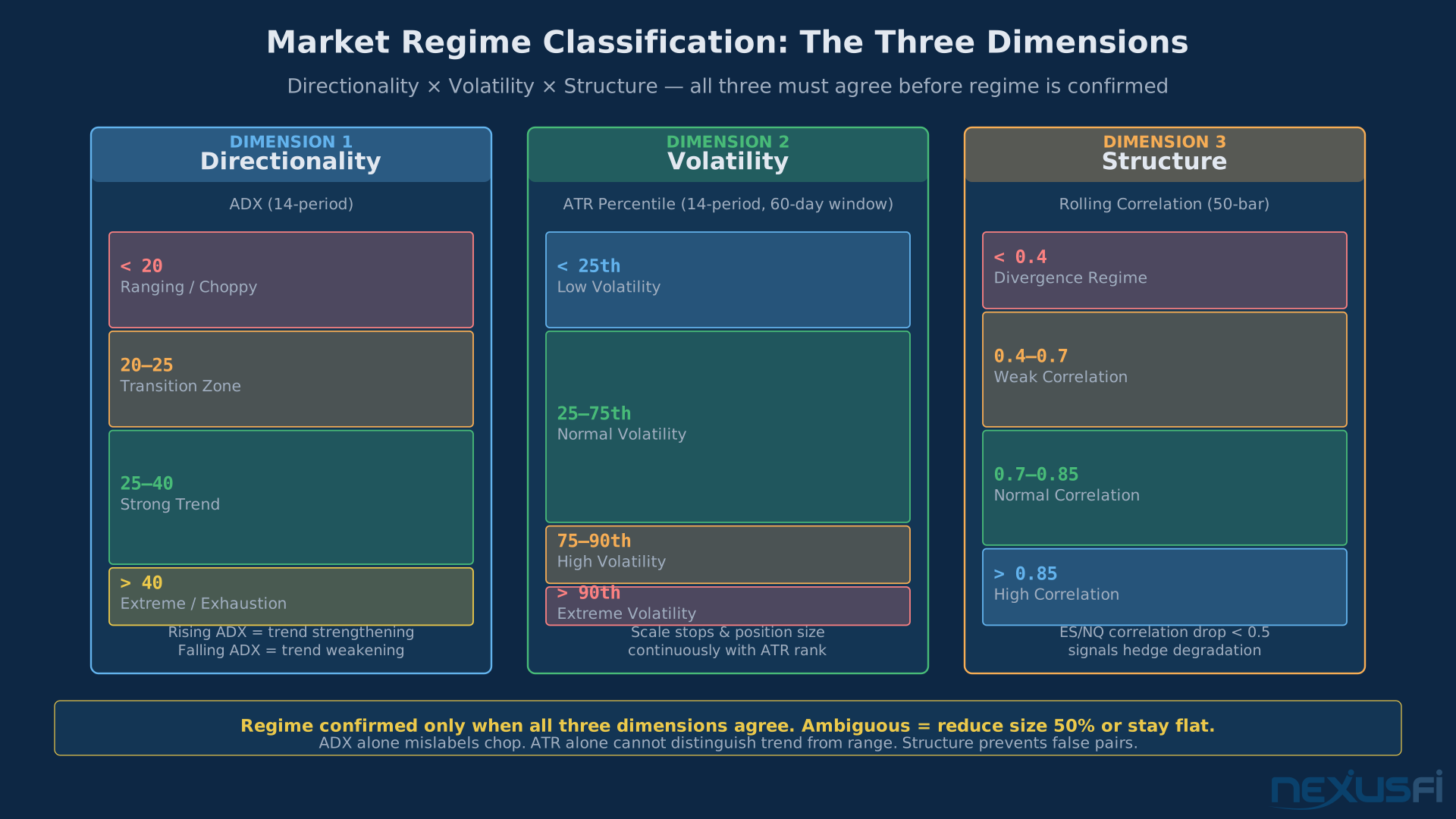 alt="Market regime classification across three dimensions: directionality (ADX), volatility (ATR percentile), and structure (rolling correlation)" loading="lazy" width="800" height="450">
The Three Dimensions of Regime #
Single-indicator regime detection fails — every quantitative trader discovers this through painful experience. ADX alone mislabels volatile chop as trending. ATR alone can't distinguish a trending move from a volatile range. Correlation alone misses intra-instrument structure.
A complete regime framework requires three distinct measurements, each addressing a different market dimension:
Dimension 1: Directionality. Is price moving persistently in one direction, or oscillating around a mean? ADX (Average Directional Index) is the primary tool here. It doesn't tell you which direction — just how strongly the market is moving directionally. ADX below 20 means ranging. ADX above 25 means trend. The zone between requires judgment and patience.
Dimension 2: Volatility. How much price is moving relative to recent history? ATR (Average True Range) percentile rank gives you a continuous volatility reading against a reference period. This drives position sizing and stop placement more than strategy selection — a 50% size reduction in ambiguous conditions often outperforms perfect strategy selection at full size.
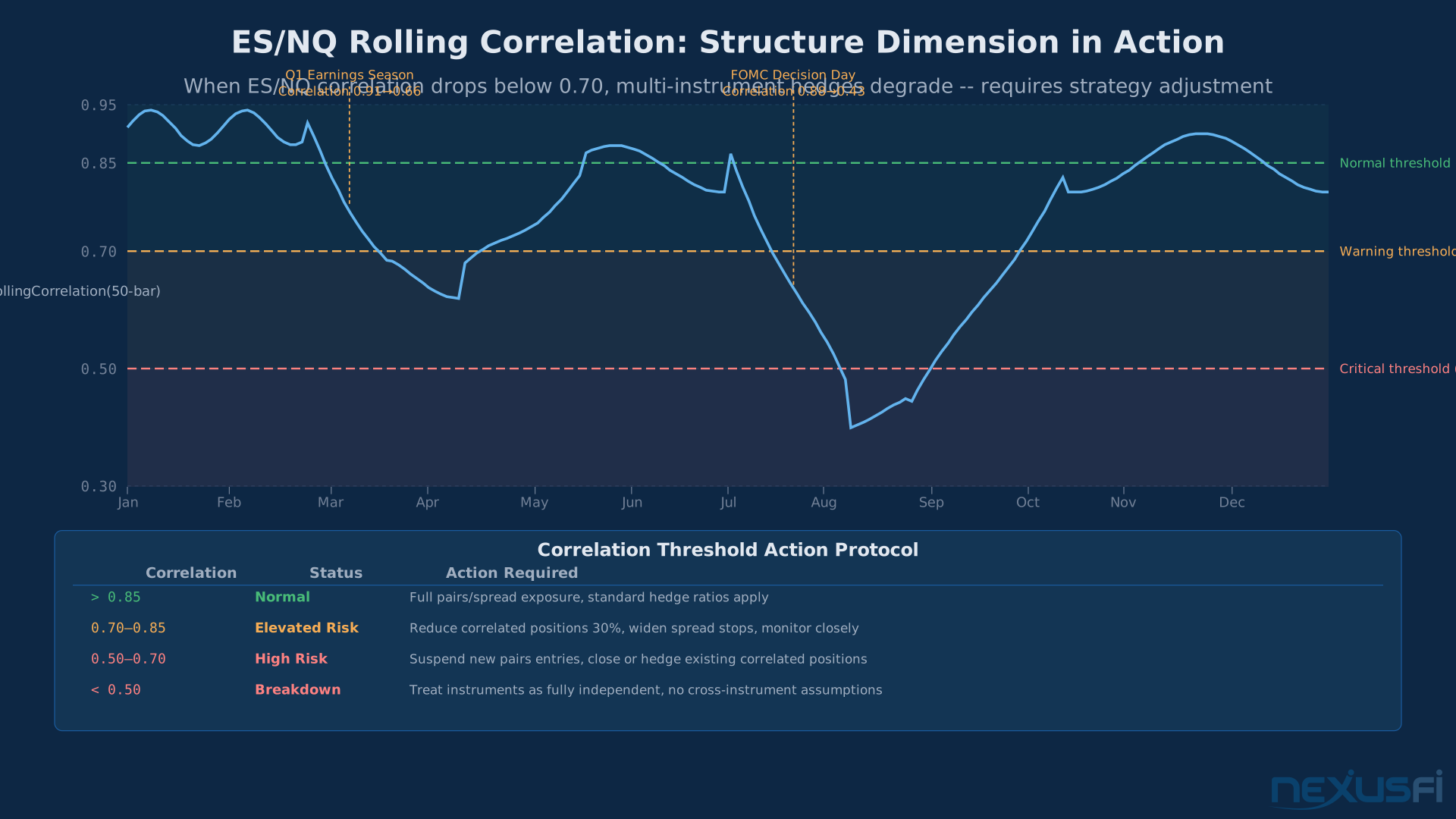
Dimension 3: Structure. For multi-instrument traders, how are the assets you trade behaving relative to each other? Rolling correlation between ES and NQ, or between CL and GC, tells you whether your diversification assumptions are holding. When ES/NQ correlation drops from 0.92 to 0.71, your hedge has lost 25% of its effectiveness.
The rule: regime is confirmed only when all three dimensions agree. Conflict between dimensions — reduce size 50% or stay flat. Ambiguity is noise to wait out, not an edge to trade through.
ADX-Based Trend Detection #
As @FatTails noted in the Building Blocks thread: "One of the best known trendfilters is the directional movement system."3 Over 45 years later, it remains the primary tool for answering one question: is this market trending or not?
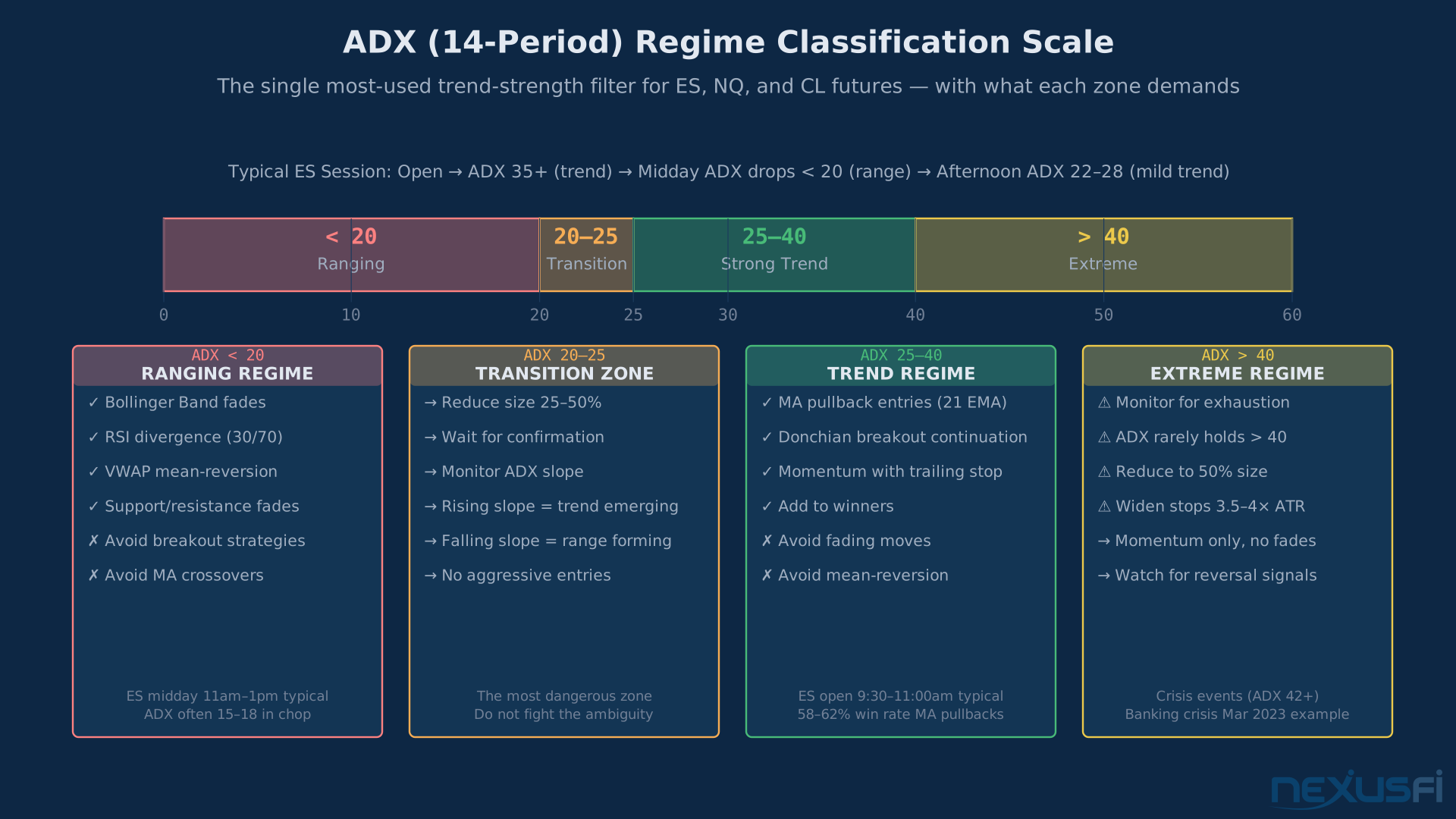
Standard implementation: 14-period Wilder smoothing (10-12 for CL and faster commodities). Output ranges 0-100 with four meaningful zones:
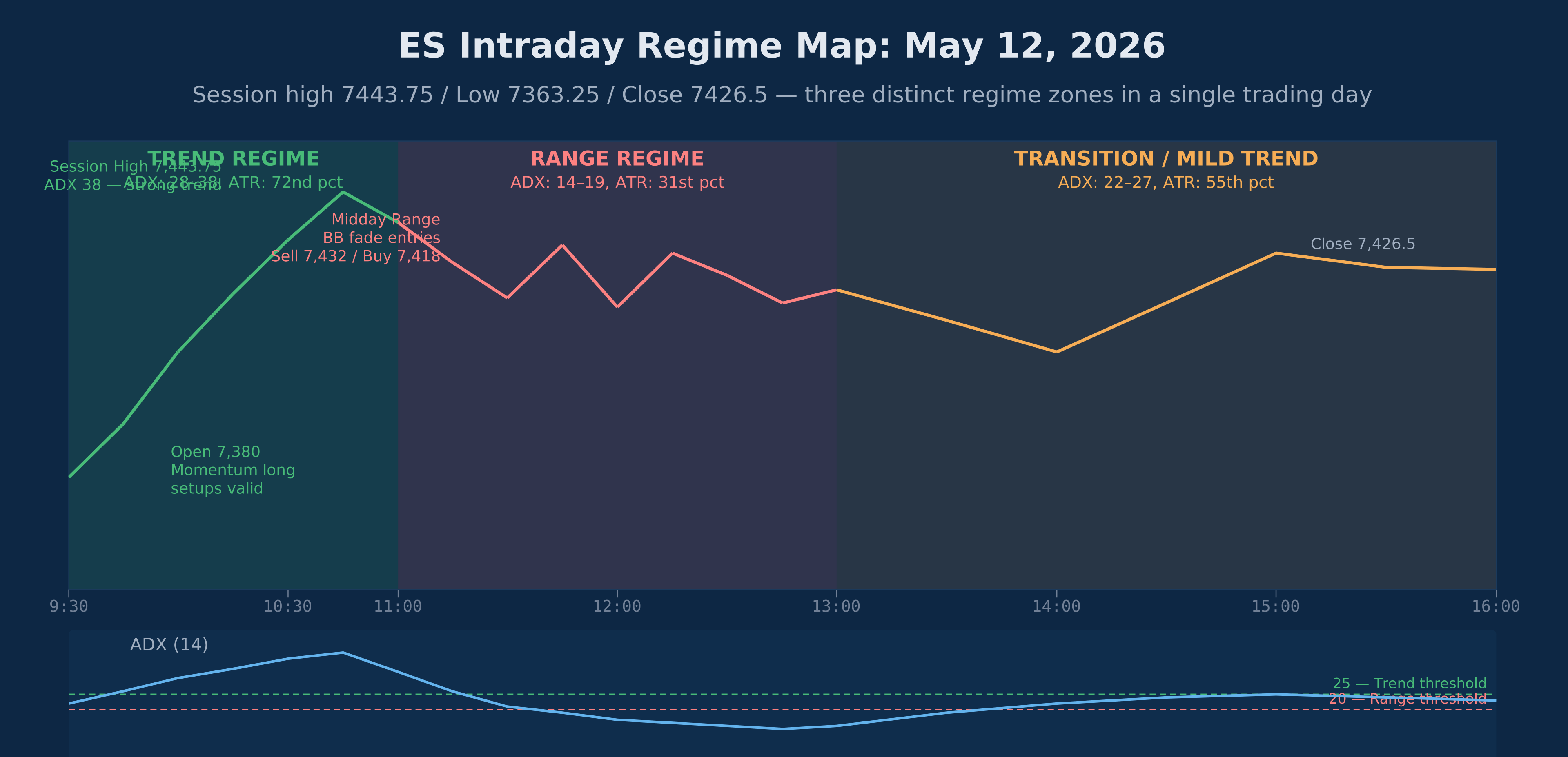
- ADX < 20: Ranging or choppy market. Mean-reversion strategies are favored. Avoid trend-following entries -- you'll get whipsawed repeatedly. This is the classic ES midday condition from 11:00am to 1:00pm ET, where ADX often sits between 14 and 19.
- ADX 20-25: Transition zone. The most dangerous reading. Both trend-following and mean-reversion have elevated failure rates here. Reduce size by 25-50% and wait for confirmation. Don't try to trade the transition itself.
- ADX 25-40: Strong trend regime. Optimal for breakout continuation, MA pullbacks, and momentum strategies. The 21 EMA pullback entry with ADX above 30 on ES shows 58-62% win rates with 1.8:1 reward-to-risk historically.
- ADX > 40: Extreme regime. Trend is very strong, but exhaustion becomes a real risk. Reduce to 50% size, widen stops to 3.5-4x ATR, and watch for reversal signals. During the March 2023 banking crisis, ES ADX spiked from 18 to 42 in three sessions.
ADX slope matters as much as level. Rising ADX = strengthening trend (add to positions). Falling ADX = weakening trend (scale out, tighten stops). A falling ADX still above 25 isn't a signal to flip short — it's a signal to manage risk more carefully and prepare for a regime shift.
One limitation: ADX can stay elevated during volatile stair-step moves without clean directional progress. Confirm with price above/below a 50-period EMA band.
5 Decent is the key word — it needs confirmation.
Contract-Specific Regime Parameters #
The same ADX threshold doesn't work identically across all futures. Each contract has its own volatility baseline and behavioral tendencies that require parameter adjustments.
ES (E-mini S&P 500)
ES shows predictable intraday regime patterns that @tigertrader documented extensively. A range day "will oscillate around an average price value with relatively low volatility through the day."2 Trend days — where ES makes a significant directional move with little retracement — occur roughly 3-4 times per month. @WolfgangAssets analyzed ES day-type statistics across two years of data and found trend days at 16% of sessions, with Normal Variation days (partial breakout, mean-reverting) accounting for 54%.9
Standard parameters: ADX 14-period, threshold at 25. Intraday regime map: 9:30-11:00 ET high-directional (ADX 28-38, trend strategies); 11:00-13:00 ET midday chop (ADX 14-19, mean-reversion); 13:00-14:00 ET transitional (reduce size); 14:00-16:00 ET mild trend resumption (selective entries).
ES daily ATR on May 12, 2026 was 80.5 points (High 7,443.75 — Low 7,363.25), 72nd percentile — normal to moderately elevated. Regime-aware positioning keeps you in trend strategies for the open and switches to mean-reversion at midday.
NQ (E-mini Nasdaq)
NQ is more impulsive than ES — use ADX 25 as the minimum. Earnings seasons (ATR up 40-60%) and FOMC announcements create high-volatility regimes where NQ/ES correlation drops below 0.85 and mean-reversion fails regardless of ADX reading.
CL (Crude Oil)
CL has session-specific regime characteristics: Asian overnight tends toward mean-reversion, while the US session (9:00am ET open and 10:30am EIA inventory report) trends aggressively. Use 10-period ADX for CL — faster than the 14-period used for ES/NQ. Classify inventory Wednesdays as automatic high-volatility regardless of ADX reading.
Strategy Selection by Regime #
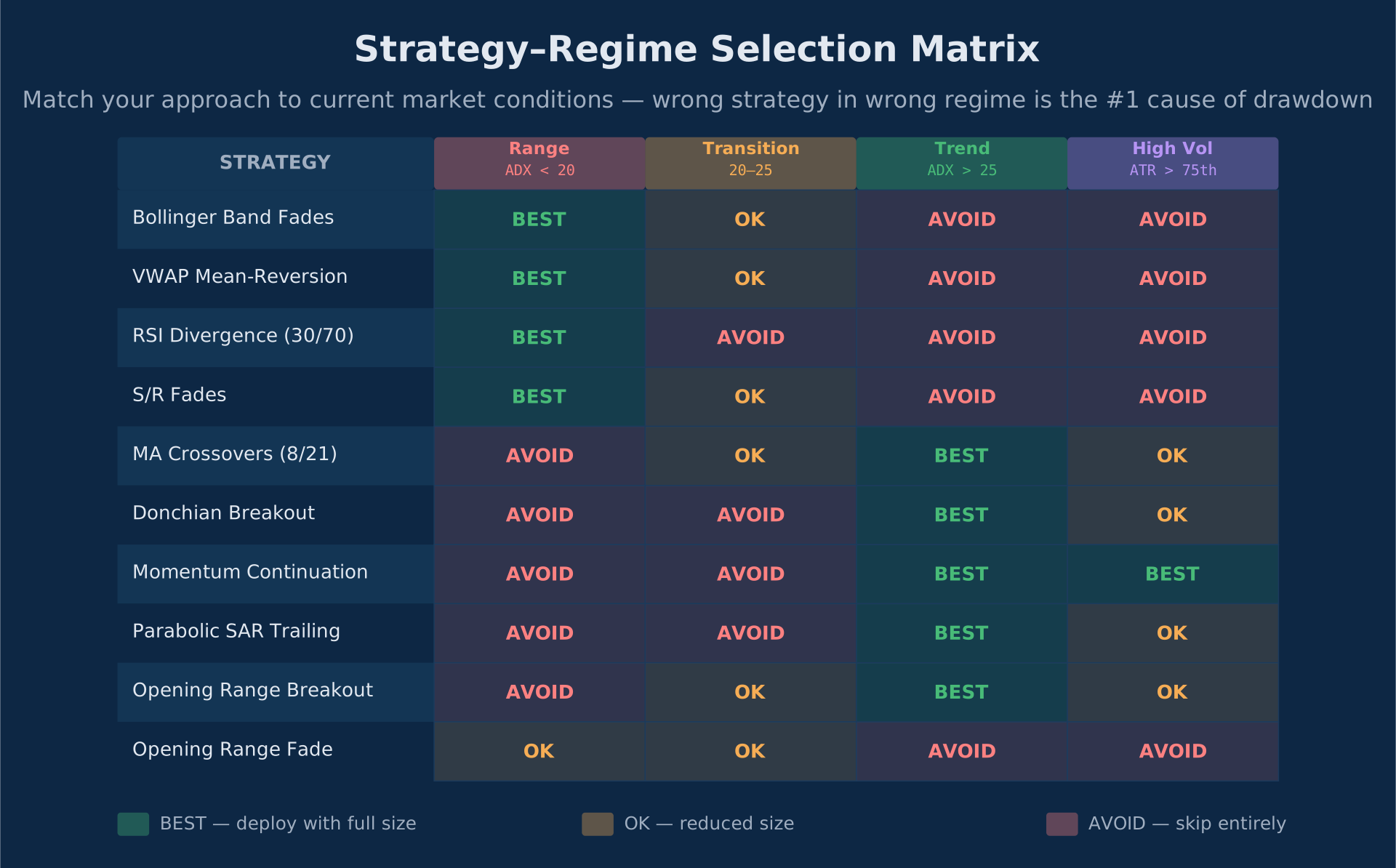
Once you've classified the regime, strategy selection becomes systematic. Have a pre-defined menu and know which strategies to activate in each regime — and which to shut off completely.
Ranging Regime (ADX < 20, ATR stable or contracting)
Mean-reversion is the primary edge. @iantg's observation holds precisely here: "If flat [50-period MA], assume we are ranging. The market is ranging 70% of the time."4 This is where your Bollinger Band fades, RSI divergence entries, and VWAP mean-reversion setups belong.
Specific setups for ranging ES: Sell the upper Bollinger Band (2 SD) when ADX is below 18 and ATR is below the 40th percentile. Target the VWAP or lower band, stop above the prior swing high. During overnight with ADX below 18, NQ upper-band sells show 70%+ win rates at 1:1 risk-reward.
Trending Regime (ADX > 25, ATR expanding)
Trend-following is the primary edge. Pullbacks to the 21 EMA are buying opportunities, not reversals to fade. This is where you deploy Donchian channel breakouts, MA crossovers, and parabolic SAR trailing approaches.
Key discipline: if ADX is above 30 and price pulls back to the 21 EMA, that's an entry — not a warning sign. Hesitation in a trending regime is as costly as aggression in a ranging one.
High Volatility Regime (ATR > 75th percentile)
High volatility requires strategy modifications, not switching. Reduce size 30-50%. Widen stops to 3-4x ATR. Avoid mean-reversion in the first 5 minutes of a volatility spike — excursions exceed normal Bollinger Band parameters by 2-3x.
As @FatTails documented in the PositionSizer thread: "My initial risk is 2.5 times the 50-period ATR... strategies need to adapt the stop loss size to volatility."7 The principle applies continuously — your ATR multiplier for stops should scale with percentile rank, not stay fixed at 2.5x regardless of conditions. And
10
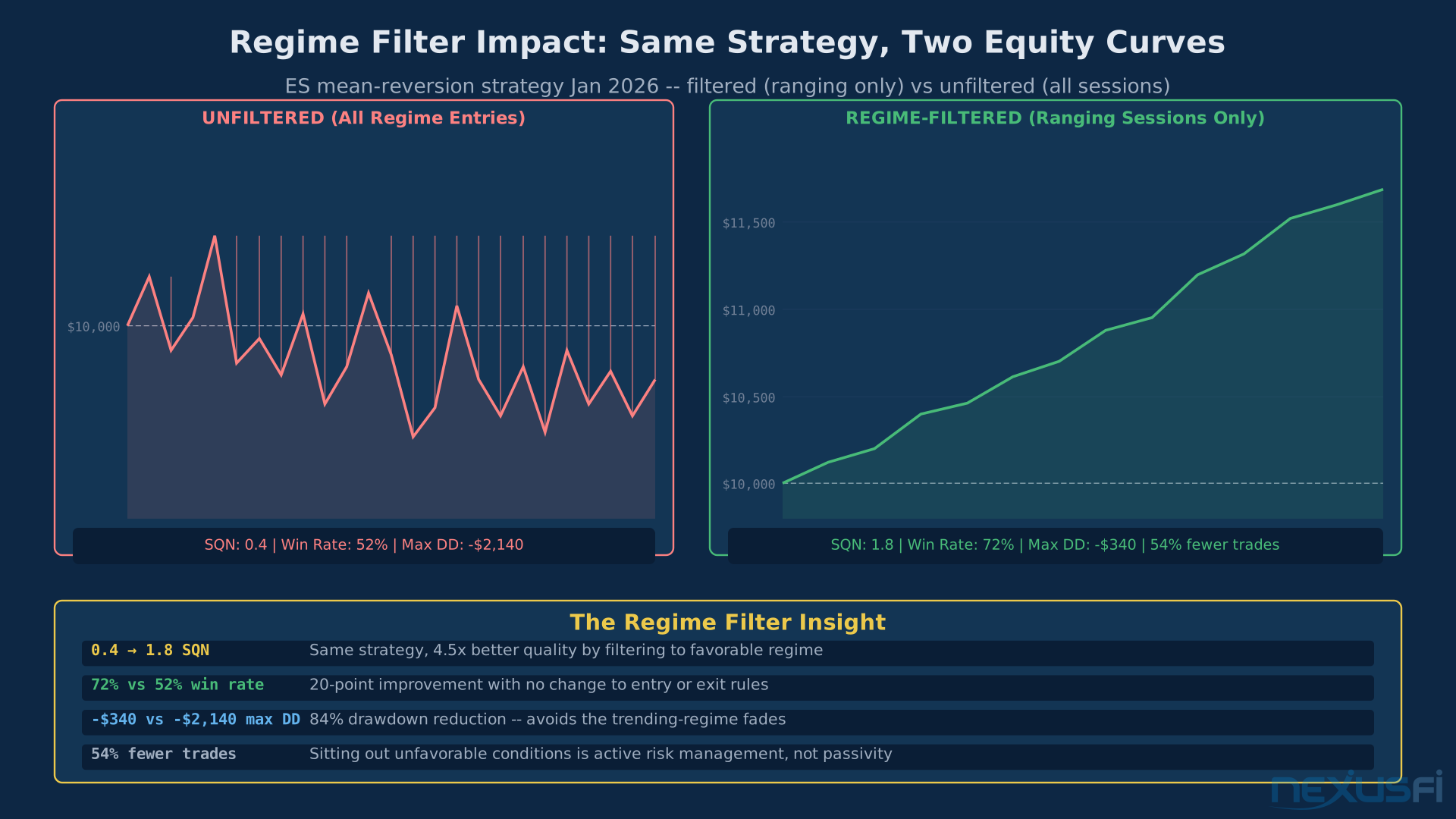
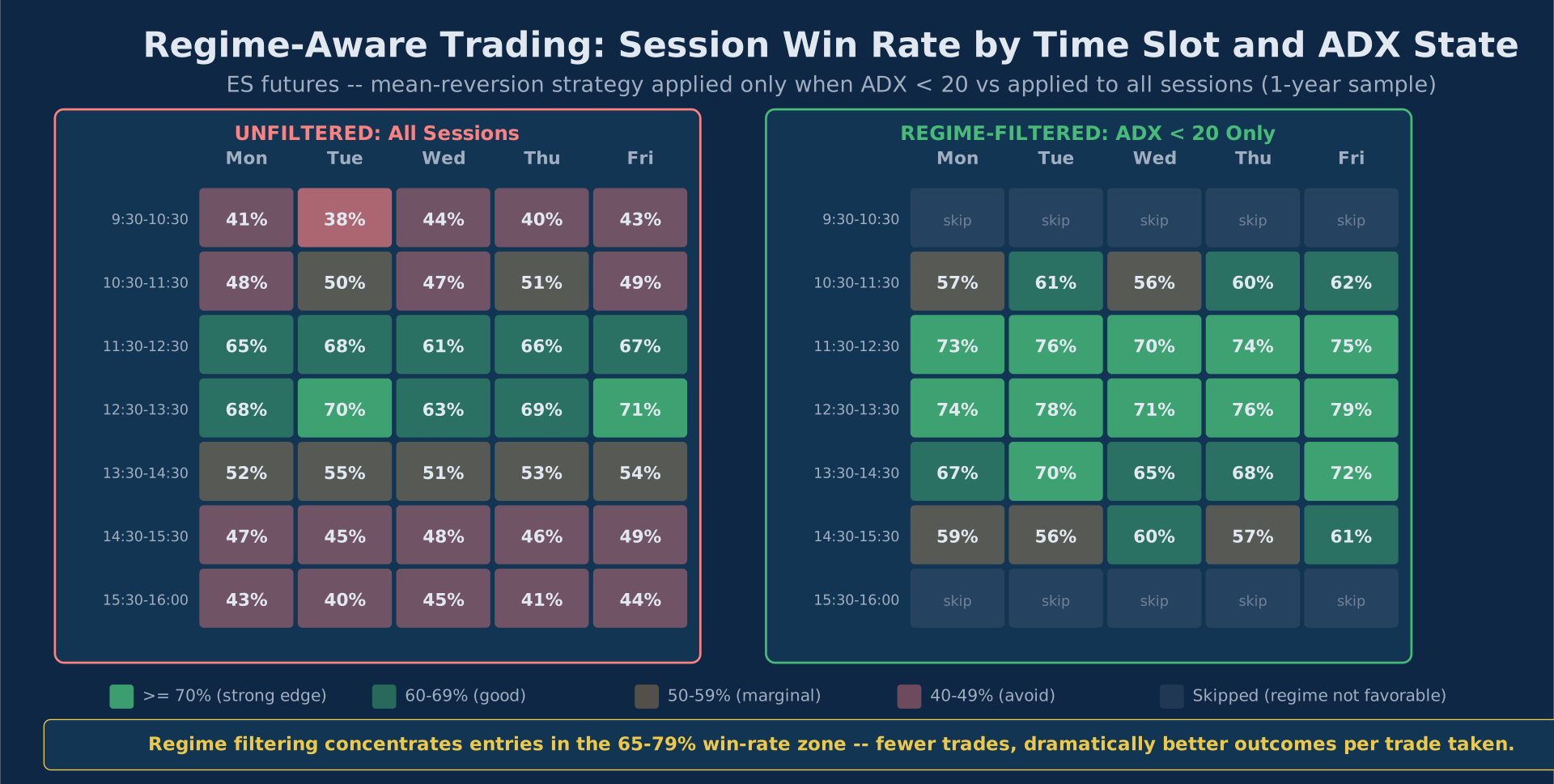
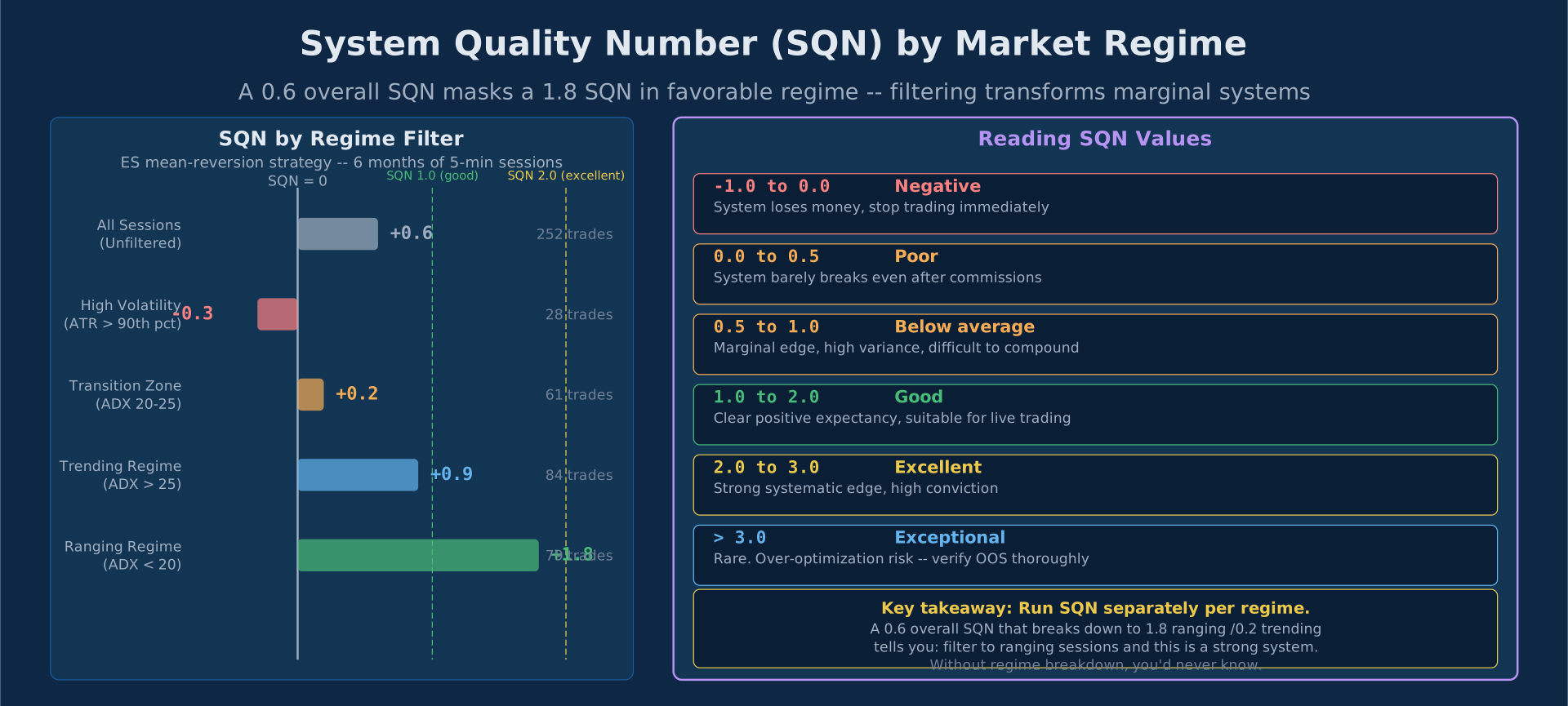
Regime filtering without changing strategy rules: A mean-reversion strategy producing SQN 0.4 across all sessions may produce SQN 1.8 when filtered to ranging sessions only. Run your backtest SQN separately by regime before concluding your system has no edge — the edge may be regime-specific and masked by unfavorable sessions.
Volatility Regime and Position Sizing #
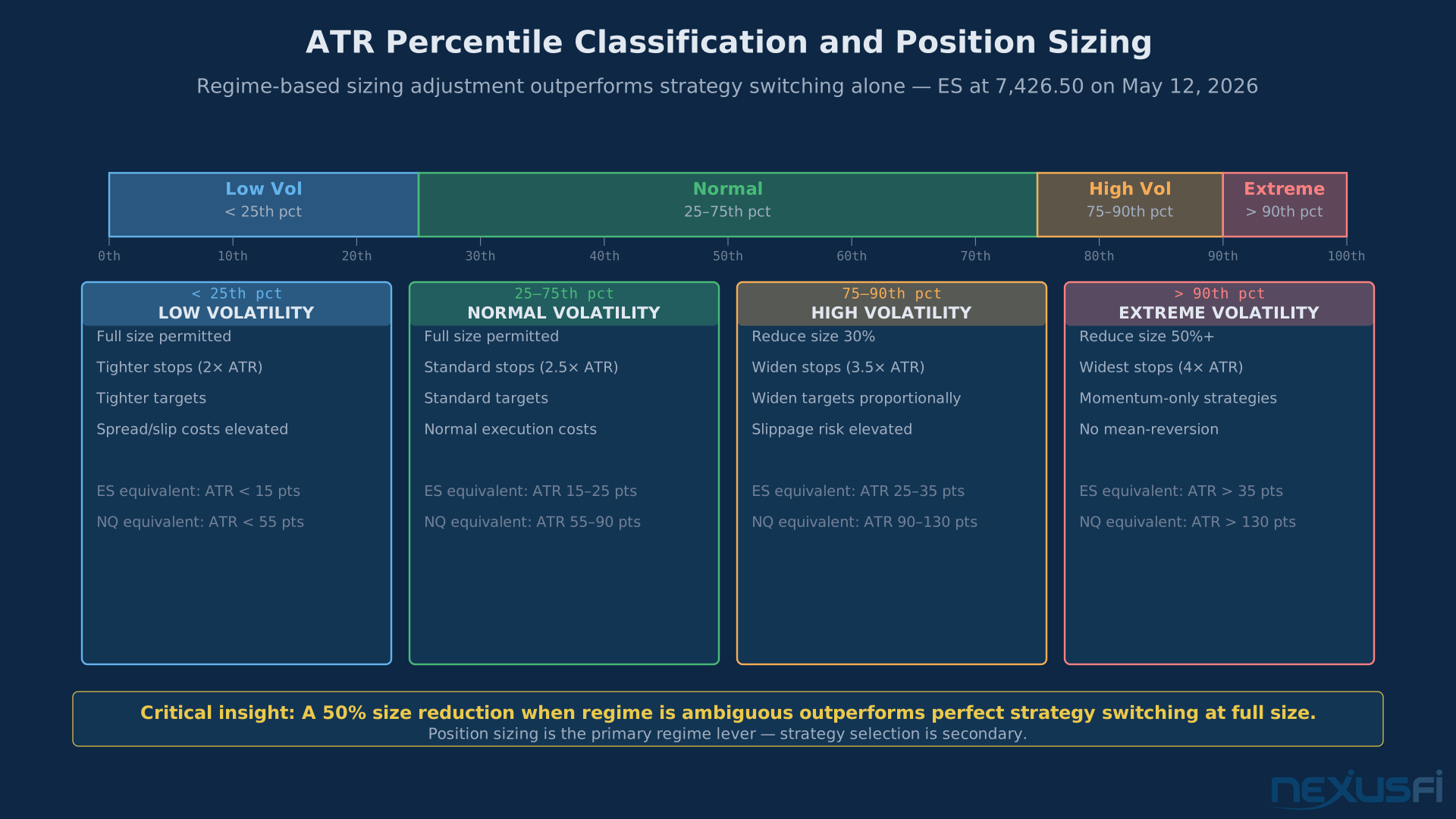
Position sizing adjustment matters more than strategy switching. A 50% size reduction in the transition zone beats perfect strategy selection at full size. Drawdown recovery math is brutal — a 50% loss requires a 100% gain to break even. Cutting size in the wrong regime prevents catastrophic losses.
The practical framework uses ATR percentile rank against a 60-day rolling window:
- ATR below 25th percentile (low vol): Full position size. Tighter stops (2x ATR) and targets. Spread and slippage costs proportionally higher -- factor into your expectancy calculation.
- ATR 25th-75th percentile (normal vol): Full position size. Standard stops (2-2.5x ATR). This is your baseline for most trading days.
- ATR 75th-90th percentile (high vol): Reduce position size by 30%. Widen stops to 3-3.5x ATR. Widen targets proportionally. Use limit orders where possible.
- ATR above 90th percentile (extreme vol): Reduce size 50%+. Widest stops (4x ATR). Momentum strategies only -- no mean-reversion.
Use percentile rank rather than fixed ATR values — an ATR of 25 on ES meant something different in 2015 than now. Percentile rank keeps classification strong across years.
Detecting Regime Transitions #
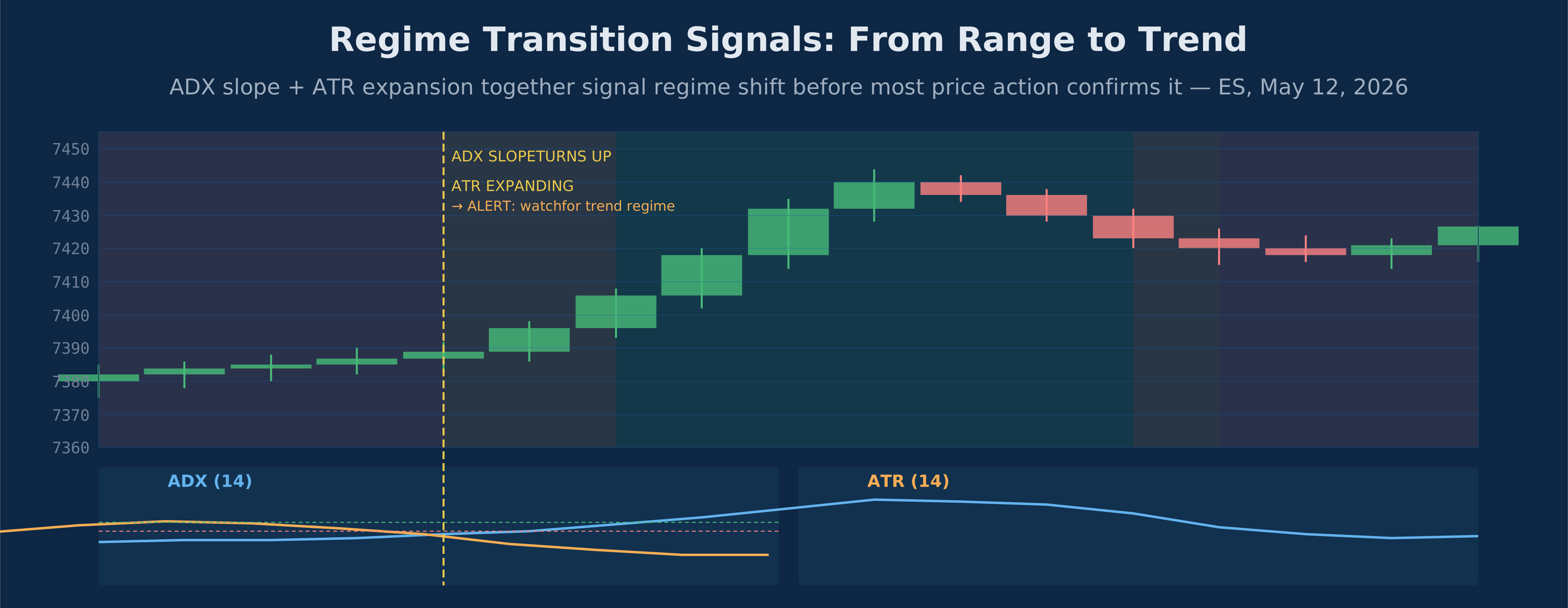
Most bad trades happen in the first bars of a regime shift. Two signals together provide early warning:
ADX slope turning positive. When ADX has been below 20 for multiple bars and then starts rising — even still below 20 — that's a potential trend emerging. Don't add new mean-reversion positions. Start tightening stops on existing range trades. Wait for confirmation (ADX above 20 and holding for 2-3 bars before switching strategies).
ATR expanding simultaneously. If ADX slope turns up and ATR percentile rank also rises (say, from 30th to 55th in a few bars), the probability of a regime transition is much higher. This combination — rising ADX slope plus expanding ATR — is the clearest pre-trend signal available from standard indicators.
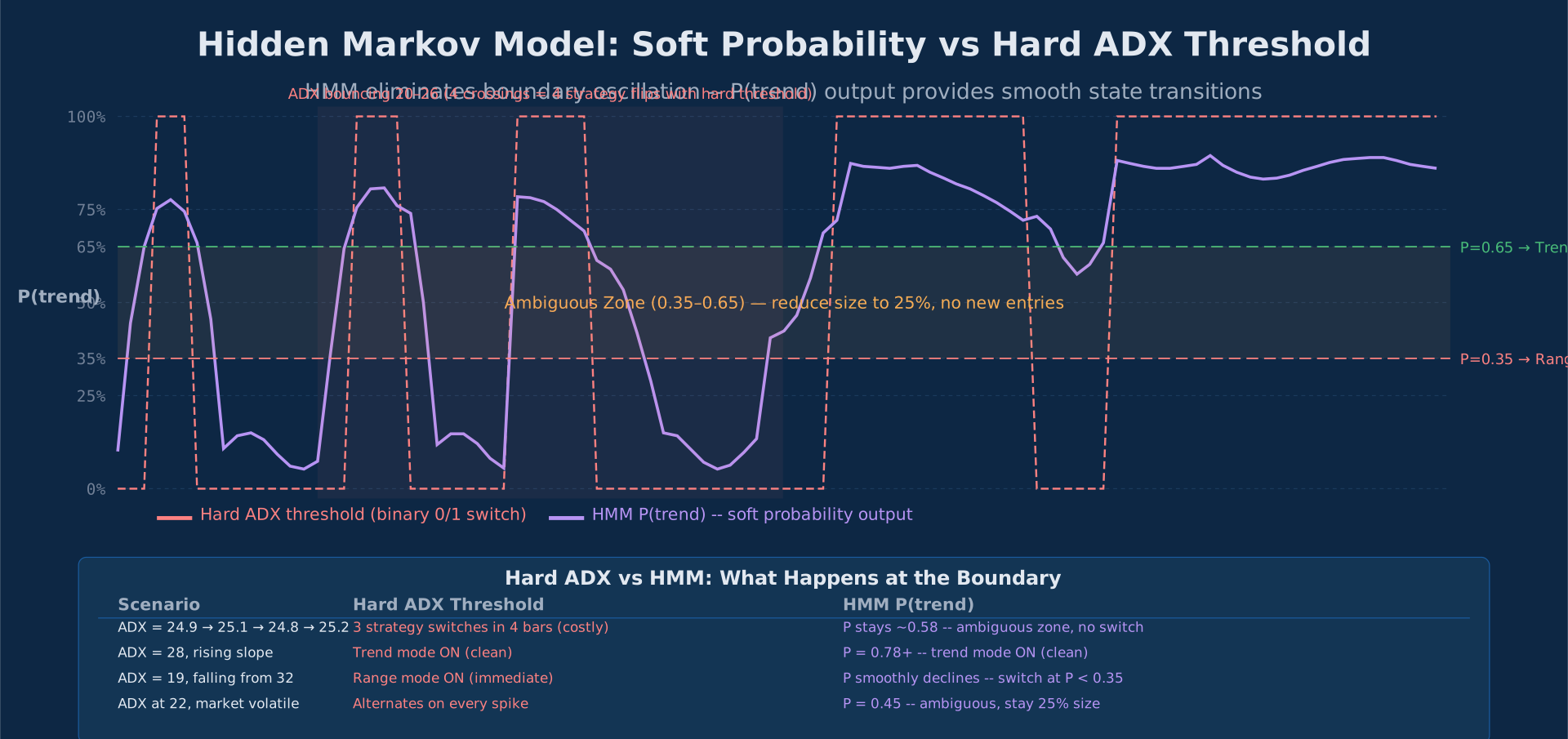
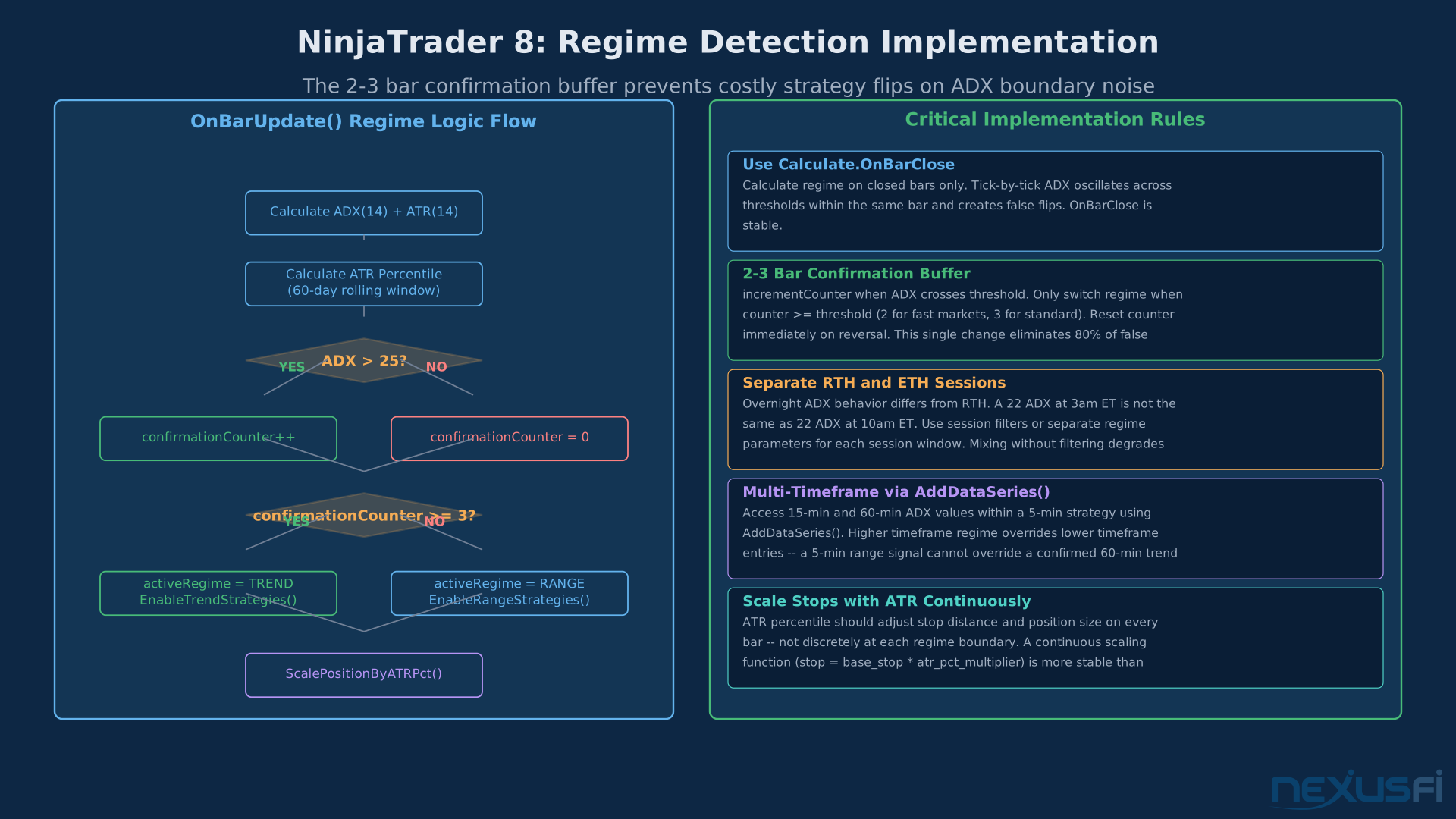
The anti-flicker rule: require the new regime to hold for 2-3 bars before switching strategies. False regime signals cluster near the 20 and 25 threshold levels — the confirmation buffer prevents costly strategy switches on noise, especially in the transition zone where ADX oscillates across boundaries repeatedly.
Multi-Timeframe Regime Alignment #
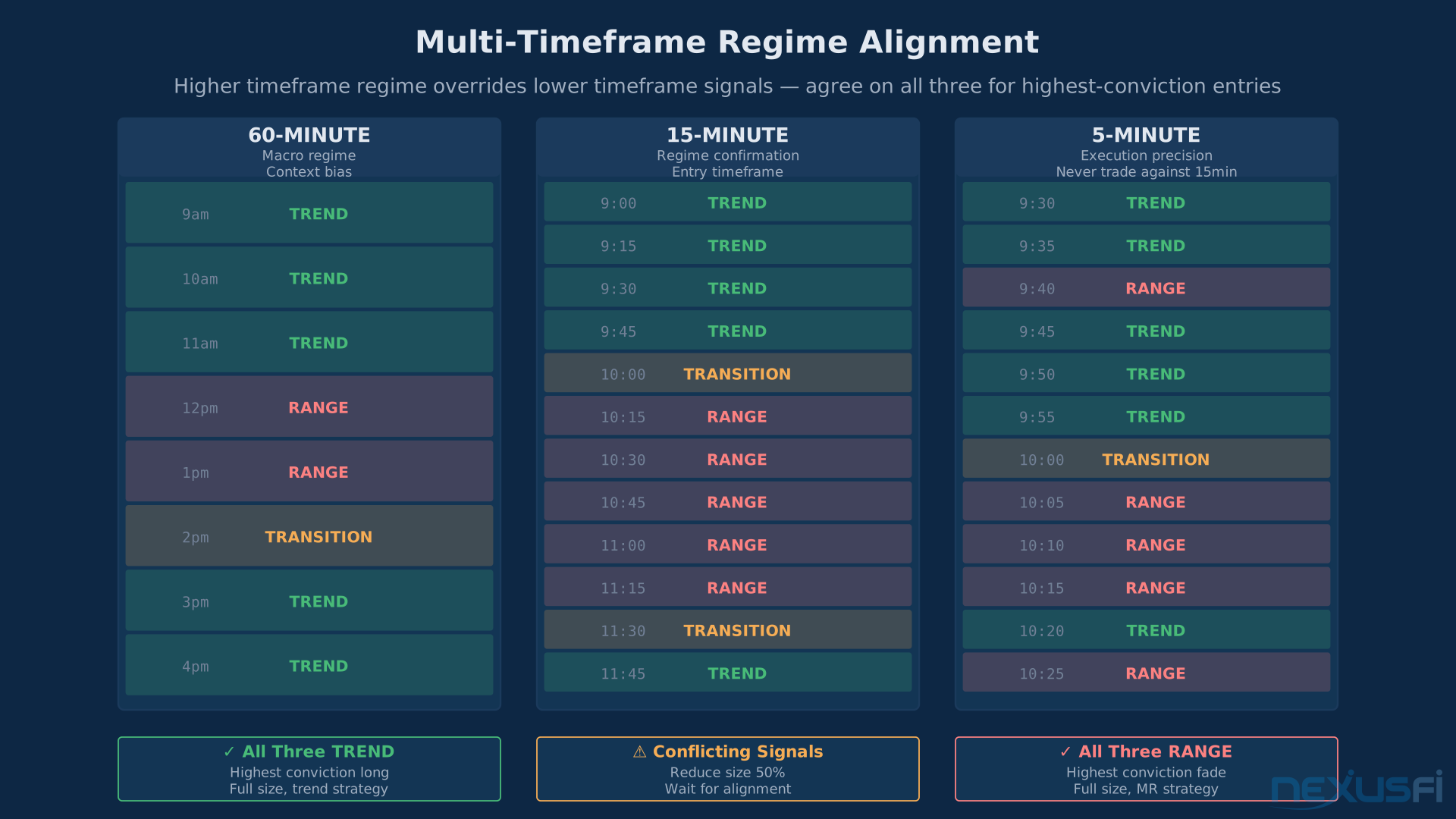
Multi-timeframe alignment produces the highest-conviction entries:
- 60-minute: Macro regime and directional bias. If the 60-minute is in a strong trend regime, your mean-reversion trades on the 5-minute are fighting the macro flow with much lower win rates.
- 15-minute: Regime confirmation. The primary entry timeframe. When the 15-minute agrees with the 60-minute regime, the setup has two-timeframe confirmation and can be traded with standard size.
- 5-minute: Execution precision. Never let 5-minute signals override 15-minute regime -- range signals on the 5-minute within a trending 15-minute are noise, not entries.
The practical rule: if both the 60-minute and 15-minute show trending, deploy trend-following on 5-minute entries. Conflict (60-minute trending, 15-minute ranging) — reduce 50% and wait. Full size only when all three timeframes agree.
The Layered Regime Framework #
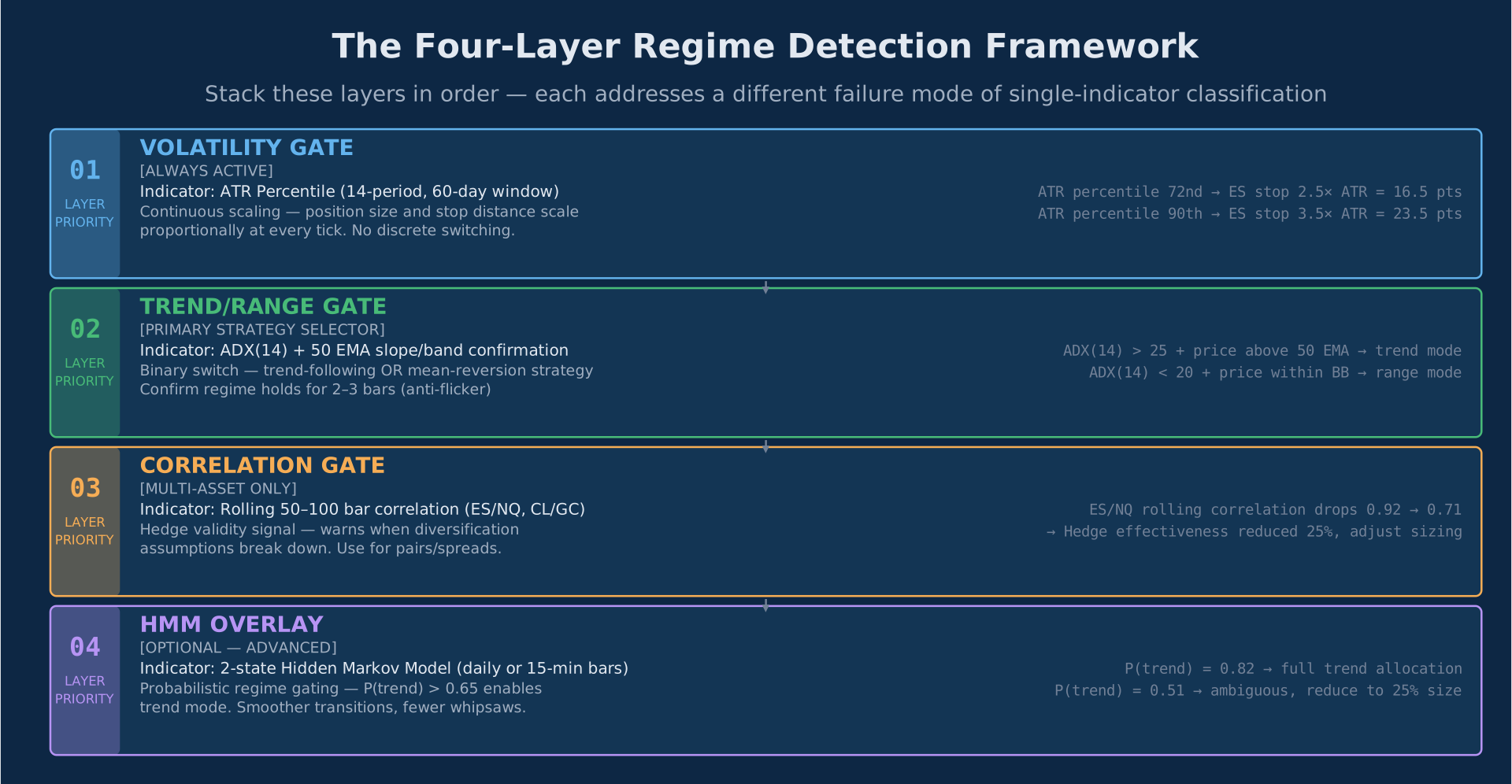
Four layers stacked in sequence. Each addresses a different failure mode — thresholds and parameters reference the detailed sections above:
- Layer 1 -- Volatility Gate (always active): ATR percentile rank (covered above) scales size and stops continuously. Always-on infrastructure, no switching required. See MAE analysis for regime-specific stop placement.
- Layer 2 -- Trend/Range Gate: ADX classification (covered above) with the confirmation buffer from Detecting Regime Transitions. Primary strategy selector -- determines trend-following vs mean-reversion activation.
- Layer 3 -- Correlation Gate (multi-asset only): Rolling correlation (Dimension 3 above) gates pairs and spread strategies. Skip for single-instrument traders.
- Layer 4 -- HMM Overlay (optional): Probabilistic estimation (detailed below). Smoother transitions than hard ADX thresholds. Requires external Python computation -- master Layers 1-3 first.
Platform Implementation #
NinjaTrader 8
NinjaTrader's C# framework includes ADX and ATR as built-in indicators. Key implementation rules:
- Use
Calculate.OnBarClosefor regime detection -- calculating on each tick creates unstable readings that oscillate across thresholds within the same bar and creates false flips - Implement the 2-3 bar confirmation buffer as a counter variable: increment when regime condition is met, reset when not, switch strategy only when counter reaches the threshold
- Be explicit about session times (RTH vs ETH) -- overnight session regime behavior differs much from regular trading hours, and mixing them without filtering degrades classification accuracy
- Multi-timeframe regime: use secondary time series (
AddDataSeries()) to access the 15-minute and 60-minute ADX/ATR values within the 5-minute execution strategy
Sierra Chart: ACSIL (C++) computes ADX, ATR percentile, and rolling correlation in a single pass, exporting regime state as a numeric value (0=range, 1=trend, 2=transition) with background color-coding by regime.
The Variance Ratio Test #
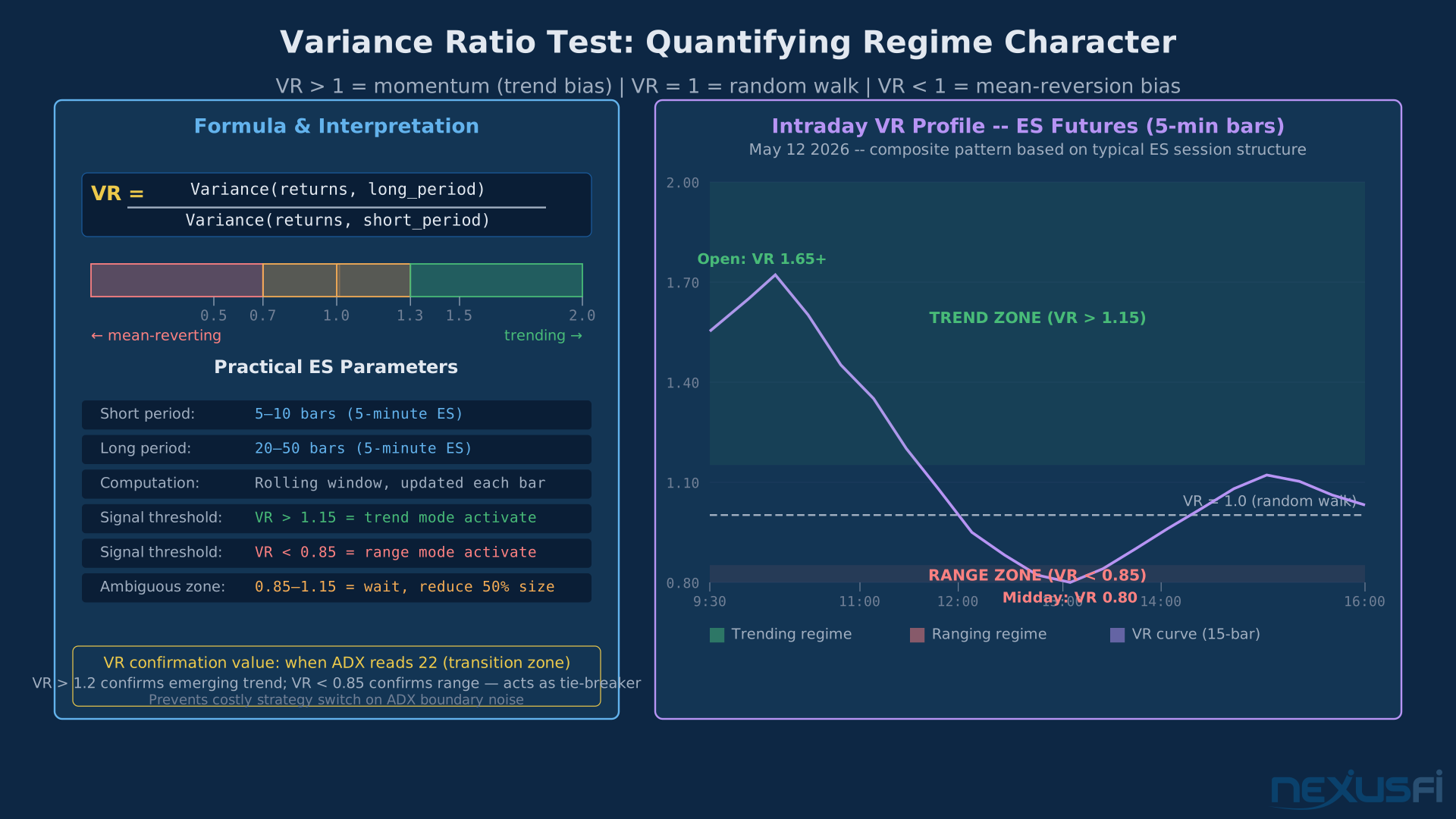
One underused but quantitatively sound method for distinguishing trending from mean-reverting markets is the variance ratio test, first rigorously formalized by Lo and MacKinlay in 198813:
VR = Variance(returns, long_period) / Variance(returns, short_period)
When VR exceeds 1, returns exhibit positive autocorrelation — momentum and trend-following strategies have a statistical edge. When VR approaches 1, returns are close to random walk — neither trending nor mean-reverting clearly. When VR falls below 1, returns show negative autocorrelation — mean-reversion strategies have the statistical edge.
Typical parameters: short period 5-10 bars, long period 20-50 bars, calculated on 5-minute ES data. The VR is most useful when ADX is hovering near the 20-25 threshold and you need a tie-breaker. @SodyTexas documented four methods for market type classification — ADX, Efficiency Ratio, Price Density, and Fractal Dimension — the VR adds a fifth with direct statistical grounding in return autocorrelation.11
Regime Detection and System Quality #
One of the most powerful applications of regime classification is analyzing your System Quality Number (SQN) separately by regime. Most systems with positive overall SQN are strong in one regime and neutral-to-negative in others — the aggregate masks the damage from unfavorable conditions.
Run your backtest statistics filtered by regime state:
- What is your SQN when ADX was above 25 at entry? When below 20?
- What is your win rate and expectancy in high-volatility vs low-volatility conditions?
- Which session windows produce the best results for each strategy type?
The answers often reveal a 0.6 overall SQN decomposes into 1.8 in the favorable regime and -0.4 in the unfavorable one. Filtering to the favorable regime transforms a marginal system into a strong one without changing any rules.
Citations #
- tigertrader. "Trend following vs mean reversion discipline by regime." Spoo-nalysis, NexusFi. https://nexusfi.com/showthread.php?t=13452&p=503500#post503500
- tigertrader. "Range Day: oscillating around average price, low volatility." Spoo-nalysis, NexusFi. https://nexusfi.com/showthread.php?t=13452&p=485497#post485497
- FatTails. "ADX directional movement system, J. Welles Wilder 1978." Building Blocks of a Trading System, NexusFi. https://nexusfi.com/showthread.php?t=6169&p=70895#post70895
- iantg. "If flat 50-period MA, assume ranging -- market ranges 70% of the time." Making a Living with the Micros, NexusFi. https://nexusfi.com/showthread.php?t=56948&p=841338#post841338
- iantg. "ADX claims to tell when market is trending or not -- does a decent job." Algo Trading, NexusFi. https://nexusfi.com/showthread.php?t=38760&p=558400#post558400
- tigertrader. "True trend days: 3-4 times per month in ES, exception not rule." I have no edge, NexusFi. https://nexusfi.com/showthread.php?t=54919&p=806961#post806961
- FatTails. "2.5x ATR stop sizing -- strategies must adapt stop size to volatility." PositionSizer for NinjaTrader, NexusFi. https://nexusfi.com/showthread.php?t=2361&p=69126#post69126
- mokodo. "HMM dominant regime as intraday bias overlay -- Viterbi for state prediction." Matlab / Markov, NexusFi. https://nexusfi.com/showthread.php?t=23703&p=282519#post282519
- WolfgangAssets. "ES day types: Normal Variation 54%, Trend Days 16%, ~1 per week." Statistically, How Often Do Trends Occur?, NexusFi. https://nexusfi.com/showthread.php?t=44002&p=671229#post671229
- tigertrader. "When vol doubles, halve contracts and double stop width." Spoo-nalysis, NexusFi. https://nexusfi.com/showthread.php?t=13452&p=536536#post536536
- SodyTexas. "Four market type methods: ADX, Efficiency Ratio, Price Density, Fractal Dimension." Tharp Market Type Classification, NexusFi. https://nexusfi.com/showthread.php?t=56971&p=840974#post840974
- Wilder, J.W. (1978). New Concepts in Technical Trading Systems. Trend Research.
- Lo, A.W. and MacKinlay, A.C. (1988). "Stock Market Prices Do Not Follow Random Walks: Evidence from a Simple Specification Test." Review of Financial Studies, 1(1), 41-66.
Knowledge Map
Go Deeper
Build on this knowledgeReferences This Article
Articles that build on this topicCitations
- — Spoo-nalysis ES e-mini futures S&P 500 (2014) 👍 112“Trend following approaches should be stopped during sideways markets -- mean-reverting methodologies should not be used during trending markets.”
- — Spoo-nalysis ES e-mini futures S&P 500 (2013) 👍 87“Range Day -- the market will oscillate around an average price value with relatively low volatility through the day.”
- — Building Blocks of a Trading System (1) - Trend Filter (2011) 👍 241“One of the best known trendfilters is the directional movement system, presented in 1978 by J. Welles Wilder Jr.”
- — Making a Living with the Micros (2021) 👍 34“If flat [50-period MA], assume we are ranging. The market is ranging 70% of the time.”
- — Algo Trading (2018) 👍 19“ADX: This is the only indicator I know of that claims to tell when the market is trending or not. It does a decent job.”
- — I have no edge - Should I throw in the towel? (2020) 👍 73“True trend days are the exception rather than the rule. They probably occur about once every 6-7 days or 3-4 times a month.”
- — PositionSizer for NinjaTrader (2011) 👍 156“My initial risk is 2.5 times the 50-period ATR. Strategies need to adapt the stop loss size to volatility.”
- — Matlab / Markov (2012) 👍 2“A dominant regime can very often be identified using HMM output, which could be used as a bias overlay for intraday trading.”
- — Statistically, How Often Do Trends, Range, and choppy days occur? (2018) 👍 6“The biggest day type for the ES is the Normal Variation at 54%. Trend Days have been happening about 16% of the time -- roughly 1 trend day per week.”
- — Spoo-nalysis ES e-mini futures S&P 500 (2015) 👍 9“When volatility kicks up I reduce my size and widen the slack I allow on the trade. If trading 48 contracts with 5 points of risk and vol doubles, I trade 24 with 10 points of risk.”
- — Tharp Market Type Classification (2021) 👍 4“Four methods stand out for calculating market types: ADX, Efficiency Ratio, Price Density, and Fractal Dimension.”
- Wilder, J.W. — New Concepts in Technical Trading Systems (1978)
- Lo, A.W. and MacKinlay, A.C. — Stock Market Prices Do Not Follow Random Walks: Evidence from a Simple Specification Test (1988)