



The Psychology of Drawdowns: How Losing Money Changes Who You Are at the Screens
Overview #
Every trader who survives long enough will face a drawdown that makes them question everything — their edge, their discipline, their decision to trade in the first place. The math of drawdowns is straightforward: account equity drops below its peak. But the psychology of drawdowns is where careers actually end. Not because the numbers got too ugly, but because the trader's behavior changed in response to those numbers.
This article covers the behavioral and cognitive side of drawdowns — how they alter your thinking, warp your risk perception, erode your process, and sometimes destroy accounts that would have recovered just fine if the trader had stayed out of their own way. If you're looking for position sizing formulas, stop placement math, or risk-of-ruin calculations, those live in the Risk Management and Drawdown Management articles. This article addresses how drawdowns change beliefs and behavior.

Key Concepts #
Drawdown psychology is the study of how traders interpret, internalize, and respond to adverse P&L trajectories — especially under the leverage, daily mark-to-market, and volatility conditions specific to futures trading. The same 10% drawdown can produce radically different behaviors depending on how the trader interprets it.
The Silent Drawdown describes the dangerous limbo period where a trader has mentally abandoned their process but hasn't yet accepted the account damage. They're still placing trades, still at the screens, but their decision-making has disconnected from their plan. This is the bridge between professional discipline and catastrophic blowup.
Trust Drift is the systematic trader's primary failure mode during drawdowns — the growing urge to override, tinker with, or disable a model that's performing within its historical variance but feels broken because it's currently losing.
Discretionary Creep is the discretionary trader's equivalent — the slow erosion of rules, one justified exception at a time. "Just this once" becomes the standard operating procedure.
Emotional currency is the hidden cost of drawdowns beyond the dollar amount. A drawdown depletes not just capital but confidence, clarity, and the psychological bandwidth needed to trade well the next day.
Permission structures are the internal justifications traders create to break their own rules during drawdowns. "I can size up because I'm due for a win." "I can skip my stop because this setup is different." The drawdown doesn't just damage the account — it damages the trader's relationship with their own process.
The Emotional Timeline: Cyclical, Not Linear #
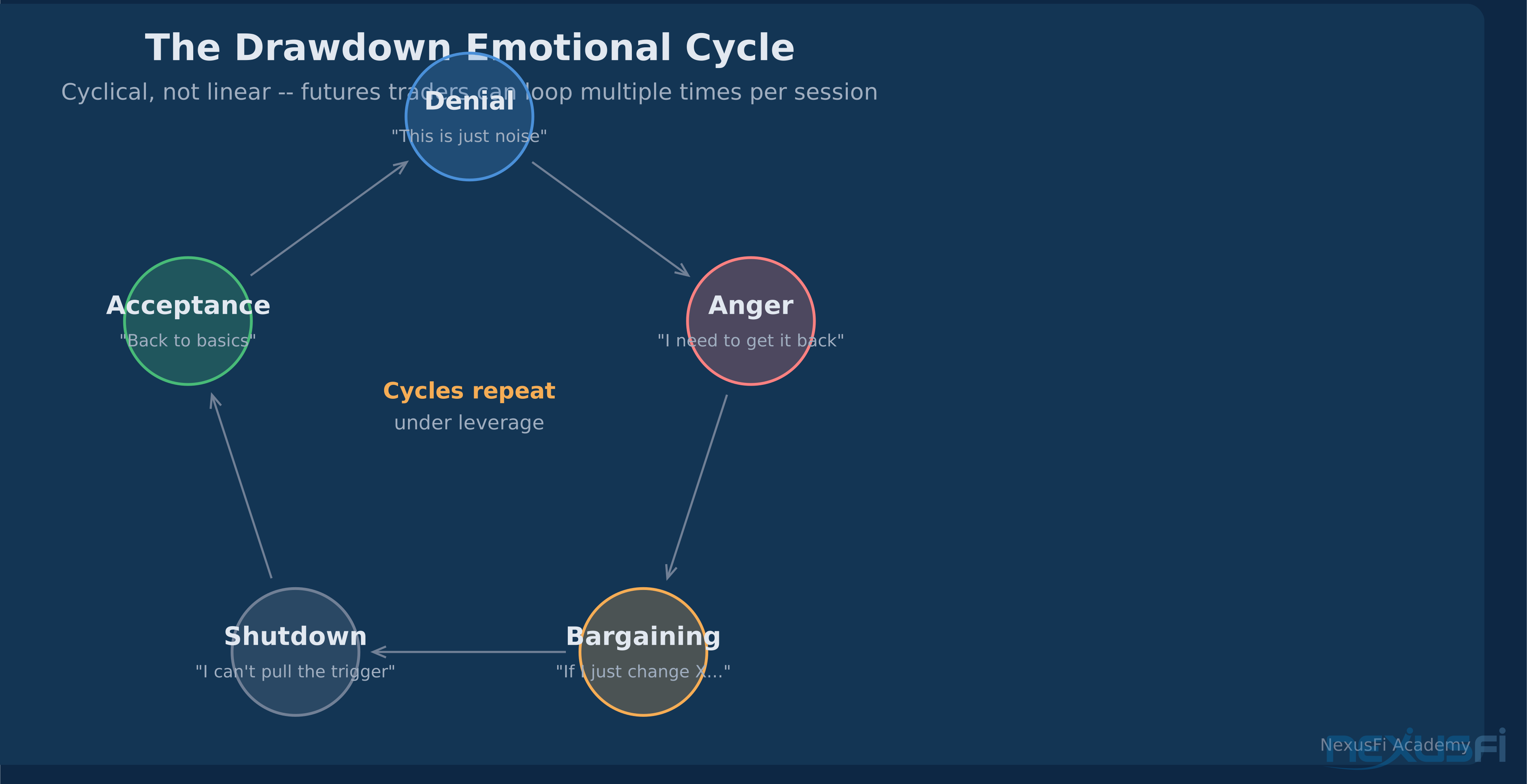
The classic model maps drawdown emotions to something like grief stages: denial, anger, bargaining, depression, acceptance. There's truth in the framework, but the trading-specific version is messier than that. In futures, where leverage amplifies everything and daily mark-to-market makes the P&L impossible to ignore, these stages don't march in order. They cycle. An experienced trader can hit denial, anger, and numbness in a single session, then restart the entire cycle the next morning when the overnight gap goes against them.
Denial sounds like: "This is just noise. My edge still works in this regime." The trader ignores deteriorating tape reading, widens stops mentally, or starts averaging into losers because "it always comes back." The denial phase is dangerous precisely because it feels rational. The trader can construct a perfectly logical narrative for why the losses don't count — it's a choppy week, the Fed changed everything, the algo just needs more time.
Anger and retaliation show up as revenge trading — reactive entries, oversized positions, chasing to "get it back."
Bargaining manifests as process dilution: "If I just change my timeframe / indicator / entry criteria, I'll rescue this." The trader starts tinkering with a system that might be working exactly as expected. The bargaining phase produces the most insidious damage because each small adjustment feels like problem-solving. In reality, it's the start of rule drift.
Shutdown is where the trader freezes. They see setups but can't pull the trigger. They sit at the screens doing nothing, or they stop showing up entirely.
Acceptance doesn't mean giving up. It means re-engaging process without the emotional charge. Reducing size, returning to basics, executing the plan regardless of recent outcomes.
He treated a $36,000 drawdown in three days as "a significant event" that deserved focused attention and a return to fundamentals — not panic, not revenge, but disciplined recovery.
The critical insight is that these stages are not something you go through once. In futures trading, with its intraday volatility and leverage, the cycle can repeat multiple times per week during an extended drawdown. Recognizing which stage you're in is the first step toward not letting it dictate your next trade.
How Drawdowns Distort Decision-Making #
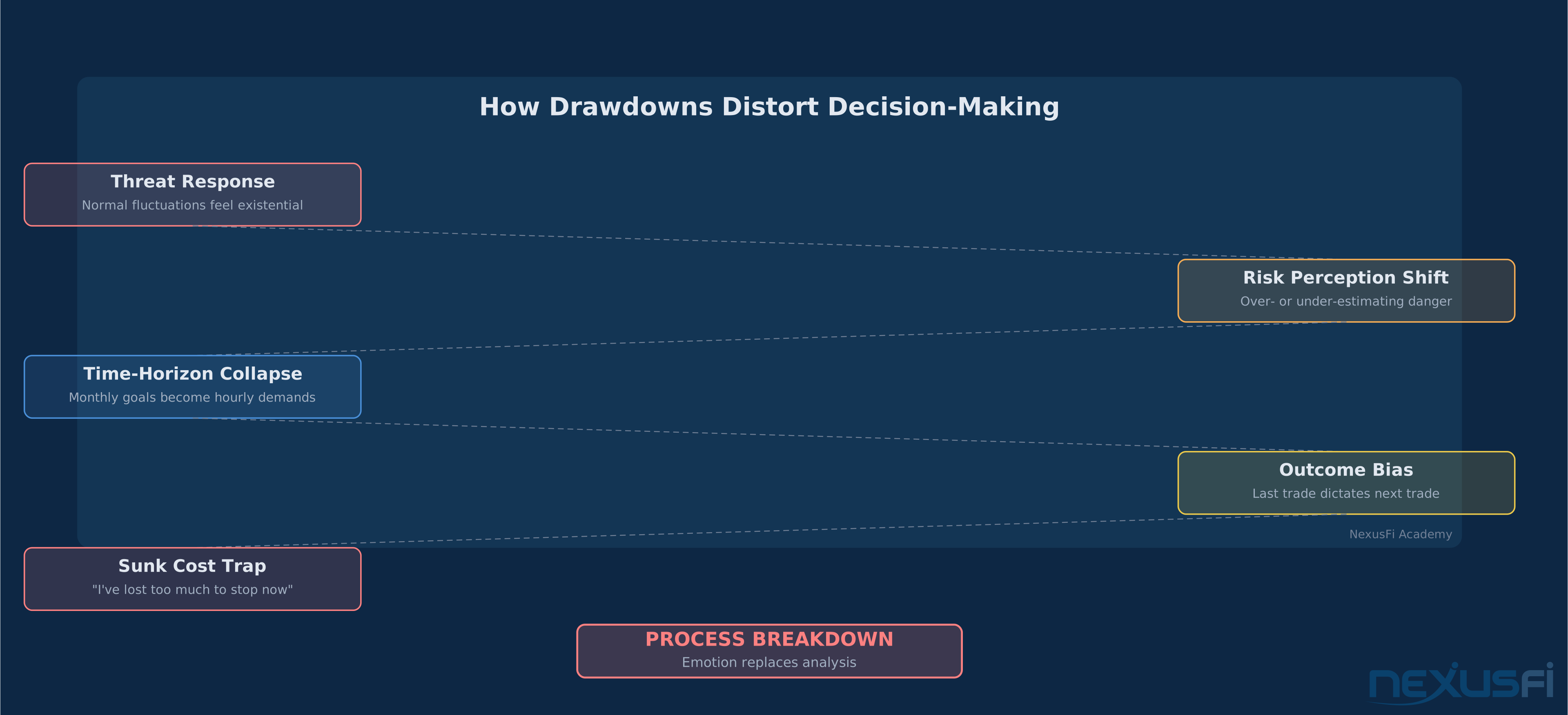
Drawdowns don't just hurt your P&L. They systematically degrade the cognitive processes that produced your edge in the first place. Here's how the distortion works:
Threat response and cognitive narrowing. Under drawdown stress, the brain shifts from its proactive, analytical mode into a defensive threat-detection mode. Normal market fluctuations start looking like existential danger. This is what Nobel laureate Daniel Kahneman describes in Thinking, Fast and Slow as the hijacking of deliberate, analytical thinking (System 2) by fast, reactive processing (System 1) — under perceived threat, the brain's evolved survival mechanisms override the careful probabilistic reasoning that good trading requires. The trader stops reading the tape and starts reacting to it. The ability to hold multiple scenarios simultaneously — essential for good futures trading — collapses into binary thinking: "Is this trade going to save me or finish me off?"
Risk perception distortion. Drawdowns push risk perception in both directions simultaneously, depending on the trader and the moment. Some traders start underestimating risk — "I'm due for a win, the odds are in my favor now" — and size up recklessly. Others start overestimating risk — "Everything I touch turns to garbage" — and either undersize so severely that recovery becomes mathematically impractical, or stop trading entirely. Neither response reflects actual market conditions.
Time-horizon collapse. During a drawdown, the trader's evaluation window shrinks. Monthly expectations become daily demands. "Am I profitable this session?" replaces "Am I following my process?" Every tick against the position feels like confirmation of failure, even when the trade is well within its expected adverse excursion.
Outcome bias on overdrive. The last trade starts dictating the next trade. A winning trade during a drawdown produces an outsized confidence boost — "I'm back!" — leading to position size escalation. A losing trade produces outsized despair. The trader stops evaluating trade quality and starts evaluating trade results, which is exactly backward.
The sunk cost trap. "I've already lost $8,000 this week, I can't stop now." The drawdown itself becomes a justification for continued risk-taking.
The result: a $15,000 drawdown became an account blowup.
The Identity Crisis: When P&L Becomes Self-Worth #
This is where drawdowns get genuinely dangerous. Not because of the money, but because of what the money represents to the trader's sense of self.
In futures trading, leverage and daily mark-to-market create an immediate, visceral scoreboard. Every session ends with a number that feels like a grade. Red days become incompetence verdicts. Green days become validation of everything you are as a trader and as a person. When that scoreboard goes deeply negative for an extended period, the trader isn't just losing money — they're losing their identity. Stanford psychologist Carol Dweck's research on mindsets explains the mechanism: traders with what Dweck calls a "fixed mindset" — the belief that trading ability is innate and static — experience drawdowns as evidence of permanent inadequacy, while those with a "growth mindset" treat drawdowns as painful but informative feedback. The fixed mindset trader asks "Am I a good trader?" The growth mindset trader asks "What can I learn from this?"
The behavioral consequences of identity-linked P&L are severe:
Fear of admitting mistakes. The trader holds losers longer because closing the trade makes the loss "real" and by extension makes them a "loser." The unrealized loss feels like it still has a chance. The realized loss is a permanent stain.
Ego trades. Positions taken not because the setup is there, but because the trader needs to prove something — to themselves, to their journal, to the market. These trades typically happen around key psychological levels in the account equity, not key levels in the market.
Escalating commitment disguised as conviction. The trader adds to a losing position not because the thesis strengthened, but because admitting they were wrong on the original entry would threaten their self-concept. "I'm doubling down because I believe in this trade" is often code for "I can't accept being wrong about this."
The antidote is separating the trader from the trading — a principle explored in depth in the Trader Identity and Self-Worth Separation article. @lancelottrader figured this out through a deliberate practice: "How much better would I be and how much more pleasant an experience would it be if I just divorced myself from the outcome of these trades while live?... So every morning I read a little essay I wrote about how I will have no fear of losing and no anger when losing..just acceptance."
Research on expert performance across domains shows that sustainable performers evaluate process, not outcomes. A surgeon doesn't judge their skill by whether the patient survives a high-risk procedure — they judge it by whether they made the right decisions with the information available. Trading works the same way. The drawdown is a P&L event. Whether you followed your process is a separate question entirely.
Systematic vs. Discretionary: Different Traders, Different Failure Modes #
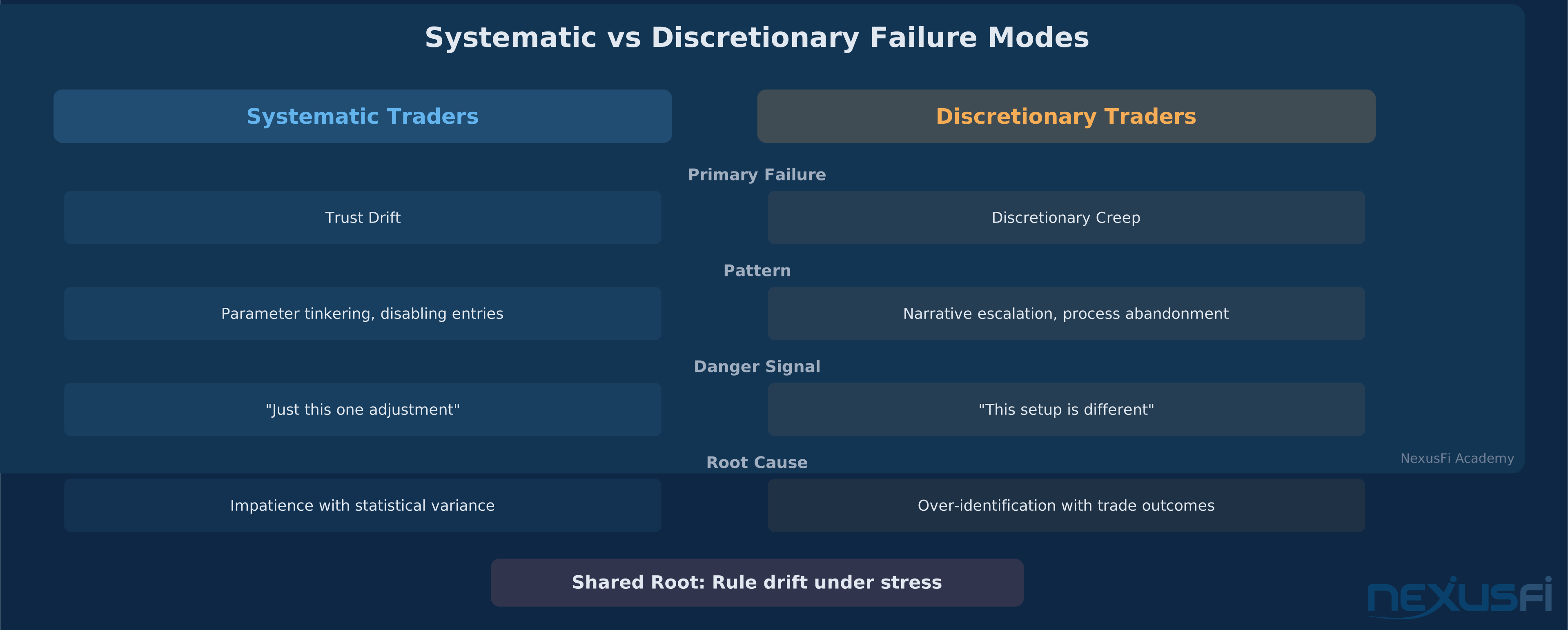
Every trader experiences drawdown psychology, but the failure modes look different depending on trading style. Understanding your specific vulnerability is half the battle.
Systematic Traders: Trust Drift #
The systematic trader's edge lives in the model. They've backtested, optimized, and validated. They know drawdowns are statistically inevitable. They've seen them in the equity curves. And yet — when the drawdown arrives in real time with real money, something shifts.
@kevinkdog laid this out with precision: "When people look at hypothetical equity curves, they imagine themselves in scenario #1 — you go on a cruise for years and come back to see $25K profit. But reality is scenario #2 — you look at the equity curve every week. TOTALLY different feeling, for the same end results."
Trust Drift happens incrementally:
- First, you start checking the equity curve more frequently than your system's intended evaluation period.
- Then you start second-guessing individual entries: "The model took that trade, but I wouldn't have."
- Then you start skipping entries: "I'll let this one pass and see if it would have worked."
- Then you start "temporarily" adjusting parameters: "Just a small tweak to the moving average period."
- Then you've abandoned the system while telling yourself you're "optimizing" it.
The irony is brutal: the systematic trader's entire edge depends on consistent execution across a large sample of trades. Every skipped entry, every manual override, every parameter tweak during a drawdown corrupts the very sample that validates the edge. The trader who overrides their system during a drawdown is destroying the statistical foundation they spent months building. The Trading System Architecture article covers how properly constructed systems are designed to weather these inevitable drawdown periods without manual intervention.
Discretionary Traders: Discretionary Creep #
The discretionary trader's edge lives in their judgment — reading the tape, interpreting context, sizing entries based on conviction. During a drawdown, that judgment becomes contaminated.
Discretionary Creep works through a series of "just this once" exceptions:
- "My rules say wait for confirmation, but this time the setup is obvious enough to enter early."
- "My daily max loss is $2,000, but I'm only $500 over and this next setup is perfect."
- "I normally trade 2 contracts, but I need to make up yesterday so I'll take 4."
Each exception feels reasonable in isolation. Accumulated over a drawdown period, they represent complete process abandonment. The trader hasn't decided to change their rules — they've just stopped following them while maintaining the fiction that the rules still apply.
The core vulnerability is this: discretionary trading has more decision points than systematic trading. Each decision point is a potential entry point for emotion during a drawdown. The more decisions you make per session, the more opportunities drawdown psychology has to corrupt your process.
The Unifying Pattern #
Both systematic and discretionary traders share the same root failure: rule drift under stress. The systematic trader drifts by overriding their model. The discretionary trader drifts by expanding their exceptions. Both are responding to the same psychological pressure: the drawdown threatens their identity as a competent trader, and modifying the rules provides the illusion of regaining control.
Recovery Psychology: The Most Dangerous Phase #
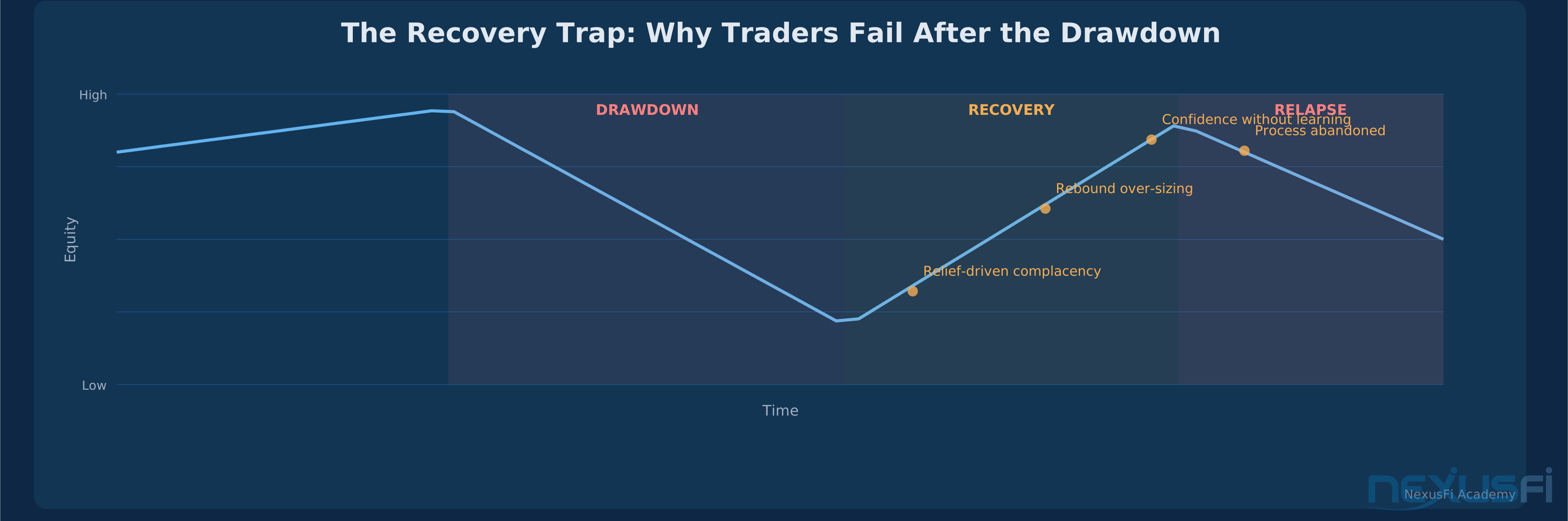
Here's where most trading psychology content stops too early. The drawdown itself gets all the attention. But the recovery phase — when the P&L starts climbing back toward the high-water mark — is where some of the most destructive behavior actually occurs.
Relief-driven complacency. "We're past it." The moment the equity curve turns up, the trader exhales. Vigilance drops. Rules that were followed religiously during the crisis start feeling optional again. The trader forgets that the same conditions that caused the drawdown could repeat at any time.
Rebound risk. The trader who carefully reduced size during the drawdown now rushes back to full size — or beyond it — to accelerate recovery. This creates a spring-loaded revenge pattern: they're technically following their rules (the system says enter here), but they're doing it at a size that reflects their emotional need to "get back to even" rather than their risk management framework.
Confidence without learning. The recovery gets attributed to skill: "I knew my edge was real." But the recovery might just be mean reversion, a favorable regime shift, or plain variance. If the trader doesn't examine what actually caused the drawdown and what actually caused the recovery, they've learned nothing — and they'll repeat the cycle.
Avoidance of review. This is counterintuitive but consistent across trading journals on NexusFi: traders are most likely to stop journaling and reviewing their trades right after a recovery. The relief kills the introspective drive exactly when it's most valuable. The drawdown period produces tons of journal entries. The recovery produces almost none.
The key phrase there is "on a smaller scale." Recovery psychology works when the drawdown and recovery are contained within the trader's risk parameters. It becomes destructive when the recovery is fueled by desperation-sized positions that happened to work out.
Position Sizing Beliefs Under Stress #
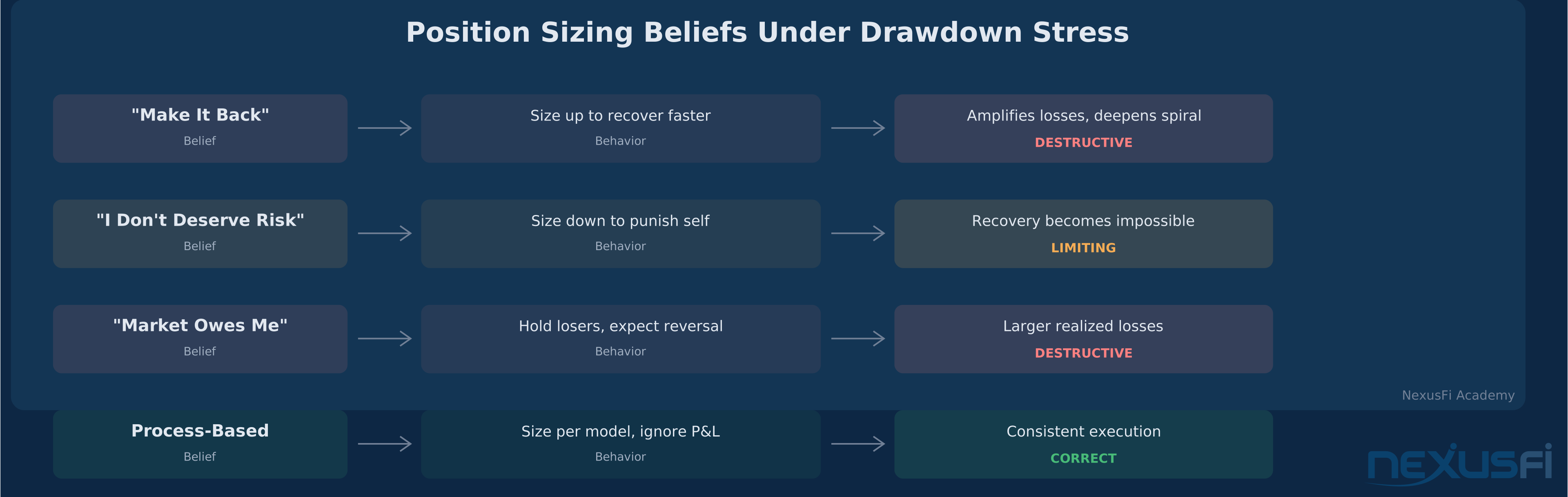
Position sizing during a drawdown reveals beliefs that the trader might not even know they hold. The math of position sizing is covered in the Position Sizing article. Here, the focus is on the beliefs that override the math.
The "make it back" belief. "I'm down $10,000. If I trade 4 contracts instead of 2, I can recover in half the time." This arithmetic is technically correct and psychologically catastrophic. The increased size amplifies the next loss, deepens the drawdown, intensifies the emotional pressure, and creates the conditions for exactly the spiral @blew described. The math says bigger size = faster recovery. The psychology says bigger size during a drawdown = higher probability of blowup.
The "I don't deserve risk" belief. The opposite extreme. The trader who's been burned reduces size so drastically that their winners become meaningless. Trading 1 micro contract on a $50,000 account doesn't produce enough P&L movement to rebuild confidence or generate meaningful returns. The trader is technically "following risk management" but is actually using position size as self-punishment.
The "market owes me" belief. After a sustained drawdown, some traders develop an expectation that the market "has to" give back what it took. This isn't a conscious belief — no experienced trader would verbalize it. But it shows up in behavior: the trader stays in a losing position longer than the plan allows because they feel they've "paid their dues" and deserve the reversal.
The permission structure collapse. Even traders who know the correct sizing methodology can have their internal permission structure overridden by drawdown stress. "I know I should trade 2 lots, but..." becomes the opening of every pre-trade thought process.
The word "but" is where process ends and emotion begins.
The behavioral signal to watch for: any change in position size that correlates with recent P&L rather than with your sizing model's actual inputs. If you're trading smaller because your account is smaller and your model scales with equity, that's process. If you're trading smaller because you're scared, or larger because you're angry, that's drawdown psychology taking the wheel.
Red Flags and Green Flags: Real-Time Self-Assessment #
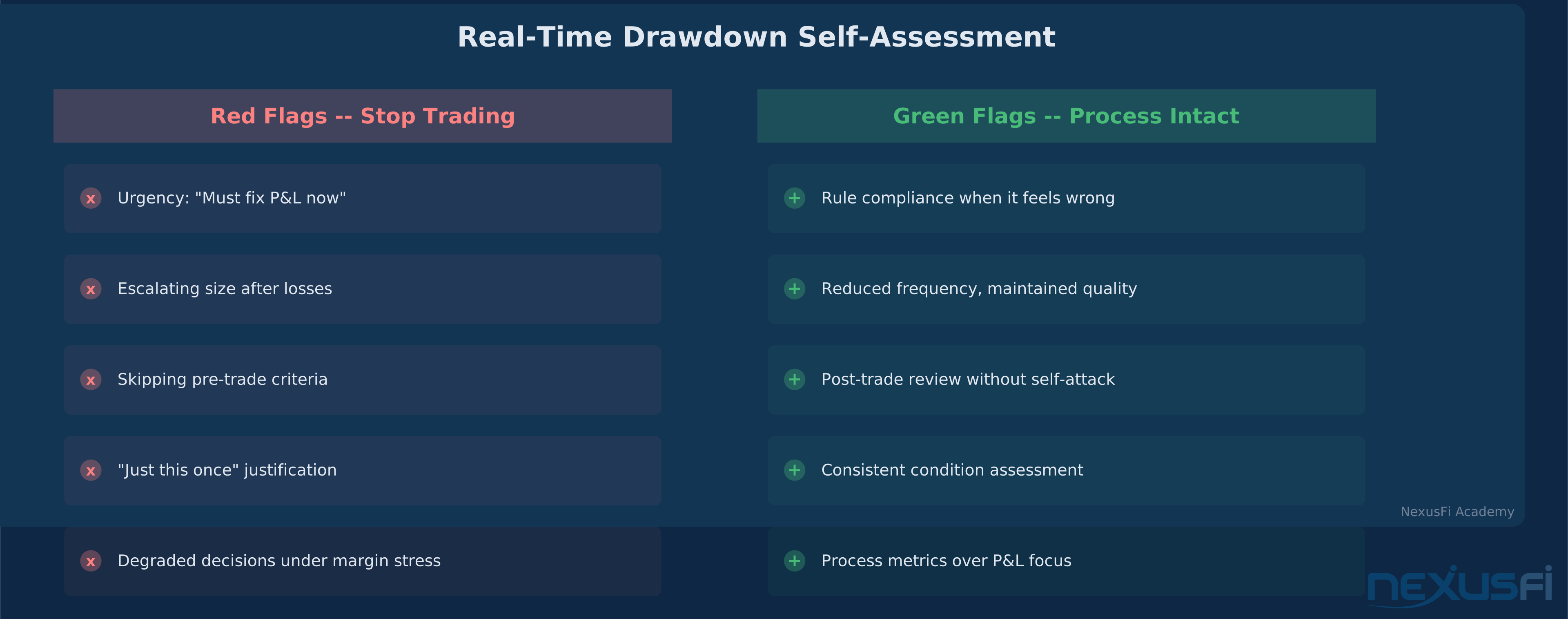
The practical value of understanding drawdown psychology is in catching it while it's happening. Here's what to monitor in yourself:
Red Flags — Stop Trading Immediately #
Urgency. "I need to trade right now to fix my P&L." Urgency is the single most reliable predictor of revenge trading. Markets will be open tomorrow. Your edge doesn't expire because you're behind on the week.
Escalating size after losses. Any increase in position size that follows a losing trade rather than your sizing model's rules. This is the behavioral signature of the "make it back" belief.
Skipping pre-trade criteria. Entering trades that don't meet your setup requirements because "it looks close enough." During a drawdown, your pattern recognition shifts from identifying setups to identifying excuses.
Justification language. Watch your self-talk. "Just this once." "This is different." "I have a feeling." "I need this one." All of these are permission structures — your psychology manufacturing reasons to break your rules.
Decision quality degradation during margin pressure. If your trading deteriorates specifically during margin-related stress (approaching daily loss limits, maintenance margin calls, end-of-day settlement), that's drawdown psychology operating through the fear of forced liquidation.
Green Flags — Process Integrity Under Pressure #
Rule compliance when it feels wrong. Following your stop placement rules even when every fiber says "give it more room." This is the behavioral definition of trading discipline.
Reduced frequency with maintained quality. Trading less during drawdowns, but the trades you take still meet all your criteria. This is the correct response to decreased confidence — take fewer swings, but make each one count.
Post-trade review without self-attack. Reviewing losing trades by asking "Did I follow my process?" rather than "Why am I so terrible at this?" Process-focused review produces learning. Self-focused review produces shame, which produces more drawdown behavior.
Consistent evaluation of conditions. Still checking whether the market conditions match your edge before trading, even when you're behind on the week. The trader who trades through unfavorable conditions because they need to "make up" losses has abandoned condition assessment.
Building Drawdown Resilience #
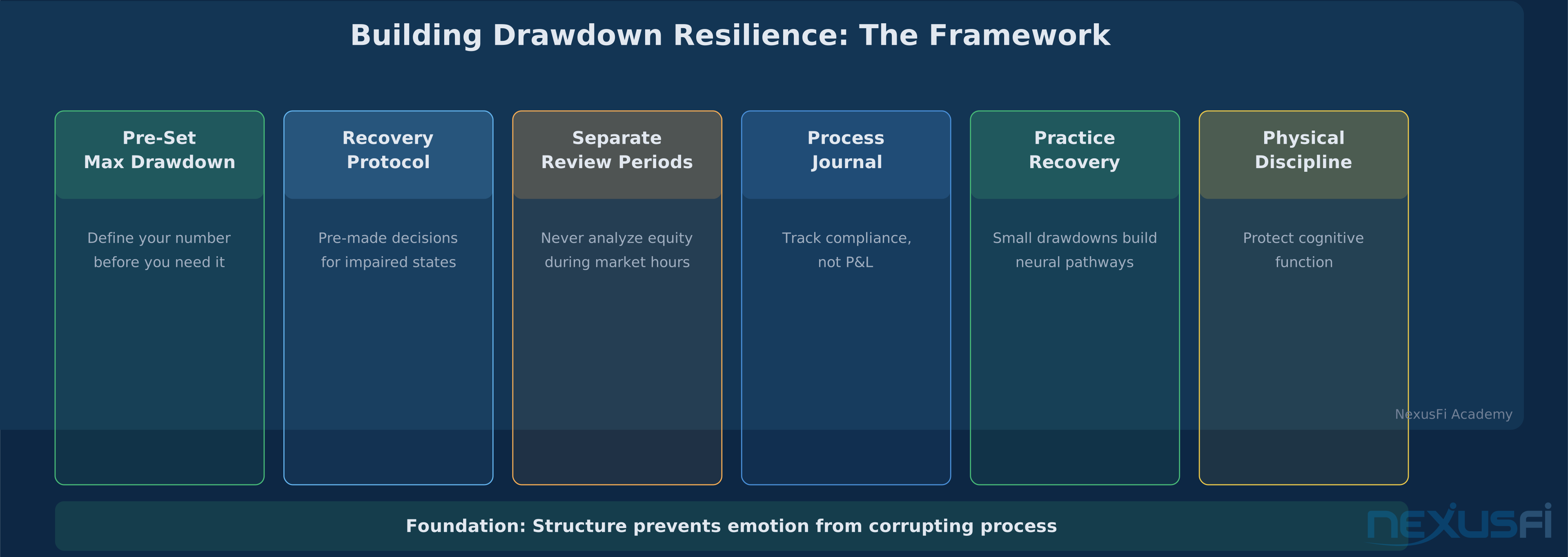
Drawdown resilience isn't about eliminating the emotional response — that's not realistic. It's about building structures that prevent the emotional response from corrupting your process.
Know your number before you need it. @Cashish described setting "the absolute maximum amount of drawdown I was willing to accept before I stopped trading and reassessed my method." Set this number during a period of calm, rational analysis. Write it down. Make it a hard rule, not a guideline. When you hit that number, you stop. No exceptions, no bargaining.
Build the recovery protocol before you need it. Define in advance what happens after you hit your max drawdown: How long do you pause? What do you review? What size do you return at? Having these decisions pre-made removes decision points from a period when your decision-making is compromised.
Separate your review periods from your trading periods. Never analyze your equity curve during market hours. The drawdown's emotional impact is amplified by real-time market action. Review at the end of the day, the end of the week, or the end of the month — whatever your system's intended evaluation period is.
Journal specifically for process compliance, not P&L. Track whether you followed your rules, not whether you made money. Over time, this builds a data set that demonstrates your discipline is independent of your results. That data becomes your psychological anchor during drawdowns.
Practice the recovery. @Grantx referenced the hero's path framework: "Trading gives you the opportunity to transform. See the drawdown as your test and part of your path." The traders who handle drawdowns best are the ones who've practiced recovery — not in simulation, but in real markets with real money at controlled size. Small drawdowns that you recover from properly build the neural pathways and behavioral patterns that protect you during large drawdowns. This aligns with K. Anders Ericsson's research on deliberate practice — the finding that expert performance across all domains comes not from innate talent but from structured, intentional practice designed to improve specific weaknesses. Ericsson's framework suggests that deliberately practicing drawdown recovery at controlled size builds the mental representations that protect you when the stakes are real.
Maintain physical and environmental discipline. Sleep, exercise, nutrition, screen breaks — these aren't soft recommendations. They're structural protections for cognitive function. Drawdown psychology operates through cognitive degradation. Anything that protects cognitive function protects against drawdown psychology.
The bottom line: drawdowns are a mathematical certainty in futures trading. How you respond to them is not. Your response is a skill that can be trained, a process that can be designed, and a behavior that can be monitored. The traders who survive aren't the ones who avoid drawdowns — they're the ones who've built systems that prevent drawdowns from changing who they are at the screens.
Knowledge Map
References This Article
Articles that build on this topicCitations
- — The Beast Slayer, Lance's NQ Trading Journal (2021) 👍 26“Two emotions that have plagued me for years and often made my trading experience very unpleasant and unhealthy were Fear and Anger.”
- — Big Mike's day trading method and advice (2015) 👍 25“This particular drawdown was painful due to its size and intensity, 36k in 3 days, it was memorable because of the countless mistakes I made to create it.”
- — 2018: Execution Execution Execution (2018) 👍 8“The issue with having a drawdown is actually two-fold for me: 1. I lose cash 2. I lose emotional currency Because of yesterday's drawdown, I was not able to fully (or get even close) capitalize on today's trend due to emotional turmoil.”
- — I finally blew up an account (2021) 👍 15“Yeah I feel like just taking my money and saying I'm done, but then the other part of me knows I was solidly trading there for a while so I just need to get back to that. Extreme overconfidence for sure.”
- — Finally Turning the Corner, tha "its 80% Psychology" thing... (2020) 👍 9“I thought the webinar was excellent. Thank you TropicalTrader/Big Mike/Terry. There is a lot that can be expanded on but I want to mention something from your previous post where you talked about transitioning from frustration to acceptance.”
- — Time to Give Up (2023) 👍 6“Thanks for the kind words. So to answer "why would I consider turning off an algo?" let's look at this strategy, assuming I traded 1 contract throughout... If I had started real money trading right after development (something I do NOT recommend)...”
- — Trading the 6E Old School, With a Twist (2012) 👍 22“There's no School like the Old School Learning How to Lose When I started trading, a friend gave me a simple system for trading the Deutsche Mark. It was based on a series of 20 day moving averages and generated profit targets of 200 and 500 points.”