



Trading System Architecture: How Professional Futures Systems Actually Work
Overview #
Every automated futures trader eventually hits the same wall. The strategy works in backtesting. It works in simulation. Then it goes live and something breaks — not the strategy itself, but the plumbing around it.
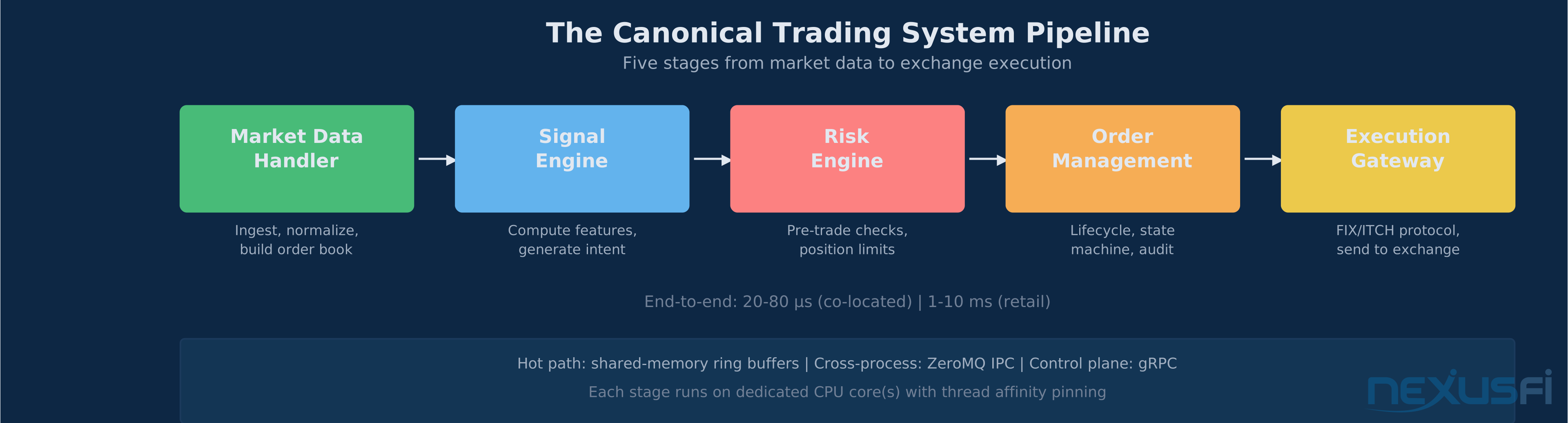
Trading system architecture is how you organize the components that sit between "market moves" and "order hits the exchange." It covers the market data handler that ingests price feeds, the signal engine that decides what to do, the risk engine that decides what's allowed, the order management system that tracks every order's lifecycle, and the execution gateway that speaks the exchange's language.
Here's what matters: the architecture principles are identical whether you're running a NinjaTrader strategy from your home office or a co-located C++ system on CME's rack. The pipeline is the same. The failure modes are the same. The reliability requirements are the same. Only the implementation technology changes.
This article breaks down how professional futures systems are actually structured, why the components are separated the way they are, and what you need to know at every level from retail to institutional.
The Five-Stage Pipeline #
The canonical trading system pipeline has been refined over decades by every major trading firm, and the result is remarkably consistent. Five stages, strict boundaries, one-directional data flow.
Stage 1: Market Data Handler #
The market data handler is the system's eyes. It receives raw exchange feeds — binary protocol packets arriving at thousands per second — and transforms them into a clean, normalized view of the market that every downstream component can consume.
What it does:
- Ingests raw feed packets (CME MDP 3.0 [9], ICE iMpact, Rithmic protocol)
- Sequences packets using exchange sequence numbers to detect gaps
- De-duplicates when multiple feeds carry the same data
- Builds the internal order book representation (price levels, quantities, implied prices)
- Publishes normalized updates (top-of-book, depth changes, trades) to downstream consumers
As NexusFi community member @NJAMC detailed in their [Local Order Manager collaboration thread] [1], the quality of your order management starts with the quality of your market data normalization. Their 378-reply thread on NinjaTrader's order manager architecture is one of the most detailed public discussions of how OMS components interact in practice.
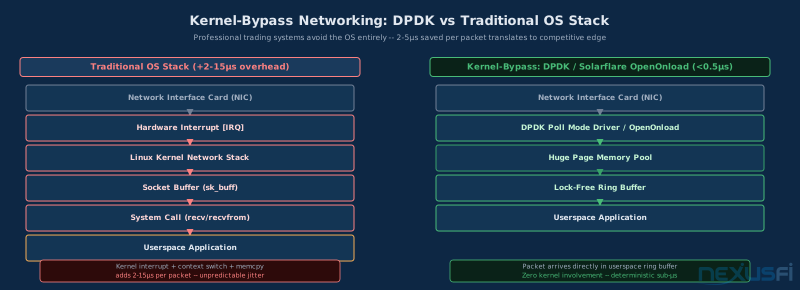
The critical engineering decision here is feed handling speed. Professional systems use kernel-bypass networking (DPDK, Solarflare OpenOnload) to pull packets directly from the NIC into userspace, avoiding the operating system's network stack entirely. Retail traders don't need this level of optimization — your platform handles feed processing for you — but understanding the principle helps explain why some platforms feel snappier than others on fast-moving markets.
Stage 2: Signal Engine #
The signal engine is where your trading logic lives. It consumes the clean market state from Stage 1, computes any derived features (moving averages, order flow imbalance, VWAP deviation, volatility estimates), and outputs an intent.
The key architectural principle: the signal engine produces intent, not orders. It says "I want to be long 3 ES" or "I want to sell 2 at the offer." It does not speak FIX protocol. It does not know what exchange it's trading on. It does not handle partial fills or rejections.
This separation is what makes strategies testable. If the signal engine is a pure function of market state, you can replay historical data through it and get deterministic results. As @thinkfuture described in their [automated trading thread] [2], "My idea of automated trading is to enforce discipline and strategy" — and that enforcement is only possible when intent is cleanly separated from execution mechanics.
Community member @RobWa's system architecture, discussed in the [algo trading thread] [3], demonstrates this pattern well: capturing volume price levels, trend state, and market regime as separate features that feed into a decision layer. That's the signal engine pattern — multiple inputs, single unified intent output.
Stage 3: Risk Engine #
The risk engine is the system's immune system. Every intent from the signal engine passes through it before anything reaches the OMS or exchange.
Pre-trade checks that a professional risk engine performs:
- Position limits: Current position + proposed order < maximum allowed
- Daily P&L limits: Current P&L > minimum daily loss threshold
- Order size sanity: Proposed quantity < maximum single-order size
- Price sanity bands: Proposed price within N% of last traded price (catches fat-finger errors)
- Rate limiting: Orders per second < exchange throttle limits
- Instrument allowlist: Only trade authorized instruments
- Margin check: Sufficient margin for the proposed position
The risk engine also runs continuously, not just on new orders. It monitors open positions against real-time mark-to-market, watches for margin calls, and can trigger a global kill switch if aggregate exposure exceeds thresholds.
As @Fat Tails demonstrated in their [PositionSizer tool] [4], automated risk controls aren't just for institutions. Their NinjaTrader indicator automatically adjusts position size based on account risk, ATR, and exchange rates — proof that you can implement institutional-grade risk logic in a retail platform if you structure the components correctly.
Stage 4: Order Management System #
The OMS is the system's memory. It tracks every order from the moment it's created until it's filled, cancelled, or rejected.
The core of any OMS is a deterministic state machine. Every order passes through well-defined states with explicit transitions:
- New -> the strategy wants this order
- Pending -> submitted to the exchange, waiting for acknowledgement
- Working -> exchange confirmed, order is live on the book
- Partially Filled -> some quantity executed, remainder still working
- Filled -> fully executed
- Cancelled -> successfully removed from the book
- Rejected -> exchange refused the order
- Replace Pending -> modification submitted, waiting for confirmation
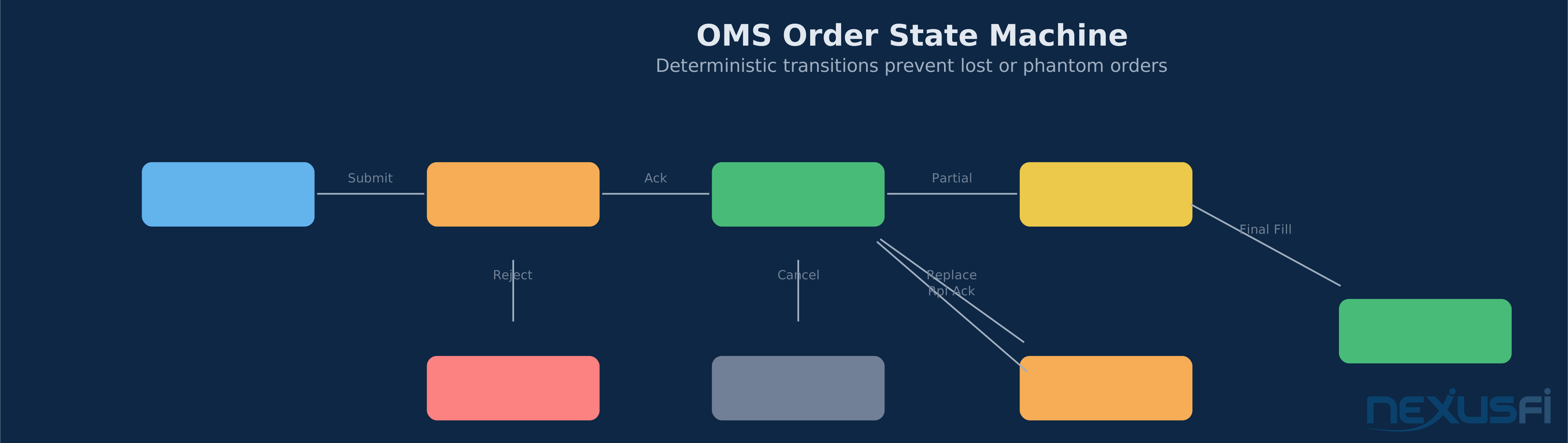
Why does this matter? Because exchange messages arrive asynchronously and sometimes out of order. You might receive a fill before the acknowledgement. You might receive a cancel confirmation for an order that's already filled. Without a deterministic state machine, these edge cases create phantom positions — your system thinks it's flat when it's actually holding contracts, or vice versa. That's how accounts blow up overnight.
The OMS also maintains the single source of truth for:
- Current position (derived from fills)
- Working orders (derived from acks and cancels)
- Execution quality metrics (fill prices, slippage, latency)
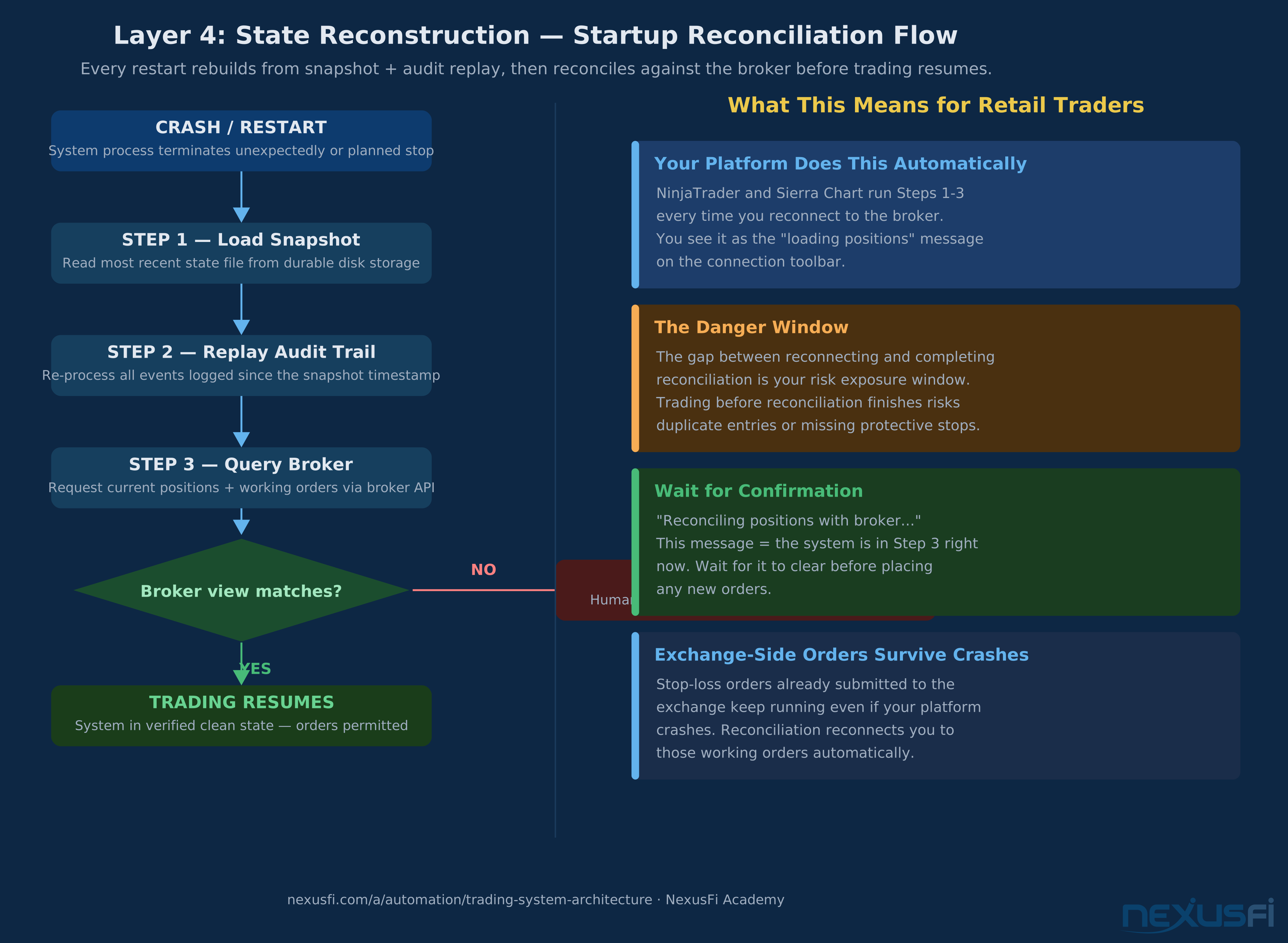
On restart, the OMS must reconstruct its state. Professional systems do this through a combination of: loading the latest snapshot from persistent storage, replaying events since the snapshot, and reconciling against the exchange's view of open orders and positions.
Stage 5: Execution Gateway #
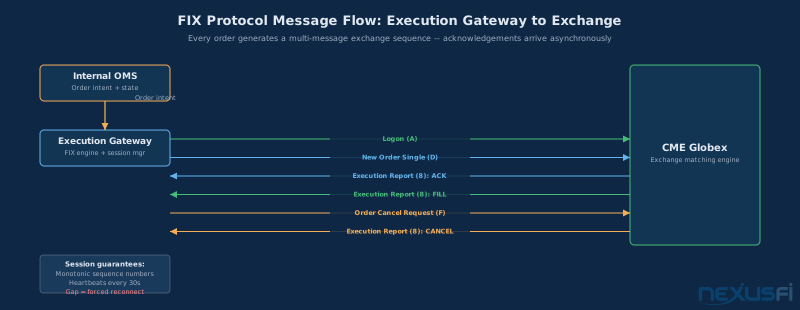
The execution gateway is the system's mouth. It translates internal order commands into the exchange's native protocol and manages the communication session.
What it handles:
- Protocol translation: Internal format -> FIX 4.2/4.4, CME iLink, ICE ETF, or proprietary binary (see futures trading APIs for how these exchange protocols work in practice)
- Session management: Login, heartbeats, sequence numbers, reconnection
- Acknowledgement processing: Exchange ack/nak/fill/cancel confirmation -> internal events
- Throttling: Exchange rate limits (CME allows ~100 messages/second per session)
- Retry logic: Transient failures, session drops, sequence gaps
The thread on [open-source trading platforms] [6] covers many of these concerns from a retail perspective, where the platform abstracts the gateway entirely — but understanding what sits behind your "Submit Order" button helps you diagnose latency issues and connectivity problems.
Architectural Patterns #
Event-Driven: The Default #
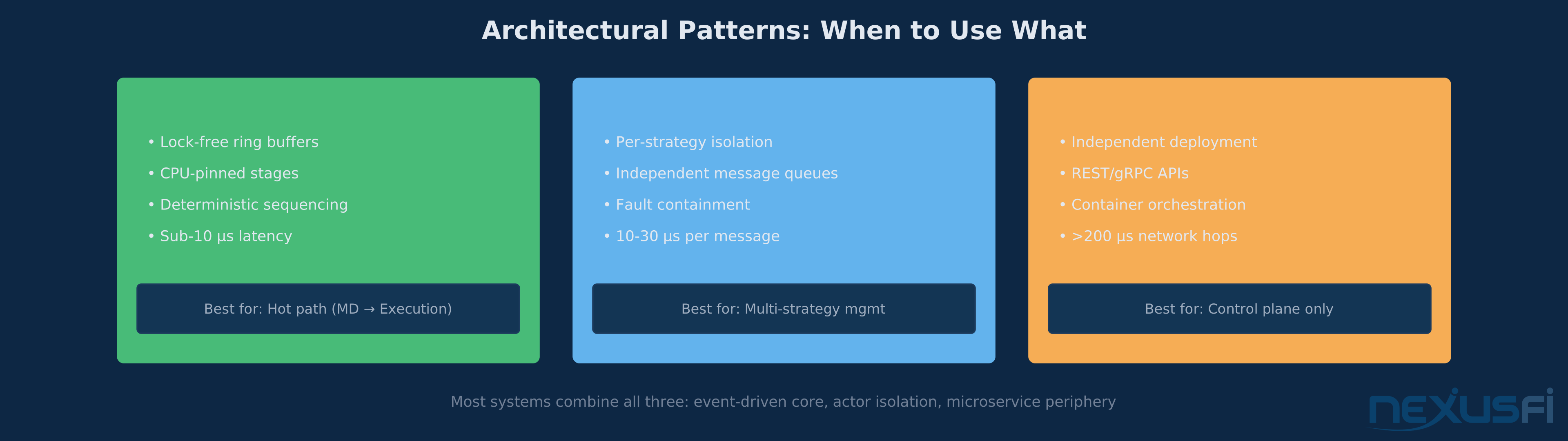
Professional algorithmic trading systems are event-driven because trading is event-driven. A price ticks. A fill arrives. A timer fires. Each event triggers handlers that update state and potentially produce downstream events.
The typical implementation uses lock-free ring buffers (inspired by LMAX Disruptor [10]) connecting pipeline stages. Each stage runs on a dedicated CPU core. Back-pressure is handled at the source — if downstream can't keep up, the producer stalls rather than letting queues grow unbounded, which would add unpredictable latency spikes.
This pattern yields deterministic latency because there are no locks, no garbage collection pauses, and no OS scheduling jitter (when combined with CPU pinning and real-time scheduling).
Actor Model: For Strategy Isolation #
When a system runs multiple independent strategies, the actor model provides natural isolation. Each strategy instance gets its own message queue and processes events independently. If one strategy crashes or misbehaves, it doesn't contaminate the others.
The overhead is slightly higher than raw ring buffers — each message must be copied into the actor's mailbox rather than read directly from shared memory — but the safety guarantees are worth it when running dozens of strategies simultaneously.
Microservices: Control Plane Only #
Microservices work well for dashboards, risk reporting, configuration management, and research pipelines. They do not belong on the hot path between market data and order execution. The network hops, serialization overhead, and partial failure complexity add latency and fragility where you can least afford it.
Messaging: How Components Talk #
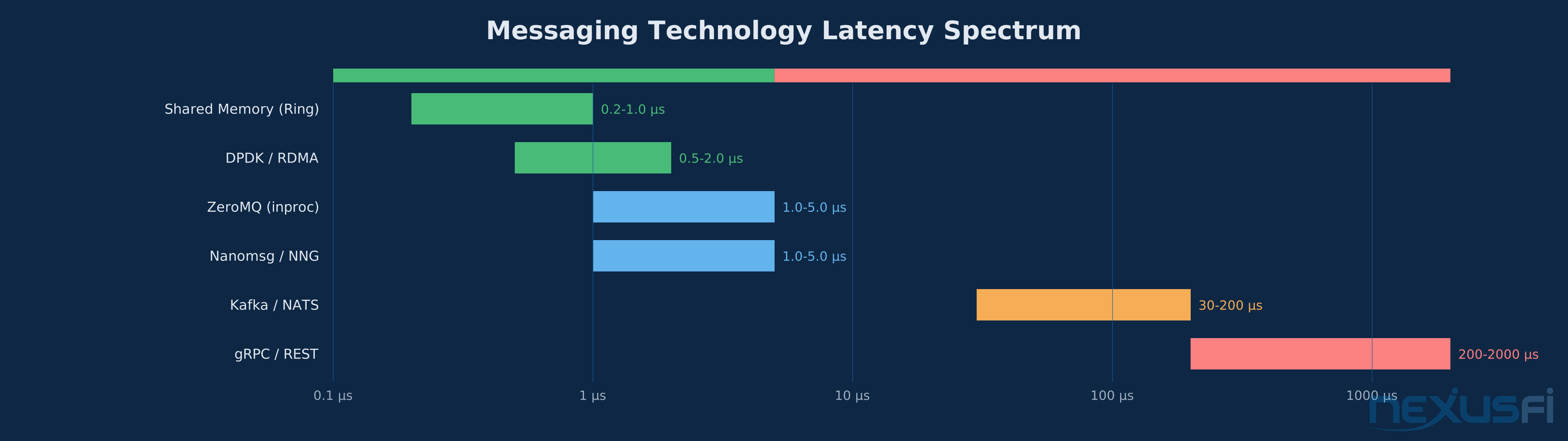
The choice of inter-component messaging determines the system's latency floor.
| Technology | Typical Latency | Best For |
|---|---|---|
| Shared-memory rings (Disruptor) | 0.2-1 microsecond | Core pipeline |
| DPDK / RDMA | 0.5-2 microseconds | NIC-to-userspace, co-located gateway |
| ZeroMQ (inproc/IPC) | 1-5 microseconds | Cross-process on same host |
| Kafka / NATS | 30-200 microseconds | Audit trails, analytics, replay |
| gRPC / REST | 200+ microseconds | Dashboards, configuration, reporting |
The critical insight: keep the hot path inside a single process whenever possible. Every process boundary adds microseconds. Every network hop adds orders of magnitude.
Keep the hot path in a single process. The table above shows four orders of magnitude between shared-memory rings and REST calls. Your market-data-to-order pipeline should never cross a network boundary if you can avoid it. Process boundaries are where latency hides.
For retail traders, the platform handles all of this. NinjaTrader's strategy execution engine, Sierra Chart's internal message bus, and similar platforms implement their own version of this messaging hierarchy. Understanding the hierarchy helps you understand why certain operations in your platform are fast (indicator updates) and others are slow (historical data requests).
Reliability: Five Layers of Defense #
Reliability in trading systems isn't about preventing failure. It's about containing failure so that a bug in one component doesn't destroy your account.
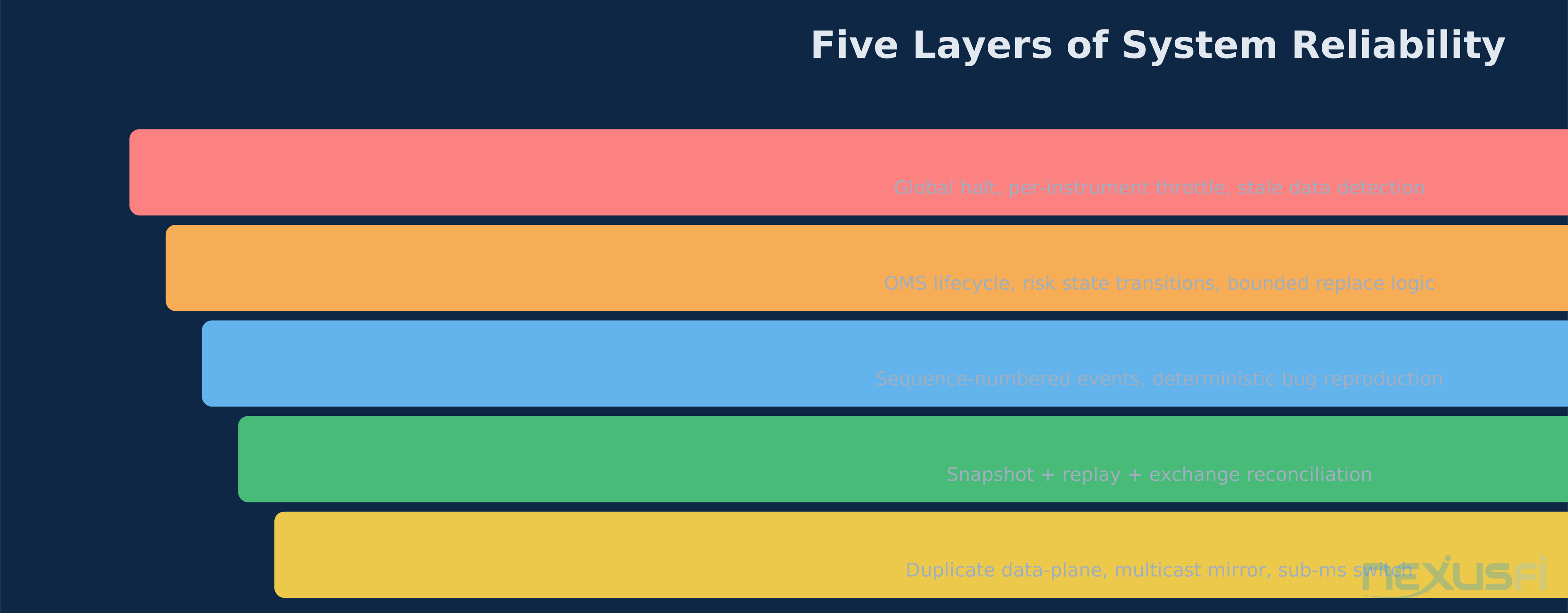
Design every component to fail gracefully. Reliability engineering in trading systems follows the same principle as bulkheads in a ship — when one compartment floods, the rest keep floating. Your risk engine should assume the signal engine is malfunctioning. Your kill switch should assume the risk engine has failed. Each layer catches what the layer above it missed.
Layer 1: Kill Switches and Circuit Breakers #
The first line of defense. A kill switch halts all trading immediately when triggered — cancelling all working orders, flattening all positions, and rejecting any new order submissions until a human explicitly re-enables the system.
@tigertrader's extensive writings on [position sizing and risk management] [5] emphasize the same principle at the discretionary level: "Proper money management begins with proper position sizing which will inevitably aid you in your stop placement." Automated kill switches are the algorithmic version of this discipline.
Circuit breakers are graduated versions of kill switches. Instead of a binary on/off, they respond proportionally: reduce position size by 50% if drawdown exceeds threshold A, halt new entries if drawdown exceeds threshold B, flatten everything if drawdown exceeds threshold C. This graduated approach prevents a single bad tick from shutting down an otherwise healthy strategy.
Layer 2: Deterministic State Machines #
Every stateful component (OMS, risk engine) uses explicit state machines with defined transitions. This eliminates an entire class of bugs where the system enters an impossible state due to unexpected event ordering. In practice, a state machine is a lookup table: given the current state and an incoming event, either a valid next-state exists or the event is rejected and logged as an error. This makes impossible states literally unrepresentable — you can't end up "cancelled-but-also-filled" because no defined transition leads there. For retail traders, this principle is most visible in position tracking: maintaining a custom position counter in parallel with the platform's built-in tracking is exactly how phantom position bugs get introduced. Trust the platform's authoritative state machine; build logic on top of it, don't replicate it.
Layer 3: Persistent Audit Trail and Replay #
Every event that flows through the system — every market data update, every signal, every risk check, every order submission and response — is written to a persistent, append-only log. This audit trail serves three purposes: post-trade analysis to understand exactly what happened and why, replay capability to reconstruct system state from any point in time for debugging, and regulatory compliance for firms required to maintain detailed records of all trading activity. The log must be durable (written to disk before the event is considered processed) and sequenced (every entry carries a monotonically increasing sequence number so replay produces identical results).
Layer 4: State Reconstruction #
On restart (planned or crash), the system rebuilds its state from the latest snapshot plus replayed events, then reconciles against the exchange. This ensures no phantom positions and no lost orders. The reconstruction sequence: load the latest state snapshot from durable storage, replay all audit trail entries recorded after that snapshot timestamp, then query the broker for current positions and open orders and diff the two views — any mismatch halts trading until a human resolves it. For retail traders, this plays out automatically every time your platform reconnects: NinjaTrader and Sierra Chart both pull current position and order state from the broker before re-enabling order submission. The failure mode to avoid is entering a new trade too quickly after a disconnect before the platform finishes reconciling — most platforms display an explicit reconciliation warning for exactly this reason, and waiting for that confirmation before trading is worth the few seconds it takes.
Layer 5: Hot-Standby Failover #
Professional systems maintain a complete duplicate of the data-plane on a separate server, mirroring market data via multicast. If the primary system's heartbeat stops, the standby takes over in sub-millisecond. Retail traders get a simpler version of this through their broker's server-side order management — if your local machine crashes, stop-loss orders already on the exchange continue to protect your position.
Latency Engineering #
For most retail and serious retail traders, latency means the time between your signal firing and your order reaching the exchange. For co-located institutional systems, latency is measured in microseconds and optimized component by component.
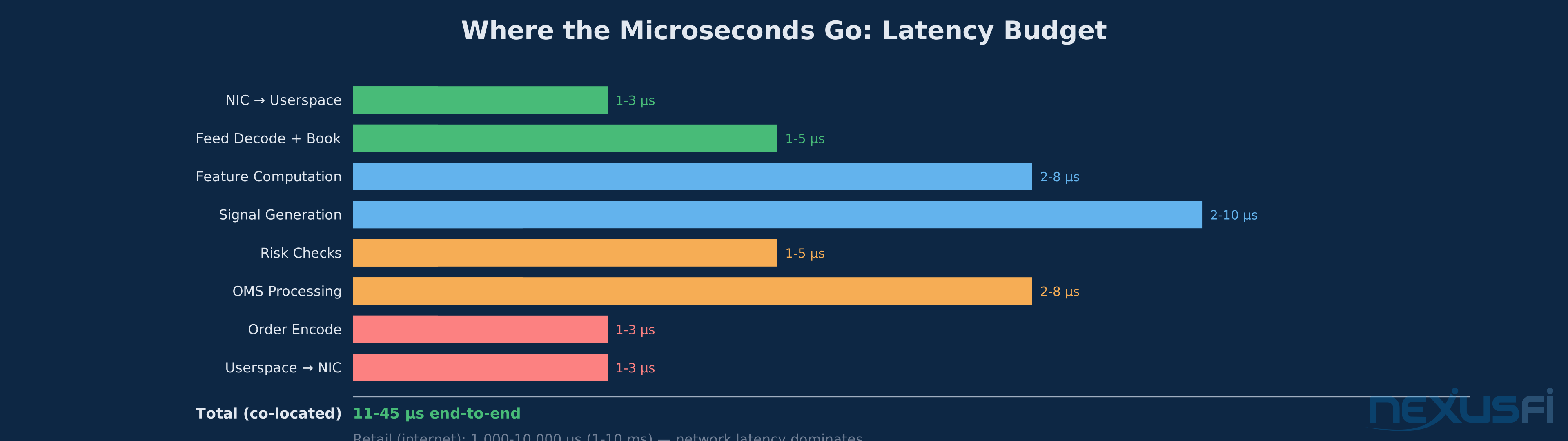
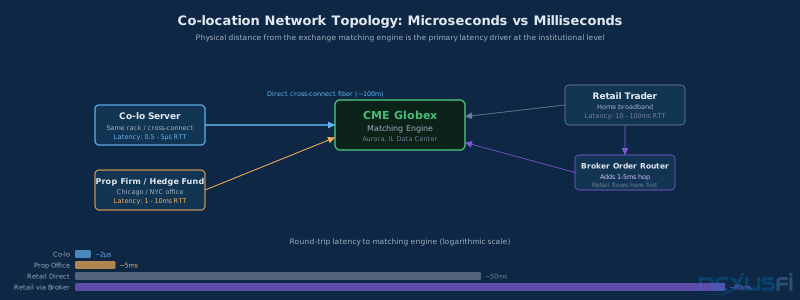
The key latency engineering practices — grounded in what Martin Thompson calls "mechanical sympathy" [11], designing software to work with hardware rather than against it — applicable at every level:
CPU pinning: Dedicate specific CPU cores to specific pipeline stages. On NinjaTrader, this means running your strategy on a machine where nothing else competes for CPU time. On institutional systems, it means pthread_setaffinity_np and disabled hyperthreading.
Zero allocation in the hot path: Don't create objects or allocate memory during signal evaluation or order submission. Pre-allocate everything at startup. In C#/NinjaScript, this means avoiding new in OnBarUpdate. In C++, it means slab allocators and fixed-size message pools.
Move heavy work off the critical path: Logging, analytics, and visualization should never block the signal-to-order path. Use asynchronous queues to defer these operations.
Minimize lock contention: Prefer message passing over shared mutable state. If you must share state, use read-mostly patterns. In NinjaTrader, this is why strategy variables should be updated in a single thread rather than accessed from multiple callbacks.
Implementation Spectrum #
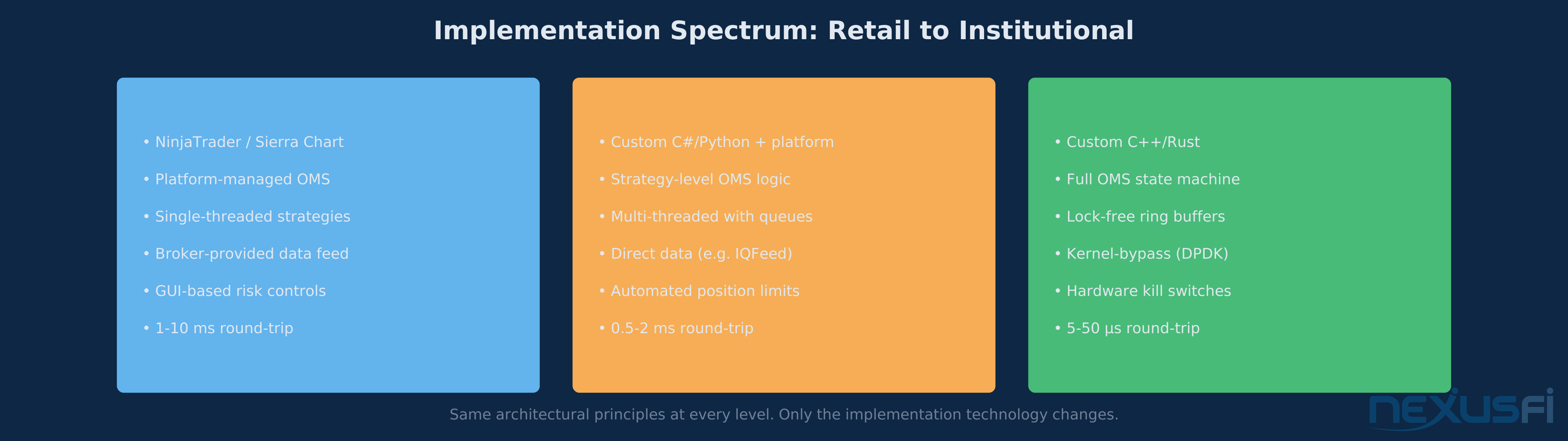
Retail: Platform-Managed Architecture #
If you're trading through NinjaTrader, Sierra Chart, or MultiCharts, the platform provides most of the pipeline for you. The market data handler, OMS, risk engine, and execution gateway are built in. Your strategy code lives in the signal engine stage.
What you control:
- Strategy logic (the signal engine)
- Risk parameters (position limits, daily loss)
- Automated order execution preferences (market vs. limit, order types)
What the platform controls:
- Market data normalization and book building
- Order lifecycle management
- Exchange connectivity and protocol handling
- Basic risk checks
This is the right architecture for most traders. The platform handles the engineering complexity. You focus on the trading logic.
Serious Retail / Prop: Hybrid Architecture #
At this level, traders start customizing beyond what the platform provides. Common additions:
- Custom OMS logic for managing complex multi-leg positions
- Strategy-level risk controls beyond platform defaults
- Direct market data feeds (IQFeed, CQG, Rithmic) for lower latency
- Multi-threaded architectures with dedicated data processing threads
- Automated position reconciliation scripts
As @Massive l documented in their [IchibomB trading journal] [7], building custom code that interfaces with the platform's execution layer requires careful attention to variable definitions and calculation logic. The leap from platform-managed to custom-coded is where most of the architectural decisions in this article become directly relevant.
Institutional / HFT: Full Custom Stack #
At the institutional level, every component is custom-built in C++ or Rust, optimized for the specific exchange and strategy class, and deployed on co-located hardware. Shared-memory ring buffers connect pipeline stages. Kernel-bypass networking eliminates OS overhead. Hardware kill switches provide physical safety guarantees.
The engineering complexity is enormous, but the architectural principles are identical to what a retail trader implements through their platform. Market data in, signal generation, risk checks, order management, execution out. The same pipeline, implemented with different tools at different price points.
Common Architectural Mistakes #
The most dangerous retail mistake is skipping the risk engine during testing. If your backtest doesn't enforce the same position limits, daily loss limits, and order size checks as your live system, you're testing a different system than the one you're trading. Every "just for testing" shortcut that removes a safety check is training yourself to trust results from an unprotected pipeline.
Skipping the risk engine "just for testing." Test environments should enforce the same risk checks as production. The discipline of routing every order through risk validation catches bugs before they reach real capital.
Tight coupling between signal and execution. When your strategy code directly sends orders to the exchange, you can't test the strategy independently, you can't add risk checks without modifying strategy code, and you can't switch exchanges without rewriting the strategy.
No audit trail. If you can't replay what happened, you can't debug what went wrong. Even a simple CSV log of every order event (time, action, price, quantity, state) is better than nothing.
Ignoring reconciliation. Your system's view of positions should match the broker's view at all times. Run reconciliation checks on every startup and periodically during trading. As @Silver Dragon noted in their IchibomB journal response, designing a method to "stop trading when things start going bad" requires knowing your actual position, not just what your system thinks your position is.
Over-engineering for latency you don't need. A retail strategy that trades 5 times a day doesn't need sub-microsecond messaging. Focus on reliability first. Get the state machine right. Get the risk checks right. Get the reconciliation right. Speed is the last optimization, not the first.
Practical Takeaways #
- Separate intent from execution. Your strategy should declare what it wants. A separate layer should decide if it's allowed and how to route it.
- Every order follows a state machine. New, Pending, Working, Filled, Cancelled, Rejected. Track every transition. Log every event.
- The risk engine is not optional. Pre-trade checks, position limits, daily loss limits, kill switches. If you don't have these automated, you're one bug away from an account-destroying event.
- Keep the hot path tight. Minimize the distance between market data and order submission. Move everything else — logging, analytics, dashboards, notifications — to asynchronous side channels that can't block order flow.
- Reconcile constantly. Your system's view of the world should match the exchange's view. Check on startup. Check periodically. Check after every reconnection.
- Build for failure. Components will crash. Feeds will drop. Exchanges will reject orders. Design every component to fail gracefully and recover automatically.
The architecture of a trading system is not glamorous work. Nobody posts about their OMS state machine on social media. But it's the foundation that everything else depends on — your edge, your risk management, your ability to sleep at night while the system runs. Get the architecture right, and the strategies built on top of it have a fighting chance.
Knowledge Map
Prerequisites
Understand these firstGo Deeper
Build on this knowledgeReferences This Article
Articles that build on this topicCitations
- — NexusFi Discussion (2011) 👍 41
- — NexusFi Discussion (2014) 👍 9
- — NexusFi Discussion (2026) 👍 3
- — NexusFi Discussion (2010) 👍 17
- — NexusFi Discussion (2012) 👍 18
- — NexusFi Discussion (2024) 👍 7
- — NexusFi Discussion (2021) 👍 20
- — IchibomB Futures Trading (2019) 👍 6“Massive, I took what you said and designed trading plan which incorporates a method to stop trading when things start going bad and a method to increase the position size when the trades are going well.”
- — CME MDP 3.0 Market Data Platform
- — LMAX Disruptor: High Performance Inter-Thread Messaging Library
- — Mechanical Sympathy - Hardware and Software Working Together in Harmony