



The Profitability Plateau: Why Experienced Futures Traders Still Struggle and How to Break Through
Overview #
You've been trading futures for five years. You understand volume profile, order flow, risk management, and market structure. You've read Douglas, Steenbarger, and Tharp. You've been through at least one account blowup and survived. You know about the 95% failure statistic and told yourself you'd be in the other 5%.
And yet. Consistent profitability still hasn't arrived.
The profitability plateau is the most frustrating place in trading because you can't fix it by learning more. You already know the concepts. The problem is structural, and the NexusFi community's decades of shared experience have made it possible to diagnose precisely.
Here's the core finding: the plateau is almost never a risk management problem, a psychology problem, or a knowledge problem. It's an implementation problem. Specifically: your edge definition isn't operationalized for actual execution costs, your decision quality is capping your expectancy below breakeven, and your system has accumulated invisible drift that erodes whatever edge you have. Fixing these requires different work than most plateau traders are doing.
This article won't tell you to meditate more, journal your feelings, or read another trading psychology book. It's going to give you a diagnostic framework for finding exactly where your P&L is leaking, and show you the eight specific failure patterns that distinguish experienced-but-struggling traders from beginners.
What the Plateau Actually Is #
The profitability plateau has a precise definition. It's not "I'm losing money." The plateau is: net expectancy near zero after costs, with no improvement trend over a 6-12 month period, despite active effort to improve.
That precision matters because it changes the diagnosis. A near-zero expectancy trader isn't like a losing beginner — they have identified some real edge in the market. The edge just isn't surviving execution.
Three diagnostic questions to confirm you're on the plateau, not just in a drawdown:
1. What is your rolling 90-day expectancy after all costs? Not win rate. Not gross P&L. Net expected value per trade after commissions, slippage, and spread. Calculate it: sum of all (realized R-multiple x trade risk), divided by trade count, minus average cost per trade in R-units.
2. Has your expectancy improved over the last 6 months? Drawdowns have improving process metrics. The plateau is characterized by flat metrics — not declining ones, flat ones. The flatness is the signal.
3. Are you measuring the right things? Most plateau traders measure win rate and gross P&L. Win rate is meaningless without the distribution of win/loss sizes. Gross P&L hides the cost structure. You need net expectancy, gross-to-net spread, exit adherence rate, and regime-conditional performance.
The plateau is easy to misidentify as a drawdown. A drawdown is temporary P&L deterioration in a system with measurable positive expectancy. The plateau is flat expectancy over 6+ months with no improvement trend. Treating a plateau as a drawdown means doubling down on a system that needs fundamental diagnosis — not persistence.
Edge Isn't a Signal -- It's Conditional Expectancy After Execution #
Most traders with 5+ years define their edge as a signal or a pattern: "I trade pullbacks to VWAP in trending markets." That's not an edge. It's a setup description. The actual question is: what is the expected value of that setup after realistic execution, conditional on the specific market state you're trading it in?
The Operational Edge Test #
An operational edge definition answers four questions precisely:
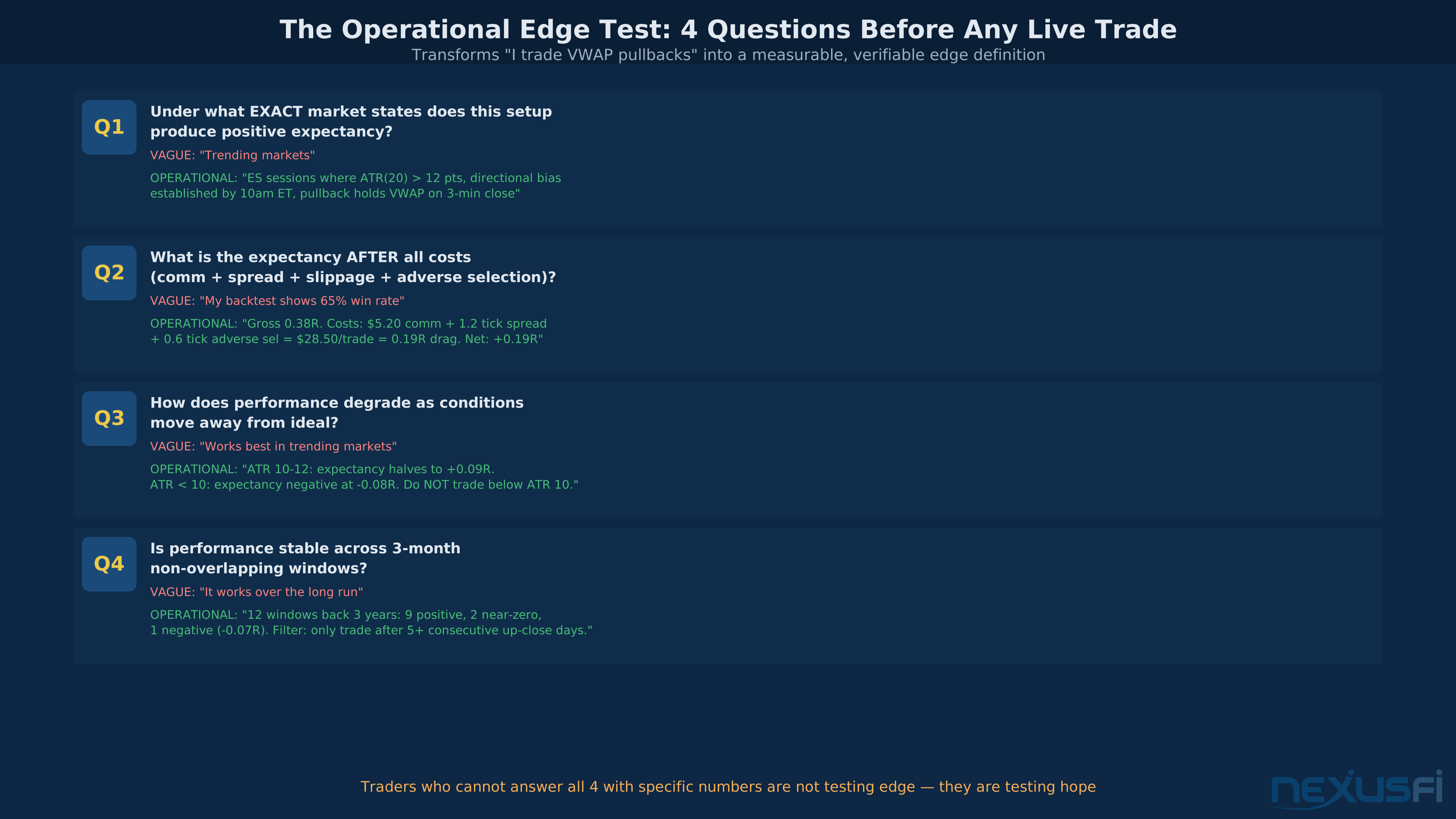
Under what exact market states does this setup produce positive expectancy? Not "trending markets" — "ES trending sessions where ATR(20) > 12 points, with clear directional bias established by 10am ET, after a pullback that holds the VWAP on at least one 3-minute close." That specificity lets you measure whether you're trading in-state or out-of-state.
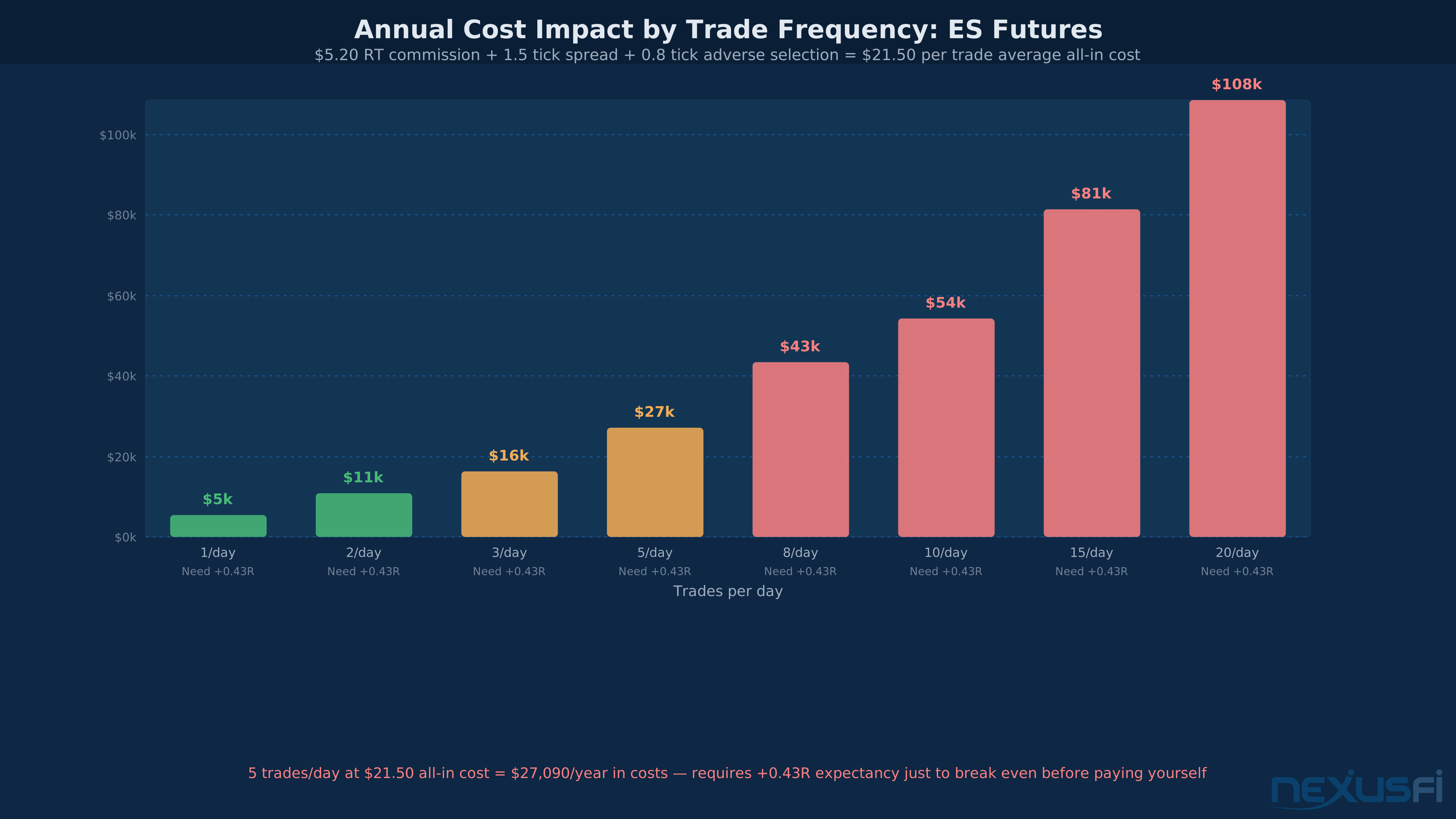
What does positive expectancy mean after costs? In ES, a two-tick spread plus $5 commission means $37.50 gone before the trade starts moving. On a setup where your average win is $150 and average loss is $100, that adverse selection cost eats 25% of your gross edge. Model it explicitly.
How does performance degrade away from ideal conditions? Every setup has a zone of validity. A VWAP pullback that works in 12+ ATR trending sessions may produce near-zero expectancy in 6-8 ATR sideways days. If you're taking the setup regardless of ATR, you're averaging a good setup with bad-condition noise and blaming variance for the result.
Is the pattern stable across rolling 3-month windows? Back-test your specific conditional setup on 3-month non-overlapping windows going back 3 years. If performance is stable — each window positive, even if magnitude varies — you have a real edge. If 4 of 12 windows are deeply negative, you have a regime-conditional pattern that needs additional filters.

The failure plateau traders make isn't taking bad setups — it's taking good setups outside their zone of validity. As @matthew28 observed in the "Traders with 5-10 years still not profitable" thread: "they continuously go back to in effect starting again and again by frequently changing everything they do or use." That restlessness is often regime-conditional edge misidentified as a broken method.
A conditional edge in trending ES sessions isn't a holy grail, but it's real. A "universal" pattern that works across all regimes usually works in none of them well enough to profit after costs. Stop searching for universal edges — start measuring the regime boundaries of the edge you already have.
Execution as Part of the Edge #
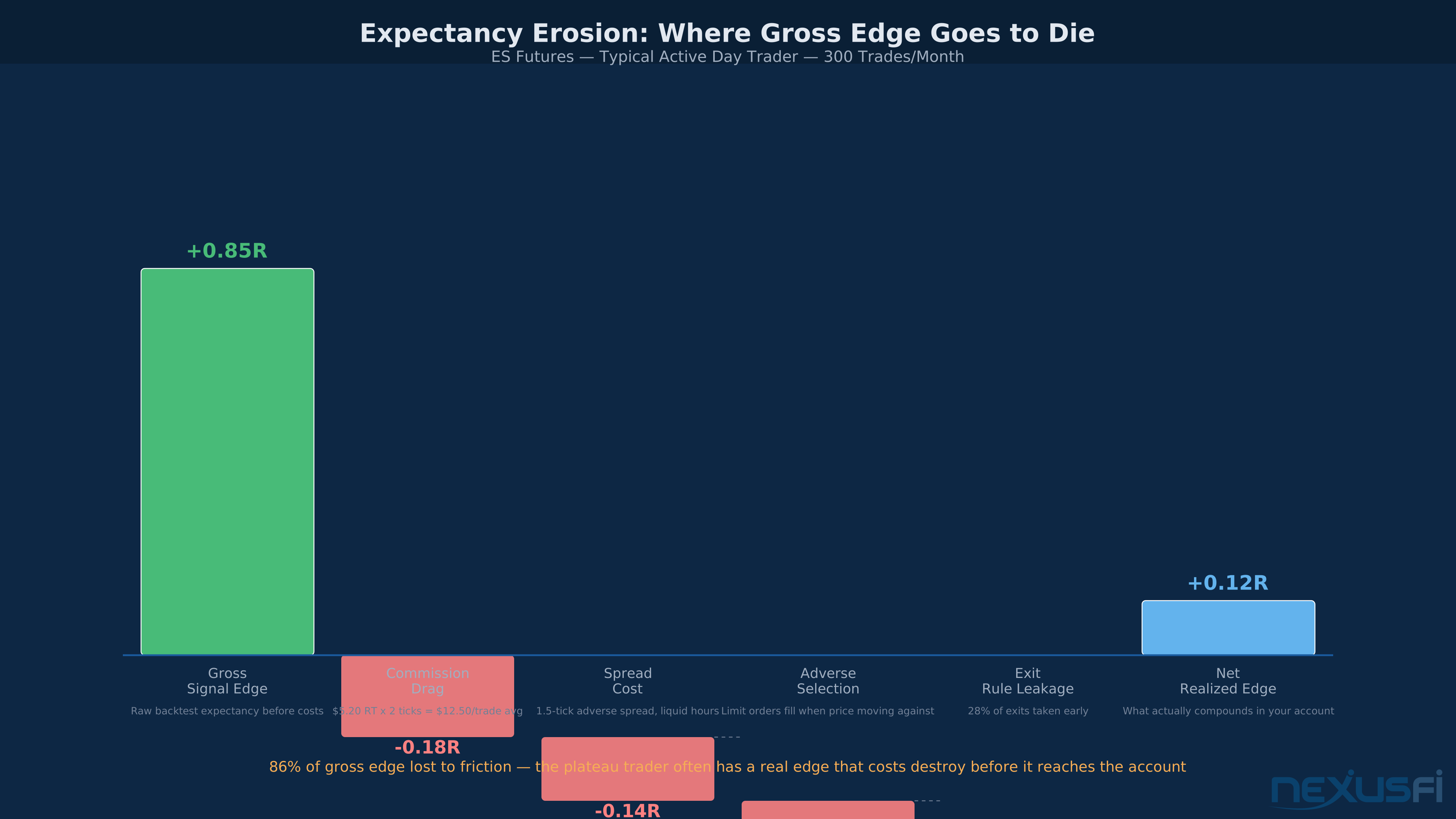
Futures execution isn't a rounding error. On a 5-tick average winner in ES, a 1-tick adverse selection cost represents 20% of your gross edge. On a 3-tick winner — which describes many active scalping setups — it's 33%.
Adverse selection in futures occurs when your limit order fills because the market is moving against you. By the time your limit order fills, the fill itself is evidence that price is continuing past your entry. This is systematic, not random, and it degrades your edge by more than most models account for.
@Private Banker, who traded institutional markets for 12 years before going independent, described the structural difference in the "Primary Source of Income" thread: "I've spent thousands of hours in front of a computer screen developing" a deep understanding of the transition from markets where order flow provided structural advantage to retail trading where you're paying the spread instead of collecting it. That shift isn't visible in backtests.

@PandaWarrior made the parallel explicit in the same thread: "Starting a real business to make money... The failure rate for small business over 5 years is 95%. Same reasons people fail in trading: 1. Under capitalized 2. Un-realistic expectations." The cost structure of futures trading is a real business overhead — and most plateau traders haven't modeled it.
Net Expectancy Per Trade = (Win Rate x Avg Win) - (Loss Rate x Avg Loss) - (Avg Commission + Avg Spread + Avg Adverse Selection)
Example: 52% win rate, $180 avg win, $120 avg loss, $28.50 total costs: = (0.52 x $180) - (0.48 x $120) - $28.50 = $93.60 - $57.60 - $28.50 = $7.50 net expectancy per trade

Why Experienced Traders Plateau: Eight Structural Failure Patterns #
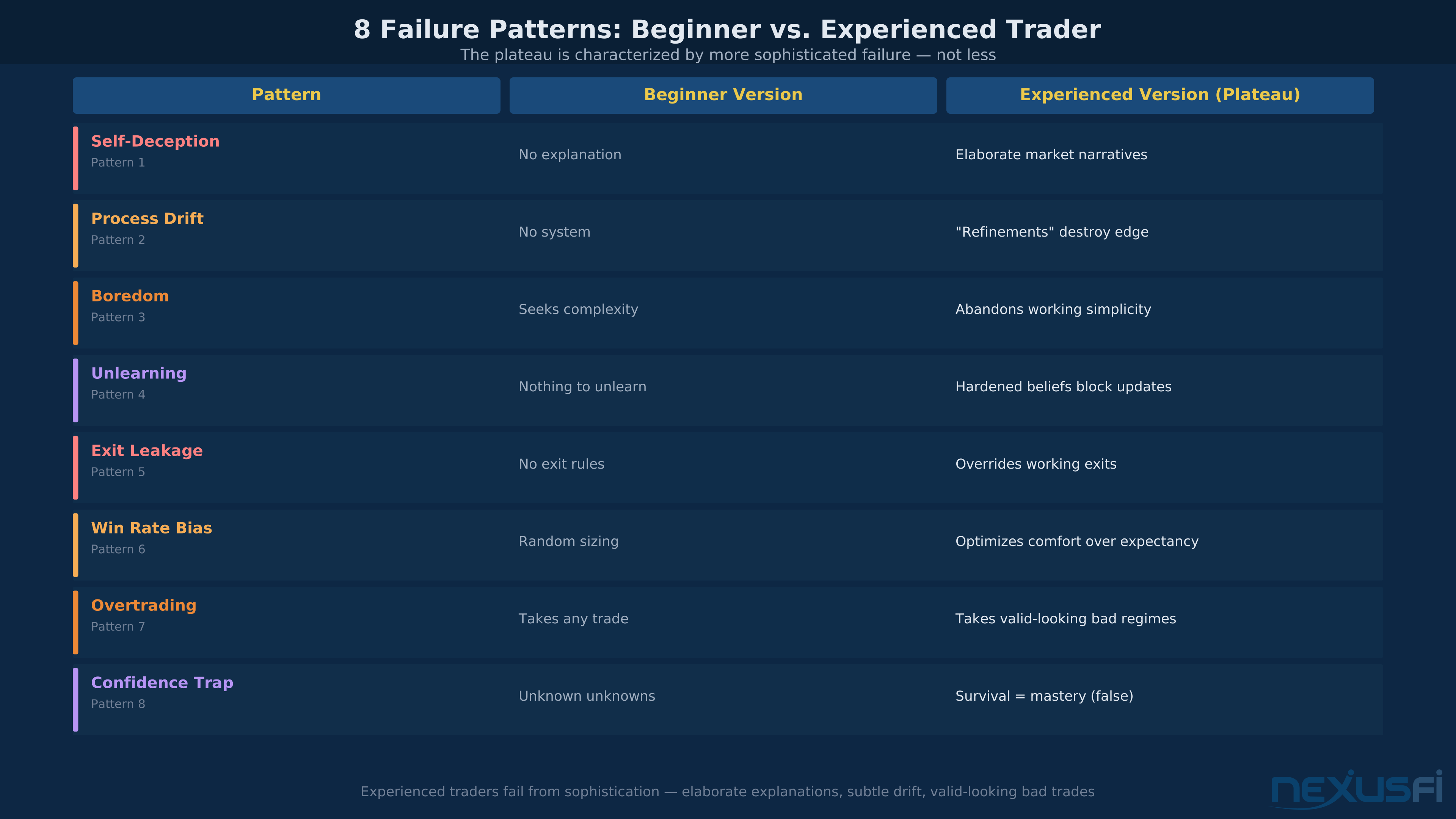
These patterns differentiate plateau traders from beginners. Beginners fail from ignorance. Plateau traders fail from more sophisticated problems that look, on the surface, like mastery.
Pattern 1: Sophisticated Self-Deception #
Beginners lose money and say "I need to learn more." Plateau traders lose money and construct elaborate explanations: the algos targeted their stop, spreads widened at the exact wrong moment, the setup was correct but execution failed, this was normal variance.
All of these can be true. That's what makes this pattern damaging — the explanations are plausible. A plateau trader with 5 years of experience has a large repertoire of legitimate-sounding market explanations. The problem isn't that they can explain losses, it's that they can explain every loss. When every loss has a narrative, no loss is feedback.
Diagnostic test: read your last 20 trade reviews and count how many contain the phrase "setup was valid but..." If more than 30% contain that phrase, you're in sophisticated self-deception mode.
Fix: change to metric-only journaling for 60 days. Record ATR regime, VWAP position, session context, exact entry price vs. signal price, MAE, MFE, exit reason. No narrative. Measure first, then analyze patterns across 50+ trades.
Pattern 2: Process Drift Through "Refinement" #
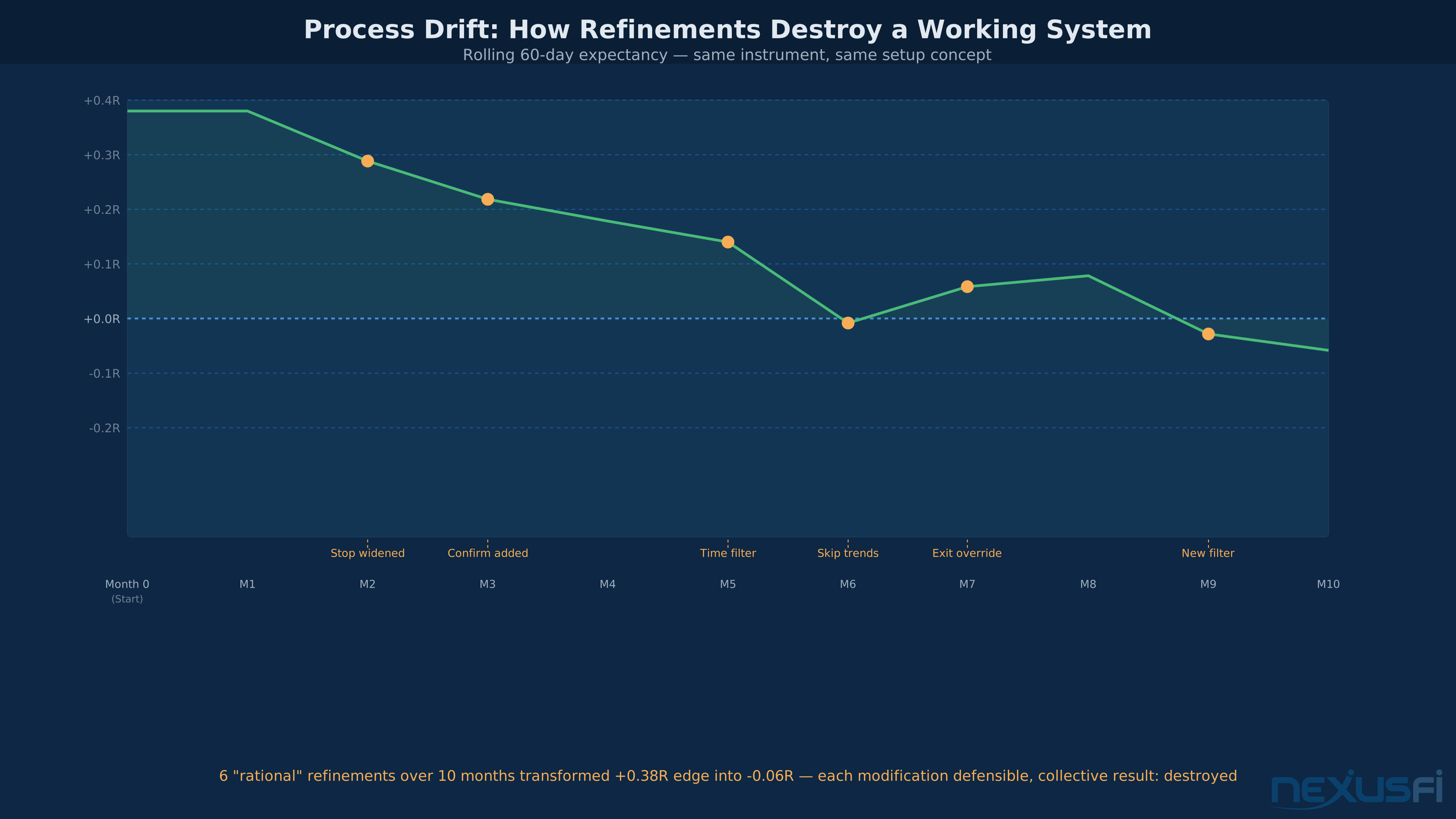
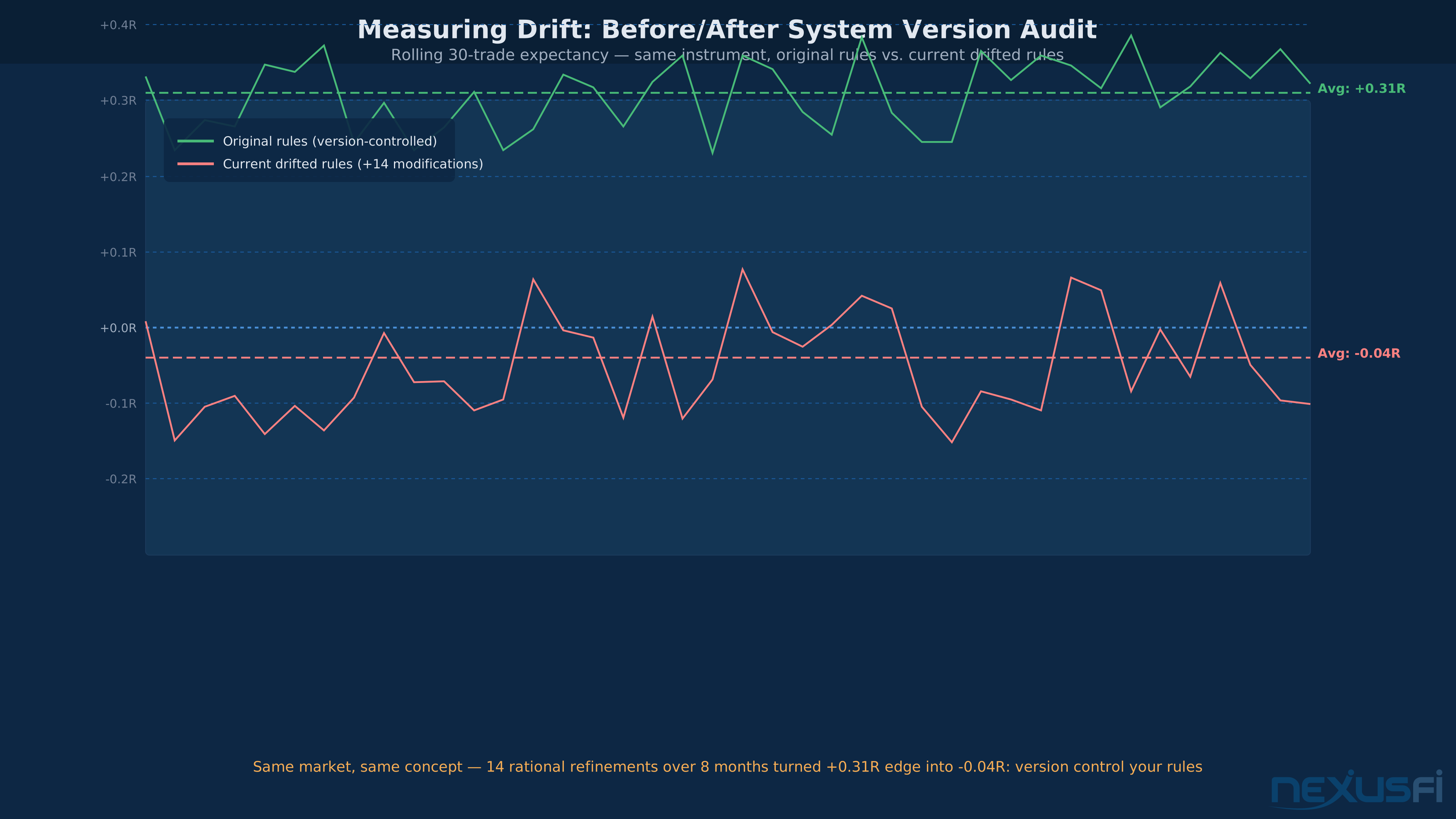
A trader develops a working approach, then over months gradually modifies it to reduce pain. Each modification has a rational justification. Collectively, they transform the original approach into something unrecognizable and unworkable.
Process drift looks like: widening stops "to give the trade room to breathe" after a few trades stopped out just before moving favorably; adding a confirmation requirement after a false signal; skipping setups that "feel" forced; moving profit targets based on the morning's news.
Each individual modification is defensible. The problem is cumulative. After 50 modifications, the "system" has no statistical basis — it's a collection of ad hoc rules shaped by emotional pain avoidance.

Diagnostic test: compare your current trading rules to what you wrote down 12 months ago. If you can't find what you wrote 12 months ago, that's already a diagnostic.
Fix: write down your rules, date them, review quarterly. Ask: "If I followed the original rules, would I be more or less profitable?"
Process drift is the most common plateau pattern and the hardest to self-diagnose because each individual modification felt rational at the time. The aggregate result is invisible until you compare current rules to the original version-controlled baseline. Traders who don't version-control their rules are drifting without knowing it.
Pattern 3: Boredom with the Simple Edge #
After years of effort, a trader finds a genuinely profitable approach that turns out to be straightforward and somewhat boring to execute. The experienced trader who survived years of learning expects profitability to look complex. When profitability turns out to be about disciplined execution of simple conditions, it feels anticlimactic.
@wldman, a former CBOE floor trader, made the complementary point in the "Time to Give Up" thread: "All out effort is pre-req NOT an edge. But few even understand what all out effort is." He elaborated elsewhere: "The specific edge was absolutely the benefit of customer order flow. At the CBOE and on the other trading floors, the activity happening on the floor is appropriately called trading, while the screen based activity is really short term speculation." Moving from floor trading to screen trading isn't just a venue change — it's an edge-type change. Maximum effort doesn't guarantee edge — and sometimes the edge looks nothing like the effort.
Diagnostic test: in the last 6 months, how many times did you not take a setup your rules said to take because it "felt" too simple or too obvious?
Fix: track skipped setups explicitly. If skipped rule-valid setups outperform taken setups, you're avoiding your own edge.
Pattern 4: Inability to Unlearn #
Markets change. An approach that produced consistent positive expectancy in 2020's trending, elevated-volatility environment may produce zero expectancy in a low-volatility, mean-reverting environment. This is regime non-stationarity — the statistical properties of your edge change with market conditions.
Experienced traders have the pattern recognition to identify regime changes, but they've also spent years developing confidence in their approach. That confidence, built through legitimate success, becomes resistance to updating the model.

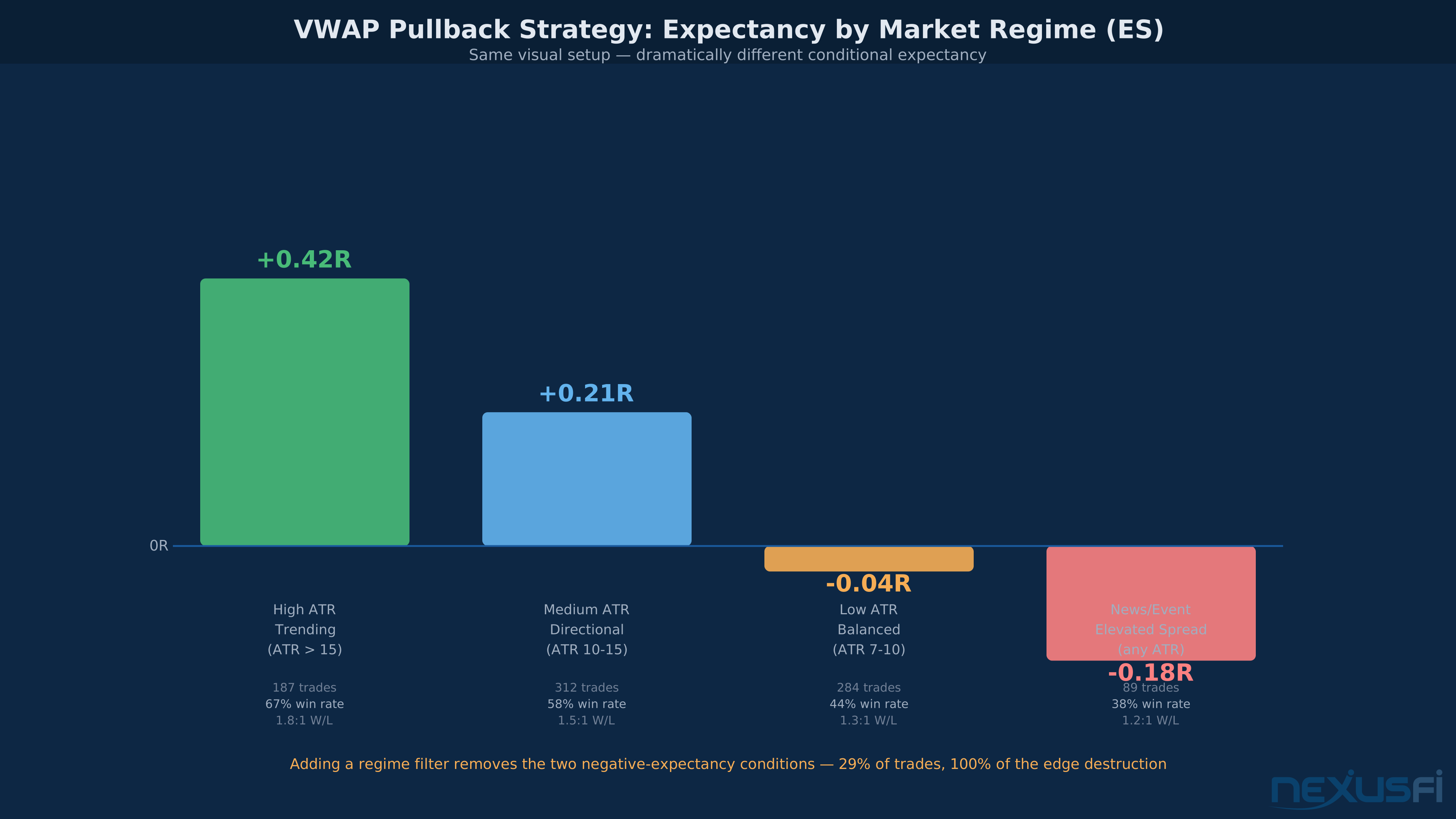
Diagnostic test: segment your trades over the last 3 years by rolling 30-day ATR regime. If expectancy dramatically diverges between high and low ATR periods, you have a regime-conditional edge being traded across regimes without filtering.
Fix: add a regime filter — but the first step is accepting the measurement.
Pattern 5: Exit Rule Leakage #
Exits are the primary source of edge leakage, not entries. Most plateau traders who've read widely know this in principle and still can't fix it in practice.
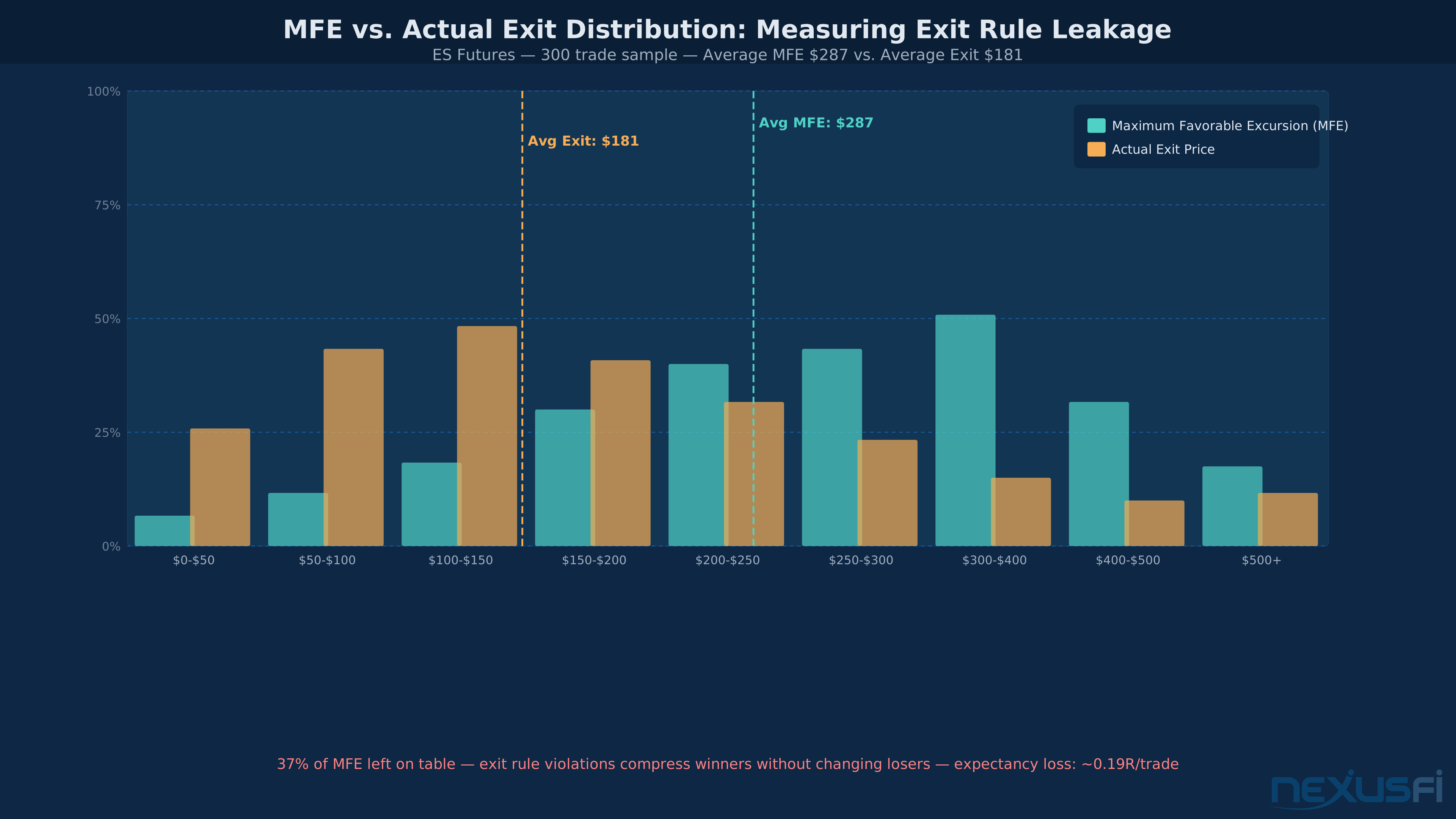
Exit rule leakage looks like: taking a smaller profit "to lock it in" before the target is reached; moving the stop to breakeven too quickly; holding through a stop because "the setup is still valid"; closing a winner early because the news backdrop changed.
You can verify exit rule leakage by comparing your MFE distribution to your actual exit distribution. If the average MFE is much larger than your average winner — say, average MFE is $300 but average exit is $190 — you're cutting winners systematically.

@loriley, who described consistent weekly profitability in the Primary Source of Income thread, noted: "I'm consistent only one losing day in the last six weeks... it requires you to know how to trade. That means knowing your instrument, knowing what the average daily ranges are & knowing when it is likely to turn." Consistency comes from knowing when the move ends (exit quality) as much as from when it starts.
Diagnostic test: calculate exit adherence rate — what percentage of exits occurred at rule-specified conditions vs. discretionary override.
Fix: if overrides exceed 25%, execute exits mechanically for 30 days. Compare P&L.
Exit leakage is the single highest-impact fix for most plateau traders. Before addressing anything else, measure the gap between your average MFE and your average winner. If MFE exceeds average winner by more than 40%, exit discipline is your primary lever — and it doesn't require any new edge research.
Pattern 6: Optimizing for Comfort Rather Than Expectancy #
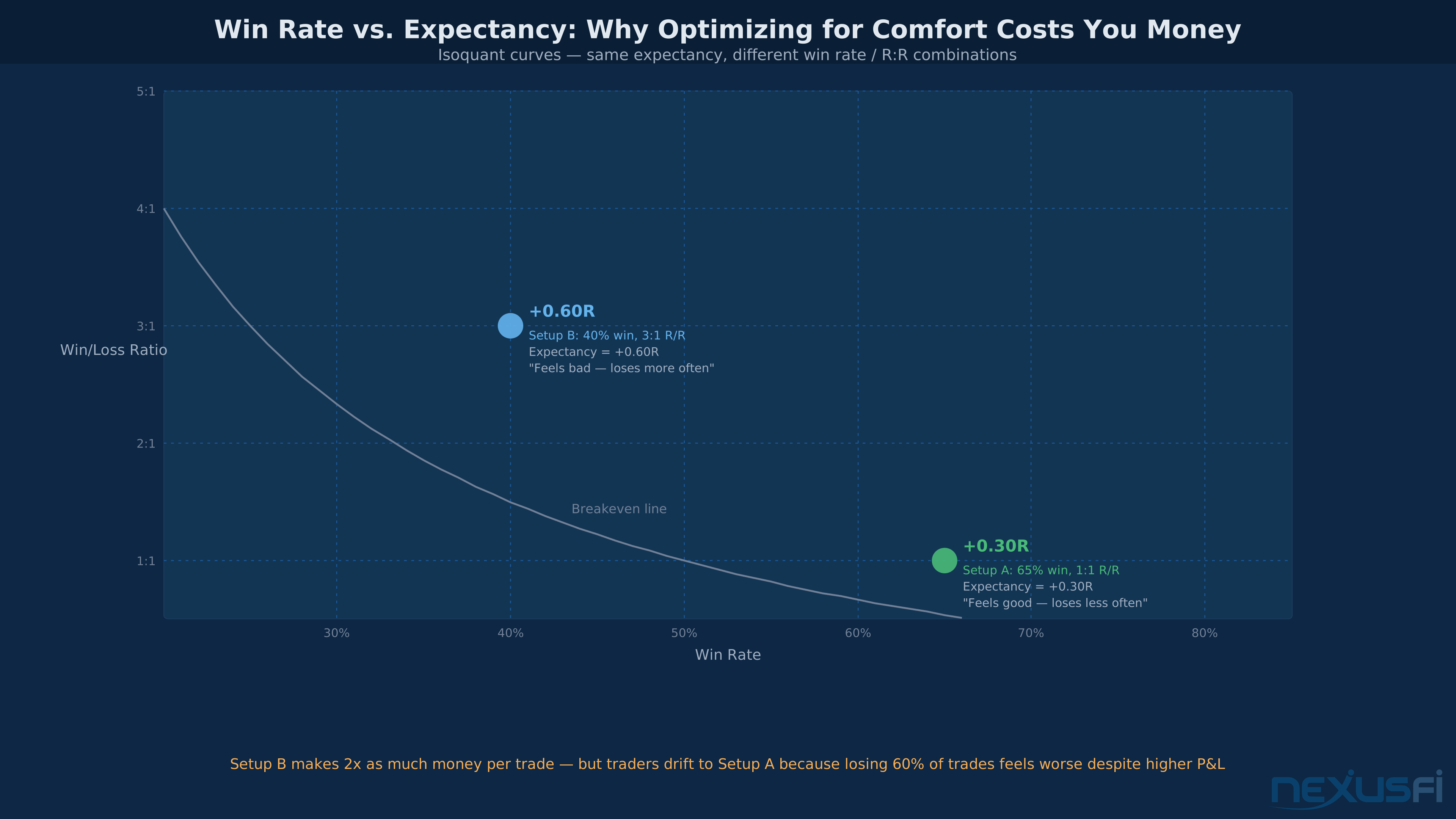
Win rate feels better than expectancy. Getting paid on more trades reduces the psychological experience of losing, which is aversive. Plateau traders frequently drift toward high-win-rate, low-expectancy setups.

A 65% win rate with 1:1 winners and losers produces expectancy of 0.30R per trade. A 40% win rate with 3:1 winners and losers produces expectancy of 0.60R per trade — twice as profitable per trade, but feels worse because you lose more often.
Diagnostic test: calculate your win/loss ratio (average winner / average loser) separately from win rate. If win/loss ratio is below 1.5:1, you need a win rate above 40% to be profitable.
Fix: set a minimum win/loss ratio target (e.g., 1.5:1) and refuse to take setups where your historical data shows the ratio falls below it.
Pattern 7: Overtrading Valid-Looking-But-Low-Expectancy Setups #
The beginner overtrades randomly. The plateau trader overtrades setups that look exactly like high-edge setups but occur in conditions that reduce expectancy to near-zero.
A VWAP pullback in a trending session has positive expectancy. A VWAP pullback on a news-dominated day with elevated spreads may look identical on the chart but have near-zero expectancy. The plateau trader sees the pattern and takes it. The regime filter that would identify "news-dominated" conditions as low-expectancy territory is either absent or being overridden.
Diagnostic test: in the last 5 trading days, how many setups did you identify that met your stated rules but that you chose not to take? If more than 30% of your identified setups aren't taken, you're running a rules-based system with a discretionary overlay you're not accounting for.
Fix: either commit to the rules fully or admit the system is discretionary and measure it as such.
Pattern 8: The Confidence Trap #
Experienced traders who've survived multiple drawdowns develop a specific kind of misplaced confidence. The reasoning, implicit: "I've survived everything the market has thrown at me. I understand markets well enough to trade them professionally."
Survival through adversity is necessary for becoming a professional trader. It's not sufficient for being one. Pattern recognition confidence is the dangerous version: after years of screen time, experienced traders can identify patterns quickly and reliably. But pattern recognition isn't edge. Your ability to see a pattern doesn't create edge — your ability to profit from it after execution does.
@FXwulf, who achieved consistent profitability after 6 years, noted in the "Time to Give Up" thread: "Although I have 'made it,' and achieved consistent financial independence over the past 6 years, the cost has proven extremely great." The length and cost of that path — even for someone who succeeded — illustrates how survival and profitability are different accomplishments.
Diagnostic test: can you quantify your edge with specific numbers from your trade history? Not "I'm good at VWAP pullbacks" — "VWAP pullbacks in ATR > 12 trending ES sessions produce 0.42R expectancy per trade over my last 180 trades."
Fix: if you can't state your edge in numbers, you don't have a measured edge yet.

The Performance Decomposition Framework #
The eight failure patterns describe what is going wrong. The performance decomposition framework identifies where in your P&L chain the leakage is occurring. This turns "I'm not profitable" into "I'm losing $0.40 per trade on exit rule violations and another $0.30 on out-of-regime setups."
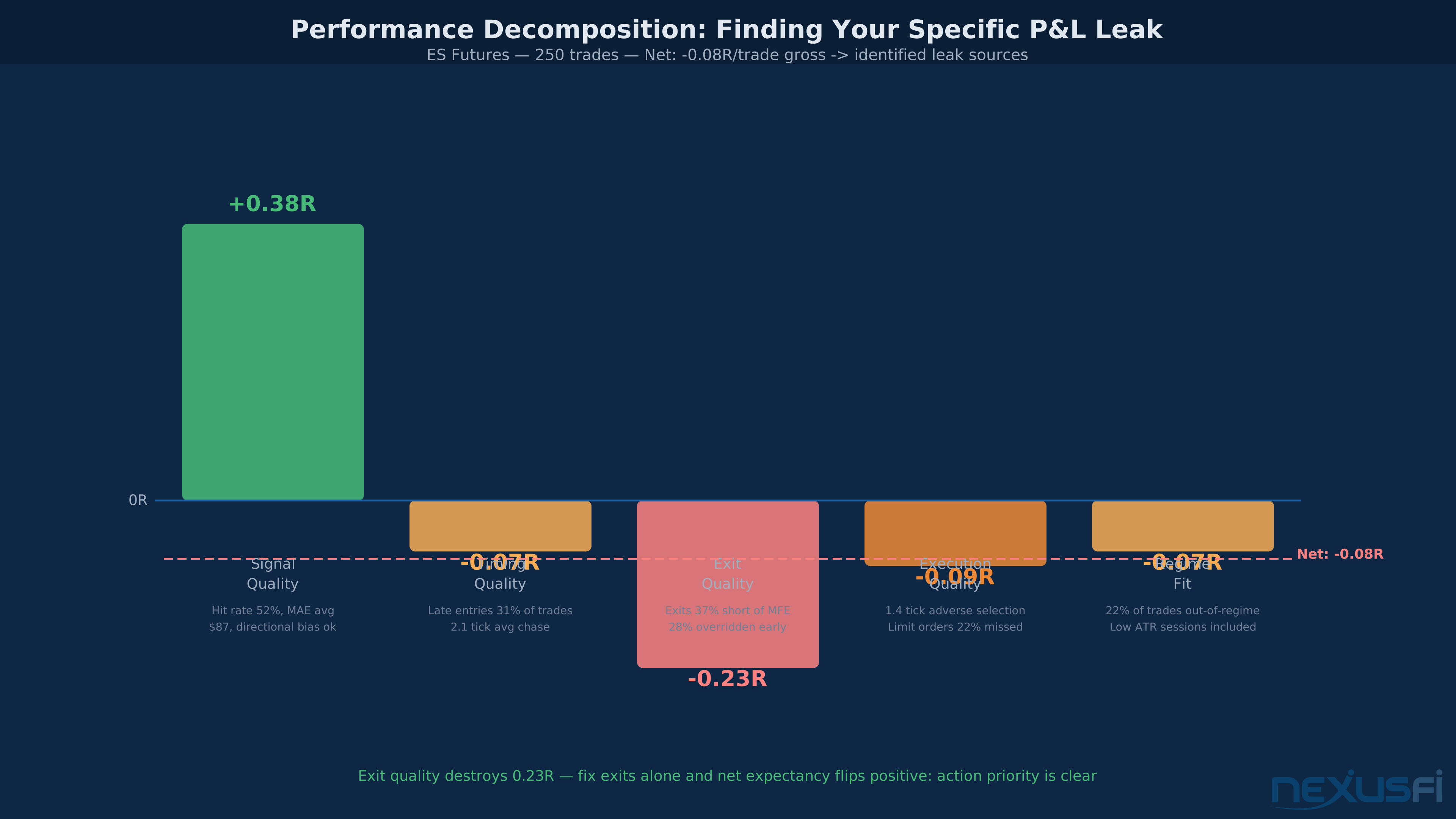
Split your trading performance across five attribution buckets:
Bucket 1: Signal Quality (Entry) — hit rate (% of trades that move in your direction before hitting your stop), average MAE, and signal-to-noise ratio at entry. If you're right about direction more than 50% of the time but still losing money, your losses are larger than your wins — and the problem is exits or costs, not entries.
Bucket 2: Timing Quality — time-to-invalidate (how long before you know the trade is working or not), time-in-trade distribution, entry price deviation from signal-trigger price. The plateau pattern is late entry: you identify a setup at the correct price level but hesitate, then enter after the first significant move away from optimal. Your stop is too far away relative to your entry and expectancy is compressed.
Bucket 3: Exit Quality — exit adherence rate, average exit price vs. target price, and profit factor by holding-time bucket. Segment your trades by how long they were held: under 5 minutes, 5-15 minutes, 15-60 minutes, 60+ minutes. Calculate profit factor for each bucket. If your 5-15 minute trades have profit factor of 1.8 but your 60+ minute trades have profit factor of 0.9, you have a clear signal you're holding trades too long in some regime.
Bucket 4: Execution Quality — average slippage per trade, fill rate (% of limit orders that fill vs. miss), adverse selection rate. This bucket often reveals a mismatch between order type and setup type. Aggressive setups executed with limit orders miss fills. Reaction-based setups executed with market orders pay unnecessary spread.
Bucket 5: Regime Fit — expectancy by market regime (ATR bucket, VWAP position, news calendar density, session type), and percentage of trades taken in the setup's regime of positive expectancy. Segment your trades by ATR regime and compare expectancy across segments. If your setup's expectancy diverges by more than 30% across ATR buckets, you have a regime-conditional edge. Add a regime filter — but measure the divergence first.
Most plateau traders assume their primary leak is signal quality (entries). Performance decomposition consistently reveals that exit quality and regime fit are the largest leakage sources. The entry problem is usually already solved — which is why you're on the plateau and not blowing up accounts.

The Diagnostic Checklist #
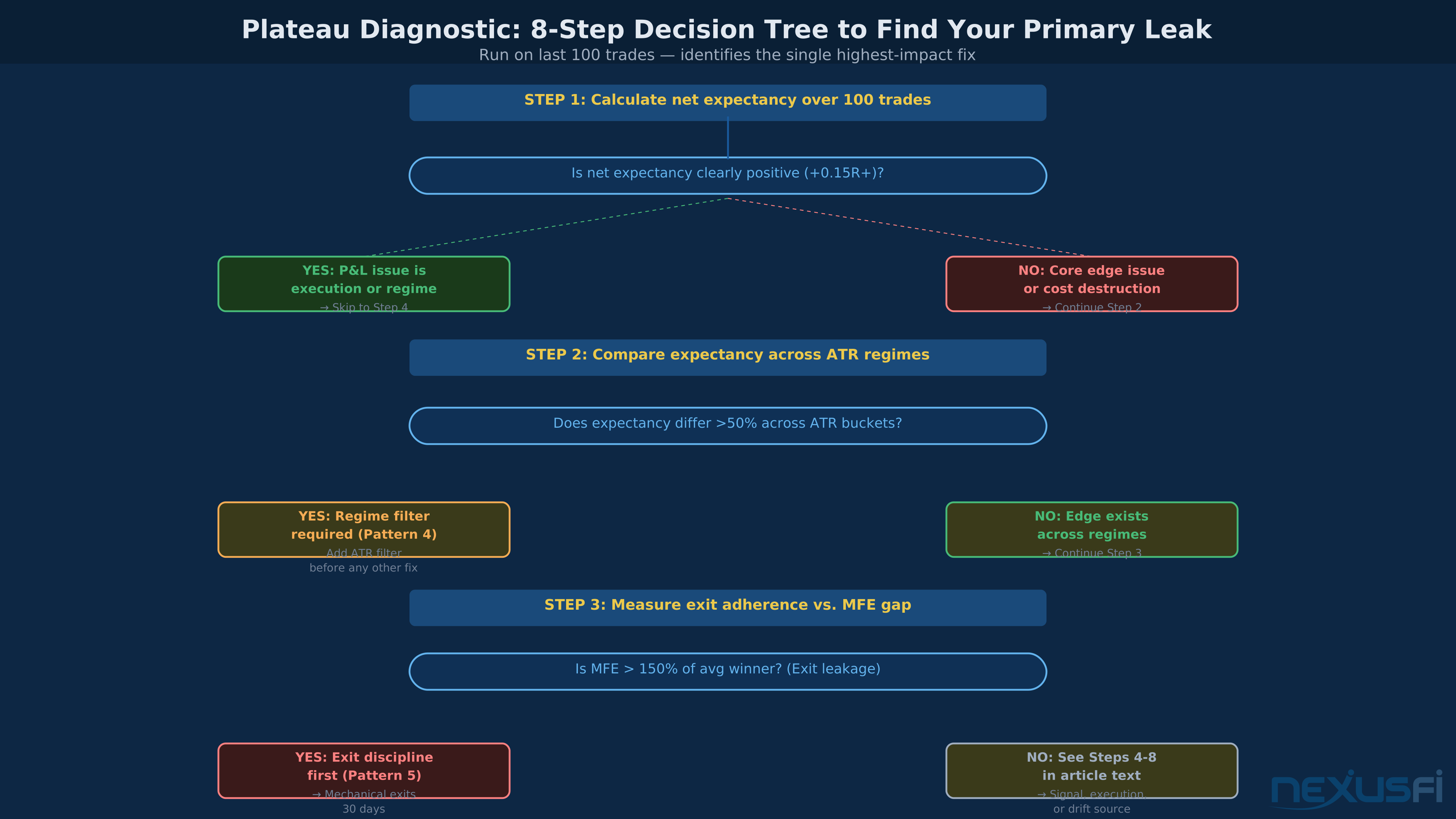
Run this audit on your last 100 trades. Fewer than 100 is directionally valid but not statistically firm.
- Calculate net expectancy. Sum all (outcome in R-multiples) / trade count. If positive but barely: proceed. If negative: focus on costs and signal quality first.
- Segment by market regime. ATR-high (above 12 for ES), ATR-medium (8-12), ATR-low (below 8). If expectancy differs by more than 50% across buckets, add a regime filter.
- Measure exit adherence. Count exits at stated rules vs. discretionary overrides. Calculate P&L difference: "what actually happened" vs. "what rules-based exits would have produced." If following rules would have been better, exit discipline is the primary lever.
- Measure MFE gap. Compare average MFE to average winner. If MFE is more than 50% larger than average winner, you're cutting winners systematically.
- Calculate gross-to-net spread. If you're paying more than 15% of gross gains in commissions and slippage, costs are squeezing your edge.
- Audit trade narratives. Count losing trades with "setup was valid but..." If more than 6 of 20 contain it, switch to metric-only journaling for 60 days.
- Compare rules to 12 months ago. Any system you can't audit for drift is a system that's drifting.
- Count skipped setups. In the last 5 trading days, how many setups met your rules but you chose not to take? If more than 30% are skipped, you have an unmeasured discretionary overlay.

What Doesn't Fix the Plateau #
More screen time. Screen time builds pattern recognition. Pattern recognition isn't edge. After 5 years, you probably have more than enough. The problem is operational.
Better indicators. Indicators are signal aggregators. If your edge isn't surviving execution costs, adding more signal complexity makes the cost problem worse. @Massive l stated this in the "Time to Give Up" thread: "If your main focus and attraction to this business was/is money, then walk away while you can... Money is a by-product of [risk, psychology, and strategy], not a focus."
It's just variance. Variance is real. Drawdowns happen to profitable traders. The distinction: variance drawdowns occur in a system with measurable positive expectancy. Plateau stagnation occurs when expectancy is near zero over 6+ months. If net expectancy over 100+ trades is below 0.05R per trade, you're not in variance — you're on the plateau.
Work on psychology first. If your edge is positive but inconsistently executed, psychological training helps. If your edge is zero, better psychology helps you execute a zero-edge system more consistently. Measure edge first.
"I'm almost there." @matthew28 captured this in the "Traders with 5-10 years still not profitable" thread: "the feeling of being just 'almost there' can last a very long time." The almost-there feeling is an emotional experience, not a market signal. Channel it into the diagnostic checklist above.
Regime Non-Stationarity: The Hidden Edge Killer #
Edges are not stable over time. Futures market microstructure has changed much over two decades. The electronification of markets, the rise of high-frequency trading, and the increasing sophistication of retail participants have all changed the competitive environment. A scalping approach that produced consistent 2:1 winners in the pre-HFT era may produce barely-breakeven results today in the same market, with the same pattern.
Testing for regime stability requires a rolling window approach. Take your strategy rules and back-test them over 3-month non-overlapping windows going back as far as you have data. Look at four outputs per window: net expectancy, win rate, MAE/MFE ratio, and gross-to-net spread.
If you find windows where the strategy was deeply negative for structural reasons, you have evidence that the edge is regime-conditional and requires a regime filter. This is good news: you have real edge in specific conditions. The work shifts from "find an edge" to "filter for the conditions where my edge is real."
@Anagami, who survived 8 years through multiple success-and-failure cycles before achieving consistency, reflected in the "Time to Give Up" thread: "I reached the conclusion that I truly don't care if I continue trading or not." That non-attachment often marks the point where execution becomes mechanical — which is when conditional edges actually show up in P&L.
The profitability plateau is almost never solved by more knowledge, better psychology, or additional indicators. It's solved by three specific operational changes: (1) define edge as conditional expectancy after costs, not a signal pattern, (2) measure where P&L leaks using the 5-bucket decomposition, and (3) version-control your rules to detect drift before it compounds.

What to Do Next #
The plateau is solvable. It requires different work than most plateau traders are doing — less market education, more operational precision.
The sequence:
- Measure net expectancy over your last 100 trades. If you haven't done this, do it before anything else.
- Run the 8-step diagnostic checklist to identify your primary leakage source.
- Pick the single highest-impact leakage source and fix only that for 60 days. Don't add anything. Fix one thing.
- Measure again at 60 days. If expectancy improved, continue. If not, you fixed the wrong thing — go back to the diagnostic.
- Add a regime filter if your diagnostic revealed regime non-stationarity.
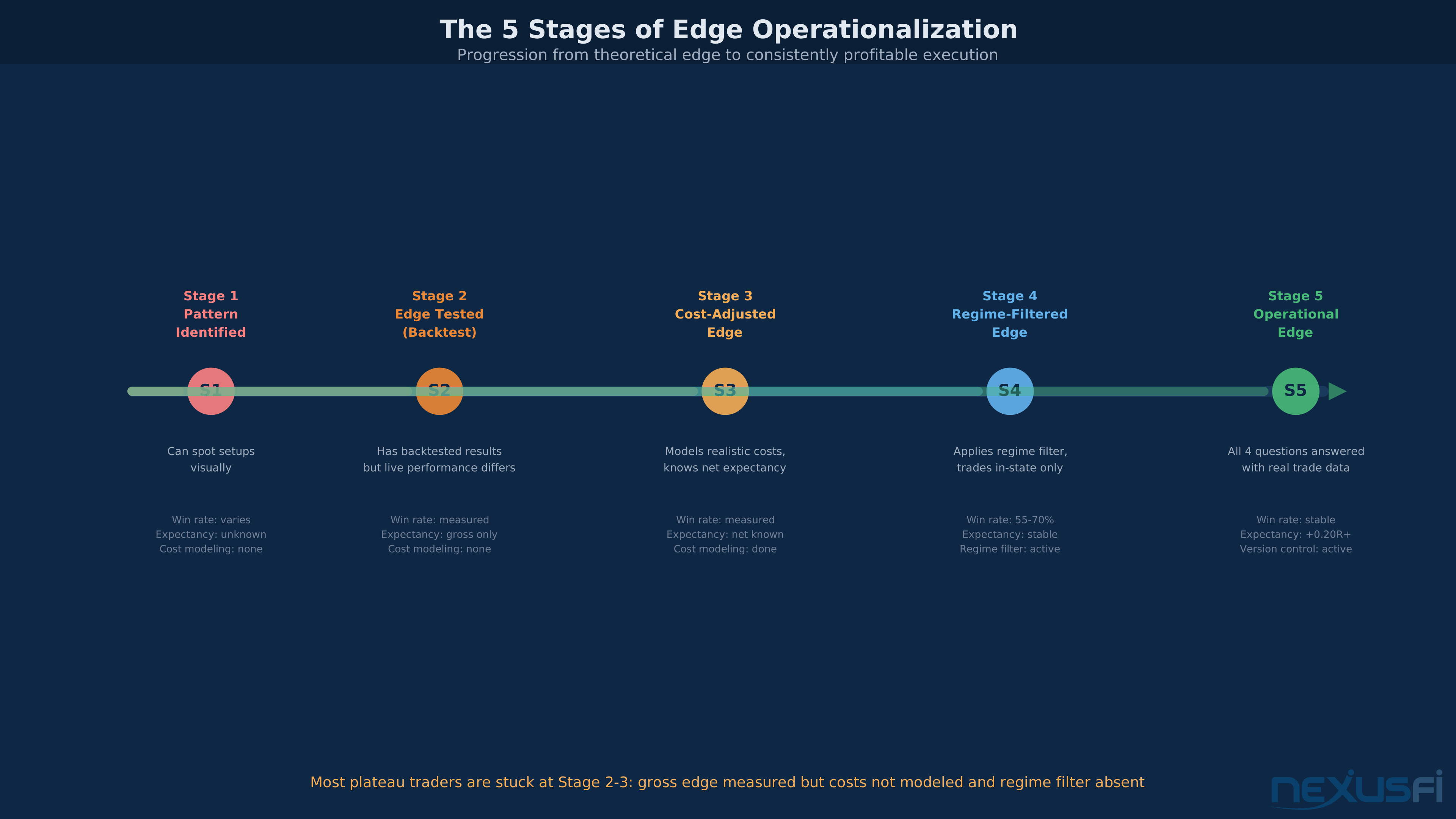
The goal is to answer these four questions with specific numbers from your actual trade history:
- What is my net expectancy per trade in my setup's optimal conditions?
- What market conditions reduce my setup's expectancy below zero?
- What is my current regime filter for identifying optimal vs. non-optimal conditions?
- What is my exit adherence rate, and what does following my exits exactly do to my P&L?
When you can answer all four with numbers, you've crossed from being a plateau trader to being a trader with operational edge. Everything after that is execution.
The 95/5 failure statistic isn't about talent or knowledge. It's about operational precision. The traders who make it are the ones who close the gap between "I understand markets" and "I can profitably operationalize that understanding after execution costs." That gap is what the plateau is about, and a measuring tape is how you close it.

Knowledge Map
Go Deeper
Build on this knowledgeCitations
- — Time to Give Up (2013) 👍 178“No way to measure themselves (they just focus on net profit). No consistent method, jumping from one trading room or indicator to the other.”
- — Traders with 5-10 years of experience but still not profitable (2022) 👍 65“They continuously go back to in effect starting again and again by frequently changing everything they do or use. Also purchasing new methods and system to the same effect.”
- — Primary source of income: how many have made it? (2010) 👍 51“I've spent thousands of hours in front of a computer screen developing...”
- — Time to Give Up (2013) 👍 67“All out effort is pre-req NOT an edge. But few even understand what all out effort is.”
- — Time to Give Up (2013) 👍 41“If your main focus and attraction to this business was/is money, then walk away while you can... Money is a by-product of those 3, not a focus.”
- — Time to Give Up (2013) 👍 122“Although I have 'made it,' and achieved consistent financial independence over the past 6 years, the cost has proven extremely great.”
- — Time to Give Up (2013) 👍 40“I reached the conclusion that I truly don't care if I continue trading or not.”
- — Primary source of income: how many have made it? (2011) 👍 38“I'm consistent only one losing day in the last six weeks... it requires you to know how to trade. That means knowing your instrument, knowing what the average daily ranges are & knowing when it is likely to turn.”
- — Primary source of income: how many have made it? (2010) 👍 64“Starting a real business to make money... The failure rate for small business over 5 years is 95%. Same reasons people fail in trading: 1. Under capitalized 2. Un-realistic expectations.”
- — Time to Give Up (2013) 👍 43“The specific edge was absolutely the benefit of customer order flow. At the CBOE and on the other trading floors, the activity happening on the floor is appropriately called trading, while the screen based activity is really short term speculation.”
- Journal of Finance — Do Individual Day Traders Make Money? Evidence from Taiwan (2011)
- CME Group — Understanding Futures Execution: Slippage, Fill Quality, and Order Types (2024)