



Counter-Trend Trading in Futures: The Fade, the Failed Breakout, and the Art of Catching Exhausted Moves
Overview #
Counter-trend trading is the discipline of entering against the current direction of price — buying when everyone is selling, shorting when buyers are piling in. Done correctly, it captures price reversions at structural extremes. Done poorly, it puts you in the path of a freight train.
The appeal is obvious. Markets oscillate. Every trend exhausts. Every breakout that fails becomes a trap. There's real money to be made when other participants are overextended and forced to unwind. The problem is that most traders who try to fade moves do so too early, too often, and without a principled framework for knowing when the impulse has genuinely run its course.
This article builds that framework. It covers the conditions under which fading has an actual edge, the specific signals that separate exhaustion from continuation, the two primary setup structures (mean reversion and failed breakout), and the risk management principles that determine whether counter-trend trading is a viable strategy or an expensive habit.
One important clarification before going further: counter-trend trading is not the same as contrarianism. The goal isn't to disagree with the market on principle. The goal is to identify when the market's directional auction has failed — when buyers can no longer extend an upside push or sellers can't drive price lower — and position for the resulting reversion. You're not predicting the next move. You're reading whether the current move has exhausted itself.
Why Fades Work: The Failed Acceptance Framework #
Futures markets are continuous two-sided auctions. Price moves directionally when one side is more aggressive, willing to lift offers or hit bids to transact. That directional pressure persists as long as new participants keep entering to push the auction further.
Fading works because directional moves eventually exhaust their fuel. The buyers who drove a rally run out of conviction. Late longs who chased the move see their thesis invalidated and are forced to exit. Momentum traders take profits. The auction stalls, then reverses.
The key insight — one that experienced NexusFi traders return to repeatedly — is that acceptance determines whether a move matters. Price can trade at any level temporarily. What determines structural significance is whether the market accepts that level, meaning whether both buyers and sellers are willing to transact there over time.
The failed breakout doesn't just signal a missed opportunity — it signals a structural rejection that often propels price back toward the opposite extreme.
This failed-acceptance model is more reliable than indicator-based divergence alone. Indicators are derivatives of price and lag the underlying auction process. Market structure — where price goes, how long it stays, and whether it can attract new participants — is the primary signal. Indicators confirm what structure already suggested.
The Three-Element Framework #
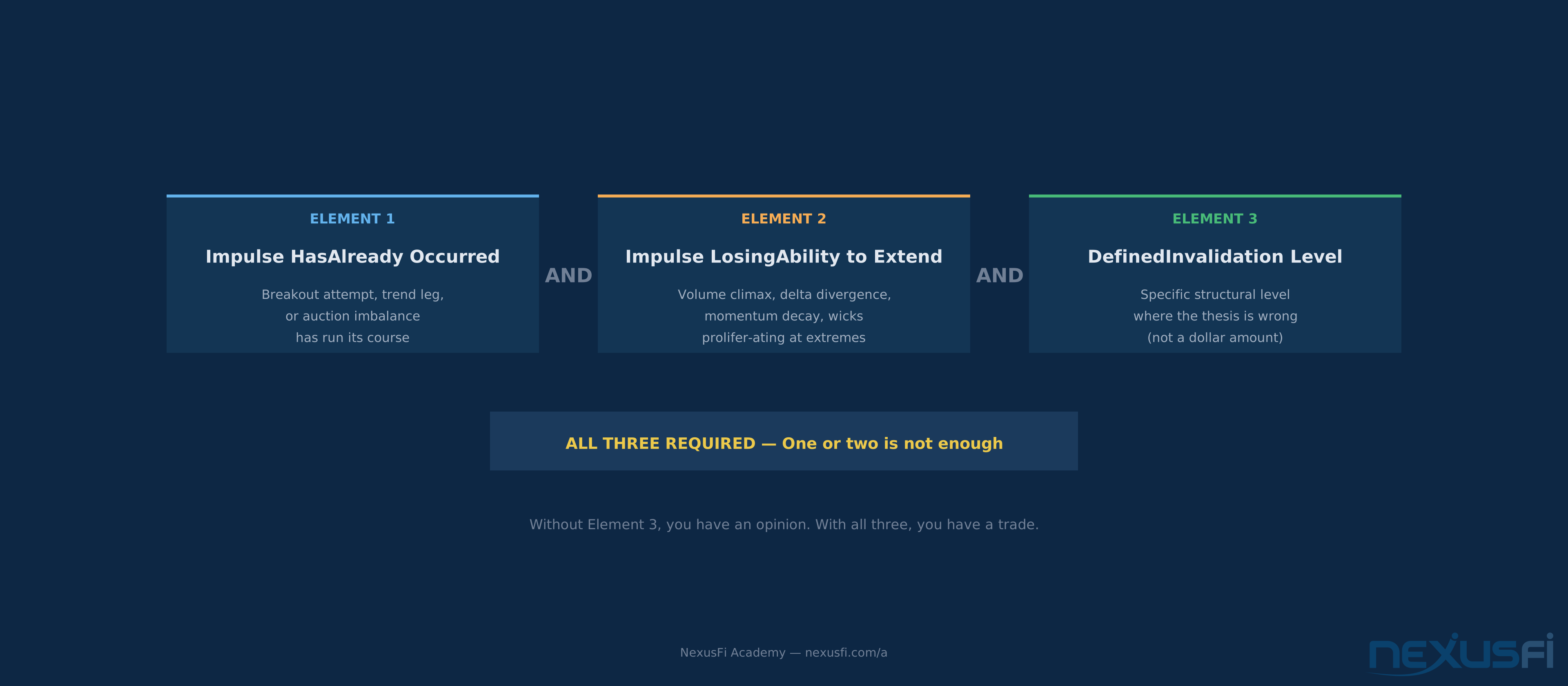
Every valid fade requires three elements. All three must be present. One or two is not enough.
Element 1: An Impulse Has Already Occurred #
Counter-trend trading is reactive, not predictive. You are not calling a top or bottom in advance. You are reading an impulse that has already developed — a breakout attempt, a trend leg, an auction imbalance that has run far enough to create a potential exhaustion condition.
Without a completed impulse, there is nothing to fade. Traders who fade moves "because they've gone too far" without a specific structural trigger are guessing. The market can extend further than expected. The question isn't whether a move is large; it's whether the specific conditions for exhaustion are present.
Element 2: Evidence the Impulse Is Losing Its Ability to Extend #
The second element is confirmation that the auction is running out of fuel. This manifests as:
- Reduced continuation: subsequent bars are smaller, with more wicks and less follow-through
- Volume climax without acceptance: high participation at the extreme, but the auction cannot sustain trades at that level
- Momentum divergence: the indicator makes a lower high on a price move that makes a higher high, suggesting the underlying drive is weakening
- Order flow degradation: aggressive-side volume diminishes; the footprint shows fewer large trades in the trend direction
- Delta divergence: price makes new highs but cumulative volume delta is declining, indicating net selling into the rally
The specific distance matters less than the observable fact that participation is declining while price is extending.
@Fat Tails provides a similar framework in THREE SET UPS, distinguishing between exhaustion volume (the final push where supply or demand overwhelms) and stopping volume (the response that halts the move). The two often occur in sequence: a high-volume climax followed by the inability to press further.
Element 3: A Defined Invalidation Level Tied to Market Structure #
The third element is often what separates disciplined fade traders from those who consistently give back profits. You must know exactly where the trade is wrong before you enter.
Acceptable invalidation levels:
- Above the failed breakout high (for short fades)
- Below the failed breakdown low (for long fades)
- Outside the value area boundary you're reverting toward
- Beyond the extreme wick that defined the climax
Unacceptable invalidation:
- "I'll give it a few points"
- "If it goes too far against me"
- "It should bounce here"
Without a structural invalidation level, you don't have a trade. You have an opinion. And opinions about futures markets are expensive.
Setup Type 1: Range and Value-Area Mean Reversion #
The first and generally more reliable counter-trend setup involves prices reverting to established value after a temporary displacement. This setup works best in range-bound or balanced market conditions — when the context is equilibrium rather than trending.
The Core Setup #
The mean reversion setup requires:
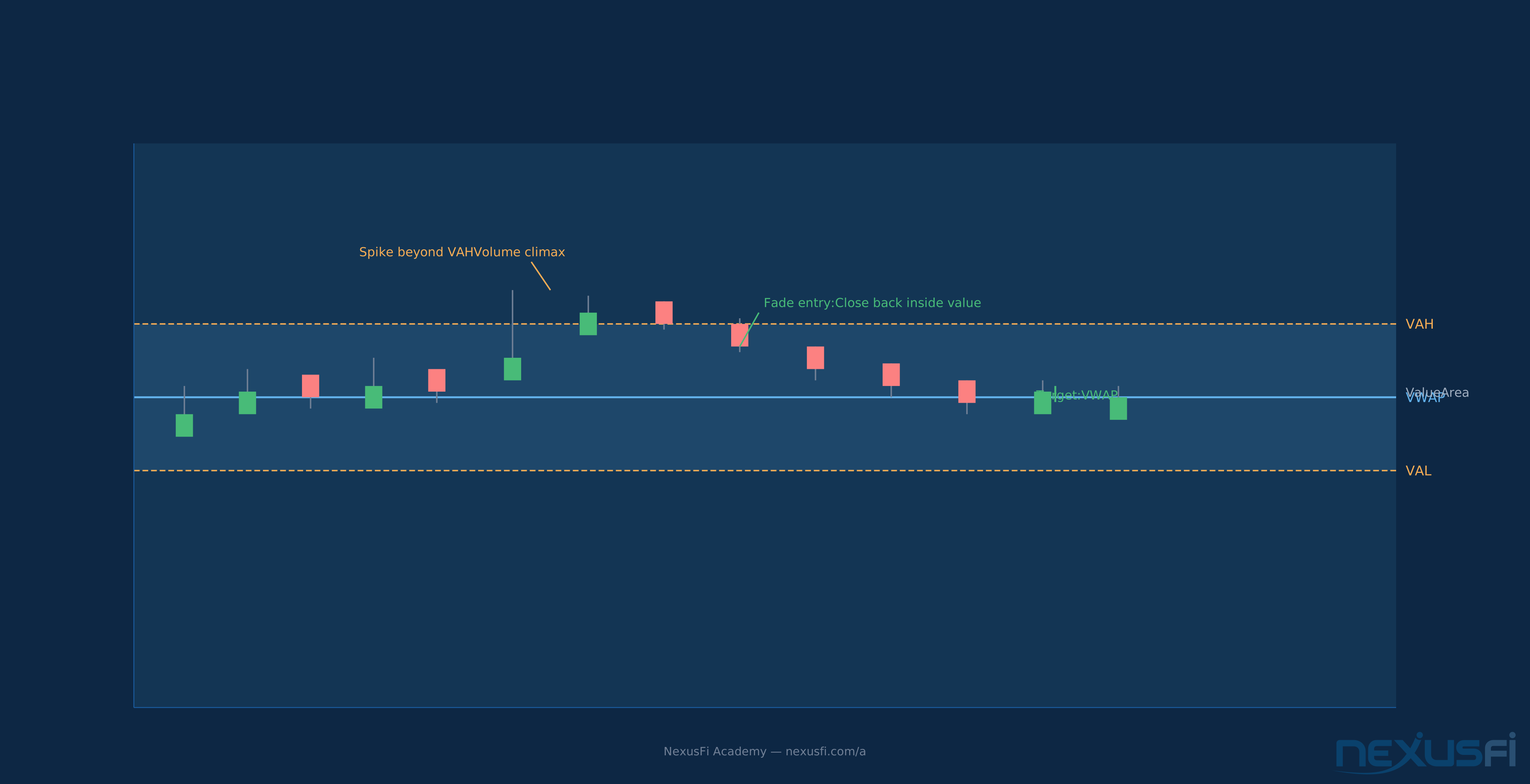
- An identifiable value area, VWAP band, or range midpoint representing prior acceptance
- A spike or impulse that carries price away from that value
- Evidence the spike is failing to attract continuation participation
- Entry on the reversion back toward value
The logic is straightforward: the market established a fair range through extensive two-sided trading. An impulse drives price outside that range. If the impulse cannot attract new buyers (on an upside spike) or new sellers (on a downside spike) to expand the auction in the new direction, price will revert to the prior accepted range.
Common Mean Reversion Variants #
VWAP and Session Value Area Fades When price spikes much above or below the session VWAP, the probability of reversion increases — provided the spike shows signs of exhaustion. Watch for: the VWAP gap increasing beyond one standard deviation, volume on the spike declining as price extends, and a return bar that closes back toward the VWAP.
Prior Session High/Low and Opening Range Extremes These levels represent structural anchors where prior two-sided trading occurred. Failed attempts to extend beyond these levels — especially when accompanied by reduced participation on the extension — often resolve with a full test of the opposite extreme.
Bollinger Band Extreme Fades A two-standard-deviation expansion with volume divergence (high-volume thrust into the band without continued follow-through) creates a mean reversion setup. The entry trigger is a close back inside the bands, not a touch of the extreme.
This is the professional version: not fading the trend itself, but fading the overcorrections within a larger directional context.
Risk Management for Mean Reversion #
Mean reversion trades have tighter natural stops because the invalidation is structural. If price is accepting outside the prior range — if multiple bars are closing above the breakout level — the reversion thesis is wrong. Stops belong just beyond the acceptance boundary, not at arbitrary distance.
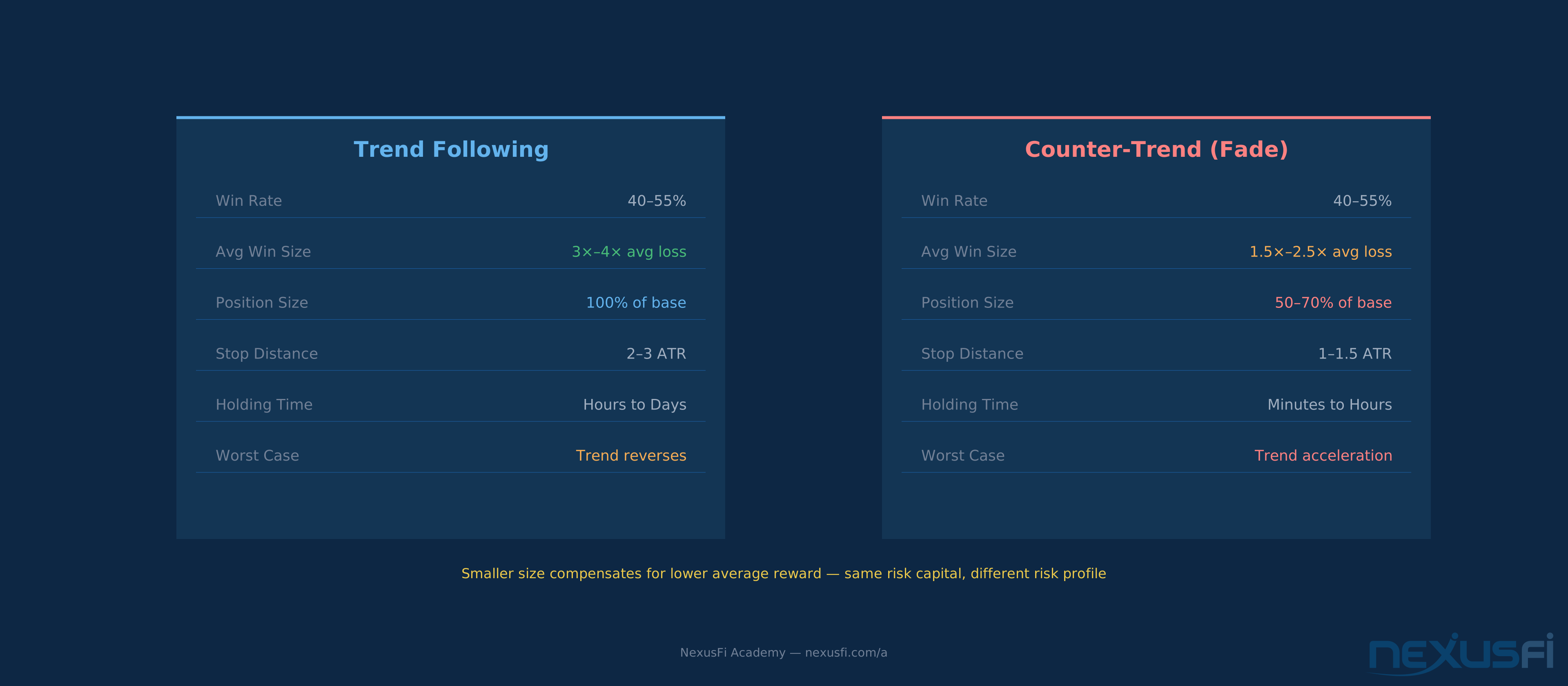
Position size should be smaller than trend-following trades. The risk/reward is typically 1:1 to 2:1, not the 1:3 or better available in trend trades. Higher hit rate compensates for compressed reward.
Setup Type 2: Failed Breakout and Breakdown #
The second counter-trend setup is structurally different and typically offers better asymmetric risk/reward. Instead of fading a move within a range, you're identifying when a directional attempt beyond a key level fails to attract follow-through.
The Anatomy of a Failed Breakout #
The failed breakout proceeds through recognizable phases:
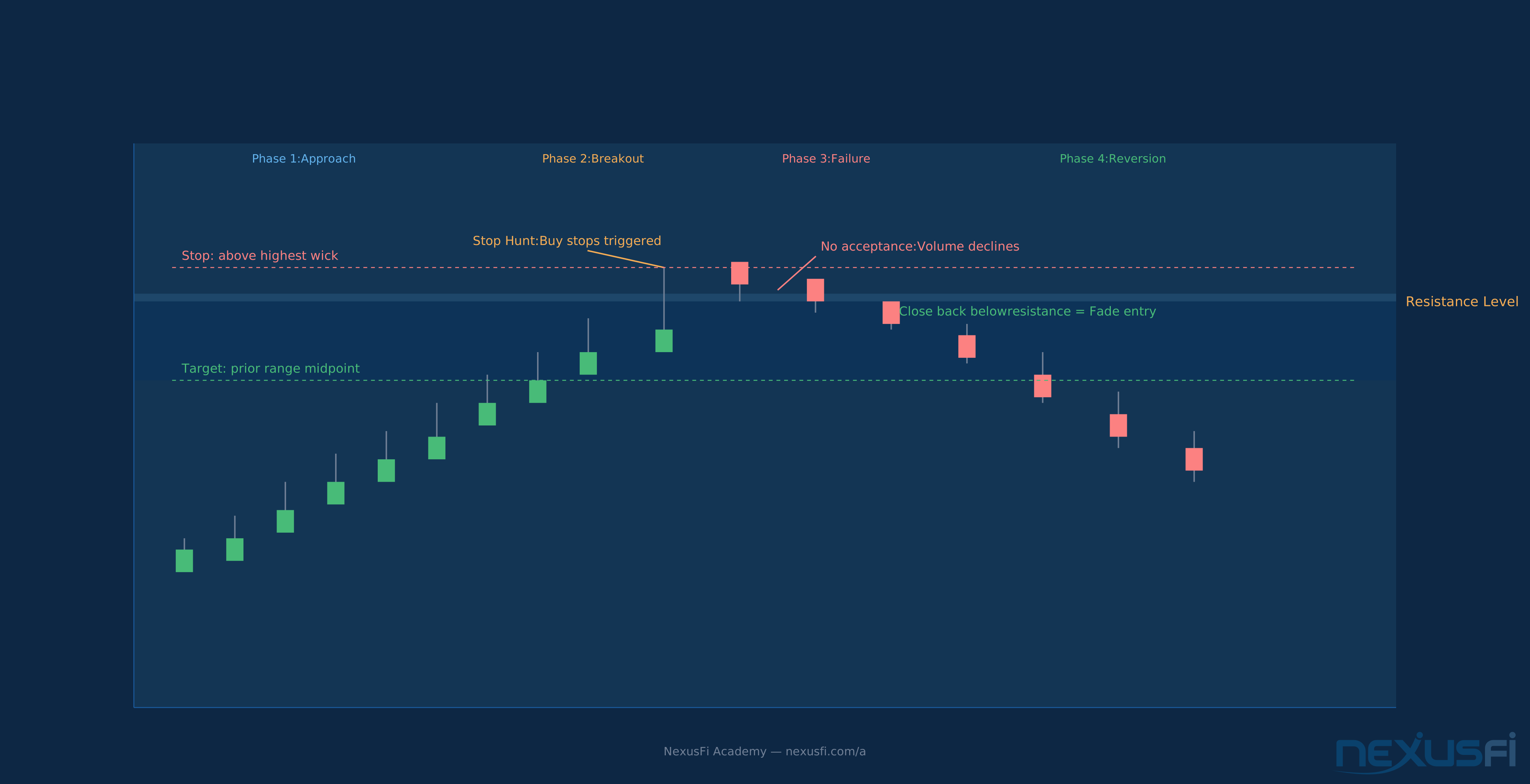
Phase 1: The Setup Level A prior high, low, resistance level, or structural boundary that the market has previously respected. Both buyers and sellers have transacted near this level. It represents known auction history.
Phase 2: The Break Price moves beyond the level. Buy-stop orders above the high are triggered; short stops below a low are swept. This creates an initial appearance of a genuine breakout.
Phase 3: The Failure to Accept Participants who anticipated the breakout exit. New participants who would validate the new level don't show up. The auction cannot sustain trades above (or below) the breakout level. Volume thins. Wicks form.
Phase 4: The Reversion Price closes back inside the prior range. The breakout buyers are now trapped; their stops on a reversal fuel the counter-move. The failed breakout becomes a low-risk fade entry.
When those stops are run and the move fails, the trapped longs become forced sellers — and that selling pressure provides the counter-trend trader's exit momentum.
The Swing Failure Pattern (SFP) #
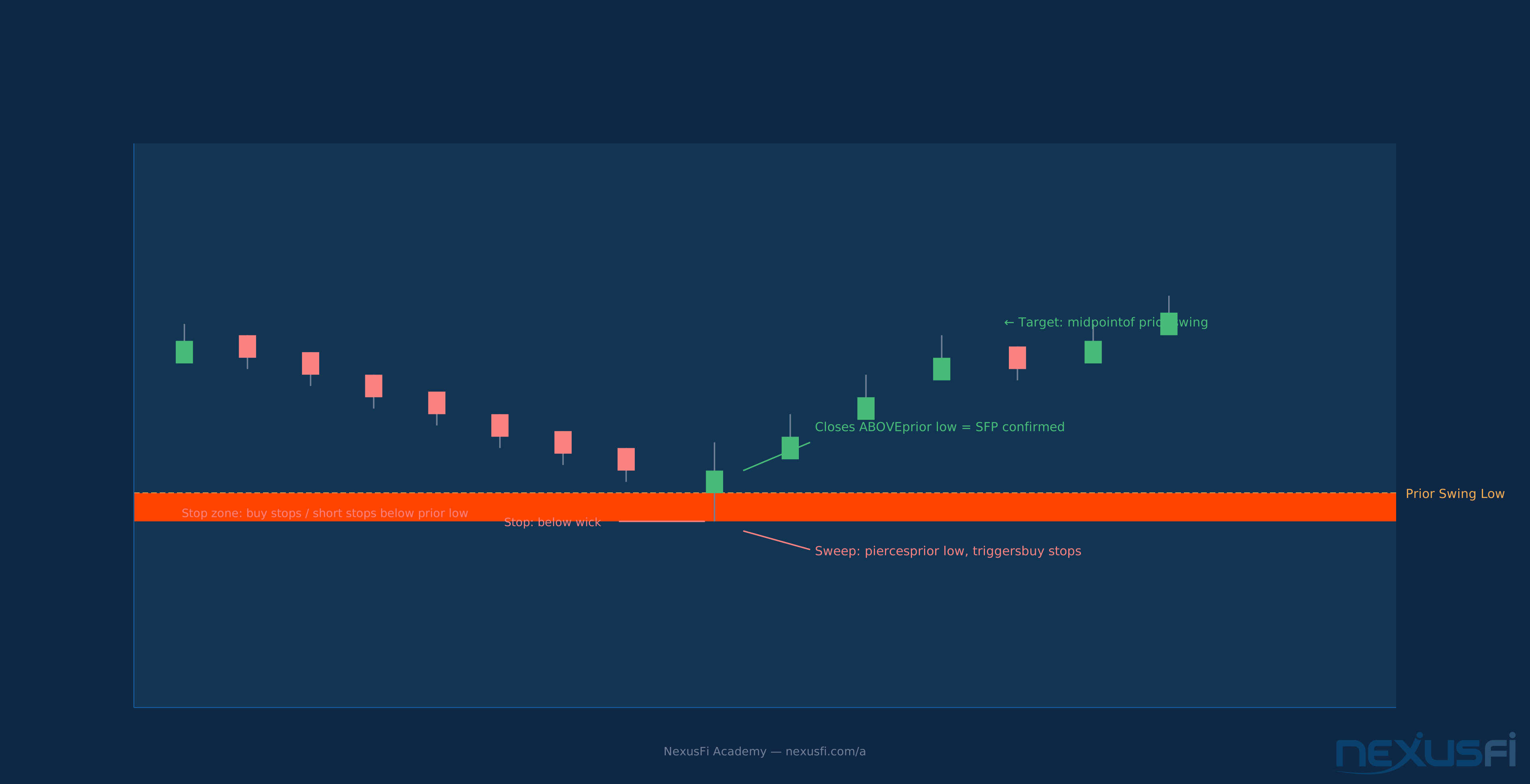
The swing failure pattern is a specific failed-breakout setup where price sweeps a prior swing high or low, then immediately reverses. On an SFP long:
- Price drops below a prior swing low
- The break is brief — price cannot accept below the prior low
- Price reverses and closes above the prior swing low
- Stop placement: below the wick that swept the prior low
- Target: at least back to the midpoint of the prior swing range
The SFP's reliability comes from its directional clarity. The prior swing low represented buying interest. The sweep below that level cleared stops and gave sellers an opportunity to extend. When sellers couldn't hold below the low, it reveals that the selling pressure was insufficient — creating a structural argument for the upside reversal.
Entry Techniques for Failed Breakouts #
The conservative entry waits for a close back inside the prior range — concrete evidence that the breakout has failed. This reduces the hit rate slightly but dramatically improves the signal quality.
The aggressive entry anticipates the failure by entering on the retest of the breakout level after an initial rejection.
The buy zone in that context was the retest of a level that had already shown initial rejection — not the first touch, not chasing.
The difference in timing determines stop placement. Conservative entries place stops just beyond the breakout wick. Aggressive retest entries use tighter stops at the retest level itself.
Reading Exhaustion: The Signal Stack #
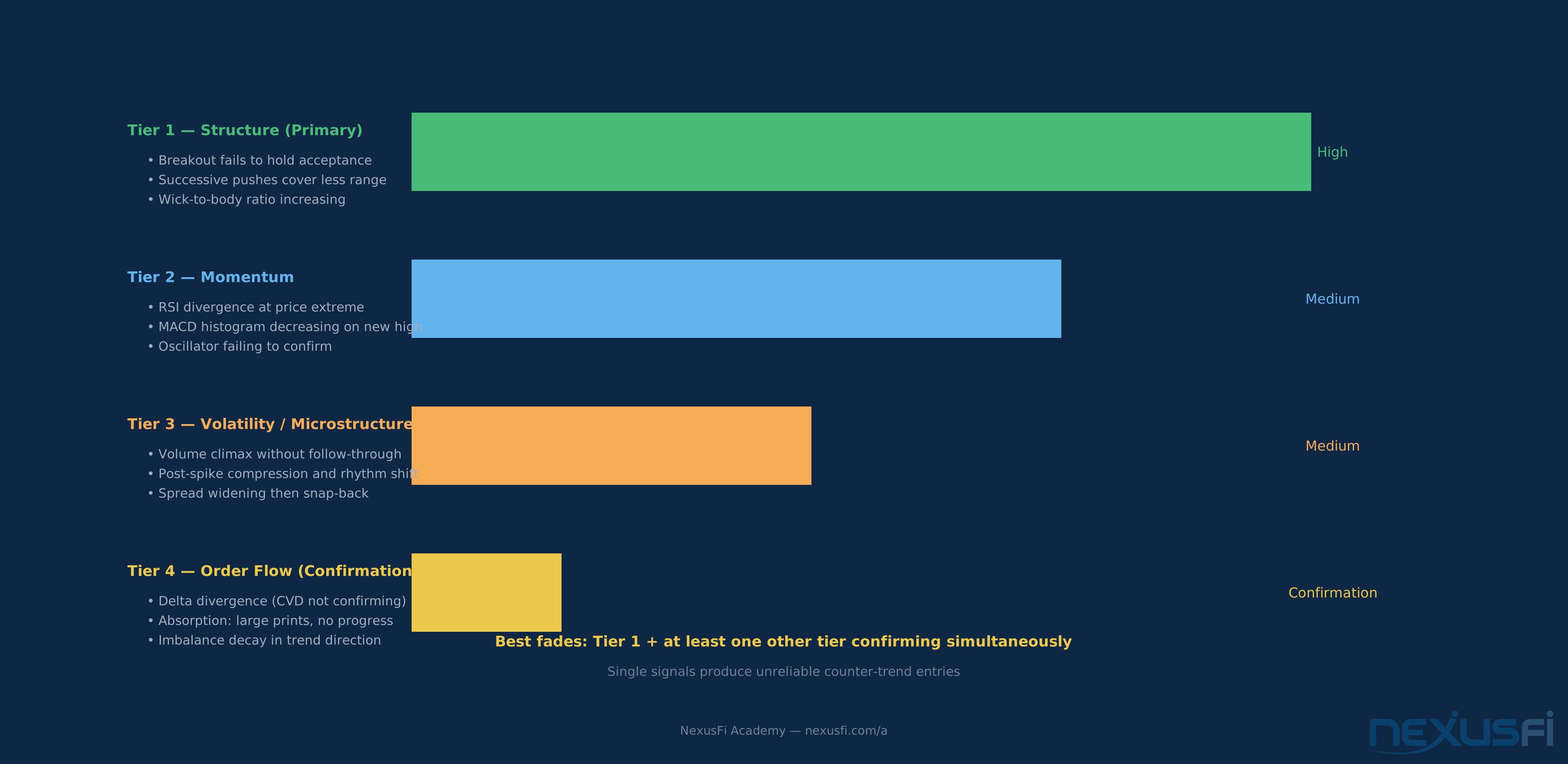
Individual exhaustion signals are unreliable in isolation. Counter-trend trading gains edge when multiple signals stack simultaneously — when exhaustion is confirmed across structure, momentum, and order flow layers simultaneously.
Structure-Based Signals (Primary) #
Structure signals are the highest-priority tier because they reflect the actual auction process, not derived indicators.
Breakout failure with time: The longer price fails to accept above (or below) a key level, the more significant the rejection. One failed attempt might be noise. Multiple attempts that can't hold acceptance, each one showing reduced participation on the extension, signal structural rejection.
Reduced range on successive pushes: Trend legs typically show diminishing range as they mature. Each new push covers less ground per bar. When you can observe three or four consecutive pushes where the incremental range is contracting, the auction is running low on fuel.
Wick proliferation: Increasing wick-to-body ratios on bars near an extreme indicate that both sides are actively transacting. The market is rejecting new prices on both sides of each bar. This indecision at extremes often precedes reversals.
Momentum Signals (Secondary) #
Divergence between price and momentum oscillators provides secondary confirmation when price makes a new extreme but the indicator does not confirm it.
Reliable divergence for fading requires:
- At least two peaks (for bearish divergence) or two troughs (for bullish divergence) separated by a meaningful retracement
- The second peak/trough must be a confirmed new price extreme
- The indicator value at the second extreme must be meaningfully lower/higher than at the first
Single-bar divergence at an extreme is not reliable. The sequence needs to play out across multiple bars to reflect the underlying shift in momentum.
Order Flow Signals (Confirmation) #
Order flow and footprint data provide the most direct evidence of exhaustion — observable buying and selling pressure at specific price levels.
Delta divergence: Cumulative volume delta (CVD) measures the net difference between market buys and market sells. When price makes a new high but CVD fails to make a new high, aggressive buying has peaked even though price has extended. This is a concrete measurement of the impulse running low on fuel.
Absorption: Price pushes into a level and trades significant volume without progress. Large prints appear on one side, but price doesn't move. This visible absorption signals that supply or demand is overwhelming the directional pressure.
Participation decay on extensions: After a strong directional bar, the follow-through bars show declining volume and reduced size. The move that was driven by aggressive participants is now drifting on reduced conviction.
The character of the order flow — not just its presence — signals whether the move has conviction or is exhausting.
Institutional Fade Triggers: Why Professionals Fade #
Understanding why institutional and systematic traders fade helps retail traders recognize the setup conditions before they're obvious on the chart.
Institutions don't fade randomly. They fade when the structure of the auction signals that directional pressure has peaked and reversal risk/reward is favorable.
Liquidity threshold failure: The breakout or trend leg was supposed to attract new participants. When it doesn't — when volume thins above a prior high instead of expanding, when the new level can't attract two-sided acceptance — the move has failed its structural test.
Positioning dynamics: Markets periodically become one-sided. When too many participants are positioned long (or short), the aggregate position itself creates vulnerability. Even mild adverse price action forces sequential liquidation, which accelerates the reversal. Institutional traders who monitor positioning data look for these overextension conditions.
Options market influence: Dealers' gamma positioning creates mechanical hedging flows that can resist trend extensions. When prices push toward large gamma concentrations, dealers who are short gamma hedge by selling rallies and buying dips — creating natural counter-trend pressure at predictable levels.
Mean reversion at statistical extremes: Quantitative and systematic strategies monitor volatility-normalized price deviations. When prices extend more than two standard deviations from a rolling mean, systematic mean-reversion strategies activate. Their coordinated buying or selling at extremes contributes to the reversal pressure that the technical trader is trying to catch.
These institutional mechanisms don't guarantee reversals, but they explain why certain extremes have higher reversion probabilities than others — and why the best fade setups occur at levels that are structurally, statistically, and optically significant simultaneously.
Risk Management: The Make-or-Break Variable #
Counter-trend trading dies from two causes: catastrophic adverse excursions when the market is genuinely trending, and death by a thousand cuts from stops too tight in noisy areas. Risk management determines which category of trader you are.
The Core Principle: Structure Over Distance #
The single most common mistake in counter-trend risk management is placing stops at a fixed distance from entry — two points, a fixed ATR multiple, a percentage of account. Stops must reference market structure.
Acceptable structural stop placement:
- Just beyond the failed breakout wick: For a short fade on a failed breakout above resistance, the stop goes above the highest wick of the failed extension attempt.
- Beyond the acceptance failure boundary: For a mean reversion fade, the stop goes at the point where your thesis of "price is not accepting here" becomes invalid.
- Outside the range of the entry pattern: For a swing failure pattern, the stop goes below the lowest point of the sweep wick.
Structurally-placed stops may be wider or narrower than fixed-distance stops depending on context. The key is that the level where you're wrong is defined by the market, not by your preferred dollar risk.
Position Sizing: Smaller Than You Think #
Counter-trend trades warrant 30-50% smaller positions than trend-following trades. The reasoning:
- Lower base expectancy: Counter-trend strategies typically run 40-55% win rates, meaning you expect to lose on most trades. The strategy works because wins are larger than losses in expectancy terms, not because you're right most of the time.
- Catastrophic loss potential: The worst case for a counter-trend trade — being caught in a genuine trend acceleration — can produce much larger adverse moves than the worst case for a well-placed trend trade.
- The cost of being wrong early: Experienced counter-trend traders often see a valid setup develop, enter, stop out, then watch the trade work exactly as expected but from a price they're no longer in. The ability to re-enter requires capital preservation from the initial loss.
Sizing down reduces the psychological pressure to hold through adverse moves and preserves capital for re-entries when the setup develops correctly.
Scale-Out Targets #
Counter-trend trades have a natural tendency to work partially and then stall or reverse. Taking partial profits at the first structural target — rather than holding for a full reversal — dramatically improves realized P&L relative to theoretical maximum gain.
Typical scale-out targets for mean reversion trades:
- First target: return to the primary equilibrium level (VWAP, value area midpoint, prior range midpoint)
- Second target (if managing a runner): opposite extreme of the range
For failed breakout trades:
- First target: back inside the range above/below the breakout level
- Second target: prior range opposite extreme
Scale out and trail stops on remaining position rather than targeting a specific exit. The market will determine where price accepts, not your projection.
Time Stops: The Underused Tool #
A counter-trend trade that isn't working within a defined number of bars is probably wrong. Unlike trend trades, which can develop slowly, counter-trend setups have a time component: if the reversal was going to happen, it typically happens quickly.
If price holds at the extreme for an extended period without reversing, consider reducing or exiting:
- The market is accepting at the new level, which is evidence against the fade
- Each bar of non-reversion reduces the quality of the exhaustion thesis
- Exiting and re-evaluating costs less than waiting for the stop to get hit
This is uncomfortable because traders who exit time-wise often watch price eventually reverse. But the proper framework is: if your thesis requires more time than expected, the thesis needs re-evaluation, not just more patience.
No-Trade Filters #
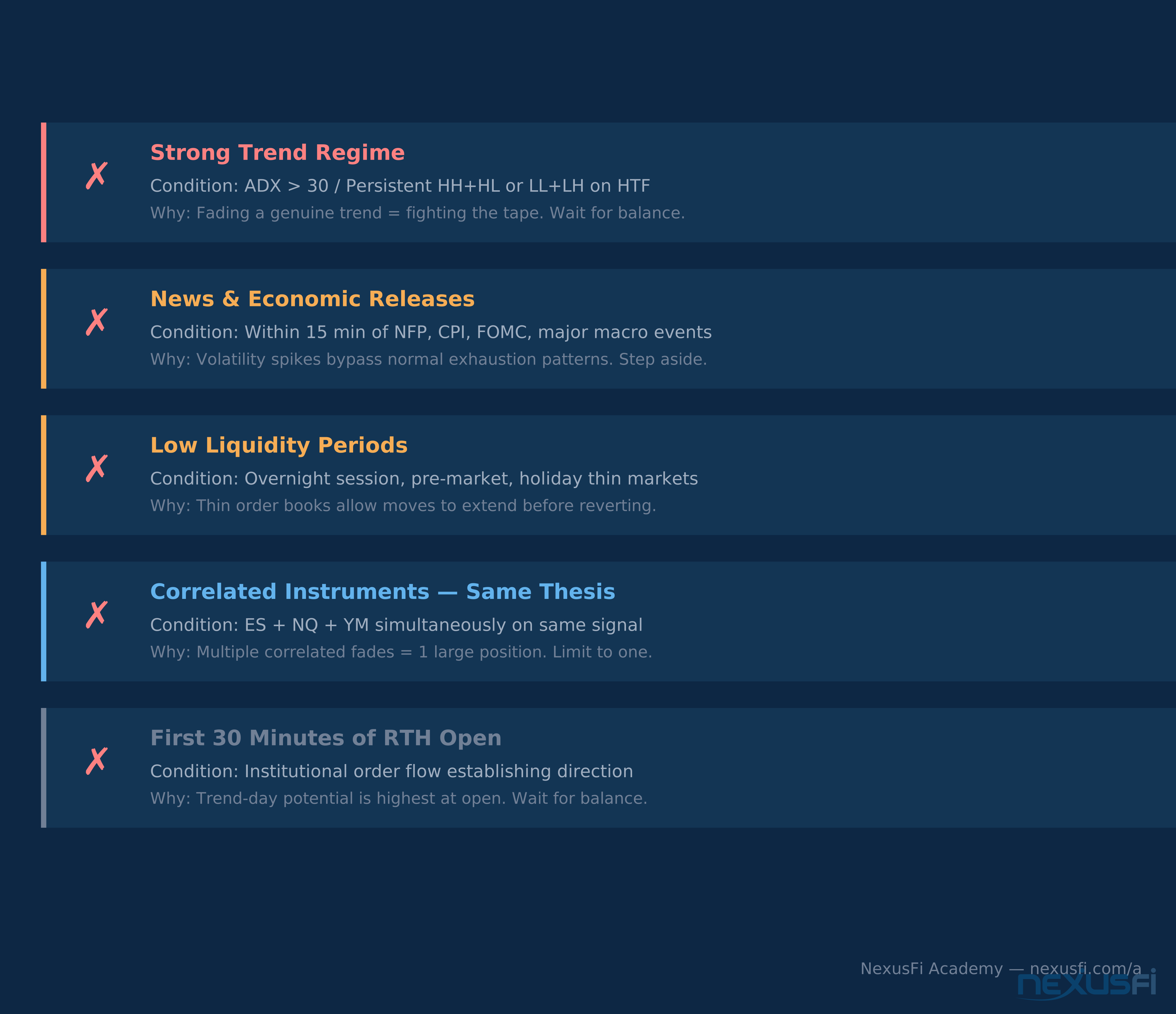
Defining conditions where you won't fade is as important as identifying conditions where you will. The counter-trend trader's no-trade list:
Strong trend regime: When ADX is above 30, or when price is making consistent higher highs and higher lows on a higher timeframe while you're trying to fade a lower timeframe move, the structural context argues against the fade. Fades work when the larger market is in equilibrium; they fail systematically when the market is in a genuine trend.
News and economic releases: Counter-trend strategies are especially dangerous around scheduled data releases (NFP, CPI, FOMC, etc.). Volatility spikes can extend far beyond expected ranges, and the normal exhaustion signals don't apply in the same way.
Low liquidity periods: During overnight sessions, pre-market, or around session transitions, thin liquidity allows moves to extend further before reverting. Structural levels from regular session trading may not hold the same relevance.
Correlated instruments: If you're fading a move in ES, don't simultaneously fade the same move in NQ, YM, and RTY. These are highly correlated instruments. Running four simultaneous counter-trend trades on the same thesis creates concentrated risk that stops make no attempt to account for.
The operative word is "wait." The counter-trend trader's edge comes from discipline about which fades to take, not from fading everything that looks extended.
Common Mistakes and How They Play Out #
Fading Too Early #
The most common mistake is entering before the impulse has exhausted itself. Price looks extended, so you sell. Price continues extending, stops you out, then eventually reverses — exactly as you expected, but 20 points higher than where you entered.
Fix: Require observable evidence of exhaustion (specific signals, not just "this looks too far"). Wait for confirmation on the timeframe you're trading.
Holding Through Genuine Trends #
The career-ending mistake is staying in a counter-trend trade through a genuine breakout. Markets in real trend mode make all-time highs, all-time highs plus a point, all-time highs plus two points, and so on. Each of these looks like the reversal might be imminent. Counter-trend traders who hold through these sequences compound their losses at each extension.
Fix: Non-negotiable structural stops. Honor them on first hit. If the structural stop level has been penetrated, the trade is wrong. Exit without negotiation.
Underestimating Correlation Risk #
Running correlated fade trades on the same thesis concentrates risk that individual position sizing doesn't capture. Five small positions in correlated instruments can function as one large position when they all hit stops simultaneously.
Fix: Treat related instruments as one trade for position sizing purposes when they're based on the same thesis.
Repeating Losing Setups Immediately #
Losing a counter-trend trade in the early stages of a genuine trending move can trigger the impulse to re-enter the fade at the new extreme. This is revenge trading disguised as trading conviction. The original thesis was wrong; the market is telling you it's trending.
Fix: After a counter-trend stop-out, require a full structural reset before re-evaluating the fade. The market needs to establish new equilibrium before the next fade setup is valid.
Integrating Counter-Trend with Broader Context #
Counter-trend trading doesn't exist in isolation. The most successful practitioners use it selectively within a broader market context read:
Within-trend mean reversion: As @trendisyourfriend notes, the professional application is often fading the corrective pushes within a larger trend. The overall structure is up; you're fading the sharp overshoots above an ascending structure rather than trying to catch the final top.
Balance days vs. trend days: Counter-trend strategies perform vastly differently depending on the day type. On balance days (TPO profile with a normal distribution, price respecting the value area), mean reversion is the primary strategy. On trend days (P or b-shaped profiles, price consistently building new value in one direction), counter-trend is dangerous. Learning to identify day type early is a prerequisite for counter-trend trading.
Session context: The RTH open often creates exaggerated moves as institutional order flow enters and sets initial direction. The first 30-60 minutes contains more trend-day potential. Counter-trend setups that develop after the initial balance is established — once the day type is clearer — are more reliable than fading the opening move.
The market alternates between trend and balanced behavior. Counter-trend strategies belong to the balanced phase; trend-following belongs to the directional phase. Knowing which phase you're in determines which strategy to apply.
Building a Counter-Trend Practice #
Counter-trend trading is a skill that requires deliberate practice and honest self-assessment. A few structural recommendations for developing the discipline:
Start with the failed breakout setup only: Of the two primary setup types, the failed breakout is structurally cleaner and teaches the most important fundamental lesson: the market must demonstrate acceptance failure before you enter. Master this one setup before adding mean reversion fades.
Track your entry timing: For every counter-trend trade, record where your entry was relative to the actual extreme. Over time, you'll see patterns in whether you're entering too early, too late, or correctly. Most traders find they're consistently early.
Log your no-trade decisions: Keep a record of setups you saw but passed on based on your no-trade filters. Review these periodically to determine whether the filters are helping (those trades failed) or hurting (those trades worked while you sat out). Adjust the filters based on evidence.
Separate win rate from profitability: A counter-trend strategy can be profitable with a 45% win rate if the average win is twice the average loss. Don't manage to improve win rate at the expense of reward/risk. The expectancy calculation — (win rate × average win) - (loss rate × average loss) — is the only metric that matters.
Review on the correct timeframe: Evaluate setups on the chart you were trading, not on a higher timeframe that makes your losses look more rational in hindsight. The discipline to accept that the setup was wrong on its own terms is necessary for real improvement.
Summary #
Counter-trend trading in futures is a high-precision strategy that works when three elements align: an impulse has developed, evidence shows it's losing the ability to extend, and a structural invalidation level is clearly defined.
The two primary setups are mean reversion (reverting to value after a temporary displacement) and failed breakout (fading the directional attempt that can't attract acceptance). Both require observable exhaustion signals, not just extended price.
Risk management separates sustainable counter-trend practitioners from those who get caught in trend moves. Structure-based stops, smaller position sizes than trend trades, scale-out targets, time stops, and firm no-trade filters collectively prevent the catastrophic loss that ends counter-trend trading careers.
The best counter-trend traders are not contrarians. They are specialists in reading when the auction has failed — when the directional attempt has been made and rejected by the market itself. Their edge comes not from predicting reversals but from recognizing when the market has already shown it cannot accept a new price. That distinction — prediction versus recognition — is the difference between gambling and trading.
Knowledge Map
References This Article
Articles that build on this topicCitations
- — Volume Profile and Footprint discussion“If a market breaks out of a balance area and fails and moves back within the balance area, my expectation is that the market will test the other extreme of the balance area.”
- — Trading Futures with Context“Exhaustion bar at the end of a trend. Maybe you remember this sentence. After a downmove of about 400 Ticks it is time to pull back.”
- — THREE SET UPS“Exhaustion volume followed by stopping volume often leads to a reversal. This rule applies on balancing days only, not on trending days.”
- — Trade Journal“There is a bit of misunderstanding. Fading does not mean I try to catch the top or bottom of every impulsive move. In an ascending trend, I'm fading the corrective moves within the trend.”
- — Trade Breakdowns and Other Musings“Liquidity is provided by resting stop orders. Buy stop orders above the market from the short side trigger as a breakout appears to occur.”
- — The Beast Slayer, Lance's NQ Trading Journal“There's a ton of stops... and order flow is showing all those trapped traders getting stopped out... there becomes a great opportunity to catch a strong quick reversal.”
- — Spoo-nalysis ES e-mini futures S&P 500“Here's a low risk buy setup I just took. The red circled area is the buy zone.”
- — Spoo-nalysis ES e-mini futures S&P 500“Often there is a steady flow of volume down that precedes the flush. Not so light and random.”
- — Anagami's Comeback: A Journal“A theme: 1. Fade the head fake that is counter trend -- i.e., the trap before the trend continues. 2. Wait for a compression area... trade the expansion.”
- — Auction bar by Fat tails“I like the word bipolar because it describes exactly what the market is doing -- alternating between trending and balancing states.”