



Futures Day Trading Framework: The Complete Methodology for ES and NQ
Subtitle: From Pre-Market Prep to Post-Session Review — How Professional Day Traders Structure Every Session
Overview #
Most futures traders focus on the wrong problem. They spend months hunting for the perfect indicator, the magic entry signal, or the setup that wins 70% of the time. The gap between consistently profitable ES and NQ day traders and the vast majority who wash out isn't secret knowledge. It's structure.
A futures day trading framework is the scaffolding around your edge. It answers the questions that discretionary traders answer differently every morning: What am I looking for today? When am I trading? How big am I? What's my limit? When am I done? The traders who answer these consistently — in writing, before the bell — are the ones still around five years later.
This article builds out the complete framework: pre-market preparation, session phase management, trade selection criteria, entry mechanics, position sizing, risk management, daily routine, and performance review. It's written specifically for ES (S&P 500 E-mini) and NQ (Nasdaq 100 E-mini) — the two most liquid futures markets and where the majority of retail day traders cut their teeth.
The framework itself isn't complex. Executing it every day, with discipline, under pressure — that's the hard part.
Framework First The framework doesn't predict markets. It makes decisions before the market opens, so you don't have to make them under pressure when it costs real money. Pre-decide everything: your levels, your session type hypothesis, your max daily loss, your stop-loss discipline. Trade the plan.
Key Concepts #
ES (E-mini S&P 500): CME-listed futures contract tracking the S&P 500. Per CME Group contract specifications, tick size is 0.25 index points ($12.50 per tick), point value $50. MES (Micro E-mini) at 1/10th the size is the standard learning vehicle.
NQ (E-mini Nasdaq 100): CME-listed futures tracking the Nasdaq 100. Tick size 0.25 points, point value $20. More volatile than ES, wider average daily range, stronger momentum. MNQ (Micro E-mini) at 1/10th the size.
RTH (Regular Trading Hours): 9:30 AM — 4:00 PM ET. Primary session with full liquidity and institutional participation.
Initial Balance (IB): The price range from the first 30-60 minutes of RTH. From Market Profile theory — the IB is where the auction begins, and how price interacts with IB boundaries defines the day type. Closely related to the opening range breakout methodology.
PDH/PDL (Prior Day High/Low): The high and low of the previous RTH session. Among the most-watched reference levels by institutional traders.
POC (Point of Control): The price with the highest traded volume in a given period. A central concept in volume profile trading — strong gravitational pull where price returns repeatedly.
VWAP (Volume-Weighted Average Price): Average trade price weighted by volume, reset each session. Institutional benchmark; deviations from VWAP often revert.
Delta: Difference between aggressive buying (market buys at ask) and selling (market sells at bid). A core order flow metric that confirms or contradicts price movement.
Day Type: Classification of a session's price structure — trend, normal, neutral/balance, or double-distribution. Day type determines which setups work.
R (Risk Unit): One unit of risk on a trade. All targets expressed in R keep performance comparable regardless of size.
Why Most Day Traders Fail #
Before building the framework, understand the consistent failure modes — because they're preventable.
No predefined criteria: Losing day traders decide what to trade in the moment. Without specific levels, triggers, and timeframe alignment, there's no systematic basis for entries. Edge can't be measured without a rule set.
No daily loss limit: This is the account killer. A trader down 2R who takes three more to "get it back" ends the day at 5R loss. Academic research consistently shows that the vast majority of individual day traders lose money. A landmark study by Barber, Lee, Liu, and Odean (2014) tracking over 360,000 futures day traders found that 95% lost money, with the vast majority who persisted failing to improve over time. A 2024 SEBI study of 11.3 million F&O traders confirmed the pattern holds globally: 92.8% incurred net losses over three years. Bad days cluster — emotional impairment from losses degrades decision quality, which creates more losses.
For most traders, the answer is enormous.
Wrong setup for the session phase: Breakout strategies work on trend days and destroy capital on balance days. Momentum entries at 11 AM on a balanced day are the same mistake repeated in new packaging. Every session phase demands a different approach.
No framework means no improvement: You can't improve what you don't measure. Traders who keep no records can't identify which setups have edge, can't see their biggest leak, can't track whether they're getting better or just getting lucky.
Pre-Market Preparation: The 90-Minute Advantage #
The session begins 60-90 minutes before the RTH open. Not at 9:30 AM. Traders who sit down at 9:28 and immediately start trading are already behind.
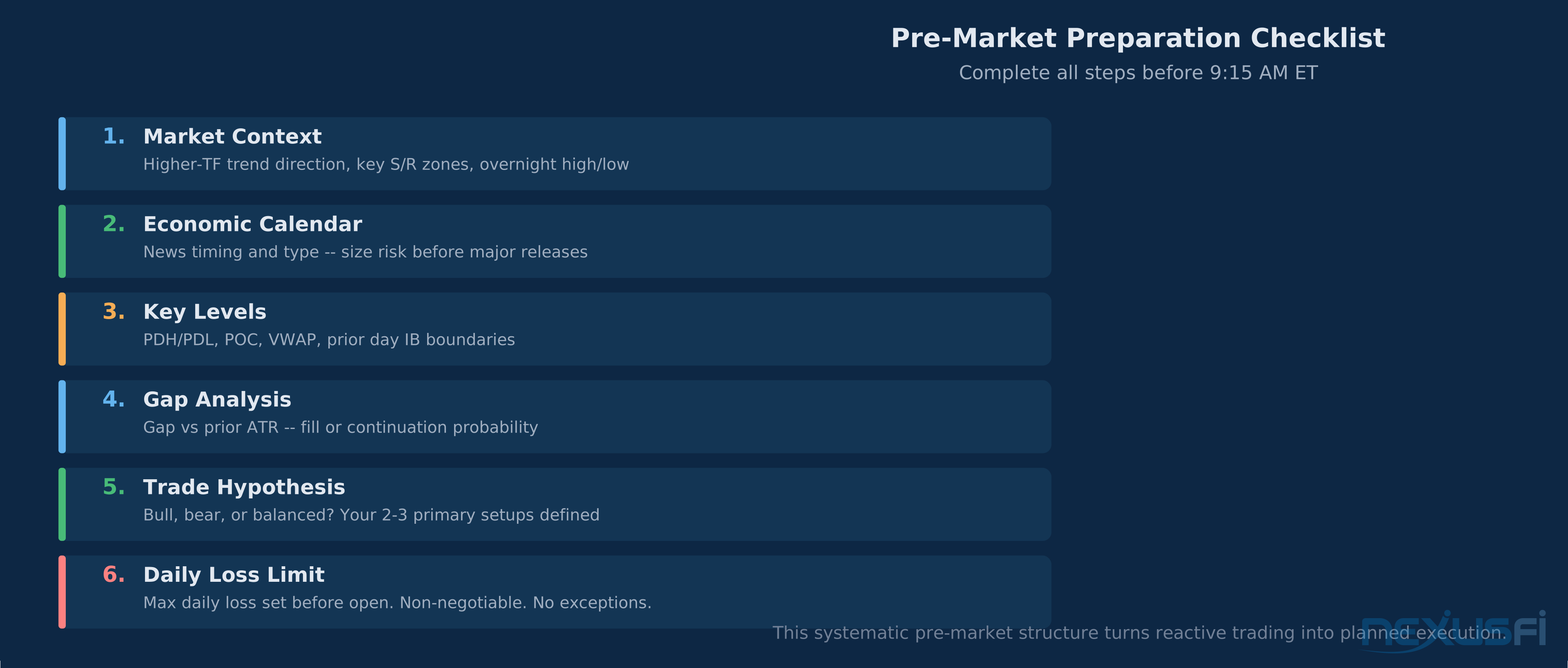
Pre-market preparation accomplishes four things: establishes market context, identifies key levels, forms a directional bias, and selects the day's setup menu.
Market Context: The Big Picture #
Pull up daily and 4-hour charts first — multi-timeframe analysis starts here. Where is price relative to structure? Trending environment — making higher highs and higher lows? Or balanced with overlapping price action and no clear auction direction?
Check the overnight session. Where did Globex trade relative to the previous RTH close? Significant gap? High-volume acceptance of a new level overnight, or low-volume noise? The overnight session tells you where international participants positioned.
Key levels to mark before every session:
- Prior Day High (PDH) and Prior Day Low (PDL)
- Prior day's Point of Control (POC) and Value Area boundaries (VAH/VAL)
- Overnight High and Low (if much different from prior day range)
- Weekly opening price
- VWAP anchor plan (session, weekly, or custom anchor)
- Major swing points visible on the daily chart
- Round numbers (5000, 5100, etc. on ES)
As @Jigsaw Trading's extensive pre-market preparation journal demonstrates, systematic level-marking before every session separates reactive trading from planned execution. Every daily entry covers overnight movement, key levels, and trade plan — the same structure applied consistently across hundreds of sessions.
Bias Formation #
Based on the overnight session, prior close, and key levels, form a directional bias: bullish, bearish, or neutral.
Overnight inventory is the starting point. If ES traded higher during the overnight session and closed near the overnight high, the market has long inventory going into RTH. That inventory either gets accepted (continuation) or rejected (sell-off). Knowing which scenario exists shapes how you read the first 15 minutes.
Gap conditions: A gap relative to the prior day's ATR has two dominant outcomes — fill or continuation. Smaller gaps fill more often. Larger gaps opening outside prior value with directional news tend to continue. Neither mechanical gap trading nor reflexive fading is right — context determines probability.
Write the bias down: Before RTH opens, complete: "My bias today is [bullish/bearish/neutral] because [specific reason]. I would change my bias if [specific condition]." The second part is critical. Without a predefined invalidation trigger, you'll hold your morning bias all day while the market does the opposite.
Selecting the Day's Setup Menu #
You're selecting 2-3 specific setup types to look for today, based on market context.
On a trending-environment day: IB breakout retest and trend-continuation pullbacks only. On a balanced day: IB range fade and VWAP reversion only. This prevents taking your favorite setup in an environment where it has no edge — a breakout trader who takes breakouts on balance days is effectively flipping coins at a worse-than-random location.
The Four Session Phases #
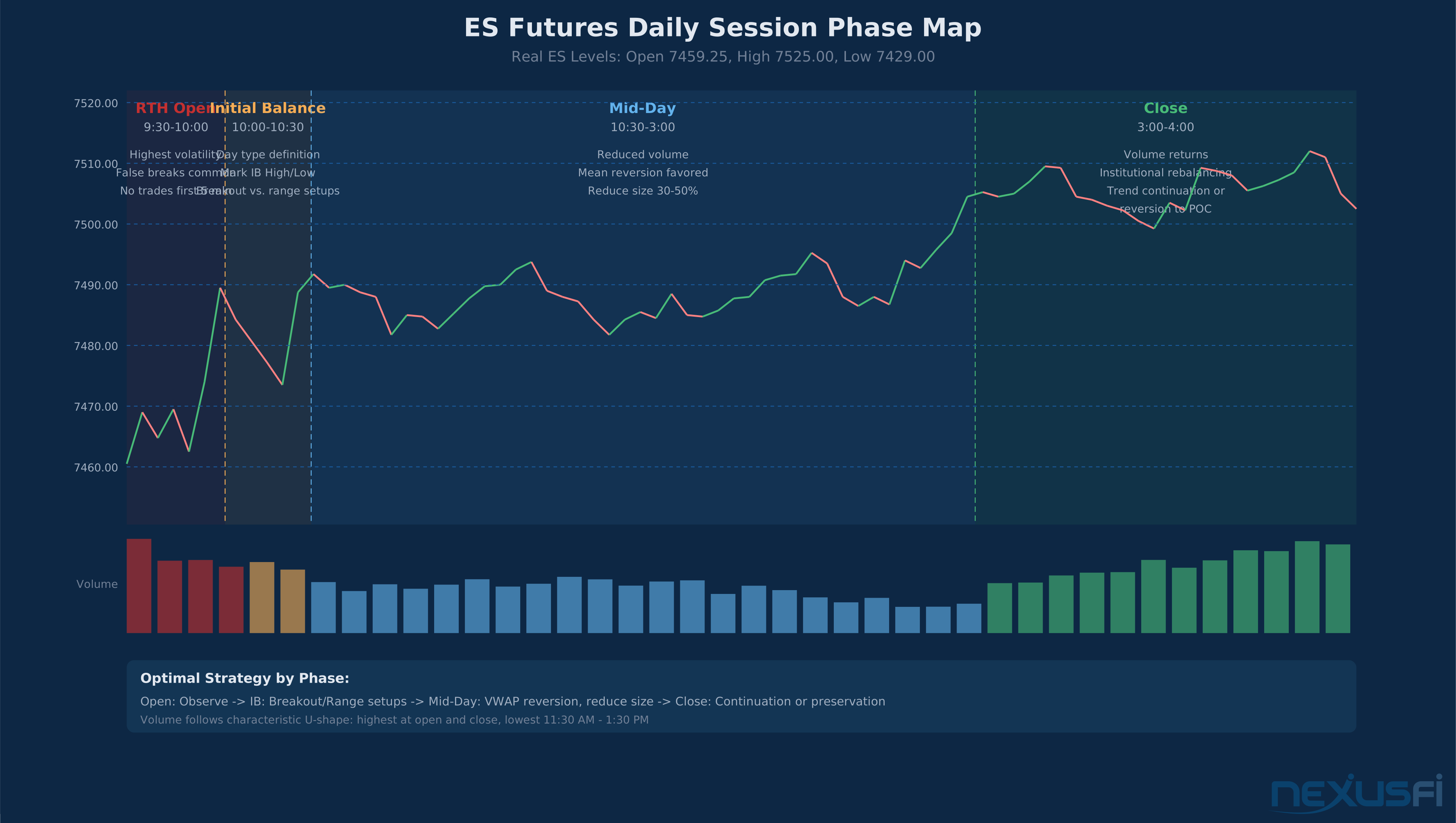
The RTH session has distinct phases with different microstructural characteristics. Each demands a different approach.
Phase 1: The RTH Open (9:30--10:00 AM ET) #
The open is the most volatile phase. Institutional orders, systematic programs, retail market orders, and news-reaction flow all hit simultaneously. False breaks are common.
The first five minutes are observation time. No trades. This is a rule, not a suggestion. What happens after that opening auction settles tells you something meaningful.
Two dominant open patterns:
Open Drive: Price moves aggressively from the open with high volume and no significant pause — early signal of a potential trend day. Don't fade it. Wait for the first significant pullback and enter with trend.
Probe-and-Reverse: Price probes above or below a key level and immediately fails on low volume. Potential reversal setup — the auction found no acceptance in the new territory.
Extreme TICK readings: The $TICK (NYSE upticks minus downticks) at the open can reach ±1000+ on concentrated institutional flow. Fading TICK extremes back toward zero — especially when diverging from price continuation — is a high-probability short-term trade during the open.
Keep position size conservative during the open. Getting stopped out twice before the day's actual opportunity presents is a capital efficiency problem that ruins the rest of the session.
Phase 2: Initial Balance (9:30--10:30 AM ET) #
The IB range from the first hour defines the day's auction boundaries. Mark the IB High and IB Low clearly.
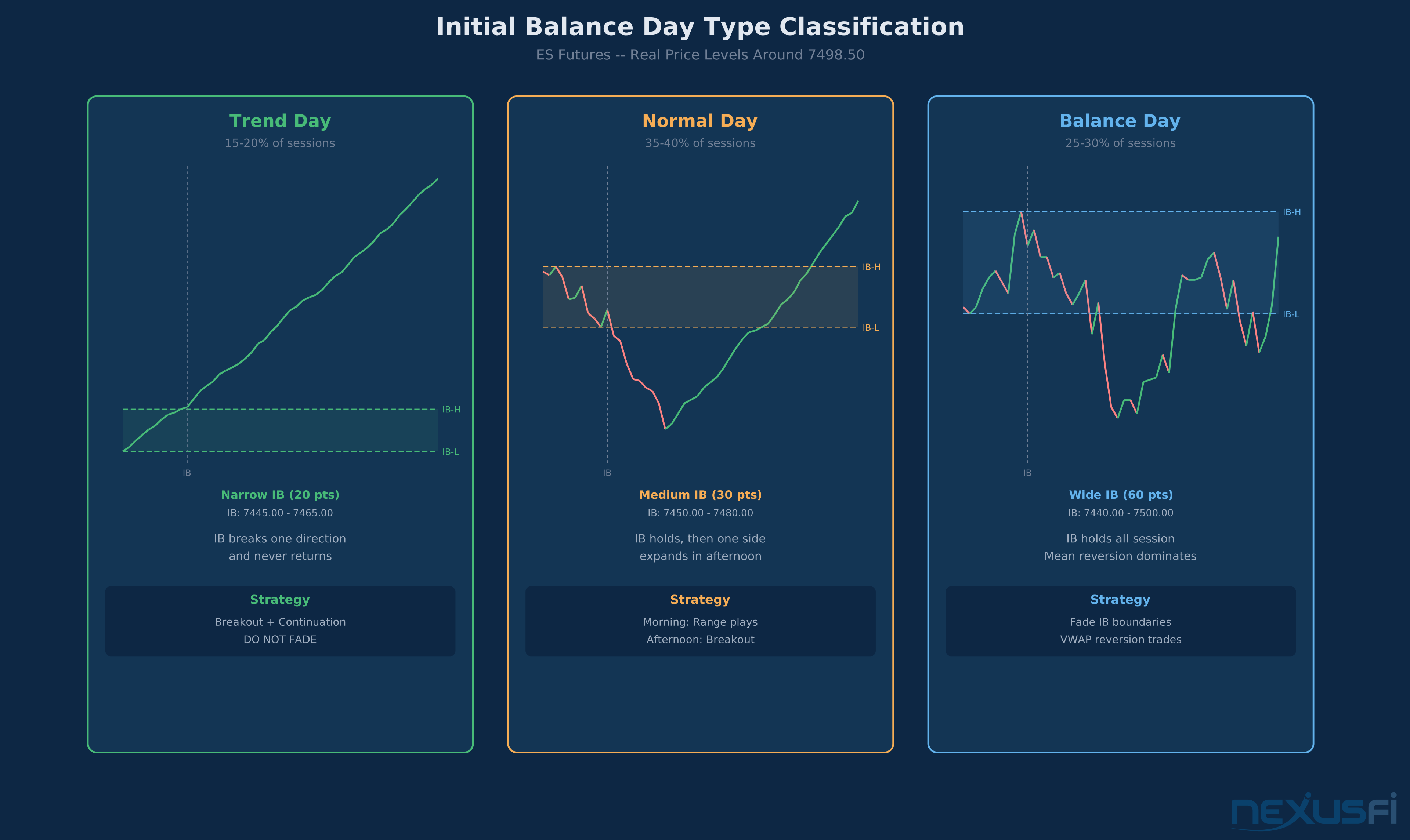
IB width predicts day type. A narrow IB (less than 0.5% of price — roughly 25 points on ES at 5000) signals indecisive opening auction. Suggests range expansion ahead — likely trend day potential. A wide IB (greater than 1% — roughly 50+ points) signals quick range establishment. Often leads to a balance day where the IB holds.
@tigertrader, one of NexusFi's most respected practitioners, wrote extensively about day type classification in the Spoo-nalysis thread: "Range Day — the market will oscillate around an average price value with relatively low volatility through the day."
The data shows true trend days occur only 15-20% of the time. Most days are balance, normal, or neutral.
Primary IB setups:
IB Breakout with Retest: Price breaks the IB high or low with meaningful volume, pulls back to the broken level, and holds. The broken level becomes new support or resistance. Most reliable IB setup because confirmation is required.
Failed IB Breakout: Price breaks above IB high on low volume with weak TICK confirmation, immediately reverses inside the IB. Longs are trapped, their stops fuel the reversal. Enter short on the reversal back inside.
IB Range Fade (balance days only): Fade IB boundaries on clearly balanced days. Short near IB high, target IB midpoint. Long near IB low, target midpoint. Do not fade on trend days.
Phase 3: Mid-Day (10:30 AM — 3:00 PM ET) #
The mid-day session is where most discretionary day traders lose money. Volume drops much after 11 AM. The 11:30 AM--1:30 PM window consistently shows the lowest intraday volume — moves during this period have the highest probability of being noise.
Mid-day rules:
- Reduce position size 30-50% relative to morning trades
- Trade only at high-timeframe value edges — VWAP extremes, prior day levels, established range boundaries
- Avoid new directional plays based on momentum alone
- If no clear location-based setup: step aside entirely
As @mfbreakout described in his "Trading Futures with Context" Elite Trading Journal, mid-day setups require extreme patience — if the location and context aren't right, the correct trade is no trade.
Mid-day setups that work:
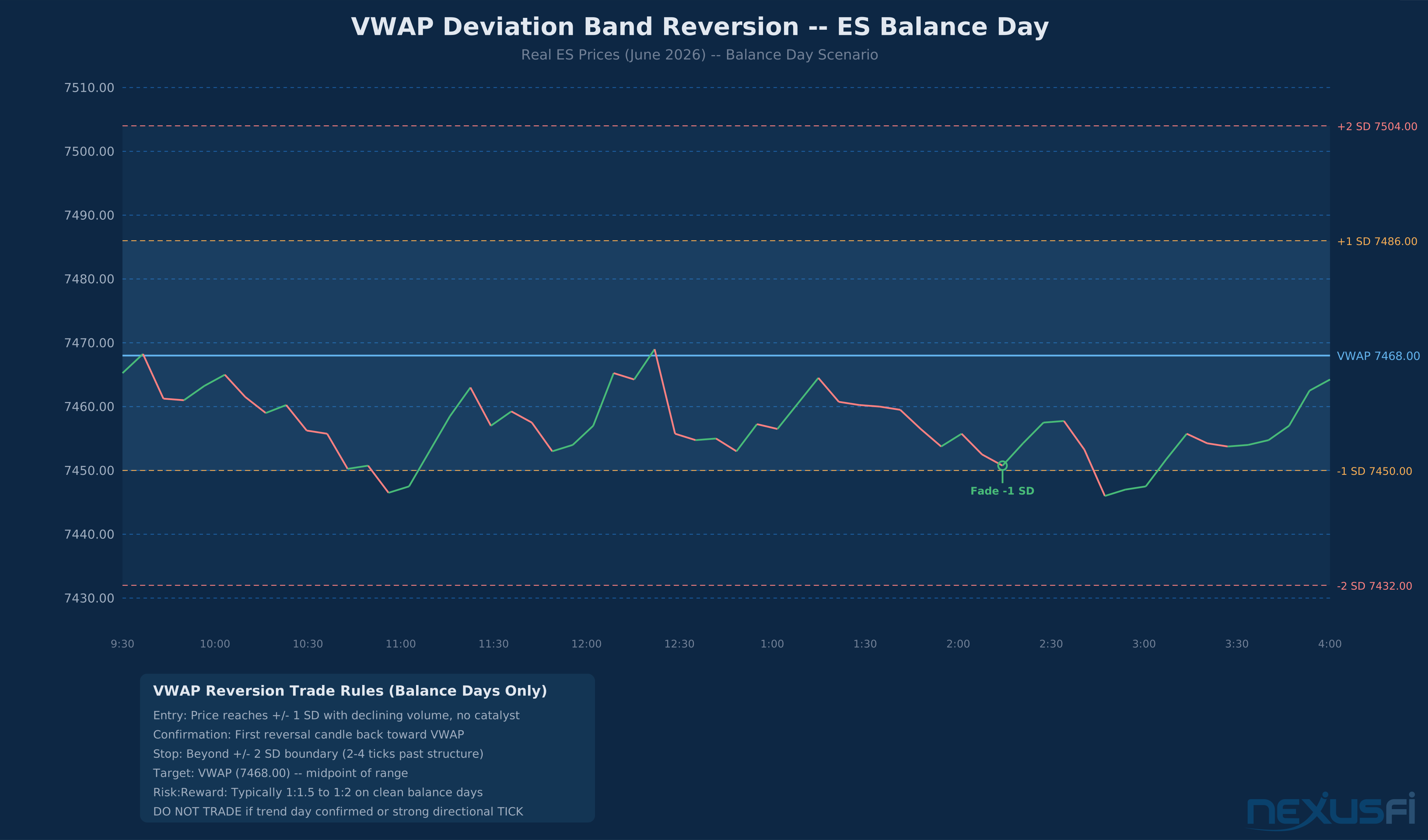
VWAP Reversion: Price extends from session VWAP on low volume with no trigger. Enter on first reversal candle back toward VWAP. Requires: no strong directional trend context, noticeably lower volume than morning.
Range Boundary Reaction: Multiple prior tests of an established intraday range boundary, clear rejection at each. First test highest probability; probability of breakout increases much by the fourth test.
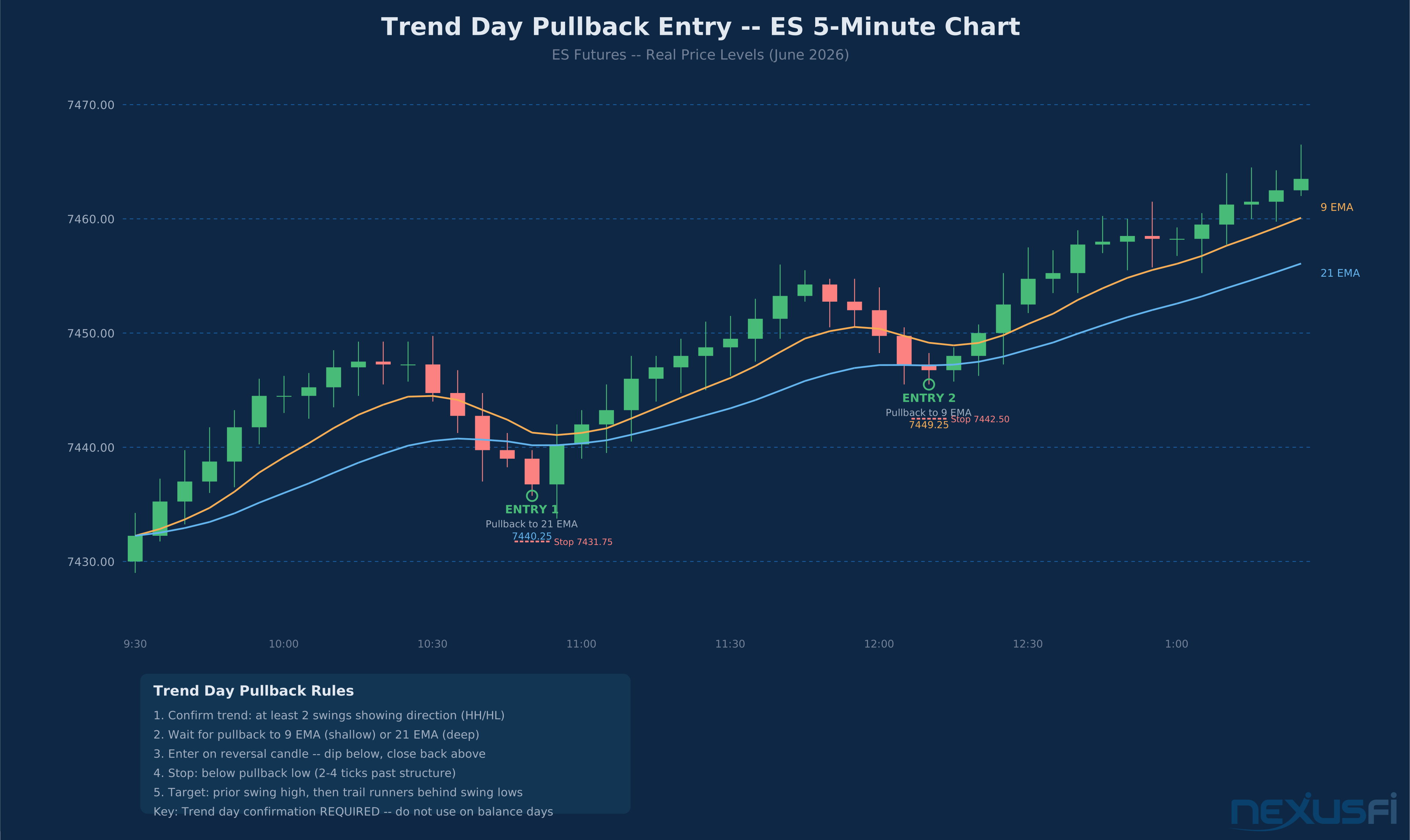
Trend Continuation Pullback (trend days only): On confirmed trend days, pullbacks to the 9 or 21 EMA on the 5-minute chart offer continuation entries. Challenge is early trend day recognition.
Phase 4: The Close (3:00--4:00 PM ET) #
Volume increases as institutional portfolio managers rebalance, systematic programs manage gamma, and closing auction mechanics take hold. More purposeful order flow returns.
Two dominant close behaviors:
Trend continuation: If the morning trend is intact — clean series of higher highs and higher lows — afternoon tends to continue it as momentum strategies and trend followers add.
Reversion to value: On balanced days, the close often sees price gravitating back toward the session POC — the market settling near where the most volume traded.
Close-phase rules:
- If daily profit target already achieved: preservation mode. No new trades.
- If session trend is intact: look for the last pullback entry before settlement.
- Avoid high-risk new positions in the final 15 minutes — liquidity thins as equity closing auction starts.
Trade Selection: The Scoring System #
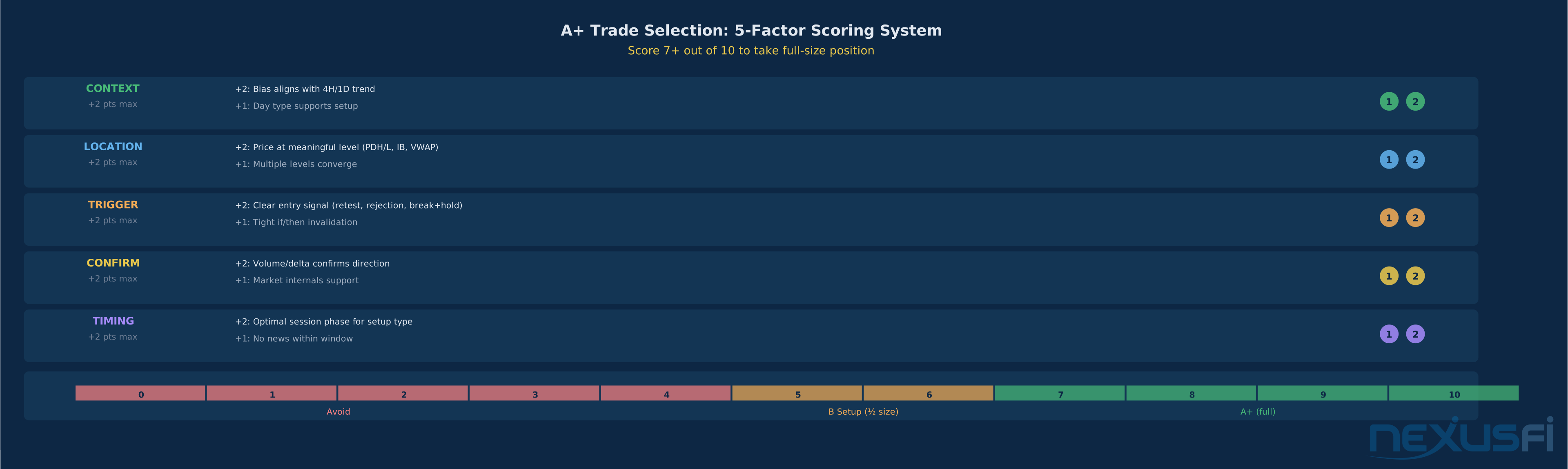
Not all setups are equal. A+ setups deserve full size. B setups deserve half size. C setups don't get traded.
The problem with discretionary assessment is that "this looks good" is meaningless — every trade looks good when you're about to take it. A scoring system forces objectivity.
Use five categories, two points maximum each, requiring 7 out of 10 to trade at full size:
| Category | +2 Points | +1 Point |
|---|---|---|
| CONTEXT | Bias aligns with 4H/1D structure | Day type supports setup type |
| LOCATION | Price at meaningful level (IB, PDH/L, VWAP band, POC) | Multiple levels converge |
| TRIGGER | Clear entry signal (confirmed retest, rejection + reclaim) | Tight if/then invalidation |
| CONFIRM | Volume/delta confirms direction | Market internals ($TICK) support |
| TIMING | Optimal session phase for this setup | No scheduled news within 20 min |
A trade scoring 8-10 is A+ — full size, execute with conviction. 6-7 is B — half size, take the 1:1 profit. Below 6 is C — the definition of a trade that feels good but has no systematic basis.
This system requires judgment on each criterion. But it imposes discipline. You can't score a 5/10 and convince yourself it's A+. The numbers are honest even when your instincts aren't.
Entry Mechanics #
Three entry methods dominate professional ES/NQ day trading. Master one before adding others.
Break-and-Retest (Primary Method — 70% of Trades) #
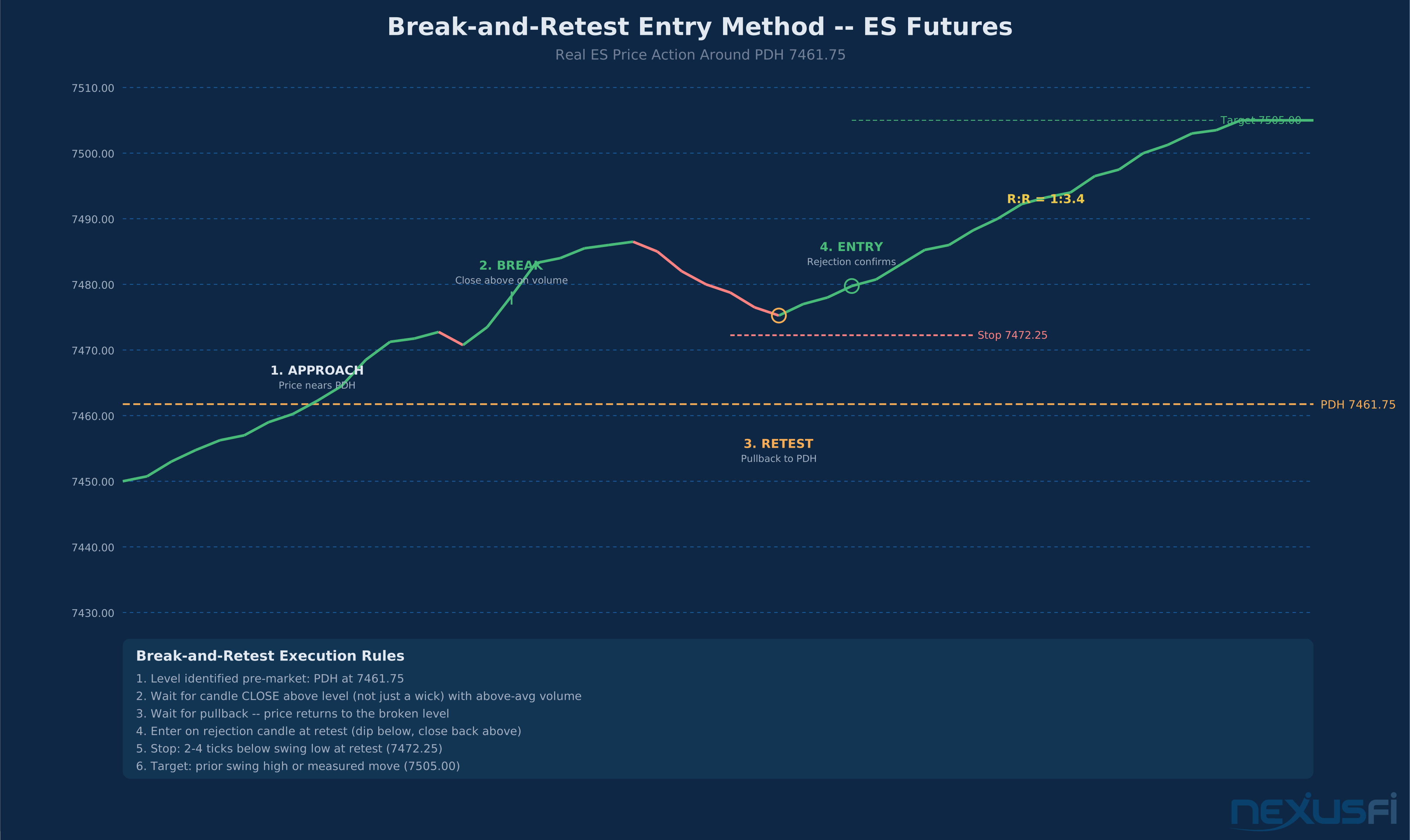
Price breaks a key level (IB boundary, PDH/PDL, VWAP band edge, swing point), then pulls back to the broken level and holds.
Execution:
- Identify the boundary clearly before the break — draw it, know where it is
- Wait for a real break — candle close beyond the level, ideally on above-average volume (not just a wick)
- Wait for the retest — price returns to the broken level
- Enter on rejection — reversal candle at the level, or dip-below-then-close-above (for longs)
- Stop: 2-4 ticks beyond structure (just past the swing low for longs)
The break-and-retest is effective because false breaks reverse immediately; true breaks retest and hold. Waiting for the retest costs entry price quality but dramatically improves hit rate.
— the break-and-retest entry provides a clear, specific invalidation point that makes this calculation exact.
Pullback Entry (Trend-Friendly) #
In an established trend — confirmed by higher highs and higher lows — enter on pullbacks to the previous swing level or a moving average (9 or 21 EMA on the 5-minute chart).
Execution:
- Confirm the trend: at least two swings showing direction
- Wait for pullback to reach logical support/resistance
- Watch for the reversal candle — dip below, buying absorbs selling, close back above
- Enter on the reclaim; stop below the pullback low
- Target: prior swing high, then trail runners behind subsequent swing lows
Range Fade (Balance Days Only) #
In explicitly balanced price action — multiple tests of an established range boundary, narrow IB, low directional volume.
Execution:
- Confirm balance: at least two prior boundary tests that rejected
- Enter near the third test with a limit order
- Stop: beyond the prior swing extreme plus a buffer
- Target: range midpoint or VWAP
Execution preference across all methods: Limit orders ~70% of entries for better fills and clear invalidation. Market orders for confirmed high-velocity breakouts only. Time stops: exit if setup doesn't develop within 5-10 minutes of entry.
Position Sizing and Risk Management #
This section determines whether a trader survives long enough to compound their edge.
The Formula #
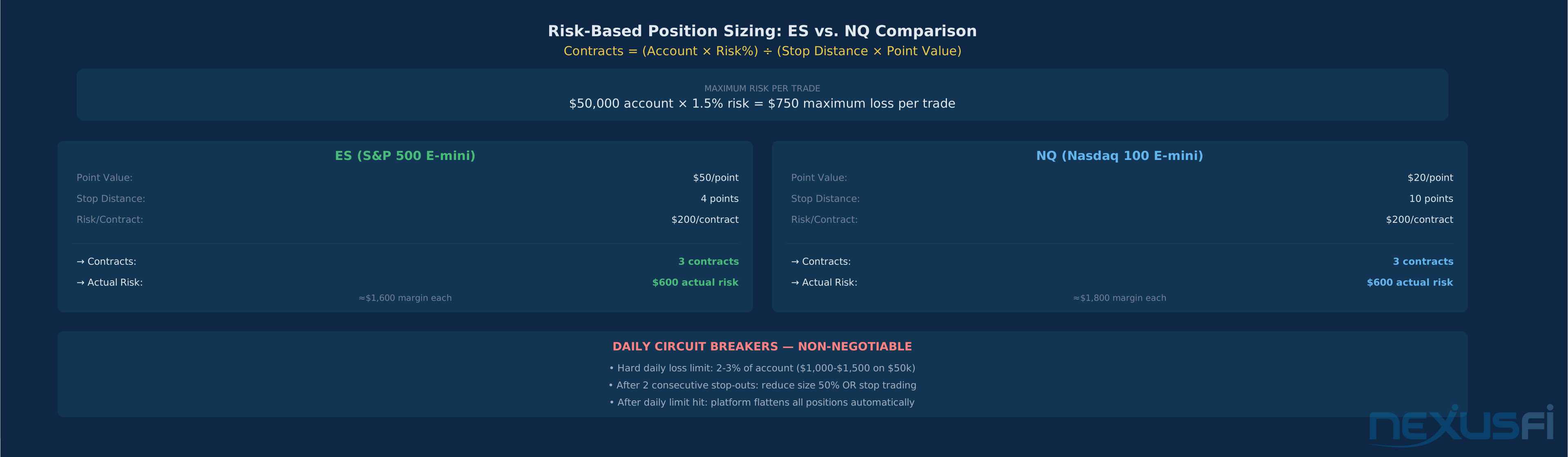
Contracts = (Account Equity × Risk Percentage) ÷ (Stop Distance × Point Value)For a $50,000 account at 1.5% risk:
- Maximum risk per trade: $750
- ES with 4-point stop: $750 ÷ (4 × $50) = 3.75 → 3 contracts
- NQ with 10-point stop: $750 ÷ (10 × $20) = 3.75 → 3 contracts
Risk percentage range: 0.25% (conservative, simulation-to-live) to 1.5% (experienced, proven edge). Starting above 1% before 100+ documented trades is overconfident regardless of simulation results.
The formula has a crucial property: when NQ's stop widens as volatility expands, the formula automatically reduces contract count. The mistake traders make is widening stops without recalculating contracts, invisibly increasing risk.
@Fat Tails, one of NexusFi's most prolific contributors, documented threshold-based position sizing in the PositionSizer thread: "stop > 12 ticks → no trade; stop 12 ticks → 4 contracts." Stop distance determines not just placement but whether the trade is worth taking at planned size.
Scaling In and Out #
Entry scaling:
- 50% at primary entry level
- 25% on confirmation (first favorable candle close)
- 25% reserve for add-on if thesis strengthens
Exit scaling (standard):
- 1/3 at 1:1 R:R → move stop to breakeven
- 1/3 at 2:1 R:R
- 1/3 runner: trail behind swing points until stopped
The 1:1 target locks in profit and eliminates psychological pressure. The breakeven stop on the remainder makes worst-case outcome "no loss" rather than "full loss."
Daily Circuit Breakers (Non-Negotiable) #
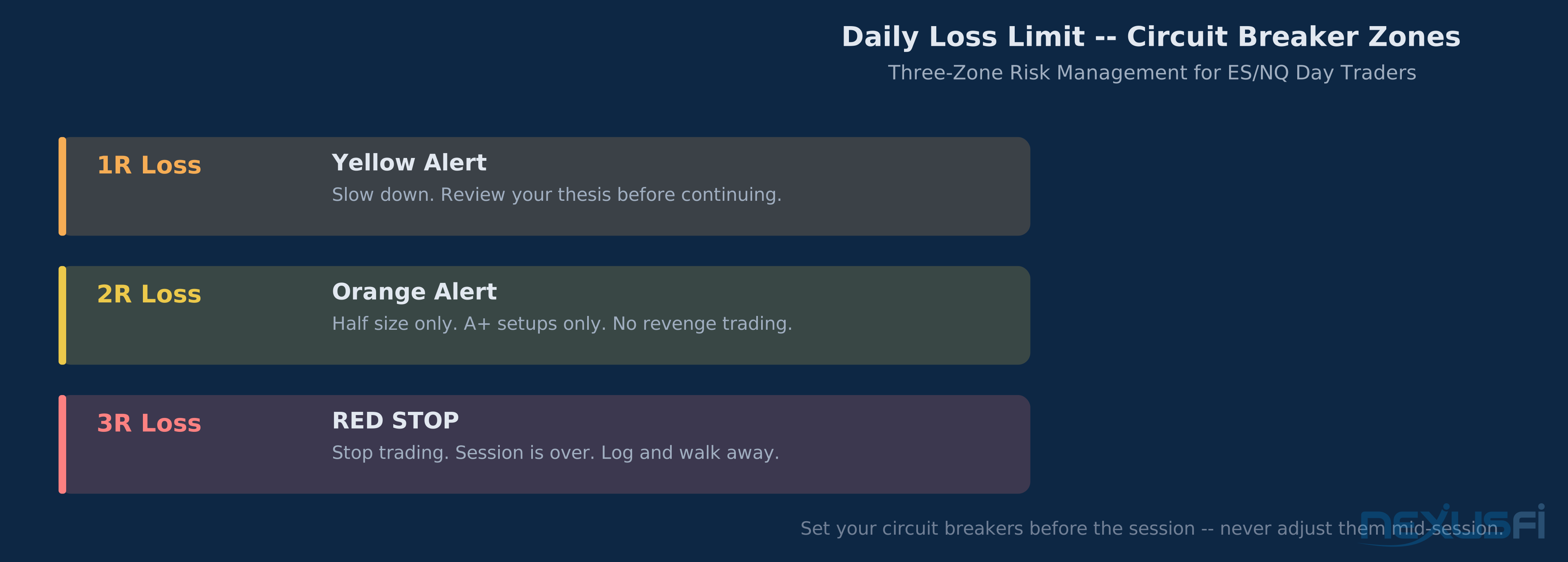
Hard daily loss limit: 2-3% of account. For a $50,000 account, $1,000-$1,500. When hit, session is over. Platform flattened, platform closed.
Two-stop-out rule: After two consecutive stop-outs, reduce size 50% before the next trade. After three stop-outs, stop trading for the session.
Platform automation enforces rules that emotional states undermine.
The math is clear: down 3% in a session requires a full-size winning session to recover — which demands optimal mental state, good setups, and correct session timing. None of these conditions are likely after a 3% drawdown. Expected value of continuing is negative.
Stop placement (all methods): Always behind structure — the nearest swing point that would invalidate the thesis. For longs, 2-4 ticks below the last significant swing low. Stop distance determines position size, not the reverse.
The Daily Routine #
The actual entries and exits represent the smallest portion of professional time investment. Preparation and review are where the edge is maintained.
Pre-market (7:00--9:20 AM ET): Review previous day's journal first. Mark today's levels. Form bias. Write the day's setup menu and maximum loss limit.
9:20--9:30 AM: Mental preparation. Ten minutes of reviewing the plan and deliberate focus meaningfully improves decision quality during the open's highest-stress phase.
9:30--9:35 AM: Observe only. Watch the opening auction without trading.
9:35--11:30 AM: Peak trading window. A+ setups only. Log every trade in real time — setup type, entry, stop, target, score. No reconstructing from memory at session end.
11:30 AM--2:00 PM: Reduced engagement. Reduced size at value-level setups only, or step back entirely. Review morning trades. Adjust afternoon bias if the market has overridden your pre-market thesis.
2:00--4:00 PM: Selective close. Continuation or preservation — not both.
4:00--4:30 PM: Post-session review. Screenshot every trade taken and every qualifying setup missed. Tag each: good setup + good execution, good setup + poor execution, poor setup (rule violation). Record emotional state rating and its correlation with trade quality.

Performance Review: The Feedback Loop #
Without measurement, there's no improvement — only survivor bias on good days and hope on bad ones.
Four Core Metrics #
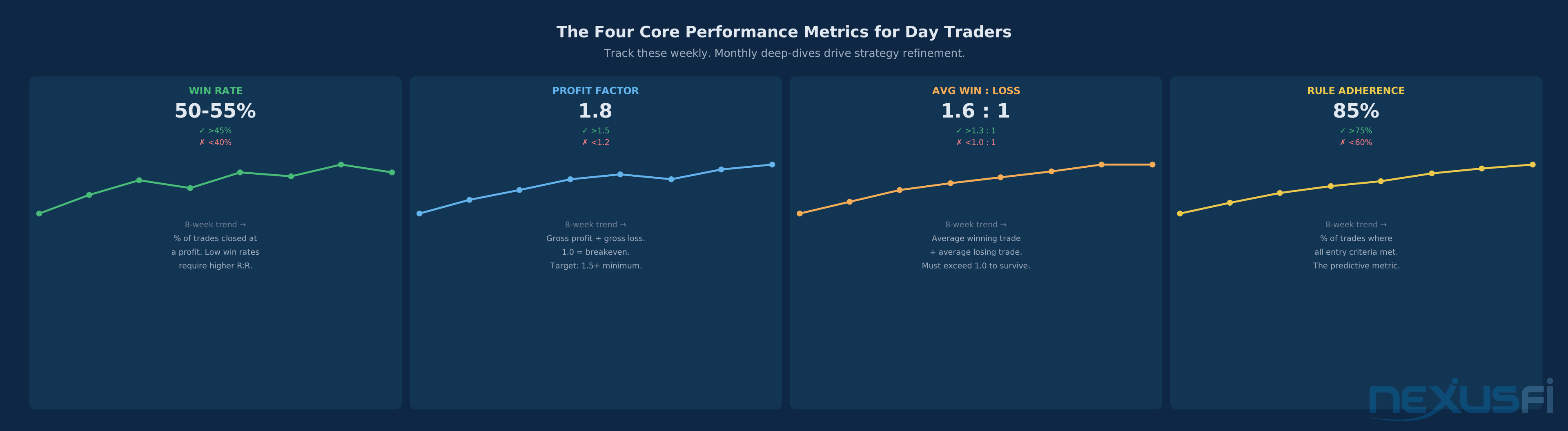
Win Rate: Percentage of trades closed at profit. For 1.5-2:1 R:R targets, break-even win rate is 40-45%. Target: 50-55%. A low win rate isn't the problem in isolation — it's a low win rate paired with an average loss larger than the average win.
Profit Factor: Gross profit divided by gross loss. Breakeven = 1.0. Target: 1.5 or higher.
Profit factor captures the combined effect of win rate and average win/loss ratio.
Average Win : Average Loss Ratio: Average winner divided by average loser in R units. Should match your R:R targets — a 1.5R target means your average winner should be roughly 1.5R. Ratio below 1.0 means either stops are being moved wider after entry, or losses are exceeding planned stops — both are execution discipline failures.
Rule Adherence Score: Percentage of trades that satisfied all entry criteria from the scoring system.
Rule adherence predicts performance with a lag — declining adherence means declining metrics within weeks.
Weekly and Monthly Review #
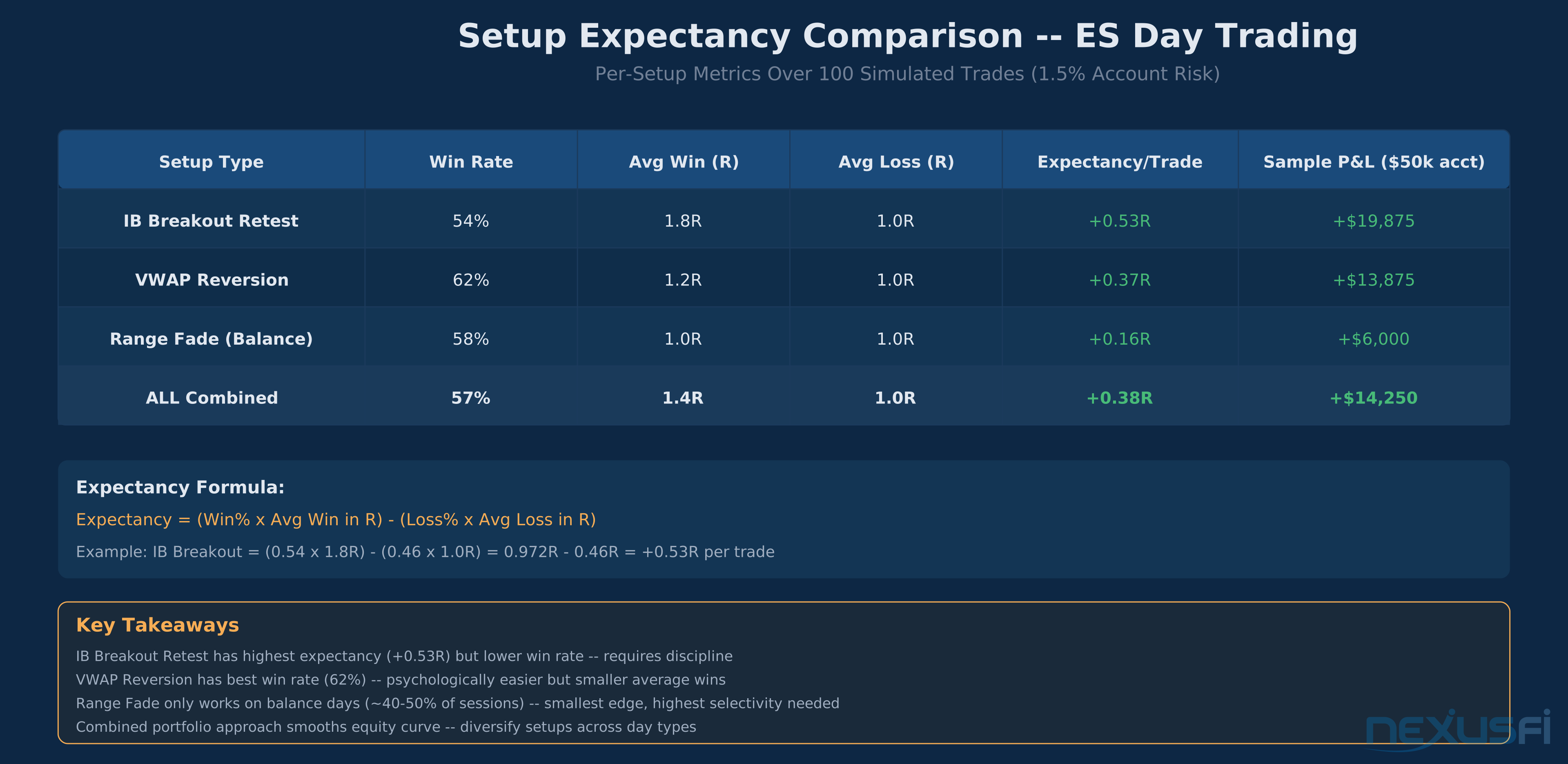
Weekly: Calculate win rate, profit factor, and average win/loss by setup type. A 55% win rate on IB breakout retests and 35% on range fades tells you something specific. Check time-of-day breakdown — if morning trades are profitable and afternoon trades are losers, that's a clear signal.
Monthly: Run setup-level expectancy:
Expectancy = (Win% × Average Win in R) - (Loss% × Average Loss in R)Any setup with negative expectancy over 30+ trades is non-viable — cut it. Any setup with positive expectancy that you're undertrading deserves more attention.
If a specific setup underperforms over 20-30 trades: Was the context selection wrong (breakouts on balance days)? Was execution wrong (entering on anticipation rather than confirmation)? Was stop placement wrong (too tight, getting picked off)?
Day Type Adaptation: Trend vs. Balance #
The single biggest improvement a day trader can make is classifying the day type early and adjusting so.
Trend Day: Open drive that doesn't look back. IB breaks in one direction and doesn't revisit. Single elongated volume profile. VWAP directionally angled. $TICK making sustained new highs or lows.
On trend days: Take breakouts and continuation pullbacks. Avoid fades. Scale out runners slowly — trend days have the biggest average daily range and highest average trade P&L.
Normal Day (Range Expansion): IB establishes, one side attempts an afternoon break. More common than trend days. The afternoon extension is the key setup.
Neutral / Balance Day: IB holds all day. Multiple boundary tests reject. Symmetrical volume profile. VWAP stays flat.
On balance days: Fade boundaries, take VWAP reversion trades, reduce size and frequency. The worst action on a balance day is taking breakouts — each boundary test is a trap.
Classifying the day requires watching the first 30-45 minutes. Premature classification leads to disastrous bias-holding through the 85% of days that are not trend days. If a trend day appears to be developing, confirm it — don't assume it.
Scaling the Framework: Micro Contracts and Live Trading #
No version of this framework should be executed with full-size contracts before validation. The sequence:
Phase 1 — Simulation: Real-time trading during RTH, not replay. Document every trade as if the money is real. Minimum 30 sessions.
Phase 2 — Micro contracts (MES/MNQ): Live capital at 1/10th the dollar value. Full psychological exposure without full dollar risk. Minimum 30 sessions with positive expectancy before scaling.
Phase 3 — Graduated scaling: Start with 1 full contract, scale to 2, then 3, adding contracts only after each increment has produced positive expectancy over 20+ trades. Never scale as a response to confidence alone.
The framework takes 3-6 months to internalize properly. Not 3-6 months until the first profitable trade — 3-6 months until the system is running smoothly enough that systematic improvements can be identified and made.
Summary #
The futures day trading framework is not an algorithmic system — it's a structured decision-making process that eliminates the variables that consistently destroy accounts: impulsive entries, inconsistent sizing, no daily limits, no performance measurement.
The components reinforce each other. Pre-market preparation makes the session concrete and bounded. The scoring system filters out C setups before they drain capital. Risk-based position sizing keeps any single trade from being account-threatening. Daily circuit breakers prevent catastrophic bad days. Post-session review creates the feedback loop that turns experience into actual improvement.
The traders on NexusFi who've successfully traded ES and NQ for years — @Jigsaw Trading's methodical pre-market level analysis in "DTs Pre Market Prep," @mfbreakout's patience-first approach in "Trading Futures with Context," @tigertrader's synthesis of day type and order flow in Spoo-nalysis — all share this structural approach. The specific setups differ. The discipline, preparation, and measurement are constant.
Structure doesn't eliminate losing trades. It eliminates the kind of losing that compounds into account destruction. That's the foundation on which a sustainable edge is built.
Knowledge Map
Go Deeper
Build on this knowledgeReferences This Article
Articles that build on this topicCitations
- — Big Mike's day trading method and advice (2010) 👍 21“If you could eliminate the worst 5% of your trading days, how much of a positive impact would it have on your overall trading?”
- — Spoo-nalysis ES e-mini futures S&P 500 (2015) 👍 36“Range Day - The market will oscillate around an average price value with relatively low volatility through the day, likely ending...”
- — Statistically, How Often Do Trends, Range, and choppy days occur? (2018) 👍 6“Neutral Day: Both IB sides are broken and we close inside the IB Range. Neutral Day Extreme: Both IB sides are broken and we close to one extreme.”
- — DTs Pre Market Prep (2016) 👍 8“Asian/European session. So again, it doesn't point to a high probability of a break Plan - Bias neutral - if volume is weak...”
- — 2 Points per day from ES?? (2019) 👍 3“Maximum Account Risk (in dollars) / (Trade Risk (in ticks) x Tick Value) = Position Size”
- — PositionSizer for ninjatrader (2010) 👍 17“stop > 12 ticks -> no trade; stop 12 ticks -> 4 contracts. I do not need any software to do that for me.”
- — Trade Journal (2019) 👍 11“Bang! Hit my personal loss limit (Sierra Chart is set to flatten my positions and stop me from trading).”
- — Trading Metrics for journals/record keeping (2010) 👍 19“finding my profits go up when I complete all my tasks...”
- — Salao's Journal (2023) 👍 10“Wins: 28 Losses: 23 Win Rate: 55% Profit Factor (gross wins/gross losses): 2.2 - It was a grindy and mostly range bound month.”
- — Trading Futures with Context (2012) 👍 76“I have been day trading full time for 3 years. First 2 years stocks and E-mini with little success. Finally, I found a method which suits my style.”
- CME Group — E-mini S&P 500 Futures Contract Specifications (2026)
- Barber, Lee, Liu, Odean (2014) — Do Day Traders Rationally Learn About Their Ability? (2014)
- SEBI (2024) — Study/Analysis of Profit and Loss of Individual Traders dealing in Equity F&O Segment (2024)