



Futures Account Types and Structures: Individual, LLC, IRA, and Entity Accounts for Traders
Overview #
Before you place your first futures trade, you make a decision that affects every dollar you earn, every dollar you owe in taxes, and every dollar at risk if something goes wrong. That decision isn't which broker to use or which contract to trade. It's how you structure your account.
Most traders default to an individual account because it's the path of least resistance. That works fine for many people. But if you're trading with real size, building a trading business, or thinking about long-term wealth preservation, the account structure you choose has compounding consequences — for better or worse — that play out over years.
Individual Accounts: The Default Path #
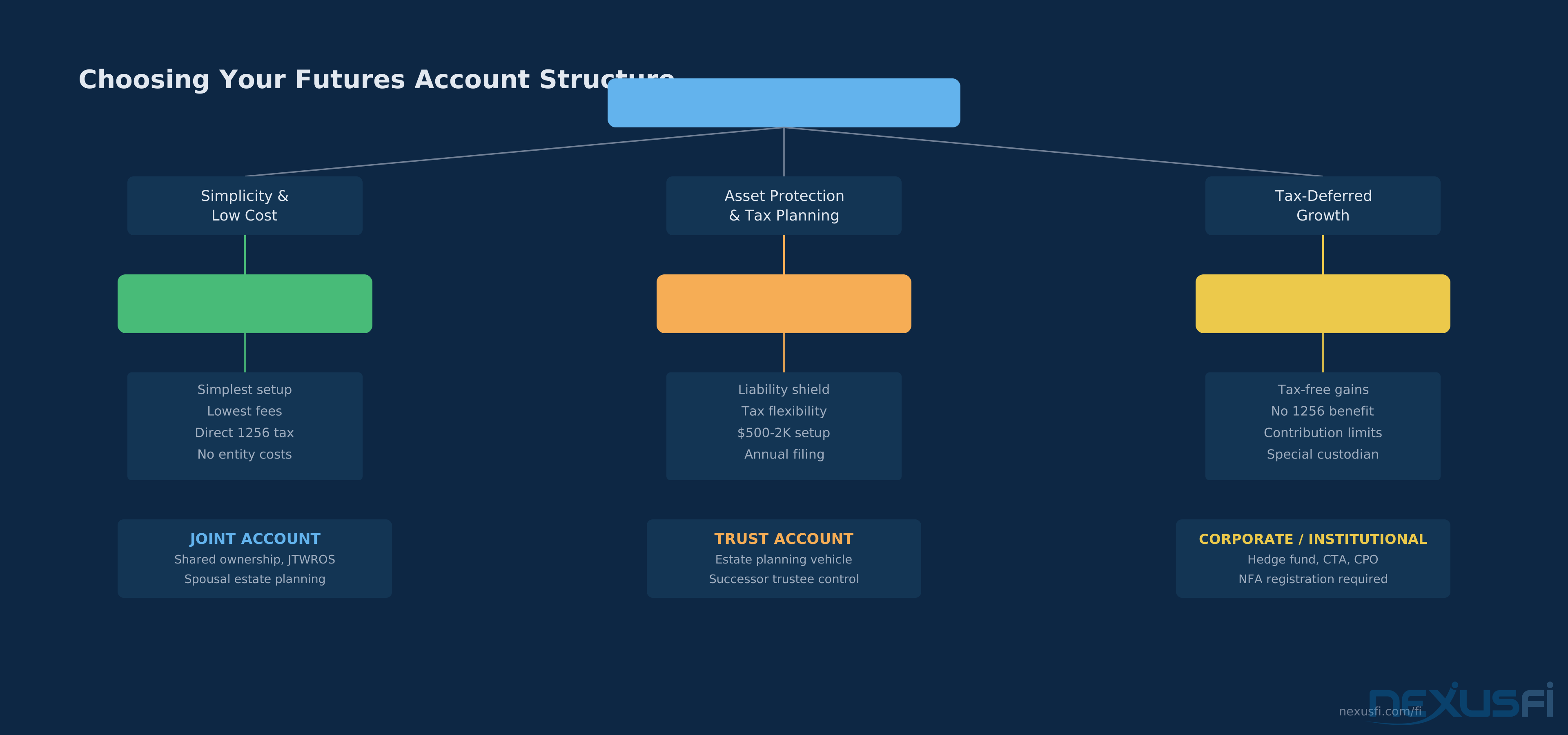
An individual futures account is opened in your personal name, tied to your Social Security Number. Every major futures broker offers this as the standard option, and most traders never consider anything else.
Setup: Fastest and simplest. You need government-issued ID, your SSN, and basic financial information. Most brokers can open an individual account within 24-48 hours, sometimes same-day with electronic verification.
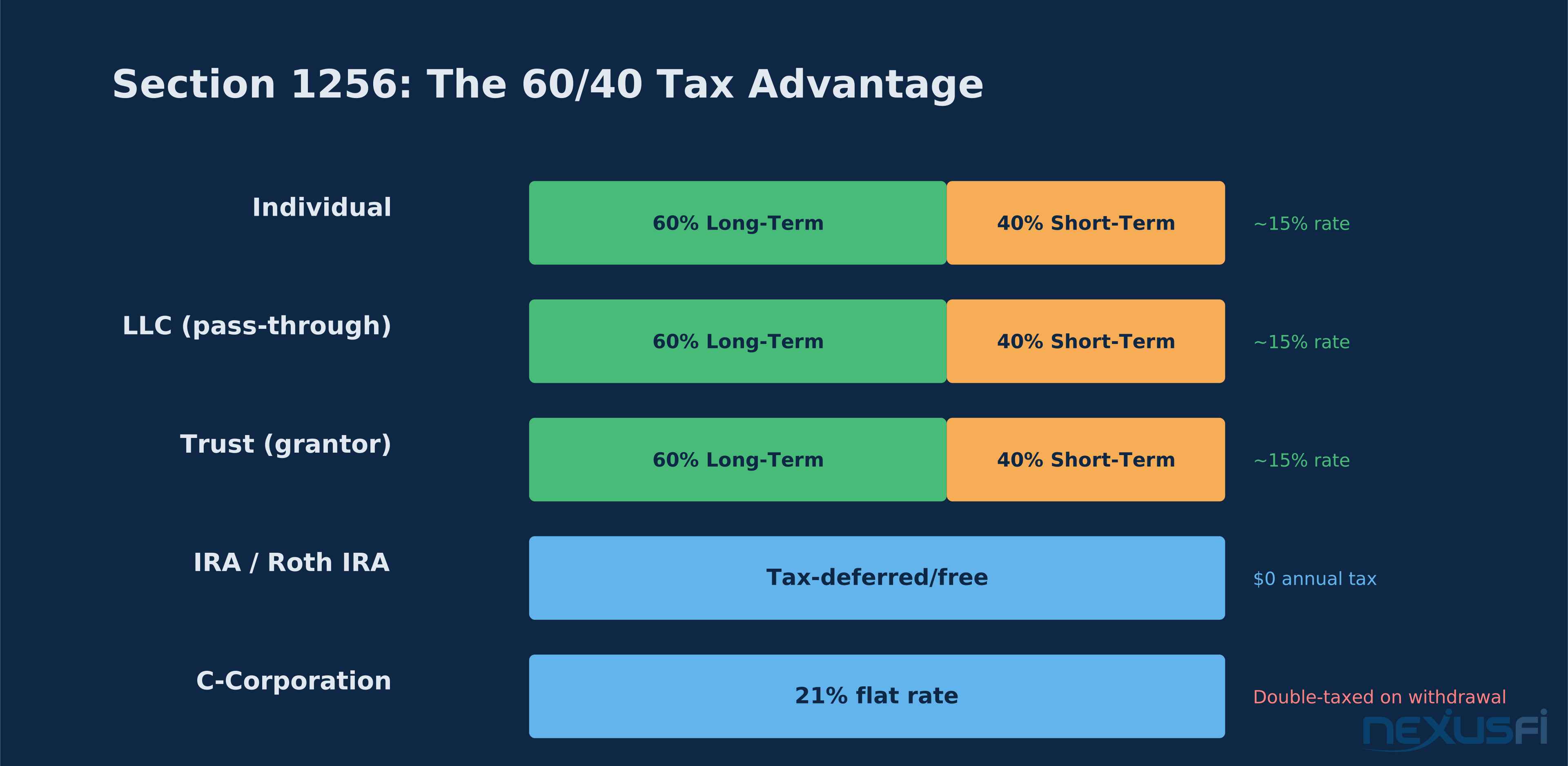
Tax treatment: This is where futures already have a structural advantage over equities. Under IRC Section 1256, regulated futures contracts receive automatic 60/40 tax treatment — regardless of how long you held the position. 60% of your gains are taxed at the long-term capital gains rate (currently 20% for the highest bracket), and 40% at your ordinary income rate.
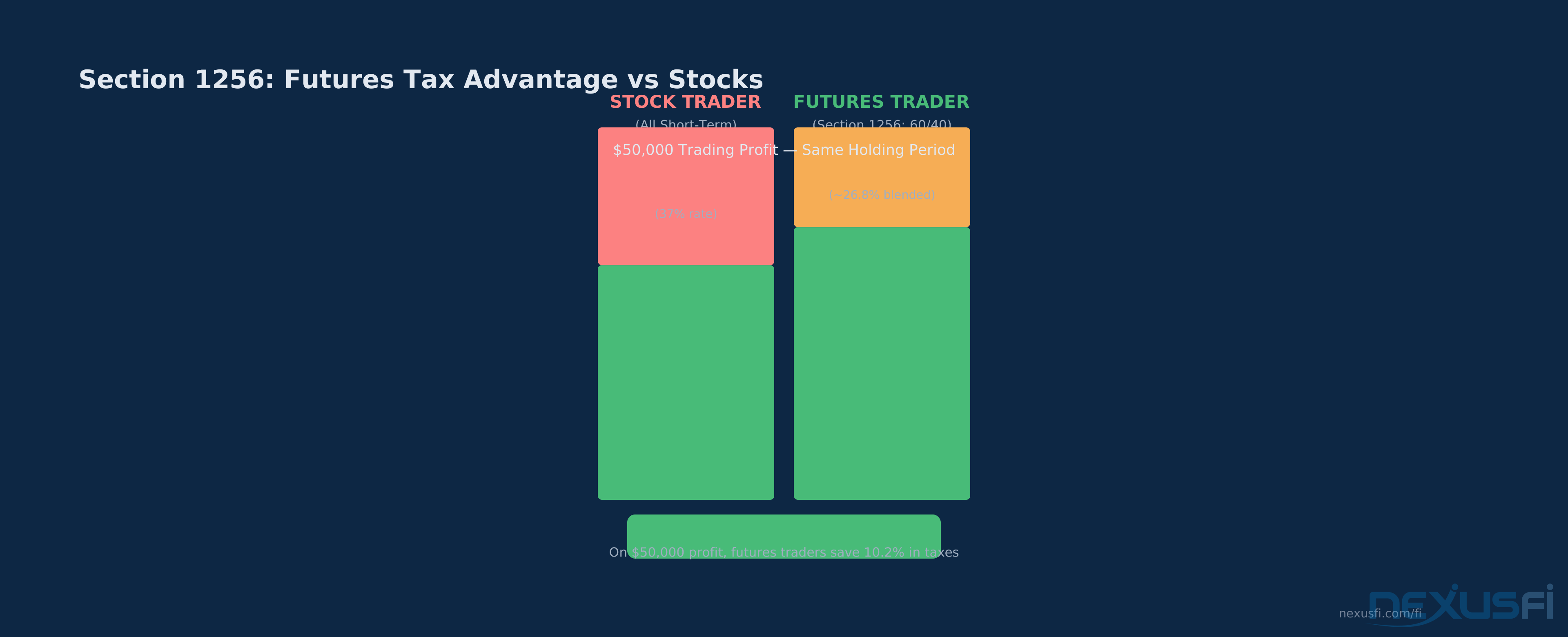
On $50,000 of trading profit, a stock day trader in the highest bracket pays roughly $18,500 in federal tax (37% short-term rate). A futures trader on the same $50,000 pays approximately $13,400 (blended 26.8% rate from the 60/40 split). That's $5,100 in annual tax savings — and it scales linearly with profit. At $200,000 in profits, the savings exceed $20,000 per year.
Margin: Full access to exchange-set margins and broker day-trading margins. Individual accounts have no special margin restrictions beyond what the broker and exchange impose.
Liability: Zero protection. If something catastrophic happens — a flash crash gaps through your stops, a margin call exceeds your account balance — creditors can pursue your personal assets. Your house, your car, your savings. This is the tradeoff for simplicity.
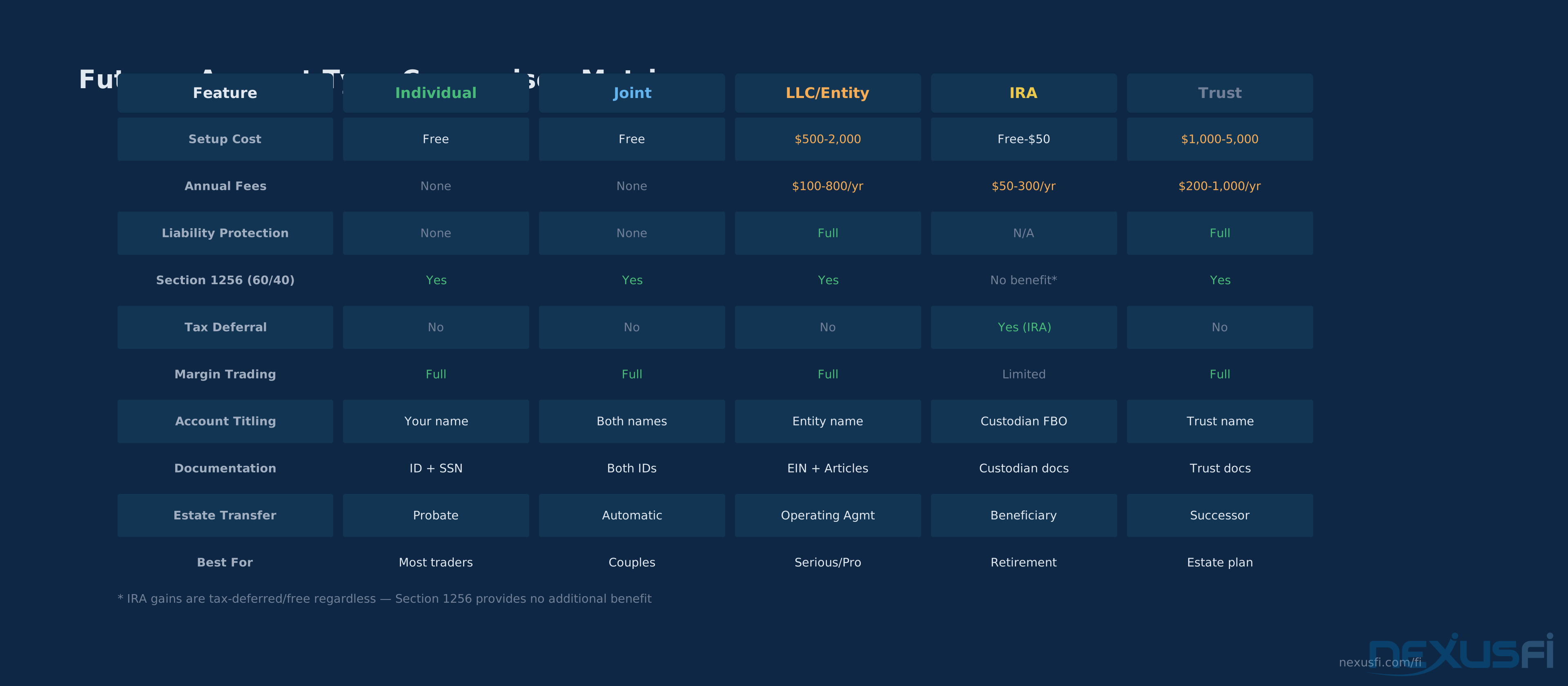
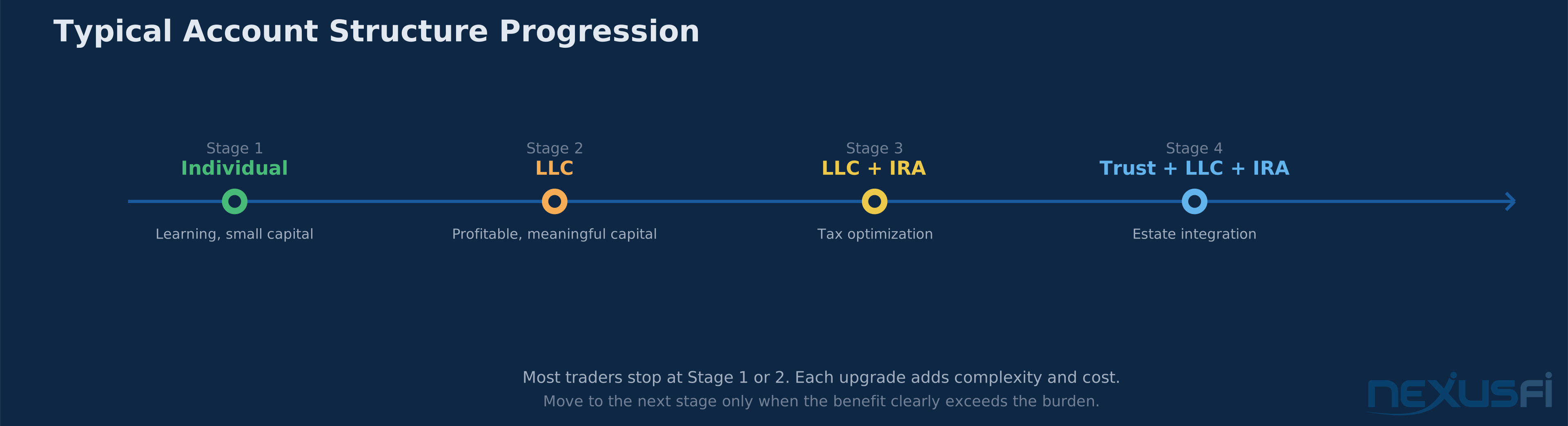
Best for: Most retail traders, especially those starting out or trading with account sizes under $100,000. The simplicity and zero setup cost make this the right choice until your trading scale or asset protection needs justify the complexity of an entity structure.
Joint Accounts: Shared Ownership for Couples #
Joint futures accounts allow two people — typically spouses — to share ownership of a single trading account. The most common structure is Joint Tenants with Rights of Survivorship (JTWROS), which means if one account holder dies, the other automatically inherits the full account without probate.
Setup: Similar to individual accounts but requires documentation for both account holders. Both parties sign the account agreement and both are liable for any margin calls or account deficits.
Tax treatment: Same Section 1256 benefits as individual accounts. Gains and losses are reported on a joint tax return (if filing jointly) or split according to ownership percentage.
Key consideration: Both account holders have full authority to trade unless the broker agreement specifies otherwise. This means either person can place trades, withdraw funds, or close positions. For couples where only one person actively trades, the joint structure primarily serves estate planning purposes — ensuring smooth transfer of the account if one spouse passes away.
Margin and liability: Identical to individual accounts. Both account holders are jointly and severally liable, meaning either person can be held fully responsible for the entire account balance.
Best for: Married couples who want simplified estate transfer of trading accounts. Not recommended for non-spousal partnerships — those situations call for an LLC or formal partnership agreement.
LLC and Entity Accounts: The Professional Structure #
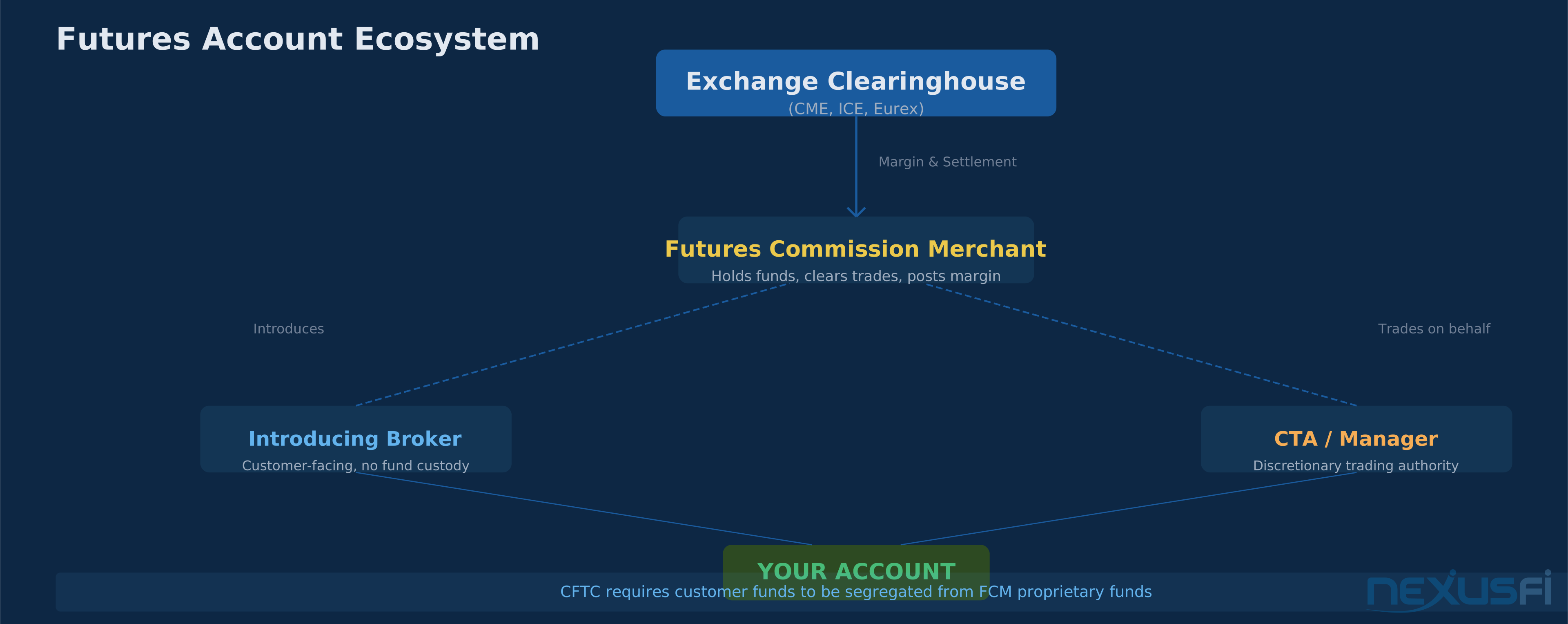
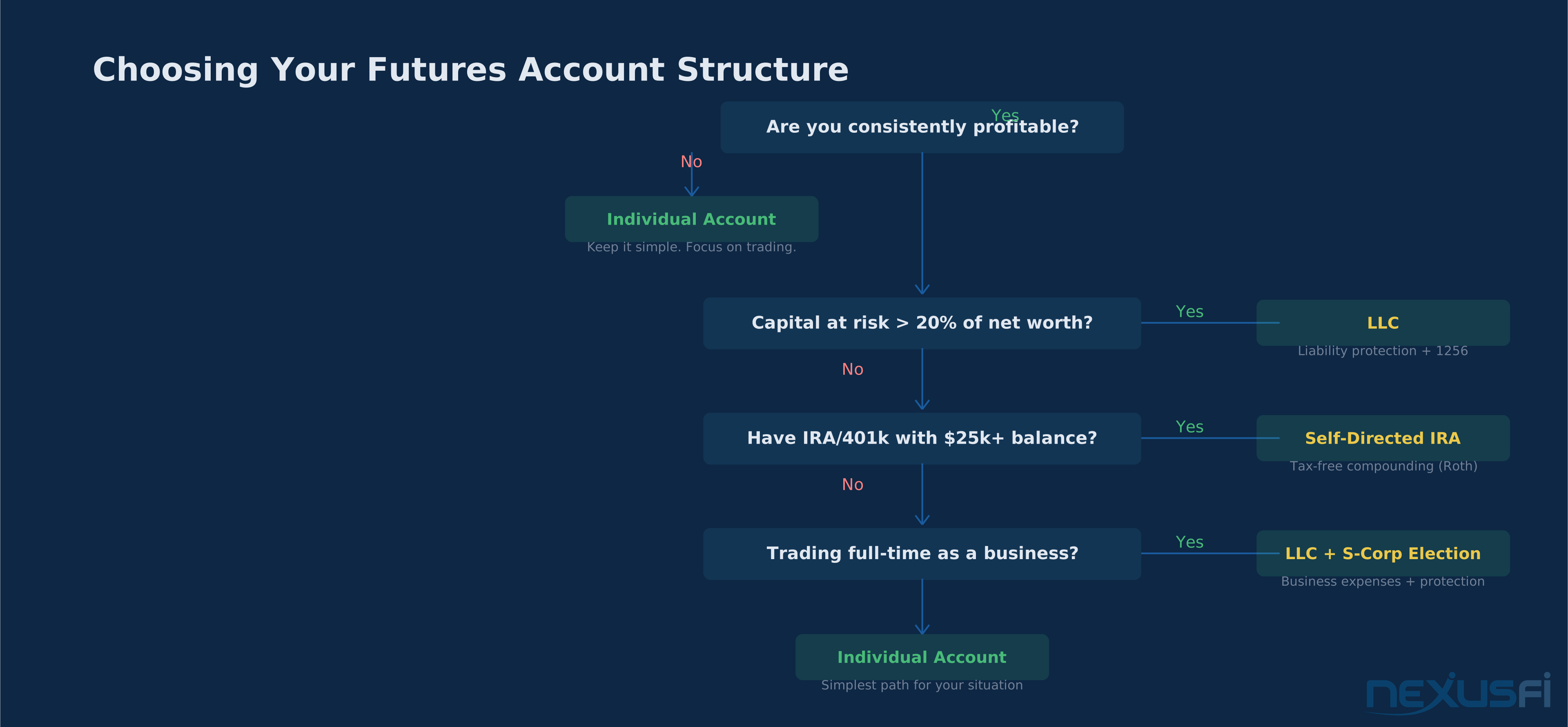
Opening a futures account in the name of a Limited Liability Company or other business entity adds a layer of legal separation between your trading activity and your personal assets. This is the structure most professional traders, CTAs (Commodity Trading Advisors), and serious retail traders eventually adopt.
Formation and Setup #
The setup is more involved than individual accounts. You first need to form the entity — typically an LLC, though some traders use S-Corps or C-Corps depending on their tax situation. This means:
- Choose a state of formation. Wyoming, Delaware, and Nevada are popular for trading LLCs due to favorable privacy laws and low fees. Your home state works too.
- File articles of organization with the state ($50-500 depending on state).
- Obtain an EIN (Employer Identification Number) from the IRS — free but required for the account opening.
- Draft an operating agreement — especially important for multi-member LLCs or if you want clear succession provisions.
- Open the brokerage account in the entity's name using the EIN, articles of organization, and operating agreement.
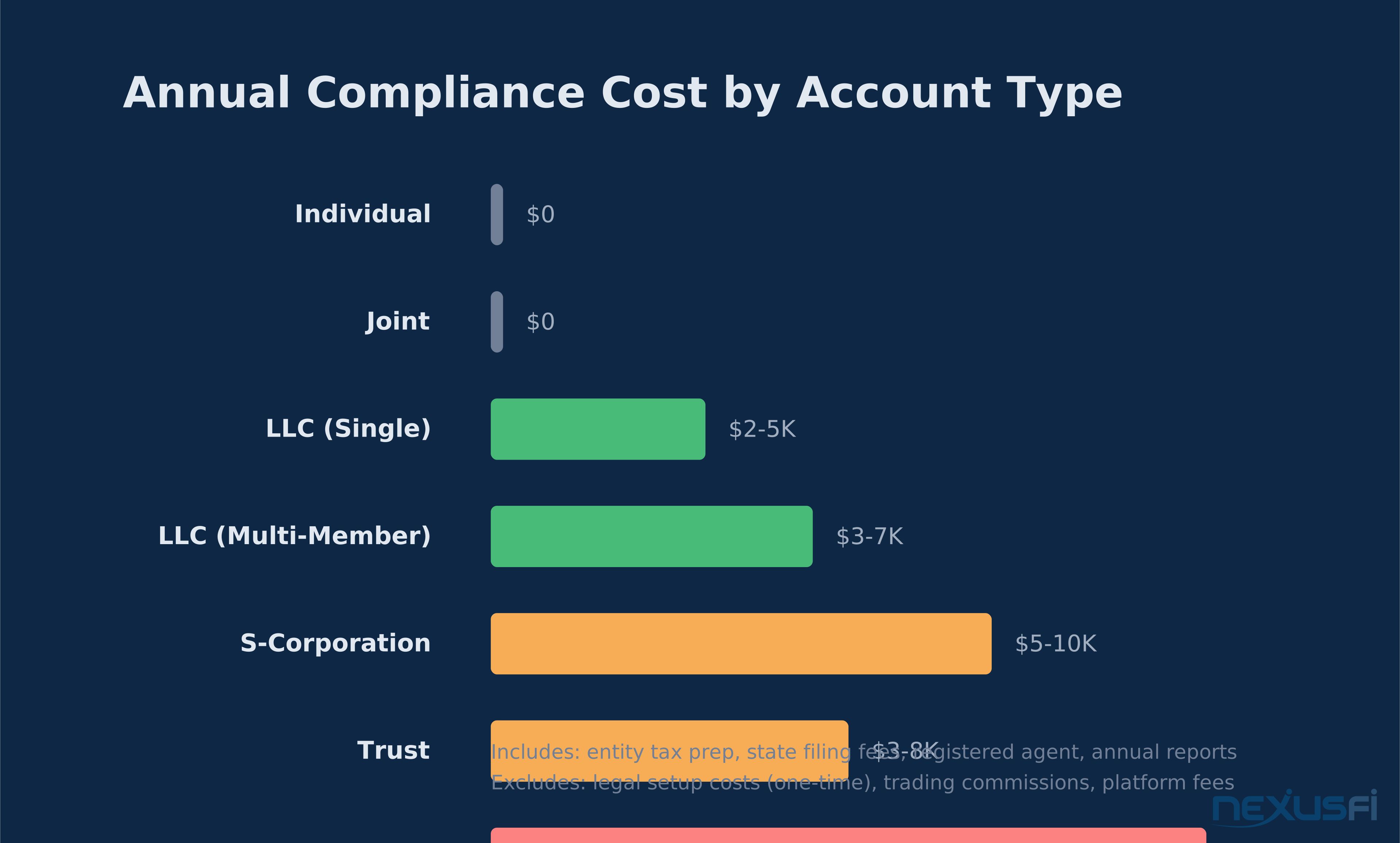
Total setup cost: $500-2,000 depending on whether you use a registered agent, attorney, or DIY filing service. Annual maintenance runs $100-800/year for state fees and registered agent services.
Tax Treatment and Business Deductions #
An LLC doesn't change the Section 1256 treatment of futures contracts — you still get the 60/40 split. But the entity structure opens doors for additional tax planning:
- Business expense deductions: Data feeds, software subscriptions, hardware, education, home office — these become clearer business deductions when you trade through an entity.
- Health insurance deduction: For self-employed traders, health insurance premiums may be deductible.
- Retirement plan contributions: SEP-IRA or Solo 401(k) contributions can shelter additional income from taxes, with contribution limits much higher than personal IRA limits.
The S-Corp Election #
Some profitable traders elect S-Corp tax treatment for their LLC to potentially reduce self-employment tax. This is a complex area — the IRS requires "reasonable compensation" for S-Corp officer-owners, and the calculation of whether this saves money depends on your total income, state tax laws, and trading volume. Consult a CPA who understands trader tax law.
Liability Protection and Caveats #
This is the primary reason most traders form an LLC. The entity creates a legal barrier between your trading losses and your personal assets. If your futures account goes negative due to a gap event, margin call, or broker claim, the liability is generally limited to the assets within the LLC — not your personal savings, home, or other property.
Piercing the corporate veil: Courts can disregard the LLC protection if you commingle personal and business funds, fail to maintain the entity properly, or treat the LLC as an alter ego rather than a separate entity.
- Personal guarantees: Some brokers require personal guarantees for entity accounts, especially for new entities without established credit. This partially defeats the liability protection purpose.
- Adequate capitalization: An LLC with minimal assets may be challenged in court. Keep the entity reasonably capitalized for the amount of risk you're taking.
Margin: Full access, same as individual accounts. Some brokers may require additional documentation or higher minimum account balances for entity accounts.
Best for: Traders with account sizes above $100,000, traders who want business expense deductions, anyone concerned about liability exposure from leveraged futures positions, and traders building a professional trading business.
IRA Accounts: Tax-Advantaged Futures Trading #
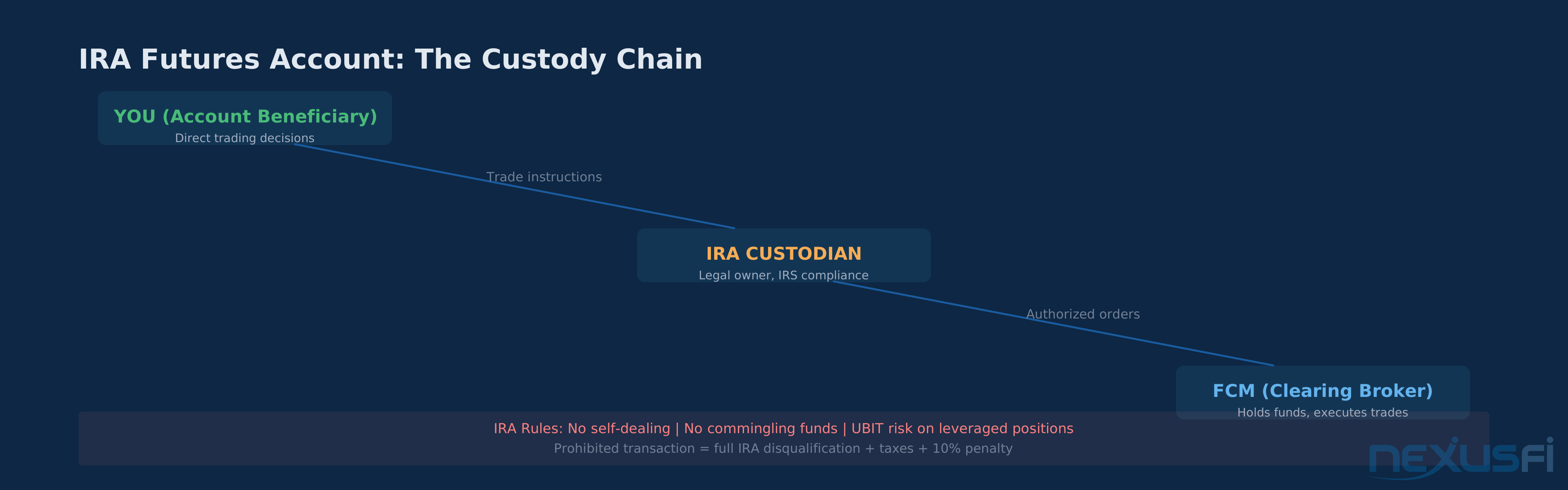
Yes, you can trade futures in an IRA. Most traders don't realize this, and the ones who do often misunderstand the mechanics. Trading futures in a self-directed IRA offers genuine tax advantages — but with meaningful constraints.
Setup: You need a self-directed IRA custodian that supports futures trading. Not all IRA custodians do. The custodian holds the IRA assets and ensures compliance with IRS rules. You then link the IRA to a futures broker that accepts IRA funding.
Some futures brokers work directly with specific IRA custodians and can simplify the setup. Others require you to establish the self-directed IRA independently and then transfer or rollover funds. Custodians like Millennium, Advanta, and Midland IRA specialize in self-directed IRAs that support futures trading.
Tax treatment: Here's where it gets counterintuitive. The Section 1256 60/40 benefit doesn't matter inside an IRA because:
- Traditional IRA: All gains are tax-deferred. You pay ordinary income tax when you withdraw in retirement. The 60/40 split is irrelevant because everything is taxed at your ordinary rate upon withdrawal.
- Roth IRA: All gains are tax-free (assuming qualified distributions). Again, the 60/40 split provides no benefit because you owe zero tax regardless.
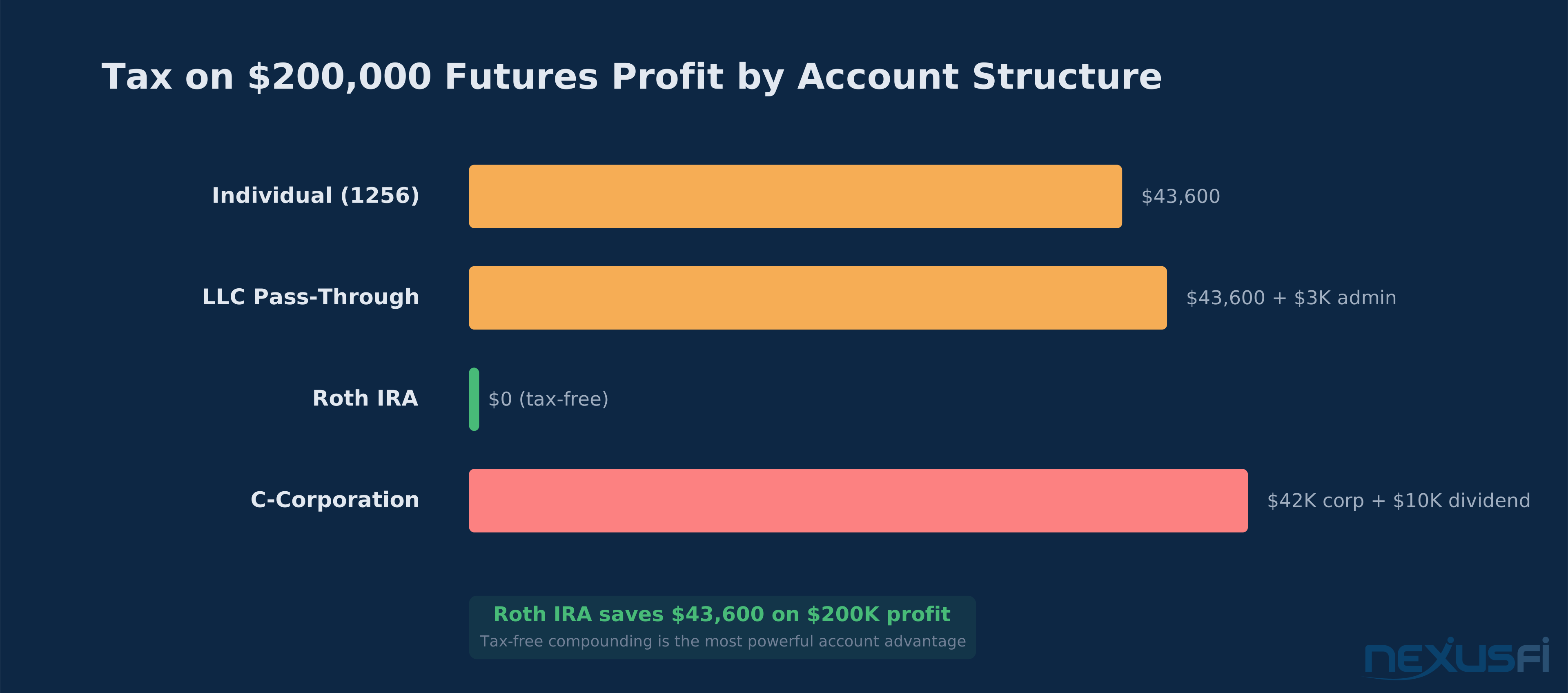
The IRA advantage isn't about tax rates on individual trades — it's about compounding. Every dollar of profit stays fully invested rather than being reduced by taxes each year. Over 20-30 years, this compounding effect can dwarf the annual 60/40 tax savings. A $200,000 Roth IRA generating $100,000 in annual futures profits keeps all $100,000 working — compared to roughly $73,200 after tax in an individual account. That $26,800 annual difference compounds dramatically over decades.
Margin restrictions: This is the biggest practical limitation. IRAs cannot use borrowed funds — meaning traditional leverage through margin isn't available the same way as in taxable accounts. However, futures naturally use margin (performance bonds), and most IRA custodians allow this within limits:
- Typically lower leverage than standard accounts
- Some custodians restrict certain contract sizes or types
- Day-trading margins may not be available — you may be limited to exchange-set initial margins
- No short selling of equities within the IRA (but futures can be sold short normally since both sides are performance bonds)
Contribution limits constrain account size. You can only add $7,000/year to an IRA (or $8,000 if over 50, as of 2026). However, you can rollover existing 401(k) or traditional IRA balances into a self-directed IRA, potentially funding a six-figure futures trading account.
Best for: Traders who want tax-free or tax-deferred compounding on futures profits, especially those with existing retirement funds they want to actively manage, and traders with a long time horizon who won't need the funds before retirement age.
Trust Accounts: Estate Planning Vehicles #
Trust accounts are less common for active futures trading but serve important estate planning functions. A trust holds assets for the benefit of designated beneficiaries, managed by a trustee according to the trust document's terms.
Revocable Living Trusts #
These are the most common type for traders. You maintain full control during your lifetime, and the trust avoids probate at death — assets transfer directly to beneficiaries per the trust terms. The tax treatment is identical to individual accounts during your lifetime (the trust uses your SSN and files on your personal return).
Irrevocable Trusts #
These are more complex and less common for active trading. Once assets are transferred to an irrevocable trust, you give up control. These are used for advanced estate planning strategies — gift tax planning, asset protection, generation-skipping transfers. The trust files its own tax return (Form 1041) and trust tax rates compress quickly to the highest brackets.
Setup: Requires an attorney to draft the trust document ($1,000-5,000+). The broker then opens an account titled in the trust's name, requiring the trust document, trustee identification, and EIN (for irrevocable trusts).
Best for: Traders focused on estate planning and wealth transfer. Not recommended solely for liability protection — an LLC is better for that purpose.
Corporate and Institutional Accounts #
For completeness: corporations, partnerships, hedge funds, and registered investment vehicles can all open futures accounts. These structures involve regulatory requirements that go far beyond account selection:
- CTAs (Commodity Trading Advisors) managing client money must register with the NFA (National Futures Association) and CFTC.
- CPOs (Commodity Pool Operators) pooling investor capital face additional disclosure, reporting, and compliance requirements.
- Hedge funds trading futures typically use a combination of LLC or LP structures with sophisticated prime brokerage arrangements.
These are professional structures with professional costs ($10,000+ in setup and ongoing compliance). They're relevant for traders managing other people's money, not for individual traders managing their own accounts.
The Section 1256 Deep Dive: Why Futures Taxation Matters #
Section 1256 of the Internal Revenue Code is one of the most significant tax advantages available to individual traders. Understanding it thoroughly can save tens of thousands of dollars per year.
What qualifies: Regulated futures contracts traded on U.S. exchanges (CME, CBOT, NYMEX, COMEX, ICE US). This includes ES, NQ, CL, GC, ZB, ZN, and virtually every standardized futures contract you'd trade through a licensed U.S. broker. The IRS provides complete guidance on Section 1256 contracts in Publication 550: Investment Income and Expenses and the instructions for Form 6781.
What doesn't qualify: Off-exchange forex contracts, cryptocurrency futures on some exchanges, and over-the-counter derivatives may not receive 1256 treatment. Check with a tax professional for edge cases.
Mark-to-market at year-end: Unlike stocks (where you choose when to realize gains by selling), Section 1256 contracts are marked to market on December 31st. All unrealized gains and losses are treated as if you closed every position at fair market value on the last business day of the year. This means:
- You can't defer gains by holding positions into the next tax year
- You automatically realize losses without needing to close positions (useful for tax-loss harvesting)
- Your holding period is irrelevant — you always get the 60/40 split
Loss carryback provision: Section 1256 losses can be carried back three years (not just forward). If you had a profitable year in 2023 and a losing year in 2026, you can amend your 2023 return to claim the loss carryback and receive a refund. This is a powerful feature unavailable for stock losses.
Form 6781: All Section 1256 gains and losses are reported on IRS Form 6781, which separates the 60% long-term and 40% short-term components automatically. Your broker provides the aggregate realized gain/loss data; you add the mark-to-market adjustment for open positions at year-end.
For traders looking for a thorough tax reference specific to futures and options, Green Trader Tax is widely recommended by trading CPAs as an authoritative resource on Section 1256 contract treatment, mark-to-market elections, and trader tax status.
Which Account Structure Costs You the Least? #
Here's a practical cost-benefit analysis for a trader earning $100,000 in annual futures profits, comparing the three most common structures:
| Individual | LLC | Roth IRA | |
|---|---|---|---|
| Setup Cost | $0 | $500-2,000 | $0-500 (custodian fees) |
| Annual Cost | $0 | $300-800 | $100-300 (custodian fees) |
| Tax on $100K Profit | ~$26,800 (60/40 blended) | ~$22,000-25,000 (with deductions) | $0 (tax-free growth) |
| Net After Tax + Costs | ~$73,200 | ~$74,200-77,500 | $100,000 (but locked until 59.5) |
| Liability Protection | None | Yes (with caveats) | N/A (retirement account) |
| Best If Profits Are... | Under $50K/yr | Over $50K/yr | Any (long time horizon) |
Individual account: $0 setup, $0 annual cost. Total tax: approximately $26,800 (60/40 blended rate at top brackets). Net after tax: $73,200.
LLC account: $1,000 setup (amortized over 5 years = $200/yr), $300 annual maintenance. Additional business deductions might save $2,000-5,000 in taxes depending on legitimate expenses. Total tax: approximately $22,000-25,000. Net after all costs: $74,700-77,500.
IRA (Roth): No current tax on gains — 100% compounds. But you're limited in contribution amount and can't access funds penalty-free until 59.5. If you have $200,000 in a Roth IRA from rollovers, the $100,000 profit compounds entirely tax-free — worth approximately $26,800 more per year than a taxable account in raw tax savings.
The breakeven for LLC formation typically occurs at $50,000-75,000 in annual profits, where the combination of business deductions and liability protection justifies the setup and maintenance costs. Below that threshold, an individual account is usually the right choice.
Practical Steps for Opening Each Account Type #
Individual: Choose your broker. Complete the application. Fund the account. Trade.
Joint: Ensure both parties agree to trading authority terms. Complete joint application with both parties' documentation. Decide on JTWROS vs tenants in common.
LLC: (1) Form the LLC in your chosen state. (2) Get an EIN from IRS. (3) Open a business bank account in the LLC's name. (4) Apply for a futures brokerage account in the LLC's name. (5) Fund from the LLC's bank account — never from personal accounts.
IRA: (1) Research self-directed IRA custodians that support futures. (2) Open or rollover IRA with the custodian. (3) Link to a compatible futures broker. (4) Fund via contribution or rollover. (5) Trade within the IRA's margin constraints.
Trust: (1) Work with an estate planning attorney to create the trust. (2) Fund the trust with existing assets or cash. (3) Open a futures account titled to the trust. (4) Ensure successor trustee provisions are clear.
Knowledge Map
Prerequisites
Understand these firstGo Deeper
Build on this knowledgeReferences This Article
Articles that build on this topicCitations
- — Personal or LLC? (2018) 👍 5“Most CPAs, even very bright and very good CPAs, are unaware of futures tax treatment, like the Section 1256 contracts 60/40 capital gains split. So work with your CPA and educate them on the stuff.”
- — Personal or LLC? (2018) 👍 4“Most FCMs will require individuals trading in an LLC to post personal guarantees for the trading account, making the bankruptcy protection an LLC provides considerably less valuable.”
- — Interactive Brokers not allowing futures trading in IRAs (2015) 👍 7“I called a couple other IRA custodians for futures trading accounts -- most notably Midland IRA who acts as an IRA custodian for NinjaTrader Brokerage, Optimus, and others.”
- — Selling Options on Futures? (2014) 👍 2“I have 2 IRAs that I trade futures options in. You have to open up a self-directed IRA with a company that allows the trading of futures options. This company also must be set up with the broker of your choice.”
- — Futures in a Roth and a path to retirement (2021) 👍 15“Self-direct the Roth via a custodian like Millennium, Advanta, Midland, etc. Select a futures broker and open an account there. The best part is that you pay no taxes.”
- — Interactive Brokers not allowing futures trading in IRAs (2015) 👍 5“It seems there are two options to continue trading futures in an IRA. One is to move to a broker like TOS that does not use a third-party trustee company. The other is to use a trustee company with a discount futures trading company.”
- — Why futures instead of equities/ETFs/spot forex? (2012) 👍 2“Tax rate on broad based index futures = (60% * 15%) + (40% * 25%) = 19%. Pay IRS $190 for every $1,000 made. Tax rate regular short term capital gains = 25%. Pay IRS $250 for every $1,000 made.”
- — Senate Bill to revoke Futures 60/40 tax treatment (2021) 👍 5“Since section 1256 contracts are not subject to self employment tax, the pressure to send in estimated payments is greatly reduced. The Green Trader Tax guide is good.”
- — Irs.gov
- — Irs.gov
- — Greentradertax.com
- — Nfa.futures.org
- — Cftc.gov