



Futures Margin Requirements: What Every Trader Must Understand Before Placing a Trade
Margin is the single most misunderstood concept in futures trading. It is not a down payment. It is not a loan. It is a performance bond — a good-faith deposit guaranteeing you can cover potential losses on your open positions. Understanding how margin works, when it changes, and what happens when you fall short is not optional knowledge. It is the difference between controlled trading and a forced liquidation at the worst possible price.
As @NinjaTrader [explained on NexusFi] [1], "Futures are a highly leveraged trading product. Margins are 'good faith deposits' that a trader must maintain in order to trade a particular product."
This article covers the mechanics every futures trader must know: initial margin, maintenance margin, intraday vs. overnight requirements, what triggers a margin call, and how the exchange calculates these numbers.
Initial Margin vs. Maintenance Margin #
These are the two numbers that define your margin obligations on every futures position.
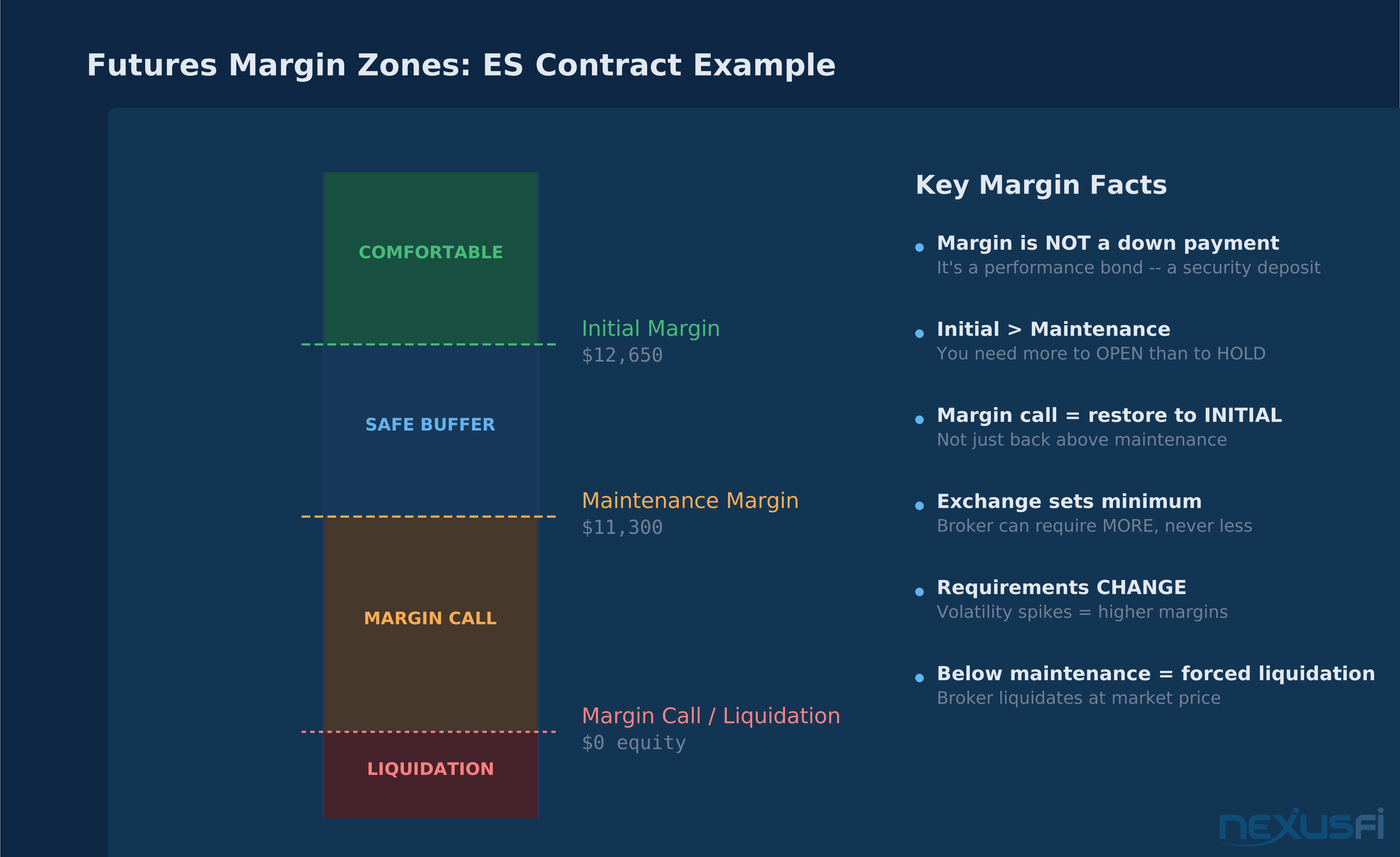
Initial margin is the amount of cash or eligible collateral you must have in your account before opening a position. You cannot enter a trade without meeting this requirement. CME Group calls this the "performance bond" — the term reflects its purpose as a guarantee, not a purchase price.
Maintenance margin is the minimum equity you must maintain while the position is open. This is typically 70-90% of the initial margin, depending on the contract. As long as your account equity stays above this level, your position remains open with no action required.
The relationship between these two numbers creates the margin call trigger zone. Your account equity can fluctuate between the initial and maintenance levels without consequence. But the moment it drops below maintenance, you have a problem.
As @EdgeClear [noted] [2], "Maintenance margin, which is usually 80%-90% of the initial margin, is the amount of money per contract required to continue holding a position."
Exchange Margin Requirements #
CME Group publishes margin requirements for every futures contract. These are the exchange minimums — your broker may require more, but never less. Here are representative requirements for the most actively traded contracts:
Standard Contracts:
| Contract | Product | Initial Margin | Maintenance Margin | Point Value |
|---|---|---|---|---|
| ES | E-mini S&P 500 | ~$12,650 | ~$11,300 | $50/point |
| NQ | E-mini Nasdaq-100 | ~$13,800 | ~$12,300 | $20/point |
| CL | Crude Oil | ~$5,400 | ~$4,800 | $1,000/point |
| GC | Gold | ~$5,200 | ~$4,600 | $100/point |
| ZB | 30-Year Treasury Bond | ~$4,500 | ~$4,000 | $1,000/point |
Micro Contracts:
| Contract | Product | Initial Margin | Maintenance Margin | Point Value |
|---|---|---|---|---|
| MES | Micro E-mini S&P 500 | ~$1,265 | ~$1,150 | $5/point |
| MNQ | Micro E-mini Nasdaq-100 | ~$1,380 | ~$1,230 | $2/point |
| MCL | Micro Crude Oil | ~$540 | ~$480 | $100/point |
| MGC | Micro Gold | ~$520 | ~$460 | $10/point |
These numbers change. CME adjusts margin requirements based on market volatility, sometimes with little notice. During the March 2020 crash, ES margins were raised multiple times in a single week. During calm markets, they tend to drift lower. Always check current requirements before sizing positions.
Micro contracts offer 1/10th the margin requirement and point value of their standard counterparts, making them accessible for smaller accounts and useful for precise position sizing.
Intraday vs. Overnight Margin #
This distinction catches more new traders off guard than any other margin concept.
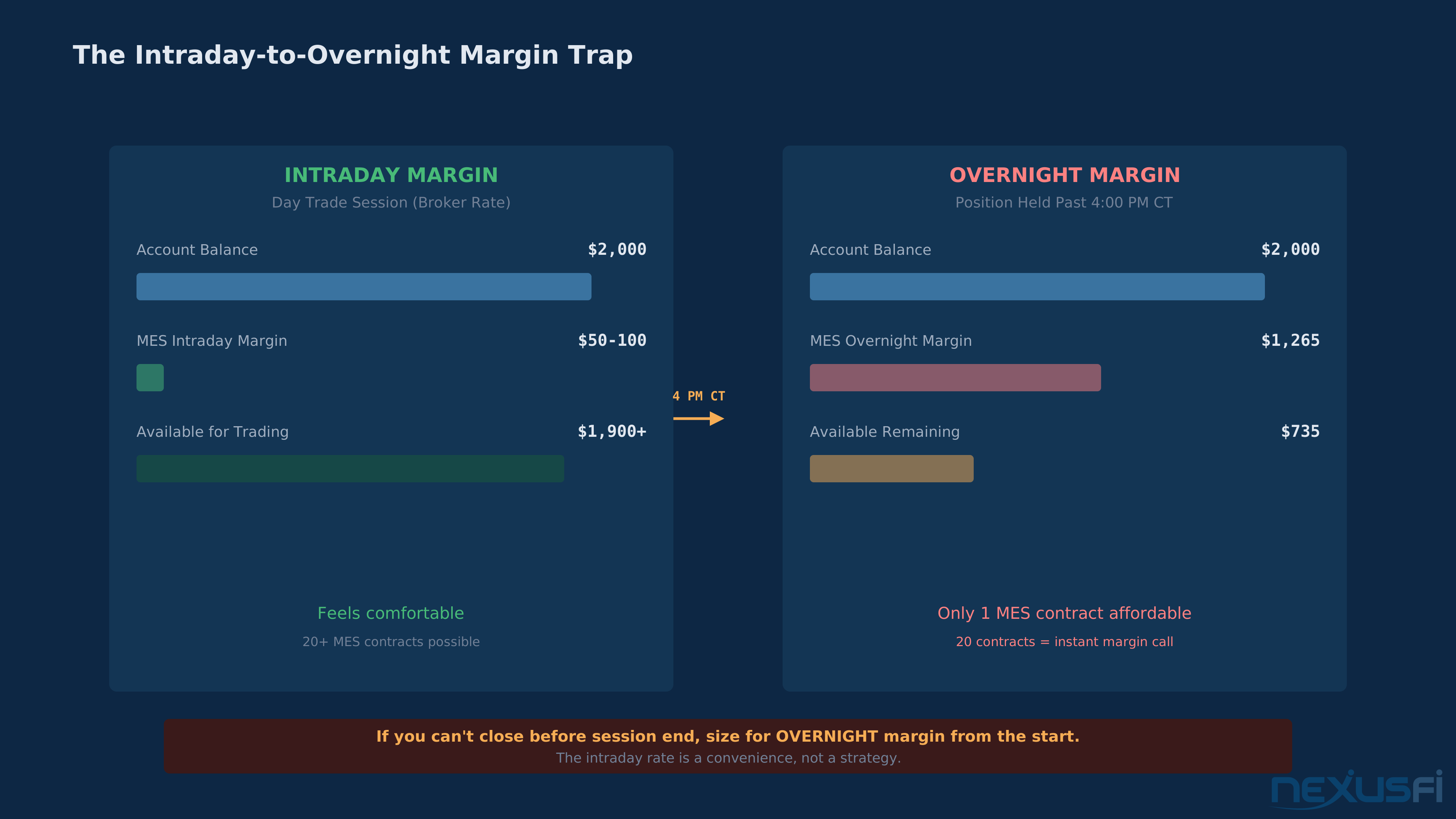
Overnight margin is the exchange's standard requirement — the numbers in the tables above. Any position held past the daily settlement time (typically 4:00 PM CT for CME products) must meet the full overnight requirement.
Intraday margin (also called "day-trade margin") is a reduced rate offered by your broker, not the exchange. Most brokers set intraday margins at 25-50% of the overnight requirement for positions that are opened and closed within the same trading session.
As @rleplae [explained] [3], "In futures, there are four margin numbers at work. The Intraday Initial margin is the amount of free funds that must be available in an account to enter the trade. The Intraday Maintenance margin is the minimum equity required during the trading day."
The trap is straightforward: you enter a position using $500 intraday margin on MES, intending to day trade. The market moves against you, you decide to hold overnight — and suddenly you need $1,265 in margin. If your account doesn't have it, you face a margin call or forced liquidation at the worst possible time.
Practical rule: If there is any chance you might hold a position past the session close, size for overnight margin from the start. The reduced intraday rate is a convenience, not a strategy.
How Margin Calls Work #
A margin call is triggered when your account equity drops below the maintenance margin requirement. This is not a suggestion to add funds — it is a demand with a deadline.
The process follows a defined sequence:
- Trigger: Account equity falls below maintenance margin during mark-to-market settlement
- Notification: Your broker alerts you via email, SMS, platform notification, or all three
- Response window: You typically have 30-60 minutes for intraday calls, up to one hour for overnight calls
- Required action: Deposit enough funds to restore equity to the initial margin level (not just maintenance) — or close/reduce positions
- Forced liquidation: If you do not act within the response window, the broker liquidates your position at the prevailing market price
Forced liquidation is not negotiable. As @josh [pointed out on NexusFi] [4], "Some brokers will work with you and actually let you wire funds in before liquidation. But they are few and far between. Most brokers are going to liquidate."
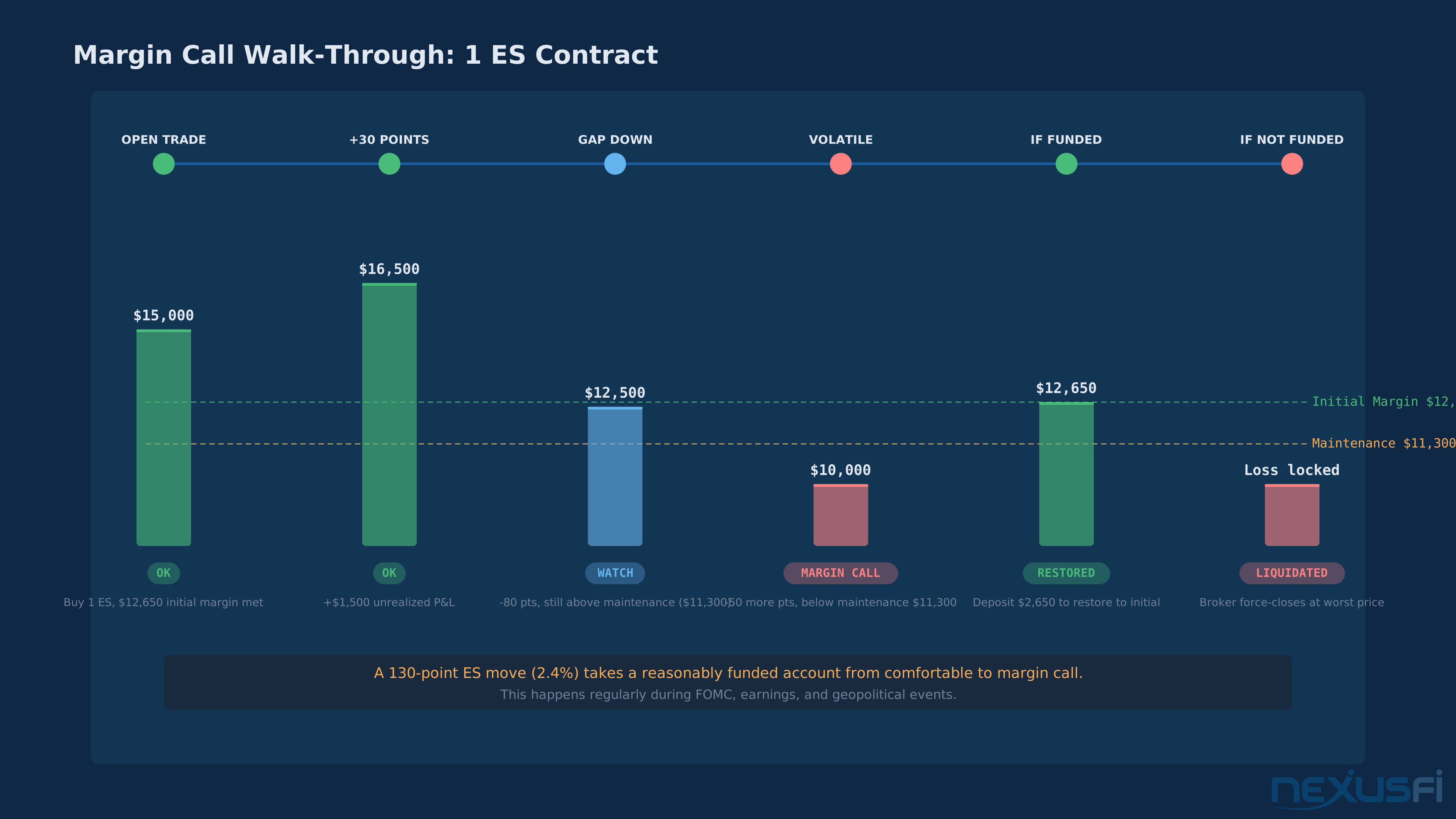
The critical detail most traders miss: a margin call requires you to restore equity to the initial margin level, not the maintenance level. If your initial margin is $12,650 and maintenance is $11,300, and your equity drops to $10,000, you need to deposit $2,650 — not just $1,300.
Margin Call Walk-Through (ES Example) #
| Step | Event | Account Equity | Status |
|---|---|---|---|
| Open | Buy 1 ES at 5,500 | $15,000 (post $12,650 initial) | OK |
| Favorable | +30 points = +$1,500 | $16,500 | Above maintenance |
| Gap down | -80 points = -$4,000 | $12,500 | Still above maintenance ($11,300) |
| Volatile session | -50 more points = -$2,500 | $10,000 | Below maintenance — margin call |
| If funded | Deposit $2,650 | $12,650 | Restored to initial; position stays open |
| If not funded | Broker force-liquidates at market | Loss locked in at worst price | Position closed |
The lesson: a 130-point ES move (about 2.4%) can take a reasonably funded account from comfortable to margin call territory. This is not an extreme scenario — it happens regularly during FOMC announcements, earnings season, and geopolitical events.
SPAN Margining #
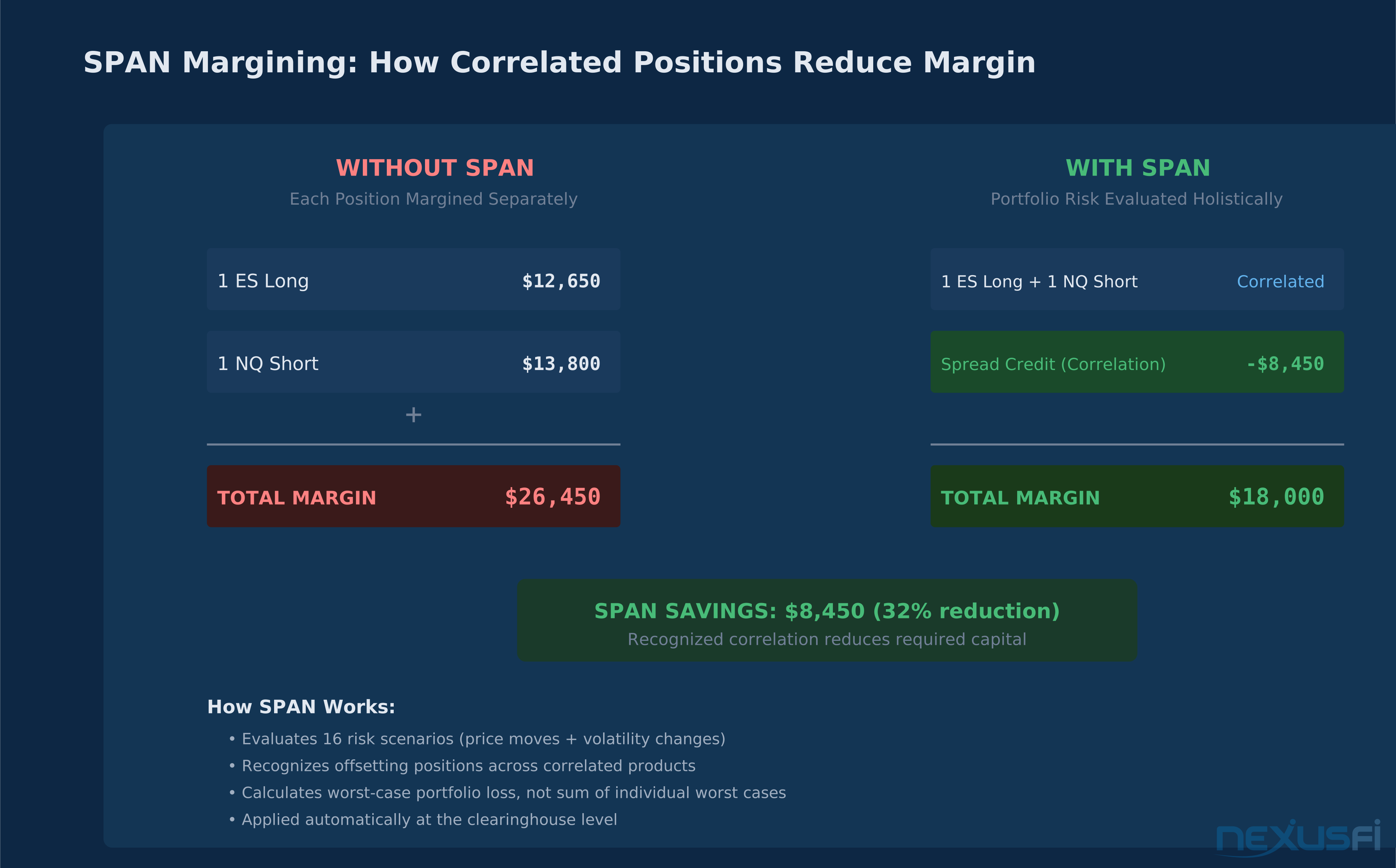
SPAN (Standard Portfolio Analysis of Risk) is CME Group's risk-based model for calculating margin requirements. Rather than treating each position independently, SPAN evaluates the entire portfolio across 16 risk scenarios that combine different magnitudes of price moves and volatility changes [7].
Why it matters for traders: If you hold offsetting positions — for example, long ES and short NQ — SPAN recognizes the correlation and reduces your total margin requirement below the sum of the individual requirements. This is called a "spread credit."
Example: Holding 1 ES long and 1 NQ short might require $25,000 in margin if calculated independently, but only $18,000 under SPAN after accounting for the strong positive correlation between S&P 500 and Nasdaq-100 futures.
SPAN calculations happen at the clearinghouse level. As a retail trader, you benefit from the reduced requirements automatically if your broker supports SPAN margining (most do).
Key SPAN concepts:
- Scan risk: The worst-case loss across the 16 scenarios
- Inter-commodity spread credit: Margin reduction for offsetting positions in related products
- Calendar spread credit: Reduction for spreads between different expiration months of the same product
- Short option minimum: A floor margin for short option positions regardless of other offsets
Portfolio Margining #
Portfolio margining takes the SPAN concept further by evaluating your entire account holistically across asset classes — futures, options, and cash positions. The result is typically a 10-30% reduction in total margin requirements compared to standard calculations.
Portfolio margining is not available to all retail traders. Most brokers require:
- Minimum account equity (often $100,000+)
- Risk management certification or demonstrated experience
- Professional or qualified investor status
For traders who qualify, portfolio margining enables more capital-efficient position management, especially for complex multi-leg strategies that include both futures and options.
When Margin Requirements Change #
Margin is not static. The exchange adjusts requirements based on market conditions, targeting 99% coverage of potential price moves [8]:
- Volatility: Higher realized or implied volatility leads to higher margins. During the March 2020 crash, CME raised ES margins multiple times within days.
- Event risk: Before major economic releases (FOMC, NFP, CPI), exchanges may temporarily increase margin requirements.
- Market stress: During flash crashes, circuit breaker events, or extreme market conditions, margin hikes can be announced with as little as one business day's notice.
- Seasonal patterns: Some commodity futures (agricultural, energy) see predictable margin adjustments around seasonal events.
As @SMCJB [observed] [5], broker liquidation policies vary much: "The consensus opinion is that IB have some of the highest margin requirements and some of the most aggressive liquidation policies. In addition to shopping around for different brokers, margin requirements are another thing to compare."
Broker Margin vs. Exchange Margin #
The CME sets the exchange minimum margin requirement. Your broker can — and often does — require more.
Why brokers charge more than the exchange minimum:
- Risk protection: Brokers are liable for client losses that exceed account equity. Higher margins reduce their exposure.
- Account size tiers: Some brokers reduce margins for larger accounts or increase them for smaller ones.
- Product-specific adjustments: Brokers may raise margins on especially volatile products or during specific market conditions.
- Intraday margin competition: Brokers compete for day traders by offering very low intraday margins. Some brokers offer as little as $50-100 per micro contract intraday, well below exchange minimums.
The intraday margin race has created a dangerous dynamic. As @josh [noted] [6], "A broker gives $50 MES daytrade margin. You have a $1000 account. You foolishly open 20 contracts, which is the maximum" — this overleveraged scenario can wipe out a small account on a modest market move.
Practical guidance: Compare brokers on overnight margin requirements, not intraday rates. The overnight rate is what matters when you need to hold a position through unexpected volatility or when you cannot close before the session ends.
Sizing Positions Around Margin #
Margin requirements tell you how much you can trade. Risk management tells you how much you should trade. These are different numbers.
The leverage trap: With $15,000 in your account, you technically qualify to trade 1 ES contract (initial margin ~$12,650). But this leaves only $2,350 of buffer — barely enough to absorb a 47-point adverse move before hitting a margin call. In ES, 47 points is a normal daily range.
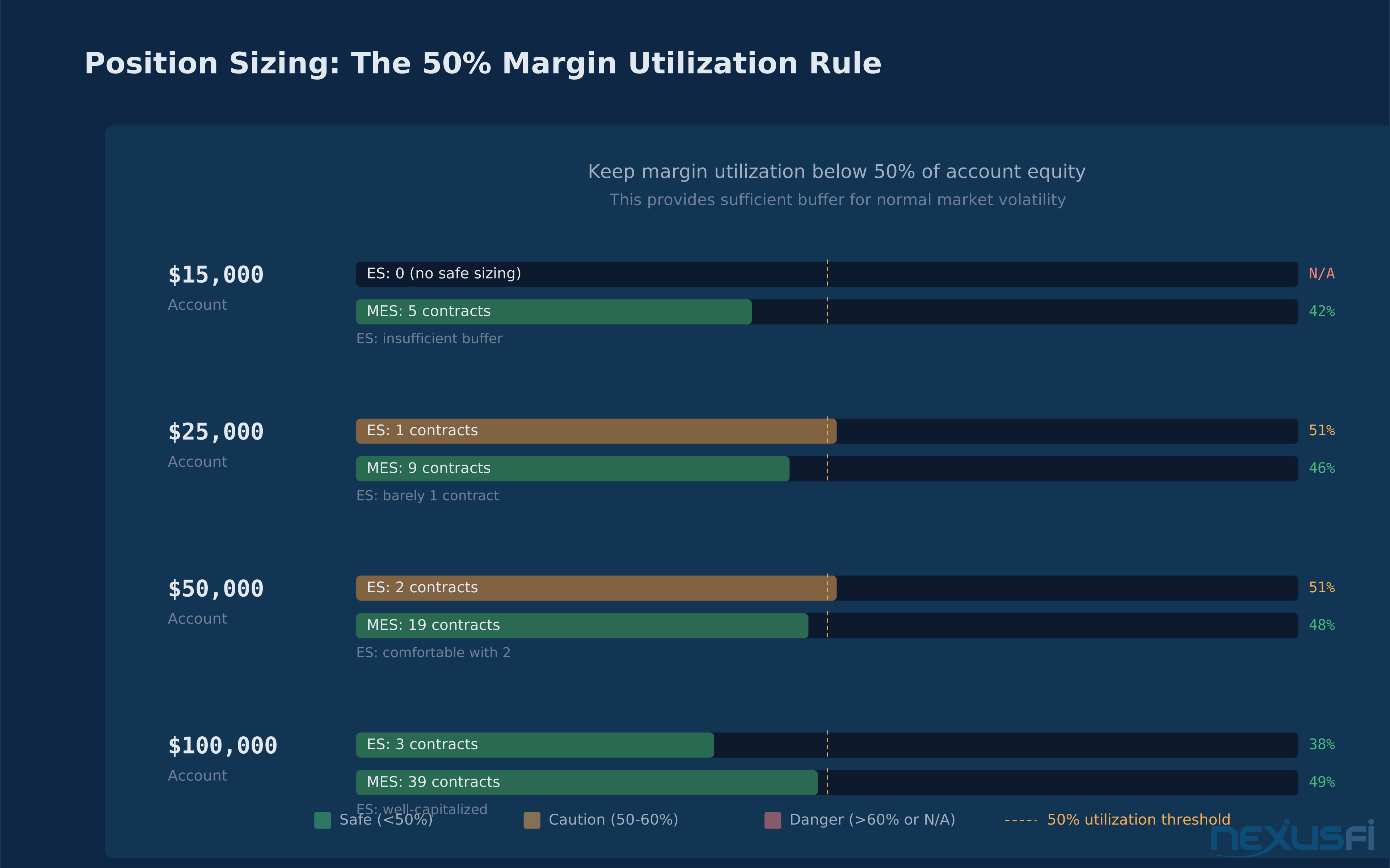
Better approach: Size positions so that margin utilization stays below 50% of account equity. This provides sufficient buffer for normal market volatility and prevents margin calls from disrupting your trading plan.
| Account Size | Max ES Contracts (50% rule) | Margin Used | Buffer |
|---|---|---|---|
| $15,000 | 0 (insufficient buffer) | -- | -- |
| $25,000 | 1 | $12,650 | $12,350 |
| $50,000 | 2 | $25,300 | $24,700 |
| $100,000 | 3-4 | $37,950-$50,600 | $62,050-$49,400 |
For MES (micro), the math is more forgiving:
| Account Size | Max MES Contracts (50% rule) | Margin Used | Buffer |
|---|---|---|---|
| $5,000 | 2 | $2,530 | $2,470 |
| $10,000 | 3-4 | $3,795-$5,060 | $6,205-$4,940 |
| $25,000 | 9-10 | $11,385-$12,650 | $13,615-$12,350 |
These are conservative guidelines. Many experienced traders use higher utilization rates — but they also have the experience to manage the increased risk of margin calls.
For more on choosing a futures broker with appropriate margin policies, and understanding how to manage position sizing with risk management frameworks, see the linked Academy articles.
Common Margin Mistakes #
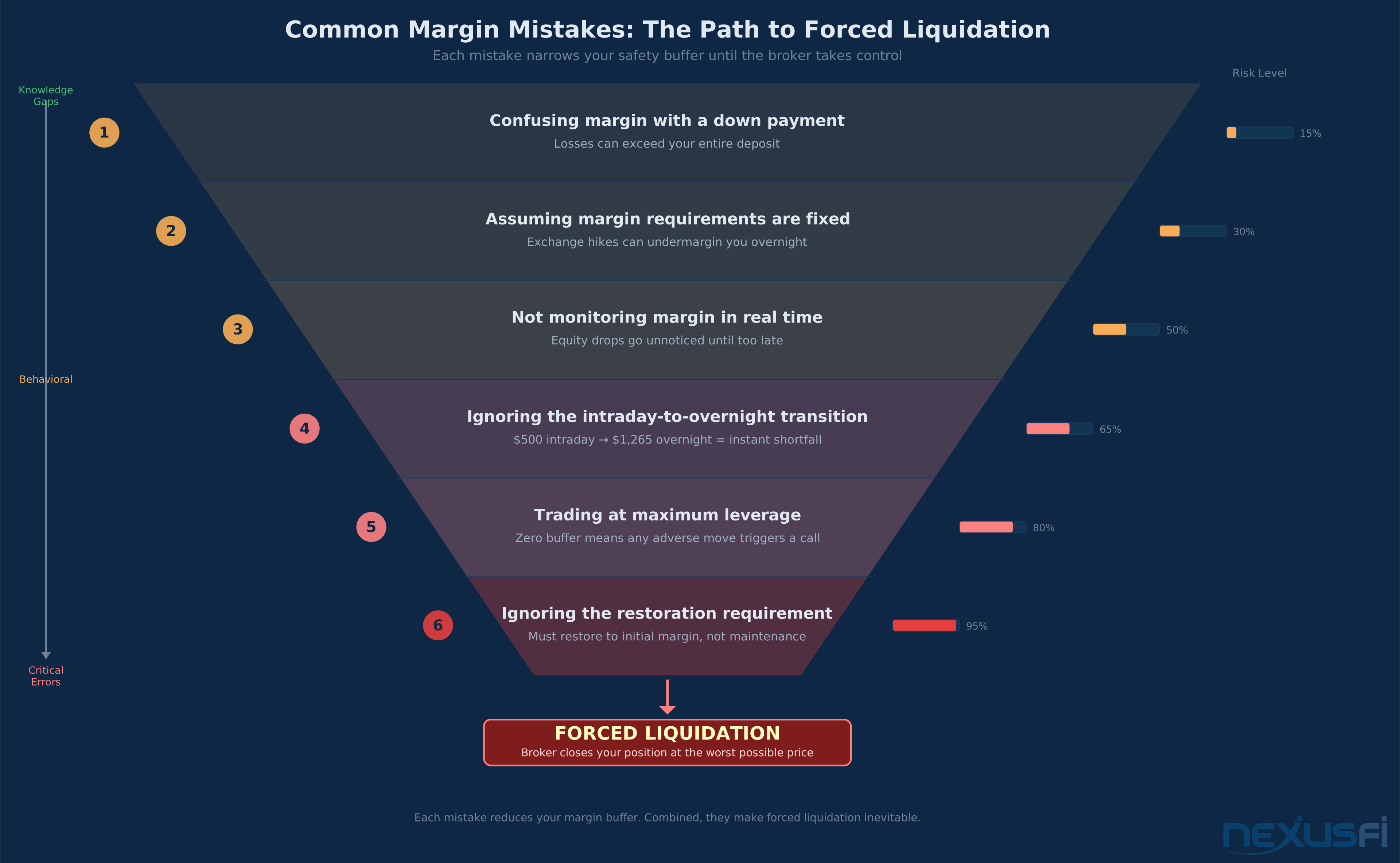
1. Confusing margin with a down payment: Margin is not equity in a position. It is a security deposit. You can lose more than your margin.
2. Ignoring the intraday-to-overnight transition: Planning to day trade, then holding overnight without sufficient margin. This is one of the most common causes of forced liquidation for new traders.
3. Trading at maximum leverage: Using all available margin leaves zero buffer for adverse moves. The market does not care about your margin level.
4. Not monitoring margin in real time: Most platforms display real-time margin utilization. If you are not watching this number, you are not managing risk.
5. Assuming margin requirements are fixed: Exchanges change requirements based on volatility. A position that was comfortable yesterday can be undermargined today after a surprise increase.
6. Ignoring the margin call restoration requirement: When you receive a margin call, you must restore to the initial margin level, not maintenance. This means the required deposit is larger than many traders expect.
Margin and Account Types #
Individual accounts: Standard margin requirements apply. Most retail traders fall into this category.
Hedger accounts: Commercial hedgers who use futures to offset business risk may qualify for reduced margin requirements at the exchange level. This requires documentation proving the hedge relationship.
Speculator accounts: The default classification for retail traders. Full margin requirements apply.
Prop firm evaluation accounts: Funded trader evaluations typically set their own margin rules, which may be more restrictive than exchange requirements. Position limits in funded trading evaluations often function as de facto margin constraints.
Margin is infrastructure. It is the mechanical foundation that determines what you can trade, how much buffer you have, and when you lose control of your positions. Understand it before you trade — not after your first margin call.
Knowledge Map
Prerequisites
Understand these firstGo Deeper
Build on this knowledgeReferences This Article
Articles that build on this topicCitations
- — Margin: initial vs maintenance vs day trading (2017) 👍 7“Futures are a highly leveraged trading product. Margins are "good faith deposits" that a trader must maintain in order to trade a particular product.”
- — Margin and maintenance requirement at different brokers (2020) 👍 1“Hi Koenigsac The purpose of margins is, first, margins provide leverage to trade futures products, and second, margin requirements try and ensure that whoever is trading has enough money in their account to cover adverse market moves.”
- — Greetings from a newcomer (2015) 👍 2“Simple explanation through Google(MB trading) Margin is the equivalent of a "good faith" deposit. Margin deposits are set by the exchange and are subject to change with price movement and market volatility.”
- — Fail to Plan - Plan to Fail: What can go wrong? (2021) 👍 2“I think you're asking whether you're allowed to send in money to avoid a margin call, or whether you will simply be liquidated before you go negative. The answer is almost always: you will be liquidated before you go negative.”
- — Futures Margin Leniency (2023) 👍 3“Interesting. I would say that the consensus opinion is that IB have some of the highest margin requirements and some of the most aggressive liquidation policies.”
- — Risk of trading micro futures (2020) 👍 3“It's a general disclosure. Not everyone uses a stop loss, and not everyone manages risk. When you open a position on margin, by definition you are effectively being 'loaned' money, and if the market does move quickly, you can be in a position such th...”
- CME Group — CME SPAN Methodology Overview
- CME Group — Understanding Margin Changes