



Event-Driven Trading Automation: Building Systems That React to Market Events in Real Time
Event-driven trading automation is one of those topics that sounds straightforward until you try to build it. The idea is simple: your system detects a market-moving event — an NFP release, a CPI print, an FOMC decision, a breaking headline — and reacts before you could possibly process the information yourself. The reality is that success depends far less on prediction and far more on data quality, execution reliability, and disciplined risk controls.
This is not about guessing what the Fed will do. It is about responding more intelligently than average to what the market does after the Fed speaks.
Overview #
This article covers the complete architecture of event-driven trading systems for futures markets — from data ingestion and signal generation through execution and risk controls. It is written for traders and developers who want to build automated systems that react to scheduled economic releases, breaking news, and other market-moving catalysts with discipline rather than guesswork.
The Five-Layer Architecture #
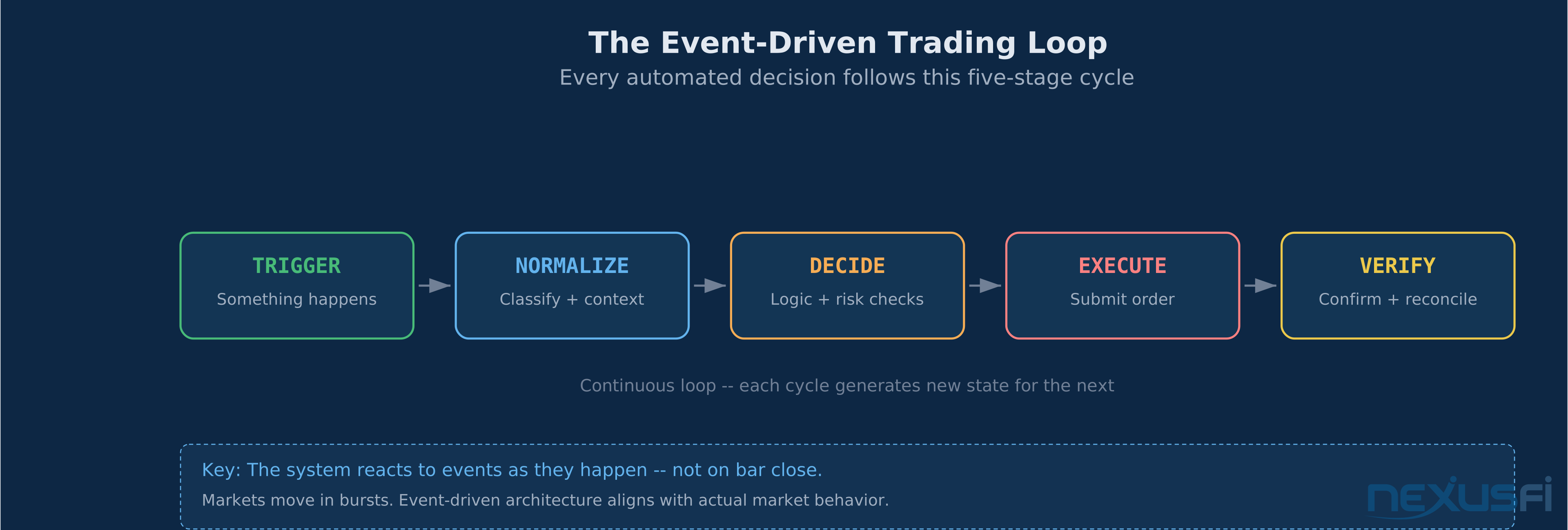
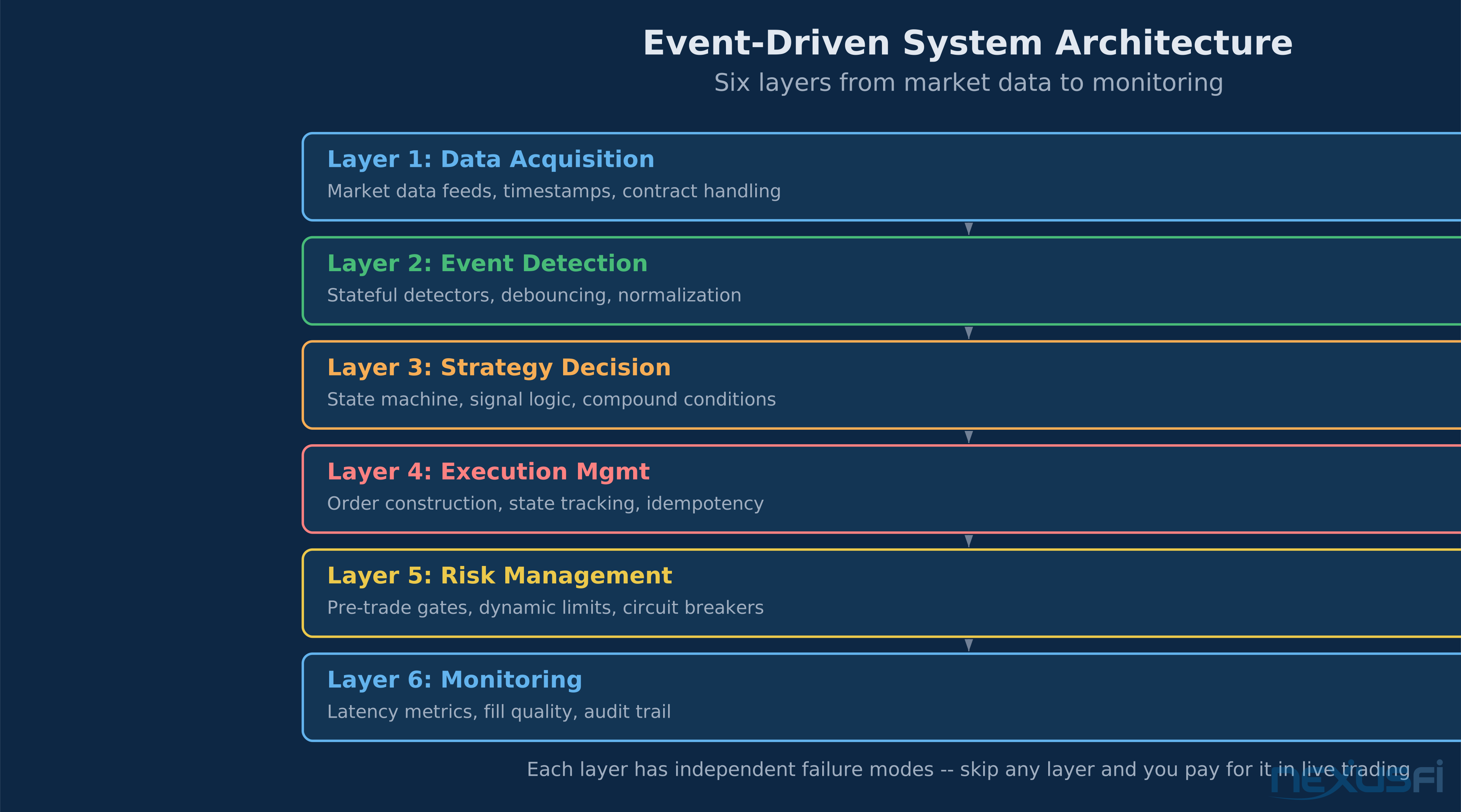
Every production-grade event-driven system has the same basic structure, whether it costs $500 or $5 million to build. The layers are: event ingestion, normalization, signal generation, execution, and independent risk controls.
Event ingestion is where your system consumes data from economic calendars, news APIs, exchange feeds, and other sources. The critical distinction here is between scheduled events — CPI releases, payroll reports, central bank decisions with known timestamps — and unscheduled catalysts like geopolitical headlines, surprise guidance changes, or regulatory announcements. Your system needs to handle both, but the engineering is completely different.
Normalization takes raw data and converts it into a common schema. This means timestamp normalization to a single clock source, deduplication of headlines that arrive from multiple vendors at different times, entity recognition to map events to instruments, and severity scoring to separate noise from signal. A crude inventory report matters for CL but barely registers on ES. Your system needs to know the difference.
Signal generation is where the event becomes a potential trade. For scheduled releases, this typically means computing surprise scores — actual versus consensus versus prior — and mapping them to historical reaction patterns. For breaking news, it involves sentiment classification, urgency detection, and confidence scoring.
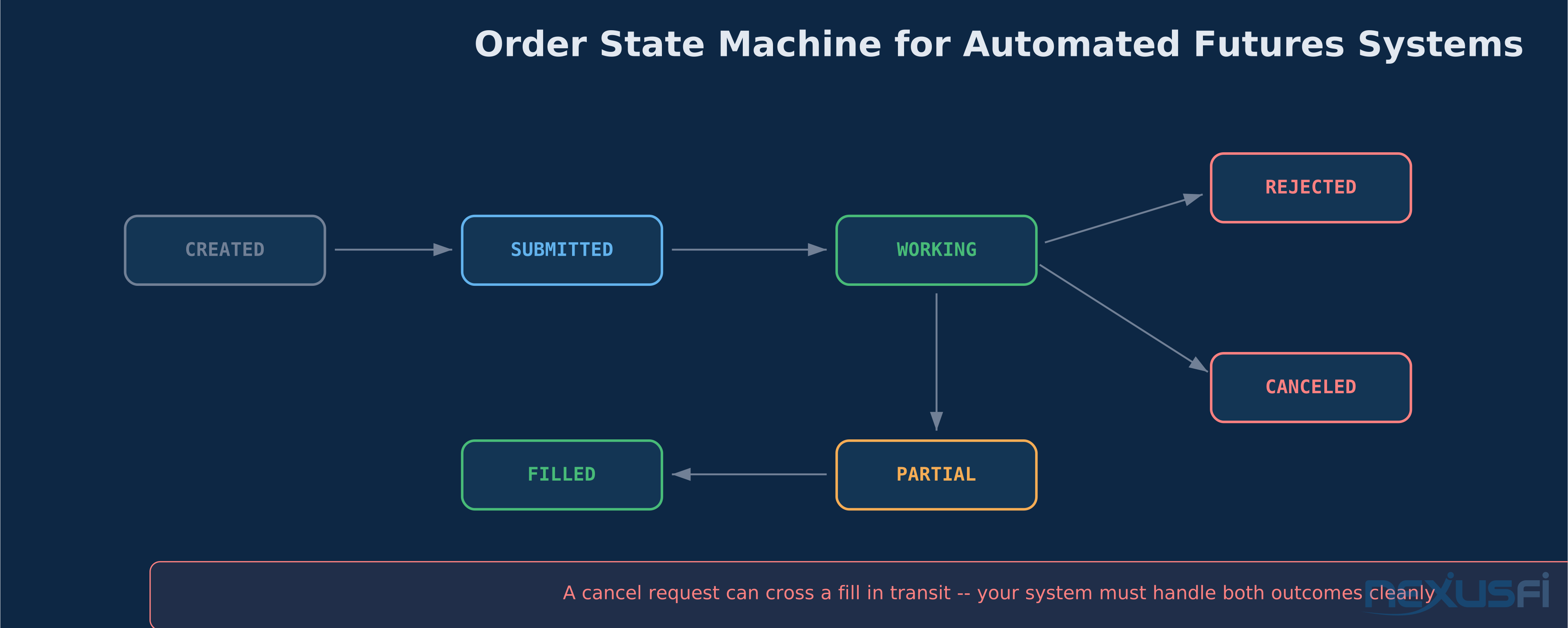
Execution handles the actual order routing with event-aware logic: pre-staged orders, cancel-replace workflows, partial fill management, and burst traffic handling during the seconds after a major release when the order book goes thin.
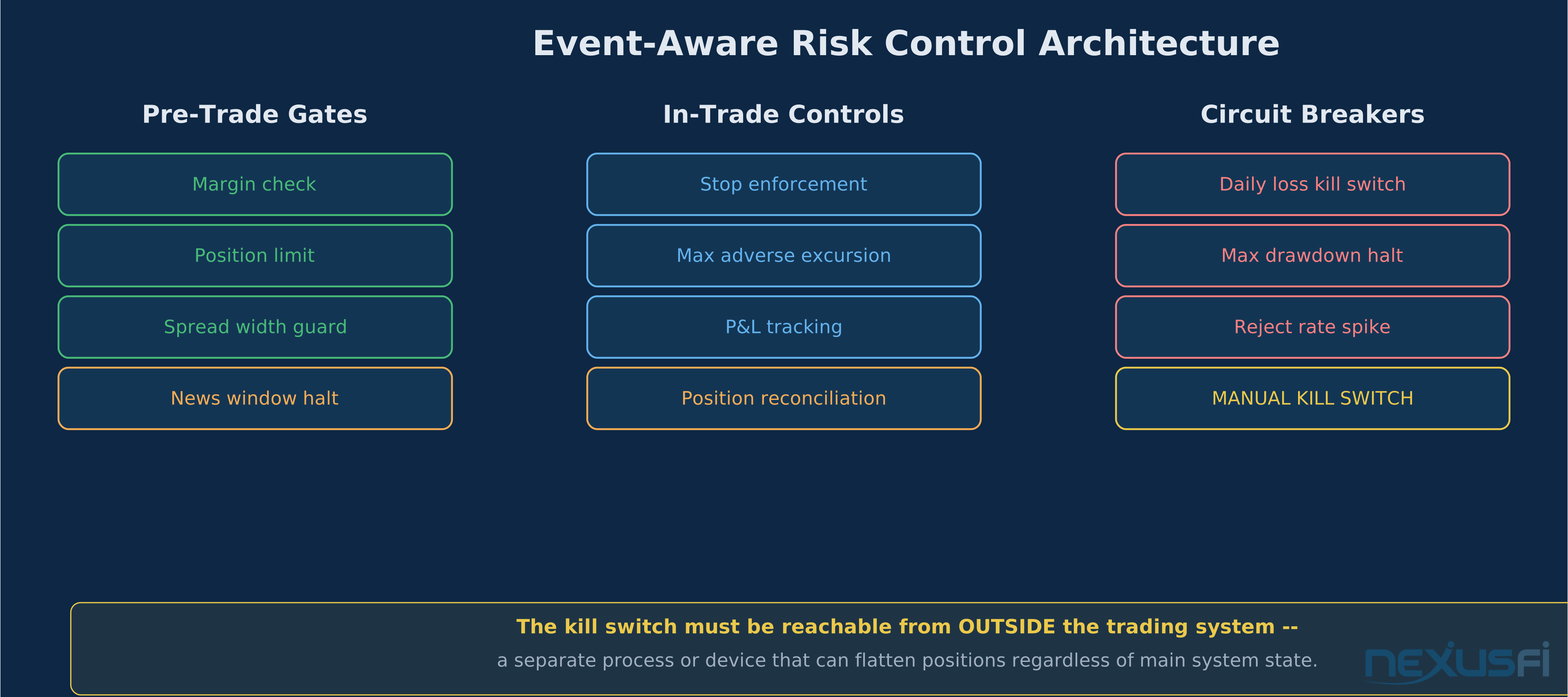
The risk layer sits independently from everything above. This is not optional and it is not a suggestion. When your strategy says "go long ES," the risk layer independently decides whether the position size is acceptable, whether spreads are within tolerance, whether volatility is below threshold, and whether you have already hit your per-event loss limit. Coupling risk controls to strategy logic is how event trading systems blow up.
Risk controls must operate independently from strategy logic. When the strategy and risk layer share the same codebase or decision path, a bug in the strategy can disable the very controls meant to contain it. Separation is not just good practice — it is the difference between a recoverable bad trade and a blown account.
As one NexusFi member [documented in a detailed journal analysis][8] of volatility around news events, the price action in the seconds after a release can be violent enough to destroy accounts that lack proper controls.
Scheduled Events vs. Breaking News #
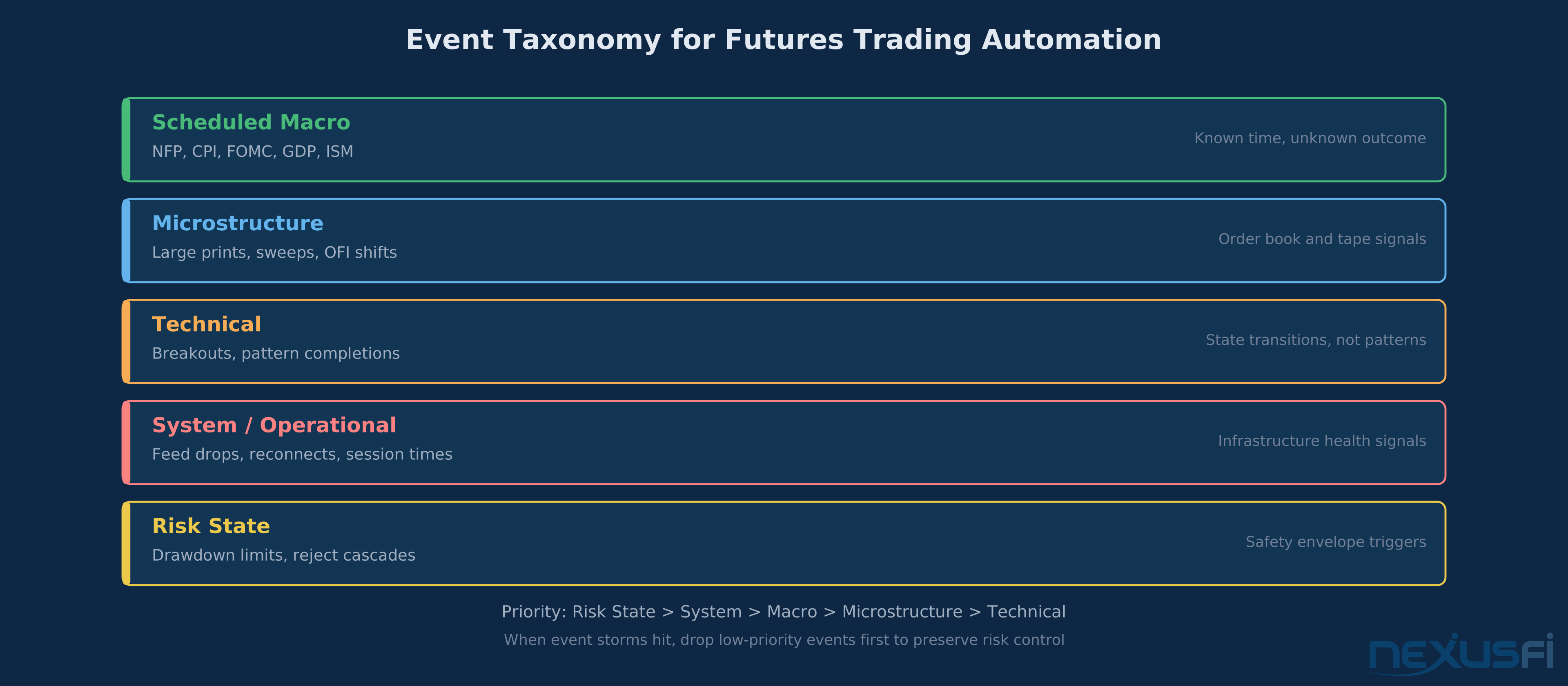
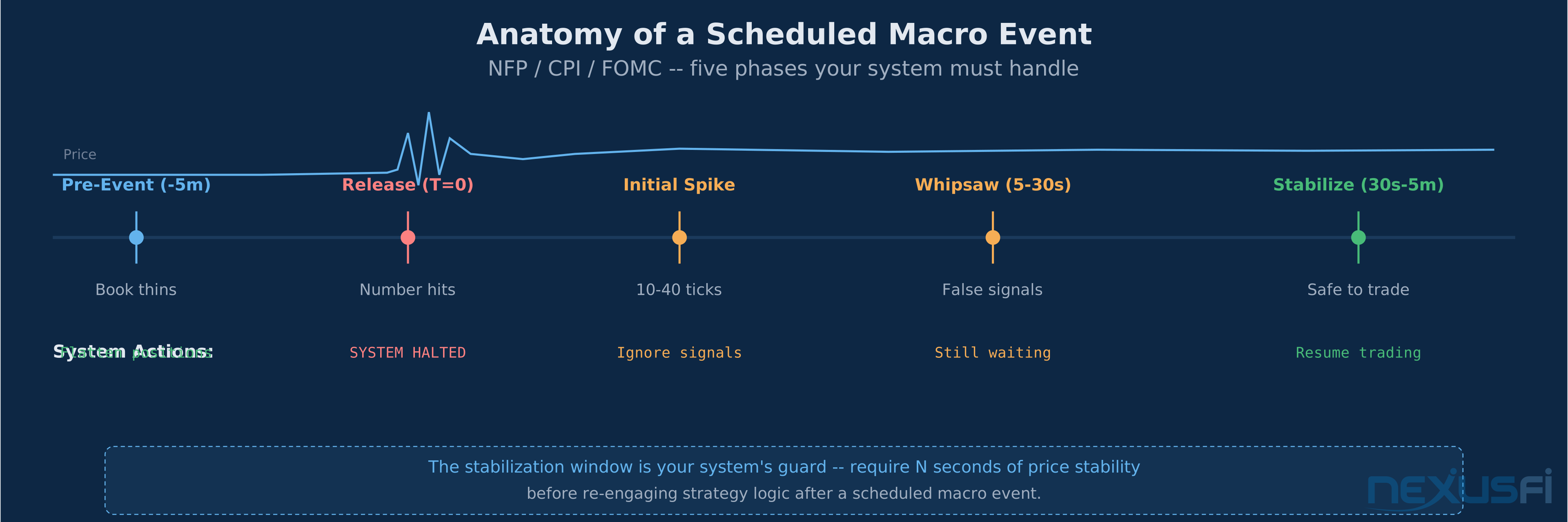
Scheduled events are the easier category to automate. You know when NFP drops (8:30 AM ET, first Friday of the month), when CPI publishes, when the FOMC statement hits. Your system can prepare: arm the strategy, stage orders, configure risk parameters, and wait.
The data pipeline for scheduled events is relatively clean. Economic calendar feeds provide consensus forecasts, prior readings, and revision history. When the actual number publishes, your system computes the surprise magnitude, classifies it (hawkish, dovish, neutral), and maps it to the affected instruments.
For futures traders, the instrument mapping matters enormously. A hot CPI print is directly relevant to ZN, ZF, ES, NQ, 6E, and GC. A crude inventory surprise hits CL and BO but barely moves equity indices unless the deviation is extreme. A payroll miss affects rates, FX, and indices simultaneously — and your correlation-aware risk limits need to account for that.
The NexusFi community has built several tools for tracking these events, including [indicators that plot economic release times directly on charts][9] and [filter historical data around news events][10].
Breaking news is harder. Headlines arrive from multiple sources at different times, in different formats, with different levels of accuracy. Your system needs entity extraction (which country, company, or policy authority is involved), event classification (is this a sanctions headline, a ceasefire, a surprise guidance change?), impact scoring (how much does this change the macro narrative?), and source credibility weighting (a Reuters flash is not the same as a social media rumor).
The practical approach most professionals use is hybrid: rules and dictionaries for speed and transparency, with NLP classifiers for enrichment and edge cases. Pure machine learning approaches can be powerful but require guardrails, auditability, and latency planning. If your classifier takes 200 milliseconds to score a headline but the market moves in 50, the model is not helping.
Signal Generation: Turning Events Into Tradable Features #
Computing the Surprise Score #
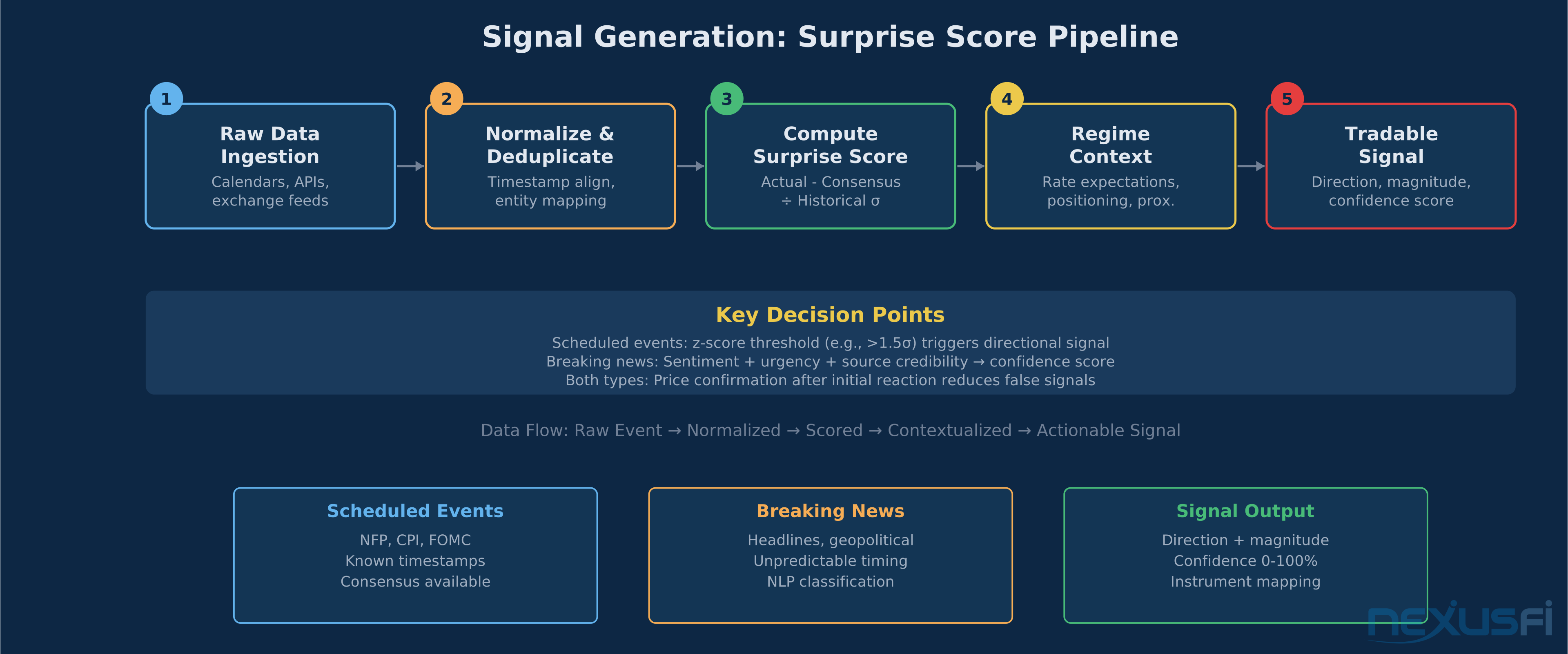
The core feature for scheduled events is the surprise score. At its simplest: actual minus consensus. A CPI print of 3.5% against a consensus of 3.3% is a 0.2 percentage point hawkish surprise. But raw surprise is not enough. You need context.
Normalizing by Historical Deviation #
Normalize the surprise by its historical standard deviation. A 0.2% CPI surprise might be routine in one regime and extraordinary in another. Compute z-scores against the distribution of past surprises for that specific release. A 2-sigma NFP beat means something different than a 0.5-sigma one.
CME Group research confirms how dramatically different surprise magnitudes affect market activity: a one standard deviation surprise in NFP generates approximately 194,836 additional futures contracts traded in the first minute alone, while CPI surprises — though statistically significant — produce a more muted 20,000 to 30,000 additional contracts[15]. Academic research in the Journal of Futures Markets found that over three-fourths of S&P 500 index futures price jumps between 8:30 AM and 8:35 AM are directly related to scheduled macro releases, with Non-farm Payroll being the single most significant driver[16].
Then layer on regime context. The same mild payroll beat has very different implications when the market is priced for aggressive easing versus when it is already positioned for tightening. Your signal generation needs to incorporate the current rate expectations curve, recent positioning data where available, and the proximity of other catalysts.
Breaking News: The Signal Pipeline #
For breaking news, the signal pipeline is more complex. You need to assess whether the headline is truly market-moving or just noise, whether it changes the macro narrative or confirms what is already priced in, and whether the source is credible enough to act on.
A practical approach that combines news with price behavior works well: detect the headline, assess the surprise, then watch the initial price reaction and order flow for confirmation. If the headline says "hawkish" but the market rallies, something in your interpretation is wrong. Price behavior as confirmation helps avoid trading every headline mechanically.
One NexusFi member [analyzed this problem][11] from the perspective of understanding which releases actually matter versus which ones traders can safely ignore. The conclusion: the timing of the event is often more important than its content, because markets have already priced in the most likely outcomes.
Three Core Strategy Patterns #
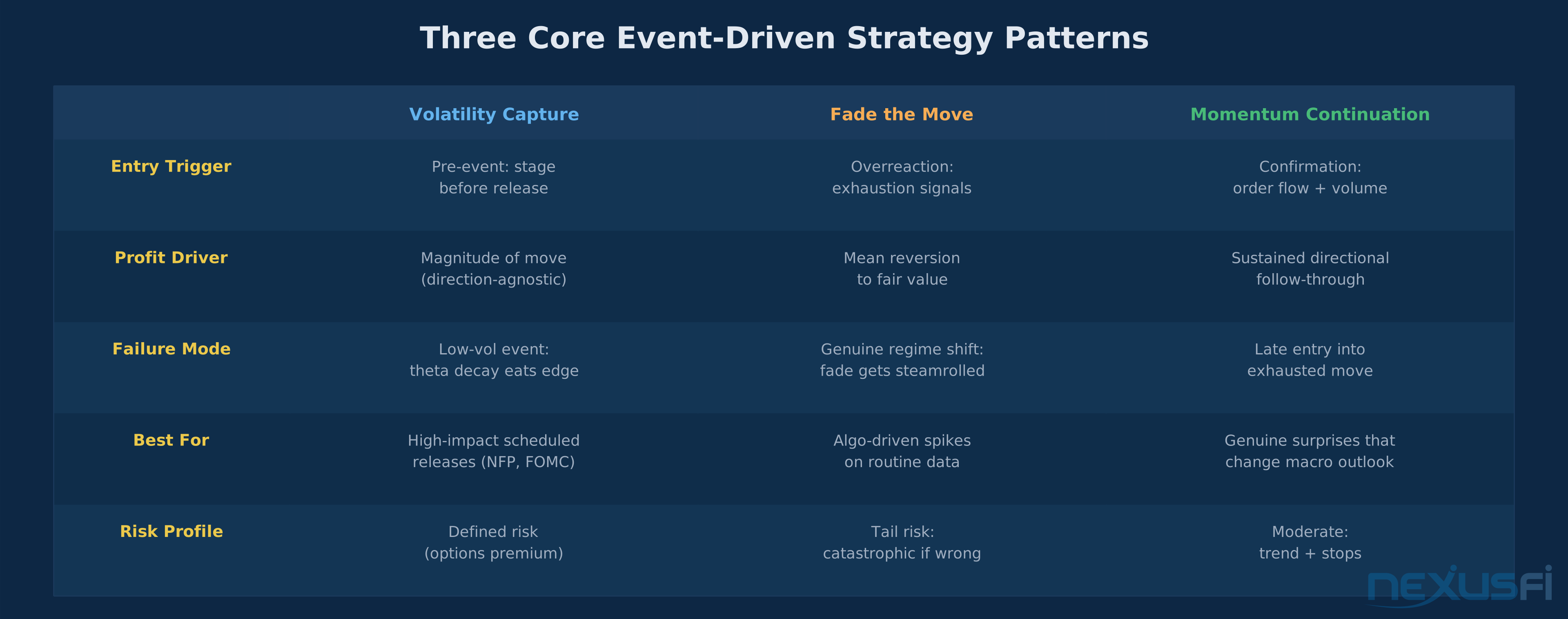
Most event-driven futures strategies cluster around three approaches. Each has a clear use case and a clear failure mode.
The first is volatility capture around major scheduled events. The idea: you expect a large move but do not know the direction, so you structure a position that profits from magnitude regardless of direction. In futures, pure straddles require options on futures — buying both a call and a put. Some traders approximate this with bracket orders or related structures in the futures themselves, but the options approach is cleaner. The risk is theta decay if the event produces less movement than implied volatility suggests, and wide spreads during the release window that eat into your edge.
The second is fade-the-move. This is a contrarian play: the market overreacts immediately after the release, and you trade the snapback. This can work when the first impulse is driven by algorithmic knee-jerk reactions to headlines, when the news is less significant than the market initially interprets, or when you can identify exhaustion signals in the order flow. The danger is real: fading a genuine regime shift — a surprise rate hike, a war declaration, a credit event — is catastrophic. You need confirmation that the move is exhausting before entering, and tight event-window stops.
The third is momentum continuation. Once the market confirms a surprise-driven direction through sustained order flow imbalance, volume confirmation, and price follow-through, you join the move. This tends to be more strong than fading when the event genuinely changes macro expectations. The risk is entering too late into exhaustion or getting trapped in a whipsaw if the initial move reverses.
Two additional patterns deserve mention. Post-event drift strategies wait for the initial reaction to settle, then trade the sustained follow-through over minutes or hours. These are better for slower systems that prioritize reliability over speed. Spread and curve trades — trading the relative movement between related contracts (curve steepening on a hawkish surprise, for example) — reduce directional risk while still capturing the event's structural impact.
Risk Management: Where Event Trading Blows Up #
If you take one thing from this article, take this: risk management is the most important component of event-driven automation. Not signal generation, not execution speed, not clever NLP — risk management.
Core Risk Controls #
The core controls you need:
Per-event and per-day maximum loss limits, enforced independently from strategy logic. Your strategy does not get to override the risk layer. Ever.
Pre-event exposure reduction or flattening when your strategy has no demonstrated edge through the release. If your system cannot justify holding a position through NFP, it should be flat before the number drops.
Spread and volatility filters that prevent execution when market conditions degrade. If the bid-ask spread on ES widens to 4 ticks during the first second after CPI, your system should recognize that execution quality will be poor and either widen its entry criteria or stand aside.
Feed outage and stale quote detection with automatic disarming. If your news feed goes silent for 500 milliseconds during a release window, your system should assume something is wrong and stop sending orders.
Correlation-aware portfolio limits. During macro events, ES, NQ, ZN, ZF, 6E, and GC can all move in correlated fashion. Per-instrument limits are not sufficient — you need portfolio-level exposure awareness.
Event Deduplication #
Event deduplication. A common failure mode: the same release arrives multiple times from different vendors, or with corrections and revisions. Your system re-triggers on each arrival and doubles or triples your intended position. Mitigate this with event ID tracking, timestamp-based deduplication, and a strict "one trade per event per strategy" rule.
The bond trading community on NexusFi has [discussed this problem extensively][12]. One member documented how scheduled news events — which are neither random nor unexpected — can still cause account-killing moves when risk controls are absent.
Latency: What counts #
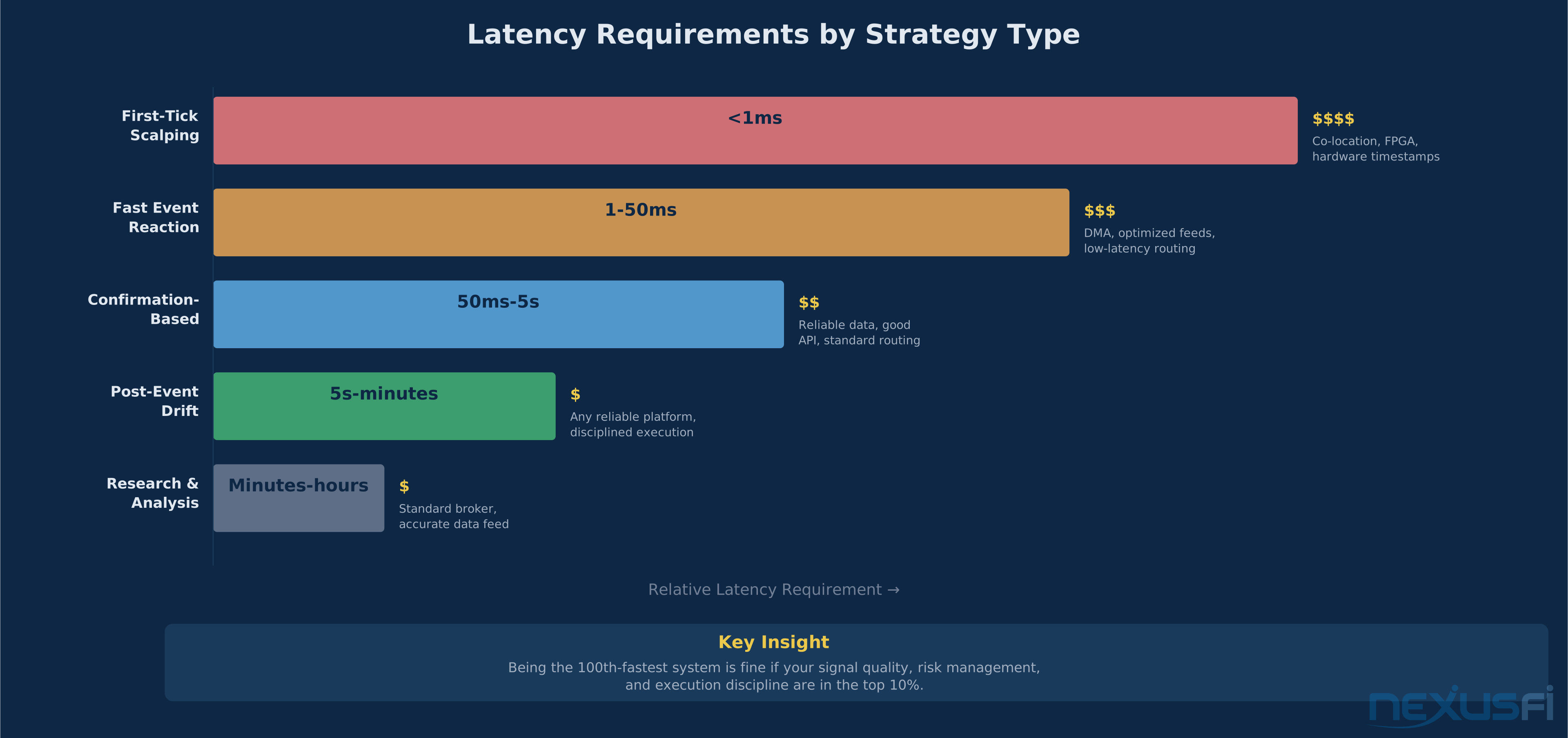
Latency matters for event-driven trading, but the degree depends entirely on your strategy type.
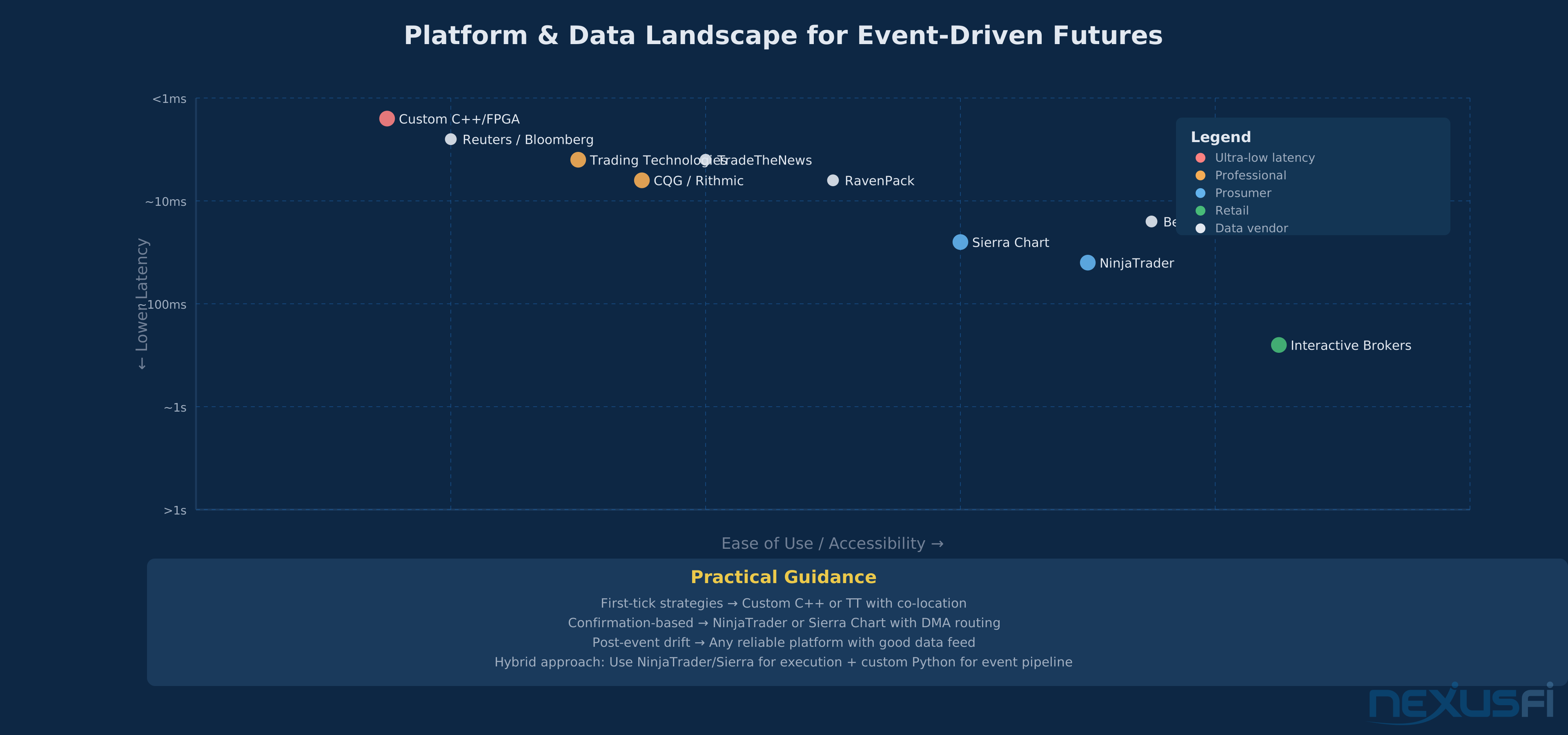
If you are competing for the first tick after a scheduled release — trying to be in the market within milliseconds of the number hitting the wire — then latency is everything. You need co-location near the exchange matching engine, hardware timestamping, direct market access through low-latency routing, and optimized feed parsing. This is expensive, operationally complex, and the domain of professional firms with dedicated infrastructure budgets.
If your strategy depends on interpreting the headline, comparing actual versus consensus, and waiting for initial confirmation — operating in the seconds-to-minutes timeframe — then feed quality and decision quality matter more than raw speed. You still need reliable timestamps and consistent data, but you do not need microsecond infrastructure.
If you are trading post-event drift over minutes to hours, latency is barely relevant. What matters is reliable data, disciplined execution, and not getting picked off by stale quotes.
For most futures traders, the practical question is not "can we be fastest?" but "can we be consistently good enough to avoid adverse selection?" Being the 100th-fastest system is fine if your signal quality, risk management, and execution discipline are in the top 10%.
One latency risk that gets overlooked: clock drift. Different vendors publish the same event with different delays. Your system might receive CPI from one source 50 milliseconds before another. If your backtest assumes simultaneous receipt, your live performance will diverge. Use NTP or PTP clock synchronization, and always separate event timestamps (when the source published) from receipt timestamps (when your system received it).
Platform and Data Environment #
For futures execution, the most common platforms in the event-driven space include NinjaTrader and Sierra Chart for retail and prosumer automation, CQG and Rithmic for lower-latency routing, and Trading Technologies for institutional-grade execution. Interactive Brokers provides broad access and is useful for prototyping, though its latency characteristics make it less suitable for first-tick strategies.
For news and economic data, the major vendors are Reuters, Bloomberg, Dow Jones, TradeTheNews, RavenPack, and Benzinga. Econoday and similar services provide economic calendar data with consensus forecasts. Exchange-specific feeds provide release-specific data for inventory reports, USDA numbers, and similar scheduled publications.
The NexusFi community has shared tools for integrating economic event data into trading platforms, including [MultiCharts indicators that backtest market reactions around historical releases][13] and NinjaTrader scripts that filter trading activity around news events.
An important distinction: chart-based platforms handle bracket orders and strategy scripting well, but event-driven trading often requires external data ingestion, custom parsing, asynchronous event handling, and strong logging. That is where custom Python or C++ stacks win. You can use a platform like NinjaTrader for execution while building your event pipeline and signal logic in a separate service that communicates through the platform's API.
Implementation: Where to Start #
If you are building an event-driven system from scratch, start narrow. One event type. One or two liquid contracts. One simple rule set. Strict risk limits. Extensive logging. Gradual expansion only after you have evidence that the basic system works.
Build Order #
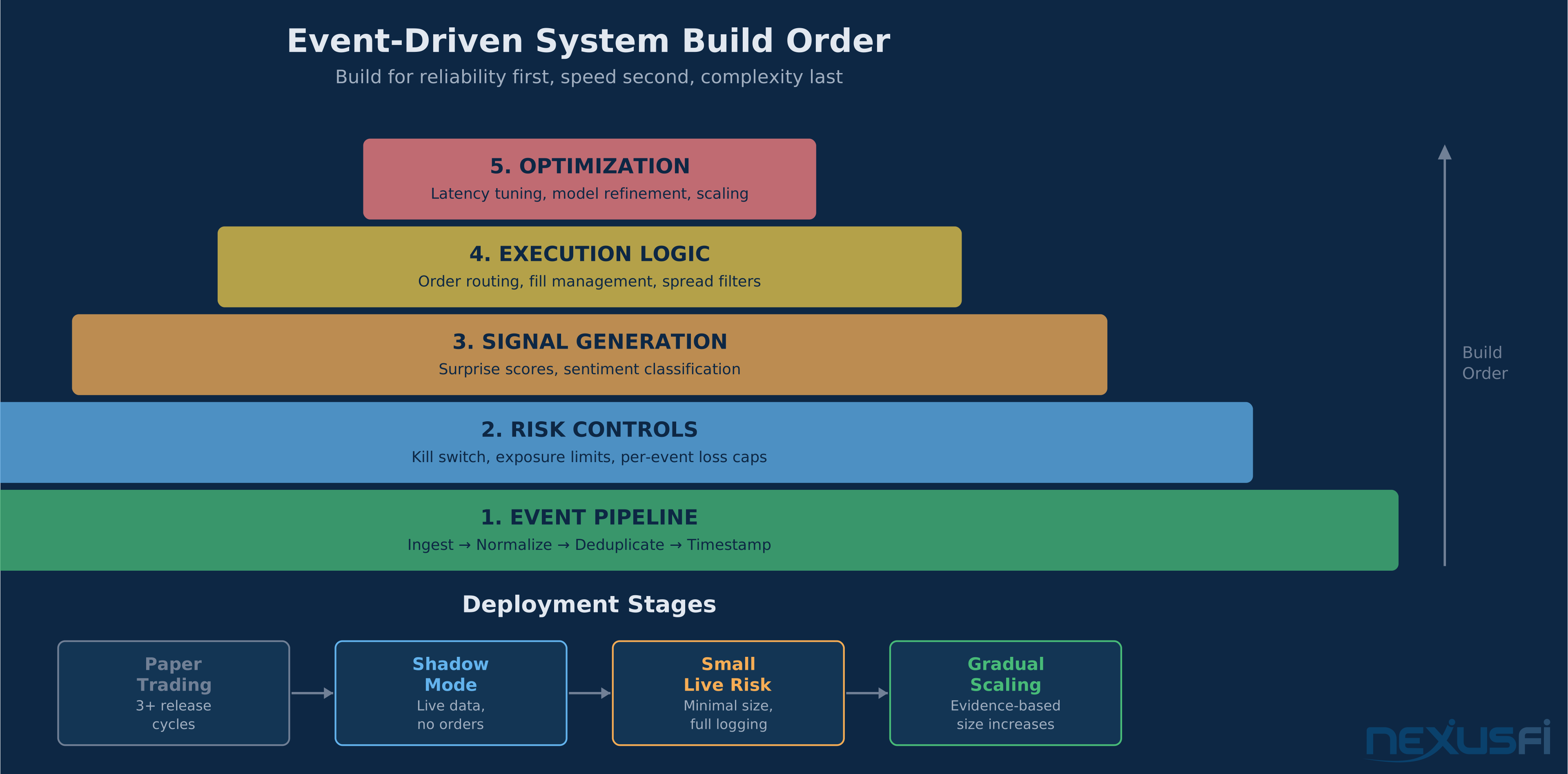
The build order matters. First, build the event pipeline: ingest, normalize, deduplicate, timestamp-align. This is the foundation everything else depends on. Second, implement risk controls before connecting any strategy logic. Your kill switch, exposure limits, and per-event loss caps should work before a single signal is generated.
Build the kill switch first. Before a single signal fires or an order is routed, your system should be able to flatten all positions, cancel all open orders, and disarm the strategy with one command. If the kill switch does not work, nothing else matters.
Third, add signal generation incrementally. Start with structured surprise scores for scheduled events before tackling the complexity of unstructured news. Fourth, deploy in stages: paper trading, then shadow mode (running alongside live data without real orders), then small live risk, then gradual scaling.
Backtesting Limitations #
Be honest about backtesting limitations. Event-driven backtests are notoriously fragile because of timestamp misalignment between historical release times and market data, lookahead bias when your backtest "knows" the number before the market does, inability to model realistic slippage and spread widening during release windows, and the impossibility of simulating queue position and partial fill dynamics during burst activity.
NexusFi members have shared [historical economic event datasets going back to 2007][14] for backtesting purposes. These are valuable for research but should be used with full awareness of the limitations described above.
A practical deployment sequence for your first event strategy:
Start with one macro release — CPI or NFP are good choices because they are well-documented, occur monthly, and produce reliable volatility.
Build the surprise score computation: actual minus consensus, normalized by historical standard deviation.
Implement a simple threshold rule: if surprise exceeds 1.5 sigma, take a directional position aligned with the historical reaction pattern for that surprise magnitude.
Set strict risk parameters: maximum position size, maximum loss per event, automatic exit after a defined time window, and a kill switch that disarms the strategy if any parameter is violated.
Run in paper mode for at least three release cycles. Compare your paper fills against what actual execution would have produced. Adjust slippage assumptions.
Deploy live with minimal size. Scale only after accumulating statistical evidence across multiple events.
The Bottom Line #
Event-driven trading automation is an event-processing and risk-control problem as much as it is a trading problem. The edge usually comes not from predicting the event, but from responding more intelligently and more safely than average to the market's reaction to the event.
Build for reliability first, speed second, and complexity last. Separate your risk controls from your strategy logic. Test with brutal honesty about execution friction. Start narrow, log everything, and scale only when the evidence justifies it.
The traders who succeed at this are not the ones with the fastest systems or the cleverest models. They are the ones whose systems survive the events that the models did not predict.
Knowledge Map
Go Deeper
Build on this knowledgeReferences This Article
Articles that build on this topicCitations
- — Trading fast markets (2013) 👍 17“Before the scheduled news release market participants remove their limit orders and the book looks very sparse, thus getting slipped on bracketing the news is inevitable.”
- — Tape is my shape (tape reading, time and sales) (2013) 👍 4“In terms of big prints -- if you use standard Time & Sales feed, you will only see a large print if a large market order hits a large limit order.”
- — GOMI all NT7/8 & SC; MP & Orderflow @ Gomicators.com from original GOMI (2016) 👍 4“Imbalance ratio = 3 (bids > 3*asks or asks > 3*bids), number of imbalance levels to define a S/R zone: 3.”
- — If a transaction occurs BELOW the bid vs AT the bid (2014) 👍 4“A larger order may sweep through several levels of the order book at once. In that case a transaction may print below the best bid.”
- — NinjaTrader Brokerage and Slippage (2022) 👍 5“The major cause of slippage has nothing to do with either your broker or your trading platform, but with the orders on the exchange.”
- — Sustained success with an algo (2022) 👍 2“The real key is not necessarily what the quit criteria is, but rather that you have the quit criteria in the first place.”
- — news trading system (2021) 👍 2“News are volatile times. Slippage on market orders -- fills can be much worse than in normal times.”
- — MWG86's Price Action Journal (2020) 👍 15“I finished my day and opening type study this weekend. I went back to the beginning of 2019 and classified all day types according to widely accepted profile definitions.”
- — jtEconNews indicator (2011) 👍 7“I'm going to put out an update that will expose a dataseries that can be used in a strategy. The data series will contain a value indicating the importance level of the next pending news event.”
- — [SC] Economic Events Display (news) (2013) 👍 7“This study displays past economic events downloaded from Forex Factory calendar. It could be a basis of code for more sophisticated studies which are partly based on news, for instance to avoid trading in their vicinity.”
- — Which dates and news events are mandatory to be aware of? (2018) 👍 3“Be aware of the red dot market moving indicator events. Sometimes those have an effect and sometimes not, but if day trading and you see the order book for your product really thinning out, get flat.”
- — Avoiding Account Killing Freight Trains (2021) 👍 9“Scheduled news events are neither random nor unexpected, yet they still cause account-killing moves when risk controls are absent. Always have an economic calendar pulled up and know when these reports are coming out.”
- — The Economic Events Collection for MultiCharts (2012) 👍 23“Have you ever wanted to work with upcoming economic events in MultiCharts, such as getting an alert when a certain economic release was about to happen? Perhaps you even wished for a way to close strategy positions a given number of minutes before an economic news release?”
- — All economic events/news 2007-2011 in one CSV file (2011) 👍 7“For my own research, I needed a CSV file with all economic events/news from 2007 to 2011. With specific download and parsing routines, I have generated such a file from Forex Factory.”
- — Economic Indicators That Most Impact Markets (2025)
- — S&P 500 Index-Futures Price Jumps and Macroeconomic News (2014)