



Futures Broker Evaluation Framework: A Systematic Guide to Finding the Right Broker for Your Trading Style
Overview #
No broker is best for everyone. This statement is obvious in theory but gets ignored constantly in practice. Traders ask "what's the best futures broker?" in forum threads and expect a single answer. The real answer is: it depends on how you trade, what you need, and what you're actually willing to pay once you account for all the fees.
This article gives you a systematic framework for evaluating futures brokers. Not a rankings list that goes stale in six months. A process you can apply to any broker, today and five years from now.
The framework applies whether you're opening your first futures account, outgrowing your current broker, or trying to figure out why your all-in costs don't match what you were quoted.
[1]
That's the foundation. Let's build the framework on top of it.
FCM vs. Introducing Broker: The Chain of Responsibility #
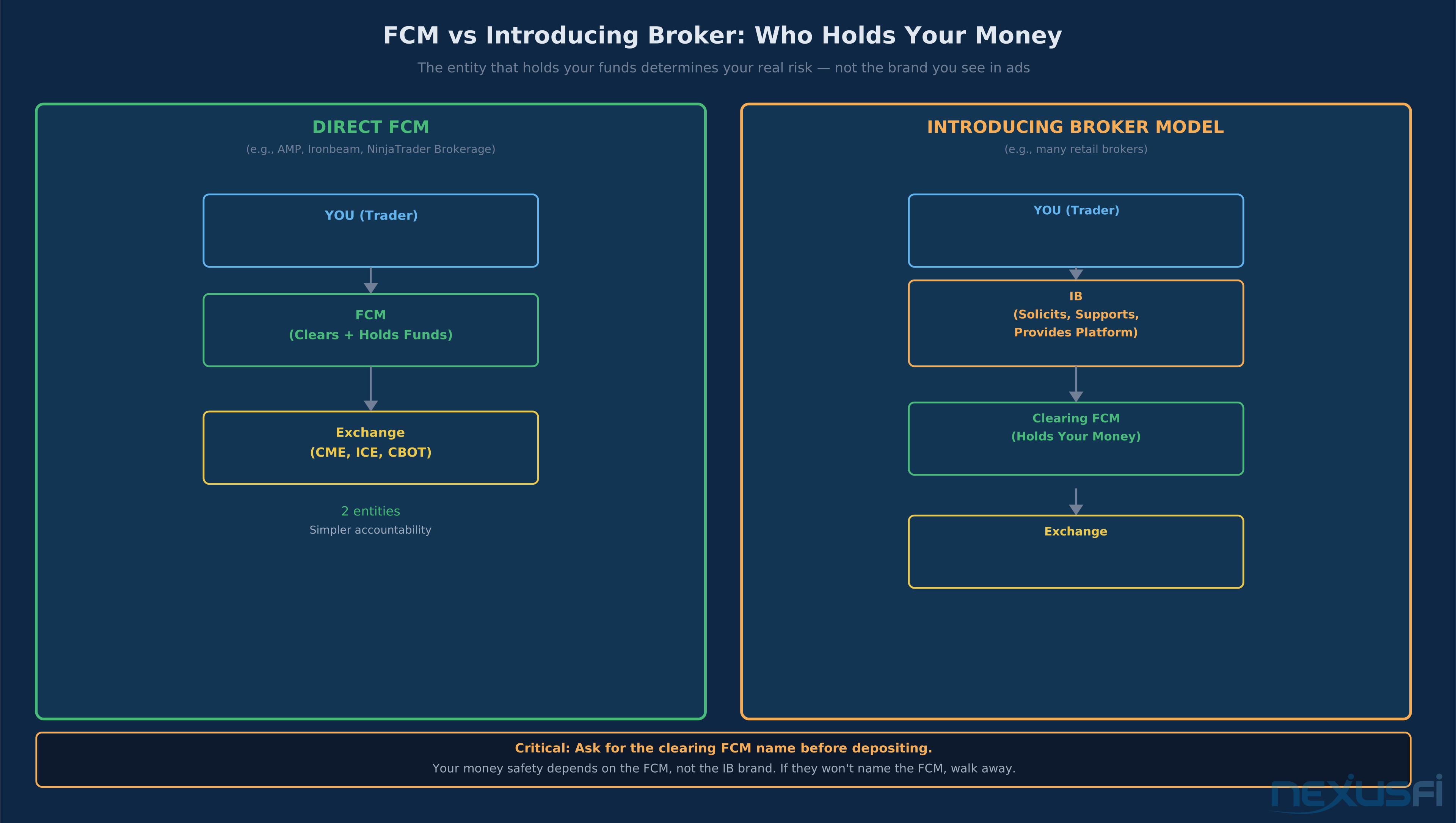
Before evaluating any broker on commissions or platform, understand the structure of who is actually holding your money and clearing your trades. This single piece of knowledge changes how you read every other thing a broker tells you.
Futures Commission Merchant (FCM): The regulated entity that holds customer funds, clears and settles futures trades, posts and collects margin, and is the direct counterparty in the clearing chain. FCMs are registered with the CFTC and are required members of the NFA. They maintain segregated customer funds per CFTC rules and file financial reports that are publicly accessible.
Introducing Broker (IB): Solicits and services customer accounts, may provide platforms and support, but does not hold customer funds or clear trades. IBs route orders and account administration to an FCM partner. IBs are also regulated (NFA membership required), but the actual safety of your funds depends on the FCM they clear through, not the IB itself.
What this means for you:
In practice, many retail futures brokers are IBs introducing to one of a handful of major clearing FCMs (Phillip Capital, Marex North America, Wedbush Futures, etc.). When you open an account at an IB, your money goes to the clearing FCM. Your broker does the support and interface; the FCM does the clearing and holds the money.
This creates a four-part chain of responsibility you should understand before depositing:
- Who solicits and supports your account? (the IB or FCM-with-retail-service)
- Who clears your trades? (the FCM — may be the same entity or different)
- Who holds your funds? (the FCM — always)
- Who sets and enforces margin policy? (the FCM, though IBs can add restrictions on top)
@EgoRisk laid out the practical reality: "You have to choose: the broker, the FCM (unless you go with a broker that has an FCM in-house, like AMP or Ironbeam or Schwab or Ninja)... The FCM controls how to put your money in and pull it out, the broker doesn't touch your money."[2]
Brokers where the FCM and retail interface are the same entity (AMP Futures, Ironbeam, NinjaTrader Brokerage) have simpler accountability structures — fewer handoffs, clearer responsibility. Brokers that are IBs introducing to an FCM can offer better service or platform options in exchange for an additional dependency layer.
Neither structure is naturally better. The right question is: can you identify the FCM for your account, verify its regulatory standing, and understand how margin and liquidation work in their specific setup? If a broker can't tell you the FCM's name or makes you dig for it, that's the first red flag.
Regulatory Verification: The Non-Negotiable First Step #
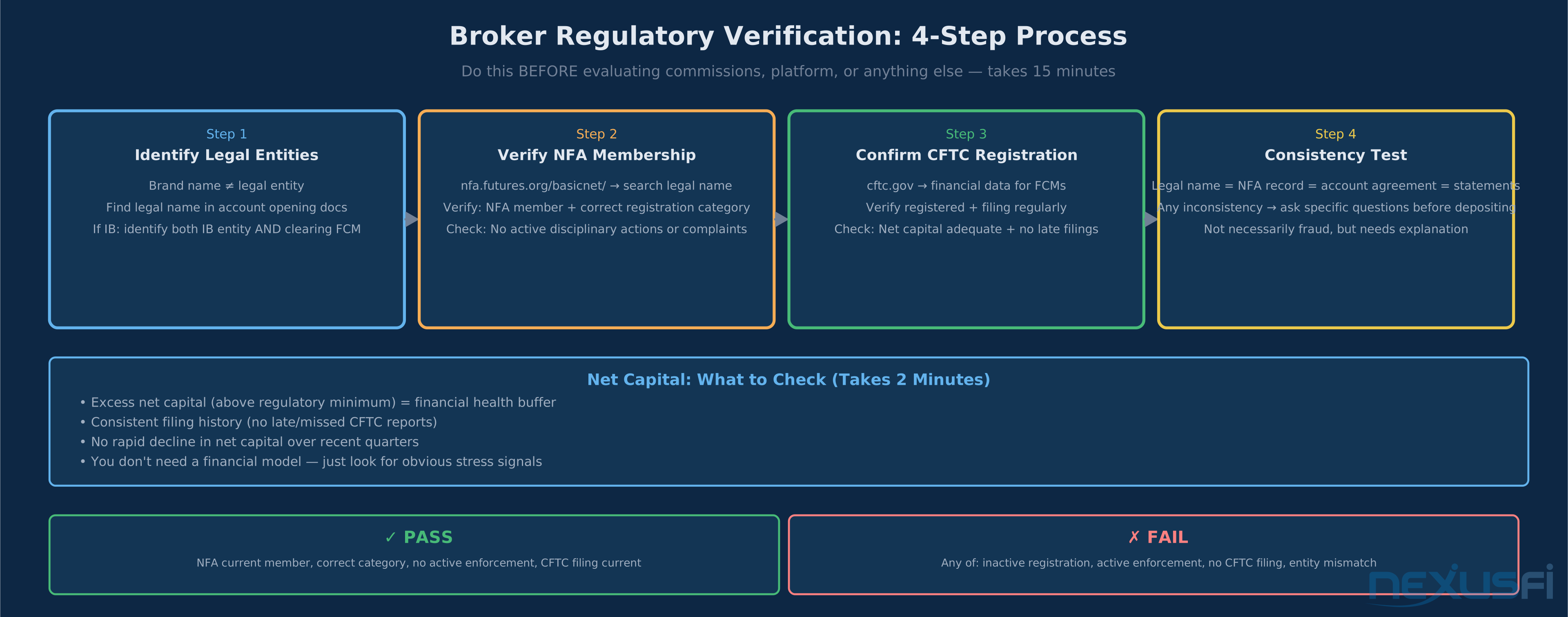
You should do this before evaluating commissions, platform, or anything else. If the regulatory check fails or raises questions, nothing else matters.
Step 1: Identify the legal entities
The brand name in the ad is often different from the legal entity you're actually contracting with. A futures broker might operate as "SuperFast Futures" but be legally "Capital Markets Clearing LLC." Find the legal entity name in the account opening documentation, not the marketing materials.
If the broker is an IB, identify both the IB legal entity and the clearing FCM.
Step 2: Verify NFA membership
Go to NFA BASIC (the NFA's public lookup tool at www.nfa.futures.org/basicnet/) and search for the legal entity name. Verify:
- The firm is a current NFA member in good standing
- Its registration category matches what they're doing (FCM, IB, CTA, or CPO)
- There are no disciplinary actions, enforcement orders, or significant customer complaints
- The registration is active, not suspended or terminated
Do this for both the IB and the clearing FCM if they're different entities.
Step 3: Confirm CFTC registration
CFTC-registered entities are required to file periodic financial reports. The CFTC publishes FCM financial data monthly. For FCMs, you can check the CFTC's financial data for FCMs (www.cftc.gov) to confirm the firm is registered and filing. This takes 90 seconds and eliminates a class of fraud entirely.
Step 4: The consistency test
After finding the legal entities, verify that:
- The name on the NFA record matches the name on your account agreement
- The clearing FCM named in your agreement matches the entity named in the NFA record
- Your account statements will be issued by the same entity you verified
Inconsistencies between brand name, NFA record, account agreement, and statement issuer are a red flag. Not necessarily fraud, but a reason to ask specific questions before depositing.
Net capital: what you actually need to know
FCMs are required to maintain minimum net capital — a financial cushion above liabilities. Excess net capital (net capital above the regulatory minimum) indicates financial health. The CFTC publishes monthly FCM financial data including net capital figures. You don't need to build a financial model; you need to check whether the firm is in good standing, has consistently filed, and doesn't show obvious stress (rapidly declining net capital, recent regulatory action, frequent late filings).
@Big Mike's checklist, developed after years of watching traders get hurt by broker failures, has held up: "Check NFA site for problems, check CFTC financial summary report for funding info, cost of commissions, availability of desired platform/costs, infrastructure, reporting tools."[3]
Regulatory Check Takes 15 Minutes NFA's Basic Net Capital system at nfa.futures.org/basicnet/ shows you every registered FCM with their current status and disciplinary history. Run this check before you read a single platform review. A broker that doesn't pass regulatory verification eliminates every other consideration.
The All-In Commission Framework #
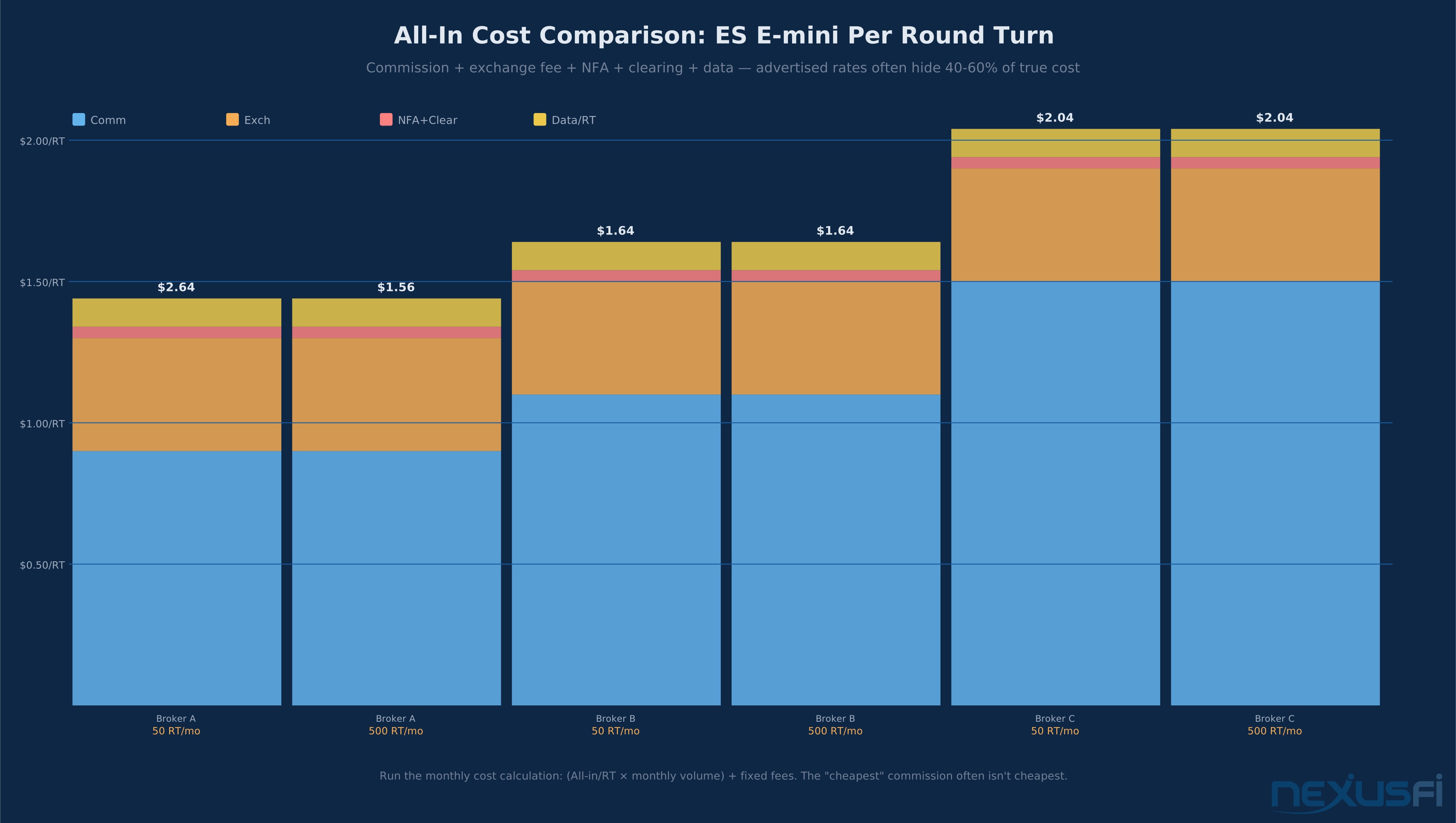
Commission shopping is one of the most common ways traders waste money. They compare advertised commissions without accounting for the four other components that determine actual trading costs.
The five components of all-in cost:
| Component | Description | Negotiable? |
|---|---|---|
| Broker commission | The broker's per-side fee | Yes — most negotiable |
| Exchange fee | CME, ICE, CBOT fee per contract | No — set by exchange |
| NFA assessment | Regulatory fee ($0.02/side as of 2024) | No — fixed |
| Clearing fee | FCM clearing charge | Sometimes |
| Data network fee | CQG, Rithmic, TT per-side or monthly | Sometimes |
The exchange fee for ES is $0.20/side ($0.40/round-turn) set by CME Group. The NFA fee is $0.02/side. These don't move regardless of which broker you use. What varies is the broker commission, the clearing arrangement, and how data costs are bundled.
Why commission-only comparisons mislead:
@adamcollins documented this precisely when evaluating brokers for scalping silver: for Comex Silver via the same platform and data feed, the same round-turn cost varied by over $1.00 across brokers — from $4.14 to $5.24 — once all fees were accounted for. That difference compounds over thousands of round-turns into thousands of dollars annually.[4]
The "data fee trap" is where most traders get surprised. If one broker quotes $0.40/round-turn and another quotes $0.80/round-turn, you might assume the first is cheaper. But if the $0.40 broker charges $30/month for Rithmic data while the $0.80 broker includes data in the commission, a trader doing 50 round-turns/month pays the same total cost at both brokers. Below 50 RT/month, the "expensive" broker is actually cheaper.
How to get a true all-in quote:
Ask every broker you're evaluating the following in writing:
- What is your commission per side for [specific instrument]?
- What is the exchange fee per side for this instrument?
- What is the clearing fee per side?
- What is the NFA assessment per side?
- What is the data network fee? Is it per-side or monthly? Which feed?
- Are there platform fees? Monthly? Per-login?
- Are there inactivity fees or minimum trade requirements?
- Is the price quoted per-side or round-turn?
@Big Mike's warning applies here: "Be certain you also ask, in writing, if the price is round turn or per side. I've seen some sneaky brokers quote prices on a per side basis. That's like asking a bank what their interest rate is, and they say 4% — so you deposit the money. But then later you try to withdraw the money and they tell you there is a 4% fee to withdraw money."[1]
Monthly cost normalization:
For accurate comparison, calculate your expected monthly cost at each broker:
Monthly cost = (All-in per RT × Monthly RT volume) + Monthly fixed fees
A broker with $0.40/RT all-in plus $30/month data costs $90/month for 150 RT. A broker with $0.55/RT all-in and data included costs $82.50/month for the same volume. The "cheaper" commission rate costs more.
Run this calculation for your realistic trading volume at every broker you're seriously considering.
Platform Evaluation by Trader Type #
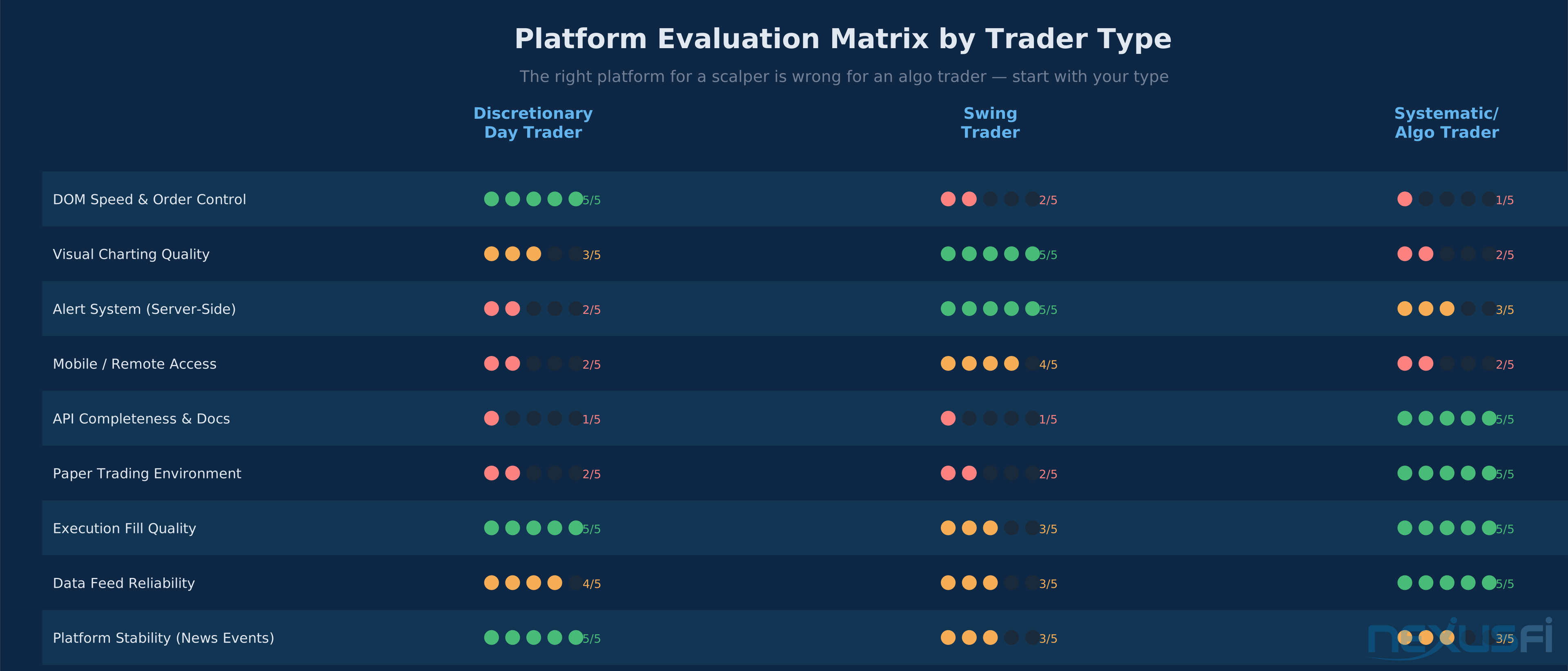
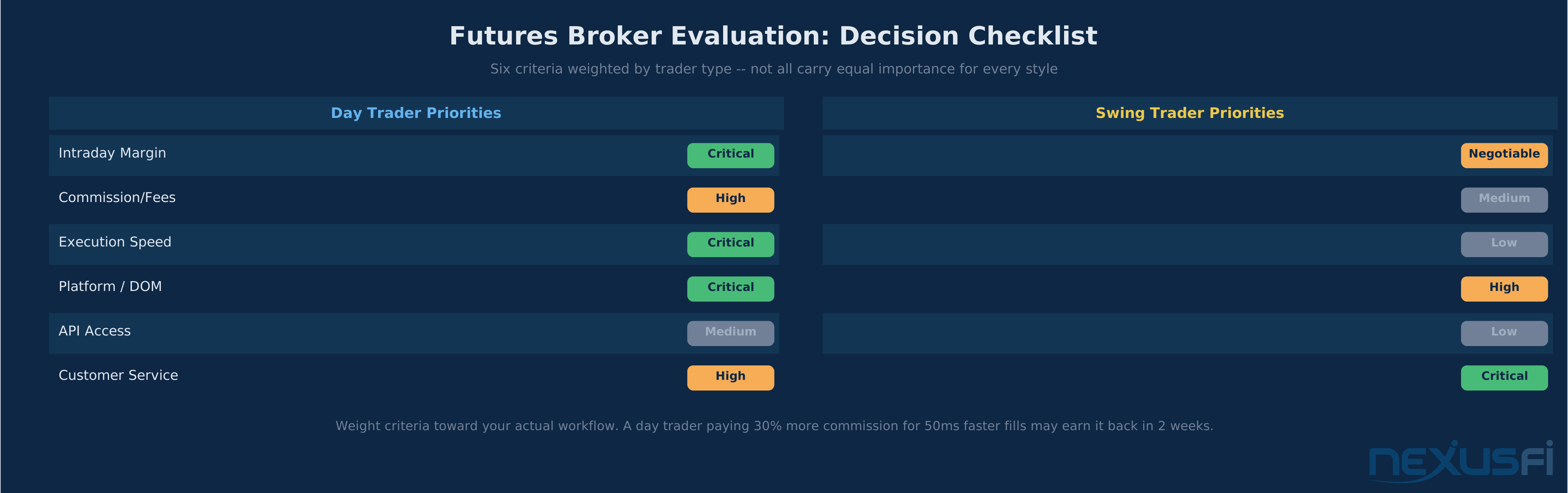
Platform selection is the most personal part of broker evaluation. The right platform for a scalper using a DOM is wrong for an algo trader building systematic strategies. Start by identifying your type.
Discretionary day traders — Priorities: execution speed, order control, visual clarity
The DOM (Depth of Market / order ladder) is your primary workspace. Evaluate:
- DOM responsiveness: does it update cleanly during rapid quote changes, or does it flash and distort?
- Order entry speed: how many clicks/keystrokes to get a bracket order in?
- Cancel/modify workflow: how fast can you adjust a working stop?
- Bracket and ATM order support: what automation is built in for stop and target management?
- Platform stability during high-volume events: does the platform disconnect or slow during news releases?
Test the platform during actual trading hours, not just weekends. A DOM that freezes for half a second during an employment report or Fed announcement is a real operational risk.
Swing traders — Priorities: charting, position management, reliability
You hold positions for hours or days. Your execution isn't measured in milliseconds. Evaluate:
- Charting quality: multi-timeframe, indicator library, annotation tools
- Alert system: are alerts server-side (trigger even when you're offline) or client-side (require your machine to be on)?
- Mobile access: can you monitor and manage positions from a phone when away from your desk?
- Overnight position handling: does the platform clearly display your position, current margin requirement, and overnight margin rate?
- Order GTC handling: do Good-Till-Cancelled orders actually persist correctly, or do they need to be reset?
Systematic/algo traders — Priorities: API reliability, data quality, operational determinism
You're building trading systems that must function without human intervention. Evaluate:
- API completeness: can you submit, modify, and cancel orders? Query position and account state? Stream real-time market data and order updates?
- Documentation quality: is the API reference complete, current, and does it include error handling examples?
- Test environment: is there a paper trading system that accurately mirrors production behavior?
- Rate limits: what are the message rate limits? How does the API behave at the limits?
- Historical data: can you pull tick and bar data for backtesting? What's the depth of history?
- Timestamp accuracy: are execution report timestamps reliable to the millisecond?
[2] The question isn't just which platform is best — it's which combination of broker support structure and platform capability matches your needs.
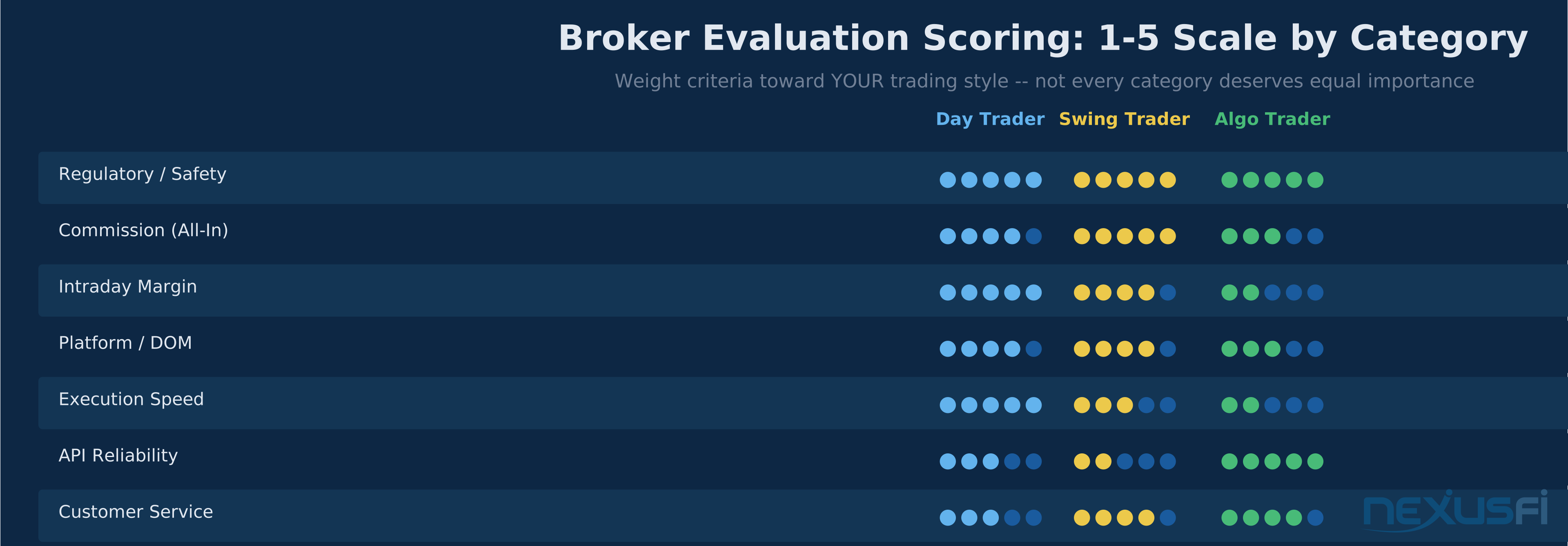
Platform evaluation scorecard:
Rate each broker 1-5 on the criteria relevant to your trading style. Don't average across categories that don't apply to you — weight the evaluation toward your actual workflow.
| Category | Day Trader Weight | Swing Weight | Systematic Weight |
|---|---|---|---|
| Execution speed / DOM | High | Low | Low |
| Charting quality | Medium | High | Low |
| API quality | Low | Low | High |
| Stability/uptime | High | High | High |
| Mobile access | Low | High | Low |
| Order management | High | High | High |
| Data feed quality | High | Medium | High |
Margin Policy: What Varies and Why It Matters #
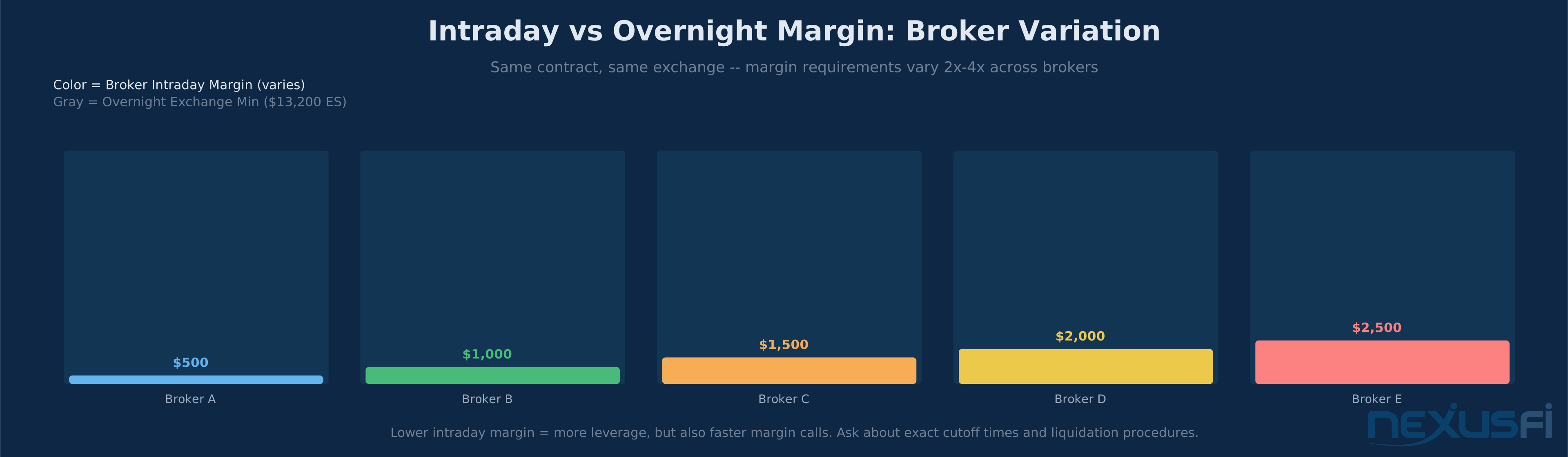
Exchange-set "overnight" margin is the minimum required by the exchange to hold a position through the close. Intraday margin is broker-specific — brokers can set their own intraday requirements, typically lower than overnight margin to support day trading.
The variation in intraday margin across brokers is one of the most underappreciated differences when choosing a broker. @adamcollins' broker comparison showed intraday silver margins ranging from $2,500 to $10,000 — a 4x difference for the same contract at the same exchange.[4]
What to ask about margin:
- What is the intraday margin for [specific contract]?
- What is the overnight margin requirement?
- When do you apply overnight margin? (Some brokers apply it at 3:00 PM ET; others at close of regular session; others at the CME close)
- What happens when a position hits maintenance margin intraday? (Warning only? Automatic liquidation? At what threshold?)
- Do you notify before liquidating, or is it automated?
- What is your margin call procedure?
House margin vs. exchange minimum:
Brokers can set house margin requirements higher than exchange minimums. During periods of high volatility, some brokers increase margin requirements unilaterally. Find out the broker's policy on this before it happens during a trade you're in.
Customer Service: How to Test Before You Commit Capital #
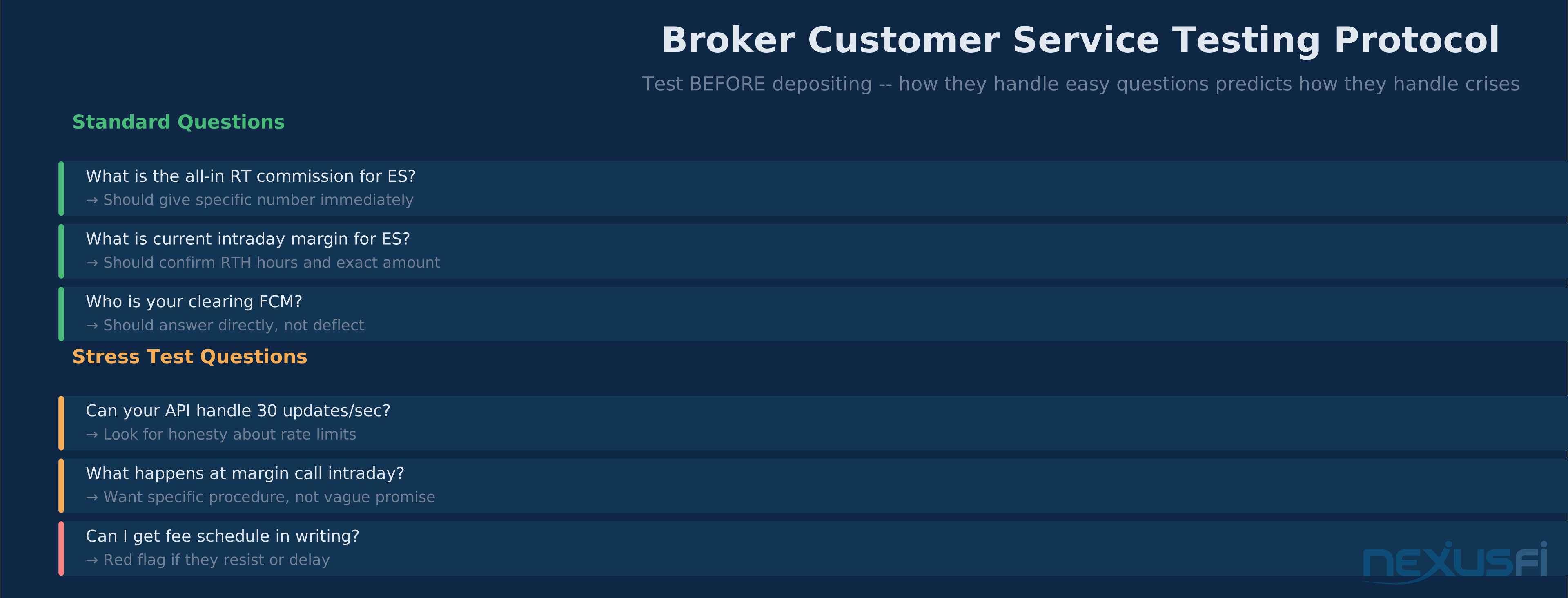
Customer service quality is nearly impossible to evaluate from the broker's website and almost perfectly predictable from a simple pre-deposit test protocol. Do this for any broker you're seriously considering before you send money.
The pre-deposit test:
Test 1: Response time and competence on commissions Email the broker asking for a complete all-in cost breakdown for your specific instruments and trading volume. Note: time to first response, whether the response is itemized or just references a page on the website, and whether they proactively address monthly fixed fees.
Test 2: Margin policy question Call the broker (or use live chat if available) and ask: "What is the intraday margin for ES during regular RTH? When exactly does overnight margin apply? What happens if I'm in a position and hit maintenance margin intraday — what's the process?"
Good customer service: specific numbers, clear process description, willingness to answer follow-up questions. Poor customer service: "check our website," vague references to exchange requirements, inability to answer the second part of the question.
Test 3: Escalation test Ask something non-standard: "I'm an automated trader — can your API handle 30 order updates per second, and what happens at the rate limit?" Or: "I want to trade the Euro/Dollar spread — how does margin work for spread positions versus outright positions?"
If the initial support person can't answer, do they escalate effectively? Does the escalated response come in a reasonable timeframe? Does it actually answer the question?
Test 4: Onboarding friction Ask for a demo account. How long does the demo setup take? Does it require extensive documentation? Is the demo environment representative of live trading? Can you test the specific order types you use in live trading?
Interpretation:
Customer service that can't handle pre-sales questions will be worse when you're in a live trade with a problem. The pre-deposit test is the minimum bar. If a broker fails two of the four tests, remove them from consideration.
Red Flags: When to Walk Away #
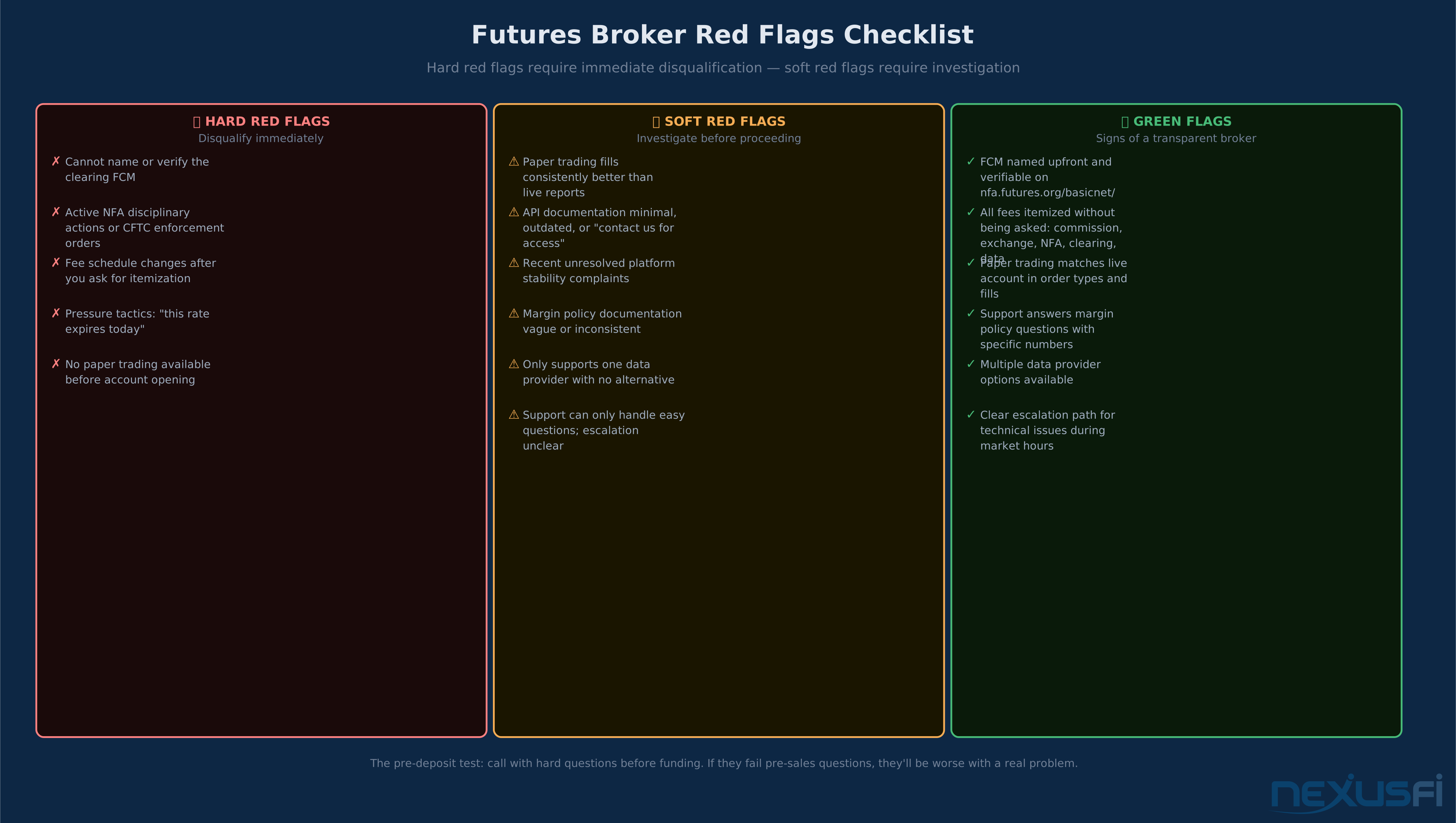
Hard red flags — stop the evaluation:
- Cannot identify the clearing FCM by name, or the FCM named in the agreement doesn't match any NFA registration
- Active NFA disciplinary actions or CFTC enforcement orders that aren't clearly resolved and explained
- Fee schedule that changes after you ask for itemization — "we quoted you the commission, clearing and data are extra" after you explicitly asked for all-in costs
- Pressure tactics: "this rate is only available if you open today" or "you need to fund within 48 hours"
Soft red flags — investigate before proceeding:
- Paper trading fills much better than what traders report in live accounts
- API documentation is minimal, outdated, or "contact us for access"
- Platform stability complaints are recent and unaddressed in public forums
- Margin policy documentation is buried, vague, or inconsistent across their website and phone answers
- Only supports one data provider with no alternative if that feed has issues
- Support only responds to easy questions; escalation paths are unclear
The transparency test:
A good broker is transparent about everything that costs money and how it works. A broker that makes you dig for the clearing fee, hides the data subscription cost, or gives vague answers about margin call procedures has an incentive to keep you uninformed. That incentive doesn't go away after you deposit.
Switching Cost Analysis: When It's Worth Moving #
Switching brokers has real costs. The question isn't whether switching is annoying — it is — but whether the benefits exceed the friction.
Switching costs:
- Time to re-onboard (KYC documents, application, platform setup)
- API rewrite for systematic traders (can be days to weeks of work)
- Platform relearning (custom indicators, layouts, hotkey configurations)
- Temporary disruption to live trading during the transition
- Data subscription changes (new fees may apply until you cancel old ones)
- Potential gap in trading while positions are transferred or settled
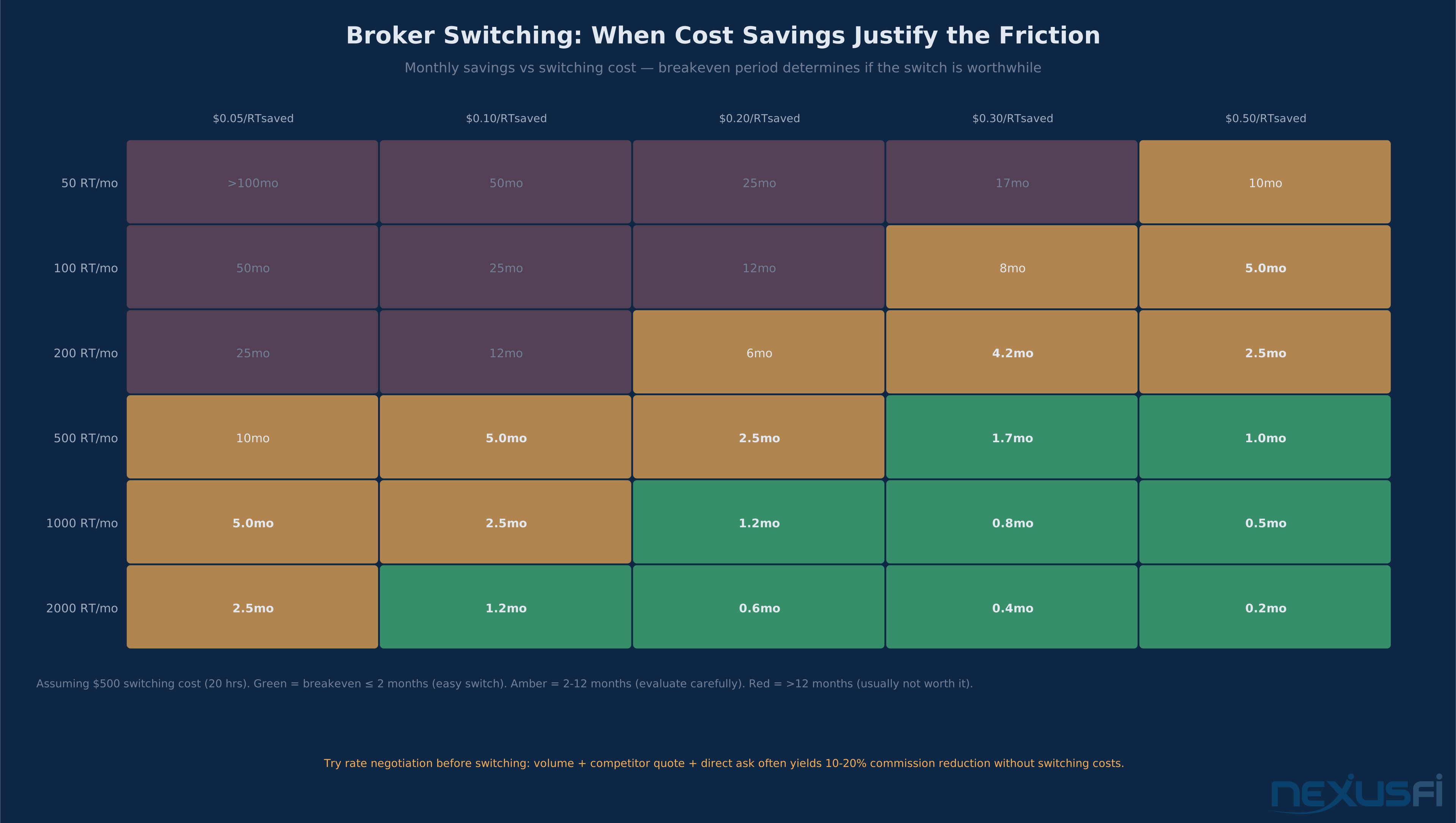
Switch when:
- Your all-in cost savings, annualized, clearly exceed the switching friction cost. For a trader doing 500 RT/month, saving $0.20/RT is $100/month — $1,200/year. If switching costs 20 hours of work at your effective hourly rate, the payback period may still be worth it.
- Your current broker has execution or platform reliability problems that are affecting trading performance. This is harder to quantify but often more important than commission savings.
- You've outgrown the broker's capabilities (API limitations, instrument restrictions, account type restrictions).
- Your broker has financial health concerns or regulatory issues.
Don't switch for:
- Minor commission savings that don't cover transition costs
- Curiosity about a competitor's platform without confirmed advantages
- Frustration with isolated support incidents rather than persistent service problems
The negotiation alternative:
Before switching, attempt negotiation. Most traders don't know that broker commissions are negotiable for accounts with meaningful volume. The formula:
"I'm doing approximately [X] round-turns per month. My current all-in cost is [Y]. I've received a quote from [competitor] of [Z] all-in. What can you do?"
This works because broker economics favor retaining a trading customer over losing them to a competitor. You don't need to threaten to leave — just present the economics clearly and ask specifically what rate is available at your volume.
Negotiation levers (in rough order of effectiveness):
- Monthly round-turn volume (most influential)
- Account size / margin deposit (FCM earns interest on your balance)
- Consistent multi-instrument activity (spreads, different product families)
- Specific service requests (data package, API access tier) traded for rate adjustments
Trader Profile Scorecards #
New Trader
Primary needs: Clear, transparent pricing; reliable support; simple platform; conservative margin policy.
What matters most: Support quality and transparency > platform simplicity > commission structure (secondary at low volume). Prioritize brokers that will help you understand margin calls, explain order types, and answer questions without making you feel like a burden.
What to avoid: Complex pro platforms with steep learning curves; brokers where support is only available via ticket; brokers with minimum activity requirements that penalize learning periods.
Active Day Trader (50-1,000+ RT/month)
Primary needs: Low all-in commission at volume; fast and stable DOM; reliable execution during high-volume sessions; good support during market hours.
What matters most: All-in commission competitiveness at your actual volume > execution reliability > platform order management tools > support responsiveness during market hours.
Key test: Get the all-in cost for your primary instrument at your actual monthly volume. Run the monthly cost calculation. Platform test during a busy session. Check support response during RTH specifically.
Systematic/Algo Trader
Primary needs: API reliability; complete documentation; production-quality test environment; historical data access; operational predictability.
What matters most: API completeness and stability > documentation quality > test environment accuracy > data feed reliability > commission at your message-volume level.
Key test: Build a minimal working example against the paper trading API before any real evaluation. Can you submit, cancel, and modify orders? Can you stream market data? Does the API handle connectivity loss gracefully? What do execution reports look like for partial fills? If you can't get answers to these questions in the demo phase, you can't build reliable production systems on that broker's infrastructure.
The Five-Question Decision Framework #
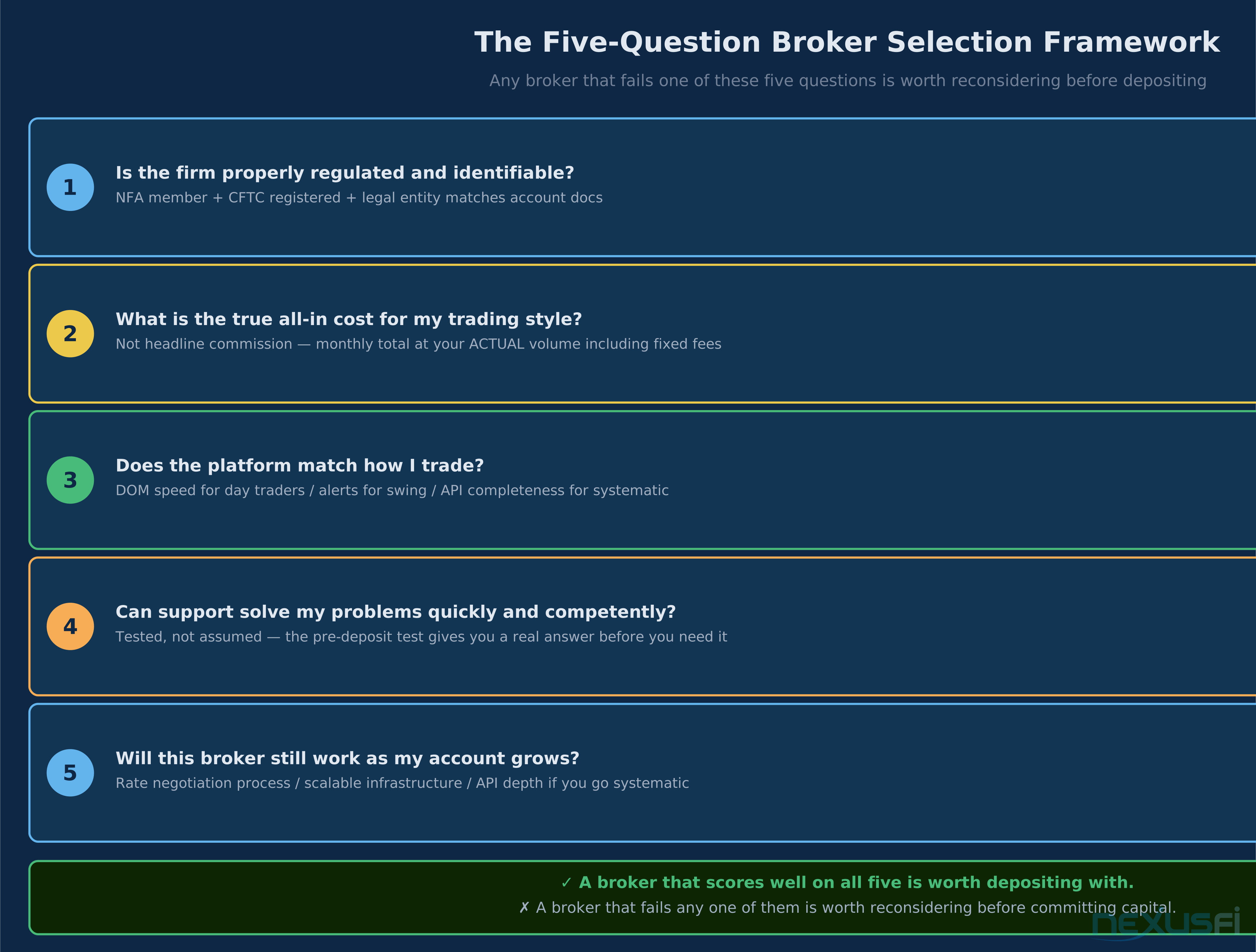
After working through the full evaluation, every broker selection comes down to five questions:
- Is the firm properly regulated and identifiable? — NFA member, CFTC registered, legal entity matches account documents.
- What is the true all-in cost for my trading style? — Not headline commission. Monthly total cost at your actual volume including fixed fees.
- Does the platform match how I trade? — DOM speed for day traders, charting and alerts for swing, API completeness and docs for systematic.
- Can support solve my problems quickly and competently? — Tested, not assumed. The pre-deposit test gives you a real answer.
- Will this broker still work as my account and activity grow? — Rate negotiation process, scalable infrastructure, API depth if you go systematic later.
A broker that scores well on all five is worth depositing with. A broker that fails any of them is worth reconsidering before you commit capital.
Knowledge Map
Go Deeper
Build on this knowledgeReferences This Article
Articles that build on this topicCitations
- — Commission shopping w/brokerages (2014) 👍 10“When price shopping, be sure to ask for the all-in price”
- — Need Broker (2023) 👍 2“The FCM controls how to put your money in and pull it out”
- — is commission price transparency important? (2012) 👍 8“Check NFA site for problems, check CFTC financial summary report”
- — What I've Learned From Searching for a Broker (2011) 👍 3“The same round-turn cost varied by over $1.00 across brokers once all fees were accounted for”
- — Costs associated with trading futures? (2020) 👍 7“This is why you always need to compare total or all-in charges, not just commission”
- — Best Broker offers the lowest commissions on Micro Futures (2022) 👍 8“As a trader, it can't be about the commission”
- — AMP vs NinjaTrader Brokerage - real experience (2023) 👍 5“After 3 years at AMP I finally switched. The platform choices were great but when something went wrong, support response was measured in days not hours”
- — Clearing FCM confusion - who actually holds my money? (2020) 👍 12“Most traders have no idea their introducing broker routes through an FCM they've never heard of. Ask directly: who clears your trades? Get it in writing.”