



Futures Broker Due Diligence: A Practical Verification Guide Before You Deposit
Subtitle: How to verify a broker's regulatory standing, financial health, and customer fund protection using NFA BASIC, CFTC reports, and a systematic pre-deposit workflow.
Overview #
Two events reshaped how serious futures traders think about brokers: MF Global in October 2011 and PFGBest in July 2012. In both cases, customer funds — funds that were supposed to be legally protected in segregated accounts — disappeared. MF Global customers lost approximately $1.6 billion. PFGBest customers lost around $215 million. In both cases, the firms passed routine regulatory reviews before their collapse.
If those two events teach anything, it's that broker due diligence isn't a one-time checkbox — and it isn't optional. "Segregated funds" doesn't mean your money is physically locked in a vault with your name on it. The protection exists on paper, enforced through regulation and audits. When fraud or negligence breaks those mechanisms, traders bear the loss.
This article is a practical verification workflow for futures traders who want to go beyond trusting the marketing website before wiring funds. It covers the NFA BASIC lookup, CFTC financial reports, customer segregated fund verification, complaint and enforcement history, and a step-by-step pre-deposit checklist. It does not cover execution quality, trading strategy fit, or ongoing post-deposit monitoring beyond an initial cadence framework.
The tools are free and publicly available. Most traders never use them. The ones who do are harder to lose money the wrong way.
No due diligence process guarantees safety. Both MF Global and PFGBest had clean NFA records and passed routine audits in the months before their collapses. Due diligence reduces the probability of depositing with a deteriorating or fraudulent firm — it does not eliminate counterparty risk. The goal is to catch obvious problems, identify structural weaknesses, and make an informed decision about how much capital to place with any single firm.
The Structure Behind Your Broker: FCM vs Introducing Broker #
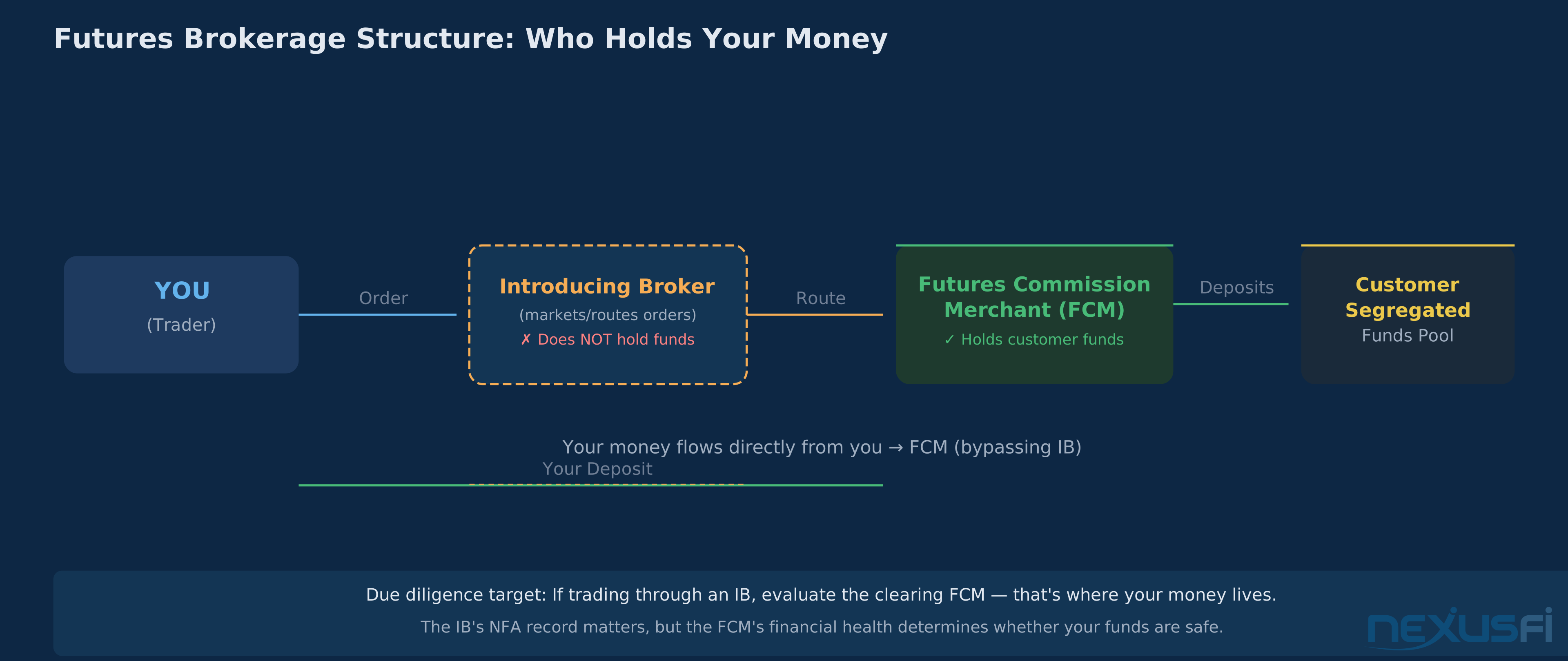
Before you can evaluate a broker, you need to understand who you're actually evaluating. The futures brokerage industry layers multiple entities between a trader and the exchange, and the entity that markets to you is often not the entity that holds your money.
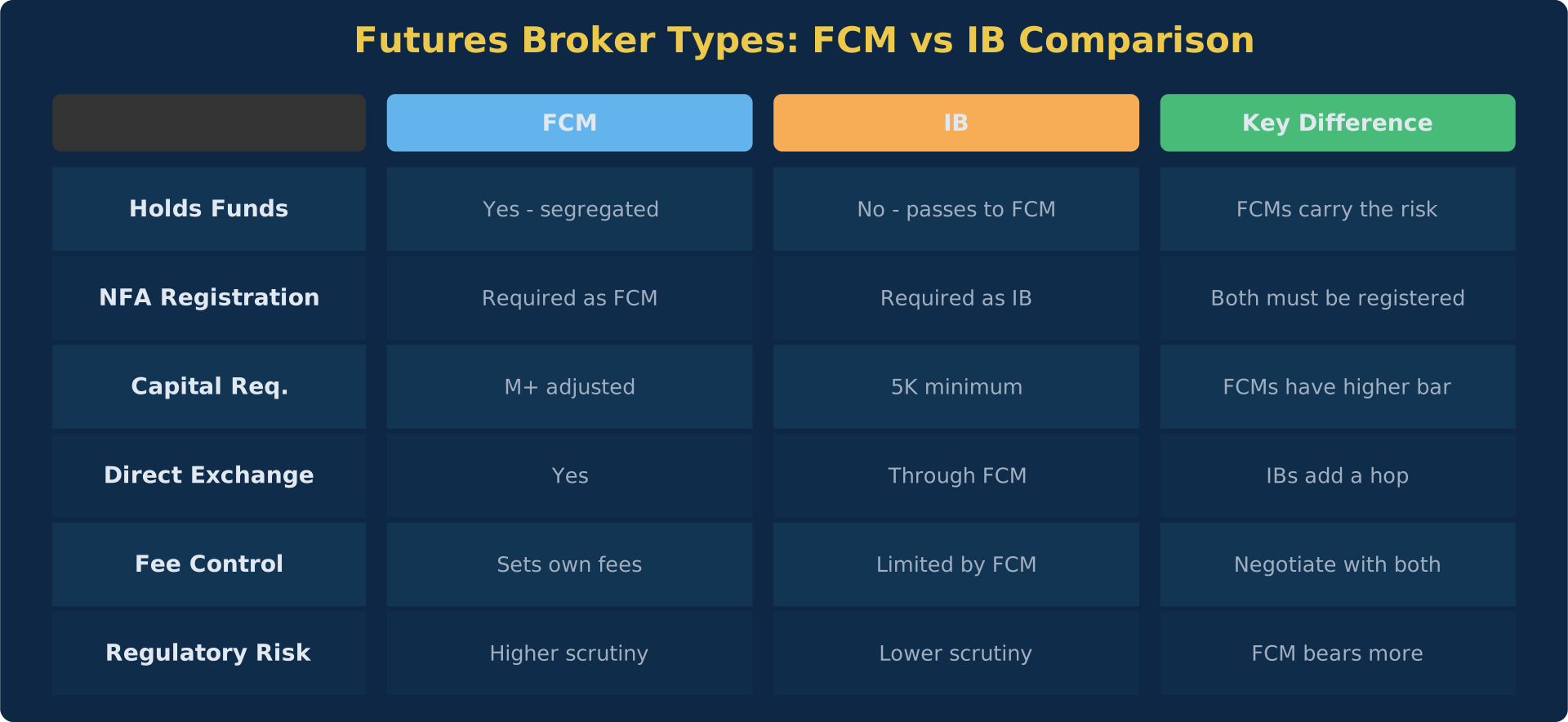
Futures Commission Merchant (FCM): An FCM is registered with the CFTC and the NFA, is a member of at least one Designated Contract Market (like the CME Group), and is the entity that actually holds customer segregated funds. FCMs clear and settle futures transactions. They have capital requirements, are subject to ongoing financial reporting, and are the entity against which CFTC customer protection rules apply. When a broker fails and customer funds are at risk, the FCM is the legal entity in scope.
Introducing Broker (IB): An IB solicits customers, takes orders, and routes them to an FCM — but does not hold customer funds. IBs can be registered independently (Guaranteed IB or Independent IB) or operate under a guarantee from the clearing FCM. When you open an account through a broker that is an IB, your funds go to the clearing FCM, not the IB. Many well-known retail trading firms operate as IBs backed by a clearing FCM.
Commodity Trading Advisor (CTA): A CTA manages trading decisions on behalf of clients using discretionary or systematic authority. CTAs do not hold client funds — they trade through accounts at FCMs.
Why this matters for due diligence: If your broker is an IB, the due diligence target is the clearing FCM, not the IB's marketing entity. Before doing any NFA BASIC lookup or CFTC financial review, identify whether you're dealing with an FCM or an IB, and if an IB, which FCM clears your trades.
When evaluating a broker, ask directly: "Are you an FCM or an Introducing Broker? If an IB, which FCM clears and holds customer funds?" A legitimate broker will answer this immediately and accurately. Evasion or confusion about this question is itself a red flag.
The entity name on your account agreement is often different from the brand name you see advertised. Your account documents will identify the clearing FCM — that's the entity to look up in NFA BASIC and CFTC financial reports.
NFA BASIC: The Primary Regulatory Record #
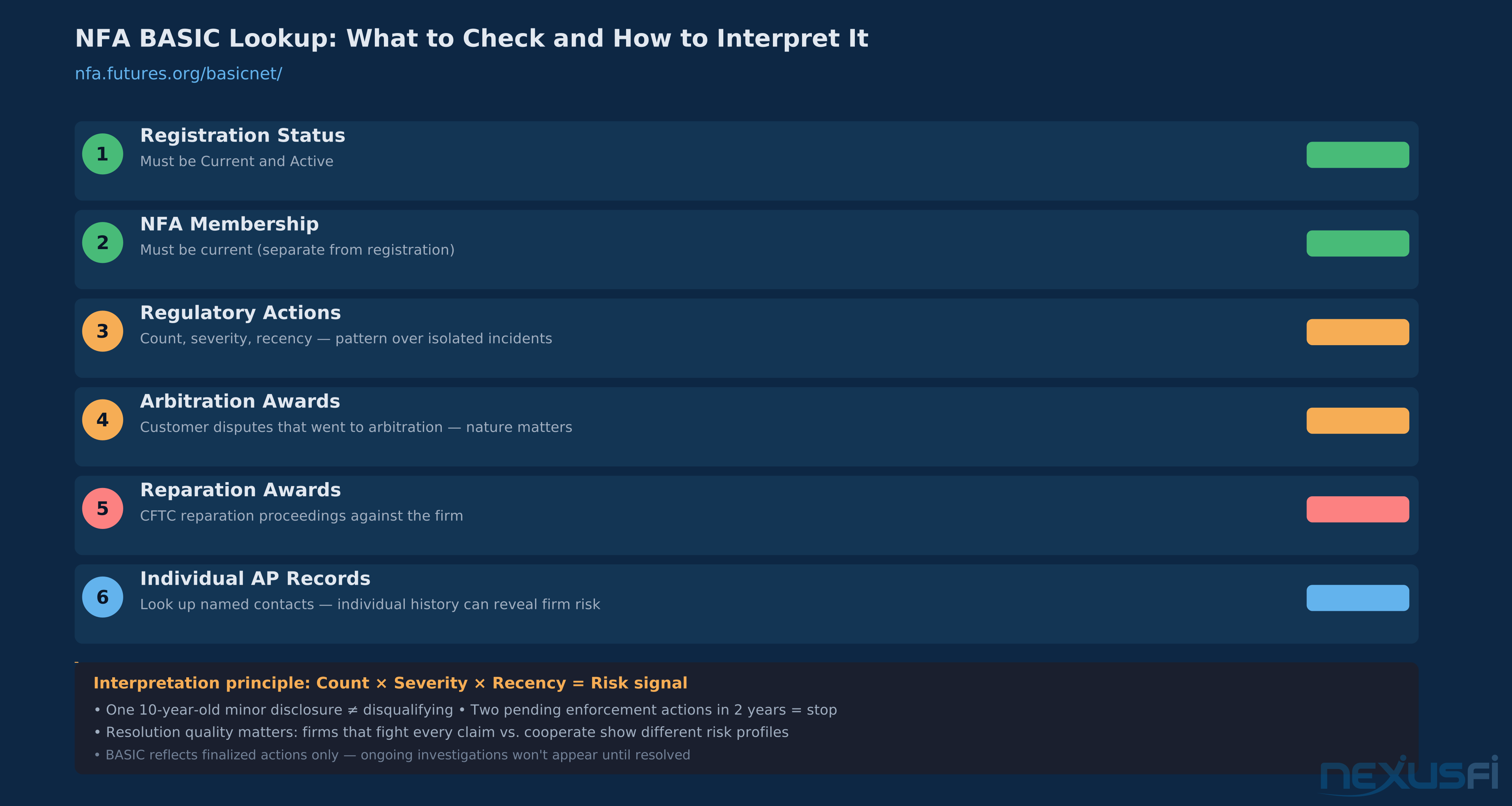
The National Futures Association's Background Affiliation Status Information Center — NFA BASIC — is the first and most essential tool for broker due diligence. It's a publicly searchable database at www.nfa.futures.org/basicnet/ that contains registration status, disciplinary history, arbitration outcomes, and regulatory actions for every NFA member firm and individual.
What to Look For in NFA BASIC #
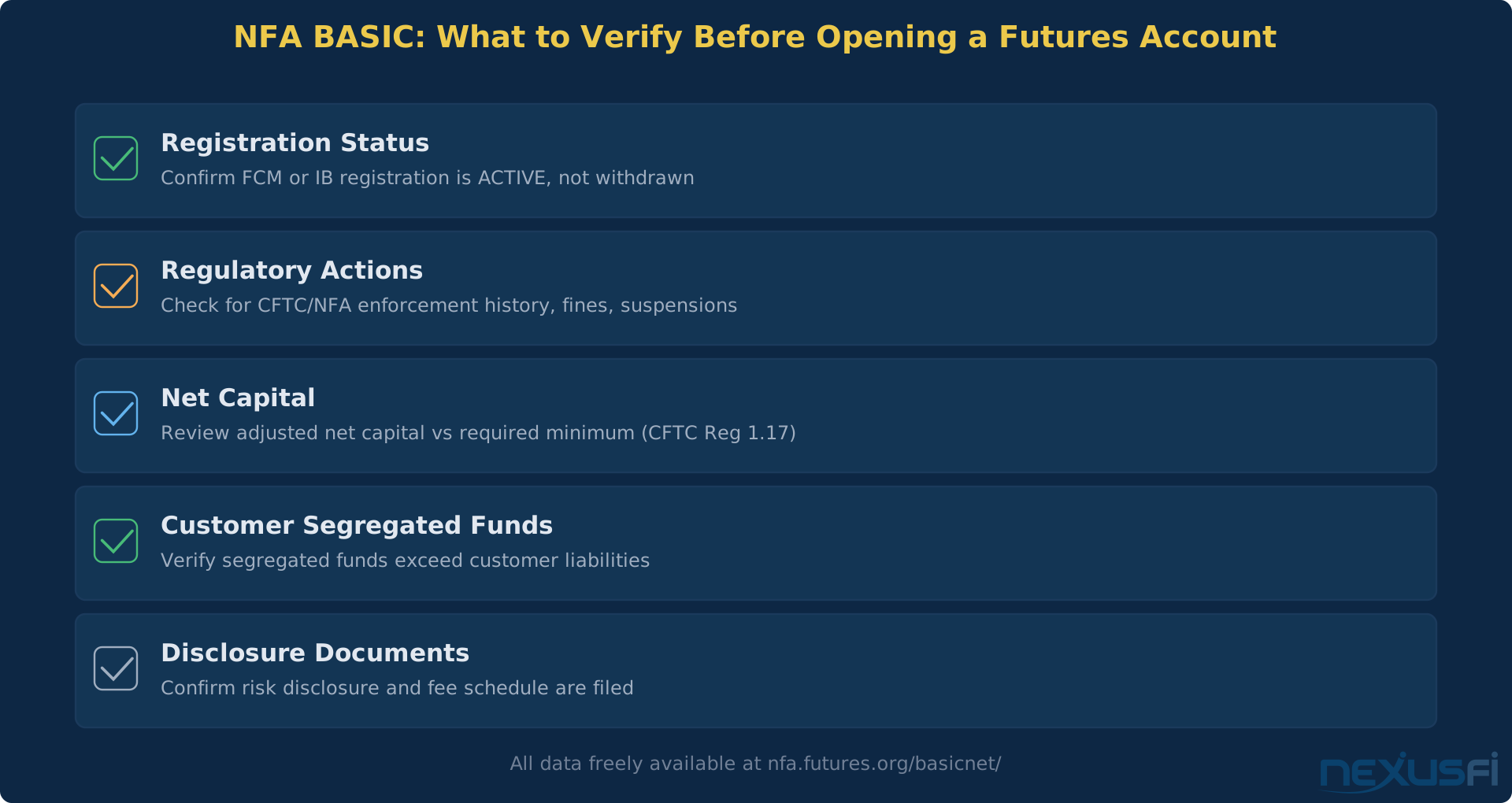
Registration Status: The firm should be "Current" and "Active" in its registration category (FCM, IB, CTA, etc.). A lapsed or suspended registration means the firm cannot legally solicit business. This is not a subtle signal — it's a hard stop.
Membership Status: Separately from registration, NFA membership should be active. Registration and membership are related but distinct — confirm both.
Disclosure Documents: Click through to the firm's full profile and examine all disclosure items. These are categorized as:
- Regulatory Actions — enforcement actions by the NFA or CFTC, including fines, suspensions, and cease-and-desist orders
- Arbitration Awards — outcomes of arbitration proceedings between the firm and customers
- Reparation Awards — CFTC reparation proceedings
How to Interpret Disclosures: The presence of disclosures is not automatically disqualifying. Large, long-running firms often have some disciplinary history simply because they have been operating for decades and have more exposure. What matters is:
- Pattern vs. isolated incidents: A single disclosure from 15 years ago involving a minor recordkeeping issue is different from three disciplinary actions in the past five years involving customer fund handling or fraud.
- Severity: Was the action a fine for a technical violation, or a suspension involving misappropriation of customer funds?
- Resolution quality: Was the matter settled, litigated, or appealed? Did the firm dispute every claim or cooperate with regulators?
- Recency: Older resolved items carry less weight than recent or pending actions.
Individual AP Lookups: NFA BASIC also covers Associated Persons — the registered salespeople and account managers who work for a firm. If you have a named contact at your broker, look them up individually. Patterns of disciplinary history at the individual level can surface risks that firm-level disclosure doesn't show.
NFA BASIC shows registered disclosures. Fraud that hasn't yet been detected by regulators won't appear. Russell Wasendorf Sr. at PFGBest forged bank statements for 20 years. The NFA record was clean until the day it wasn't. BASIC is a necessary check — not a sufficient one.
CFTC Financial Reports: Reading the Numbers That Matter #
The CFTC publishes monthly financial data on all registered FCMs at https://www.cftc.gov/MarketReports/financialfcmdata/index.htm. This is free, publicly available, and routinely overlooked by retail traders. The report shows, for each FCM, the key financial indicators that regulators use to monitor firm health.
Key Metrics to Review #
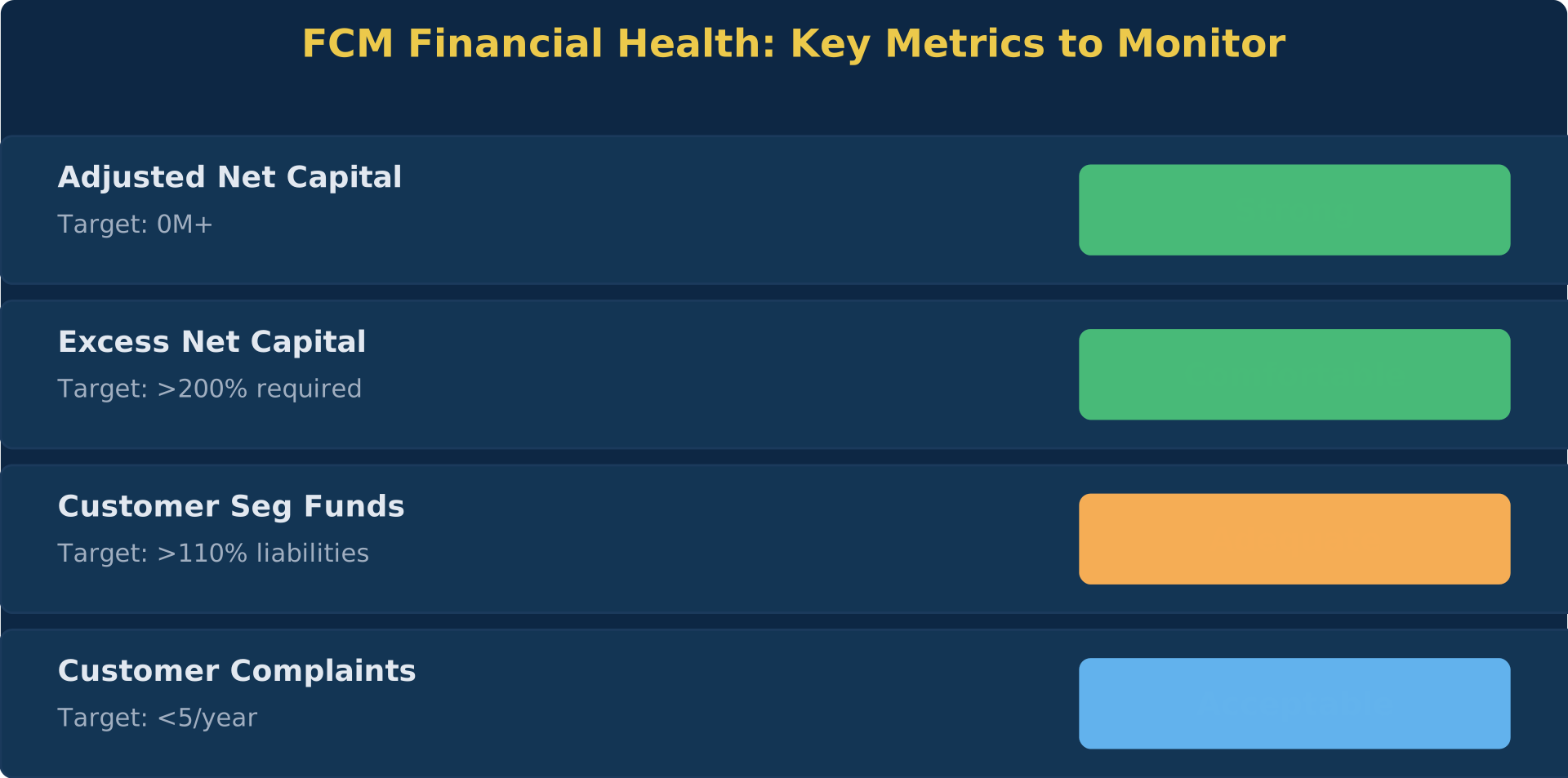
Adjusted Net Capital (ANC): This is the regulatory capital an FCM must maintain under CFTC Regulation 1.17. It represents the firm's financial resources after specific haircuts on assets and required adjustments. Think of it as the firm's financial buffer against unexpected losses.
Net Capital Requirement: The regulatory minimum ANC that the FCM must maintain. This is calculated based on the firm's total customer margin requirement and other regulatory formulas.
Excess Net Capital: The amount by which Adjusted Net Capital exceeds the Net Capital Requirement. This is the critical metric for evaluating financial cushion. The more excess capital, the more room the firm has to absorb unexpected losses before becoming financially stressed.
Customers' Segregated Funds Required (4d(a)(2)): The total amount the FCM is required to hold in segregation for domestic futures customers. This tells you the scale of customer exposure at the firm.
What to Do with These Numbers #
The single most useful exercise is context — comparing the FCM you're evaluating against others in the report. A firm with $5 million in excess capital is not in the same risk category as one with $4 billion, even if both pass the regulatory minimum.
The excess capital figure represents how much financial room the firm has. If a firm with $5 million in excess capital makes a $10 million mistake — through a bad proprietary trade, a fraud, or a large customer default that the firm is on the hook for — that firm is immediately insolvent. Scale matters.
Trend matters more than snapshot: Pull the CFTC report for several consecutive months and track the direction of excess capital. A declining trend over 6-12 months is more concerning than the absolute level. A firm that had $50 million in excess capital 18 months ago and now has $8 million is a different risk profile than a firm that has been stable at $8 million for years.
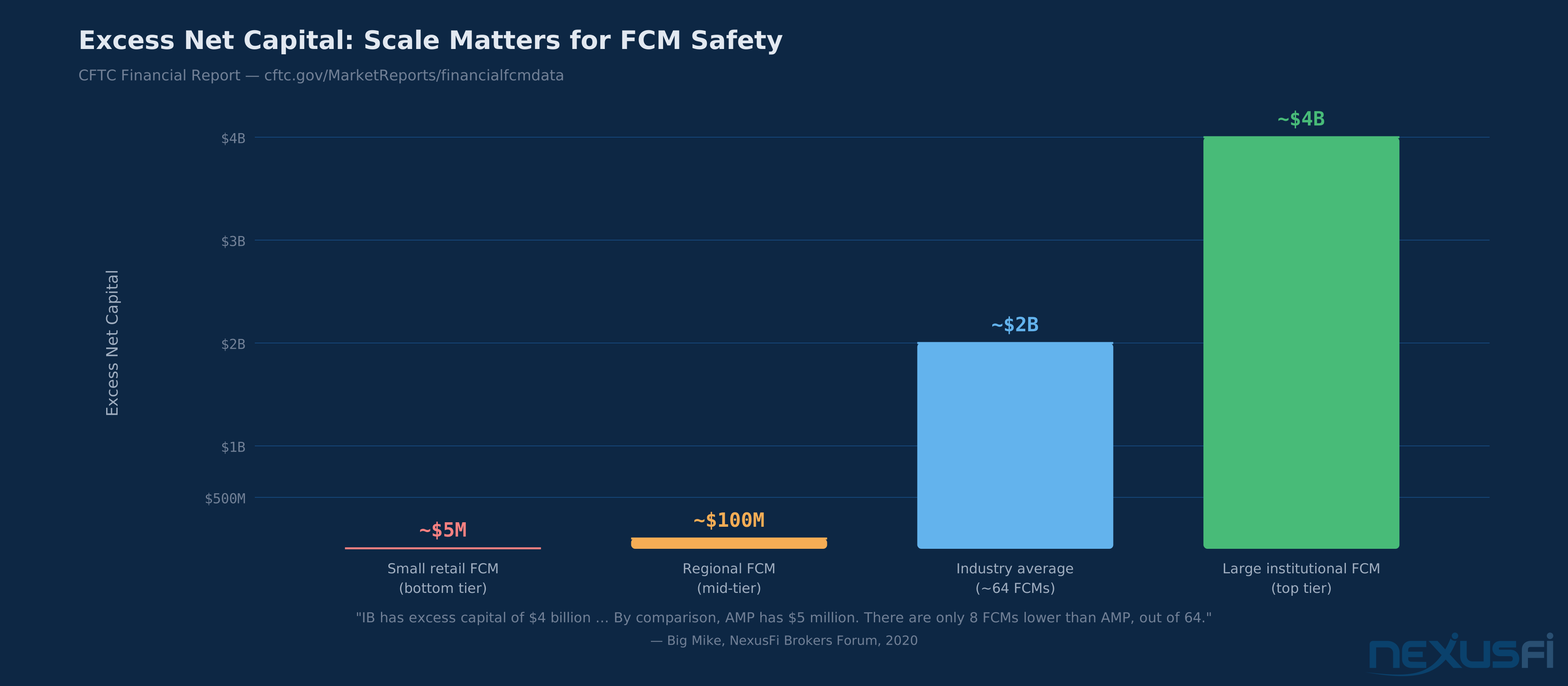
The CFTC financial report is not a real-time dashboard — it's updated monthly and may reflect data 30-60 days old when you read it. It's useful for identifying structural trends and relative positioning, not for detecting sudden overnight deterioration. Use it alongside NFA BASIC, not as a replacement.
Customer Segregated Funds: Understanding the Protection (and Its Limits) #
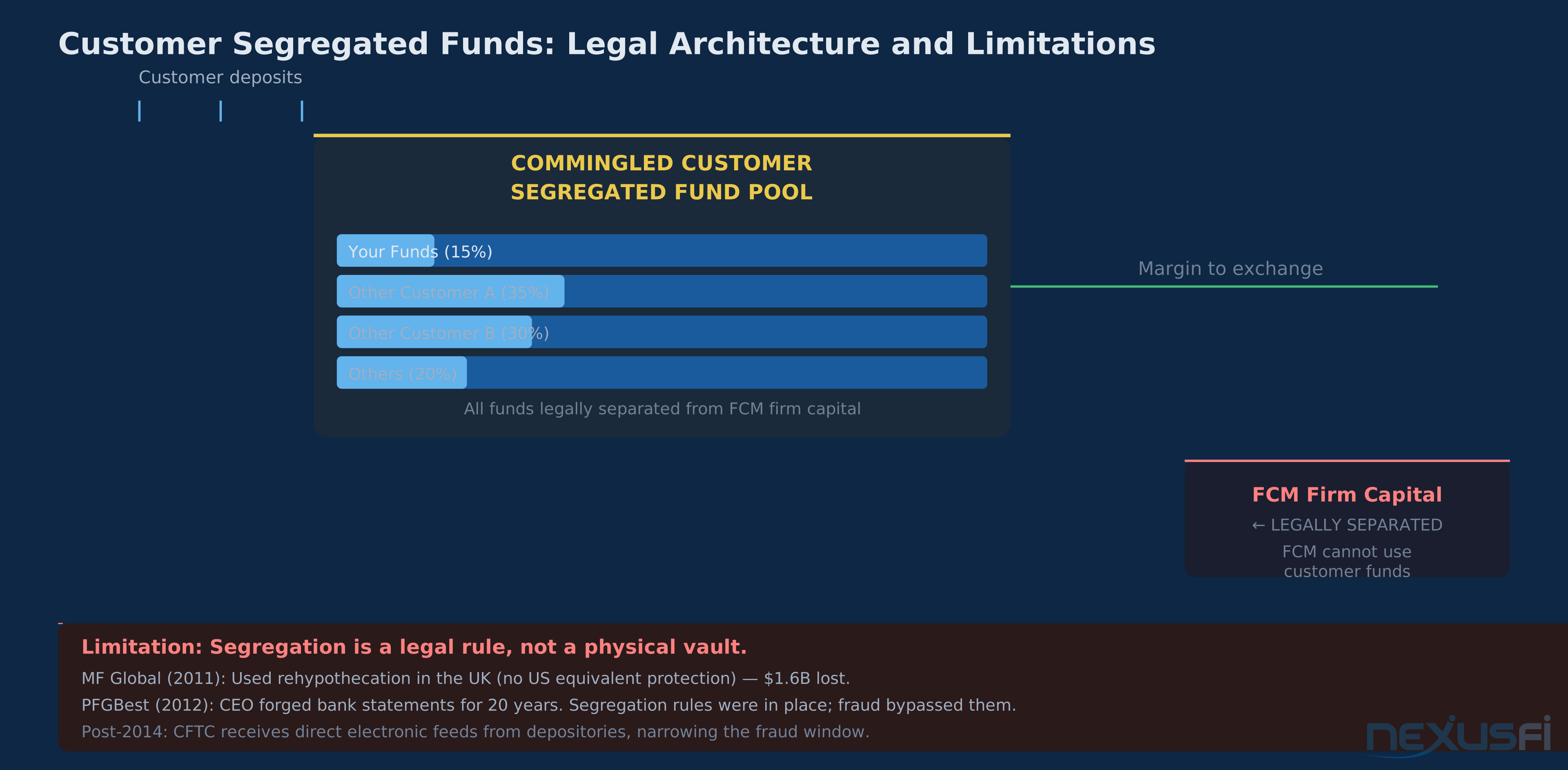
CFTC Regulation 4d requires FCMs to maintain customer funds in "customer segregated accounts" — legally separate from the firm's own operating capital. In theory, these funds are protected even if the FCM becomes insolvent. In practice, the MF Global and PFGBest collapses exposed how that protection can fail.
What "Segregated" Actually Means #
Customer segregated funds are held at a depository institution — a bank or regulated custodian — in accounts clearly identified as belonging to the FCM's customers. The FCM cannot use these funds for its own purposes. The amount in segregated accounts must equal or exceed the total of all customer margin requirements.
However, the funds are commingled at the pool level — all customers' funds sit together in a single segregated pool, not in individual named accounts. Your "segregated funds" are your pro-rata claim on the pool, not a specific identifiable deposit.
What the Post-2012 Reforms Changed #
After MF Global (where UK rehypothecation rules allowed customer funds to be pledged as collateral, something not permitted under US rules) and PFGBest (where the founder forged bank statements for 20 years), regulators implemented significant reforms:
- LSOC (Legally Separated, Operationally Commingled): For cleared swaps customers, the LSOC model provides individual-level protection — positions can be individually transferred to another FCM even if the firm fails. This doesn't apply to futures.
- Direct Electronic Monitoring: Starting 2014, the CFTC receives direct electronic feeds from FCM depositories, reducing the window for falsified reporting.
- Investment Restrictions: Tighter rules under Regulation 1.25 limit where FCMs can invest customer funds (primarily US Treasury securities, government-sponsored agency securities, and qualified bank deposits).
How to Verify Segregation #
From the CFTC report: The "Customers' Segregated Funds Required" and the actual amount held in segregation are both disclosed. A firm holding much more than the required amount suggests conservative management. A firm holding exactly the minimum — no excess — is operating with less buffer.
From the FCM directly: Ask specifically: "Where are customer segregated funds held? Which depository institution? What is the account structure?" A legitimate FCM will provide this information without hesitation. The answer should reference a named bank and confirm that funds are held in segregated accounts under the FCM's name for the benefit of customers.
From your account agreement: Read the account agreement carefully for language around rehypothecation (whether the firm can pledge your assets as collateral). Under standard US CFTC rules, futures customer margin cannot be rehypothecated — if your agreement contains unusual language around this, investigate further.
The distinction between an FCM that barely meets the segregated fund minimum and one that maintains significant excess is not visible from the marketing website. It requires pulling the CFTC report. Firms with thin excess segregation buffers have less margin for error in their accounting and operations.
Complaint and Enforcement History: Reading the Signal, Not the Noise #
Disciplinary history in NFA BASIC is public, but interpreting it requires context. A firm with 200 customer complaints filed over 30 years of operation might be in better shape than one with 3 complaints in the past 18 months, depending on the nature and resolution of those complaints.
Framework for Evaluating Complaints #
Volume relative to firm size: A firm that processes thousands of transactions daily will generate more absolute complaints than a small regional FCM. Adjust for scale.
Nature of the complaint: Complaints about commissions, platform outages, or execution quality are operational issues — they reflect service quality but not necessarily integrity or safety. Complaints involving fund withdrawals, account access, or unauthorized trades are a different category entirely and deserve much closer scrutiny.
Resolution pattern: How does the firm handle disputes? Firms that consistently pay arbitration awards or settle reasonable complaints have a different risk profile than firms that fight every claim to exhaustion or fail to honor arbitration outcomes.
Regulatory actions vs. customer complaints: A regulatory action (enforcement by NFA or CFTC) is more serious than a customer complaint. Regulatory enforcement means a professional investigator evaluated the situation and found the firm's conduct problematic. Customer complaints require taking the complainant's position at face value.
Pending vs. resolved: Pending items deserve more attention than resolved ones. A pattern of new pending actions suggests the firm is still engaged in problematic behavior.
Historical Failures as Context #
The PFGBest and MF Global failures are instructive because both firms had ostensibly clean NFA records. This does not mean NFA BASIC is useless — it means that due diligence must be multi-layered, and that no single data source provides complete protection. The firms that have shown the clearest warning signs before failure typically showed declining financial metrics in the CFTC reports, customer withdrawal friction that preceded the formal collapse, and in some cases, personnel changes at the ownership level that weren't immediately obvious from public records.
Practical Verification Workflow: Before You Wire Money #
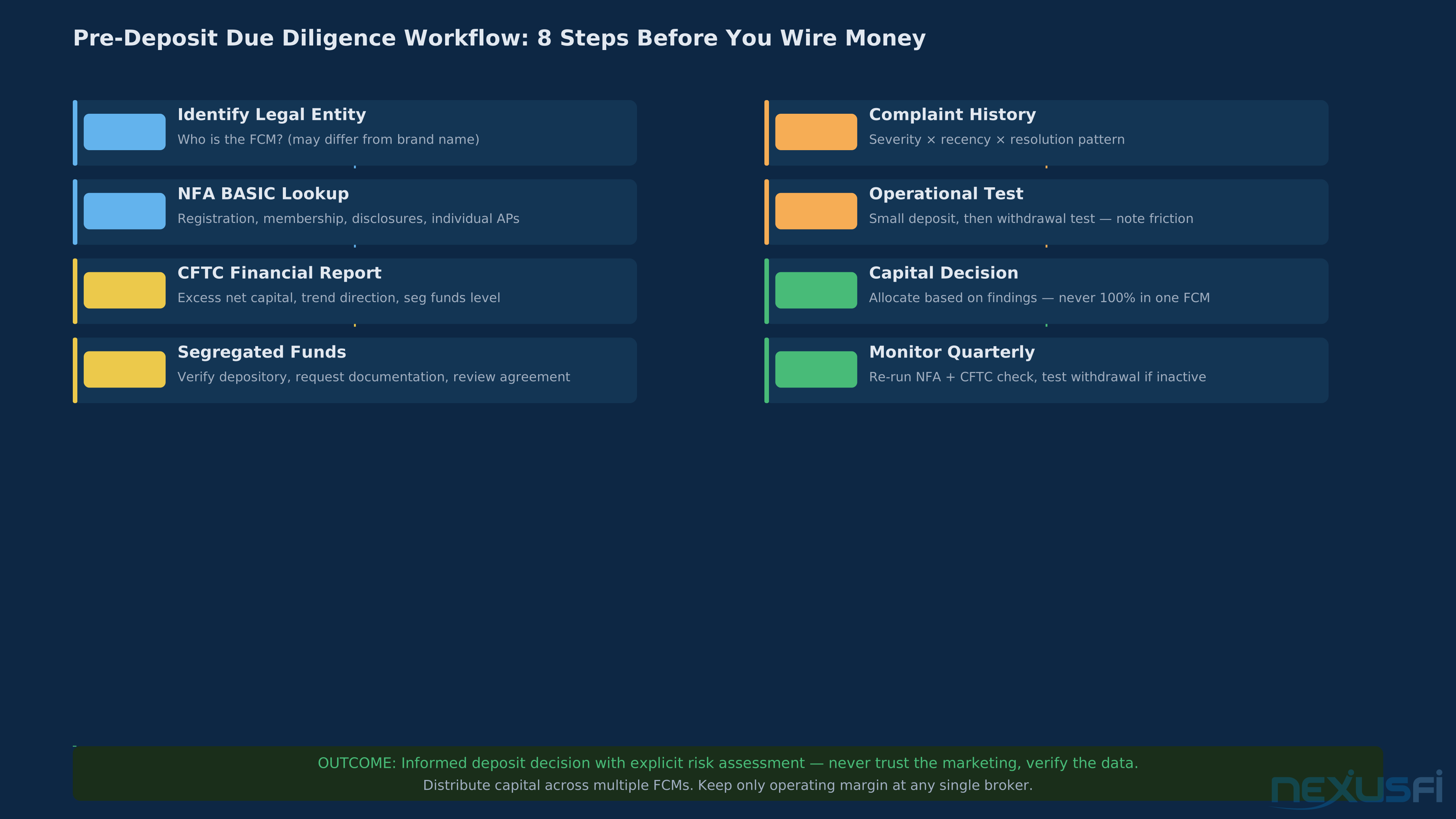
Step 1: Identify the Legal Entity #
Confirm the exact legal name of the FCM that will hold your funds. This is often different from the brand name. Your account agreement will identify the clearing FCM. Search that exact legal entity name in NFA BASIC, not the marketing name.
If the broker is an IB, identify which FCM clears your trades before proceeding. The IB's NFA record matters, but the FCM's financial health is what protects your deposits.
Step 2: NFA BASIC Lookup #
At www.nfa.futures.org/basicnet/:
- Confirm registration status is Current and Active
- Confirm NFA membership is current
- Click through to all disclosure items: regulatory actions, arbitration awards, reparation awards
- Note the count, recency, severity, and resolution status of any disclosures
- If individual APs will have access to your account, look them up individually as well
Step 3: CFTC Financial Report Review #
At https://www.cftc.gov/MarketReports/financialfcmdata/index.htm:
- Locate the FCM in the monthly report (search by legal entity name)
- Record: Adjusted Net Capital, Net Capital Requirement, Excess Net Capital, Segregated Funds Required
- Compare excess capital against the industry average and top firms
- Pull 3-4 months of historical reports and track the trend direction
- Note whether excess capital is growing, stable, or declining
Step 4: Segregated Funds Verification #
- Confirm the firm's excess segregated funds position in the CFTC report
- Ask the firm directly which depository holds customer funds
- Read your account agreement for unusual rehypothecation language
- Note the gap between required and actual segregated funds
Step 5: Complaint and Enforcement History #
- Review all NFA BASIC disclosures for pattern, severity, recency
- Run a general search for the firm's name in trading forums and community discussions
- Note the nature of complaints (operational vs. integrity-related)
- Evaluate resolution patterns
Step 6: Operational Verification #
Before depositing significant capital:
- Open an account with a minimal deposit (if the firm allows)
- Attempt a deposit via your preferred method (ACH, wire) and confirm the process works as described
- Attempt a withdrawal of a small amount and verify the timing and friction
- Confirm you receive statements and account confirmations as expected
The withdrawal test is especially important. Firms that are experiencing financial stress often begin creating friction around withdrawals before formal problems are disclosed.
Withdrawal friction — delays, unusual documentation requirements, or customer service runaround on withdrawal requests — has preceded several notable FCM failures. If your withdrawal test generates this kind of friction, reduce your exposure to minimum operating capital until you get a satisfactory explanation.
Step 7: Capital Allocation Decision #
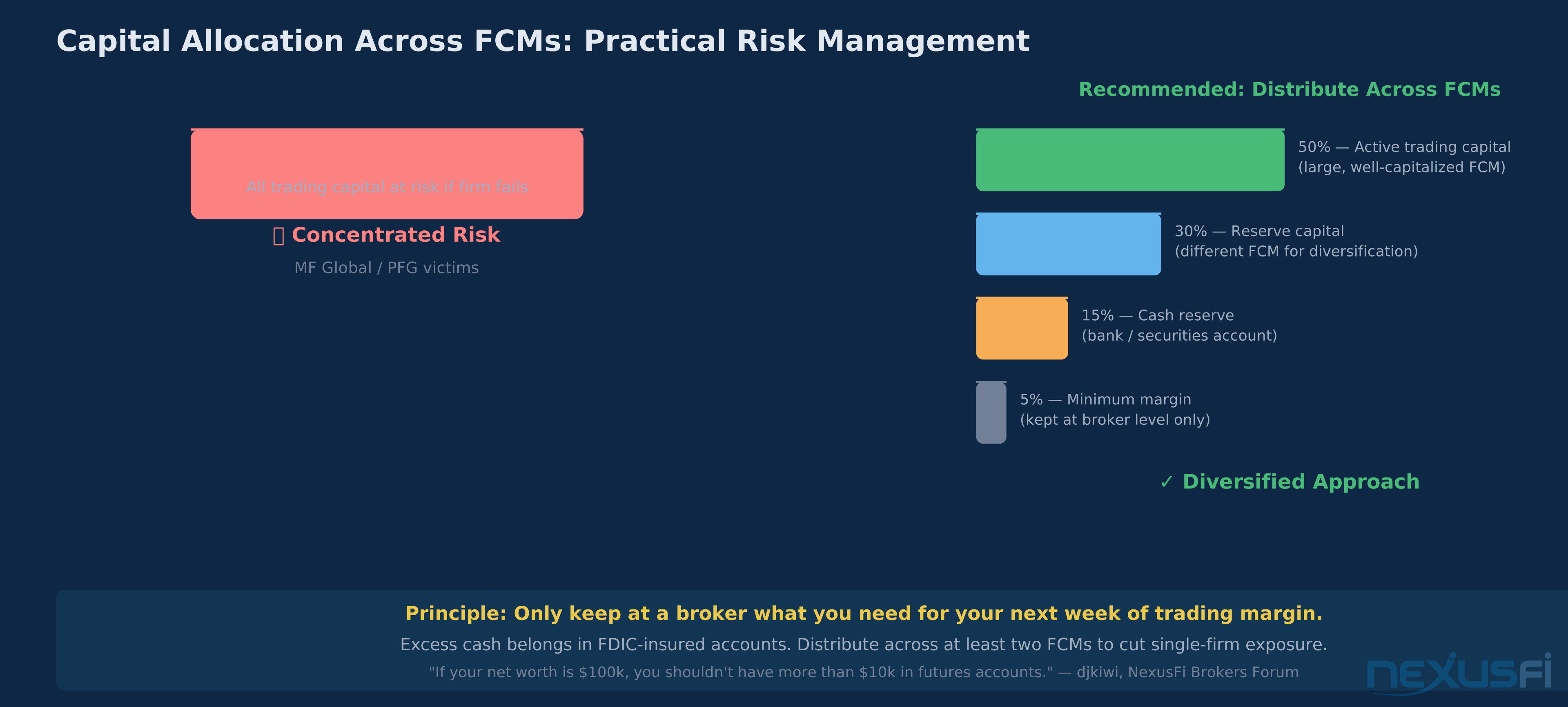
After completing Steps 1-6, make a deliberate decision about how much capital to place with any single FCM. Standard practice among experienced traders:
- Never place more than a defined percentage of total trading capital with a single FCM
- Maintain a secondary brokerage relationship so capital can be rapidly redeployed if issues emerge
- Keep minimum operating capital at the broker level — trading capital beyond what's needed for margin should be in a separate, FDIC-insured account
Step 8: Establish a Monitoring Cadence #
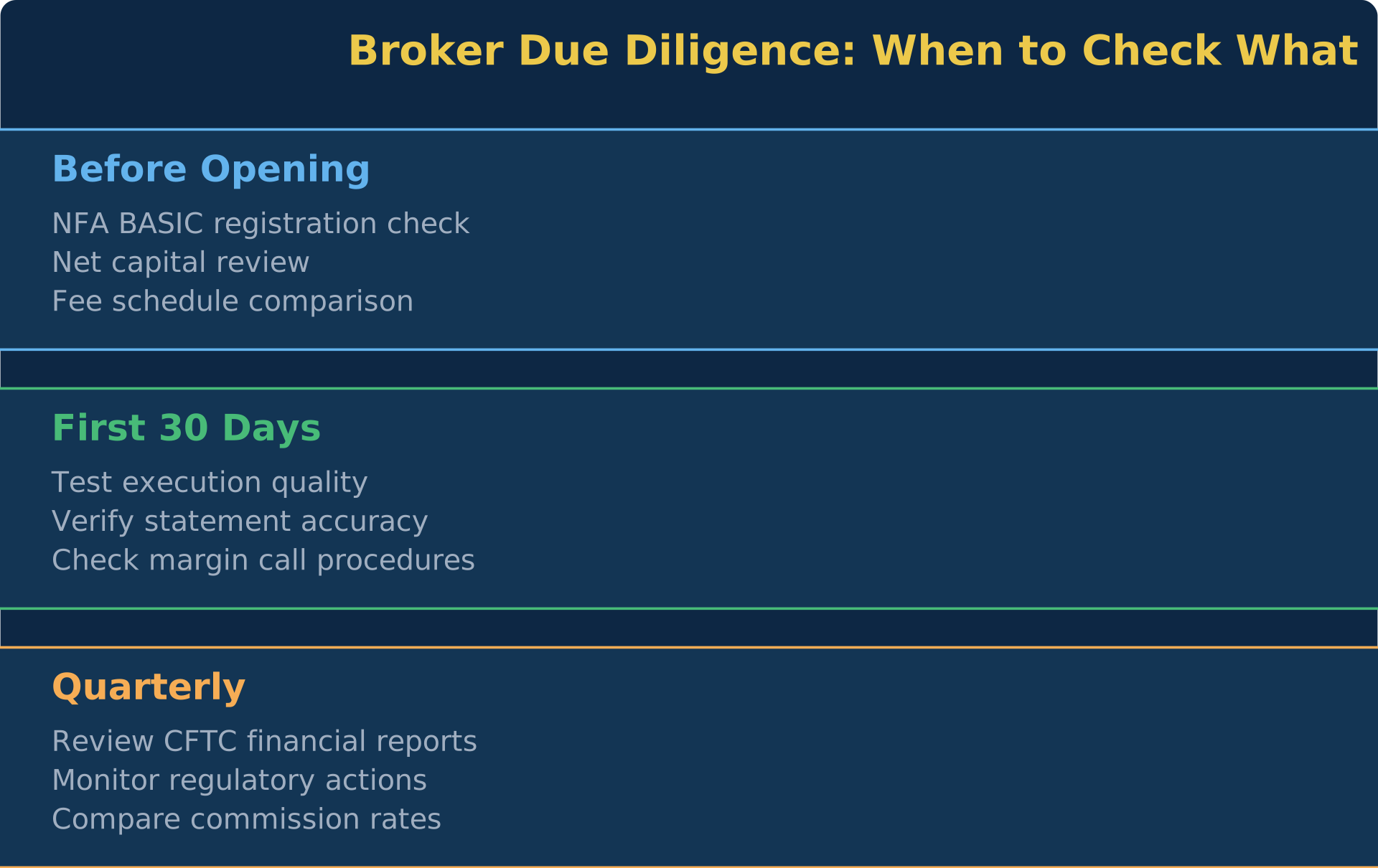
Due diligence is not a one-time event. Establish a quarterly check:
- Re-run NFA BASIC for new disclosures
- Pull the latest CFTC financial report and compare to prior months
- Note any personnel changes at the FCM (CEO, compliance, ownership)
- Test a withdrawal if you haven't made one recently
Red Flags vs Green Flags: What the Evidence Actually Tells You #
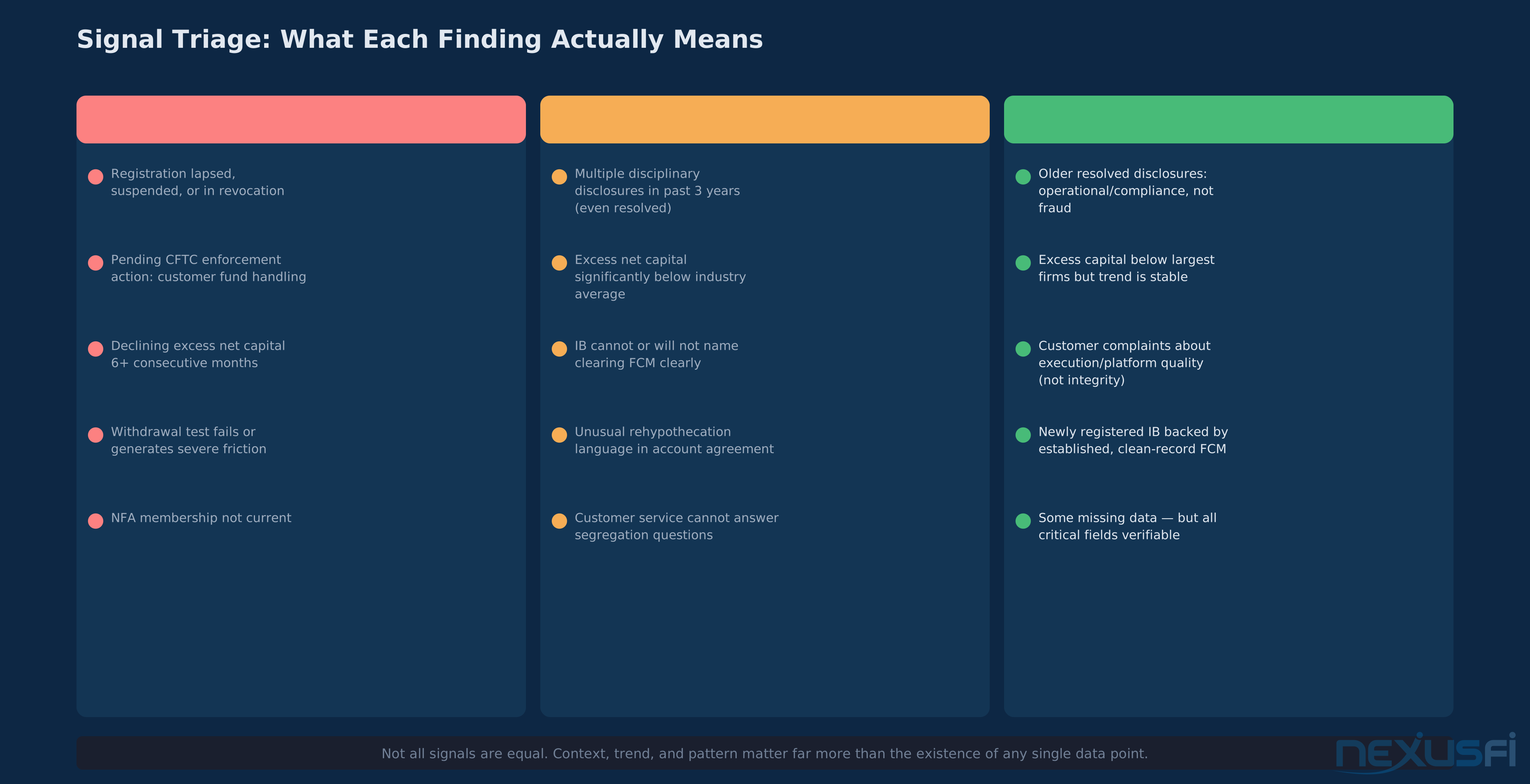
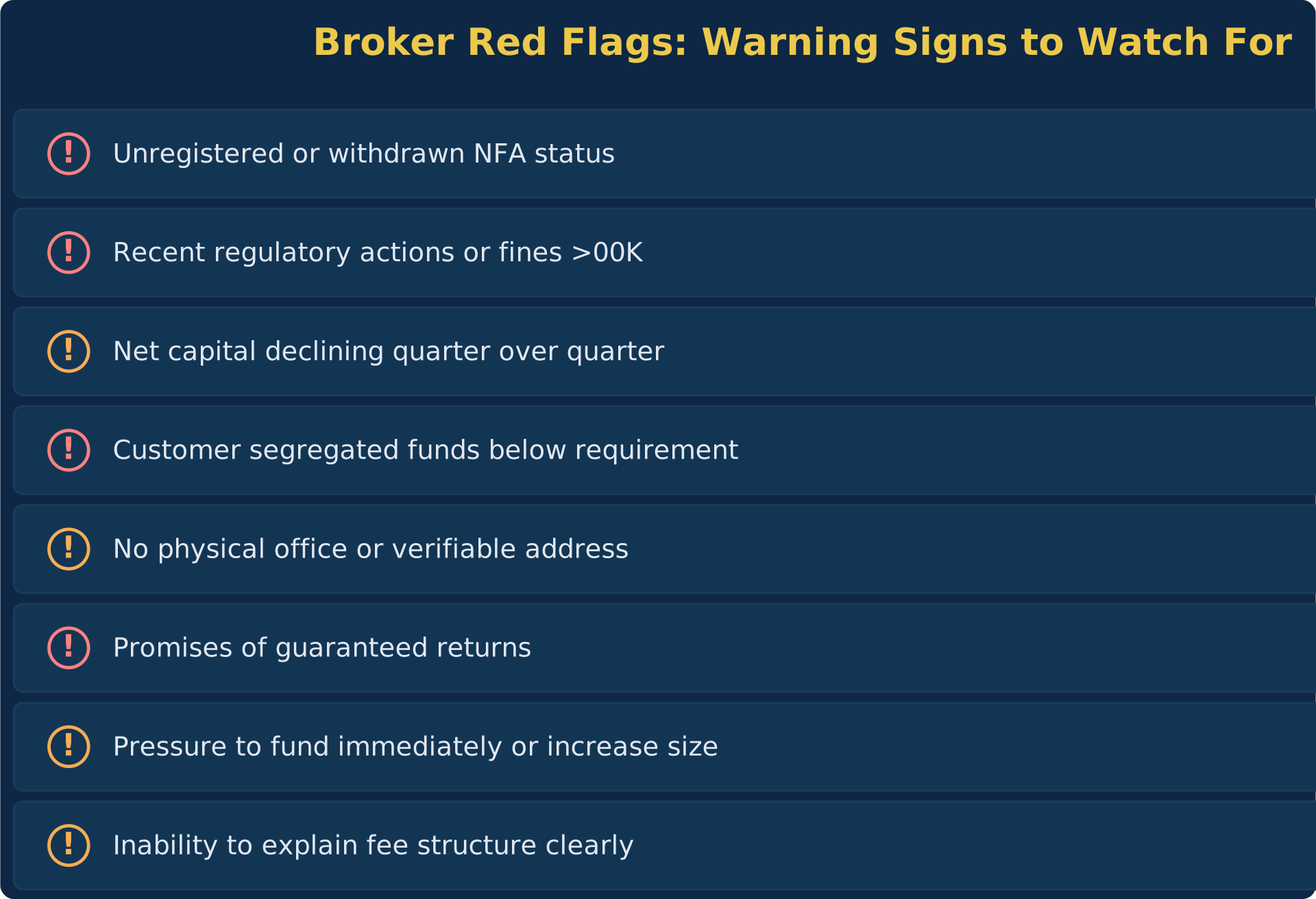
Not all warning signals are equal. Here is how to triage what you find:
Automatic Stops (Do Not Deposit) #
- Registration lapsed, suspended, or in revocation proceedings
- NFA membership not current
- Pending CFTC enforcement action involving customer fund handling
- Declining CFTC excess net capital for 6+ consecutive months with no explanation
- Withdrawal test fails or generates significant unexplained friction
Investigate Further Before Depositing #
- Multiple disciplinary disclosures in the past 3 years (even if resolved)
- Excess net capital much below industry average
- Firm is an IB and cannot (or will not) name the clearing FCM clearly
- Account agreement contains unusual language around rehypothecation
- Customer service is unable to answer basic questions about where funds are held
Acceptable Indicators (with Context) #
- Older resolved disclosures involving operational/compliance issues (not fraud)
- Excess capital below the largest firms but with stable trend
- Some customer complaints about execution or platform (operational quality, not integrity)
- Firm is newly registered but backed by an established clearing FCM with clean record
The distinction between firms that are small versus firms that are small AND deteriorating is key. A small FCM with stable excess capital, clean NFA record, and transparent answers to segregation questions may be a perfectly safe choice for a small-to-moderate account. The risk is concentrated at small firms with declining capital, pending enforcement actions, or opaque fund handling.
Limitations of Due Diligence #
The due diligence workflow described here is designed to catch structural and observable problems. It has known limitations:
Reporting lag: CFTC financial reports are monthly and may reflect data 30-60 days old. NFA BASIC reflects finalized enforcement actions — investigations that are ongoing but not yet finalized won't appear.
Fraud is designed to avoid detection: Both MF Global and PFGBest passed routine regulatory reviews. Russell Wasendorf Sr. at PFGBest forged bank statements mailed directly to auditors. Fraud that's sufficiently sophisticated will not appear in public records until investigators uncover it.
Financial statements can deteriorate rapidly: An FCM that looks adequate in one CFTC report can experience rapid deterioration between reporting periods. Quarterly monitoring catches trends, not sudden changes.
International FCMs have different regulatory regimes: This article focuses on US-registered FCMs under CFTC/NFA oversight. Non-US brokers offer access to their home country regulatory protections, which may be stronger or weaker than US rules. The tools described here don't apply directly to non-US FCMs.
Due diligence reduces the probability of depositing with a firm that is already in trouble or has structural integrity problems. It cannot protect against well-executed fraud or sudden unexpected failure. The appropriate response is not paralysis — it's systematic risk management: know the firms you use, monitor their financial health, diversify exposure across FCMs, and keep only operating capital with any single broker.
Knowledge Map
Go Deeper
Build on this knowledgeReferences This Article
Articles that build on this topicCitations
- — Due Diligence: NFA Search for IB's, FCM's, CTA's, etc... (2011) 👍 16“Look at all 3 -- regulatory actions, arbitration awards & reparations cases. I was very very surprised.”
- — CFTC Capital Requirements for FCM's (2020) 👍 11“Check your FCM's CFTC capital requirements report here: cftc.gov/MarketReports/financialfcmdata”
- — Class Action Lawsuit: AMP Global Clearing LLC (2020) 👍 21“IB has excess capital of $4 billion ... By comparison, AMP has $5 million. The average, btw, is $2 billion.”
- — AMP Futures / AMP Global Review (2014) 👍 17“Depositing funds with AMP, like any other privately owned broker is a game of Russian roulette. Protecting my capital is my own responsibility.”
- — CFTC published financial data on FCMs (2014) 👍 2“The CFTC publish financial data on FCMs -- adjusted net capital, customer segregated funds etc for each FCM relative to each other.”
- — Velocity Futures charged Maintenance Fee (2012) 👍 6“Velocity is ranked 112th out of 117 FCMs. Net Capital Ratio is the ratio of excess net capital to its net capital requirement.”
- — Futures Broker Due Diligence Notes post PFG (2012) 👍 2“Total loss because you have no coverage. They all have risk in one form or another. Even SIPC insurance is dicey.”
- — Is Amp at risk of going under? (2020) 👍 7“There is NO INSURANCE for funds deposited at an FCM. You have only the trust in the FCM's accounting practices to save you.”
- — What if a broker declare bankruptcy!!! Ftx first whose next? (2022) 👍 6“Customer Funds are required to be held in a separate segregated account to protect the customer. Unfortunately people still violate these laws as was seen in the PFG and MF Global failures.”