



Crypto 24/7 Markets: What Every Futures Trader Must Know Before Crossing Over
Overview #
Every futures trader eventually looks at crypto and thinks: same market, different hours. That's the wrong frame. Crypto isn't a longer version of ES. It's a different structure entirely — one where the session boundaries, stop logic, position sizing, and cost accounting all need to be rebuilt from scratch.
The market trades 24 hours a day, 7 days a week, 365 days a year. No maintenance window. No settlement pause. No circuit breaker on weekends. Saturday afternoon at 2pm can move price 8% on thin order books while you're watching football. The CME Bitcoin futures pause from Friday 5pm to Sunday 6pm ET, but spot and perpetuals don't.
This article covers what a session-based futures trader — someone who knows ES, NQ, CL, or GC — actually needs to understand before placing their first live crypto position. The mechanics, the risk differences, the stop logic, the position sizing adjustments, and the checklist to run before going live.
The framework applies whether you're trading CME Bitcoin futures, spot BTC, or perpetual swaps. The structural issues are the same. The adjustments differ slightly depending on which instrument you're using, but the foundational shift in thinking is identical.
One more thing upfront: the environment just changed. CME launched 24/7 crypto futures trading starting May 29, 2026, eliminating the weekend gap entirely for CME instruments. The framework below addresses both the old structure (for anyone still navigating the transition) and the new continuous-session reality.
The Liquidity Clock -- When Crypto Actually Trades #
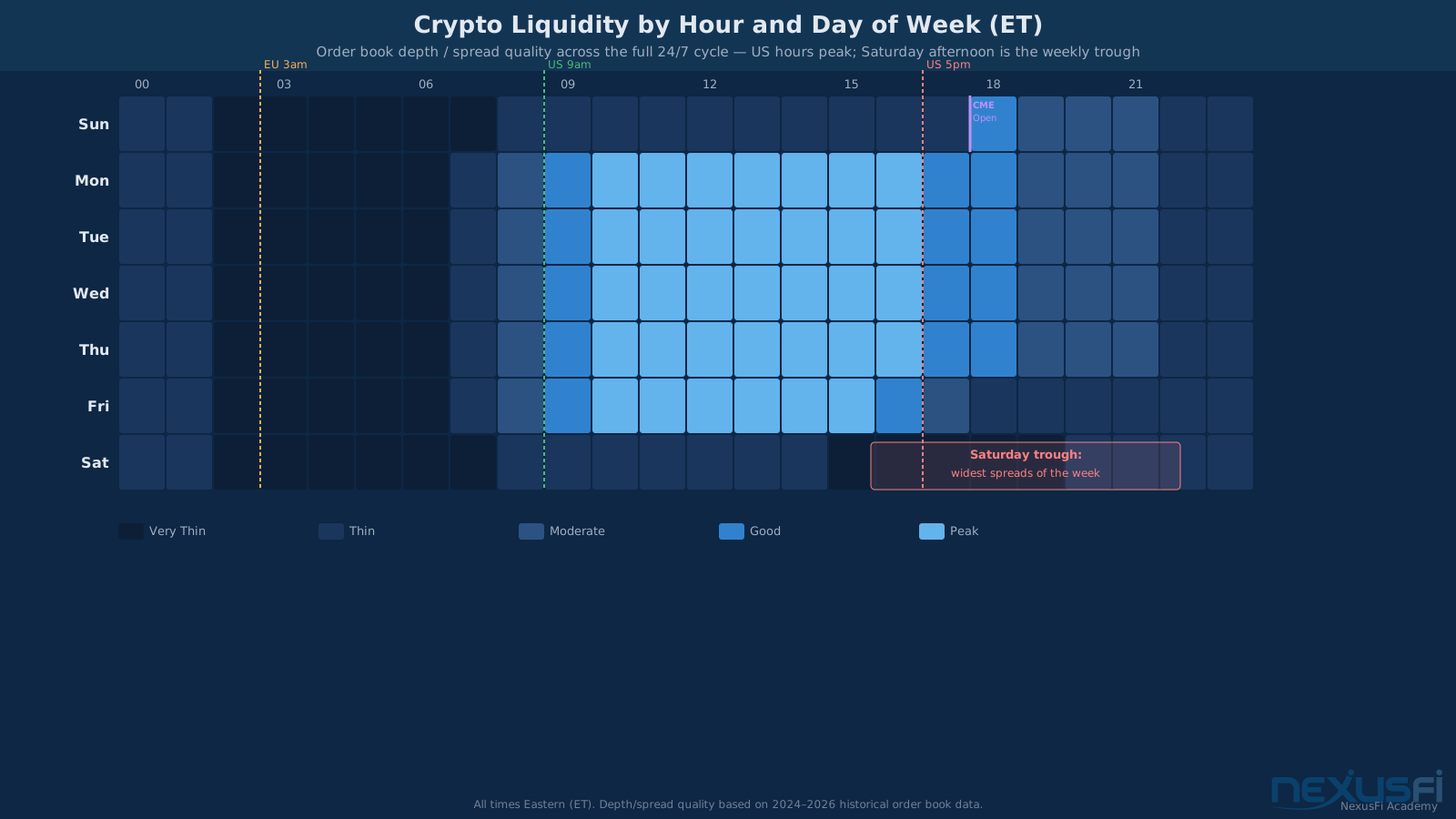
Crypto never closes, but liquidity isn't flat around the clock. It follows a predictable pattern that every trader needs to internalize before sizing a position.
The week has four distinct liquidity windows:
- US Peak (9am--5pm ET, weekdays): Deep books. Tight spreads. CME institutional flow overlaps with Coinbase and offshore perp liquidity. This is when you trade full size. Four out of four days Mon--Thu look nearly identical. Friday fades starting around 3pm.
- EU Open (3am--9am ET, weekdays): Books improve as London comes online. Spreads widen vs US peak but are still workable. Good execution quality. Size at roughly 65--70% of your normal position.
- Asia Night (7pm--3am ET, weekdays): Books thin out materially. Binance and OKX carry most of the volume; CME is open but institutional participation drops. Spreads widen. Any news event hits harder here. Size at 45--50% of normal.
- Weekend (Fri 5pm -- Sun 6pm ET, CME closed): Thin books, no institutional anchor, no circuit breaker. Saturday afternoon is the weekly liquidity trough. Small orders move price. Moves of 5--15% with no real trigger are more common than most traders expect going in. Size at 25--30% of normal, or don't carry positions through it.
The heatmap at the top of this article visualizes this pattern across all 7 days × 24 hours. The Saturday block stands out immediately — a deep blue hole that session-based traders never encounter.
That structural risk gap doesn't disappear when CME expands hours — it just changes form.
This liquidity pattern maps directly to what traditional futures traders already experience in ES overnight sessions, just amplified.
(TRADING HOURS — post trading hours and Lots of Action!!, 2020, 6 thanks). The same cycle plays out in crypto — but without any closing bell to reset the tape.
(Can profitable active trades be made in ES after market hours?, 2015, 8 thanks). In crypto, that ratio between peak and trough liquidity is even more extreme — and the trough extends all weekend.
ES vs BTC: A Tale of Two Volatility Profiles #
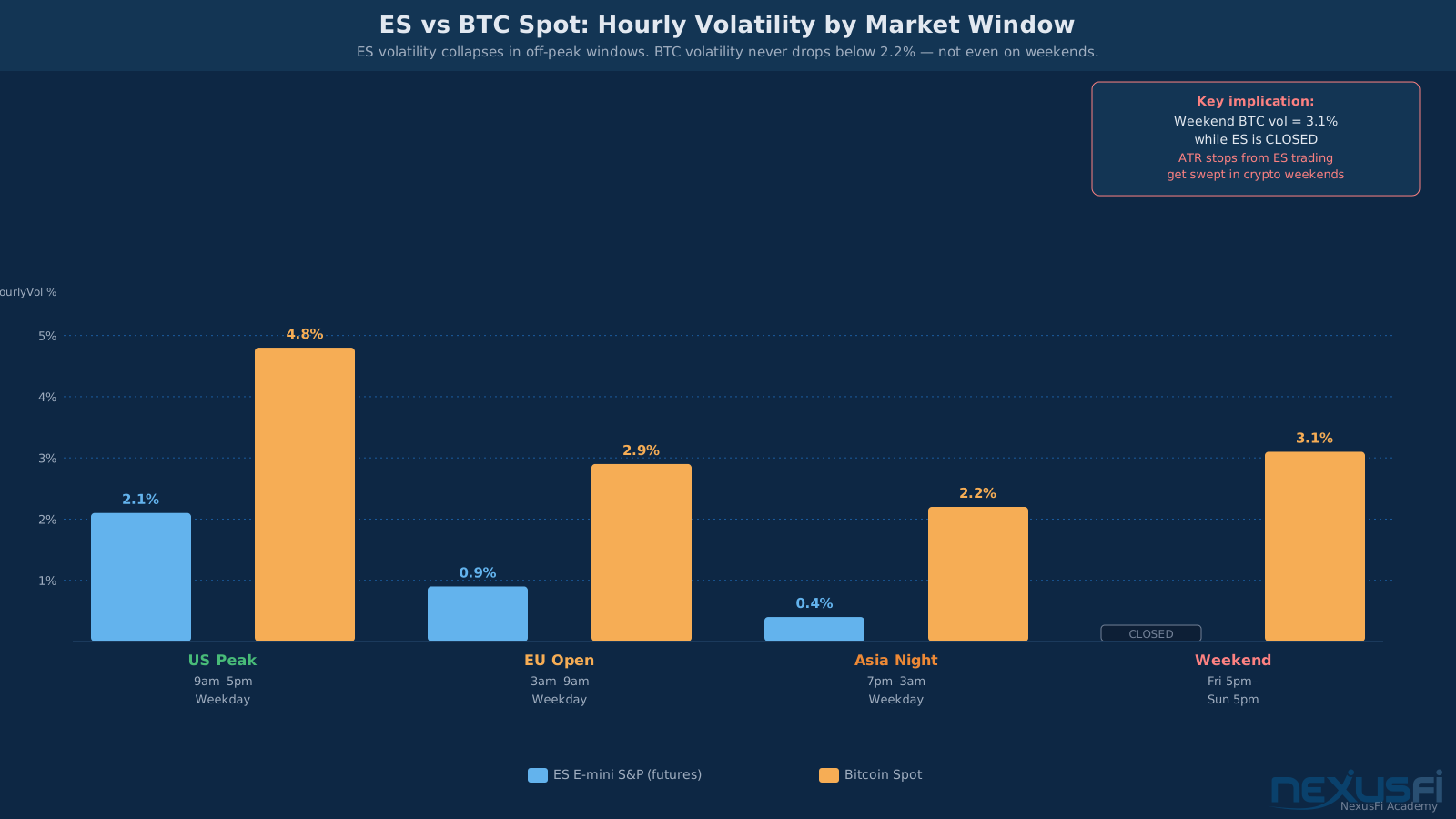
Here's the number that recalibrates everything: Bitcoin's weekend volatility is 3.1% per hour. ES is closed on weekends.
During US peak hours, ES runs about 2.1% hourly volatility. BTC runs 4.8% in the same window — already higher. But at least both markets are open and liquid, and you can act on your position.
The real shock comes off-peak:
- Asia night: ES at 0.4% (still trading via Globex), BTC at 2.2%
- Weekend: ES at 0% (closed), BTC at 3.1%
That 3.1% weekend BTC volatility is higher than any window ES posts during a live session. And you can't exit your ES position during the weekend because there is no position to manage. You either didn't hold it, or you already closed it. With crypto, you might have a full position running on thin books while you're sleeping Saturday night.
The practical implication: stop distances built for ES at US peak don't survive crypto's off-peak windows. A 0.8% stop that's appropriate during US hours will get swept nearly every weekend on thin-book volatility alone. This isn't bad luck. It's math. The article covers the stop multiplier framework in a later section.
See the Position Sizing Methods for Futures Trading article for the base framework — everything here builds on top of that.
Weekend Risk -- One Gap vs Continuous Drift #
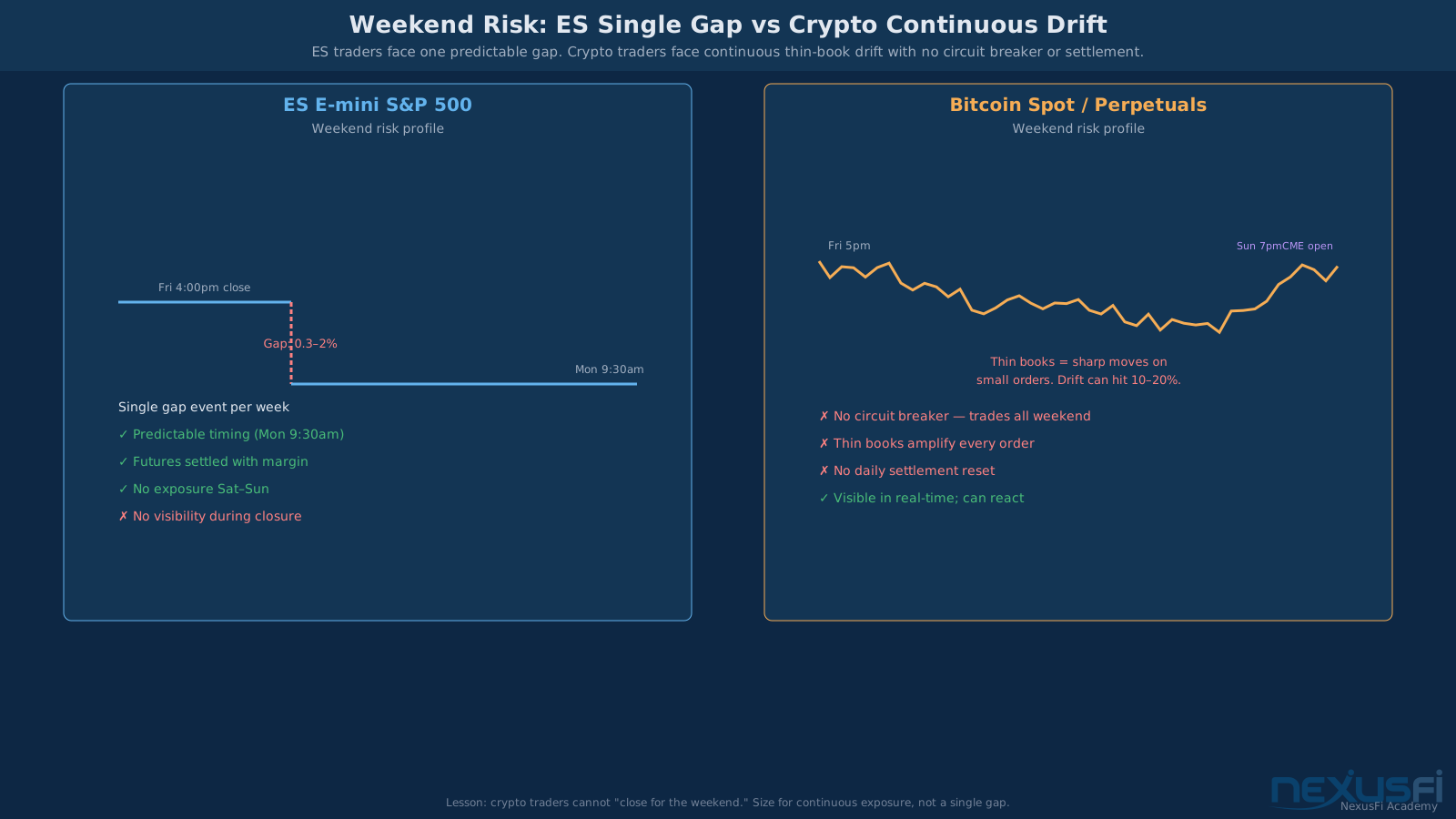
ES traders know weekend risk as a single event: the Monday 9:30am open. Whatever happened while the market was closed shows up as a single gap. Predictable timing. One moment to manage. ES futures trade during the week — the gap risk compounds to roughly 0.3--2% in most weeks, occasionally more during macro events.
Crypto weekend risk is categorically different. It's not a gap — it's 50+ hours of continuous thin-book trading where every order has outsized impact on price.
The ES weekend model has features that make gap risk manageable:
- Predictable timing -- you know exactly when the market reopens
- Futures have settlement margin, so you understand your exposure
- No exposure from Saturday morning to Sunday evening
Crypto on the weekend:
- No circuit breaker -- the market trades all weekend
- Thin books amplify every order -- a $1M liquidation at 2am Saturday can run price 3% in seconds
- No daily settlement reset -- unrealized P&L swings with every tick
- You can see what's happening in real-time, but execution quality is poor
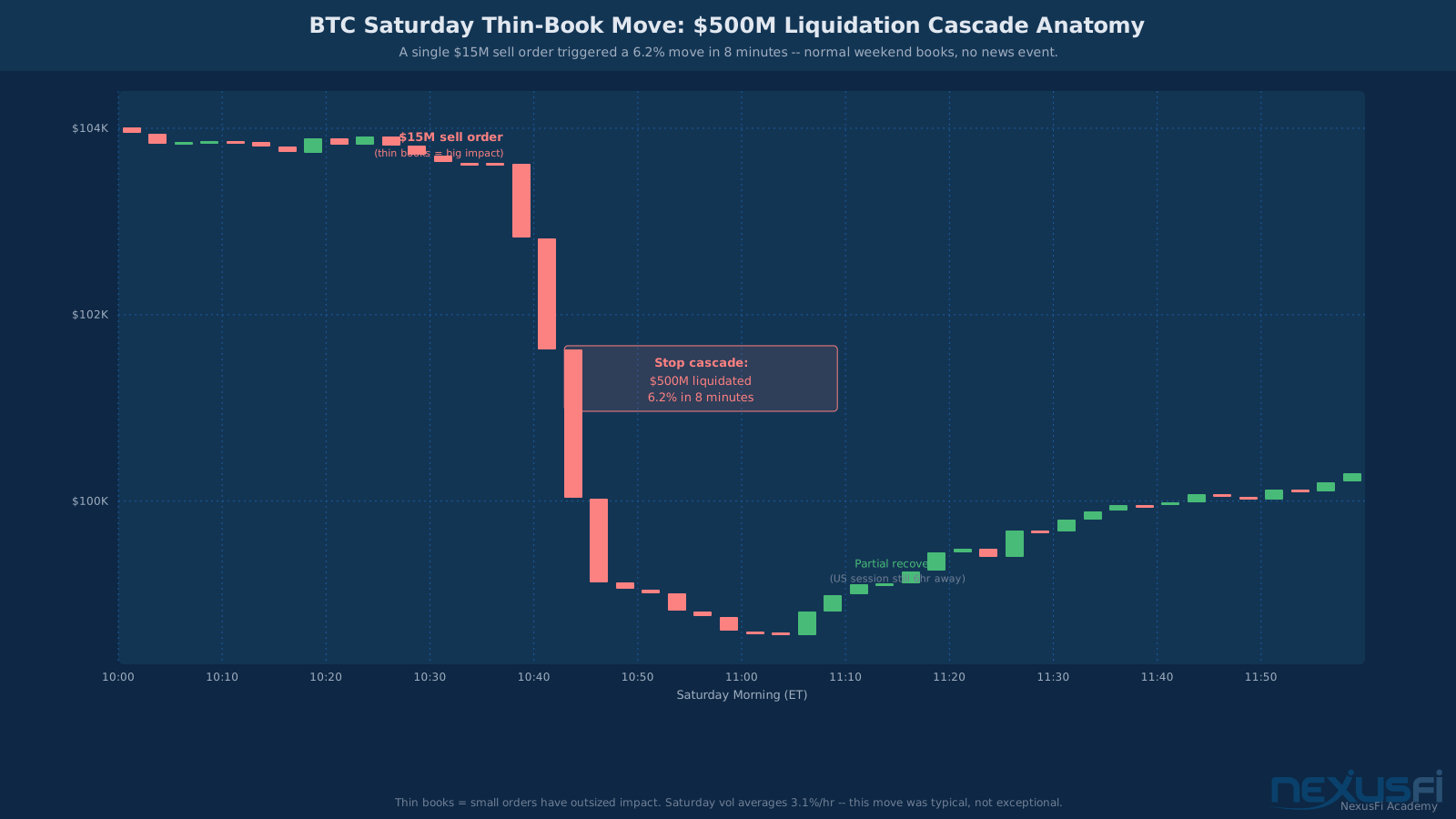
Saturday crypto is not an ES overnight session. There's no circuit breaker, no institutional anchor, and no guaranteed liquidity recovery for 50+ hours. A $1M liquidation at 2am Saturday can cascade price 3-5% in seconds on thin books with no circuit breaker. Size for the worst realistic move in that window, not the average.
The instinct to "set and forget" over a weekend — something ES traders do routinely with defined stop orders — doesn't work the same way in crypto. Stop orders still execute, but slippage on thin weekend books can be severe. A stop at 2% can fill at 3.5% on a fast move during Asia Sunday hours.
The Overnight Risk and Gap Management article covers the ES framework in detail. The crypto version extends that logic across a continuous session without the single-event structure that makes ES gap risk tractable.
Practical rule: if you're not monitoring the position and the market is thin, size for the worst realistic move in that window — not the average move. Saturday afternoon is not the time to be running full size.
The CME Sunday Open (Historical Context) #
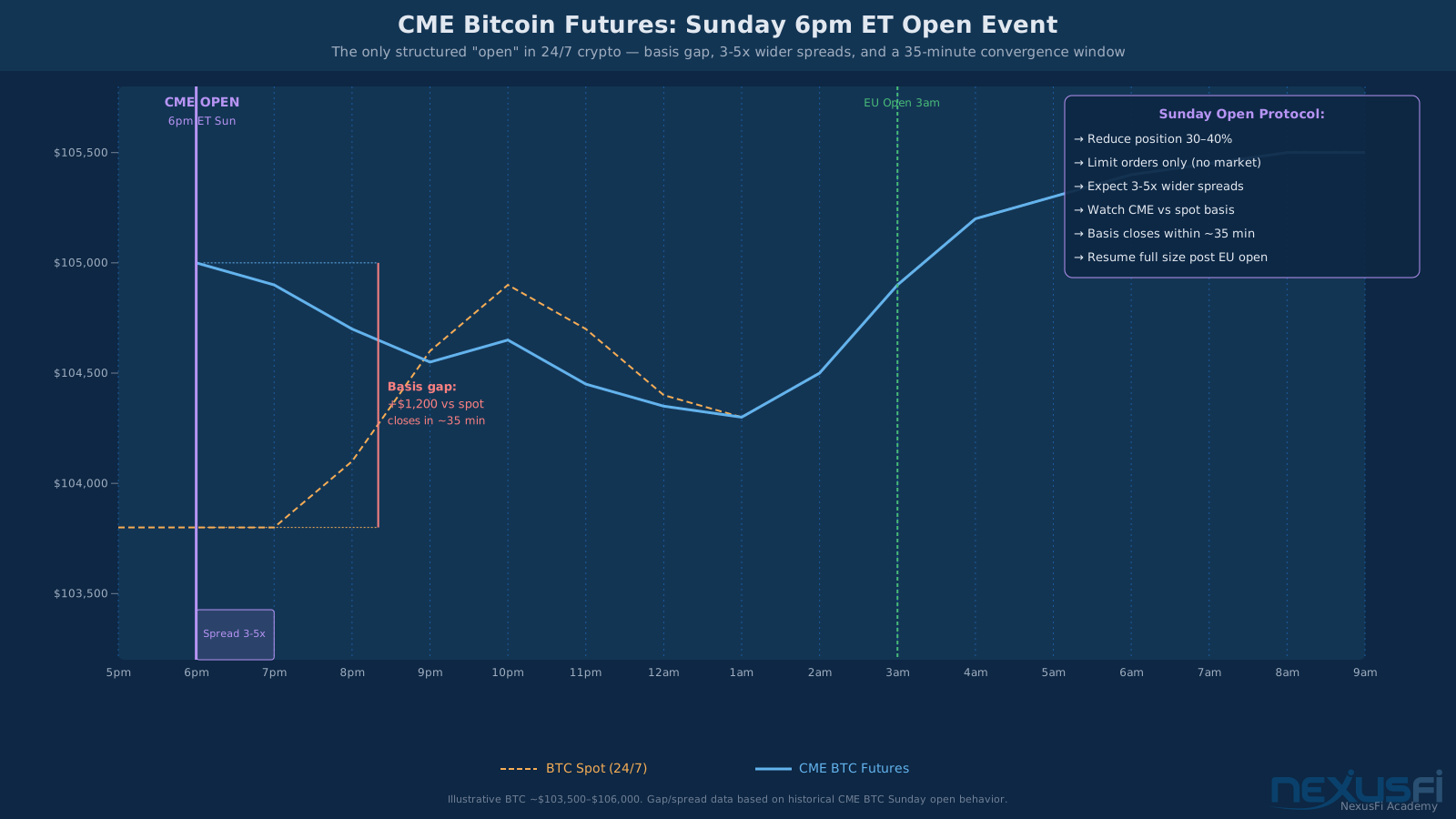
Prior to May 29, 2026, CME Bitcoin futures closed Friday at 5pm ET and reopened Sunday at 6pm ET — a 25-hour gap that created a predictable weekly event: a basis gap between CME and spot of $500--$1,200, spreads 3--5x wider than US-peak, and a 30--45 minute convergence window as arbitrageurs closed the gap. The protocol: reduce position 30--40% for the first 30 minutes, limit orders only, watch CME vs spot basis for normalization, resume full size once books stabilize.
CME's 24/7 launch on May 29, 2026 eliminated this event for CME instruments.
(CME announces 7x24 crypto futures trading, 2025, 6 thanks). The Sunday gap is gone — but thin weekend books on spot and perps persist, and the liquidity multiplier framework still applies to anyone trading those instruments.
Stop Logic for a Market That Never Closes #
The standard ES stop framework is: place stop at ATR-based distance from entry, accounting for normal intraday noise. Works fine when ATR is calibrated to US peak hours and you know liquidity is deep enough to execute near your stop price.
In crypto, that formula has a hidden variable you can't ignore: which liquidity window are you in?
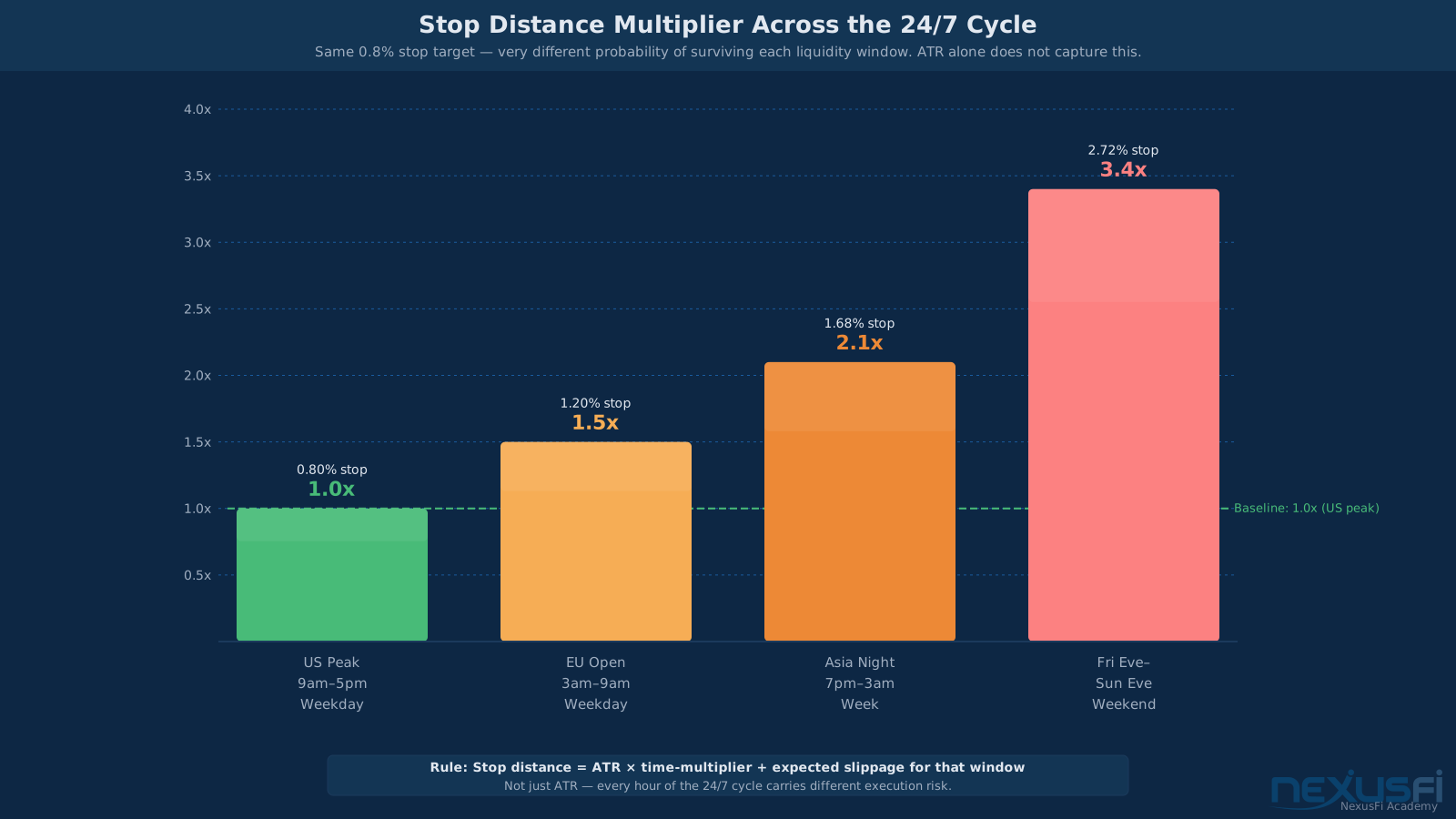
The stop distance multiplier by window:
- US Peak (9am--5pm ET, weekday): 1.0x -- this is your baseline. ATR-based stop with normal slippage assumption.
- EU Open (3am--9am ET, weekday): 1.5x -- books thin out, spreads widen, same stop gets swept more often.
- Asia Night (7pm--3am ET, weekday): 2.1x -- materially thinner. A stop that survives US peak gets swept regularly in Asia hours.
- Weekend (Fri 5pm -- Sun 6pm ET): 3.4x -- not a typo. Weekend books are thin enough that a stop placed for US-peak conditions gets swept on routine noise.
The formula:
Stop Distance = ATR × Liquidity Multiplier + Expected Slippage for that window
What this means in practice: if your normal stop on an ES position is 0.8% (which maps to roughly $400 risk on a standard ES contract at current prices), your crypto stop during Asia night needs to be 1.68% just to have the same probability of surviving normal noise. Over the weekend, it's 2.72%.
The alternative — don't carry full-size positions into thin windows — is often the better choice. The stop multiplier framework exists for when you need to maintain a position across liquidity shifts, not as an invitation to size normally with a wider stop.
There's a secondary issue with stops in crypto that traditional futures traders often miss: the difference between last price, mark price, and spot price. Liquidations on perpetuals trigger off mark price (a weighted average of multiple venues), not last price. A wick to an absurd level on thin books doesn't liquidate you if mark price doesn't reach the threshold. Your stop-market orders, however, trigger off last price. Know which price type controls your exits.
See Crypto Funding Rates and Perpetual Swaps for the detailed mechanics of perpetual swap pricing and how the mark price calculation works.
Position Sizing Across Liquidity Windows #
Standard position sizing frameworks — fixed fractional, percent of equity, dollar risk per trade — all share an assumption: the cost to exit your position is approximately known and stable. In a liquid market at US peak hours, that's true. Slippage is predictable. Spreads are tight. You can model your risk with reasonable accuracy.
In crypto's thin windows, execution cost is neither known nor stable. Weekend BTC spread on a large order can be 3--5x the US peak spread. A stop order executes, but at what fill price? The expected slippage assumption changes across the week.
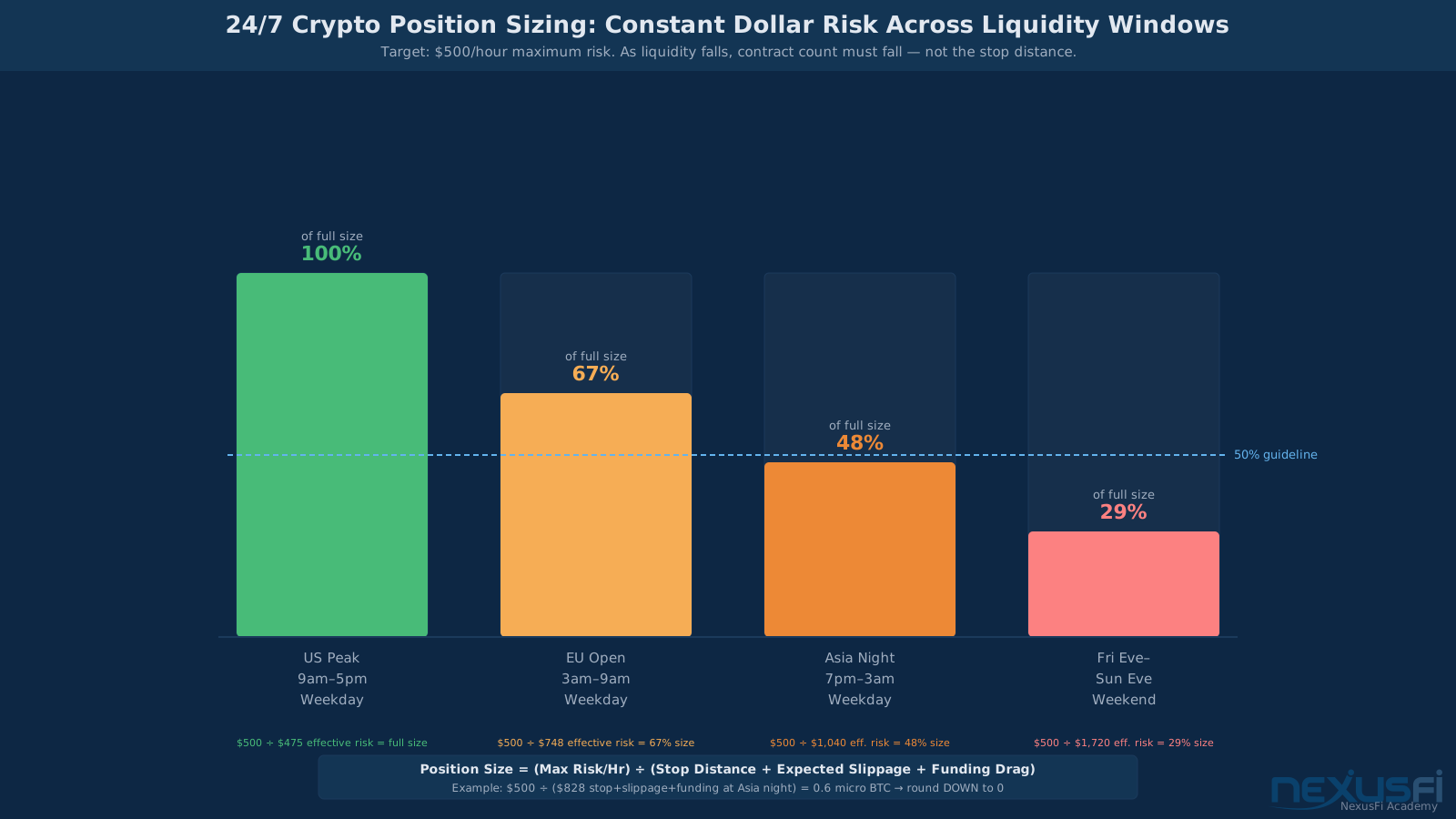
The constant-dollar-risk framework for 24/7 crypto:
- Set a maximum dollar risk budget per hour (e.g., $500/hour)
- Calculate the effective risk per unit = stop distance + expected slippage + fees + funding drag for that window
- Solve for position size: contracts = risk budget / effective risk per unit
- Round DOWN to the nearest whole contract (or micro)
Applied to the four windows with a $500/hour risk budget on BTC spot positions:
- US Peak: effective risk per unit = $475 → full size (100%)
- EU Open: effective risk per unit = $748 → 67% of full size
- Asia Night: effective risk per unit = $1,040 → 48% of full size
- Weekend: effective risk per unit = $1,720 → 29% of full size
The weekend position is less than a third of your normal US-peak size. That's not being conservative — that's the math of maintaining constant dollar risk when execution costs nearly quadruple.
For ES/NQ traders transitioning to crypto: start at 50% of your normal contract count regardless of which window you're in. Increase to the full liquidity-adjusted size only after running through a full week live — including at least one Saturday afternoon and one CME Sunday open. The intuition calibration you get from surviving one thin-Saturday sweep is worth more than any article.
The Kelly Criterion article covers growth-optimal sizing for traders who want to model this more formally — but the liquidity-window adjustment above has to be applied on top of whatever your optimal-f calculation produces.
Funding Rates -- The Hidden Carry Cost #
Traditional futures traders pay zero funding cost. ES, NQ, CL — all dated contracts with no continuous funding mechanism. When you hold an ES position overnight, you pay or receive basis through the futures price relative to fair value, but there's no explicit per-period cash settlement.
Perpetual swaps — the dominant crypto trading instrument by volume on offshore exchanges — have a funding mechanism that settlement-based traders often overlook until it eats their edge.
How it works:
- Every 8 hours, longs pay shorts (positive funding) or shorts pay longs (negative funding)
- The rate is determined by the premium of the perpetual price over spot -- when perps trade above spot, longs pay shorts to anchor the price back down
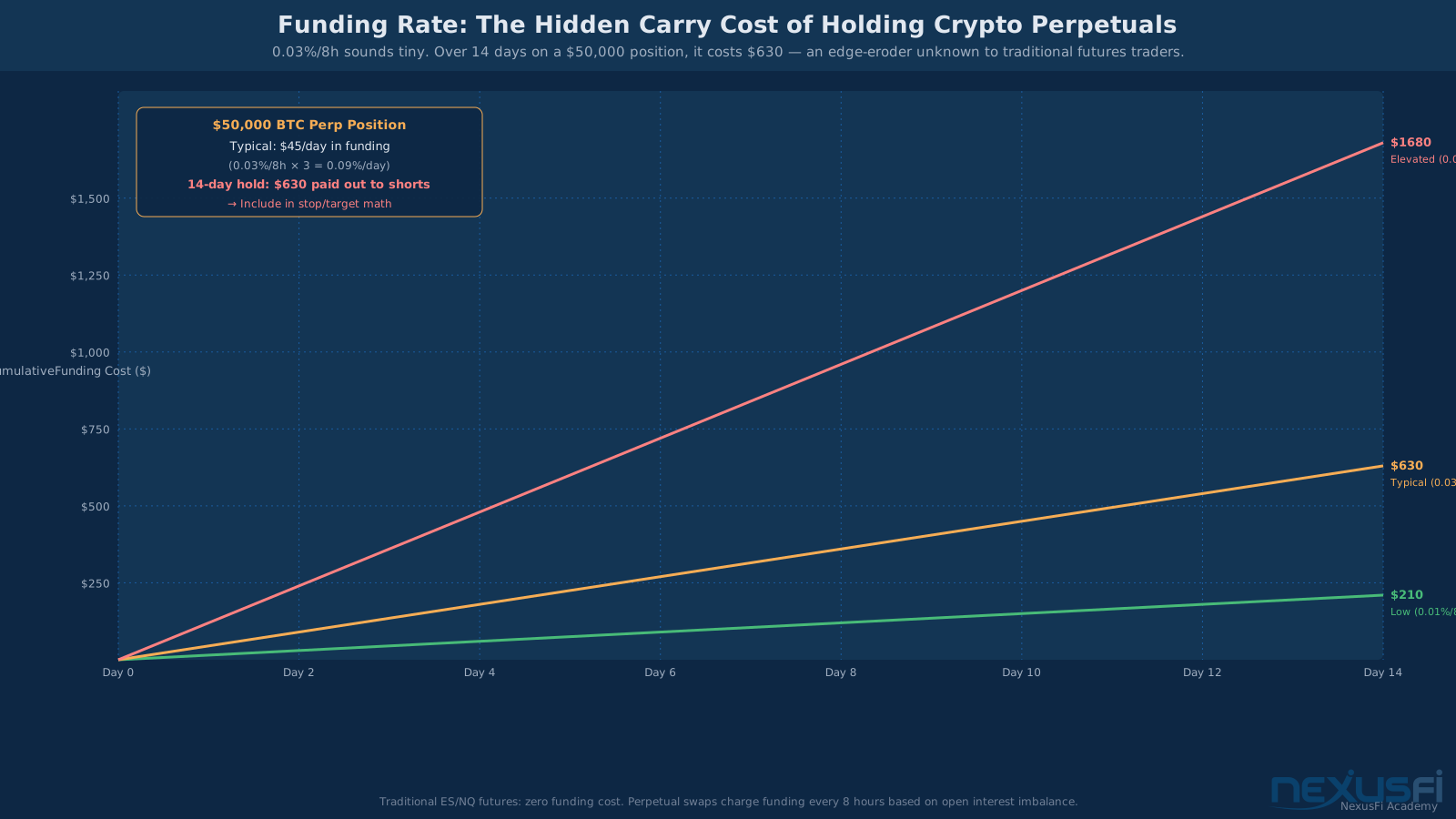
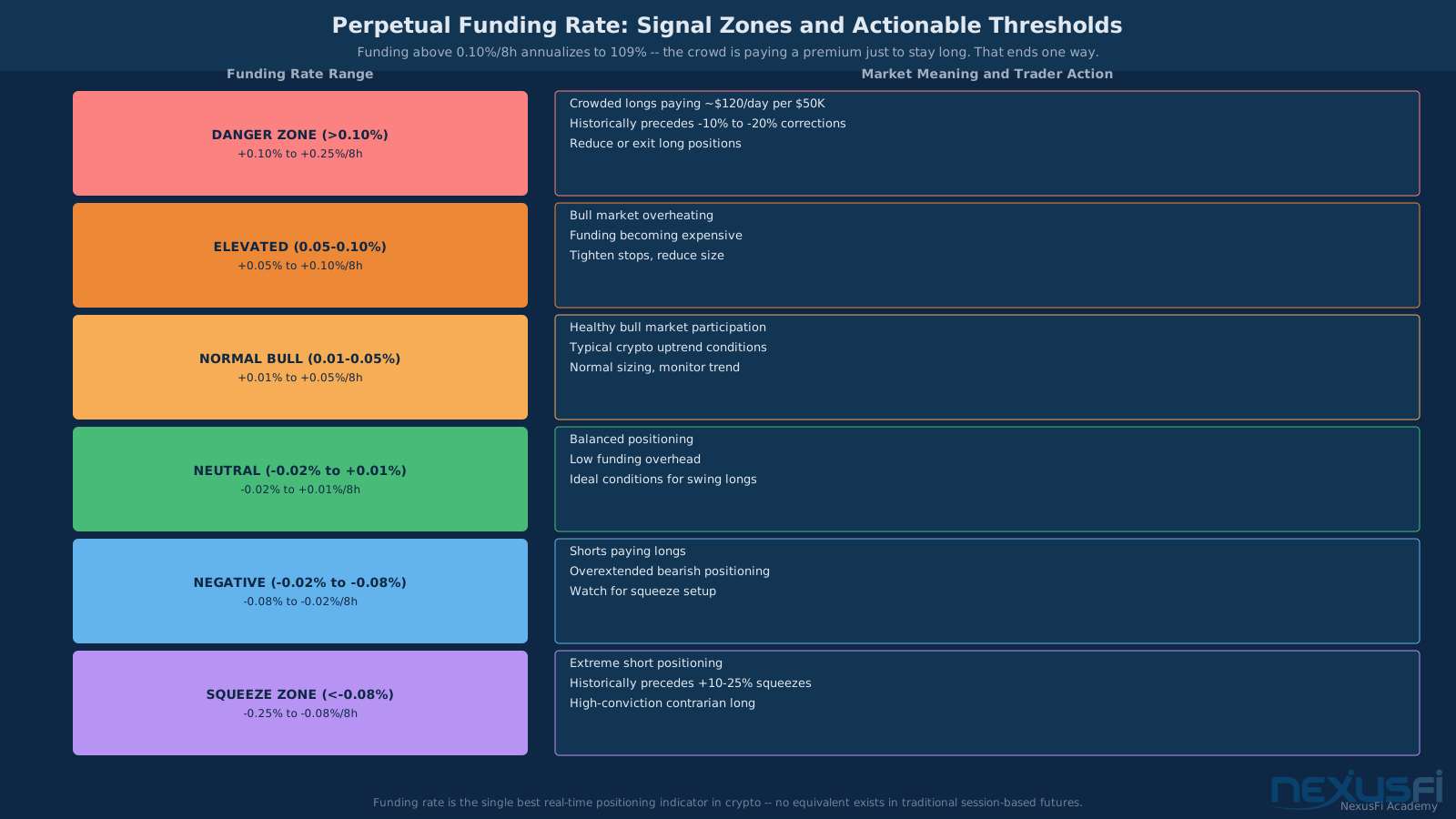
- Typical bull market rate: 0.01%--0.03% per 8-hour period (0.03%--0.09%/day)
- Elevated rate: 0.05%--0.10% per 8-hour period -- a signal the crowd is heavily long
- Danger zone: above 0.10%/8h -- annualizes to over 100%, which is unsustainable and historically precedes corrections
The math on a $50,000 BTC perp position: at typical funding (0.03%/8h) — $15/period, $45/day, $630 over 14 days (1.26% of position). At elevated funding (0.08%/8h) — $120/day, $1,680 over 14 days (3.36%). Your trade needs to return more than 3.36% just to break even on a two-week hold at elevated funding. Build this into your stop/target math before entry. Traditional futures traders don't budget for this at all because it doesn't exist in their instrument.
Funding also serves as a market signal. When funding is consistently positive and elevated (above 0.08%/8h), the crowd is crowded long and paying a premium to hold it. Historical data shows that sustained elevated funding (3+ days above 0.08%/8h) precedes corrections more reliably than most technical signals. It's not a timing tool — it's a positioning indicator that tells you market structure is fragile.
Negative funding (shorts paying longs) signals the opposite: excessive short positioning, potential for a squeeze. Funding below -0.03%/8h sustained over 2+ days historically sets up strong relief rallies.
For more on funding rate mechanics and how to integrate them into trade decisions, see Crypto Funding Rates and Perpetual Swaps.
CME 24/7 Crypto Futures: What Actually Changes #
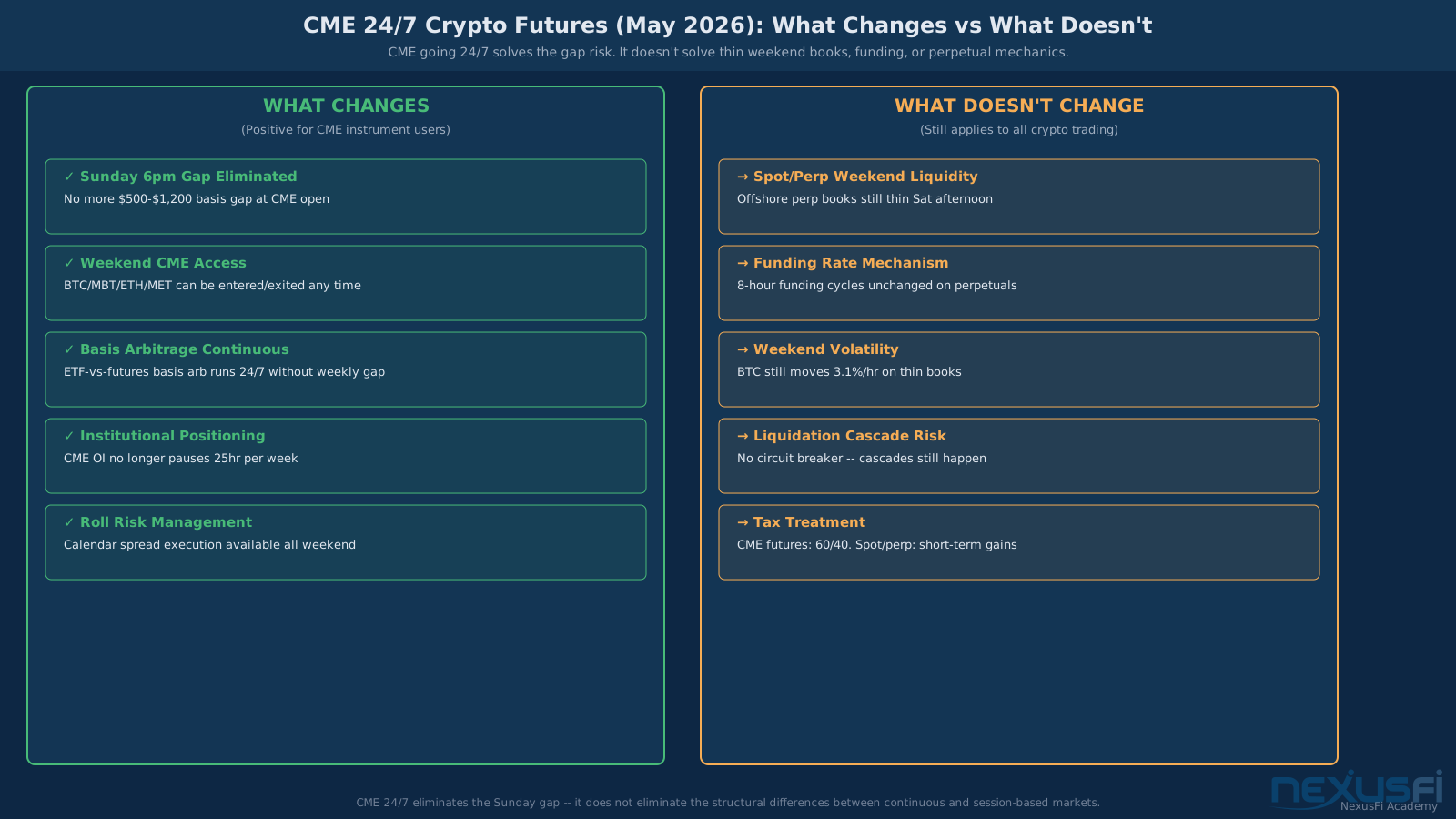
On May 29, 2026, CME Group launched 24/7 trading for Bitcoin futures (BTC), Micro Bitcoin futures (MBT), Ether futures (ETH), and Micro Ether futures (MET). This is a structural change to one of the most important reference markets in crypto.
What actually changes:
- Sunday gap eliminated: The CME Sunday 6pm ET open event -- the basis gap, the 3--5x wider spreads, the 35-minute convergence window -- no longer occurs for CME instruments. This removes the most predictable weekly event risk for CME crypto traders.
- Basis arbitrage becomes continuous: CME-to-spot basis trades that previously required timing around the Sunday open can now run continuously. Institutional basis traders (who play the futures vs ETF spread) have constant access to both legs.
- Weekend gap disappears for CME holders: Traders holding CME Bitcoin futures no longer face a 25-hour window of zero CME liquidity over weekends. They can enter, exit, or adjust positions any time.
What doesn't change:
- Thin weekend books on spot and perps: Spot Bitcoin and perpetual swaps on offshore exchanges still have thin weekend liquidity. CME going 24/7 doesn't solve this -- it only affects CME-specific instruments.
- Funding rates on perps: CME futures don't have funding. If you're trading perps, the 8-hour funding mechanism is unchanged.
- Liquidity windows still matter: Even with CME 24/7, the US peak window has deeper CME order books than 3am Saturday. The liquidity multiplier framework still applies -- the multipliers just compress slightly now that institutional CME flow is present on weekends.
- Volatility differences by window: BTC still moves more on thin weekend books than during US peak. The relationship between time-of-week and execution quality hasn't been eliminated -- just the hard boundary of the CME closure.
With spot Bitcoin ETFs now holding hundreds of billions in AUM, the futures-spot basis trade continues to attract capital. The 24/7 CME access makes basis arbitrage more efficient and further institutionalizes crypto futures market structure.
For traders using CME Bitcoin futures specifically, the 24/7 transition is largely positive — it removes the Sunday gap as an operational risk factor and extends the window for position management. For spot and perp traders, the change is adjacent rather than direct.
The Risk Model Comparison: Side by Side #
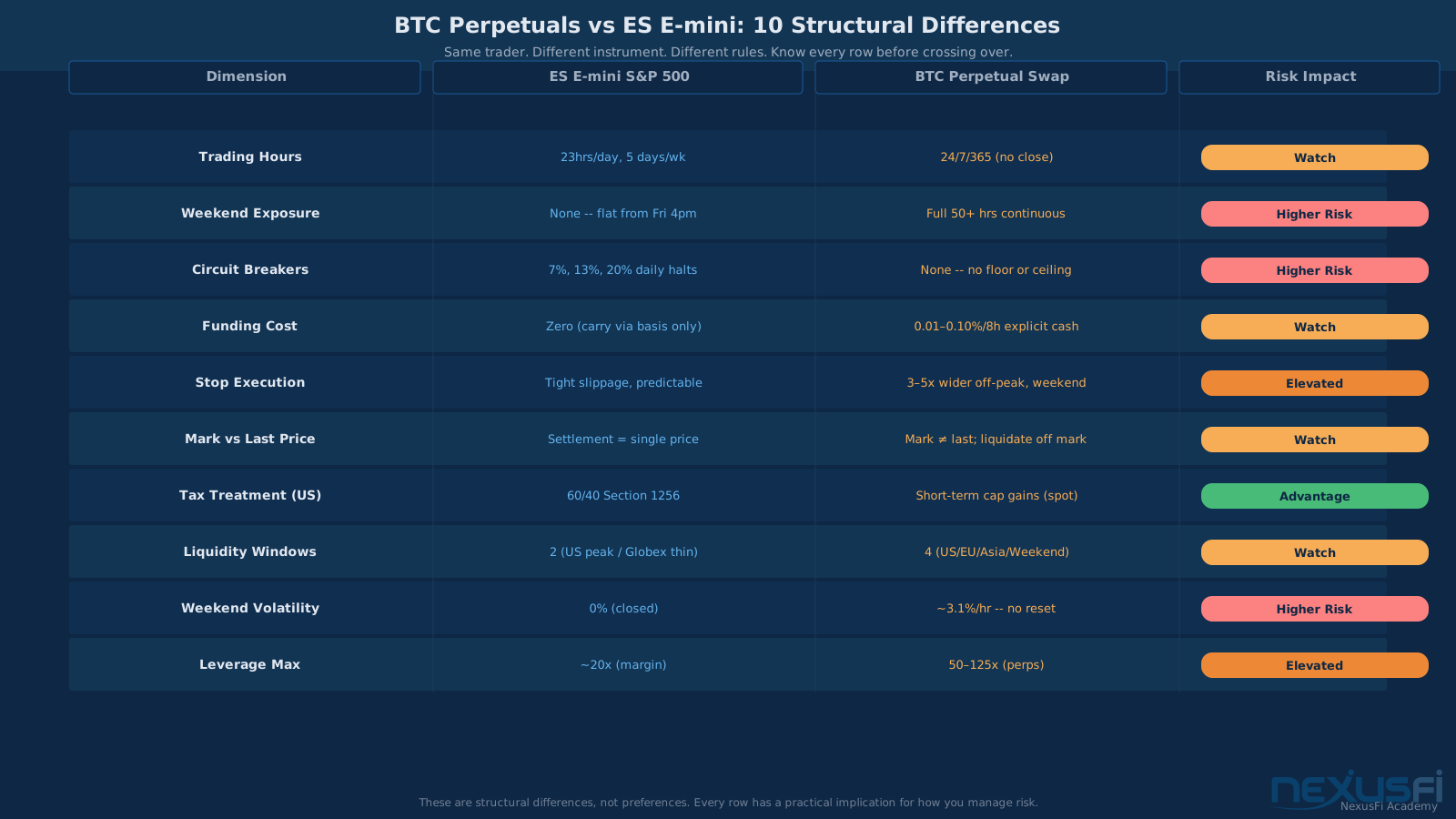
Putting it all together in a direct comparison between ES (as the reference session-based instrument) and BTC (as the reference crypto instrument):
| Dimension | ES E-mini S&P 500 | Bitcoin (Spot / Perp) |
|---|---|---|
| Trading hours | 23hrs/day, 5 days/week | 24/7/365 (spot); CME 24/7 from May 2026 |
| Weekend exposure | None -- flat from Fri 4pm | Full exposure all weekend |
| Liquidity variability | Low -- US hours dominant, Globex overnight thinner | High -- 4-5x spread difference US peak vs Saturday trough |
| Weekend volatility | 0% (closed) | ~3.1%/hour -- higher than any ES live session |
| Funding cost | None (carry via basis) | 0-0.10%/8h (perpetuals) -- explicit cash settlement |
| Circuit breakers | Yes -- 7%, 13%, 20% daily limits | None |
| Stop execution reliability | High during US peak; reasonable Globex | Variable -- depends on window; weekend slippage significant |
| Settlement / mark price | Daily settlement to official price | Perpetuals: mark price ≠ last price; liquidations off mark |
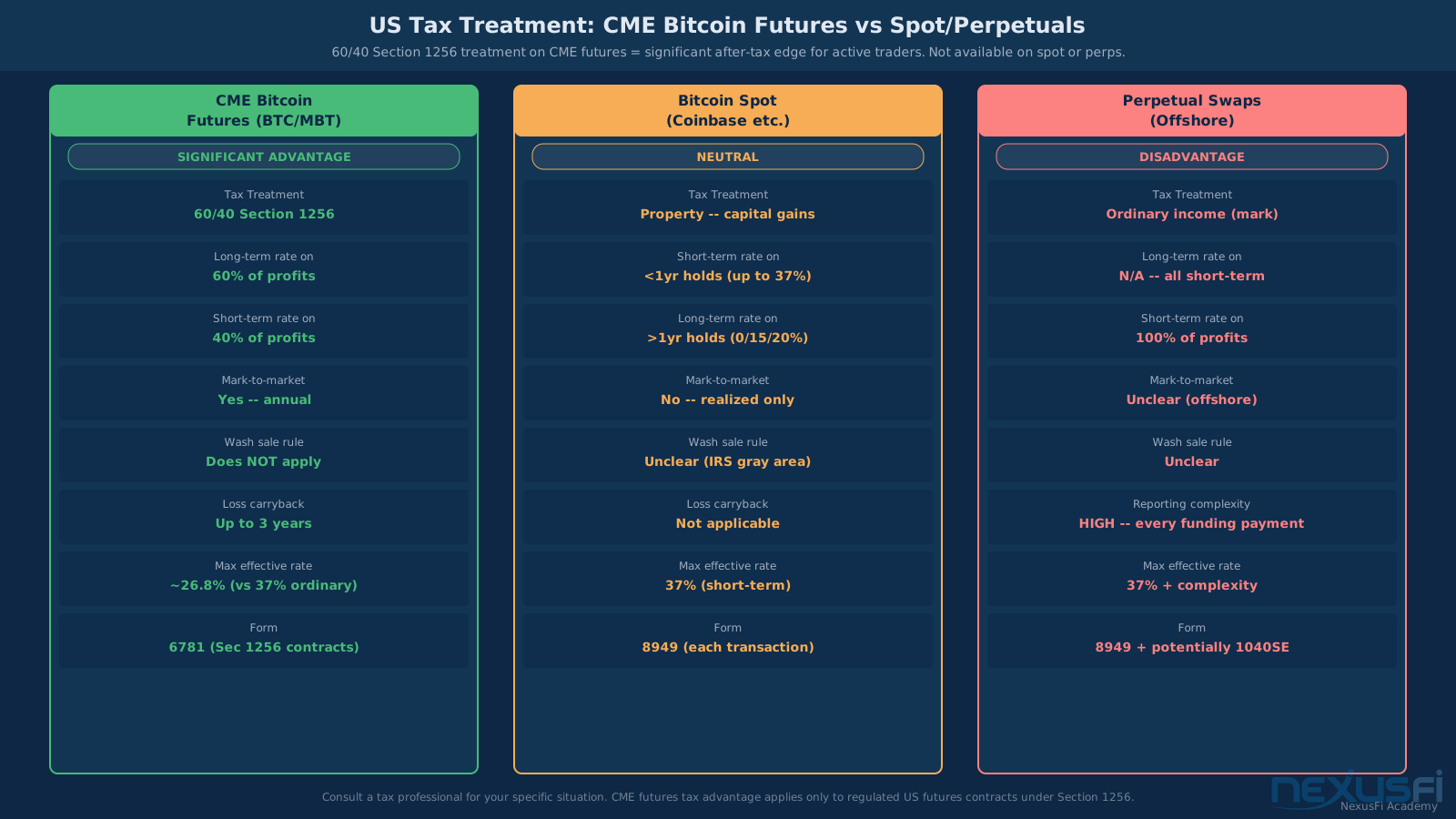
| Tax treatment (US) | 60/40 (Section 1256) | Short-term capital gains (spot/perp); CME futures get 60/40 |
The tax column matters for position management decisions. CME Bitcoin futures inherit the 60/40 tax treatment that all Section 1256 contracts receive. Spot BTC and perpetuals are taxed as short-term capital gains on every close. This affects how you think about holding periods and position rolling.
See the Bitcoin Futures (BTC) complete guide for the full CME instrument specifications, margin requirements, and micro contract sizing.
The Practical Framework for Transitioning Traders #
A lot of the risk from "I traded ES for 5 years and got crushed on my first weekend crypto position" comes from carrying over ES-calibrated intuition to a different structure without updating the parameters. The intuition isn't wrong — the parameter file is wrong.
Here's the rebuild:
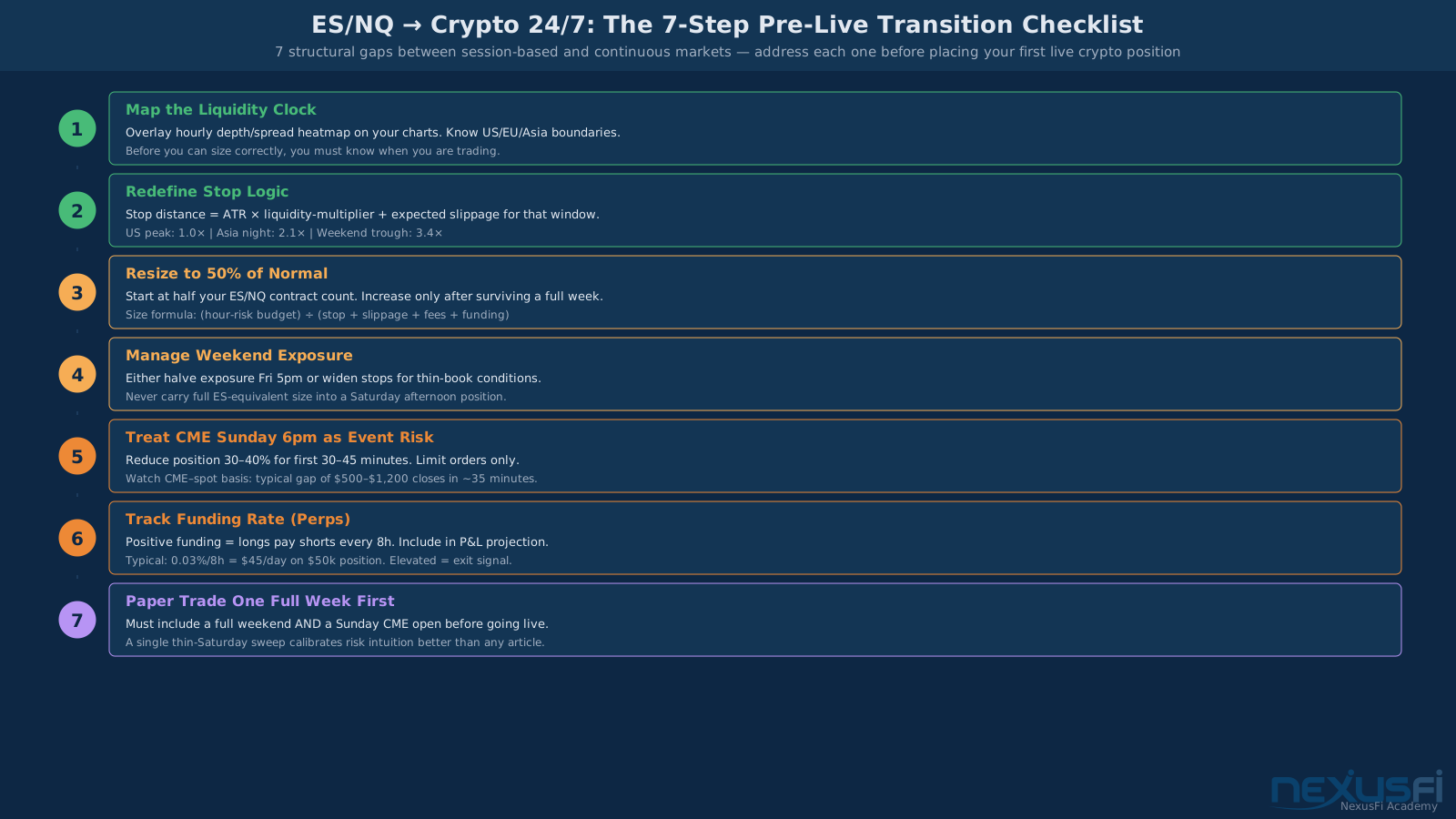
Step 1: Map the Liquidity Clock
Before trading a single position, overlay the hourly depth/spread heatmap on your charts. Add vertical lines at 3am, 9am, 5pm, and 7pm ET. These mark the four liquidity regime transitions. Know which one you're in at every point in the trading day. Know what the books look like in each window before you ever have an open position.
Step 2: Redefine Stop Logic
Your stop distance formula is: ATR × Liquidity Multiplier + Expected Slippage. US peak: 1.0x. EU open: 1.5x. Asia night: 2.1x. Weekend: 3.4x. If the math produces a stop too wide for your risk budget, don't stretch the budget — reduce the position size. This is step 2 for a reason: get stop logic right before sizing.
Step 3: Resize to 50% First
Start at 50% of your normal ES/NQ contract count and increase only after running through a full week including a weekend. The 50% isn't arbitrary — it puts you inside the math's range for most liquidity windows without needing to be precise about which one you're in. Once you've experienced the actual feel of thin-book moves, you'll size the windows more accurately.
Step 4: Manage Weekend Exposure Explicitly
Make a decision every Friday afternoon: flat, reduced, or full with wider stops? Don't let the decision happen by default. ES traders are trained to not think about weekends because there's nothing to think about — the market is closed. Crypto forces the decision. Halve your position by Friday 5pm ET or widen stops to reflect 3.4x thin-book conditions.
Step 5: CME Sunday Open (Pre-24/7 Reference)
Historical protocol for old CME structure: reduce position 30--40% first 30 minutes, limit orders only, watch basis for normalization. Not applicable to current 24/7 CME instruments.
Step 6: Track Funding Rate if Using Perpetuals
Positive funding means longs pay shorts every 8 hours. Calculate the dollar cost of holding your position for your planned holding period. Add that to your stop/target math. If funding exceeds 0.05%/8h, reassess whether the position has enough room to overcome the carry burden. Elevated funding above 0.08%/8h is also a positioning signal — the crowd is crowded long.
Step 7: Paper Trade One Full Week First
This is the one traders skip most often and regret most consistently. A paper trade week that includes a full weekend and a Sunday CME open calibrates your intuition for thin-book moves better than any article — including this one. A single Saturday afternoon sweep on a position you weren't expecting to move 6% will teach you more about weekend risk than reading about it ever could.
Quick Reference — 7 Steps Before Going Live:
- Map the Liquidity Clock (4 window boundaries: 3am, 9am, 5pm, 7pm ET)
- Redefine Stop Logic (ATR x window multiplier + expected slippage)
- Size at 50% of normal ES/NQ size until surviving a full week
- Manage weekend exposure explicitly every Friday
- Treat CME Sunday open as event risk (pre-24/7 structure)
- Track funding rate if using perpetuals — include in stop/target math
- Paper trade one full week including a Saturday and CME Sunday open
Common Mistakes from Session-Based Traders #
These are the failure modes that show up repeatedly when futures traders cross over to crypto without updating their framework:
1. Treating Saturday like an ES overnight session. ES Globex overnight is thin but not dangerous — there's still institutional flow, the market opens in a few hours, and there are no trigger events lined up. Saturday crypto is structurally different: no open time, no circuit breaker, no guaranteed liquidity improvement until Sunday Asia opens. Don't size Saturday like an ES overnight.
(Overnight Session ES Trading, 2011, 20 thanks). That slow, manageable overnight pace is nothing like Saturday crypto, where $15M sell orders cascade into 6% moves in 8 minutes with no circuit breaker.
2. Applying daily ATR stops without window adjustment. Daily ATR on BTC includes US peak hours, which are more liquid. The stop distance calibrated to daily ATR will be too tight for thin windows. The result: stop gets swept on weekend noise, market comes back, but you're already flat with a loss. Multiply by session. Not by day.
3. Ignoring funding on multi-day positions. This is invisible to ES/NQ traders because it doesn't exist in their instrument. A two-week perp position at elevated funding burns more carry than most traders budget. The psychological effect is bad too: the position has to move in your favor just to absorb the funding cost before you're in profit. Build it into the plan before entry.
4. Carrying the same size into the weekend as US peak. This is the most common single mistake. The position that's correctly sized for US peak liquidity is 3.4x too large for Saturday afternoon books. When the sweep comes, it looks like a news event or manipulation — but it's just math. Thin books, normal-sized order, large price impact.
5. Not accounting for mark price vs last price on perpetuals. Stop-market orders trigger on last price. Liquidations trigger on mark price. A wick below your stop on thin weekend books might not liquidate you (if mark price didn't follow) but will stop you out. Understand which price type controls each exit mechanism before you hold a levered position into thin hours.
Bitcoin-Specific Market Structure #
CME offers standard BTC (5-contract, ~$530K notional at $106K) and Micro BTC MBT (0.1 BTC, ~$10,600 notional), both with 60/40 tax treatment — a significant advantage over spot or perps. MBT is the right entry point for traders sizing into CME crypto for the first time. ETF flows now anchor the institutional bid: BlackRock IBIT holds over 570,000 BTC, and ETF creation/redemption events are most active during US peak hours — another reason weekend books thin out more. See Bitcoin (BTC): The Original Cryptocurrency for full instrument specs.
Signals to Monitor Across the 24/7 Cycle #
Unlike ES, where the primary real-time signals are price, volume, and order flow, crypto's continuous market gives you additional signals that have no equivalent in session-based trading:
Funding rate (perpetuals): Check every 8 hours. Above 0.05%/8h = crowds getting long, reduce or avoid adding. Above 0.10%/8h = danger zone, crowded positioning. Below -0.03%/8h = potential squeeze setup.
Open interest: Rising OI with rising price confirms directional conviction. Rising OI with falling price signals growing short exposure. Falling OI with any price direction means positions are closing — often a sign the move is exhausting.
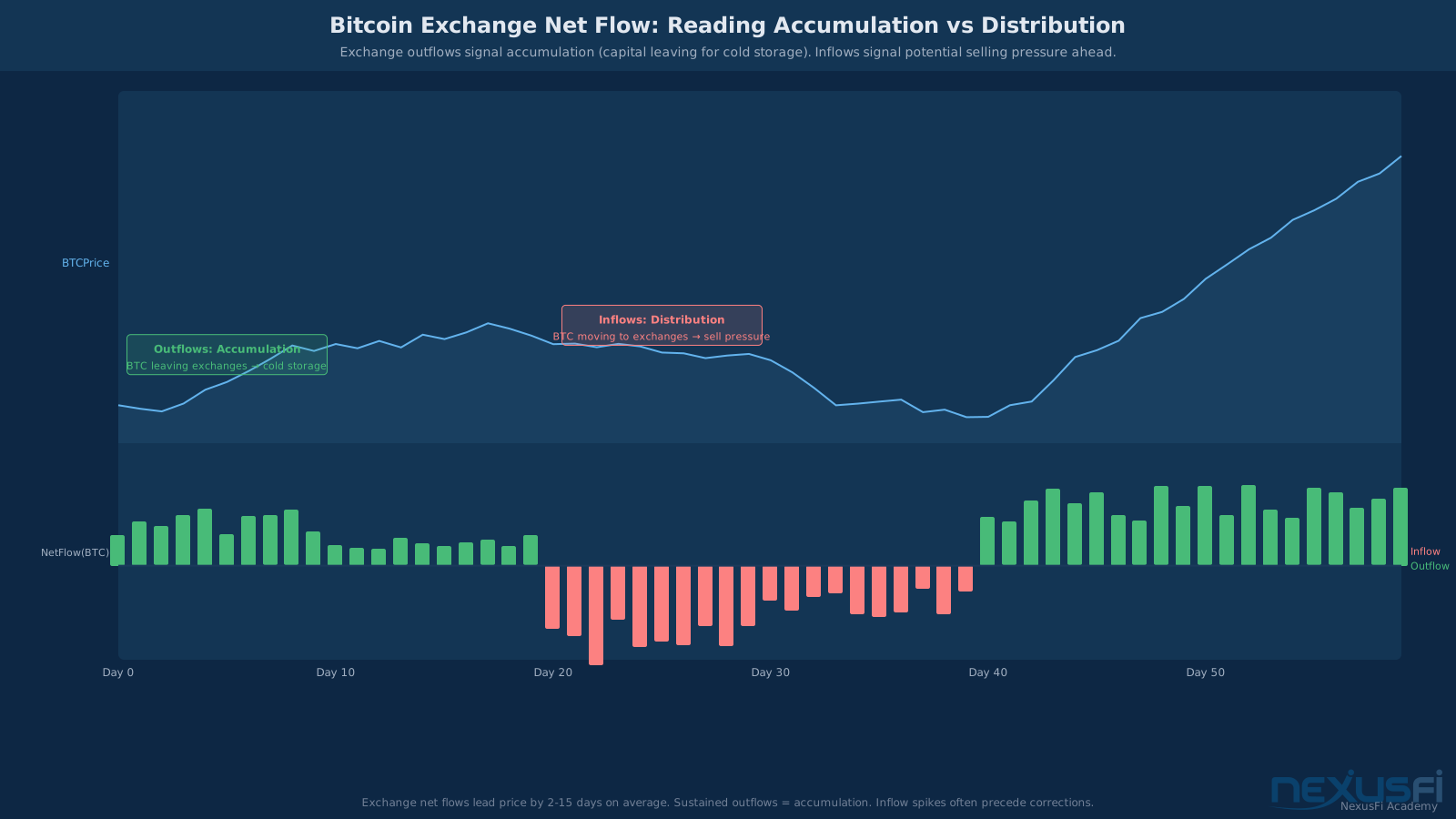
Exchange netflows: Bitcoin moving from exchange wallets to cold storage (outflows) signals accumulation. Bitcoin moving onto exchanges (inflows) signals potential selling. This data is available on CryptoQuant and Glassnode with a lag of 1--3 hours.
Mark price divergence from last price: When you see last price wick aggressively on thin books, check whether mark price followed. If mark stayed stable, the wick was thin-book manipulation — stops got swept but liquidations didn't execute at those levels.
Basis (CME vs spot): Normal contango is 2--6% annualized. Elevated basis (above 10% annualized) signals institutional demand for CME exposure — often a bullish signal. Backwardation (CME below spot) is unusual and often marks capitulation or extreme near-term bearishness.
Knowledge Map
Go Deeper
Build on this knowledgeReferences This Article
Articles that build on this topicCitations
- — Cryptocurrency Trading Platforms (2021) 👍 2“The 24x7 of crypto vs the traditional 23x5 or even 16x5 of traditional futures markets is interesting and potentially a risk management problem if your trading futures.”
- — CME announces 7x24 crypto futures trading to start in 2026 (2025) 👍 6“CME Group to Offer Around-the-Clock Trading for Cryptocurrency Futures and Options. Obviously playing catch up to the crypto exchanges.”
- — CME Group Launches 24/7 Futures Trading (2025) 👍 2“CME Group has announced the expansion of Globex trading hours to near-continuous 24/7 operation. This represents one of the most significant changes to futures market structure in decades.”
- — Overnight Session ES Trading (2011) 👍 20“The night market will move only about seven points, on average, in a 16-hour period. Compared to the day market, patience is a necessary quality for traders participating in the overnight Globex market.”
- — Can profitable active trades be made in ES after market hours? (2015) 👍 8“Asian session has terrible volumes, about 30 lots per minute. Europe session has much better volumes -- from 200 up to 800 lots per minute coming into the close.”
- — TRADING HOURS -- post trading hours and Lots of Action!! (2020) 👍 6“Volume begins to change after 2:00 AM ET as the European traders start to come in. Then there's an explosion of volume at the New York open at 9:30 ET. At around 11:00 to 11:30 ET, volume declines as the Europeans exit.”
- — Holding futures overnight (2021) 👍 2“An over-weekend hold is Sooooo much riskier than a weekday overnight hold because while the market is closed and stops cant pull you out when many world events take place.”
- — Is Bitcoin done? take a look... (2026) 👍 1“Follow the liquidity -- it tells you who is actually moving the market. CME plus ETFs run $10-15B per day while offshore derivatives dominate at $50-150B.”
- CME Group — Bitcoin Futures Contract Specifications (2026)
- Coinglass — Funding Rates and Liquidation Data for Crypto Derivatives (2026)
- Glassnode — Bitcoin On-Chain Metrics and Exchange Net Flow (2026)