



Seasonality Data for Futures Trading: Calendar Patterns, Statistical Testing, and the Discipline That Separates Edge from Illusion
Overview #
Seasonality in futures trading refers to recurring, calendar-linked patterns in price, volatility, or spread behavior that show up across multiple years. These aren't predictions — they're statistical tendencies driven by physical supply-demand cycles, institutional portfolio behavior, and market structure mechanics. When grains get planted every spring and harvested every fall, when natural gas gets burned every winter, when institutions rebalance every quarter-end — those cycles leave fingerprints in the data.
The question isn't whether seasonal patterns exist. They clearly do. The question is whether they're statistically strong enough to trade, whether they persist out of sample, and whether they survive after accounting for the costs of actually executing them.
This guide covers where seasonal data comes from, how to test it properly, and how to integrate it into a futures trading plan without falling into the traps that catch most traders who discover seasonality for the first time.
What Seasonality Actually Means in Futures Markets #
Seasonality is a recurring tendency for a futures contract's price, spread, or volatility to move in a particular direction during a specific calendar window. The key word is "tendency" — not guarantee, not prediction, not certainty.
Three categories of drivers create seasonal effects:
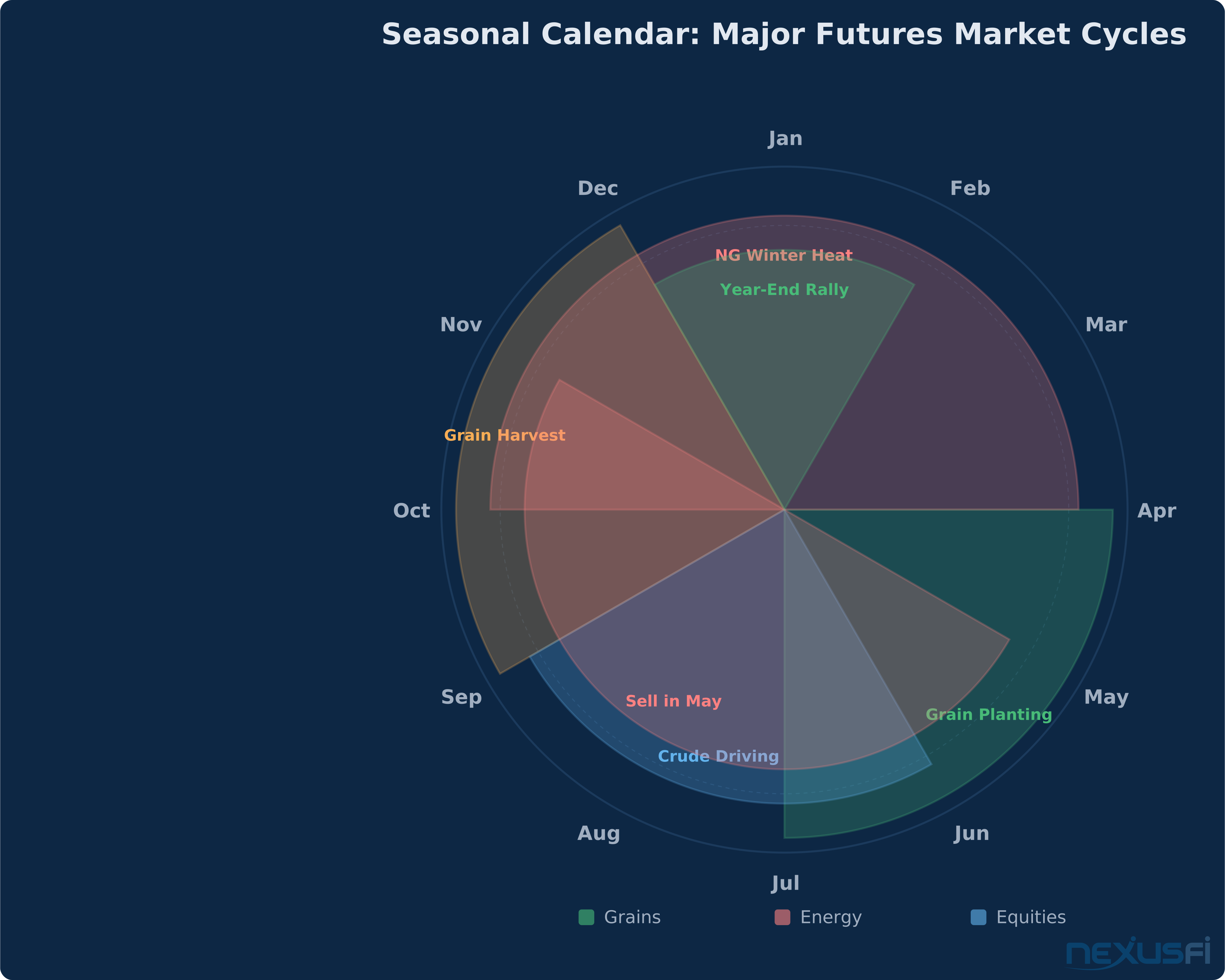
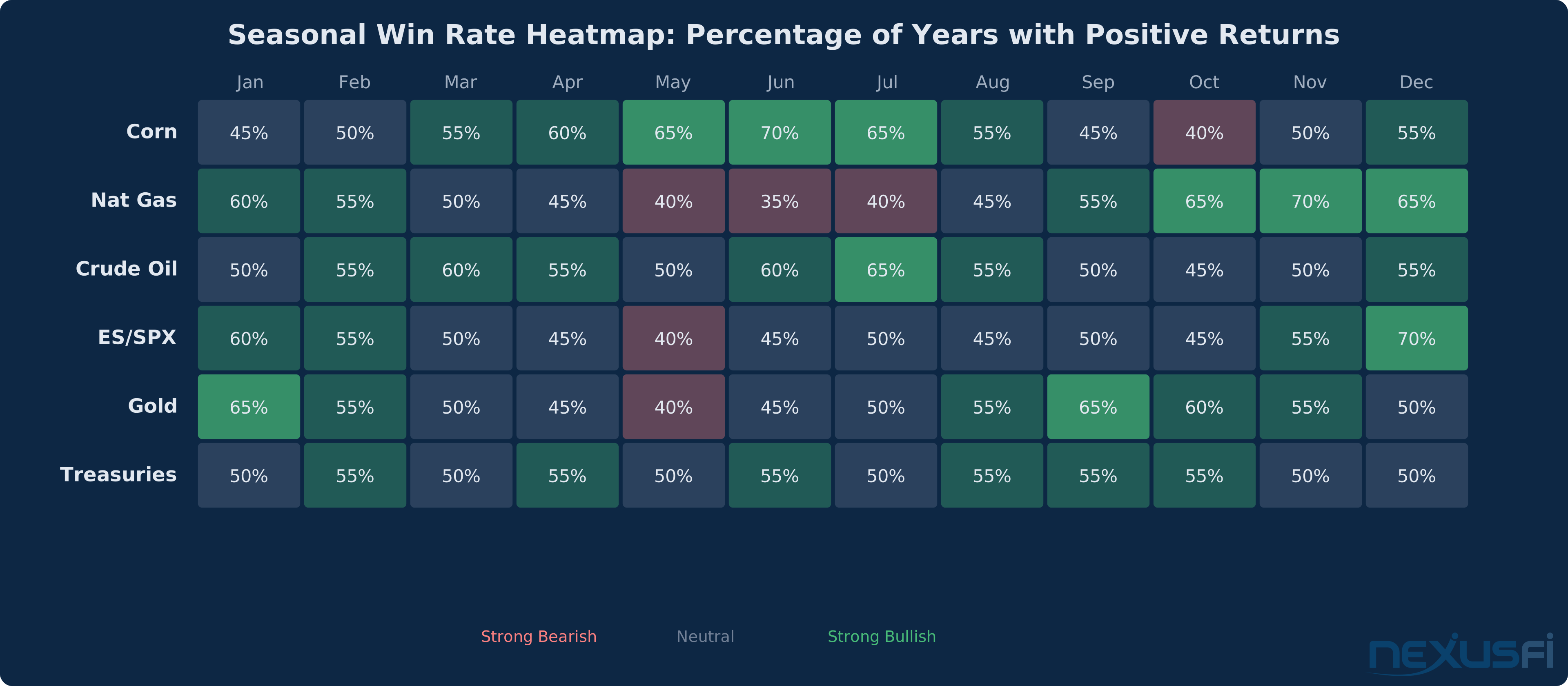
Physical cycles produce the most reliable seasonal patterns. Corn gets planted in April-May and harvested in September-October. Natural gas consumption spikes in winter. Crude oil demand rises during summer driving season. These cycles are anchored in physical reality — they don't depend on trader behavior or market sentiment.
Institutional and portfolio cycles create calendar effects in financial futures. Quarter-end rebalancing, tax-loss harvesting in December, year-end window dressing, and dividend-driven flows all create recurring patterns in equity index and treasury futures. These are behavioral rather than physical, which makes them naturally less stable.
Market structure mechanics generate subtler seasonal effects. Roll schedules create predictable liquidity shifts. Treasury auction cycles influence rates. Contract specification changes alter price dynamics at specific times. These are real but often small and difficult to trade profitably after costs.
As @ron99 noted in one of the most extensive NexusFi discussions on seasonal trading, he tracked a group of 136 seasonal patterns and found that "every year the majority follow the seasonal, but some don't." That's the honest baseline — majority compliance, not universal reliability.
Major Seasonal Patterns by Market #
Grains: The Planting-Harvest Cycle #
Agricultural futures have the most physically grounded seasonal patterns in all of futures trading. The cycle is simple: inventories draw down as the previous crop gets consumed during planting and growing season (April-August), creating supply anxiety. Once harvest arrives (September-November), supply floods the market.
Corn and soybeans tend to show weather-driven price sensitivity from planting through pollination (April-July), with the "weather premium" often peaking around June-July when crop conditions are most uncertain. Post-harvest months (November-January) frequently see price pressure as new supply enters storage.
Wheat follows a similar pattern but with regional variation. Northern Hemisphere winter wheat harvest runs June-August, while spring wheat harvests in September-October.
The critical nuance, as
Seasonal effects often show up more reliably in spreads — the price relationship between contract months — than in outright price direction. The old-crop/new-crop spread in soybeans (e.g., July vs November) captures the seasonal inventory cycle more cleanly than trying to predict whether beans will be higher or lower in absolute terms.
Energy: Temperature-Driven Demand #
Natural gas has the clearest energy seasonality. Winter heating demand (October-March) and summer cooling demand (June-August) create a pronounced two-peak demand cycle. The shoulder seasons (April-May, September) often feature lower volatility as storage builds or draws stabilize.
In crude oil, the summer driving season (June-August) represents direct demand seasonality, while the WTI-Brent spread and crack spread exhibit specification-driven seasonality tied to refinery maintenance schedules.
Heating oil follows natural gas's winter pattern more closely than crude oil does, since it's directly consumed for heating.
When fundamentals align with seasonality, the effect strengthens. When they diverge, the seasonal tendency weakens or reverses.
Equity Index Futures: Calendar Anomalies #
"Sell in May and go away" is the most widely discussed equity seasonal pattern. Historical data shows that S&P 500 returns during May-October have been weaker than November-April returns. But the magnitude has compressed over time, and in many recent years the pattern has failed outright.
The year-end rally (late November through January) has somewhat stronger statistical support, driven by tax-loss harvesting completion, window dressing by institutional managers, and seasonal optimism.
October's "crash month" reputation is statistically misleading — October actually has a positive average return over long periods. The reputation comes from a few spectacular crashes (1929, 1987, 2008) that distort perception. This illustrates a critical seasonality lesson: a handful of outlier events can create the illusion of a seasonal pattern where the average tells a different story.
Treasury Futures: Auction and Policy Cycles #
Treasury markets exhibit seasonality tied to issuance calendars. Large quarterly refunding auctions (typically in February, May, August, November) can create supply pressure ahead of the announcement and auction dates. The effect is smaller in magnitude than commodity seasonality but can be meaningful for spread traders.
Fed meeting cadence creates recurring volatility clusters rather than directional patterns. The market tends to compress before FOMC announcements and expand afterward, creating a "volatility seasonality" that option traders can exploit.
Metals: Industrial and Safe-Haven Cycles #
Copper tends to follow industrial production cycles, with strength in Q2-Q3 when manufacturing activity peaks and construction demand rises.
Gold shows a somewhat debated "January effect" and September-October strength, potentially tied to Indian wedding season demand and safe-haven positioning ahead of historically volatile autumn markets. These patterns are less physically grounded than agricultural seasonality and so less reliable.
Data Sources for Seasonal Analysis #
Not all seasonal data is created equal. The quality of your analysis depends entirely on the quality of your data source, your contract roll methodology, and how you handle the inevitable gaps and inconsistencies in historical records.
Professional Sources #
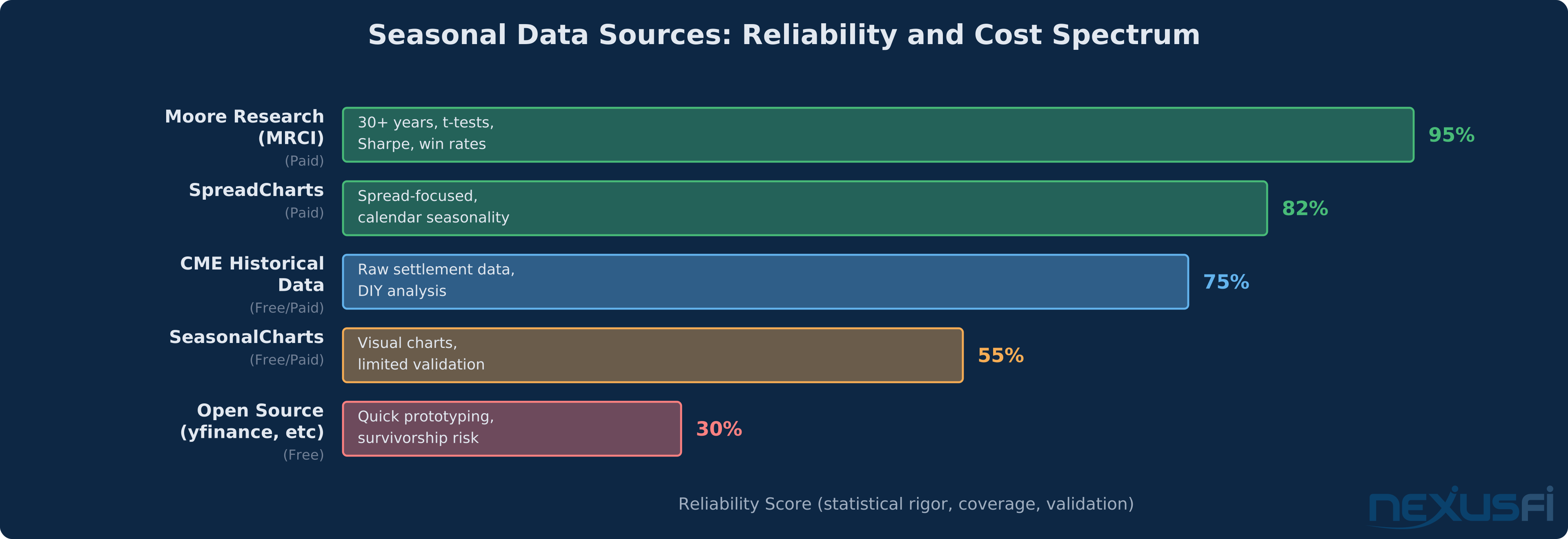
Moore Research (MRCI) remains the industry standard. Their seasonal charts include t-tests, Sharpe ratios, and win-rate statistics across 30+ years of daily futures data for over 200 contracts. The rigor matters — MRCI's work is what institutional traders reference when evaluating seasonal opportunities.
SpreadCharts focuses specifically on calendar spreads and term structure analysis, making it especially useful for traders who want to capture seasonal effects through relative-value positions rather than outright directional bets.
Self-Service Data #
CME Group provides free daily settlement data going back decades for all listed contracts. This is raw material — you'll need to compute seasonal statistics yourself, but the data quality is high because it comes directly from the exchange.
Quandl / Nasdaq Data Link offers API access for automated backtesting, including the ability to integrate macro variables and weather data alongside price series.
Free Visual Tools #
SeasonalCharts.com provides interactive seasonal charts for quick hypothesis generation. The free tier has limited out-of-sample validation, which means you're seeing the pattern but not whether it held up in recent years.
Open-source libraries (Python's yfinance, pandas) can pull recent futures data for quick prototyping, but they carry survivorship bias risk and may not handle contract rolls correctly.
The Data Quality Checklist #
Before trusting any seasonal analysis, verify:
- Contract roll methodology — Volume-based or open-interest-based rolls are generally preferred over fixed-date rolls. The choice materially affects seasonal appearance.
- Back-adjusted vs. unadjusted data — Seasonal patterns can differ much between continuous price-adjusted series and individual month contracts.
- Complete historical coverage — Ensure you have data for the entire window, including periods of low liquidity or delistings that might create survivorship bias.
- Consistent time zones — CME's 5 PM Chicago close must match your calendar mapping.
can be misleading. The lookback window matters enormously. A 30-year seasonal average may obscure the fact that the last 5 years show a completely different pattern.
Testing Seasonal Patterns: The Statistical Discipline #
This is where most retail traders go wrong. They see a seasonal chart, notice that "corn usually goes up in June," and start trading. That's not analysis — it's pattern-matching without rigor.
The Validation Protocol #
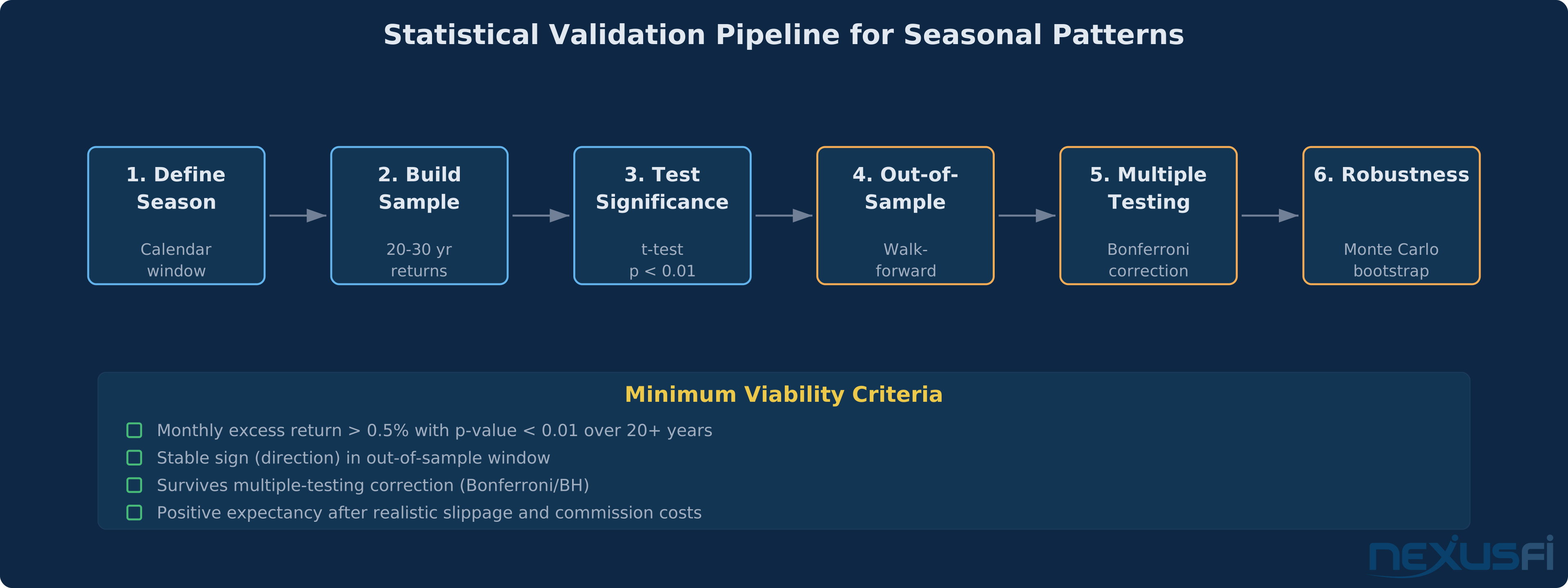
Step 1: Define the season precisely. Choose a calendar window with non-overlapping boundaries. "Spring" is not a testable season. "April 15 through June 30" is.
Step 2: Build sufficient sample. Collect yearly returns for the defined window across at least 20 years, preferably 30. With fewer than 20 observations, statistical tests lack the power to distinguish signal from noise.
Step 3: Test significance. Use a t-test (or Wilcoxon signed-rank test if returns aren't normally distributed) to determine whether the mean return is statistically different from zero. Target p-value below 0.01, not just 0.05 — futures seasonality claims need higher bars because so many traders are scanning for them.
Step 4: Validate out of sample. Split your data: in-sample (e.g., 1990-2010) for pattern discovery, out-of-sample (2010-present) for validation. If the pattern doesn't hold in the out-of-sample period, it's not tradeable regardless of how good it looked historically.
Step 5: Correct for multiple testing. If you test 12 months across 20 commodities, you've run 240 tests. By chance alone, about 12 will show "significant" results at the 5% level. Apply Bonferroni or Benjamini-Hochberg corrections to control false discovery rate.
Step 6: Check robustness. Use Monte Carlo shuffling of returns and bootstrapped confidence intervals to confirm the pattern isn't an artifact of the specific calendar alignment.
Practical Significance Matters More Than Statistical Significance #
Even a statistically significant seasonal pattern can be unprofitable after transaction costs. Calculate expected value after slippage (which can be significant in less liquid contract months) and commissions. Check whether performance is concentrated in a few outlier years — if removing two extreme years eliminates the edge, it's not strong.
A reasonable threshold: a seasonal effect yielding more than 0.5% average monthly excess return with p-value below 0.01 over 20+ years is generally considered statistically strong for futures markets.
Using Seasonality in Your Trading Plan #
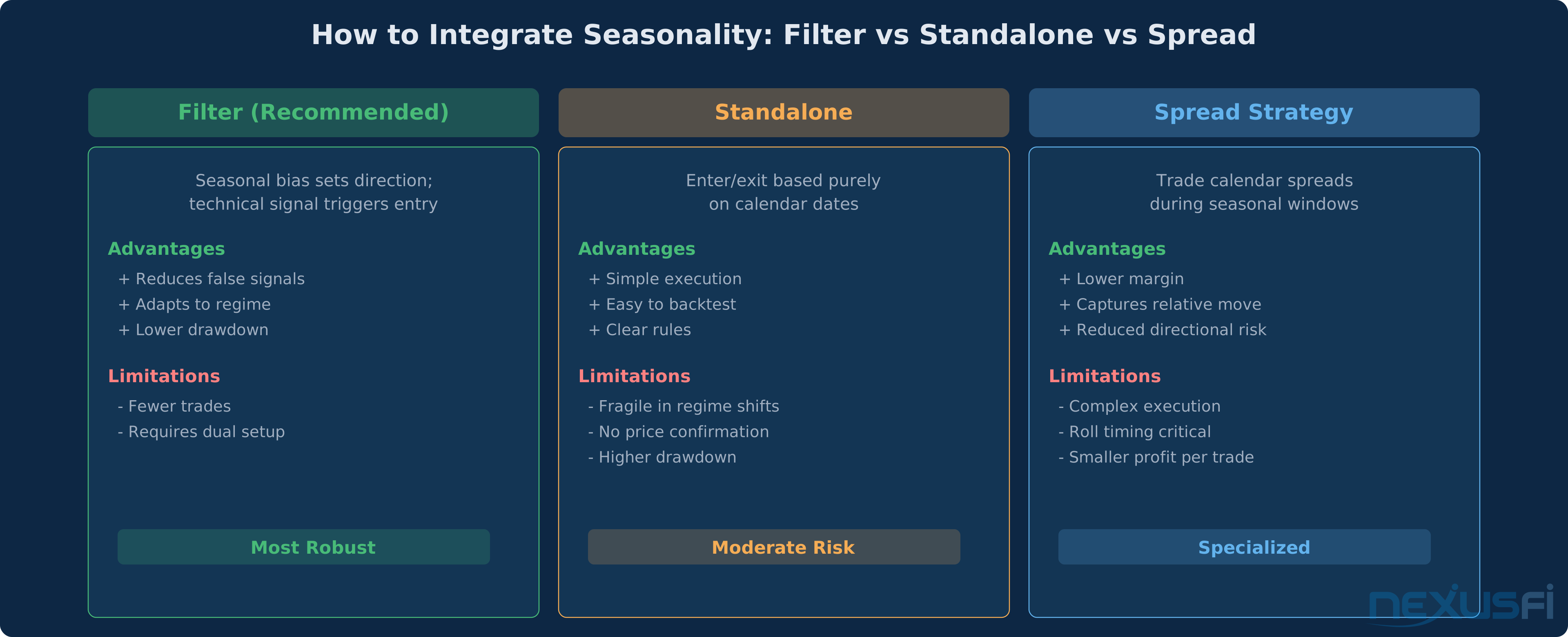
The Filter Approach (Recommended) #
Use seasonality as a directional bias overlay on your primary trading system. If your trend-following model generates a long signal in corn during the historically favorable planting window, the seasonal alignment adds confidence. If it generates a long signal during the historically weak post-harvest window, you might reduce size or skip the trade.
This is how most institutional systematic traders use seasonal data.
The cycles exist — the question is how you weight them against other signals.
Standalone Seasonal Trading #
Some traders build strategies that enter and exit purely based on calendar dates. Buy corn on April 15, sell on July 31. This approach has simplicity going for it but exposes you fully to years when the pattern breaks. Without price-action confirmation, you're trading a historical average — and averages mask enormous year-to-year variance.
Seasonal Spread Strategies #
Trading calendar spreads during seasonal windows captures the relative move between contract months rather than the outright direction. This often requires lower margin, involves less directional risk, and targets the specific term-structure effect that seasonality creates.
For example, buying the July-November soybean spread during planting season captures the old-crop premium without betting on the absolute level of soybean prices. This is arguably the most sophisticated and reliable way to trade seasonality in commodity futures.
Combining with Technical Analysis #
The strongest seasonal trades occur when calendar bias and price action align:
- Seasonal window favors long AND price is above key moving averages
- Seasonal window favors short AND a breakdown from support occurs
- Seasonal volatility expansion expected AND options implied volatility is historically low
If the seasonal says up but price says down, trust the price. Seasonality sets the context. Price action makes the decision.
When Seasonal Patterns Fail #
Understanding failure modes is as important as understanding the patterns themselves.
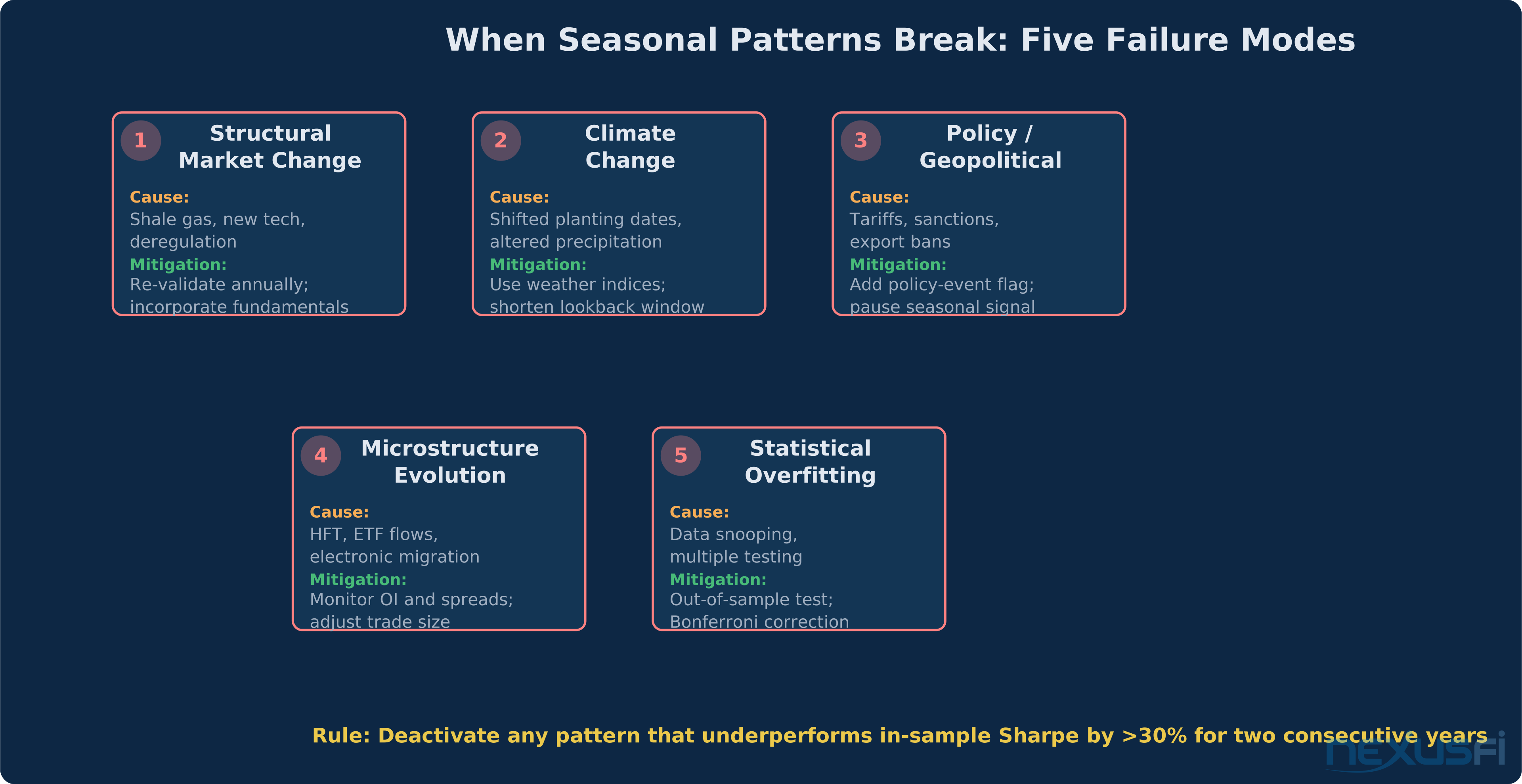
Structural Market Changes #
New production technologies can permanently alter supply dynamics. The shale revolution flattened natural gas winter pricing by creating abundant domestic supply year-round. A seasonal model trained on pre-2010 data would have failed repeatedly in the post-shale era.
Climate Change #
Agricultural seasonality assumes relatively stable planting and harvest dates. As growing seasons shift earlier, precipitation patterns change, and extreme weather events become more frequent, the 30-year seasonal average becomes less representative of current conditions. Traders using long lookback windows for grain seasonality should also monitor NOAA climate indices and USDA crop condition reports.
Policy and Geopolitical Shocks #
Tariffs, export bans, and sanctions can overwhelm seasonal patterns entirely. Russian wheat export restrictions, U.S.-China trade tensions, and OPEC production decisions create regime breaks that no amount of seasonal analysis can predict.
Market Structure Evolution #
High-frequency trading, ETF flow dominance, and the migration to electronic platforms have altered how markets absorb information and where liquidity concentrates. These changes can modify or eliminate seasonal effects that existed under older market structures.
Statistical Overfitting #
The most insidious failure: data snooping. If you test enough markets across enough calendar windows, you'll always find something that looks significant. Without proper multiple-testing corrections and out-of-sample validation, you'll trade noise and call it seasonality.
Deactivation rule: If a seasonal pattern underperforms its in-sample Sharpe ratio by more than 30% for two consecutive years, deactivate it until full re-validation confirms the edge still exists.
Platform Implementation #
NinjaTrader #
NinjaTrader's strength for seasonal analysis is its strategy automation and walk-forward testing capabilities. Build calendar-aware NinjaScript indicators that compute returns by day-of-year, then use the Strategy Builder for conditional seasonal entries (e.g., trade long only when the current month falls within the favorable window AND price exceeds its 20-day moving average).
Import MRCI or CME CSV data through the Historical Data Import wizard. Validate that your roll-adjustment method matches your research methodology. Use the Performance Analyzer's Monte Carlo simulation to stress-test seasonal strategies against random drawdown scenarios.
Sierra Chart #
Sierra Chart excels at customization and data control. Use the built-in Seasonal Trend Indicator study for visual overlays, or write custom ACSIL studies for more granular analysis. The Spread Matrix tool is especially useful for calendar spread seasonal analysis, letting you view seasonal performance across multiple contract month pairs simultaneously.
For rigorous statistical work, export continuous contract data with your chosen roll method and do the heavy computation externally in Python or R. Import the resulting seasonal rules back into Sierra as date-window filters or conditional bracket sizes.
Both Platforms #
Use back-adjusted continuous futures for clean seasonal curves. Run a gap-check script to flag missing data days. Synchronize exchange time zones with your calendar mapping. Document all roll rules and indicator parameters in a strategy log for future walk-forward analysis.
The Bottom Line #
Seasonality is a historically observable, calendar-based probability effect — not a crystal ball. The patterns are real where they're anchored in physical supply-demand cycles. They're weaker where they depend on institutional behavior or market structure conventions that can change.
The traders who profit from seasonality treat it as one input in a multi-factor framework. They test rigorously, validate out of sample, combine with price-action confirmation, and maintain the discipline to deactivate patterns that stop working.
The traders who lose money on seasonality treat it as a calendar you follow. They skip the statistics, ignore the regime changes, and wonder why "corn always goes up in June" didn't work this year.
The difference between the two groups isn't intelligence or access to data. It's discipline — the willingness to let the evidence speak louder than the chart.
Knowledge Map
Go Deeper
Build on this knowledgeReferences This Article
Articles that build on this topicCitations
- — Selling Options on Futures? (2015) 👍 4“One thing I have found with seasonals is that you need to play a lot of them throughout the year to be profitable on them.”
- — Selling Options on Futures? (2012) 👍 5“All the time. In addition to that I have made my own charts of the years since 2006 overlaid on each other. I look at the last 5 years and determine if the current markets are following the 15-year line shown on the MRCI charts.”
- — The CL Crude-analysis Thread (2015) 👍 5“The way I think about it, there's seasonality that's caused by supply/demand imbalance and then there's seasonality caused by specification/product differences.”
- — Selling Options on Futures? (2017) 👍 3“It depends on the commodity. From time to time there are severe changes in the fundamentals of each commodity, and seasonal charts going back too far are worthless.”
- — commodity spreads (2014) 👍 3“Yes there is seasonality in the bean spreads, that is an advantage over other commodity futures. However, the seasonality of the bean spreads is changing as a result of the large increase in SA production.”
- — Treydog's Algorithmitic Development Journal (2012) 👍 3“Commodity and AGs in particular have very seasonal tendencies. The fundamental planting, growing, and harvesting cycle that repeats every year inherently causes more seasonal tendencies then a lot of other instruments.”
- — Seasonal Trades (2020) 👍 8“I have Tableau charts available for HO here. https://public.tableau.com/profile/ron.h8870#!/vizhome/SeasonalFuturesHO/2_YearlyLinesAveragebyMonth You can set starting and ending dates and see how the contract preformed in your selected years.”