



Copper Futures (HG): The Complete Trading Guide to the Metal With a PhD in Economics
Overview #
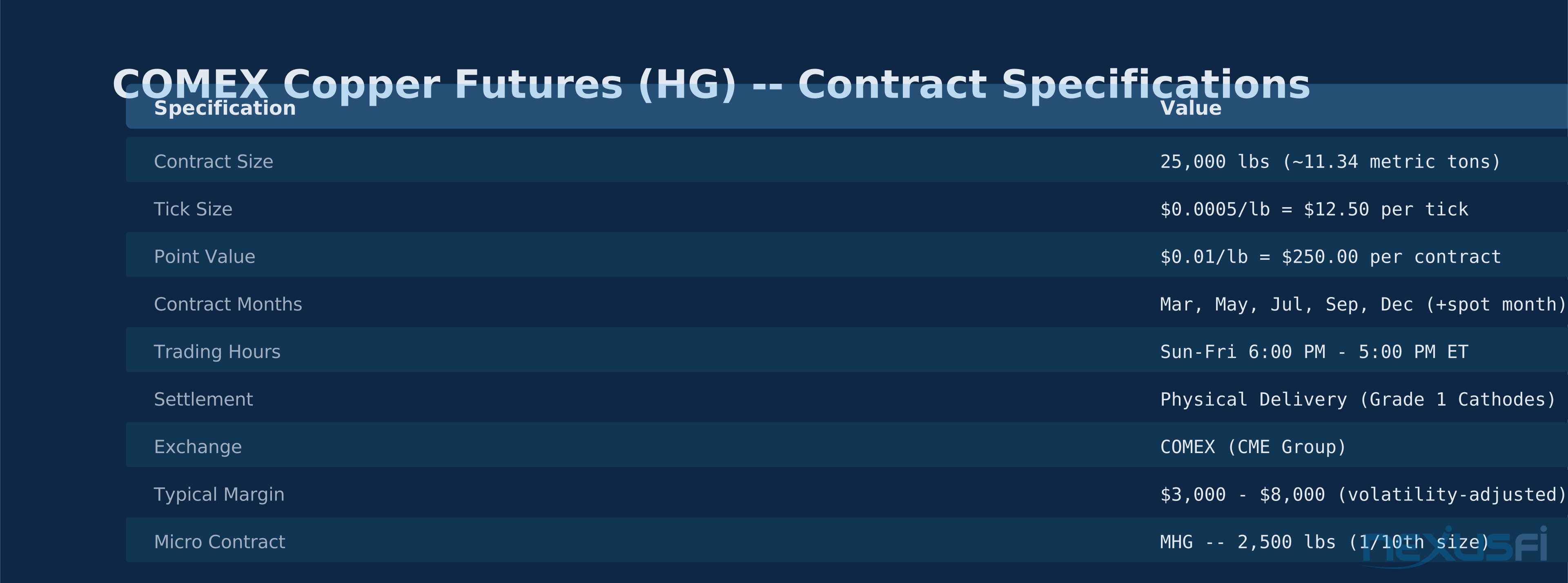
Copper futures trade under the ticker HG on COMEX, the metals division of CME Group. The contract covers 25,000 pounds of Grade 1 electrolytic copper cathodes
The market calls copper "Dr. Copper" because it has a PhD in economics. Copper goes into everything
For futures traders, HG offers a unique combination: deep liquidity in front months, strong macro sensitivity, clearly identifiable supply-demand drivers, and enough volatility to generate opportunities on multiple timeframes. The micro contract (MHG, 2,500 lbs) launched in 2022 for traders who want copper exposure without the full-size margin commitment.
Contract Specifications #
The HG contract is priced in US dollars per pound. The minimum tick is $0.0005 per pound, which translates to $12.50 per tick per contract. A full one-cent move ($0.01/lb) equals $250. These numbers matter when you're sizing positions and setting stops.
Contract months follow the quarterly cycle: March, May, July, September, December, plus the spot month and next two calendar months. In practice, most volume concentrates in the front two to three months. Liquidity drops sharply beyond six months out, so if you're trading deferred months for calendar spreads, expect wider bid-ask spreads.
Trading runs nearly 24 hours
Initial margin runs roughly $3,000 to $8,000 per contract depending on current volatility and your broker's requirements. CME adjusts margin through SPAN calculations, so these numbers move. During the 2022 nickel crisis, metals margins across the board spiked
Settlement is physical delivery of COMEX-registered copper cathodes meeting ASTM B115 standards. Most traders roll positions before first notice day and never touch physical metal, but the delivery mechanism anchors the futures price to reality. If COMEX warehouse stocks drop sharply, the front month can go into backwardation quickly because someone might actually demand delivery.
Who Trades Copper Futures #
The copper market attracts a broader participant base than most traders realize.
Industrial hedgers make up roughly 30-40% of open interest. Mining companies in Chile, Peru, and the Democratic Republic of Congo sell forward production. Wire manufacturers and construction firms buy forward to lock in input costs. These participants create the structural flows that define copper's term structure.
Commodity Trading Advisors (CTAs) and systematic funds account for 20-30% of volume. Trend-following systems love copper because it trends well on macro shifts. When China stimulus kicks in or global PMIs turn, copper doesn't just move
Speculative traders
Arbitrageurs play the LME-COMEX spread, calendar spreads, and cross-commodity relationships. They're the market's price-alignment mechanism. When LME and COMEX prices diverge beyond transportation and currency costs, arb desks step in.
As SMCJB noted on NexusFi when CME launched Micro Copper futures in 2022, the micro contracts are "a new, cost-effective way to access the Copper futures market"
Dr. Copper: The Economic Indicator That Trades #
Copper earned its PhD because demand comes from virtually every sector of industrial activity. Construction uses it for electrical wiring and plumbing. Manufacturing puts it in electronics, machinery, and consumer durables. The energy transition is adding massive new demand through EVs (80+ pounds of copper per vehicle), renewable energy infrastructure, and grid buildout.
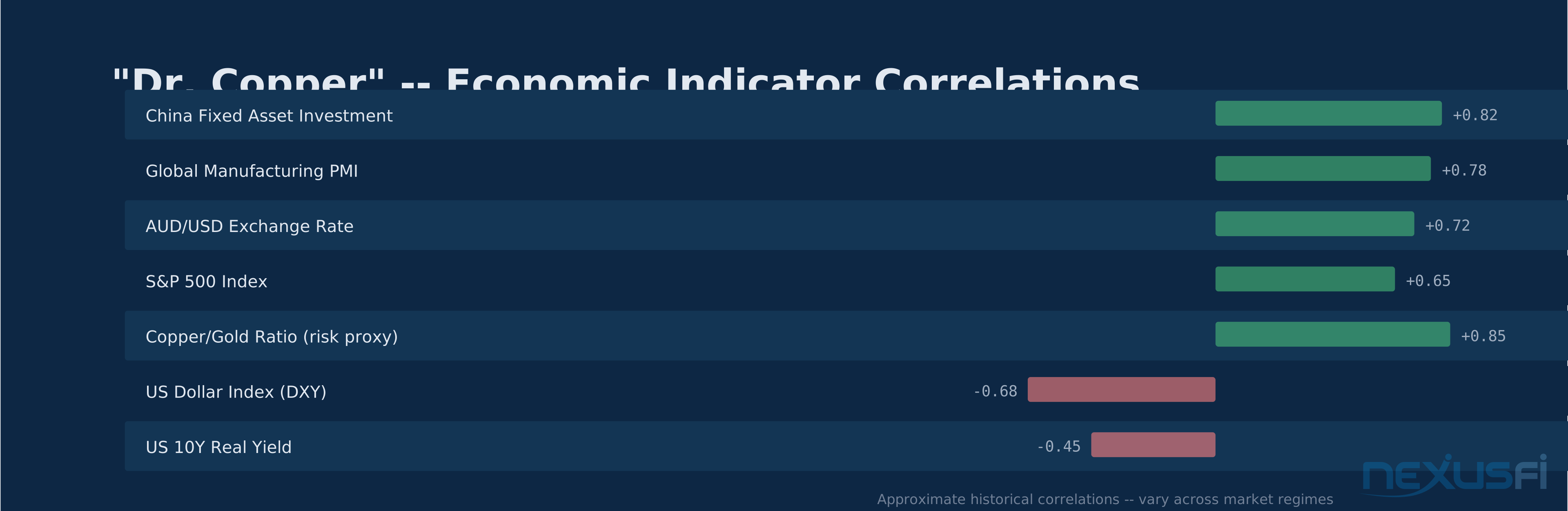
China consumes roughly 50% of global copper production. That single fact dominates everything about copper trading. When Chinese manufacturing PMI rises, copper rises. When China's property sector slumps, copper feels it. The correlation between Chinese fixed asset investment and copper prices runs around 0.80+ over meaningful timeframes.
Beyond China, copper correlates with:
- Global manufacturing PMIs (~0.78)
- AUD/USD (~0.72)
- S&P 500 (~0.65)
- US Dollar Index (~-0.68 inverse)
- Copper/Gold ratio
Here's what makes copper's indicator value actionable for traders: it's not just retrospective. Copper inventory drawdowns often precede manufacturing data improvements by 4-8 weeks because physical buyers start accumulating before the economic data confirms expansion.
The "Dr. Copper" signal works best as a medium-term gauge. Day-to-day, supply shocks (a mine strike in Escondida, a port closure in Peru) can dominate. But over weeks and months, copper's price reflects where the global industrial cycle is heading.
A NexusFi community member summarized it well: "Copper is called 'Dr Copper' for a good reason... it correlates with industrial activity and expansion of the infrastructure" [2].
Price Drivers: What Moves Copper #
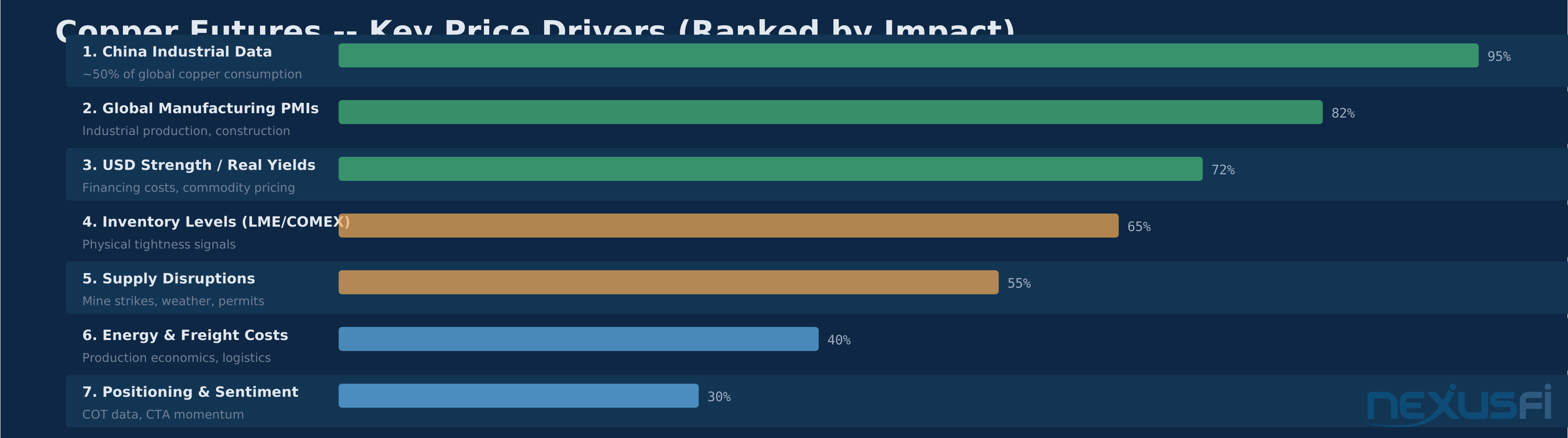
Understanding copper's price drivers isn't optional
1. China Industrial Data #
Nothing moves copper more than Chinese economic data. Manufacturing PMI, fixed asset investment, property starts, power consumption, and the yuan exchange rate all feed into copper demand expectations. When China announced infrastructure stimulus packages in 2022-2023, copper rallied before western economic data showed any improvement. The signal was clear to anyone watching.
The data calendar: China PMI releases on the last day of each month (official) and first business day (Caixin). Both are tradeable events.
2. Global Manufacturing Momentum #
Beyond China, developed-market manufacturing PMIs from Europe, Japan, and the US create a global picture. When global PMI breadth expands (more countries above 50 than below), copper catches a bid. When PMI breadth contracts, copper sells off.
3. USD and Real Yields #
Copper is priced in dollars, so a stronger dollar makes it more expensive for non-US buyers. Beyond the mechanical FX effect, the dollar and real yields reflect risk appetite and financing conditions. When real yields rise, commodity financing costs increase and risk appetite falls
4. Inventory Levels #
This is the physical market's thermometer. COMEX publishes daily warehouse stock reports. LME publishes warehouse inventories with delivery in/out data. When inventories draw down, the physical market is tightening. When they build, surplus is accumulating.
The subtlety: location matters. Copper sitting in a Shanghai bonded warehouse doesn't affect COMEX deliverability. Inventory at one exchange can rise while the other falls, creating basis divergence and spread trading opportunities.
5. Supply Disruptions #
Chile produces roughly 25% of global mine output. Peru produces another 10%. A strike at BHP's Escondida mine (the world's largest copper mine), a weather event in the Atacama Desert, or political instability in Peru can yank supply offline fast.
Smelter constraints matter too. Converting copper concentrate into refined cathode requires specialized infrastructure. Bottlenecks in smelting capacity (measured by treatment and refining charges, or TC/RC) can tighten refined supply even when mine output is stable.
6. Energy and Freight Costs #
Mining and smelting copper is energy-intensive. Diesel prices, electricity costs in Chile and China, and global freight rates all feed into production economics. These don't drive daily moves, but they set the cost floor that supports prices during downturns.
7. Positioning and Sentiment #
The CFTC's Commitment of Traders report shows managed money (hedge funds, CTAs) positioning. Extreme net-long or net-short positions can signal crowded trades vulnerable to reversal. CTA trend-following systems have historically amplified copper moves in both directions.
Seasonal Patterns #

Copper shows seasonal tendencies tied to industrial cycles, but they're weaker than agricultural seasonals and must be validated against current macro conditions before trading.
Q1 (January-March): Tends toward weakness. Chinese New Year shuts down manufacturing for weeks. Northern Hemisphere construction slows in winter. Inventories often build during this period.
Q2-Q3 (April-September): The historically strongest period. Northern Hemisphere construction season drives physical demand. Chinese industrial activity ramps up post-holiday. This is when inventory draws tend to accelerate.
Q4 (October-December): Mixed. Year-end position squaring by funds can create volatility. Holiday construction slowdown begins, but anticipatory buying for spring projects sometimes supports prices.
The critical caveat: structural shifts
Supply and Demand Dynamics #
The Supply Side #
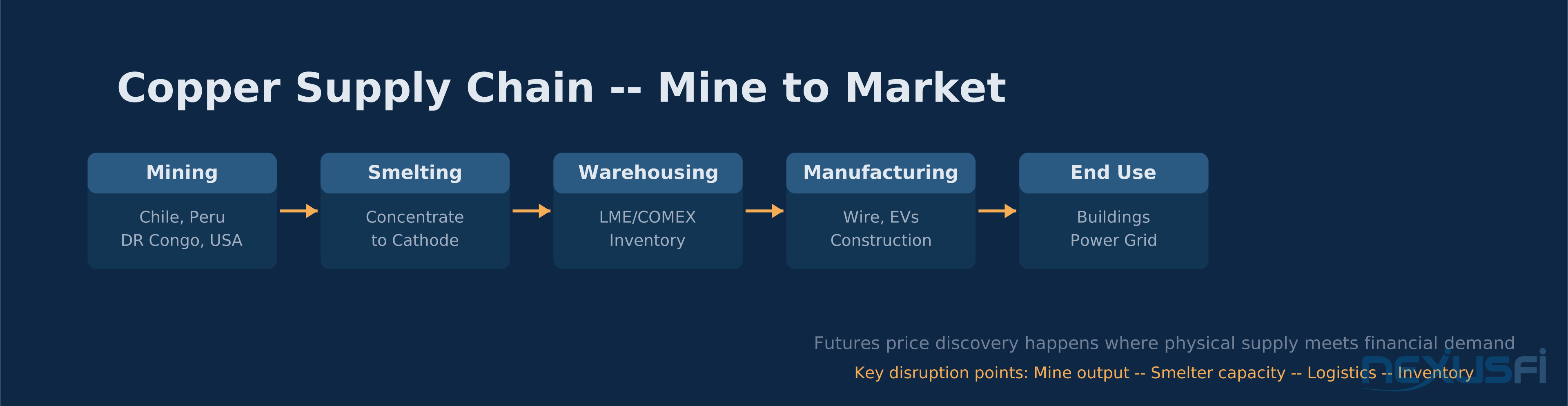
Global copper mine production runs approximately 22 million metric tons annually. The supply is geographically concentrated:
- Chile: ~25% of global output (Escondida, Collahuasi, El Teniente)
- Peru: ~10% (Cerro Verde, Antamina, Las Bambas)
- Democratic Republic of Congo: ~8% (Kamoa-Kakula, rapidly growing)
- China: ~8% (mostly domestic consumption)
- United States, Australia, Zambia: ~5% each
This concentration means supply shocks are real and frequent. Political instability, labor disputes, water shortages (critical in the Atacama Desert), and community conflicts can take significant production offline.
The supply pipeline has a unique challenge: it takes 10-15 years from discovery to production for a new copper mine. This long lead time means supply can't respond quickly to demand surges. When the market tightens, it stays tight until either demand falls or new capacity
The Demand Side #
Copper demand breaks down roughly as:
- Construction: ~25% (wiring, plumbing, HVAC systems)
- Electrical/electronics: ~25% (motors, transformers, circuit boards)
- Transportation: ~13% (vehicles, ships, aircraft
- Industrial machinery: ~12%
- Consumer products: ~10%
- Other: ~15% (including military, telecommunications)
The electrification theme is adding structural demand. A single EV contains 2-4 times more copper than an internal combustion vehicle. Renewable energy installations (wind turbines, solar farms, grid infrastructure) are copper-intensive. Some analysts project copper demand from electrification alone will add 4-6 million metric tons by 2030.
Backwardation and Contango #
The copper forward curve tells you about physical market conditions:
Backwardation (front month trading above deferred months): Physical market is tight. Inventories are drawing down. Buyers are willing to pay a premium for immediate delivery. This is bullish and often signals sustained upside.
Contango (front month trading below deferred months): Physical market is well-supplied. Inventories are building or stable. Carrying costs (storage, insurance, financing) are reflected in the premium of deferred months. This is neutral to bearish.
Calendar spread traders live in this space. If you expect physical tightening ahead (Chinese stimulus, supply disruption), buying the front-deferred spread captures the move without directional risk from broader macro shifts.
LME vs. COMEX: Two Benchmarks, One Metal #
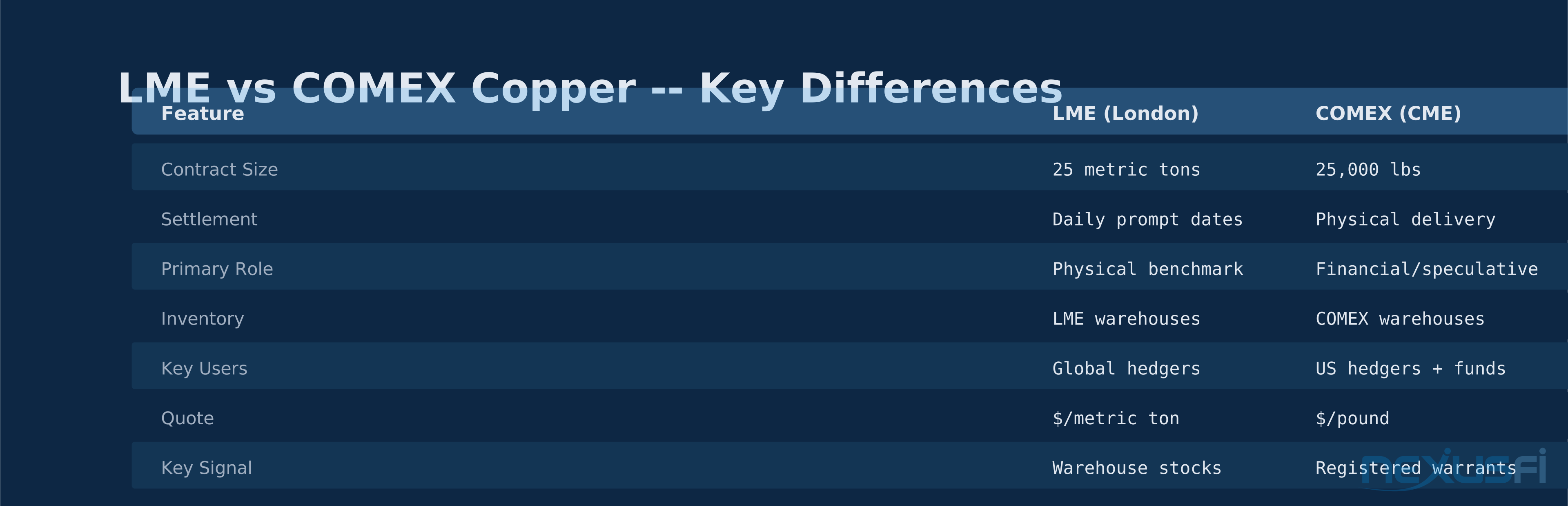
The London Metal Exchange and COMEX are the world's two primary copper benchmarks, but they're different instruments serving different purposes.
LME copper trades in metric tons (25-ton lot), quoted in dollars per ton, with daily prompt dates for settlement. It's historically the global physical benchmark
COMEX copper (HG) trades in pounds (25,000-lb lot), with standard monthly expirations and physical delivery via registered warehouse warrants. COMEX attracts more financial participants
The LME-COMEX Spread #
The two prices track each other closely but diverge regularly. The spread is driven by:
- Currency: LME quotes in USD/ton, COMEX in USD/lb
- Transport and logistics: Moving physical copper between LME and COMEX delivery points costs money
- Inventory location: Copper in a Rotterdam LME warehouse doesn't satisfy COMEX delivery in St. Louis
- Regulatory differences: LME and COMEX have different position limits, delivery rules, and margin structures
When the spread widens beyond fair value (adjusted for conversion, transport, and financing), arbitrage desks trade it back. For most traders, this isn't a primary strategy, but monitoring the LME-COMEX relationship adds context to directional trades. If COMEX is rallying but LME isn't confirming, the move may be financially driven rather than physically confirmed.
Trading Strategies for Copper #
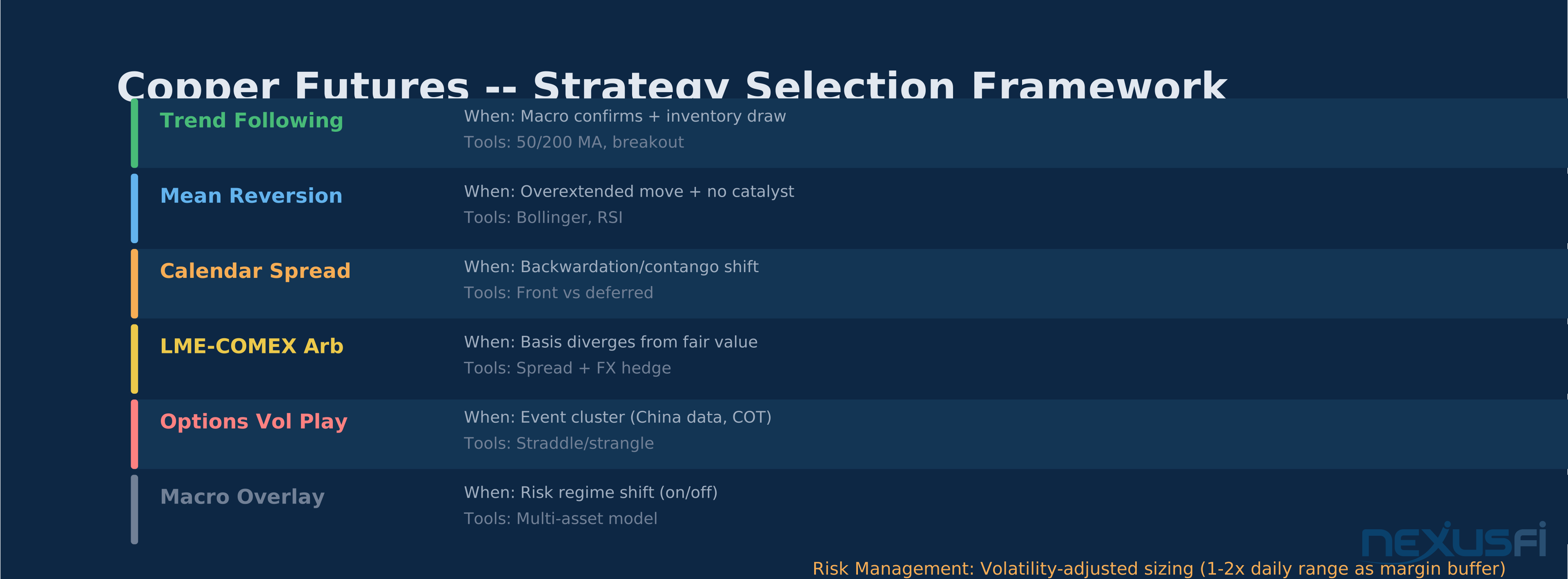
Trend Following #
Copper trends well on macro shifts. When China announces stimulus or global PMIs inflect, the resulting copper trend can last weeks to months. The classic approach: wait for a 50-day moving average cross above the 200-day on confirmed macro improvement, enter long with a stop below the recent swing low, and trail using the 50-day MA or a volatility-adjusted stop (2x ATR).
The risk: copper can mean-revert sharply when news exhaustion hits. Trend followers need wider stops than you'd use on equity index futures. A 3% stop on a $4.50 copper price is about $0.135/lb, or $3,375 per contract. Size so.
Calendar Spreads #
Calendar spreads let you trade the term structure without taking directional risk on the outright price. When you expect physical tightening (inventory drawdown, supply disruption), buy the front month and sell a deferred month
The advantage: calendar spreads have lower margin requirements than outright positions and lower correlation to broad market moves. The disadvantage: they can be illiquid in back months, and roll timing matters.
Mean Reversion #
After rapid moves driven by positioning or sentiment (not fundamentals), copper can snap back. Look for RSI readings above 80 or below 20 combined with no fundamental trigger for the move. Bollinger Band extremes work as visual filters. The key: verify that the move was positioning-driven, not fundamental. If a mine just collapsed and copper spiked, that's not a mean-reversion setup.
Macro Overlay #
Trade copper as part of a multi-asset macro framework. When your model says risk-on (equities rising, dollar falling, credit spreads tightening), copper gets a long bias. When risk-off (equities falling, dollar rising, credit spreads widening), copper gets a short bias or flat. Layer copper-specific drivers (China data, inventory, supply news) on top of the macro regime.
Options Strategies #
Copper volatility clusters around macro data releases (China PMI, Fed decisions, OPEC meetings that affect energy costs). If implied vol is rich heading into an event, selling strangles or iron condors can capture premium. If implied vol is cheap and you expect a move, buying straddles gives you convexity. The options market in HG isn't as liquid as ES or CL options, so watch bid-ask spreads.
The Micro Copper Contract (MHG) #
CME launched Micro Copper futures (MHG) in May 2022. At 2,500 pounds (1/10th of HG), it lowers the barrier to entry for retail traders. A full one-cent move is $25 instead of $250.
The micro contract is a legitimate entry point. Margin requirements are proportionally lower, and you can scale positions precisely. The community response on NexusFi was positive
Two caveats on MHG: liquidity is thinner than the full-size HG, which means wider spreads during off-peak hours. And commission costs per unit of exposure are higher
Risk Management for Copper #
Copper's average daily range runs 1.5-3.0% of price, depending on the volatility regime. At $4.50/lb, that's $0.07-$0.14 per pound, or $1,750-$3,500 per full-size contract per day. This is volatile. You need to size positions for the volatility, not just the margin minimum.
Position sizing: Don't risk more than 1-2% of account equity on a single copper trade. With a 3% stop ($3,375 per contract at $4.50), a $100,000 account can handle one to two contracts with responsible risk.
Correlation risk: Copper correlates with other risk assets. If you're also long S&P 500 futures and short the dollar, a risk-off event hits all three positions simultaneously. Account for portfolio correlation before sizing copper.
Event risk: China data releases, FOMC decisions, inventory reports, and supply disruption headlines can gap copper. Holding positions through these events requires wider stops or reduced size. The worst-case scenario isn't a gradual stop-out
Maintenance window: COMEX first notice day for delivery comes in the month prior to the contract month. If you don't want 25,000 pounds of copper cathode showing up, roll before first notice day. Calendar: check CME's delivery calendar for exact dates
What to Monitor: Your Copper Dashboard #
A complete copper trading setup monitors these data streams:
- China PMI (monthly): Official PMI (last day of month) and Caixin PMI (first business day). Both move copper.
- COMEX inventory (daily): Exchange warehouse stocks. Watch the trend, not the absolute level.
- LME inventory (daily): Complementary to COMEX. Divergence between the two is a signal.
- US Dollar Index (continuous): Inverse correlator. Dollar strength = copper headwind.
- COT Report (weekly, Friday release): Managed money positioning. Extreme readings flag crowding.
- Chilean/Peruvian news (continuous): Mining labor disputes, political developments, weather.
- Term structure (continuous): Contango vs. backwardation signals physical market conditions.
- Copper/Gold ratio (continuous): Quick-read risk appetite gauge.
Getting Started with Copper Futures #
If you're new to copper, start with the micro contract (MHG). Get familiar with how copper responds to China data releases, dollar moves, and inventory reports before committing full-size capital. Run MHG through a month of Chinese PMI releases and see how the market reacts
For experienced commodity traders adding copper to their book: the edge in copper comes from understanding the physical market. Traders who track warehouse stocks, smelter TC/RC trends, and Chinese import data have an information advantage over purely technical traders. The physical-financial nexus is where the real money in copper lives.
The UC Trading thread on NexusFi provides a good example of analytical approaches using market profile and TPO charts applied to HG, showing how structural analysis tools translate directly to the copper market [4].
Knowledge Map
Prerequisites
Understand these firstGo Deeper
Build on this knowledgeReferences This Article
Articles that build on this topicCitations
- — Another new Micro MICRO COPPER coming May'22 (2022) 👍 8“Launching May 2*, Micro Copper futures (Globex code: MHG) will offer a new, cost-effective way to access the Copper futures market.”
- — What correlates with cooper? (2019)“What thing(s) correlate with copper or inversely correlate with copper?”
- — Making a Living with the Micros (2021) 👍 47“Making a Living with the Micros I am back! After being away for a bit, I am back on Futures.io after further refining my trading through some formal education and, of course, the ongoing school of hard knocks. LOL.”
- — Copper (HG) Analysis Thread (2020) 👍 1“Hi everybody, In those volatile times some might look for a more "stable" instrument compared to crude oil or gold with their currently thin order books.”