



Futures Contract Rollover and Expiration: Timing the Switch Without Getting Caught
Overview #
Every futures contract has a death date. You can fight it, ignore it, or pretend it doesn't apply to you — but on Last Trading Day, your position either gets closed by choice or by force. Rolling a futures contract is the act of closing your expiring position and reopening the same exposure in the next active contract. Do it right and it costs you a tick or two. Miss it on the wrong contract and you get assigned delivery of 1,000 barrels of crude oil to Cushing, Oklahoma.
This isn't a theoretical concern. Physical delivery is a real event that happens to real traders every quarter. The NexusFi community has documented dozens of close calls, including one legendary September 2008 crude oil front month that spiked 16% in a single session when trapped shorts couldn't escape the delivery mechanism.
Rollover is one of the most operational aspects of futures trading — the mechanics that separate futures from equities and ETFs. Get it right and it's a 60-second routine you do without thinking. Get it wrong and you're explaining to your broker why you own an oil pipeline obligation in Oklahoma.
This article covers the complete rollover playbook: what contracts require what kind of attention, the volume crossover signal that tells you exactly when to roll, how to calculate roll cost, and the execution mechanics for each major product.
The Contract Lifecycle: From Listing to Expiration #
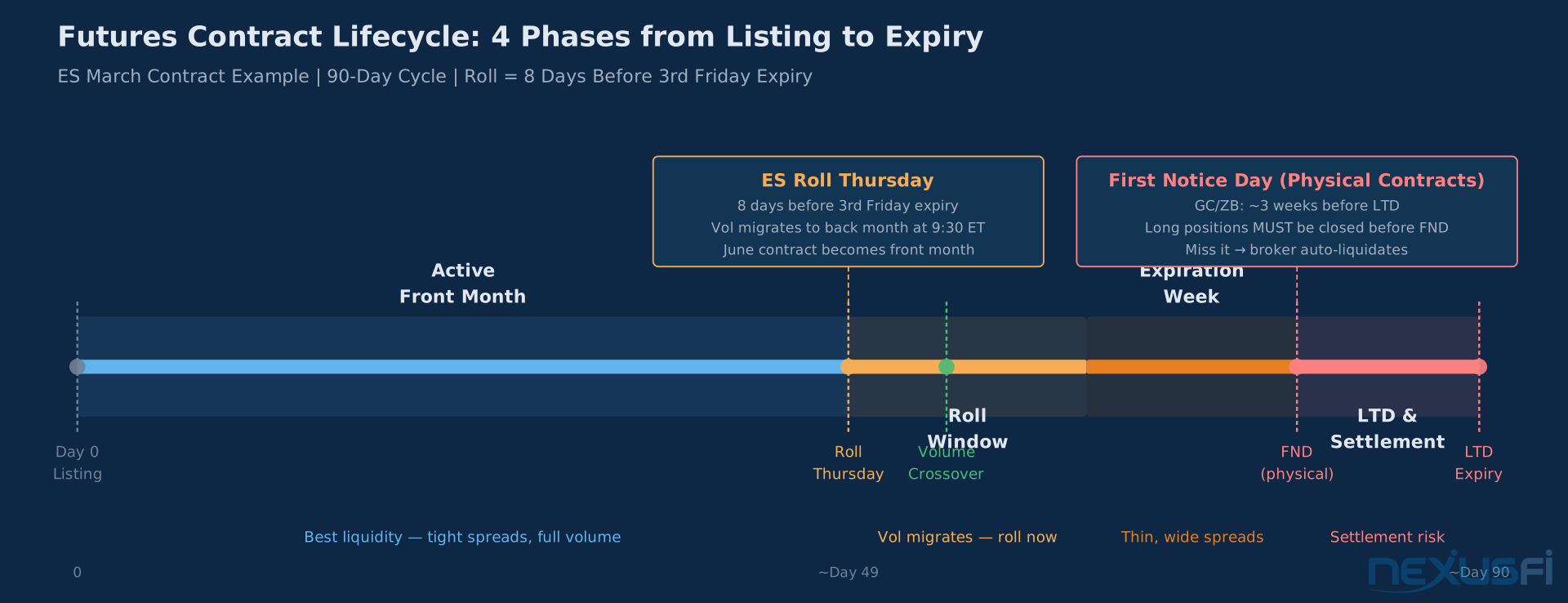
A futures contract isn't a perpetual instrument. The CME lists contracts months or years in advance, each with a fixed lifespan. When you buy ES March, you own a contract that expires on a specific Friday in March. The contract moves through several phases before it dies.
Phase 1: Active Front Month The contract with the most volume and open interest is the front month. This is where liquidity lives, where bid-ask spreads are tightest, and where professional traders operate. For equity index futures (ES, NQ, YM, RTY), there are contracts listed for each quarter — March, June, September, December. For energy (CL, NG), there's a contract for every calendar month. For metals (GC, SI), the active months are February, April, June, August, October, December.
Phase 2: The Roll Window About one to two weeks before expiration, volume starts migrating from the front month to the next contract. This is the roll window — the period when the market collectively shifts its position forward. The exact timing depends on the product. ES rolls on a Thursday, typically eight days before expiration. CL starts migrating three to four business days before Last Trading Day.
Phase 3: Expiration Week By expiration week, the old contract is thin and volatile. Liquidity has moved to the new front month. If you're still in the old contract, spreads are wide, market impact is high, and for physically delivered contracts, the delivery mechanism is becoming active.
Phase 4: Last Trading Day and Settlement Cash-settled contracts like ES and NQ resolve to a cash price on Last Trading Day — no further action required by you. Physically delivered contracts like CL and GC stop trading with delivery obligations intact. Anyone still long a CL contract on Last Trading Day has agreed to accept delivery of 1,000 barrels of crude oil at Cushing, Oklahoma. Your broker will not let this happen, but they'll close your position at whatever price is available when they notice.
The futures market has two completely different expiration regimes. Cash-settled contracts (index, currency) are forgiving — you can hold through expiration and get a cash settlement. Physically delivered contracts (crude oil, gold, agricultural products) can result in actual commodity delivery. Know which regime your contract is in before you trade it.
Key Terminology: The Definitions That Prevent Expensive Surprises #
Before diving into the mechanics, get these terms embedded. Confusing FND with LTD has cost traders real money.
Front Month (Lead Contract): The active contract with the highest volume and open interest. This is the one your charting platform shows as "@ES#" — the continuous symbol automatically points to whichever contract is current. When the roll happens, the @ symbol automatically switches.
Back Month: The next contract in sequence. When you're trading ES March, the June contract is the back month. After the roll, June becomes front month, September becomes back month.
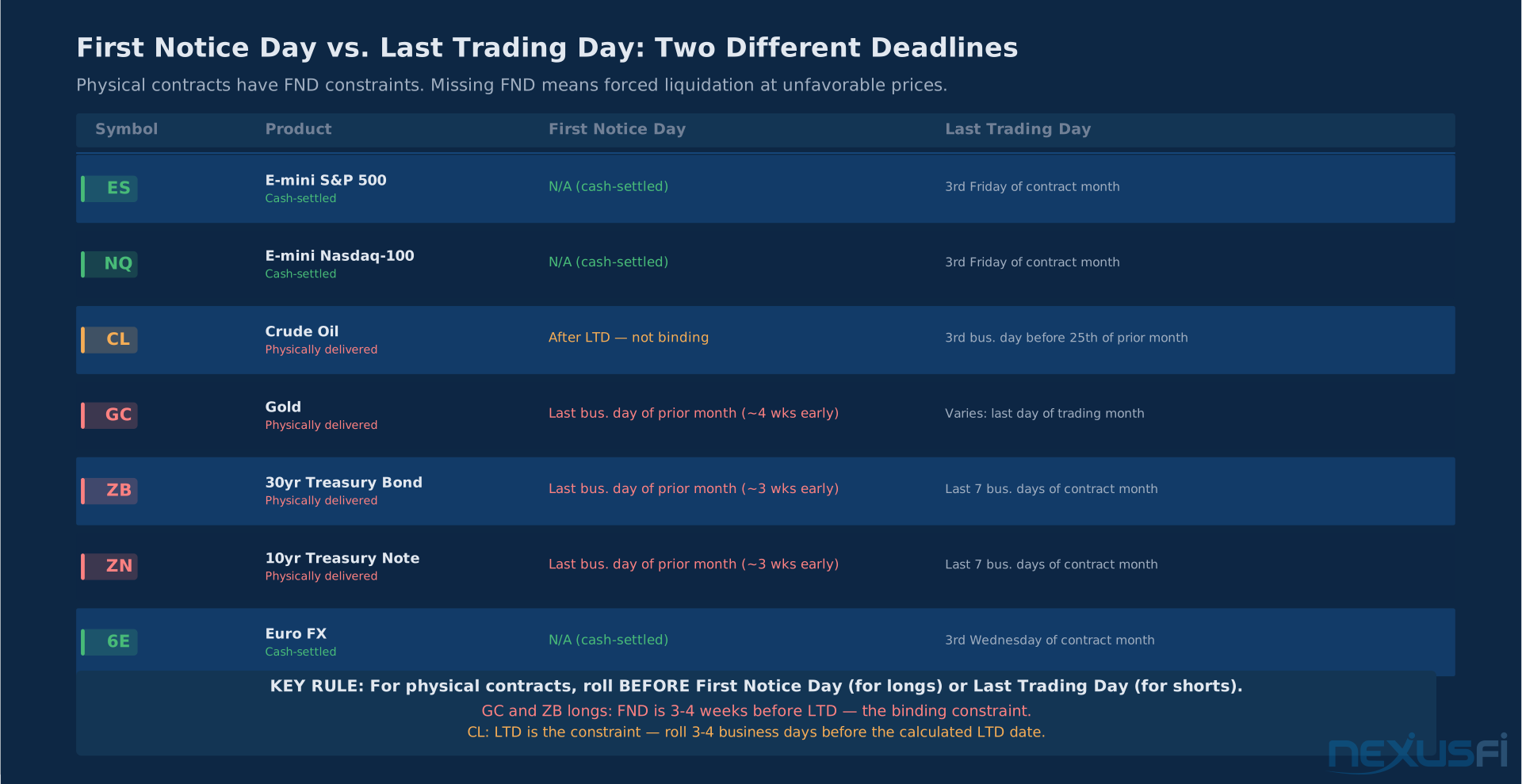
Last Trading Day (LTD): The final day the contract trades. For ES quarterly contracts, LTD is the third Friday of the contract month. For CL, LTD is the third business day before the 25th calendar day of the month prior to the delivery month.
First Notice Day (FND): The first date on which holders of long positions in physically delivered contracts can be notified of delivery intent by short holders. For GC (gold), FND comes about three weeks before LTD. If you're still long GC past FND, you can be assigned delivery of 100 troy ounces of gold.
Roll Date: The day when volume and open interest cross over from the front month to the back month. This is the market's way of saying "we've moved on." The roll date and the LTD are not the same thing — the roll typically happens 5-10 days before LTD.
Open Interest (OI): The total number of outstanding futures contracts. When you roll from March to June, you're closing a March contract (reducing OI in March) and opening a June contract (increasing OI in June). Tracking OI migration across months is the most reliable signal for timing your roll.
Calendar Spread: The simultaneous purchase of one contract month and sale of another. When you roll, you're effectively executing a calendar spread (closing front month, opening back month). The price of this spread — called the roll cost — is the difference between the two contract prices, adjusted for carry.
Most trading platforms display continuous contract symbols starting with @ (like @ES#, @CL#, @NQ#). These symbols automatically roll to the active front month. Your P&L is calculated on the actual contract you're holding, not the continuous chart. Monitor both — the @ symbol tells you where the market is, but your actual position is in a specific expiry.
Cash-Settled vs. Physical Delivery: The Critical Distinction #
This is the binary that determines how carefully you need to pay attention. Get it wrong on the wrong contract and the consequences range from "annoying" to "life-altering."
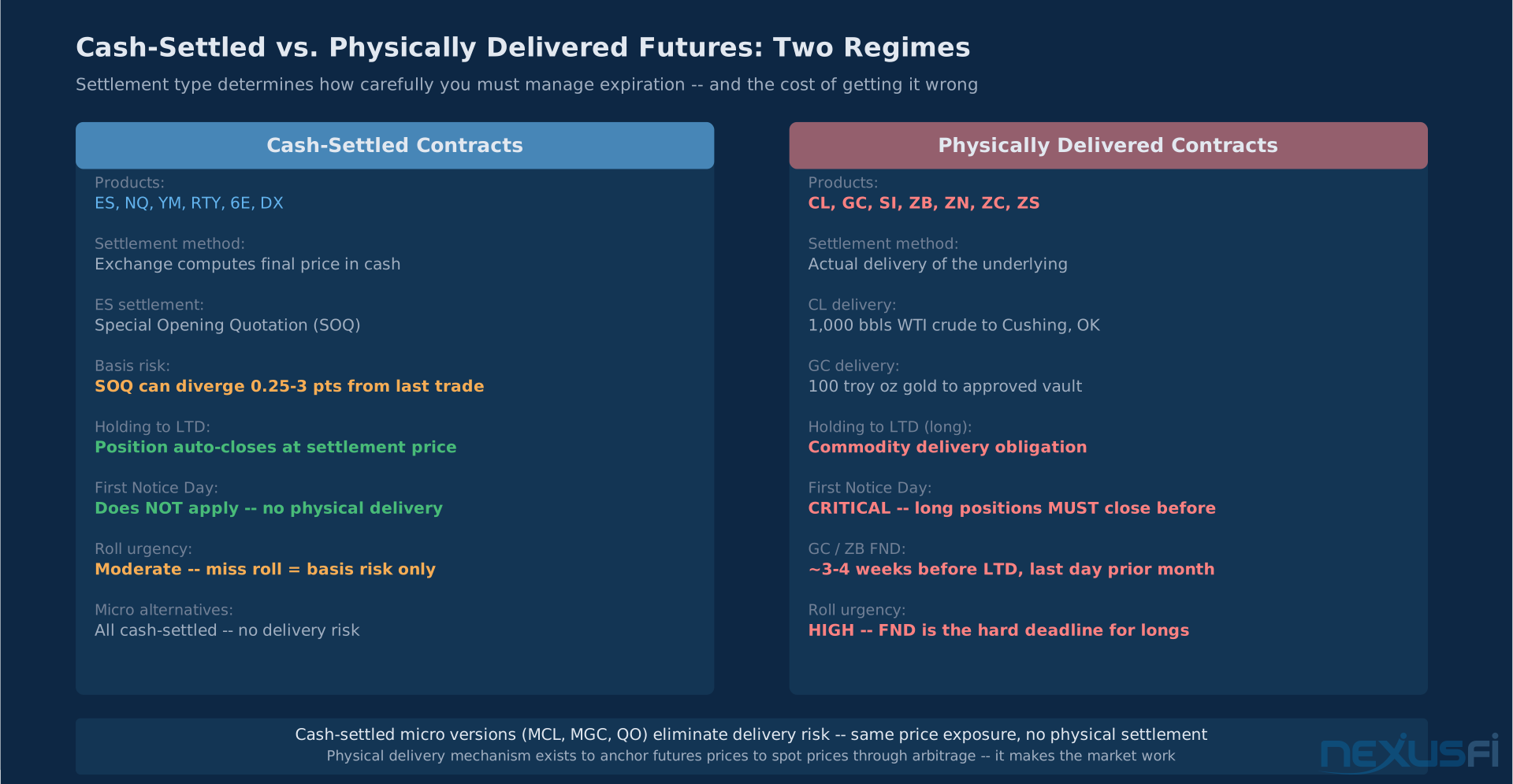
Cash-Settled Contracts (Equity Index, Currency Futures): ES, NQ, YM, RTY, 6E, DX — these settle in cash. If you hold through expiration, the exchange computes a final settlement price and credits/debits your account so. For ES this is the Special Opening Quotation (SOQ) — based on individual stock opening prices on expiration Friday. The SOQ can diverge meaningfully from where ES futures are trading pre-market, creating basis risk. Rolling before expiration keeps you in a cleanly traded instrument.
Physically Delivered Contracts (Energy, Metals, Agricultural): CL (crude oil), GC (gold), SI (silver), ZB/ZN (Treasury bonds), agricultural contracts — these settle with actual delivery of the underlying commodity. The short delivers, the long receives. For CL this means 1,000 barrels of WTI crude delivered to Cushing, Oklahoma pipeline terminals. For GC this means 100 troy ounces of gold, 99.5% pure, delivered to an approved vault.
The key risk for physically delivered contracts is First Notice Day.
For Treasury futures (ZB, ZN), FND is typically about three weeks before LTD. For gold, similarly. For crude oil, FND comes after LTD — so for CL, LTD is the binding constraint, not FND.
The hierarchy of dates to watch:
- First Notice Day (if applicable) — must close before this date if long
- Last Trading Day — must close before this regardless
- Roll Date (market convention) — when you should roll for liquidity reasons
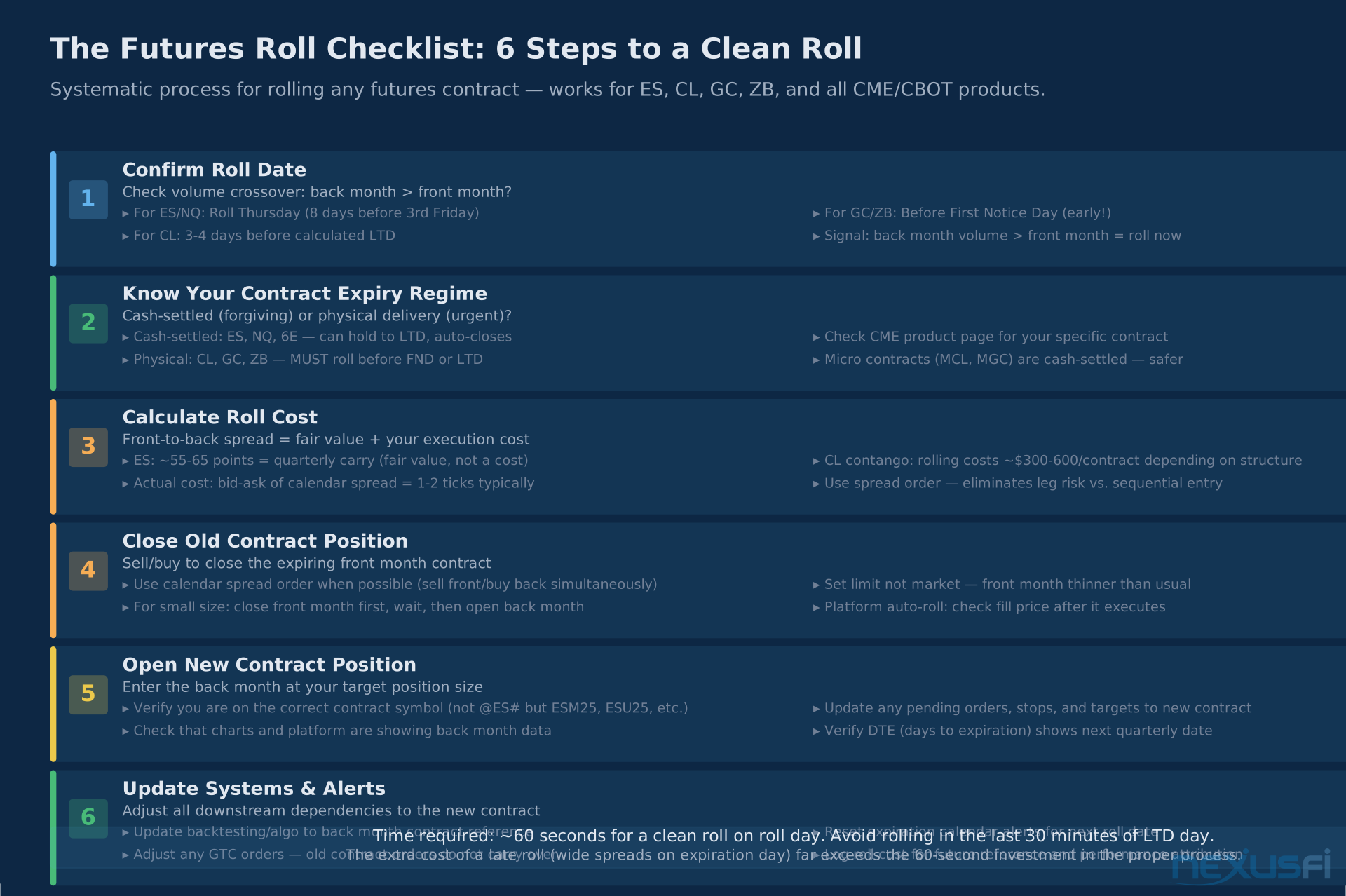
Long positions in physically delivered contracts must be closed before First Notice Day, not Last Trading Day. For Treasury futures (ZB, ZN), this means rolling roughly 3 weeks before LTD. For gold futures (GC), similarly about 3 weeks early. Missing FND can result in your broker auto-liquidating your position at an unfavorable price, or in extreme cases, being assigned gold delivery.
Cash-Settled Micro Contracts: The CME has created cash-settled micro versions of physical contracts to eliminate delivery risk for retail traders. Micro Crude Oil (MCL) is cash-settled. Micro Gold (MGC) and eMini Gold (QO) are cash-settled.
For commodity price speculation without delivery risk, the micro contracts are cleaner — the standard CL and GC contracts' physical delivery mechanism exists specifically to anchor futures prices to spot prices through arbitrage.
When to Roll: The Volume Crossover Signal #
Forget the official roll dates. The only date that matters is when liquidity shifts.
The market is self-organizing about this. Institutional traders, hedge funds, CTAs, and commercial hedgers all need to roll — and they move en masse. When the big money moves from March to June, volume on March collapses and volume on June spikes. This is the volume crossover, and it's unmistakable when you're watching both contracts.
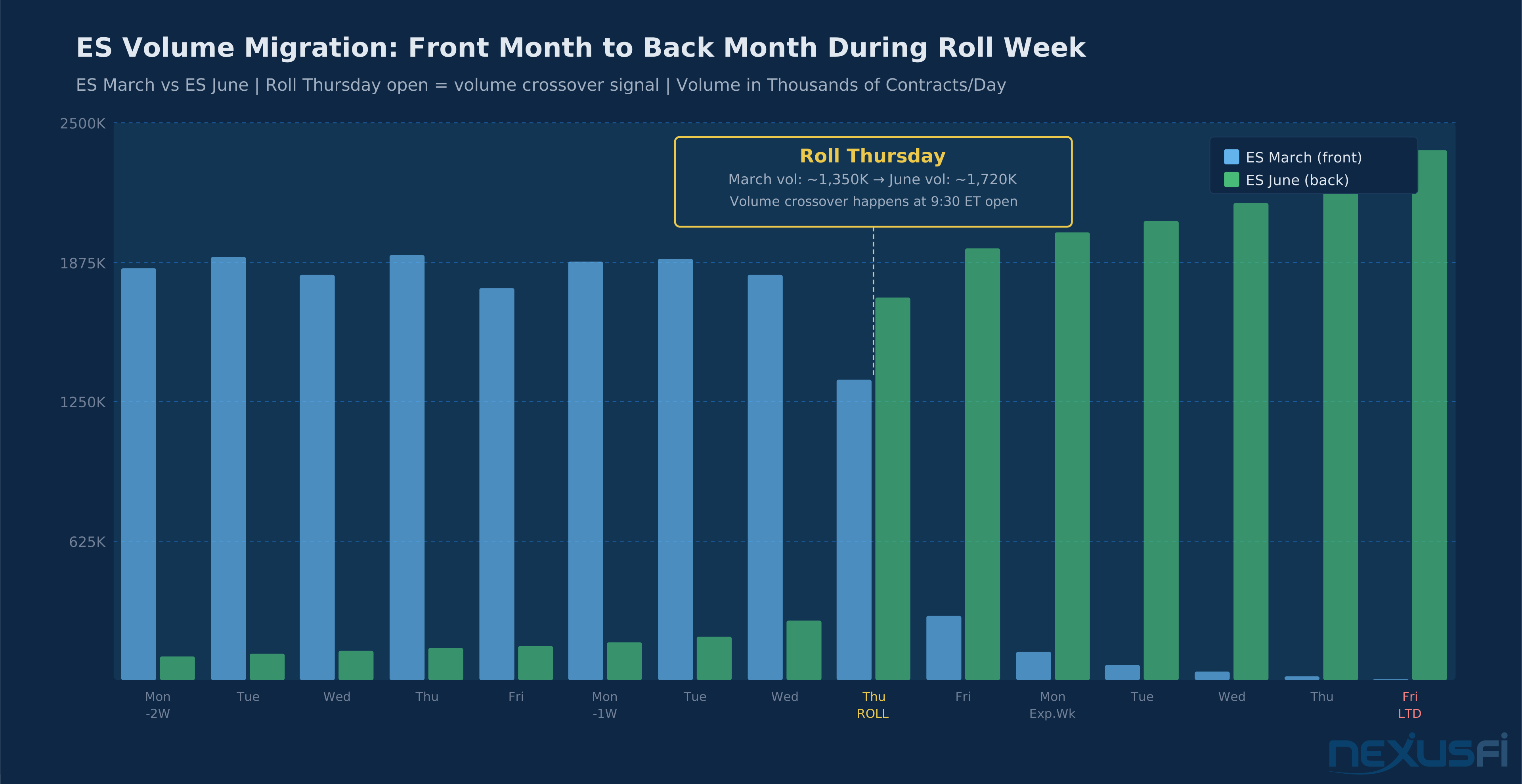
@max-td summarized it cleanly in the NexusFi Traders Hideout: "Volume shifts to the new contract at market open (09:30 EST) on Rollover day... New day trading or swing trading positions opened on rollover day should use the new contract month irrespective of when you plan to close it."
For ES specifically, the volume crossover happens at the CME-designated roll date, which is the Thursday 8 days before expiration. By 9:30 AM ET on that Thursday, the majority of volume has already migrated to the new contract. If you're still in the March contract after that open, you're trading in the back room — tighter liquidity, wider spreads, higher market impact on every trade.
The Practical Signal: Watch open interest and volume for both contracts starting 5 business days before the expected roll date. When the back month's daily volume exceeds the front month's daily volume, the roll has happened. This is definitive — the market has voted with its trades.
@Lancer documented the typical behavior by product in the NexusFi Traders Hideout:
- ES, NQ: Volume shifts on Sunday after the calendar roll date. Roll EOD on Friday PM.
- RTY, YM: Volume shifts the day after the calendar roll date. Roll EOD on Thursday PM (the roll date itself).
- 6E (Euro FX): Volume shifts the day after the calendar roll date. Roll EOD on roll date.
- CL: Volume shifts on calendar roll date or day after. Roll EOD on the day before or on roll date.
- GC, SI: Volume shifts one to two days after the roll date. Roll EOD on roll date or day after.
- ZB: Volume shifts one to two days after. Roll EOD on roll date or day after.
The "EOD" recommendation — rolling at end of day — reflects a practical truth: the roll spread is typically tightest when both contracts are trading simultaneously. Rolling at the close when spreads compress is often cleaner than rolling mid-session when both are moving.
Roll Calendar for Major Contracts #
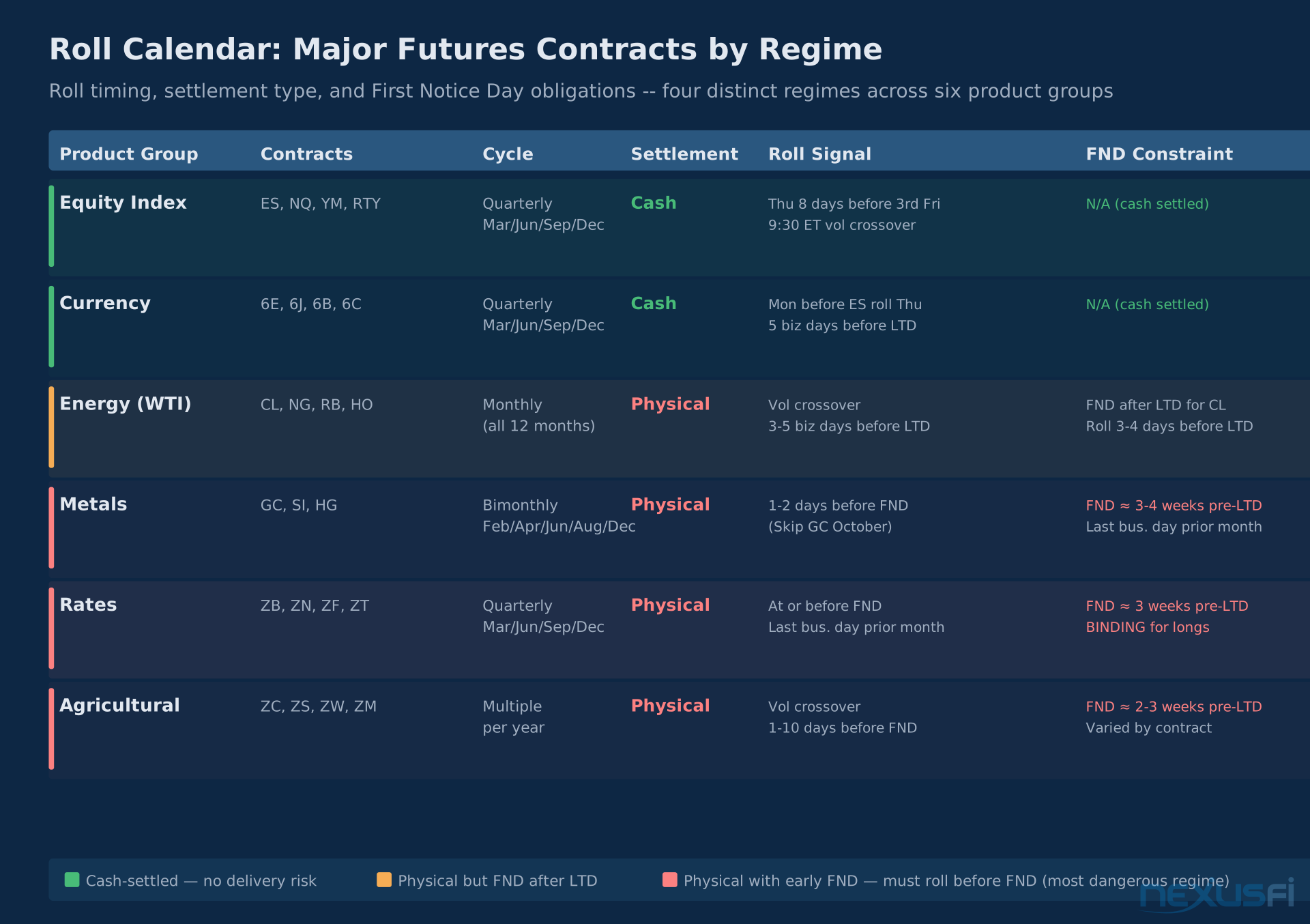
Equity Index Futures (Quarterly: March/June/September/December)
ES roll date is the Thursday 8 days before the third Friday of the contract month. For March 2026 expiration on March 20, roll Thursday is March 12. From the March 12 open, the June contract becomes the liquid front month. The same schedule applies to NQ, YM, and RTY, though YM and RTY typically see volume crossover the day after the ES/NQ roll.
Energy Futures (Monthly Cycle) CL (crude oil): Roll 3-4 business days before LTD. LTD calculation: the third business day prior to the 25th calendar day of the month preceding the delivery month. Check the CME product calendar monthly — CL roll dates are complex and variable. No FND before LTD for CL, but the physical delivery mechanics create volatility in the old contract during its final week.
For ZB the FND constraint is dominant. Volume crossover typically happens around FND for rates contracts.
Currency Futures (Quarterly) 6E (Euro FX): Roll 5 business days before LTD. LTD is the second business day before the third Wednesday of the contract month. 6E roll is the Monday preceding the ES/NQ roll Thursday. Canadian Dollar (6C) rolls one day earlier than other currency futures.
Four rollover regimes: (1) Equity index — quarterly, roll 8 days before expiry, volume shifts at the Thursday open; (2) Energy — monthly, volume-driven, 3-5 days before LTD, watch FND; (3) Metals — bimonthly, FND is the hard deadline 3-4 weeks before LTD; (4) Rates — quarterly, FND comes 3 weeks before LTD and is the binding constraint. Know your contract's regime before you trade it.
Roll Cost Mechanics: What Rolling Actually Costs #
Rolling isn't free. Every time you roll, you pay a spread. The size of that spread depends on the product's carry structure and market conditions.
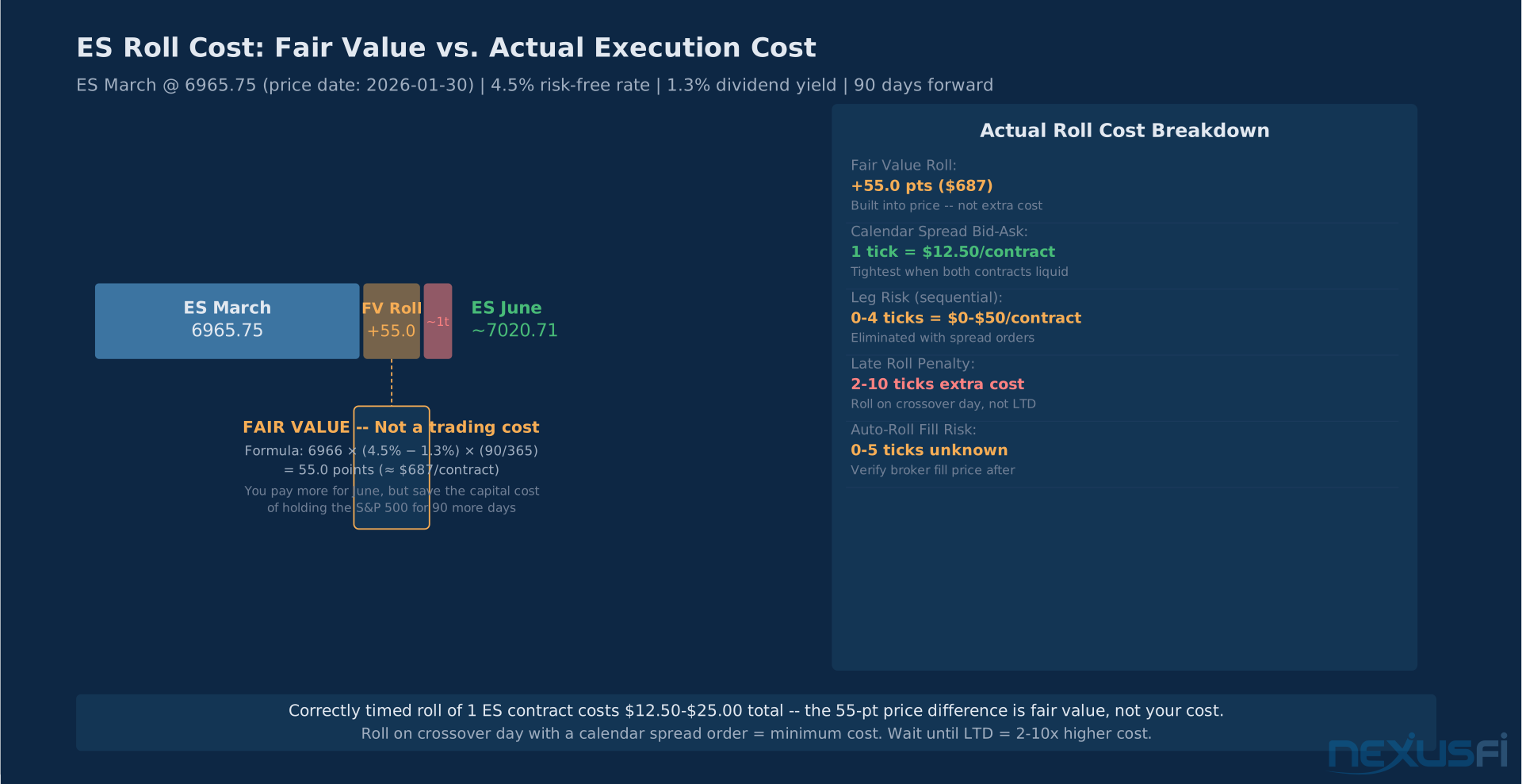
Equity Index Roll Cost When you roll from March ES to June ES, the June contract trades at a premium. This reflects the cost of carry — basically, the risk-free rate minus the dividend yield, multiplied by the time to expiration.
Fair Value Roll Spread = Index Level × (Risk-Free Rate — Dividend Yield) × (Days to Expiry / 365)
For ES at 6856.25 with a 4.5% risk-free rate and 1.3% dividend yield, rolling to a contract 90 days out: Fair Value Spread ≈ 6856 × (0.045 — 0.013) × (90/365) ≈ 6856 × 0.032 × 0.246 ≈ 54 points
If March-to-June roll is +54 points, that's fair value — not a "cost." You're paying 54 points more for June, but you're getting 90 additional days without the capital outlay. The actual cost of rolling is the deviation from fair value plus bid-ask spread and slippage. In practice, ES rolls for 1-2 ticks ($12.50-$25.00) of spread cost when executed during liquid trading hours.
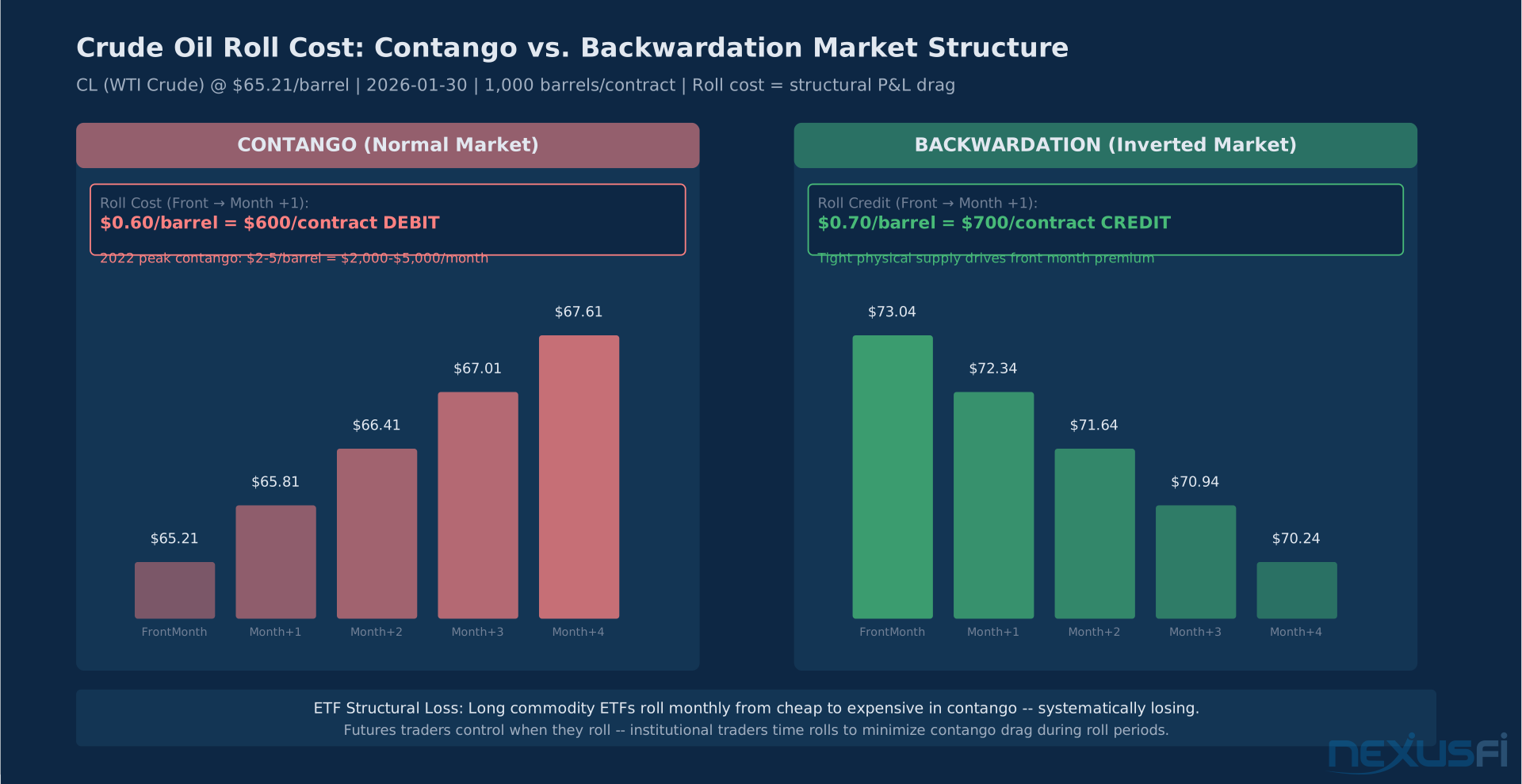
Commodity Roll Cost: Contango vs. Backwardation Commodity futures don't follow the same carry logic. CL can be in contango (back months more expensive than front months) or backwardation (front months more expensive).
In contango: CL March at $55.27, CL April at $56.10 — rolling costs $0.83/barrel, or $830 per contract. In backwardation: CL March at $65.00, CL April at $63.50 — rolling gives you a $1.50 credit, or $1,500 per contract.
Long commodity ETF holders get systematically destroyed by contango — they roll from cheap to expensive every month. As a futures trader with existing positions, you face the same structural cost. In post-COVID energy markets (2020-2022), CL contango was extreme — roll costs reached 2-5% of face value per month for a brief period.
ES Roll Cost = June Price — March Price — Fair Value Spread Fair Value ≈ Index × (Risk-Free Rate — Dividend Yield) × (Days/365) Contango Cost (CL) = (April Price — March Price) × 1,000 barrels Actual Roll Drag = |Actual Spread — Fair Value| + (Bid-Ask × 2 sides)
Gold Roll Characteristics GC roll spreads reflect gold's lease rate and storage cost. Gold is typically in mild contango because it costs money to store physical gold. The GC Feb-April calendar spread is usually $5-$15 per ounce ($500-$1,500 per standard contract of 100 oz). In rare gold lending squeeze environments, the spread can invert temporarily.
Minimizing Roll Cost:
- Roll during active trading hours when both contracts are liquid simultaneously — tightest spreads
- Use calendar spread orders where available — both legs execute simultaneously, no leg risk
- Roll on the actual crossover day when institutional flow creates maximum liquidity
- Avoid rolling in the final hours of LTD — you're rolling in an illiquid contract at bad prices
Executing the Roll #
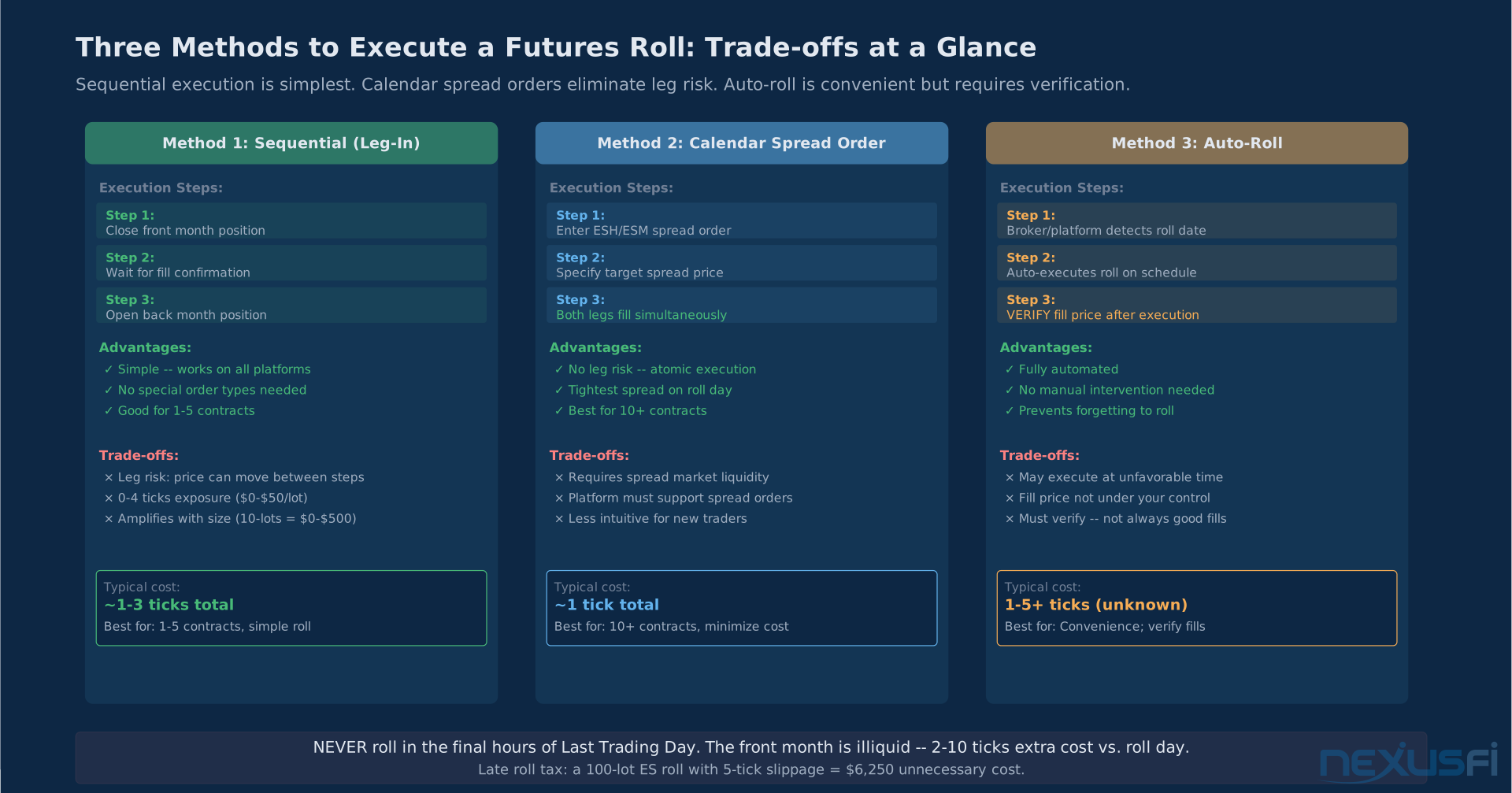
Method 1: Sequential Execution (Leg-In) Close your front month position first, then open the back month. Simplest approach but exposes you to basis risk — the time between closing March and opening June, prices can move. For a long position, if ES drops 2 ticks between your close and open, you bought June 2 ticks higher than simultaneous execution would have. Leg-in risk is small for a single contract but amplifies with size.
Method 2: Calendar Spread Order Enter a calendar spread order on the CME Globex spread order book. You specify the spread price (June minus March) and the exchange executes both legs simultaneously. Eliminates leg risk entirely. For ES, the ESH/ESM (March to June) calendar spread on roll day typically trades millions of contracts — very liquid. The downside is that calendar spread markets occasionally have less depth than outright markets.
Method 3: Auto-Roll (Platform-Level) Some brokers and platforms offer automatic rolling. Convenient but can execute at unfavorable prices if the auto-roll runs during low-liquidity periods. Always verify your broker's auto-roll policy and the price it received.
Set calendar reminders for roll dates at the start of each quarter. For ES/NQ traders: the third Friday of March, June, September, and December is expiration. Count back 8 days to find roll Thursday. For CL traders: check the CME product calendar monthly. Five minutes of calendar prep prevents scrambling during roll week.
Failure Modes: What Actually Goes Wrong #
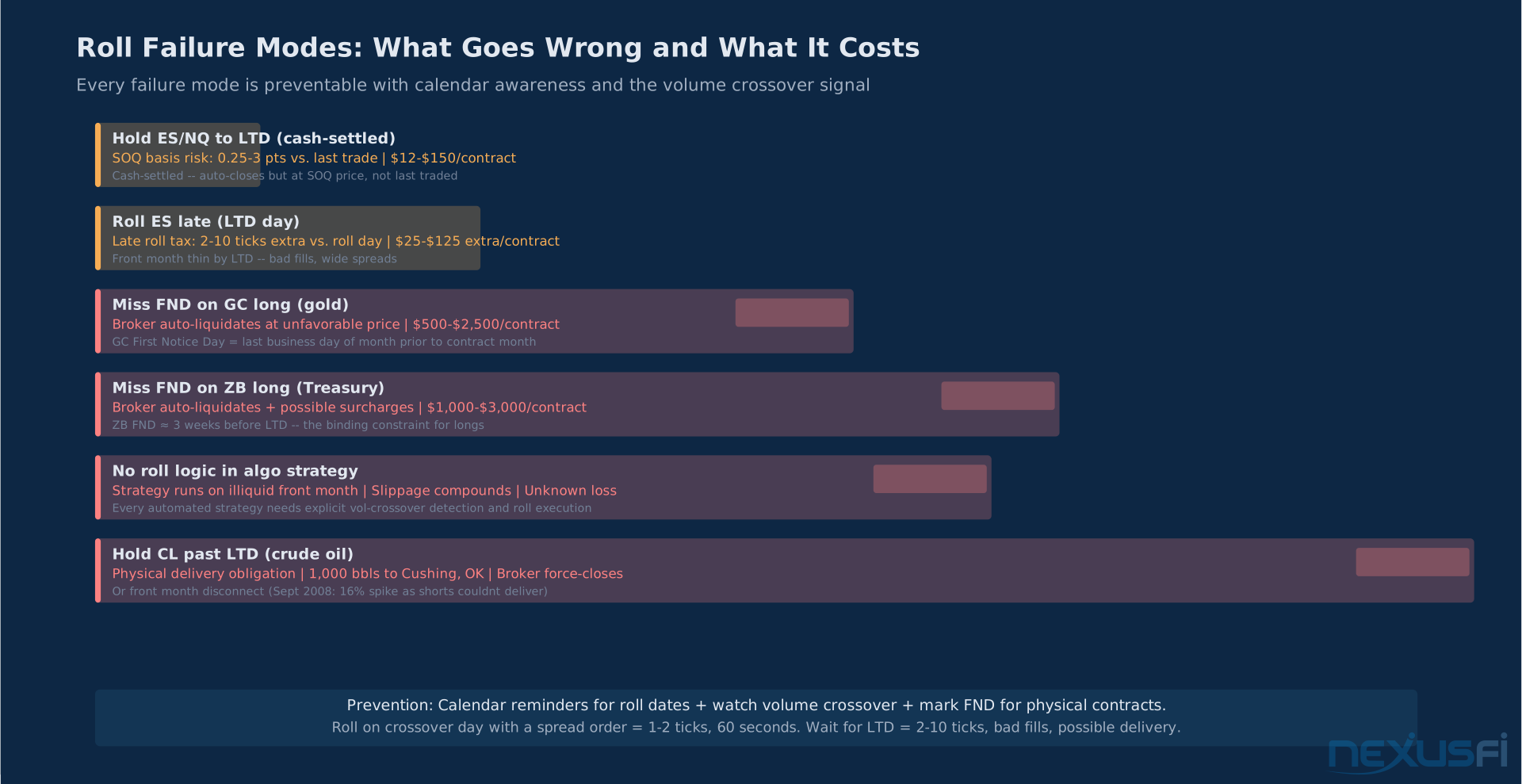
Holding Through LTD on a Cash-Settled Contract For ES/NQ, this is embarrassing rather than catastrophic. The contract closes at the SOQ settlement price, which typically differs from the last traded price by 0.25-3 points. Your position closes automatically, but you've missed the opportunity to roll cleanly. You now open a new position in June at whatever the market is doing after the fact.
Missing First Notice Day on GC or ZB This is serious. If you're long GC February and you miss FND, you are in the delivery zone. The CME clearing house can assign you delivery of 100 oz of gold. Your broker will auto-liquidate at whatever price is available — almost certainly not a good price. Many brokers add explicit surcharges for positions held past FND on physical contracts.
The CL Late-Contract Problem Never hold a CL position into the final days before LTD. The physical delivery mechanism can disconnect front month prices from spot prices in extreme situations. The September 2008 crude oil incident — a 16% single-session spike in the front month due to Cushing pipeline disruptions — is the extreme version. More commonly, the final week of CL trading shows heightened volatility and degraded liquidity.
Rolling Too Late on a Thin Contract Waiting until LTD to roll means rolling in a contract with 10% of normal volume. A 10-lot roll in an illiquid market creates meaningful market impact. Closing at a bad bid and opening at a bad ask easily costs 2-5 ticks per side beyond normal spread. The "late roll tax" is real.
Missing Roll Logic in Automated Strategies Algorithmic systems that don't handle rollover properly will either stop generating signals when the front month becomes inactive, or continue trading a thin contract at bad prices. Every automated strategy needs explicit rollover logic: detect when volume has shifted, close all front month positions, open equivalent positions in the back month, update the data series. This is one of the most common causes of live/backtest divergence.
Continuous Contracts vs. Live Rolls #
Your trading platform's continuous contract (the @ symbol) is a charting artifact, not what you're actually trading. When ES rolls from March to June, the continuous @ES# chart shows a 34-point gap where the contract prices diverged — but most platforms adjust this to create a smooth chart.
Back-Adjusted Continuous Contracts: Standard approach. When a roll occurs, all historical prices are adjusted by the roll differential. The result is a smooth historical chart, but historical prices don't match actual traded prices. Your ES "historical" price from six months ago on the continuous chart will differ from the actual traded price — this matters for backtesting.
The Backtesting Problem: @Fat Tails highlighted a critical edge case: the GC October contract is historically illiquid. Backtesting systems that use a continuous GC contract with October as a roll month get false offsets because they pick up the illiquid October-December roll spread instead of the liquid August-December spread. Always verify which delivery months your backtesting data uses for rolls.
The Live Trading Risk: Around rollover week, confirm you're placing orders on the correct contract month. A trader who sees @ES# at 6890 might accidentally place a limit order on the March contract (now mostly dead) instead of June. The March contract may fill at a terrible price or not fill at all. Verify the exact contract symbol when entering orders during roll week.
Knowledge Map
Prerequisites
Understand these firstGo Deeper
Build on this knowledgeReferences This Article
Articles that build on this topicCitations
- — Rollover Days - some Quick Facts about (2012) 👍 6“josh: If we talk about rolling, we talk about two different things: (1) the question at what point we wish to merge single contracts to obtain a backadjusted contract (2) the question at what point we wish to roll our positions...”
- — Changing rollover dates for CL (2012) 👍 4“Determining a rollover date is relatively simple. You want to roll on the day, when liquidity (number of contracts traded per day) has shifted to the new front month contract.”
- — Rollover date vs Expiration date (2014) 👍 6“Rollover Date You want to trade the most liquid contract, therefore if you hold a position you want to roll it to the new contract when the old and new contract have about the same liquidity.”
- — What is the front most month? (2017) 👍 3“Raider I look at the CME quote pages every day before I start trading to see what the official settlement price was from the previous day.”
- — Rollover dates for GC, SI, ZC and ZS (2013) 👍 13“For index Futures and interest rate futures there are indeed known rollover dates. For commodity futures this is not the case, but most participants roll according to volume or open interest crossover.”
- — Contract Periods (2013) 👍 3“For some futures contracts there are official rollover dates, and for other futures contracts you would roll according to volume or open interest crossover.”
- — continuous contract in NT7 /merge policy / rollover (2011) 👍 3“Information by CME - Rollover Dates PDF. Document attached below.”
- — Rollover Days - some Quick Facts about (2009) 👍 22“Quick Facts about Rollover Day. The following applies to many (if not most) futures contracts especially those from the Chicago Mercantile Exchange (CME) and CBOT. Rollover is 8 days before expiration.”
- — Futures Expirations Question (2013) 👍 5“Starting with first notice day, the clearing house can assign the holder of a long position for delivery, so you should then be renting storage space.”