



Average Directional Index (ADX): The Trend Strength Filter That Tells You When to Trade and When to Sit on Your Hands
Overview #
The Average Directional Index is the indicator most traders have on their chart but don't actually understand. They know the "above 25 means trending" rule and stop there. That's like knowing a car has a speedometer without understanding what the numbers mean in context — technically correct, functionally useless.
ADX doesn't tell you which way the market is going. Full stop. It tells you how strongly the market is going in whatever direction it's already moving. That distinction matters more than you think, because it changes how you use every other indicator on your chart.
J. Welles Wilder introduced ADX in 1978 in New Concepts in Technical Trading Systems — the same book that gave us RSI, ATR, and the Parabolic SAR. Of those four indicators, ADX is the one traders most consistently misapply. Here's why it deserves a second look, and how to use it the way it was actually designed.
Key Concepts #
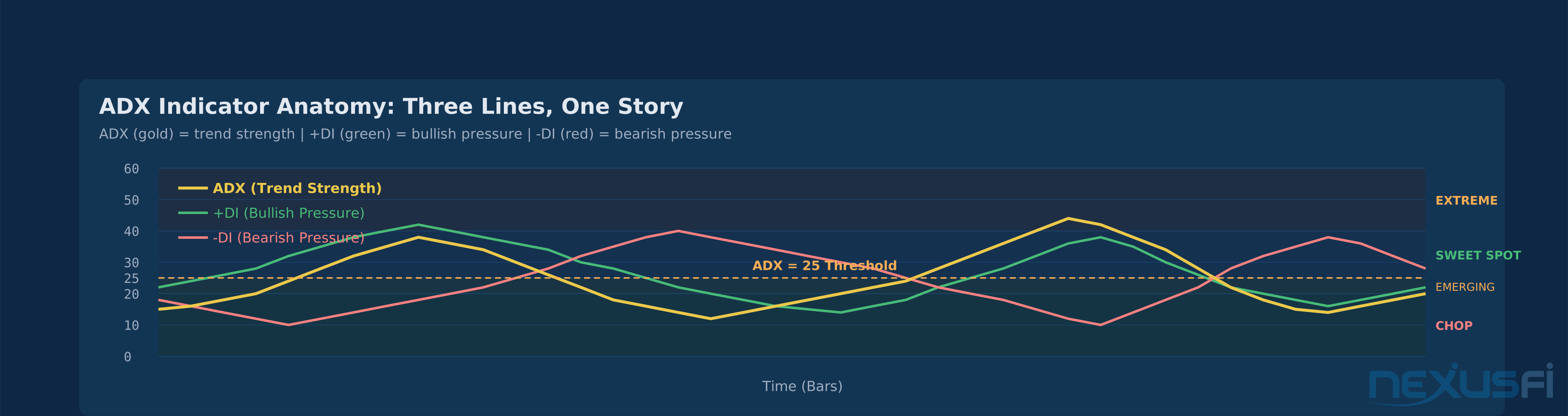
Average Directional Index (ADX): A non-directional trend strength oscillator that measures how strongly price is trending, regardless of whether the trend is up or down. Ranges from 0 to 100, with higher values indicating stronger trends.
Positive Directional Indicator (+DI): Measures upward directional movement. When +DI is above -DI, bullish pressure dominates.
Negative Directional Indicator (-DI): Measures downward directional movement. When -DI is above +DI, bearish pressure dominates.
Directional Movement (DM): The raw measurement of how much of a bar's range extended beyond the previous bar's range, separated into positive and negative components.
True Range (TR): The largest of three values — current high minus current low, absolute value of current high minus previous close, or absolute value of current low minus previous close. This captures gap moves that simple high-low range misses.
Trend Regime: The classification of current market conditions as trending or ranging. ADX is primarily a regime classifier — it tells you which type of strategy to deploy, not which direction to trade.
How ADX Is Calculated #
ADX is built from four layers of calculation. Understanding each layer matters because it explains why the indicator behaves the way it does — especially the lag that trips up most traders.
Step 1: Directional Movement
Each bar, calculate two values:
- +DM = Current High minus Previous High (if positive and greater than the downward movement; otherwise zero)
- -DM = Previous Low minus Current Low (if positive and greater than the upward movement; otherwise zero)
Only one can be non-zero per bar. If both are positive, the larger one wins and the smaller resets to zero. If neither is positive, both are zero. This binary assignment is what gives the DI lines their decisive character — every bar votes bullish, bearish, or abstains.
Step 2: True Range
TR = max(High - Low, |High - Previous Close|, |Low - Previous Close|)
True Range captures the full extent of price movement including gaps. This matters in futures where overnight gaps and limit moves create ranges that simple high-low measurement misses entirely.
Step 3: Directional Indicators
Smooth +DM, -DM, and TR using Wilder's smoothing method (a specific form of exponential smoothing where each new value = previous smoothed value - previous smoothed value / period + current value). The standard period is 14.
Then:
- +DI = 100 x (Smoothed +DM / Smoothed TR)
- -DI = 100 x (Smoothed -DM / Smoothed TR)
The DI values express directional movement as a percentage of total range. When +DI reads 30, it means 30% of the smoothed true range is attributable to upward extension.
Step 4: The ADX Line
DX = 100 x |+DI - -DI| / (+DI + -DI)
ADX = Smoothed average of DX over the period (typically 14)
The absolute value in the DX formula is why ADX is non-directional. Whether +DI leads by 20 points or -DI leads by 20 points, the DX value is the same. ADX then smooths this further, which is why it reacts slowly to reversals — you're smoothing a smoothed ratio of smoothed components. Three layers of smoothing create significant lag, but also significant reliability.
ADX Threshold Zones #
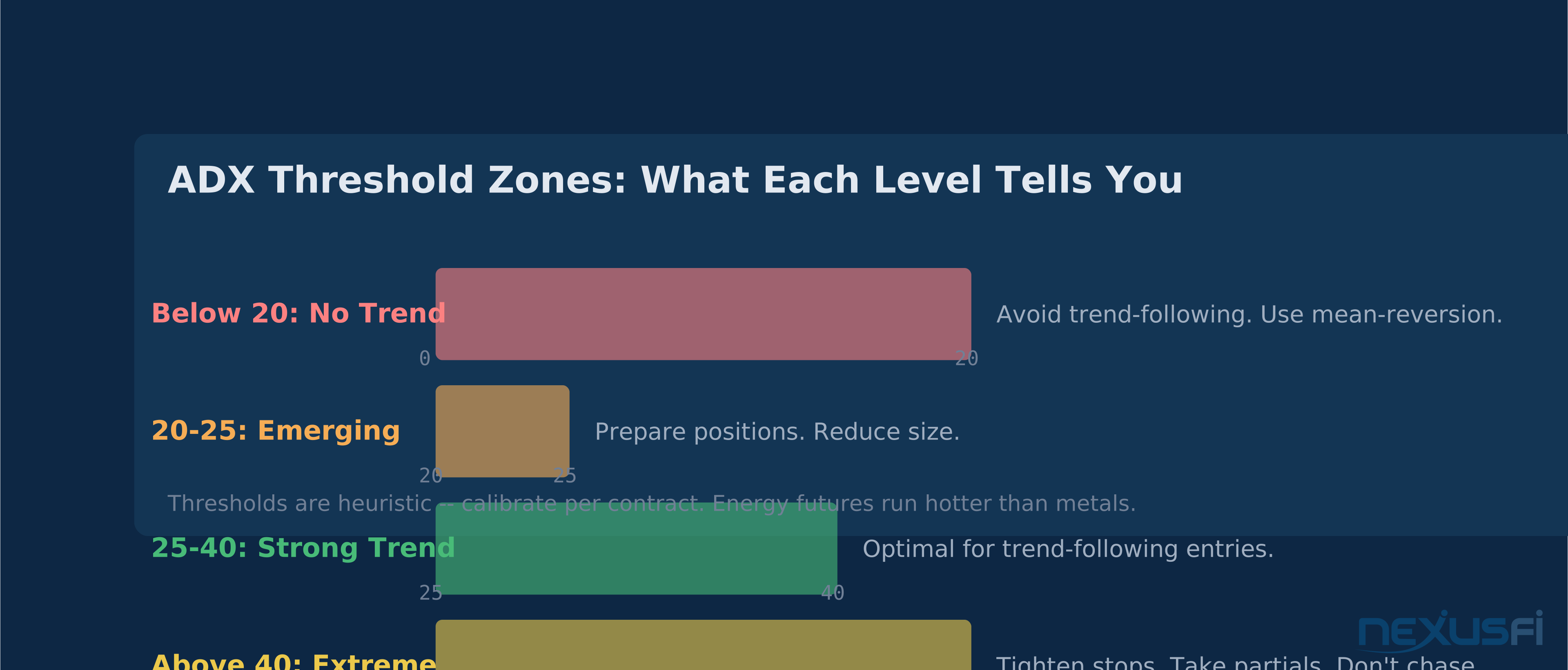
The standard interpretation uses four zones, but the boundaries aren't as rigid as textbooks suggest.
Below 20: No Trend (The Chop Zone)
Price is moving sideways or oscillating without directional conviction. Trend-following strategies get destroyed here. Mean-reversion setups — buying support, selling resistance, fading extremes — are the appropriate play.
As @perryg explains on NexusFi, "The correct way to use the ADX indicator is NOT to trend trade when the ADX is BELOW BOTH the +DI and the -DI lines." This is more subtle than the simple "below 20" rule — Perry's approach uses the relationship between all three lines, not just the ADX level.
How to read ADX correctly for CHOP (@perryg)
20-25: Emerging Trend
ADX is climbing from the chop zone. A trend may be developing, but it's not confirmed yet. This is the preparation zone — identify direction via +DI/-DI alignment, set your alerts, size your position smaller than normal. The trend might die before it develops. Don't commit full size until ADX confirms above 25.
25-40: Strong Trend (The Sweet Spot)
This is where trend-following strategies have their highest win rates. Directional conviction is high enough that pullbacks tend to resolve in the trend's direction. Breakouts from consolidation zones tend to follow through rather than fail.
Enter in the direction of DI alignment (+DI above -DI for longs, -DI above +DI for shorts). Use pullbacks to favorable levels (moving averages, VWAP, prior support/resistance) as entry points rather than chasing extended moves.
Above 40: Extreme Trend
The trend is running hard. ADX above 40 confirms powerful directional movement, but introduces a paradox: the strongest trends are also the ones closest to exhaustion. New entries here carry elevated risk of catching the tail end of a move.
If you're already in the trade, this is where you tighten trailing stops and take partial profits. If you're not in yet, wait for a pullback rather than chasing. The research shows that ADX readings above 50 correlate with increased reversal probability — not guaranteed reversal, but reduced continuation odds.
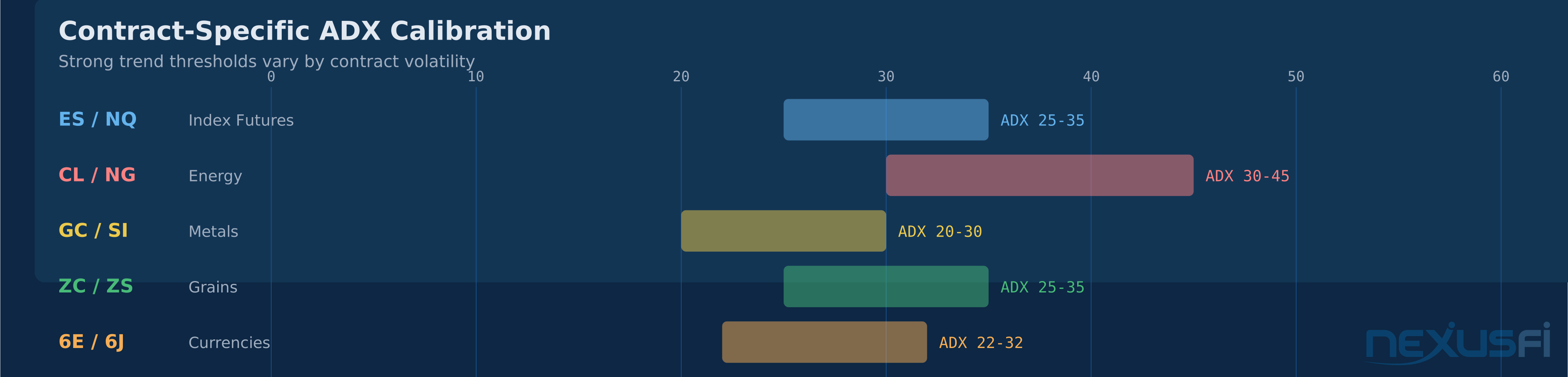
Contract-Specific Calibration
These threshold numbers are heuristics, not physics. Different futures contracts exhibit different ADX behaviors:
- Index futures (ES, NQ): Strong trends typically read 25-35. The liquidity and participation depth in equity index futures means trends develop efficiently.
- Energy (CL, NG): Higher volatility baseline shifts the scale. ADX 30-45 represents strong trending conditions. Crude oil can sustain ADX above 50 during geopolitical moves.
- Metals (GC, SI): Slower trend development. ADX 20-30 often indicates meaningful trending. Gold tends to grind rather than sprint.
- Grains (ZC, ZS, ZW): Seasonal trends dominate. ADX 25-35 confirms seasonal directional bias is active.
Don't apply one-size-fits-all thresholds. Validate on your specific contract and timeframe.
The DI Crossover Strategy #
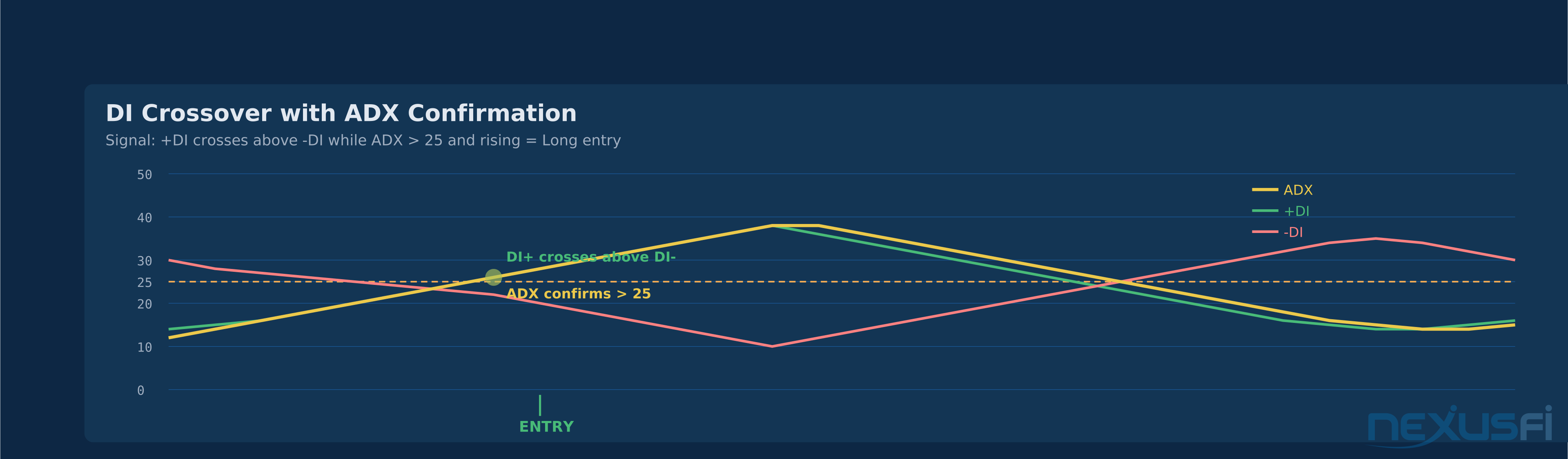
The most widely traded ADX signal is the DI crossover. When +DI crosses above -DI, bullish pressure is overtaking bearish. When -DI crosses above +DI, the reverse.
The Setup:
- Wait for +DI to cross above -DI (long) or -DI to cross above +DI (short)
- Confirm ADX is above 20-25 AND rising
- Enter in the crossover direction
- Stop below the recent swing low (for longs) or above the recent swing high (for shorts)
The Catch: DI crossovers alone generate too many signals in ranging markets. The ADX confirmation filter is essential — without it, you're buying and selling every oscillation. As @Fat Tails documents in his "Building Blocks of a Trading System" thread, the directional movement system works as a trend filter, but needs additional confirmation to avoid whipsaws in choppy conditions.
Building Blocks of a Trading System (1) - Trend Filter (@Fat Tails)
@perryg's deeper insight on the DM crossover: "When you get a cross over of the DM lines, see if the ADX is ABOVE BOTH DI lines — that signals potential trend exhaustion rather than trend beginning." This adds a third dimension that the textbook version completely misses.
Perry's Method Continuation and Advancement (@rptrader)
ADX as a Regime Filter #
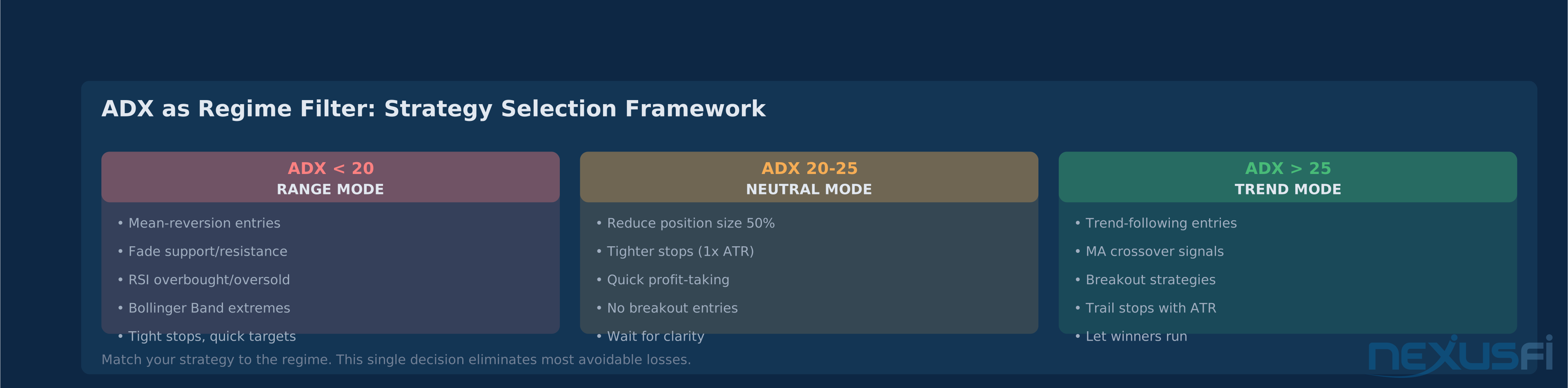
This is where ADX provides its highest value. Instead of using ADX to generate entry signals, use it to classify the current market regime and select the appropriate strategy class.
When ADX > 25 and Rising: Deploy Trend-Following
- Moving average crossover entries
- Breakout strategies
- Momentum continuation setups
- Trail stops with ATR-based methods
When ADX < 20: Deploy Mean-Reversion
- Range boundary fading
- Bollinger Band extremes
- RSI overbought/oversold reversals
- Support/resistance bounces
The Regime Transition (ADX 20-25): Reduce Position Size
- Smaller positions until regime clarifies
- Tighter stops
- Faster profit-taking
- Avoid breakout entries (false breakout probability elevated)
This framework eliminates the single biggest source of losses for most futures traders: applying a trend-following strategy in a ranging market, or fading a trending market. ADX doesn't tell you where price will go — it tells you which class of strategy has higher expected value right now.
As @iantg describes in his algo trading approach, range filtering is "one of the easiest ways to find out if you have favorable conditions for trend trading." The ADX is the most direct implementation of this concept.
Combining ADX With Other Indicators #
ADX is a supporting actor, not a leading one. It improves every other indicator on your chart by telling you when their signals are trustworthy.
ADX + Moving Averages
The combination that eliminates the most false signals. Use moving average direction or crossovers for trade direction. Use ADX > 25 as the permission gate. If ADX is below 25, the moving average crossover is probably noise. This single filter can cut whipsaw losses by 40-60% in choppy environments.
ADX + ATR
ADX tells you whether to trade. ATR tells you how much room to give the trade. When ADX is high (strong trend), use wider ATR-based stops (1.5-2x ATR) — the trend needs room to breathe through pullbacks. When ADX is low, tighten stops (1x ATR or less) because you're likely in a range where moves are smaller.
ADX + RSI
Two Wilder indicators that complement each other perfectly:
- ADX < 20 + RSI at extremes = high-probability mean-reversion setup
- ADX > 25 + RSI pullback to 40-60 zone = trend continuation entry
- ADX > 40 + RSI divergence = early warning of potential trend exhaustion
ADX + Bollinger Bands
ADX < 20 combined with a Bollinger Band squeeze flags a pre-breakout condition. The squeeze identifies the compression; ADX rising above 25 confirms the breakout has legs. Without ADX confirmation, Bollinger Band breakouts fail at a frustrating rate.
ADX + Volume Profile
For futures traders using volume analysis: ADX rising above 25 while price breaks out of the Value Area is a high-conviction trend signal. The ADX confirms directional commitment; the volume profile breakout confirms institutional participation. This combination is especially effective on 15-minute to hourly charts for ES and NQ.
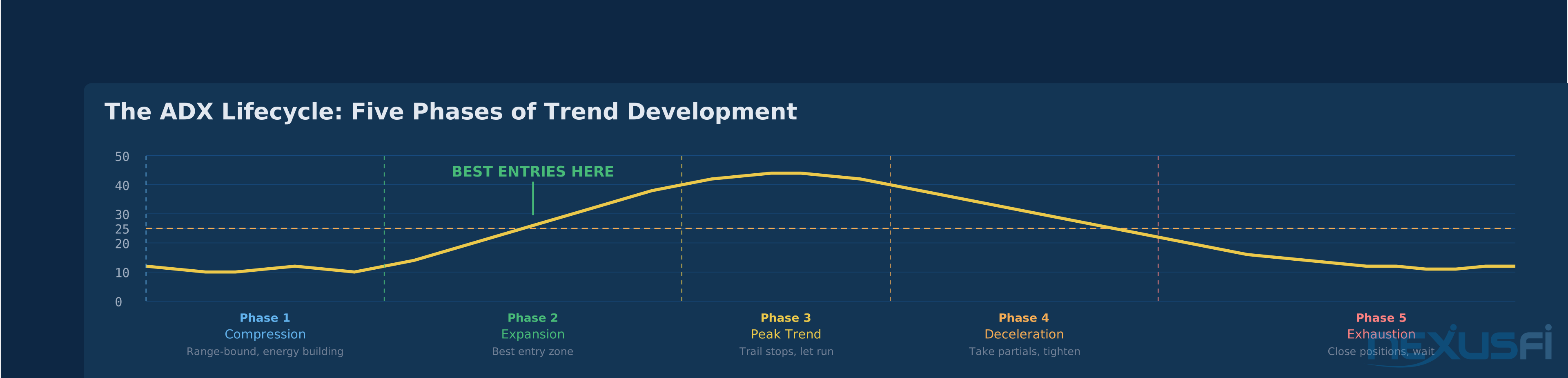
The ADX Lifecycle #
Understanding where ADX is in its cycle matters more than its absolute level.
Phase 1: Compression (ADX below 20, falling or flat) Market is ranging. Energy is building for the next move, but direction is unknown. This is the coiling phase. Trade range boundaries or sit on your hands.
Phase 2: Expansion (ADX rising from below 20 toward 25+) A trend is initiating. This is the highest-value entry zone — you're getting in early while ADX is still confirming. Look at DI alignment for direction. Position with the crossover.
Phase 3: Peak Trend (ADX above 25-40, still rising) Maximum trend strength. The trend is established and running. Trail stops, let profits run. Add to positions on pullbacks if DI alignment holds.
Phase 4: Deceleration (ADX above 25 but turning down) The trend is losing momentum. ADX falling from a high level doesn't mean reversal is imminent — it means the rate of directional movement is declining. Tighten stops. Take partial profits. Stop adding new positions.
Phase 5: Exhaustion (ADX falling back toward 20) Trend is over or transitioning. The market is moving back toward range-bound conditions. Close trend-following positions. Prepare for the next compression phase.
The key insight: entries are best when ADX is rising, not when ADX is already high. A rising ADX at 22 is a better entry signal than a flat ADX at 35. The rising slope tells you momentum is building; the flat high tells you momentum has already been priced in.
Timeframe Selection #
ADX sensitivity varies dramatically by timeframe. The indicator becomes noisier on shorter intervals and more stable on longer ones, but each timeframe serves a different purpose.
1-5 Minute Charts (Scalping)
ADX is noisy and produces frequent false signals. If you insist on using it for scalping, raise the threshold to 30 and use it strictly as a bias filter — not for entries. Pair with order flow or Level 2 for actual execution timing. Most scalpers find ADX too laggy for their timeframe.
15-Minute Charts (Day Trading Sweet Spot)
This is where ADX shines for futures day trading. The 15-minute period provides enough data for Wilder's smoothing to work properly while still capturing intraday trend development. ADX above 25 on a 15-minute ES chart reliably identifies tradeable intraday trends.
1-4 Hour Charts (Swing Trading)
Excellent for position management and trend confirmation in commodities and currency futures. ADX(14) on hourly charts captures multi-day trend development with minimal noise. Especially effective for CL, GC, and 6E where trends develop over 2-5 day periods.
Daily Charts (Position Trading)
ADX on daily charts identifies major trends. Use it for seasonal commodity trades, macro positioning, and trend-following systems that hold for weeks or months. When daily ADX rises above 25, the move is significant enough to warrant extended holding periods.
Parameter Tuning
The default 14-period is a good starting point, but not sacred:
- For faster intraday response: try ADX(10) or ADX(7) — more responsive, more noise
- For steadier swing/position signals: try ADX(20) — less noise, slower response
- Always validate parameter changes with out-of-sample testing on your specific contract
Common Mistakes #
1. Using ADX for direction. ADX goes up in strong downtrends too. You need DI+/DI- or price structure for direction. ADX only tells you strength.
2. Entering on already-high ADX. An ADX reading of 45 means the trend has been running. You're late. The best entries happen when ADX is rising from low levels, not when it's already maxed out.
3. Trading DI crossovers without ADX confirmation. DI lines cross constantly in ranging markets. Without the ADX > 25 filter, you'll get chopped up with whipsaw after whipsaw.
4. Ignoring ADX slope. Whether ADX is rising or falling matters more than its absolute level. ADX at 30 and rising is bullish for trend continuation. ADX at 30 and falling means the trend is decelerating.
5. Applying the same thresholds across all contracts. Energy futures are not equity indices. Grain futures are not metals. Calibrate your thresholds to the specific contract's volatility characteristics.
6. Fading strong trends because "ADX is too high." ADX above 40 doesn't mean the trend will reverse. It means the trend is strong. Countertrend trades against high-ADX moves fail more often than most traders expect. Wait for structural confirmation before fading.
7. Over-optimizing the lookback period. Changing from 14 to 13 or 15 rarely produces meaningful improvement. If your strategy is that sensitive to one bar of lookback difference, the edge isn't strong. Test with meaningful period changes (14 vs 10 vs 20) across different market conditions.
Practical Setup: The ADX Regime Filter System #
Here's a complete framework for using ADX as a regime filter on ES futures, 15-minute chart:
Rules:
- Calculate ADX(14), +DI(14), -DI(14)
- If ADX > 25 and rising over last 3 bars: TREND MODE
- Trade in direction of DI alignment
- Entry: pullback to 20 EMA or VWAP with structure break in trend direction
- Stop: 1.5x ATR(14) from entry, placed beyond recent swing
- Target: trail with 2x ATR, exit when ADX turns down OR DI lines cross
- If ADX < 20 and flat/falling: RANGE MODE
- Identify range boundaries using prior session high/low
- Fade extremes with mean-reversion entries
- Stop: beyond range boundary + 0.5x ATR buffer
- Target: opposite range boundary or midpoint
- If ADX between 20-25: NEUTRAL MODE
- Reduce position size to 50%
- Tighter stops (1x ATR)
- Take quick profits (2-4 point targets on ES)
- No breakout entries
Exit Signals:
- ADX turns from rising to falling (trend deceleration)
- DI crossover against position direction while ADX still above 25
- Price reaches 3x ATR from entry without consolidating
- Time stop: no progress toward target within 2 hours
This system won't generate the most signals, but it filters out the low-probability setups that drain accounts. The regime classification alone — knowing whether you're in a trending or ranging environment — is worth more than most entry signals.
As the NexusFi community has discussed extensively, the ADX works best as part of a systematic framework rather than a standalone indicator. As @kevinkdog demonstrates in his bot trading approach, even simple ADX-filtered systems (requiring ADX above 10 before entering momentum trades) can provide meaningful edge in algorithmic frameworks.
The Bottom Line #
ADX answers one question: is the market trending or not? That single piece of information, applied correctly, prevents the majority of avoidable losses in futures trading. Most traders lose money not because they pick the wrong direction, but because they apply the wrong strategy to the wrong market regime. Trend-following in chop. Mean-reversion in trends. ADX eliminates that mismatch.
Don't use it as an entry signal. Use it as a strategy selector. When ADX says "trending," deploy your trend tools. When ADX says "ranging," deploy your range tools. When ADX says "transitioning," reduce size and wait for clarity.
The traders who profit consistently aren't the ones with the best entries. They're the ones who know which game they're playing before they sit down at the table.
Knowledge Map
Go Deeper
Build on this knowledgeReferences This Article
Articles that build on this topicCitations
- — How to read ADX correctly for CHOP (2010) 👍 9“How to read ADX correctly for CHOP -- ADX below both DI lines”
- — Building Blocks of a Trading System (1) - Trend Filter (2010) 👍 19“Building Blocks of a Trading System -- directional movement system as trend filter”
- — Perry's Method Continuation and Advancement (2012) 👍 26“Perry's Method -- ADX above both DI lines signals trend exhaustion”
- — Algo Trading (2016) 👍 7“Algo Trading -- range filtering for favorable trend trading conditions”
- — Bot Trading - MCL Futures (2022) 👍 7“Bot Trading MCL Futures -- ADX-filtered momentum entry system”
- — Supertradersam - Journal - Feb 2026 (2026) 👍 1“ADX above 25 confirms trend strength behind EMA crossover”