



Market Replay and Trading Simulation: How to Actually Practice Futures Trading Without Risking Capital
Overview #
Most traders use market replay wrong. They download a few days of data, hit play at 10x speed, watch candles paint for twenty minutes, and walk away thinking they practiced. That's not training. That's entertainment with a chart attached.
Real market replay — the kind that actually develops execution skill and pattern recognition — is event-by-event reconstruction of historical market microstructure. You're rebuilding the order book, the tape, the depth, and the speed of the original session. Then you're making decisions against that reconstructed reality without knowing what happens next.
This is the closest thing to live trading without risking capital. But the gap between "closest thing" and "identical" is where most traders get burned. Understanding what replay actually reconstructs, what it fakes, and how to structure your practice around those limitations is the difference between deliberate skill development and expensive self-deception.
Key Concepts #
Market Replay — The reconstruction and playback of historical market data in real time (or adjustable speed), allowing traders to interact with past market conditions as if they were live. Distinguished from backtesting by interactivity: the trader makes discretionary decisions, not an algorithm.
Tick-by-Tick Reconstruction — Rebuilding market activity from individual trade prints and quote updates rather than aggregated bars. The granularity that separates serious replay from animated charts.
L1 Data (Top of Book) — Best bid, best ask, last trade price, and volume. The minimum data layer for basic replay. Shows what happened but not the depth behind it.
L2 Data (Full Depth) — The complete order book: every resting bid and offer at every price level, with size. Required for any replay that claims to model order flow, queue position, or liquidity dynamics.
Time and Sales (Tape) — The sequential record of every executed trade: price, size, and timestamp. Combined with L2, this reconstructs who was hitting bids versus lifting offers.
Fill Simulation — How the replay engine models whether your simulated orders would have been executed. Ranges from naive (price touched = filled) to sophisticated (queue position modeling with probability-based fills). This is where most replay platforms lie to you.
Determinism — Whether replaying the same session with the same order sequence produces identical results every run. Critical for valid comparison between parameter changes or strategy variants.
How Market Replay Actually Works #
The Data Reconstruction Problem #
When you hit "play" on a replay session, the platform is doing something much more complex than scrolling a chart forward. It's reconstructing the market's state at each moment in time from a stream of recorded events.
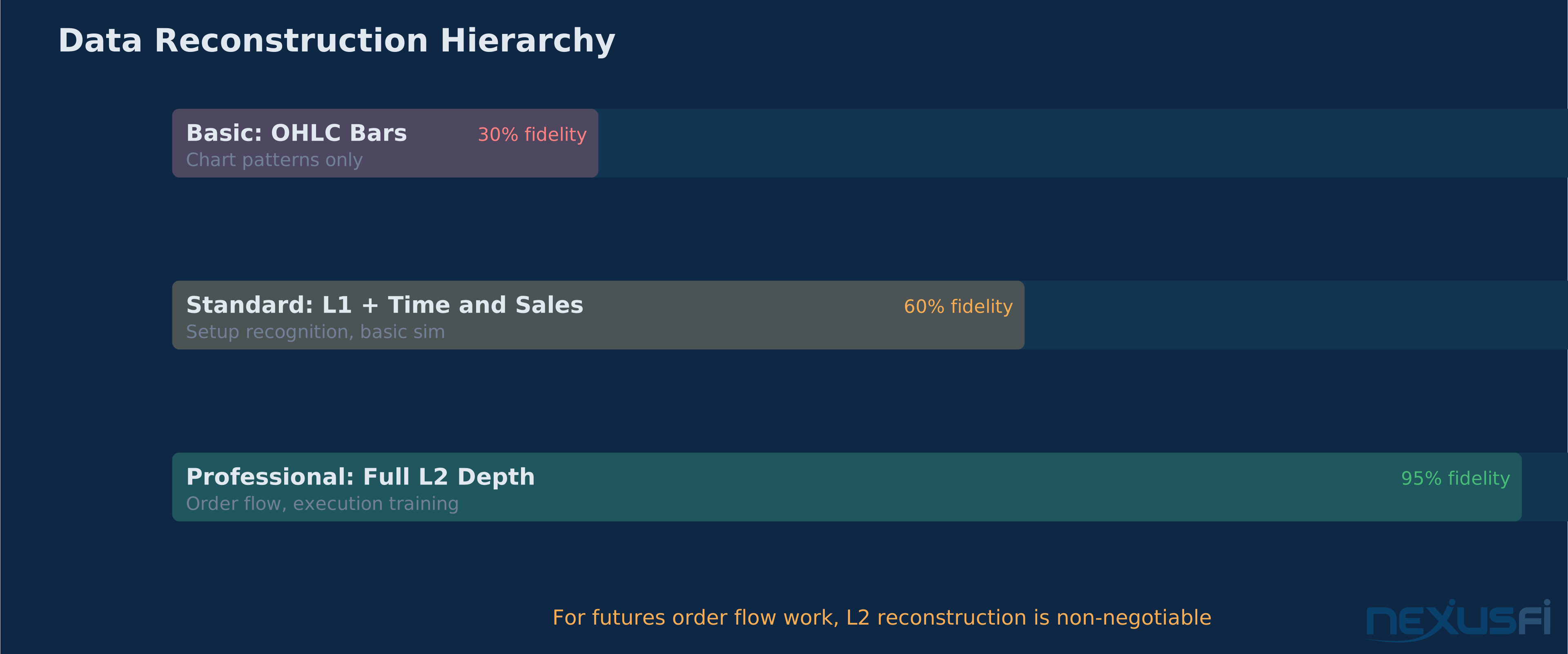
At minimum, the platform needs trade prints (Time and Sales) to show what executed and when. Better replay uses L1 quote updates to rebuild the best bid/ask spread as it moved. The gold standard is full L2 depth reconstruction — every order book change, every size update, every cancellation at every price level.
Here's the critical distinction: trade-driven replay (L1/tape only) shows you what happened. Quote-level replay (full L2) shows you what was about to happen — the liquidity that was sitting there before price arrived. For any order flow work, DOM-based trading, or execution quality analysis, L2 reconstruction is non-negotiable.
Timestamp Precision and Session Boundaries #
Futures markets run on microsecond-resolution timestamps from the exchange. Your replay data must preserve this precision, or events that occurred in sequence get jumbled into the same apparent moment.
Session boundaries matter more than most traders realize. CME Globex products trade nearly 24 hours with defined session breaks. If your replay doesn't correctly handle the transition between ETH (Electronic Trading Hours) and RTH (Regular Trading Hours), you'll see artificial gaps, volume spikes, or missing pre-market context that distorts the entire session.
The key phrase is "as if it were happening now." The fidelity of that simulation determines everything.
The Determinism Question #
Run the same replay session twice with the exact same order sequence. Do you get the same fills? On a truly deterministic platform, yes. On most platforms, no — because they introduce randomness in fill simulation, or their order processing isn't strictly event-locked to historical timestamps.
This matters because without determinism, you can't isolate variables. If you change one parameter in your approach and get different results, you need to know whether the difference came from your change or from random fill variation. Serious replay requires deterministic replay engines.
The Execution Model: Where Replay Lies to You #
This is the section most traders skip and the one that matters most.
Fill Logic: The Spectrum from Fantasy to Realism #
Every replay platform must decide: when you place a simulated limit order at a historical price level, did it fill?
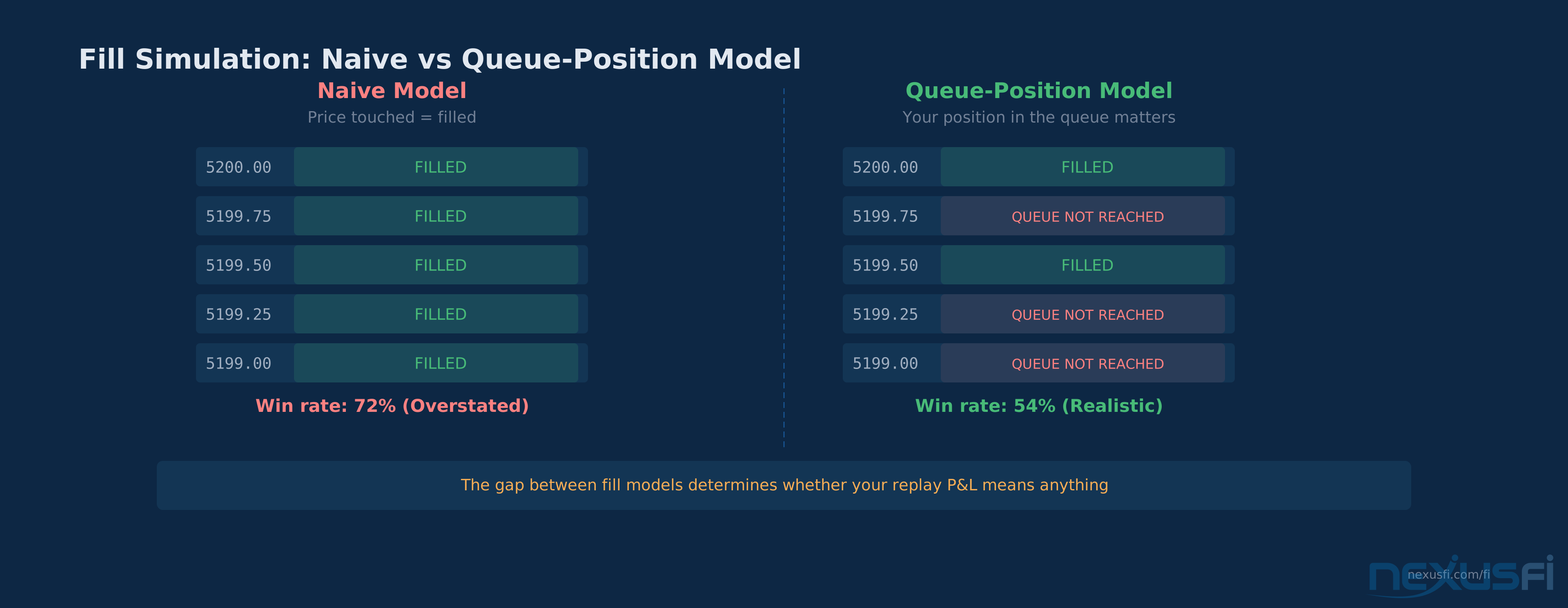
Naive fill model (most common): Price touched your level = filled. This is how most default replay settings work, and it's dangerously optimistic. In real markets, price touching your level means orders ahead of you in the queue filled first. Whether YOUR order fills depends on your position in the queue and the total volume traded at that level.
Queue-position modeling: The platform estimates where your order would sit in the queue based on when you placed it relative to existing resting orders. Your fill depends on enough volume trading through your level to reach your position. This is dramatically more realistic and dramatically less flattering to your P&L.
The math on why this matters: Say you place a limit buy at 5200.00 on ES during a pullback. In the naive model, any trade at 5200.00 fills you. In reality, there might be 500 contracts resting at that level ahead of you. If only 200 contracts trade at 5200.00 before price bounces, you don't get filled. That unfilled order — the one your platform says was a winner — never happened.
As @Fat Tails demonstrated in a NexusFi thread on simulated trades with market replay: the replay allows defining profit targets and trailing stops that can be tested in replay mode with adjustable speed from 1x to 500x. But the fill quality assumption underneath those targets determines whether your test results mean anything.
Partial Fills and Order Management #
Real futures markets produce partial fills. You want 10 contracts, you get 4, then the market moves. Your replay platform probably filled all 10 instantly. This overestimates your position size on winning trades and underestimates your slippage on entries.
Bracket and OCO (One-Cancels-Other) order behavior adds another layer. When your stop and target are both live and price gaps through one of them, the exchange's matching engine handles the cancellation of the other side. Your replay engine might handle this differently — or not handle it at all, leaving phantom orders in the book.
Slippage and Fee Modeling #
If your replay doesn't model exchange fees, NFA fees ($0.02), and broker commissions, your P&L is fiction. CME publishes its exchange fee schedule publicly; the E-mini S&P 500 (ES) runs $1.14/side as of this writing. On a strategy that trades 20 round trips per day, fees alone consume $45-60 per day. Over 250 trading days, that's $11,250-$15,000. A strategy that looks profitable in replay without fee modeling might be a net loser in production.
Slippage on market orders is similarly critical. During fast markets, your market order doesn't fill at the price you see — it fills at whatever's available when your order reaches the matching engine. Most replay engines model zero slippage on market orders. In reality, 1-2 ticks of slippage on ES during an FOMC release is standard.
Simulation Controls: Speed Kills Your Development #
The Speed Trap #
@mfbreakout, one of NexusFi's most prolific trading journal contributors, put it directly: "I am the biggest proponent of SIM trading via market replay. A trader should be able to pick up any trading day from the past and trade that day."
The emphasis on trading the day — not watching the day — is critical. And you can't trade a day properly at 20x speed.
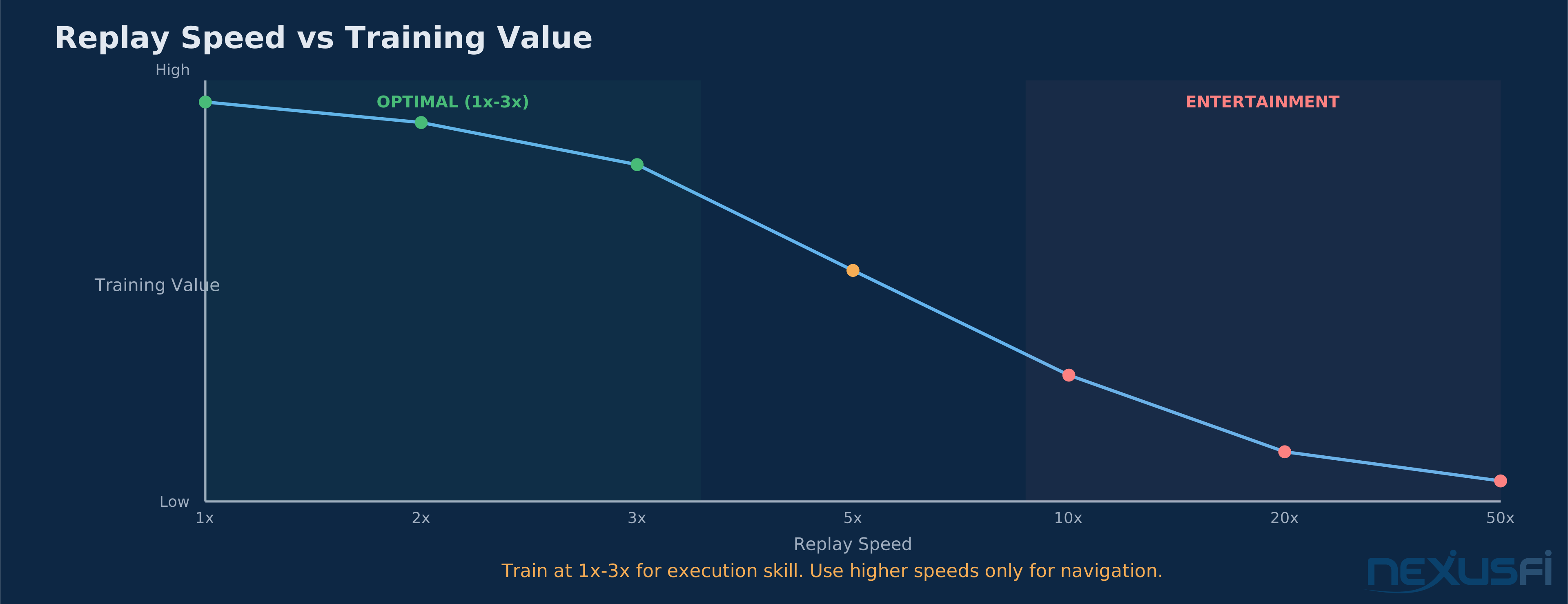
Running replay at high speed (10x+) defeats the fundamental purpose of the exercise. Decision-making is a time-dependent skill. The mental process of recognizing a setup, evaluating context, sizing the trade, placing the order, and managing the position takes real seconds under real conditions. At 10x speed, you're training yourself to make snap decisions based on compressed pattern recognition — a skill that's useless in live markets where the tape moves at 1x.
The expert consensus from experienced practitioners: train at 1x to 3x speed maximum. Use higher speeds only for navigation — fast-forwarding to a specific session or skipping lunch hours. When you're actively trading the replay, stay at real-time or close to it.
— but resisting that temptation is exactly where the discipline development happens.
Navigation and State Consistency #
Good replay platforms offer:
- Pause/resume without resetting the order book state
- Frame-by-frame stepping — advancing one event at a time for analysis
- Jump-to-time — navigating to specific timestamps (economic releases, session opens)
- Speed adjustment from 0.25x to 100x+ for navigation
The question to ask your platform: when you change speed or pause, does the order book state remain consistent? Some platforms recalculate or approximate during speed changes, which means the depth you see after a pause might not match what existed at that exact historical moment.
Platform Implementations: What to Evaluate #
Rather than reviewing specific products (that's what the Resource Directory is for), here's the evaluation checklist for any replay tool:
Data Quality Tier #
| Tier | Data Available | Good For | Not Good For |
|---|---|---|---|
| Basic | OHLC bars, aggregated volume | Chart pattern study | Order flow, execution training |
| Standard | L1 (BBO) + Time and Sales | Setup recognition, basic sim | DOM trading, queue analysis |
| Professional | Full L2 depth + Time and Sales | Order flow training, execution dev | Nothing — this is the standard |
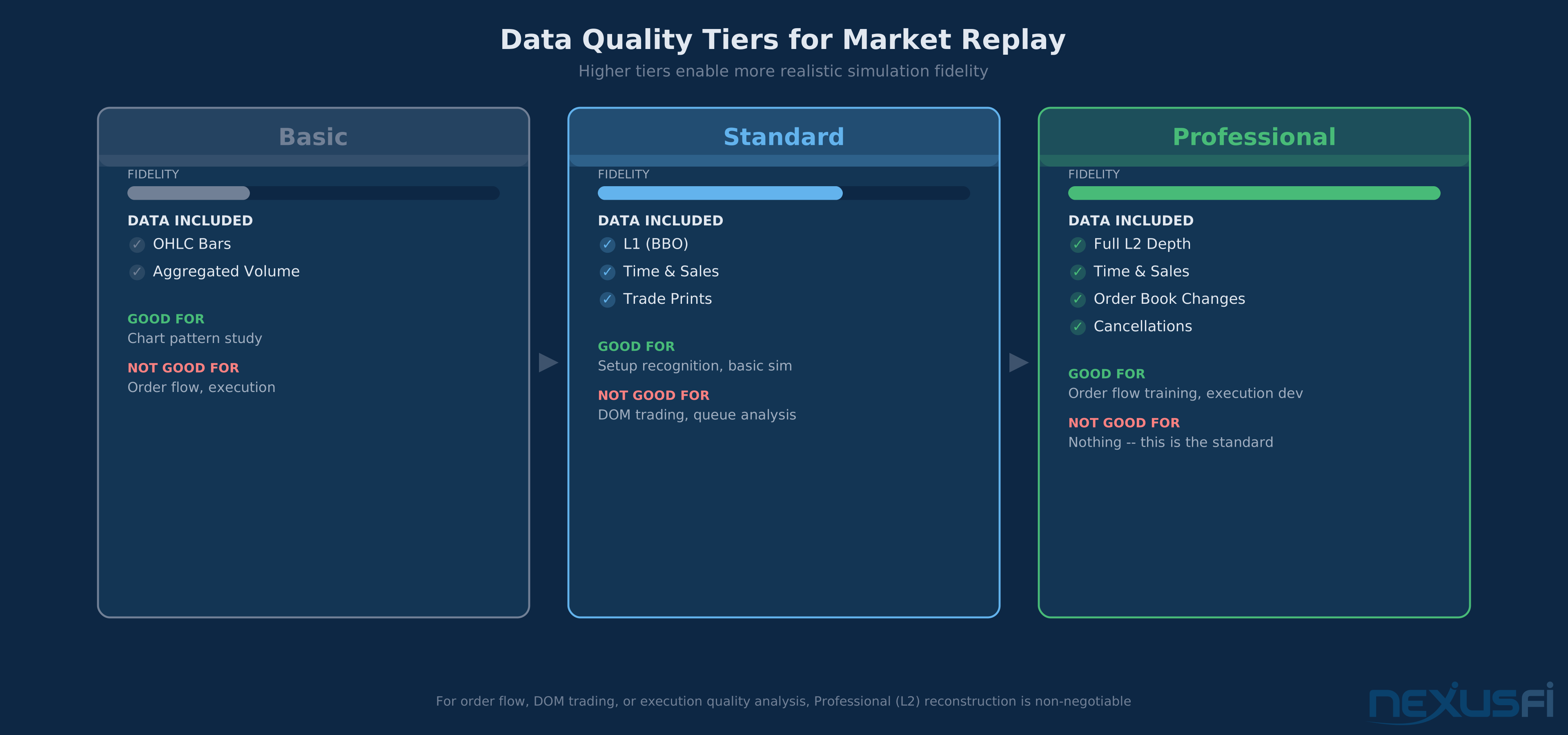
If your platform only offers bar-based replay (common in web platforms), you're studying chart patterns, not practicing trading. For execution skill development, you need at minimum L1 with Time and Sales.
Execution Model Transparency #
Can you configure the fill model? Do you know what assumptions the platform makes about queue position, partial fills, and slippage? If the platform doesn't document its fill model, assume it's optimistic.
NexusFi member @trendwaves raised a practical point about data sourcing: the platform "only provides market replay data files for download for a few select popular futures contracts." Your replay capabilities are constrained by your data. If the platform doesn't offer replay data for the instrument you trade, you'll need to source and import it yourself.
Performance Under Load #
Tick-intensive sessions (FOMC releases, flash crashes, rollover days) can generate tens of thousands of events per second. If your replay engine can't process this volume without time distortion, your fast-market practice is running in slow motion — the opposite of what you're trying to train for.
Reproducibility #
Can you replay the same session identically? Can you save and compare results across runs? Without this, you can't measure improvement or isolate the impact of changes to your approach.
The Training Protocol: How to Actually Use Replay #
This is the section that separates deliberate practice from messing around.
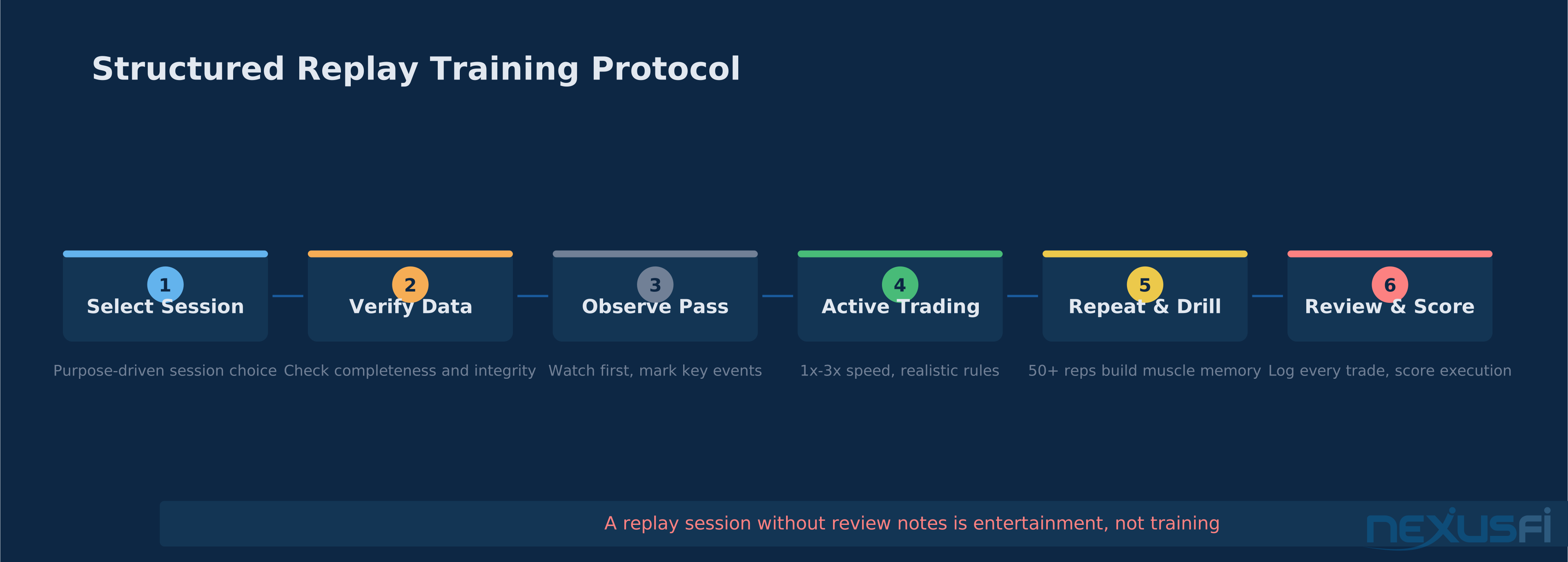
Step 1: Select Sessions With Purpose #
Don't randomly pick dates. Choose sessions that match what you need to practice:
- FOMC/NFP releases — for volatility response and fast-market execution
- Low-liquidity sessions — for patience and discipline when nothing is happening
- Trend days — for position management and scaling techniques
- Chop/range days — for recognizing when NOT to trade
- Rollover periods — for spread behavior and volume transition
- Flash crash events — for emergency management and emotional control
The mix matters. As every experienced practitioner emphasizes: replaying only "perfect setup" days creates survivorship bias. You MUST include difficult, boring, and losing sessions in your practice rotation.
Step 2: Verify Data Before Starting #
Before trading a replay session, check:
- Is the data complete? Any missing periods, especially pre-market/Globex?
- Is the contract correct? Continuous contract roll logic can create false price action at rollover boundaries.
- Does the session calendar match? Shortened sessions, holidays, and maintenance windows all affect what "normal" looks like.
Step 3: Baseline Observation Pass #
Watch the entire session once in observe mode before trading it. Mark key events: where volatility spikes, where the trend establishes, where liquidity thins out. This isn't cheating — it's context building. Live traders read pre-market notes and review overnight activity. Your observation pass serves the same function.
Step 4: Active Trading at Realistic Speed #
Now trade the session at 1x to 3x speed with:
- Realistic position sizing for your account
- Realistic fee and slippage settings enabled
- Order types you'd actually use live (not market orders for entries when you'd normally use limits)
- Risk management rules enforced (daily loss limits, position limits)
Step 5: Controlled Repetition #
This is where replay beats every other form of practice. You can trade the same session 10, 20, 50 times. Each repetition builds pattern recognition and execution muscle memory for that specific type of market behavior.
The concept is borrowed from deliberate practice in other performance domains: musicians don't play a piece once and move on. They drill the difficult passages repeatedly until the execution becomes automatic. Market replay gives traders the same capability. This isn't just trading wisdom — K. Anders Ericsson's landmark 1993 research demonstrated that deliberate, structured repetition — not innate talent — is the primary mechanism behind expert performance across all skill domains.
@mfbreakout advocated exactly this approach in the NexusFi Elite Circle: a trader should be able to pick up any trading day and trade it via replay, building the repetition that transforms understanding into execution.
Step 6: Post-Session Review (Non-Negotiable) #
A replay session without review notes is entertainment, not training. A structured trading journal turns raw replay data into systematic improvement. After each session:
- Record every trade — entry, exit, size, P&L, and the reason for each decision
- Score your execution — did you follow your plan? Were entries at the intended price?
- Measure decision latency — how long between recognizing the setup and acting?
- Identify mistakes — categorize as execution errors (wrong button, wrong size) vs. judgment errors (wrong read, wrong timing)
- Track improvement — compare this session's metrics to previous replays of the same type
Without this feedback loop, repetition doesn't produce improvement. You're just repeating your mistakes with increasing confidence.
Common Mistakes: The Simulator Trap #
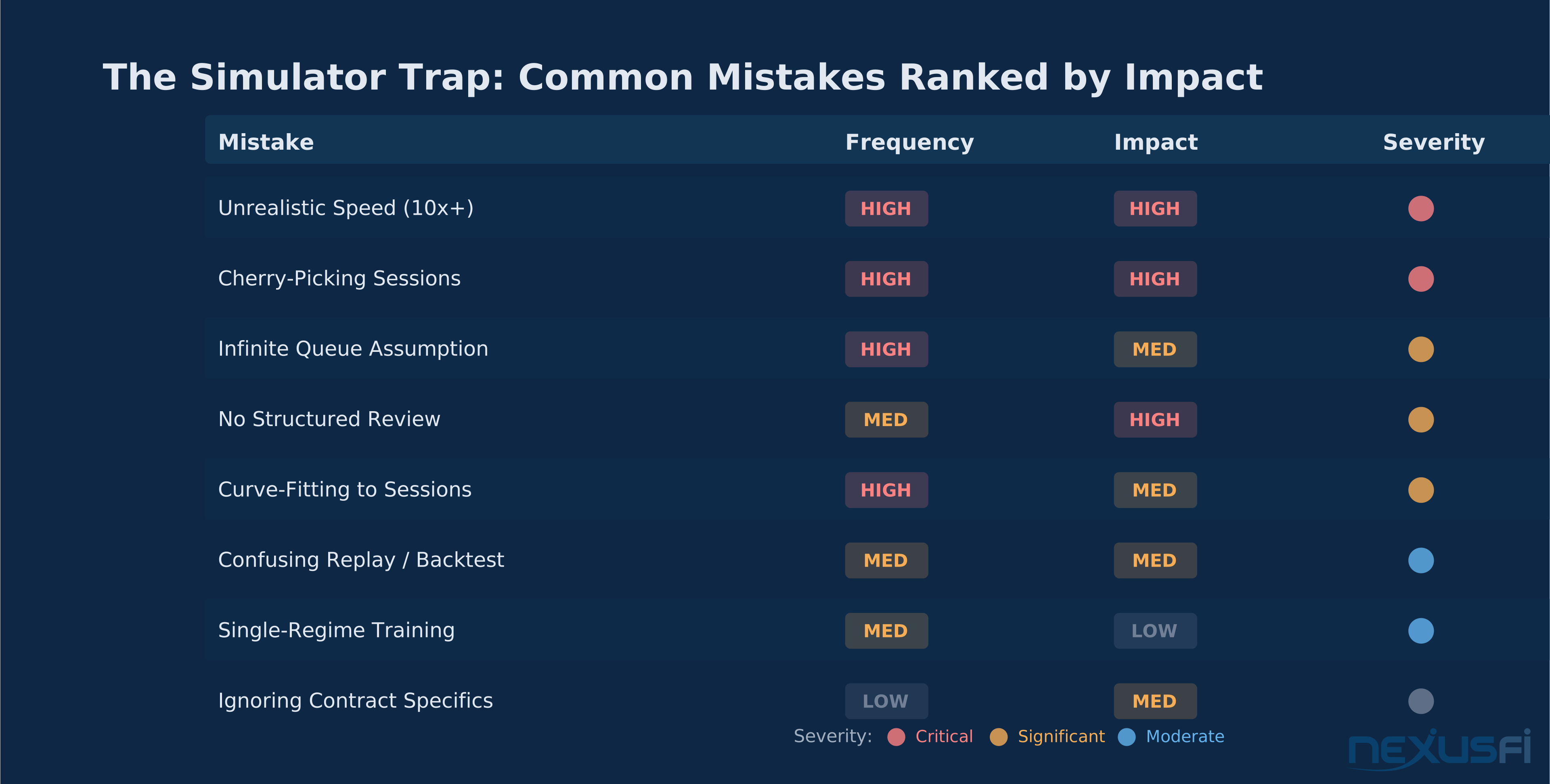
1. Unrealistic Speed (The #1 Problem) #
Running at 10x-50x speed and calling it practice. You can't develop realistic decision-making timing or emotional responses at warp speed. Your brain processes the compressed patterns differently than real-time patterns. The skills you build at 20x speed don't transfer to live trading at 1x.
2. Cherry-Picking Sessions #
Only replaying days where your strategy would have worked perfectly. This creates dangerous survivorship bias — you develop confidence calibrated to ideal conditions and fall apart when live markets deliver the choppy, indecisive sessions that make up 60-70% of trading days.
3. The Infinite Queue Assumption #
Believing every limit order fills because price touched your level. In live markets with real queue position dynamics, a significant percentage of limit orders at support/resistance levels never fill. If your replay strategy relies on limit order entries at key levels, your backtested win rate is higher than your live win rate will be.
4. No Structured Review #
Replaying without recording, note-taking, or post-session analysis. You wouldn't go to batting practice without tracking your hit rate. Replay without metrics is the same thing.
5. Curve-Fitting to Specific Sessions #
Over-optimizing your approach to perform well on the specific sessions you've replayed. If your "edge" only works on the 15 days you practiced, it's memorization, not skill. Test across diverse sessions and market regimes.
6. Confusing Replay With Backtesting #
Using replay to "test" a strategy by running it multiple times and averaging results. That's backtesting's job, and backtesting does it better — with larger samples, controlled variables, and statistical validation. Replay is for skill acquisition: developing discretionary execution, pattern recognition, and emotional discipline.
7. Single-Regime Overtraining #
Replaying only trending days from 2024 and assuming the skills transfer to mean-reverting markets in 2025. Futures microstructure regimes change: volatility expands and contracts, participation rates shift, and algorithmic behavior evolves. Train across time periods, not just across session types.
8. Ignoring Contract-Specific Behavior #
Assuming skills developed replaying ES transfer directly to CL, NQ, or ZN. Each market has unique order flow characteristics, spread behavior, tick value, and volatility patterns. Crude Oil's intraday rhythm is nothing like Treasury futures. Practice the specific instrument you trade.
Where Replay Fits in the Development Pipeline #
Market replay is one tool in a progression, not a complete solution:
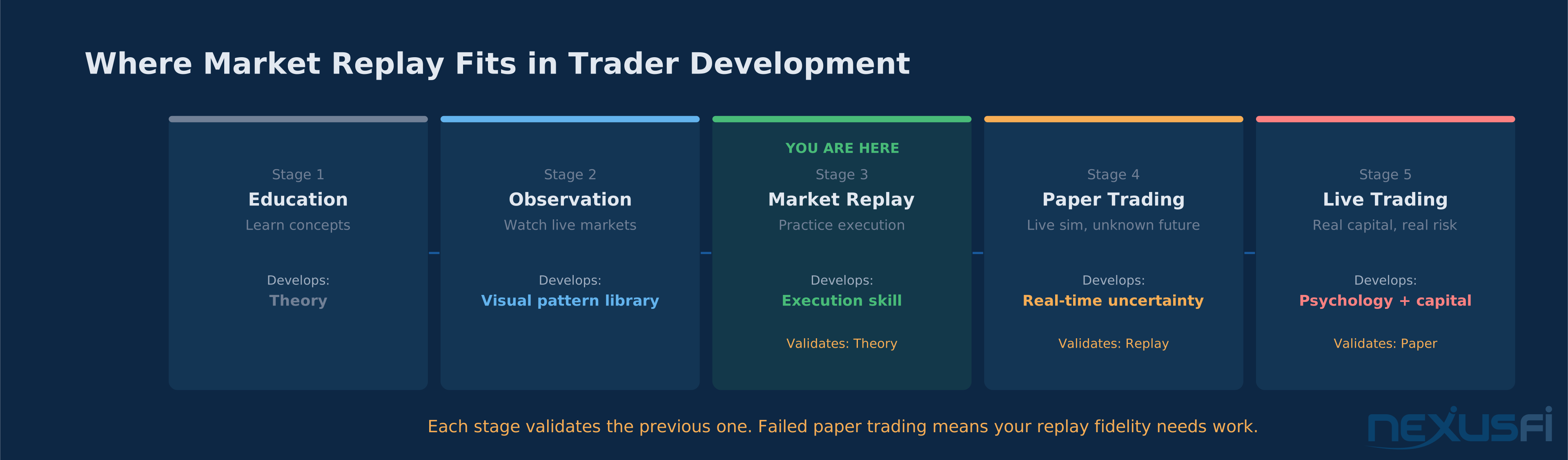
Stage 1: Education — Learn the concepts (Academy articles, courses, books)
Stage 2: Observation — Watch live markets, study recordings, build visual pattern library
Stage 3: Market Replay — Practice execution against historical data with unknown future. This is where you develop the discretionary skills that can't be automated: reading order flow in real time, managing trades under pressure, recognizing when your thesis is wrong.
Stage 4: Paper/Demo Trading — Apply skills against live markets with real-time uncertainty. The step up from replay is that you can't rewind, you can't pause, and the outcome is genuinely unknown.
Stage 5: Live Trading — Real capital, real consequences, real trading psychology.
Each stage validates the previous one. If your replay results don't survive paper trading, your replay practice has a fidelity problem — probably optimistic fills or cherry-picked sessions. If your paper results don't survive live trading, the issue is psychological, not technical.
The Expected Value of Deliberate Replay Practice #
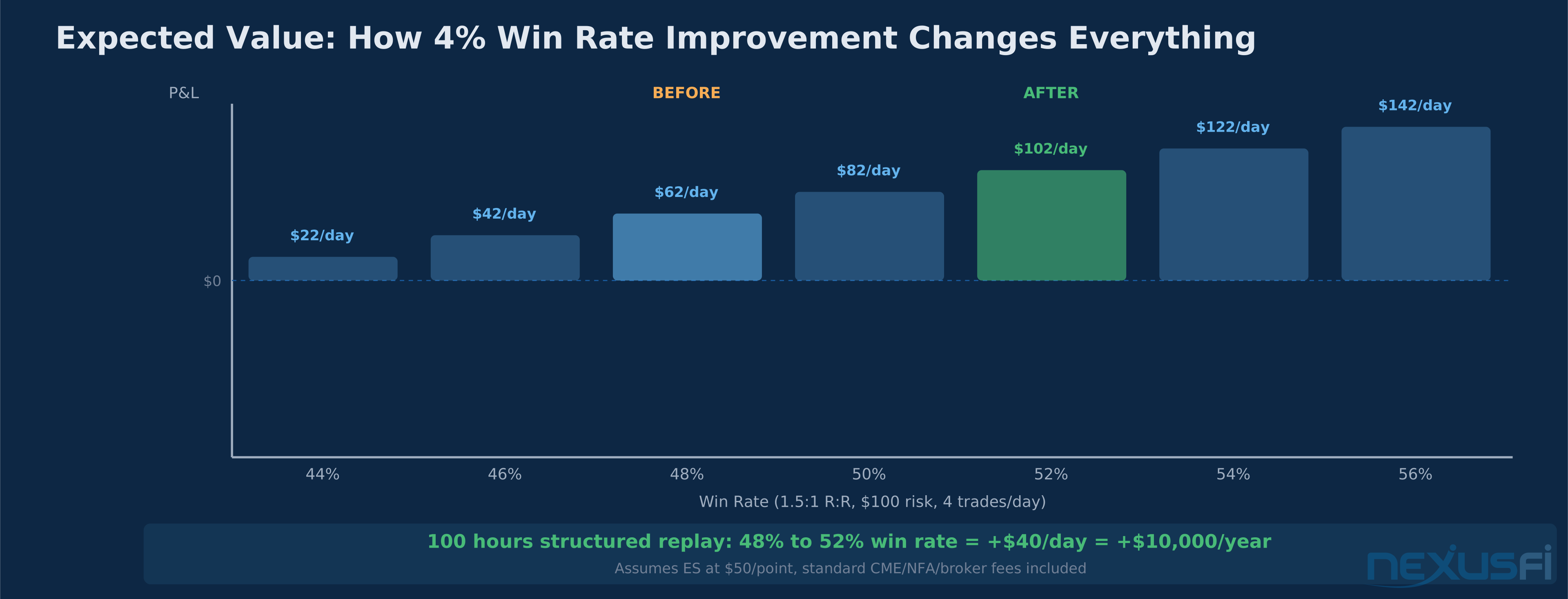
Here's the math that makes replay worth the effort.
Say you trade ES and your current win rate is 48% with a 1.5:1 reward-to-risk. Your expected value per trade is slightly negative:
EV = (0.48 x 1.5R) - (0.52 x 1R) = 0.72R - 0.52R = +0.20RWith $100 risk per trade and 4 trades per day, that's $80/day before fees. After fees (~$4.56 per round trip on ES), you net about $62/day.
Now say 100 hours of structured replay practice (50 sessions x 2 hours each, reviewed and analyzed) improves your win rate from 48% to 52% — a 4-percentage-point improvement, which is realistic for a trader moving from "competent" to "consistent."
EV = (0.52 x 1.5R) - (0.48 x 1R) = 0.78R - 0.48R = +0.30RThat's $120/day before fees, $102/day after. The improvement is $40/day, or roughly $10,000 per year.
The replay data costs $0-50/month depending on platform. The time investment is 100 hours over, say, 6 months. The expected return on that investment dwarfs the cost — if you practice deliberately, not casually.
The Bottom Line #
Market replay is the most underutilized training tool in futures trading. Not because traders don't know it exists, but because most traders use it as chart entertainment rather than deliberate practice.
The technology is straightforward: reconstruct historical market data, play it forward, make decisions without knowing the outcome. The execution is where it gets hard: maintaining realistic speed, using honest fill simulation, practicing diverse conditions, and reviewing every session with the same rigor you'd apply to live trading.
If you treat replay like practice — structured, reviewed, progressive, and honest about its limitations — it's the fastest path to execution competence in futures trading. If you treat it like a game, it will make you confident and unprepared. Different outcomes entirely.
Knowledge Map
Go Deeper
Build on this knowledgeCitations
- — Forex/Futures trading simulator platform? (2020) 👍 3“The way you are using the terms "demo" and "simulated" is different from the way they are usually used, so let me be sure I have understood what you are asking.”
- — Simulated Trades with Historical Data in Market Replay Mode (2012) 👍 2“NinjaTrader allows you to submit OCO orders and has an inbuilt Automated Trade Management (ATM), which allows you to define profit targets and a trailing stop. This can be tested in replay mode.”
- — SIM Trading, and how to get better (2012) 👍 3“I am the biggest proponent of SIM trading via market replay. A trader should be able to pick up any trading day from the past and trade that day via replay per his/her method and set ups.”
- — GruttePier's trading journal to getting profitable (2018) 👍 4“He man, I like to have everything as realistic as possible. I can imagine it might be tempting to increase speed or jump to interesting areas because it's more time effecient but that's not what I want.”
- — How to use Market Replay in NinjaTrader? (2016) 👍 1“Odds are pretty good there is no market replay data available for back month contracts. If that is in fact the case, you would have to record your own data and produce your own market replay data files.”
- — Market Replay Users Unite! (2012) 👍 9“Market replay data here... Expanded size = 12.9gb - you will need at least 13gb on the drive where you store NT7 data, and at least another 13gb on a separate drive to prepare the data for import.”
- CME Group — Exchange Fees for Clearing & Trading (2026)
- Ericsson, K. A., Krampe, R. T., & Tesch-Romer, C. — The Role of Deliberate Practice in the Acquisition of Expert Performance (1993)