



Position Sizing in Prop Firm Evaluations: The Math Behind Surviving and Thriving
Overview #
Position sizing in a prop firm account is not the same problem as position sizing in your personal account. The math is different, the stakes are different, and the failure modes are different. In a personal account, oversizing costs you money. In a prop firm evaluation, it costs you the entire account — and you're buying a reset.
The core challenge: you're operating under three simultaneous constraints that don't exist in standard retail trading. Miss any one of them and the account terminates. Most traders focus on the profit target (the goal) and ignore the two constraints that actually end evaluations: the daily loss limit and the max drawdown ceiling. That mismatch is why the majority of evaluation attempts fail in the first 10 days — not because the trader's edge is bad, but because their position size was wrong for the rule set they were operating under.
This article gives you the framework to calculate the correct starting contract count for any prop firm account size, the three sizing models experienced traders use, and the failure modes that end evaluations even when the underlying trading is sound. Work through this before Day 1 of any evaluation — not during it.
The Constraint Stack #
Prop firm position sizing operates under three layered constraints that all activate simultaneously. You're not just managing risk — you're satisfying a system of equations that will terminate the account if any one is violated.
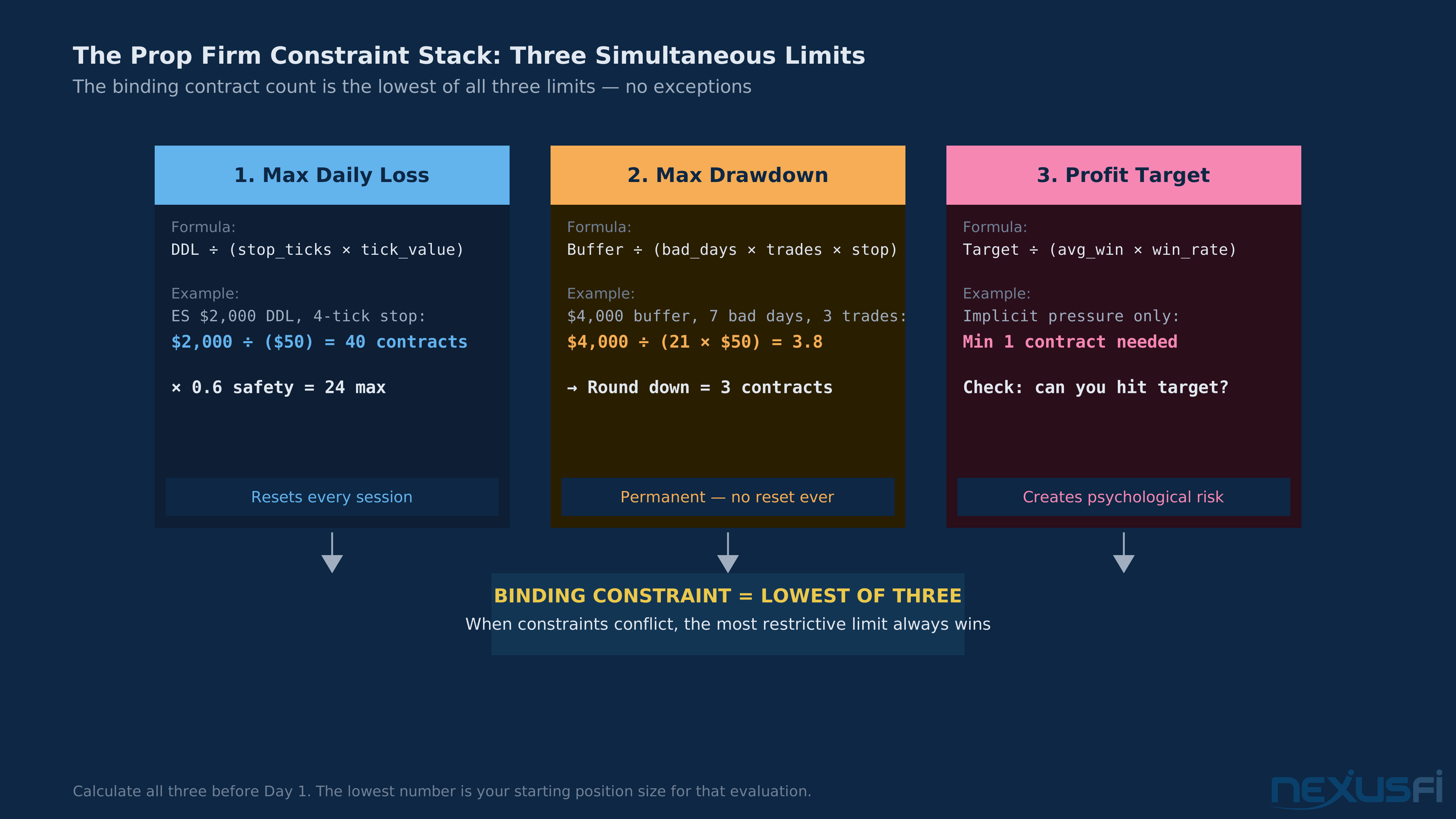
Constraint 1: Max Daily Loss (DDL) — the maximum dollar amount you can lose in a single session before the platform locks the account for the day. Typical values: $500 on a $25K account, $1,000 on $50K, $2,000 on $100K. This resets every calendar day.
Constraint 2: Max Drawdown — the maximum aggregate loss from either the starting balance or the account peak before the account terminates permanently. This comes in two flavors: trailing (the floor rises as you earn money, making a profitable account paradoxically fragile) and static (fixed dollar amount regardless of P&L). See Trailing Drawdown vs Static Drawdown for the mechanics — they produce very different sizing requirements.
Constraint 3: Profit Target — the dollar amount you need to earn within the evaluation period to pass. The profit target doesn't directly cap your position size, but it creates time pressure that pushes traders toward oversizing. If you're not on pace with conservative sizing, the temptation to "catch up" with larger contracts is where most evaluation failures originate.
One often-missed fourth constraint: explicit maximum contract limits. Most platforms hard-cap the number of contracts you can hold simultaneously, regardless of margin or risk calculations. On a $100K account, you might be limited to 10 ES contracts even if your risk budget suggests 20 would be viable. Always read the specific contract limits in your account agreement before assuming position size flexibility.
The profit target is not a constraint on position size — it's a psychological trigger. The actual hard limits are the DDL and the max drawdown. Traders who lose evaluations on Day 25 of a 30-day evaluation usually weren't sizing correctly relative to the drawdown limit; they were sizing relative to how far behind pace they felt.
Key Concepts #
Max Daily Loss: Your Per-Session Budget #
The DDL is the most immediate constraint because it shapes every single session. The formula:
DDL-Based Max Contract Count Theoretical max = DDL ÷ (stop_ticks × tick_value) Applied ceiling = Theoretical max × 0.6 safety factor
Example (ES, $1,000 DDL, 4-tick stop): $1,000 ÷ (4 × $12.50) = $1,000 ÷ $50 = 20 contracts 20 × 0.6 = 12 contracts (session start maximum)
The 0.6 safety factor accounts for the reality that most sessions involve multiple trades, and the DDL isn't just for one catastrophic stop hit — it covers the entire session including slippage, commissions, and the natural equity curve of multiple trades.
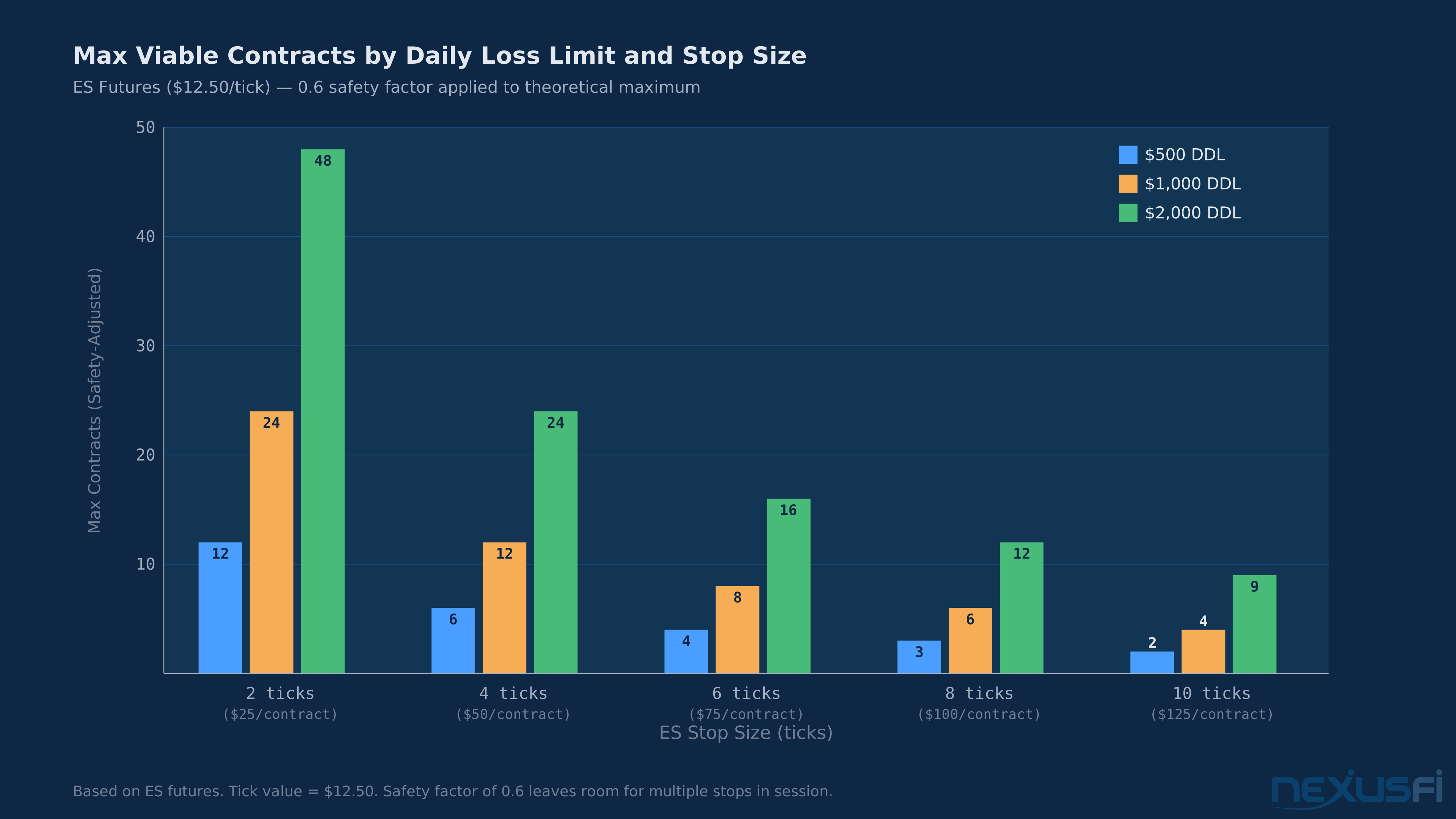
The visualization illustrates a critical insight: a wider stop doesn't give you more room — it directly reduces how many contracts you can trade. A 10-tick stop (1 full ES point above/below, $125 per contract) on a $1,000 DDL account lets you start with only 4 contracts. Traders who use wide stops and full position size simultaneously are almost always violating the DDL math, even if they don't realize it.
@bwolf walked through the consecutive-loss math in his ES trading journal, which makes the DDL constraint concrete:
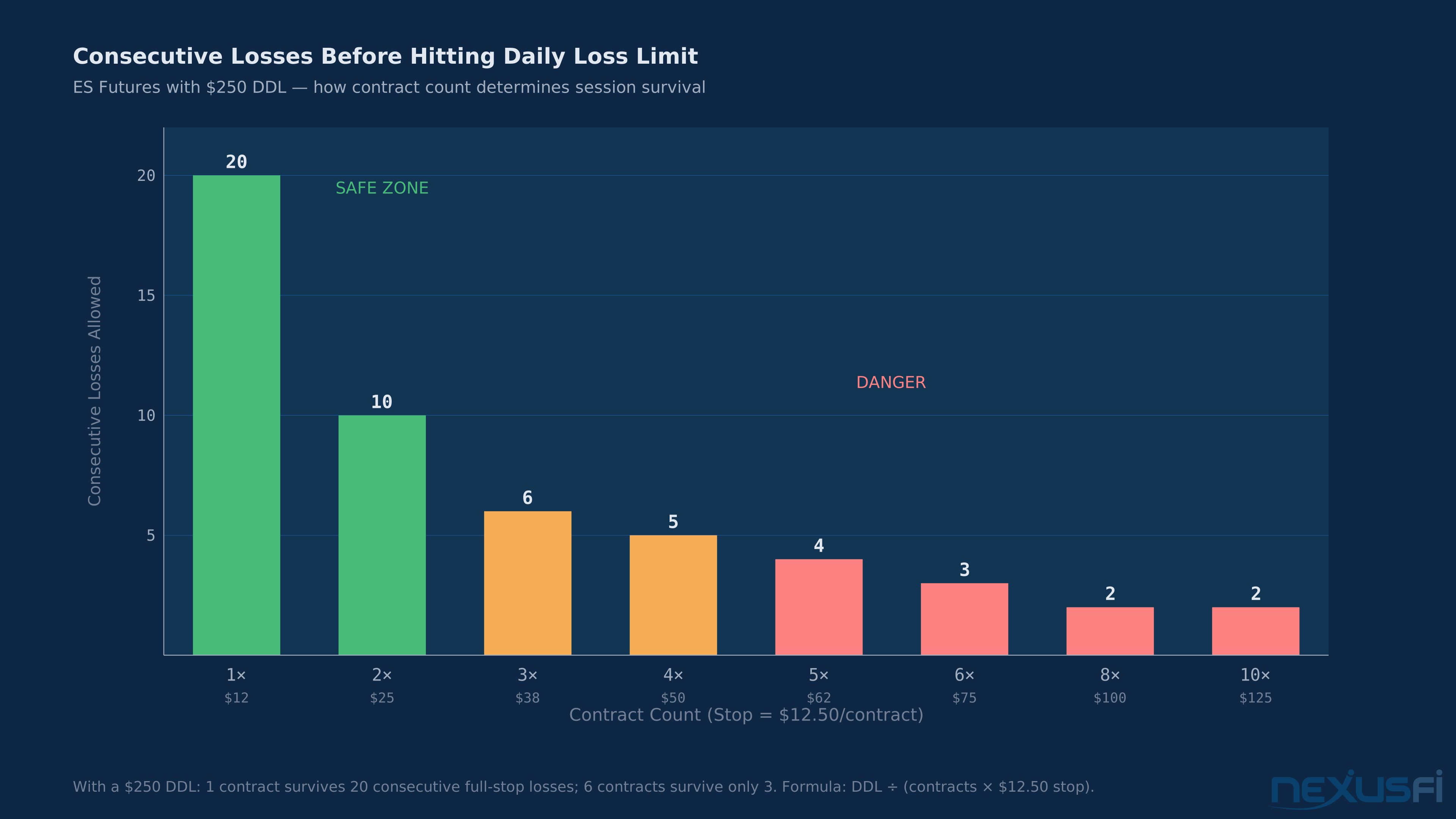
The visualization makes the tradeoff tangible. That's not a theoretical observation — it's arithmetic. Position size doesn't just affect how much you make per trade; it determines how many trades you get before the day ends.
That math reframes the position sizing decision: you're not choosing how much you want to make per trade — you're choosing how many consecutive losses you can absorb before the session ends. The larger the contract count, the shorter that string.
Max Drawdown: The Permanent Ceiling #
The max drawdown imposes a harder constraint than the DDL because there's no recovery. The DDL resets tomorrow. The max drawdown doesn't. Once it's breached, the account terminates and you're buying another evaluation.
With a trailing drawdown specifically, your effective risk budget shrinks as the evaluation progresses. Every profitable day raises the floor, which means a subsequent losing period hits that higher floor faster. A trader who starts a $50K account with a $2,500 trailing drawdown and earns $1,200 in the first week now has an effective $1,300 cushion — not $2,500. This is the dynamic that catches experienced traders who assume their remaining drawdown equals the starting drawdown.
The drawdown-based sizing formula:
Drawdown Buffer Sizing Cushion = Total drawdown limit (use current remaining, not starting) Max contracts = Cushion ÷ (bad_days × trades_per_day × stop_per_contract)
Example ($4,000 remaining cushion, planning for 7 bad days, 3 trades/day, $50 stop/contract): Max contracts = $4,000 ÷ (7 × 3 × $50) = $4,000 ÷ $1,050 = 3.8 → 3 contracts
This is a survival calculation — it tells you the maximum size that lets you absorb seven fully-bad trading days before the drawdown ceiling ends the account. If your starting size exceeds this number, you're not evaluating your edge — you're gambling on whether the next seven sessions happen to go well.
@trekke published his exact sizing schedule for a $50K NQ account with a $2,500 trailing drawdown:
The key feature: the size schedule is a daily calculation, not a static choice. The contract count is a function of the current cushion level, not a number decided on Day 1 and held forever.
Profit Target: The Forcing Function #
The profit target creates time pressure that makes sizing harder psychologically. If you need $3,000 in 30 days, that's $100/day average. At 1 ES contract, a good session is $200-400. The math works — slowly. The problem isn't the math — it's what happens when you fall behind. A trader at $800 with 10 days left and a $3,000 target faces a sizing decision that feels like an emergency but isn't: a conservative evaluation at reduced size still pays out, while a blown evaluation on Day 28 costs another reset fee.
See Prop Firm Evaluation Strategies for the complete framework on pacing an evaluation within your rule set.
The Three Sizing Models #
@kevinkdog ran Monte Carlo simulations across his Combine in 2013 and quantified the three fundamental approaches to prop firm position sizing. These models have become the standard framework:
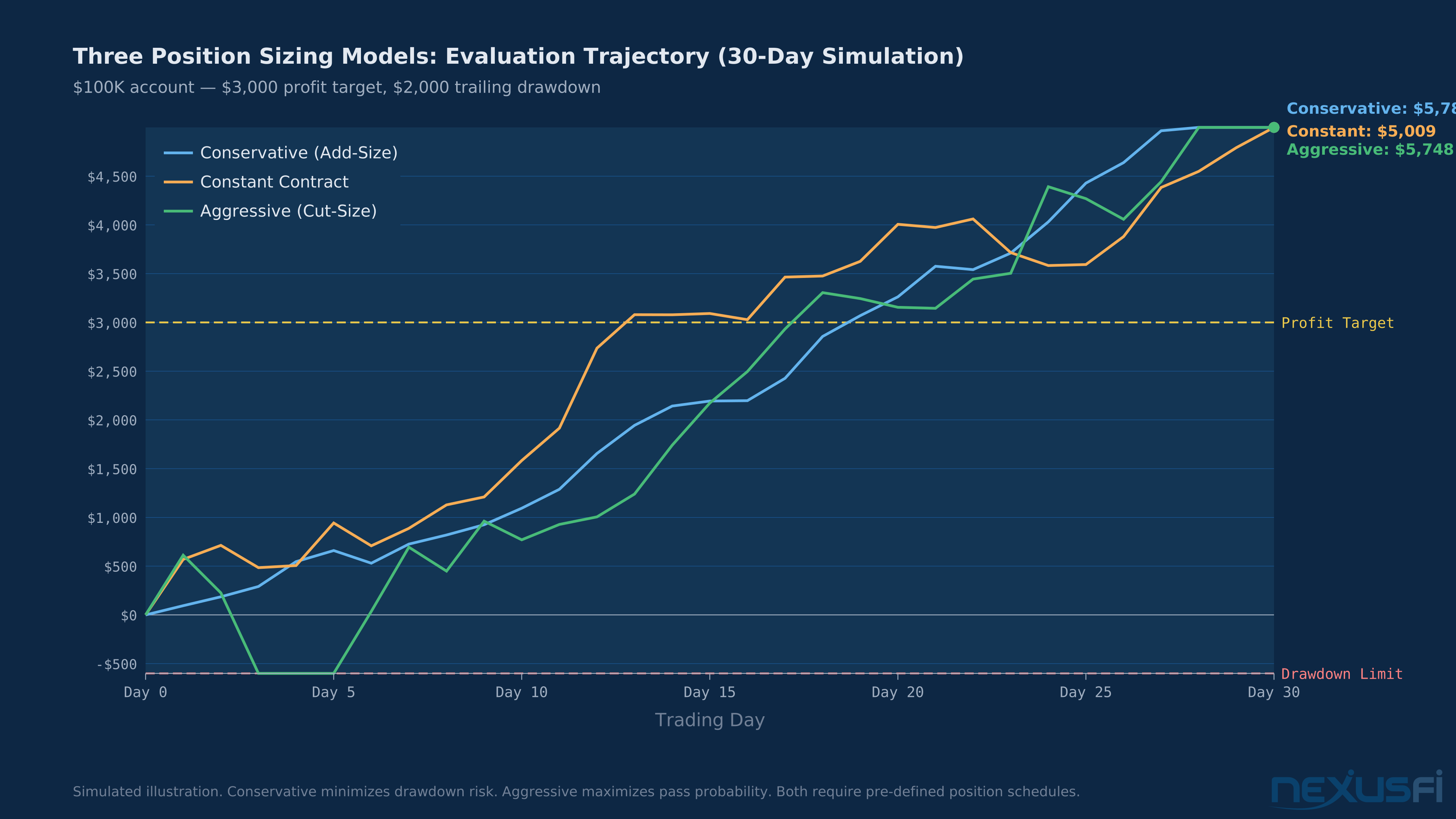
Model 1: Constant Contract — trade the same number of contracts every session regardless of cushion or daily P&L. Simple and predictable. Good for testing edge purity because you know exactly what your results mean. The weakness: no cushion protection as you approach the drawdown ceiling, no size leverage when you have room.
Model 2: Add-Size (Conservative) — start at the minimum viable contract count. Add size only when cushion grows above specified thresholds. This maximizes the probability of surviving the evaluation but reduces the probability of passing it within the time limit. Best suited for live funded accounts where account retention is more valuable than faster scaling.
Model 3: Cut-Size (Aggressive) — start near your maximum viable size. Mechanically reduce contracts as the cushion shrinks. kevinkdog's conclusion after Monte Carlo analysis:
The Cut-Size model maximizes the probability of reaching the profit target — which is the evaluation's primary objective. The tradeoff is higher variance and a shorter tolerance for bad streaks.
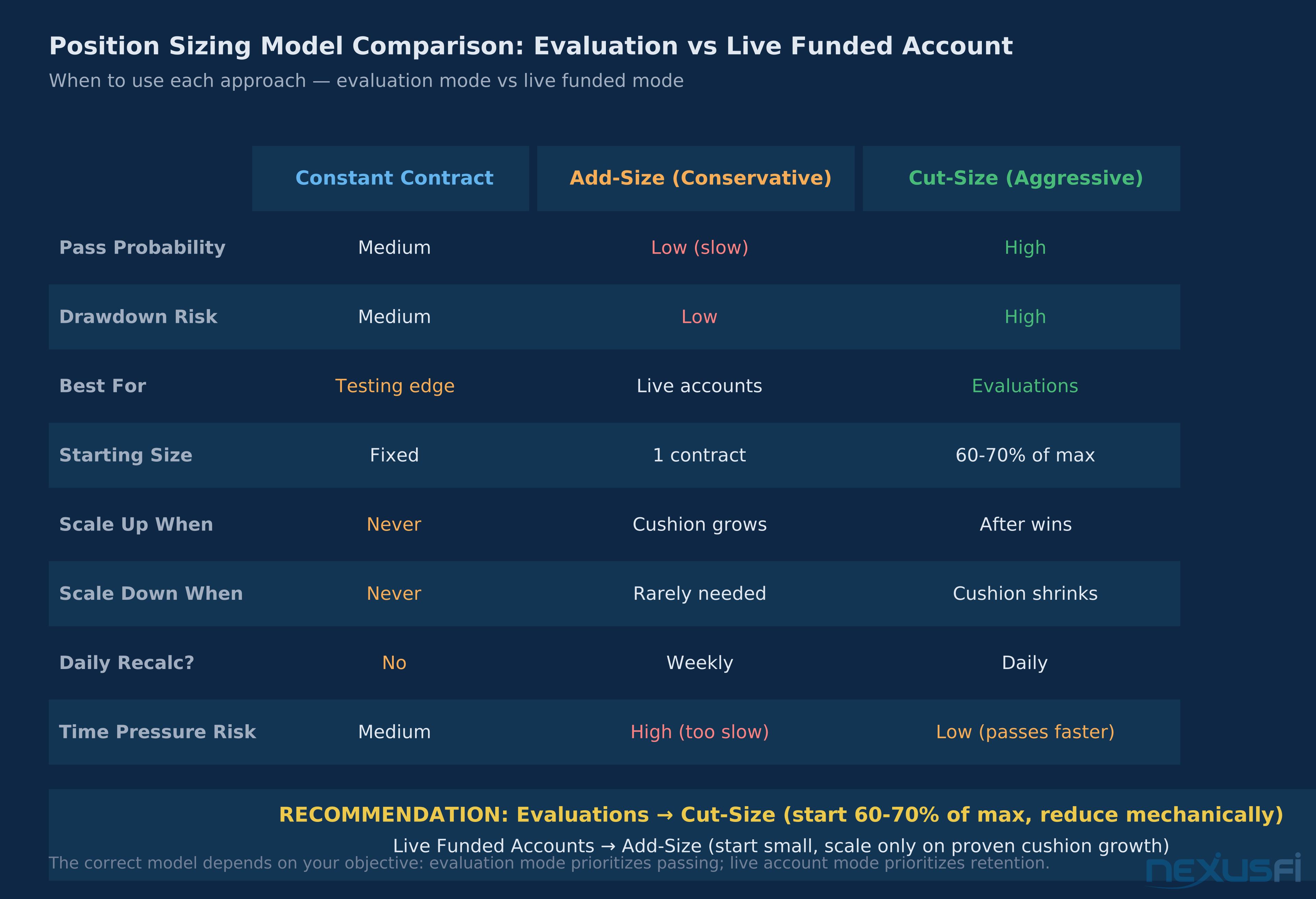
The hybrid approach — which most experienced prop traders settle on — combines both: start at 60-70% of your DDL-derived ceiling, scale down mechanically as cushion shrinks, and scale up modestly after profitable stretches. This is what trekke's schedule implements.
For evaluations: use the Cut-Size or Hybrid model — you have a finite time window and need to pass. For live funded accounts: use the Add-Size model — account retention is worth more than faster scaling because there are no resets after a funded account failure.
Working Out Your Starting Size: The Four-Step Framework #
Before Day 1 of any evaluation, work through this calculation in a spreadsheet:
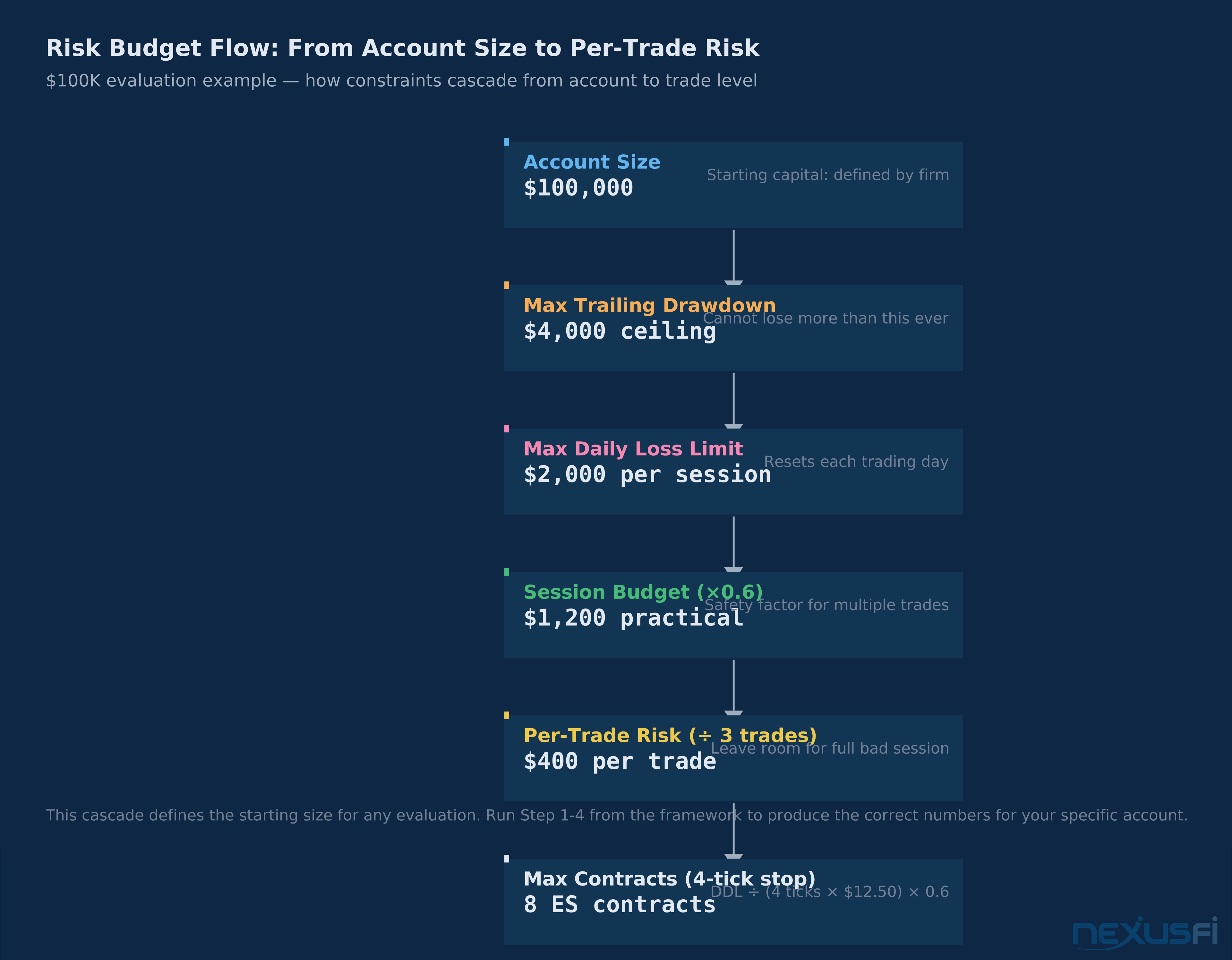
Step 1: DDL-Derived Ceiling
DDL ÷ (stop_ticks × tick_value) = theoretical max contracts × 0.6 safety factor = session starting ceiling
Example ($100K account, $2,000 DDL, ES with 4-tick stop): $2,000 ÷ (4 × $12.50) = 40 theoretical max → × 0.6 = 24 contracts
Step 2: Drawdown Buffer Sizing
(Drawdown cushion) ÷ (bad_days × avg_trades × stop_per_contract) = max contracts
Determine how many "fully bad days" you need to survive. For most evaluations, 5-8 bad days is a reasonable buffer.
Example ($4,000 trailing drawdown, 7 bad days, 3 trades/day, $50 stop): $4,000 ÷ (7 × 3 × $50) = $4,000 ÷ $1,050 = 3.8 → 3 contracts
Step 3: Take the Lower Number
Step 1 says 24. Step 2 says 3. You start at 3 contracts.
Most traders skip this step. They calculate the DDL ceiling and assume that's their position size. The drawdown buffer arithmetic is what actually governs long-term survival in the evaluation.
Step 4: Pre-Define Your Step-Down Schedule
Before you start trading, write the exact contract counts at each cushion level. Not "I'll reduce if things get bad" — specific numbers triggered by specific thresholds.
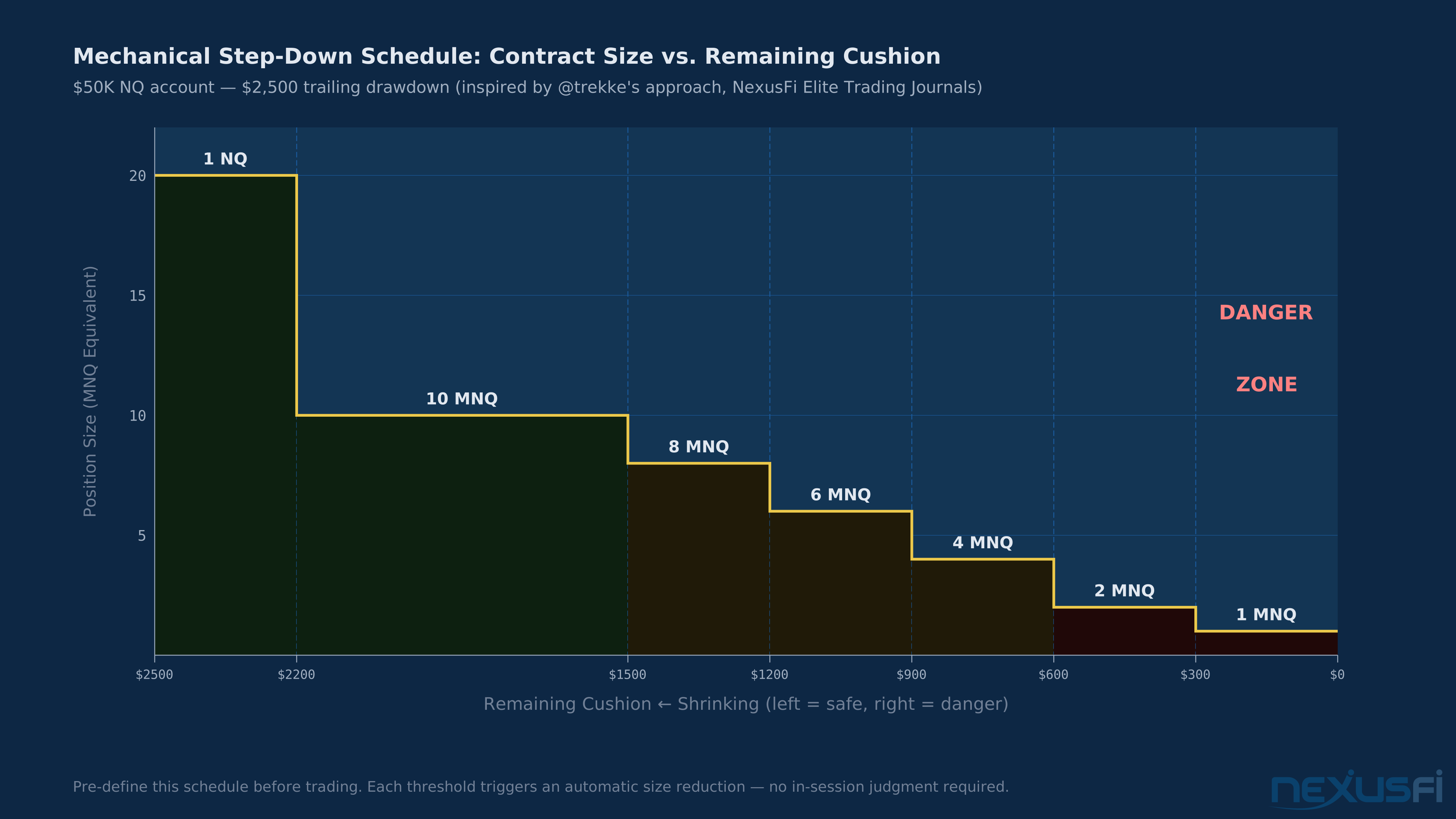
The schedule is non-negotiable once trading begins. In-session sizing decisions based on how a trade feels or how the session is going are how most prop firm accounts end. The schedule removes judgment from the equation.
Build the step-down schedule in a spreadsheet before the evaluation starts. Inputs: DDL, drawdown amount, stop size in ticks, tick value, target bad-day buffer. The spreadsheet outputs your starting size and every threshold. Print it. Keep it visible during trading. The worst time to calculate position size is during a drawdown when judgment is compromised.
@sstheo tested all three scaling models (Progressive, Combo, Regressive/Cut-Size) against real trade data in his MES live account journal. His results confirmed that Cut-Size (Regressive) produced the highest theoretical P&L — $40K versus $27K for Add-Size — but noted the key dependency: "the average trade profit really needs to stay up there in the $25+ range for things not to go south fast." The model only outperforms when the underlying edge is real.
Sizing Benchmarks for Common Account Sizes #
@josh articulated the conservative end of the sizing spectrum in a 2021 discussion on funded trader results:
That's dramatically more conservative than most prop firm traders attempt. Context: ES was running 100-point daily ranges. 1 contract in a 100-point-range environment is not "small" — it's 1,250 point-dollars of daily exposure. Contract count alone doesn't tell you risk exposure; volatility regime does.
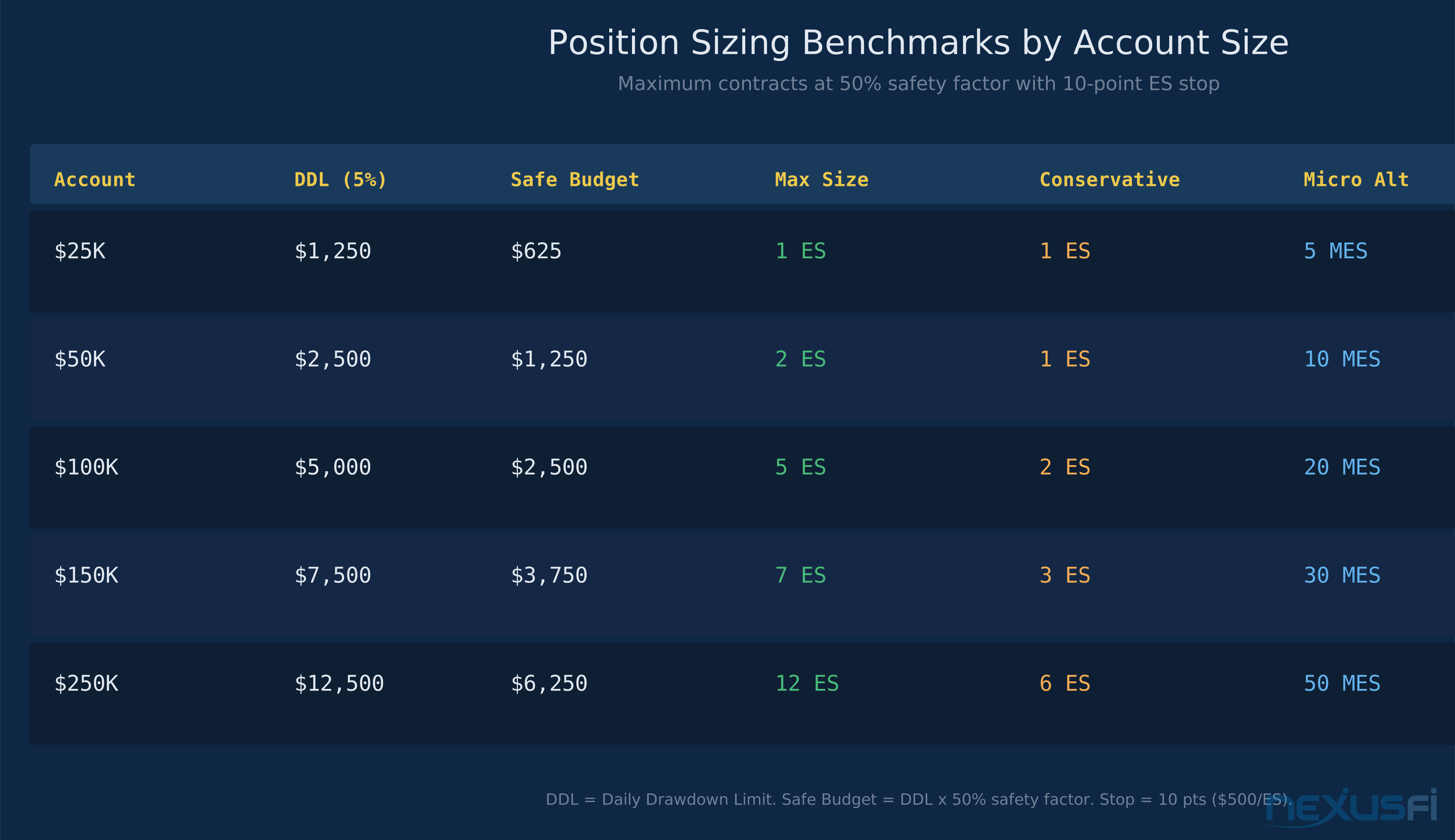
Practical starting benchmarks (evaluation phase):
| Account | DDL | Instrument | Conservative Start | Maximum Start |
|---|---|---|---|---|
| $25K | $500 | ES | 1-2 MES | 4 MES |
| $50K | $1,000 | ES | 1-2 MES or 1 ES | 8 MES or 2 ES |
| $100K | $2,000 | ES | 2-3 ES | 5-6 ES |
| $50K | $1,000 | NQ | 1-3 MNQ or 1 NQ | 8 MNQ or 2 NQ |
| $100K | $2,000 | NQ | 2-3 NQ | 4-5 NQ |
These are starting points. The four-step framework above produces the correct numbers for your specific stop size and trade frequency. Run the math — don't use the table as a substitute for the calculation.
When Position Sizing Fails in Prop Firm Accounts #
The evaluation-day-1 YOLO start. Most evaluation failures happen in the first week, when traders start at or near the maximum allowed size because they want to "build cushion early." This inverts the logic. Cushion takes weeks to build; a drawdown that ends the account takes a morning session.
@MarketMage, after passing multiple TopStep evaluation steps by dramatically reducing to micros:
Ignoring volatility regime. The correct contract count for a 50-point daily ES range is not the correct count for a 150-point daily range. High-volatility sessions hit stops faster and deeper. When VIX is more than 50% above its 20-day average, apply a 0.75 multiplier to your current tier's contract count — not because the trade is weaker, but because the per-contract dollar risk is higher in the same tick-denominated stop.
FOMC meetings, CPI releases, and non-farm payroll days create volatility spikes that can breach the daily loss limit in a single 1-minute candle. Many firms have explicit news trading restrictions (see News Trading Restrictions in Prop Firm Funded Accounts). For firms that don't: reduce size to 50% before any scheduled major economic release, or exit positions before the print and re-enter after the initial spike. The alternative is gambling 100% of the day's risk budget on a news reaction.
The "almost there" size increase. You're $400 from the profit target with 4 days left. You've been trading 2 ES contracts. You go to 4 to close it out. This is the exact decision that produces more evaluation failures than any other single choice. The evaluation is already won at 2 contracts with 4 days left — the sizing increase is purely psychological, not mathematical.
@JMAL described exactly this moment in his Apex evaluation:
It worked out for him. But he acknowledged it "weighed on" him, which means it cost psychological capital even when it worked. The correct answer is to hold position size and pass at the original pace. The discipline is the edge.
Static sizing in a dynamic account. The step-down schedule must be updated weekly as the account's cushion changes. A trader who built a $2,000 buffer in week 1 and kept trading at the same initial size has eliminated the protection that buffer was providing. Recalculate your cushion and step-down thresholds at the start of every week — or every day for actively managed accounts like trekke's schedule above.
Most evaluation failures are not strategy failures. They are position sizing failures — traders running a viable edge at the wrong contract count relative to the DDL and drawdown constraints. The four-step framework doesn't change the edge; it ensures the edge gets to play out long enough to produce results.
Practical Application #
Before the evaluation starts:
- Calculate your DDL-derived ceiling (Step 1) and apply the 0.6 safety factor
- Calculate your drawdown buffer for a 7-bad-day scenario (Step 2) using current remaining cushion
- Take the lower number as your starting contract count (Step 3)
- Build a step-down schedule with 4-6 threshold levels (Step 4)
- Identify your minimum viable floor — the contract count below which the expected value doesn't justify continuing the evaluation
- Print the schedule. Keep it visible during trading.
Daily routine:
Before market open: check today's DDL availability and current cushion versus trailing drawdown floor. Confirm which size tier you're in — from the schedule, not from memory.
After session close: update the trailing drawdown floor based on today's P&L. Adjust tomorrow's size schedule if the cushion level changed tiers.
Never override the schedule intra-session. The schedule was built when judgment was unimpaired — in-session judgment during a drawdown is always worse.
Volatility adjustment:
When ATR-based volatility is elevated (greater than 1.5× the 20-day average), apply a 0.75 multiplier to your current tier's contract count. This isn't a trading decision — it's acknowledging that the same stop in ticks costs more in dollars when the market is moving more per bar.
Position sizing in prop firm evaluations is a constrained optimization problem. The constraints are the DDL, the max drawdown ceiling, and the profit target timeline. Solve the optimization before you start trading — in a spreadsheet, using the four-step framework — then execute mechanically. The traders who consistently pass evaluations and retain funded accounts are not better traders. They are better optimizers who never let in-session judgment override pre-session math.
Knowledge Map
Go Deeper
Build on this knowledgeReferences This Article
Articles that build on this topicCitations
- — Kevin's TST Combine Journal (2013) 👍 7“Cut Size model: start at 6 contracts, reduce as equity approaches max drawdown. Maximizes probability of meeting profit target.”
- — Any long term success stories from funded traders in these get-funded programs? (2021) 👍 8“I rarely deploy more than 1 ES per $50K of capital in high volatility regimes.”
- — Any long term success stories from funded traders in these get-funded programs? (2021) 👍 5“People are in a hurry and they yolo -- using inappropriate size means you WILL blow up in funded.”
- — My NQ Trading Journal (2024) 👍 4“Daily size schedule: >$2200 = 1 NQ, >$1500 = 5 MNQ, >$1200 = 4 MNQ, >$900 = 3 MNQ, >$600 = 2 MNQ, <$600 = 1 MNQ.”
- — bwolf's ES Daily Trading Journal (2023) 👍 4“Consecutive loss math: 1 contract = 20 losses before DDL, 2 contracts = 10 losses, 3 contracts = 6 losses.”
- — My MES Live Account Journal (OneUp) (2019) 👍 4“Regressive scaling (Cut-Size) produced $40K theoretical vs $27K for Progressive -- but average trade profit must stay up.”
- — Apex advice and question (2024) 👍 5“Passed Apex $25K evaluation: 2 contracts days 1-8, increased to 4 in final stretch. Discipline needed was intense.”
- — Money management help pls (2013) 👍 10“Position sizing is one of most advanced concepts in trading. MonteCarlo simulation determines max drawdown as function of the amount R put at risk -- R can then be adjusted to match your risk appetite.”