



Trading Confidence: Calibrated Trust in Your Edge, Your Execution, and Your Survival
Overview #
Overview #
Confidence in futures trading is calibrated trust — trust in your edge, your execution, and your risk system's ability to keep you in the game long enough for probabilities to work. It has nothing to do with positive thinking, motivational quotes, or "believing in yourself." It's measurable. When confidence is properly calibrated, you size correctly, execute cleanly, and let the math play out. When it's miscalibrated — too high or too low — you blow accounts, freeze at the screen, or chase trades you'd never take with a clear head.
The NexusFi community knows this pattern intimately. Threads like "I finally blew up an account" and "Rebuild confidence" surface the same story repeatedly: a trader builds consistent results over months, hits a drawdown, abandons their process, and watches the account implode in days. The confidence wasn't the problem — the calibration was. They trusted feelings instead of data, recent P&L instead of process metrics, and gut instinct instead of risk math.
This article breaks confidence into its mechanical components, shows exactly how it builds and breaks in futures markets, and provides a structured protocol for rebuilding it after failure. If you're reading this after a blown account, a losing streak, or that creeping feeling that your edge has disappeared — this is your diagnostic framework.
Recognition: How Confidence Problems Show Up in Your Trading #
Confidence problems rarely announce themselves. They show up in your execution data before you notice them in your head. The first step is knowing what to look for.
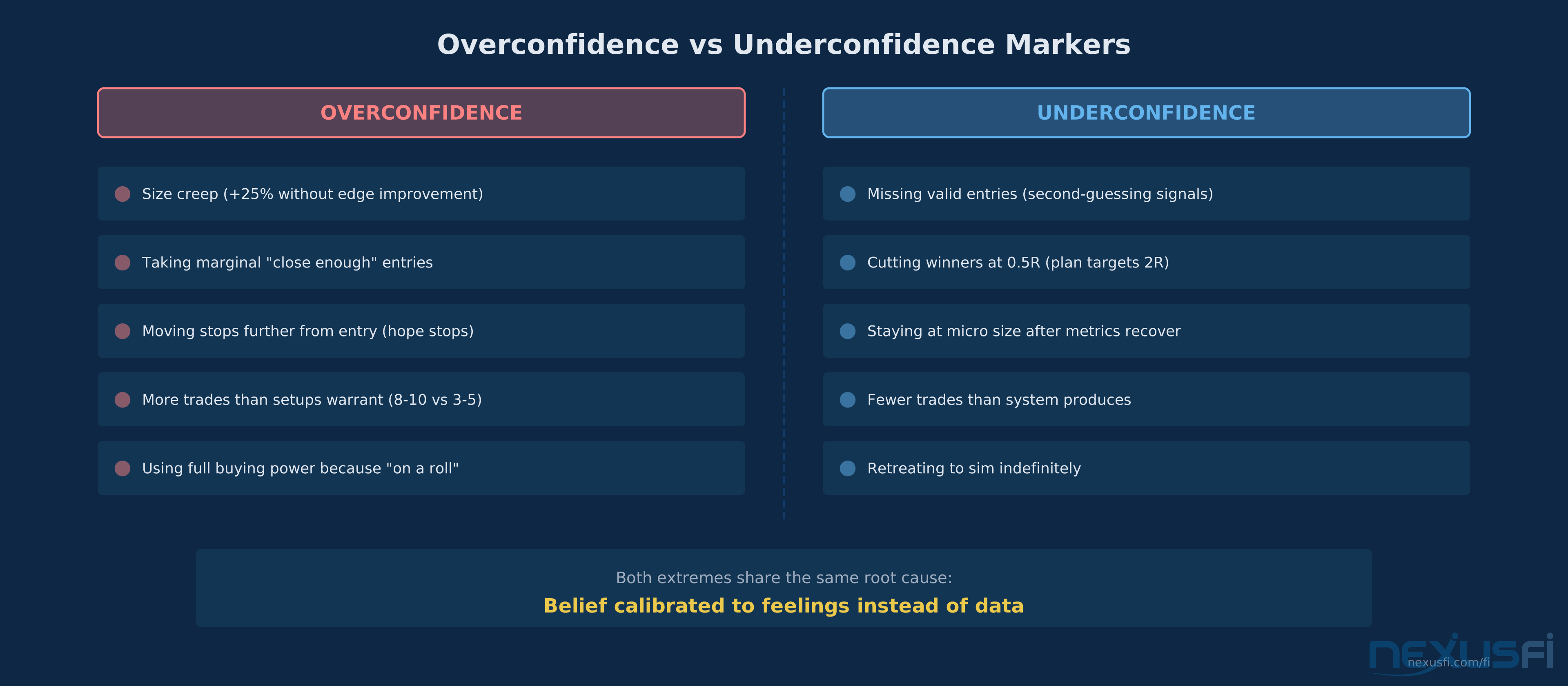
Overconfidence Markers
Overconfidence is the more dangerous of the two, because it feels like everything is working right up until it isn't.
Watch for these behavioral markers in your own trading:
- Size creep: Increasing contracts by more than 25% without corresponding improvement in win rate or expectancy. You went from 2 MES to 4 MES because last week was good, not because your edge metrics support it.
- Entry degradation: Taking setups you'd normally skip. "Close enough" entries. Trading marginal signals because you feel like you can handle it.
- Stop widening: Moving stops further from entry after placing them, or using wider stops than your plan specifies. Hope stops.
- Frequency inflation: More trades per session than your setup rate historically produces. If your system generates 3-5 setups per RTH session and you're taking 8-10, something is wrong.
- Leverage abuse: Higher margin utilization, reduced cash buffer, using the full buying power your broker gives you because "I'm on a roll."
One NexusFi member captured the leverage spiral perfectly: "I thought leverage would bring back my money faster. My broker shut me off when the account hit $30k" — down from $75k. [2]
Underconfidence Markers
Underconfidence is sneakier. It disguises itself as "being careful" or "waiting for the perfect setup." But the execution data tells a different story:
- Chronic hesitation: Missing valid entries because you're second-guessing. The setup is there, your filters are green, but you can't pull the trigger.
- Premature profit-taking: Cutting winners at 0.5R when your plan targets 2R. The relief of locking in a small gain overwhelms the process.
- Size reduction beyond plan: Dropping to micro contracts and staying there even after gate metrics recover. 50% size reduction persisting for weeks after a 5-trade losing streak.
- Setup avoidance: Fewer trades per session than your system produces. Filters are green but you sit on your hands because the last three trades lost.
- Sim regression: Going back to simulation and staying there indefinitely. Sim validates process, but it can't rebuild real confidence because it removes the variables that erode it -- slippage, margin pressure, and the weight of real capital at risk.
[3] After a losing streak, you don't know if the system broke or if you broke. That ambiguity is what makes confidence recovery so difficult.
Understanding: Why Confidence Builds, Breaks, and Deceives #
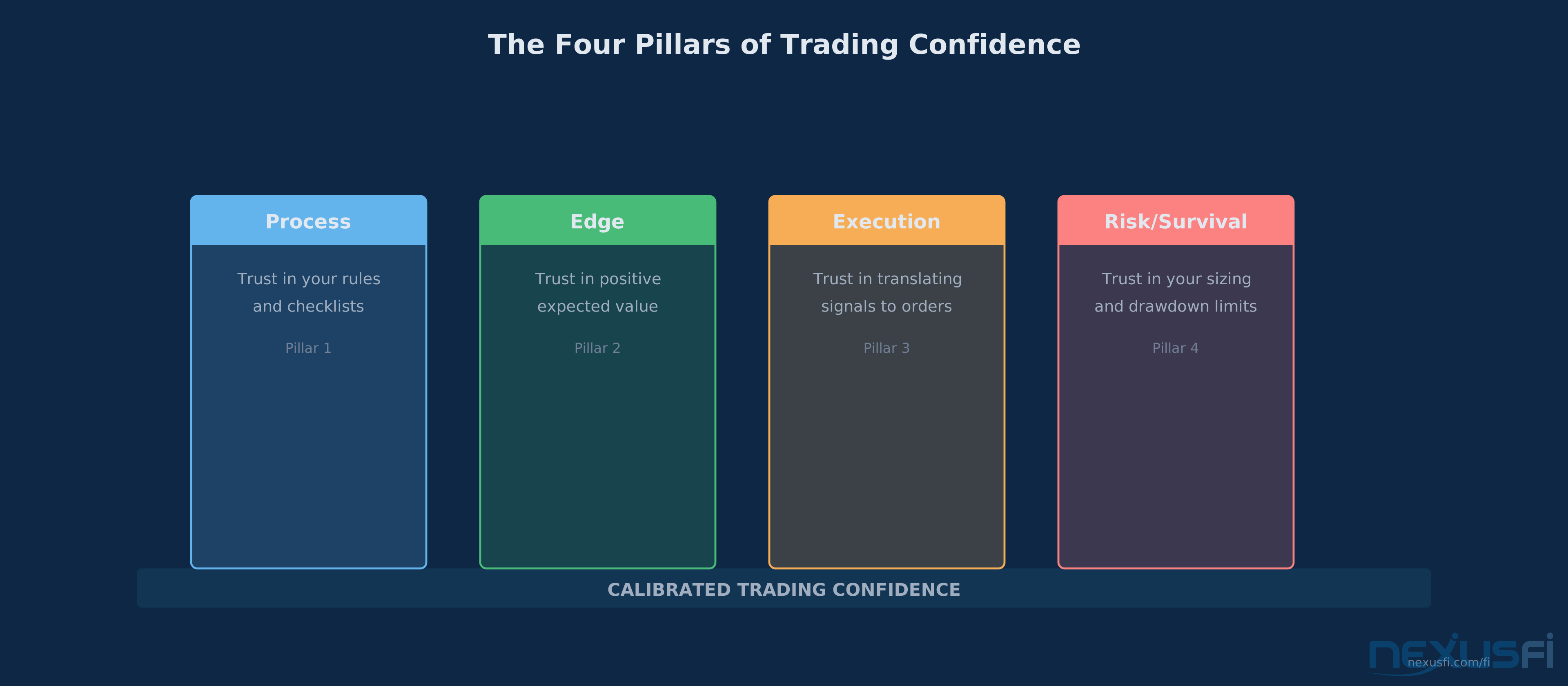
The Four Pillars of Trading Confidence
Confidence in futures trading rests on four independent pillars. Each can fail separately, and diagnosing which one broke determines how you fix it.
Pillar 1: Process Confidence. Trust that your rules, executed consistently, produce acceptable outcomes. This is the most fundamental layer. If you don't trust your pre-market checklist, your entry criteria, your stop placement logic, and your exit rules — nothing else matters. Process confidence degrades when you repeatedly override your own rules. Every discretionary "improvement" to a planned entry is a small erosion event. Track it: what percentage of your last 50 trades were taken exactly according to plan? If rule adherence drops below 90%, process confidence is compromised regardless of P&L.
Pillar 2: Edge Confidence. Trust that your strategy has positive expected value under current market conditions. This is regime-dependent. A mean reversion strategy that prints money in balanced ES sessions will hemorrhage capital on trend days. Edge confidence should be tied to conditional performance — your win rate and expectancy by market regime, volatility state, and session type — not your overall track record. If your rolling expectancy over the last 150+ trades falls below +0.05R, edge confidence should drop. Not because you feel bad, but because the data says so.
Pillar 3: Execution Confidence. Trust that you can translate signals into orders under real market microstructure. This is where platform proficiency, order management, and fill quality live. In NQ, execution sensitivity is acute — spreads and queue position mean that "calm discipline" matters more than in ES. Track average slippage versus your baseline. If it worsens by more than 50% over your last 20-50 orders, execution confidence is degraded. Reduce size or change your order approach before assuming the strategy is broken.
Pillar 4: Risk/Survival Confidence. Trust that your position sizing and drawdown limits prevent catastrophic loss. This is the floor under everything else. Without it, every losing streak becomes an existential threat. Enforce hard limits: daily loss cap of 2-3R, weekly cap of 5R, maximum position size that keeps you above 30-40% free margin even under an adverse 3-5R move against you. When these limits are real and enforced, losing streaks hurt but don't threaten survival. When they're suggestions you override "just this once" — that's when accounts blow up.
The Confidence-Execution Feedback Loop
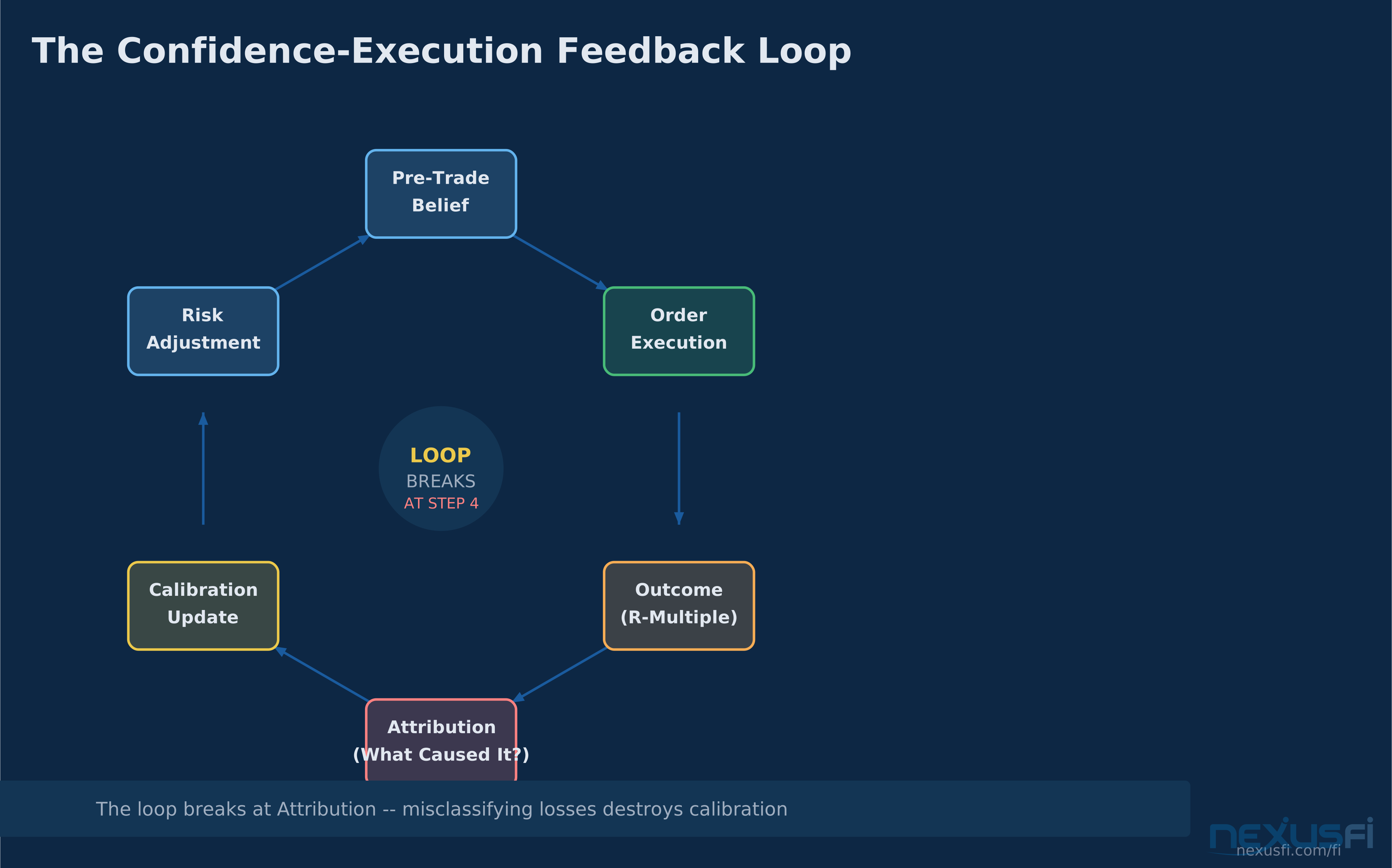
These four pillars don't operate in isolation. They feed a continuous loop that either compounds confidence or destroys it:
Pre-trade belief (all four pillars assessed) → Order execution (entries, fills, stop placement) → Outcome (R-multiple result) → Attribution (what caused this outcome?) → Calibration update (which pillar needs adjustment?) → Risk adjustment (size and exposure changes) → back to pre-trade belief.
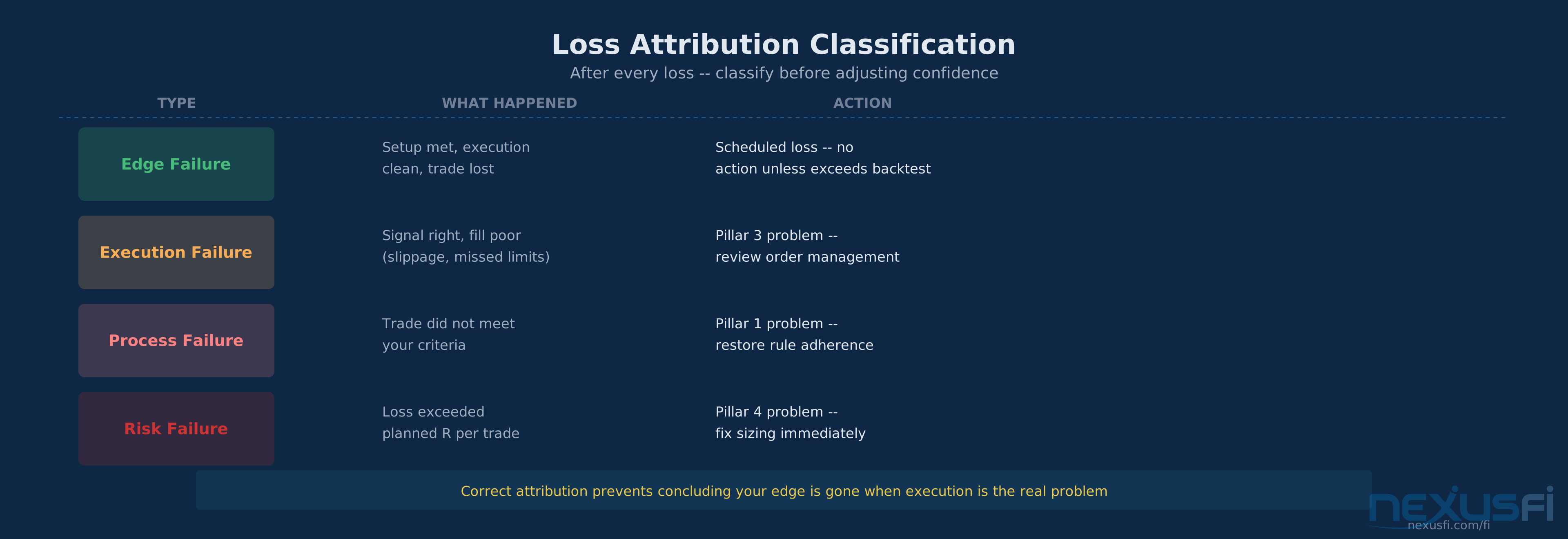
The loop breaks at the attribution step. After a loss, most traders ask "what went wrong?" and answer with their gut. The disciplined response is to classify each loss mechanically:
- Edge failure: The setup conditions were present, execution was clean, but the trade lost. This is a scheduled loss -- your system's expected drawdown playing out. No action required unless frequency exceeds backtested expectations.
- Execution failure: The signal was right but the fill was poor. Slippage, missed limit orders, late entries. This is a Pillar 3 problem.
- Process failure: You took a trade that didn't meet your criteria, or you managed it differently than planned. This is a Pillar 1 problem.
- Risk failure: The loss exceeded your planned risk per trade due to oversizing, stop-slippage, or gap risk. This is a Pillar 4 problem.
Correct attribution prevents the most common confidence mistake: concluding your edge is gone when the real problem is execution degradation or process violations.
Five Ways Confidence Breaks in Futures Markets
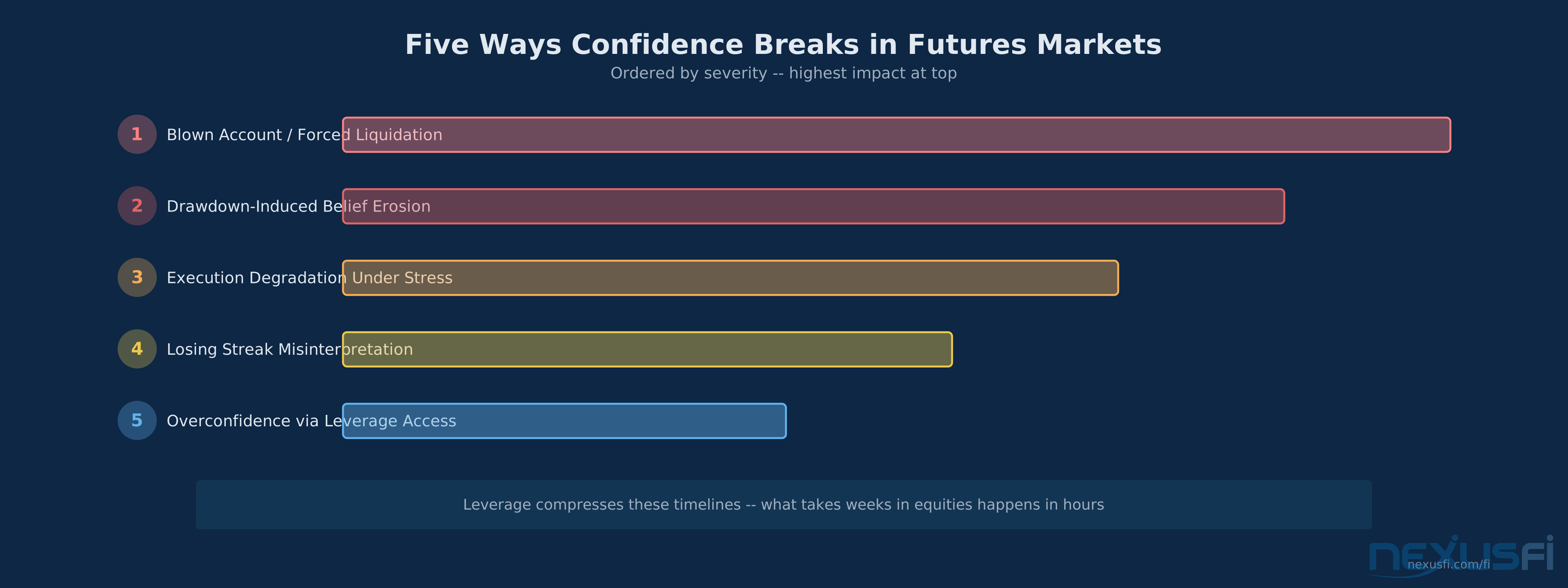
Futures markets break confidence faster than any other asset class because leverage amplifies everything. A 2% adverse move in ES on a fully margined position wipes out weeks of careful trading. Here are the five structural failure modes, ordered by severity:
1. Blown accounts and forced liquidation. The terminal confidence event. When the broker closes your positions at the worst possible moment, it doesn't just destroy capital — it destroys the belief that you can survive in this market. The hard truth: most blown accounts reveal that "confidence" was masking an insufficient risk framework.
2. Drawdown-induced belief erosion. Confidence decays nonlinearly with losses. After -1R daily, most traders adjust normally. After -2R, stops start widening and entries get sloppy. After -3R, process collapse accelerates. The brain reinterprets statistical noise as evidence the plan is broken. In futures, leverage compresses this timeline — what takes weeks in equities happens in hours.
3. Execution degradation under stress. Under emotional load, traders switch to market orders (market-order share increases from ~10% to ~50% post-drawdown), chase entries, widen stops on paper while tightening them in practice, and abandon limit orders. This creates a death spiral: poor execution causes more losses, which causes more stress, which causes worse execution.
4. Losing streak misinterpretation. A system with 55% win rate will produce 5-loss streaks regularly. But after 5 consecutive losses, most traders are already changing their system. They add indicators, switch timeframes, widen stops, or start looking for "better" setups. They're treating normal variance as system failure. If your filter quality score is unchanged and your execution metrics are clean, a losing streak shouldn't reduce edge confidence at all — it should only trigger variance reduction (smaller size, same rules).
5. Overconfidence via leverage access. Futures brokers hand you 20:1 or higher leverage by default. After a winning streak, the temptation to "size up" is enormous. You went from 1 ES to 3 ES because last month was +15R. But your expectancy over 150 trades hasn't changed. You just captured the right tail of variance. Size increases should follow calibration resets, not hot streaks.
Confidence vs. Expectancy: Why They Diverge
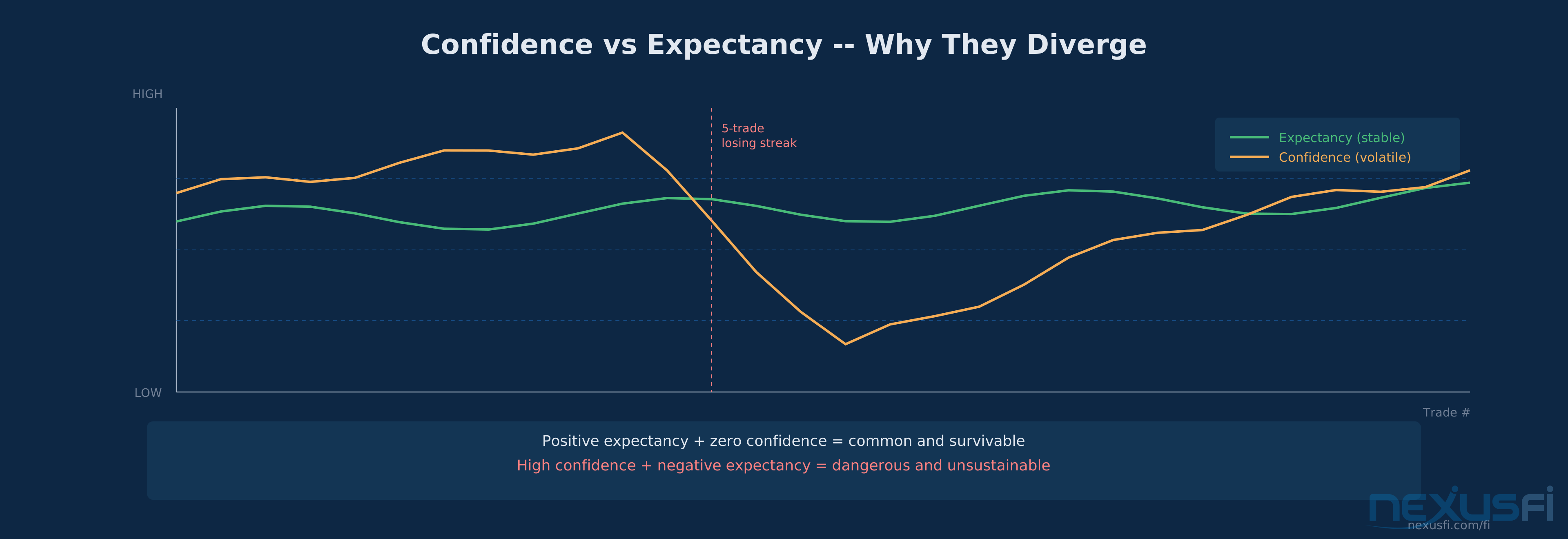
This distinction trips up experienced traders. Expectancy is the statistical long-run edge of your system — P&L distribution properties over hundreds of trades. Confidence is your current belief that this edge will manifest soon enough that you can survive the variance in the meantime.
A trader can have positive expectancy and zero confidence (after a drawdown that's within normal parameters but feels devastating). Conversely, a trader can feel supremely confident while overfitting to recent regime conditions that are about to shift. The dangerous part: positive feelings after a winning streak often have zero predictive value for the next trade. Confidence calibrated to data — rolling expectancy by regime, slippage metrics, process adherence rates — is the only kind worth having.
Confidence vs. Discipline: Not the Same Thing
Confidence answers: "Is my belief calibrated to current conditions and evidence?" Discipline answers: "Can I follow the plan regardless of how I feel about it?"
A trader can be confident but undisciplined — believing the edge is real while constantly overriding stops and chasing entries. A trader can also be low-confidence but disciplined — nervous and uncertain while still executing rules with reduced size.
The practical takeaway: you don't need stable confidence to trade well. You need stable rules and monitored calibration. Discipline preserves survival during confidence drawdowns. Confidence, when properly calibrated, determines appropriate sizing and engagement levels.
Techniques: The Five-Step Confidence Rebuild Protocol #
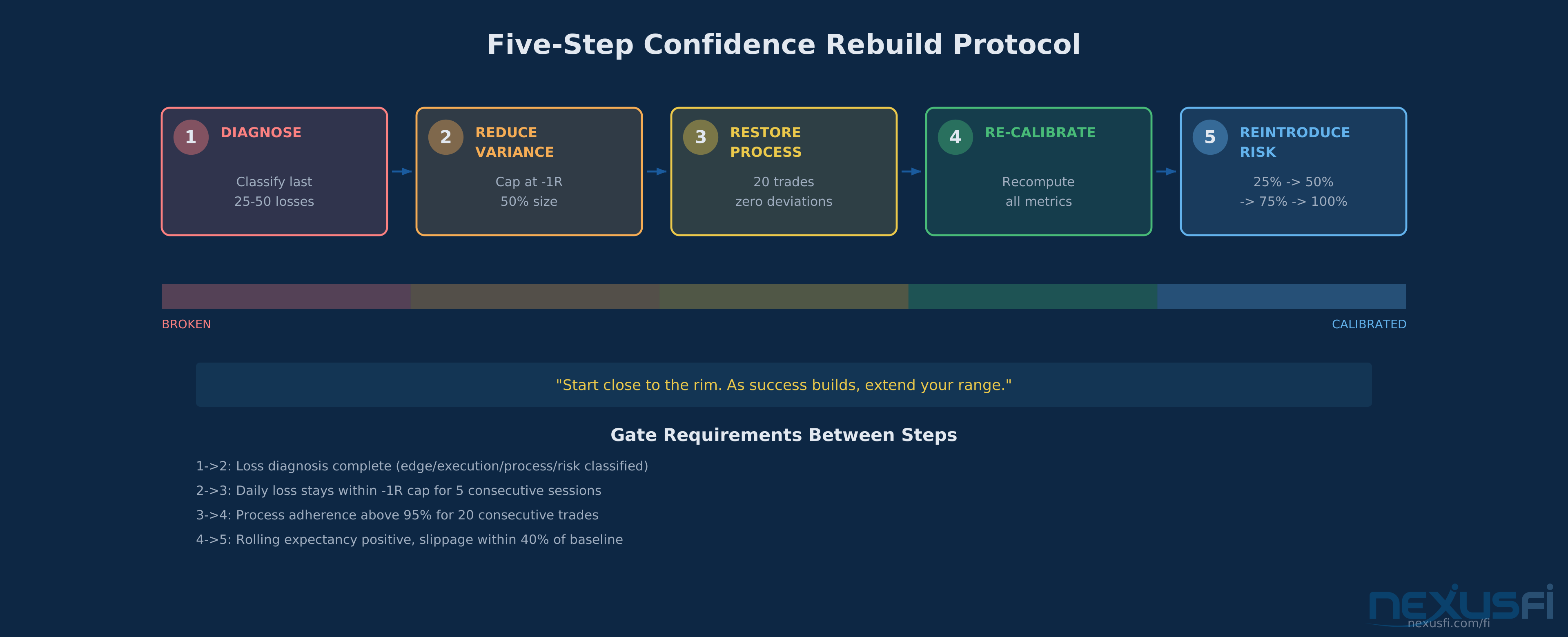
After a confidence failure — blown account, extended drawdown, or prolonged execution degradation — rebuilding requires structure, not willpower.
Step 1: Diagnose the Failure
Before fixing anything, classify what broke. Pull your last 25-50 trades and categorize each loss:
- Edge failures (setup conditions met, execution clean, trade lost): These are scheduled losses. If they're within your backtested drawdown distribution, the edge is fine.
- Execution failures (signal right, fill poor): Track slippage per trade. If average slippage doubled during the drawdown period, this is your primary problem.
- Process failures (rules violated): Count them. If more than 10% of trades deviated from plan, process confidence needs rebuilding first.
- Risk failures (loss exceeded planned risk): Any single trade losing more than your defined R means position sizing or stop management broke down.
The diagnosis determines the rebuild path. If 80% of losses were edge failures within normal distribution, you don't need to rebuild — you need to accept variance and reduce size temporarily. If 60% were process failures, you have a discipline problem masquerading as a confidence problem.
Step 2: Reduce Variance
Implement hard variance controls immediately:
- Cap daily loss at -1R to -2R (temporarily tighter than normal)
- Reduce position size by 50% minimum. For many traders, dropping to 1 MES is the right move.
- Trade only your highest-quality setups. If you normally take A, B, and C grade setups, restrict to A-grade only.
- Limit trading to your best liquidity windows. For ES, that typically means the first 90 minutes of RTH and the afternoon session.
The goal is to shrink the emotional impact of each trade while maintaining real-money execution. Sim trading has a role — it validates process mechanics — but it can't rebuild execution or survival confidence because it removes the variables that erode them: slippage, margin pressure, and the weight of real capital.
Step 3: Restore Process
Enter "process-only mode" for a minimum of 20 consecutive trades:
- No discretionary overrides. Every entry must meet pre-defined criteria exactly.
- No stop movement after placement. The stop goes where the plan says it goes.
- Record every deviation, no matter how small. If your deviation rate exceeds 10% over 10 trades, stop trading and review.
- Grade yourself on rule compliance, not P&L. A -1R day with perfect execution is a win. A +3R day with sloppy process is a warning.
This is where @GoldLinx's advice becomes actionable: "Create a technical goal and a discipline goal for each week. Technical Goal could be: 'I want to get better at recognizing weakness in pullbacks.' Discipline Goal could be: 'I want to stop moving my stoploss after I have initially placed it.' And you give yourself a score on how well you executed these goals every single day." [4]
Step 4: Re-Calibrate with Data
After 20+ trades of process-compliant execution, recompute your key metrics:
- Rolling expectancy by regime and time-of-day
- Slippage distribution and fill rates versus your baseline
- Stop-out quality (did execution actually hit the planned stop price?)
- Process adherence percentage (target: 95-98%)
Do not restore full risk until slippage returns within 25-40% of your baseline AND process adherence is above 95%. If the data shows your edge metrics have genuinely degraded (not just drawdown within normal variance), that's a separate problem — the strategy may need regime adjustment, not a confidence rebuild.
Step 5: Reintroduce Risk Gradually
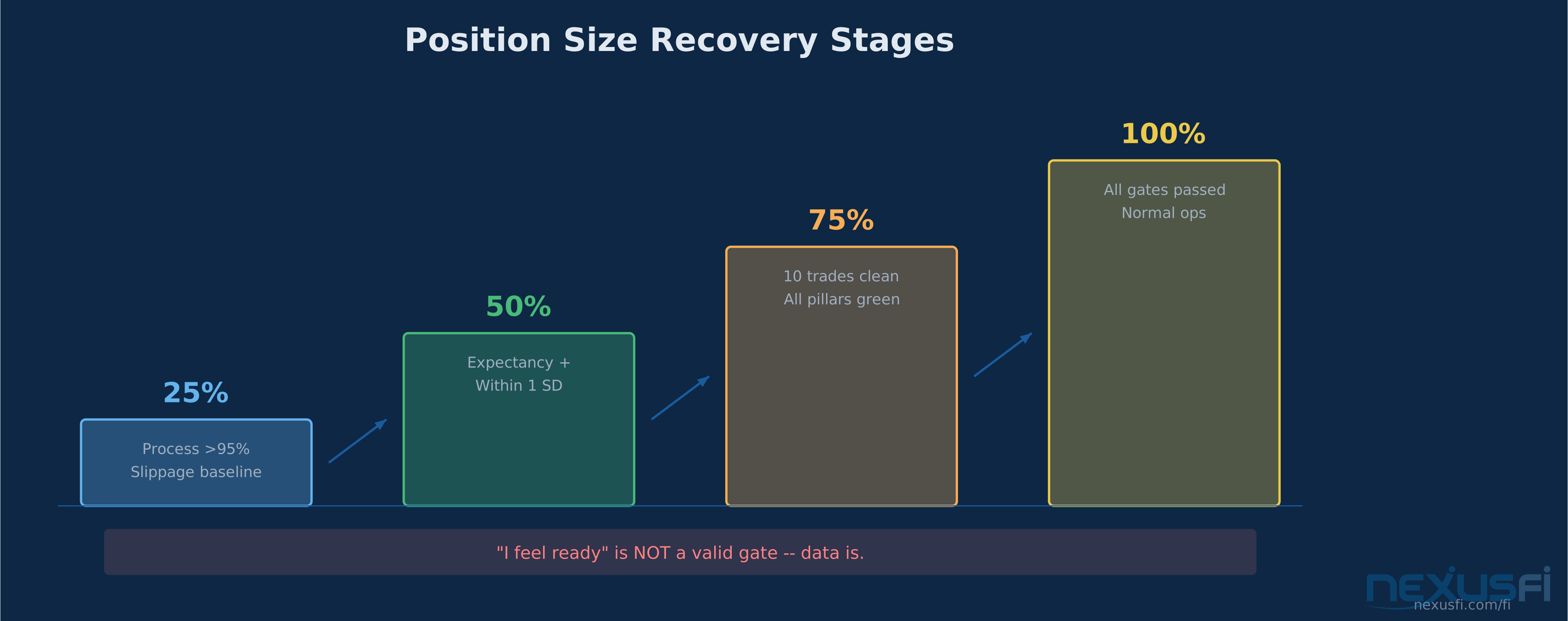
Scale position size back up in stages: 25% → 50% → 75% → 100% of your normal size. Each stage requires 10-20 consecutive compliant trades before advancing. The milestones are:
- 25% → 50%: Process adherence above 95%, slippage within baseline
- 50% → 75%: Rolling expectancy positive and within 1 standard deviation of historical
- 75% → 100%: 10 consecutive trades at target size with drawdown within planned limits
Jumping back to full size because "I feel ready" is professional negligence. Following the protocol ensures you've demonstrated calibrated performance, not just survived a lucky streak at reduced size.
Practice Framework: Daily and Weekly Confidence Calibration #
Daily Protocol
Pre-session (10 minutes):
- Review the four pillar gates. Are all green? Process adherence rate, rolling expectancy, slippage metrics, margin buffer -- check each one.
- Set the session's maximum loss limit and position size before the first trade. Write it down.
- If any pillar is amber (degraded but not red), reduce size pre-emptively. Don't wait for the P&L to tell you something is wrong.
Post-session (15 minutes):
- Classify every trade: edge loss, execution failure, process violation, or risk breach.
- Update your rolling metrics. Did today's results change your expectancy estimate? Did slippage move?
- Score your process compliance on a 1-10 scale. If it's below 7, identify the specific deviations.
- Log your confidence state -- not as a feeling, but as a vector: [process: green/amber/red, edge: green/amber/red, execution: green/amber/red, risk: green/amber/red].
Weekly Protocol
Weekly review (30 minutes, weekend):
- Compute weekly expectancy by setup type. Are your A-grade setups still performing? Are B-grade setups dragging?
- Review the overconfidence/underconfidence marker table. Did any of the behavioral markers show up this week? Be honest.
- Check whether your sizing matched your risk rules all week. Any deviations? Any size creep?
- Compare your realized fill quality to your baseline. Any drift?
- Set next week's confidence state. If any pillar degraded, implement the corresponding size reduction before Monday's session.
The Confidence Dashboard
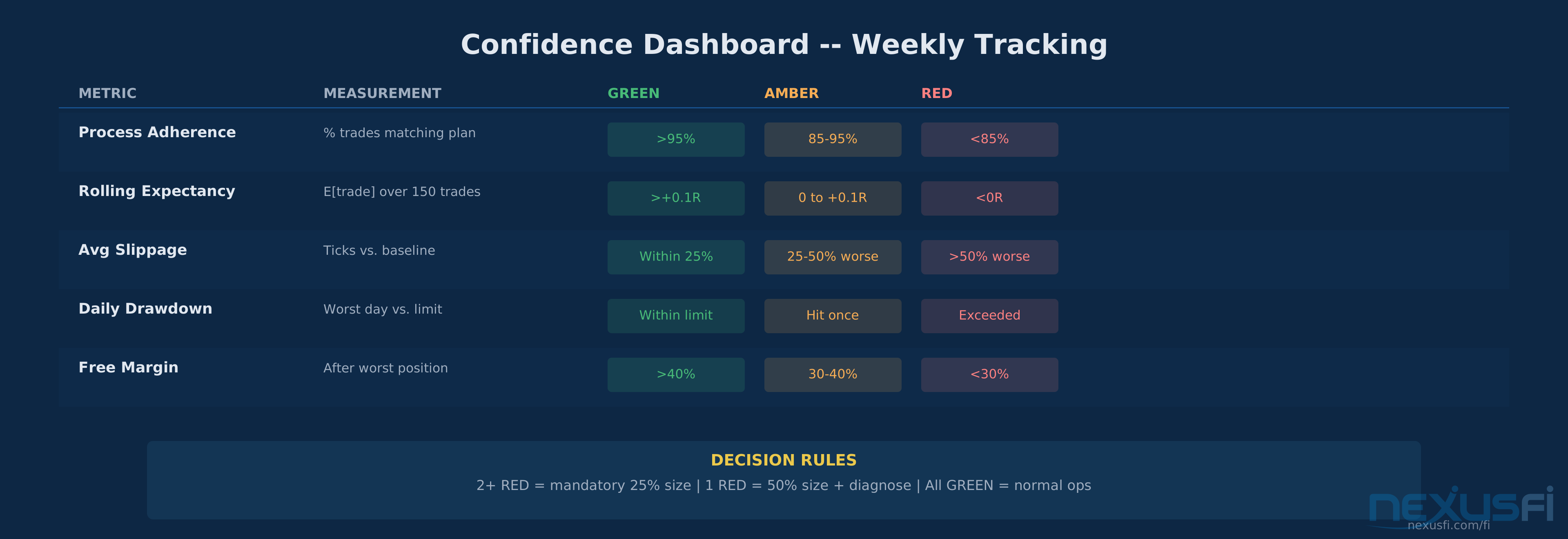
Build a simple tracking system — spreadsheet, journal, or whatever you'll actually use. Track these metrics weekly:
| Metric | Measurement | Green | Amber | Red |
|---|---|---|---|---|
| Process Adherence | % trades matching plan exactly | >95% | 85-95% | <85% |
| Rolling Expectancy | E[trade] over last 150 trades | >+0.1R | 0 to +0.1R | <0R |
| Avg Slippage | Ticks vs. baseline | Within 25% | 25-50% worse | >50% worse |
| Daily Drawdown | Worst day vs. limit | Within limit | Hit limit once | Exceeded limit |
| Free Margin Buffer | After worst position | >40% | 30-40% | <30% |
Two or more red pillars simultaneously = mandatory size reduction to 25%. One red pillar = reduce size by 50% and diagnose. All green = normal operations.
When It Doesn't Work: Limitations and Honest Caveats #
This framework has real boundaries. Here's where it falls short:
Confidence can't fix a broken edge. If your strategy has genuinely lost its edge due to regime change, market structure evolution, or crowding, no amount of process compliance or size reduction will restore profitability. The rebuild protocol assumes the underlying strategy has demonstrable positive expectancy. If 150+ trades of process-compliant execution produce negative expectancy, that's not a confidence problem — that's a strategy problem.
Sim trading has limits. Simulation validates process confidence only. It removes slippage, margin stress, and the physiological response to real capital at risk. A trader who's "profitable on sim for 30 days straight" has proven they can follow rules in a pressure-free environment. That's necessary but not sufficient. Real confidence requires real stakes — which is why the rebuild protocol uses micro contracts with real money, not sim.
Individual variation is massive. Some traders recover from blown accounts in weeks. Others take years. The five-step protocol provides structure, but the timeline is individual. If you're stuck at Step 3 after months of trying, the problem may not be confidence at all — it may be that trading activates psychological patterns that need professional support beyond what a framework can provide.
Overconfidence resists self-diagnosis. The hardest part of the overconfidence/underconfidence framework is that overconfident traders almost never think they're overconfident. The behavioral markers (size creep, entry degradation, frequency inflation) only work if you're tracking them honestly. If your journal says "felt good about this trade" instead of recording actual slippage, fill quality, and setup grade, the diagnostic tool is useless.
External factors can override calibration. Life stress, health issues, financial pressure, relationship problems — these degrade execution quality in ways that no trading framework can fix. If you're trading under duress, the honest answer is often to reduce size to near-zero or stop entirely until the external situation stabilizes.
[4] Financial pressure is the most common confidence destroyer that has nothing to do with your strategy.
Knowledge Map
Prerequisites
Understand these firstGo Deeper
Build on this knowledgeReferences This Article
Articles that build on this topicCitations
- — I finally blew up an account (2021) 👍 15“Extreme overconfidence for sure. Basically, I took a few bad trades in a row...”
- — MONEYMANAGEMENT AGGRESSIVELY DAYTRADING E-MINI 500 FUTURES (2011) 👍 4“I thought leverage would bring back my money faster. My broker shut me off”
- — Confidence in discretionary trading (2022) 👍 12“Confidence in trading is actually twofold: 1. Confidence in my system... 2. Confidence in myself...”
- — I'm in deep S@$% now. (2019) 👍 54“Do you have the psychology skills in place that you could drawdown $1000 and STILL execute the system perfectly?”
- — Finally Turning the Corner (2020) 👍 8“If you are not 100% confident in your edge then after a few losses in a row its going to be very hard to will yourself forward.”
- — Rebuild confidence (2014) 👍 16“In basketball, when a good shooter goes into a shooting slump, they start taking higher percentage shots...”