



NOB, TUT, and FYT Treasury Curve Spread Trading: How to Build and Execute Yield Curve Trades with CME Futures
Overview #
Most futures traders who touch Treasury markets start with outright positions — long ZN, short ZB, some view on where rates are going. That works, but it exposes you to massive parallel-shift risk: when the Fed moves, the entire curve can reprice 20 basis points in a day and your position doesn't care what you thought about the 2s10s spread.
Curve spread trading solves this. By trading two (or three) Treasury futures legs simultaneously in DV01-neutral ratios, you isolate a specific slope or curvature move while hedging out most of the parallel-rate-level risk. This is how professional desks express views on Fed policy timing, term premium, and supply-demand imbalances without running naked duration exposure.
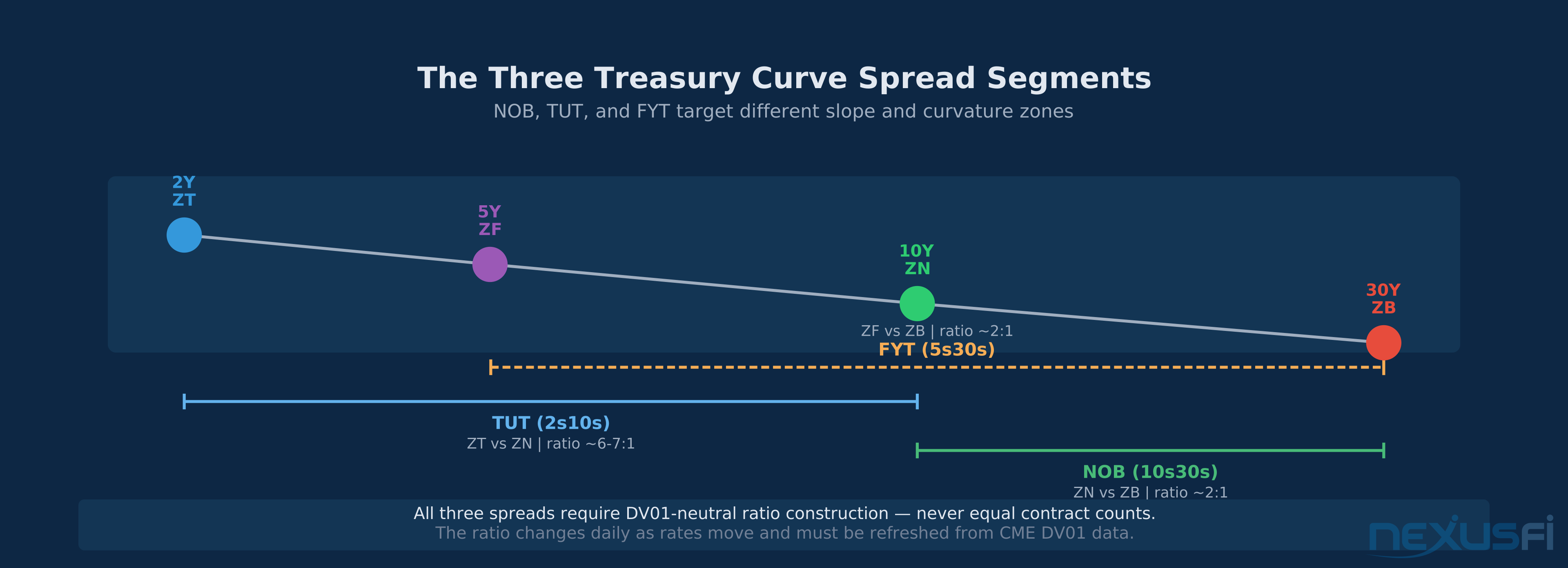
The three classic curve spread families — NOB, TUT, and FYT — each target different segments of the yield curve using CME Treasury futures. Executed correctly with proper DV01 weighting, entry discipline, and stop logic, these spreads offer defined-risk, thesis-driven trades that don't blow up on a single CPI print the way outright futures positions can.
This article covers the mechanics of constructing, entering, and managing these spreads in practical terms. We use real contract specs, historical DV01 relationships, and concrete trade examples — including setups that failed and why.
The Three Classic Curve Spreads #
NOB: Notes Over Bonds (10Y vs 30Y) #
Contracts: ZN (10-Year Note) vs ZB (30-Year Bond) Curve segment: 10s30s — the long end of the curve Classic ratio: approximately 2 ZN to 1 ZB (DV01-weighted)
The NOB (Notes Over Bonds) spread is the most liquid Treasury curve trade available to retail and prop traders. It targets the 10s30s segment — how the 30-year yield moves relative to the 10-year.
The "2:1" ratio you'll see quoted everywhere is a rough starting point, not a constant. The actual DV01-neutral ratio depends on where rates are and when you're computing it. In June 2026 with the Warsh Fed hiking aggressively, ZN's DV01 runs approximately $75-80 per contract per basis point, while ZB is closer to $150-165 per contract. That gives you a ratio around 2:1 — but it shifts.
A NOB steepener (long NOB) profits when the 10s30s spread widens: either the 30Y rises faster than the 10Y, or the 10Y falls faster than the 30Y. This tends to happen when the market reprices risk premium for long duration — fiscal concerns, supply anxiety, inflation uncertainty that's further out in time.
A NOB flattener (short NOB) profits when the curve flattens at the long end. Classic Fed-hiking environments often produce this initially: the front end reprices policy while the long end stays anchored on slower growth expectations.
In the Warsh rate-hiking cycle, the 10s30s spread has been under significant pressure. Long-end supply concerns (large fiscal deficits, Treasury auction volumes) have been fighting against recession fears. The NOB has been notably volatile — which creates both opportunity and risk.
From a NexusFi community thread on scalping the NOB spread, user
This is exactly why DV01 weighting matters more than price weighting.
TUT: Two-Year vs Ten-Year (2s10s) #
Contracts: ZT (2-Year Note) vs ZN (10-Year Note) Curve segment: 2s10s — the benchmark slope indicator Classic ratio: approximately 6-7 ZT to 1 ZN (DV01-weighted)
The TUT spread (also called the 2s10s) is the most widely watched yield curve spread in macro finance. It's the curve segment that inverted before every U.S. recession since the 1970s. In 2022-2023 it went deeply negative as the Fed hiked aggressively. With Warsh continuing that cycle in 2026, the 2s10s dynamics remain central to every macro view in the market.
The ratio is dramatically larger here because ZT has very low duration — a 2-year note doesn't move much per basis point. Current DV01 for ZT runs around $35-40 per contract versus ZN's $75-80. So you need roughly 2 ZN per 1 ZT... wait, reversed: you need roughly 6-7 ZT contracts to match the DV01 of 1 ZN contract.
This makes the TUT spread capital-intensive at full DV01 neutrality for larger positions. Many retail traders who trade the 2s10s accept a partial DV01 hedge — taking on some parallel risk — to keep position sizes manageable.
A TUT steepener (long TUT) profits when the 2s10s widens — either the 10Y rises relative to the 2Y, or the 2Y falls relative to the 10Y. Post-Fed pivot scenarios (front-end pricing in cuts while long-end stays elevated) create classic steepener conditions.
A TUT flattener (short TUT) profits when the 2s10s narrows or inverts further. Active Fed hiking with front-end yields leading higher while long-end remains anchored produces prolonged flattening. The 2022-2023 U.S. inversion went to -108 basis points. In the current Warsh environment, whether we see fresh inversion depends on whether long-end supply concerns outpace front-end Fed pricing.
NexusFi member
This highlights the roll cost reality — curve spreads require monthly rolling, which has a direct cost that must be factored into your edge calculation.
FYT: Five-Year vs Thirty-Year (5s30s) and the Belly Butterfly #
Contracts: ZF (5-Year Note) vs ZB (30-Year Bond), or as a three-leg butterfly using ZT/ZF/ZB Curve segment: 5s30s — the steepest slope measure, or 5-centered curvature Ratio: approximately 2:1 ZF to ZB for a 2-leg, or weighted wings for 3-leg butterfly
The FYT is less standardized than the NOB or TUT. At some desks it refers to a 2-leg 5s30s steepener/flattener. At others it's used as shorthand for a belly butterfly that isolates curvature around the 5-year point: long ZF against wings of ZT and ZB. The butterfly form is more common among professional curve desks because it removes more parallel risk.
The 2-leg 5s30s spread captures the widest slope on the U.S. curve — the distance from the 5-year to the 30-year. It's more sensitive to long-end supply dynamics and inflation risk premium than the 2s10s.
The 5-centered butterfly (ZT - 2×ZF + ZB in DV01-adjusted terms) is a curvature trade: it profits when the 5-year is "cheap" to the interpolated value between the 2-year and 30-year. Auction effects, dealer hedging flows, and belly demand cycles drive this spread in ways that have little to do with the overall level of rates.
NexusFi member
DV01-Neutral Spread Construction: The Professional Baseline #
This is where most retail Treasury spread traders go wrong. They use equal contract counts ("1 ZN vs 1 ZB") or rough price ratios. Professional desks use DV01-neutral ratios because they capture what counts: how much does each leg move per basis point change in its yield?
Computing DV01 for Each Contract #
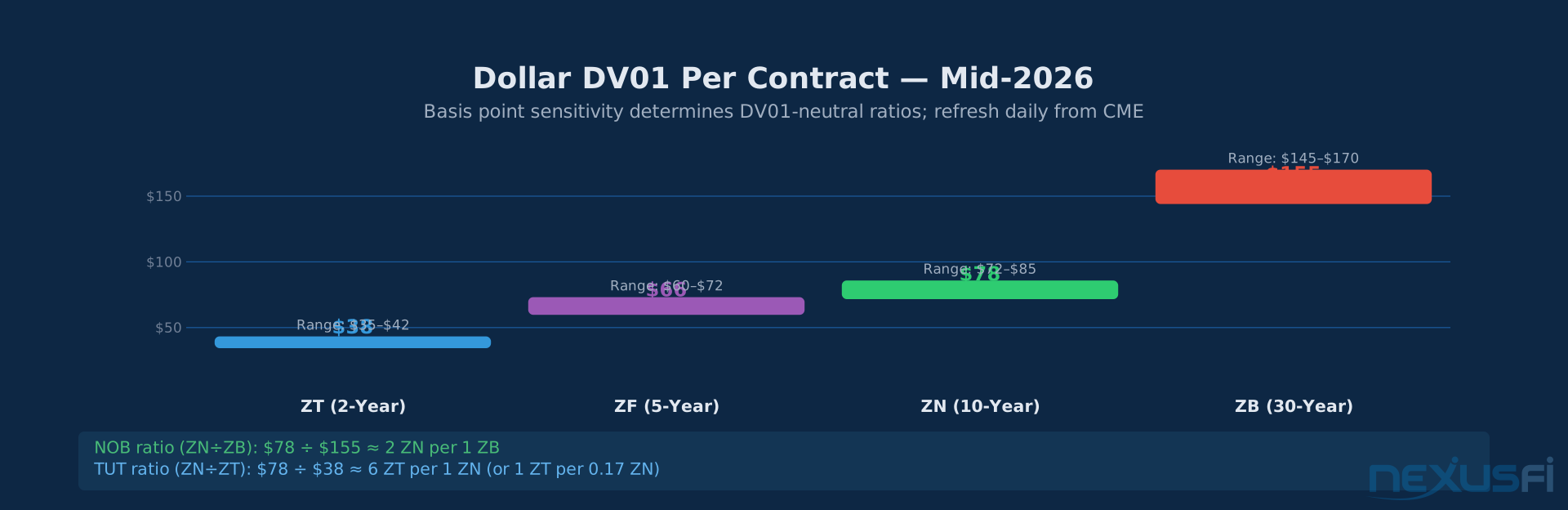
The CME publishes DV01 (Dollar Value of 01, the dollar change per 1 basis point move) for each futures contract. It changes daily as rates and contract specs shift. As a practical working set for mid-2026:
| Contract | Approximate DV01/Contract | Typical Duration |
|---|---|---|
| ZT (2Y) | $35-42 | ~1.9 years |
| ZF (5Y) | $60-72 | ~4.8 years |
| ZN (10Y) | $72-85 | ~8.1 years |
| ZB (30Y) | $145-170 | ~18-20 years |
These are approximate ranges. Always compute from the CME's current DV01 calculator before entering a spread trade.
Building a DV01-Neutral Two-Leg Spread #
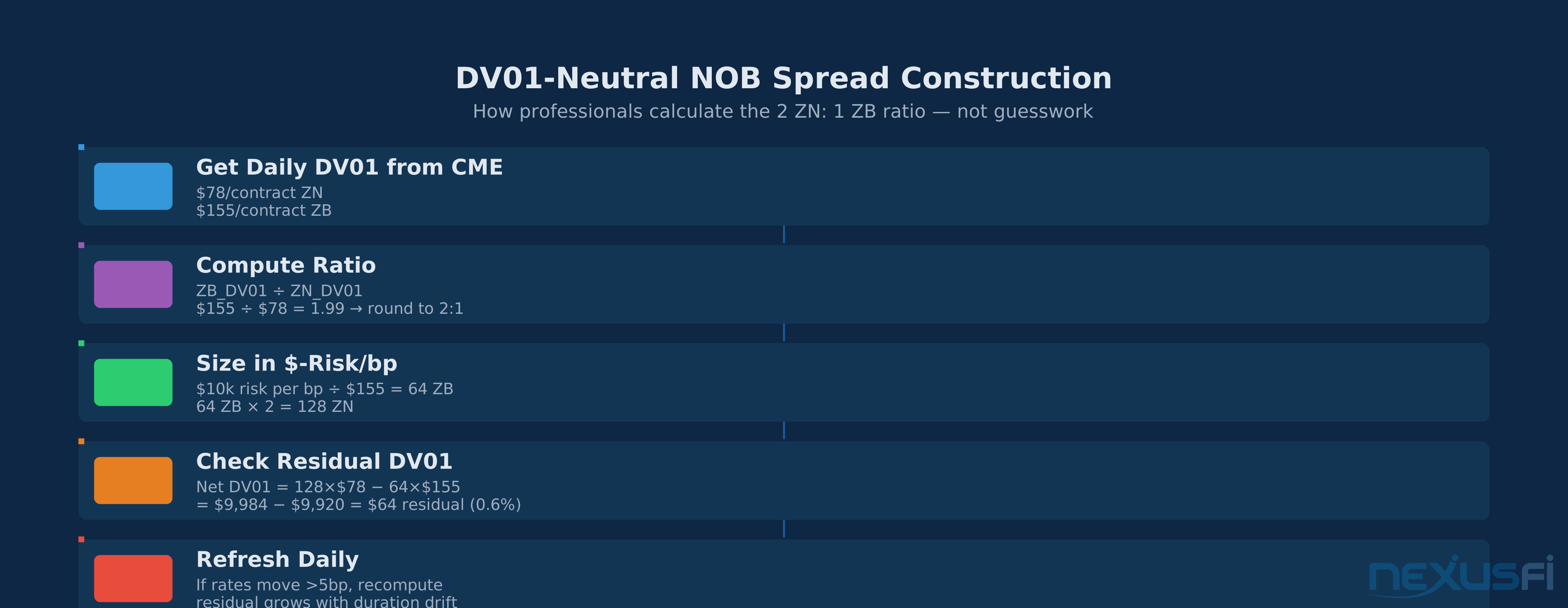
For the NOB (ZN vs ZB):
If ZN DV01 = $78 and ZB DV01 = $158:
Ratio = ZB_DV01 / ZN_DV01 = 158/78 ≈ 2.03
So you'd trade approximately 2 ZN per 1 ZB. If you want $10,000 risk per basis point of curve move:
- ZB leg: 10,000 / 158 ≈ 63 contracts
- ZN leg: 63 × 2 = 126 contracts
That's the professional scale. For retail traders, a minimal trade might be 2 ZN vs 1 ZB — which gives about $78 in 2-leg risk per basis point.
Building a DV01-Neutral Three-Leg Butterfly #
For the 5-centered butterfly (ZT, ZF, ZB wings, ZF belly):
Solve the system so net DV01 = 0:
- Q_ZT × DV01_ZT + Q_ZF × DV01_ZF + Q_ZB × DV01_ZB = 0
With the constraint that Q_ZF is negative (short the belly) and Q_ZT, Q_ZB are positive (long the wings):
Using ZT DV01 = $38, ZF DV01 = $65, ZB DV01 = $155:
- Long 1 ZT, short Q_ZF ZF, long Q_ZB ZB
- We want: 38 - 65×Q_ZF + 155×Q_ZB = 0
- Additional constraint: wings roughly equal DV01 (Q_ZT × 38 ≈ Q_ZB × 155)
- Q_ZB ≈ 38/155 = 0.245 → round to nearest integer
For a minimal butterfly: Long 4 ZT, short 2 ZF, long 1 ZB
Check: 4×38 - 2×65 + 1×155 = 152 - 130 + 155 = 177 → not neutral
The math requires precise computation. Most professional traders use a spreadsheet with CME's daily DV01 numbers to compute exact ratios each morning. NexusFi community member
Residual DV01 and Practical Rounding #
Integer rounding always leaves some residual DV01. Professional desks accept residuals up to 1-2% of the targeted DV01. If your target exposure is $100 per basis point and your rounded ratio gives $102 of net DV01, that 2% residual is fine. If rounding gives you $115, you need to reassess.
The residual risk is real: in an aggressive rate move, a 1% DV01 residual on a $100k position might still cost you $1,000+ on a large parallel shift day. Know your residual and size so.
Entry Signal Architecture: Three Layers That Must Align #
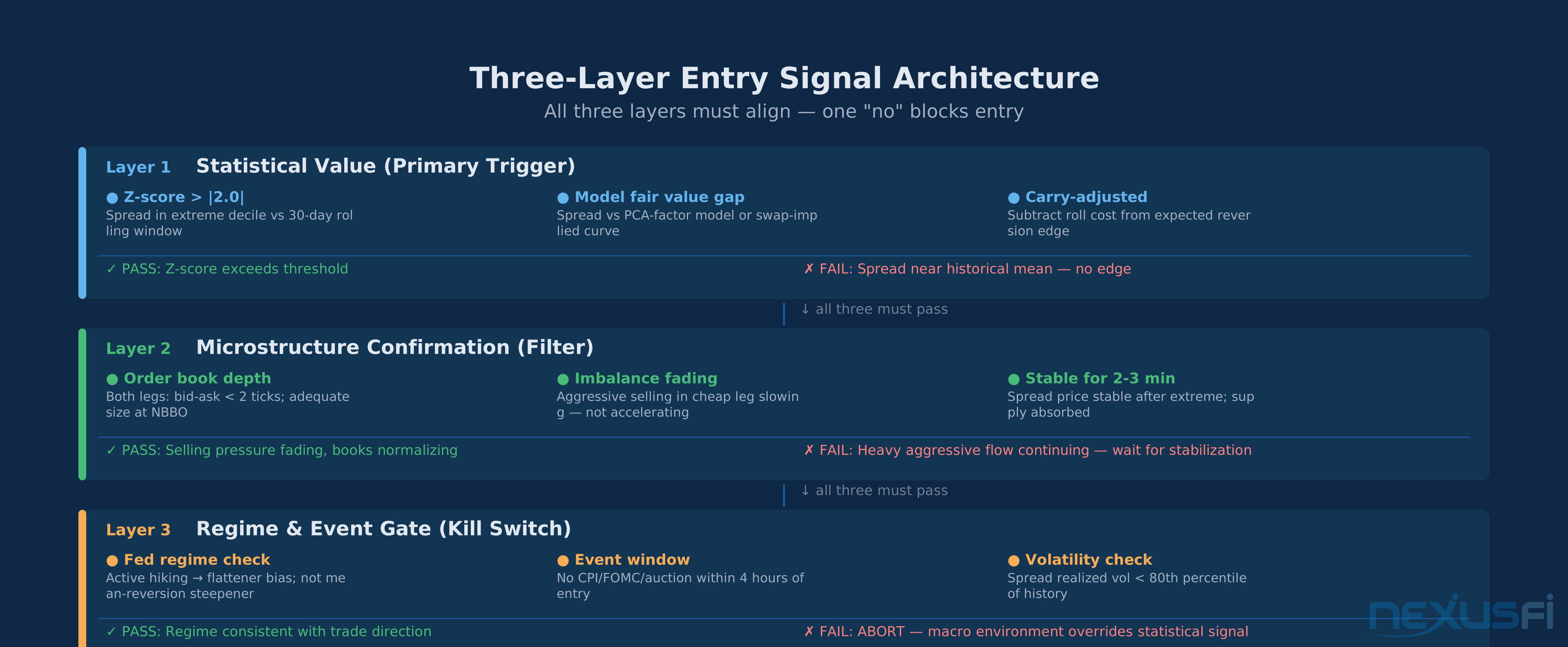
Professional curve traders don't enter on a single indicator. They require three signal layers to stack before initiating a position: statistical value, microstructure confirmation, and regime filter.
Layer 1: Statistical Value (Primary Trigger) #
The foundation is a z-score of the DV01-neutral spread against its historical distribution.
How to compute it:
- Calculate your DV01-neutral spread price daily (or at entry timing)
- Take a rolling 30-60 day window of this spread level
- Compute z-score = (current spread - mean) / standard deviation
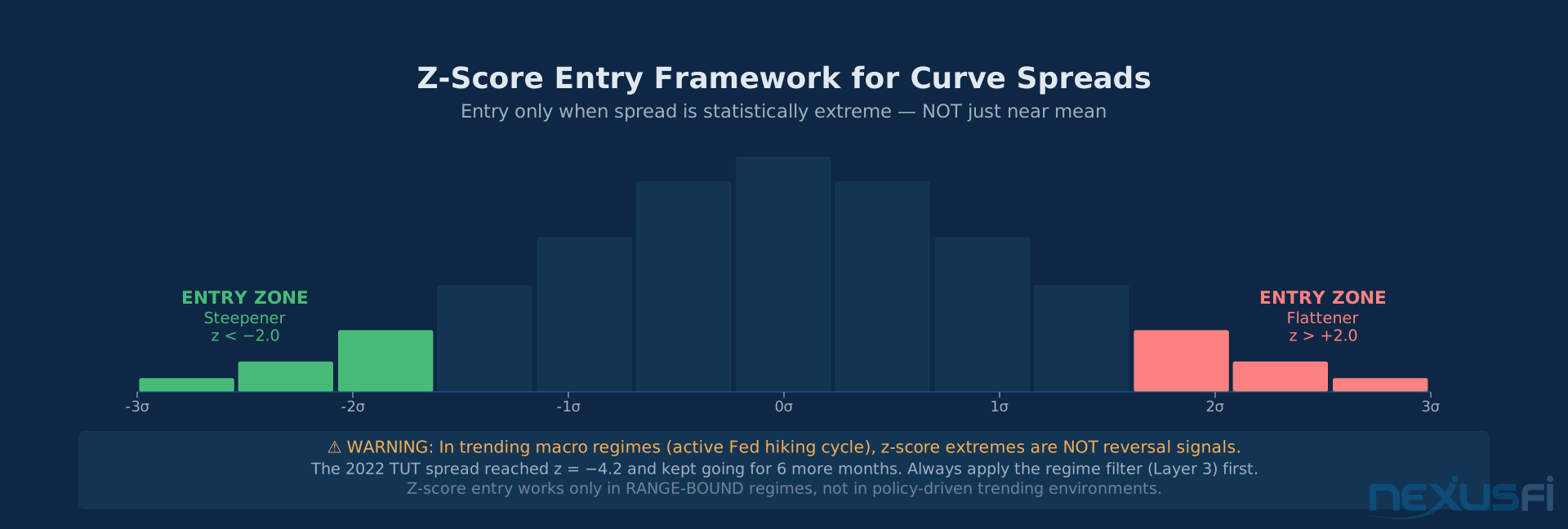
Entry threshold: z-score greater than |2.0| — meaning the spread is more than 2 standard deviations from its recent mean.
At z = -2.5 (spread is abnormally compressed), a mean-reversion steepener makes statistical sense. At z = +2.5 (spread is abnormally wide), a flattener does.
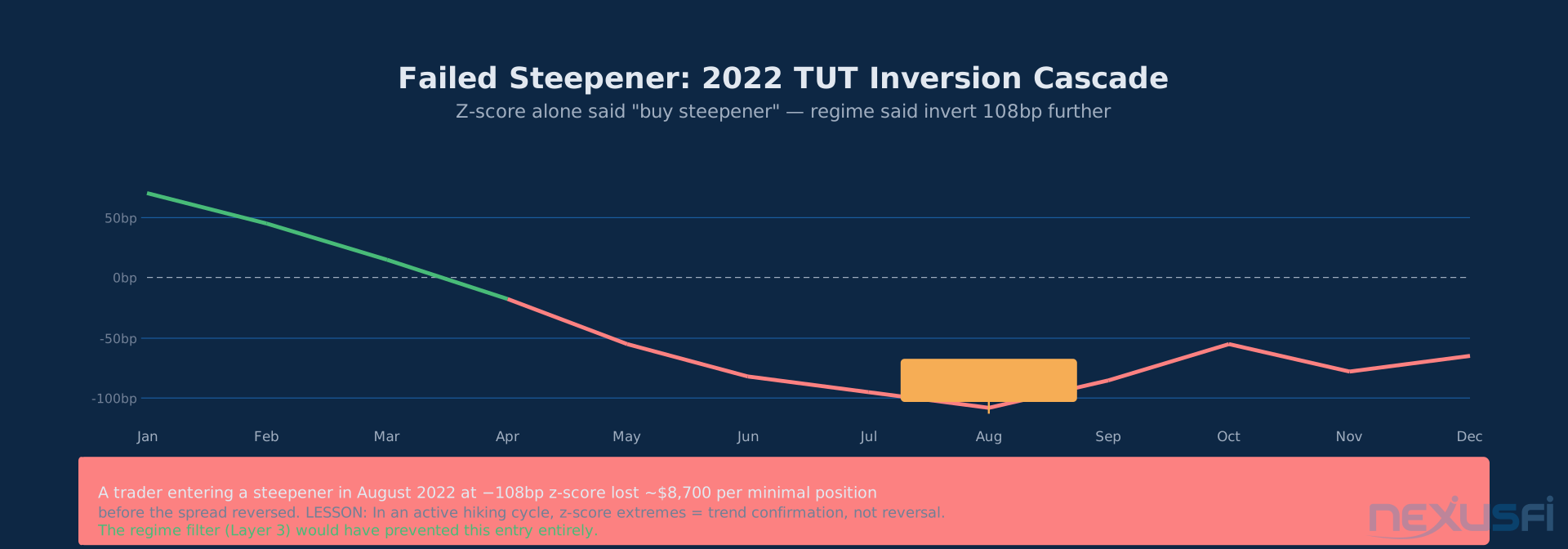
Critical caveat: z-score assumes mean reversion. In trending regimes — like an aggressive Fed hiking cycle where the 2s10s inverts by 108 basis points over 18 months — the spread can spend weeks 2+ standard deviations away from its starting point. A z-score entry in August 2022 into a "cheap" TUT steepener would have been catastrophically wrong until the Fed signaled a pause.
This is why Layer 3 (regime filter) exists.
Model fair value is a more sophisticated approach: compare the observed spread to a regression model using inflation expectations, Fed funds futures, and term premium estimates. The spread vs model fair value tends to be more stable than raw z-scores during macro-driven regimes.
Layer 2: Microstructure Confirmation (Filter) #
This is the filter most retail traders skip, and it's why they get bad fills in spreads.
Before entering:
- Check order book depth in BOTH legs simultaneously — if one leg has a 3-tick bid-ask spread while the other is 1 tick, you're about to get a bad fill
- Watch the aggressive order imbalance in the "cheap" leg: if sellers are hammering the bid in the leg you want to buy, the spread may not revert yet — supply is still present
- Look for the imbalance to fade before executing
NexusFi member @jstnbrg who traded the NOB spread professionally noted: "The idea behind mean reversion is that whatever happens the yield curve will come back to the norm. I have not much experience with ZN and ZB currently — focused on Bund, Bobl, Schatz spreads — but the same mean-reversion principles apply."
A reliable microstructure confirmation pattern: The cheap leg shows heavy selling → selling slows and bid-offer narrows → price stabilizes for 2-3 minutes → at this point the spread may begin to revert. Entering during the sell pressure (hoping to catch the bottom) frequently results in more loss before the spread settles.
Layer 3: Regime and Event Filter (Gate) #
This is the kill switch. If the macro regime is wrong, ignore Layers 1 and 2.
Regime assessment questions:
- Is the Fed in an active hiking cycle? (Front-end aggressive move favors flatteners, not steepeners)
- Are there major Treasury auctions in the next 48 hours? (Supply pressure distorts spread temporarily)
- Is implied volatility on Treasury futures elevated? (High vol = widen your thresholds or reduce size)
- Are there major data releases (CPI, NFP, FOMC) within your trade horizon?
In the current Warsh rate-hiking environment, mean-reversion steepener trades have been working poorly in the 2s10s segment — the flattening trend has dominated. However, the 10s30s (NOB) has shown more two-sided behavior as long-end supply concerns occasionally push the back-end wider despite the overall hiking theme.
Hard event rules:
- No new curve spread entries within 4 hours of an FOMC decision
- Reduce position size by 50% in the 24 hours before a 30-year bond auction (highest impact on NOB)
- Do not hold curve spreads through overnight sessions with major Asia Pacific data releases if your spread has significant convexity
Steepener and Flattener Trade Setups #
Setup 1: NOB Steepener — Post-Auction Mean Reversion #
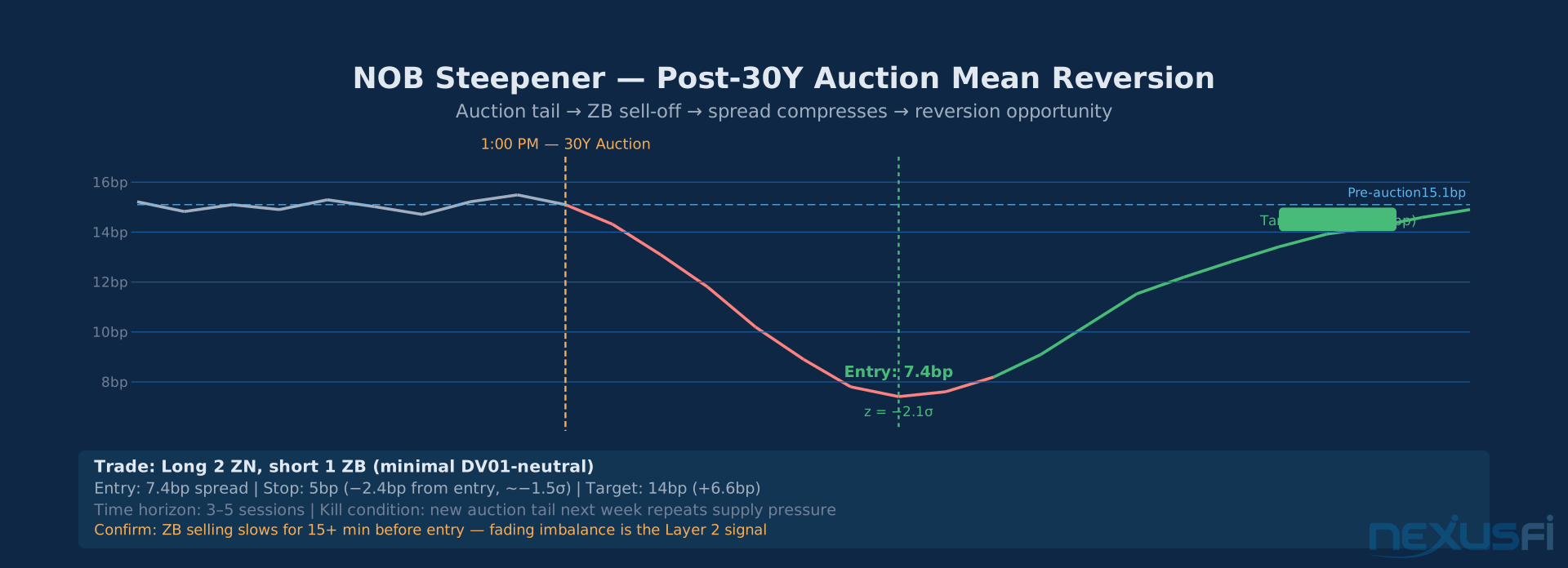
Context: After a 30-year bond auction, dealers receive large inventory. They hedge by selling ZB futures aggressively, temporarily compressing the 10s30s spread (flattening it — the 30Y yield rises relative to the 10Y). This creates a mean-reversion opportunity.
Setup mechanics:
- Wait for the auction: 30Y typically auctions at 1:00 PM ET on designated days
- If the auction has a "tail" (poor demand, prices settle below the 1:00 PM bid), ZB selling follows
- 10s30s spread narrows — z-score on the NOB spread approaches -1.5 to -2.0
- 2-3 hours post-auction, watch for selling to slow (Layer 2 check)
- If selling fades AND macro regime doesn't strongly favor continued flattening → NOB steepener
Entry: Long 2 ZN, short 1 ZB (minimal DV01-neutral ratio) Target: Spread reversion to pre-auction level — typically 8-15 basis points Stop: 8-10 basis points against (measured in DV01 terms, not contract P&L) Time horizon: 2-5 sessions
What kills this trade: If the auction tail is not dealer-driven but reflects real concerns about long-end supply sustainability, the "temporary" flattening isn't temporary. The 2023 30-year auction failures were not mean-reversion opportunities — they signaled a structural long-end repricing.
Setup 2: TUT Flattener — Pre-Fed Meeting Carry #
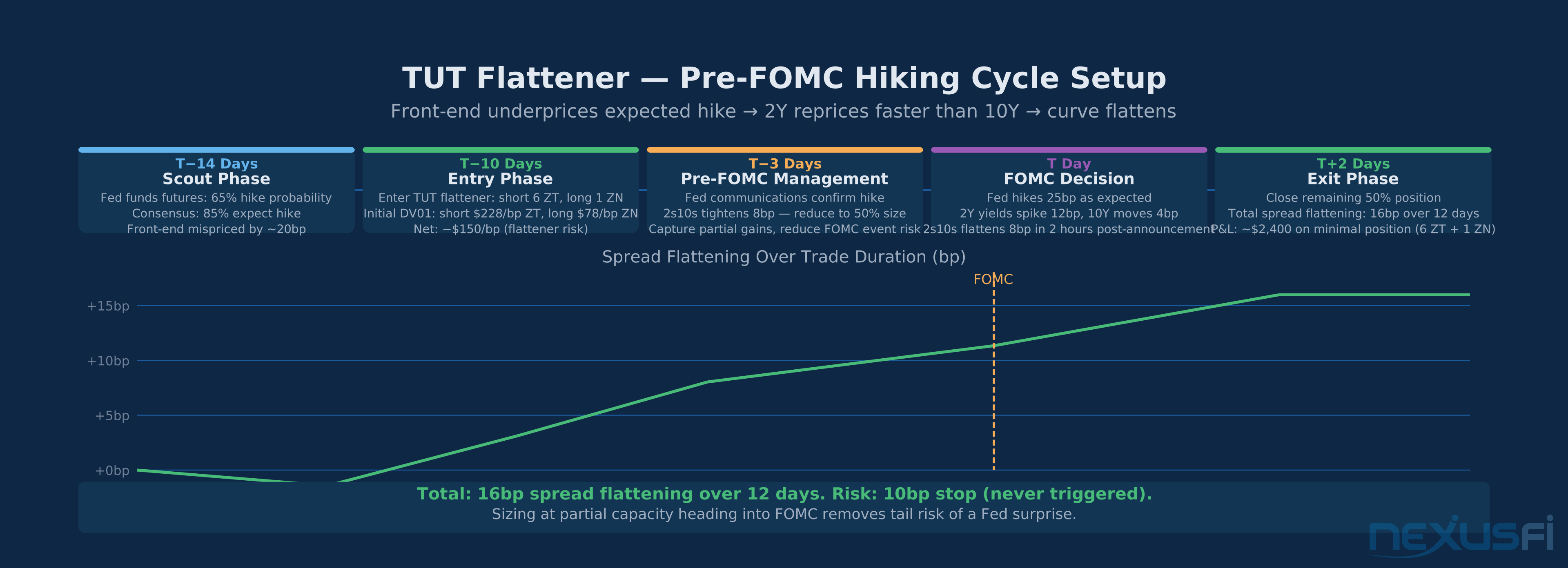
Context: In a hiking cycle, front-end yields tend to rise as the Fed approaches its meeting date. The 2Y is most sensitive to near-term Fed expectations. If the market is underpricing the next hike, the 2Y reprices faster than the 10Y, causing flattening.
Setup mechanics:
- 1-2 weeks before FOMC, if pricing implies less than 80% probability of a hike AND consensus expects a hike → TUT flattener opportunity
- Check fed funds futures and SOFR curve for implied move
- If ZT yield is not pricing in the expected move, it's "cheap" relative to where it should be
- TUT flattener = sell ZT, buy ZN (in DV01-neutral ratios)
Entry: Short ~6 ZT, long 1 ZN (rough DV01 neutral) Target: 5-10 basis points of curve flattening Stop: 10 basis points (spread widens against you) Time horizon: Hold through the FOMC meeting
What kills this trade: The Fed surprises with a skip (no hike). Front-end immediately reprices and ZT rallies hard, turning your short ZT position into a loss that overwhelms any ZN move.
User @tigertrader in NexusFi's Spoo-nalysis thread: "The only difference is in 1999 and 2007 there was an inverted yield curve that began to steepen drastically before the market crashed. The emergence of the Fed's failure to control long-term rates is what drives these moments."
Failed Example: TUT Steepener, September 2022 #
This is worth examining as a failure mode. In September 2022, the 2s10s was at approximately -50 basis points. By historical standards, this was a statistically extreme inversion — z-score well beyond -2.0. Multiple technical analysts called for a steepener: Fed eventually pivots, front-end rallies, 2s10s widens.
The trade: Long ~6 ZT, short 1 ZN.
What happened: The Fed did not pivot. They hiked 75bps at the September 2022 meeting, then again in November. The 2s10s inverted to -108 basis points by early 2023. A trader who entered the steepener at -50bp and held conviction through that move lost approximately 58 basis points of spread widening on top of the initial -50bp setup.
The lesson: Statistical extremes in trending macro regimes are not reversal signals. They're momentum signals. The regime filter (Layer 3) must override the z-score (Layer 1) when the Fed is in an active hiking cycle with no credible pivot trigger on the horizon.
Risk Management Framework #
Size in Dollar DV01, Not Contracts #
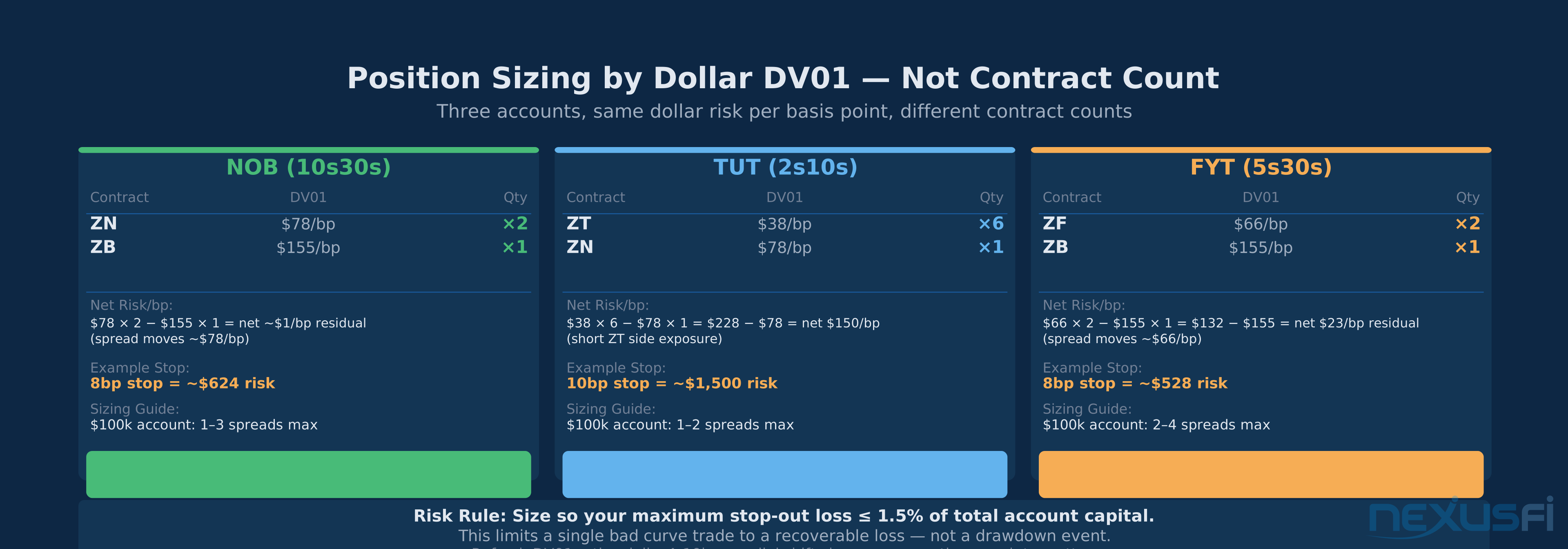
Defining risk in contract count is a beginner mistake. "I'll do 2 ZN vs 1 ZB" means nothing without knowing what that's worth per basis point. Define your risk in dollars per basis point of curve move, then work backward to contract count.
Rule of thumb: Risk no more than $500-1,500 per basis point on a single curve spread trade for a retail account with $100k-$500k. This gives you room for the spread to move against you 10-20bp without blowing out your daily loss limit.
At current DV01 levels, a minimal NOB (2 ZN vs 1 ZB) is approximately: P&L per 1bp curve move = 2 × $78 - 1 × $158 = $156 - $158 = -$2 net delta risk (near-neutral) but the spread itself moves based on the 10s30s differential.
The actual spread risk per basis point of 10s30s move for this minimal position is approximately $78-$158 depending on which leg moves. Keep this concrete.
Three-Layer Stop Logic #
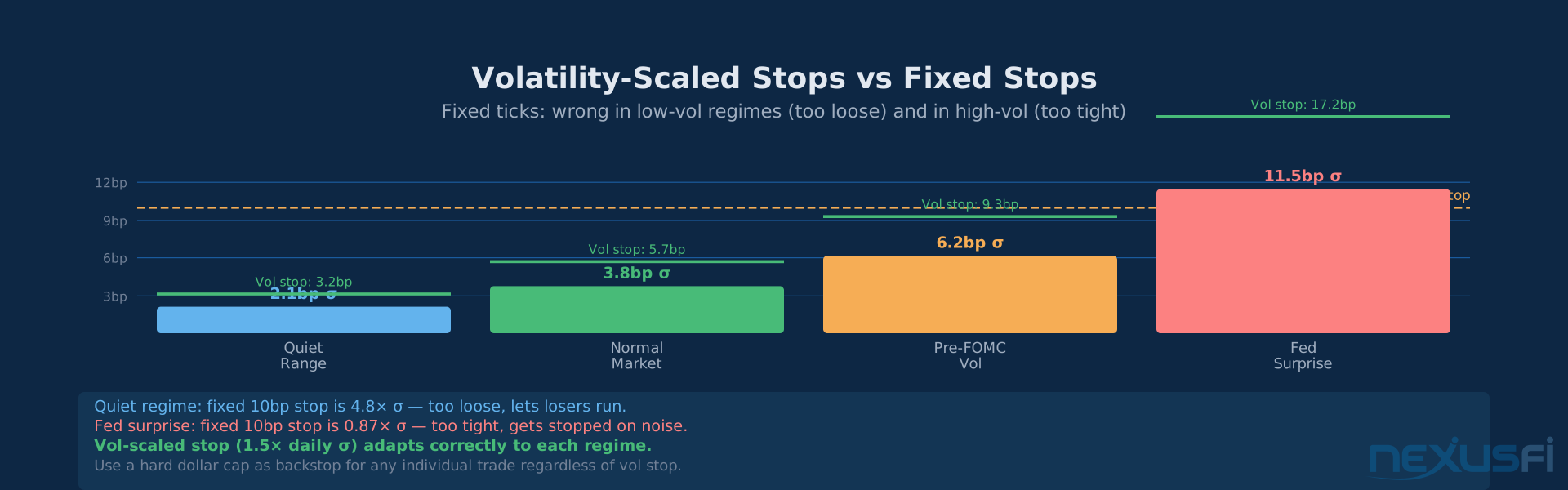
Layer 1 — Volatility-scaled stop: Compute the rolling 30-day realized volatility of the spread (in basis points). Set your stop at 1.5-2.0 × σ. If the spread's daily standard deviation is 4bp, your stop should be 6-8bp away from entry. Not a fixed 10bp regardless of market conditions.
Layer 2 — Time stop: If the spread doesn't move toward your target within N sessions (typically 5-10 for a mean-reversion trade), exit. Time stops prevent carrying positions through regime changes without a clear trigger.
Layer 3 — Hard dollar cap: Maximum loss per trade regardless of the above. For a $250k account, capping any spread trade at $3,000-$5,000 loss prevents a bad entry from becoming a portfolio problem.
DV01 Refresh: Non-Negotiable #
The DV01 values you used at entry change as rates move. After a large rate move (>10bp parallel shift), recompute the DV01-neutral ratio. If you entered 2 ZN vs 1 ZB and rates have moved much, the ratio may now need to be 2.1:1 to remain neutral. If you don't rebalance, you're running residual parallel risk you didn't intend.
Professional desks refresh DV01 daily. As a retail trader, refresh at minimum after any move greater than 5bp in any leg.
Roll Costs: The Hidden Drag #
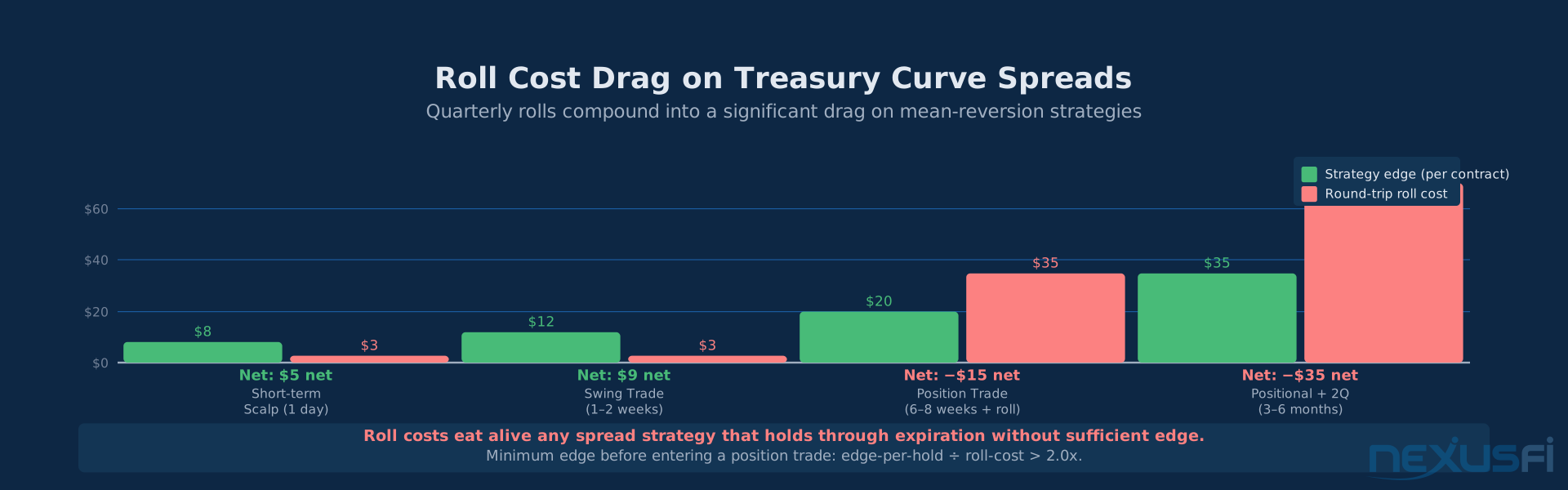
Curve spreads require quarterly rolls. Both legs roll on the same CME schedule, but the bid-offer on the roll itself (switching from front to back contract) has a cost. For the NOB at retail execution levels, the round-trip roll cost runs approximately $30-50 per 2 ZN vs 1 ZB minimal spread per quarter.
This doesn't sound like much, but it compounds. An 8-week hold with one roll costs you $30-50 before the trade even opens P&L. Factor this into your minimum edge calculation.
NexusFi member @Schnook explicitly cited this as a reason to avoid high-frequency mean-reversion strategies in Treasury spreads: "Transaction costs and monthly rolls just end up taking way too much out of my positions." The entry threshold (z-score, minimum edge) must exceed roll costs before a trade makes sense.
Correlation Across Spread Trades #
If you're trading multiple curve spreads simultaneously — NOB and TUT, for instance — they're not independent. Both have ZN as a leg. A large parallel rate move (which theoretically shouldn't affect DV01-neutral spreads) will still create correlated P&L if your ratios are imprecise or if the move is fast enough to create execution leg risk.
Map your total DV01 exposure by tenor (2Y, 5Y, 10Y, 30Y) across all spreads and maintain a view of the aggregate. If you're short $500 DV01 at the 10Y point through two different spreads, you have $500 of net 10Y exposure even though each spread is nominally "neutral."
The Warsh Rate-Hiking Environment: What Changes #
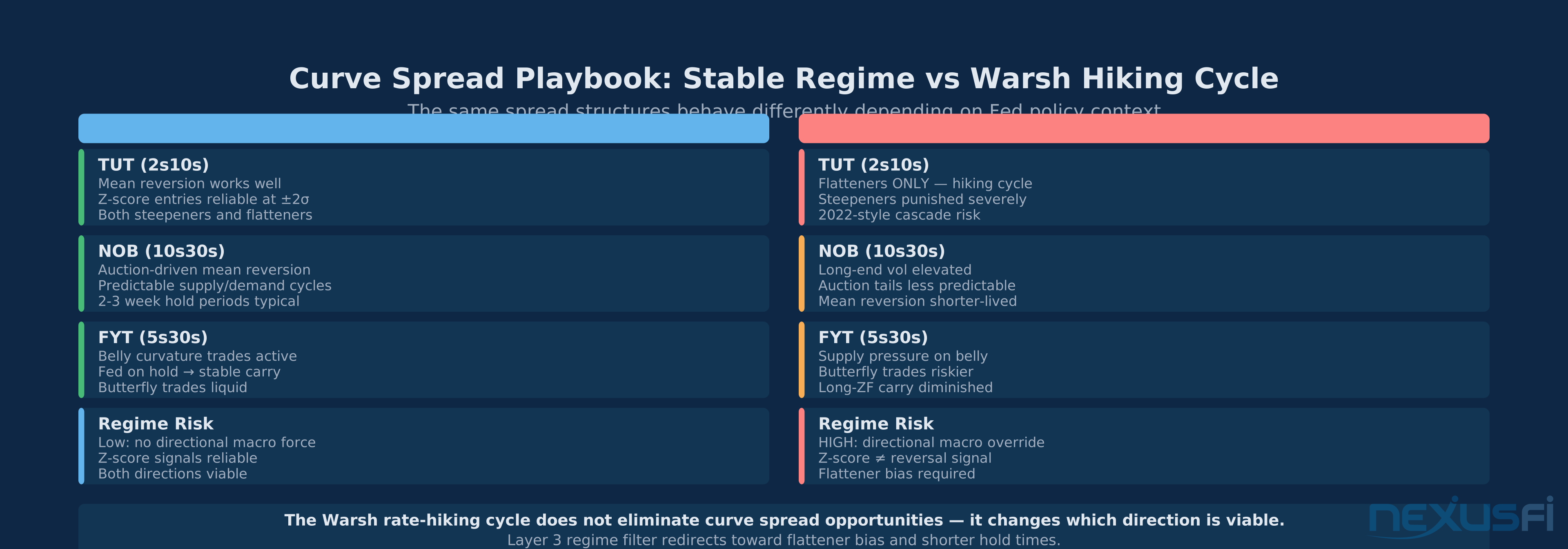
Kevin Warsh took the Fed chair in early 2026 with an explicitly hawkish mandate. His approach — aggressive hiking with clear signals about the terminal rate — has changed the curve spread playbook in specific ways.
What's working:
- Front-end flatteners: TUT flatteners (short ZT, long ZN) have been consistent with the hiking theme
- Long-end volatility: The NOB has been volatile due to supply anxiety — creating short-term mean-reversion opportunities
- SOFR vs Treasury basis: The spread between SOFR futures and Treasury futures has created additional opportunities for traders who can track both markets
What's not working:
- Steepener trades based on mean-reversion z-scores alone — the hiking cycle overrides historical distribution
- Butterfly trades expecting belly richening — aggressive supply has kept the 5-year under pressure
The curve re-steepening trade (when it eventually comes): The TUT steepener will be a significant opportunity when Warsh signals a pause or the data begins showing labor market cracks. Front-end yields fall faster than the long end in that scenario. But entering early — anticipating the pivot before it's priced — has been the graveyard of many macro funds.
Platform Setup and Execution #
Building the Spread Series #
Most retail traders build their curve spread in a charting platform by creating a synthetic symbol. In NinjaTrader:
- Chart instrument: ZN##-2*ZB## (NOB, long ZN short ZB)
- Or: ZT##-6*ZN## (TUT, long ZT short ZN) for the approximate ratio
ThinkorSwim (TD Ameritrade/Schwab): Use the spread syntax /ZN-2*/ZB for the chart. This charts the spread in price-difference terms, not DV01 terms — you'll need to convert manually.
TradeStation: Similar synthetic spread construction using the analysis window.
The charted spread in price terms won't match your DV01-weighted P&L exactly, but it's close enough for signal generation. Use it for z-score tracking; calculate actual P&L in dollar terms separately.
Execution: Synchronizing the Legs #
The critical execution challenge: when you enter a two-leg spread and one leg fills before the other, you have a brief period of unhedged exposure. In a fast market, this can be a significant problem.
Best practices:
- Use spread orders through your broker's complex order interface (many FCMs support this for Treasury futures)
- If leg-by-leg, enter the larger DV01 leg first, immediately follow with the hedge leg
- Have pre-computed limit prices for both legs ready before entering either
- Avoid entering spread trades during illiquid periods (overnight, pre-auction)
Tracking Your Spread in DV01 Terms #
Build a simple tracking sheet:
- Current DV01 per contract for ZT, ZF, ZN, ZB (refresh daily from CME)
- Ratio computation (leg B DV01 / leg A DV01)
- Position entry spread price (DV01-weighted)
- Current spread price
- P&L in dollar terms
- Z-score of current spread vs 30-day rolling history
This takes 15 minutes to build in a spreadsheet and eliminates the mental math that leads to errors during fast markets. NexusFi member @Schnook specifically recommended this approach for managing DV01-weighted Treasury spreads.
When Curve Spread Trading Fails #
These trades are not magic. Here are the most reliable failure modes:
Failure 1: Policy surprise that breaks one leg. If the Fed delivers a surprise (larger or smaller hike than expected), one leg reprices dramatically before you can hedge. A 2-leg spread that took 30 minutes to construct can blow past your stop in 30 seconds on an FOMC day. Solution: reduce or close spreads before FOMC meetings if the surprise risk is high.
Failure 2: Auction failure in the long end. A poorly received 30-year auction causes ZB to sell off hard, violating your NOB position assumptions. The "temporary" supply event becomes a structural repricing if foreign demand has genuinely dried up. Monitor auction stats (bid-to-cover, tail size) to assess whether a ZB sell-off is supply-driven (temporary) or demand-destruction (persistent).
Failure 3: Roll execution during a fast market. Rolling from the expiring front month to the back month on a bad day — high vol, wide bid-offer — can cost much more than you budgeted. Manage rolls proactively: roll 1-2 weeks before expiration, not on expiration day.
Failure 4: Overconfidence in DV01 neutrality. A "neutral" spread is only neutral for small, parallel moves. Convexity differences between a 2-year and a 30-year are significant — in a large, fast move, the longer-duration leg moves more than the DV01 predicts, creating unintended P&L even in a nominally balanced spread.
Failure 5: Ignoring carry. A 5s30s steepener (long ZF, short ZB) has carry: the long-ZF leg pays a higher coupon-equivalent than the short-ZB leg. In a stable rate environment, the carry works in your favor. But if the trade doesn't work within a defined time window, the carry advantage disappears as rolls and time value erode it. Carry is not free money — it's compensation for the duration risk you've taken.
The community knowledge on NexusFi's Treasury Bonds forum reflects these lessons repeatedly: experienced traders consistently emphasize that yield curve spreads are not "safe" relative-value trades that eliminate risk. They shift the risk profile much — but a 10bp move against a large NOB position can still cause meaningful losses even in a "hedged" trade.
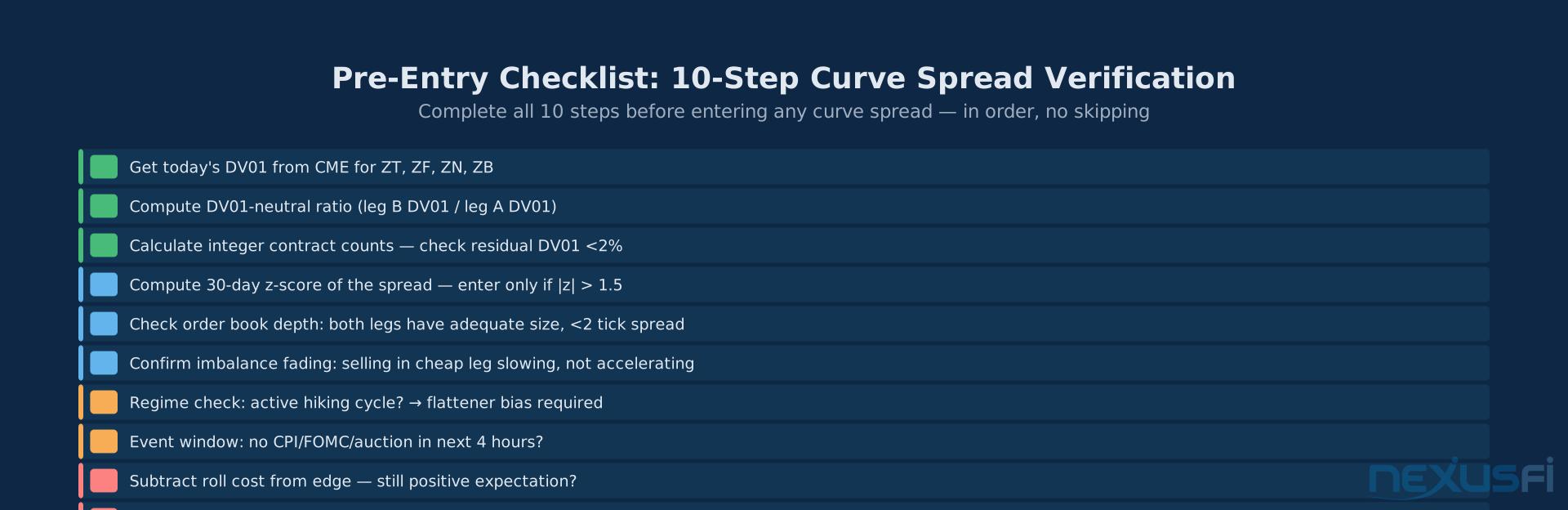
Practical Entry Checklist #
Before entering any curve spread:
- Compute today's DV01 for both legs (from CME or your broker's tool)
- Calculate exact DV01-neutral ratio; round to achievable integer contracts
- Check residual DV01 after rounding — keep within 2% of target
- Compute the 30-day z-score of your spread — enter only at |z| > 1.5 (mean reversion) or z in direction of trend (momentum)
- Confirm Layer 2: order book depth in both legs adequate (< 2 tick spread); imbalance in cheap leg fading
- Confirm Layer 3: no major data releases within 4 hours; regime is not strongly contra to your trade direction
- Subtract roll cost from expected edge — still a positive expectation trade?
- Define stop in basis points of curve move, not in contract dollars
- Define time stop: how many sessions before you exit regardless of level?
- Record all of this before entry — if you need to make decisions under stress, the checklist is already done
KEY INSIGHT — Regime Before Z-Score In an active Fed hiking cycle, always apply the regime filter before checking the z-score. In 2022, the 2s10s reached z = −4.2σ and continued inverting 58bp further. Z-score extremes confirm trend direction in hiking cycles — not reversal. Layer 3 gates all other entry signals.
Roll Cost Reality Treasury curve spreads require quarterly rolling. Round-trip roll cost for a minimal NOB position (2 ZN vs 1 ZB) runs $30--50 per quarter at retail execution. Factor this into your minimum edge calculation before initiating any position trade designed to hold through a roll.
Knowledge Map
Prerequisites
Understand these firstGo Deeper
Build on this knowledgeCitations
- — ZB ZN (NOB) (2011) 👍 4“If you look at the average daily range of ZF, ZN, and ZB, you'll notice that ZB is roughly twice as big as ZN which is about 50% larger than ZF. The reason is actual Treasury duration math -- the 30-year just has more rate sensitivity.”
- — 2s vs 10s (2022) 👍 3“Regarding the spread ratios, I built a simple spreadsheet using DV01 data straight from the CME website... transaction costs and monthly rolls just end up taking way too much out of my positions. So I still prefer using the regular Treasury futures for yield spreads.”
- — anyone scalping the NOB futures spread (2014) 👍 4“The NOB uses a 2*ZN to 1*ZB ratio. Also you can use TOS to chart yield spreads by punching in 2*/ZN-/ZB for a steepener or /ZB-2*/ZN for a flattener.”
- — How I Trade For a Living (2016) 👍 7“For example, if you're long the NOB you might be long 3 ZN and short 2 ZB (I think now the ratio is more like 2:1, it changes). Obviously the DV01 math is what drives the ratio, not contract counts.”
- — Trading treasuries... what do I need to know? (2013) 👍 13“You really need to understand the relationship across the 2, 5, 10, and 30 year to really understand NOB spreads. Sometimes the short end is the driver, sometimes the long end -- when you understand that and why, you will get why the inversion in 2006-2007 predicted something very different.”
- — Spoo-nalysis ES e-mini futures S&P 500 (2014) 👍 10“The only difference is in 1999 and 2007 there was an inverted yield curve that began to steepen drastically before the market crashed. The re-emergence of the Fed's failure to control long-term rates is what drives these moments.”
- — FOUR more NEW MICROs - Micro Treasury Yield Futures coming 16 Aug'21 (2021) 👍 5“ZN currently has a DV01 of $81, so right now you'd have to sell 8 micro 10yr yield futures to have the same DV01 as long 1 ZN contract.”
- CME Group — Treasury Analytics Tool -- DV01, Duration, and Convexity by Contract (2026)
- CME Group Education — Understanding Treasury Futures: Contract Specifications and Relative Value (2024)
- — ZN_Requesting feedback_Chart type and learning books/resources for ZB (2021) 👍 10“Quickly identifying that a flat ZF, moderately bid ZN, and a very bid ZB is a bull flattener; what's the ZN:ZB ratio for a NOB spread? Understanding which part of the curve is driving and which is following is the key skill.”