



Supply and Demand Zones in Futures Trading: The Institutional Imbalance Framework for ES, NQ, and CL
Overview #
Supply and Demand Zones in Futures Trading: The Institutional Imbalance Framework for ES, NQ, and CL
Most traders treat support and resistance as lines drawn at swing highs and lows. Supply and demand zone methodology goes deeper. It asks a different question: why did price stop at that level? The answer is almost always the same — institutional order flow imbalances created a concentration of unfilled orders that continues to exert influence on subsequent price action.
This article provides a complete, practitioner-grade framework for supply and demand zones in ES, NQ, and CL futures: how zones form from institutional activity, how to identify which zones carry edge, how to trade reversals and continuation setups at them, and how to recognize when a zone has failed. The methodology is grounded in order flow mechanics and calibrated for the specific microstructure of each contract.
What Supply and Demand Zones Actually Are #
A supply and demand zone is not just a level where price reversed. It is a region where an order flow imbalance was created and left unresolved. When institutional traders accumulate or distribute large positions, they cannot fill their entire order at a single price. The portion that goes unfilled becomes a standing bid (demand) or offer (supply) that causes price to react when it returns.
The formation mechanics follow a consistent pattern:
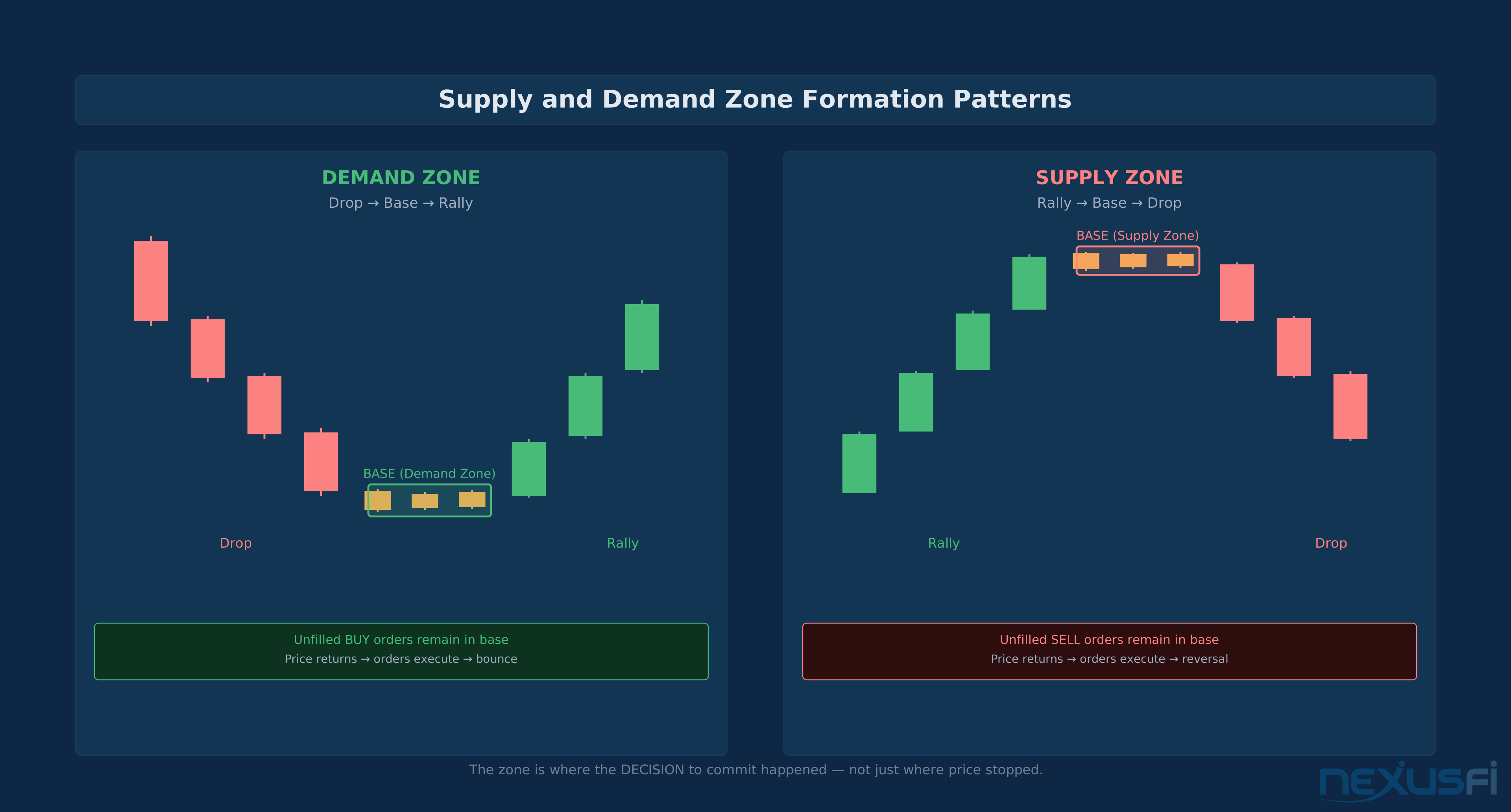
Demand zones form from a drop-base-rally sequence. Price declines, enters a narrow consolidation (the "base"), then leaves with strong upward momentum. The strong departure means buyers stepped in aggressively. The unfilled buy orders remain at and near the base. When price retraces to that area, those orders are still waiting.
Supply zones form from a rally-base-drop sequence. Price advances, consolidates briefly, then drops sharply. Sellers absorbed or overwhelmed buyers in the base. Unfilled sell orders remain. Future rallies into that area encounter that same supply.
The key insight from the NexusFi community's experience: the zone is where the decision to commit happened, not where price reversed. From the "Dudley's Journal" thread: "I was taught to identify supply and demand on a chart, rather than the usual swing high/low (support and resistance) used by many traders." The distinction matters because support and resistance marks where price stopped; supply and demand marks where institutional positioning changed.
From the "Dudley's Journal" thread: "I was taught to identify supply and demand on a chart, rather than the usual swing high/low (support and resistance) used by many traders." The distinction matters because support and resistance marks where price stopped; supply and demand marks where institutional positioning changed.
Continuation patterns exist too. Beyond the reversal formations, zones also appear in rally-base-rally and drop-base-drop patterns — continuation zones where institutions add to existing positions during pullbacks. These are typically lower probability than reversal zones but trade similarly once identified.
The Three Zone Quality Dimensions #
Not all zones carry the same edge. Identifying whether a zone is worth trading requires evaluating three independent dimensions: origin quality, freshness, and location context. All three must be assessed before commitment.
Dimension 1: Origin Quality (Was This a Real Institutional Imbalance?) #
Strong departure. The move leaving the base matters more than the base itself. Strong departures show large-range candles with minimal overlap, minimal pullback, and visible momentum. In ES, this might be a 10-15 point move in two or three bars; in NQ, 40-60 points; in CL, $1.50-$2.00. The departure is evidence that institutional aggression overwhelmed resting liquidity.
Clean, narrow origin. A narrow base with few candles and limited price range is a better zone than a wide, sloppy consolidation. Fewer candles means less time was spent there — fewer participants transacted at that level, so more unfilled orders likely remain.
Imbalance signature. Look for one-sided tape behavior, the U-turn pattern where price abruptly reverses direction, or volume spikes concentrated at the moment of departure. These confirm that the base wasn't random noise but a genuine order flow event.
Structural significance. The strongest zones form at meaningful locations: prior session highs and lows, overnight range extremes, opening range boundaries, major round numbers (4,000 on ES, 13,000 on NQ, $80 on CL), and post-news turning points. A zone created in the middle of nowhere with no structural significance is lower probability than the same zone quality created at a prior week's high.
Dimension 2: Freshness (How Much Edge Has Been Consumed?) #
Freshness is the single most important filter in supply and demand zone trading. When a zone forms, it contains unfilled institutional orders. Each time price returns, those orders get filled or cancelled. After enough visits, the zone is depleted.
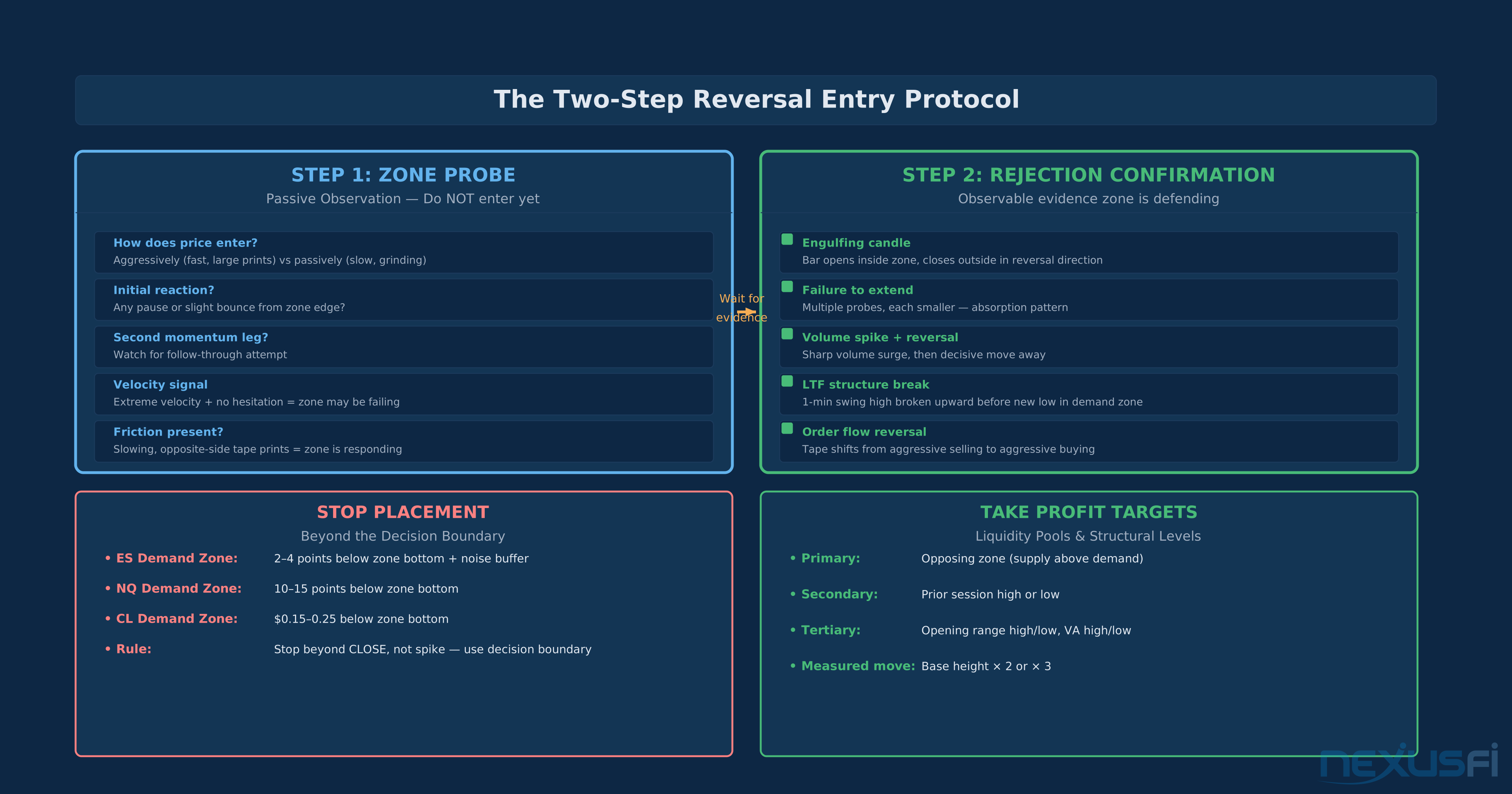
First touch (highest probability): Price has never returned to the zone since it formed. Unfilled orders are maximally intact. This is where the best reversals occur.
Second touch (reduced probability): Some orders have been filled or cancelled on the first retest. The zone still has edge but requires stronger confluence to trade.
Third touch and beyond (caution): The zone has been "used." It may still act as a pivot area, but the precision reversal setup is degraded. Trade smaller or wait for clear confluence confirmation.
The time decay also matters, though the community is divided on exactly how much. Behaviorally, a zone remains "fresh" as long as it continues to produce short, efficient probes with quick reversals when price approaches — regardless of calendar age. If probes into the zone produce chop and multiple overlapping reversals without a clean directional response, the zone has gone stale regardless of touch count.
From a trader with 12 years experience: "I've been day and swing trading futures since 2010, using supply/demand zones. I scan for setups in 17 different equity indices, treasuries, commodities."
Profitable traders: what's your e-mini time frame and risk/reward structure? (@stanowen)
NQ zones go stale faster than ES. The higher volatility and faster price movement in NQ means zones can be "worked through" in hours rather than days. ES zones at daily levels can remain fresh for days or even weeks. CL zones can be instantly invalidated by headline events.
Dimension 3: Location Context (Does This Zone Have Structural Support?) #
Even a fresh, high-quality zone fails at a higher rate if it's located in a structurally weak position. Strong location factors:
- Trend alignment: Counter-trend zones at key levels (selling into a strong downtrend's rally, buying into an uptrend's pullback) work better than fading a trend without structural support.
- Higher timeframe location: A 15-minute zone that forms inside a daily level's range is much stronger than the same zone in the middle of a daily range.
- Session structure: Zones that form at overnight range extremes, opening range boundaries, or prior-day high/low are structurally significant. The market has repeatedly auctioned at those prices.
- Near prior extremes: Zones near the top or bottom of a multi-session range have structural significance that zones in the middle of ranges lack.
Scoring Zones Before Trading #
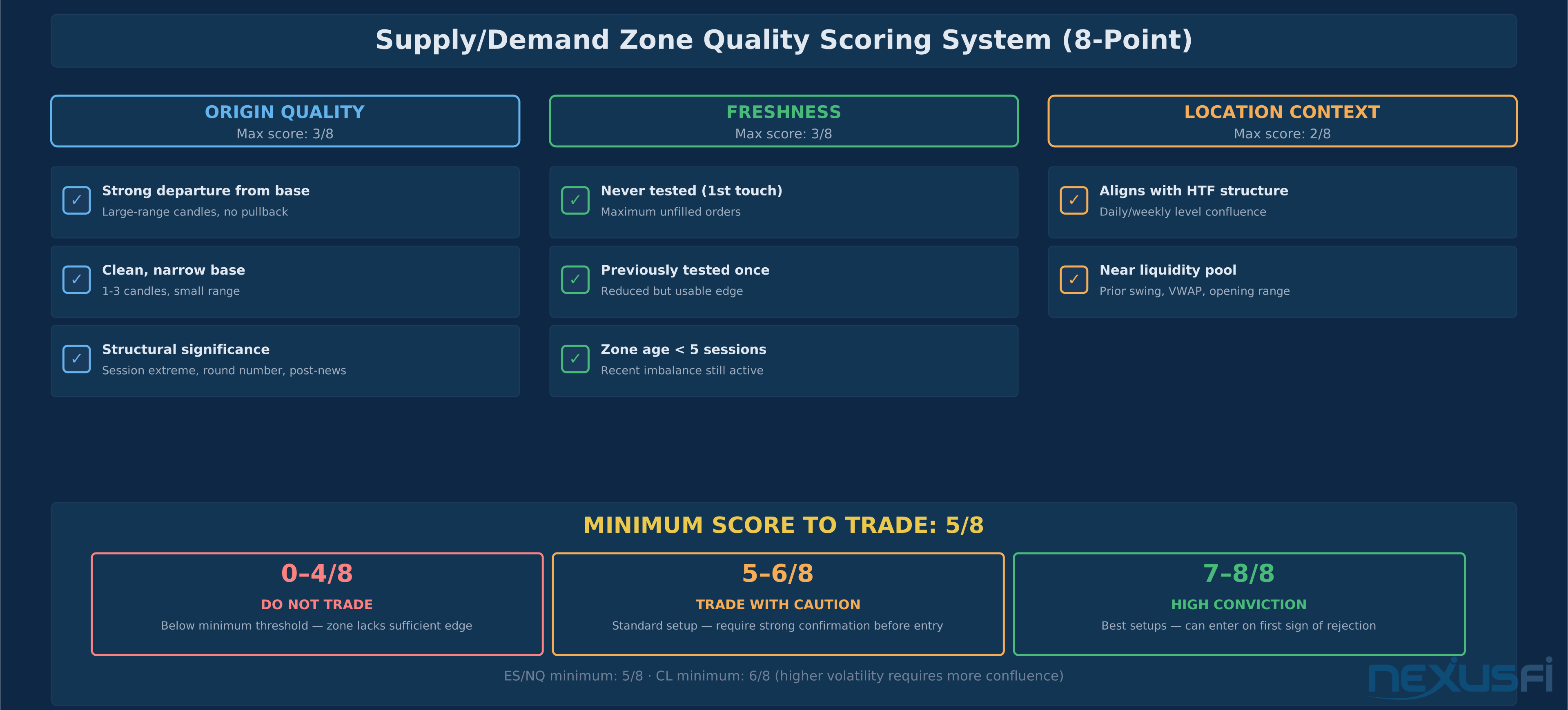
The three dimensions translate into a practical scoring system that prevents over-trading weak zones:
| Dimension | Criteria | Points |
|---|---|---|
| Origin Quality | Strong departure + clean base + imbalance signature | 0-3 |
| Freshness | First touch = 3, Second = 2, Third+ = 0-1 | 0-3 |
| Confluence | 3+ independent structural factors | 0-2 |
| Maximum Score | 8 |
Trade only zones scoring 5/8 or higher. Below that threshold, the edge is insufficient to justify the risk. This isn't conservative — it's the filter that separates systematic supply and demand trading from randomly fading any level that "looks like" a zone.
Confluence factors that count toward the score (must be independent of the zone itself):
- Prior-day or prior-week high/low overlapping the zone
- Opening range boundary coinciding with the zone
- VWAP or anchored VWAP level at or near the zone
- Volume profile POC, VAH, or VAL within the zone's range
- Low-volume node (LVN) from volume profile at the zone
- Market-structure break: the impulse leg from the zone violated a significant swing high/low
The Reversal Entry Framework #
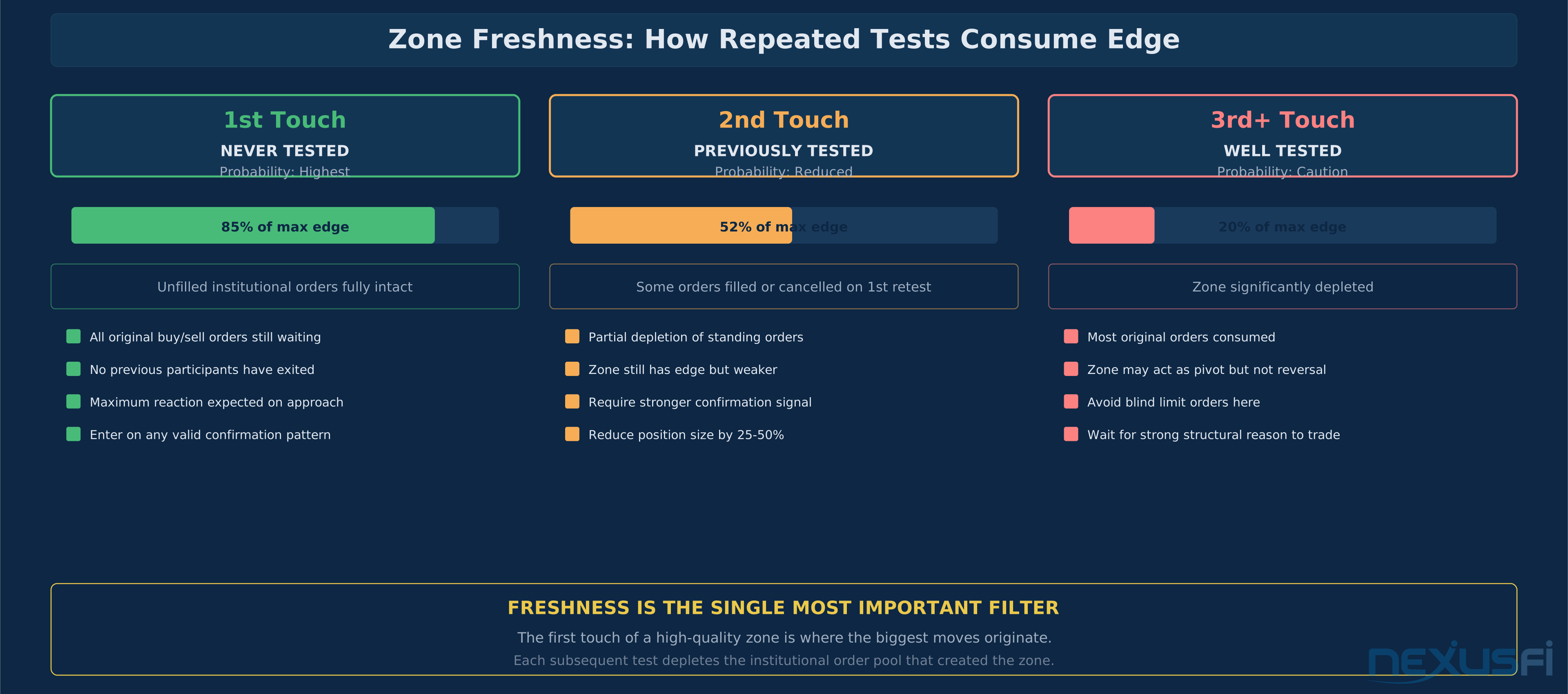
Once you've identified a high-scoring zone, the execution follows a two-step protocol. Both steps are non-negotiable.
Step 1: Zone Probe (Passive Observation) #
Price enters the zone. Do not act yet.
Your only job at this point is to identify the probe characteristics:
- How does price enter? Aggressively (fast, large prints) or passively (slow, grinding)?
- Does price show initial reaction — even a small pause or slight bounce from the zone's near edge?
- Is there any sign of a second momentum leg forming into the zone?
If price enters the zone with extreme velocity and no hesitation, the zone may be failing. If price enters and immediately shows "friction" (slowing, tick prints on the other side appearing), the zone is responding.
Step 2: Rejection Confirmation (Entry Signal) #
You need observable evidence that the zone is defending itself before entering.
Confirmation patterns (any one is sufficient):
- Engulfing candle: A bar that opens inside the zone and closes outside it, in the direction away from the zone. On 5-minute charts in ES, this means a bar that opens inside the demand zone and closes above the zone's upper boundary.
- Failure to extend: Price makes multiple probes into the zone but cannot create a new extreme in the entry direction. Successively smaller probes show absorption.
- Volume spike with reversal: A sharp volume increase as price hits the zone, followed by a decisive move away from it. The volume confirms participation.
- Lower timeframe micro-structure break: On a 1-minute or 2-minute chart, a swing high that forms inside the demand zone is violated to the upside (for a long entry) before any new low is made in the zone.
- Order flow reversal: Tape prints shift from aggressive selling to aggressive buying as price interacts with the zone (best viewed via DOM and time-and-sales).
The two-step protocol is what separates zone trading from blind limit orders. Placing a limit at the zone edge without confirmation generates a lower win rate and deeper drawdowns, because many zones fail without warning. Waiting for confirmation reduces participation in failed zones at the cost of a slightly worse average entry price — the correct tradeoff.
From a trader who learned this framework: "I recommend learning to play the bounce off a demand or supply zone. Which is more predictable and less random than a breakout."
New to Futures, but Hitting the Wall (@Wizard3ootz)
Stop Placement (Decision Boundary Rule) #
The stop goes beyond the decision boundary — the level at which the zone thesis is definitively invalidated — not beyond the farthest wick.
For demand zones: the stop goes below the zone's lowest point, plus a noise buffer based on the contract's typical tick noise. In ES, 2-4 points beyond the zone's bottom. In NQ, 10-15 points. In CL, $0.15-0.25.
Do not use the farthest wick as your stop reference. Wicks are extreme price actions that often don't represent the "true" boundary of the institutional order. The decision boundary is where price must close (not just spike) for the zone to be violated.
Take Profit Targets #
The target logic uses liquidity pools — areas where resting orders are likely to be waiting because of their structural significance.
Primary targets:
- The opposing zone (the supply zone above a demand zone)
- Prior session high or low (depending on direction)
- Opening range high or low
- Value area high or low (from volume profile)
- A measured move from the zone (height of the base × 2 or × 3)
From one trader's approach: "I look to the left on higher time frame charts looking for areas of congestion, then I narrow it down by looking for areas." The target structure is the next area of congestion where opposing pressure is likely to emerge.
The Scalper's Path (@michaelleemoore)
Contract-Specific Calibration: ES, NQ, CL #
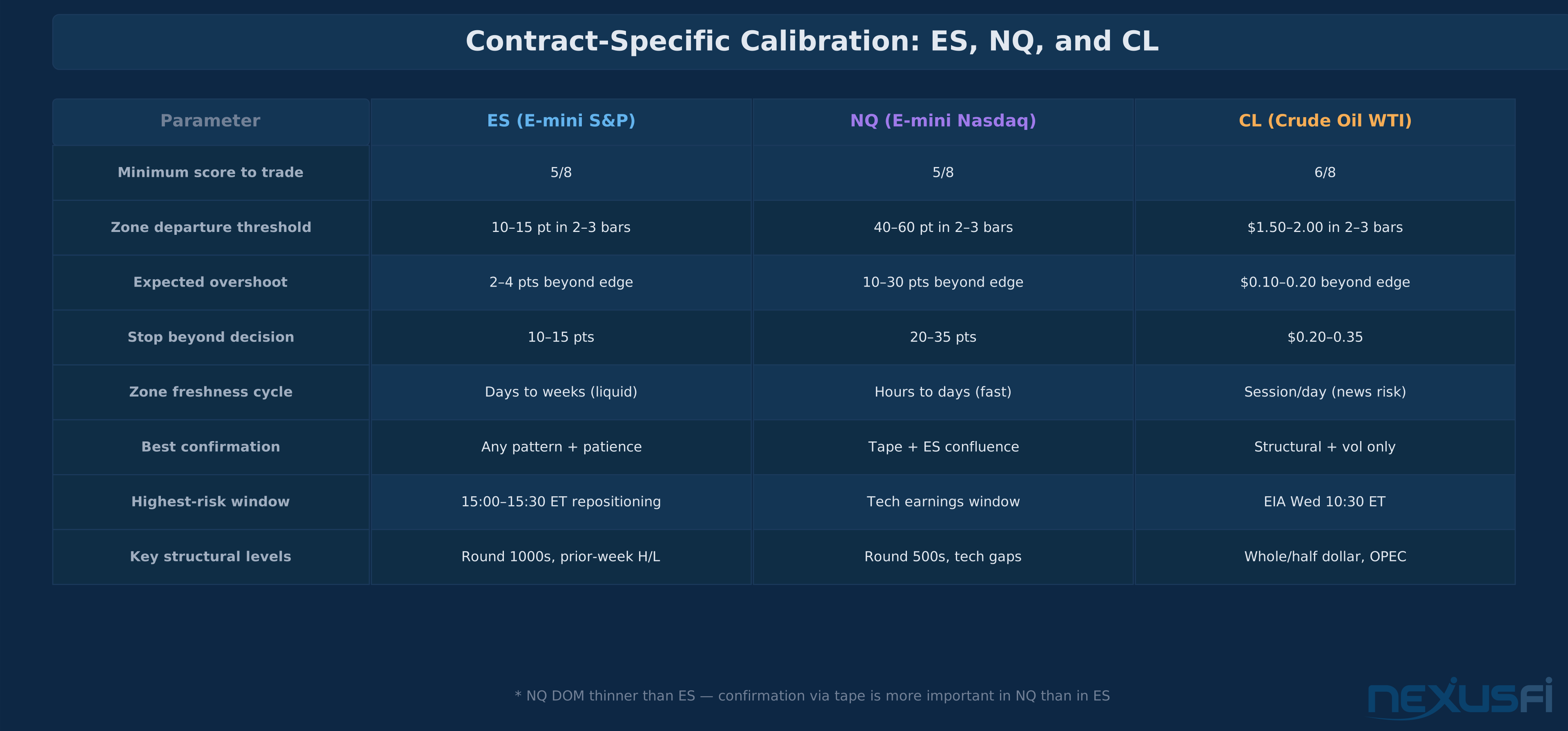
The zone identification methodology is universal. The calibration details differ much by contract.
ES (E-mini S&P 500) — The Liquidity Leader #
ES is the most forgiving contract for supply and demand zone trading. Its deep liquidity means that:
- Zone probes are slower and more methodical; you have more time to confirm
- Reversals tend to be more gradual; initial move can be slow
- Zones at major handles (4,000, 4,500, 5,000, 5,050, 5,100) are especially significant because round-number participants cluster there
Key adjustments for ES:
- Absorption at demand zones can require patience; a zone may hold for 10-20 minutes before launching
- The 15:00-15:30 ET window often sees institutional repositioning that either confirms or fails zone setups
- Weekly levels (prior-week high/low, monthly levels) carry significant weight — zones that coincide with these levels are high-quality
- Stops: typically 10-15 points beyond the decision boundary
- Overnight gaps into a zone are significant; ES gaps often fill but not always before continuing
What to avoid in ES: Fading into strong trending markets without zone quality backing. ES trends can persist for days; zone fades work best in balanced or range-bound conditions.
NQ (E-mini Nasdaq 100) — Velocity and Overshoots #
NQ moves faster and with more dramatic swings than ES. This creates better zone-trading setups with more energy, but also more false starts and overshoot failures.
Key adjustments for NQ:
- Zones need to be identified at the 5-minute and 15-minute chart level; 1-minute zones generate too many false signals in NQ's noise
- Plan for 10-30 point overshoots beyond the zone boundary before reversals occur; don't place stops at the exact zone edge
- Tech-related macro events (earnings, Fed tech-company commentary, NVDA/AAPL/MSFT moves) can temporarily invalidate zones entirely
- Stops: typically 20-35 points beyond the decision boundary (larger in dollar terms but similar in ticks to ES)
- The NQ-ES divergence is a secondary signal: when NQ diverges from ES at a supply or demand zone (one holds while the other doesn't), the diverging contract often leads
The NQ tape rule: In NQ, confirmation via the tape is more important than in ES because NQ DOM is thinner. A strong ES zone confirmation + NQ tape showing absorption is higher probability than NQ zone alone.
CL (Crude Oil WTI) — The News-Sensitive Contract #
CL zones operate on the same principles but with one critical override: scheduled fundamental events can invalidate any zone instantly.
Key adjustments for CL:
- EIA Petroleum Inventory (10:30 ET, Wednesday): stand aside 5 min before and after
- OPEC and geopolitical events can create multi-session zone invalidations
- Whole-dollar ($80.00, $81.00) and half-dollar ($80.50) levels are especially strong
- Session timing: NY-session zones (9:00-14:30 ET) more reliable than Globex; Asian-session zones are low-confidence
- Stops: $0.20-0.35 beyond the decision boundary
CL zone threshold: 6/8 minimum (vs 5/8 for ES/NQ). CL's news volatility requires more confluence buffer.
Continuation Zones -- When the Trend Pauses #
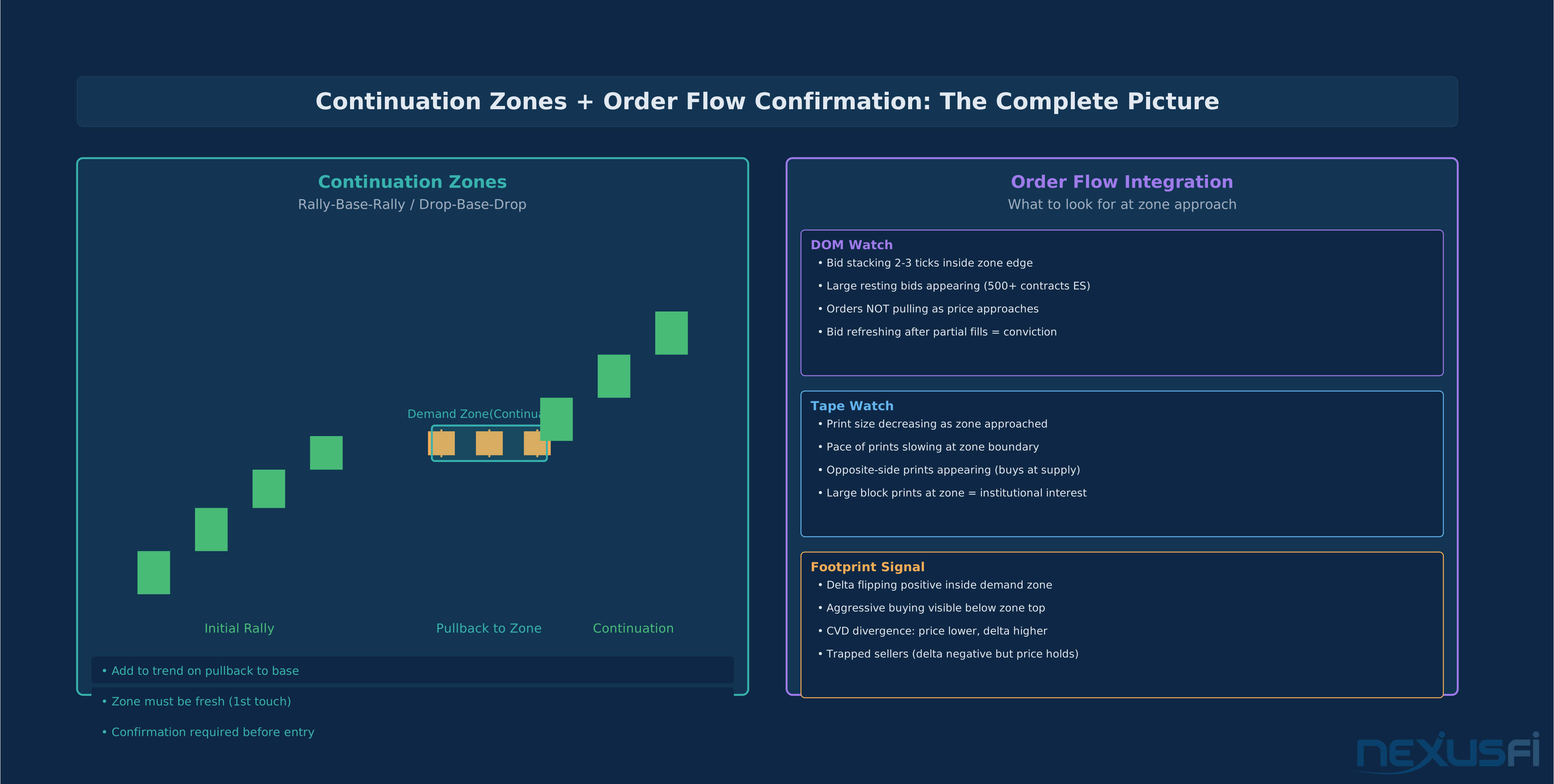
The strongest supply and demand zone applications aren't always reversals. Some of the highest-probability trades use zones to identify continuation entries when price pulls back into a recently formed zone during a trend.
A continuation demand zone (in a trending upward market):
- Price rallies strongly from a prior demand zone
- Price pulls back to a new minor consolidation (a base forms)
- Price launches upward again from that base
- On the next pullback to that base, buy the demand (the most recent consolidation before the most recent impulse up)
This is the drop-base-rally or continuation variant. You're buying the most recent zone created by the trend's momentum, which is fresh by definition (the trend only visited it once). The stop goes below the base. The target is the prior high or a measured move extension.
Traders who are learning often focus exclusively on reversal setups. The community consensus is that continuation zones are higher-probability because you're trading with the market's current directional bias rather than against it.
Zone Failure Patterns and How to Trade Them #
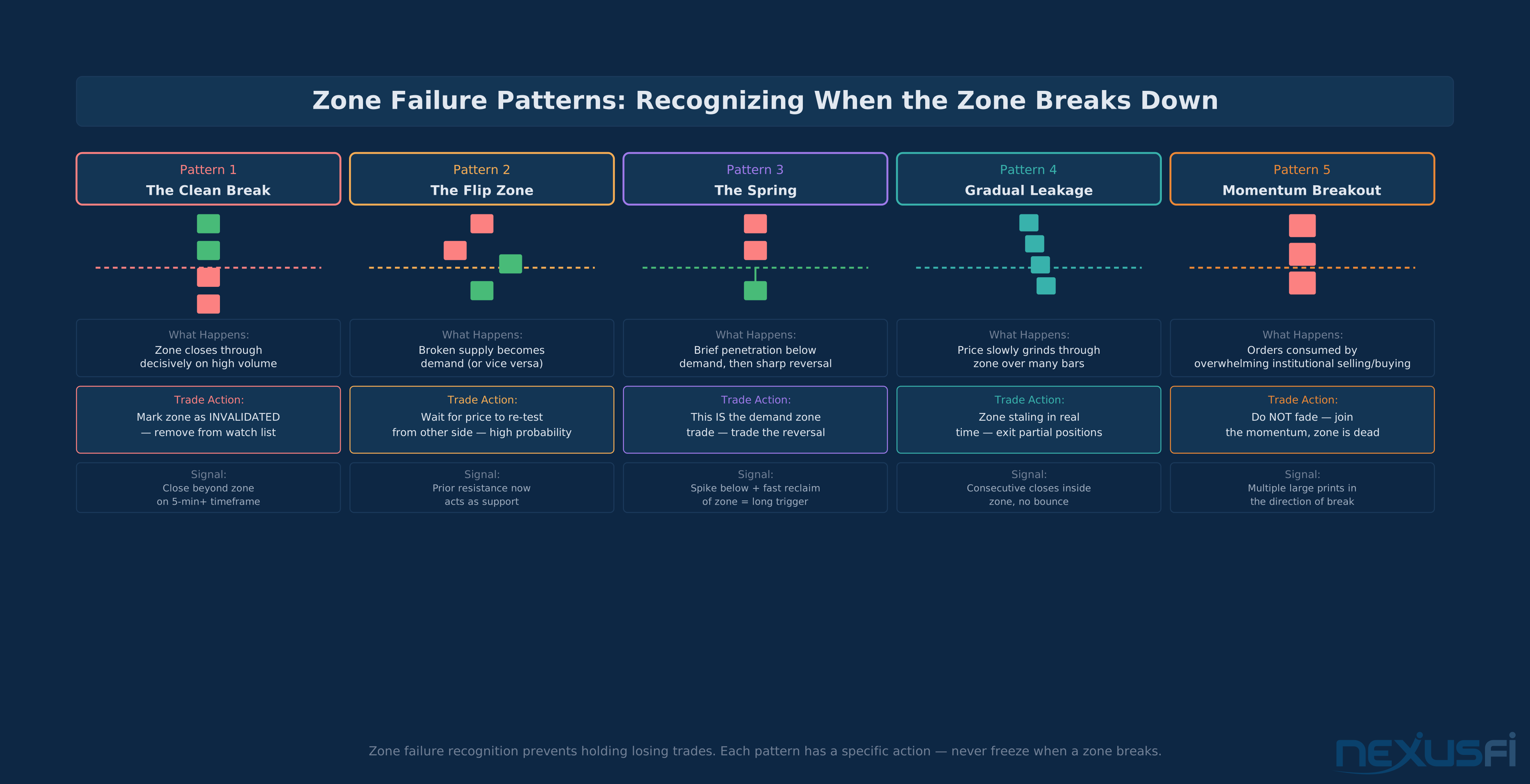
Zone failures are as informative as successful zones. Each failure pattern carries a specific implication for subsequent price action.
Pattern 1: The Clean Break (Zone Invalidated) #
Recognition: Price enters the zone, shows initial hesitation, then continues through. Multiple candles close beyond the zone boundary. The market accepts at new prices and doesn't return.
Implication: The zone is dead. Stop loss triggered. Do not attempt to trade the zone again from the original direction. The zone is now potentially a reference level for the opposite direction.
Management: Exit as planned. Look left for the next supply or demand zone in the original direction. That becomes the next reference.
Pattern 2: The Flip Zone (Supply Becomes Demand, and Vice Versa) #
Recognition: After a supply zone is breached to the upside, price pulls back and holds above the old supply zone. The zone has been "reclaimed."
Implication: This is one of the highest-probability setups in supply and demand trading. Former resistance that is broken and retested as support is fresh — by definition, the first test of a zone from the new direction is a first touch. The supply zone has become a demand zone.
Entry: Buy the retest of the reclaimed zone with stop below the original zone. The target is the next supply zone above.
Example in ES: A supply zone formed at 5,050-5,060. Price rallies through it to 5,080. Price pulls back to 5,055. That retest of 5,050-5,060 from above is a premium demand entry.
Pattern 3: The Spring (Trap and Reverse) #
Recognition: Price briefly penetrates the zone's outer boundary — often creating a new extreme for the session — then immediately reverses, often with increased momentum away from the zone.
Implication: A liquidity hunt. The penetration triggered stop orders on the other side of the zone. The subsequent reversal is often faster and stronger than a normal zone bounce because the trapped participants are now forced to exit.
Entry: The entry is at the point of reclaim — when price returns to the zone's inner boundary after the spring. This is the "spring-and-confirmation" pattern from Wyckoff analysis. Stop below the spring low; target is a measured move from the reclaim point.
Pattern 4: Gradual Leakage (Zone Staling in Real Time) #
Recognition: Price enters the zone and shows small reactions but progressively penetrates deeper with each probe. Each high in a demand zone is lower than the previous. No clean rejection materializes.
Implication: The zone's unfilled orders are being consumed incrementally. The zone has not definitively failed but is becoming stale in real time.
Management: If already in a position, tighten to breakeven or exit at first small bounce. Do not add. If not yet in a position, wait for either a clean rejection or a definitive break below the zone before acting.
Pattern 5: Momentum Breakout (Orders Consumed) #
Recognition: Price enters the zone on accelerating momentum — increasing print size on the tape, rapid candles, volume spike at the zone level. Price passes through the zone with minimal hesitation.
Implication: The zone's resting orders were consumed by the momentum. This is not a failed zone so much as an overwhelmed zone — there were buyers (or sellers) there, but the opposing momentum was too large.
Trading implication: A zone that's momentum-broken often becomes a short-term support/resistance flip. If you're watching the tape and see momentum consumption (fast prints through the zone, no immediate slowing), don't fade — join the momentum after the first small pullback.
From the NexusFi community: "The way I trade E-Minis is with the 5 minute chart. I look for supply or demand zones forming anywhere from a couple hours before the market opens until 30 minutes or so after the market opens."
Trading With Supply and Demand (@kbaker9247)
Confluence: Building High-Probability Zone Setups #
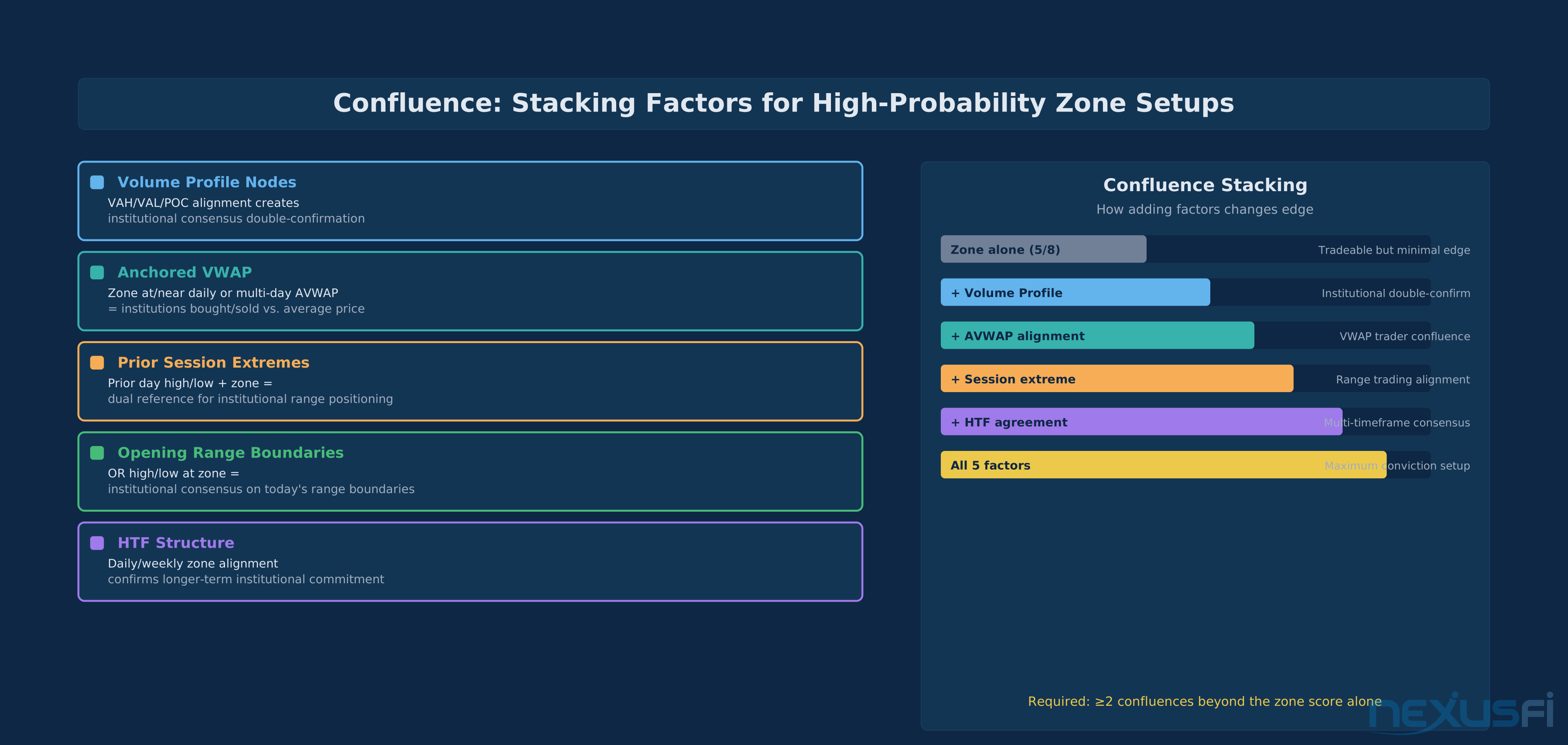
A zone does not trade in isolation. The six most valuable confluence factors for futures supply and demand trading:
1. Volume Profile Nodes #
The relationship between supply and demand zones and volume profile structure is often complementary. A demand zone that overlaps with a high-volume node (HVN) or the Point of Control (POC) from a recent session is especially strong — the HVN confirms that market participants were willing to trade heavily at that price in the recent past, while the zone adds the directional imbalance signal. Conversely, zones that coincide with low-volume nodes (LVNs) often see price move through them faster — useful context but not a quality-enhancing confluence.
2. VWAP and Anchored VWAP #
When a demand zone coincides with the daily VWAP or an anchored VWAP from a recent significant anchor point (prior swing low, major news day, contract roll), both signals are pointing to the same conclusion from independent methodologies. VWAP represents the volume-weighted average trade price for all participants; a demand zone at that level means the imbalance was created near the market's "fair value" anchor. This convergence is high-quality.
3. Prior Session Extremes #
The most reliable confluences in futures are zones that coincide with prior-day high, prior-day low, prior-week high, or prior-week low. These are levels that all market participants watch, and institutional orders concentrate near them. When a supply zone forms exactly at yesterday's high, there are multiple independent reasons for sellers to be active at that exact price.
4. Opening Range Boundaries #
The opening range (typically the first 30-60 minutes of RTH for ES/NQ, or the first 30 minutes of peak NY session for CL) establishes the day's initial auction boundaries. Supply and demand zones that form at opening range high or low are extremely significant — they represent the institutional consensus about "too high" or "too low" for that day's session. Zone trades at these levels often have excellent risk/reward because the stop is well-defined (just outside the opening range) and the target is visible (the opposite opening range boundary or a prior session extreme).
5. Market Structure Breaks #
When the impulse leg that created a supply or demand zone also broke a significant swing high or low (a market structure break), the zone is more significant than one where price simply bounced without breaking structure. The structure break confirms that the imbalance was large enough to shift the market's baseline — genuine institutional activity, not just noise.
6. Round Numbers and Psychological Levels #
Specific price levels attract disproportionate order concentration. ES zones at 5,000, 5,100, 5,200. NQ zones at 18,000, 19,000. CL zones at whole and half-dollar increments. When a zone forms at one of these levels, that psychological magnetism is additive confluence.
Integrating Supply and Demand with Order Flow #
The highest-probability supply and demand trades combine zone identification with real-time order flow confirmation. The zone identifies where the trade setup exists; the order flow confirms when to execute.
The most relevant order flow signals for zone trading:
DOM absorption at the zone level. When price hits a demand zone and aggressive selling (large tape prints in the sell direction) fails to push price through the zone, that's absorption. The DOM shows the demand side (bid) holding at the zone level despite tape aggression. This is real-time confirmation that unfilled orders are defending the zone.
Bid/offer rebuilding after probe. When a large bid appears at the zone level after an initial probe, rebuilds after consumption, and holds for 10-20 seconds, that's institutional defense in real time. The DOM is showing you that the orders the zone analysis predicted are actually there.
Tape speed deceleration. As price approaches a demand zone, aggressive sellers are selling into resting buyers. If the tape decelerates (prints slow, size per print decreases) as price probes the zone, the zone's orders are absorbing aggression. This precedes a reversal more reliably than any candle pattern.
For traders who don't use DOM or tape, the zone framework still works. The confirmation step is just based on candle patterns rather than real-time order flow. Both approaches work; order flow confirmation simply provides faster signals and tighter entry timing.
Common Mistakes and How to Avoid Them #
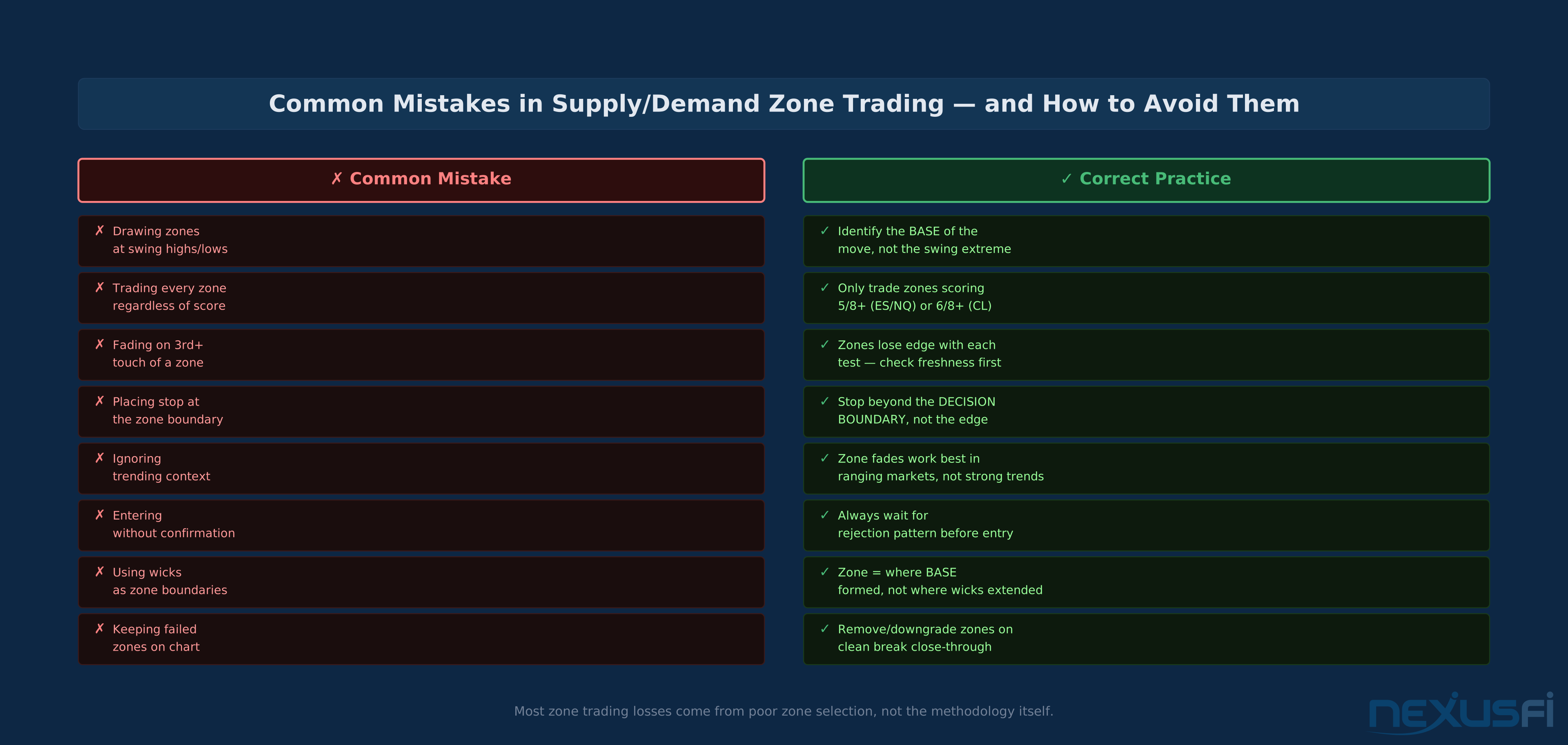
Mistake 1: Drawing Zones Everywhere #
The most common error is marking too many zones. When a chart has 15 supply zones and 12 demand zones, none of them are actionable. The discipline of supply and demand trading requires selectivity — marking only the zones that meet the quality criteria described above. If a zone doesn't have a strong, clean departure, don't mark it.
Fix: Mark zones top-down (daily, then 4-hour, then 1-hour) and only mark zones that pass the scoring threshold (5/8 or higher before confluence).
Mistake 2: Trading Old, Stale Zones #
Traders who learned supply and demand methodology from courses often mark all zones and trade them indefinitely. A zone that was valid three months ago and has been tested five times is not a current trading setup.
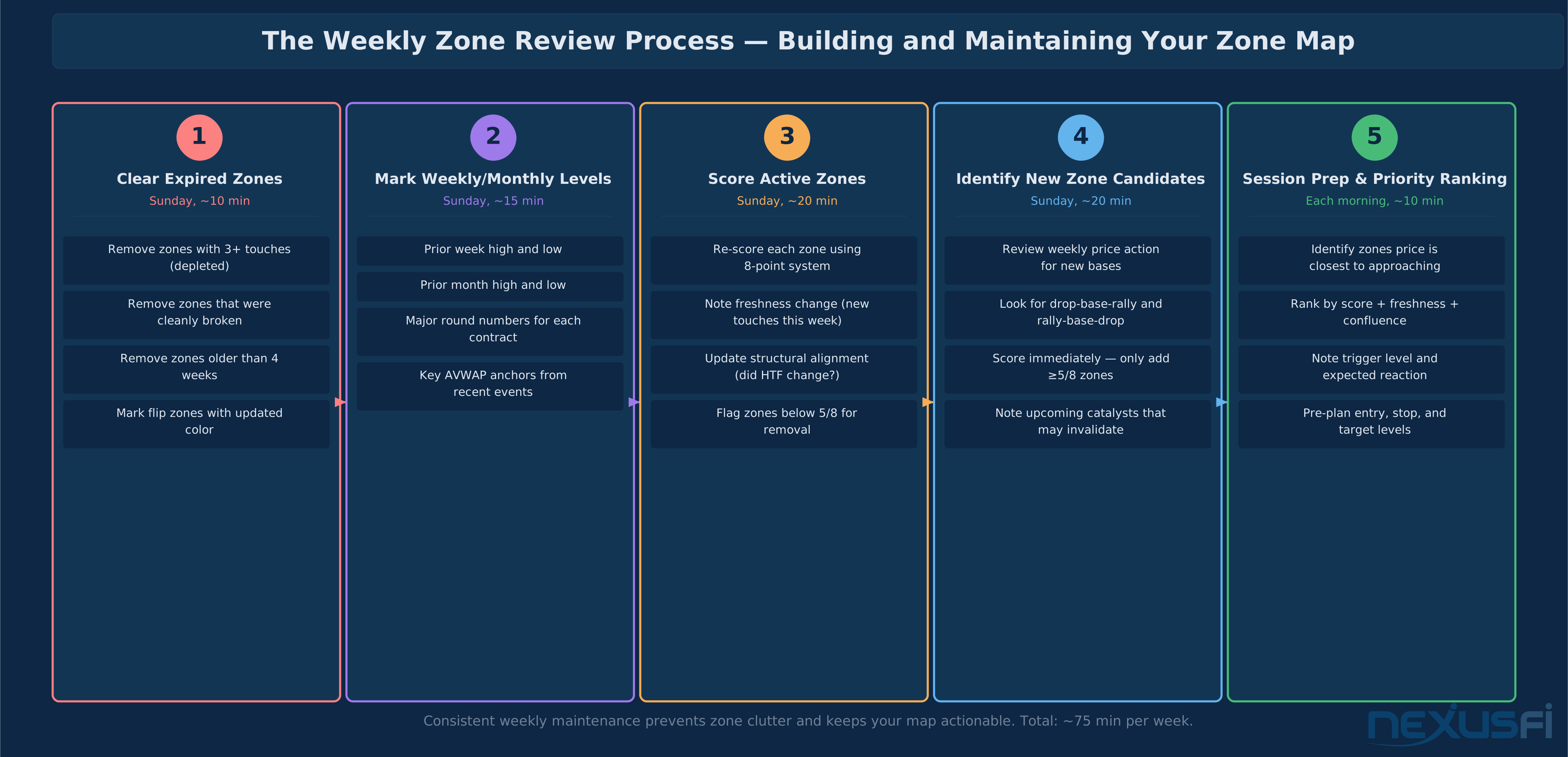
Fix: Review your zone chart at the start of each trading week. Remove any zones that have been tested more than twice, are more than 30-40 sessions old, or have shown weakening reactions on each retest.
Mistake 3: Placing Stops at the Wick #
When price overshoots a zone and prints a wick that extends beyond the base, beginning traders place their stop just below that wick. This creates a stop that's inside the zone's noise range, producing stops that are triggered by normal zone interactions before the actual trade signal develops.
Fix: Use the decision boundary (the zone's lower edge for demand, upper edge for supply) as your stop reference, plus the noise buffer described in the contract-specific calibration.
Mistake 4: Using Zones Without Trend Context #
A fresh, high-quality demand zone in a strong downtrend has much lower probability than the same zone in a ranging or uptrending market. Institutional sellers in a downtrend will eventually overwhelm any demand zone.
Fix: Before trading a zone, identify the prevailing trend on the next higher timeframe. Zones that trade with the trend (buying demand in uptrends, selling supply in downtrends) have materially higher win rates. Countertrend zone trades require extra confluence (6/8 score minimum in ES/NQ, 7/8 in CL).
Mistake 5: Ignoring the Overnight Session #
For ES/NQ, overnight Globex creates its own supply and demand zones that often become key intraday reference levels. The overnight high and overnight low frequently coincide with zone boundaries. Ignoring these zones means missing half the structure that institutional participants use to anchor their activity.
Fix: Review overnight zone formation before RTH opens. Mark any zones created near overnight high/low. These often become opening-range pivots.
The Weekly Zone Review Process #
Zone maintenance is non-negotiable. A Sunday evening review (15-20 minutes): remove zones tested 3+ times or showing weakening reactions, mark new high-quality zones from the past week, rescore freshness, identify 2-3 highest-scoring zones per contract as week priorities. Pre-session (5 minutes): check overnight zone creation at key levels, note if weekly focus zones were tested, identify active session confluence.
Practical Setup Examples #
Example 1: ES Demand Zone at Prior-Day Low #
Setup: ES prior-day low is at 5,035.00. A demand zone (drop-base-rally pattern) formed at 5,032-5,038 from two sessions ago — first touch. Score: Origin Quality 3/3 (clean base, strong departure, imbalance signature) + Freshness 3/3 (first touch) + Confluence 2/2 (prior-day low + VWAP from the preceding session) = 8/8.
Entry: Wait for price to probe 5,034-5,036. Confirmation: A 5-minute candle that opens inside the zone and closes at 5,040 or above. Entry: Market order on the close of that candle.
Stop: 5,029.00 (3 points below the zone's decision boundary at 5,032).
Target: 5,055.00 (prior swing high and prior-day open).
Risk/reward: Approximately 1:4.
Example 2: NQ Supply Zone with Flip #
Setup: NQ had a supply zone at 18,750-18,800 that was tested and broken. Price rallied to 18,900. Price is now pulling back toward the old supply zone (18,750-18,800), which has flipped to demand. Score: Origin Quality 2/3 (moderate departure on the original creation) + Freshness 3/3 (first touch of the flipped zone) + Confluence 2/2 (prior resistance level + opening range high coincides) = 7/8.
Entry: Wait for price to probe 18,755-18,775. Confirmation: Lower-timeframe (2-minute) micro-structure: a 2-minute swing low forms inside the zone, then price breaks that swing low to the upside (actually, price breaks above a 2-minute swing high that formed during the probe). Entry: Market order on the break.
Stop: 18,720 (30 points below the zone's lower boundary).
Target: 18,870 (50% of the prior rally from 18,750 to 18,900, and a prior congestion area).
Example 3: CL Supply Zone at Round Number #
Setup: CL supply zone at $80.50-$81.00 (rally-base-drop, second touch). Score: 7/8 (origin quality 3/3, freshness 2/3, confluence 2/2: half-dollar + prior-week high at $80.85).
Entry: Wait for 5-minute rejection candle from $80.65-80.80 area. Confirmation: candle opens inside zone, closes at or below $80.50. Stop: $81.15. Target: $79.75.
Note: Verify no EIA inventory report within 45 minutes before entry.
Knowledge Map
Prerequisites
Understand these firstGo Deeper
Build on this knowledgeReferences This Article
Articles that build on this topicCitations
- — Dudley's Journal (2012) 👍 4“I was taught to identify supply and demand on a chart, rather than the usual swing high/low (support and resistance) used by many traders.”
- — Supply and Demand Zones Futures Trading (2022) 👍 7“I've been day and swing trading futures since 2010, using supply/demand zones. I scan for setups in 17 different equity indices, treasuries, commodities.”
- — Supply and Demand Zone Trading Discussion (2019) 👍 5“I recommend learning to play the bounce off a demand or supply zone. Which is more predictable and less random than a breakout.”
- — Supply/Demand Zone Trading (2017) 👍 3“I look to the left on higher time frame charts looking for areas of congestion, then I narrow it down by looking for areas.”
- — E-Mini Supply and Demand Zones (2015) 👍 8“The way I trade E-Minis is with the 5 minute chart. I look for supply or demand zones forming anywhere from a couple hours before the market opens until 30 minutes or so after the market opens.”