



Elliott Wave Theory for Futures Trading: The Structural Map That Shows Where You Are in the Auction
Overview #
Elliott Wave Theory for Futures Trading: The Structural Map That Shows Where You Are in the Auction
Elliott Wave Theory is either your most useful framework for understanding price structure, or it's a rabbit hole you never escape from. Which it becomes depends entirely on how you use it.
Used correctly, Elliott Wave gives you something most indicators can't: context. Not where price is going next — no tool does that reliably — but where you likely are in the current move. Are you in the teeth of a trend, or is the trend finishing? Is this pullback shallow and corrective, or is it actually a new direction? Elliott Wave answers those questions by organizing price movement into recognizable structures.
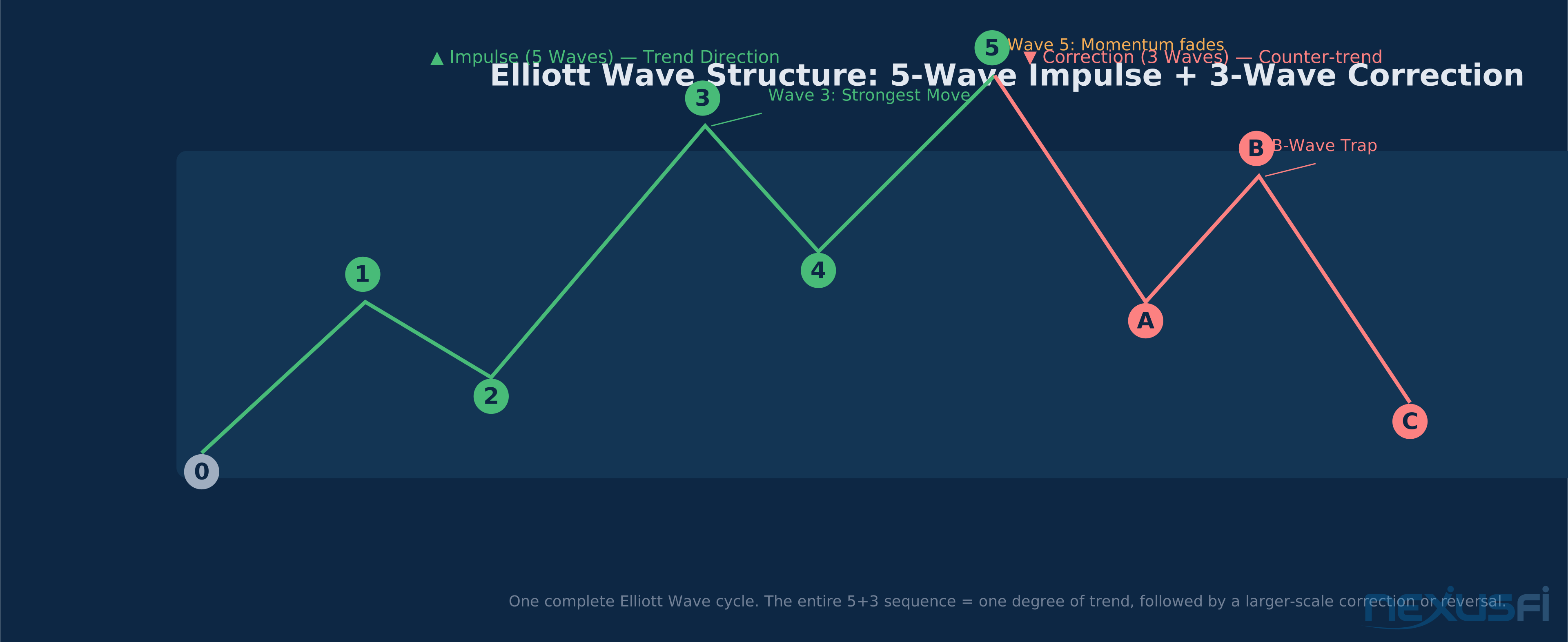
The core insight is simple: markets move in waves. Trend moves unfold in five waves. Countertrend corrections unfold in three waves. Recognize which kind of move you're in, and you know whether to trade with the trend or wait for a setup.
What's not simple is application.
That's the honest framing. Elliott Wave works when the structure is obvious. When you're forcing a count, you're burning capital on a hypothesis, not a signal.
This article treats EWT the way serious futures traders use it: as a structural map for regime identification, not a prediction engine. If you're new to understanding how price moves through levels of acceptance and rejection, Auction Market Theory provides the foundational framework that Elliott Wave builds upon.
The Two Wave Types: Impulse and Correction #
Every Elliott Wave count starts with distinguishing between two types of movement:
Impulse Waves (Motive Waves) #
An impulse wave is a five-wave move in the direction of the dominant trend. Label them 1-2-3-4-5:
- Wave 1: First leg of the move. Institutional positioning starting, often against consensus. Price can look like a bounce or dead-cat-pop at this stage.
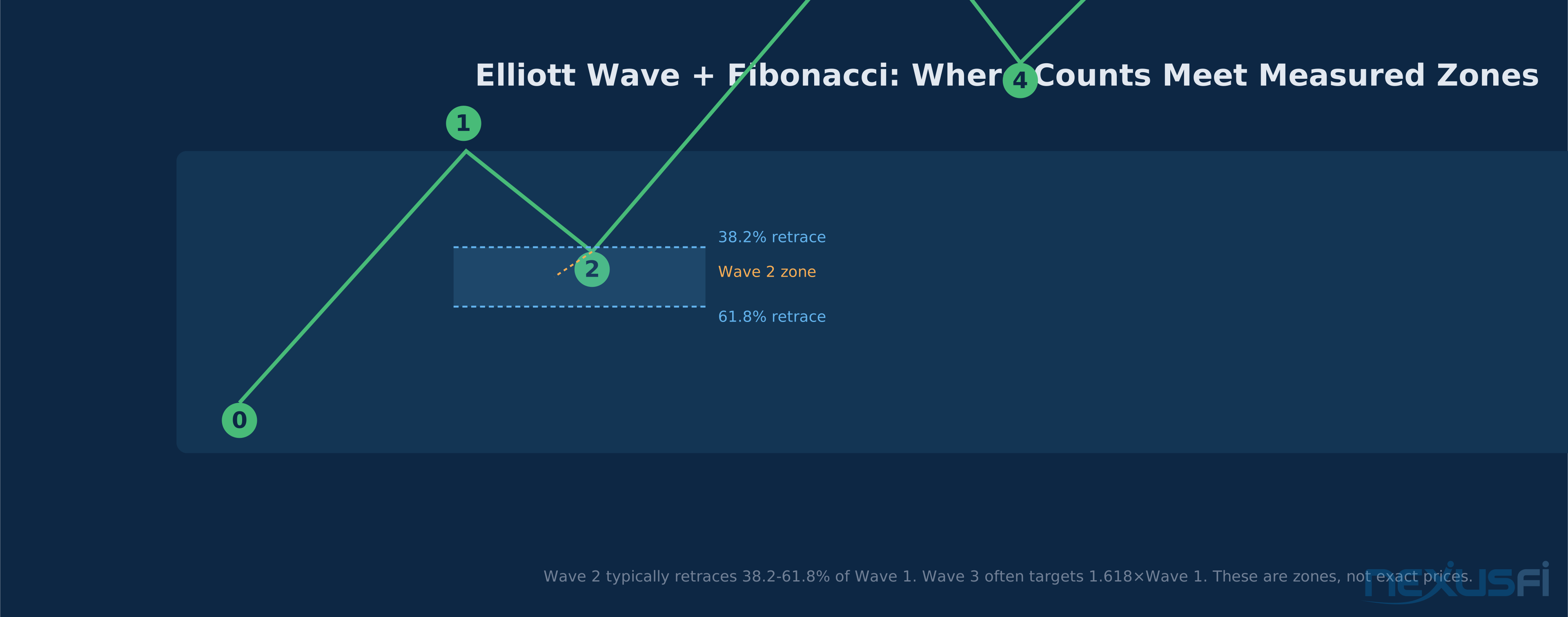
- Wave 2: Corrective pullback. Retraces Wave 1 but doesn't erase it. Creates the "second chance to get on board" opportunity many traders exploit.
- Wave 3: The meat of the trend. Strongest expansion, highest participation, most aggressive order flow. This is where trend traders make money.
- Wave 4: Second correction within the impulse. Usually more complex and choppy than Wave 2. Doesn't overlap Wave 1 territory in a valid count.
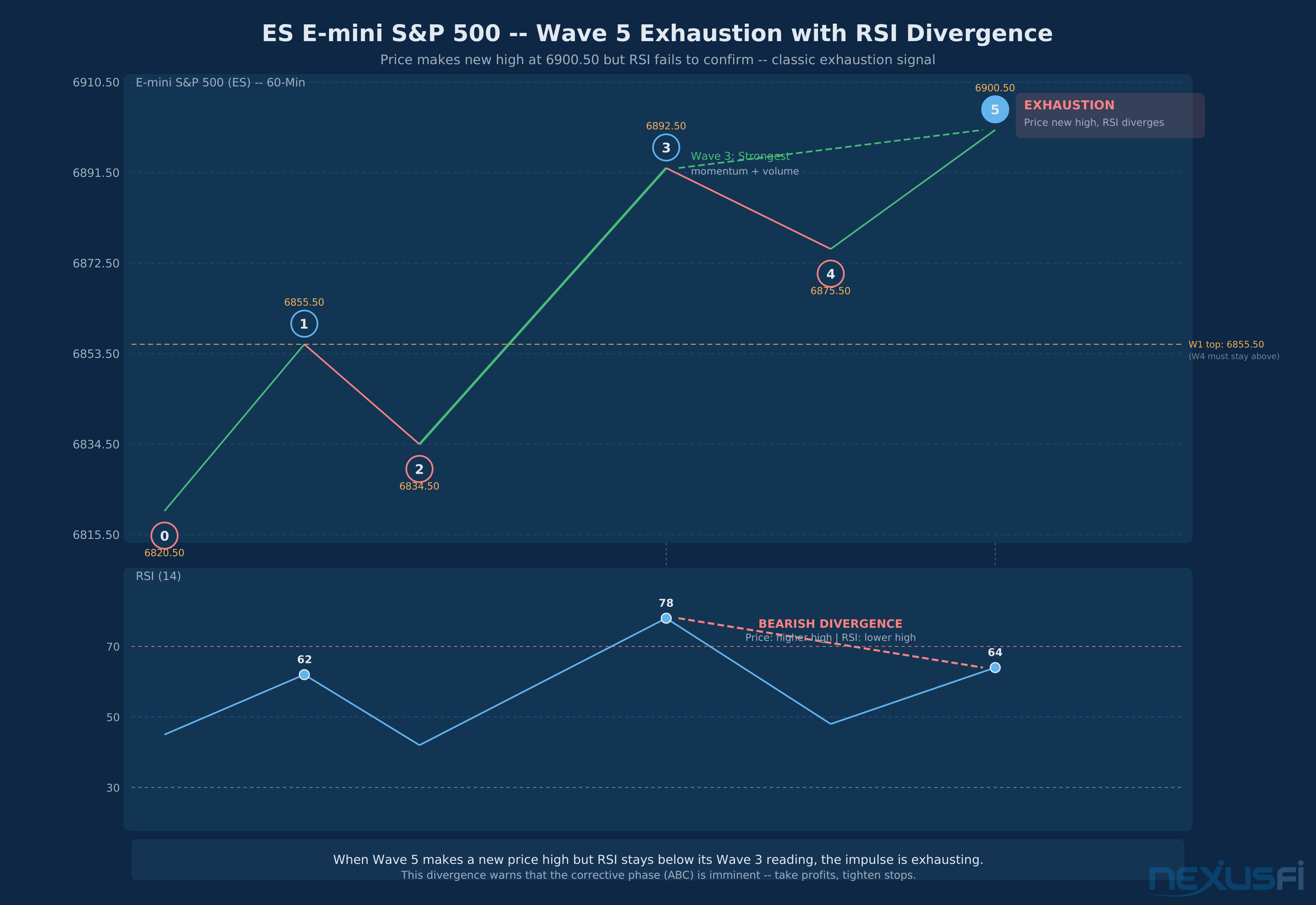
- Wave 5: Final thrust in the trend direction. Often shows momentum divergence — price makes a new high but oscillators don't confirm. Warns that the move is maturing.
The entire five-wave sequence represents one degree of trend. What follows is a corrective phase.
Corrective Waves #
After a five-wave impulse, price corrects against the trend in a three-wave structure, labeled A-B-C:
- Wave A: First leg of the correction. Many traders mistake this for a pullback within the trend.
- Wave B: Counter-rally. Can be deep and convincing — these are the traps. Price rallies back toward the impulse high, sucking in late trend buyers right before Wave C.
- Wave C: Final leg of the correction, usually equal to or extending beyond Wave A. Often the most painful move for traders who "bought the dip" too early.
Types of Corrective Patterns #
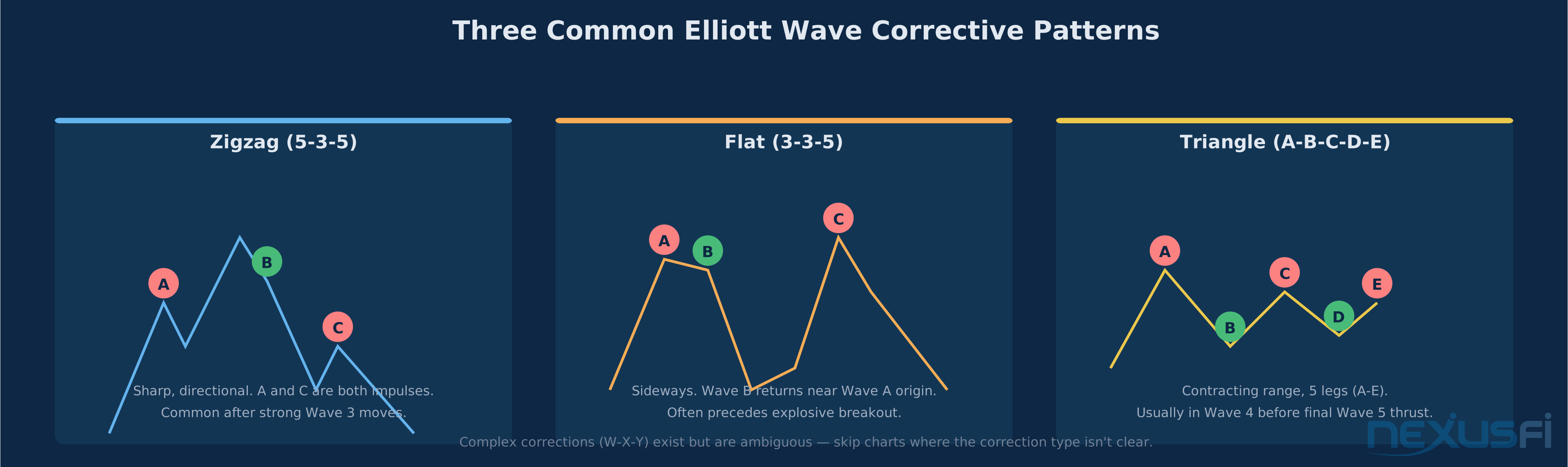
Not all corrections are simple A-B-C moves. The three most common forms:
Zigzag: Sharp, directional correction. A and C are both impulsive moves; B is a modest retracement. The most "textbook" corrective structure. Common after strong Wave 3 moves.
Flat: A-B-C where Wave B returns near the origin of Wave A, and Wave C makes a modest new low (or fails to extend much). Looks like consolidation more than correction. Often precedes explosive continuation moves.
Triangle: Converging structure with five legs (A-B-C-D-E), each retracing less than the previous. Contracting price action creating coiled energy. Usually appears in Wave 4 position before the final Wave 5 thrust.
Complex corrections (W-X-Y): When a simple pattern extends. These are where Elliott Wave gets genuinely difficult. As Steve Griffiths of MT Predictor wrote — shared in the Elite Circle by @Deucalion: "Any corrective pattern that goes much beyond the simple ABC correction is too complex and as such should be avoided with the simple and easy to apply phrase 'I don't know.'"
That's not weakness. That's discipline.
The Three Core Rules #
@George laid out the three rules clearly in the Traders Hideout:
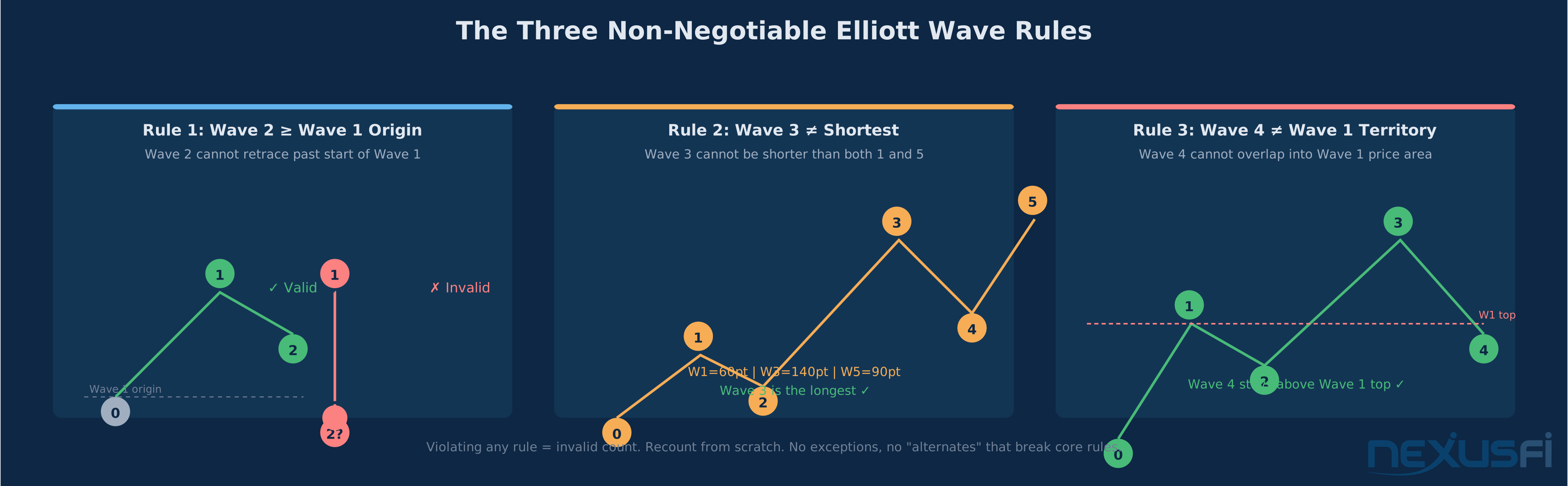
Rule 1: Wave 2 cannot retrace below the origin of Wave 1.
If you're counting a bull impulse and "Wave 2" drops below where "Wave 1" started, your count is wrong. One of the waves is mislabeled. Scrap it and start over.
Rule 2: Wave 3 cannot be the shortest of the three impulse legs (1, 3, and 5).
Wave 3 doesn't have to be the longest, but it can't be the weakest. If what you're calling Wave 3 is shorter than both Wave 1 and Wave 5, your count is wrong. Usually this means you've miscounted — Wave 1 is actually part of Wave 3, or the structure is corrective, not impulsive.
Rule 3: Wave 4 cannot enter the price territory of Wave 1.
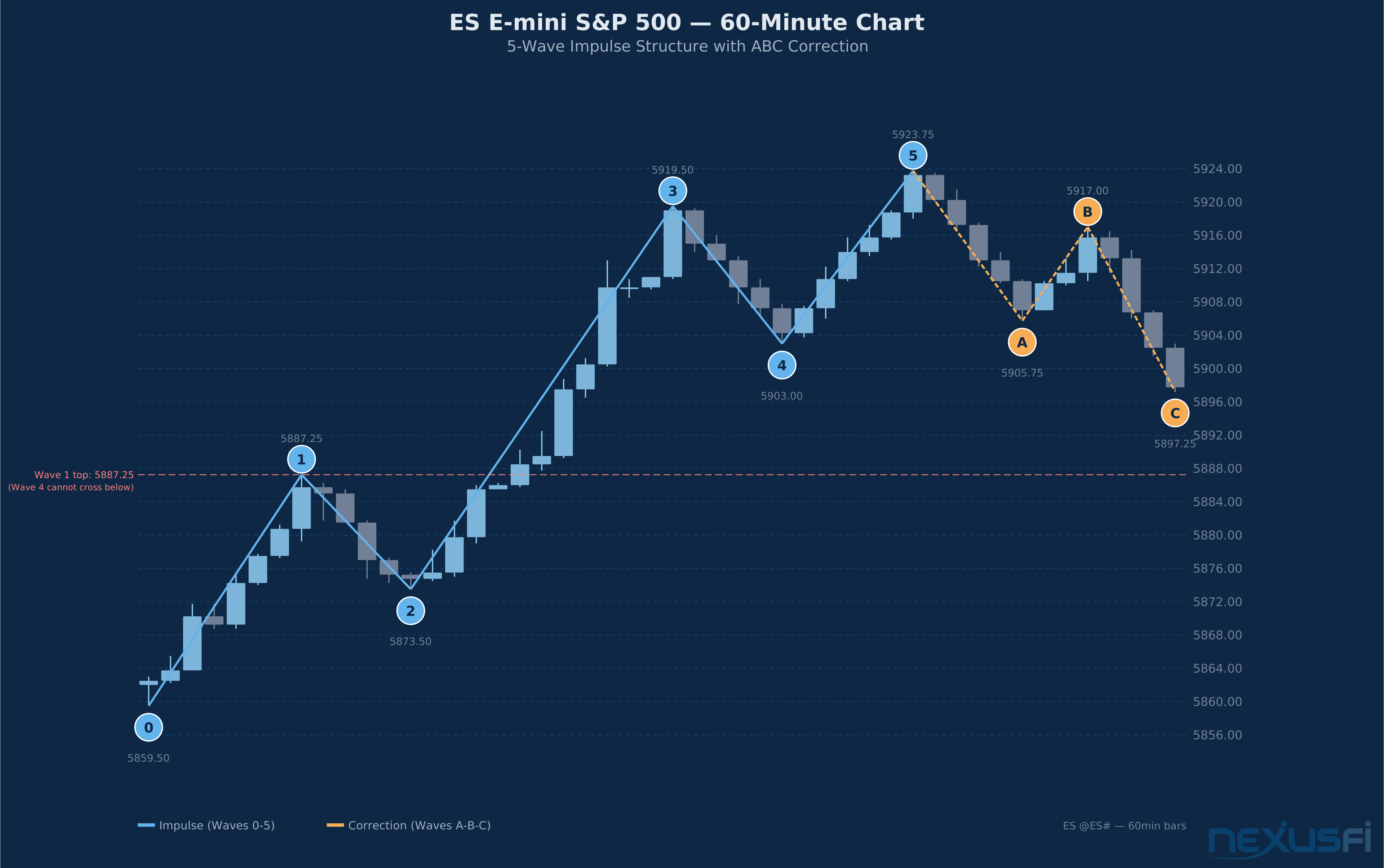
In a clean impulse, Wave 4 stays above the top of Wave 1 (for an uptrend). Overlap is the most commonly violated rule in real futures charts. Some degree of overlap happens; heavy overlap signals a diagonal structure or a failed impulse.
These three rules are your sanity checks. If a count violates any of them, the count is invalid. Period. No exceptions, no rationalizations.
Guidelines (Not Rules) #
Beyond the three rules, Elliott Wave has guidelines — patterns that appear often but aren't absolute:
Alternation: Wave 2 and Wave 4 tend to be different in form. If Wave 2 was a sharp zigzag retracement, Wave 4 tends to be a sideways flat or complex correction. @HollywoodTrader demonstrated this in a live ES analysis journal: knowing Wave 4 needed to be complex (given the sharpness of Wave 2) helped him exit early as price "faltered coming out of the w-point."
Wave 3 extension: When a market is in a clear trend, Wave 3 often extends — becoming 1.618 or 2.618 times the length of Wave 1. Extended third waves show the most aggressive participation: high volume, expanding delta, multiple strong closes in the direction of trend. These ratios are derived from the Fibonacci Sequence and Golden Ratio, which provides the mathematical foundation for wave proportions.
Wave 5 failure: Occasionally Wave 5 fails to exceed the Wave 3 high. This is a significant weakness signal, warning that the countertrend correction will be severe.
Fibonacci ratios throughout: Wave retracements cluster at 0.382, 0.500, and 0.618 of the previous wave. Extensions target 1.00, 1.618, and 2.618. These aren't predictions — they're zones to watch for reactions. For a deep dive into how these levels are calculated and applied, see Fibonacci Retracement and Extension Levels.
Degree and the Multi-Timeframe Requirement #
Here's where most traders go wrong: they count waves on a single timeframe in isolation.
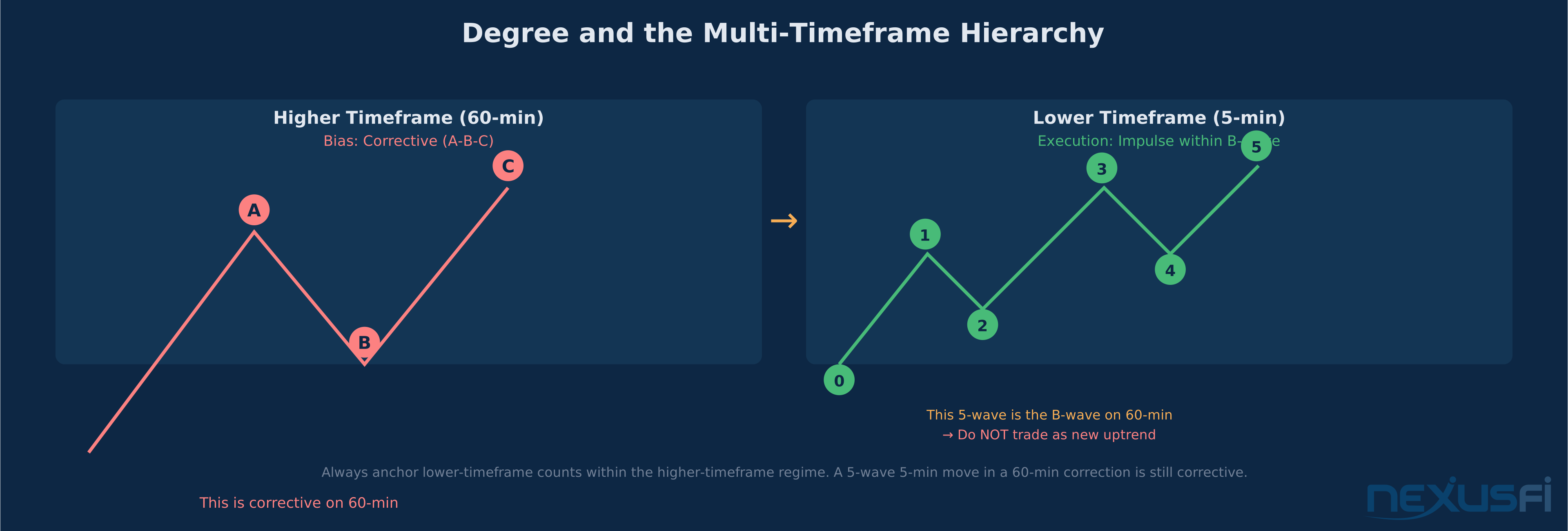
A five-wave move on the 5-minute chart might be one sub-wave of a larger correction on the 60-minute chart. If you're calling that 5-minute structure an impulse and positioning for trend continuation, but the 60-minute says it's Wave B of a correction, you're trading directly into the larger trend's counterforce.
The way to reduce that subjectivity: two-degree hierarchy.
Higher timeframe (30-60 min, or daily for swing): Use this to establish the dominant regime. Is price in an impulse or a correction? Is the trend intact or exhausted? This defines your directional bias.
Lower timeframe (1-5 min, or 15-min for swing): Use this for count labeling and entry timing. The structure here must be consistent with the higher-timeframe regime. If the higher timeframe says correction, don't trade a lower-timeframe "impulse" as trend continuation.
When the two degrees conflict — when the lower timeframe shows impulsive behavior but the higher timeframe is clearly corrective — wait. That's the hardest discipline to enforce, and the most profitable.
The Honest Problem: Subjectivity #
Let's address it directly. Respected traders are skeptical of Elliott Wave, and for good reason.
@Tymbeline, in the "Anyone use Elliott Wave?" thread in the Emini forum: "It seems to me that there isn't a single chart in the world that an Elliott Wave enthusiast can't fit in with his existing preconceptions, when you allow for the 'truncations', 'extensions', 'alterations', and other stuff that adherents have had to keep re-inventing, to justify their faith in the thing."
@DavidHP on Elliott Wave tools: "If you ask two people that use them, you will get a different wave count. I've seen a lot of people use them and none of them are consistent from trader to trader."
This is real. The theory's flexibility — the ability to recount, relabel, and reinterpret — is also its greatest danger. When a system can explain anything, it predicts nothing.
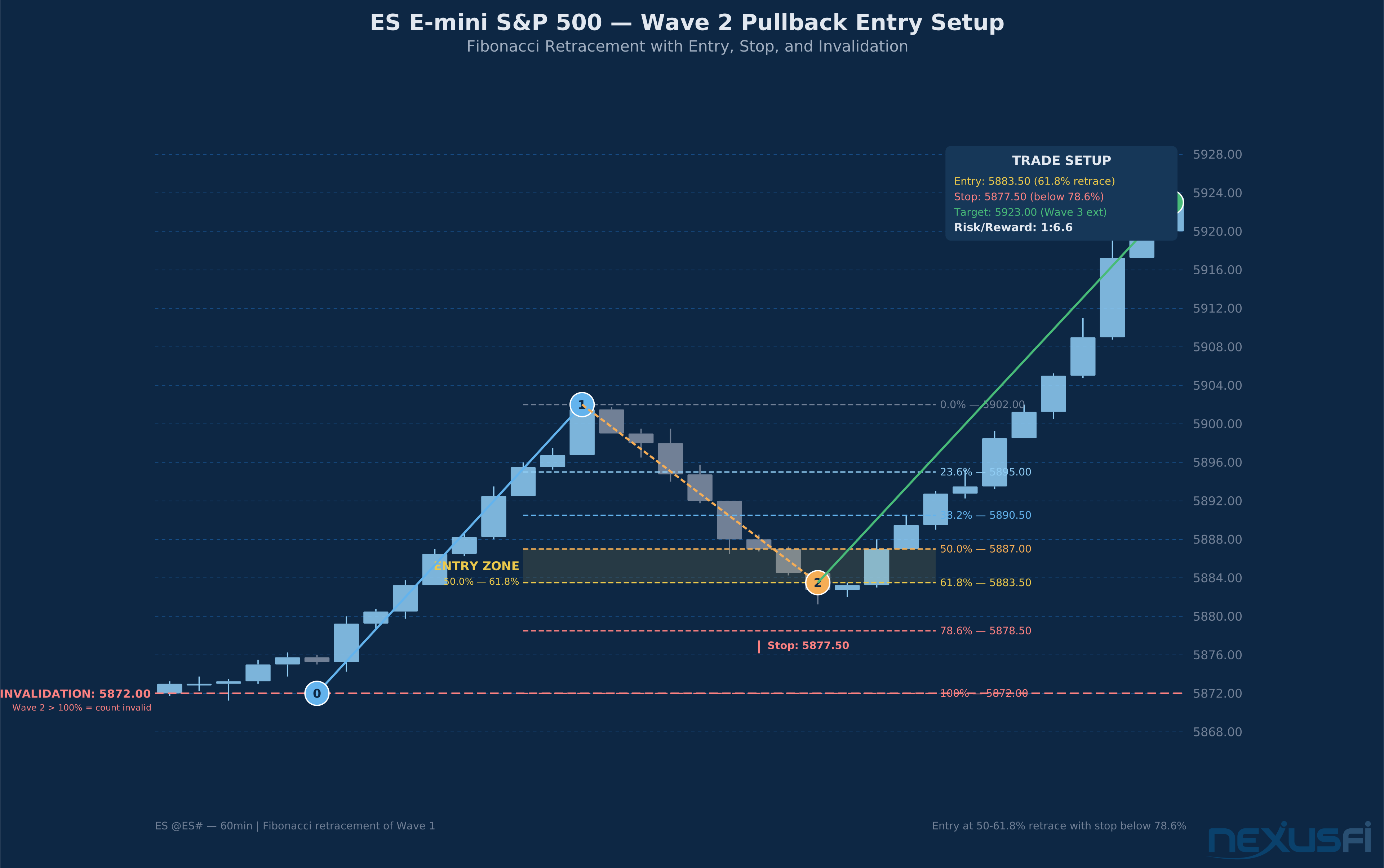
The antidote is invalidation rules. Every wave hypothesis must have a specific price level that, if breached, proves the count wrong. You don't adjust the count. You exit the trade. You start a fresh analysis.
From the MTP guide shared in the Spoo-nalysis thread: "This is the first and biggest mistake an Elliott wave analyst can make — assuming that just because they have a chart in front of them, a wave count can or indeed should be applied. This is false, as the worst mistake you can make is to force a wave count. If a wave count is not obvious then admit that there is no count present and move onto the next chart."
That bears repeating: if the count isn't obvious, there's no count. The absence of a clear count isn't a failure of skill — it's the correct assessment of market structure in that moment.
The Practical Day-Trading Workflow #
Here's how to actually integrate Elliott Wave into futures trading without turning it into a religion:
Step 1: Establish Higher-Timeframe Regime #
On your 30-60 minute chart (or daily for swing traders), answer one question: Is price in an impulse or a correction?
Signs of impulse behavior:
- Clear directional momentum with minimal overlap between price swings
- Volume expanding on trend legs, contracting on pullbacks
- Price consistently accepting or rejecting value on one side
Signs of corrective behavior:
- Overlapping price action
- Two-sided trade with neither side sustaining
- Volume roughly equal on both sides of the move
This single determination shapes everything else.
Step 2: Label the Current Wave #
On your execution timeframe (1-5 minute for day trading), identify where you appear to be in the count. You're looking for the most recent completed swing high/low as your wave endpoint.
Don't try to count every sub-wave. Focus on the primary swings — the moves that are obvious without squinting. If a swing requires significant scrutiny to label, skip it.
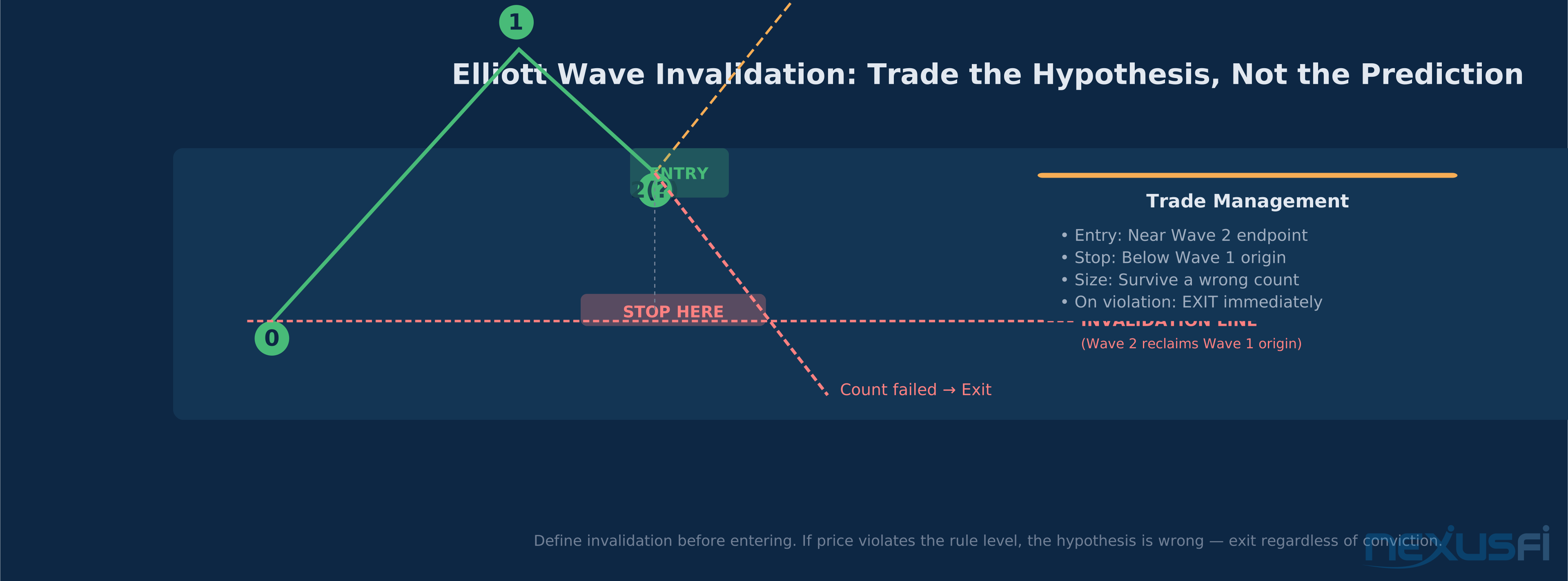
Step 3: Define Invalidation Before Entry #
Before entering any trade based on a wave count:
- Write down the price level that proves your count wrong
- Confirm your stop placement beyond that level
- Size the position so a stop-out doesn't materially damage your account
This isn't optional. Without invalidation, you don't have a trade — you have a bet.
Step 4: Find Confluence #
A wave count becomes actionable when it agrees with other tools. On its own, it's a hypothesis. Combined with:
- A Fibonacci retracement landing at the expected Wave 2 or 4 level
- VWAP as nearby support/resistance
- Volume contraction during the corrective wave, followed by expansion on resumption
- RSI or MACD divergence at the suspected Wave 5 endpoint
...it becomes a trade with genuine edge.
The @Deucalion "isolation" method is worth internalizing here: "It is not necessary to fit or find a whole 5wave... It is much easier to think of the market in terms of impulsive, followed by ABC corrective and followed by another impulsive... This alone is enough."
You don't need to know whether you're in Wave 3 of Wave 5 of a larger Wave 3. You need to know: is this an impulse or a correction? That's the question. Answer it with the highest-conviction structural evidence you can find.
Step 5: Enter Near Wave Boundaries #
The highest-probability entries in an Elliott Wave framework:
Wave 2 pullback entries: After a clear Wave 1 impulse, the Wave 2 retracement is a controlled, lower-risk opportunity to enter in the direction of the emerging trend. You're buying/selling the corrective dip with a stop below the Wave 1 origin.
Wave 4 pullback entries: Similar logic, but the larger context is already confirmed — you've seen Wave 3. The Wave 4 correction is your second chance to enter the trend before Wave 5.
Wave 3 breakout entries: Entering as Wave 3 accelerates is aggressive, but Wave 3 is where the most explosive moves occur. Use order flow confirmation — aggressive delta, print size, stacking bids/offers — before committing.
Step 6: Manage Using Wave Structure #
Target the natural endpoints of wave structure:
- Wave 3 targets: 1.618 extension of Wave 1, measured from Wave 2's endpoint. Often the minimum target in a trending market.
- Wave 5 targets: Common targets include equality with Wave 1 or 0.618x Wave 1.
- Correction targets: Wave A endpoint, or the 0.618 retracement of the preceding impulse.
Scale out as price approaches these levels rather than holding for a single exit. Wave completions aren't precise; they're zones. For advanced techniques using multiple Fibonacci levels to identify high-probability reaction zones, see Fibonacci Confluence and Cluster Zones.
Combining Elliott Wave with Other Futures Tools #
Volume and Order Flow #
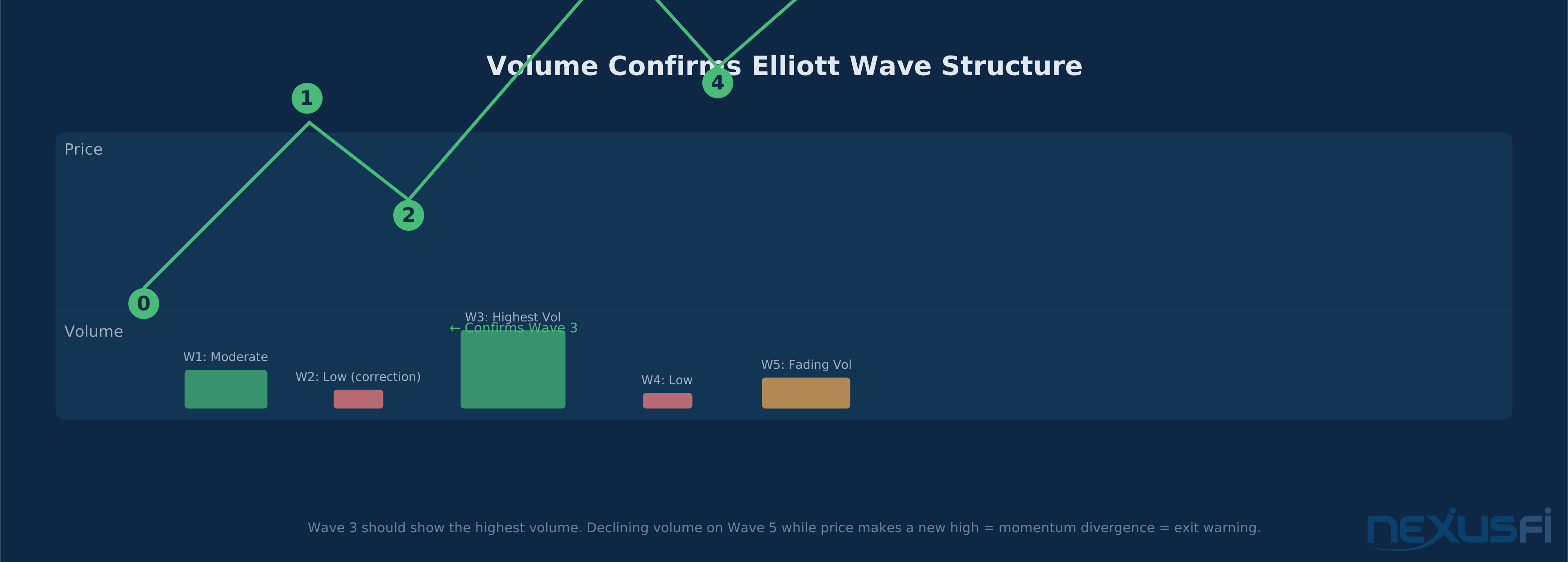
Wave 3 should show the strongest volume and directional delta. If you're counting a move as Wave 3 but volume is declining and delta is weak, either your count is wrong or Wave 3 is about to fail. Either way, don't add size.
During corrections (Waves 2 and 4), volume contracts. Price moves, but without the urgency of the impulse legs. This volume signature helps distinguish genuine corrections from new trend moves in the opposite direction.
VWAP and Anchored VWAP #
Impulse waves tend to hold VWAP. In a bull impulse, pullbacks to VWAP find buyers. If price breaks through VWAP and holds below, the impulse may be failing.
Wave 2 and Wave 4 pullbacks frequently target VWAP or an Anchored VWAP from the previous swing low/high. These make natural combination setups: the wave count says "correction should end here," and VWAP as support confirms it.
Volume Profile #
Volume Profile adds structural depth to wave analysis. Wave endpoints often land at high-volume nodes (HVN) — areas of past acceptance where institutional activity was heavy. When a Wave 2 retracement reaches a prior session's point of control (POC), that's confluence.
Low-volume nodes (LVN) often accelerate price movement during Wave 3. Price rips through thin areas. If your count says Wave 3 starts here and there's an LVN above, the structural conditions support the hypothesis.
RSI and MACD Divergence #
The most reliable oscillator use in EWT is Wave 5 exhaustion. As price pushes to new highs in Wave 5, RSI or MACD fails to make a new high. This divergence warns that momentum is waning even as price extends. It's not a short trigger by itself — it's a warning to take profits and watch for the reversal.
Don't use oscillators to count waves. Use them to detect exhaustion at suspected wave endpoints.
Moving Averages #
The 20-period and 50-period EMA can function as rough guides for corrective depth (for a broader treatment of moving averages in futures, that article covers all the major types):
- Shallow corrections (Wave 2 in a strong trend) often hold the 20 EMA
- Moderate corrections (Wave 4 in a trending market) often find support at the 50 EMA
- Deep corrections that break the 50 EMA on a significant timeframe often signal something larger is happening
These aren't precise Elliott Wave rules — they're practical filters that save you from chasing impulses that are actually corrections.
Common Mistakes That Cost Futures Traders Money #
Forcing a Count #
The single most expensive mistake. You see five up-moves and label them 1-2-3-4-5 even when they overlap, violate rules, or simply don't flow naturally. Then you trade against the corrective wave that follows — which turns out to be another impulse in the real trend.
Solution: If you can't label the count without violating any of the three rules, there's no valid count. Close the chart. Move to an instrument or timeframe where structure is clearer.
Ignoring the Higher Timeframe #
Counting waves on the 5-minute without confirming context on the 60-minute is like navigating by your feet without checking the map. You might know where you just stepped; you don't know where the trail ends.
Always anchor lower-timeframe counts within higher-timeframe regime.
Treating the Count as Certain #
Every wave count is a hypothesis. If you're trading "I know we're in Wave 3" instead of "my best read is Wave 3, invalidated at X," you'll hold through stop levels and take unnecessary losses when counts fail.
Hold the count lightly. Hold the invalidation level with iron discipline.
Over-Trading Corrections #
Corrections are the graveyard of Elliott Wave traders. The B-wave rally looks like a new uptrend. The Wave 4 dip looks like a breakdown. Both are noise within the larger structure.
In corrective phases, reduce size. Use tighter targets. Or don't trade at all.
Missing That Complex Corrections Exist #
If price is moving in a way that doesn't fit your count, your instinct might be to relabel it. Sometimes the right answer is: "This is a complex correction and I can't count it, so I'll wait."
The absence of a clear wave count isn't a failure of skill — it's the correct assessment of market structure. When you can't tell, say so and move on. That discipline saves more capital than any wave count ever will.
The "I don't know" wave is a legitimate position. Experienced traders say it constantly. It's how they avoid getting destroyed in the waves (pun intended) of complex corrections that grind up traders trying to count the uncountable.
When Elliott Wave Works -- and When It Doesn't #
Best conditions #
- Trending sessions with clear directional structure: The structure is obvious. Five waves up, three waves back down. Clean, high-conviction counts.
- Post-news continuation: After a major data release resolves the uncertainty, the subsequent trend often shows clean wave structure as the market repositions.
- Higher timeframe context: Weekly and daily charts often show textbook wave sequences that provide excellent bias for intraday trading.
- Liquid instruments: ES, NQ, ZB, CL — instruments with genuine two-sided participation from institutions tend to show cleaner wave structure than thinly-traded markets.
Worst conditions #
- Choppy, range-bound sessions: Price overlaps constantly. Nothing counts cleanly. Every attempt at a wave count is immediately violated.
- News-driven spikes: Single-candle moves of 50+ handles don't fit wave structure; they're liquidity events that reset structure.
- Contract roll periods: The roll introduces artificial volume distortions that can corrupt wave counts.
- Markets with structural mean reversion: Some markets and timeframes simply don't trend in wave structures. Forcing EWT onto mean-reverting instruments is a guaranteed loss.
A Note on Elliott Wave Tools and Indicators #
Automated Elliott Wave counting tools exist for NinjaTrader, TradingView, and other platforms. Use them as visual aids, not oracles.
The fundamental problem with automated counting is that wave interpretation requires judgment that doesn't mechanize well. @DavidHP's observation holds: two traders using the same tool will often get different counts, because the tool is drawing on ambiguous rules that admit multiple valid interpretations.
If you use an automated tool, verify every count against the three core rules manually. The tool shows you possibilities; your judgment confirms or rejects them. The moment you trust the tool over your own rule-check, you've handed your risk management to an algorithm that doesn't understand your account.
The Bottom Line #
Elliott Wave Theory earns its place in a serious futures trader's toolkit when it's used for what it's actually good at: determining whether the market is in an impulse or a corrective phase, and using that determination to define trade location, risk levels, and targets.
It earns a place in the graveyard when it becomes an obsession with perfect counting, a justification for ignoring rules ("alternate count"), or a reason to override your stop.
Use it as a map, not a GPS. A map shows you the terrain and lets you work through intelligently. A GPS that gives you wrong directions still sounds confident as you drive into the lake.
The terrain for futures traders: impulses trend, corrections consolidate, and the structural map tells you which is which. Get that right consistently, combine it with volume, VWAP, and order flow confirmation, and Elliott Wave adds genuine structural intelligence to your trading.
Get it wrong by forcing counts, ignoring rules, or treating hypotheses as certainties, and it's the most expensive pattern-matching exercise you'll ever undertake.
Start with the regime. Label what's obvious. Define your invalidation. And when you can't tell? Admit it. Walk away. Come back when the structure is clear.
That's how the pros use it.
Knowledge Map
Prerequisites
Understand these firstGo Deeper
Build on this knowledgeReferences This Article
Articles that build on this topicCitations
- — Spoo-nalysis ES e-mini futures S&P 500 (2012) 👍 4“The problem with Elliott Wave is it's open to interpretation just like anything else, but probably a little more so than other technical tools. The harder it is to see and define, the less likely it is to work.”
- — Anyone use Elliott Wave? (2014) 👍 2“It seems to me that there isn't a single chart in the world that an Elliott Wave enthusiast can't fit in with his existing preconceptions, when you allow for the 'truncations', 'extensions', 'alterations', and other stuff that adherents have had to keep re-inventing, to justify their faith in the thing.”
- — NinjaTrader Elliott Wave Indicator (2019) 👍 2“If you ask two people that use them, you will get a different wave count. I've seen a lot of people use them and none of them are consistent from trader to trader.”
- — Elliott Wave Theory and Patterns (2013) 👍 4“It is not necessary to fit or find a whole 5wave... It is significantly easier to think of the market in terms of impulsive, followed by ABC corrective and followed by another impulsive... This alone is enough.”
- — Fibonacci Trading Methods (2010) 👍 60“For each chart there are at least five or six wave counts possible -- including different timeframes -- and in the end one of these scenarios needs to be favoured. This is always a bit subjective.”
- — Elliott Wave Theory and Patterns (2012) 👍 2“It is still much easier to use Elliott Wave in isolation and then only to find a low risk trade setup, then use Position Sizing to keep the initial risk small.”
- — Harmonic Trading (2009) 👍 6“Here are the rules for Elliott Wave. Very simple and very neat. In order to get a valid Elliott Wave you need to follow three main rules: Wave 2 is not allowed to retrace below the bottom of wave 1. Wave 3 is not allowed to be the shortest of the impulses. Wave 4 is not allowed to go below the top of wave 1.”
- — HollywoodTrader's Elliott Wave TST Combine w/ Live Analysis (2014) 👍 4“I should have known that the Wave 4 correction wasn't quite over yet because Wave 4 had to be complex in relation to Wave 2 to satisfy the Rule of Alternation. I realized this when price was faltering coming out of point-w and took quick profits.”
- — Identifying Elliott Wave Patterns (2024)
- — Elliott Wave Theory: What It Is and How to Use It (2024)