



Options Flow Analysis and Gamma Exposure: Reading the Hidden Hand in ES and NQ Futures
Overview #
Most futures traders know about support and resistance. But the best-performing ES and NQ traders understand a different kind of level — one that's mechanical, data-driven, and created by the hedging behavior of options market makers.
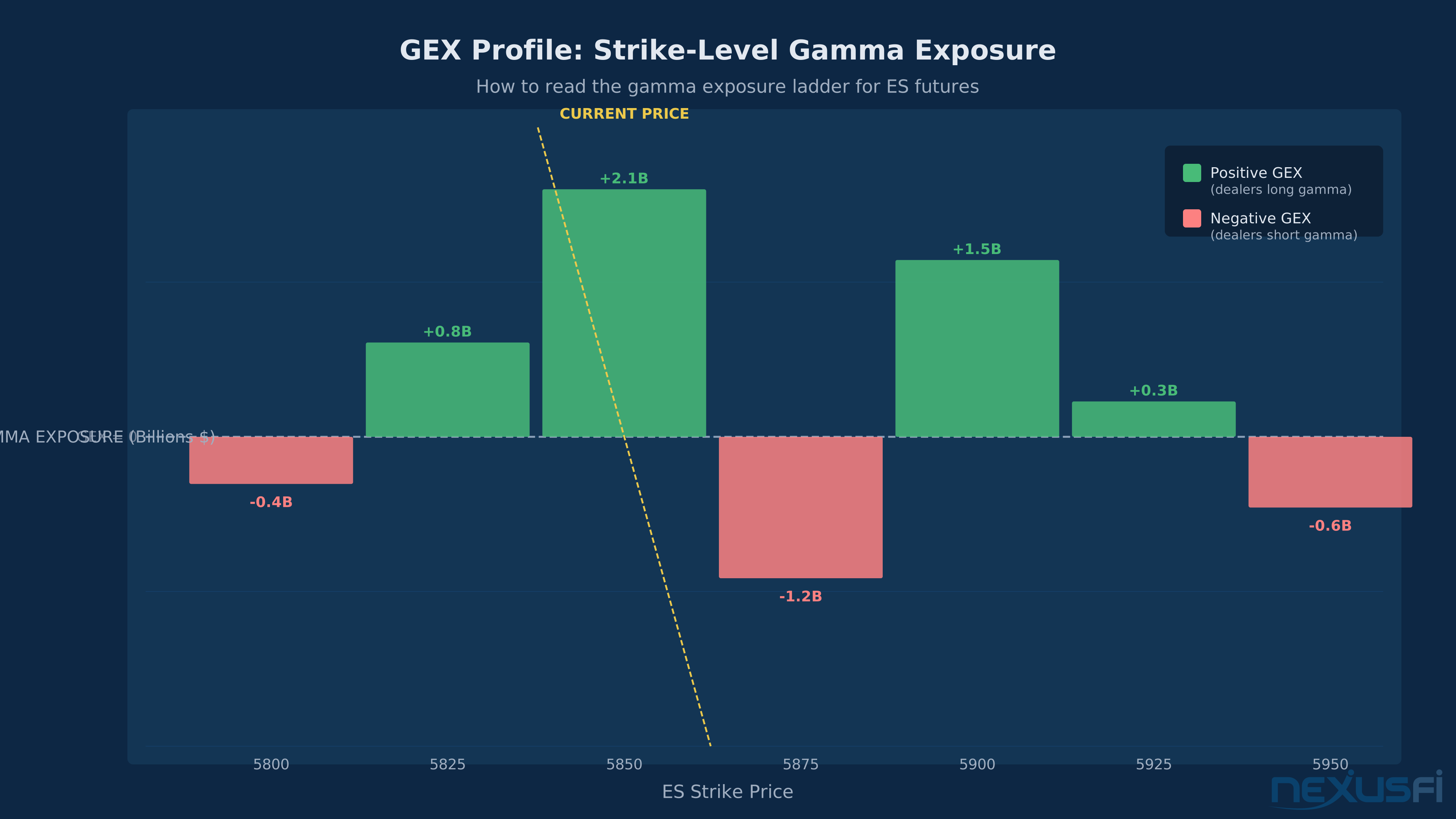
Gamma Exposure (GEX) analysis tracks how options dealers must buy or sell futures as the underlying price moves. That hedging creates predictable mechanical flows — sometimes stabilizing price near key strikes, sometimes amplifying moves away from them. Understanding which regime you're in changes every trade decision you make.
This article explains the mechanical channel from options positioning to futures price action, how to classify gamma regimes, where the key levels are, and how to build a practical GEX-based workflow around your existing trade process.
 alt="GEX profile chart showing strike-by-strike gamma exposure for ES futures with positive and negative gamma strikes identified" loading="lazy" width="800" height="450">
Key Concepts #
Gamma Exposure (GEX)
Gamma measures how fast an option's delta changes as the underlying moves. GEX aggregates this across all options at a given strike — positive when dealers are net long gamma (typically because they bought options), negative when dealers are net short gamma (typically because they sold options). Measured in billions of dollars, GEX tells you the scale of dealer hedging that will occur per point move in the underlying. [7]
Delta Hedging
Delta is the sensitivity of an option's value to price changes in the underlying. Options dealers remain "delta-neutral" by continuously adjusting their futures position. When ES rallies and call deltas increase, a dealer who sold calls must buy futures to stay neutral. That futures purchase is delta hedging — and it creates real order flow in the futures market. [4]
Positive Gamma Environment
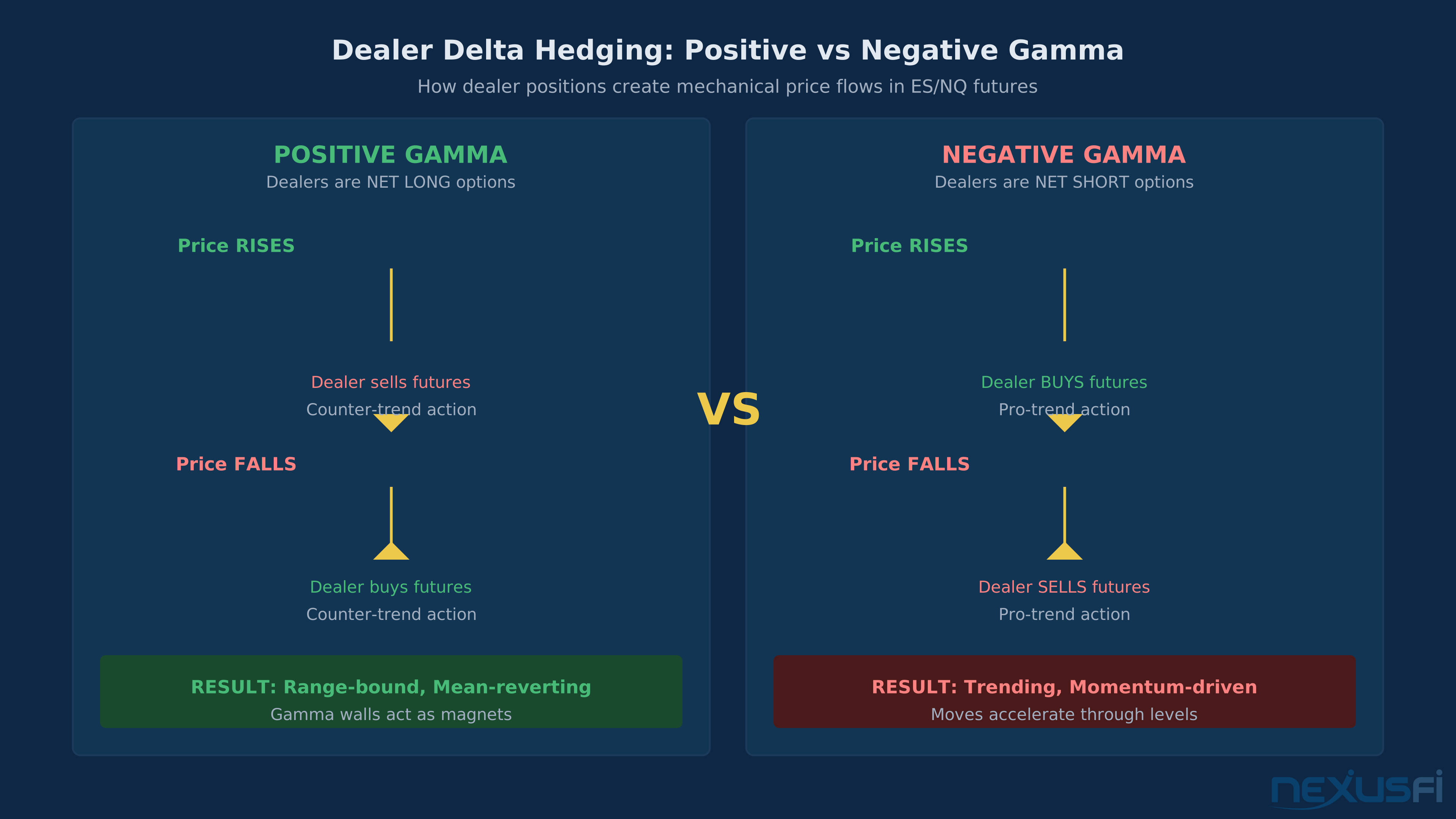
When dealers are net long gamma (positive GEX), their hedging is counter-trend. Price rises trigger futures selling by dealers, price drops trigger futures buying. This creates mean-reverting, range-bound behavior — classic "sticky" price action near dominant strikes. Fade strategies work better in this environment.
Negative Gamma Environment
When dealers are net short gamma (negative GEX), their hedging amplifies moves. Price rises force dealers to buy futures (because they're short calls and need to hedge increasing delta), price drops force selling. This creates momentum and trend continuation. Breakout strategies work better in negative gamma.
Gamma Walls
Strikes with large absolute GEX — called gamma walls or pin strikes — act as gravitational centers. In positive gamma regimes, price tends to hover near these levels as dealer hedging absorbs momentum. The most common gamma walls in ES are at round strike intervals (5900, 5925, 5950), where options open interest concentrates naturally.
0DTE (Zero Days to Expiration)
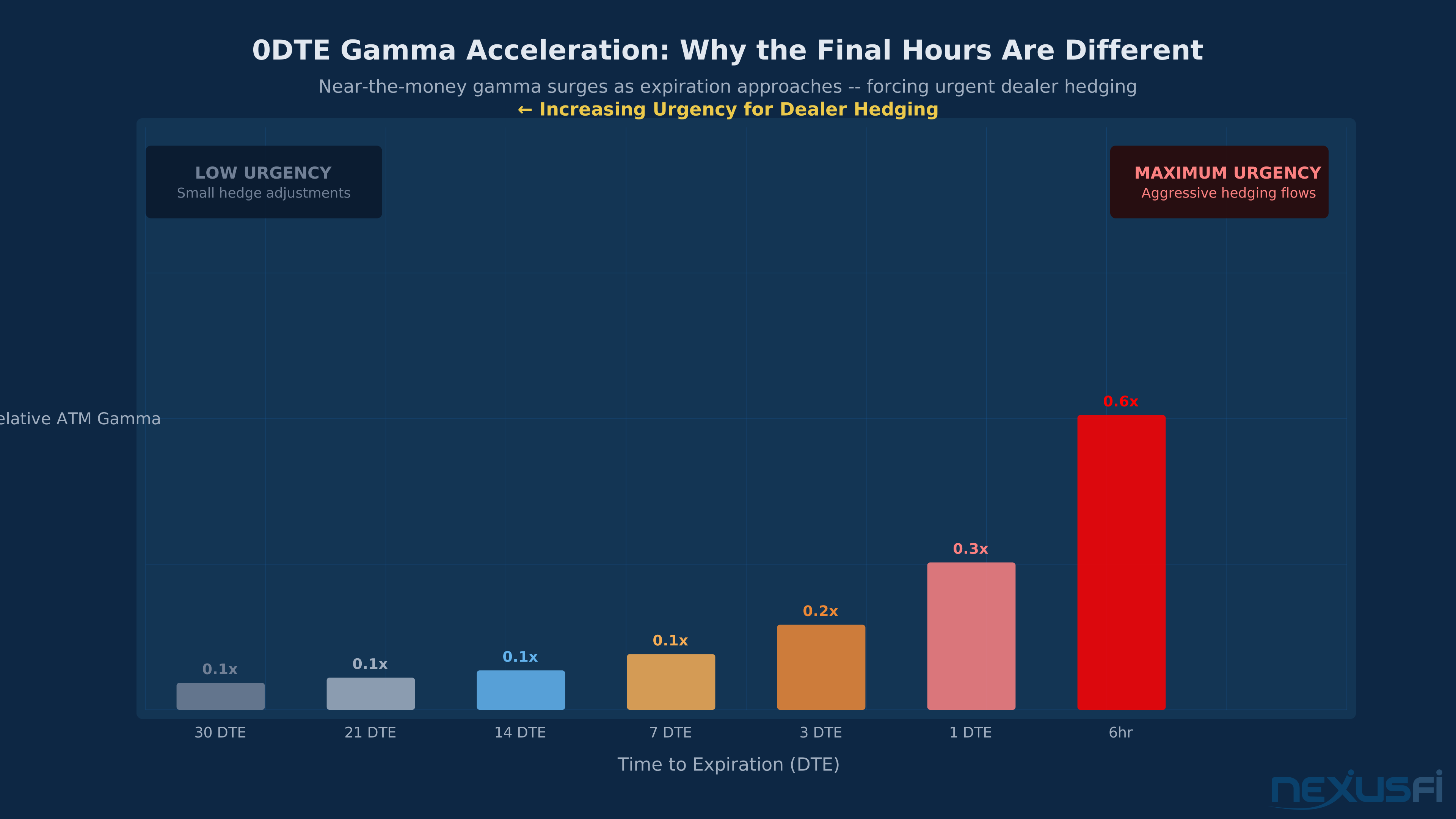
Options expiring the same day they're traded. SPX 0DTE options have exploded in volume — @tigertrader noted that "0DTE options average roughly 50% of daily options flows." [2] Their near-expiry status means their gamma is much higher per unit notional than longer-dated options — dealer hedging flows are more aggressive and urgent as a result.
Gamma Flip Level (Zero Gamma Level)
The price at which aggregate GEX transitions from positive to negative — or vice versa. Below the gamma flip, dealers are short gamma and amplify moves. Above it, dealers are long gamma and stabilize price. The gamma flip is the single most important structural level to track each trading day. [8]
How It Works: The Mechanical Channel #
The chain of causality runs from options market activity to futures price action. Here's the complete mechanical loop:
Step 1: Retail and institutional traders buy and sell options. Calls and puts on SPX, SPY, and ES options all flow through dealers (market makers) who intermediate the transactions. Dealers rarely take directional views — they earn the bid-ask spread and hedge their exposure.
Step 2: Dealers carry net gamma exposure. When dealers sell more options (calls and puts) than they buy, they become net short gamma. When they buy more than they sell, they become net long gamma. The aggregate of all positions creates the GEX profile — a map of dealer exposure at each strike price.
Step 3: Price movement forces hedging. As ES moves, option deltas change. A dealer who sold 5,000 ES call contracts at the 5900 strike doesn't want directional exposure — so as ES rallies toward 5900, the delta of those calls increases, and the dealer must buy futures to offset that growing delta. That purchase is mechanical. It happens regardless of the dealer's market opinion. [7]
Step 4: Hedging creates futures order flow. This is where options positioning becomes visible in the futures tape. In negative gamma environments (dealers short gamma), a rally forces buying, which creates more rally, which forces more buying — a feedback loop. In positive gamma environments (dealers long gamma), a rally forces selling, which dampens the move.
alt="Positive vs negative gamma dealer hedging loop diagram showing how dealer positions create mechanical price flows in ES and NQ futures" loading="lazy" width="800" height="450">
The key insight: dealer hedging creates predictable, mechanical order flow in the futures market. It's not always the dominant force — macro news, CTA flows, and volatility targeting can overwhelm it — but it's repeatable and measurable in ways that traditional technical analysis doesn't capture.
As @wldman observed in the Spoo-nalysis thread, "market makers have complex positions and different methods. Not exactly a single unified response to price moves — but the aggregate effect of the hedging community tends to be consistent within a given regime." The aggregate is what matters, not any single dealer's position.
0DTE Options and Intraday Futures Price Action #
0DTE options have at the core changed intraday futures dynamics, and ES/NQ traders can't ignore them.
Near-the-money options that expire today have the highest gamma per unit notional of any options. A 1% move in ES with a day left to expiry creates much larger delta changes — and so more urgent hedging requirements — than the same move with 30 days to go. [6]
The practical effects on ES/NQ intraday price action are real and consistent:
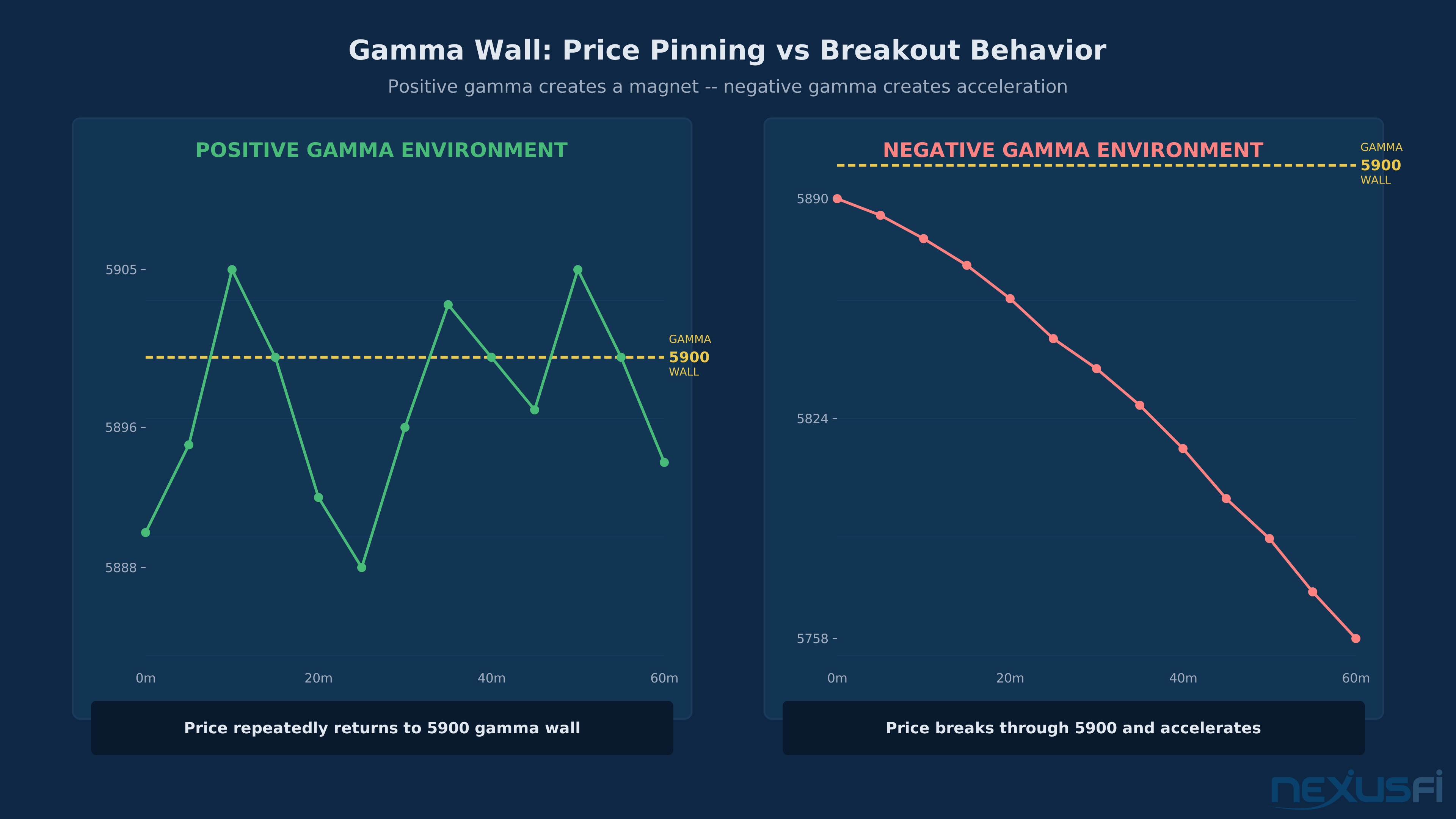
Price pinning near high-OI strikes. When dealers have large 0DTE positions at, say, the 5900 strike, their hedging creates a gravitational pull toward that level as expiration approaches. Price "pins" at or near high-gamma strikes into the close. Experienced ES traders learn to watch for this — especially during SPX monthly and weekly expirations (Friday, Wednesday, Monday for SPX).
Sharp accelerations on strike breaks. The flip side: when price breaks through a dominant 0DTE strike, dealers must suddenly re-hedge aggressively. A break of the 5900 strike from above can force dealers who were long gamma at that strike to buy back their hedge — creating a burst of buying that confirms and accelerates the break. Or in negative gamma, the break forces more selling. Either way, moves through key 0DTE strikes tend to have urgency behind them.
Compressed volatility before, amplified after. In the hours leading into a high 0DTE gamma concentration, dealer counter-hedging tends to keep the range tight. Then when the pin breaks or the close approaches and hedges unwind, volatility spikes. ES traders who are long volatility in the early session and short volatility into the final hour are often playing this dynamic without realizing it.
The practical implication for your workflow: near-term GEX (0DTE + next-day exposure) dominates intraday behavior. Weekly or daily aggregate GEX numbers are useful context, but the intraday hedging intensity comes from what expires soon. Focus your GEX analysis there. [8]
Trade Setups: Using GEX to Trade ES and NQ #
GEX doesn't give you a buy or sell signal by itself. What it gives you is a framework for classifying levels and regimes — which then tells you which trading approach has edge.
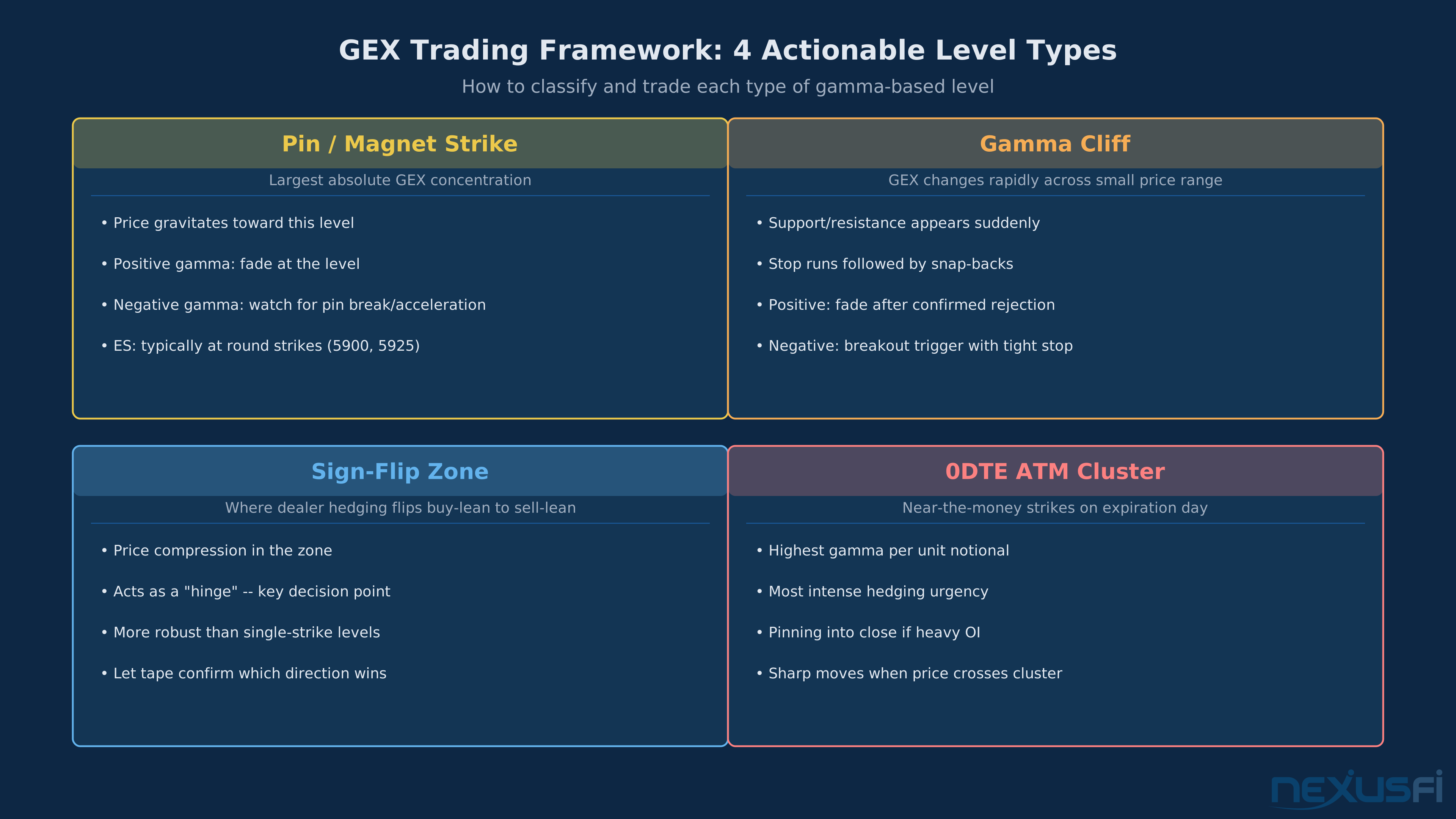
Level Type 1: Pin / Magnet Strikes
The largest absolute GEX concentrations — typically at round 25pt ES strikes (5900, 5925, etc.) or 100pt NQ strikes (21000, 21100). In positive gamma environments, these act as magnets. Price approaches, dealer hedging absorbs momentum, mean reversion follows.
Trade approach (positive gamma): Wait for price to reach the gamma wall level with visible momentum exhaustion — rejected tick, absorption bar, or tape imbalance at the level. Fade with a tight stop beyond the level, targeting 2-4 ticks reverting back toward the prior range midpoint.
Trade approach (negative gamma): Treat the gamma wall as a decision point, not a reversal zone. Watch for acceptance (price closes above/below the level) or rejection (sharp impulse back). If acceptance, the hedging dynamic will amplify continuation. Follow with momentum.
Level Type 2: Gamma Cliffs
Areas where GEX changes rapidly across a narrow price range — a rapid transition from high positive GEX at one strike to high negative GEX a few points away. These create sudden shifts in dealer behavior, which translates to stop runs and snap-backs at the cliff's edge.
Trade approach (negative gamma above cliff): A break into the cliff zone — from positive GEX into negative GEX territory — is a breakout trigger. Dealer hedging flips from counter-trend to pro-trend. Use the cliff top as your breakout level with a tight invalidation. Targets: the next structural level lower.
Trade approach (positive gamma below cliff): Rejection at the cliff bottom in positive gamma is a high-probability fade setup. Dealer hedging pushes price back toward the gamma wall. Use the cliff level as your stop, targeting the pin strike.
Level Type 3: Sign-Flip Zones
The range where aggregate GEX transitions from positive to negative. This is the gamma flip level and its immediate vicinity. Price compression typically occurs in this zone as hedging forces balance each other. When price finally resolves through the zone, the subsequent move has dealer hedging behind it.
Trade approach: Don't pre-position in the sign-flip zone — that's the chop zone. Instead, wait for price to clearly accept above or below the zone on a tape-confirmed basis (sustained bid stacking, persistent volume at offer for a downside break). Then enter with the break. The gamma flip is often where an ES intraday range trade becomes a trending session.
Warning sign: Multiple failed attempts to exit the sign-flip zone in either direction mean the market is truly undecided. In these cases, reduce size and wait for a trigger (economic data release, fed speak, option expiry) to force the resolution.
Level Type 4: 0DTE ATM Clusters
Near-the-money strikes on expiration day with heavy open interest. The highest hedging urgency per unit notional of anything in the market. These levels require different handling than regular gamma walls because the time dynamic is critical.
Pre-pin behavior (3+ hours before close): Dealer hedging is intensifying but not yet at maximum urgency. Price may test these levels repeatedly. Treat similarly to a regular gamma wall — fades work in positive gamma environments.
Pin behavior (final 90 minutes): As 0DTE gamma spikes and dealer hedge ratios become extremely sensitive, price tends to gravitate toward the dominant ATM strike. The "pin" is most reliable when 0DTE open interest is heavily concentrated at a single strike rather than spread across multiple strikes.
Unpin behavior: When a trigger breaks the pin (macro news, sudden volume surge), moves are violent. Dealers must re-hedge rapidly with no time to average in. These are not environments to fade — they're environments to either stand aside or follow with tight stops.
Practical Application: The GEX Workflow #
Here's a step-by-step workflow for incorporating GEX into your ES or NQ trading:
Pre-market (before RTH open):
- Pull the current GEX profile for SPX/ES options (tools like SpotGamma, SqueezeMetrics, or brokerage-provided Greeks data)
- Identify the dominant gamma wall (largest positive GEX strike) and the gamma flip level
- Note whether today is a 0DTE expiration day (SPX: Mon/Wed/Fri, ES options: Friday)
- Check overnight changes to the GEX profile -- significant shifts indicate repositioning
- Set price alerts at gamma wall levels and the sign-flip zone
Session open:
- Determine which regime you're in based on opening price relative to gamma flip level
- Price above gamma flip: positive gamma -- expect mean reversion, fade setups at gamma walls
- Price below gamma flip: negative gamma -- expect momentum, follow breakouts through GEX cliffs
- Watch the opening range auction -- how price respects or rejects gamma wall levels tells you if dealers are active at those strikes
Intraday:
- When price approaches a gamma wall, slow down. Watch the tape -- are buyers absorbing or being rejected?
- In positive gamma, a tape-confirmed rejection at the gamma wall is an entry signal for a mean reversion trade
- In negative gamma, watch for acceptance of price at gamma walls -- that acceptance means the mechanical support/resistance has failed and dealers are hedging in the same direction
- Track intraday GEX updates if your data source provides them -- 0DTE flow changes GEX much during the session
Late session (after 2 PM ET on 0DTE days):
- Heightened awareness. 0DTE gamma is at peak urgency
- Identify which strikes have the highest 0DTE open interest -- those are your pin candidates
- Fade moves away from the pin strike with very tight stops (gamma-driven pins can reverse sharply)
- If the pin breaks on trigger, stand aside or follow with maximum caution
Tools for GEX Data
SpotGamma (NexusFi sponsor) provides real-time GEX analysis, gamma exposure maps, and dealer positioning data for SPX, SPY, QQQ, and individual stocks. Their ES-specific GEX analysis is especially useful for futures traders, with levels updated throughout the trading day. [1]
Other sources include SqueezeMetrics (GEX model based on options volume), Cboe's public options data (for manual calculation), and brokerage options chains (for reading raw open interest at strikes).
Important Limitations
GEX is one force among many. Dealer hedging can be overwhelmed by:
- CTA (trend-following) flows, especially on large directional moves
- Macro event catalysts (FOMC, NFP, major earnings) that override structural levels
- Volatility targeting strategies that reduce/increase equity exposure regardless of gamma environment
- Liquidity shocks where even well-positioned dealers pull bids/offers
The confidence you can put in a GEX-based level rises when: the GEX concentration is large (several billion dollars), the price move is smooth and orderly (not spike-driven), and multiple time frames of technical structure align with the gamma level.
Use GEX as a lens for understanding market microstructure — not as a standalone trade signal. When GEX-derived levels align with volume profile levels, pivot points, or VWAP anchors, the probability of a reaction increases meaningfully. [5]
Knowledge Map
Go Deeper
Build on this knowledgeReferences This Article
Articles that build on this topicCitations
- — SpotGamma AMA - Ask Me Anything About Options Flow & Gamma Analysis (2026) 👍 1“How should an ES or NQ futures trader interpret GEX data differently than someone trading SPY options directly? Are there timing nuances around the hedging flow that matter for intraday futures?”
- — Spoo-nalysis ES e-mini futures S&P 500 (2022) 👍 6“Since 0DTE options average ~50% of daily options flows, it stands to reason that having a visual representation of the flows could provide intraday trading context.”
- — Spoo-nalysis ES e-mini futures S&P 500 (2020) 👍 13“The afternoon commentary from SpotGamma basically echoes Charlie's sentiments in the article above. The part about the hedging volume creating mechanical flows is key.”
- — Spoo-nalysis ES e-mini futures S&P 500 (2021) 👍 12“The delta -- the degree to which the option price tracks the underlying -- is what drives dealer hedging flows. As delta changes, dealers must re-hedge.”
- — Selling Options on Futures? (2020) 👍 6“Gamma scalping/hedging in the underlying is one of the standard methods for managing the negative skew risk in option selling strategies.”
- FlashAlpha — 0DTE Gamma Exposure & Pin Risk: How Same-Day Options Drive Intraday Price Action (2024)
- AlgoIndex — Dealer Gamma Positioning: How It Moves ES Futures (2024)
- StrikeWatch — Dealer Hedging Regimes: Gamma Exposure (GEX) and the Zero Gamma Level (ZGL) (2024)