



Vertical Spreads on Futures Options: The Defined-Risk Directional Playbook
Overview #
Vertical spreads are the most underused tool in the futures options trader's arsenal. You've got traders who go straight from "how do options work" to selling naked premium because the margin looks manageable — and they do fine until they don't. The missing piece is the vertical spread: a two-leg defined-risk strategy that gives you directional positioning without the catastrophic tail exposure of naked short options.
The four vertical spread types — bull put spread, bear call spread, bull call spread, and bear put spread — cover every directional scenario in futures markets. Two are credit spreads (you collect premium upfront, profit from time decay and staying out of trouble). Two are debit spreads (you pay premium upfront, profit from a move in your direction). All four cap your maximum loss at exactly the spread width minus whatever credit you received, or the debit you paid.
This article is the bridge between basic options understanding and the multi-leg strategies that experienced futures traders actually use. You'll find iron condors, straddles, and complex structures covered elsewhere in Academy. This article is about the foundation: the two-leg vertical, how to construct it, size it, execute it, and manage it across ES, NQ, and CL options.
What Is a Vertical Spread? #
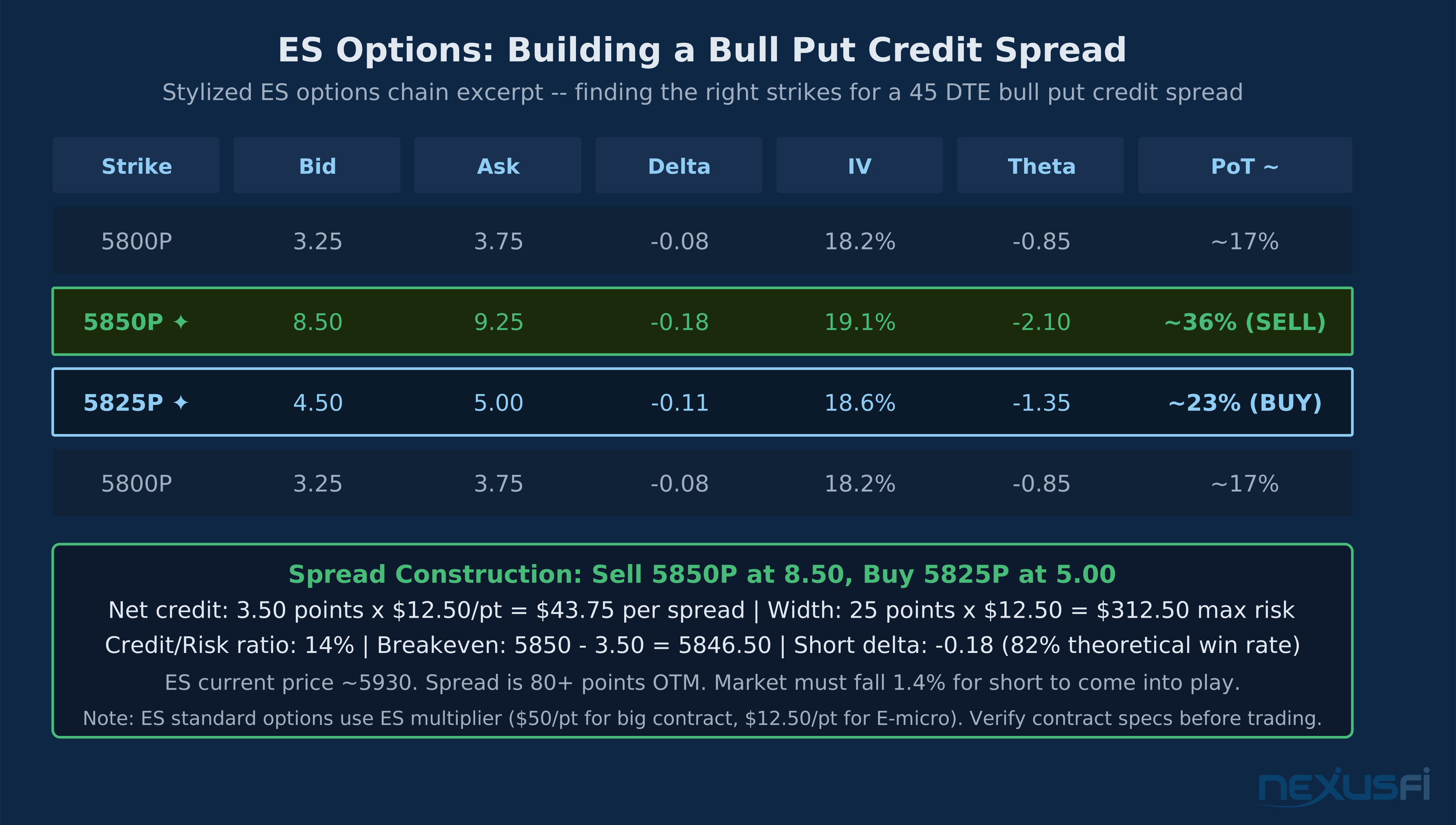
A vertical spread is exactly what it sounds like when you look at an options chain: you occupy two positions in the same column (same expiration), but at different rows (different strikes). Long one option, short one option, same expiration, same underlying, same option type (both calls or both puts), different strikes.
That's it. Two legs. Defined maximum risk from the moment you enter. No margin surprises, no unlimited loss scenarios, no waking up at 3 AM checking if the market gapped through your naked short.
The mechanics are simple. You receive or pay the net premium between the two legs. Your max profit is capped. Your max loss is capped. The width between your strikes — and the credit or debit you collect or pay — determines everything.
The "vertical" descriptor comes from options chain display. Both strikes appear in the same column (same expiration date), stacked vertically. Horizontal spreads use different expirations. The visual maps directly to the risk structure.
The Four Vertical Spread Types #
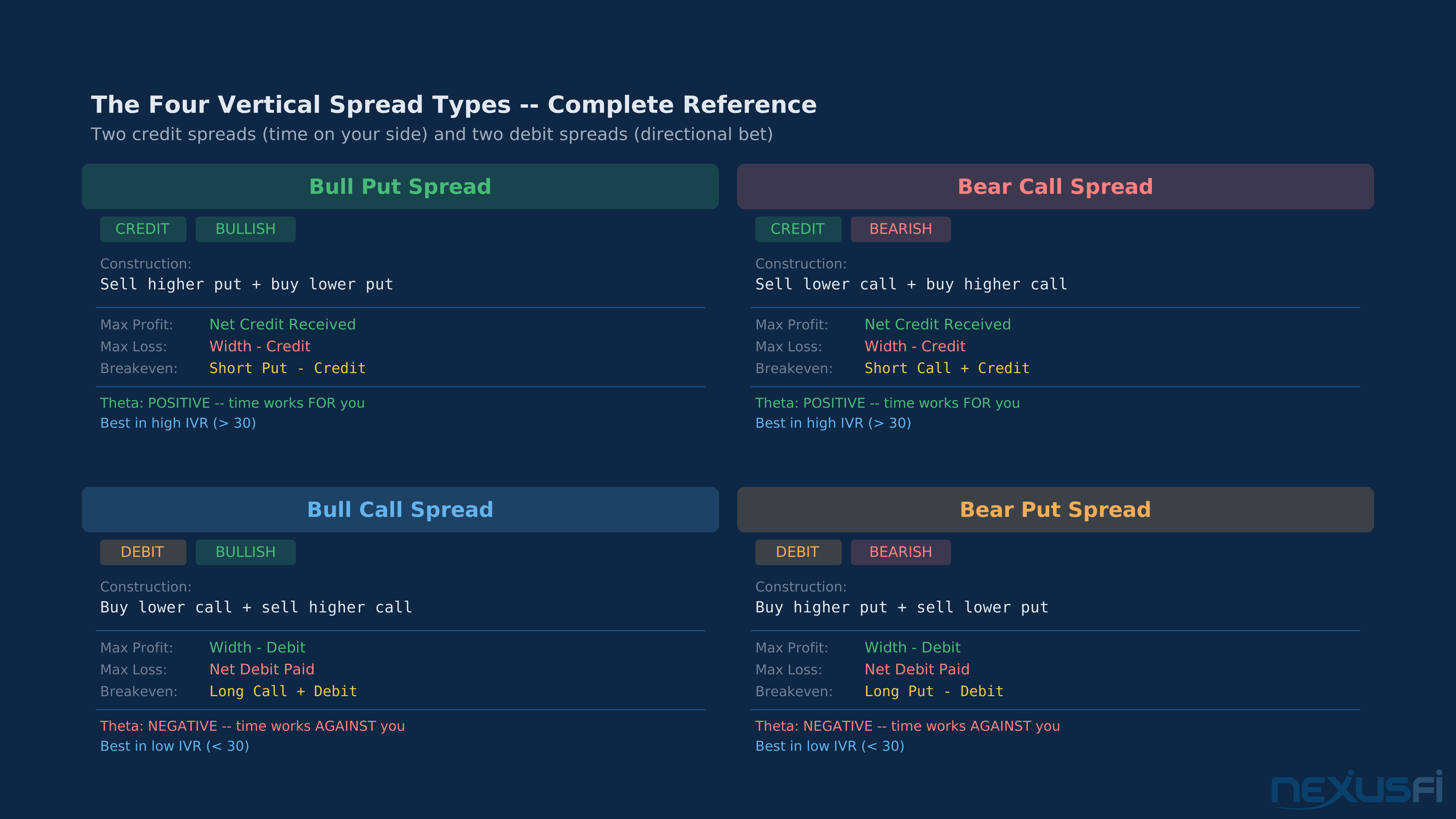
Every vertical spread falls into one of four categories. Two are credit spreads — you collect premium at entry and want time to pass without incident. Two are debit spreads — you pay premium at entry and need a price move to profit. Here's the complete breakdown:
Bull Put Spread (Credit, Bullish) #
Construction: Sell a higher-strike put, buy a lower-strike put. Same expiration.
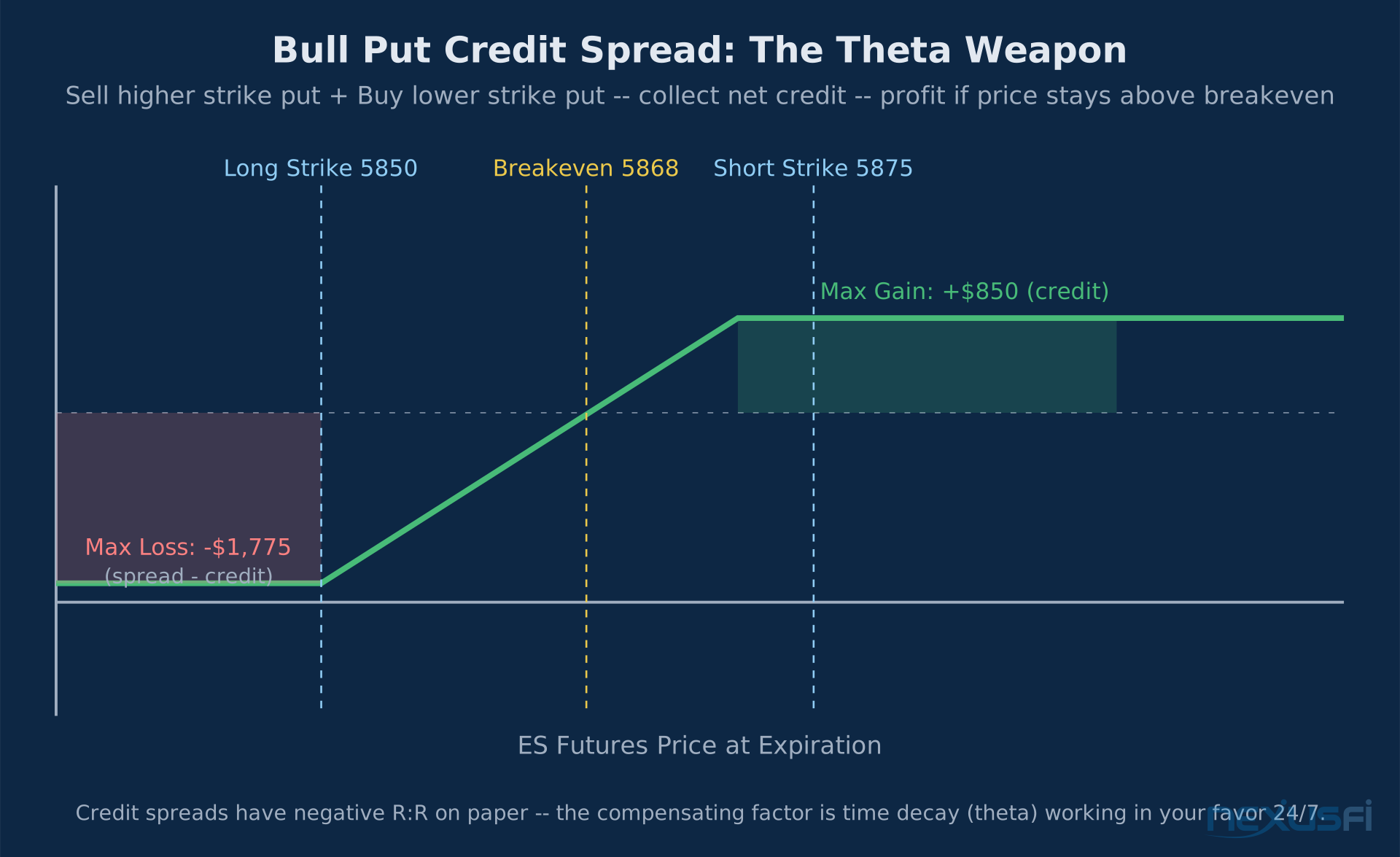
You're bullish. You want the market to stay above your short put strike. The premium you collect from the higher-strike put more than covers what you pay for the lower-strike put — that net difference is your credit, and it's your max profit if both options expire worthless.
P&L Math:
- Max Profit = Net Credit Received
- Max Loss = (Strike Width - Net Credit) × Multiplier
- Breakeven = Short Put Strike - Net Credit
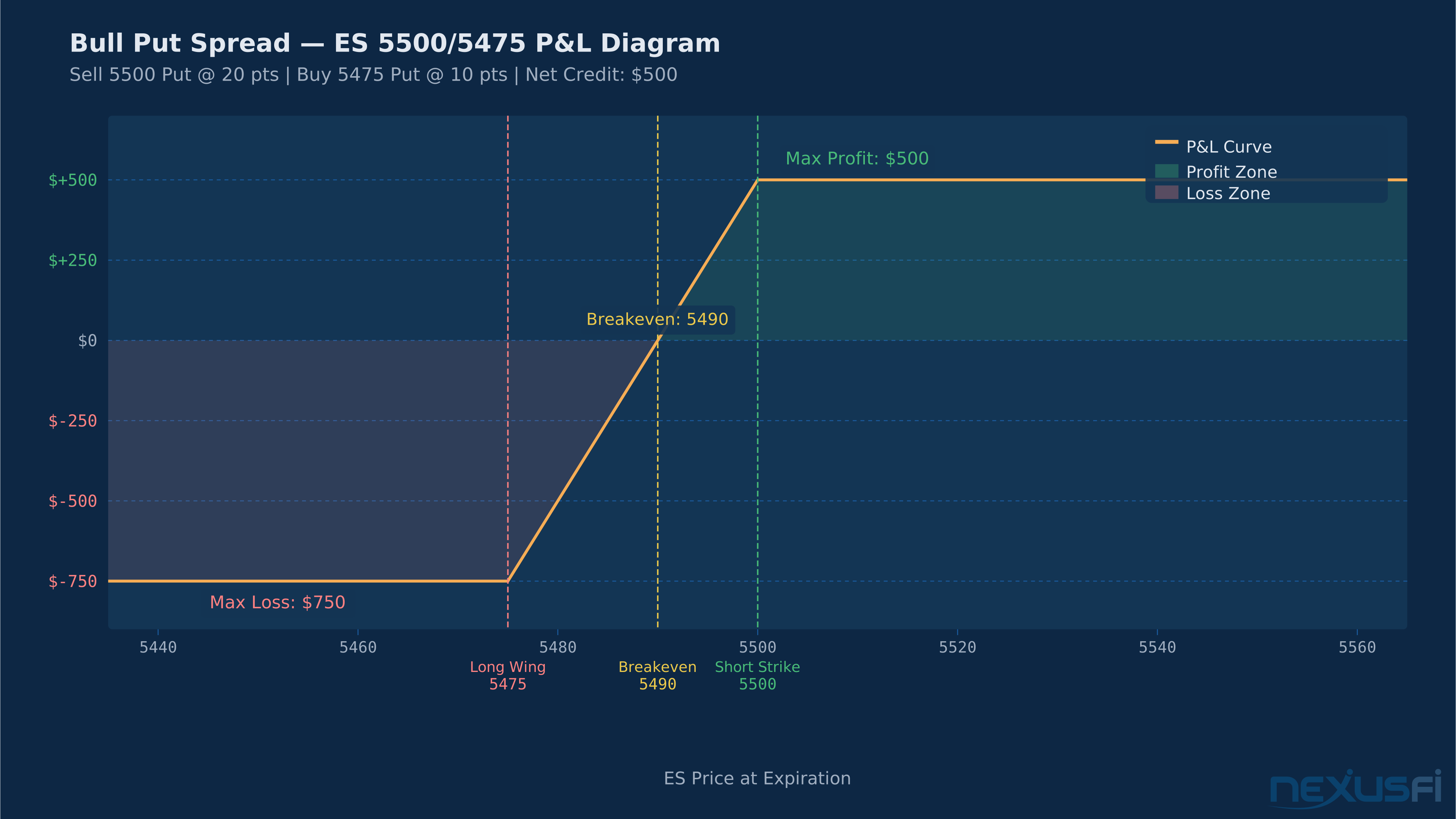
ES Example: ES trading at 5,520. Sell the 5,500 Put at 20.00, buy the 5,475 Put at 10.00.
- Net credit: 10.00 points = $500 (10 pts × $50 multiplier)
- Max profit: $500 (if ES stays above 5,500 at expiration)
- Max loss: (25 pts - 10 pts) × $50 = $750 (if ES falls below 5,475)
- Breakeven: 5,500 - 10 = 5,490
The market can drop 30 points from 5,520 to 5,490 and you still break even. Drop another 10 points to 5,480 and you've lost $500. Drop to 5,475 or below and you hit max loss at $750. That's your entire risk universe — known at entry.
When it fails: Sharp directional breakdown below your short strike. The long wing only starts helping you 25 points lower. Between the short strike and the long strike, you're losing dollar for dollar. The narrower your spread, the less room you have.
Bear Call Spread (Credit, Bearish) #
Construction: Sell a lower-strike call, buy a higher-strike call. Same expiration.
Mirror image of the bull put. You're bearish. You want the market to stay below your short call strike. Collect premium, wait, repeat.
P&L Math:
- Max Profit = Net Credit Received
- Max Loss = (Strike Width - Net Credit) × Multiplier
- Breakeven = Short Call Strike + Net Credit
NQ Example: NQ at 18,000. Sell the 18,050 Call at 6.00, buy the 18,100 Call at 2.00.
- Net credit: 4.00 points = $80 (4 pts × $20 multiplier)
- Max profit: $80 (if NQ stays below 18,050)
- Max loss: (50 pts - 4 pts) × $20 = $920
- Breakeven: 18,050 + 4 = 18,054
The credit is small relative to the max risk here. That's typical of bear call spreads in low-IV environments. The tradeoff: you have probability on your side if the market isn't trending hard into your strikes.
When it fails: Upside breakout with expanding implied volatility. Your short call gains intrinsic faster than your long call offset can help. A squeeze through your short strike with rising IV is the worst possible outcome.
Bull Call Spread (Debit, Bullish) #
Construction: Buy a lower-strike call, sell a higher-strike call. Same expiration.
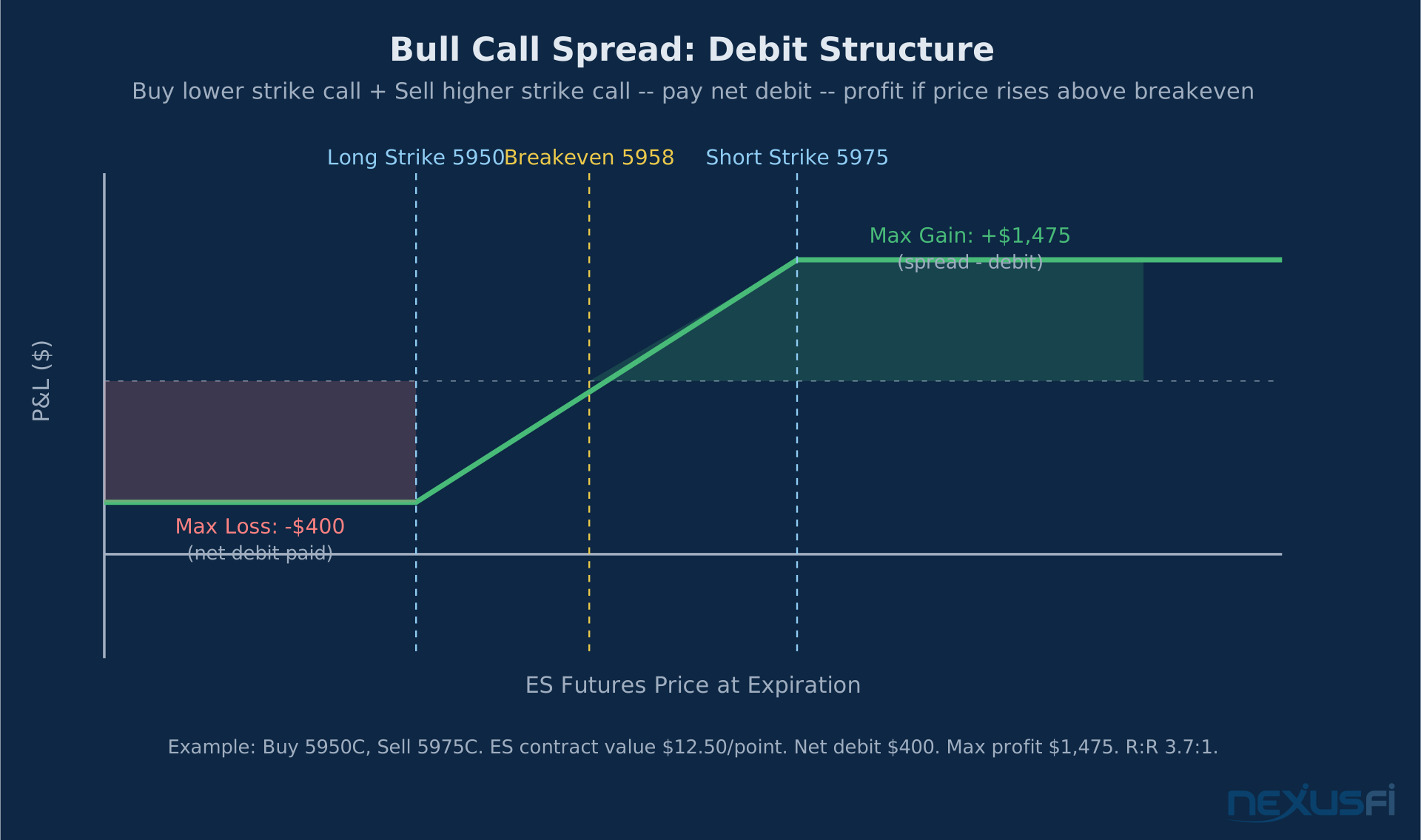
You're bullish and willing to pay for that view. You buy the call with more premium and sell a further OTM call to partially offset the cost. You need the market to move toward or through your long strike to profit.
P&L Math:
- Max Profit = (Strike Width - Net Debit) × Multiplier
- Max Loss = Net Debit × Multiplier
- Breakeven = Long Call Strike + Net Debit
ES Example: ES at 5,500. Buy the 5,500 Call at 40.00, sell the 5,525 Call at 22.00.
- Net debit: 18.00 points = $900 (18 pts × $50)
- Max profit: (25 pts - 18 pts) × $50 = $350 (if ES above 5,525 at expiration)
- Max loss: $900 (if ES below 5,500)
- Breakeven: 5,500 + 18 = 5,518
The reward-to-risk ratio here is roughly 1:2.6. That's the cost of buying premium close to the money. Debit spreads work when you're right on direction and timing.
When it fails: Direction is right but timing is wrong. If ES moves up slowly over 60 days and you bought a 30-DTE spread, theta decay can eat your premium even if you're ultimately correct. Debit spreads need the move to arrive within the timeframe you paid for.
Bear Put Spread (Debit, Bearish) #
Construction: Buy a higher-strike put, sell a lower-strike put. Same expiration.
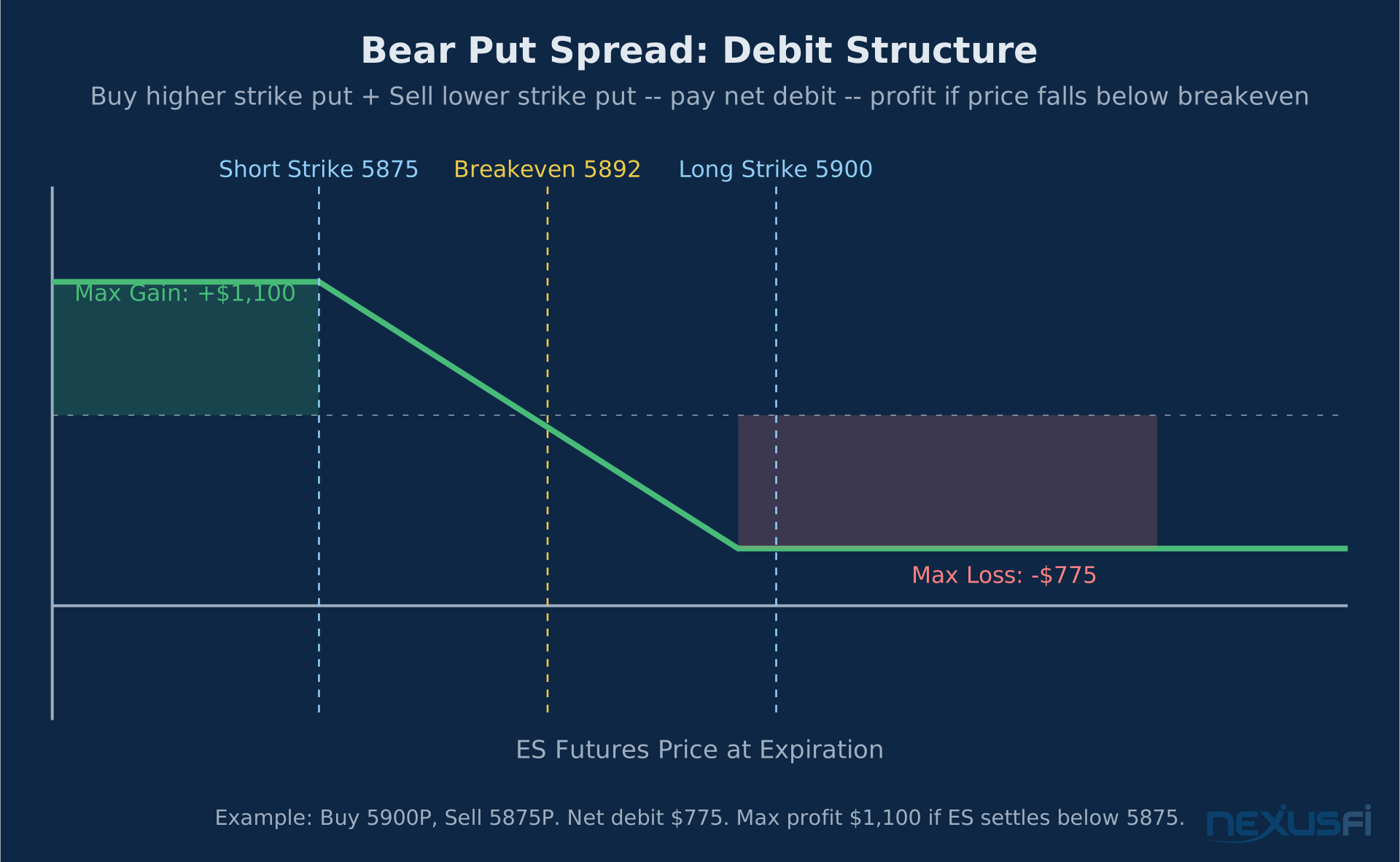
Paid for bearish exposure. You need a downward move to profit. The short lower-strike put offsets your long put's cost but caps your max gain.
P&L Math:
- Max Profit = (Strike Width - Net Debit) × Multiplier
- Max Loss = Net Debit × Multiplier
- Breakeven = Long Put Strike - Net Debit
ES Example: ES at 5,500. Buy the 5,500 Put at 25.00, sell the 5,450 Put at 12.00.
- Net debit: 13.00 points = $650
- Max profit: (50 pts - 13 pts) × $50 = $1,850
- Max loss: $650 (if ES above 5,500)
- Breakeven: 5,500 - 13 = 5,487
This is an asymmetric setup: risking $650 to make $1,850. That kind of ratio requires you to be right on direction. If ES drops hard and fast, you capture nearly 3:1 on your risk. If it doesn't move, you lose your debit.
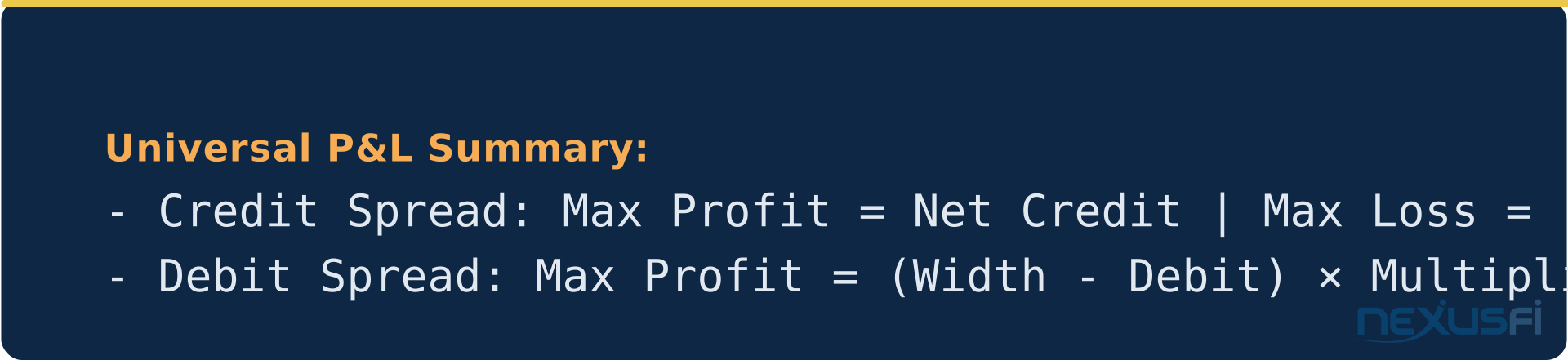
Credit spreads are theta plays — time works for you. Debit spreads are directional plays — you need the move. Regime (IVR) determines which construction has structural edge.
Credit vs. Debit: The Regime Decision #
This is where the article diverges from most options education, which treats credit and debit spreads as philosophically equivalent. They're not — and the difference matters in futures markets.
Credit spreads (bull put, bear call) give you probability on your side. You collect premium and profit if the market stays out of trouble. You're selling time. Theta works for you every day you hold. The catch: you have limited upside (the credit you received) against defined but real downside (the spread width minus credit).
Debit spreads (bull call, bear put) give you leverage on a directional move. You pay for the right to participate in a move up to the width of your spread. Theta works against you every day. You need the move to happen. The benefit: smaller dollar risk relative to the potential reward.
The practical rule: In high implied volatility environments (IVR above 50), credit spreads pay better premiums and probability of profit is mathematically stronger. In low IV environments, debit spreads are cheaper — you're paying less for direction.
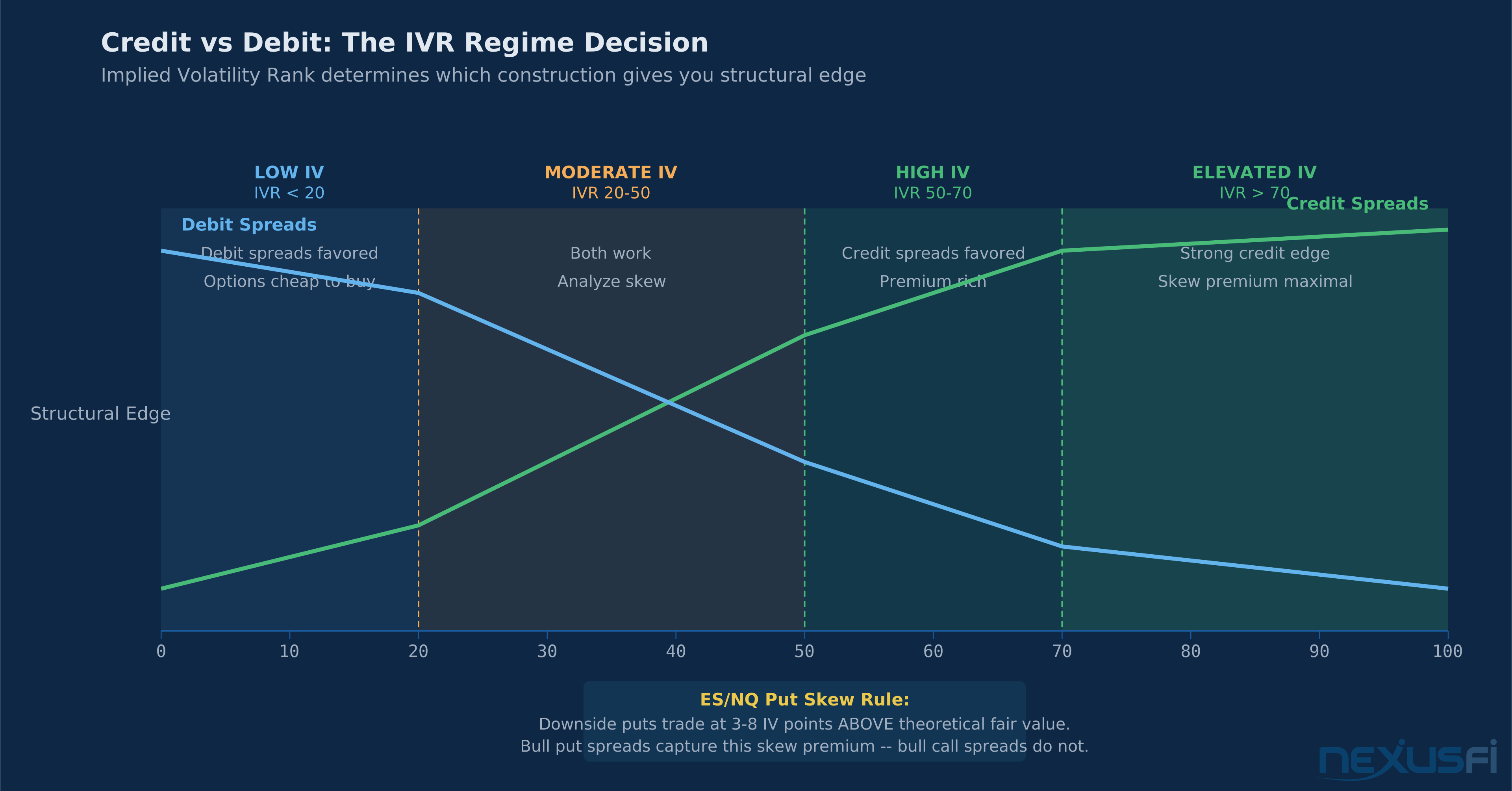
This connects directly to skew. Options don't price all strikes at the same implied volatility. For equity index futures like ES and NQ, downside puts trade at a premium to their theoretical fair value — this is "skew." Selling the higher-IV leg (the put strike with rich skew) via a bull put spread means you're capturing that skew premium. That's the edge that makes credit spreads on equity index futures structurally attractive, not just directionally.
Run a quick skew check before choosing credit vs debit. On ES, if the 20-delta put is trading at 5 IV points higher than the 20-delta call (typical), a bull put spread captures that premium advantage. A bull call spread does not.
How Verticals Shape Your Greeks #
Every vertical spread has a specific Greek profile. Understanding it is the difference between being surprised by your P&L and knowing exactly what will happen before it does.
Delta: Your net directional exposure. For a bull put spread (sell higher put, buy lower put), you're net long delta. The short put gives you +0.20 delta (short put = bullish). The long put gives you -0.10 delta (long put = bearish). Net: +0.10 delta. You're mildly bullish — the spread acts like a diluted directional position.
Theta: Time decay. Credit spreads are long theta — you collect it. Debit spreads are short theta — you pay it. The short option in a credit spread has higher theta than the long option, so the net is positive. How positive depends on how close your short strike is to the money. An ATM short option has maximum theta, move it OTM and theta drops.
Gamma: How fast delta changes when the market moves. Credit spreads are short gamma — adverse moves hurt faster than favorable moves help. Debit spreads are long gamma — moves in your direction help more as they continue. The key insight: a credit spread becomes increasingly dangerous as the underlying approaches the short strike, because gamma is accelerating. What looks like a mild loss at -1σ can become a rout at -1.5σ.
Vega: Volatility sensitivity. Verticals reduce vega exposure compared to outright positions, but don't eliminate it. The long and short options offset each other, but not perfectly — because they're at different strikes, they respond to IV changes differently. When IV expands unevenly across strikes (as it does in sharp downside moves), a bull put spread can have more vega exposure than it looks at first glance.
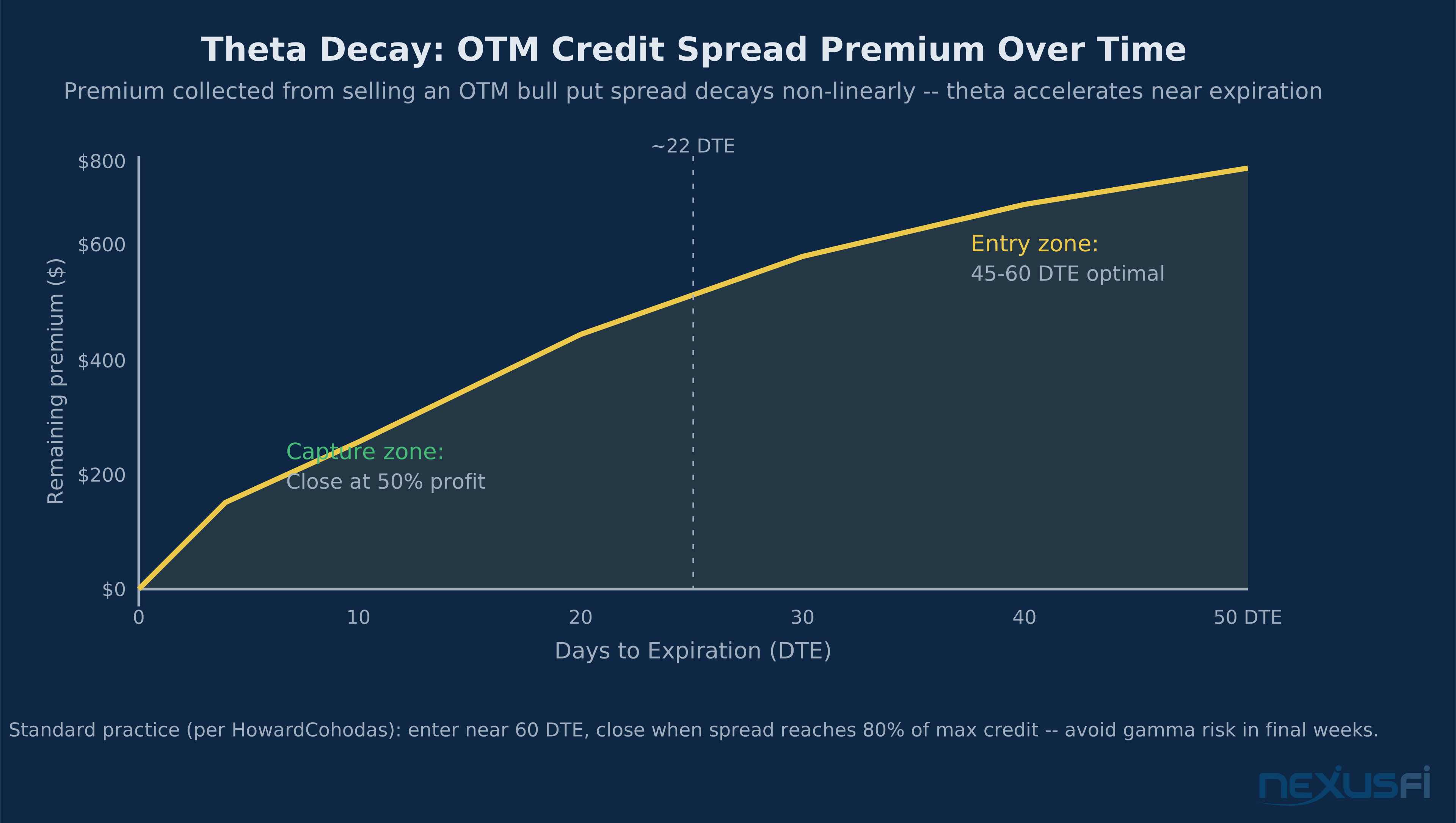
The "defined risk" of a spread means defined max loss — it does NOT mean your P&L moves slowly. A credit spread near its short strike with 14 days to expiry can lose 50% of its remaining max profit in a single session if the market moves sharply toward you. Gamma risk is real and accelerates as expiration approaches.
Strike Selection and Spread Width #
Strike selection is the highest-leverage decision in vertical spread trading. Get this right and the math works in your favor. Get it wrong and no amount of trade management saves you.
The 15-20 Delta Starting Point
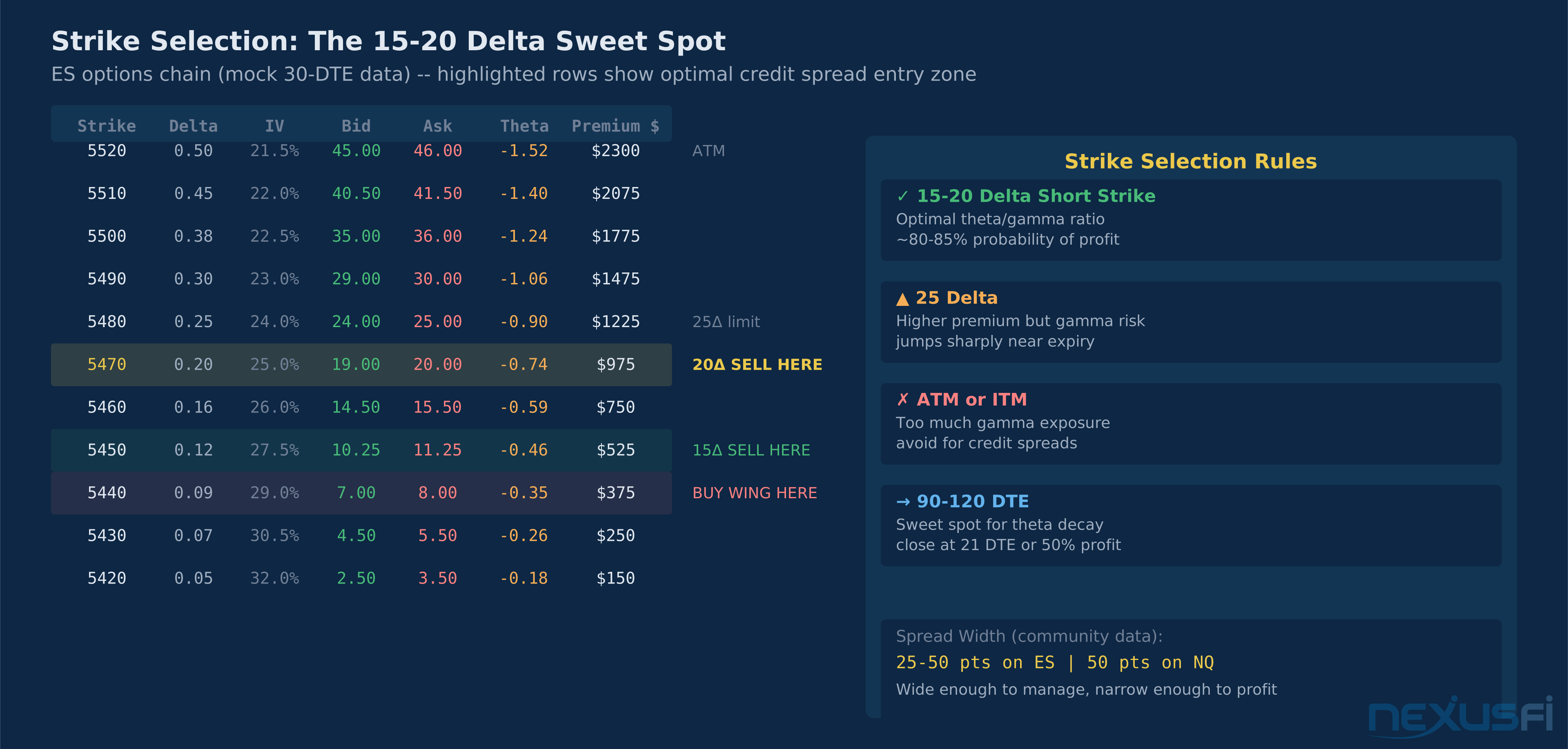
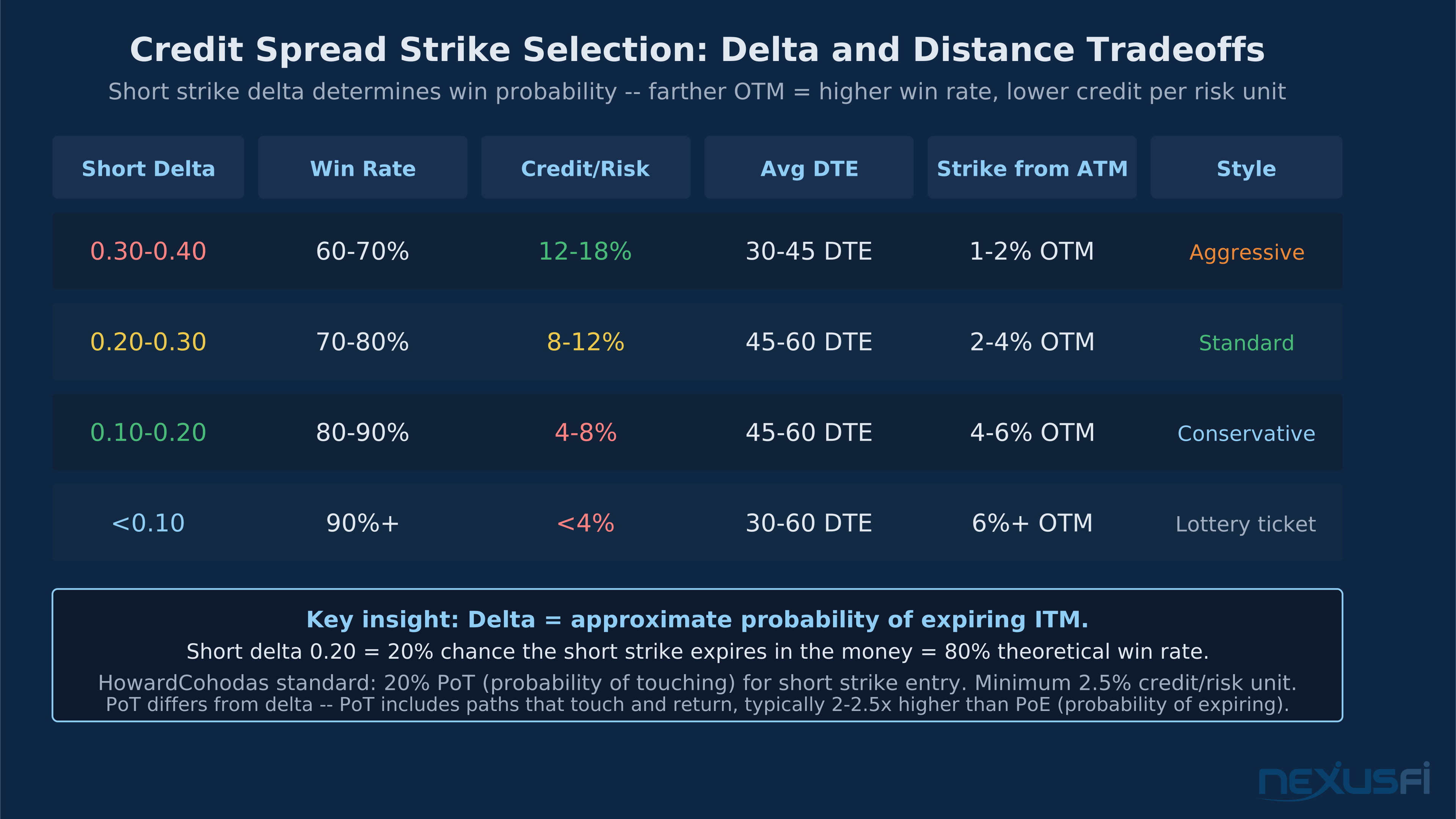
Selling the 15-20 delta strike for credit spreads is the most common entry point among experienced futures options traders, and the data supports why. A 15-delta put is approximately one standard deviation out of the money for a 30-DTE option. Theoretically, it expires worthless roughly 85% of the time — that's your baseline probability of profit before any edge from skew or timing.
Push to 25 delta and the premium increases meaningfully, but your probability of profit drops to ~75% and your gamma exposure rises sharply. The breakeven moves closer to the money. You're getting paid more but taking on substantially more risk — and in volatile markets, that extra premium rarely covers the additional loss frequency.
The 90-120 DTE Window
The optimal theta/gamma ratio for credit spreads isn't at 30 DTE — it's at 90-120 DTE. As @SMCJB analyzed in the NexusFi Options forum using a Black-Scholes spreadsheet, theta doesn't maximize at 30 DTE. For short spreads, the sweet spot is further out, where you're earning time decay on the short option without the gamma explosion of near-expiry options.
In practice, many experienced futures options traders target 90-120 DTE entries, then manage the position actively as it decays and either hits profit targets or triggers stops. The longer timeline gives you more room to be "directionally wrong short-term but right long-term."
Spread Width: The ROI vs. Safety Tradeoff
Width determines your max risk and changes the probability profile. Compare:
5-Point Bull Put Spread (Sell 5500 Put, Buy 5495 Put, $3 credit):
- Max risk: (5 - 3) × $50 = $100
- ROI at max profit: 150%
- But: one 5-point adverse move and you're at max loss
25-Point Bull Put Spread (Sell 5500 Put, Buy 5475 Put, $10 credit):
- Max risk: (25 - 10) × $50 = $750
- ROI at max profit: 67%
- But: the underlying can drop 25 points before you hit max loss
Tight spreads offer extraordinary ROI but are nearly binary. The market barely has to breach your strikes to hit max loss. Wider spreads give you more room but require more capital per position.
Community data from the NexusFi "Selling Options on Futures?" thread shows experienced traders favoring spread widths of 25-50 points on ES with 90+ DTE entries — wide enough to allow active management before hitting the short strike, narrow enough to generate acceptable margin-adjusted returns.
Futures-Specific Mechanics #
Vertical spreads on futures options aren't the same as equity options spreads. Several mechanical differences matter:
European Exercise on Index Futures
ES and NQ options are European-style — they can only be exercised at expiration, not before. This eliminates early assignment risk entirely. With American-style options like SPY, a deeply in-the-money spread can face early exercise from a dividend play or deep ITM delta pressure. That never happens with ES/NQ.
The practical benefit: you don't need to watch for early assignment. Manage based on mark-to-market P&L, not assignment risk. Close the spread before expiration if you want to exit.
CL Options: Physical Delivery
Crude oil (CL) options are a different animal. CL futures involve physical delivery of 1,000 barrels. While most retail traders close before delivery, the settlement mechanics mean you need to know your broker's policies on CL options as you approach expiration. An in-the-money spread in CL that isn't closed before first notice day can create delivery obligations you don't want.
The rule is simple: close CL spreads with at least 5 days to expiration. No exceptions.
Contract Multipliers
These aren't small numbers. Every calculation you do needs to account for the multiplier:
- ES: $50 per index point. A 25-point wide spread has $1,250 of max risk before the credit. A 10-point move in your direction on a bull put spread is worth $500.
- NQ: $20 per point. A 50-point wide spread has $1,000 max risk.
- CL: $1,000 per point. A $2 wide CL spread has $2,000 of max risk.
Traders new to futures options routinely miscalculate because they think in percentage terms from equity options. The dollar amounts per contract are different.
Pin Risk at Expiration
Even with European exercise, settlement pin risk is real. If ES settles between your two strikes at expiration — say at 5,490 when your bull put spread is at 5500/5475 — the short put is in the money and gets exercised against you. You end up with a short ES futures position. Your long 5,475 put expires worthless because ES is above 5,475. You've been "pinned" into an unhedged position.
The solution is mechanical: don't hold vertical spreads into the final trading hours of expiration. Close the position the day before or in the morning of expiration at worst. The final hour is not the place to save a few dollars on commission.
Never hold vertical spreads through the final session of expiration week. Pin risk turns a defined-risk spread into an unhedged futures position. The few dollars saved on closing commissions aren't worth the overnight gap risk.
Trade Setups #
Credit Spread Setups (Bull Put, Bear Call) #
Setup 1: Bullish Credit Spread at Key Support (ES)
- Regime: Balanced to mildly bullish ES. Previous session higher value area holding. IVR 30-50 (moderate volatility, acceptable premium).
- Entry: Sell put at or near key support level (POC from prior session, VAL, or prior high volume node). Buy put 25-50 points lower as the wing.
- Target strikes: Short put at 15-20 delta, 90-120 DTE.
- Credit target: Minimum 10% of spread width. A 25-point spread should bring in at least 2.5 points ($125 per contract).
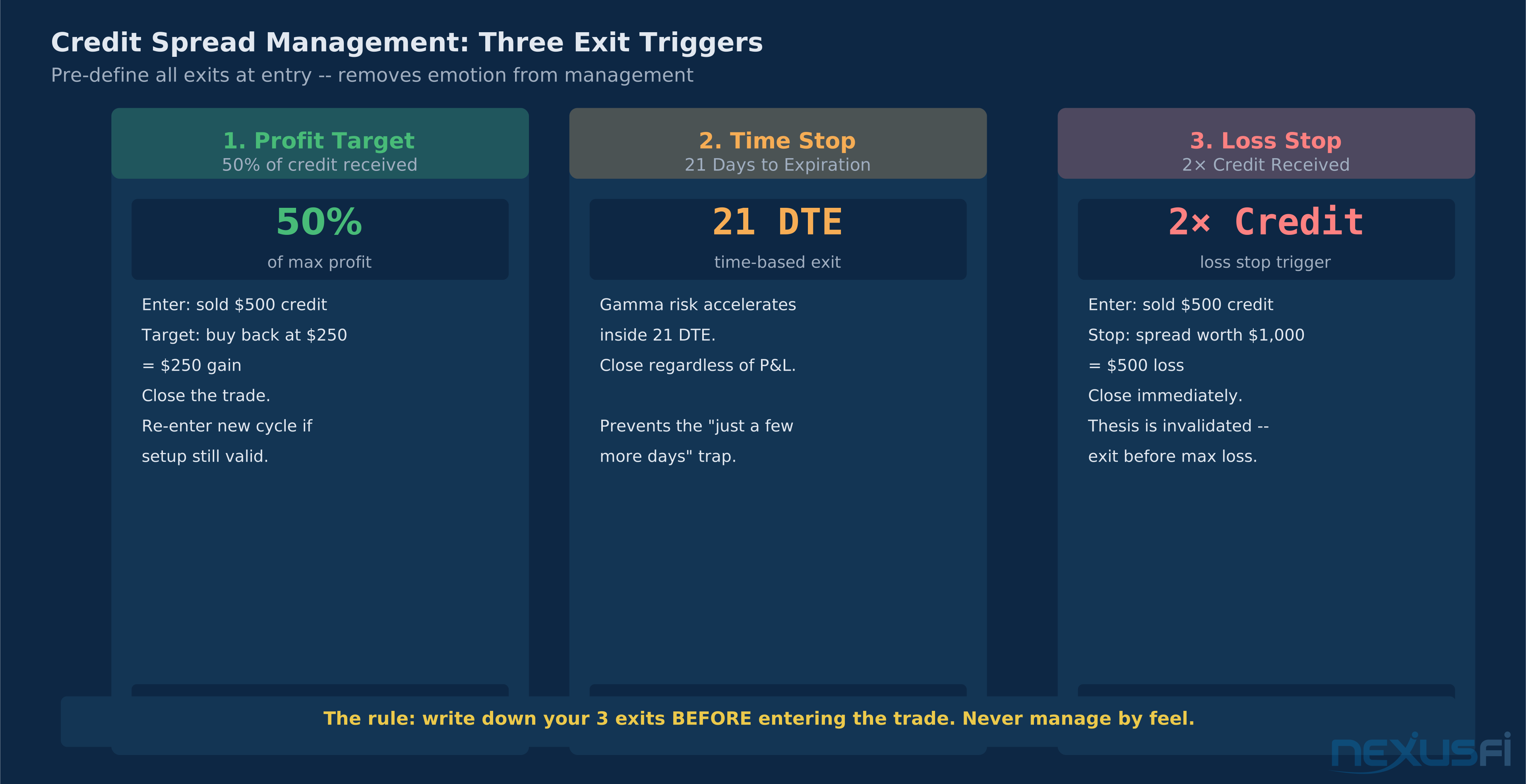
- Profit target: Close at 50% of credit received (buy back when spread has decayed by half).
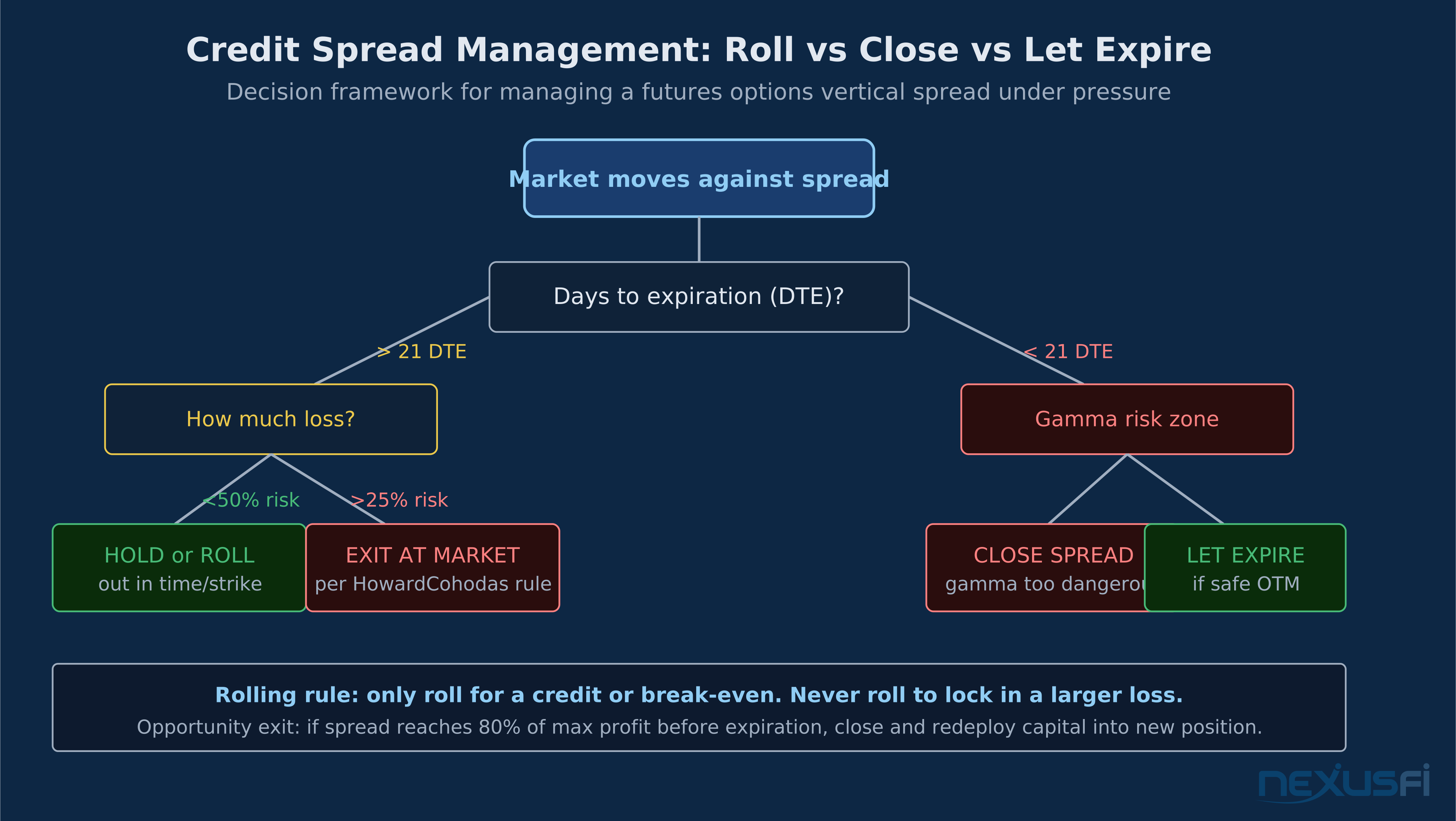
- Stop: Close if spread value doubles (2× the credit you received). If you sold for $200 credit and the spread is now worth $400 to buy back, exit.
- Time stop: Close with 21 days to expiration regardless of P&L.
- Invalidation: Session closes below the wing strike on volume. Not "touched" — closed below.
Setup 2: Bearish Credit Spread at Resistance (NQ)
- Regime: NQ struggling at prior session VAH or major resistance. IVR 40-60 (elevated put skew).
- Entry: Sell call 15-20 delta above current price, buy call 50 points further OTM.
- Credit target: 10% of spread width minimum. For a 50-point NQ spread ($1,000 max risk), collect at least $100 ($5 points credit × $20 multiplier).
- Same profit/stop/time rules as Setup 1.
- Invalidation: Close above short call strike on high volume. Single-session close above, not just a touch.
Debit Spread Setups (Bull Call, Bear Put) #
Setup 3: Bullish Debit Spread on Technical Breakout
- Regime: ES or NQ at breakout above multi-session resistance. Higher timeframe bias bullish. Want to participate but with defined risk.
- Entry: Buy ATM or slightly OTM call (30-40 delta). Sell call 25-50 points above at the next resistance level.
- DTE: 30-45 days. Debit spreads work best with moderate time — long enough for the move but short enough to limit theta bleed.
- Debit limit: Pay no more than 40% of spread width. A 50-point wide spread should cost no more than 20 points ($1,000 on ES).
- Profit target: Take 50-75% of max profit if reached before 7 DTE. If you're at 60% of max profit with 10 days left, take it.
- Stop: If debit spread loses 50% of its value (paid $500, now worth $250), close it. The thesis has failed.
- Invalidation: Underlying closes back below the breakout level.
Setup 4: Debit Spread Around Macro Events
Pre-event debit spreads let you trade FOMC, CPI, or NFP with a known max loss. The risk is IV collapse after the event — direction can be right and you still lose if IV drops 20% post-announcement. Entry 3-5 days before the event, close the next day. Don't hold hoping for follow-through.
Event IV crush has destroyed more debit spread traders than directional failure. If ES jumps 30 points on NFP but IV collapses from 25 to 15, your bull call spread can lose value even as the market moves your way. Size event spreads as lottery tickets — money you can lose entirely.
When Vertical Spreads Fail #
Trend Days
Credit spreads are brutal on trend days. A session that opens weak, builds into a directional cascade, and closes at extremes is how bull put spread traders get wrecked. In a balanced market, selling the 5450 put with ES at 5520 looks safe. In a 70-point trend day lower, that's a full loss.
Identify trend day potential before entering credit spreads. If overnight inventory is short, the opening is weak, and early session structure shows single prints — step back. No credit spread entry on days with high trend probability.
Volatility Expansion
Credit spreads entered in low-IV environments get crushed when volatility expands. You sold $150 of credit. IV expands from 14 to 22 on a news shock. Your spread is now worth $400 to buy back even though the underlying hasn't breached your strikes yet. The vega hit on the short option dominated the theta benefit.
The fix: don't sell credit spreads when IVR is below 20. At that point, you're selling cheap options. The market can pay you back with an IV spike that temporarily inflates your spread value far beyond what direction alone would justify.
Pin Risk on Small Wings
Tight 5-10 point spreads on ES are a trap. The credit-to-risk ratio looks attractive (sell $150, risk $100 = 150% ROI if correct). But any session that closes within 10 points of your short strike is a max-loss event. These spreads have no margin of error. Scale up on width, not on quantity of tight spreads.
Legging Into the Position
Community data is clear on this one. @Homerjay's reverse double diagonal trades in CL, GC, and W worked as a unit — not as individual legs. The moment you try to leg into a vertical by selling one option and waiting to buy the other, you've taken on temporary naked exposure. CL can move $1 in seconds. If your long wing buy order is in and your short sell hasn't filled, you're exposed to max loss without the hedge. Use spread orders. Always.
Late Management on Losing Positions
The hardest failure in spread trading isn't taking the loss — it's not taking it when you should. A credit spread that has expanded to 3× the original credit is begging to be closed. The instinct is "it's still defined risk" — which is true, but you're now holding $750 of unrealized loss to potentially save $750 by holding to expiration. That math only works if your probability of recovery is above 50%. With 30 days left and your short strike in the money, that probability is not 50%.
Defined risk does not mean unlimited patience. Once a credit spread reaches 2-3× its initial value, the probability math for holding to expiration no longer works in your favor. Cut the loss, preserve capital, and re-enter when the setup is fresh.
Practical Application #
Pre-Trade Checklist #
Before entering any vertical spread on ES, NQ, or CL:
- Check IVR. Below 20: favor debit spreads or no spread entry. 20-50: both types work. Above 50: credit spreads pay better.
- Check the economic calendar. FOMC, CPI, NFP within 7 days of expiration? Either adjust strikes for wider swings or use debit spreads to cap risk at known quantities.
- Define your exits before entry. Write down: "If this spread hits [50% credit] I close it. If it doubles against me I close it. If it hasn't moved by 21 DTE I close it." Mechanical rules prevent emotional management.
- Size by max loss, not by margin. Your broker shows SPAN margin at $800 for a bull put spread. That's not your risk per trade. Your risk is the spread max loss. If max loss is $750 and your account is $25,000, you're risking 3% on one position. Size so.
Execution Protocol #
Always use combo/spread orders. Every major futures broker supports multi-leg spread orders for vertical spreads. CME-listed futures options trade as spread combos at the exchange level. You set the net credit or debit you want, submit as a single order, and both legs fill simultaneously.
The only alternative — legging in — creates naked exposure. If you sell the short option first and the underlying rips 2% before your long option fills, you've had a margin call without a spread.
Limit orders at mid, then adjust. For ES options, the typical bid-ask spread on liquid strikes is 0.25-0.50 points ($12.50-$25). Start your limit order at the mid-price. If not filled in 5 minutes, adjust 0.05-0.10 points toward the market. Don't chase with market orders — you'll pay the full bid-ask spread on both legs.
Typical ROI expectations (from community data at 90-120 DTE, 15-20 delta short strikes):
| Spread Type | Typical Credit/Risk | Monthly ROI Target |
|---|---|---|
| Bull Put (25pt ES) | ~$150-$250 credit on ~$1,000 max risk | 3-5% monthly |
| Bear Call (25pt ES) | ~$100-$200 credit on ~$1,100 max risk | 2-4% monthly |
| Bull Call (25pt ES) | ~$500-$800 debit on $1,250 max gain | N/A (directional) |
SPAN Margin and Capital Efficiency #
This is the practical reason serious futures options traders prefer defined-risk spreads over naked options for systematic programs. The capital efficiency is dramatic.
A naked ES put at 15 delta might require $12,000-$15,000 in SPAN margin per contract. The same short put with a wing 25 points lower — turning it into a bull put spread — converts that requirement to approximately the maximum loss: $750-$1,250 depending on the credit received.
That's a 90%+ reduction in margin for the same short strike. The math translates directly to capital efficiency: a $50,000 account can run 10-15 credit spreads simultaneously where it could only hold 3-4 naked positions.
The trap: SPAN efficiency is not the same as risk reduction. You still hold the same short put strike. Market risk — the actual dollar loss if the market moves through your strikes — is unchanged. The only thing that changed is what the clearinghouse requires as collateral. Traders who use SPAN efficiency to "run more spreads because margin is low" end up with correlated positions that all lose in the same move. Stick to the 1-2% account risk per position.
A simple position sizing calculation: divide your account by 100 (for 1% risk) or 50 (for 2% risk) to get your max risk per trade. Then divide by your spread's dollar max loss to get position size. $50,000 account, 2% risk = $1,000 max per trade. If your bull put spread max loss is $750, you can run 1 contract. If max loss is $1,500, the position is too large at this size.
Knowledge Map
Prerequisites
Understand these firstGo Deeper
Build on this knowledgeCitations
- — Trading Index Options OTM Vertical Credit Spreads (2011) 👍 19“Vertical Spreads: Selling an option and limiting its risk by buying the same class one or more strikes away in the same series.”
- — Selling Options on Futures? (2014) 👍 17“The shapes of the call spreads were interesting -- the sweet spot of theta isn't where most traders assume.”
- — Selling Options on Futures? (2013) 👍 4“Once I'm past 70% profit on the spread I bring in the shorts. Margin increases haven't been too much of a problem with spreads.”
- — Selling Options on Futures? (2017) 👍 12“I got a ROI of 4.0% for my current version spread when exiting at 50% drop in net premium. The initial credit was $10 higher with $46 less IM.”
- — Selling Options on Futures? (2016) 👍 10“ES options put spread research 2013-2016: DTE >90, short strike 20% from ES price, exit at 50% premium drop. Win/loss rate 16:18 in 2015 still produced profitable results.”
- — Selling Options on Futures? (2015) 👍 35“Sell around 0.0300 deltas at 90-110 DTE and buy back when premium is 50% gone. Apr-Jun made 8.5% monthly ROI held an average of 19 days -- catching 50% of decay in less than 50% of the time.”
- — Selling Options on Futures? (2015) 👍 20“Spreads: one short 5.00 delta and two long 1.50 delta options, exit at 50% drop. Spreads up 83.8% for the 2.5 year study -- far better than naked options with only 6.7% drawdown in 2015's volatile year.”
- — Selling Options on Futures? (2015) 👍 25“Black-Scholes analysis of ES credit spread ROI: closing at 50% premium decay in less than 50% of the holding period maximizes annualized returns -- a mathematical validation of the 50% profit exit rule.”
- — Selling Options on Futures? (2015) 👍 27“DTE analysis: Nov options had higher IM increases than Dec/Jan in the same drop. Further-out options had lower IV sensitivity -- supporting 90-110 DTE entry window for credit spreads on ES.”
- — Selling Options on Futures? (2013) 👍 17“Credit spreads on SPX, lessons compiled from the thread. The thread's structured approach to premium selling -- defined risk, mechanical exits, DTE management -- is the foundation of the vertical spread playbook.”