



Relative Strength Analysis for Futures Day Trading
Overview #
Overview #
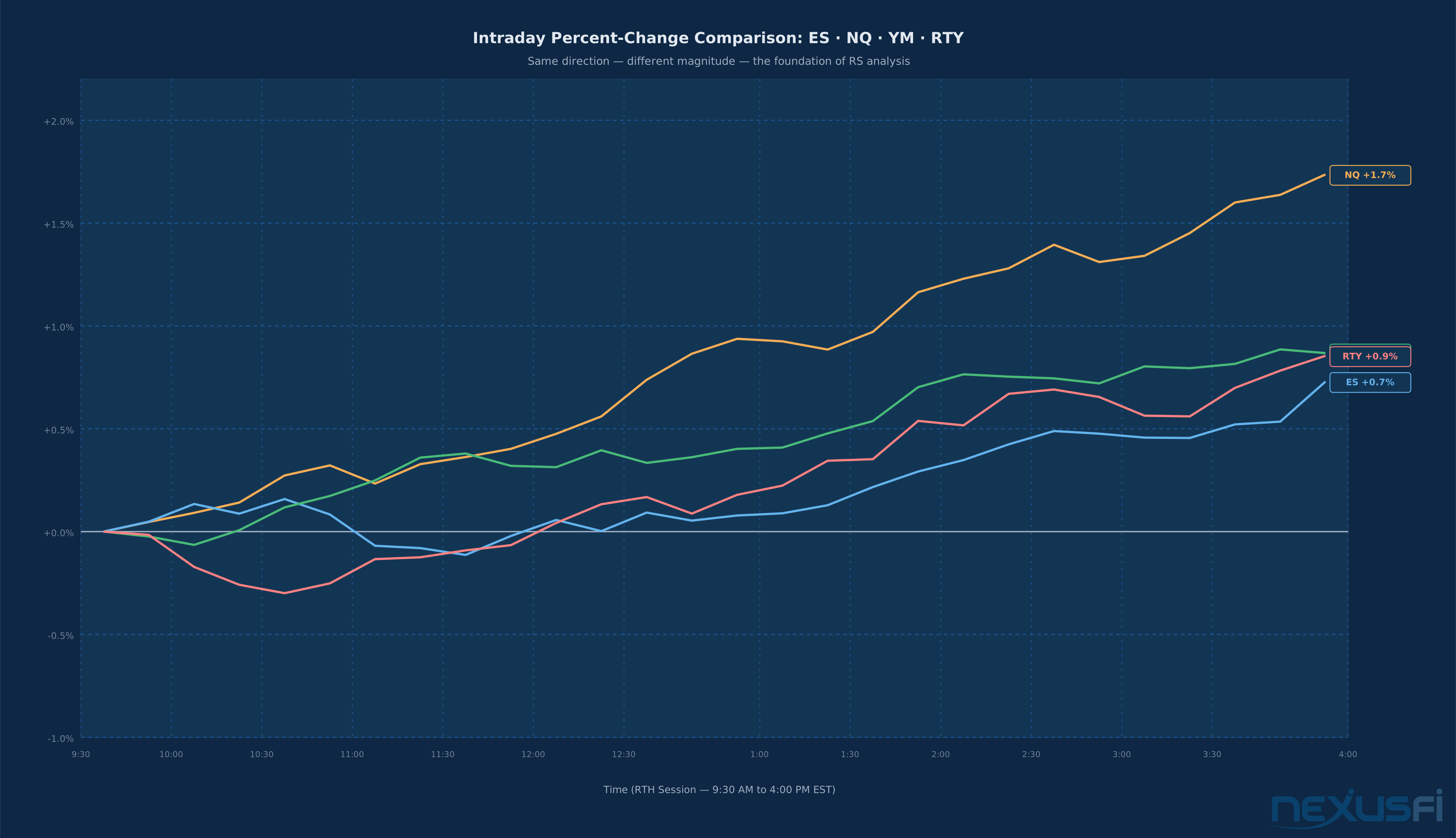
Every futures trader eventually asks: "Which index should I be trading right now?" On most days, ES, NQ, YM, and RTY all trend in the same direction. But the magnitude of that move differs much across contracts, and those differences create the most reliable intraday edge available to equity index traders. Relative strength analysis is the systematic practice of comparing the performance of correlated instruments to identify which market is leading, which is lagging, and what that divergence means for trade selection and timing.
This isn't a new concept. Institutional traders have compared index performance for decades. What's changed is accessibility: the CME's micro contracts (MES, MNQ, M2K, MYM) have democratized multi-market monitoring for retail traders, making it practical to watch all four major indexes simultaneously without managing outsized exposure. The result is that relative strength analysis has moved from an institutional-only tool to one of the most actionable frameworks available to individual futures traders.
At its core, relative strength analysis answers three questions: Which instrument is showing the most directional conviction today? When one instrument diverges from its correlated peers, is that divergence meaningful or noise? And how do you convert that information into a specific trade with defined risk? This article covers RS measurement, the behavioral profiles of all four major US equity index futures, regime-based signal reliability, specific trade setups, and how market internals like $TICK and $ADD confirm or refute what the comparison is showing.
alt="Intraday percent-change chart comparing ES NQ YM RTY showing relative performance divergence" loading="lazy" width="800" height="450">
The Four Major Index Futures: Behavioral Profiles #
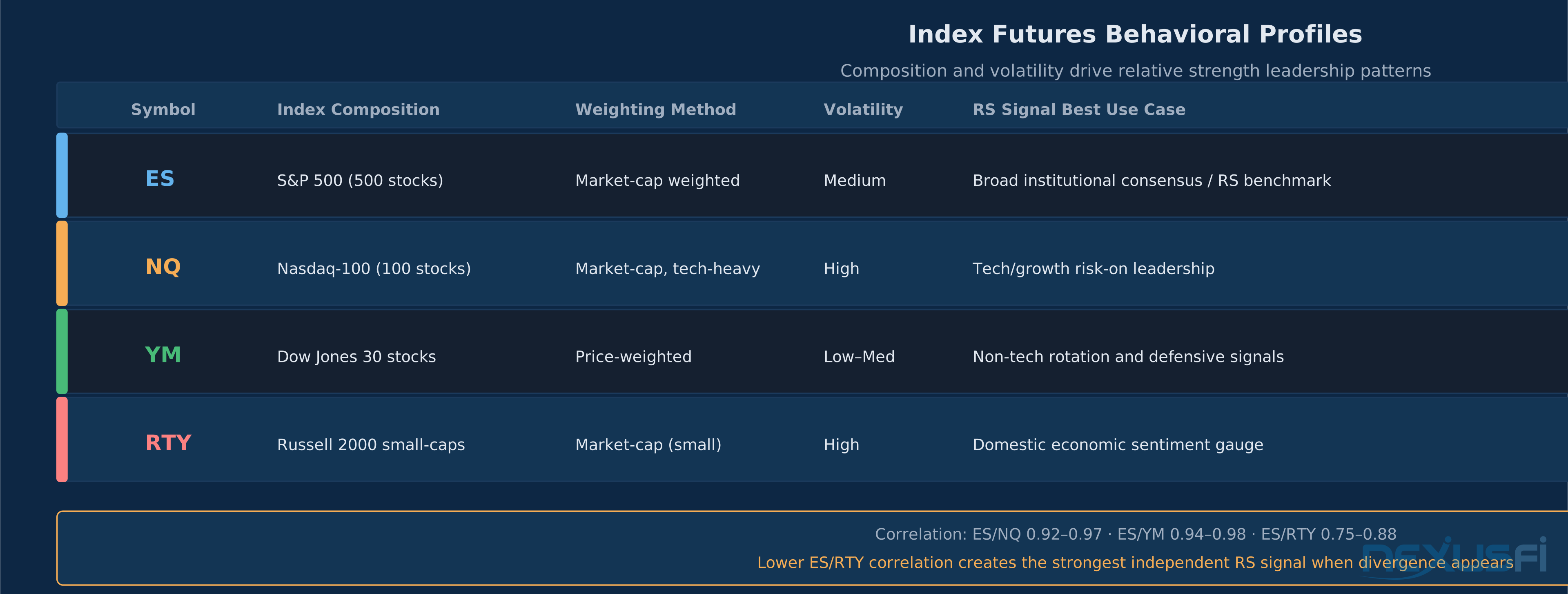
Understanding what each index actually represents is the foundation of relative strength analysis. These aren't interchangeable instruments — each tracks a different slice of the economy, responds differently to macro catalysts, and attracts different participants.
ES -- E-mini S&P 500
The ES is the deepest, most liquid equity futures contract in the world. Its composition is the S&P 500: ~500 large-cap US companies, market-cap weighted, with a massive weighting toward mega-cap tech (Apple, Microsoft, Nvidia, Amazon, Meta collectively represent over 20% of the index). ES tracks broad institutional consensus — when institutions are rotating, hedging, or repositioning, ES absorbs it first. It is the benchmark against which everything else is compared.
For day traders, ES's depth means tighter spreads and better fills, but also more noise from HFT activity and less directional conviction on any individual move. Large operators regularly fade intraday breakouts in ES while letting NQ or RTY run. This behavior makes ES a better reference instrument than a trading vehicle on days when other indexes are showing strong divergence.
NQ -- E-mini Nasdaq-100
The NQ tracks the 100 largest non-financial companies on the Nasdaq. Its weighting is extreme by design: the top 10 holdings represent approximately 50% of the index, with Apple and Microsoft alone accounting for ~20%. This concentration makes NQ the most volatile of the four major equity index futures and the most sensitive to technology earnings, rate expectations, and risk-on/risk-off flows.
When markets are trending strongly in either direction, NQ typically moves 1.5-2x the percentage of ES. On a strong up day for the broader market, a 1% ES gain often coincides with a 1.5-2% NQ gain. This leverage effect makes NQ the preferred instrument for trend days when you've correctly identified direction.
NQ's amplified volatility is a double-edged feature. On trend days where you correctly identified direction, NQ delivers 1.5-2x the return of ES. On wrong-direction trades, it delivers 1.5-2x the loss. Normalize position size to dollar risk, not contract count, when rotating from ES to NQ on RS leadership signals.
YM -- E-mini Dow Jones
The YM tracks the 30 large-cap companies in the Dow Jones Industrial Average. Unlike ES and NQ, YM is price-weighted rather than market-cap weighted, meaning a $300 stock has 3x the influence of a $100 stock regardless of market cap. This weighting creates behavioral differences: YM is less tech-driven than ES or NQ, more exposed to industrial, financial, and healthcare names, and tends to underperform during pure tech rallies while outperforming during defensive rotations.
For relative strength analysis, YM's non-tech composition makes it the clearest signal of whether a move is broad-based or tech-driven.
RTY -- Russell 2000 Mini
RTY tracks 2,000 small-cap US companies and behaves differently from all three large-cap indexes. Small caps are more sensitive to domestic economic conditions (less international revenue), more exposed to credit costs (more floating-rate debt), and less affected by mega-cap tech earnings. RTY is the risk barometer for domestic economic sentiment, not global tech sentiment.
RTY divergence is one of the most actionable signals in relative strength analysis. When RTY is underperforming ES much, it often signals deteriorating credit conditions, risk-off rotation, or concerns about domestic growth — even before that concern is visible in price-weighted or mega-cap-dominated indexes. As @Anagami documented in the PandaWarrior Chronicles: on days when ES and NQ were trending up, RTY weakness served as an early warning that the rally lacked broad participation and was more likely to reverse. [2]
RTY is disproportionately sensitive to credit market conditions. Around FOMC meetings, CPI prints, and banking sector news, RTY can diverge dramatically from the other three indexes due to small-cap balance sheet exposure to floating-rate debt. Always filter RTY divergences around these events before treating them as actionable RS signals.
alt="Table comparing ES NQ YM RTY characteristics: composition, volatility, best use cases" loading="lazy" width="800" height="450">
Measuring Relative Strength: Three Methods #
Raw price comparison between contracts is meaningless — a 10-point ES move is not the same as a 10-point NQ move. Relative strength analysis requires normalizing performance to allow valid comparison.
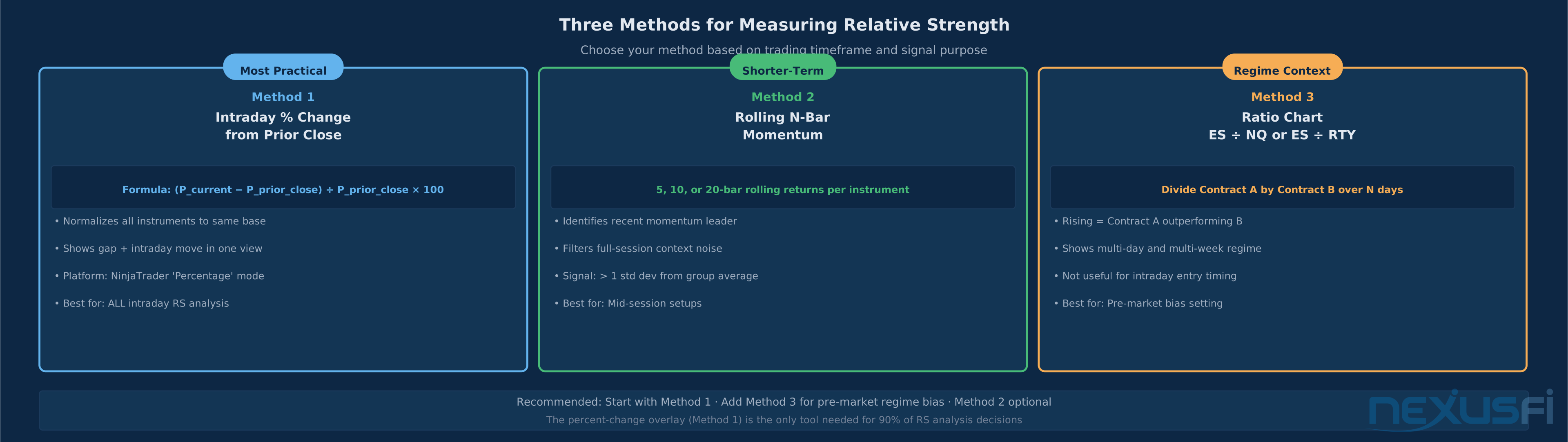
Method 1: Intraday Percent Change from Prior Close
The simplest and most practical method. At any point during the session, calculate:
RS% = (Current Price — Prior Close) / Prior Close × 100
Plot all four instruments on a single panel using this metric. The result is an immediately readable comparison: which index has gained or lost the most since yesterday's close. This normalization controls for both price level and contract size differences.
Most trading platforms display this directly. In NinjaTrader, applying the "Percentage" price mode to a multi-instrument chart achieves this. In TradingView, the compare feature automatically normalizes from session open. The key setting is to use prior close as the reference point, not the current session's open — gaps matter and should be visible in the RS comparison.
Start with Method 1 before adding complexity. Plot all four index futures on a single panel, set to percent-change display. This single view gives you 80% of actionable RS information. In NinjaTrader: multi-instrument chart, "Percentage" price mode, reference prior close. In TradingView: Compare feature, normalize from session open. Methods 2 and 3 are refinements — the percent-change panel is the core.
Method 2: Rolling N-Bar Momentum Comparison
For shorter-term divergence signals, compare rolling 5, 10, or 20-bar returns across instruments. This identifies which market has the most momentum over the last 30-60 minutes, filtered from the noise of the full session's comparison. This method is especially useful in range-bound sessions where the day's overall percent change is small but individual periods show strong leadership.
The threshold for meaningful divergence using rolling momentum: when one instrument's 10-bar return differs from the group average by more than 1 standard deviation of historical divergence readings, the signal is worth noting.
Method 3: Ratio Charts
Divide one instrument's continuous contract by another (e.g., ES/NQ ratio) to create a ratio chart that quantifies leadership over multiple sessions. Ratio charts are useful for identifying multi-day regime shifts — when NQ has been consistently outperforming ES for 3-5 days, that's a trend-following regime in tech. When ES/RTY ratio is rising, large-caps are outperforming small-caps, often indicating late-cycle market behavior or defensive rotation.
For intraday use, ratio charts are less practical because they require additional data management. For swing context that informs your intraday bias, they provide valuable regime information.
alt="Three RS measurement methods: percent change overlay, rolling momentum bars, ratio chart" loading="lazy" width="800" height="450">
Regime Identification: When RS Analysis Is Most Actionable #
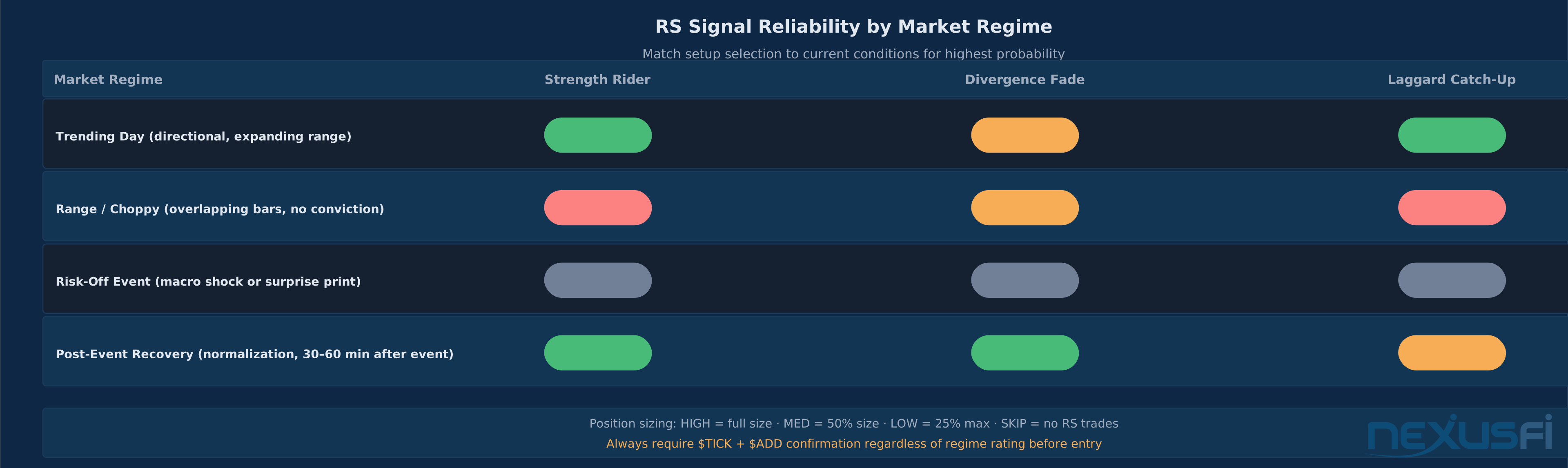
Relative strength analysis generates more false signals in some market environments than others. Regime identification — understanding what kind of market you're operating in — is as important as the RS reading itself.
Trend Regime: High RS Reliability
In trending markets (defined by ES trading above a 20-period VWAP with expanding volume, or by the broader market in a clearly directional week), relative strength signals are most reliable. The RS comparison tells you which vehicle offers the best risk-reward for trend participation.
In a strong uptrend, the trade is simple: identify the strongest instrument (usually NQ in tech-led rallies), trade that instrument in the direction of the trend, and use the laggard's behavior as a stop/exit signal.
Range/Consolidation Regime: Lower RS Reliability
In range-bound markets, relative strength divergences are less reliable because instruments tend to mean-revert quickly. A 0.3% NQ outperformance of ES in a choppy session is far less actionable than the same divergence on a trend day. In these conditions, divergence signals should be used as filter signals (avoid the instrument that's diverging, not trade the divergence), and other confirming factors should be required before acting.
The single biggest RS analysis error is treating every divergence as actionable regardless of regime. On choppy, low-conviction days, NQ may lead ES by 0.3% for 20 minutes and then give it all back. On IB range days — low volume, narrow range first 30 minutes, no clear directional opening — RS signals require full confirmation stack before acting. Identify the day type first; then calibrate how much weight to give the RS reading.
Risk-Off/Event-Driven Regime: Correlation Breaks Down
During macro events (Fed announcements, major economic releases, geopolitical shocks), correlations between the four indexes temporarily break down. All instruments can move together with unusually high correlation, making RS divergence less meaningful for a 30-60 minute window around the event. The post-event normalization — as each index reprices to the new information — is when RS analysis becomes highly actionable again.
The key regime indicator is correlation coefficient: when the 5-day rolling correlation between ES and NQ falls below 0.85, you're in a divergent regime where RS signals carry more information.
Filter all RS analysis within 15 minutes of scheduled economic releases. Around these events, NQ may temporarily diverge from ES due to sector-specific reactions — a 0.5% divergence immediately after a CPI print is NOT the same signal as a 0.5% divergence in a quiet mid-session period. The highest-quality RS signals come 20-45 minutes after major releases, once the initial volatility settles.
alt="Regime matrix showing RS signal reliability across trend, range, and risk-off environments" loading="lazy" width="800" height="450">
Trade Setups Based on RS Divergence #
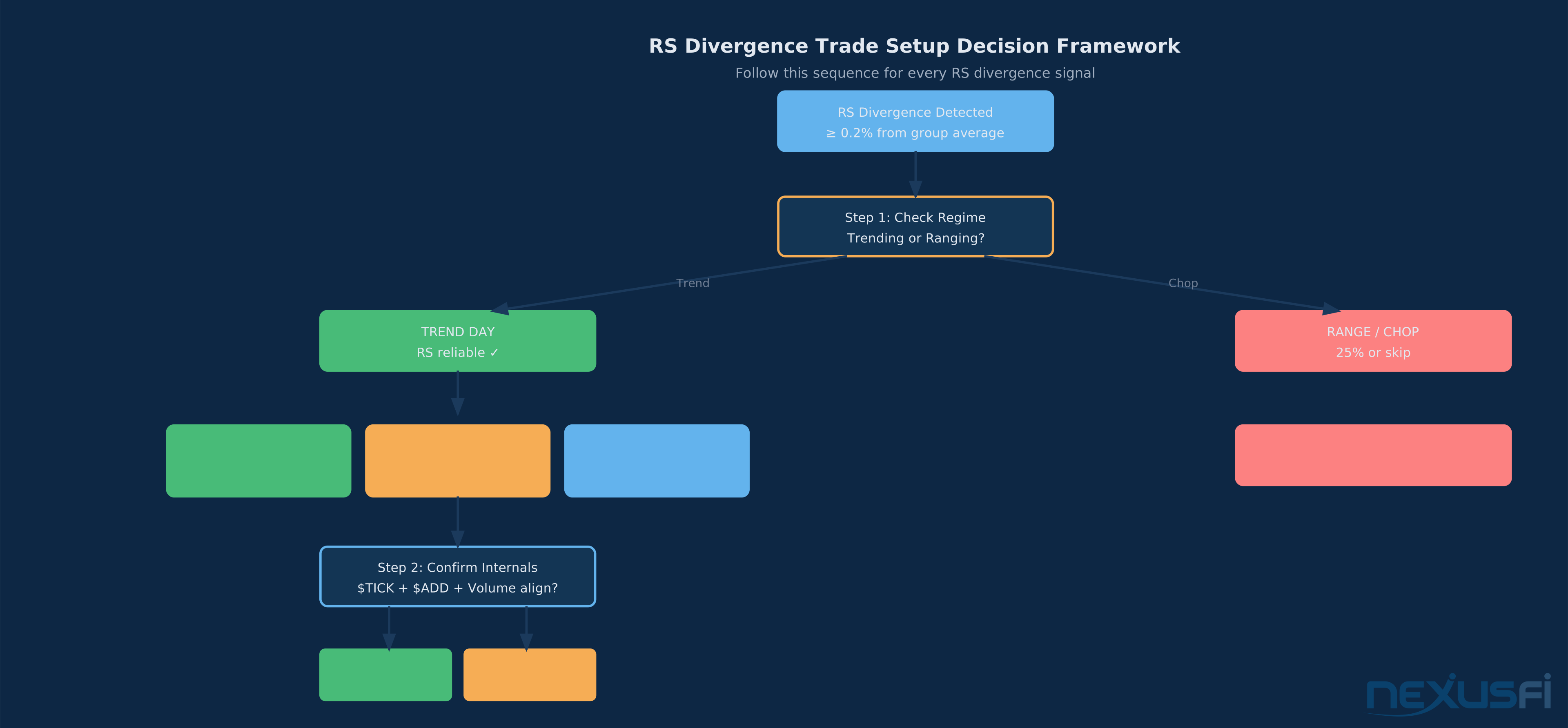
Once you've identified a meaningful RS divergence in a favorable regime, the question becomes: how do you construct a trade around it?
Setup 1: The Strength Rider
The most straightforward setup. Identify the strongest instrument (highest RS%) early in the session (first 30-60 minutes). Wait for a pullback to a technical level (VWAP, prior day's close, opening range level). Enter the strongest instrument on the pullback, targeting continuation of the RS leadership.
Entry criteria: Instrument has led the group by ≥0.2% for the first 30 minutes. Pullback to VWAP or opening range support/resistance. $TICK reading at or recovering from neutral (not deeply negative).
Stop placement: Below the pullback low, with maximum stop equivalent to 1 ATR on the trading timeframe.
Target: Prior session high or measured move from the opening range. Exit if the instrument's RS leadership begins to fade much (lagging by more than 0.1% relative to where it started leading).
As @josh noted in analysis of NQ vs ES trade selection: on days where NQ was clearly the RS leader from the open, waiting for pullbacks to VWAP produced entries with better follow-through than chasing the initial push. The RS leadership itself reduced the risk of getting faded on the pullback entry. [3]
Never chase the RS leader after it has already run 0.5%+ from your ideal entry. The Strength Rider works because you're entering the strongest instrument on a pullback to value — not because the strongest instrument always continues going up. If NQ has already run 0.8% from VWAP and is now 0.6% ahead of ES, the setup has passed. Wait for the next pullback to VWAP or skip the session.
Setup 2: The RS Divergence Fade
When one instrument has diverged much from the group (≥0.5% in the same direction), look for reversion signals. This works best when the leading instrument shows exhaustion (volume drying up, $TICK reversing, price failing to make new highs on multiple attempts).
Entry criteria: Clear divergence of ≥0.5% from group. Exhaustion signal on the diverging instrument (RSI divergence, volume fade, price rejection at key level). $TICK or $ADD turning against the direction of the divergence.
Never fade an RS divergence without an exhaustion signal. Divergences can persist and expand — a 0.5% NQ-ES divergence can become 1.0% before resolving. The Divergence Fade requires two gates: the divergence threshold AND a confirmed exhaustion signal. One without the other is not a setup.
Setup 3: The Laggard Catch-Up
When one instrument has much lagged its peers (underperforming by ≥0.3%), watch for a trigger that could produce catch-up buying. This setup frequently occurs when sector rotation brings money back to defensive names (YM catch-up after tech pullback) or when small-cap confirmation arrives after a large-cap-led move (RTY catch-up as breadth expands).
Entry criteria: One instrument lags group by ≥0.3% and is showing signs of bottoming (support holding, volume picking up, $ADD showing net uptick). Broader market continues in the direction the laggard needs to move.
Risk management: Catch-up trades have wider stop requirements because the laggard has structural reasons for lagging. Use half the normal position size initially.
alt="Decision flowchart for three RS divergence trade setups: Strength Rider, Divergence Fade, Laggard Catch-Up" loading="lazy" width="800" height="450">
Integration with Market Internals: $TICK and $ADD #
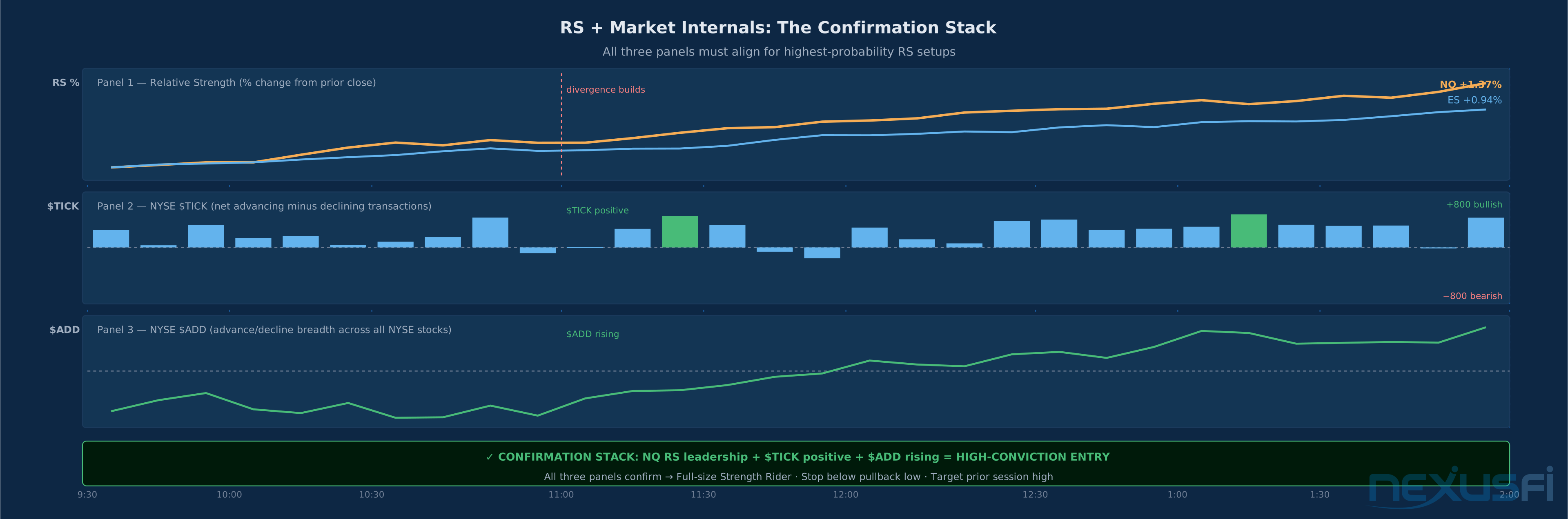
Market internals — especially NYSE $TICK (net advancing minus declining individual transactions) and $ADD (net advancing minus declining individual stocks) — provide the key validation layer for RS analysis. An RS divergence unsupported by internals is a lower-probability signal than one where internals confirm the divergence.
$TICK in RS Analysis
$TICK measures market-making activity across all NYSE-listed stocks. Readings above +800 indicate broad institutional buying pressure; readings below -800 indicate selling pressure. For RS analysis, the critical application is comparing $TICK behavior to the RS leader:
- RS leader + rising TICK: Institutional sponsorship is broad. The RS leadership is likely to persist and is safe to trade from the long side.
- RS leader + flat or declining TICK: The RS leadership may be concentrated in a few large names without broad participation. Higher risk of reversal.
- RS laggard + falling TICK: Confirms structural weakness in the laggard. The Laggard Catch-Up setup is invalidated.
$ADD in RS Analysis
$ADD (Advance/Decline Line) measures the cumulative net of advancing vs declining NYSE-listed stocks. Unlike $TICK which is a flow measure, $ADD is a breadth measure — it tells you how broadly the move is distributed across individual stocks.
For RS analysis, $ADD's most important application is regime confirmation. A rising ES/NQ on positive $ADD (net advancing stocks) is qualitatively different from a rising ES/NQ on negative $ADD. The latter is a breadth divergence — price going up while stocks broadly go down — which historically precedes market tops and supports the Divergence Fade setup.
served as the clearest warning of impending reversals in ES. The relative strength comparison adds a layer: when ES was going up while NQ was flat and $ADD was negative, the reversal was higher probability than when just one signal was present. [5]
The Confirmation Stack
The highest-probability RS setups occur when multiple signals align:
- Clear RS divergence (≥0.2% in appropriate regime)
- $TICK supporting the direction of the trade
- $ADD confirming broad participation (or confirming its absence for fade setups)
- Volume on the leading instrument expanding, not contracting
With all four confirming, the Strength Rider setup has historically high follow-through. With only two confirming, treat it as a half-size trade or skip entirely.
RS divergence tells you which instrument to trade. The confirmation stack tells you whether to actually trade it. A Strength Rider with all four factors aligned is a at the core different trade from one with only the RS signal. Size so: full position on full confirmation, half size on two factors, skip when internals contradict the RS reading.
alt="Dashboard layout showing RS percent-change panel with TICK and ADD internals aligned" loading="lazy" width="800" height="450">
Multi-Timeframe Application #
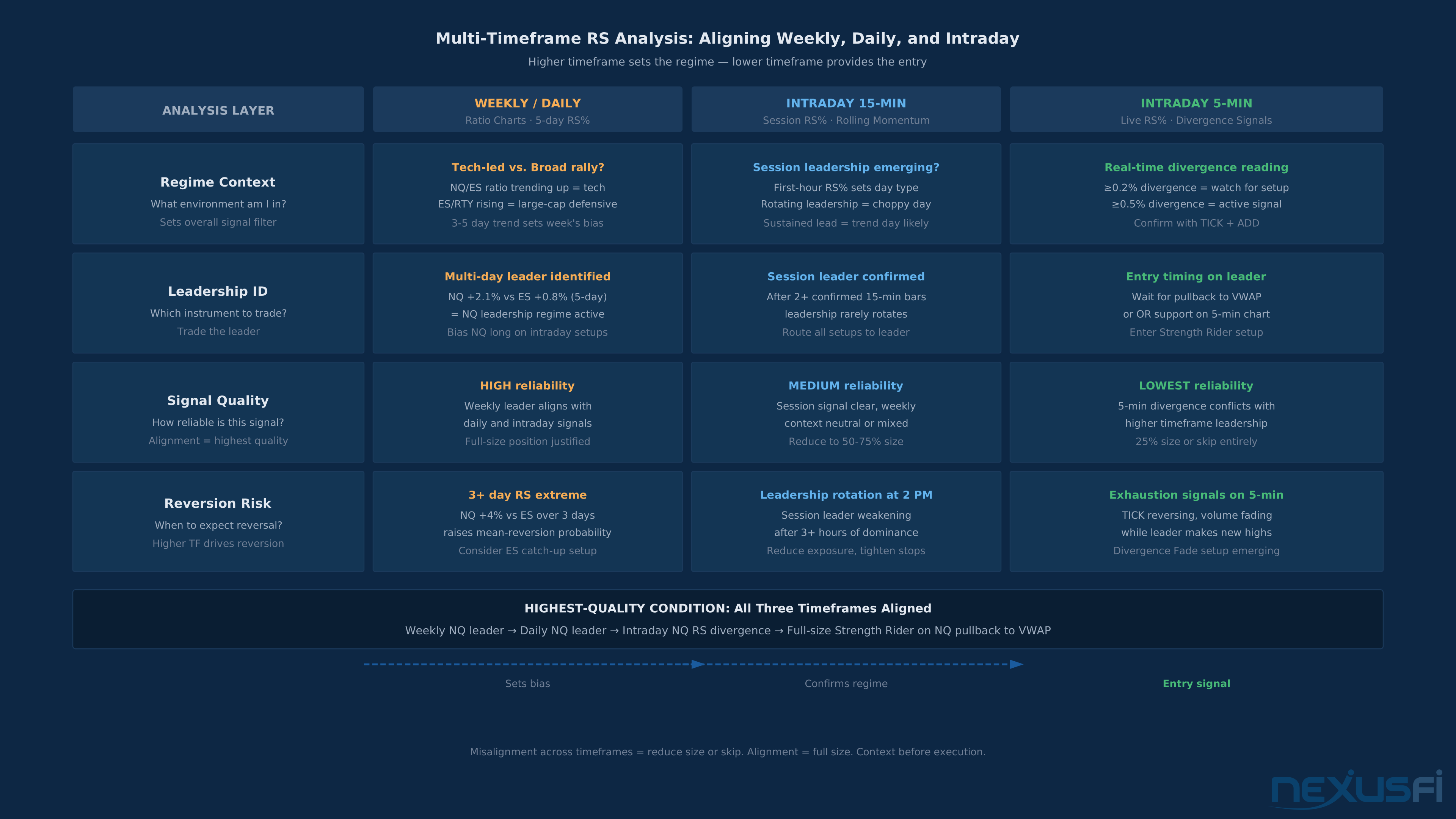
RS analysis works across timeframes, but signal interpretation differs by timeframe.
Weekly/Daily Context: Regime Setting
Use ratio charts (ES/NQ, ES/RTY, etc.) on weekly and daily charts to identify which regime you're operating in before the trading day begins. A week where NQ has outperformed ES by 1.5% establishes a tech-leadership regime — within that week, NQ Strength Rider setups have higher expected value than any other setup type.
Intraday: Setup Identification
On a 5-minute chart, RS divergence signals are typically actionable within 30-60 minutes of emergence. On a 15-minute chart, divergences that persist for 2+ bars (30+ minutes) are higher quality than brief spikes. The 1-minute chart is too noisy for RS analysis — use it only for entry timing once the 5-minute chart has confirmed the setup.
Each instrument's typical volatility determines what constitutes meaningful divergence. NQ is always going to be more volatile than ES — normalize your divergence thresholds to each instrument's typical daily range, not an absolute percent figure.
Session Context: Morning vs Afternoon
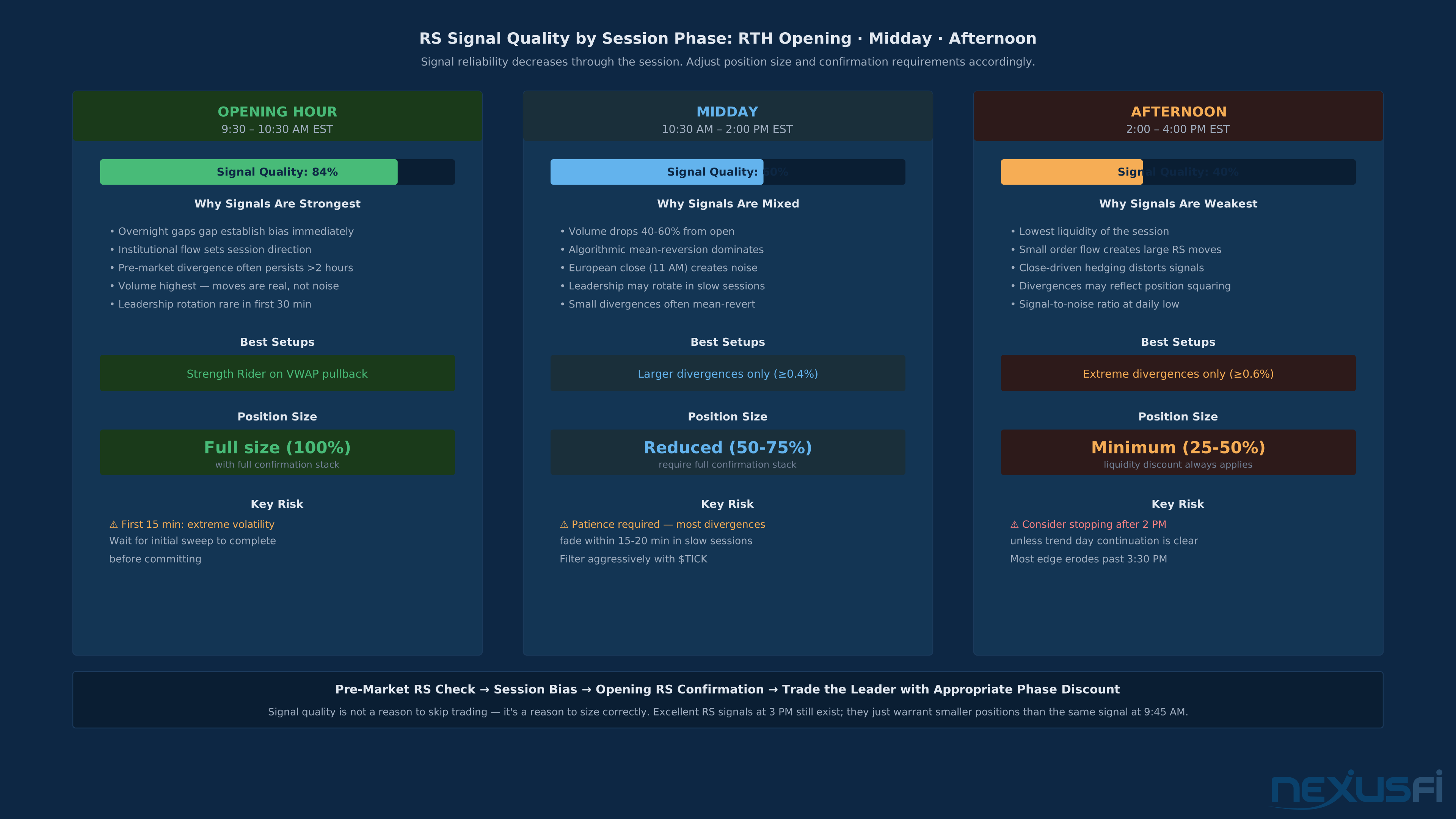
RS signals in the first 30-60 minutes (RTH open) tend to set the tone for the session. If NQ establishes RS leadership in the first hour, it's likely to maintain that leadership for most of the day. If leadership rotates in the first 30 minutes — NQ leads, then ES takes over, then RTY spikes — the session is likely to be choppy and range-bound, making RS analysis less reliable.
Afternoon sessions (after 2 PM EST) often see accelerated RS divergence due to reduced liquidity. Adjust position sizing so — afternoon RS divergences require a liquidity discount.
Practical Application: Building Your RS Workspace #
Recommended Setup
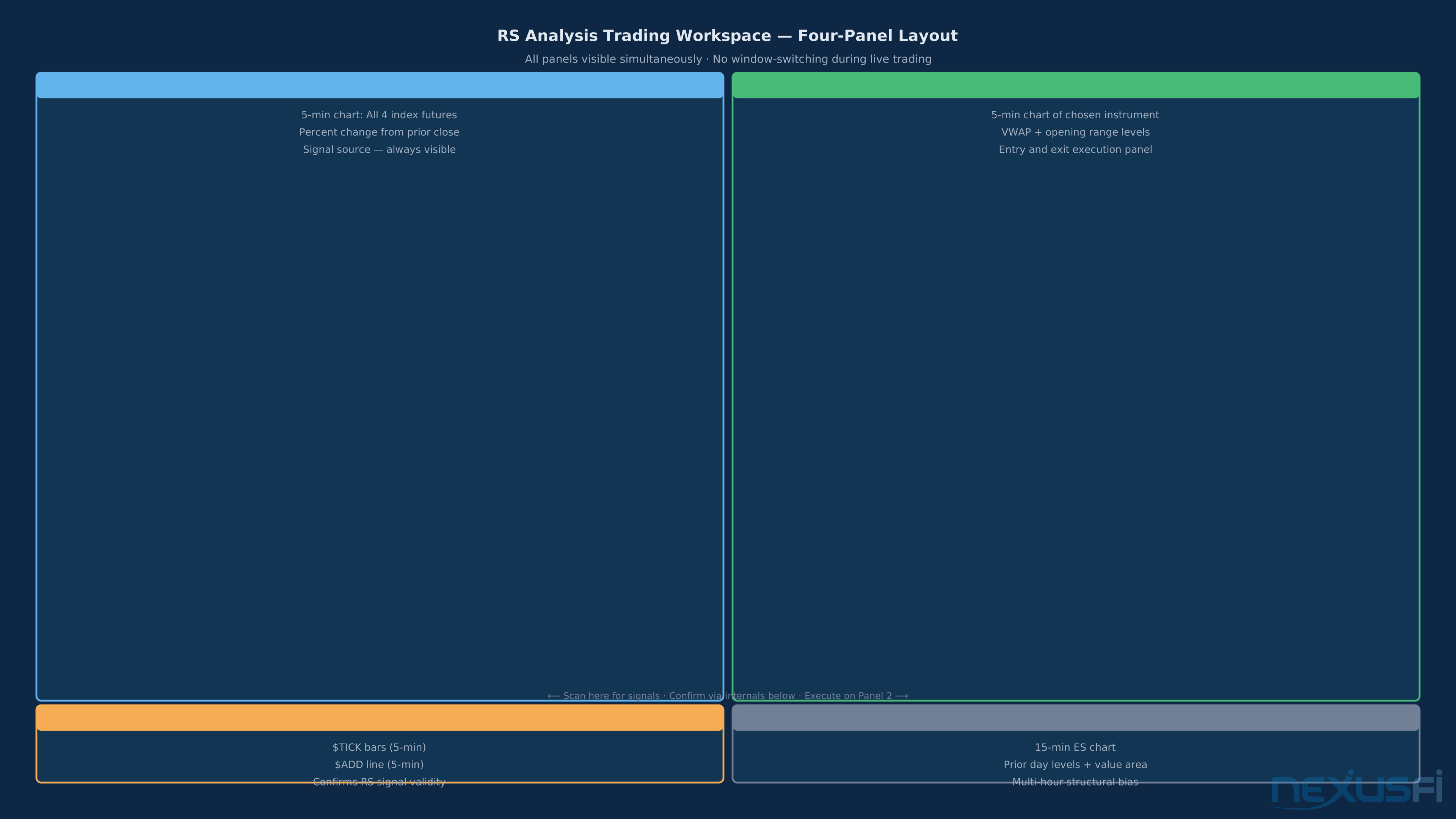
- RS panel: 5-minute chart with all four instruments plotted as percent change from prior close. Keep it at the top of your screen, always visible.
- Primary trading chart: 5-minute chart of your preferred instrument with standard indicators (VWAP, volume). This is where you execute trades.
- Internal panel: $TICK (5-min bars) and $ADD (5-min line) below the primary chart.
- Context panel: 15-minute ES chart showing multi-hour structure, prior day's levels, developing value area.
With this setup, you can scan the RS panel for divergence signals, confirm on the internals panel, and execute on the primary chart — without switching between windows mid-trade.
The Pre-Market RS Read
Before the open, check overnight and pre-market performance across all four instruments. If NQ futures are up 1% pre-market while ES is up 0.5%, expect NQ RS leadership at the open. This pre-market divergence often sets the session's RS regime. It's not actionable pre-market (unless you trade those hours), but it establishes your bias for the first 30-60 minutes of RTH.
Check pre-market percent changes on all four instruments at exactly 9:15 AM EST — 15 minutes before the RTH open. Pre-market NQ divergence from ES by ≥0.3% at 9:15 AM is one of the highest-probability predictors of NQ RS leadership in the first hour. Write down your expectation before the open so you can evaluate it objectively after the session.
alt="Recommended trading workspace layout with RS comparison panel, primary chart, internals, and context panels" loading="lazy" width="800" height="450">
RS Analysis and Position Sizing #
Relative strength analysis doesn't just tell you what to trade — it informs how much to trade. Higher-quality RS signals with full confirmation stack justify larger position sizes; lower-quality signals (single factor, choppy regime) justify reduced size.
A practical position sizing framework for RS setups:
- Full confirmation (RS divergence + TICK + ADD + volume): Full size per your base risk parameters
- Two of three confirmations: 50-75% of full size
- RS divergence only, no internal confirmation: 25-50% of full size or skip
- Choppy/range regime regardless of RS signal: Skip or 25% maximum
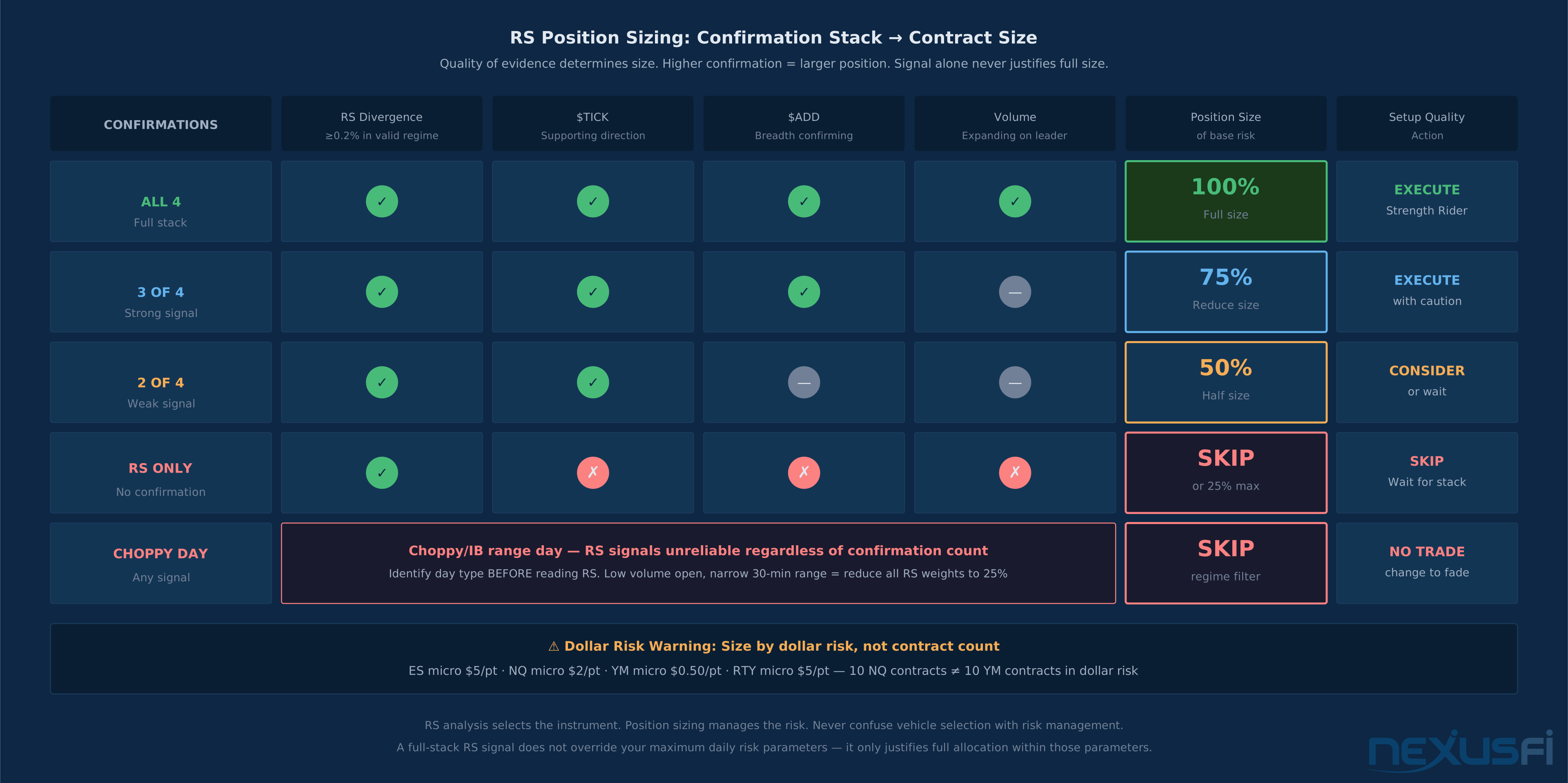
RTY micro contracts are $5/point, ES micro is $5/point, NQ micro is $2/point, and YM micro is $0.50/point. When rotating to trade the RS leader — especially NQ — ensure position sizing accounts for actual dollar risk per point, not just contract count. A 10-contract NQ position has 4x the dollar exposure per point of a 10-contract YM position.
RS analysis is a selection discipline, not a standalone signal generator. It directs capital toward the highest-conviction vehicle once broader analysis identifies a directional opportunity. The Strength Rider with full confirmation stack (RS divergence + $TICK + $ADD + volume) is the highest-probability setup this framework produces. All other setups are lower conviction and should be sized so — or skipped on choppy, range-bound days entirely.
Knowledge Map
Go Deeper
Build on this knowledgeCitations
- — Spoo-nalysis ES e-mini futures S&P 500 (2024) 👍 6“I began to notice a weakening in the NQ vs ES relationship on certain divergence days.”
- — The PandaWarrior Chronicles (2014) 👍 6“ES and NQ and YM are all generally directionally correlated, but one is stronger than the other two every day.”
- — Is the nasdaq micro the best day trading vehicle? (2024) 👍 5“I could have also shorted YM or ES, but the trade setup was just clear in NQ.”
- — NYSE $TICK AND $ADD (2011) 👍 21“Unlike the usual bunch of indicators, which is derived from price, the TICK, ADD and TRIN use information from a different source.”
- — Just another trading journal (2020) 👍 6“Divergences on volume, TICK and ADD, along with TICK bars near zero as price was going up.”
- — Spoo-nalysis ES e-mini futures S&P 500 (2014) 👍 15“The TICK is my most important tool when scalping the ES.”
- — The PandaWarrior Chronicles (2014) 👍 3“One of the ES NQ YM is stronger than the other two every day.”
- — ES vs NQ/YM (2019) 👍 10“The key insight is watching WHICH instrument leads on any given day.”
- — Spoo-nalysis ES e-mini futures S&P 500 (2020) 👍 8“Knowing what's weak and what's strong, relatively, can mean the difference between a winning and losing trade, if indices are as disparate as they have been.”
- — Spoo-nalysis ES e-mini futures S&P 500 (2020) 👍 12“/NQ is once again weaker than /ES. If you are going to short an equity index, short Naz.”