



Opening Range Breakout: Trading the First Move of the Session
Overview #
The opening range breakout is one of the oldest and most statistically tested day trading strategies in futures markets. The concept is straightforward: measure the high and low established in the first N minutes of regular trading hours, then trade the breakout when price pushes beyond that range. The direction of the first sustained break often predicts the session's primary trend.
Toby Crabel formalized this approach in his 1990 book Day Trading with Short Term Price Patterns and Opening Range Breakout -- a book so effective that copies now sell for over $1,000 on the secondary market.
Toby Crabel formalized this approach in his 1990 book Day Trading with Short Term Price Patterns and Opening Range Breakout — a book so effective that copies now sell for over $1,000 on the secondary market. Crabel's central insight: the first few minutes of a trading session contain disproportionate predictive information about the remainder of that session. He proved it statistically across multiple markets and decades of data.
The ORB isn't a magic signal. It's a framework for identifying when a market is likely to trend — and positioning yourself at the start of that trend rather than chasing it later. The power of the strategy comes from combining the mechanical breakout trigger with contextual filters that separate high-probability setups from noise.
That captures the essence — the OR provides directional context that frames every subsequent decision in the session.
Key Concepts #
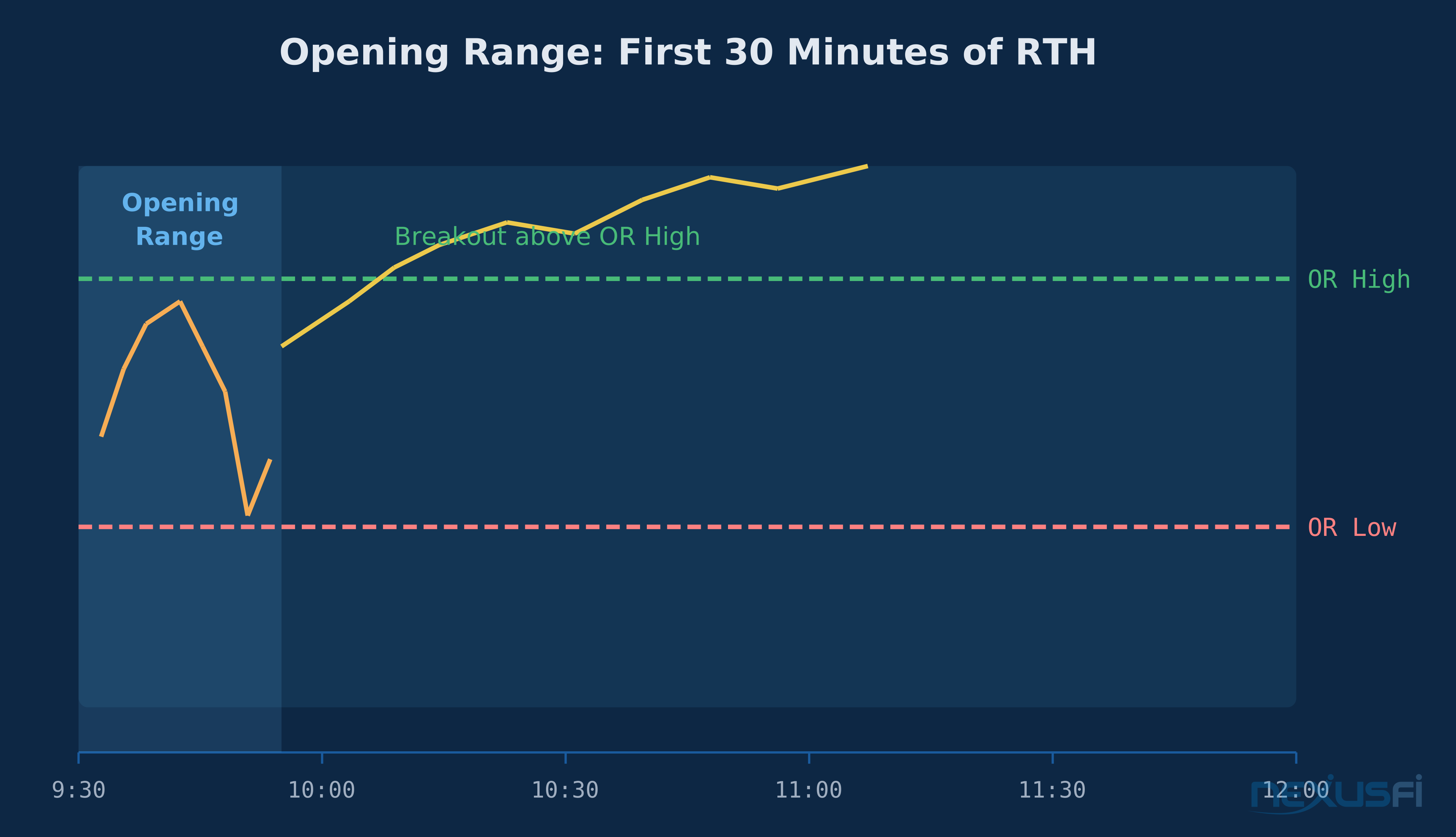
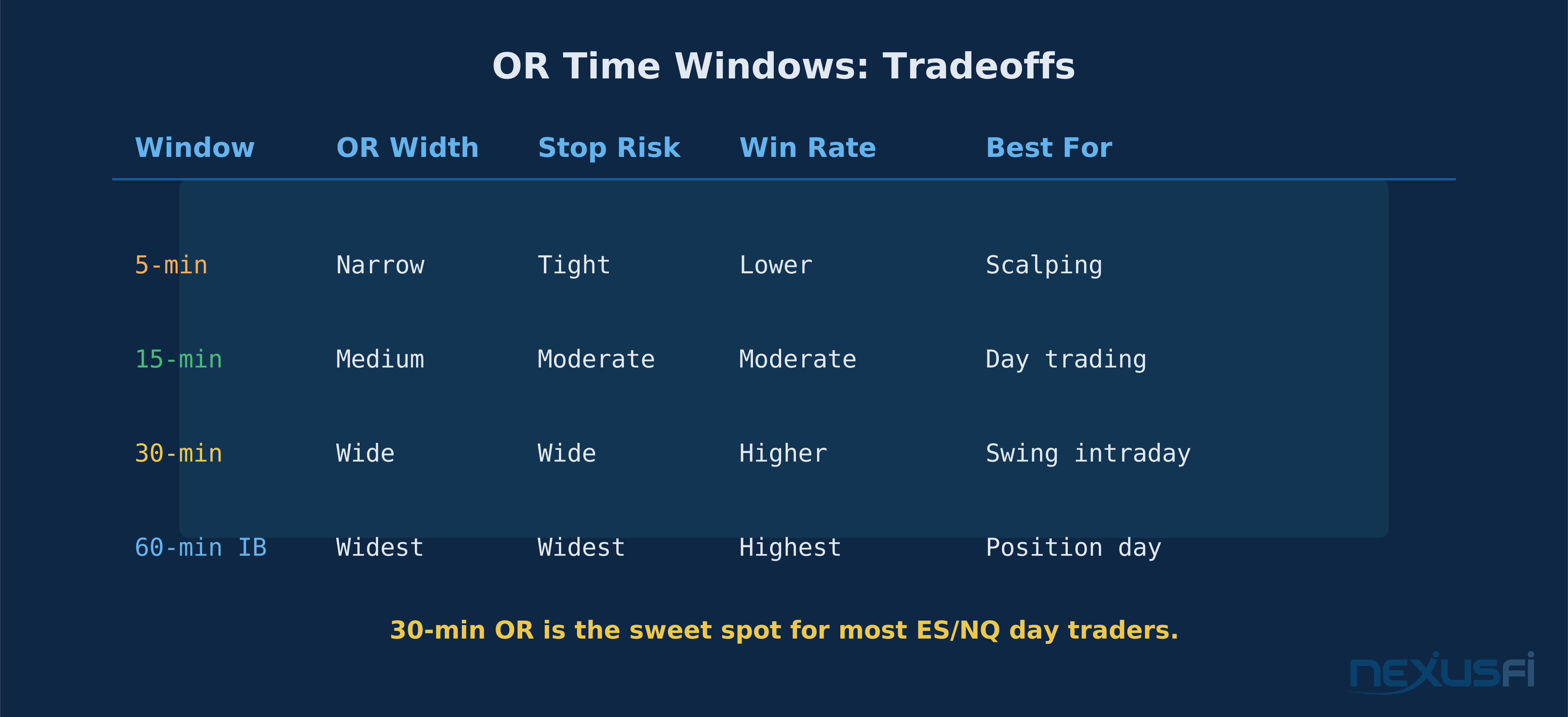
Opening Range (OR): The high-low range established during the first N minutes of regular trading hours (RTH). The most common windows are 5, 15, 30, and 60 minutes. The 30-minute OR is the default for most ES and NQ day traders — wide enough to filter noise, narrow enough that stops remain manageable.
Stretch: Crabel's term for the predetermined distance above or below the OR that triggers a trade. Calculated by averaging the distance between the open and the nearest extreme over the previous 10 sessions. This adapts the breakout trigger to current volatility — wider stretch in volatile markets, tighter in quiet ones.
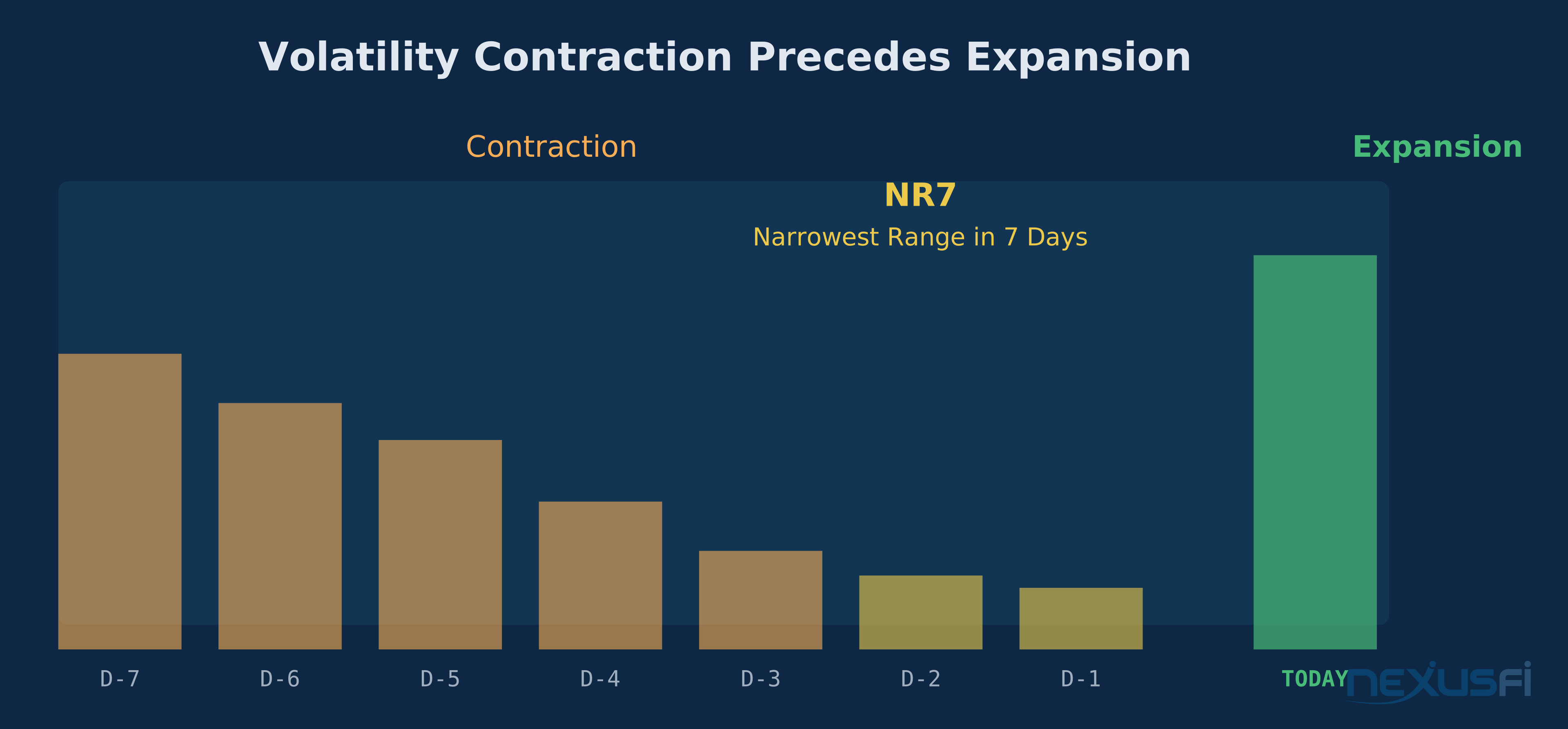
NR7 (Narrow Range 7): A day whose range is the smallest of the last 7 trading sessions. NR7 days precede range expansion. An ORB on the day after an NR7 has much higher probability of producing a sustained move. This is the single most important filter in Crabel's methodology.
Inside Day: A day whose high is below the prior day's high AND whose low is above the prior day's low. Inside days followed by narrow ranges (IDnr4 — inside day with the narrowest range in 4 sessions) are the highest-probability ORB setups Crabel identified.
Initial Balance (IB): Market Profile's term for the first hour's range (the 60-minute OR). The IB serves the same structural purpose as the OR but with a wider window. When the IB is narrow relative to the Average True Range, the probability of IB extension — a breakout beyond the IB — increases substantially.
Range Expansion: The tendency of low-volatility periods to be followed by high-volatility periods. This is the fundamental principle behind the ORB — volatility contraction compresses energy that gets released in directional moves.
OR Width: The distance in points between the OR high and OR low. This number determines stop distance, target size, and whether the trade is worth taking. When OR width exceeds the prior day's ATR, the opening itself has already consumed the expected daily range — breakout probability drops sharply.
The Crabel Method #
Crabel didn't invent the opening range breakout, but he gave it statistical rigor. His method works like this:
Step 1: Calculate the Stretch. Look at the previous 10 trading sessions. For each day, find the distance from the open to whichever extreme (high or low) was closest to the open. Average those 10 distances. That's your stretch value.
For example, if ES opens at 5,450.00 and the calculated stretch is 8.50 points, your buy stop goes at 5,458.50 and your sell stop at 5,441.50. The first stop that triggers is your position. The other becomes your protective stop.
Step 2: Apply Context Filters. The stretch alone produces too many trades. Crabel's edge comes from knowing when to deploy the ORB.
The primary filters:
- NR7 -- trade the ORB after a day with the narrowest range in 7 sessions
- IDnr4 -- trade after an inside day with the narrowest range in 4 sessions (Crabel's highest-conviction setup)
- Hook Day -- a day that opens above/below the prior high/low, reverses to close past the prior close, but with a daily range smaller than the prior day
@Fat Tails built his Session Toolbox indicator suite partly around these concepts: "The indicator which I have called noise bands is very much identical to what Toby Crabel called the stretch." His implementation calculates the stretch dynamically and plots entry levels on the chart.
Step 3: Trade Directional Preference. When the market has a clear bias — a strong trend, a gap in the expected continuation direction, or a clear supply/demand signal — Crabel uses an Opening Range Breakout Preference (ORBP). You only place the stop in the direction of the bias. If the market breaks the opposite way first, the preference is cancelled.
This is sophisticated. It says: "I only want the breakout that aligns with the larger context. If the market goes the wrong way first, I'm done." It prevents getting chopped on counter-trend breaks that reverse immediately.
Time Window Selection #
The opening range can be any duration. Each window carries different tradeoffs:
5-Minute OR: Extremely narrow range. Produces the tightest stops but the highest false breakout rate. Best for scalpers who can absorb multiple stops in exchange for catching the occasional early trend. On ES, a 5-minute OR might be 3-5 points — stop risk of $150-250 per contract. The problem: 3-5 point ranges break and reverse constantly in the first 15 minutes.
15-Minute OR: The minimum window most serious traders consider. Captures the initial spike of order flow at the open and the first reaction. On ES, typically 6-10 points. This is where @Big Mike's automated ORB strategies focused — using EasyLanguage code to trade the 15-minute range break with configurable start and end times.
30-Minute OR: The sweet spot for most futures day traders. By 10:00 AM ET, the European markets have been open for hours, the initial US open volatility has settled, and a meaningful range has been established.
That's a critical filter. When the 30-minute OR is already wider than the daily ATR, the market has used up its expected range in the first half hour. Don't expect more expansion.
60-Minute OR (Initial Balance): The Market Profile community's preferred window. The first hour establishes the "initial balance" — the range that 70-80% of all activity references for the rest of the session. IB extensions (breaks beyond the first hour's range) are high-conviction directional signals. But the stop risk is significant — 15-25 points on ES, meaning $750-1,250 per contract.
The wider the window, the fewer false signals. But the wider the window, the later your entry and the bigger your stop. There's no free lunch. Pick the window that matches your risk tolerance and trading style.
Entry, Stop, and Target Rules #
The mechanical rules are simple. The discipline to follow them is not.
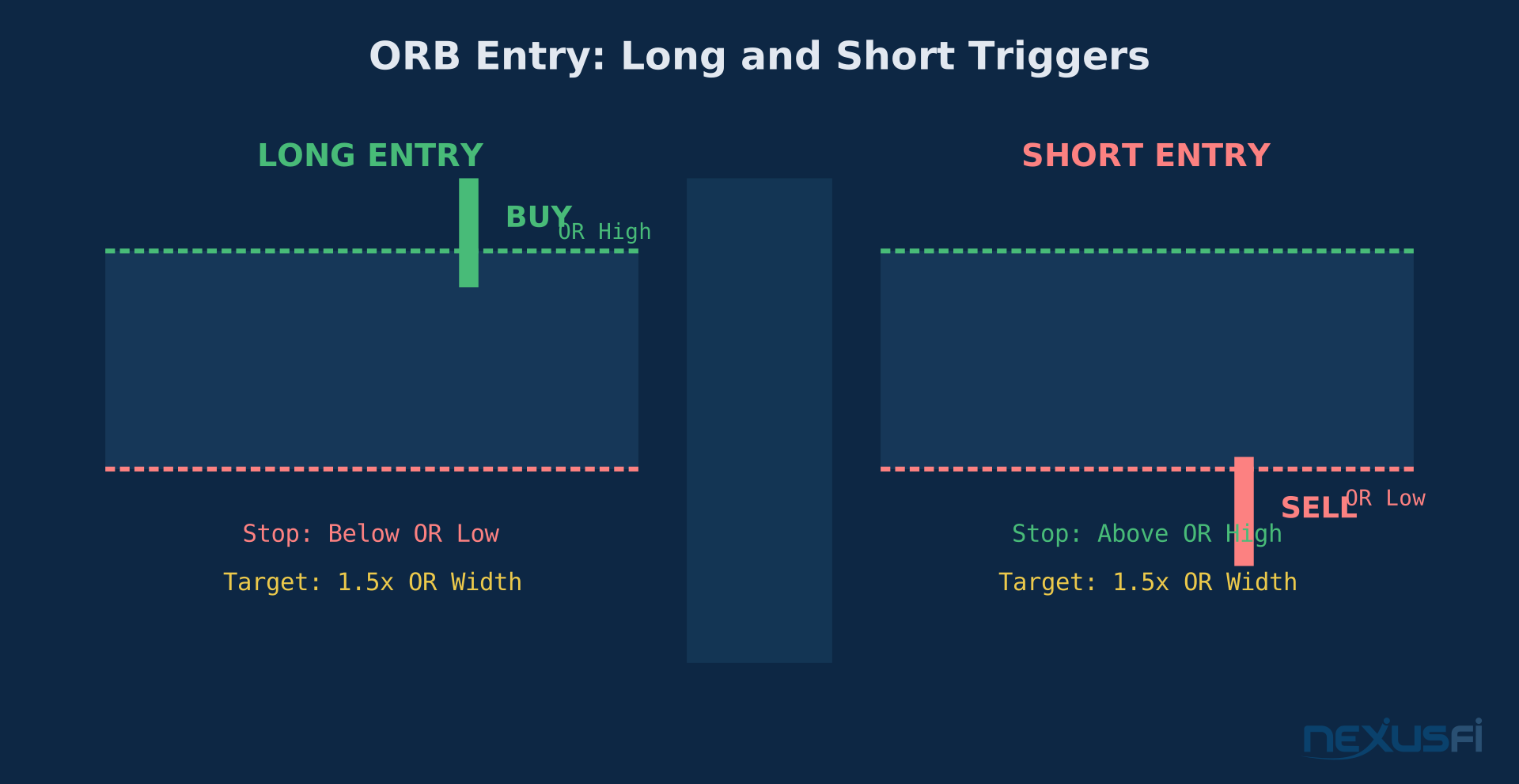
Entry — Long: Place a buy stop 1-2 ticks above the OR high. When price trades through the OR high, you're in. No discretion, no waiting for a pullback on the initial entry. The whole point is catching the breakout early.
Entry — Short: Place a sell stop 1-2 ticks below the OR low. Same logic, opposite direction.
Stop Loss: At the opposite extreme of the OR. Long entry? Stop goes below the OR low. Short entry? Stop goes above the OR high. This is non-negotiable. If price reverses through the entire OR, your thesis is dead. Get out.
Some traders use a tighter stop at the midpoint of the OR. This cuts risk in half but increases the false-stop rate. It's a tradeoff — the right answer depends on your win rate and average winner/loser ratio. Test both on your instrument.
Target Calculation: The standard target is 1.0-1.5x the OR width, measured from the breakout level. If the 30-minute OR on ES is 8 points (5,450.00 high, 5,442.00 low), and you go long at 5,450.25, your first target is 5,458.25 (1x) or 5,462.25 (1.5x). The second target uses the prior day's high/low as a reference.
Many professional traders split the position: take half at 1x OR width, move the stop to breakeven on the remainder, and let the rest ride toward the prior day's extreme or a measured move target.
Time Stop: If the breakout hasn't produced the expected follow-through within 60-90 minutes, the setup has likely failed. Close at the market and reassess. ORB setups that work tend to work quickly — the trend is established in the first move, not hours later.
Volatility Context: When the ORB Has Edge #
The ORB doesn't work every day. It works when conditions set up for range expansion. Here's how to identify those conditions:
Volatility Contraction Patterns: The NR7 and IDnr4 patterns exist because volatility is mean-reverting on short timeframes. After 4-7 days of contracting ranges, the market is coiled. Energy is building. The ORB captures the release.
Calculate the ATR(14) on the daily chart. If today's OR width is less than 50% of the ATR, you have room for expansion. If the OR width exceeds the ATR, expansion is unlikely — the daily move already happened in the opening period.
Gap Analysis: How the market opens relative to the prior close matters. A gap up into resistance often sets up a failed ORB long — the market tests the breakout level, runs stops above, then reverses. A gap in the direction of the larger trend, followed by a narrow OR, is the high-probability setup. The gap establishes direction. The narrow OR coils. The breakout releases.
Overnight Range: The Globex range before RTH provides critical context. If the overnight range was wide and directional, the ORB likely continues that direction. If overnight was tight and balanced, the RTH open itself becomes the directional signal.
Prior Day Structure: A trend day followed by a narrow-range day (NR7) is the classic ORB setup. The trend day establishes directional bias. The narrow day consolidates. The ORB entry catches the continuation. This pattern appears repeatedly in Crabel's statistical tables across decades of data.
The data supports this — ORB entries in the first 30 minutes of the breakout produce better outcomes than entries taken hours later as a "late breakout" chase.
ORB Failures and How to Survive Them #
Every ORB trader gets trapped by false breakouts. It's not a question of if but how often. Understanding the failure mechanics is what separates a losing ORB trader from a profitable one.
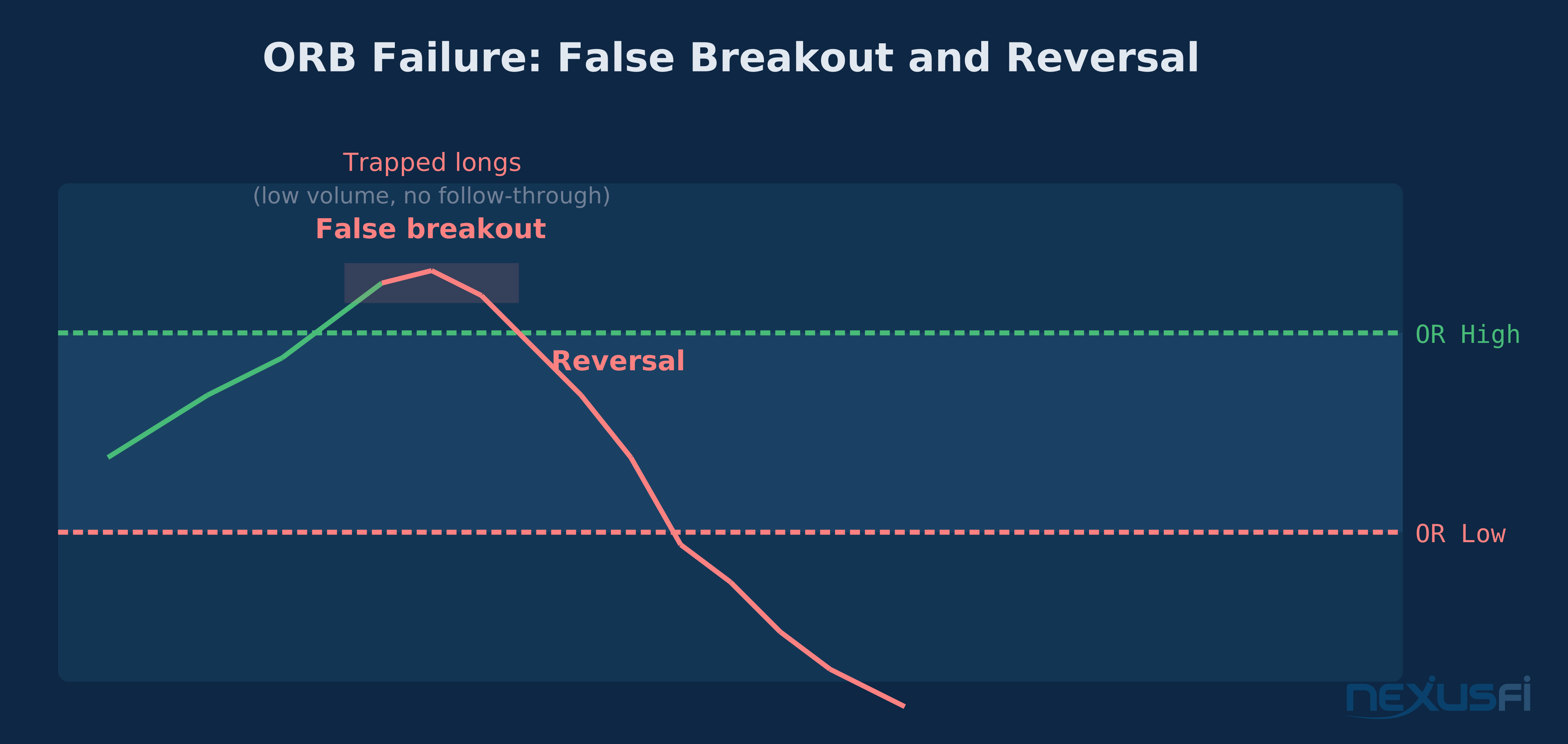
The False Breakout Pattern: Price breaks above the OR high on thin volume, runs 3-5 ticks past, then reverses back through the OR and continues to the OR low and beyond. You're long from the high, stopped at the low, and watching the market trend against you. This is the defining risk of the strategy.
Why False Breakouts Happen:
- Stop-running: Institutional traders know where retail ORB stops sit (just above the OR high/below the OR low). They push through to trigger those stops, absorb the liquidity, then take the market the other way.
- Exhaustion gaps: The market gaps to the OR extreme, creating the appearance of a breakout, but the move is exhaustion -- the last gasp of the prior direction, not the start of a new one.
- Range days: On 40-50% of trading days, the market doesn't trend. It rotates. On range days, every breakout fails. The OR high and low become the range boundaries, not breakout triggers.
Surviving False Breakouts:
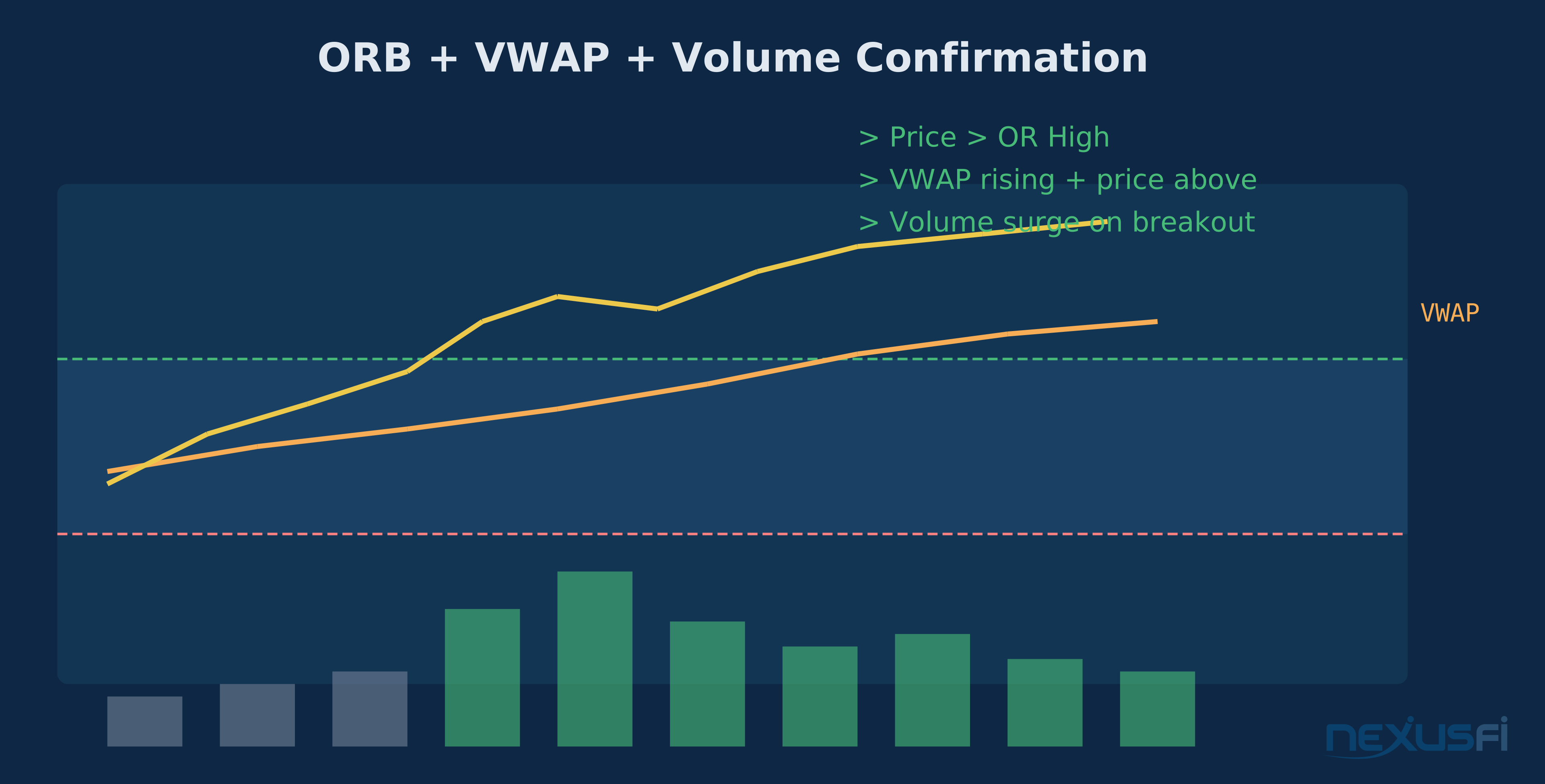
- Volume confirmation: Real breakouts come with volume. If price breaks the OR high on declining or average volume, it's suspect. If the breakout bar is the highest volume bar of the session, that's institutional commitment.
- Acceptance: A breakout needs acceptance -- multiple bars closing above the OR high, not just a wick. If price immediately retreats back into the OR after a single bar above, that's not acceptance.
- VWAP alignment: For a long ORB, VWAP should be rising and price should be above VWAP at the breakout. If VWAP is flat or declining, the ORB long is fighting the session's institutional average price. That's a lower-probability setup.
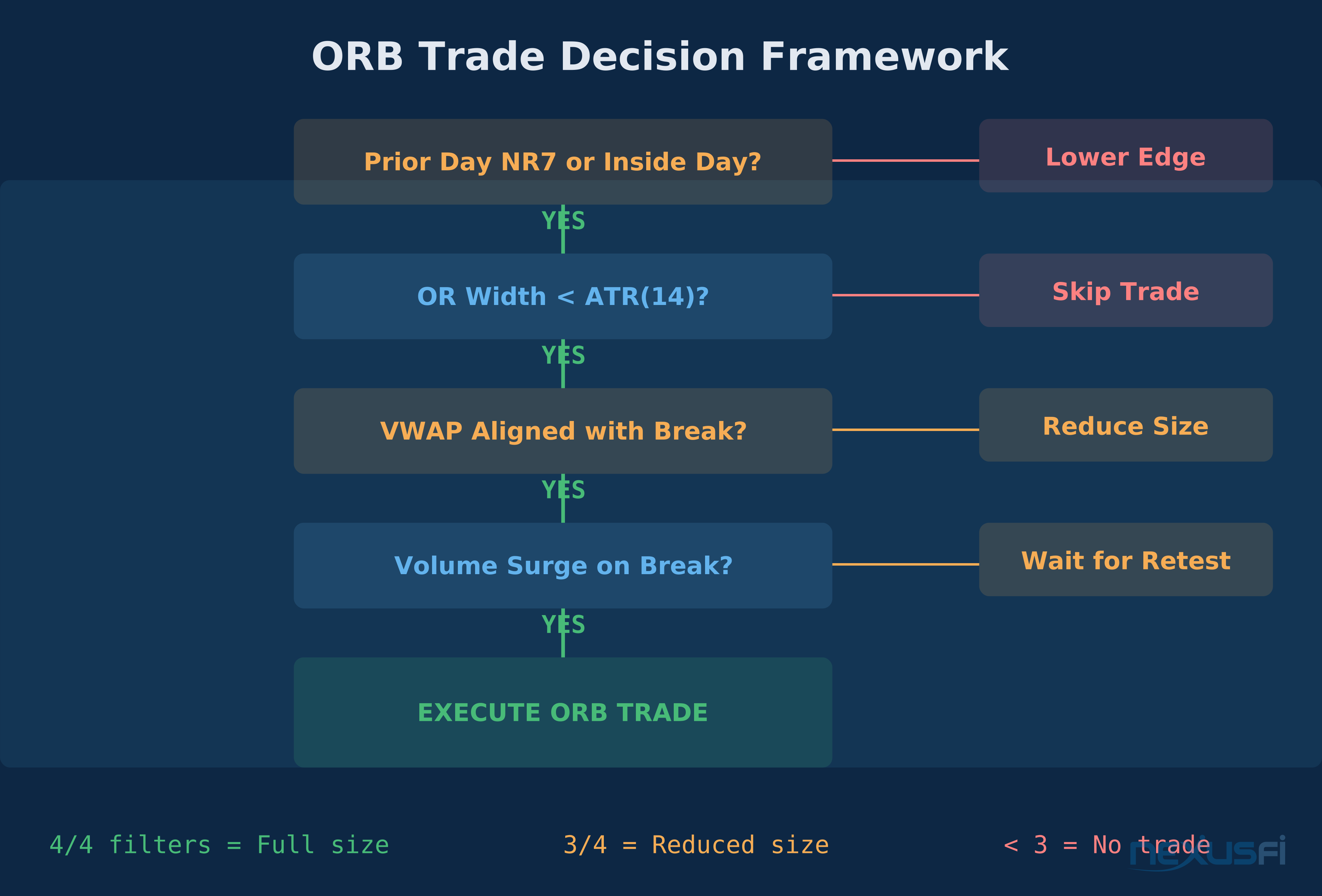
- Size reduction: Trade smaller when fewer filters confirm. Full size when all filters align. Half size when one or two filters are missing. No trade when most filters fail.
The ORB's edge doesn't come from winning every breakout. It comes from sizing up on high-probability setups and sizing down (or skipping) when the context isn't right.
Integration with VWAP and Market Profile #
The ORB is most powerful when combined with complementary tools that confirm the breakout's legitimacy.
VWAP Confirmation: Volume-weighted average price provides a real-time reference for institutional activity. For a long ORB, the ideal setup has VWAP rising and price above VWAP at the breakout. This means the session's average institutional fill is moving higher — the breakout is aligned with where the money is flowing.
If price breaks above the OR high but VWAP is falling, institutions are net sellers despite the breakout. That's a warning. Either reduce size or skip the trade entirely.
Market Profile / Initial Balance: The 60-minute IB serves as a broader version of the OR. When the 30-minute ORB fires in the same direction as an eventual IB extension, you have nested confirmation — the breakout is validated at two timeframes.
IB extension statistics from Market Profile research show that when the IB is narrow (below the 20th percentile of recent IB ranges), the probability of IB extension reaches 70-80%. Combining a narrow IB with an NR7 prior day and a clear ORB trigger creates the highest-probability setups in day trading.
Order Flow: Delta analysis at the OR breakout level provides the final confirmation layer. Positive delta (more buy market orders than sell) on a long ORB breakout confirms aggressive buying. Negative delta on a short ORB confirms aggressive selling. Delta divergence — price breaking out but delta moving against the direction — is the clearest false breakout warning.
Integration Hierarchy: When signals conflict, weight them in this order:
- Volume and delta at the breakout (most important -- is there real commitment?)
- VWAP direction and price relative to VWAP
- IB context and prior day structure
- NR7/IDnr4 filter (pre-trade context)
A clean ORB with volume and delta confirmation but against VWAP is still tradeable at reduced size. An ORB without volume confirmation, regardless of everything else, is a skip.
Practical Application: ES Futures Example #
Here's a complete ORB trade plan for ES using the 30-minute window:
Pre-market checklist:
- Prior day: NR7 confirmed -- yesterday's range was the smallest of the last 7 sessions. High-probability ORB day.
- ATR(14) on the daily: 52 points. Any OR width under 26 points (50% of ATR) has room for expansion.
- Overnight range: Tight, balanced around 5,520-5,530. No directional bias from Globex.
- Key levels: Prior day high at 5,548.00, prior day low at 5,508.00, prior close at 5,525.50.
9:30-10:00 AM ET: Establish the OR
RTH opens at 5,527.00. In the first 30 minutes, ES prints a high of 5,534.75 and a low of 5,521.25. OR width: 13.50 points ($675 risk per contract at full OR stop). That's well under 50% of ATR — good expansion potential.
10:00 AM: Set entries
- Buy stop: 5,535.00 (1 tick above OR high)
- Sell stop: 5,521.00 (1 tick below OR low)
- VWAP at 10:00: 5,528.50, rising. Favors long side.
10:07 AM: Long triggered at 5,535.00
Price breaks above OR high with the highest volume 5-minute bar of the session. Delta is positive — aggressive buying. VWAP still rising. All filters confirm.
- Stop: 5,521.00 (OR low) -- risk of 14 points, $700 per contract
- Target 1: 5,548.50 (1x OR width from breakout = 13.50 points above entry) -- happens to align with prior day high
- Target 2: 5,555.25 (1.5x OR width)
10:35 AM: Target 1 hit
Exit half position at 5,548.50 for +13.50 points. Move stop on remaining contracts to 5,535.00 (breakeven at entry). The trade is now risk-free on the remaining half.
11:20 AM: Target 2 hit or trailing stop
Either price reaches 5,555.25 for the full 1.5x target, or you trail the stop using 15-minute swing lows. The trailing stop protects gains while giving the trend room to run.
Risk/reward on this trade: risking 14 points to make 13.50 on the first half (0.96:1) and potentially 20+ on the second half. The math works because NR7-filtered ORB setups hit rate 1x target at 60-65% on ES historically.
When the ORB Doesn't Work #
Knowing when NOT to trade the ORB is more valuable than knowing when to trade it. Skip the ORB on these days:
FOMC, NFP, CPI days: The market waits for the number, then moves violently. The opening range is irrelevant because the real move starts at the announcement time, not the open. ORB entry gets you in before the data, which is a coin flip with outsized risk.
Wide-range prior days: After a 80+ point range day on ES, the market often consolidates. The next day's OR might look narrow, but the daily context is exhaustion, not coiling. The NR7 filter partially captures this, but also check whether the wide-range day was a trend day or a reversal day. Trend day followed by NR7 = good ORB. Reversal day followed by NR7 = choppy day ahead.
OR width exceeds ATR: If the first 30 minutes already cover more than the average daily range, don't bet on more expansion. The market has likely exhausted its directional energy. This is @shodson's insight validated across years of backtesting data.
Major gap days: A gap of more than 1% on ES often leads to gap-fill rotational behavior, not trend continuation. ORB longs on a gap-up day frequently trap traders at the high of the day.
Low-volume sessions: Holiday-adjacent sessions, early closes, and summer doldrums produce unreliable ORBs. Without volume, breakouts have no fuel. Every break reverses.
Triple witching / quarterly expiration: Options and futures expiration creates artificial volume and price distortion. The opening range on expiration days reflects repositioning, not directional intent.
A disciplined ORB trader probably takes 8-12 setups per month that pass all filters. Not 20. Not every day. The edge is in selectivity.
Building an ORB Trading Plan #
Here's the framework for implementing ORB as a systematic trading approach:
1. Pre-Market Assessment (before 9:30 AM ET):
- Check prior day's range against the last 7 days. NR7 or IDnr4? High-probability day.
- Review overnight range and direction. Narrow and balanced? The ORB will set direction. Wide and directional? ORB likely continues overnight direction.
- Calculate ATR(14) on the daily chart. Note 50% threshold for OR width filtering.
- Identify key levels: prior day high/low, prior close, weekly high/low, VWAP from prior session close.
- Check economic calendar. Major announcements during the session? Adjust or skip ORB.
2. Opening Range Observation (9:30-10:00 AM ET):
- Record OR high and OR low at 10:00 AM exactly
- Calculate OR width. Compare to ATR threshold. If OR width exceeds 50% of ATR(14), reduce expectations for further expansion.
- Note VWAP position and slope at 10:00 AM
- Assess volume profile within the OR. Was volume concentrated near the high, the low, or distributed evenly?
3. Entry Execution:
- Set buy stop 1-2 ticks above OR high, sell stop 1-2 ticks below OR low
- First triggered entry is the position. Cancel the other stop.
- Protective stop at opposite OR extreme
- If VWAP opposes the breakout direction, reduce size by 50%
4. Trade Management:
- Target 1 at 1x OR width from entry -- exit 50% of position
- Move stop to breakeven on remaining position
- Target 2 at 1.5x OR width or prior day extreme -- exit 25%
- Trail remaining 25% using 15-minute swing structure
- Time stop: if no follow-through within 90 minutes, exit at market
5. Daily Review:
- Was the OR width within the ATR threshold?
- Did the breakout have volume confirmation?
- Did the filters correctly identify the day type?
- Track results by filter combination: NR7 + VWAP aligned, NR7 alone, no NR7, etc.
As @gomi's GomOR indicator work showed, precision in defining the opening range matters. Time sync issues, incorrect session definitions, and sloppy OR calculations introduce noise that degrades edge. Automate the OR calculation if possible.
The ORB is a strategy that rewards patience and selectivity. Wait for the right conditions. Execute the mechanical rules. Manage the trade. Review the results. Do it again. That's the game.
Knowledge Map
References This Article
Articles that build on this topicCitations
- — Opening Range Revisited...Still Relevant? (2020) 👍 11“I use the opening in my trading everyday. It gives context, just like VWAP does, and it determines the initial direction of my trades (short below OR, long above).”
- — Open Range Breakout (2012) 👍 11“@trendisyourfriend ans @mfbreakout have already given answer, but I will try to be more general. There are several approaches to determine the breakout levels.”
- — Backtesting the 30min Opening Range Breakout Strategy. (2013) 👍 9“The guys at MasterTheGap have studied open range breakouts significantly, but the 15min and 60min breakouts, not 30min.”
- — opening range play (2013) 👍 9“Toby Crabel and Mark Fisher are both legendary for their trading methods based on opening range breakouts. However, both look at the larger picture and see the opening range in the context of the price action of the prior days.”
- — Opening Range Breakout (EasyLanguage, automated) (2010) 👍 7“Updated version with fix mentioned in last post. Inputs: startTime ( 7 ), endTime ( 9 ), startTradeTime ( 11 ), use_yest ( 5 ), use_stop_method ( 0 ), stoploss ( 16 ), target1 ( 32 ), target2 ( 16 ), target3 ( 72 ), datramt ( 1 ), minrange ( 100 ), m...”
- — GomOR opening range indicator (2013) 👍 28“Hi guys, I've been struggling with coding and OR indicator with a perfect time sync, wanted to do it for some time, but finally found the motivation to do it.”
- — Session Toolbox - Trading the Session (Fat Tails) (2013) 👍 14“I learnt something today, which I did not know. The indícator which I have called noise bands is very much identical to what Toby Crabel called the "stretch" 25 years ago.”
- — Day Trading with Short Term Price Patterns and Opening Range Breakout (1990)