



Volume Spread Analysis (VSA): Reading Institutional Footprints in Futures Markets
Overview #
Volume Spread Analysis (VSA) reads what the chart is actually saying — not the price pattern sitting on top, but the story underneath it: who moved the market, how hard they tried, and whether it worked. Tom Williams formalized the methodology in his landmark book Master the Markets based on Richard Wyckoff's original tape-reading work (notably Studies in Tape Reading, published in 1910 under the pen name Rollo Tape), and while VSA isn't a black-box indicator, it gives you a structured framework for answering the most important question in every market: are smart money participants buying, selling, or stepping aside?
For futures traders working ES, NQ, and CL, VSA is especially powerful because exchange-traded volume is real and precise. You're not estimating. Every contract traded at every price bar is on record, and when you combine that volume data with price spread and close location, you start reading institutional footprints that pure price-action traders miss entirely.
Three Variables: The Engine Under the Hood #
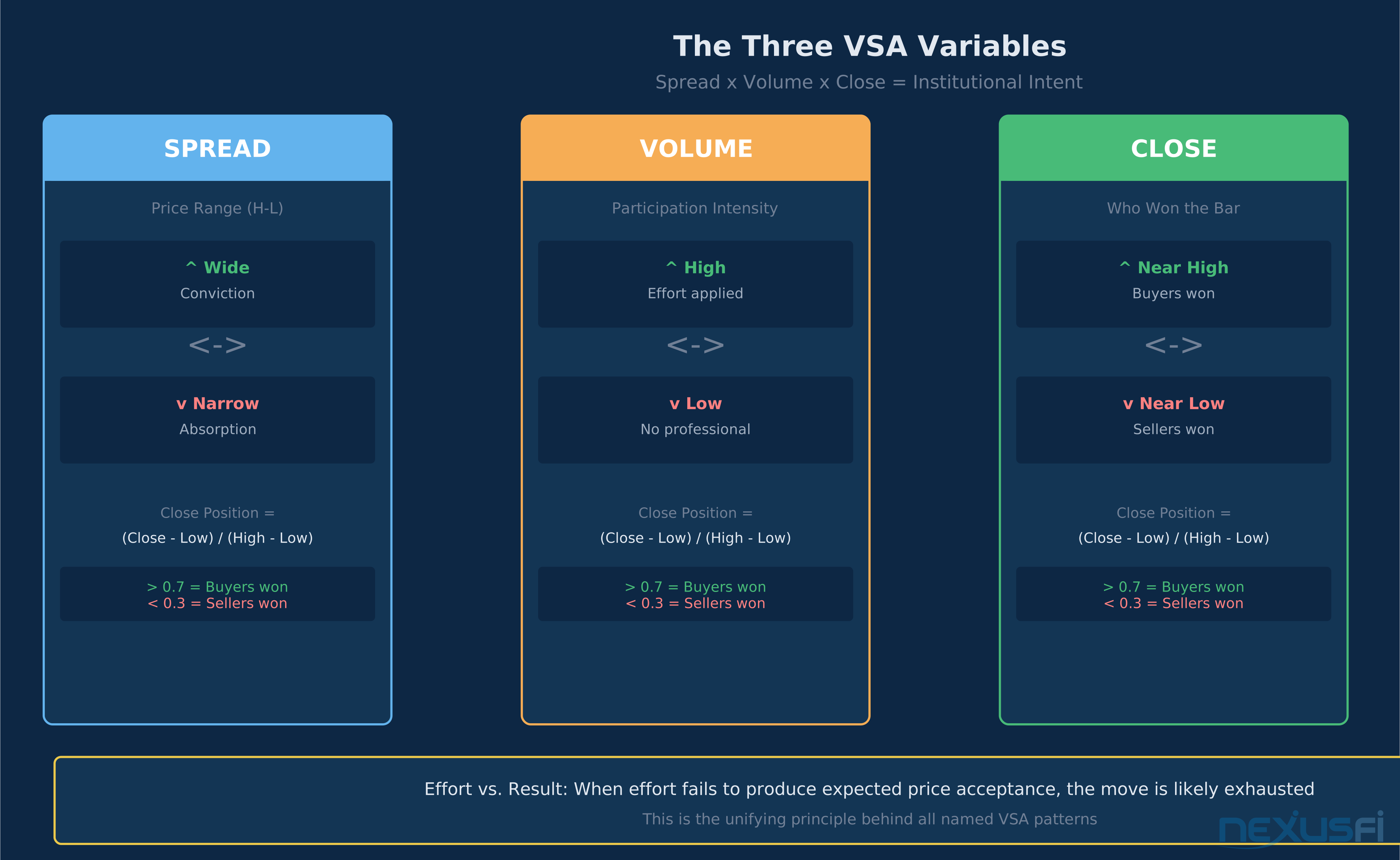
VSA reduces the entire market to three inputs. That simplicity is deceptive — the combination of all three is where the edge lives.
Variable 1: Spread (Price Range) #
Spread is the high minus the low of a bar. It tells you how much price movement the market was willing to offer.
-- Wide spread: Strong directional conviction. Someone moved price aggressively in one direction. — Narrow spread: Indecision, consolidation, or absorption. Price tried to move but couldn't.
The key is context. A narrow spread mid-trend usually means the trend is pausing. A narrow spread after a high-volume sell-off means something absorbed that selling. Same pattern, completely different implication.
For ES, "wide" typically means a bar range greater than 1.2-1.3x the 20-bar median. "Narrow" is below 0.6-0.8x. Calibrate these thresholds per contract and per session phase — the initial balance on ES has different average ranges than the late session.
Variable 2: Volume #
Volume is the effort. It measures participation intensity — how many contracts changed hands during that bar.
The critical insight VSA teaches: volume alone tells you nothing about direction. Volume is neither bullish nor bearish. A massive volume bar can represent institutional accumulation or institutional distribution. The direction of that volume is decoded by combining it with spread and close.
High volume means professionals were active. Low volume means they weren't. When professionals aren't active, price can't go far — retail alone doesn't have the buying power to sustain a meaningful move in ES or CL.
Use relative volume, not absolute numbers. High volume for NQ at 2am is not the same as high volume during the 9:30 open. Compare each bar's volume to the 20-bar average for the session. Volume at 1.5x average is elevated. Volume at 2x+ is significant.
Data quality matters: use exchange-reported volume (CME Globex), not broker tick volume. These are often different, and using the wrong one will produce VSA signals that contradict the actual market. This sounds obvious but it's the single most common setup for VSA failure.
Variable 3: Close Location #
Close location tells you who won the bar. It's calculated as:
Close Position = (Close - Low) / (High - Low)
A close position above 0.7 means buyers won — price closed near the high. Below 0.3, sellers won. The midrange (0.3-0.7) is ambiguous.
VSA is most useful when the close location conflicts with what you'd expect from the spread and volume. That conflict is where the signal lives.
Effort vs. Result: The Actual Decision Engine #
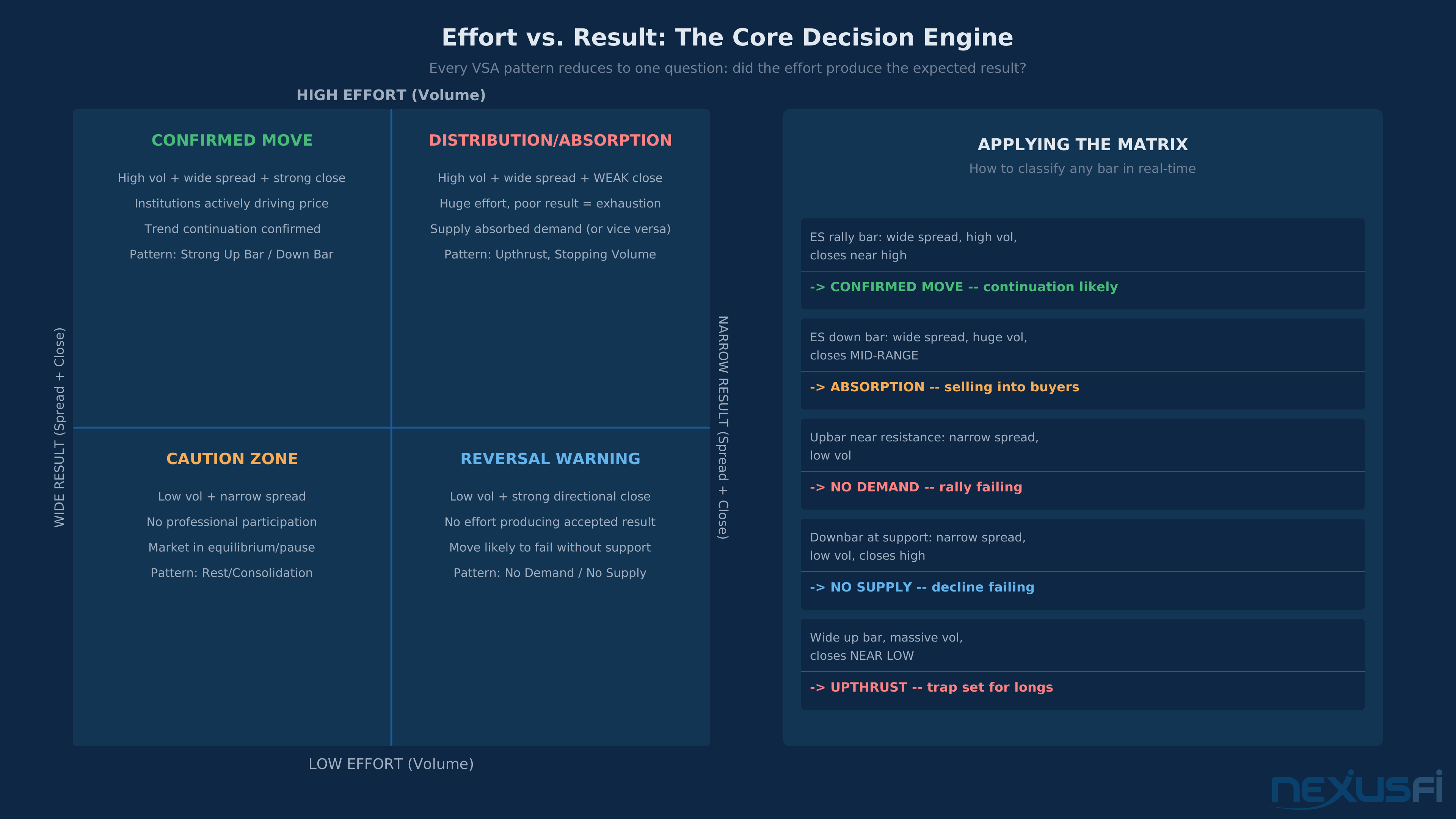
Named patterns are just shorthand for this underlying logic: when effort doesn't produce the expected result, the move is likely exhausted.
Wide spread up-bar on massive volume that closes near its low? Huge effort from buyers, poor result for buyers. Someone sold into every single tick of that rally. That bar is a warning — the upside effort failed to get acceptance.
Narrow spread bar after a downtrend on very low volume? Minimal selling effort. Supply has dried up. The downside effort is failing to produce results. Potential reversal.
Read this on every bar, every session. Before you name a pattern, ask: was the effort proportional to the result?
The Core VSA Patterns #
These seven patterns are the vocabulary of VSA. They're not mechanical setups — they're interpretive tools that require context to be actionable.
No Demand #
What it looks like: An up-bar (close higher than the prior bar's close) with narrow spread and volume lower than the previous two bars.
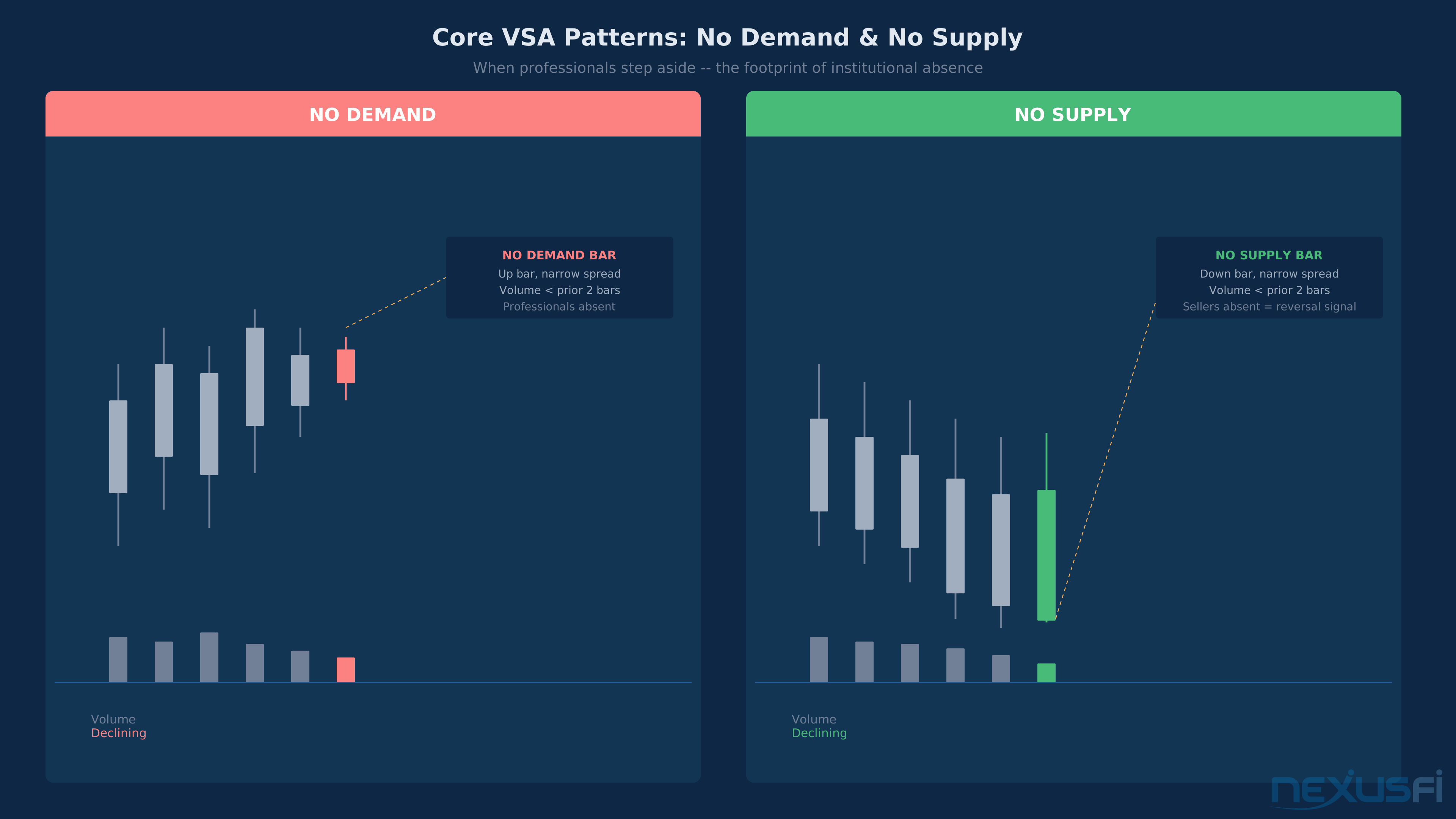
What it means: Buyers tried to push price higher but professionals weren't participating. The move up lacked institutional backing.
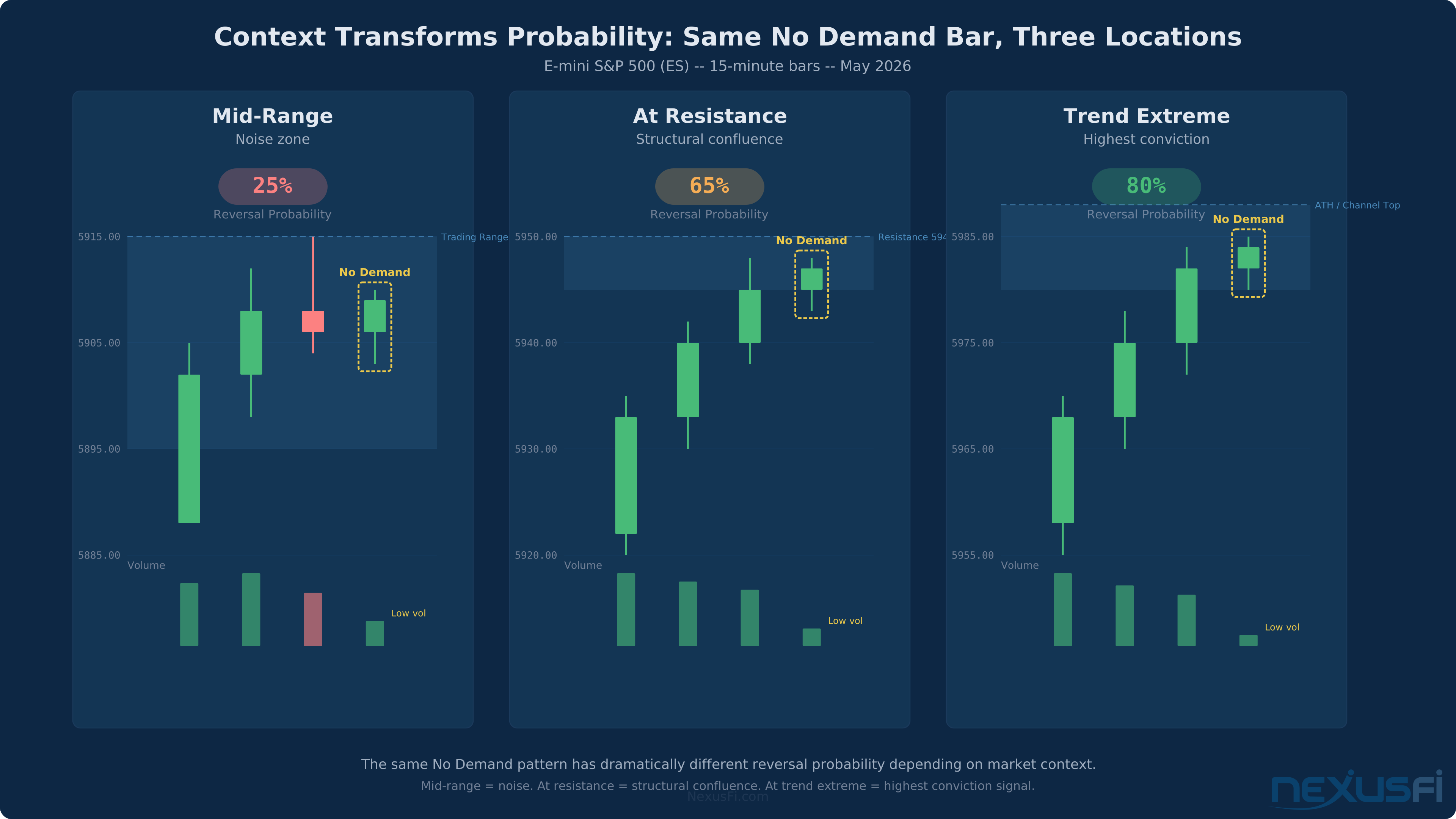
When it matters: At the end of a rally near resistance. A no-demand bar says the rally attempt has lost professional support and a reversal is likely.
When to ignore it: In the middle of a trading range. No-demand mid-range is just chop. You need a trend context for no-demand to carry predictive value.
Entry: Short below the no-demand bar's low on the next bar's break.
No Supply #
The mirror of no demand. A down-bar on narrow spread and volume lower than the previous two bars. Professional sellers aren't participating in the decline. At the end of a downtrend near support, no supply signals that sellers have exhausted their position.
Entry: Long above the no-supply bar's high on confirmation.
The trap: No supply during a strong downtrend often just marks a pause before continuation. Don't get front-run buying no-supply in a bear market without higher-timeframe confirmation that the trend is failing.
Upthrust #
What it looks like: A wide-spread bar that pushes above a prior high or resistance level on high volume, but closes near the low of the bar.
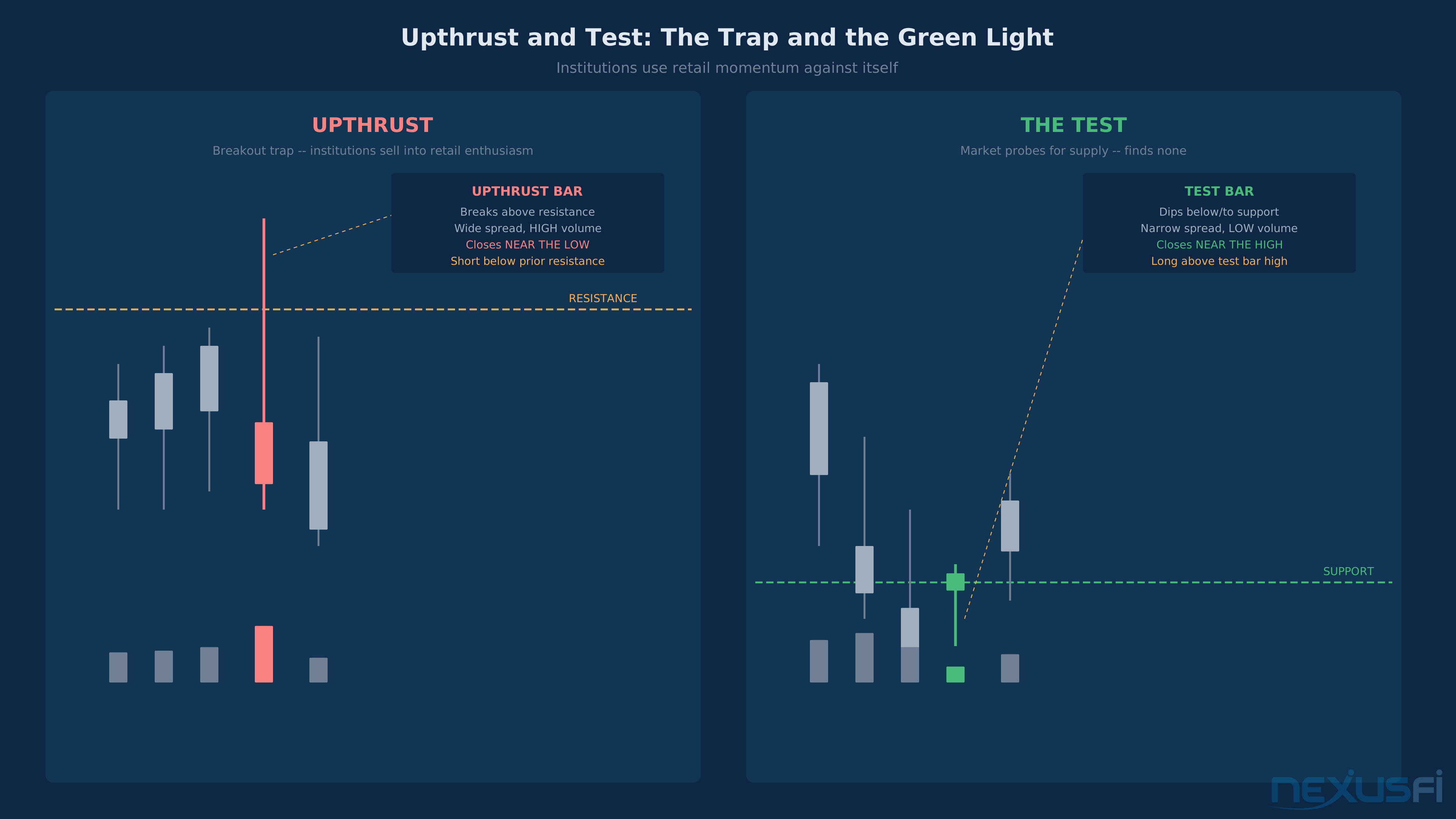
What it means: Institutions used retail breakout enthusiasm to distribute inventory. Retail traders saw the breakout, chased it, and professional sellers used that buying to unload. The close near the low proves the "breakout" was absorbed immediately.
The upthrust's defining characteristic is that it spikes through a level and fails to hold — the close comes back inside the prior range. As NexusFi member @Fat Tails noted in the dedicated VSA thread, this is a classic case of VSA's two-dimensional nature — the effort (volume pushing through resistance) fails to produce the expected result (sustained breakout), and the two variables cannot be collapsed into a single signal.
In futures: Upthrusts frequently appear at round numbers in ES (4,500, 4,550), at prior session highs in NQ, and at key resistance levels in CL. These aren't accidents. Liquidity pools at round numbers and prior highs create predictable retail entry zones that institutions can sell into.
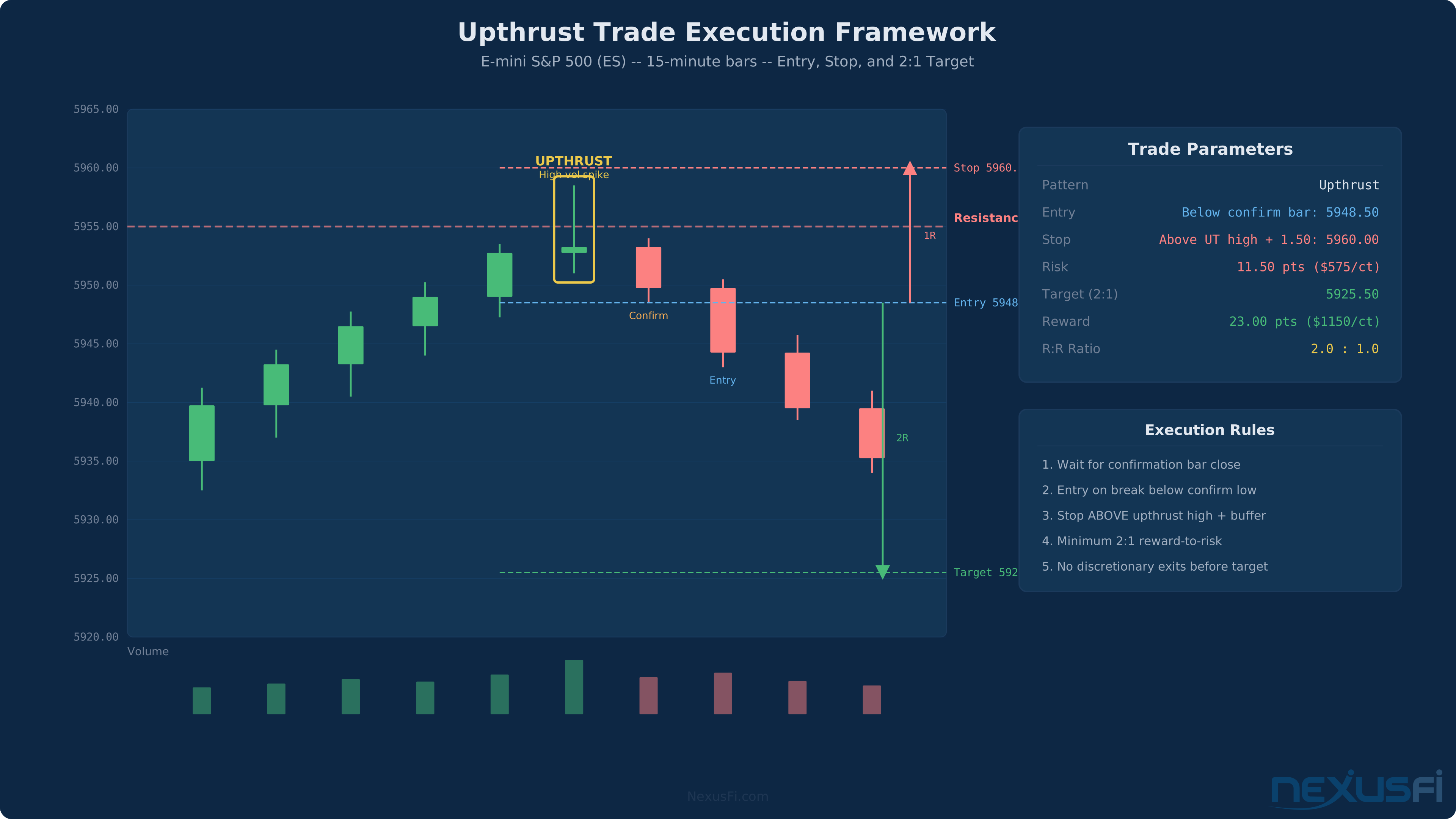
Entry: Short below the upthrust bar's close on the next bar's acceptance failure. Stop above the upthrust high. The thesis: if the breakout was real, price wouldn't be back below the prior level two bars later.
Failure mode: A genuine breakout looks like an upthrust for one bar. If the next bar closes above the upthrust bar's midpoint and volume remains elevated, the move is probably real. Get out.
The Test #
What it looks like: A narrow-spread down-bar (or bar that dips below a prior support level) on low volume that closes near the high of the bar or back above the prior level.
What it means: The market probed lower looking for supply. It didn't find any. Low volume on the probe means professional sellers aren't participating — they've already cleared their positions at higher prices. The test is a green light for the next leg up.
The volume requirement is non-negotiable: "A test should have lower volume than the previous two bars, small narrow spread, and come from immediate strength," as documented repeatedly by practitioners in the S&P Chronicles thread. A test with high volume isn't a test — it's a failed test. Supply is still present. Trading it as a reversal long is a loser.
Entry: Long above the test bar's high on the next bar's confirmation. Stop below the test low.
In practice: Tests frequently appear after a stopping-volume bar on a downtrend has absorbed initial supply, or after a climactic selling bar. The sequence — selling climax, test, new up leg — is one of the cleanest VSA setups in futures.
Stopping Volume #
What it looks like: High volume on a down-bar (in a downtrend) or up-bar (in an uptrend) where the spread is wide but subsequent bars fail to continue in that direction.
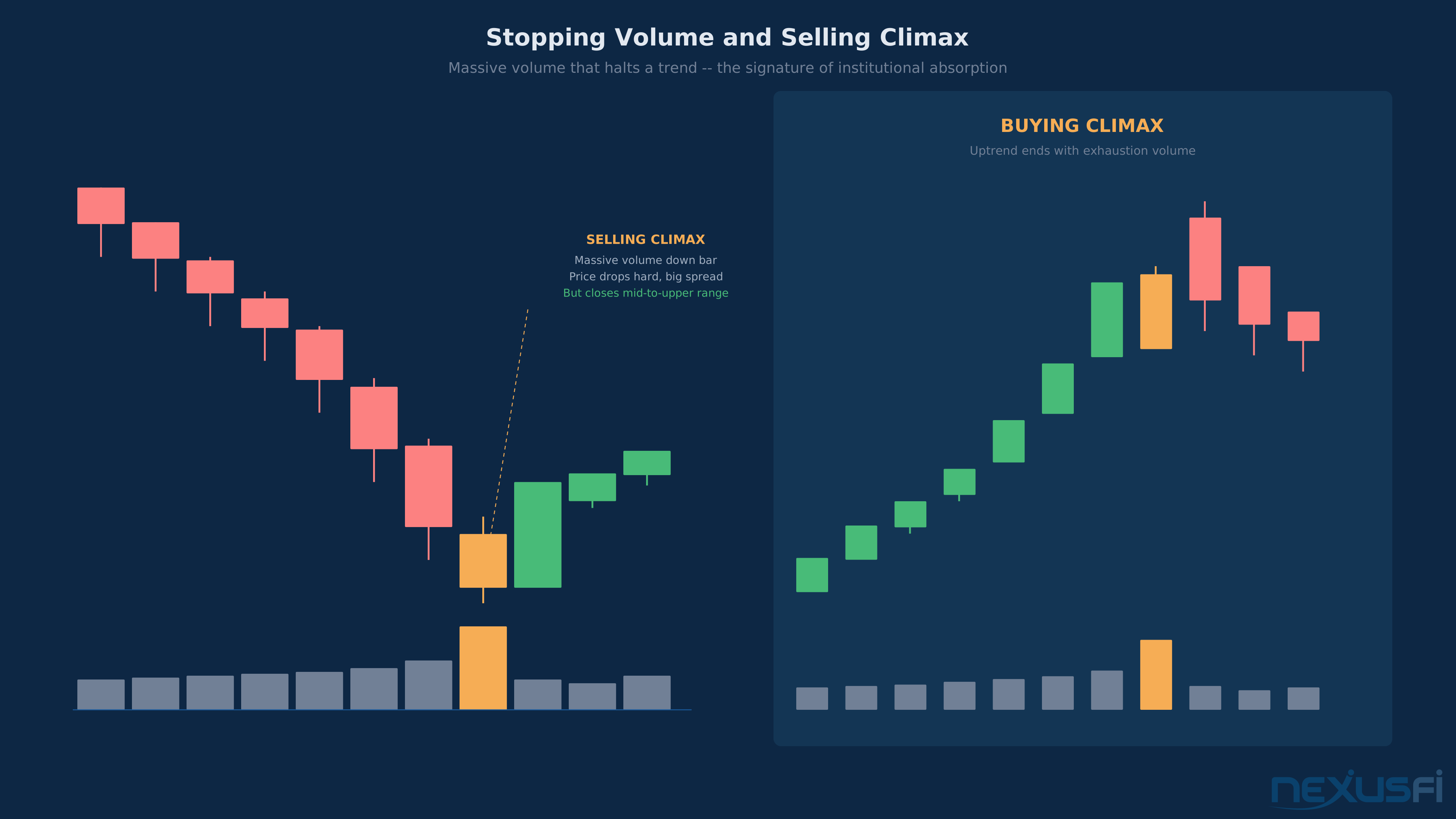
What it means: Professional money stepped in opposite to the prevailing direction and absorbed the supply or demand. In a downtrend, stopping volume on a wide down-bar means institutions bought aggressively enough to absorb retail selling. The move is likely over.
Stopping volume on ES is identified by practitioners as one of the most reliable VSA signals — specifically when it appears at a level that's been previously significant (prior day low, overnight low, key moving average or VWAP).
Critical distinction from a selling climax: Both have high volume. The difference is aftermath. After stopping volume, the next few bars should show dramatically reduced volume and narrowing spread as the professional position is held. After a climax, you often get continuation or a dead-cat bounce before continuation. The test bar that follows stopping volume is the confirmation you need.
Entry: Wait for the test. Don't trade stopping volume directly — the bar could be mid-trend distribution that continues lower. Trade the test of the stopping-volume level on reduced volume.
Climactic Volume (Buying/Selling Climax) #
What it looks like: Extremely high volume — often 2-3x the 20-bar average — on a very wide spread bar at the extreme of a move.
What it means: Panic or euphoria at a market extreme. In a downtrend, a selling climax is retail traders panic-selling into institutional buying. In an uptrend, a buying climax is retail traders chasing a top into institutional distribution.
Climactic volume marks exhaustion. But — and this is the trap — it doesn't mark the exact reversal. After a buying climax, price can continue higher for another leg before rolling over. After a selling climax, there's often a secondary test.
Trade framework: Don't short the climax bar itself. Wait for the test. Wait for a no-demand bar that confirms buyers can't push back to the climax high. Then short with conviction.
Effort vs. Result (E/R): The Meta-Pattern #
Every bar in VSA is really an E/R assessment. The named patterns above are specific E/R mismatches:
-- Upthrust: Maximum effort up, close near low = effort failed — No demand: Minimal effort up = no professional support for further gains — Test: Minimal effort down = no professional supply available — Stopping volume: Maximum effort down absorbed by opposing buying = effort failed
Before you trade any VSA pattern, run the E/R check: "Did the effort produce the expected result? If not, who was doing the absorbing?"
Context Is Everything: Where Patterns Live or Die #
VSA patterns without context are noise. This is where most VSA traders fail — they see a no-demand bar and short it mid-trend without asking whether the trend context supports the pattern.
Trend Context #
In an uptrend, no-demand bars are warnings — not immediate sell signals. The trend has momentum. No-demand at a new high in a strong uptrend often just means the rally needs a breath. You want to see no-demand bars cluster before shorting, not act on the first one.
In a downtrend, no-demand bars are continuation signals. They confirm the trend remains controlled by supply. Short every no-demand rally attempt.
Price Location #
"Use structure to lean against — reduces risk," as @Feibel noted in the S&P Chronicles. The same upthrust at random mid-range resistance has a fraction of the probability of an upthrust at: — The prior week's high — A round number (ES 4,500, 5,000) — The VWAP band edge — The value area high or low from a Market Profile perspective
Location transforms a marginal signal into a high-probability trade.
Background Conditions #
VSA operates in the background as much as the foreground. Before you trade any intraday pattern, understand the higher-timeframe supply/demand structure:
-- If the daily chart shows a stopping-volume bar from three sessions ago, every test of that level is a potential VSA long setup. — If the 4-hour chart shows a buying climax followed by no-demand rally attempts, intraday no-demand bars are confirmation, not warnings.
VSA practitioners use a "background conditions" lens to classify the current market state as markup (institutional accumulation underway), distribution (institutional selling underway), or neutral (no clear institutional bias). Intraday patterns then operate within this higher-timeframe context.
Entry, Stop, and Exit Framework #
Entry Rules #
Never trade the signal bar. Entry happens on the confirmation bar — 1-2 bars after the signal confirms:
-- Upthrust: Enter short when the bar following the upthrust closes back below the prior resistance level or below the midpoint of the upthrust bar. — No Demand: Enter short when the next bar breaks below the no-demand bar's low. — Test: Enter long when price reclaims the test bar's high after the bar closes near its high. — Stopping Volume: Enter long after the test of the stopping-volume level forms on reduced volume.
This confirmation step filters out a large percentage of false signals. Yes, you give up some of the move. You also avoid most of the whipsaws.
Stop Placement #
Stop at thesis invalidation — not at a fixed tick distance.
-- Upthrust short: Stop above the upthrust bar's high. If the "trap" was real, price can't sustain back above that level. — Test long: Stop below the test bar's low. If the test was genuine, the level must hold. — No demand short: Stop above the no-demand bar's high. A new high after a no-demand signal invalidates the pattern.
In ES, stops often land at 1.5-2x the signal bar's range. In CL, widen that to 2-3x because gap risk on inventory days requires more room.
Profit Targets and Exits #
Two approaches:
Static targets: Aim for the nearest significant prior price structure — previous swing high/low, prior session extreme, round number. A 2:1 reward-to-risk minimum.
Dynamic exits: Watch for the opposite VSA signal. If you're long from a test and a no-demand bar appears near your target zone, exit. The market is showing you the trade is over.
Scale out: take half off at 1x risk, let the remainder run to 2x or to an opposite signal. In a clearly trending move with multiple no-demand confirmation bars, you can trail more aggressively.
Time stops: If a VSA pattern doesn't trigger follow-through within 5-8 bars on the 5-minute chart, the signal has decayed. Exit flat. The pattern's probabilities erode quickly without confirmation.
Contract-Specific Application #
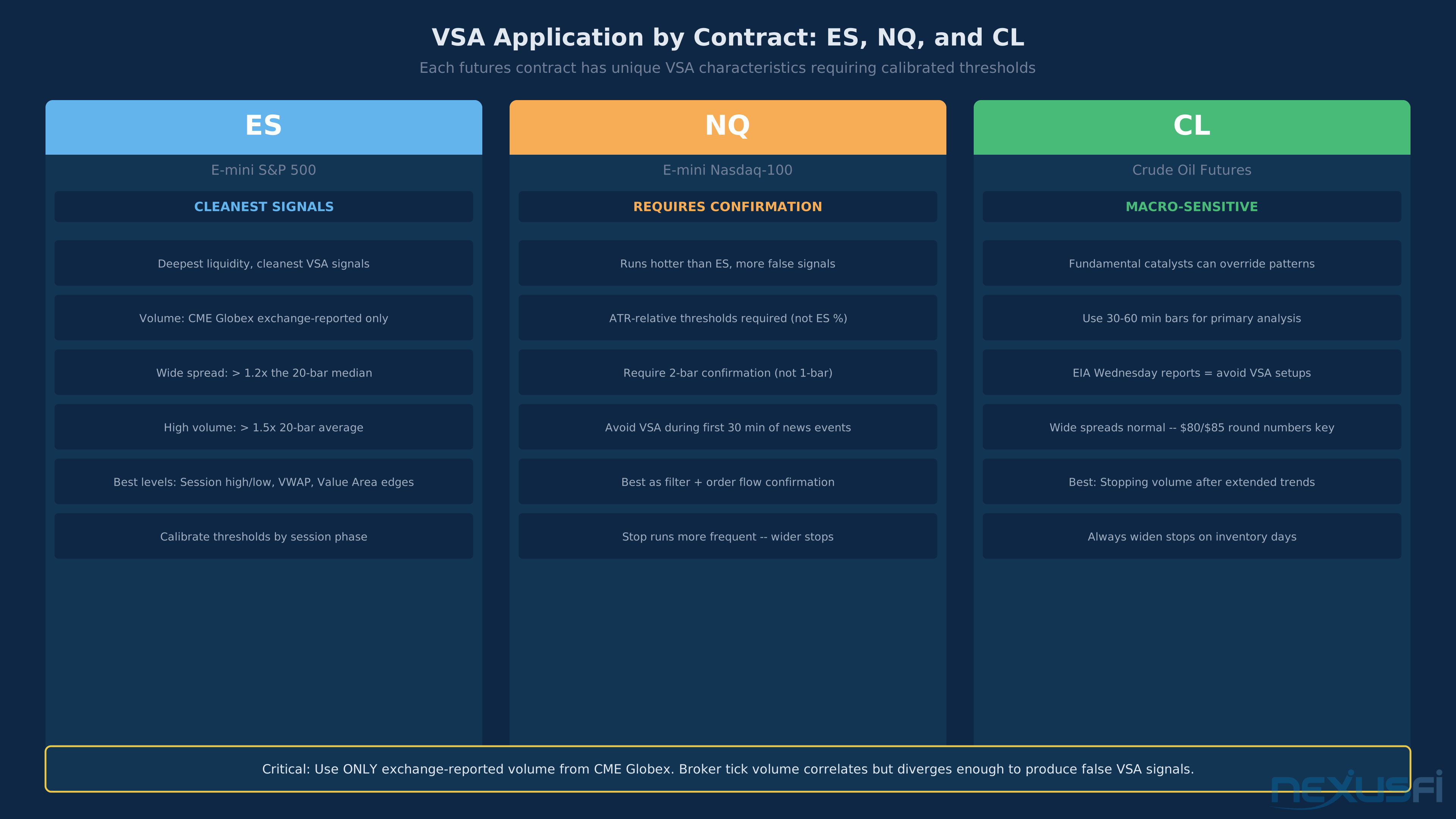
ES (E-mini S&P 500): The Clean Machine #
ES has the deepest liquidity, the most institutional participation, and the cleanest VSA signals of any futures contract. The auction is efficient — professionals can't hide easily in ES because volume is so dense that absorption shows up clearly in the three variables.
VSA patterns on ES are most reliable: — At prior session highs/lows and overnight extremes: These are the liquidity pools where institutional players reset positions. — At VWAP and value area edges: When ES tests VWAP on narrow spread and low volume, the test VSA pattern has high follow-through probability. — On stopping volume after extended trend days: When ES falls hard for most of the session and then shows a wide-spread down bar on massive volume that closes mid-range, the odds favor a test and reversal.
Calibrate volume using relative thresholds against a 20-bar baseline, not absolute contract counts. ES volume during the first hour is completely different from ES volume at 2pm.
NQ (E-mini Nasdaq-100): The Volatile Sibling #
NQ runs hotter than ES. Spreads are wider, stop runs are more frequent, and false VSA signals appear at higher rates — especially around macro news. FOMC days, CPI releases, and major earnings can generate upthrusts that aren't trap signals, they're just momentum.
The adjustments for NQ: — Use ATR-relative thresholds, not ES-derived percentages. NQ's daily range routinely exceeds ES by 30-50% on a point basis. — Require stricter confirmation: two-bar follow-through instead of one. — Avoid trading VSA signals during the first 30 minutes of a major news event. Wait for the initial volatility to resolve before applying pattern analysis. — Upthrusts are extremely common in NQ at round numbers. Don't short every NQ upthrust at a round number during a bull trend — you'll get crushed. Require a prior background of weakening volume on rallies before trading the upthrust.
NQ VSA works best as a filter, not a primary trigger. When order flow (delta) confirms the VSA pattern, the probability increases much.
CL (Crude Oil): The Macro-Sensitive Contract #
Crude oil adds a dimension that pure equity futures don't have: fundamental catalysts that override technical patterns entirely. EIA inventory reports (every Wednesday morning), OPEC announcements, and geopolitical events can render a perfectly valid VSA setup worthless in seconds.
Practical rules for VSA in CL: — Use 30-60 minute bars for primary analysis, 5-minute for entry timing. Intraday noise in CL is brutal. — "Low volume" in CL still means hundreds of contracts — adjust your baseline so. Don't be surprised if what looks like "low volume" is still significant in absolute terms. — Price levels that matter in CL: prior week's high/low, round dollar amounts ($80, $85, $90), and session overnight extremes. Tests and no-supply at these levels carry the highest VSA probability. — Widen stops on inventory report days. CL can gap 50+ cents through a technical level on an EIA surprise. No VSA pattern survives that.
The most effective CL VSA setups are stopping-volume and buying/selling climax patterns on the 30-minute chart after an extended trending move. The setup is unmistakable and the institutional footprint is large enough to see clearly.
Integrating VSA with Order Flow #
VSA and order flow are natural complements. VSA reads the bar's three variables from outside. Order flow (delta, footprint charts) shows you what happened inside the bar.
Delta Confirmation #
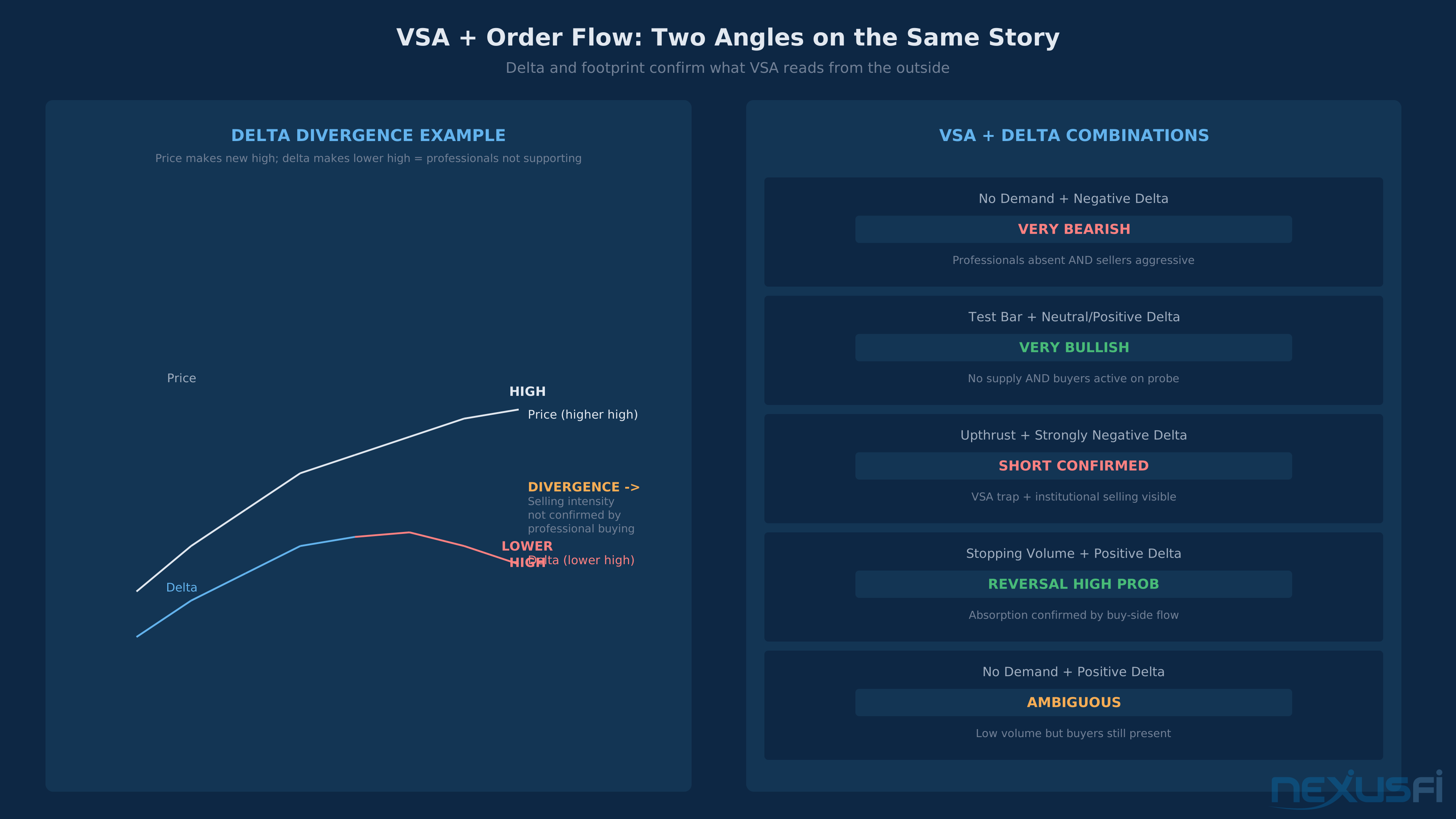
Cumulative delta measures the difference between volume traded at the ask (aggressive buying) and volume traded at the bid (aggressive selling). A positive delta means buyers were more aggressive, negative means sellers were.
-- No demand bar with negative delta: Extra bearish. Not only was volume low, but the slight buying activity that did occur was dominated by selling. High-probability short. — Test bar with neutral to positive delta: Confirms that sellers weren't active during the probe. Institutional absorption confirmed. High-probability long. — Upthrust with strongly negative delta: The institutional selling shows in the order flow. Professional sellers hit the bid aggressively on the upthrust. Strong short confirmation.
Footprint Visualization #
If your platform shows footprint charts (bid/ask volume at each price level within a bar), VSA patterns become visible at the micro level:
-- An upthrust with a footprint showing massive ask volume at the top and bid-dominated closes confirms institutional selling into the spike. — A stopping-volume bar with ask-heavy volume at the bottom confirms institutions buying the panic.
The footprint doesn't replace VSA — it confirms it. You're reading the same story at different magnifications.
Cumulative Delta and Divergence #
When price makes a new high but cumulative delta makes a lower high, you have delta divergence — buying effort is declining even as price extends. This frequently aligns with a no-demand bar or a weakening volume signature in VSA. When both signals appear together at a key level, the trade probability is among the highest VSA offers.
As NexusFi member
— and when delta confirms that selling into strength, the VSA interpretation is validated by the actual order flow data.
VSA Failure Modes: Where the Method Breaks Down #
Treating Volume as Direction #
Volume is participation, not direction. High volume on a down-bar doesn't mean the market is going lower — it might mean institutions just bought everything the retail sellers threw at it. Always combine volume with spread and close before drawing conclusions.
Trading No-Demand Mid-Range #
No-demand in the middle of a trading range is just chop. The pattern requires a context where it makes sense — either at an extreme following a trend, or near a significant structural level. Mid-range no-demand produces losers because there's no reason for the next move to be anything other than random.
Ignoring the Test Volume Rule #
If you take a "test" setup where volume failed to drop much below the prior bars' volume, you're not trading a test — you're guessing. Supply is still present. The test rule requires low volume to be meaningful.
News Regime Blindness #
VSA is a structural analysis tool. It works in structured, range-to-trending conditions. During a major macro event (FOMC, CPI, NFP), the market temporarily operates by different rules. What looks like a VSA signal during the first minutes of a high-impact news release is usually just volatility noise. Wait for the dust to settle.
Define Your Variables Before You Trade: "Wide volume", "narrow spread", and "near the high/low" must be defined numerically before a session begins. Set the 20-bar average baselines and specific range thresholds. VSA without numerical anchors is post-hoc rationalization dressed as analysis.
Subjectivity Without Anchors #
VSA can degrade into "I see what I want to see" if you don't define your variables numerically. If you can't answer "what's my threshold for high volume?" with a specific relative percentage, you're not running VSA — you're running post-hoc rationalization. Set the 20-bar average baselines, set the range thresholds, and stick to them.
Bad Data #
CME Globex data is the only valid data source for VSA on futures. Broker-provided tick volume correlates with real volume but diverges enough to produce false signals. If your platform offers both options, use exchange volume.
VSA vs. Related Methods #
VSA vs. Wyckoff #
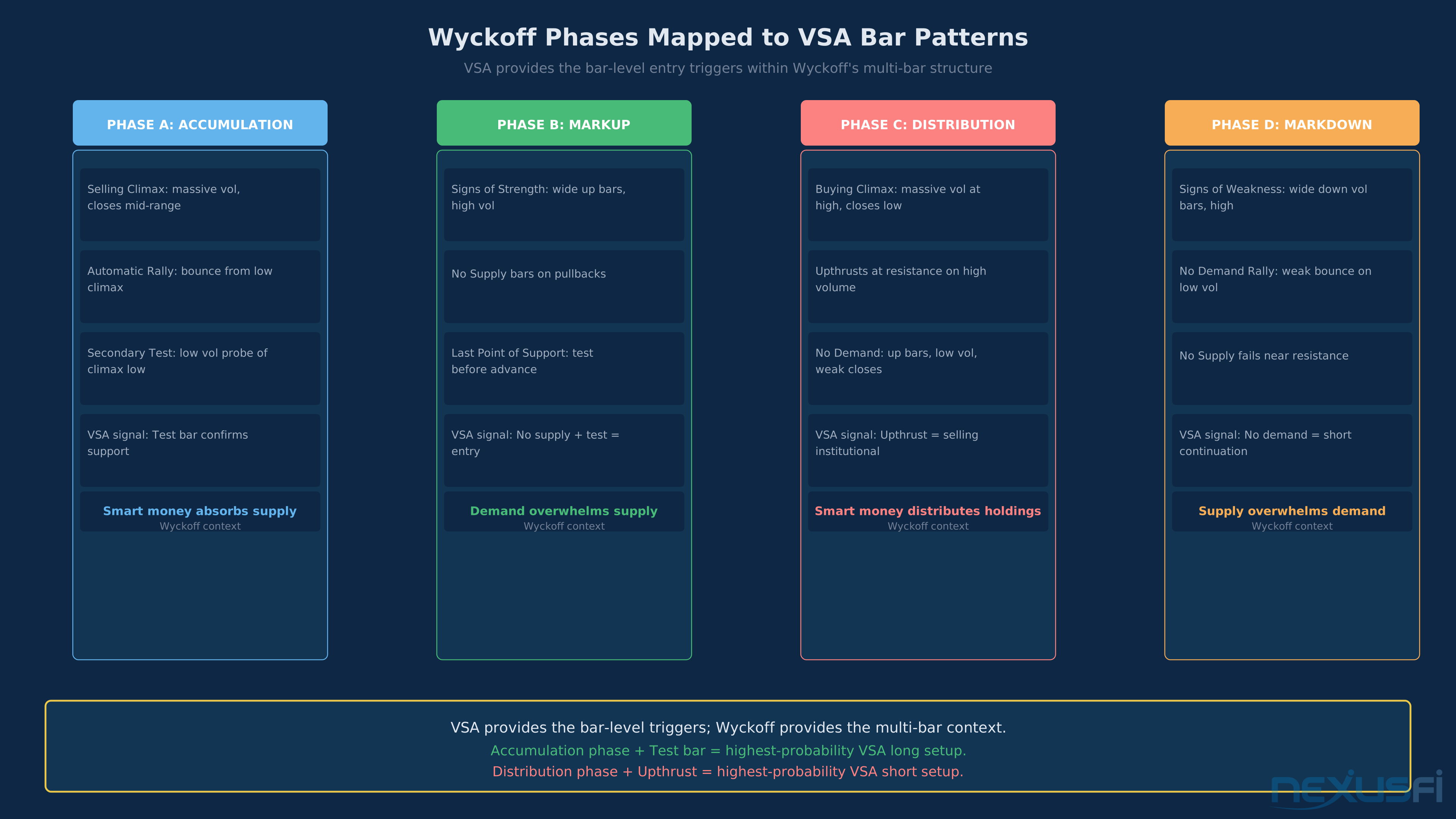
VSA grew directly from Wyckoff's tape-reading principles — his Studies in Tape Reading (1910) laid the groundwork for reading institutional activity through price and volume, and Tom Williams' Master the Markets translated those principles into the modern bar-by-bar VSA methodology. Wyckoff focuses on multi-bar narratives — the accumulation phase, the markup phase, the distribution phase — across extended time horizons. VSA is bar-by-bar.
Use Wyckoff for context: "Are we in an accumulation or distribution phase?" Use VSA for specific entries within that context. The stopping-volume and test patterns are basically Wyckoff accumulation phase markers expressed at the bar level.
The NexusFi S&P Chronicles thread (461 replies) explicitly merges both: "Wyckoff and VSA principles at play in today's action: Spring (setup), Test (setup), Upthrust, Multiple timeframes, No Supply (setup)."
VSA vs. Weis Wave #
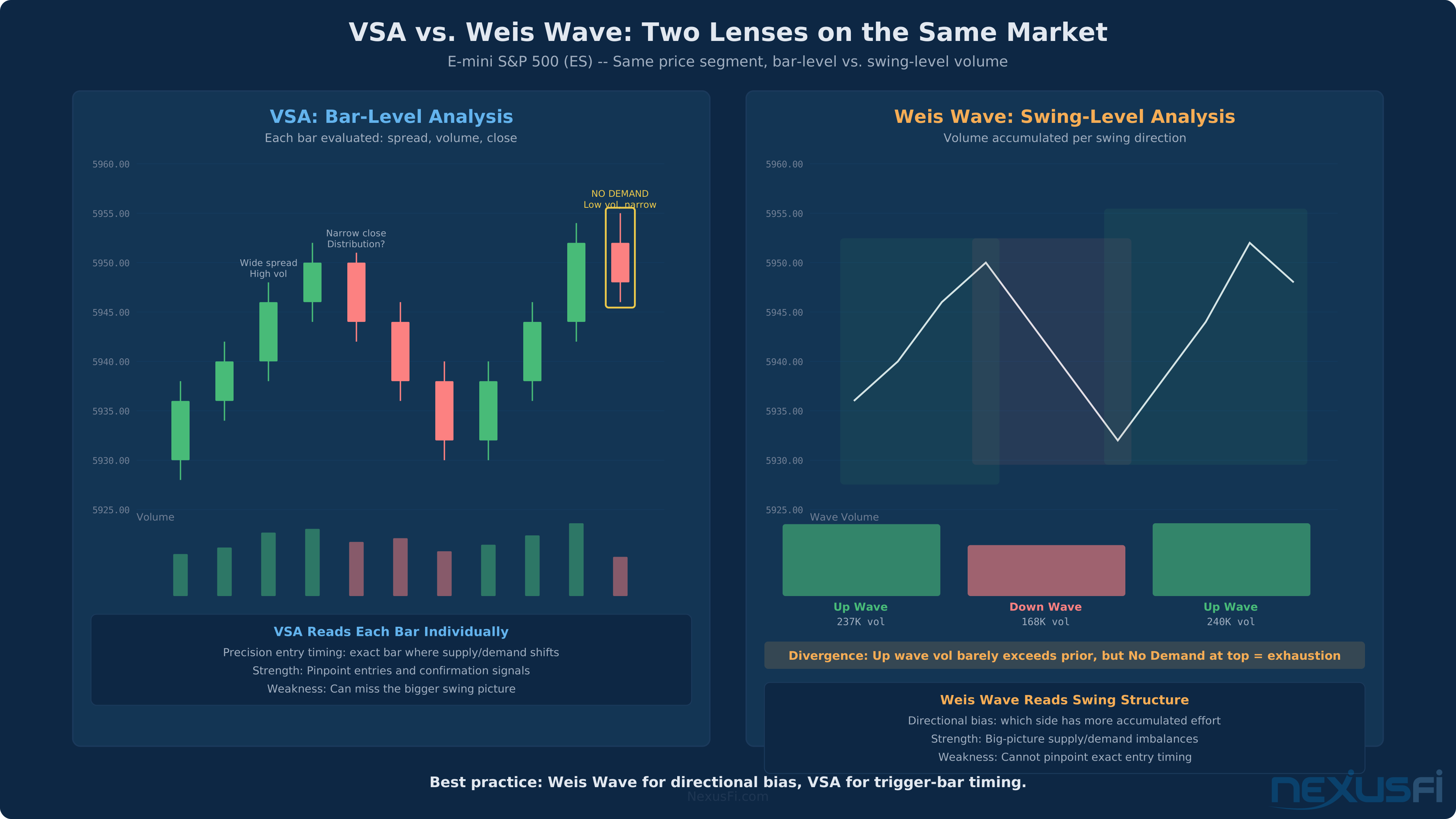
Weis Wave aggregates price movement into cumulative waves (similar to Wyckoff schematics) and shows the volume behind each wave rather than each individual bar. Where VSA is bar-by-bar, Weis Wave is swing-by-swing.
Both tools answer "is effort producing results?" at different timescales. Weis Wave divergences (falling volume on rising waves) often precede the VSA upthrust or stopping-volume bar that provides the entry. Use them in sequence: Weis Wave identifies the setup territory, VSA provides the trigger.
VSA vs. Pure Order Flow #
Order flow (footprint, delta) shows you the inside of bars that VSA reads from the outside. VSA is technically independent — you don't need a footprint chart to use it. But combining VSA with delta confirmation consistently produces higher-probability setups because you're checking the same hypothesis from two angles.
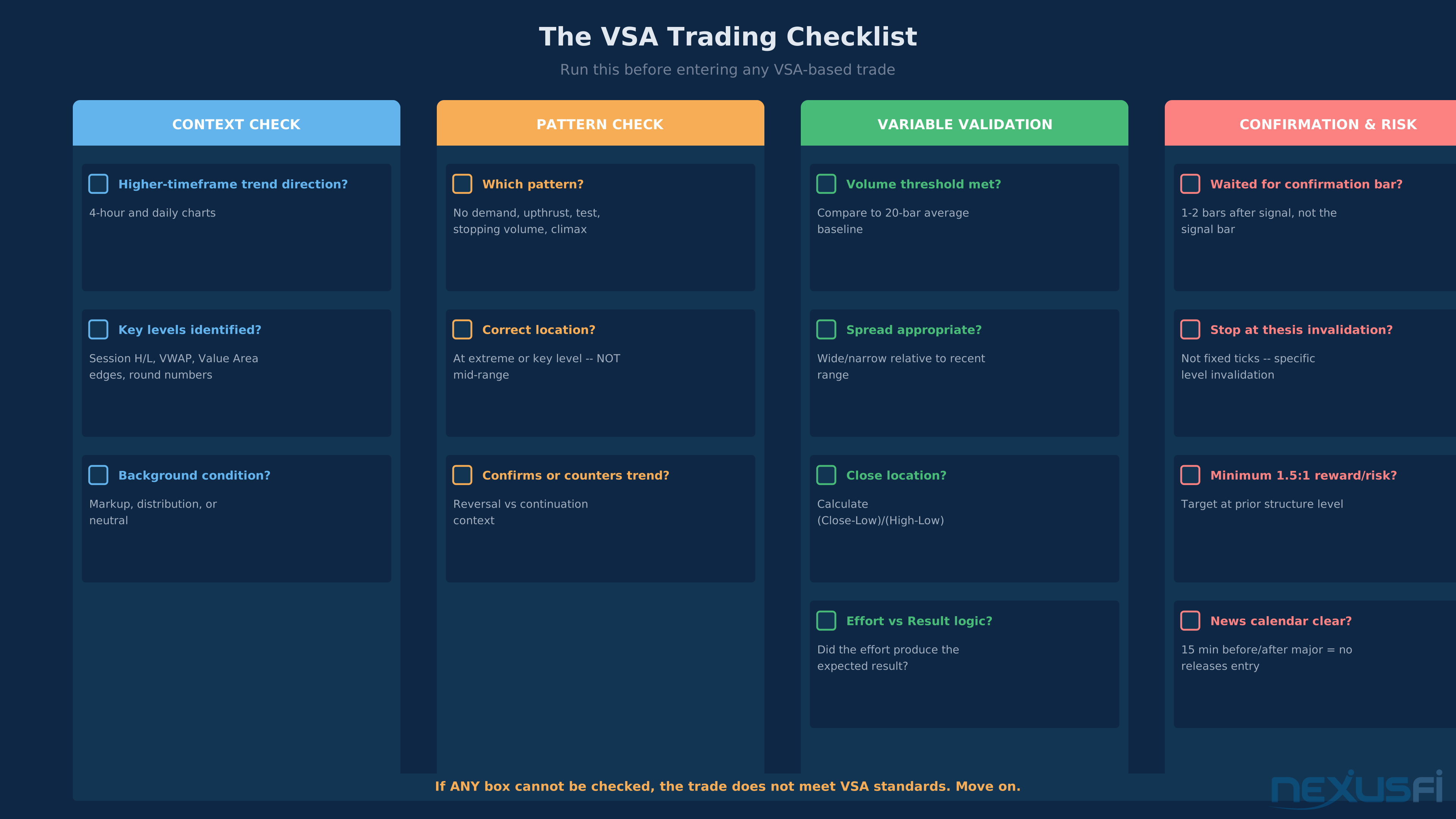
The VSA Trading Checklist #
Before entering any VSA-based trade:
Context check (answer these first): — What's the higher-timeframe (4-hour, daily) trend direction? — Where are the key levels? (Prior session high/low, VWAP, value area edges, round numbers) — What's the background condition? (Markup, distribution, or neutral)
Pattern check: — Which pattern do you see? (No demand, no supply, upthrust, test, stopping volume, climax) — Is it at a relevant price location, or mid-range? — Does the pattern confirm trend context or signal a reversal?
Variable validation: — Is volume actually high/low relative to the 20-bar baseline? — Is spread actually wide/narrow relative to recent range? — Where did the bar close? (Close position calculation) — Does the E/R relationship make sense?
Confirmation requirement: — Have you waited for the confirmation bar? — Is the confirmation within 1-2 bars of the signal?
Risk check: — Where is your stop? (Thesis invalidation, not fixed ticks) — What's the reward target? (At least 1.5:1, preferably 2:1) — Is the news calendar clear? (Avoid entries 15 minutes before/after major releases)
If you can't check every box, the trade doesn't meet VSA standards. Move on.
The Bottom Line on VSA #
VSA doesn't predict the market. It doesn't generate mechanical buy/sell signals. What it does is give you a systematic framework for asking whether the professional money is supporting or opposing the current price move — and that question, answered correctly, is where trading edge comes from.
The methodology works best on the most liquid futures contracts (ES, NQ, CL) because institutional footprints are visible in the three variables. It requires patience — you'll often see 10-15 bars before a genuine pattern appears at the right location — but when the setup aligns with context, the probability is real.
Start with the Test and the Upthrust. These two patterns produce the clearest E/R mismatches and have the most consistent historical behavior across ES and NQ. Build the confirmation habit before trading the subtler patterns like no-demand mid-trend. Use exchange volume data. Track every signal against outcome.
VSA is at the core about asking "who is in control of this bar?" after every bar. Once that habit forms, the analysis becomes second nature — and you'll start seeing patterns that price-action-only traders walk right past.
Knowledge Map
Go Deeper
Build on this knowledgeReferences This Article
Articles that build on this topicCitations
- — The S&P Chronicles - An Amalgamation of Wyckoff, VSA and Price Action (2017) 👍 17“A test should have lower volume than the previous 2 bars, small narrow spread and come from immediate strength.”
- — The S&P Chronicles - An Amalgamation of Wyckoff, VSA and Price Action (2018) 👍 8“An up bar with lower volume than the previous 2 bars -- it pays to step back and take a macro view of the market. Very high volume supply tells the professionals that supply is in the market.”
- — The S&P Chronicles - An Amalgamation of Wyckoff, VSA and Price Action (2017) 👍 6“Stopping volume halts price and the close can be on the lows, middle; the selling climax has highest volume on the decline.”
- — The S&P Chronicles - An Amalgamation of Wyckoff, VSA and Price Action (2017) 👍 10“Wyckoff and VSA principles at play in today's action: Spring (setup), Test (setup), Upthrust, Multiple timeframes, No Supply (setup).”
- — The S&P Chronicles - An Amalgamation of Wyckoff, VSA and Price Action (2017) 👍 11“Effort vs. Result: VSA no demand setup in perfect background conditions -- after the upthrust, demand is tiring as sellers become active.”
- — The S&P Chronicles - An Amalgamation of Wyckoff, VSA and Price Action (2017) 👍 7“Hidden upthrust, VSA 2x No demand setups, stopping volume -- these are the defining patterns when professionals shift from accumulation to distribution.”
- — The S&P Chronicles - An Amalgamation of Wyckoff, VSA and Price Action (2017) 👍 2“With this method the bars have to be used in context. Demand is in control overall; the upthrust reveals when supply is temporarily taking the reins.”
- — The S&P Chronicles - An Amalgamation of Wyckoff, VSA and Price Action (2017) 👍 11“A failed test has increased volume -- hence we need more time. Low volume on the probe is what validates the test as genuine.”
- — Volume Spread Analysis (VSA) (2015) 👍 37“VSA has two dimensions -- two separate sources of data, which are price and volume -- and it cannot be reduced to a single dimension. High volume and wide range is a climax bar; high volume and narrow range is a churn bar.”
- — Wyckoff Trading Method (2011) 👍 19“The first indication that price would not follow through to the downside was the high volume and mid-range close. All this volume and the close well off the low suggested some buying coming into the market.”
- — The S&P Chronicles - An Amalgamation of Wyckoff, VSA and Price Action (2018) 👍 7“Effort vs. reward -- if the bar were all buying, it would have made much further progress up. Decreasing volume near resistance means I would have been looking for a short.”
- — Master the Markets
- — Studies in Tape Reading (1910)