



Weis Wave Volume Analysis
A practitioner's guide to reading market momentum through swing-accumulated volume
Overview #
Weis Wave Volume Analysis transforms raw volume into a directional story. Instead of reading individual candle volumes — a noise-heavy exercise — it accumulates the total volume traded during each price swing and displays that cumulative figure as a wave. The result is a cleaner signal: you see how much committed buying or selling actually powered each directional move.
The method answers a question that standard volume bars can't: was the market's effort proportional to its result? A large price swing supported by modest volume means something very different from a large price swing accompanied by a surge of activity. Weis Wave makes that distinction immediately visible.
For futures traders working intraday — especially ES, NQ, CL, and NQ scalpers who live inside the order flow — Weis Wave is one of the few volume tools that integrates cleanly with Wyckoff methodology, providing context that raw tick volume and cumulative delta both miss.
Origins: David Weis and the Wyckoff Connection #
Weis Wave takes its name from David Weis, a trader and Wyckoff specialist whose work in the 1990s translated Richard Wyckoff's hand-drawn wave charts into modern software indicators. Wyckoff himself — trading in the 1910s and 1920s — used manual tape-reading techniques to track wave volume, recognizing that accumulated volume per swing revealed institutional intent more reliably than any single price bar.
Wyckoff's core insight was that professional operators accumulate and distribute positions across extended market swings, and the volume signature of those swings betrays their activity. Large, well-financed interests can't hide their footprint across an entire swing the way they can game a single bar's volume. David Weis operationalized that insight into a repeatable indicator.
As @Miesto documented in his trading journal at NexusFi, Weis developed the wave volume approach to make Wyckoff's concepts visible in real time:
"He developed the so-called Weis Wave to enable us to see the volume traded per wave and as a result we should be able to foresee potential price turns." — @Miesto, Diary of a simple price action trader
The NexusFi community has built on Weis's original work extensively. @David_R, whose Wyckoff Speculator journal remains one of the most-cited technical resources on the forum, was instrumental in introducing NexusFi members to the wave volume concept in the early days — and the wave volume indicator thread he started accumulated 58 thanks and generated years of discussion.
How Weis Waves Are Constructed #
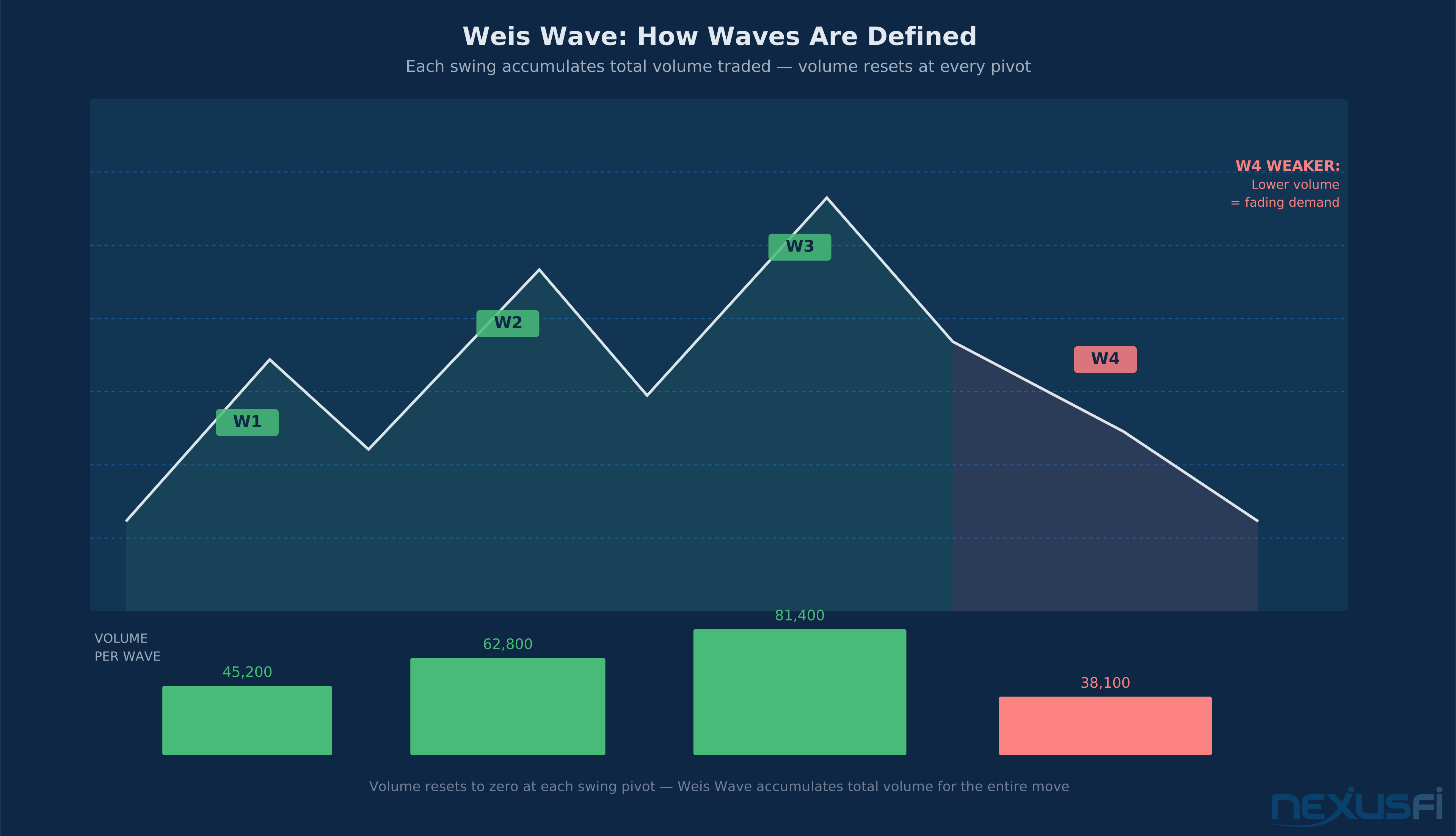
The mechanical process is straightforward: a swing detection algorithm (typically zigzag-based) identifies each pivot. When price reverses and a new swing begins, the volume counter resets to zero. During each swing, every traded contract accumulates until the next pivot.
The result is a histogram (or line chart) beneath the price chart where each bar represents one complete directional swing's total volume. Up swings get one color (typically green), down swings another (typically red).
Key construction variables:
- Swing detection sensitivity — Most implementations use a percentage reversal threshold (e.g., 0.1% reversal to start a new wave) or a fixed tick/point amount. Lower thresholds create more waves; higher thresholds filter noise into fewer, cleaner waves.
- Volume type — Standard volume (contracts traded), tick volume (for instruments without true volume), or dollar volume for cross-asset comparison.
- Timeframe — Weis Wave works on any chart type: time-based, range bars, tick charts, or volume bars. Many practitioners prefer range bars or volume bars because they reduce time-of-day distortion.
@wccktrader described the zigzag-based construction clearly in the original NexusFi wave volume thread:
"It is noted that the wave volume is calculated based on the zigzag indicator. As the [price] changes direction, a new wave begins." — @wccktrader, wave volume indicator
@Gillrymhes extended this framework for NinjaTrader 8 with a delta-enhanced version:
"Here I share a Weis Wave indicator based on dorschden's PriceActionSwing in combination with a volume delta indicator." — @Gillrymhes, Weis Wave Delta NT8
Adding delta (the difference between up-tick and down-tick volume) to each wave gives a second dimension: not just total volume, but directional bias within the wave.
The Effort vs. Result Principle #
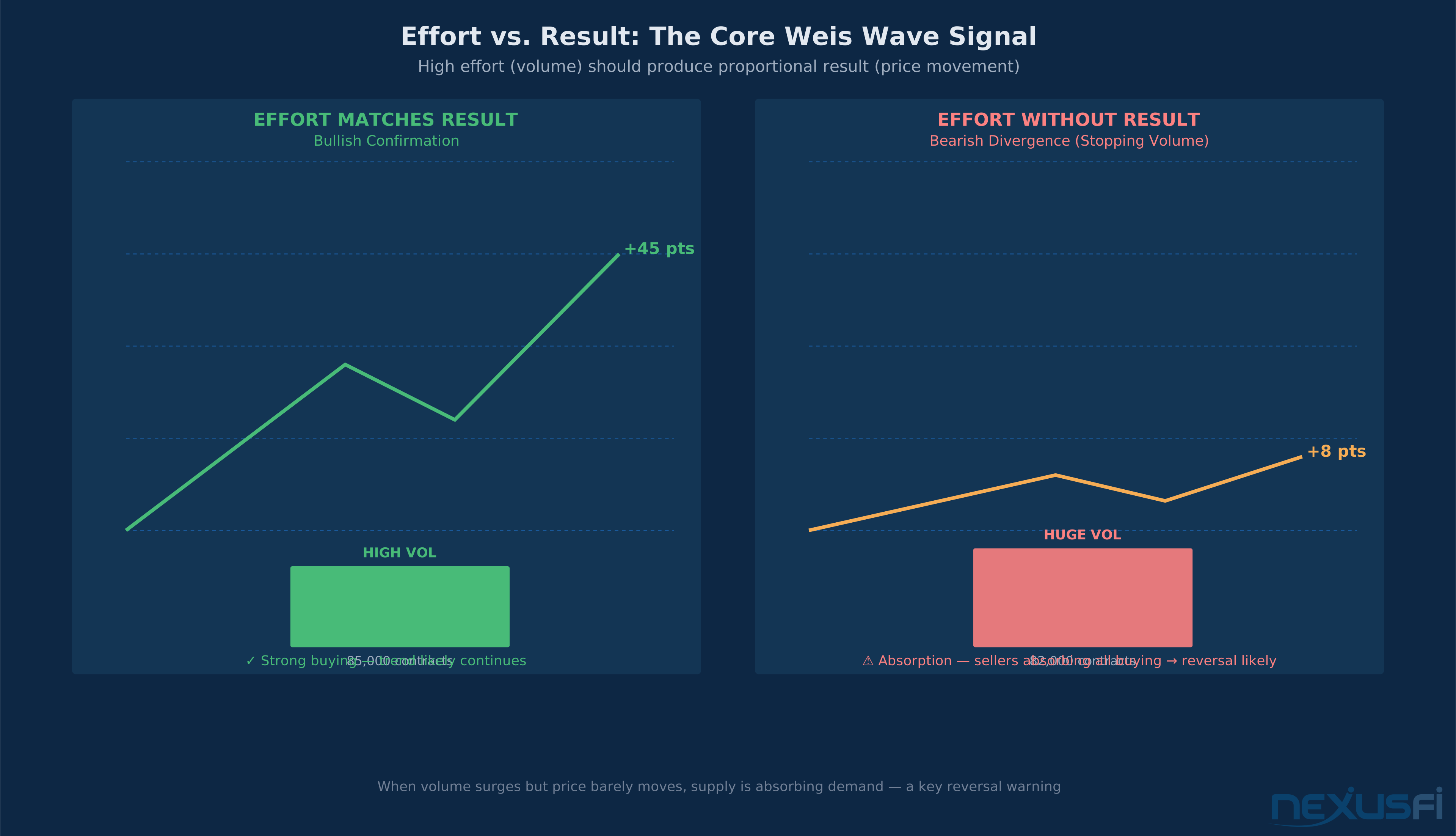
This is the engine that makes Weis Wave useful. Every wave analysis comes down to one question: was the effort (volume) consistent with the result (price movement)?
When effort matches result: A large up wave with significant volume confirms institutional participation. The market committed resources and got proportional price appreciation. This is bullish continuation context.
When effort fails to produce result: A large up wave where wave volume is massive but price gains are minimal signals absorption. Professional sellers are accepting all the buy orders, neutralizing the buying pressure without letting price escape. This is a major reversal warning.
When result exceeds effort: A small up wave with outsized price gain can indicate short-covering or a low-liquidity spike rather than genuine institutional buying. The price move is real but potentially unsustainable without volume confirmation.
@Feibel's S&P Chronicles journal is one of the best practical demonstrations of effort vs. result analysis on NexusFi. In one annotated session:
"If we dissect the wave into bars, the highest volume bar within this wave is bullish, Effort vs. Result (Bar 1), sticks out like a sore thumb." — @Feibel, The S&P Chronicles
The principle also works in reverse — identifying negative effort/result divergences that precede sharp reversals:
"Wyckoff and VSA principles at play in today's action: Waves New Momentum High (setup x 2) Effort vs. Result (positive or negative?)" — @Feibel, The S&P Chronicles
Wave Momentum Divergence #
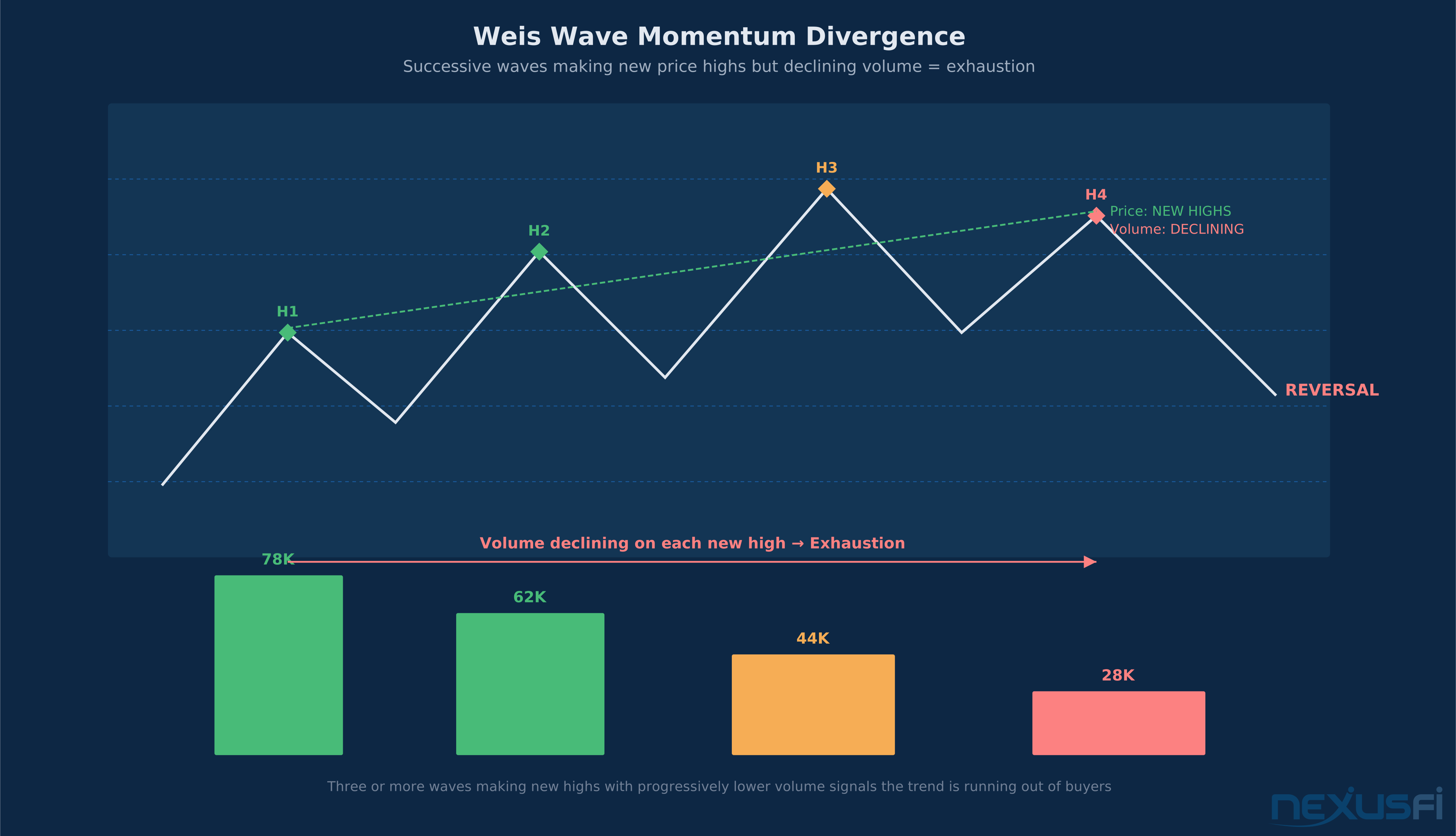
The most actionable Weis Wave signal is momentum divergence: successive waves in the same direction making new price highs (or lows) but declining wave volume. This divergence tells you the trend is running out of fuel.
Classic uptrend exhaustion pattern:
- Wave 1 up: price +30 points, volume 78,000 contracts
- Wave 2 up: price +42 points (new high), volume 62,000 contracts
- Wave 3 up: price +51 points (new high), volume 44,000 contracts
- Wave 4 up: price +48 points (another new high), volume 28,000 contracts
Price is making new highs. But each successive rally is powered by progressively fewer committed buyers. Eventually, there aren't enough buyers left to push price further. When the next down wave appears, it often carries significant volume because the accumulated longs are finally selling — and that reversal can be sharp.
This is the pattern @Feibel documented repeatedly in his SPX trade journal:
"Behaviour in wave structure (for 5m timeframe) up waves are now larger than the down waves, and if we dissect the wave into individual bars, we get excellent confirmation." — @Feibel, The S&P Chronicles
Three divergent waves is the standard minimum before considering a reversal trade. Two waves can be noise. Three consecutive divergent waves with declining volume is a systematic pattern, not coincidence.
Downtrend exhaustion (mirror image): Successive down waves making new lows but declining volume. Sellers are running out. The market is probing lower but finding fewer committed sellers at each probe. This sets up a potential accumulation bottom.
Climax Volume: The Exhaustion Spike #
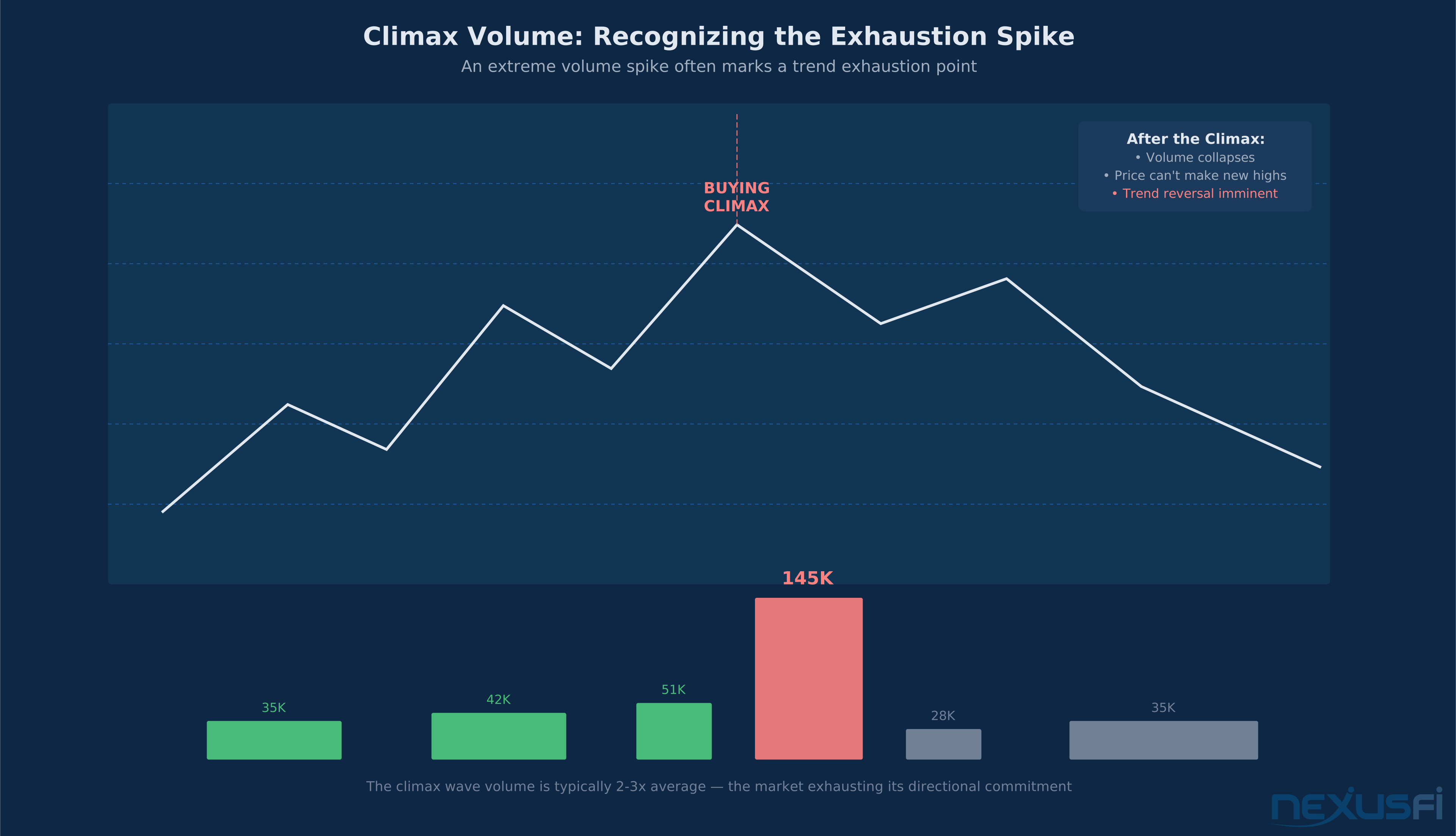
Climax volume is the opposite problem from divergence — instead of steadily declining volume, you get a single massive volume spike that dwarfs all surrounding waves. This is the market burning through its directional commitment in one exhaustive thrust.
Buying climax characteristics:
- Wave volume 2-3x (or more) the recent average
- Price gains may actually be significant in this wave — it's not an absorption pattern
- But the wave that follows is conspicuously weak
- Subsequent up waves fail to match the climax volume
- Price can't make new meaningful highs
The climax represents the last committed buyers piling in — often retail traders chasing a strong trend just as institutions are distributing. After the climax, the market frequently enters a trading range (Wyckoff calls this distribution) before eventually reversing.
The post-climax signature is the tell: volume collapses on subsequent waves, confirming that the directional conviction that powered the climax has been exhausted. The FT71 (FuturesTrader71) AMA thread captured this dynamic in a practitioner context:
"The WWaveVolume is an indy version of David Weis's Weis Wave and I may buy David's version later after completing his new book. He's a nice guy and should be compensated for his work." — @RichardHK, AMA: FuturesTrader71
Selling climax: Same concept in reverse — massive down wave volume followed by volume collapse and price stabilization. Classic Wyckoff SC (Selling Climax) pattern, one of the most reliable accumulation signals.
Reading Weis Waves in Wyckoff Context #
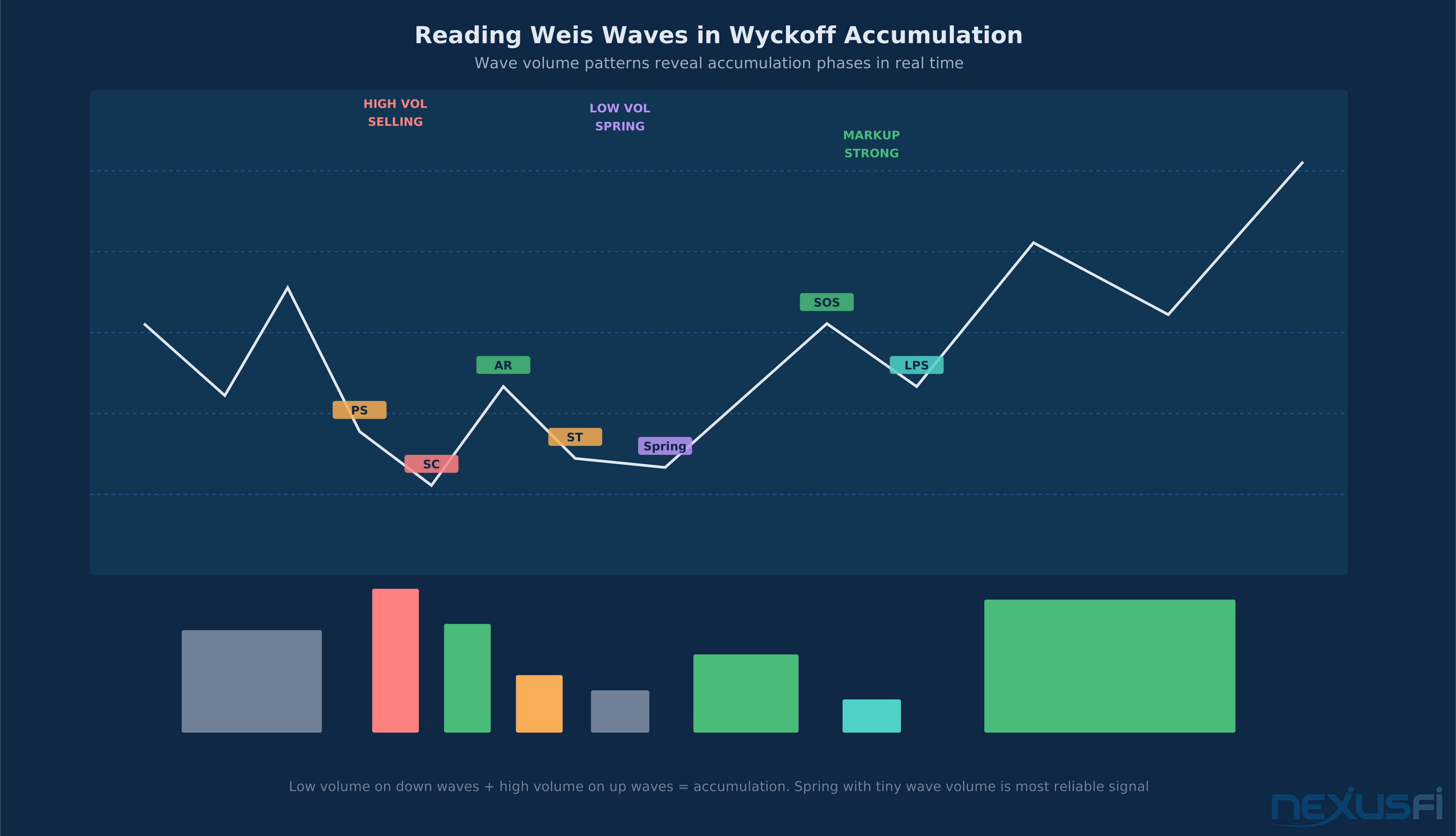
Weis Wave is most powerful when used within the full Wyckoff analytical framework. The four Wyckoff phases — Accumulation, Markup, Distribution, and Markdown — each have characteristic wave volume signatures that Weis Wave makes visible in real time.
Accumulation phase wave signatures:
- Preliminary Support (PS) / Selling Climax (SC): High volume down wave (climax). This is professional buying absorbing retail panic selling. Wave volume is massive, but price stabilizes — effort doesn't produce proportional result on the downside.
- Automatic Rally (AR): Up wave with decent volume. Professionals who just bought the climax low are covering shorts and light buyers emerge. The AR establishes the top of the trading range.
- Secondary Test (ST): Down wave to test the SC low area, but with much lower volume. Sellers are running out. This is the key diagnostic — low volume on the retest confirms the SC absorbed the real selling pressure.
- Spring: Down wave that briefly violates the SC low but with very low volume. This is the shakeout. The wave volume is tiny — there's no selling conviction behind the breakdown. When you see a new low on the lowest wave volume of the entire range, that's your spring confirmation.
- Sign of Strength (SOS) / Jump Across the Creek: The breakout up wave with high, expanding volume. This confirms institutional buying is resuming. Wave volume should exceed recent up waves in the trading range.
- Last Point of Support (LPS): A pullback on very low volume. Sellers are gone. This is the final low-risk entry before the markup phase.
As @YertleTurtle documented in the Wyckoff 2.0 journal:
"Price then breaks through the bottom of the range and finds temporary support near yesterday's low, has a weak rebound and then falls below the red..." — @YertleTurtle, Wyckoff 2.0
The Wyckoff framework doesn't require textbook-perfect patterns. What you're looking for is the volume story: high volume into weakness (absorption), followed by low volume tests, followed by high volume breakouts. Weis Wave makes these relationships quantitative rather than qualitative.
Distribution phase signatures (mirror of accumulation):
- Buying Climax (BC) with massive up wave volume
- Automatic Reaction (AR) down — decent volume
- Secondary Test (ST) up — lower volume than BC
- Upthrust (UT/UTAD) — new high on very low volume (failed auction)
- Sign of Weakness (SOW) — down wave with expanding volume, breaking support
Multi-Timeframe Application #
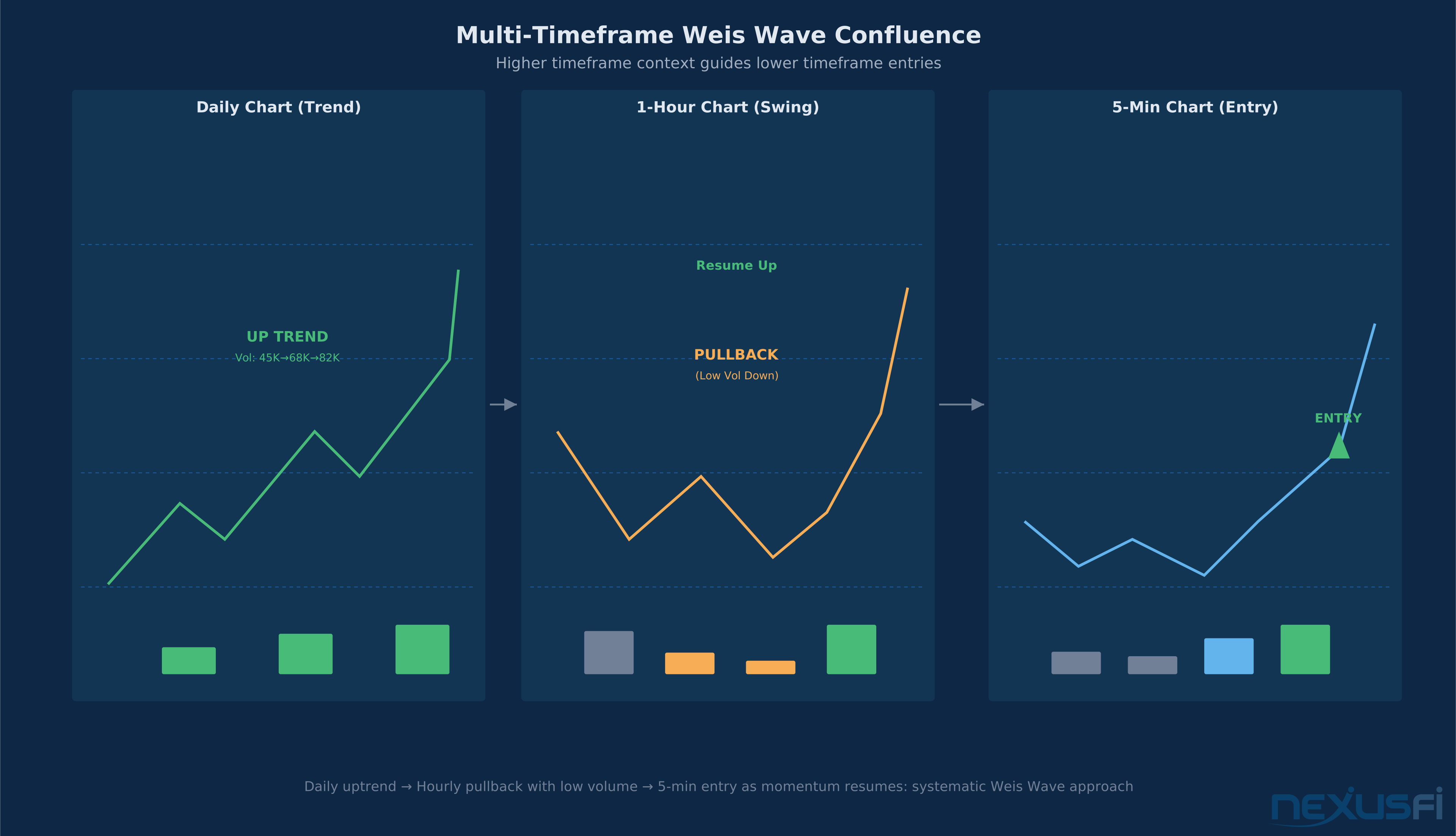
Weis Wave is most effective when applied across multiple timeframes simultaneously. The hierarchy works from context to execution.
Framework for futures day traders:
- Daily chart context: What is the weekly and daily wave structure saying? Are up waves consistently larger than down waves (bullish bias)? Are down waves expanding while up waves contract (bearish deterioration)? The daily chart wave structure is your macro directional read.
- 60-minute swing structure: Where is price within the daily range? Is the pullback on the hourly a low-volume correction (continuation setup) or a high-volume deterioration (potential trend change)?
- 5-minute execution: Entry is where the 5-minute wave confirms the 60-minute direction resuming. A pullback on the 60-minute should produce a 5-minute down wave with contracting volume, then a turn with expanding volume on the new up wave.
The key rule is timeframe alignment: don't take a 5-minute Weis Wave entry signal that contradicts the 60-minute context. If the 60-minute is showing a high-volume down wave (suggesting a larger correction), waiting for a low-volume 5-minute bounce to enter long is fighting the tide.
@Feibel's multi-timeframe approach in the S&P Chronicles exemplifies this:
"Recognise accumulation or distribution on a higher time frame (daily), when we recognise that as a large imbalance on heavy volume often carries more weight than a large imbalance on thin liquidity." — @Feibel, The S&P Chronicles
Practical filter rules:
- Only take 5-minute long setups when 60-minute up waves exceed 60-minute down waves by at least 1.5x
- Exit longs when the 5-minute produces an up wave with volume less than 60% of the prior up wave (momentum fading)
- Treat any 5-minute wave that exceeds the largest recent down wave as a potential trend change signal, regardless of price position
Weis Wave vs. Volume Profile #
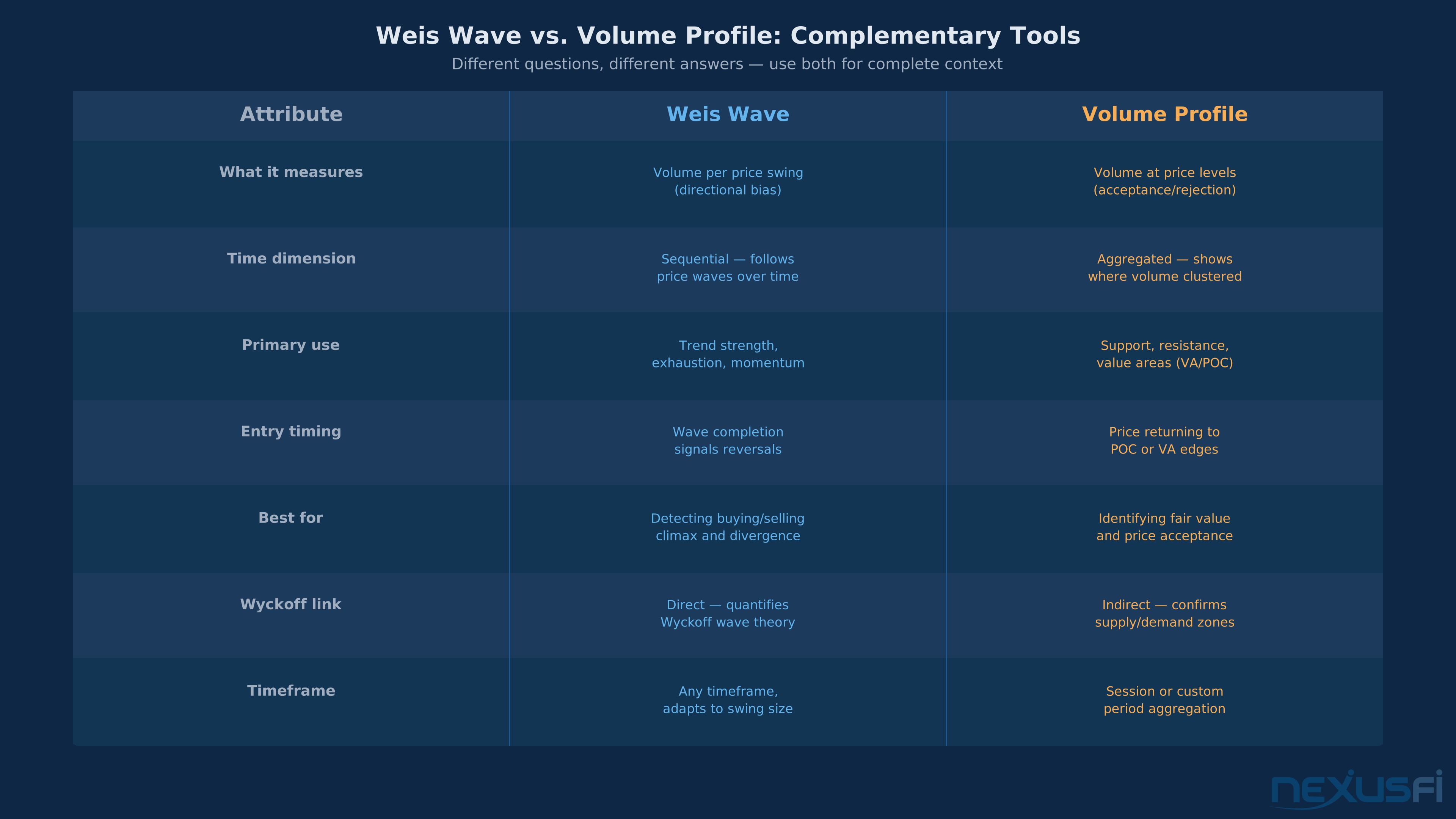
These tools are frequently mentioned together, and there's a reason: they're complementary, not redundant. They answer different questions.
Volume Profile tells you where volume traded — which price levels attracted the most activity. It's a spatial tool, answering questions about value, support, and resistance based on historical volume distribution.
Weis Wave tells you when volume committed directionally — the story of buying and selling conviction across sequential price swings. It's a temporal tool, answering questions about momentum, exhaustion, and institutional intent.
The combination is powerful:
- Volume Profile identifies the key price levels (POC, VAH, VAL, HVN, LVN)
- Weis Wave confirms whether price action at those levels shows commitment or exhaustion
Example: Price approaches a major composite POC from below. Do you fade the POC (mean reversion) or expect a breakout? If the Weis Wave shows up waves expanding and down waves contracting as price approaches the POC, that's a breakout setup. If up waves are contracting and volume is declining as price nears the POC, that's a failure-at-resistance setup.
The @Feibel S&P Chronicles journal explicitly integrates both:
"In an uptrend: If we see the volume increasing on the up waves and decreasing on the down waves — the market is healthy and the trend should continue. But you must always be on the lookout for a change in this immediate trend." — @Feibel, The S&P Chronicles
Weis Wave vs. Cumulative Delta (CVD) #
CVD tracks the cumulative difference between ask-side and bid-side transactions — it's measuring the micro-aggression of buyers versus sellers on each individual print. Weis Wave measures macro commitment across full swings.
Both diverge from price to signal reversals, but they catch different phenomena:
- CVD divergence typically signals short-term microstructure imbalances — often precede intraday reversals of 5-30 minute duration
- Weis Wave divergence signals swing-level exhaustion — often precede reversals spanning hours or days
CVD can look bullish (strong ask-side aggression) even as Weis Wave shows a weakening up wave, because retail buyers are hitting the ask while institutional sellers are offering into them. The combination of bullish CVD + weakening Weis Wave is actually a classic distribution signal — retail enthusiasm buying into institutional distribution.
When Weis Wave and CVD agree (both showing expansion in the trending direction), that's the highest-confidence continuation environment.
Software Implementation and Platform Options #
Weis Wave indicators are available for all major retail trading platforms:
NinjaTrader 8: Multiple community implementations exist. @Gillrymhes's open-source version (with delta integration) was shared at NexusFi before disappearing from the NinjaTrader Ecosystem:
"I shared it in the NinjaTrader Ecosystem but apparently a vendor/third party or someone else did not like it and it disappeared from the user share section." — @Gillrymhes, Weis Wave Delta NT8
The NexusFi thread on Weis Wave for NT8 also references dorschden's PriceActionSwing as the underlying swing detection engine — a reliable, widely-used algorithm.
David Weis's Official Indicator: Available through davidweis.com. Weis himself offers his indicator for multiple platforms and has published a book updating his methodology for modern markets.
TradeStation / MultiCharts: EasyLanguage implementations are available through the TradeStation community and third-party sellers.
Sierra Chart: Sierra has native wave volume studies that can be configured to replicate Weis Wave behavior.
TradingView: Pine Script implementations are available in the public indicator library, though the swing detection algorithms vary in quality.
Key configuration notes:
- Start with a 0.1-0.2% reversal threshold for liquid futures (ES, NQ, CL) on 5-minute charts
- On range bars, a 2-4 tick reversal threshold typically produces cleaner waves
- Avoid over-optimizing the swing sensitivity — the goal is readable waves that match your natural chart analysis, not the "perfect" parameter
Common Mistakes and Limitations #
Mistake 1: Treating all wave signals as equal weight A Weis Wave divergence on a 1-minute chart has much less weight than the same divergence on an hourly chart. The timeframe context matters. Three divergent waves on a 1-minute chart might resolve with a 5-minute correction; three divergent waves on a daily chart sets up a multi-week reversal.
Mistake 2: Ignoring overall trend context Weis Wave divergences appear constantly in strong trends as normal, healthy pullbacks. An uptrending market will show declining up wave volume on shallow corrections before resuming. You need to confirm that the divergence represents exhaustion — not just a pause — by watching whether price makes a meaningful lower high on the subsequent up wave.
Mistake 3: Not using volume type appropriate to the instrument For equity index futures (ES, NQ, MES, MNQ), exchange-traded volume is the cleanest input. For forex, where true volume doesn't exist, tick volume is the only option — it's a proxy, not a direct measurement. The effort vs. result principle still applies, but the absolute numbers are less meaningful.
Mistake 4: Over-relying on wave volume without price structure Weis Wave is a volume tool. It works best alongside market profile, volume profile, or basic price structure analysis. A Weis Wave climax signal at an area of thin volume (LVN) is higher probability than the same signal in the middle of a high-volume node (HVN) where the market has structural support.
Mistake 5: Expecting mechanical entry signals Weis Wave is an analytical framework, not a mechanical signal generator. The effort vs. result principle requires interpretation. A "divergence" that you need to squint at isn't a divergence worth trading. The best signals are obvious — the chart is clearly telling you something.
The core limitation: Volume doesn't tell you intent. A massive down wave with climax-level volume could be an institutional shakeout of weak longs before markup, or it could be genuine distribution. Context from multiple analytical frameworks resolves the ambiguity — Weis Wave alone can't tell you which.
@David_R addressed this nuance in the original wave volume discussion:
"From what I've seen from David Weis, you are [reading the story, not the signal mechanically]." — @David_R, wave volume indicator
Practical Entry and Exit Framework #
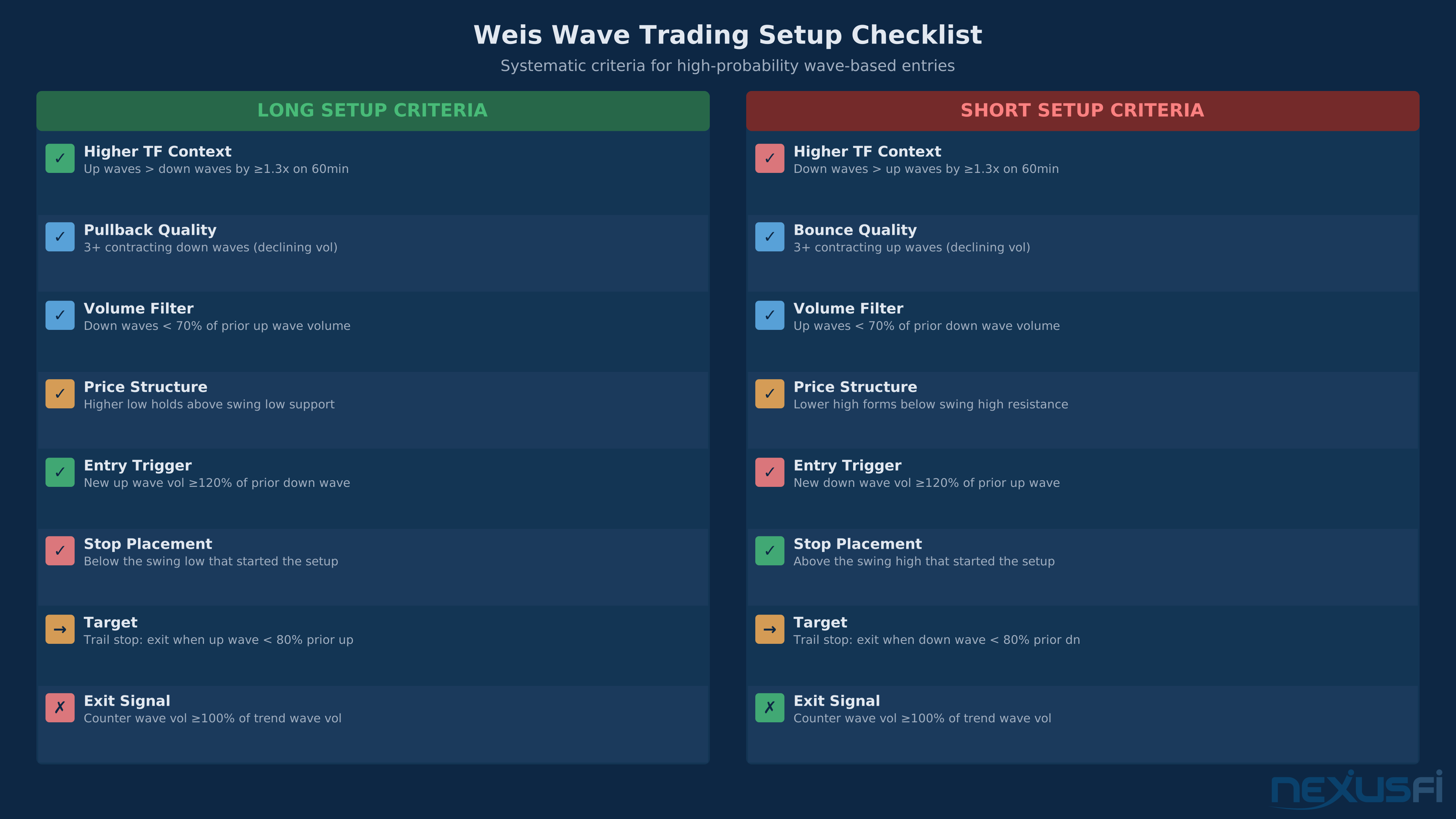
Setup criteria for long entry:
- Higher timeframe up waves exceed down waves in volume by ≥1.3x (bullish wave context)
- Pullback produces declining down wave volume on execution timeframe (3 or more contracting waves)
- New up wave emerges with volume expansion ≥120% of the prior down wave
- Price has not violated a key structural low (support holds)
Setup criteria for short entry (mirror):
- Down waves exceed up waves in volume by ≥1.3x on higher timeframe
- Bounce produces declining up wave volume
- New down wave shows volume expansion
- Price has not violated a key structural high
Exit signals:
- Close 50% of position when the current wave volume falls below 80% of the entry wave volume (momentum fading)
- Close remainder when a countertrend wave appears with volume ≥100% of the trend wave (momentum reversal)
- Hard stop: price violates the swing low/high that initiated the entry setup
This framework doesn't eliminate losses. What it does is keep you in trades with volume confirmation and get you out systematically when volume stops confirming the directional thesis.
Integration with the NexusFi Community #
NexusFi's Wyckoff-focused trading journals provide some of the deepest practitioner-level Weis Wave analysis available online. The S&P Chronicles by @Feibel demonstrates daily application across 461 replies with annotated charts showing wave volume decisions in real market conditions. The Wyckoff Speculator journal by @David_R goes even deeper into the Wyckoff theory that underlies the wave methodology.
For NinjaTrader-specific implementation questions, the Weis Wave Delta NT8 thread is the most current community resource, with @Gillrymhes's indicator providing a functional starting point that many members have adapted to their own specifications.
Summary #
Weis Wave Volume Analysis quantifies what Wyckoff identified qualitatively in the 1920s: professional operators reveal themselves through the volume signature of their activity across market swings. When effort fails to produce proportional results, the trend is running out of committed participants. When volume surges without price follow-through, absorption is occurring. When successive waves in one direction carry declining volume, momentum is deteriorating.
The tool doesn't replace judgment — it enhances it. Combined with Volume Profile for spatial context, Delta for microstructure confirmation, and Wyckoff's four-phase model for the overall market narrative, Weis Wave gives you a more complete picture of market mechanics than any single indicator can provide.
The practitioners who use it most effectively don't mechanically trade signals. They read the wave volume story — effort, result, momentum, exhaustion, absorption — and combine that story with everything else they know about where price is and what the broader structure suggests.
That's the game. Weis Wave is just one of the best tools for playing it.
Knowledge Map
Go Deeper
Build on this knowledgeReferences This Article
Articles that build on this topicCitations
- — Diary of a simple price action trader (2023) 👍 2
- — wave volume indicator (2011) 👍 58
- — Weis Wave Delta NT8 (2022) 👍 21
- — The S&P Chronicles - Wyckoff, VSA and Price Action (2018) 👍 7
- — The S&P Chronicles - Wyckoff, VSA and Price Action (2017) 👍 7
- — The S&P Chronicles - Wyckoff, VSA and Price Action (2017) 👍 8
- — The S&P Chronicles - Wyckoff, VSA and Price Action (2017) 👍 6
- — The S&P Chronicles - Wyckoff, VSA and Price Action (2018) 👍 5
- — The S&P Chronicles - Wyckoff, VSA and Price Action (2017) 👍 8
- — Wyckoff Speculator (2012) 👍 7
- — wave volume indicator (2013) 👍 4
- — AMA: FuturesTrader71 (FT71) / Morad Askar (2013) 👍 3
- — Wyckoff 2.0 (2013) 👍 37
- — Introduce yourself here! (2025) 👍 1