



Time & Sales (Tape Reading): The Raw Transaction Feed in Futures Trading
Overview #
Time & Sales — the tape — is the raw, unfiltered record of every transaction that prints in a market. Every contract that changes hands shows up here: price, size, and time. No interpretation, no aggregation, no smoothing. Just the actual transactions, scrolling by in real time.
For futures traders, the tape is the most granular data source available. It shows you what actually happened — not what someone intended (that's the DOM), not what accumulated over a bar (that's a footprint chart), but the individual prints as they fire. A single 500-lot print at the offer tells you something different than fifty 10-lot prints at the same price. The tape shows you the difference.
Tape reading was the original form of technical analysis. Jesse Livermore read the ticker tape in the early 1900s. A century later, the mechanics are digital but the core logic is identical: watch what size is doing, where it's doing it, and how fast.
Key Concepts #
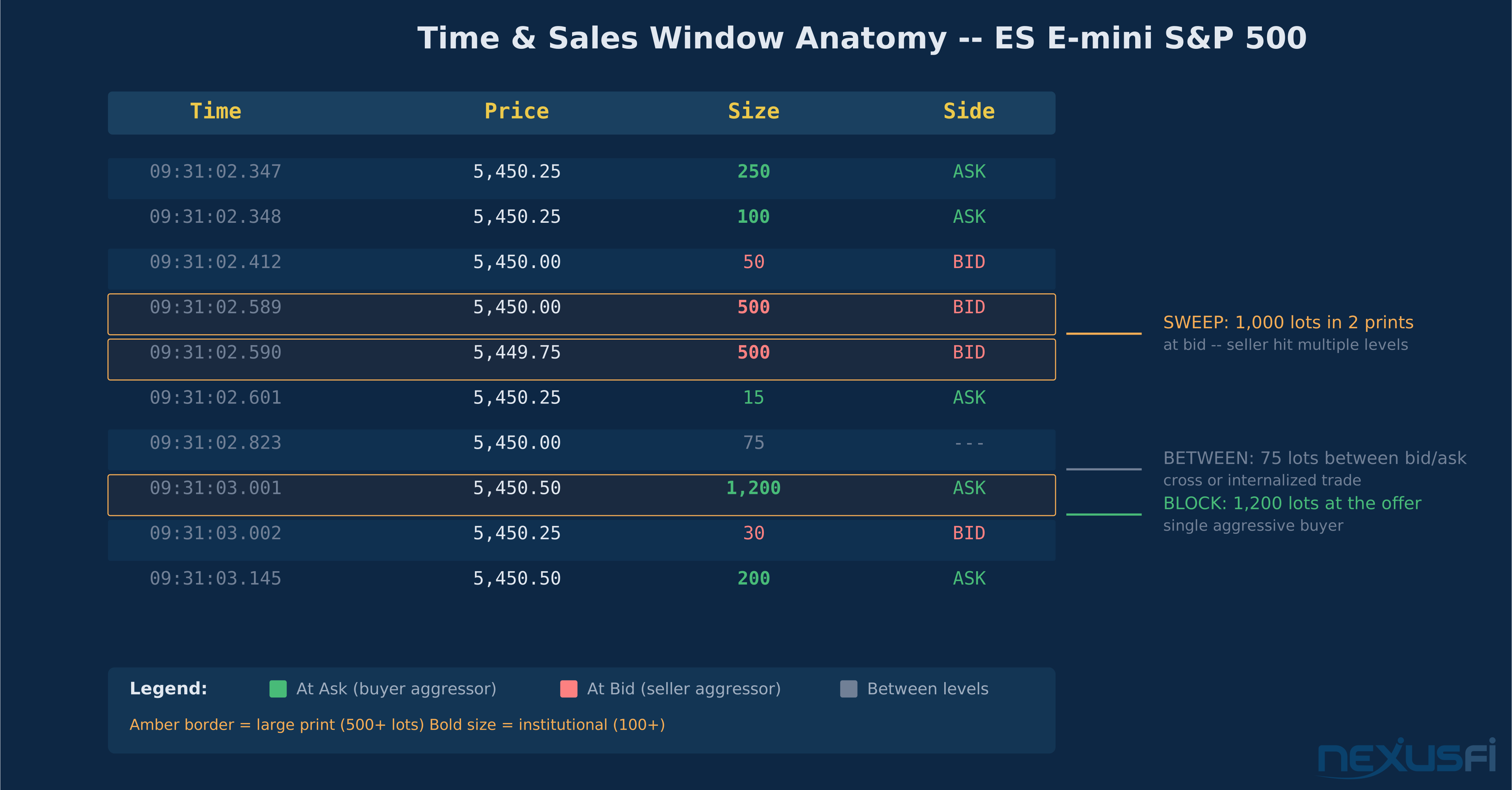
Print: A single executed trade recorded on the Time & Sales feed. Each print contains a timestamp, price, and size (number of contracts).
Aggressor: The party that initiates the trade by sending a market order. A print at the ask means the buyer was the aggressor (they "lifted the offer"). A print at the bid means the seller was the aggressor (they "hit the bid").
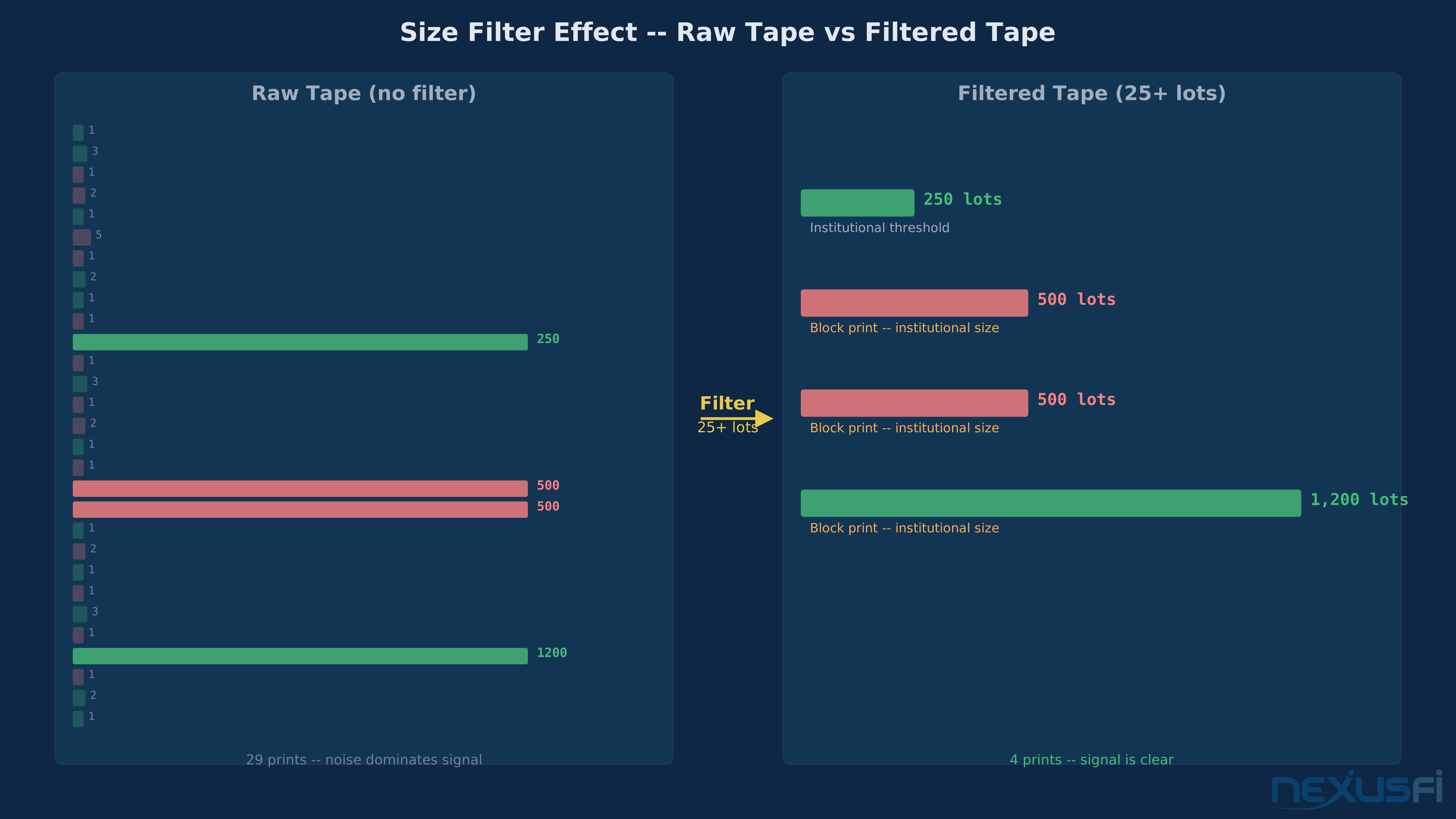
Size filter: A minimum contract threshold applied to the tape to eliminate noise from small retail orders. Common filters: 25+ lots on ES, 10+ on NQ, 50+ on CL. The goal is to isolate institutional-size prints.
Block trade: A large print or rapid sequence of prints from a single participant. On ES, anything above 100 contracts in a single print qualifies. Algorithmic execution often splits blocks into smaller pieces to reduce market impact.
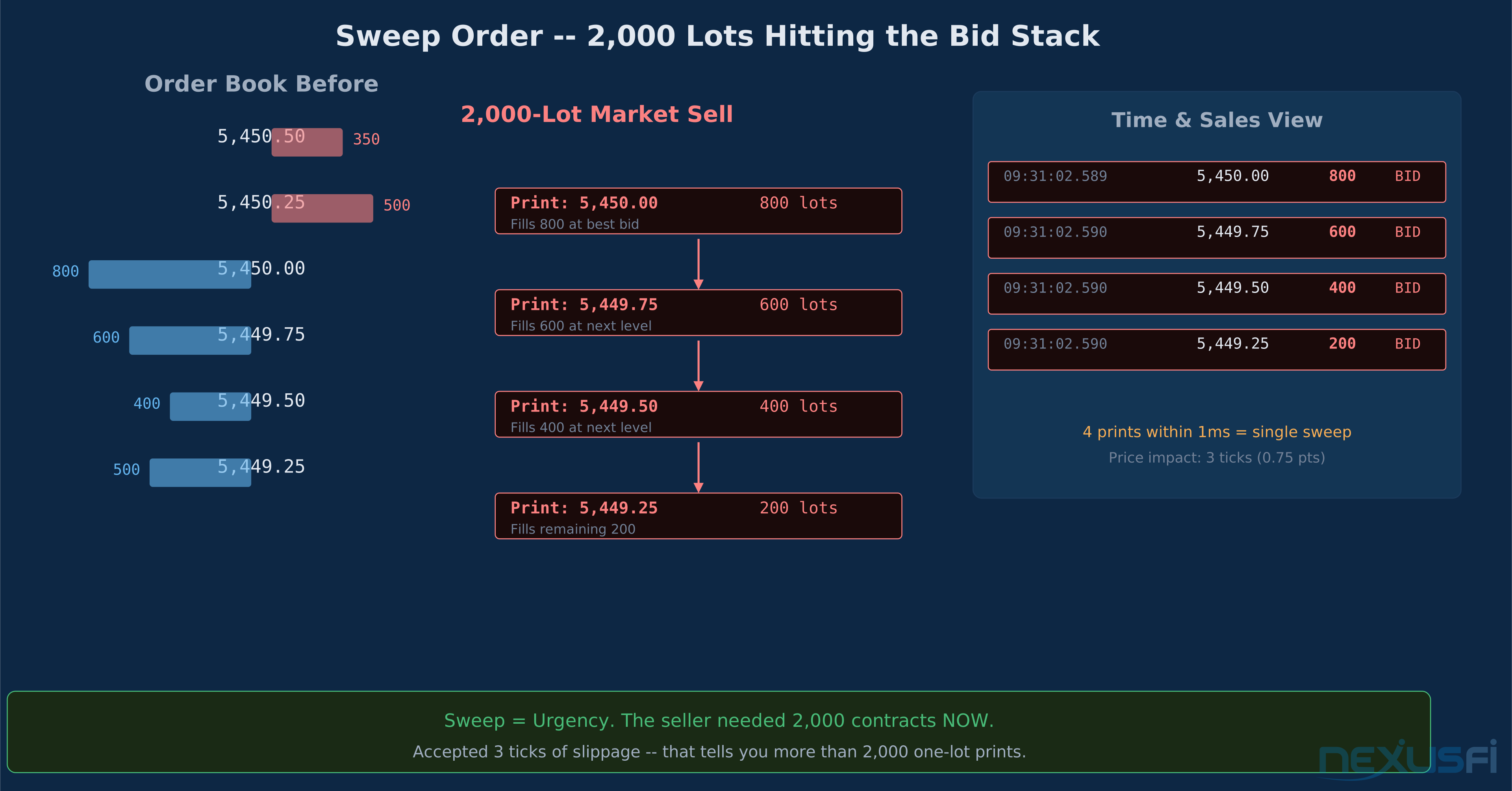
Sweep: A market order large enough to consume multiple price levels in the order book. A 2,000-lot market sell on ES might print at 5450.00, 5449.75, and 5449.50 as it sweeps through the bid stack. Sweeps signal urgency — the aggressor wants in now, regardless of slippage.
Tape speed: The velocity at which prints scroll. Fast tape = high participation, high volume, directional conviction. Slow tape = low interest, consolidation, range-bound conditions.
How Time & Sales Works #
The Data Feed #
Every futures exchange reports each matched trade to the consolidated data feed. The data includes:
- Timestamp — when the match occurred (millisecond precision on CME)
- Price — the exact price at which the trade executed
- Size — the number of contracts in the trade
- Aggressor side — whether the trade printed at the bid or ask
Your trading platform receives this feed and displays it as a scrolling list — the Time & Sales window. Most platforms color-code prints: green or blue for trades at the ask (buyer-initiated), red for trades at the bid (seller-initiated), and white or gray for trades between the bid and ask.
Prints at Bid vs Ask #
This classification matters more than most traders realize. A print at the ask means a buyer sent a market order that was filled by a resting limit sell order. A print at the bid means a seller sent a market order that was filled by a resting limit buy. The aggressor is the one who crossed the spread.
As @Fat Tails [3] explains, a large order can sweep through multiple levels — a 2,000-lot market sell on ES might print well below the best bid as it clears out resting buy orders. This doesn't automatically mean bearish: "Whether this is a bullish or bearish sign is difficult to determine. Generally, one would consider a larger sell order bearish. However, this would only be true if the move carries through."
Prints between the bid and ask typically come from internalized crosses or negotiated block trades. They don't represent aggressive directional intent.
Size Is Everything #
The single most important variable on the tape is size. Not direction, not speed — size. @Orion [1] puts it directly: "In my opinion, in order to successfully read the tape, size is the only thing that matters to you. Not what 100 five-lot traders are doing. Or 1,000 one-lot traders, but the real size, the size that moves the market."
This is the critical distinction between tape reading and simply watching T&S scroll by. Retail flow is noise. A thousand 1-lot prints at the bid tells you retail is selling — which tells you almost nothing. A single 500-lot print at the bid tells you an institution just hit the market — which changes the entire read.
Most tape readers apply a size filter to cut through the noise. @Orion uses a 25 or 50 size filter on ES with a block filter of 100: any instantaneous string of orders at 25+ contracts gets treated as a block buy or sell. This drastically reduces the visual noise and lets you focus on what actually moves price.
Reading the Tape in Practice #
Context Is King #
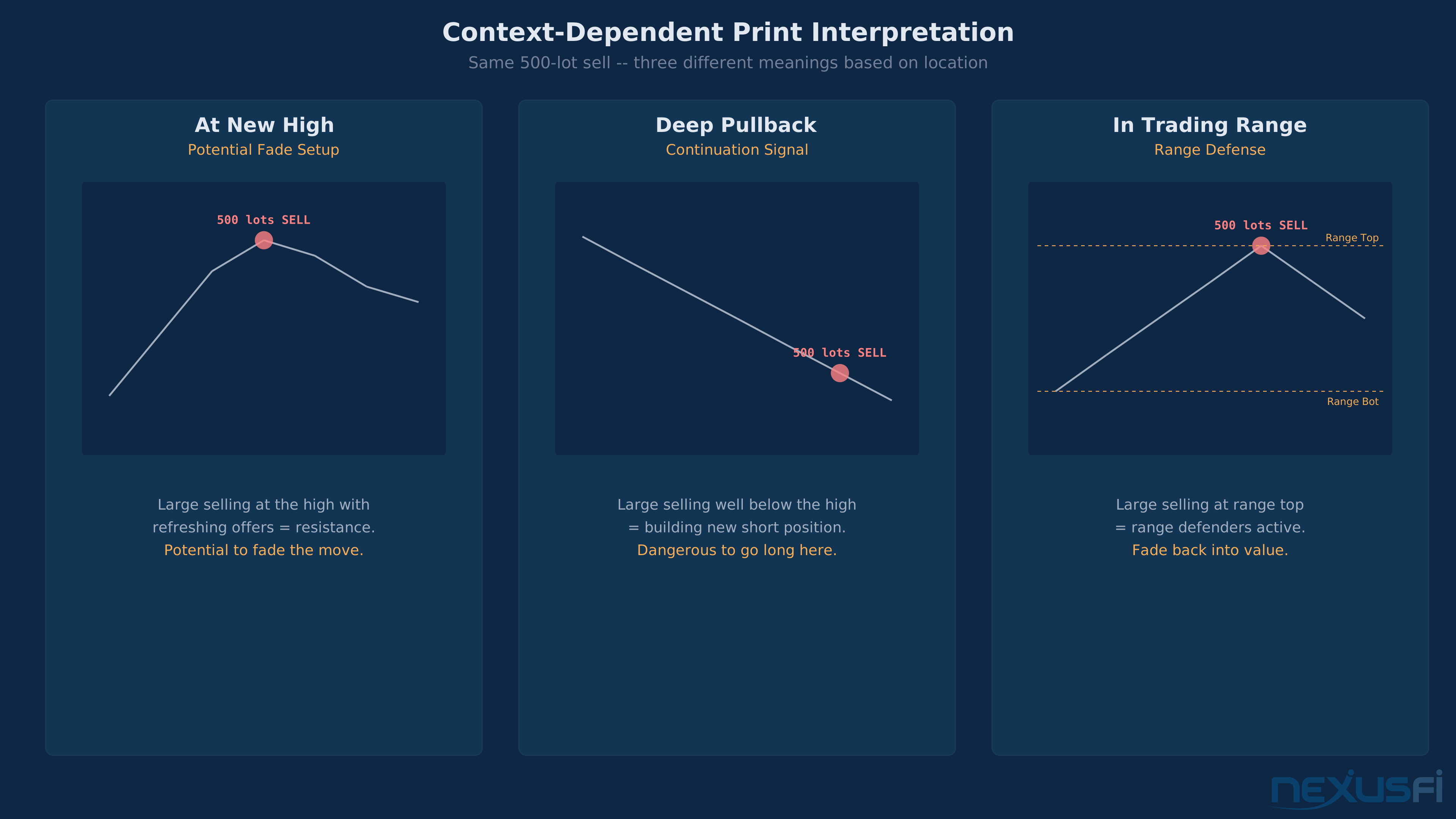
A large print means nothing in isolation. The same 500-lot buy at the offer means completely different things depending on where it prints and what preceded it.
@Orion [1] provides the framework: "It's all about where large size steps up to buy or sell the market, and the context of what has happened preceding it." His examples:
At a high: Price puts in a new high and pulls back four ticks. Large size steps up to sell at the high with limits refreshing on the offer = potential fade opportunity. But large size buying a couple ticks below the high = potential breakout play.
Off a high: Price falls six or more ticks from the high. Strong buying via large prints down there indicates large players trying to push back through the high — shorting becomes dangerous. But if the tape shows little buying and strong selling steps in, "that is how reversals usually happen."
In a range: The tape tells you whether range participants or breakout participants are winning. If price approaches the range high slowly (4,000 ticks over 10 minutes) but then races to the other side on large prints (1,500 ticks in 3 minutes), the range may be about to break.
Tape Speed and Flow Density #
@bloom [2] emphasizes that the speed of the tape carries information independent of individual print sizes: "Whether it moves quickly and, so, there is a large flow of orders, and good volume. Or whether it moves slowly and in spurts, with pauses, which means that large order flow is not tight, and that low volume."
Fast tape at a key price = genuine interest, heavy participation, likely directional resolution. Slow tape at a key price = probing, indecision, higher probability of reversal or consolidation.
@bloom also stresses starting simple — look at monochrome tape first (ignore bid/ask coloring) and focus purely on print size and speed at important prices: "Important price is such a mark as HLOC of previous few days, gaps, HLOC of the current day. When the market comes to these marks, carefully watch the tape."
The Reaction Chain #
@bloom [2] describes a universal mechanism for tape-based trades:
- Large prints appear — this is the trigger, without which you don't act
- Market reaction occurs — a mix of professional and retail response
- Evaluate reaction strength — strong reactions (fast tape, large follow-through) are easiest to trade
If the reaction to large prints is dominated by other large prints = professional reaction, high conviction. If dominated by small prints = retail reaction, less reliable. Mixed is typical.
Defending Positions #
Large players don't just enter and hope. They actively defend their positions. @Orion describes watching ES where "every time price rose to between 1763.50 to 1765, large limits on the offer, constant refreshing of the offer, large selling at market. Those who had forcibly pushed the market down were in no way going to allow it to go against them past a certain point."
This defensive activity is visible on the tape as repeated large prints in one direction at specific price levels — a pattern that tells you someone is drawing a line in the sand.
Profit Taking vs New Positioning #
Not all large prints against the trend signal reversal. @Orion's rule: "If the selling doesn't stop the market, chances are it's profit taking. If it's not profit taking, it's arbitrage. If the selling does stop the market, chances are it's going to at the very least become a resistance area."
The distinction: profit taking appears as occasional large prints that don't arrest momentum. New aggressive positioning appears as sustained large prints that halt or reverse price movement.
Algorithmic Execution and Modern Tape #
The tape in 2026 is dominated by algorithmic execution. Large institutions rarely drop a 5,000-lot order at market. Instead, they use execution algorithms that:
- Slice orders into smaller pieces (50-100 lots) spread over seconds or minutes
- Use iceberg orders that hide true size behind small visible quantities
- Time execution around reference prices (VWAP, TWAP) to minimize market impact
This makes tape reading harder than it was a decade ago, but not impossible. As @Fat Tails [3] notes about iceberg detection: "Even larger traders may use iceberg orders to inject new limit buy orders into the order book whenever the price drops. If they do that carefully, you will notice sell orders of eager sellers and prints below the best bid, but next to no prints above the best ask."
The key tell for hidden algorithmic activity: the tape shows repeated prints of identical size at the same price level, appearing like clockwork. A human doesn't sell exactly 50 lots at exactly 5450.25 twelve times in ninety seconds. An algorithm does.
Time & Sales vs Other Order Flow Tools #
T&S vs DOM #
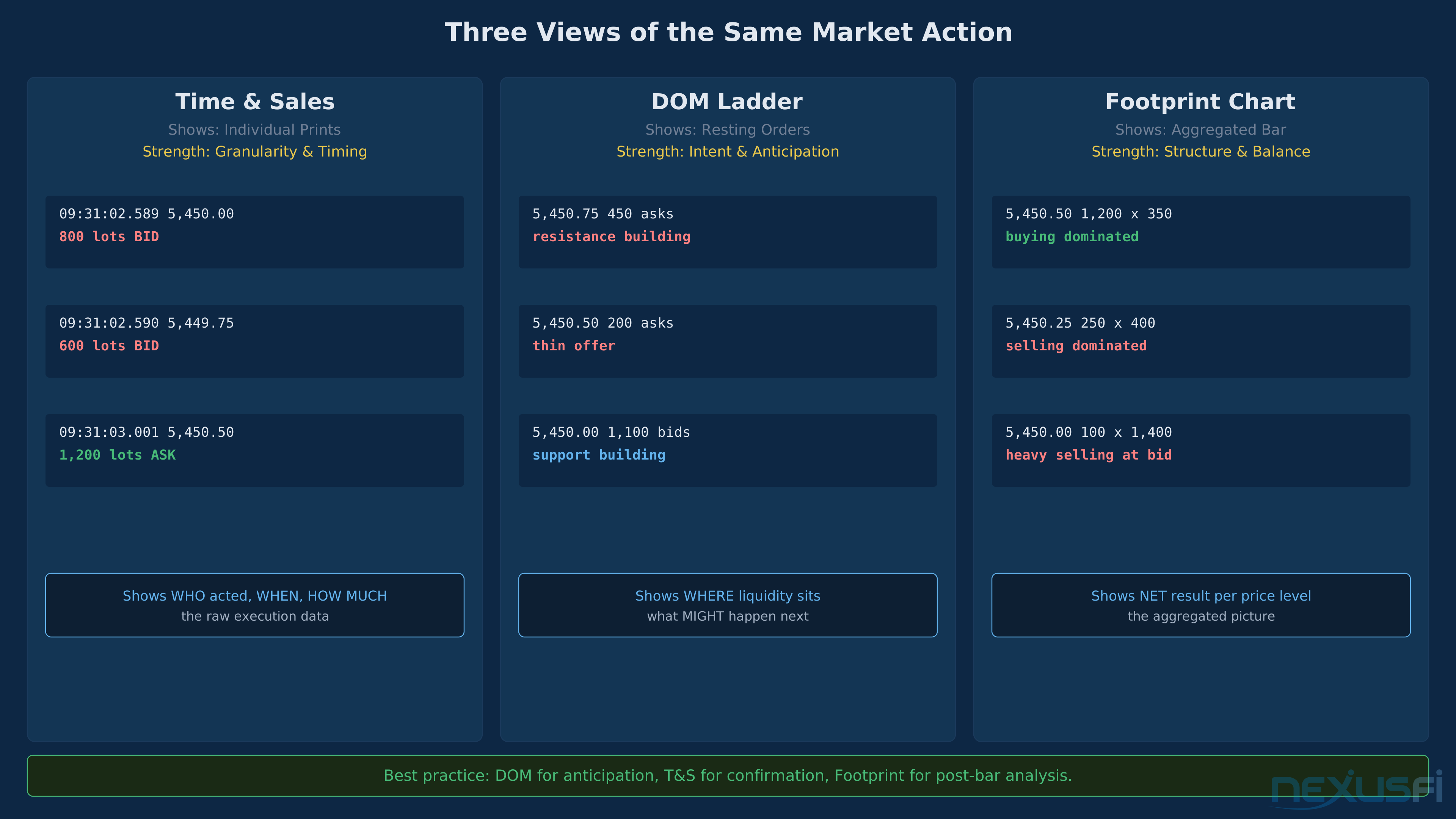
The DOM shows intent — resting orders that may or may not execute. T&S shows action — trades that already happened. The DOM can be spoofed with phantom orders that get pulled before execution. The tape can't be faked — every print is a real transaction.
Use both: DOM for reading intent and anticipating pressure, T&S for confirming actual execution and identifying who's really stepping up.
T&S vs Footprint Charts #
Footprint charts aggregate T&S data into bar-level bid/ask volume. They're easier to read historically but lose the granularity of individual prints and timing. You can see that 3,000 contracts traded at a price during a bar, but you can't tell whether that was one 3,000-lot sweep or 3,000 one-lots trickling in over five minutes.
T&S gives you the micro-level detail. Footprint charts give you the macro-level structure. Combine them: read the footprint for context, then drill into the tape when you need to know how volume printed at a specific level.
T&S vs Delta/CVD #
Delta and CVD track the net aggressor balance over time — a running score of buying vs selling pressure. This is derived from T&S data but abstracts away the individual prints. Delta tells you the net picture. T&S tells you the composition — was that +500 delta from five 100-lot buys, or from one 500-lot buy? The trading implications are different.
Platform Configuration Tips #
Most platforms let you customize the T&S window:
- Size filter: Set a minimum to eliminate retail noise. Start with 10-25 contracts on ES, adjust based on session volume
- Color coding: Use distinct colors for bid vs ask prints. Some traders prefer monochrome first to focus purely on size
- Alert thresholds: Set audible or visual alerts for prints above a specific size (500+ on ES, for example)
- Aggregation window: Some platforms group prints within a time window (e.g., all prints within 50ms). This can reveal algorithmic slicing
- Speed: Autofit scroll speed to prevent data loss during fast markets
Limitations #
The tape doesn't tell you why someone traded. A 1,000-lot sell at the bid could be:
- A new short position
- A long exiting
- An arbitrageur hedging
- A spread trader legging into a position
- An algorithm rebalancing
You can't distinguish these from the print alone. Context, location, and follow-through narrow the possibilities, but certainty isn't available. The best tape readers develop probabilistic reads — "given that large selling appeared here, after this price action, the most likely interpretation is..."
The tape also can't show you dark pool activity, exchange-for-physical transactions, or block trades negotiated off-screen. These represent a meaningful share of institutional flow that never appears on the public T&S feed.
Integration with Other Tools #
Tape reading reaches full power when combined with:
- DOM: Read intent on the ladder, confirm with actual prints on the tape
- Volume Profile: Identify key levels (POC, VA edges, single prints), then watch the tape when price reaches them
- Footprint charts: Use footprint for bar-level aggregation, tape for granular confirmation
- Delta/CVD: Track cumulative aggressor balance, cross-reference with individual large prints
- Absorption patterns: Spot absorption on the DOM and footprint, confirm with tape (large prints being absorbed without price movement)
Knowledge Map
Prerequisites
Understand these firstGo Deeper
Build on this knowledgeReferences This Article
Articles that build on this topicCitations
- — My Thesis on Tape Reading (2013) 👍 26“It seems that many people try to implement tape reading into their trading, the subject in itself and what information that can be gained from it, to me, is a fascinating subject.”
- — Tape is my shape (tape reading, time and sales) (2011) 👍 34“Hello from Russia. Say thank you Google translator for meaning. I myself with the English at the dog. Woof woof. In any case, glad to share experience with overseas counterparts. If you like the post, do not bother, write a response. Your Alex.”
- — If an transaction occurs BELOW the bid vrs AT the bid a bullish or bearish move (2014) 👍 4“A larger order may sweep through several levels of the order book at once. In that case a transaction may print below the best bid. Example: The screenshot below shows the NinjaTrader DOM for ES 06-14 a few minutes ago. The best bid is at 1845.”
- — Tape is my shape (tape reading, time and sales) (2012) 👍 19“This is a video for someone that asked me to record my thoughts on a live market to help them understand what to look for in the order flow. The first 15 minutes is commentary and worth listening to for those new to order flow.”
- — Tape is my shape (tape reading, time and sales) (2012) 👍 10“There's 2 things that come into play here. 1 - the 3 types of reversal 2 - the participation in the pullback to your entry point Reversals - By that, I mean the top/bottom of ANY swing high/low.”