



From Discretionary to Systematic: Building Your First Automated Futures Strategy
Overview #
Most traders start discretionary. You watch price, feel the market, pull the trigger on a read you can't fully articulate. When it works, it feels like skill. When it stops working, you can't separate what actually gave you edge from what was just the market being friendly.
The transition to systematic trading is the most demanding evolution in a trader's career — and the most permanent. Once you've seen a rule-based system run without emotional interference, discretionary trading feels like guessing with extra steps.
This guide covers the complete path: why discretionary approaches hit a ceiling, how to codify a real edge, the testing and validation frameworks that separate strong systems from lucky ones, and the practical path to running your first automated strategy live.
Futures are the right vehicle for this transition. Exchange-traded, liquid, tax-efficient under Section 1256, and accessible through powerful platforms like NinjaTrader 8 and Sierra Chart, futures give you the clean tick data and low-cost execution that algorithmic strategies require.
Why Discretionary Trading Hits a Ceiling #
The discretionary trader's ceiling isn't skill — it's bandwidth. You can read one market at a time, manage one position fully, and trade consistently only when you're mentally fresh. These constraints are not weaknesses; they're the reality of human cognition applied to market reading.
NexusFi member @tigertrader has documented this mathematically: markets are trending only about 20% of the time. The other 80% is chop, balance, or directional noise that punishes traders who can't tell the difference and stay out.
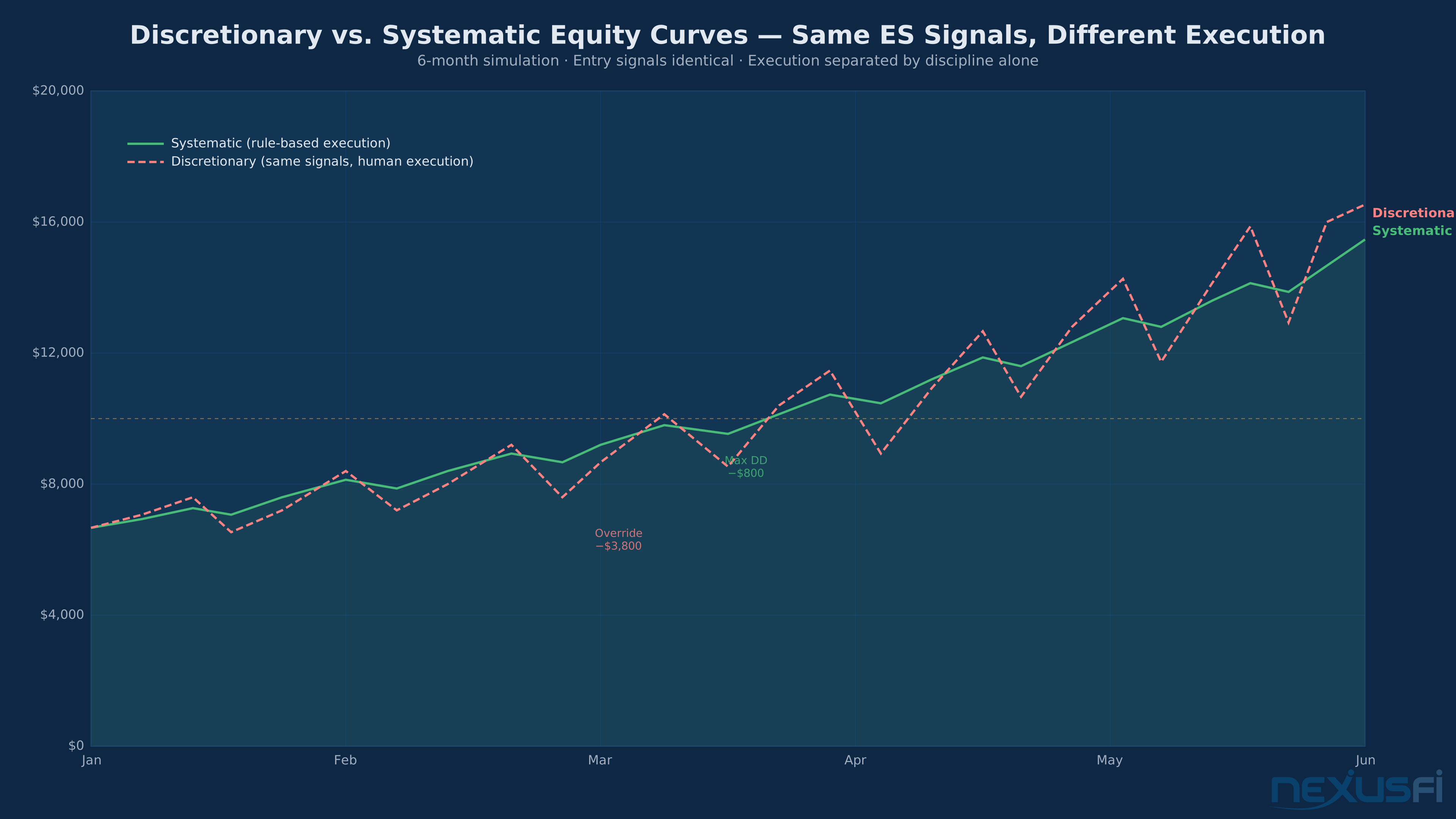
That selectivity is exactly what systematic trading enforces. A rule-based system doesn't need to be in the market when conditions aren't right. It simply doesn't trade. It doesn't get bored at 2 PM and force a setup. It doesn't revenge-trade after a loss or get cocky after a win. These behavioral traits — which cost discretionary traders more than their losing setups — simply don't exist in code.
The ceiling has three layers:
Consistency Layer: Your mental state, sleep quality, and account P&L affect every discretionary decision differently. A rule-based system is identical every session — what you backtest is what you deploy.
Scaling Layer: You cannot run five strategies simultaneously across ES, NQ, CL, ZN, and 6E. @SMCJB does exactly that, all validated through rigorous walk-forward. [1]
Documentation Layer: Most discretionary traders can't write down exactly what they do. They "feel" when the setup is right. That feeling may contain real edge — but edge you can't document is edge you can't improve, test, or defend.
The transition begins the moment you ask: "Could I write down what I do precisely enough that a computer could do it?"
The transition from discretionary to systematic is permanent for most traders who complete it. Not because they're forced to stay systematic — because they can't go back. Once you've seen 300 trades execute exactly as designed without emotional interference, discretionary "feel" trading looks like what it always was: a form of guessing that sometimes worked.
The Codification Process: From Intuition to Rules #
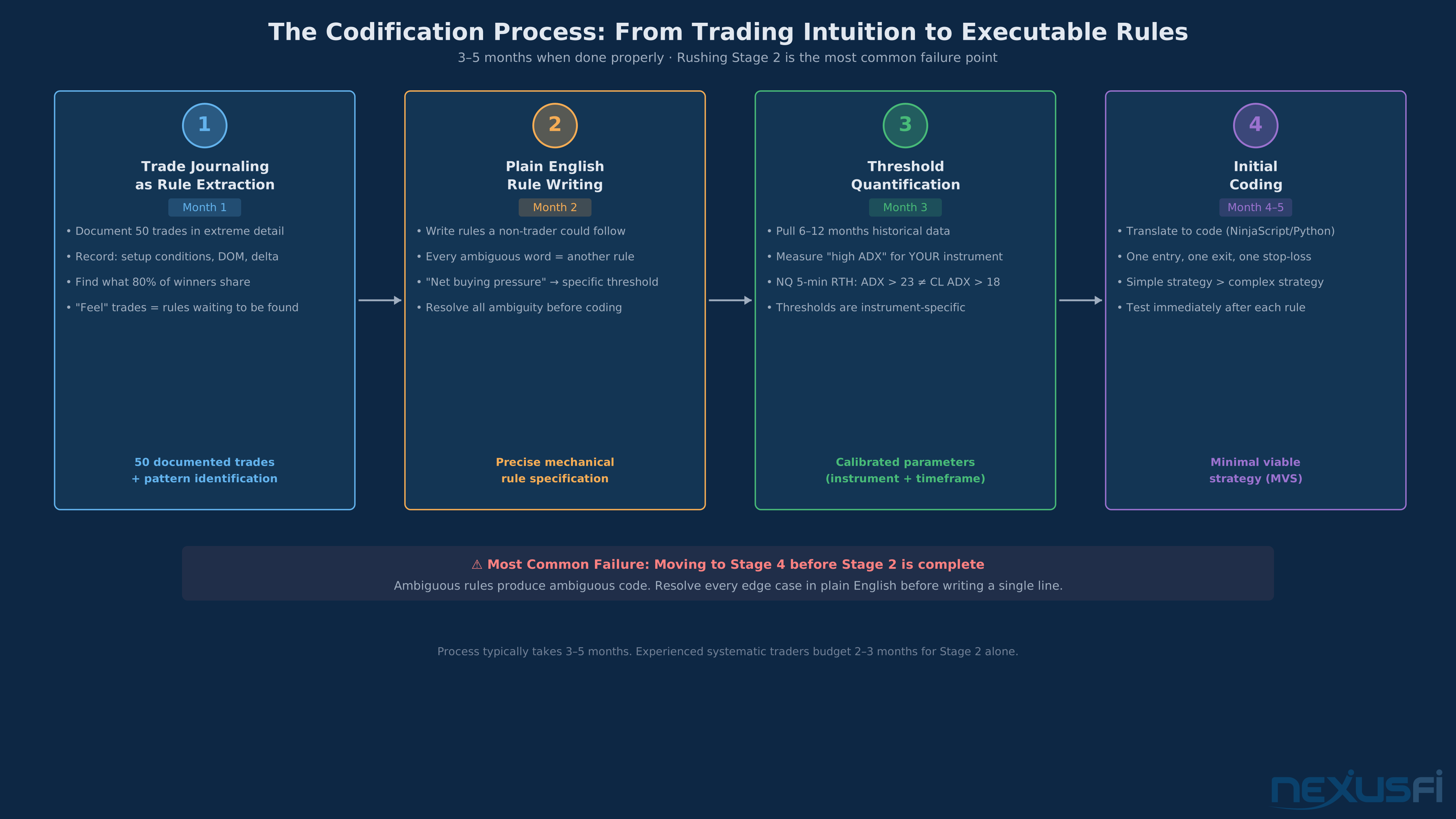
This is where most traders get stuck. They know they have an edge — five years of reading CL order flow don't vanish overnight — but they struggle to reduce it to code. The codification process has four stages.
Stage 1: Trade Journaling as Rule Extraction
Before writing a single line of code, document 50 trades in extreme detail. Not just entry/exit and P&L — the setup conditions, the specific confluence you waited for, what you saw on the DOM, where the delta was, what the prior session range told you. NexusFi member @shodson did exactly this when transitioning his discretionary approach: [2]
"This journal will track my progress in trading in an automated fashion... a good portion of my trading is already automated, based on ideas that I have had to refine from intuition into hard rules."
@shodson's earlier observation about smooth equity curves also applies: a backtest that looks too good is a warning sign, not validation. [7]
After 50 documented trades, patterns emerge. You'll find that 80% of your winners share three or four specific conditions. The other 20% represent "feel" trades — situations where you bent your rules because something seemed right. These are exactly the setups a systematic approach filters out.
Stage 2: Writing the Logic in Plain English
Before coding, write your rules in plain English, precise enough that someone who doesn't trade could execute them mechanically:
"Enter long at market when: (1) price is above the 20-period EMA on the 5-minute chart, (2) the 5-minute ADX is above 25, (3) cumulative delta on the current bar shows net buying pressure, (4) the current price is within 2 ticks of the prior session's Value Area High, (5) the 15-minute trend is defined upward per a rising 50-EMA."
Every ambiguous word in that description ("net buying pressure") is a rule that needs further specification. This refinement process — the translation from intuition to precision — is where your actual edge gets discovered or lost.
Stage 3: Quantifying Thresholds
The most common failure in codification is leaving parameters undefined. "ADX above X" requires a specific X. "Strong delta" requires a specific threshold. These numbers come from one place: data.
Pull 6-12 months of data to calibrate thresholds for your specific instrument. NQ 5-minute RTH: ADX above 23 might separate trend from chop. CL: 18. Thresholds don't transfer — they must be calibrated per instrument. @ZB23 launched exactly this way: [3]
"I am going to start the transition to algo trading, because systematic, rules-based trading is better for me than discretionary trading... I just finished my Python course and I feel confident enough to code."
Stage 4: Initial Coding
Once your rules are precise and your thresholds are quantified, translation to code becomes mechanical. For NinjaTrader users, NinjaScript is the native choice. Sierra Chart users will find ACSIL (C++) gives more control over order handling. Python with the Rithmic or CQG APIs works for those building more complex logic.
The first version of your strategy should be as simple as possible. No machine learning, no regime detection, no portfolio weighting. One entry rule, one exit rule, one stop-loss rule. A simple strategy that works beats a complex one that might work.
See the full platform-specific NinjaScript strategy development guide for implementation details.
The Testing Framework #
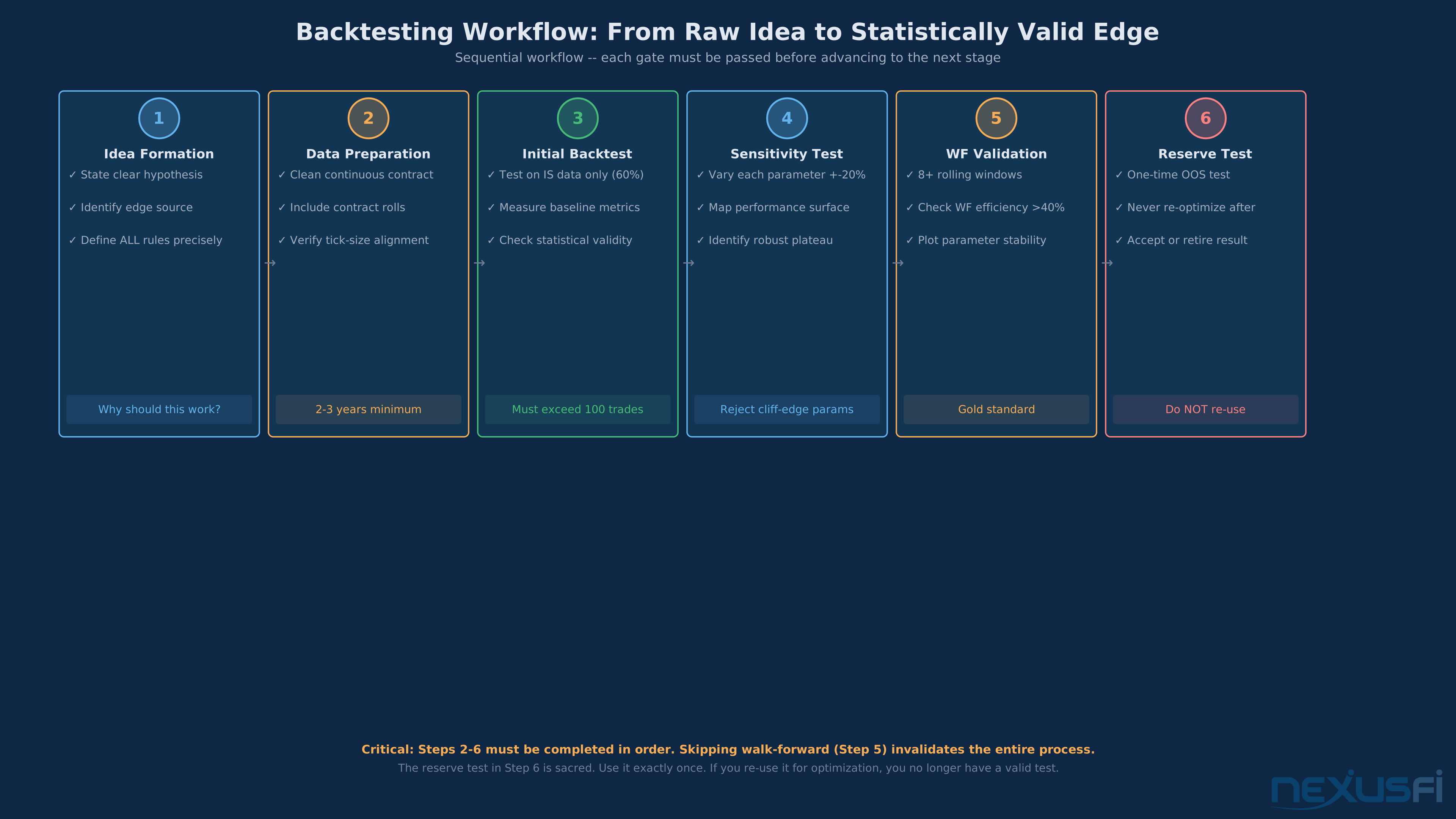
Codifying your rules is the beginning of the process, not the end. A strategy that fits historical data perfectly is likely overfit to that data. The testing framework exists to distinguish real edge from pattern-matching noise.
The Three Phases of Testing
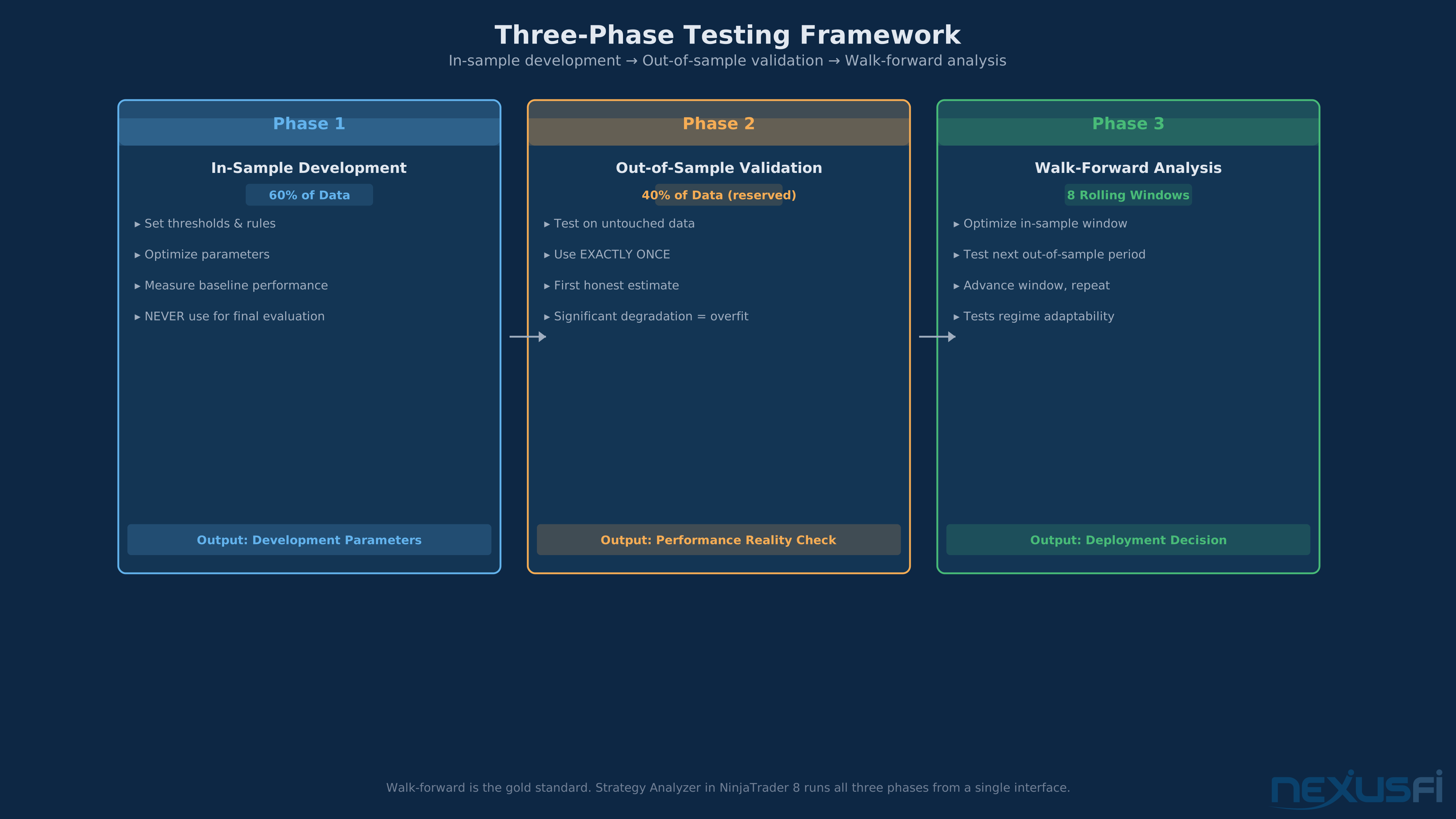
Phase 1 — In-Sample Development: Use 60% of your historical data to develop the strategy. This is where you set your thresholds, test your logic, and measure performance on known data. Never use this data for final evaluation.
Phase 2 — Out-of-Sample Validation: Keep 40% of your data strictly reserved. Once your Phase 1 development is complete, test on this untouched data exactly once. The out-of-sample result is your first honest performance estimate. If the strategy degrades much versus in-sample performance, you've overfit.
Phase 3 — Walk-Forward Analysis: The gold standard. Divide your entire data history into rolling windows — improve the strategy in-sample, then immediately test it on the next out-of-sample period, advance the window, repeat. This tests whether your strategy adapts to changing market conditions or requires constant re-optimization.
@kevinkdog's thread "Taking a Trading System Live" is the definitive NexusFi resource on this process — 529 replies documenting the progression from development through live deployment. [4]
His process: develop — walk-forward validate — sim trade (incubation) — go live. Every stage has a specific go/no-go decision criterion.
For a complete breakdown of walk-forward methodology, see Walk-Forward Analysis: The Stress Test That Separates Strong Strategies from Curve-Fit Miracles.
What Overfitting Looks Like
The most dangerous trap in systematic strategy development is curve-fitting: optimizing parameters until the historical performance looks strong, then discovering those parameters only worked because of specific historical conditions that don't repeat.
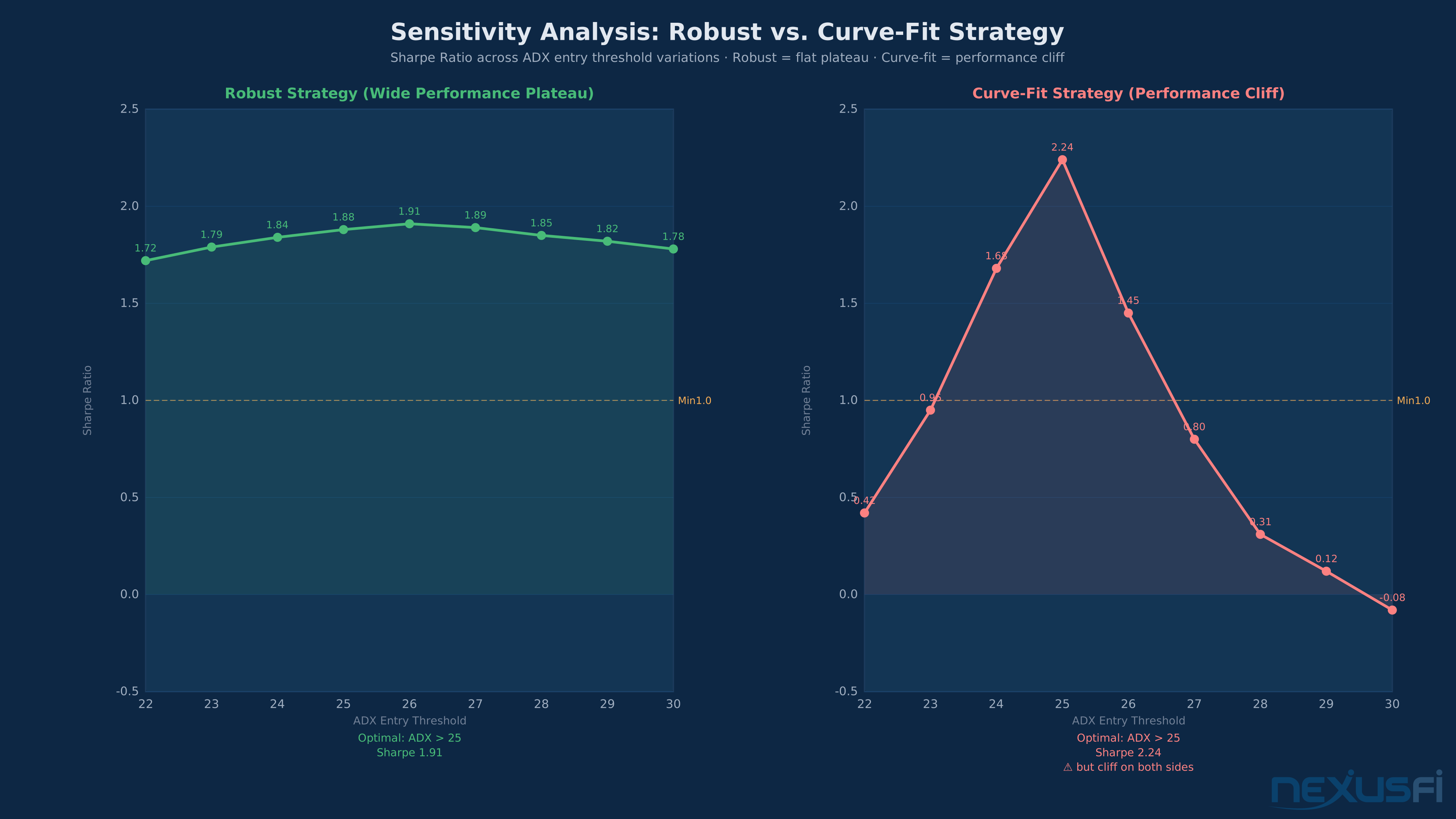
Signs your strategy is overfit:
- Equity curve is perfectly smooth in-sample but choppy out-of-sample
- Strategy requires very specific parameter values to produce good results (sensitivity analysis shows cliff-edge performance)
- The strategy takes a large number of trades in-sample but almost none out-of-sample
- Performance degrades immediately when extended 6 months beyond the development period
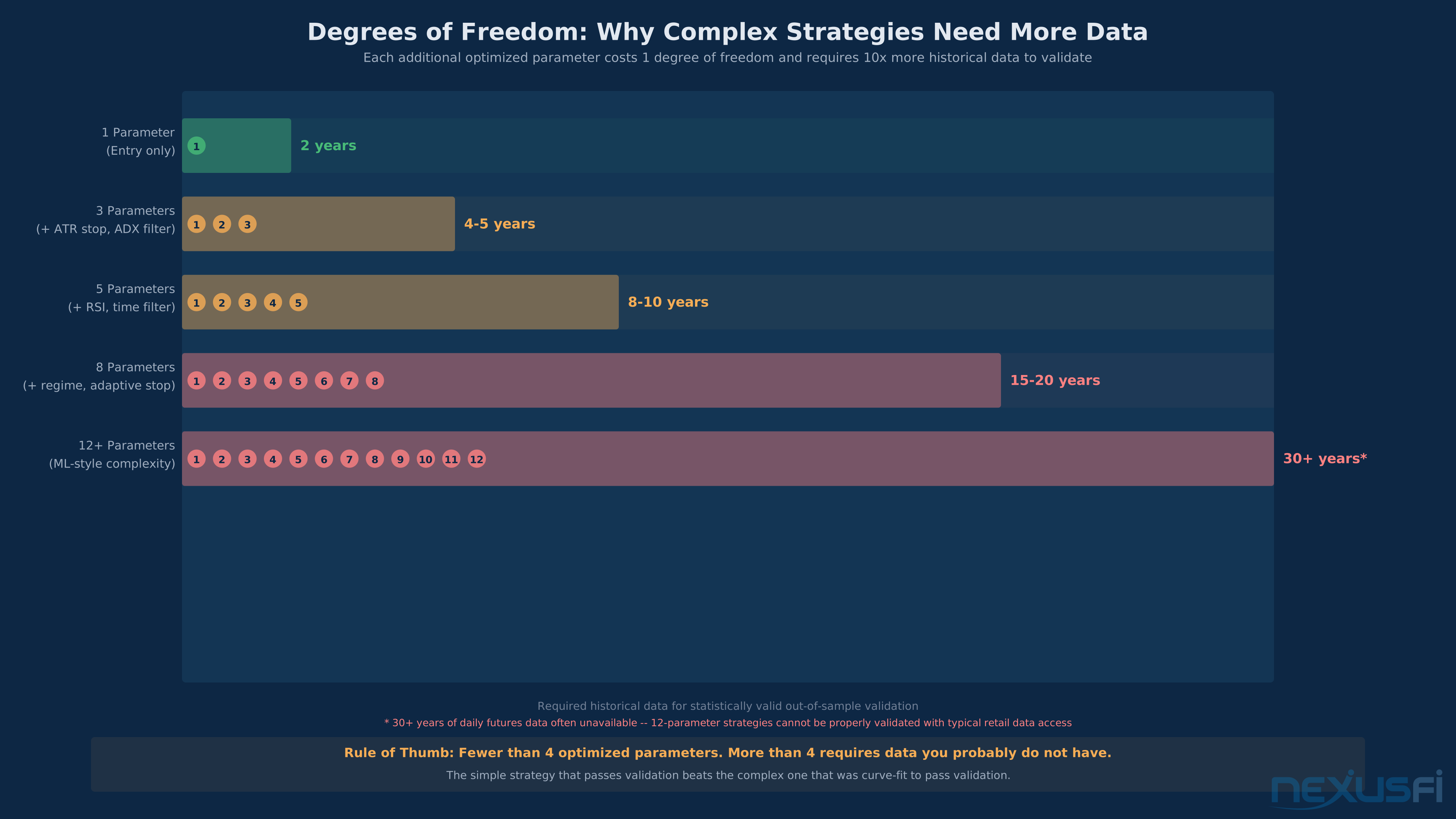
Member @jeffman spent years developing systems before finally achieving success — his breakthrough was stripping complexity entirely. His winning strategy has no parameters to improve. Counterintuitively, the fewer degrees of freedom a strategy has, the harder it is to overfit — and the more strong the out-of-sample performance. [5]
The degrees-of-freedom rule: Every adjustable parameter costs you one degree of freedom. A strategy with 10 adjustable parameters needs at least 10x more data to validate than a strategy with 1 parameter. Most retail traders don't have the data history to support the parameter counts they're testing.
Statistical Significance Requirements
A strategy that made money last Tuesday is not a proven edge. Statistical significance requires:
- Minimum 30 trades: Below this, no meaningful inference is possible; target 200+ for statistical validity
- Positive expectancy: Average P&L × win rate × (1/avg loss) > 1.0 before commissions
- Sharpe ratio > 1.0; Maximum drawdown < 20% of starting capital
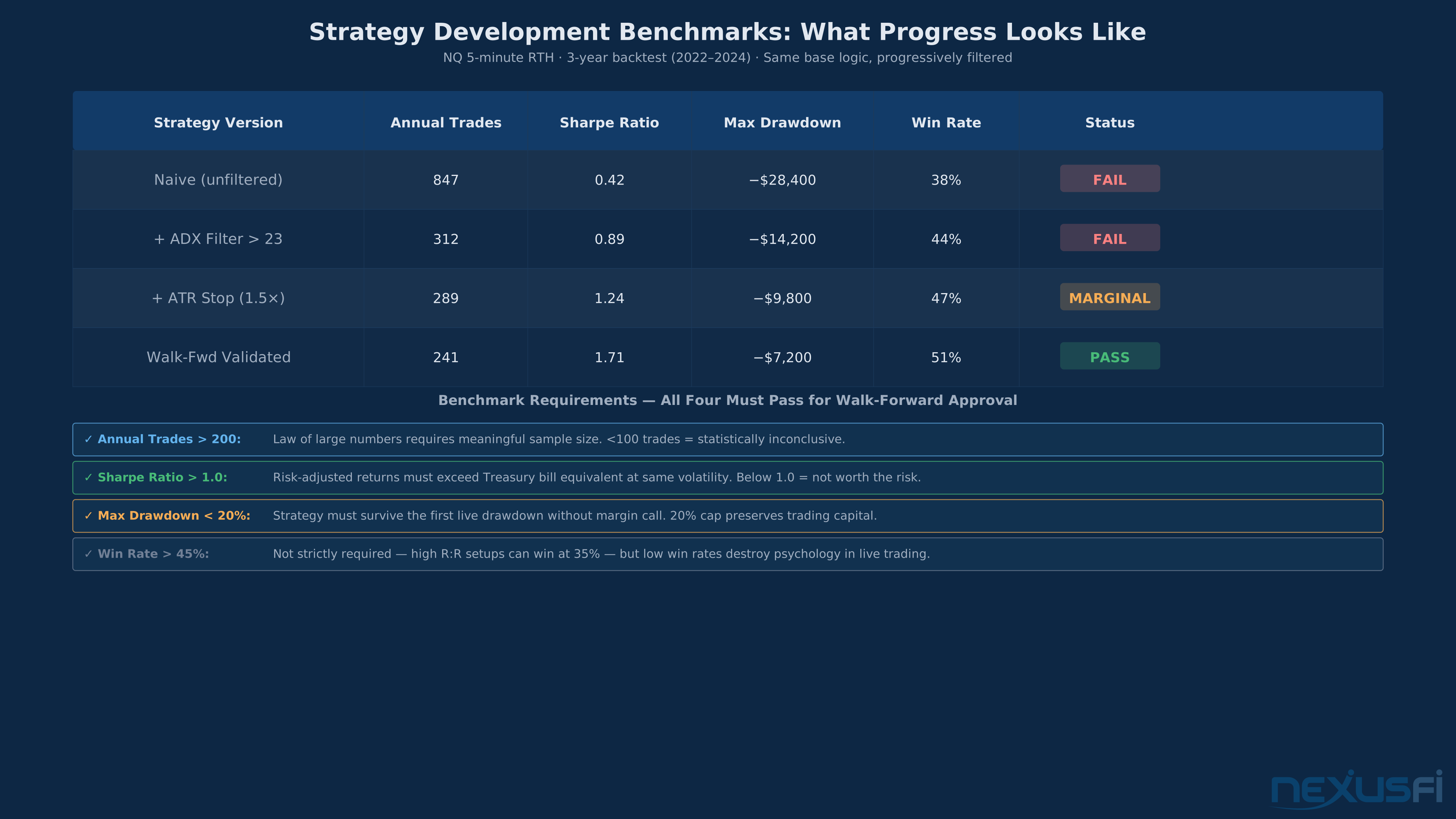
See Strategy Evaluation Metrics: Sharpe, Sortino, Drawdown, and the Numbers That Actually Matter for the complete measurement framework.
Incubation: The Bridge Between Testing and Live Trading #
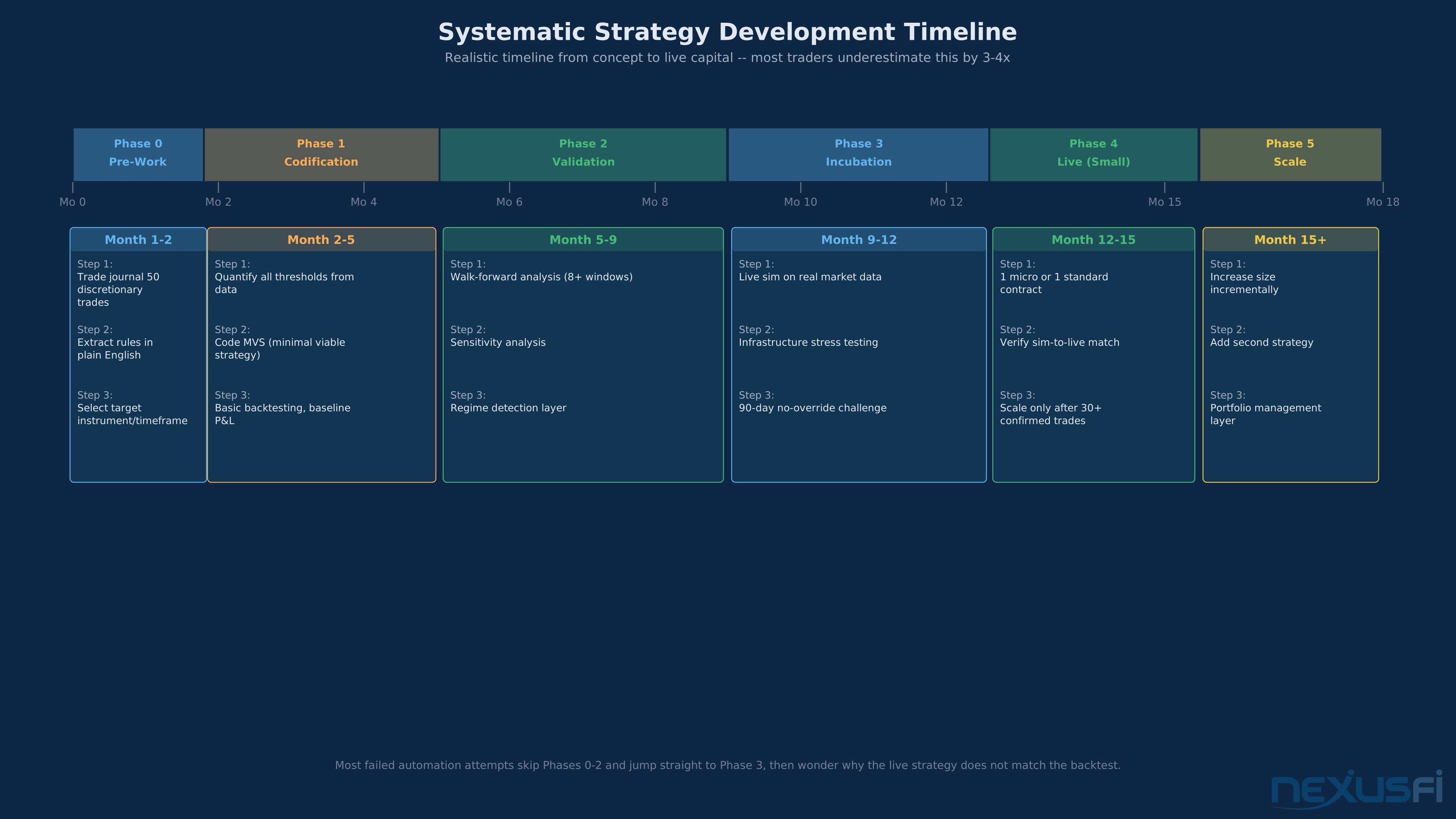
The most overlooked stage of the systematic transition is incubation: running your strategy in paper trading (sim mode) on live market data for 60-90 days before committing real capital.
Incubation serves three purposes:
1. Fills the Execution Gap: Backtests assume perfect fills at the close of the signal bar. Live trading doesn't work this way. Slippage, partial fills, order routing delays, and data latency all affect real performance. Incubation quantifies how much the execution gap costs you.
2. Tests Your Infrastructure: API connections drop, platforms restart, data feeds have gaps. Incubation stress-tests these failure modes before real capital is at risk.
3. Stress-Tests Your Psychology: Watching a strategy take a real-time loss on sim is different from reviewing backtest statistics. Incubation reveals whether you'll let it run at -$800 or override.
@NJAMC's "My Hunt for the Automated Holy Grail" journal documents this process with honesty — the psychological challenges of watching a system take losses you wouldn't take discretionarily. [6] His series of journal entries documenting the progression — from Fuzzy Logic to refined rule-based approaches — gives future systematic traders a realistic picture of the iteration required. [8] His early exploration of Fuzzy Logic and machine learning approaches reinforced a key lesson: complex models tuned to historical data fail out-of-sample at the same rate as simpler ones, just with more sophisticated-sounding excuses. [10]
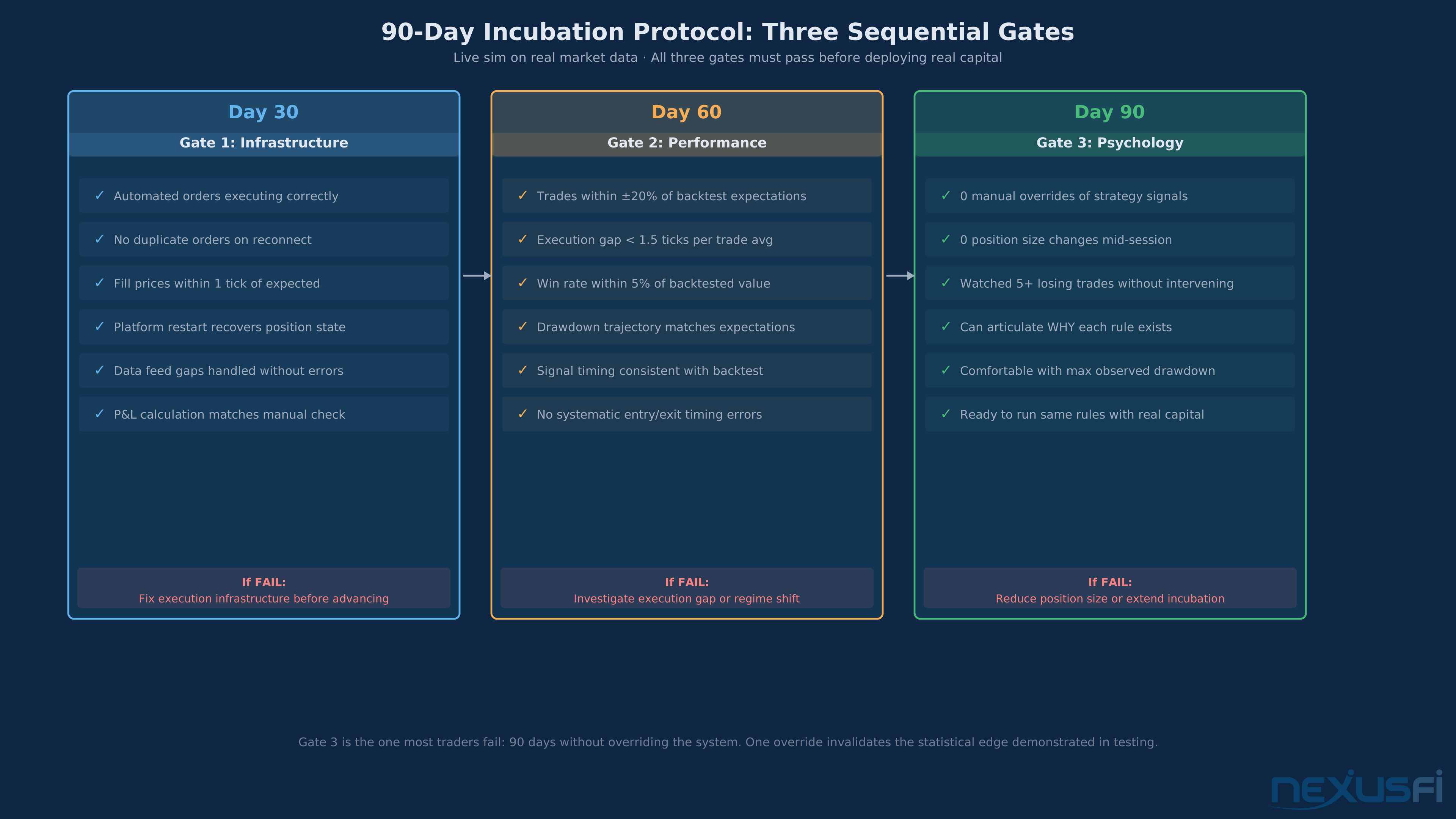
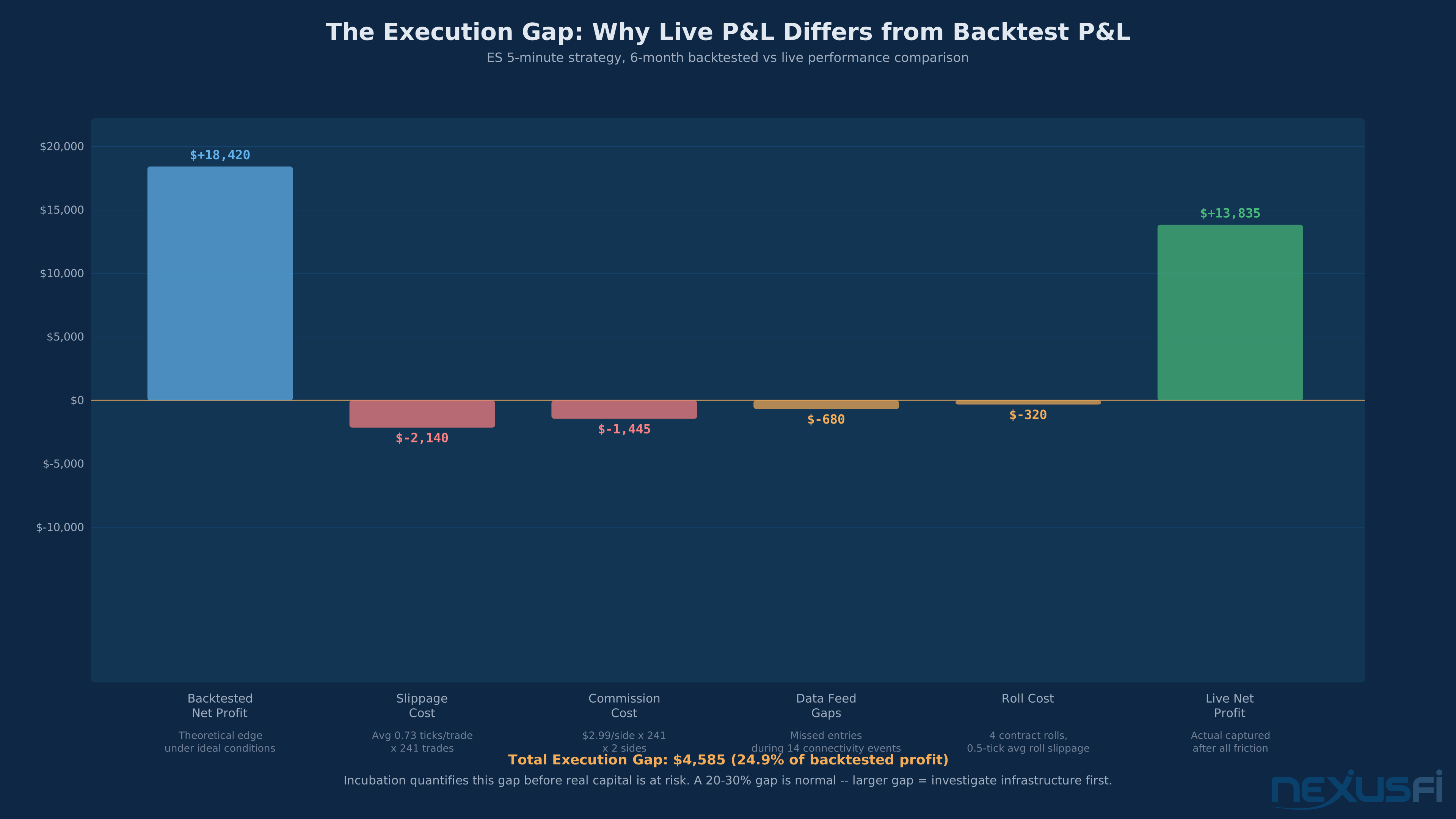
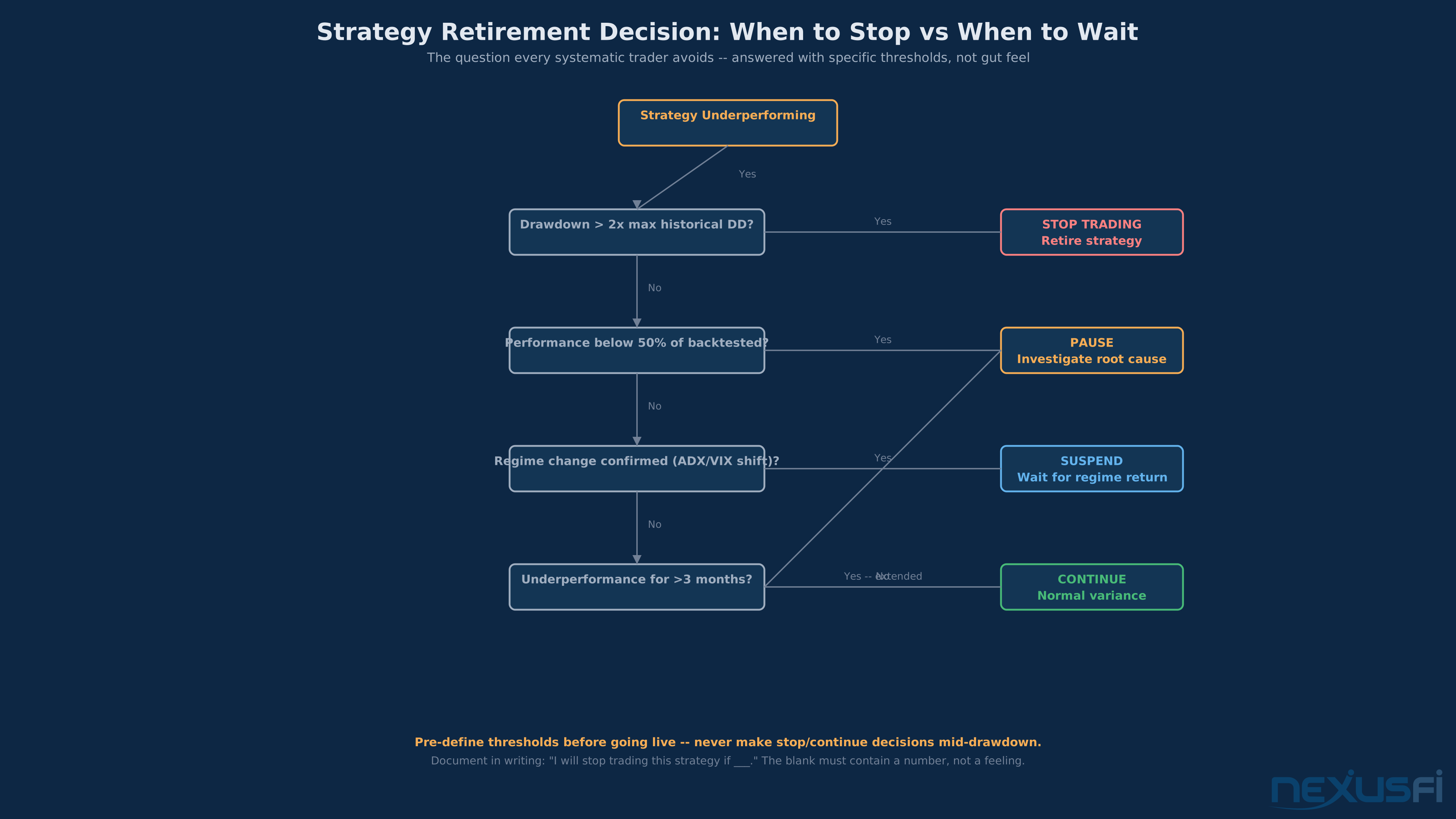
Go/No-Go Decision for Incubation: After 90 days, compare live sim results to backtest expectations. If live performance is within 20-30% of backtested expectations (accounting for execution gap), the strategy passes. If it's dramatically worse, you have an execution problem or a regime change — investigate before going live.
Building Your First Automated Strategy: A Step-by-Step Framework #
Starting systematic trading requires making many choices at once. Here's the sequence that works:
- One instrument, one timeframe: ES or NQ 5-minute chart gives 100+ trades/year without co-location infrastructure
- Minimal viable strategy: One entry, one exit, one stop. Validate the core concept before adding filters or regimes
- Baseline performance: Run 2-3 years unoptimized. Sharpe > 0.5 and positive expectancy = worth developing. Below that, rethink the logic
- Sensitivity analysis: Vary each parameter ±20%. Strong strategies show a flat performance plateau, not a cliff edge
- Walk-forward validation: Apply the three-phase testing framework. Out-of-sample degradation usually lives in exit logic, not entry logic
- Regime filter: ADX > 20 filter eliminates most choppy-market losses. See Regime Detection for Automated Trading Systems
- Incubation: 90 days live sim. Quantify execution gap. Stress-test connectivity and order handling
- Go live at minimum size: One micro contract to verify live fills match sim fills before scaling
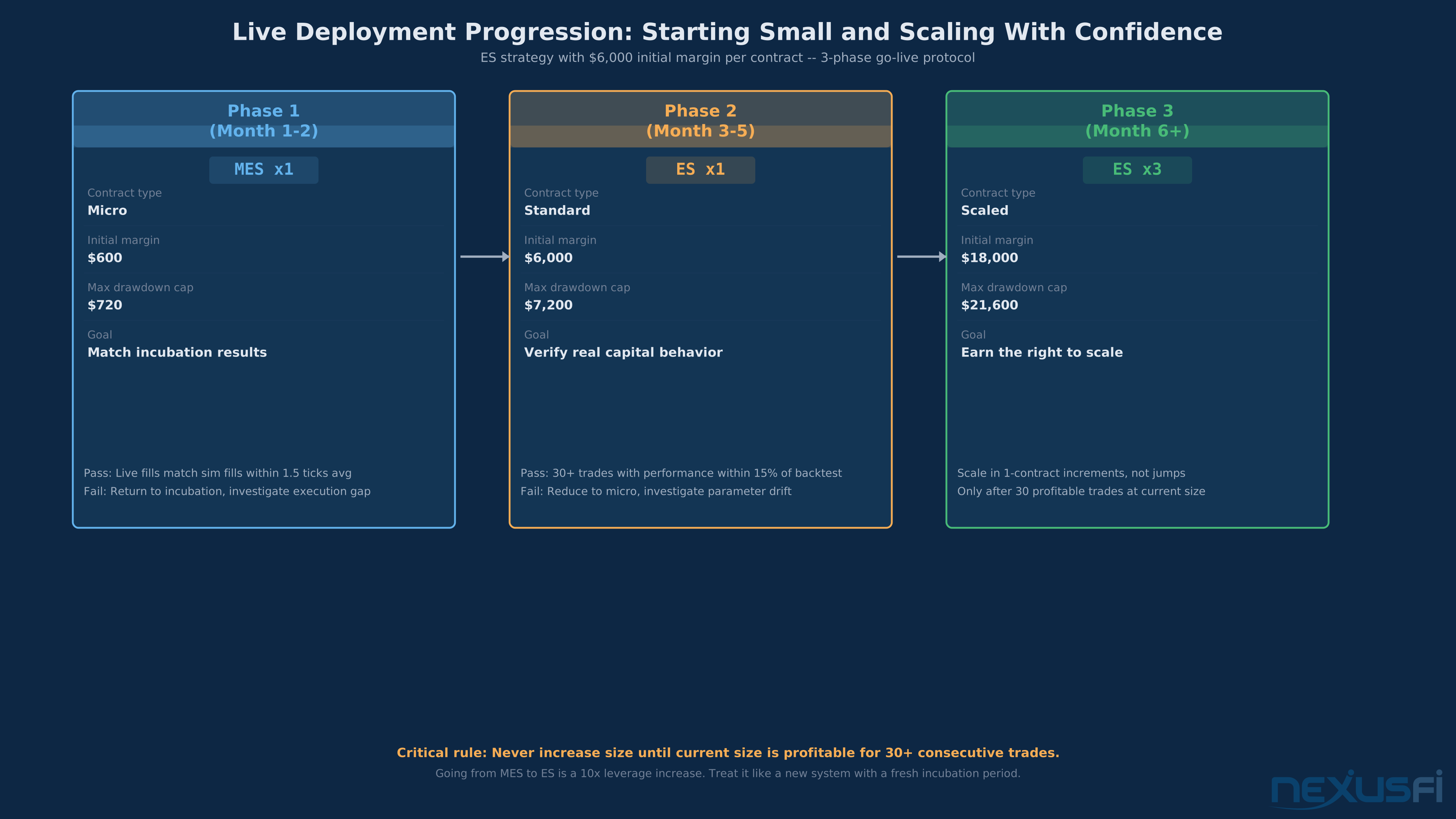
See the complete live deployment guide at Algo Trading Live Deployment: Taking Your Strategy from Backtest to Real Capital.
Common Pitfalls and How to Avoid Them #
The path from discretionary to systematic produces consistent failure points. These are the most common:
The Complexity Trap
More rules feel safer. They don't. Every rule reduces degrees of freedom, increases optimization surface, and often masks a weak core concept. Best systematic traders run fewer than five rules total. If your first strategy requires seven conditions to enter, remove each one and test. Most conditions you believe are critical are decorative.
Challenge every rule in your strategy by removing it. Run the backtest without it. If performance doesn't change meaningfully, the rule isn't doing work — it's just there to make the strategy feel more sophisticated. Keep removing until removing the next rule would hurt. That's your actual edge.
The Optimization Loop
The most dangerous moment in development is finding a parameter set that produces an amazing equity curve and instinctively fine-tuning further. That's how curve-fitting happens. Once a parameter set passes walk-forward testing, you're done. Constant re-optimization is discretionary trading at the parameter level.
The Infrastructure Gap
Common live-vs-backtest gaps: continuous adjusted data in backtests vs. active contract live (contract rolls introduce gaps); limit order partial fills ignored by Strategy Analyzer; connectivity interruptions leaving positions unmanaged. Surface all of these during incubation, not live trading.
The Override Temptation
The override temptation is not a character flaw — it's a rational response to information your strategy doesn't have. But overriding systematically destroys the statistical edge the full sample provides.
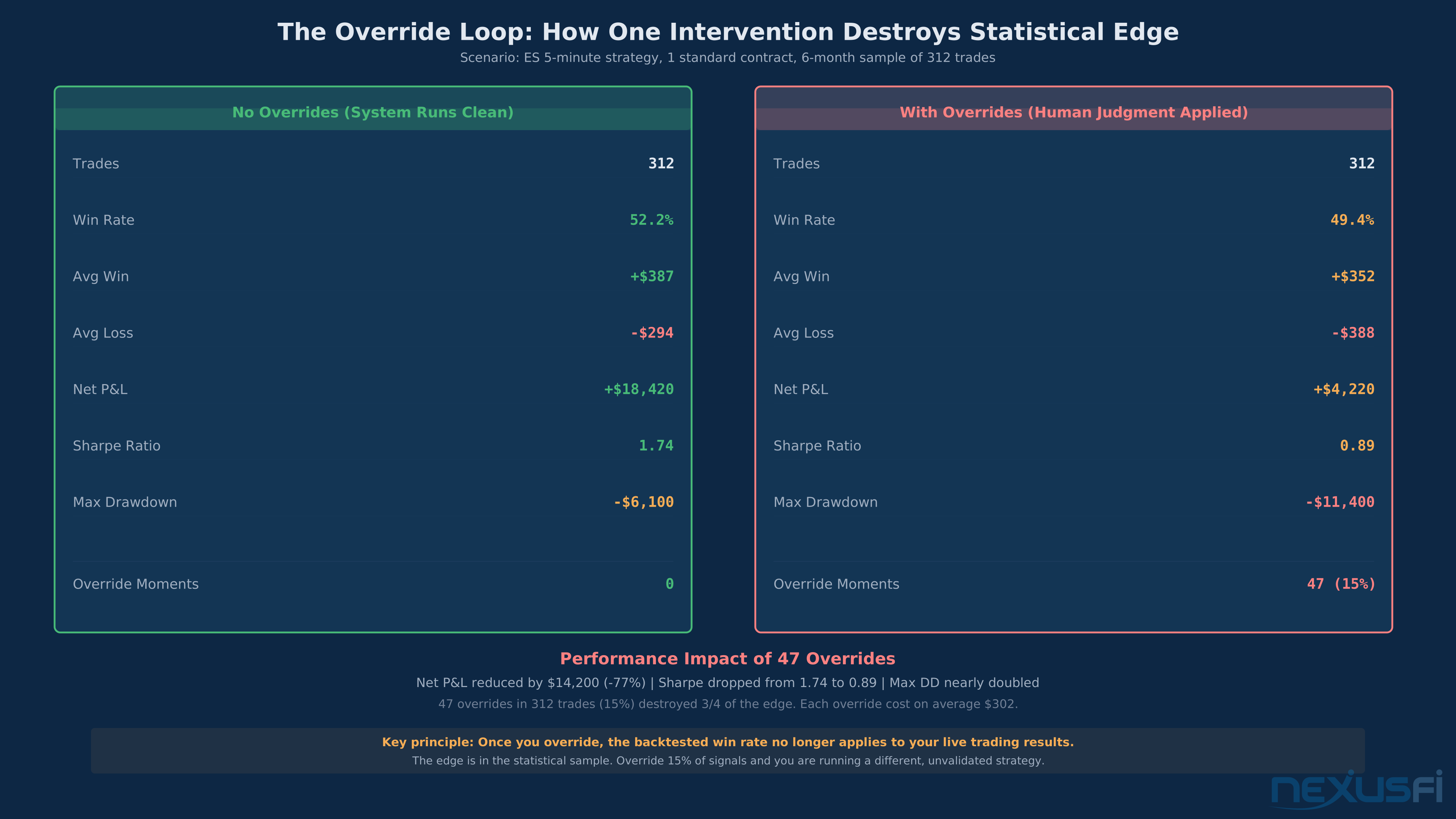
If you find yourself overriding frequently, the problem is usually one of two things: (1) the strategy isn't validated well enough for you to trust it, or (2) your position size is too large for your emotional comfort level. The fix is either more rigorous testing or smaller size, never manual override.
Tools and Platform Selection #
The right toolset depends on your technical background, your target instrument, and how much control you want over execution.
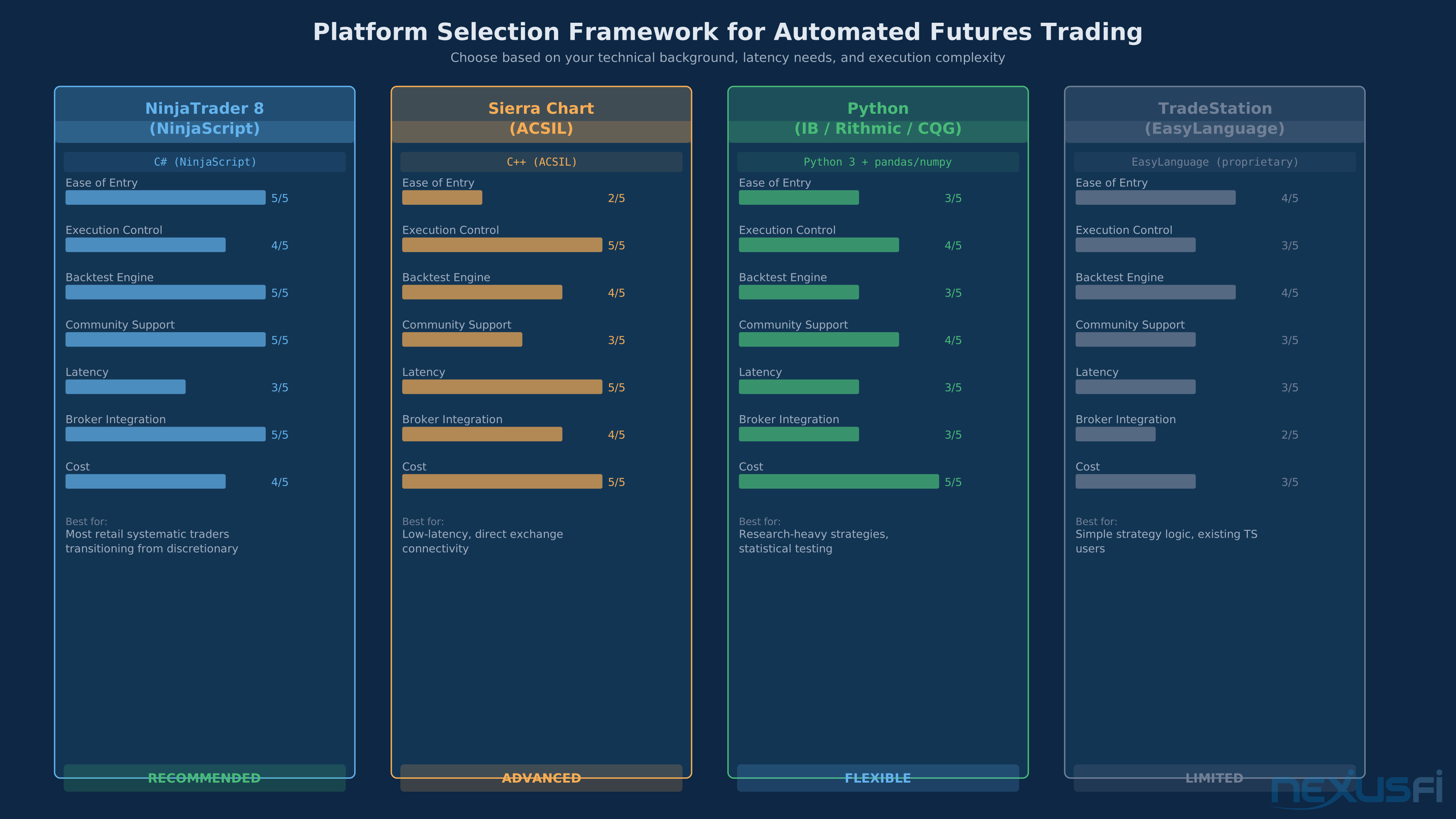
NinjaTrader 8: Best for most retail systematic traders. Native FCM integration, Strategy Analyzer for backtesting and walk-forward, large NinjaScript community. See NinjaTrader Strategy Analyzer guide.
Sierra Chart ACSIL: Best for low-latency execution. C++ maximum control, steeper learning curve.
Python (IB/Rithmic/CQG): Best for research-heavy strategies. Live execution requires significant infrastructure management. Full platform comparison with decision criteria.
Monitoring and Ongoing Management #
A live automated strategy is not "set and forget." It requires active monitoring and periodic review.
Daily Monitoring: Verify the strategy ran as expected. Check fills versus expected prices. Confirm open positions are accurate. Review any system errors or connectivity issues. Most automated traders check their systems at market open, at market close, and once mid-session.
Weekly Review: Compare current week performance to backtested expectations. @kevinkdog's Week 8 journal update captures the right posture: "overall performance is tracking fairly closely to the backtest projection." [11]
Monthly Performance Review: Compare live to backtest and incubation results. Measure execution gap. Define your stop criteria before going live — "when do I quit?" needs a specific numerical answer, not a feeling. [9]
Quarterly Regime Assessment: Volatility and correlation regimes shift over 6-12 month windows. If your strategy's core assumptions no longer hold, suspend trading and revalidate.
For complete monitoring infrastructure guidance, see Trading Bot Monitoring and System Health.
The Psychological Shift #
The hardest part of the systematic transition isn't technical. It's accepting that you control the process, not individual trade outcomes. Every loss stays within validated statistical parameters. Every winner does too.
@jeffman finally cracked automation after six years of iteration. The breakthrough: a strategy with no parameters to improve. It either worked in any market or it didn't. That's the endpoint — simple enough to trust, strong enough to let run.
Systematic trading doesn't eliminate losing trades — it eliminates bad decisions about them. Every loss stays within validated statistical parameters. Override the system once and those parameters no longer apply to your live results.
Bottom Line #
The discretionary-to-systematic transition demands skills across strategy logic, programming, statistics, and infrastructure most discretionary traders haven't needed before. It produces something discretionary trading can't: a documented, validated, repeatable process that performs the same whether you're sleeping, emotional, or watching a different instrument.
Start with one instrument, one timeframe, one minimal strategy. Validate rigorously. Incubate on sim. Go live small. Build something you trust enough to let run.
Knowledge Map
Go Deeper
Build on this knowledgeCitations
- — KJ Trading Systems Strategy Factory (2017) 👍 9“Since this thread is seeing some action I will add my experiences. As I mentioned I took Kevin's course back in May'16. While I have a lot of experience trading none of it was with automated strategies.”
- — shodson's Automated Trading Journal (2011) 👍 16“This journal will track my progress in trading in an automated fashion. Those that follow my other journal know that a good portion of my trading is already automated, based on ideas that I have had to refine from intuition into hard rules.”
- — ZB23's Algo Trading Journey (2021) 👍 3“I am going to start the transition to algo trading, because systematic, rules-based trading is better for me than discretionary trading. Since I'm most comfortable with Python (I just finished my Python course).”
- — Taking a Trading System Live (2013) 👍 47“OK, if you'd read my other journal here at Big Mike's, you'll know (as of today) that I have attempted to take a system live a couple of times.”
- — Success with Automation....Finally (2016) 👍 12“Let me start off by saying 'thank you' to Futures.Io. After off and on of six years, after countless hours, after dabbling in many methods, both discretionary and automated, after blowing through an account, I finally have found success.”
- — My hunt for the Automated Holy Grail (2012) 👍 49“Time for my first journal... I have always resisted creating a journal because I didn't feel my approach to trading is common or accepted by most. I have recently entered the world of algorithmic trading.”
- — shodson's Automated Trading Journal (2011) 👍 21“Look at this equity curve, and then tell me you wouldn't love to have these results, right? Great, now send me $1,999 -- just kidding. A smooth backtest equity curve doesn't tell you whether the edge is real or curve-fit.”
- — My hunt for the Automated Holy Grail (2012) 👍 18“I was going to get clever and retrace every step, code fragment, and thought up to today. Unfortunately, it just isn't going to happen. Not enough time for that right now.”
- — Taking a Trading System Live (2013) 👍 16“Now that I have decided to start trading my NGEC strategy live starting on Monday, I have to address the question that everyone likes to avoid when starting to trade a new strategy: If things go bad, when do I quit trading the strategy?”
- — My hunt for the Automated Holy Grail (2012) 👍 14“I started doing research into Machine Learning and Fuzzy Logic. I figured Fuzzy Logic was the way to go initially. Mainly a pattern match with weights. It had the advantage of making flexible strategies, but still was static in nature and tuned to fit the data. Still not trustworthy.”
- — Taking a Trading System Live (2013) 👍 15“Week 8 of trading the NGEC system with actual money is now complete. From look at this first chart, a couple of observations: overall performance is tracking fairly closely to the backtest projection.”