



AMP Futures: The Low-Cost, Platform-Neutral Futures Broker Explained
AMP Futures doesn't have a slick proprietary platform. They don't have a billion-dollar marketing budget. What they have is a futures brokerage that gets out of the way and lets you trade — on whatever platform you want, with whatever data feed you prefer, at a commission level that most multi-asset brokers can't touch. That's the whole pitch.
AMP Global Clearing LLC is a CFTC-registered FCM, NFA member, and CME Group Clearing Member. Founded 2004, Chicago. They clear their own trades and support 50+ third-party platforms via CQG, Rithmic, and TT.
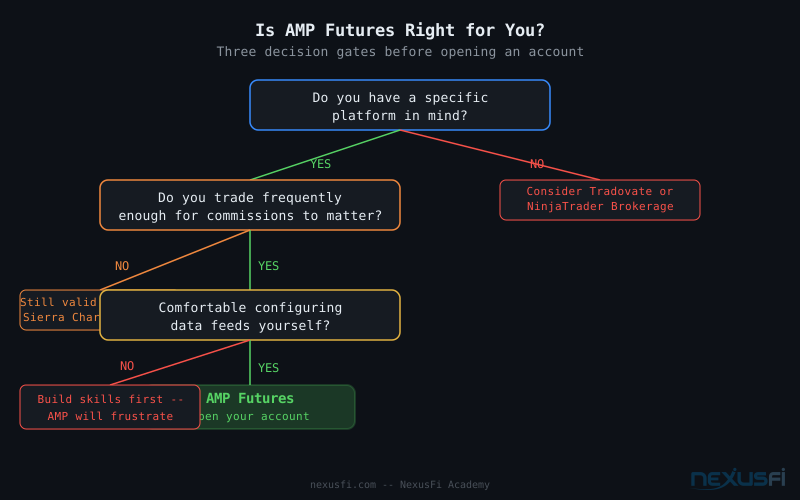
If you want a built-in platform, 24/7 live chat, and hand-holding onboarding — AMP will frustrate you. If you know your platform, care about execution quality, and trade frequently enough that commissions matter — AMP is worth a serious look.
AMP Futures at a Glance #
| Feature | Details |
|---|---|
| Regulatory Status | CFTC-registered FCM, NFA member, CME Group Clearing Member |
| Founded | 2004 | Headquarters: 221 N. LaSalle St., Chicago, IL 60601 |
| Minimum Deposit | $100 (to maintain live data feed); only margin required to place trades |
| Commission (MES) | ~$0.44/contract standard; Unlimited Annual Plan at $1,000/year flat |
| Commission (ES) | ~$0.88/side standard (~$1.76 round-turn) |
| Day Trade Margin (MES) | $40/contract |
| Day Trade Margin (ES) | $400/contract |
| Day Trade Margin (CL) | $500/contract |
| Supported Platforms | 50+ including NinjaTrader, Sierra Chart, TradingView, MultiCharts, Quantower, MT5, CQG Desktop |
| Data Feeds | CQG, Rithmic, TT (Trading Technologies/Teton), Sierra Chart Denali |
| Account Types | Individual, Joint, Corporate, Proprietary, Managed |
| Markets | CME, CBOT, NYMEX, COMEX, ICE, Eurex, 45+ global exchanges via CQG |
| Commission Match | Price-match guarantee on any written competitor quote |
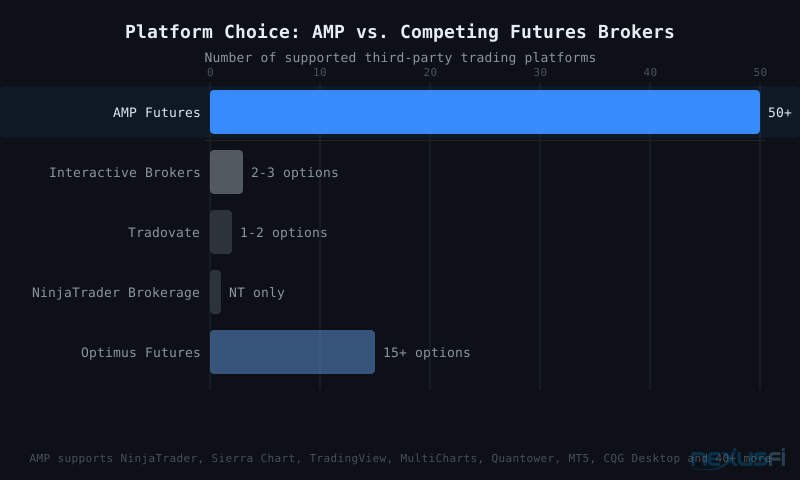
AMP's 50+ supported platforms dwarf every competitor. NinjaTrader Brokerage locks you to NT8. Tradovate is proprietary. AMP lets you run Sierra Chart, NinjaTrader, MultiCharts, TradingView, Quantower, and 45 others -- all through the same account.
Who AMP Is Built For #
Best fit for AMP: frequent traders where commissions compound, platform loyalists running NinjaTrader or Sierra Chart as standalone, API/systematic traders needing CQG or Rithmic, and multi-account traders wanting dual data feeds.
Active retail day traders are AMP's core customer. If you're scalping ES, trading NQ momentum, or running a systematic approach on CL, the combination of low commissions and reduced day margins makes AMP compelling on a pure cost-per-trade basis. A trader running 100 ES round-turns per month saves roughly $120/month versus NinjaTrader Brokerage's standard commissions — real money compounded over a year.
Algorithmic and systematic traders are the second natural fit. AMP offers a FIX API for institutional and quant developers, direct connectivity to Rithmic and CQG data infrastructure, and optional co-location in Chicago for latency-sensitive strategies. The platform-agnostic model matters here: you can run NinjaTrader strategies, MultiCharts PowerLanguage, custom Python via the FIX gateway, or CQG API code — all clearing through the same AMP account.
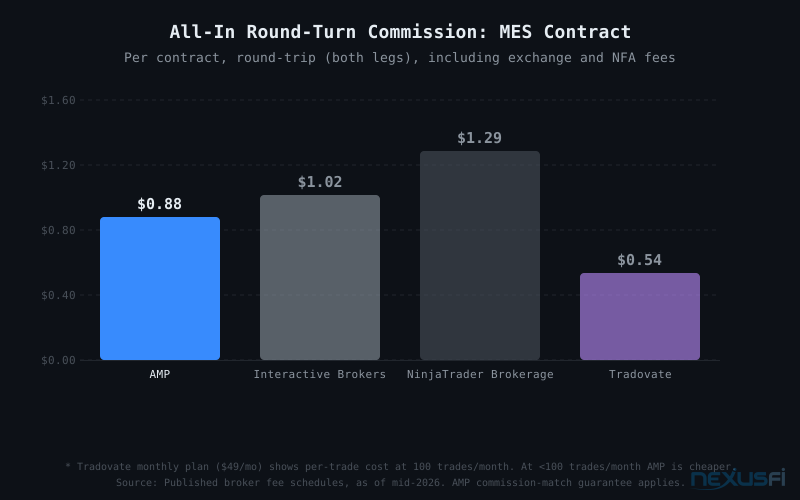
Cost-optimizing intermediates switching from a bigger broker often find AMP after realizing their current commission structure is eroding edge. The calculation is simple: if you're paying $1.29 round-turn at NinjaTrader Brokerage and moving to AMP's standard rate of ~$0.88, that's $41 per 100 contracts. Scaling to 500 contracts per month, the savings fund a decent data feed subscription by themselves.
Beginners with technical patience can also succeed here, but they need to understand that AMP provides the clearing infrastructure — the trading platform and data feed setup is the trader's responsibility. If you're comfortable downloading NinjaTrader, connecting it to a Rithmic feed, and troubleshooting your own DOM settings, AMP is a legitimate starting point. If you want a brokerage that handles all of that for you, Tradovate or NinjaTrader Brokerage will be a better fit.
Sierra Chart users get an especially good deal. AMP offers Sierra Chart Package 3 for free to account holders — a $25/month value — and CQG data at a cost that @trepidation, a long-time Sierra trader on NexusFi, described as "pretty much unbeatable": "If you open an account with AMP Futures, you can get Sierra Charts Level 3 for free and if you choose to only look at the top bid/ask with CQG for 1 exchange your monthly data fee would be $2 dollars."
The 50+ Platform Ecosystem #
AMP's most distinctive feature: no proprietary platform requirement. Every other major retail futures broker restricts you to their own software. AMP just provides clearing and data feeds — you pick the platform.
The core platforms traders use with AMP:
- NinjaTrader 8 -- The most popular choice. Connects via Rithmic or CTS/TT data feed. Full strategy development, automated execution, and order flow tools via Market Analyzer and SuperDOM. NinjaTrader's lifetime license ($1,099 or monthly lease) is separate from AMP brokerage costs, but many traders already have it.
- Sierra Chart -- The professional order flow and footprint charting choice. Package 3 is free through AMP. Connects via CQG, Rithmic, or Sierra Chart's own Denali/Teton feed. Ultra-reliable, minimal resource usage, and highly customizable -- but with a steep learning curve. As @badatusernames put it: "Sierra is absolutely rock solid and I rely on it every day."
- TradingView -- For chart traders who don't need DOM-based order flow execution. AMP's TradingView integration works via CQG connectivity. The easiest setup in the lineup, and if you're already charting on TV it keeps everything in one place.
- MultiCharts -- PowerLanguage strategy development, EasyLanguage import, and direct Rithmic or CQG connectivity. Good choice for systematic traders who wrote strategies in TradeStation EasyLanguage and want to keep using them.
- Quantower -- A rising alternative to NinjaTrader with strong DOM, footprint, and cluster analysis tools. Works with Rithmic and CQG via AMP accounts.
- CQG Desktop -- Professional-grade DOM and execution tool. More institutional than retail, but relevant for prop desk setups or traders who want CQG's native analytics alongside their AMP clearing.
- MetaTrader 5 -- Via third-party bridge. Most relevant for traders coming from FX who want to apply their MT5 strategies to futures markets.
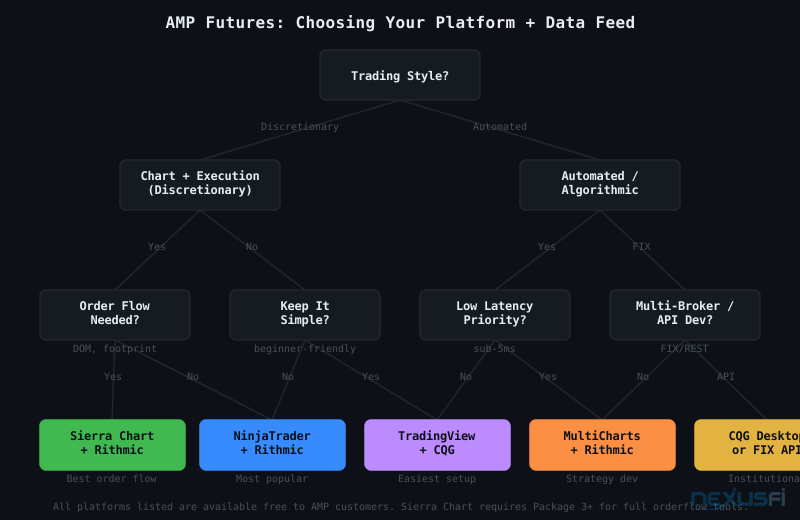
Platform choice at AMP depends on what you actually need. Discretionary + order flow = Sierra Chart + Rithmic. Beginner or TradingView chart user = TradingView + CQG. Algo developer = MultiCharts + Rithmic or FIX API. The right answer differs by trader.
One underrated feature: AMP supports sub-accounts. If you want to run two platforms with two different data feeds simultaneously — say, NinjaTrader with Rithmic for execution and Sierra Chart with CQG for analysis — you can fund a single account with AMP and split it into sub-accounts, each with its own platform and feed. @switchtrading explained the mechanics: "You now have two accounts internally at AMP and two separate platforms and data feed. It's nice when one goes down, you still have a back up." The redundancy matters during fast markets when data feed outages hit hardest.
Data Feeds: CQG, Rithmic, TT, and Teton #
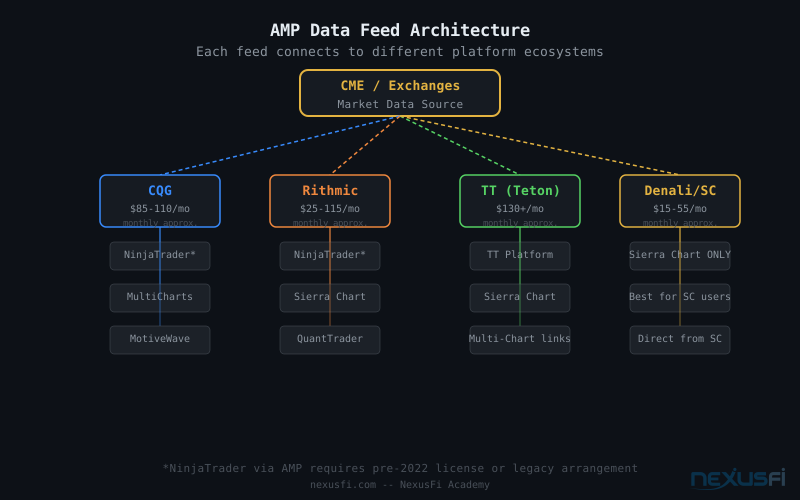
AMP supports four primary data feed options: CQG, Rithmic, Trading Technologies (TT), and Sierra Chart's Denali (Teton) feed. Each has different characteristics that matter depending on your platform and trading style.
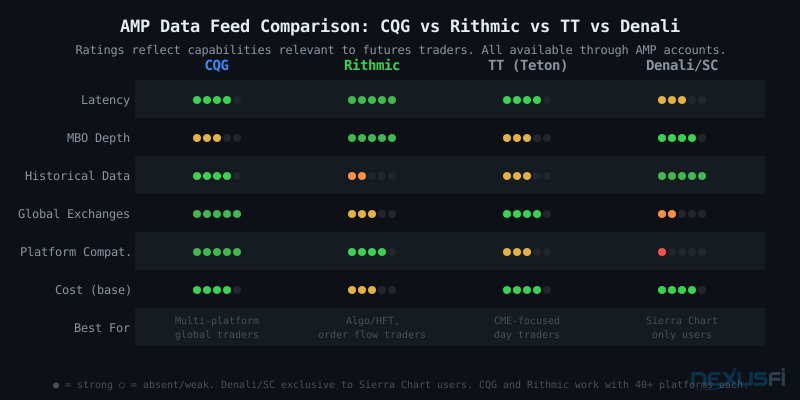
CQG wins on global exchange coverage and platform compatibility. Rithmic wins on raw latency and MBO order book depth -- critical for HFT and footprint traders. Teton (TT) is a solid middle ground. Denali is Sierra Chart-only but offers the best historical tick data.
CQG is the broadest choice. It covers 45+ global exchanges — not just CME/CBOT/NYMEX, but Eurex, Euronext, HKEX, JPX, and Singapore Exchange. It works with NinjaTrader, MultiCharts, Quantower, CQG Desktop, and TradingView, making it the most platform-compatible feed in the lineup. CQG's historical data goes back 30+ days on tick data, and it includes market depth up to 10 levels. The trade-off is latency — CQG runs 5-10ms typically, which is fine for discretionary and systematic traders but not for latency-sensitive algos. Cost: available at minimal cost through AMP account funding, with optional upgrades for depth and global exchange access.
Rithmic is the latency-first choice. Co-located in Aurora, Illinois (near CME's data center), Rithmic typically delivers sub-5ms order routing for CME products. It supports Market By Order (MBO) data — the full order book including individual order visibility, not just price levels — which is essential for footprint chart analysis and order flow tools. Historical tick data is limited to ~1 day, which is a real constraint for backtesting intraday tick patterns. Rithmic works with NinjaTrader, Sierra Chart (though Sierra has limited support for some Rithmic features), MultiCharts, and Quantower. The monthly connectivity fee runs $25. @dextrade, a NexusFi Elite member, ran Rithmic through volatile markets and found: "my setup worked without a flaw, was getting great fills during those resource demanding moments."
TT (Trading Technologies/Teton) is Trading Technologies' data connectivity layer, now branded Teton in some contexts. It offers CME/CBOT/NYMEX/COMEX coverage with direct routing via TT's global network. Lower latency than CQG, more exchange coverage than Rithmic. Often bundled or discounted through AMP accounts. Compatible with NinjaTrader, Sierra Chart, and TT's own platform.
Denali (Sierra Chart's native feed) is only relevant if you're running Sierra Chart. It provides the deepest historical tick data of any option — including expired contract data — which matters for backtesting. MBO order book support is available as an add-on. The key limitation is exclusivity: Denali only works with Sierra Chart, so you can't use it on NinjaTrader or any other platform. Monthly fee runs $10 base + $10 for MBO.
One notable use case highlighted by @qsceszwasdx: traders sometimes open AMP accounts purely for the CQG data feed subscription, then route that feed to platforms or brokers they actually trade with. "Some of my friends treat AMP as data feed source account, they subscribe CQG thru AMP, then connect CQG data feed with Multicharts to trade with IB." AMP becomes a cheap, reliable data infrastructure layer independent of where you actually execute trades.
Commissions and True All-In Cost #
AMP's pricing requires careful reading, because "commission" at a futures broker actually means several different things that add up to your true per-contract cost.
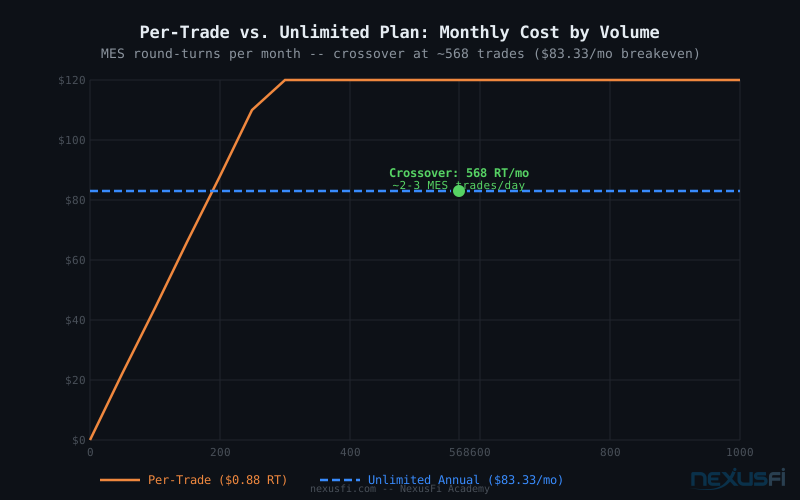
The Unlimited Annual Plan ($1,000/year flat) breaks even at roughly 568 MES round-turns — or about 2-3 trades per day. If you trade more than that, the plan pays for itself. Run the math before signing up.
The components of a futures trade cost:
- Broker commission -- AMP's cut
- Exchange fee -- paid to CME, CBOT, NYMEX, etc.
- NFA fee -- $0.02/side regulatory fee
- Clearing fee -- included in AMP's all-in pricing
- Platform fee -- NinjaTrader, Sierra Chart, etc. (separate)
- Data feed subscription -- CQG, Rithmic, etc. (separate)
AMP's "all-in" pricing includes broker commission, clearing, and NFA fees — no separate line items. That's the structure, not a marketing term. The Unlimited Annual Plan at $1,000/year covers all contracts, all exchanges.
 .88 round-turn vs .29 NinjaTrader Brokerage and .02 Interactive Brokers" loading="lazy" width="800" height="450" style="max-width:100%;height:auto;" class="academy-lightbox-trigger">
AMP's $0.88 round-turn on MES beats IB ($1.02) and NinjaTrader Brokerage ($1.29). Tradovate's monthly plan breaks even around 100 trades/month -- above that, AMP per-trade wins. At the Unlimited Annual Plan ($83/mo), AMP wins at any volume.
@TraderDownUnder put it directly in the AMP Futures review thread: "AMP's commissions are among the cheapest, if not the cheapest, of major Ninja brokers." And @GaryD, who switched to AMP after comparing multiple brokers: "AMP not only has a commission structure that is roughly 20% less than I was used to paying, they also pay for my Sierra Chart platform." The platform subsidy matters: Sierra Chart Package 3 at $25/month, free through AMP, effectively reduces the total cost of the AMP + Sierra Chart setup by $300/year before counting any commission savings.
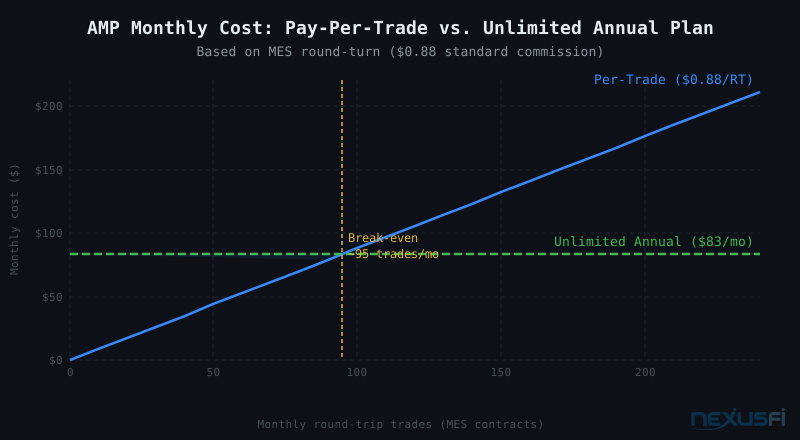
The Unlimited Annual Plan ($1,000/year = $83.33/month) breaks even at 95 MES round-trips per month vs. standard per-trade pricing. Trade more than 95 MES contracts monthly? The annual plan wins. Most active day traders break even within the first week of the month.
Model your actual monthly cost before signing up. Per-trade vs. Unlimited Annual Plan crossover point is around 568 MES round-turns/month (2-3 trades/day). Above that, the Unlimited Plan wins every time.
AMP also offers a price-match guarantee — bring a written competing quote and they'll match it on the spot. Ask before you open the account, not after.
Day Trade Margins: The Capital Efficiency Argument #
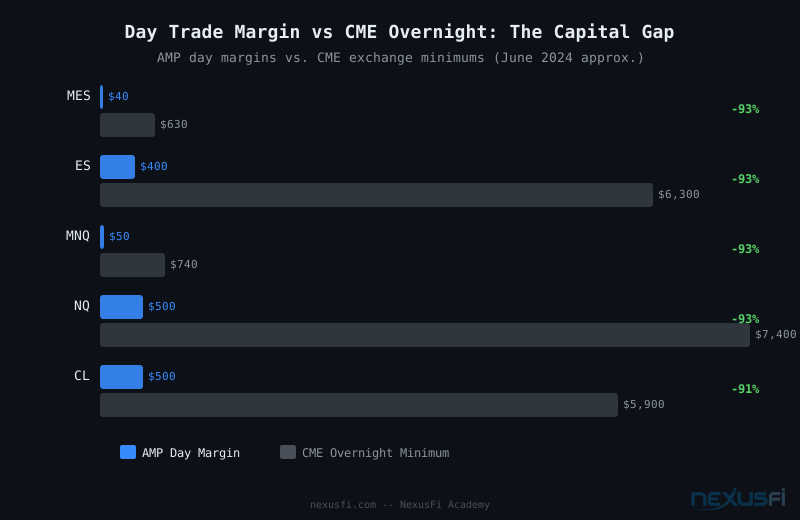
AMP's second major differentiator: reduced day trade margins. MES at $40 intraday (vs CME's $630 overnight). ES at $400 (vs CME's $6,300 overnight). Lower margin = lower capital requirement = more positions per dollar. A scalper running 10 MES can do it with $400 at AMP vs. $6,300 at standard margins.
Current AMP day trade margins on major contracts:
| Contract | AMP Day Margin | Overnight Margin (Exchange) | Reduction vs. Overnight |
|---|---|---|---|
| MES (Micro E-mini S&P) | $40 | ~$1,540 | 97% |
| ES (E-mini S&P 500) | $400 | ~$15,400 | 97% |
| MNQ (Micro Nasdaq) | $40 | ~$2,200 | 98% |
| NQ (E-mini Nasdaq) | $400 | ~$22,000 | 98% |
| CL (WTI Crude Oil) | $500 | ~$8,500 | 94% |
| GC (Gold) | $500 | ~$11,000 | 95% |
| 6E (Euro FX) | $500 | ~$3,080 | 84% |
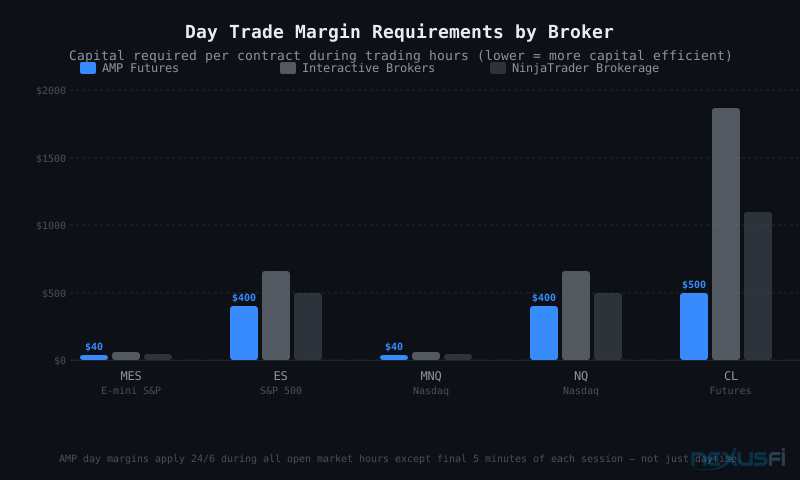
AMP's $40 MES day margin is the lowest available. The CL gap is most dramatic: AMP $500 vs. IB's $1,870. Every dollar saved in margin is a dollar working elsewhere -- or providing cushion to absorb drawdown without a margin call.
A critical detail that surprises many new AMP traders: these day trade margins apply during both U.S. day and overnight sessions — not just from 9:30 AM to 4:15 PM. As @ondafringe confirmed: "Low intraday margins for MES ($40), which also apply to overnight (with the exception of the last five minutes of the day session, which requires full CME margin)." That means if you're trading Globex during Asian hours or European sessions, you still benefit from AMP's reduced margins. The only exception is the 5-minute window before each daily close, when you must maintain full overnight margin or close positions.
The risk trade-off: lower margins = higher leverage = faster margin calls on losing trades. Size by dollars at risk, not available margin.
Account Opening, Minimums, and Funding #
$100 minimum maintains a live data account; only exchange margin is required to trade. Funding via debit card, ACH, wire, or check.
Account types available:
- Individual accounts -- Standard retail trading account
- Joint accounts -- Two account holders, both with trading access
- Corporate accounts -- For LLCs, corporations, or partnership structures
- Proprietary trading accounts -- For prop shops and funded trader programs
- Managed accounts -- Third-party manager authorization via limited power of attorney
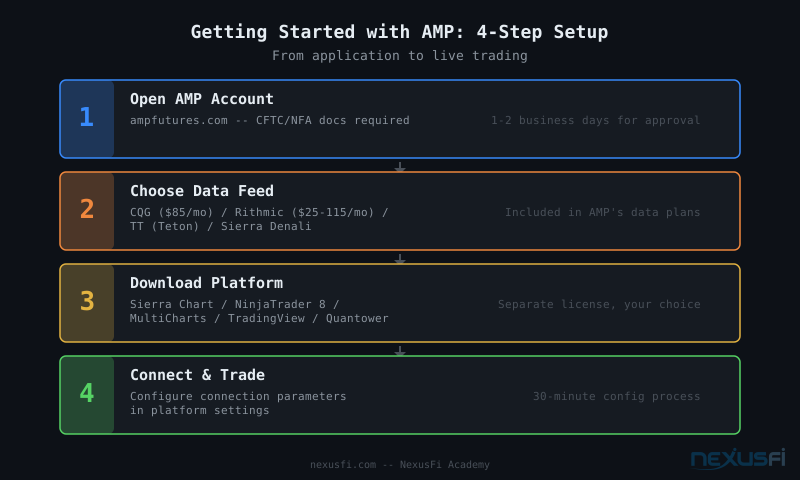
Opening as an FCM requires full CFTC/NFA documentation. Expect identity verification, financial suitability questions, and account approval within 1-2 business days. ACH is slowest (3-5 days); wire is fastest (same day if received before 2 PM CT).
Funding options: ACH transfer (slowest, lowest cost), domestic wire ($15-25 fee, 1 business day), and some international wire options for non-U.S. accounts. Account withdrawals are handled through the AMP Client Portal and typically settle within 1 business day to bank account. @GaryD noted the withdrawal experience: "I schedule a withdraw online, takes 2 minutes, money hits my account in a day."
Where AMP Wins #
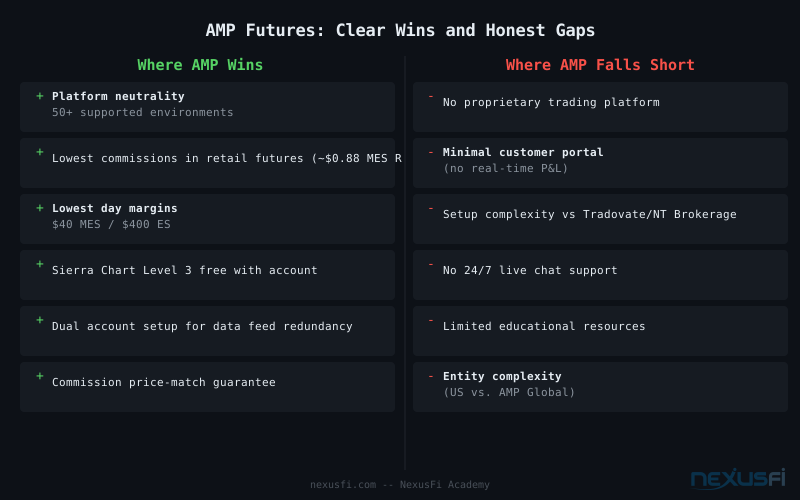
Platform neutrality. This is the core differentiator that no competitor matches at scale. NinjaTrader Brokerage requires NinjaTrader. Tradovate is Tradovate. Interactive Brokers has TWS. AMP is agnostic. If you built a trading system on MultiCharts, or want to run Sierra Chart's order flow tools, or need TradingView's charting with futures execution, AMP connects to all of it. You're not locked in and switching platforms doesn't require switching brokers.
Commission pricing at scale. The Unlimited Annual Plan is the most interesting pricing innovation in retail futures brokerage. At $1,000/year (~$83/month), active traders paying this flat fee see their effective per-trade cost drop toward zero on the broker-commission component — only exchange fees remain per trade. For a trader doing 200+ round-turns monthly, this is better than any tiered discount structure at competing brokers.
Day margins for diversified futures traders. AMP's margin table is especially attractive for traders running multiple contracts simultaneously or holding positions across multiple futures markets. At $40 per MES and $500 per CL, a trader can hold four different market positions with manageable margin requirements in a relatively small account.
Data feed arbitrage. AMP lets traders access CQG or Rithmic data at cost — sometimes at lower cost than subscribing directly through a competing broker. Some traders specifically maintain AMP accounts for the data feed subscription alone, routing actual order execution elsewhere while using AMP's pricing for market data access.
CME Group Clearing Membership. AMP clears directly on CME, CBOT, NYMEX, and COMEX without routing through an intermediate FCM. For traders concerned about counterparty risk and fund segregation, direct clearing membership represents a structurally cleaner setup than an introducing broker relationship.
Where AMP Falls Short #
No proprietary platform means no hand-holding. Setting up NinjaTrader with a Rithmic data feed through AMP involves downloading NT8, creating a Rithmic account through AMP's client portal, configuring the connection parameters, and troubleshooting any connectivity issues yourself. @badatusernames, who uses Sierra Chart with AMP, summarized the trade-off: the software is rock solid but "the settings menus are dense, unintuitive, and sometimes just confusing."
AMP's platform agnosticism is a feature for experienced traders, not a training wheel for beginners. If you need handholding on platform setup, data feed configuration, or basic trading mechanics, AMP's support team will help — but you'll be doing the configuration yourself. Factor that learning curve into your timeline before opening an account.
Support hours and response times. AMP operates 24/5 during U.S. trading week business hours — no 24/7 live support. If your platform connection drops during overnight Asian session trading at 2 AM EST, live phone support won't be available until U.S. business hours. This is a real limitation for traders who actively trade Globex or Eurex overnight sessions. Most issues have workarounds (Rithmic Trader software as a backup execution tool, as @schranzi9 documented), but you need to have those contingencies set up in advance.
Data feed costs add up for low-volume traders. AMP's base $0.88 round-turn commission is competitive, but the total monthly cost includes data feed subscription, any platform fees (for platforms not free through AMP), and exchange fees. A low-volume trader doing 20 MES round-turns per month might pay $18 in commissions but $30-45 in CQG or Rithmic subscription — making the effective per-trade cost much higher than the headline commission suggests. Run the full math before switching.
Reduced margins require discipline. The same $40 MES margin that makes AMP attractive for capital-efficient trading is the setup for overleveraging mistakes. Reduced margins don't change the dollar value of a 1-point MES move ($5). They don't change the speed at which a trending market can move against a position. They just reduce the minimum required in your account. Traders accustomed to broker margin requirements as a natural position-sizing constraint will need to build their own sizing discipline when switching to AMP.
Futures only. AMP doesn't offer equities, spot forex, or options on individual stocks. If your trading spans multiple asset classes and you want a single brokerage relationship, AMP's futures-only focus is a limitation. For traders who specifically want futures — and nothing else — this is a non-issue.
No real-time account balance visibility. One complaint that surfaces in community discussions: AMP's client portal shows your top-of-day balance but doesn't update in real time during trading. You see your current position P&L through your trading platform, not through AMP's portal.
AMP Futures vs. AMP Global: The Entity Question #
This causes consistent confusion, so it's worth addressing directly.
AMP Global Clearing, LLC is the legal entity — the Chicago-based FCM with CFTC registration and NFA membership. This is the entity U.S. residents open accounts with, the one that holds funds and clears trades on CME Group exchanges.
AMP Global is a broader brand used in marketing, website language, and international-facing material. Outside the U.S., "AMP Global" may refer to separate legal entities serving clients in Europe, Australia, or other jurisdictions under different regulators (FCA in the UK, for example). These international entities may have different commission structures, margin rules, account protections, and available products.
U.S. traders use ampfutures.com (CFTC/NFA). Non-U.S. traders use AMP Global (FCA regulated). Separate entities with different regulatory frameworks — open the account that matches your jurisdiction.
AMP vs. Tradovate, NinjaTrader Brokerage, and IB #
| Factor | AMP Futures | Tradovate | NinjaTrader Brokerage | Interactive Brokers |
|---|---|---|---|---|
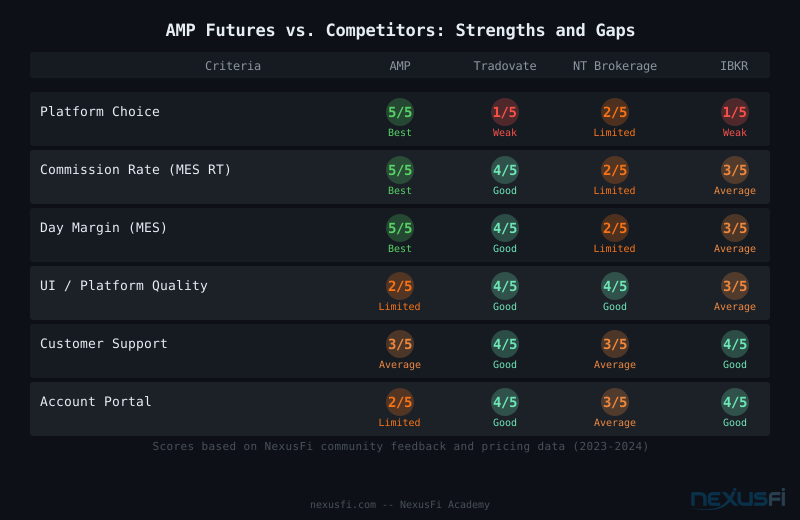
| Platform Choice | 50+ third-party | Tradovate only (+ TradingView) | NinjaTrader 8 only | TWS (+ IBKR Mobile) |
| MES Commission (RT) | ~$0.88 | $0.54 (monthly plan) / $1.32 (per trade) | ~$1.29 | ~$1.02 |
| ES Day Margin | $400 | $500 | $500 | ~$660 |
| MES Day Margin | $40 | $50 | $50 | ~$66 |
| Min. Deposit | $100 | $0 | $400 | $0 |
| Data Feeds | CQG, Rithmic, TT, Denali | Tradovate proprietary | Rithmic (via NT8) | IB SmartRouting |
| Global Markets | 45+ exchanges via CQG | CME/CBOT primary | CME/CBOT primary | 150+ exchanges |
| 24/7 Support | No (24/5) | No | No | 24/7 phone |
| Proprietary Platform | No | Yes | No (NT8 separate) | Yes (TWS) |
| Best For | Multi-platform traders, algo developers, cost optimization | Beginners wanting cloud-native, TradingView users | NinjaTrader users wanting broker integration | Multi-asset, institutional |
AMP vs. Tradovate: Tradovate's monthly plan ($49/month + $10 market data) produces lower per-trade costs for volume traders, but locks you into Tradovate's proprietary platform. If you're comfortable in Tradovate and happy with its order flow tools, the platform is excellent and the cloud-native architecture has real reliability advantages. If you want to run Sierra Chart's footprint tools, order flow analysis, or a custom automated strategy — Tradovate can't help you. AMP can.
AMP vs. NinjaTrader Brokerage: NTB is the natural choice for NinjaTrader users who want broker integration — promotions, direct support, and a single contact. The commission gap ($1.29 vs. $0.88 round-turn on MES) favors AMP, and AMP also supports NinjaTrader. Some traders run NT8 through AMP specifically to get NinjaTrader's platform features at lower commission cost. NTB's advantage is the single-vendor relationship; AMP's is pricing.
AMP vs. Interactive Brokers: IB offers multi-asset access, 24/7 support, and a global regulatory footprint that AMP can't match. For traders who need equities, options, FX, and futures in one account, IB is the answer. For traders who trade futures exclusively, IB's higher margins, more complex platform, and commission structure that doesn't match AMP's all-in pricing make the comparison less favorable to IB. Notably, some traders maintain both — IB for their multi-asset portfolio and AMP (or CQG through AMP) for futures-specific infrastructure.
Bottom Line: Who Should Choose AMP? #
AMP works best for traders who already have platform opinions and trade frequently enough to care about commissions. If you're still figuring out your setup, start elsewhere and come back to AMP when your workflow is established.
That's a lot of the active futures trading community — especially traders who've progressed past the beginner stage and are optimizing their setup rather than just figuring out how the DOM works.
The specific cases where AMP is clearly the right answer:
- You want to run Sierra Chart with Rithmic (or CQG) and want your broker to subsidize the platform cost
- You're building or running automated strategies and need platform flexibility across NinjaTrader, MultiCharts, or a FIX API connection
- You trade actively enough that the Unlimited Annual Plan's $83/month flat fee beats per-trade pricing by a meaningful margin
- You want reduced day margins on micro contracts to trade multiple markets with a smaller account
- You want to access CQG data (for its global exchange coverage or platform compatibility) at minimal cost
The cases where you should look elsewhere:
- You're just starting and need a brokerage that handles the technical setup -- Tradovate or NinjaTrader Brokerage will get you trading faster
- You trade multiple asset classes and want one account for everything -- Interactive Brokers or TD Ameritrade handles this better
- You need 24/7 live support -- IB has it; AMP doesn't
- You trade infrequently (fewer than 50 round-turns/month) and don't need a premium data feed -- total cost may not justify switching
AMP won't win design awards, but they've been clearing trades since 2004 with CFTC/NFA standing. For cost-focused futures traders, track record beats UI.
See also: How to Choose a Futures Broker for a full evaluation framework; Futures Commissions and Fees for understanding how all-in costs are calculated; Futures Data Feed Technologies for the CQG vs. Rithmic comparison in depth; and NinjaTrader Brokerage Margins and Commissions for the head-to-head with AMP's most direct competitor.
Knowledge Map
Go Deeper
Build on this knowledgeReferences This Article
Articles that build on this topicCitations
- — AMP Futures / AMP Global Review (2012) 👍 5“AMP's commissions are among the cheapest, if not the cheapest, of major Ninja brokers.”
- — AMP Futures / AMP Global Review (2015) 👍 6“AMP not only has a commission structure that is roughly 20% less than I was used to paying, they also pay for my Sierra Chart platform.”
- — AMP Futures / AMP Global Review (2019) 👍 7“What i did want to reiterate is that my setup worked without a flaw, was getting great fills during those resource demanding moments.”
- — Best broker and data feed for Sierra Charts? (2020) 👍 3“Low intraday margins for MES ($40), which also apply to overnight (with the exception of the last five minutes of the day session).”
- — Best Trading Platform to use with AMP? (2023) 👍 7“Sierra is absolutely rock solid and I rely on it every day. Their Denali/Teton datafeed is excellent, as well.”
- — AMP Futures / AMP Global Review (2014) 👍 6“You now have two accounts internally at AMP and two separate platforms and data feed. It's nice when one goes down, you still have a back up.”
- — Rithmic independent of broker possible? (2021) 👍 3“Some of my friends treat AMP as data feed source account, they subscribe CQG thru AMP, then connect CQG data feed with Multicharts to trade with IB.”
- — Why do you use Sierra Chart? (2020) 👍 2“If you open an account with AMP Futures, you can get Sierra Charts Level 3 (missing some orderflow tools) for free ($25/month for full) and if you choose to only look at the top bid/ask with CQG for 1 exchange your monthly data fee would be $2 dollars.. which is pretty much unbeatable.”
- — Best broker and data feed for Sierra Charts? (2020) 👍 5“I just made the switch from TOS to AMP. Using Sierra chart with the CQG data feed. The data cost 10 dollars a month but there's no lag at all. Loved TOS but we both know the commissions on futures and the platform are not great.”
- — AMP Futures / AMP Global Review (2014) 👍 6“Each account at AMP gets you two separate NinjaTrader license and two CQG data connections. You now have two accounts internally at AMP and two separate platforms and data feed. It's nice when one goes down, you still have a back up.”
- — Best Trading Platform to use with AMP? (2023) 👍 3“NinjaTrader cannot be used with AMP. When NinjaTrader established its own brokerage firm, NinjaTrader Brokerage, some years ago, it changed its previous business model and no longer allowed the NT platform to be used with third-party brokers (with some legacy exceptions for buyers before that time).”