



Interactive Brokers for Futures Trading: The Complete Broker Guide
Interactive Brokers (IBKR) sits in a unique position in the futures broker environment. It's not the choice of intraday scalpers who need $500 day-trading margins and tick-perfect data. It's not the broker you choose because it's simple to set up. You choose Interactive Brokers because you need global futures access, options on futures with real margin efficiency, API connectivity that professional quant shops actually use, and a track record of financial stability that's been tested through every major market crisis since 1978.
That's a specific trader profile. And if you match it, there's no better broker for the job. If you don't, there are better choices.
Here's the full picture — commissions, margin mechanics (including IB's notorious liquidation policy), data quality realities the community has documented for years, TWS versus Gateway, and the API ecosystem. No sugarcoating.
Overview #
Interactive Brokers was founded in 1978 by Thomas Peterffy, who built the first computerized market-making operation on the American Stock Exchange before the exchanges even had electronic trading screens. IB has been regulated by the CFTC, NFA, and SEC since the beginning — it has never failed, never had a customer lose funds due to firm insolvency, and it carries its own $10+ billion in equity capital. That financial foundation matters more than most traders realize.
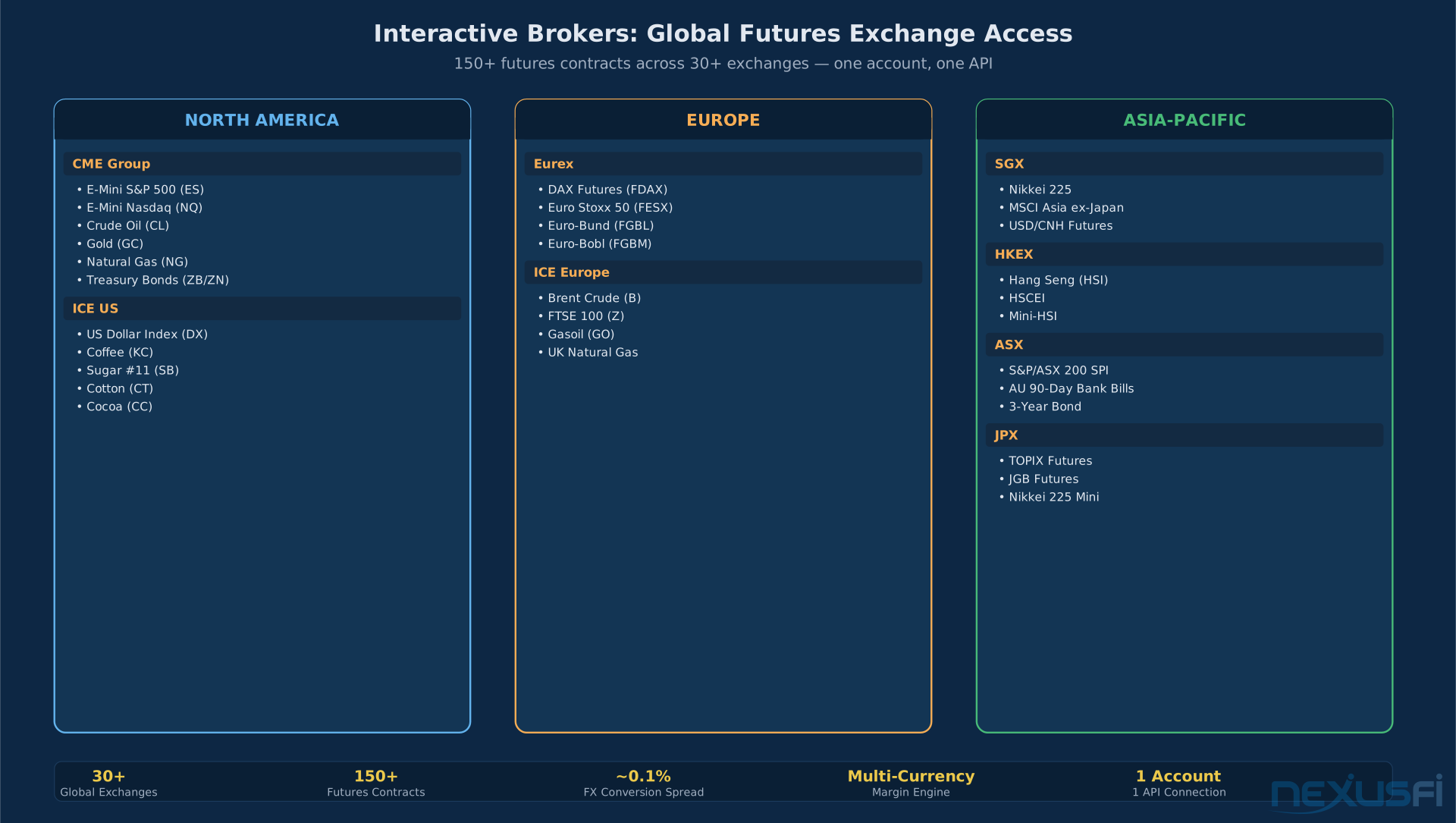
IBKR Pro gives you access to over 150 futures contracts across 30+ exchanges: CME, CBOT, NYMEX, ICE, Eurex, SGX, HKEX, ASX, and more. The same account that trades ES also trades Brent crude on ICE Europe, DAX futures on Eurex, Nikkei futures on SGX, and options on all of them. That breadth is unmatched at the retail level.
The tradeoffs are real. IB carries some of the highest overnight margin requirements and most aggressive auto-liquidation policies in the retail futures space. Their data feed for tick-based trading has documented quality issues. The TWS platform has a steep learning curve. And unless you're running IB Gateway with your own charting, you'll almost certainly want a separate data provider.
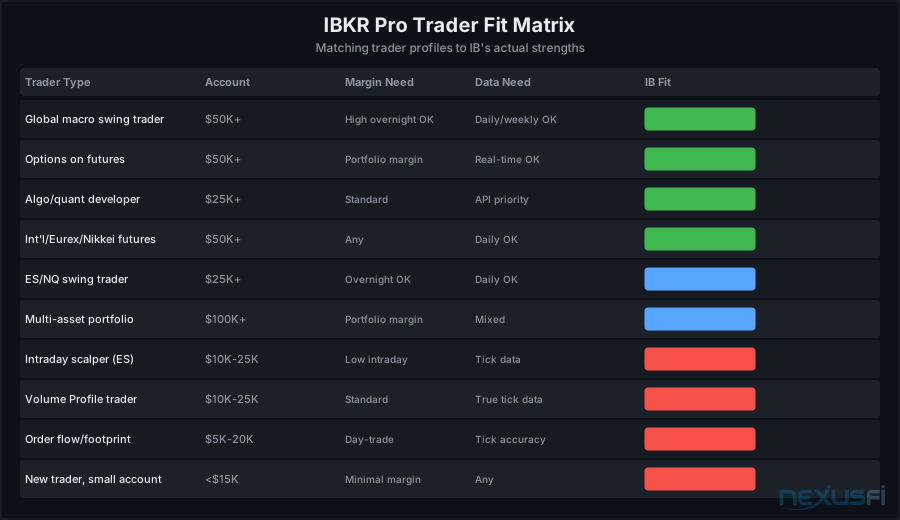
Bottom line: IBKR is the best choice for multi-asset traders, algo traders, swing futures traders, international futures, and options on futures strategies. It's a poor fit for intraday scalpers who rely on sub-second data and need aggressive intraday margin policies.
Key Concepts #
IBKR Pro vs. IBKR Lite: Two account tiers. Lite does not support futures trading at all — it's an equity-only, commission-free structure designed for casual investors. Pro is what futures traders use, full stop. All discussion in this article assumes IBKR Pro.
TWS (Trader Workstation): IB's full-featured desktop platform. Multi-asset, customizable layout, built-in charting, DOM, hot-keys, and real-time alerts. Powerful but complex. Best for discretionary multi-asset trading.
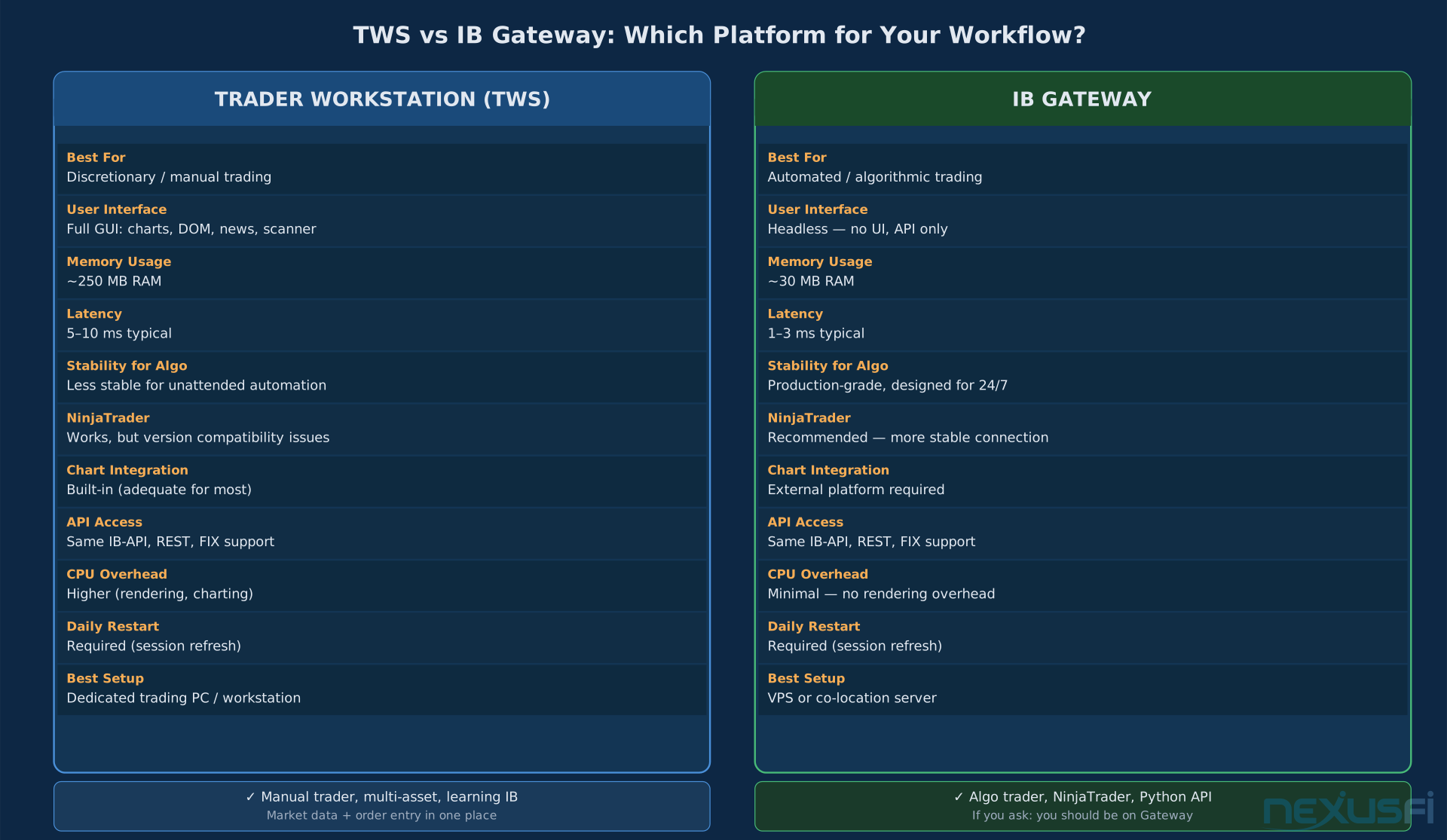
IB Gateway: A lightweight, headless connection layer for API-based trading. No graphical interface — just the connection. Lower CPU and memory footprint (~30MB vs ~250MB for TWS), lower latency (~1-3ms vs ~5-10ms). The standard choice for automated trading systems.
SMART Routing: IB's default order routing algorithm that routes orders across multiple venues for best execution. For futures, the relevant exchanges are typically single-venue (ES trades only on CME Globex), so SMART routing is less meaningful for futures than for equities.
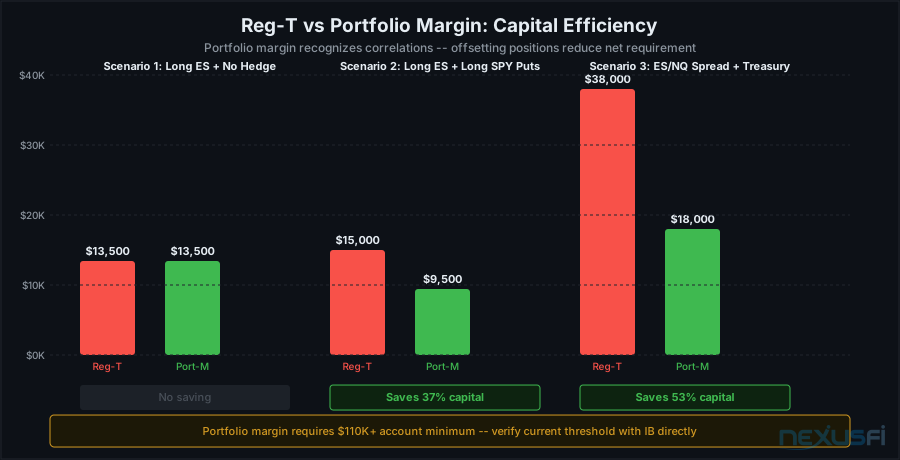
Portfolio Margin: An alternative margin model that recognizes offsetting positions across correlated instruments. A long ES position partially offset by long SPY puts reduces net margin requirement. Can cut required capital by up to 40% for spread strategies.
SPAN Margin: The exchange-set margin system that IB uses as a baseline. IB often requires margin above exchange minimums, especially for overnight positions.
Auto-Liquidation: IB's policy of automatically closing positions when margin falls below maintenance — without calling you first. This is IB's most criticized feature and traders need to understand it before opening a funded account.
IBKR Pro Is the Only Option #
Let's be clear about this before going any further. IBKR Lite doesn't support futures. It doesn't support options on futures. It doesn't support the full API suite. It exists for equity investors who want commission-free stock trading.
Every futures trader uses IBKR Pro. Full stop.
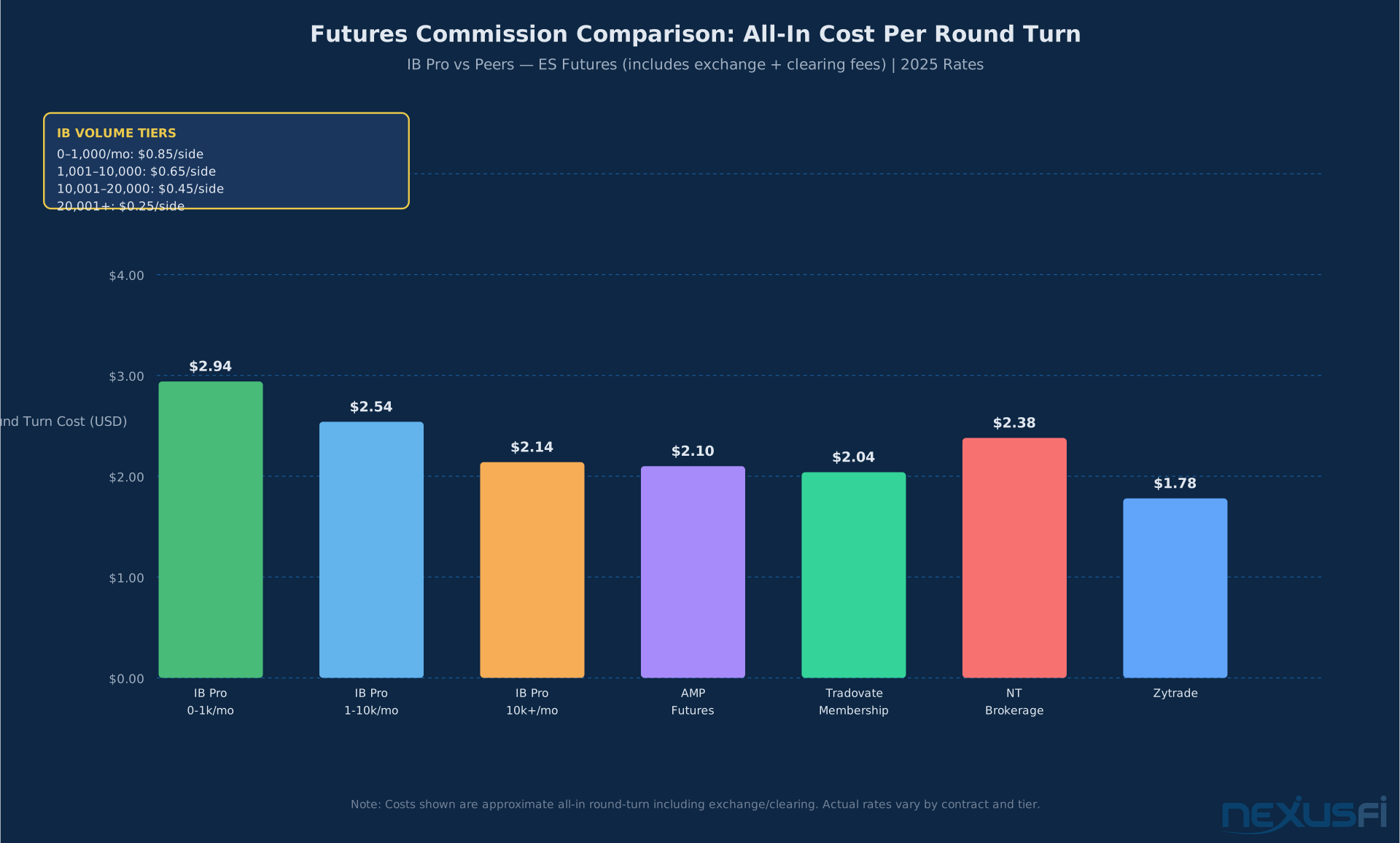
On Pro, there's no minimum account balance required to open an account, but you need sufficient free margin to actually open positions. The practical minimum to trade a single ES contract is around $12,500--$15,000 (IB's overnight margin for ES is typically set at or above exchange minimums, which themselves run around $12,000--$15,000). Day-trading margins are similar to overnight — IB doesn't offer the sub-$500 intraday margins that brokers like AMP Futures or NinjaTrader Brokerage provide.
If you're starting with a $5,000 account and want to trade ES, IB is not the right broker. If you're trading ES alongside European equity index futures and Treasury futures with a $50,000 account, IB is one of the best options available.
Commission Structure #
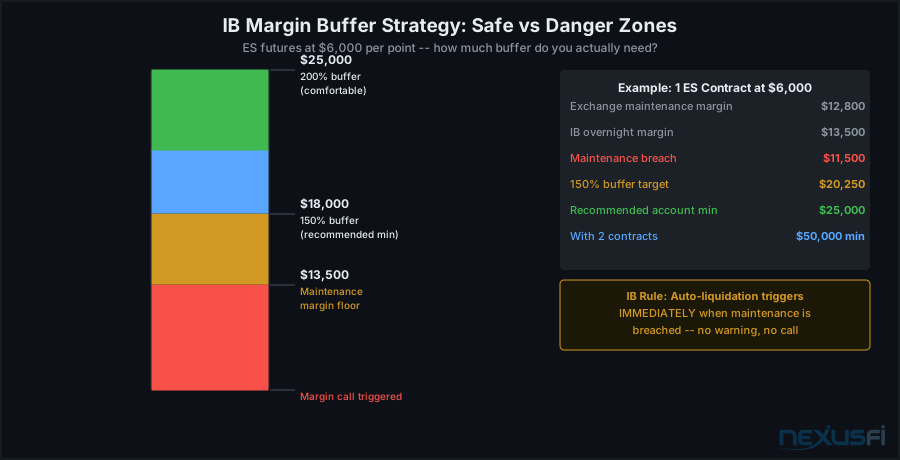
IB charges per-contract commissions on a volume-tiered model. The key rates for US futures:
| Monthly Volume | Commission per Contract (per side) |
|---|---|
| 0--1,000 contracts | $0.85 |
| 1,001--10,000 | $0.65 |
| 10,001--20,000 | $0.45 |
| 20,001+ | $0.25 |
Exchange and clearing fees apply on top of IB's commission. For CME ES futures, total per-side cost including exchange fees typically runs $1.47--$2.07 depending on volume tier. This compares competitively with AMP Futures and Tradovate, especially at higher volume tiers. See the full futures commissions breakdown for a side-by-side comparison across all major retail brokers.
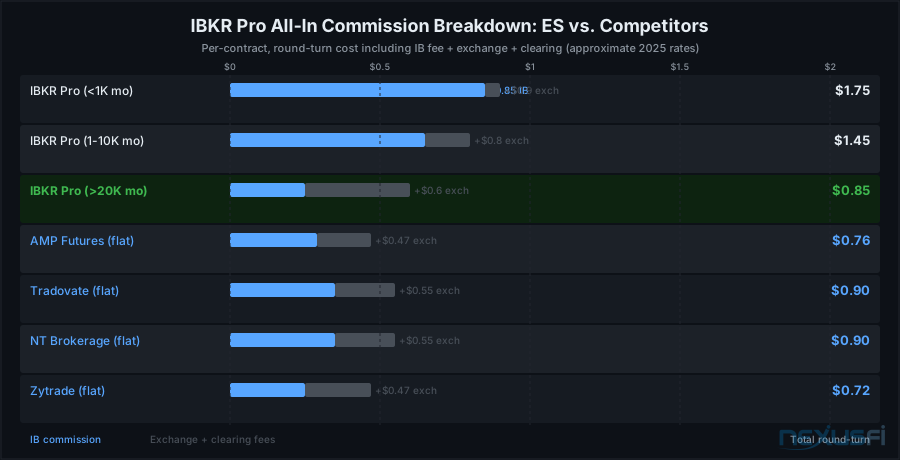
For micro futures (MES, MNQ), the minimum is $0.25 per side plus exchange fees. IB is one of the few brokers where micros are economically viable for active trading.
There's no platform fee, no data fee for basic market data on traded instruments, and no inactivity fee for accounts over $2,000. Real-time data for exchanges you're actively trading is free — you pay for data subscriptions to additional markets.
For very high-volume traders (consistently above 5,000 contracts per month), IB will negotiate custom pricing through their institutional services team. Rates can drop to $0.10--$0.15 per contract at institutional scale.
The commission structure is transparent. The "Commission Estimate" in TWS shows you the full projected cost — IB commission plus exchange fees — before you place an order. No surprises.
Margin Mechanics: IB's Conservative Approach #
This is where IB generates the most community discussion, and not in a positive way.
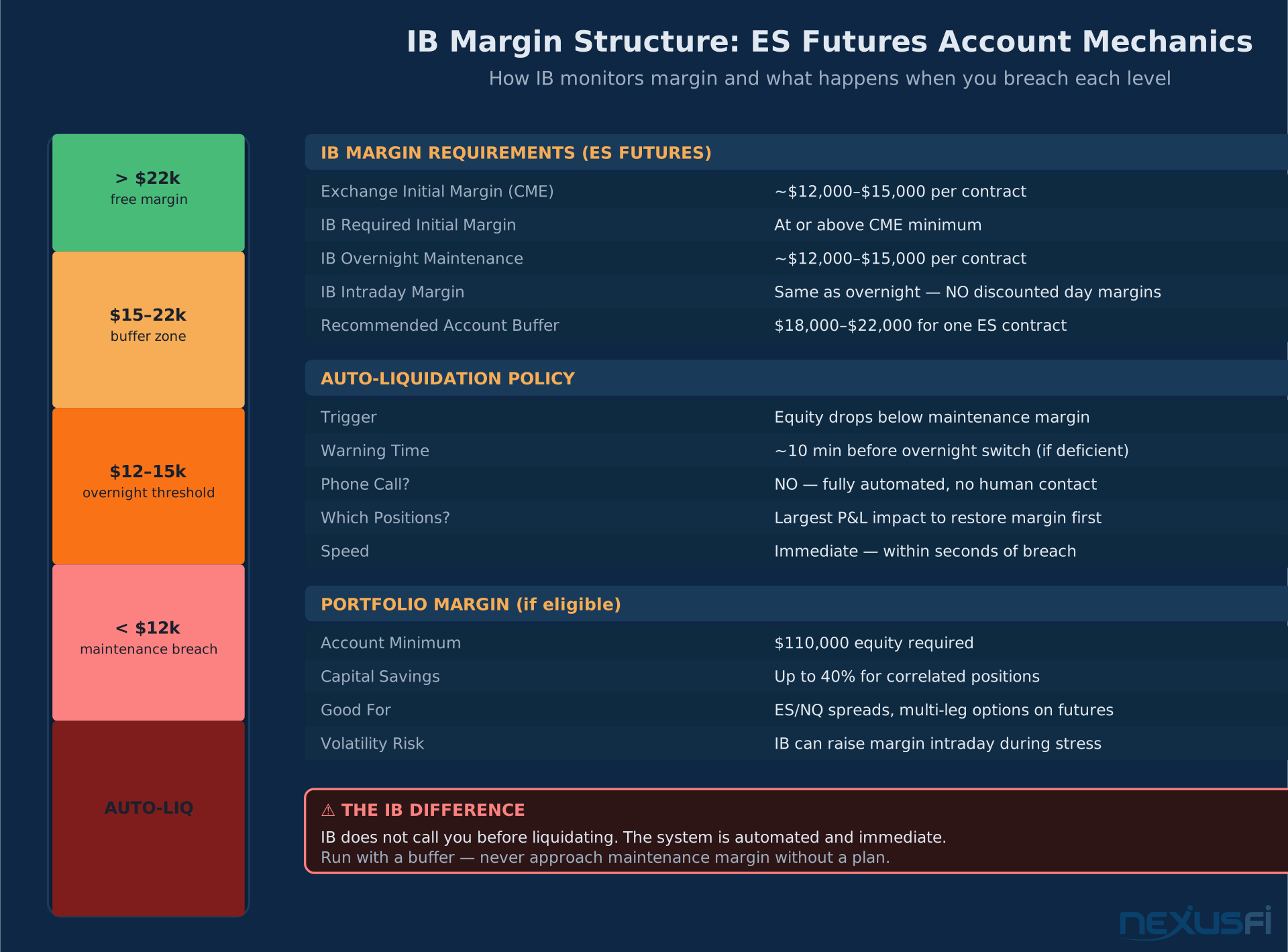
IB has higher overnight margin requirements than many retail futures brokers and the most aggressive auto-liquidation policy in the space. As @SMCJB noted in a NexusFi thread on margin leniency:
And from community documentation of IB's actual margin call behavior, @wldman:
This is not a rumor. It's IB's stated policy. If your account drops below maintenance margin — even briefly during a volatility spike — the system will automatically liquidate positions, starting with the position that most reduces your margin deficit, regardless of your P&L on individual trades.
The Three IB Margin Models
Reg-T Margin: Standard margin for most accounts. Initial margin set by IB (at or above exchange minimums). Overnight margins for ES typically run around $12,000--$15,000 per contract. IB sends a warning alert approximately 10 minutes before the daily margin transition from intraday to overnight — if you're carrying positions that don't meet overnight requirements, you need to respond.
As @Fadi documented in the NexusFi brokers forum:
Portfolio Margin: For accounts over $110,000, IB offers portfolio margining on futures. This model recognizes correlations between positions — a long ES/short NQ spread requires less margin than two outright positions. For traders running spread strategies or using futures as part of a multi-asset portfolio with equity positions, portfolio margin can reduce capital requirements by 30--40%.
Risk-Based Margin: IB's internal model adjusts requirements dynamically based on current volatility. During market stress, IB can increase margin requirements in real-time — meaning positions that were adequately margined at 9:30am may be undermargined by 10:15am if volatility spikes. This is the mechanism behind many of the margin call stories in community discussions.
The Practical Implication
Run with a margin buffer. If you're trading ES with IB, keep at least 150% of the overnight margin requirement in your account to absorb intraday swings without triggering auto-liquidation. For a standard account trading one ES contract, that means keeping roughly $18,000--$22,000 in free margin — not as posted margin, but as total account equity available.
The margin call mechanics at IB differ at the core from brokers like AMP where a human might actually call you. IB's system is automated and merciless. Plan so.
Also note: IB does not offer reduced day-trading margins. The intraday margin for ES at IB is effectively the same as overnight — there's no $400 or $1,000 intraday rate. This is a fundamental mismatch for scalpers who need to maximize capital efficiency per trade. See the day trading margin policies comparison for how IB's approach differs from discount futures brokers.
Data Feed Reality #
The NexusFi community has documented IB's data quality issues for over a decade. This isn't historical — it's an ongoing characteristic of the IB data infrastructure that affects specific use cases.
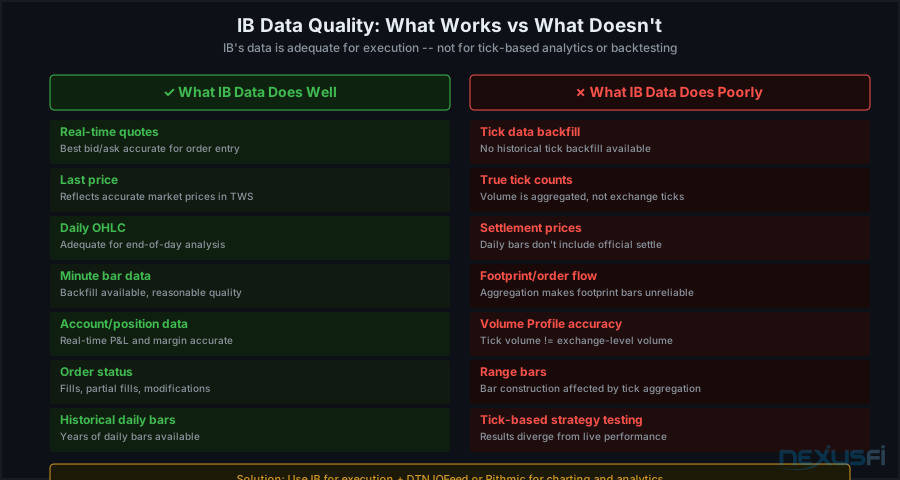
What IB does well: Real-time quotes, last price, bid/ask. For order entry and position monitoring, IB's data is fine. TWS reflects accurate market prices.
What IB does poorly: Tick data for backtesting and tick-based charting. @Fat Tails thoroughly documented this in the NexusFi brokers forum:
:::quote @FredBell | NexusFi NinjaTrader forum | https://nexusfi.com/showthread.php?t=57577&p=850506#post850506 "IB does not have historical backfill for tick-data. If you want to have a history, you need to store real-time tick data. However IB does offer backfill for minute data and daily data." -- @Fat Tails NexusFi Brokers forum
And on the specific data accuracy problem:
"IB daily data is just built from intraday-data and does not show the settlement price for futures." -- @Fat Tails IQfeed vs IB data thread
The implications are significant. If you're using IB data for:
Volume Profile analysis: Tick volume in IB is aggregated, not true tick-by-tick. Your profiles will look similar but aren't built from actual exchange tick counts Backtesting tick-based strategies: IB's historical tick data through their API has known gaps and quality issues Range or volume bars: Same aggregation problem — bars built from IB data don't precisely match exchange-level data
The community solution, documented in numerous NexusFi threads, is to use IB for execution while subscribing to a separate data provider like DTN IQFeed or Rithmic for charting and data. @Fat Tails ran this exact configuration:
"You can use DTN IQ feed or Kinetick with NinjaTrader and Interactive Brokers. To do this you will first-connect NinjaTrader to DTN IQ feed or Kinetick. Then you will second-connect NinjaTrader to Interactive Brokers." -- @Fat Tails NexusFi NinjaTrader forum
If you're already paying for a quality data provider, this hybrid setup works well. IB handles execution and account management; your data provider handles charts and analytics. The difference between tick data and bar data quality matters significantly for intraday strategies — don't try to build tick-based systems on IB's aggregated feed. See the futures data feed technologies comparison for the major alternatives to IB's native feed.
Platform Choice: TWS vs. IB Gateway #
Two options, two very different use cases.
Trader Workstation (TWS)
TWS is IB's full desktop platform — charts, DOM, news feeds, scanner, options analytics, portfolio view, everything in one interface. It's genuinely powerful and genuinely complex.
Setup involves:
Custom workspaces (tabs with drag-and-drop layouts) Configuring hot-keys for order entry Setting up TWS API port (required for any external platform connection) Managing data subscriptions for each exchange
NinjaTrader users who've run the TWS/NT combination report ongoing complexity. The first TWS/NinjaTrader integration was built in 2003 — it works, but requires specific TWS version pinning in some configurations. @FredBell documented a common issue:
"That does not work because IB only allows for 1 connection at a time. Since I do need TWS running to verify my position, orders, etc.. Therefore the use of the legacy TWS 985 is [necessary]..." :::
The solution, from the NexusFi NinjaTrader forum:
If you're using NinjaTrader for execution through IB, run IB Gateway, not TWS. It's more stable, lighter on resources, and doesn't have the TWS version compatibility issues.
IB Gateway
Gateway is basically TWS with no user interface. It accepts the same API connections, authenticates to IB's servers, and routes your orders — but there's no chart window, no DOM, no news feed. Pure connectivity.
The performance difference is meaningful for algo traders:
- TWS memory footprint: ~250MB
- Gateway memory footprint: ~30MB
- TWS UI rendering overhead adds latency that Gateway avoids
- Gateway latency to IB's servers: approximately 1--3ms (vs 5--10ms for TWS)
For any algorithmic or semi-automated trading strategy, Gateway is the correct choice. Run TWS on a separate machine or not at all if you don't need the GUI. See the NinjaScript strategy development guide for connecting automated strategies through IB Gateway.
API Access #
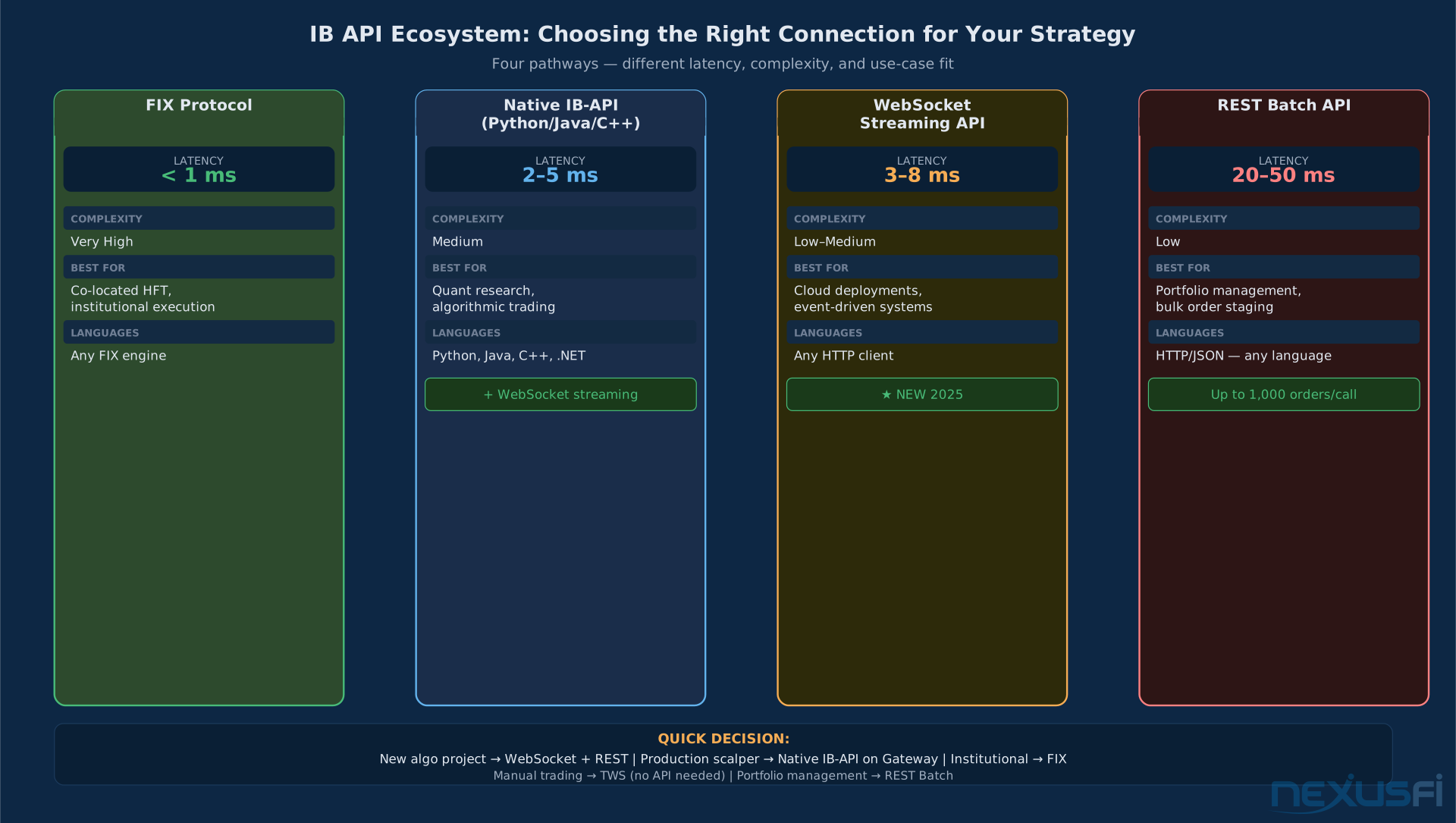
IB's API ecosystem is the strongest available at the retail level, and it's been that way for years. Four pathways:
Native IB-API (Python, Java, C++, .NET): The standard for most systematic retail traders. Supports order placement, order status, account data, and market data streaming. Python wrapper is actively maintained, well-documented, and has a large community. Latency through the local socket connection is 2--5ms. Key validation before going live: contract specification, order lifecycle events, pacing limits (IB throttles historical data requests), and reconnection handling.
FIX Protocol: The institutional standard. Sub-millisecond latency when co-located near IB's infrastructure. Requires a FIX engine and technical infrastructure beyond the typical retail setup. If you're asking whether you need FIX, you don't — it's for professional shops where 100μs differences in order submission matter.
WebSocket Streaming API (new in 2025): Replaces the polling-heavy classic IB-API for market data streaming. Lower overhead, better suited for cloud-based deployments. Market data arrives as events rather than requiring active polling. If you're building new integrations, start with WebSocket; it's the direction IB is pushing development.
REST Batch API: HTTP/JSON interface designed for bulk operations. Supports up to 1,000 contracts per API call. Latency is 20--50ms, which is fine for position management and account queries but not order execution. Use this for portfolio-level operations, not order entry.
The futures trading APIs article covers the general environment; IB's Python library is the de facto standard for retail algorithmic futures trading when you need direct broker connectivity.
Options on Futures #
IB is one of the best retail brokers for options on futures, period. Full access to CME, CBOE, and ICE options chains on the major futures contracts — ES options, CL options, GC options, ZN options, and more.
Commission on options on futures follows the same per-contract schedule as the underlying futures. No separate options approval tier beyond general futures permissions.
TWS's Option-Chain view lets you pull up the full options chain directly from a futures contract window. The Spread Builder handles multi-leg orders — straddles, strangles, verticals, calendars — with automatic margin calculation. This is genuinely useful functionality.
Margin treatment for options on futures:
- Option-Based Margin: For outright long options, margin equals the premium paid. Simple.
- Underlying-Based Margin: For short options or multi-leg positions, margin is calculated on the underlying futures contract, modified for the option position's risk profile.
For portfolio margin accounts, short options on futures can be much more capital-efficient when they're part of a larger hedged position. The options on futures brokerage considerations article covers the full account requirements and margin mechanics. IB handles the execution side well — the main consideration is ensuring you have options trading permissions enabled in your account, which is a separate step from futures permissions.
Global Market Access #
This is IB's differentiated advantage. The same account, same platform, same API handles:
- North America: CME (ES, NQ, YM, RTY, GC, SI, CL, NG, ZN, ZB, and dozens more), ICE US (DX, cocoa, coffee, cotton, sugar)
- Europe: Eurex (Euro Stoxx 50, DAX, BUND, BOBL, SCHATZ), ICE Europe (Brent crude, FTSE 100, gasoil), London Metal Exchange products
- Asia-Pacific: SGX (Nikkei 225, MSCI Asia), HKEX (Hang Seng, Mini-HS, MSCI Hong Kong), ASX (S&P/ASX 200, AU 90-Day Bank Bills), JPX (TOPIX, JGB)
- Emerging: B3 Brazil (Mini-Ibovespa, USDBRL futures), JSE South Africa (FTSE/JSE Top 40)
For traders running global macro strategies — trading the relative value between US equity index futures and European or Asian equity index futures, or building cross-asset commodity correlations — there's no retail broker that comes close to IB's breadth.
The multi-currency margin engine means you can hold positions in EUR-denominated Eurex futures in a USD-base account without manually managing FX conversions. IB converts automatically at approximately 0.1% spread. Not free, but manageable.
New contracts added in 2024--2025: CME Eurodollar Bi-Weekly, ICE EU Carbon, LME Copper Mini, SGX Nikkei Mini, Dubai ICE Crude (DCX).
The IB Customer Experience Reality #
One more community data point worth including. A thread titled "Is Interactive Brokers bad?" generated 69 replies and significant community discussion. Big Mike's assessment from that thread:
-- @Big Mike NexusFi Brokers forum
And separately, from a December 2025 Fi post discussing IB setup optimization:
"IB Gateway instead of TWS... fewer resources, same API access. Direct exchange routing instead of SMART for futures... Stable TWS branch, not beta... Wired ethernet with low jitter."”
The picture that emerges is consistent: IB's execution infrastructure is solid, their API is excellent, their global access is unmatched — but their data quality for granular analysis, their margin policies, and their platform complexity create friction that simpler brokers don't have.
Who IB Is Right For #
Multi-asset futures traders: If you're trading ES futures alongside Treasury futures, metals, and European equity index futures from one account, IB is the answer. Nobody else provides this breadth at competitive commissions.
Options on futures traders: Full chain access, competitive commissions, margin efficiency for complex positions. IB is the leading choice.
API and algorithmic traders: The Python IB-API is mature, well-documented, and widely used. IB Gateway provides stable, low-overhead connectivity. If your trading system talks directly to a broker, IB is almost certainly the right broker.
Swing futures traders: IB's elevated overnight margin requirements aren't a problem if you're holding positions for days or weeks and keeping adequate margin buffer. The financial stability and global access matter more at this timeframe.
International residents: IB operates under multiple regulatory entities globally (IBLLC in the US, IBKR Europe, IBKR UK, etc.) and provides access to local market futures. The global infrastructure is genuinely valuable for non-US traders.
Larger accounts: The per-contract commission advantages at higher volume tiers, combined with portfolio margin benefits, make IB increasingly compelling as account size and activity grows.
Who Should Look Elsewhere #
Intraday scalpers on small accounts: IB's high intraday margin requirements and auto-liquidation policy create unnecessary risk for undercapitalized intraday trading. Brokers like AMP Futures offer sub-$500 ES day-trading margins with more margin flexibility. The commission savings at IB don't offset the capital inefficiency for small accounts.
Tick-based system developers: If you're building and backtesting tick-based strategies (volume profile, footprint, order flow), you need a data provider that gives you true tick data. IB's tick data has known quality issues. Use a dedicated data provider and a different broker — or use IB for execution only with a separate data subscription.
Traders who need phone support during margin events: IB's auto-liquidation doesn't call you. If you want a broker who will work with you during a margin event, IB is the wrong choice. The margin calls and forced liquidation mechanics work differently at IB than at most retail futures brokers.
Platform-first traders: If you want a clean, integrated experience where the broker's own platform handles charting, order flow analysis, and execution, IB's TWS has the functionality but not the elegance. Tradovate offers better integrated charting; NinjaTrader Brokerage offers tighter integration with NinjaTrader. IB requires more configuration to achieve the same result.
Account Setup and Funding #
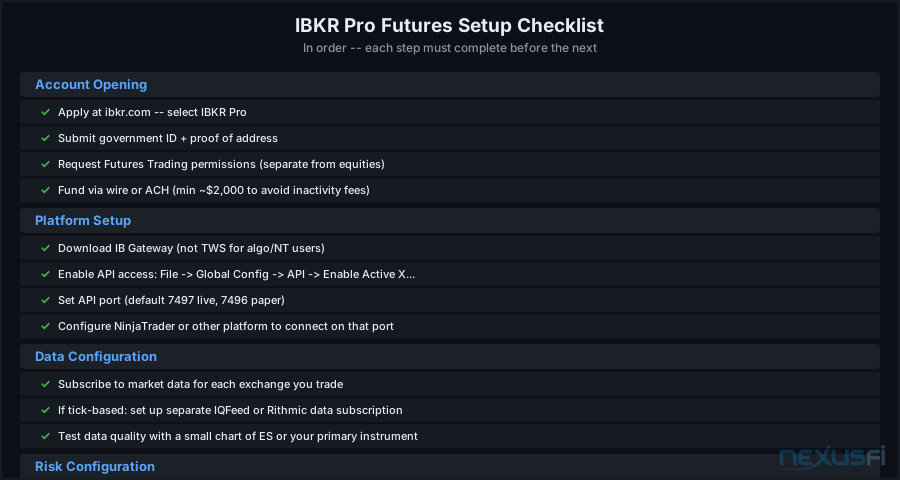
Opening an IBKR Pro futures account:
- Account application at ibkr.com -- individual, joint, or entity accounts available
- Standard KYC documentation (government ID, proof of residence)
- Trading permissions request -- futures requires a separate permission application with a brief suitability questionnaire
- Options on futures requires additional permissions if needed
- Funding via wire transfer, ACH, or check
Processing time for new accounts with futures permissions is typically 1--3 business days. Margin requirements go live immediately upon funding.
For IRA accounts: IB offers self-directed IRA accounts that can trade futures, but the margin rules are more restrictive. No portfolio margin in IRAs. Prohibited transactions rules under IRC Section 4975 apply. The trading futures in an IRA mechanics article covers the operational details.
Putting It Together #
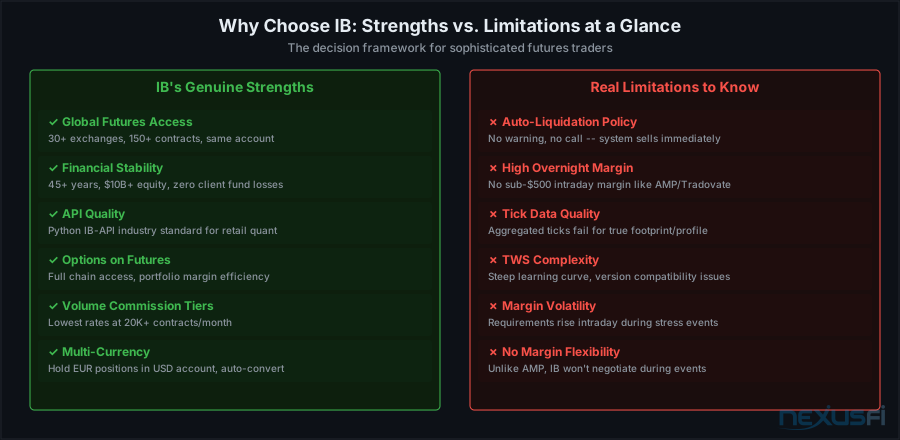
Interactive Brokers earns its position as the go-to broker for sophisticated futures traders who need global access, options on futures, or serious API connectivity. The 45+ year track record, the financial stability, and the breadth of market access are genuinely differentiated.
The costs are real: elevated margin requirements, aggressive auto-liquidation, data quality limitations for tick-based work, and platform complexity that requires configuration and learning. These aren't deal-breakers — they're characteristics to understand before you commit.
Do your broker due diligence before moving capital. IB's IBKR Pro is NFA-registered, CFTC-regulated, and their customer funds are properly segregated under applicable CFTC regulations. The institutional-grade infrastructure that powered Timber Hill's market-making business for 30+ years is now available to retail traders. Use it for what it's built for.
Prerequisites
Before opening an IBKR Pro account, review these foundational concepts: futures broker selection criteria covers the key variables in choosing between retail futures brokers. understanding futures margin requirements explains SPAN, initial, and maintenance margin mechanics. day trading margin policies compares intraday margin across brokers — critical for understanding IB's more conservative approach.
Further Exploration
- AMP Futures: The Complete Guide -- the primary alternative for intraday scalpers who need sub-$500 day-trade margins
- Futures Data Feed Technologies -- covers DTN IQFeed, Rithmic, and CQG as data provider alternatives to IB's native feed
- Futures Trading APIs -- deeper coverage of the IB Python API and competing broker APIs for algorithmic trading
- Options on Futures Brokerage -- complete guide to trading options on futures, where IB excels
- Futures Broker Due Diligence -- NFA registration, fund segregation, financial stability checks before opening any futures account
- Margin Calls and Forced Liquidation Mechanics -- how IB's auto-liquidation works vs. manual margin calls at other brokers
Knowledge Map
Go Deeper
Build on this knowledgeReferences This Article
Articles that build on this topicCitations
- — Futures Margin Leniency (2023) 👍 3“I would say that the consensus opinion is that IB have some of the highest margin requirements and some of the most aggressive liquidation policies.”
- — Question about leverage (2020) 👍 4“Right now IB does not even make a 'telephone' margin call...they just sell you out of your positions.”
- — Margin Question - Interactive Brokers (2014) 👍 1“IB will send you a warning 10min before switching to overnight margin requirements (only if you do not meet that requirement)”
- — Bad daily/minute data for E-Mini? (2011) 👍 3“IB does not have historical backfill for tick-data. If you want to have a history, you need to store real-time tick data.”
- — IQfeed vs IB data as data provider for Multicharts (2012) 👍 7“IB daily data is just built from intraday-data and does not show the settlement price for futures.”
- — IB with Ninja Trader and DTN IQ Feed? (2011) 👍 2“You can use DTN IQ feed or Kinetick with NinjaTrader and Interactive Brokers. To do this you will first-connect NinjaTrader to DTN IQ feed or Kinetick. Then you will second-connect NinjaTrader to Interactive Brokers.”
- — My Journey with NinjaTrader and IB (2021) 👍 2“That does not work because IB only allows for 1 connection at a time. Since I do need TWS running to verify my position, orders, etc..”
- — NinjaTrader won't reconnect (2014) 👍 4“No daily disconnect issues. Solution: Use IB Gateway instead of IB TWS.”
- — Is Interactive Brokers bad? (2012) 👍 6“Two main issues with IB: a) Their data b) The TWS interface with NinjaTrader.”
- — Interactive Brokers: please, please, just stay away (2025)“IB Gateway instead of TWS... fewer resources, same API access. Direct exchange routing instead of SMART for futures.”
- — Interactive Brokers Futures Trading
- — IBKR Futures Commission Rates