



Supertrend Indicator: ATR-Based Trend Following, Parameter Calibration, and Order Flow Integration for Futures Trading
The Supertrend indicator draws an ATR-based line around price that follows the trend and flips direction when price closes through it. That simplicity is what makes it dangerous in the hands of traders who don't understand what it's actually telling them.
Here's what it isn't: a standalone trading system. Here's what it is: a volatility-calibrated trailing stop mechanism that doubles as a regime identifier. When the market is trending, it keeps you in the trade and tracks your stop automatically. When the market isn't trending — which @PandaWarrior, having traded it live for years, pegged at roughly 80% of the time — it hands you whipsaw after whipsaw until you have no capital left to trade the actual move.
The traders who make money with Supertrend treat it as infrastructure, not a signal. They use it to anchor their stop, filter their entries, and identify when the market is doing something worth trading. The traders who blow up on it confuse the line flipping green as a buy signal. Those are not the same thing, and this article will make the difference clear.
The indicator was developed by Olivier Seban and published in 2009. @Fat Tails extended it much with the SuperTrend M11 and later U11 variants for NinjaTrader, which addressed specific shortcomings in the original ATR calculation. Both the original and the variants are widely used on NexusFi, with extensive community discussion about when they work and — more importantly — when they don't.
This article covers the mechanical construction, the state machine logic that makes it work, parameter selection for specific futures contracts, how to build an order flow confirmation framework around it, and the specific failure modes that will cost you money if you don't understand them before you start.
Overview #
The Supertrend indicator draws an ATR-scaled trailing stop around price that flips direction when price closes through it. Developed by Olivier Seban in 2009 and extended by @Fat Tails with the M11 and U11 variants for NinjaTrader, Supertrend has become one of the most-discussed trend tools on NexusFi — both for what it does well and for the specific conditions where it destroys accounts.
This article covers: mechanical construction and sticky band logic, state machine behavior, parameter selection by futures contract, the M11/U11 variants, order flow confirmation framework, position sizing from the band, failure modes (whipsaw, volatility collapse, event gaps, contract rolls), and the professional approach of using Supertrend as an exit-only trailing stop rather than an entry signal.
PREREQUISITES: Average True Range (ATR), Futures Order Types, Balance vs Imbalance.
How the Bands Are Built #
The construction uses two bands computed from the session midpoint (HL2):
- Upper Band = (High + Low) / 2 + (Multiplier × ATR)
- Lower Band = (High + Low) / 2 - (Multiplier × ATR)
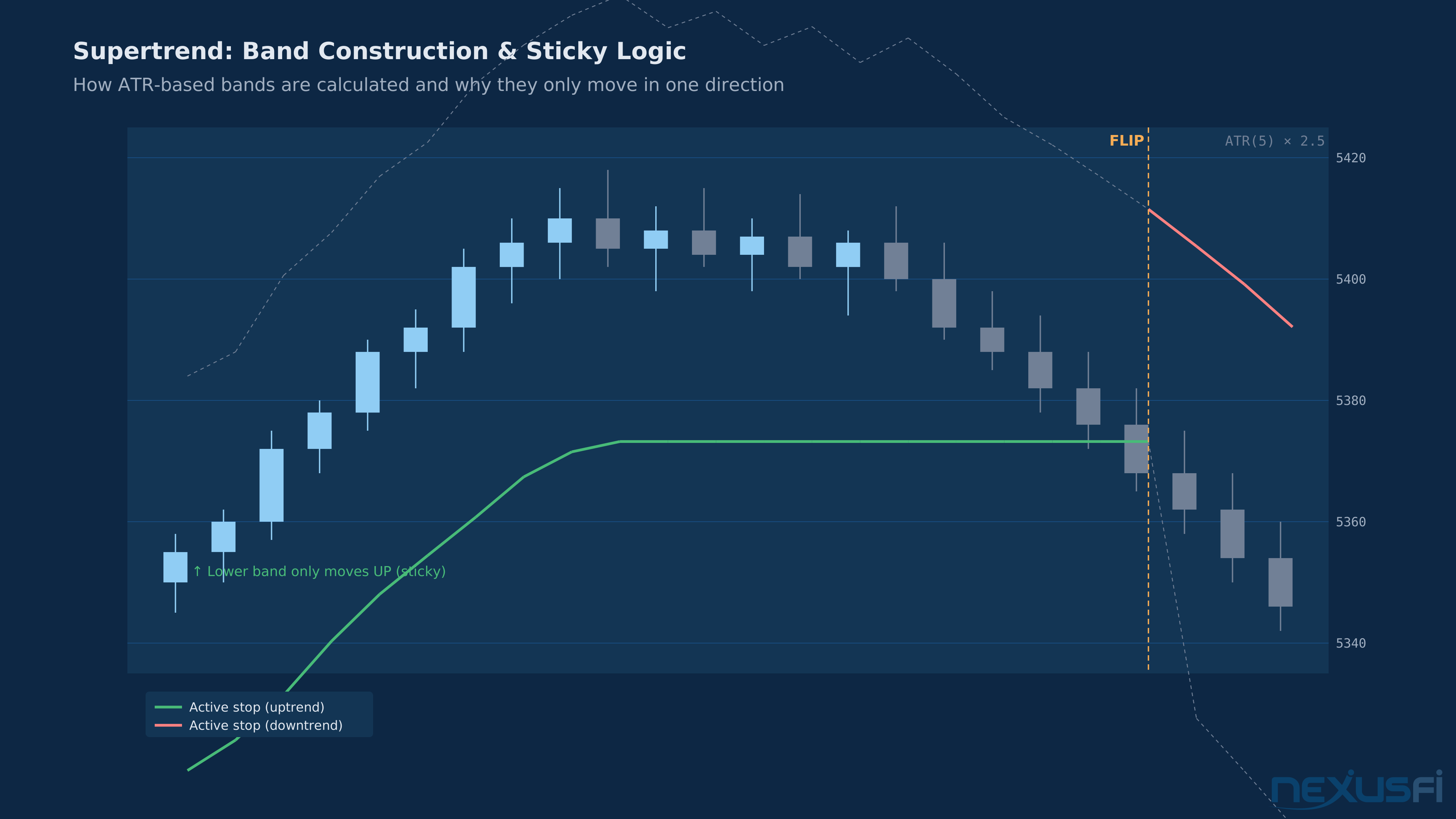
The midpoint of high and low — HL2 — is the anchor. The ATR-scaled offset creates the envelope. That part is simple. The part that turns this from a basic channel into a useful trailing stop is the sticky band logic.
In an uptrend, the lower band can only move up or stay flat. It cannot retreat. In a downtrend, the upper band can only move down or stay flat. The band ratchets in the direction of the trend and never gives ground back. This is the mechanical difference between "ATR envelope" and "Supertrend as a trailing stop." The sticky band locks in progress. When ES grinds higher through a session and the lower band slowly ratchets up with it, that band is your stop. It doesn't give back ground just because volatility contracts for a few bars.
The flip trigger is close-based by design. A bar's closing price must breach the active band to trigger a state change. Intrabar touches don't count. This is a deliberate choice: futures markets execute stop-runs through key levels constantly — CL spikes on inventory data, ES twitches on every geopolitical headline. Close-based confirmation filters out the runs that don't hold. The lag is worth it.
Upper Band = HL2 + (m × ATR) Lower Band = HL2 − (m × ATR) State flip: close below FinalLower triggers bearish, close above FinalUpper triggers bullish Sticky update (uptrend): FinalLower = max(BasicLower, PrevFinalLower) Sticky update (downtrend): FinalUpper = min(BasicUpper, PrevFinalUpper)
Worked example on ES: HL2 = 5400.00, ATR(10) = 12.0 points, Multiplier = 3.0.
- Upper Band = 5400 + 36 = 5436
- Lower Band = 5400 - 36 = 5364
If the trend is bullish and the next bar's basic lower band calculates to 5358, sticky logic keeps it at 5364. The stop doesn't retreat. If price closes below 5364, the trend flips bearish and the upper band becomes the new active level.
The sticky band is distinguishes Supertrend from a simple ATR envelope. A channel retreats symmetrically as volatility contracts — the sticky band ratchets in the direction of established trend and never gives back ground. This makes it function as an automatic trailing stop that tightens without ever loosening.
The State Machine #
Every bar, Supertrend is in one of two states: bullish or bearish. The state changes only when price closes beyond the active band. No intermediate states, no "weakening trend," no gradual fade. The binary nature is the feature, not a limitation.
This has a key implication: the indicator is not predictive. It describes the current regime as defined by recent price action. When the line flips from red to green, that flip is informational — the market has done something, a bar has closed beyond the band. The question is whether that event is meaningful in the context you're trading.
In a trending market, it is. In a ranging market, it's noise. The indicator cannot tell the difference. That's your job, and the order flow confirmation framework in the Trade Setups section addresses exactly this.
Parameter Selection by Contract #
ATR period and multiplier determine sensitivity vs. stability. Getting this wrong for your specific contract is the most common setup mistake, because no parameter set transfers across contracts without calibration.
ATR Period tradeoff:
- Period 7: fast reaction, more false flips in choppy conditions
- Period 10: standard balance for active intraday and swing use
- Period 14: smoother, fewer flips, slower to react to turning points
Multiplier tradeoff:
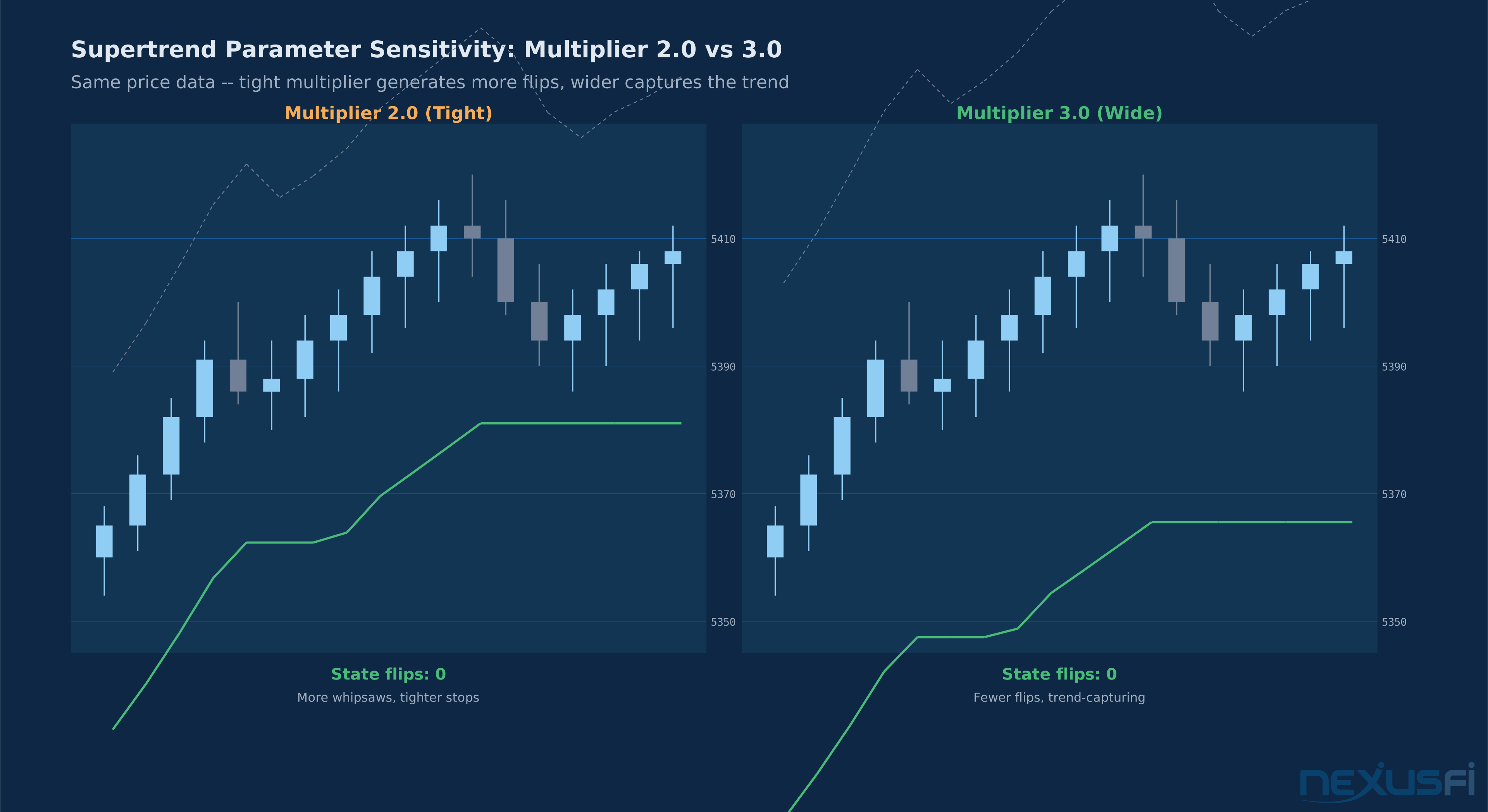
- Multiplier 2.0: more signals, tighter stops, more whipsaws
- Multiplier 2.5: balanced starting point for liquid index futures
- Multiplier 3.0: fewer signals, wider stops, better trend capture, later exits
- Multiplier 3.5+: appropriate for high-volatility instruments like NQ or CL during news events
Neither input transfers across contracts without calibration. Here are practical starting points:
| Contract | ATR Period | Multiplier | Rationale |
|---|---|---|---|
| ES (E-mini S&P 500) | 10 or 14 | 2.5 - 3.0 | Orderly trending sessions; 3x ATR keeps you in during controlled pullbacks |
| NQ (E-mini Nasdaq) | 10 - 14 | 2.8 - 3.2 | More impulsive, more gap risk; wider bands prevent stop-run exits |
| CL (Crude Oil) | 14 | 2.5 - 3.0 | Inventory spikes and overnight gaps demand longer ATR smoothing |
| GC (Gold) | 10 | 2.5 - 3.0 | Trends cleanly but reacts sharply to USD/rates macro events |
| ZB (30-yr Treasury) | 10 | 2.0 - 2.5 | Slower-moving instrument; tighter bands appropriate for smoother fills |
These are starting points. The same ES setting that works in a smooth trending April will whipsaw you in high-vol October around FOMC weeks. Verify parameters against the actual contract behavior during the conditions you typically trade.
Session effects matter. The overnight globex session on ES has lower liquidity and more erratic price action than RTH. Parameters tuned for RTH will generate more noise signals during globex hours. Either widen the multiplier for overnight or stand aside outside RTH until you've specifically calibrated for that session.
When evaluating parameters for a new contract, calculate what the band width would have been on recent trending sessions. If the band distance implies a stop that exceeds your risk parameters, adjust the multiplier down or move to a longer timeframe. The indicator should fit your risk tolerance, not the other way around.
The SuperTrend M11 Variant #
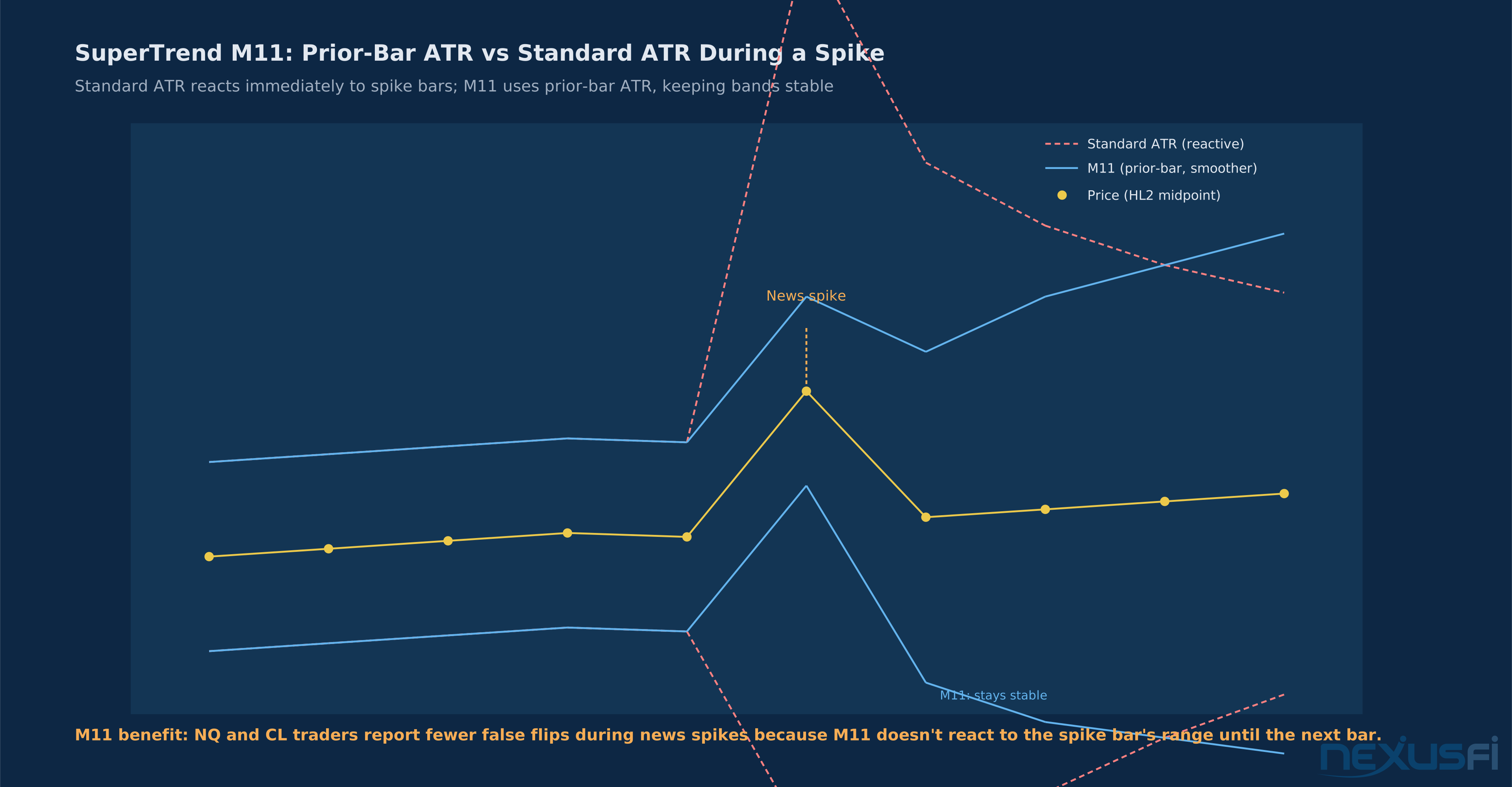
@Fat Tails created the SuperTrend M11 for NinjaTrader and documented it extensively. It addresses a specific problem with the standard Supertrend: ATR sensitivity to single-bar volatility spikes.
Standard Supertrend uses Wilder's smoothed ATR (smoothing constant k = 1/n). This calculation is sensitive to individual bars with outsized ranges — news events, overnight gaps, stop-run moves — which can temporarily widen or tighten the band in ways that don't reflect the actual underlying volatility regime.
The M11 modification applies three changes:
- Uses the median price as the baseline instead of a moving average
- Calculates ATR from the prior bar rather than the current bar (avoids feedback loops)
- Calculates the median from the prior bar for the same reason
The practical result is a smoother band that is less reactive to one-bar anomalies while still responding to genuine volatility shifts. The indicator only recalculates once per bar, reducing CPU load and eliminating the intrabar recalculation behavior of the original.
The later U11 (Universal) version added 28 baseline indicator options and multiple offset calculation methods, including standard deviation in place of ATR. Converting from M11 to U11 requires a period adjustment: Wilder's average uses smoothing constant k = 1/n, while EMA uses k = 2/(n+1). ATR period 5 on M11 corresponds to EMA period 9 on U11, since 2/(9+1) = 0.2 = 1/5.
When to prefer M11 over standard: NQ traders report fewer false flips with M11 because NQ's intraday spikes are common and the standard ATR is more reactive to individual spike bars. CL traders dealing with inventory-related spikes report similar benefits. If you find the standard generating unacceptable whipsaw on a specific contract, M11 is the first logical test. The additional lag is the cost.
Trade Setups #
The Three-Criteria Framework #
A Supertrend flip is an event, not an entry. Treat the flip as an alert that conditions may be valid, then confirm before acting. Three criteria separate tradeable setups from noise:
- Close-based flip confirmed — the bar must close beyond the active band, not just wick through it
- Order flow alignment — delta and DOM confirm the flip direction
- Structural context — price is not flipping directly into a major opposing level
All three should align before entering. Two of three is marginal and warrants reduced size. One of three is noise.
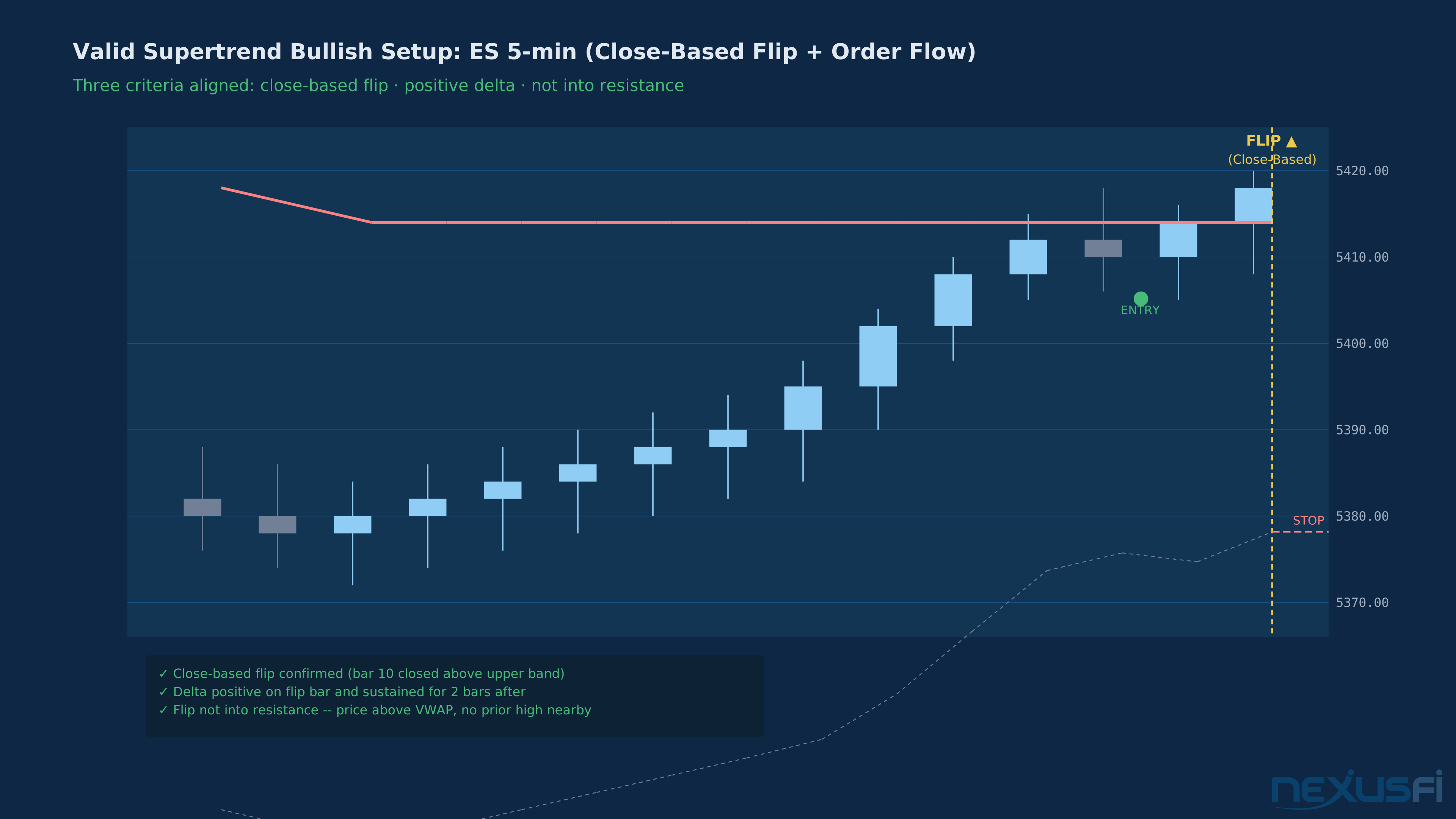
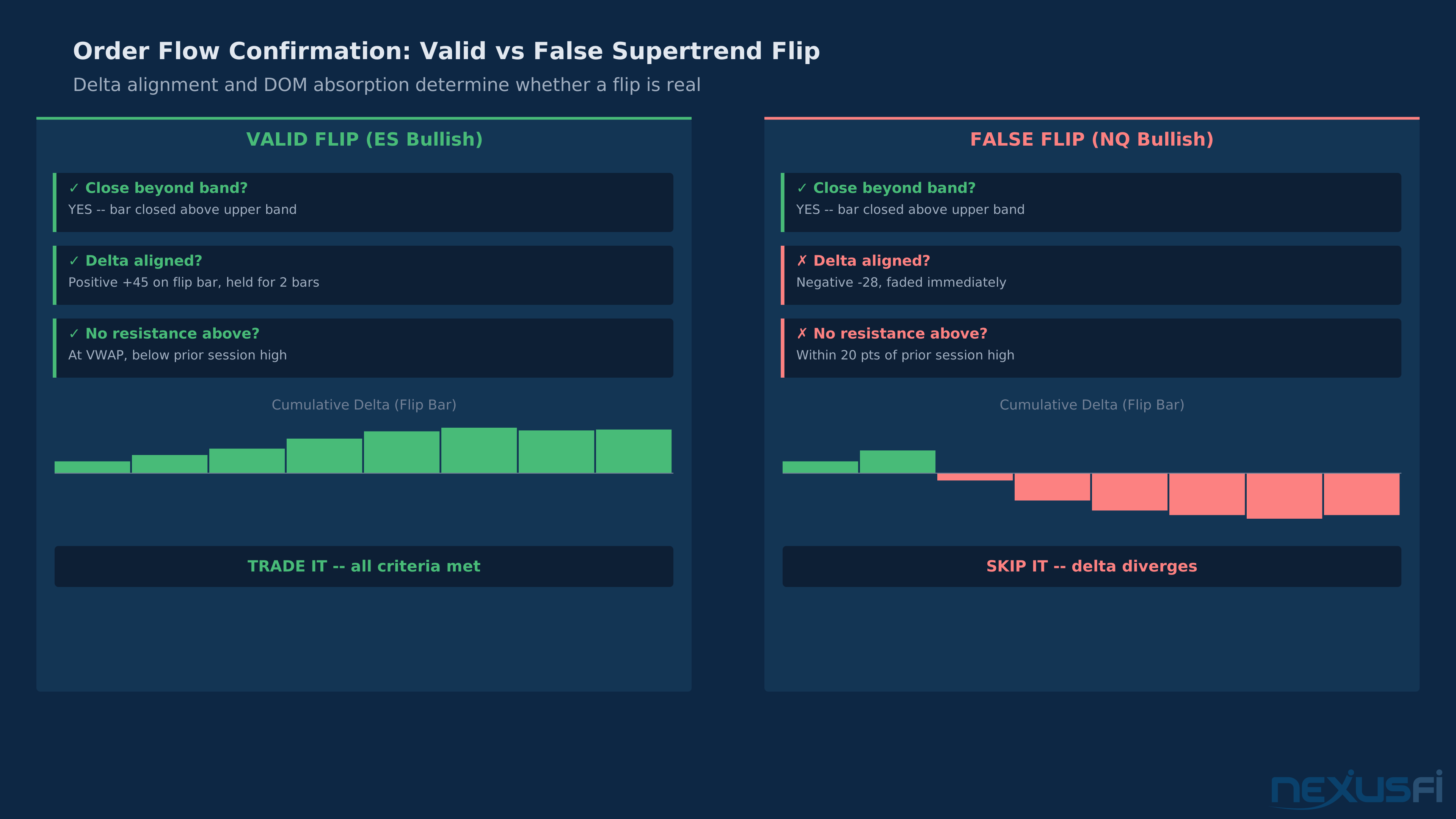
Valid Bullish Setup (ES 5-min) #
Setup context: ES has been in a morning compression range, trading in a 12-point band for 90 minutes. Around 10:30 EST, a 5-min bar closes above the upper Supertrend band. Parameters: ATR(10), multiplier 3.0. Current ATR = 8.5 points, so bands are approximately 25.5 points wide.
What confirms this as a valid setup:
- Delta turned positive on the flip bar and held positive for the next two bars
- DOM shows offers getting absorbed above the flip level rather than replenished
- Price is above VWAP and the flip is not into prior session high or a major resistance cluster
- This is the first flip of the session (not the fourth flip of a ranging day)
Entry: on the first pullback that holds above the supertrend line (the newly established lower band) Stop: current FinalLower after sticky adjustment First target: 1.5x the risk distance from entry to stop Trail remainder: ratchet stop with the band as it moves higher
From decision time, before the outcome, you see: the flip occurred, delta is positive, DOM looks absorbed, you're above VWAP, this is not into resistance. That's a valid entry decision. Whether it pays is a question the market answers, not the indicator.
Valid Bearish Setup (CL 15-min) #
Setup context: Crude oil trending lower through an afternoon session. EIA inventory data came in bearish two hours ago and price has been in a persistent downtrend. Parameters: ATR(14), multiplier 2.7. Current ATR = 0.45 (45 cents/barrel), so bands are approximately $1.22 wide.
The state flipped bearish at noon. Criteria check:
- Bar closed below FinalLower (close-based, confirmed)
- Negative delta persistent across the last 3 bars
- Absorption of buy pressure near the band — buyers stepping in but getting absorbed, price failing to reclaim
- Not at major support level
Entry: at next bar open or on a retrace toward the supertrend line Stop: at FinalUpper (upper band, sticky-locked below the prior upper band level) Size: with $500 risk budget and CL at $1,000/point, a $1.22 stop = $1,220 per contract. Trade size: 0.41 contracts. Round down to 0: this trade doesn't fit your risk budget at the current band width. Either reduce multiplier, use shorter timeframe with tighter band, or skip.
The opposite band is always the stop. Long trade: stop at lower band. Short trade: stop at upper band. The band ratchets in the direction of trade as it moves — you trail it, you never loosen it. When price closes through the active band or the band direction reverses, the position is done.
False Signal Anatomy #
What a false signal looks like in real time — before you know it's false:
NQ opens in a narrow range. A 5-min bar closes above the upper Supertrend band (bullish flip). The flip occurs after a brief compression near session high. At decision time, you see:
- Delta is neutral to slightly negative on the flip bar
- DOM shows passive sellers immediately absorbing upticks above the flip level
- The flip occurs within 20 points of prior session high — overhead resistance
Any one of these alone is a yellow flag. All three together: this is not a trade. What happens: NQ bounces 25 points, sellers absorb the move at prior session high, price falls back below the band within 2 bars. With hindsight, obvious. At decision time, it's a checklist failure — two or three criteria said no.
NQ's aggressive volatility makes it especially prone to false Supertrend flips near prior session highs and lows. A bullish flip directly into prior session high is a potential trap. The indicator doesn't know where the prior highs are. You do.
Multi-Timeframe Alignment #
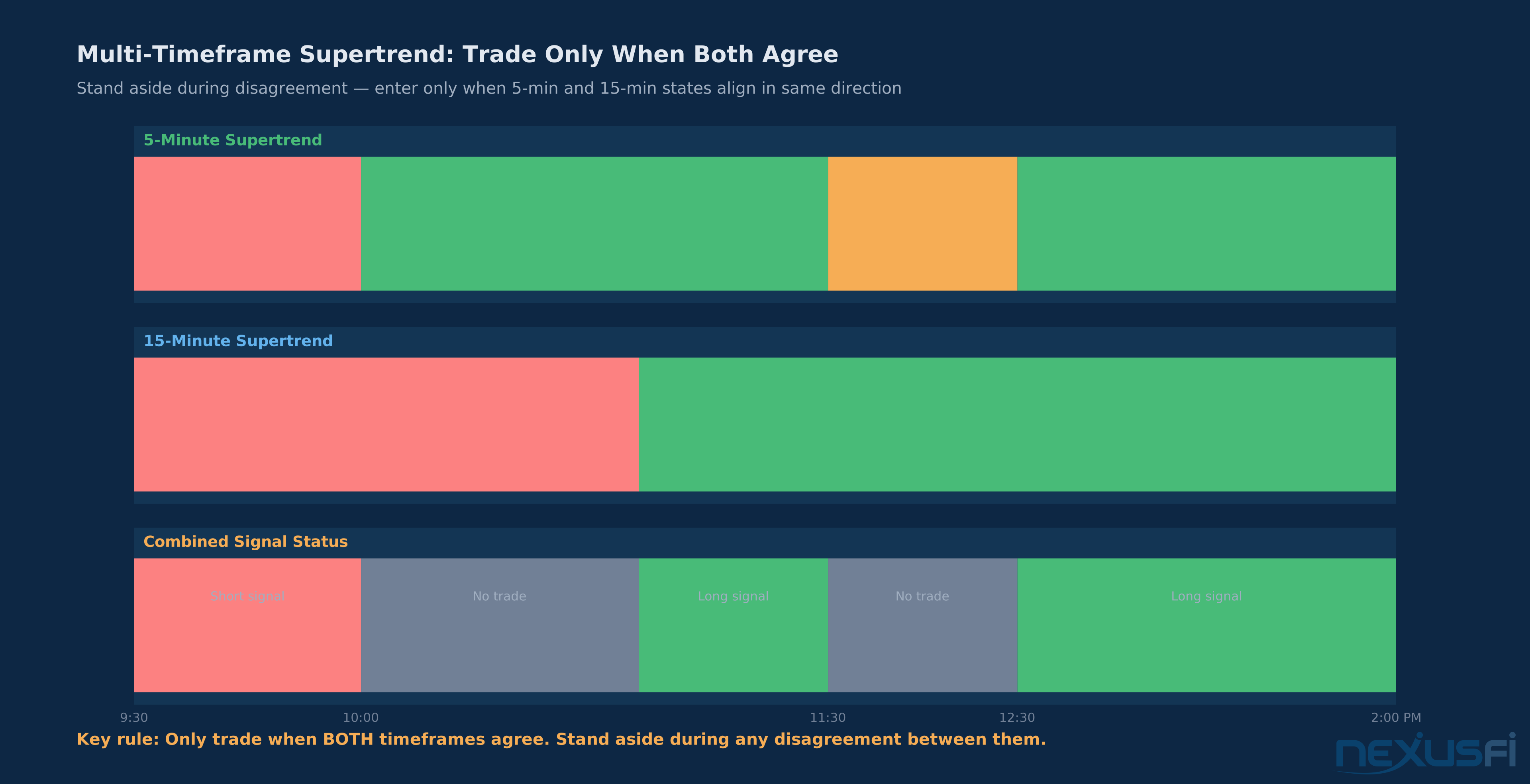
@PandaWarrior developed a multi-timeframe approach using Supertrend that addresses one of its core weaknesses: it doesn't know what the higher-timeframe trend is doing. The idea is to require both a short-term and longer-term Supertrend to be in the same state before taking a trade.
Practically: apply Supertrend to both a 5-min and 15-min chart (or use a single chart with two Supertrend instances at different lookback periods). Only take long signals when both timeframes are in bullish state. Only take short signals when both are bearish. During disagreement (one bullish, one bearish), stand aside.
The mechanism on a single chart: use a longer ATR period for the "higher timeframe" approximation. A 300-bar SMA on a range bar chart closely approximates the 50 SMA on a longer timeframe. The key insight is that trading when both signals agree dramatically reduces whipsaw trades while keeping you in for the trend days that generate real P&L.
@PandaWarrior's implementation uses four components: the short-term Supertrend as a stop level, an 18-bar 50 SMA for higher timeframe trend, a shorter 50 SMA for intermediate trend, and a 21 EMA for very short term. All four in alignment with each other = entry signal. Any misalignment = wait.
The transition zone after a higher timeframe trend change is the critical nuance. When the longer-term trend has just changed direction, the first few signals in the new direction are low-probability. The market needs to establish the new trend before it generates reliable signals. Standing aside during the first 1-2 flips after a major trend change reduces losing trades without missing much upside on the subsequent continuation.
When It Fails #
This is the most important section in the article. Understanding when Supertrend fails is more valuable than understanding when it works.
Whipsaw in Ranging Markets #
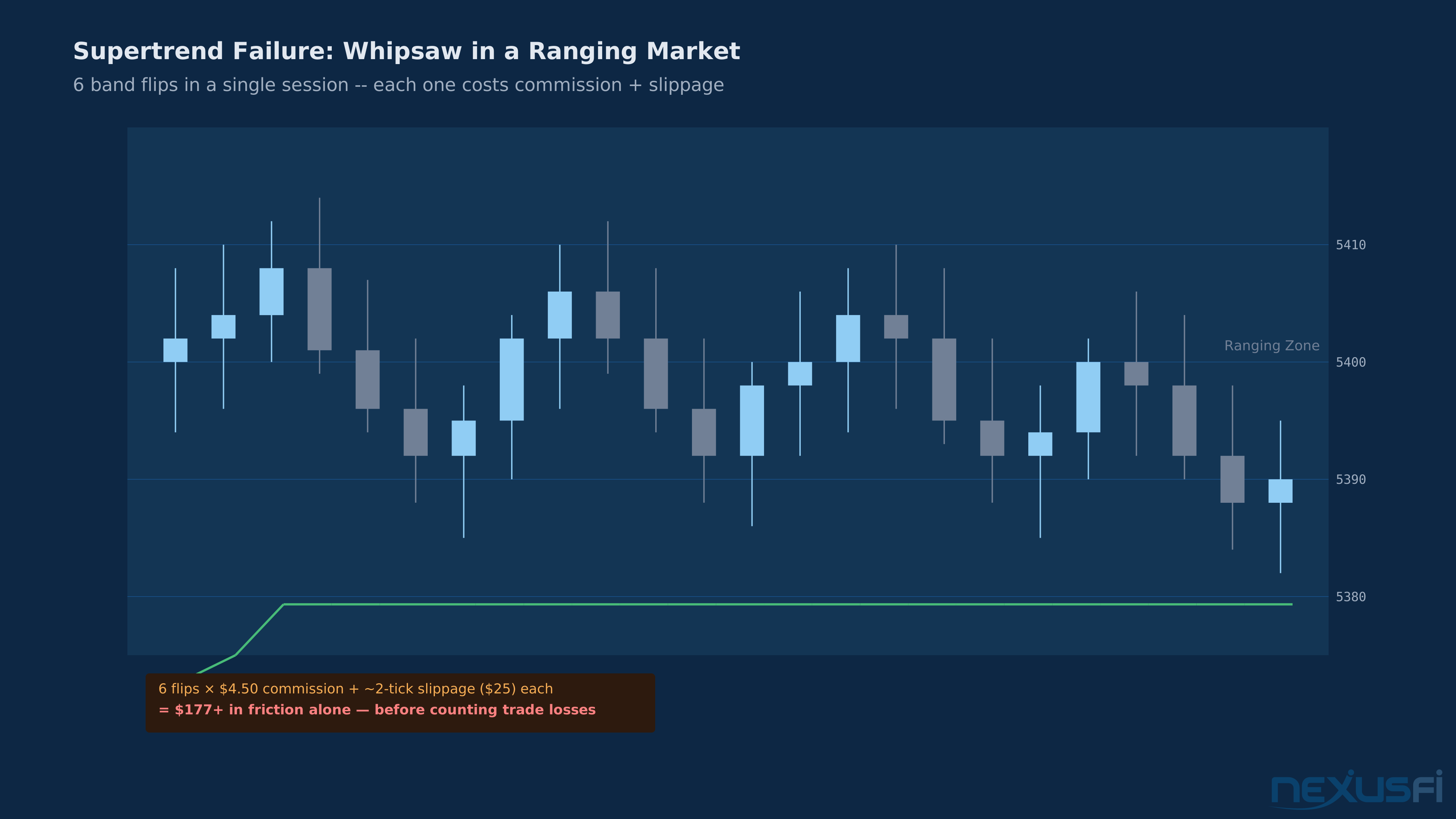
This is the primary failure mode and the one that destroys accounts over time.
The mechanics of the destruction: price oscillates around the band level. Each oscillation produces a flip. Each flip costs commission, spread, and often slippage. With realistic execution costs on ES (approximately $4.50 per side including exchange fees, 1-2 tick slippage on a stop-limit fill), 8 whipsaw trades in a ranging session costs roughly $72 in friction alone per contract. Add the actual trade losses on the flips themselves and a ranging day can cost $300-500 per contract just from a mechanically "working" indicator doing what it was designed to do in the wrong conditions.
The solution is not better parameters. Wider parameters reduce whipsaw frequency but don't eliminate it, and they add lag that makes the trending signals worse. The solution is a regime filter that prevents trading Supertrend at all during ranging periods.
Volatility Collapse #
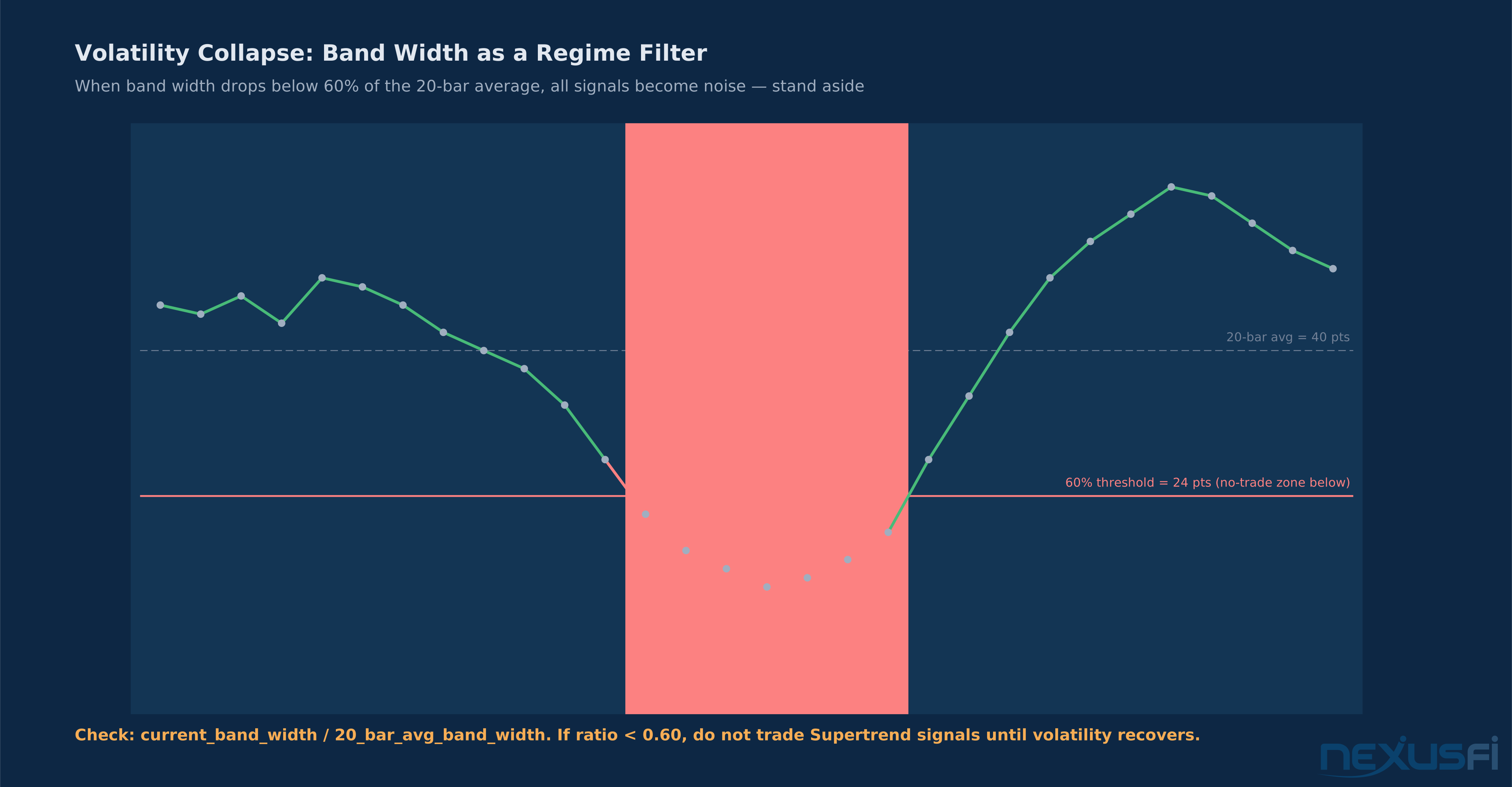
When volatility collapses — during midday chop, pre-holiday sessions, or pre-announcement windows — ATR trails the actual volatility lower with a lag, tightening the bands as the smoothed measure catches up to reality. Tight bands in a low-vol environment create two problems.
First, normal noise becomes large enough to trigger flips. The 2-tick random walk that would be invisible on a trending day becomes a state change when the band is tight enough. Second, the stop gets so close to price that it's inside the natural bid-ask noise, meaning you get stopped out on fills that aren't meaningful price moves.
Identifying this condition: calculate the current band-to-band distance and compare it to the 20-period average band distance. If current width is below 60% of average, the market is in low-vol compression. Supertrend signals in this state are high-noise, low-probability.
Volatility Expansion Shocks #
ATR is a lagging calculation. When volatility expands suddenly — FOMC, hot CPI, EIA inventory, payrolls — the ATR calculation doesn't immediately reflect the new regime. During the first bars of the shock, bands are calibrated to the prior quiet regime.
The specific risk: if you're in a position using the Supertrend as a trailing stop when a volatility shock occurs, the bands will expand as ATR rises, giving back ground that the sticky logic had locked in. Sticky logic prevents the band from retreating against the trend on normal bars, but ATR-driven expansion is a different mechanism — it's a recalculation of the band width, not a price-driven retreat.
Mitigation: impose a no-new-entries rule for the 15-30 minutes surrounding scheduled macro releases. If already in position, switch to a fixed dollar stop at the band level rather than a dynamic band stop during news windows.
Event-Driven Price Gaps #
CL and index futures are gap-prone. Crude gaps on inventory data. ES gaps on overnight macro. When price gaps through a Supertrend band, the close-based flip triggers, but execution doesn't happen at the band — it happens at whatever price is available after the gap. This is systematic slippage at the exact moments the indicator generates signals, when liquidity is thinnest.
A 50-tick CL gap that triggers a Supertrend short entry might fill 30 ticks through the band, not at the band. If the stop is at the opposite band, the risk/reward ratio calculated from the band level no longer applies.
Contract Rollover Discontinuities #
Continuous futures contracts for backtesting are back-adjusted or ratio-adjusted at roll. The adjustment changes historical price levels without changing the ATR that traders actually experienced in live trading. This creates artificial ATR history that makes historical bands look different from what live traders saw.
For backtesting Supertrend: use the active front-month contract for each period, not a continuous series. The continuous series is fine for identifying long-term trends; it's not reliable for evaluating band-level entries and exits where the exact band price matters.
ATR is computed from price history. If that price history is point-adjusted at contract rolls (as most continuous contracts are), your historical Supertrend bands are fiction. Back-test on individual contract segments. Ratio-adjusted data preserves ATR accuracy better than point-adjusted but is still imperfect around the roll dates themselves.
Order Flow Confirmation Framework #
This is distinguishes Supertrend as a productive tool from an account-destroyer. Order flow answers the question the indicator can't: is this flip backed by real market participation?
What to Look For #
Delta alignment: The net of buyer-initiated vs seller-initiated trades should align with the flip direction. A bullish flip should show positive delta on the flip bar. Neutral delta is a yellow flag. Negative delta on a bullish flip is rejection — the flip is occurring while sellers control the tape.
DOM absorption: When price breaks above the upper band (bullish flip), you want to see offers getting absorbed rather than replenished. Sellers should be running out, not standing firm. Watch for: level refreshes getting thinner, ask size pulling on upticks, bid stacking on upticks. Heavy passive selling absorbing every uptick is the signature of a false breakout.
Tape persistence: A brief delta spike that immediately fades is not confirmation. Delta should maintain direction for a meaningful portion of the bar — at least 30-50% of the bar's duration. Last-second delta spikes into the close are common and often mean-revert immediately.
Confirmation Checklist #
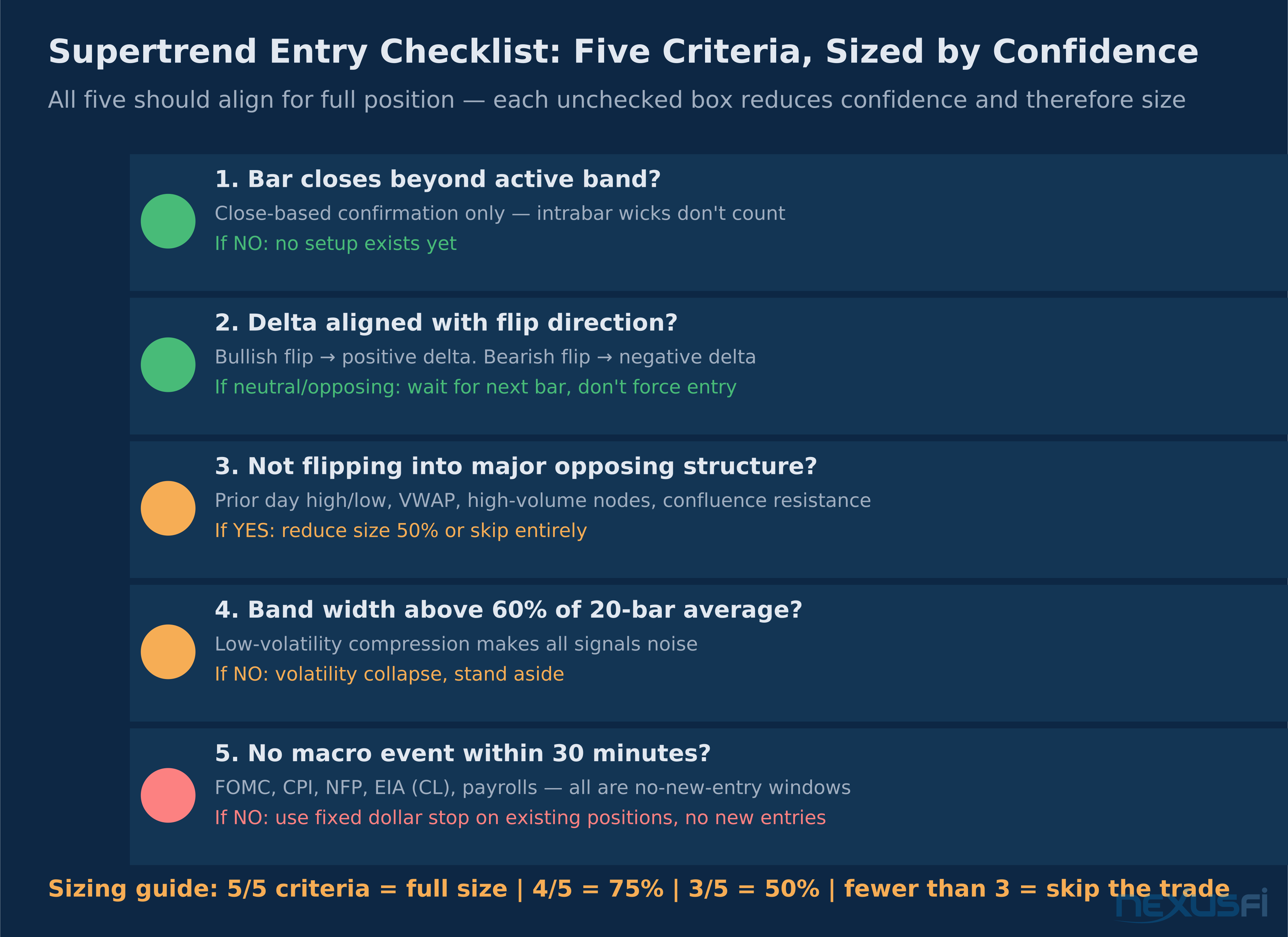
Before entering on any Supertrend flip, run through this in real time:
- Bar close beyond band? If no: no setup.
- Delta aligned with flip direction? If neutral or opposed: wait for next bar.
- Not flipping into major opposing structure? If yes: reduce size or skip.
- Band width above 60% of 20-bar average? If no: low-vol collapse, skip.
- No macro event within 30 minutes? If no: use fixed stop instead of dynamic band.
Not every trade needs all five criteria to be perfect. But each unchecked box reduces confidence, and confidence should drive size.
Position Sizing from the Band #
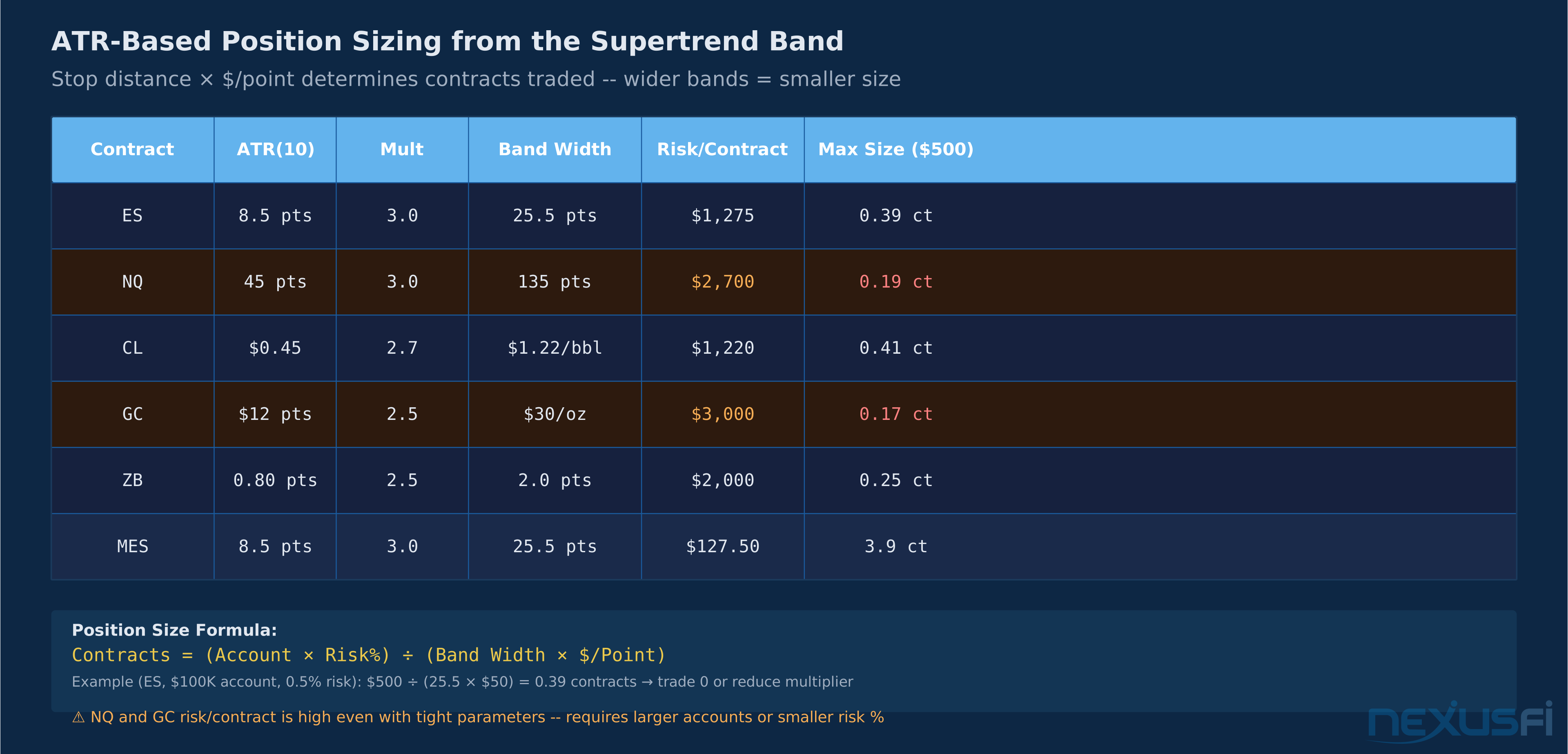
One of the most underused aspects of Supertrend: it tells you exactly where your stop is, which drives your position size.
Contracts = (Account × Risk%) / (Stop Distance × $/Point)Dollar-per-point by contract:
- ES: $50 per point
- NQ: $20 per point
- CL: $1,000 per $1 move (tick size $0.01, tick value $10)
- GC: $100 per point
- ZB: $1,000 per point
ES example with $100,000 account, 0.5% risk ($500):
- Entry: 5398, stop at lower band: 5368 (30-point stop)
- Risk per contract: 30 × $50 = $1,500
- Position size: $500 / $1,500 = 0.33 → zero contracts
That math tells you the stop is too wide for the account size. When ATR expands (volatility shock), band distance grows, risk per contract grows, correct position size shrinks. When ATR contracts, the opposite. This natural scaling is a feature — it automatically reduces exposure in volatile environments and increases it when conditions are calmer.
NQ example with same account:
- Entry: 21200, stop at lower band: 21100 (100 points)
- Risk per contract: 100 × $20 = $2,000
- Position size: $500 / $2,000 = 0.25 → zero contracts
NQ's tick value makes it genuinely difficult to trade with smaller accounts using Supertrend-derived stops unless you move to longer timeframes (where band distance is wider in points but often similar in dollar terms) or accept a higher risk percentage.
Whipsaw cost accounting: Each false flip costs commissions + exchange fees + slippage + opportunity cost. A strategy with a 60% win rate but high flip frequency can have negative expectancy after friction. Track the number of flips per session; if it exceeds 3-4 in a single session, the regime is wrong and you're paying friction for no edge.
Practical Application #
Pre-Market Assessment #
Before RTH opens, assess the regime in three ways:
ATR vs 20-day average ATR: Is today setting up as a high-vol or low-vol day? High-vol favors wider parameters and supports Supertrend trading. Low-vol days, especially when ATR is below 60% of its 20-day average, often mean standing aside entirely.
Initial Balance structure: The first 60 minutes of RTH form the Initial Balance range. A narrow IB (less than 60% of typical daily range) suggests balance and low trend probability. Supertrend signals inside a tight IB are low-confidence. Wait for IB range expansion before treating flips as meaningful.
Macro calendar: Mark scheduled economic releases. These are no-trade windows unless you're managing an existing position with a fixed stop. For ES: FOMC, CPI, payrolls. For CL: EIA weekly inventory (Wednesday 10:30 EST), Baker Hughes rig count (Friday 1 PM EST).
During the Session #
The most important habit: don't count flips. A session with 6 Supertrend flips is not a session with 6 opportunities — it's a signal that the market is in a ranging regime and you should be using different tools entirely.
@Fat Tails, after building and testing automated Supertrend strategies: "You can also use the SuperTrend as a stop strategy (exits only) and combine it with other indicators that give you better entry signals." This is the professional approach — use Supertrend for what it's good at (the trailing stop) and use order flow and structure for what it's better at (the entry decision).
Practical decision tree for the session:
- More than 3 flips in first 90 minutes: ranging day, stop trading Supertrend, switch to range tools
- All flips in same direction: trending day, increase conviction on next signal
- Alternating flips: chop, stand aside
- No flips yet: early, wait for the first signal and evaluate order flow before acting
A simple flip-count rule: if Supertrend has flipped more than 3 times in the current session, stop taking new signals for the rest of that day. This single rule dramatically reduces whipsaw cost without requiring any additional indicators or complex regime detection.
Supertrend as Exit-Only Tool #
This deserves its own treatment. @Fat Tails' recommendation from extensive live testing: use Supertrend only for exits and combine it with better entry signals from other sources.
The mechanics: enter on volume profile level rejections, order flow reversals, or structure-based setups. Once in a position, use the Supertrend band as the trailing stop. This extracts the genuine value (the ratcheting, volatility-calibrated trailing stop) while avoiding the weakest part (the flip as an entry signal).
Example: long ES when price rejects below the prior day's value area high and reclaims it with positive delta. Stop: current Supertrend lower band. As the session trends higher and the band ratchets up, the stop tightens automatically. When the session ends or price closes below the band, the trade closes. No discretionary trailing, no second-guessing.
This approach especially suits traders who have strong entry methodology (market profile, order flow, VWAP) but struggle with exit discipline. The indicator's objective mechanical exit removes the emotionally-charged "should I move my stop" decision that destroys otherwise good trades.
Knowledge Map
Prerequisites
Understand these firstGo Deeper
Build on this knowledgeReferences This Article
Articles that build on this topicCitations
- — SuperTrend EA with Trend Strength Filter (2011) 👍 5“The SuperTrend works very well during trending periods, but produces many whipsaw trades during choppy times. Combining the SuperTrend with a chop filter points in the right direction.”
- — Configuring anaSuperTrend (2017) 👍 4“You can also use the SuperTrend as a stop strategy (exits only) and combine it with other indicators that give you better entry signals.”
- — The PandaWarrior Chronicles (2012) 👍 3“I've always known it sucks in sideways markets. That is one reason I stopped using it for so long... The super trend is great for days when its following through on trend signals. On sideways days, you can get killed before you even know you are in the line of fire.”
- — Volatility Based Trading (2013) 👍 8“M: SuperTrend uses the Median instead of a moving average as baseline. 1: The average true range is calculated 1 bar ago to avoid that the current stop is calculated from the current range. 1: The median is calculated 1 bar ago.”
- — Logic that creates the SuperTrend Indicator (2019) 👍 8“ATR Trailing Stop: A multiple of the ATR is deducted from the current close. SuperTrend: A multiple of the ATR is deducted from a moving average.”
- — Calculating Stop and Profit Target via ATR (2012) 👍 17“The Supertrend is in fact a trailing stop based on the average true range. The anchor point of the SuperTrend is not the highest high but a moving average over the last N bars.”
- — Configuring anaSuperTrend (2018) 👍 4“The TSSuperTrend calculates the stop line by using data from the current bar. The anaSuperTrendU11 does not perform those redundant calculations but the stop is calculated from the moving average and the average true range one bar ago.”
- — Want your NinjaTrader STRATEGY created for free? (2015) 👍 5“The ATRTrailingStop is just a special case of the SuperTrend. If you set the moving average period to 1, ATRTrailingStop and SuperTrend are identical.”
- — SHARKY'S Real World Trading Classroom (2011) 👍 12“Applied to a range chart, the Supertrend is nothing more than a disguised MAE (maximum adverse excursion) indicator. The SuperTrend loses its capability to auto-adjust the stop line to volatility on range charts.”
- — Auto-Trading with NinjaTrader 7 - For newbies (2011) 👍 7“There is no rule of application of the SuperTrend. If you just trade the arrows, you will make losses for sure. In the first place I would use the SuperTrend to exit a position.”